Murray Highland.
A medium home, reviewed on public record.
Compared to 55 Oregon facilities with a similar number of beds.
ALF memory care · 36-month window. Higher percentile = better performance on inspection record. Source: Oregon Dept. of Human Services · Long-Term Care Licensing.
among peers to rank.
Rankings based on 36-month OR-DHS inspection data. Severity and frequency: fewer citations = higher percentile. Repeat rate: lower repeat citation share = higher percentile.
Citation history, plotted month by month.
28 deficiencies on record. Each bar is a month with a citation.
Finding distribution
28 total · 36 monthsScope × Severity (CMS A–L)
Every inspection visit, verbatim.
4 inspections in the public record, most recent first. Plain-language summaries open first — click into any row for the full citation text.
2026-03-13Annual Compliance VisitOR-cited · 15 findings
Plain-language summary
During a re-licensure inspection in March 2026, the facility was found to have failed to report injuries of unknown cause to the local Department office, including skin tears on a resident's elbow, wrist, and toes that occurred between December 2025 and March 2026; the facility had not investigated these injuries to rule out abuse before reporting them as required. The inspection also found that service plans were not available to staff or reflective of residents' care needs, that staff were not adequately informed about short-term changes in condition such as a resident's infected heel wound, and that a nursing assessment was not completed for a resident who developed a stage 2 pressure wound on the right foot. The facility was required to report the incidents to the state Department office, retrain staff on injury reporting procedures, and implement weekly management reviews to ensure compliance.
Read full citation text (15)Hide full citation text
“Based on interview and record review, it was determined the facility failed to report injuries of unknown cause to the local Department office unless an immediate facility investigation reasonably concluded and documented that the physical injury was not the result of abuse, for 1 of 1 sampled resident (# 2) who had injuries of unknown cause. Findings include but are not limited to: Resident 2 moved into the MCC in 03/2022 with diagnoses including Alzheimer’s disease. Review of the resident's clinical record, including progress notes from 12/11/25 through 03/11/26, identified the following: * The 03/03/26 service plan indicated Resident 2 experienced expressive aphasia (impaired ability to speak) that severely limited his/her ability to communicate verbally with staff. The service plan noted the resident was “not always able to communicate [his/her] needs” nor had the ability to “understand a conversation.” * 12/19/25 – In a charting note, a Temporary Service Plan (TSP) noted, “Resident has a skin tear to [his/her] left elbow”; * 12/22/25 - In a charting note, a TSP noted, “Resident seems to have developed a skin tear in [his/her] upper right wrist with no bleeding but is very red”; and * 03/01/26 – In a charting note, a TSP noted, “Make sure to monitor [his/her] bruise and skin tear on [his/her] right toes for any changes or improvements.” These skin tears and bruise represented injuries of unknown cause which were required to be reported to the local Department office unless an immediate facility investigation reasonably concluded and documented the physical injury was not the result of abuse. During an interview on 03/13/25 at 1:20 pm, Staff 1 (ED) confirmed the above injuries were not investigated. The facility failed to immediately investigate injuries of unknown cause and report the injuries to the local Department office if an immediate investigation was not completed. The need to ensure all injuries of unknown cause were immediately investigated to rule out suspected abuse and were reported to the local Department office if abuse could not be ruled out, was discussed with Staff 1 on 03/13/26 at 3:55 pm. He acknowledged the findings. Survey requested the facility report the above incidents to the local Department office. Confirmation that the incidents were reported was received on 03/16/26 at 3:08 pm. 1- Resident #2, has been reviewed and the requested self-reports have been completed. 2- All care staff, med-techs and supervisors have been re-educated that any injury of unknown cause must be reported immediately to the med-tech, RCC, RN or Administrator before the end of the shift and documented on the community incident report (August health). During daily stand-up and shift-to-shift communication, staff are reminded that injuries of unknown cause, require prompt reporting and investigation. Management reviews all incident reports daily to ensure that injuries of unknown cause are identified, investigated timely, and abuse or neglect is ruled out. If abuse and neglect cannot be ruled out, the report will be submitted to APS per OAR requirements. 3- This system will be reviewed weekly with the management team to ensure that it is in compliance. Any findings will be brought to the Quality Assurance Committee for additional review and corrections. 4- The Administrator will be responsible for compliance.”
“Based on the resident evaluation performed before move-in, an initial service plan must be developed before move-in that reflects the identified needs and preferences of the resident. (b) The initial service plan must be reviewed within 30-days of movein to ensure that any changes made to the plan during the initial 30- days, accurately reflect the resident's needs and preferences. (c) Staff must document and date adjustments or changes as applicable. (4) QUARTERLY SERVICE PLAN REQUIREMENTS. (a) Service plans must be completed quarterly after the resident moves into the facility. (b) The quarterly evaluation is the basis of the resident's quarterly service plan. (c) If the resident's service plan is revised and updated at the quarterly review, changes must be dated and initialed, and prior historical information must be maintained. This Rule is not met as evidenced by: Based on observation, interview, and record review, it was determined the facility failed to ensure service plans were available to staff, reflective of residents’ care needs, provided clear instruction to staff regarding the delivery of services, and were implemented for 2 of 2 sampled residents (#s 1 and 2) whose service plans were reviewed. Findings include, but are not limited to:”
“Based on observation, interview, and record review, it was determined the facility failed to communicate determined actions or interventions to staff, document weekly progress through resolution, and monitored each resident consistent with his or her evaluated needs and service plan for 2 of 2 sampled residents (#s 1 and 2) who experienced short-term changes of condition. Resident 2 had a heel wound that became infected. Resident 1 experienced severe, ongoing weight loss. Findings include, but are not limited to:”
“Based on interview and record review, it was determined the facility failed to ensure a significant change of condition assessment was completed by the RN, which included findings, resident status, and interventions, for 1 of 1 sampled residents (# 2) who experienced a significant change of condition for a pressure ulcer. Findings include, but are not limited to: Resident 2 moved into the MCC in 03/2022 with diagnoses including Alzheimer’s disease. Resident 2’s clinical record was reviewed from 12/11/25 through 03/11/26 and revealed the following: An RN hospice note, dated 12/24/25, indicated Resident 2 had a “stage 2 medial R [right] great toe” pressure wound. During an interview on 03/13/26 at 2:15 pm, Staff 1 (ED) acknowledged there was no RN assessment completed which documented findings, resident status, and interventions made as a result of the assessment. The need to ensure an RN assessment was completed for residents who experienced significant changes of condition was discussed with Staff 1 on 03/13/26 at 3:55 pm. He acknowledged the findings. 1- Resident # 1 identified in the survey has been re-assessed for changes to his condition. A new significant change of condition has been initiated by a new RN and will be followed weekly until stabilized at baseline. 2- When a resident experiences a significant change of condition (short or long term conditions), the RN will complete and document a comprehensive nursing assessment that includes the resident’s current status, assessment findings, changes from baseline, contributing factors, and interventions initiated. The RN assessment will also include follow-up actions such as service plan updates, physician and family notification as appropriate, monitoring frequency, and evaluation of intervention effectiveness. The RN will continue to reassess the resident until stabilization or a new baseline is established. All residents have been reviewed by the clinical team, RN and RCC to review the clinical dashboard and residents conditions to determine if any triggers have been identified, this is to include monthly weight variance reports and skin condition. 3- This system will be evaluated weekly to ensure compliance by the RN. Any areas identified will be reviewed in the Quailty Assurance Committee for system changes as needed. 4- The RN will be responsible for compliance.”
“Based on interview and record review, it was determined the facility failed to ensure staff were informed of new interventions recommended by outside providers and the service plan was adjusted, if necessary, for 2 of 2 sampled residents (#s 1 and 2) who received hospice and home health services. Findings include, but are not limited to:”
“Based on observation and interview, it was determined the facility failed to establish and maintain infection prevention and control protocols to provide a safe, sanitary, and comfortable environment for 2 of 2 sampled residents (#s 1 and 2) who received ADL care and meal delivery in the room. Findings include, but are not limited to:”
“Based on interview and record review, it was determined the facility failed to ensure medication and treatment orders were carried out as prescribed and the facility had written, signed physician or other legally recognized practitioner orders documented in the resident's facility record for all medications the facility was responsible to administer for 2 of 2 sampled residents (#s 1 and 2) who were administered medications. Findings include, but are not limited to:”
“based on acuity, complaint investigation or survey inspection.(e) Based on resident acuity and facility structural design there must be adequate direct care staff present at all times, to meet the fire safety evacuation standards as required by the fire authority or the Department.(f) The licensee is responsible for assuring that staffing is increased to compensate for the evaluated care and service needs of residents at move-in and for the changing physical or mental needs of the residents.(g) A minimum of two direct care staff must be scheduled and available at all times whenever a resident requires the assistance of two direct care staff for scheduled and unscheduled needs.(h) In facilities where residents are hosed in two or more detached buildings, or if a building has distinct and segregated areas, a designated caregiver must be awake and available in each building and each segregated area at all times.(i) Facilities must have a written, defined system to determine appropriate numbers of direct care staff and general staffing based on resident acuity and service needs. Such systems may be either manual or electronic.(A) Guidelines for systems must also consider physical elements of a building, use of technology if applicable and staff experience.(B) Facilities must be able to demonstrate how their staffing systems work. This Rule is not met as evidenced by: Based on observation, interview, and record review, it was determined the facility failed to ensure a sufficient number of direct care staff were present at all times to meet the 24-hour scheduled and unscheduled needs of each resident, failed to increase staffing to maintain resident care and services with the use of universal workers and failed to ensure fire safety evacuation standards were met. Findings include, but are not limited to: On 03/11/26 the “ABST [acuity-based staffing tool] Facility Entrance Questionnaire” was provided to the facility and was returned on 03/12/26. The following was noted: * The memory care was home to 23 residents; * The facility had two shifts: Day shift was 6:00 am to 6:00 pm, and the overnight shift was 6:00 pm to 6:00 am; * Five residents required support with dining services; * Three residents required two-person transfers; and * Four residents required assistance with behavioral support. a. On 03/12/26 at 9:34 am, Staff 1 (ED) reported the facility had one housekeeper who also provided direct-care and regularly worked as a caregiver. Staff 1 stated the caregiving job responsibilities included assisting residents with housekeeping, laundry, and dining services in addition to providing direct resident services. The caregiving responsibilities provided by Staff 1, define the role of a universal worker, which was reviewed with Staff 1. Staff 1 confirmed the caregivers met the definition of a universal worker and staffing was not increased to maintain resident care and services with the use of universal workers. b. On 03/13/26 at 10:32 am, Staff 1 reported there wasn’t a current system to ensure time for resident’s unscheduled needs were accounted for on the ABST. c. On 03/12/26 at 12:42 pm, Staff 1 reported fire drills had not been conducted on the overnight shift in the past six months and confirmed he needed to review the overnight staffing plan. The need to ensure a sufficient number of direct care staff were present at all times to meet the 24-hour scheduled and unscheduled needs of each resident, staffing was increased to maintain resident care and services with the use of universal workers, and ensure fire safety evacuation standards were met, was reviewed with Staff 1 on 03/13/26 at 3:19 pm. He acknowledged the findings. 1- The ABST tool has been reviewed and updated to reflect the current resident acuity, including care needs, dining assistance, behavior management, and evaluation requirements. Staffing adjustments have been made to staff up for the use of universal workers, account for unscheduled resident needs, and ensure sufficient overnigt staffing to safely evacuate dependent residents in the event of an emergency. 2- The ABST tool will be updated prior to admission, upon admission, with any change in resident condition, and at least quarterly to reflect both scheduled and unscheduled needs of residents. Daily stand up meetings will include review of residents acuity, unscheduled needs and staffing adjustments. Staffiing levels will be modified based on ABST findings to ensure compliance with fire safety evacuation standards, including overnight staffing requirements. 3- The ABST tool will be reviewed daily in the Stand Up / Clinical meetings to ensure that all care needs have been captured and that the tool itself is accurate. Staffing will be adjusted timely per the tool. This system will be monitored and audited for accuracy minimally 3 times weekly. 4- The ED will ultimately be responsible for compliance.”
“Based on interview and record review, it was determined the facility failed to ensure the acuity-based staffing tool (ABST) was reviewed and updated when a resident experienced a significant change of condition, for 1 of 2 sampled residents (#2) and failed to use the results of the ABST to develop and routinely update the facility’s posted staffing plan. Findings include, but are not limited to: The facility’s ABST data and documentation provided with the Department’s “ABST Entrance Questionnaire” was reviewed, and the following was identified: a. Resident 2 experienced a significant change of condition on 12/15/25, and the resident’s individual ABST evaluation noted it was last reviewed and updated on 11/15/25, indicating the resident’s ABST evaluation was not reviewed and updated associated with the significant change of condition. b. On 03/13/26 at 9:34 am, Staff 1 (ED) reported the last update to the posted staffing plan was approximately one year ago and confirmed it was not reflective of the current staffing level. The need to ensure residents’ ABST evaluations were reviewed and updated associated with significant changes of condition and the results of the ABST were used to develop and routinely update the facility’s posted staffing plan was reviewed with Staff 1 on 03/13/26 at 3:19 pm. He acknowledged the findings. 1- The ABST tool has been reviewed to reflect the accurate number of staff needed based on residents care needs, dining assistance and behavior management. To include residents identified on the survey (#1 & #2) Adjustments have been made to reflect these needs as well as the abilty for staff to safely evacuate the dependent resident in the event of an emergency. And this updated and the staffing plan is posted. 2- When the RN identifies a significant change of condition, the ABST will be updated immediately to reflect the residents revised care needs. The community's posted staffing plan will be updated from the revised ABST data the same day to ensure it accurately reflects current resident acuity and staffing requirements. The posted staffing plan will be updated daily and with any changes to resident condiiton or census to ensure ongoing compliance. 3- The ABST tool will be reviewed daily in the Stand Up / Clinical meetings to ensure that all care needs have been captured and that the tool itself is accurate. Staffing will be adjusted timely per the tool. This system will be monitored and audited for accuracy minimally 3 times weekly. Postings will be updated daily and with changes. 4- The ED will ultimately be responsible for compliance.”
“Based on interview and record review, the facility failed to ensure unannounced fire drills were conducted on different shifts. Findings include, but are not limited to: On 03/12/26, fire drill and fire and life safety records for the previous six months were requested and reviewed with Staff 1 (ED). The following was identified: a. There was no documented evidence the facility conducted fire drills on the overnight shift. b. Staff 1 scheduled all fire drills at the same time every month. The need to conduct unannounced fire drills on all shifts was reviewed with Staff 1, on 03/13/26 at 3:19 pm. He acknowledged the findings, and no additional documentation was provided.”
“Based on observation and interview, the facility failed to keep all interior materials and surfaces clean and in good repair and to keep the interior free from unpleasant odors. Findings include but are not limited to: From 03/11/26 through 03/13/26, the interior of the facility was toured and the following was identified: a. The following areas were noted to be unclean and/or in need of repair: * Walls, baseboards, and wall corners had scratches, paint chips, and/or gouges in multiple areas throughout the facility; * The following doors and/or door frames were scratched, chipped, and/or gouged: Resident room #s 1, 2, 3, 6, 10, and 14, “Shower Room 2,” and the Medication Room; * The flooring was chipped, scratched, and peeling in the dining room, television/living room, and in the corridor intersection near room 13 and the television/living room, and there was an approximate one by one inch hole outside the “Fire Riser Room”; * Three dining chair seat cushions had scuffed and peeling seats, making them uncleanable; * The television/living room had what appeared to be an air conditioning unit mounted at the top of a wall which was noted to have dark spot and appeared unclean; and * The flooring throughout the facility had multiple areas with dark spots, dirt/dust, food wrappers, and food debris and were sticky. b. Throughout the survey, a pervasive, unpleasant odor was noted throughout the facility. On 03/13/26 at 11:36 am, a walk-through was completed with Staff 1 (ED) and at 12:04 pm, Staff 1 stated he agreed with the areas identified above. The need to ensure all interior materials and surfaces were clean and in good repair and the interior was kept free from unpleasant odors was reviewed with Staff 1 on 03/13/26 at 3:19 pm. He acknowledged the findings.”
“based on a resident’s sexual orientation, gender identity, gender expression or human immunodeficiency virus status. (iii) The defined terms commonly associated with LGBTQIA2S+ individuals and human immunodeficiency virus status. (iv) Best practices for communicating with or about LGBTQIA2S+ residents and residents living with human immunodeficiency virus, including the use of an individual’s chosen name and pronouns. (v) A description of the health and social challenges historically experienced by LGBTQIA2S+ residents and residents living with human immunodeficiency virus, including discrimination when seeking or receiving care at care facilities and the demonstrated physical and mental health effects within the LGBTQIA2S+ community associated with such discrimination. (vi) Strategies to create a safe and affirming environment for LGBTQIA2S+ residents and residents living with human immunodeficiency virus, including suggested changes to care facility policies and procedures, forms, signage, communication between residents and their families, activities, in-house services and staff training. The Department-approved LGBTQIA2S+ trainings shall address the elements described in paragraph (6)(b) of this rule. This Rule is not met as evidenced by: Based on interview and record review, it was determined the facility failed to ensure pre-service orientation, including the Department-approved LGBTQIA2S+ course, was completed prior to beginning job responsibilities for 2 of 4 newly hired staff (#s 7 and 11) whose training records were reviewed. Findings include, but are not limited to: Refer to Z155. 1- The staff that have been identified in the survey have been given clear instructions and guideance that the training modules are completed. 2- All employee files have been auditied to ensure that all required training is completed per rules. All new hires will be audited for completion of the required trainings and current staff will be promted with required on going required trainings. This is include all pre-servcie orientation, Department approved LGBTQIA2S+ course. 3-All employee files will be audited on hire, upon completion of all of the required training for compliance, or they will not be allowed access to the residents unitl completed. Routine auditing will be completed monthly for compliance. The Business Office Manager and the ED are responsible for over all compliance.”
“Based on observation, interview, and record review, it was determined the facility failed to follow licensing rules for Residential Care and Assisted Living Facilities. Findings include, but are not limited to: Refer to C231, C295, C360, C363, C420, and C513 Refer to C231, C295, C360, C363, C420, and C513”
“Based on interview and record review, it was determined the facility failed to ensure 4 of 4 newly hired staff (#s 7, 8, 11, and 12) completed all pre-service orientation training prior to beginning their job responsibilities and completed all required pre-service dementia trainings prior to independently providing personal care or other services to residents. Findings include, but are not limited to: Staff training records were reviewed on 03/12/26 at 10:52 am, with Staff 3 (Business Office Manager), and the following was identified: a. There was no documented evidence Staff 7 (MT), hired 07/10/25, Staff 8 (MT), hired 08/29/25, Staff 11 (CG), hired 10/22/25, and Staff 12 (Housekeeper/CG), hired 10/02/25, completed required pre-service orientation training prior to beginning job duties in one or more of the following areas: * Abuse reporting requirements; * Fire and safety and emergency procedures; * Infectious disease prevention; * Approved HCBS course; and * Approved LGBTQIA2S+ course. b. There was no documented evidence Staff 7, Staff 8, Staff 11, and Staff 12 completed one or more of the following pre-service dementia training topics prior to independently providing personal care or other services to residents: * Environmental factors that are important to a resident's well-being (e.g., staff interactions, lighting, room temperature, noise, etc.); * Family support and the role the family may have in the care of the resident; * How to recognize behaviors that indicate a change in the resident’s condition and report behaviors that require on-going assessment; * How to provide personal care to a resident with dementia, including an orientation to the resident's service plan; and * Use of supportive devices with restraining qualities in memory care communities. The need for staff to complete all required pre-service orientation training and for direct care staff to complete required pre-service dementia training was reviewed with Staff 1 (ED) on 03/13/26 at 3:19 pm. He acknowledged the findings, and no additional documentation was provided. 1- All employee files have been audited for compliance for the required training in this Z155 area of regulations. (OAR 411-054-0070(3). All training, has been completed. 2- All employee files will be reviewed on hire, 30 day, on going required training of 16 hours of in-servicing annually, 6 hours of annual Dementia training, to include the Pre-service dementia training, and other trainings as outlined in the rule. Staff competencies will be completed annually to ensure that trainings are documented by the community. 3- The Business Office Manager will be auditing all employee files to ensure compliance on a weekly basis for compliance. 4- The business Office Manager and ED will be responsible for compliance.”
“Based on observation, interview, and record review, it was determined the facility failed to provide health care services in accordance with the licensing rules for Residential Care and Assisted Living Facilities. Findings include, but are not limited to: Refer to C260, C270, C280, C290, and C303. *** Refer to C260, C270, C280, C290, and C303.”
Read raw inspector notesClose inspector notes
Based on interview and record review, it was determined the facility failed to report injuries of unknown cause to the local Department office unless an immediate facility investigation reasonably concluded and documented that the physical injury was not the result of abuse, for 1 of 1 sampled resident (# 2) who had injuries of unknown cause. Findings include but are not limited to: Resident 2 moved into the MCC in 03/2022 with diagnoses including Alzheimer’s disease. Review of the resident's clinical record, including progress notes from 12/11/25 through 03/11/26, identified the following: * The 03/03/26 service plan indicated Resident 2 experienced expressive aphasia (impaired ability to speak) that severely limited his/her ability to communicate verbally with staff. The service plan noted the resident was “not always able to communicate [his/her] needs” nor had the ability to “understand a conversation.” * 12/19/25 – In a charting note, a Temporary Service Plan (TSP) noted, “Resident has a skin tear to [his/her] left elbow”; * 12/22/25 - In a charting note, a TSP noted, “Resident seems to have developed a skin tear in [his/her] upper right wrist with no bleeding but is very red”; and * 03/01/26 – In a charting note, a TSP noted, “Make sure to monitor [his/her] bruise and skin tear on [his/her] right toes for any changes or improvements.” These skin tears and bruise represented injuries of unknown cause which were required to be reported to the local Department office unless an immediate facility investigation reasonably concluded and documented the physical injury was not the result of abuse. During an interview on 03/13/25 at 1:20 pm, Staff 1 (ED) confirmed the above injuries were not investigated. The facility failed to immediately investigate injuries of unknown cause and report the injuries to the local Department office if an immediate investigation was not completed. The need to ensure all injuries of unknown cause were immediately investigated to rule out suspected abuse and were reported to the local Department office if abuse could not be ruled out, was discussed with Staff 1 on 03/13/26 at 3:55 pm. He acknowledged the findings. Survey requested the facility report the above incidents to the local Department office. Confirmation that the incidents were reported was received on 03/16/26 at 3:08 pm. 1- Resident #2, has been reviewed and the requested self-reports have been completed. 2- All care staff, med-techs and supervisors have been re-educated that any injury of unknown cause must be reported immediately to the med-tech, RCC, RN or Administrator before the end of the shift and documented on the community incident report (August health). During daily stand-up and shift-to-shift communication, staff are reminded that injuries of unknown cause, require prompt reporting and investigation. Management reviews all incident reports daily to ensure that injuries of unknown cause are identified, investigated timely, and abuse or neglect is ruled out. If abuse and neglect cannot be ruled out, the report will be submitted to APS per OAR requirements. 3- This system will be reviewed weekly with the management team to ensure that it is in compliance. Any findings will be brought to the Quality Assurance Committee for additional review and corrections. 4- The Administrator will be responsible for compliance. Based on the resident evaluation performed before move-in, an initial service plan must be developed before move-in that reflects the identified needs and preferences of the resident. (b) The initial service plan must be reviewed within 30-days of movein to ensure that any changes made to the plan during the initial 30- days, accurately reflect the resident's needs and preferences. (c) Staff must document and date adjustments or changes as applicable. (4) QUARTERLY SERVICE PLAN REQUIREMENTS. (a) Service plans must be completed quarterly after the resident moves into the facility. (b) The quarterly evaluation is the basis of the resident's quarterly service plan. (c) If the resident's service plan is revised and updated at the quarterly review, changes must be dated and initialed, and prior historical information must be maintained. This Rule is not met as evidenced by: Based on observation, interview, and record review, it was determined the facility failed to ensure service plans were available to staff, reflective of residents’ care needs, provided clear instruction to staff regarding the delivery of services, and were implemented for 2 of 2 sampled residents (#s 1 and 2) whose service plans were reviewed. Findings include, but are not limited to: Based on observation, interview, and record review, it was determined the facility failed to communicate determined actions or interventions to staff, document weekly progress through resolution, and monitored each resident consistent with his or her evaluated needs and service plan for 2 of 2 sampled residents (#s 1 and 2) who experienced short-term changes of condition. Resident 2 had a heel wound that became infected. Resident 1 experienced severe, ongoing weight loss. Findings include, but are not limited to: Based on interview and record review, it was determined the facility failed to ensure a significant change of condition assessment was completed by the RN, which included findings, resident status, and interventions, for 1 of 1 sampled residents (# 2) who experienced a significant change of condition for a pressure ulcer. Findings include, but are not limited to: Resident 2 moved into the MCC in 03/2022 with diagnoses including Alzheimer’s disease. Resident 2’s clinical record was reviewed from 12/11/25 through 03/11/26 and revealed the following: An RN hospice note, dated 12/24/25, indicated Resident 2 had a “stage 2 medial R [right] great toe” pressure wound. During an interview on 03/13/26 at 2:15 pm, Staff 1 (ED) acknowledged there was no RN assessment completed which documented findings, resident status, and interventions made as a result of the assessment. The need to ensure an RN assessment was completed for residents who experienced significant changes of condition was discussed with Staff 1 on 03/13/26 at 3:55 pm. He acknowledged the findings. 1- Resident # 1 identified in the survey has been re-assessed for changes to his condition. A new significant change of condition has been initiated by a new RN and will be followed weekly until stabilized at baseline. 2- When a resident experiences a significant change of condition (short or long term conditions), the RN will complete and document a comprehensive nursing assessment that includes the resident’s current status, assessment findings, changes from baseline, contributing factors, and interventions initiated. The RN assessment will also include follow-up actions such as service plan updates, physician and family notification as appropriate, monitoring frequency, and evaluation of intervention effectiveness. The RN will continue to reassess the resident until stabilization or a new baseline is established. All residents have been reviewed by the clinical team, RN and RCC to review the clinical dashboard and residents conditions to determine if any triggers have been identified, this is to include monthly weight variance reports and skin condition. 3- This system will be evaluated weekly to ensure compliance by the RN. Any areas identified will be reviewed in the Quailty Assurance Committee for system changes as needed. 4- The RN will be responsible for compliance. Based on interview and record review, it was determined the facility failed to ensure staff were informed of new interventions recommended by outside providers and the service plan was adjusted, if necessary, for 2 of 2 sampled residents (#s 1 and 2) who received hospice and home health services. Findings include, but are not limited to: Based on observation and interview, it was determined the facility failed to establish and maintain infection prevention and control protocols to provide a safe, sanitary, and comfortable environment for 2 of 2 sampled residents (#s 1 and 2) who received ADL care and meal delivery in the room. Findings include, but are not limited to: Based on interview and record review, it was determined the facility failed to ensure medication and treatment orders were carried out as prescribed and the facility had written, signed physician or other legally recognized practitioner orders documented in the resident's facility record for all medications the facility was responsible to administer for 2 of 2 sampled residents (#s 1 and 2) who were administered medications. Findings include, but are not limited to: based on acuity, complaint investigation or survey inspection.(e) Based on resident acuity and facility structural design there must be adequate direct care staff present at all times, to meet the fire safety evacuation standards as required by the fire authority or the Department.(f) The licensee is responsible for assuring that staffing is increased to compensate for the evaluated care and service needs of residents at move-in and for the changing physical or mental needs of the residents.(g) A minimum of two direct care staff must be scheduled and available at all times whenever a resident requires the assistance of two direct care staff for scheduled and unscheduled needs.(h) In facilities where residents are hosed in two or more detached buildings, or if a building has distinct and segregated areas, a designated caregiver must be awake and available in each building and each segregated area at all times.(i) Facilities must have a written, defined system to determine appropriate numbers of direct care staff and general staffing based on resident acuity and service needs. Such systems may be either manual or electronic.(A) Guidelines for systems must also consider physical elements of a building, use of technology if applicable and staff experience.(B) Facilities must be able to demonstrate how their staffing systems work. This Rule is not met as evidenced by: Based on observation, interview, and record review, it was determined the facility failed to ensure a sufficient number of direct care staff were present at all times to meet the 24-hour scheduled and unscheduled needs of each resident, failed to increase staffing to maintain resident care and services with the use of universal workers and failed to ensure fire safety evacuation standards were met. Findings include, but are not limited to: On 03/11/26 the “ABST [acuity-based staffing tool] Facility Entrance Questionnaire” was provided to the facility and was returned on 03/12/26. The following was noted: * The memory care was home to 23 residents; * The facility had two shifts: Day shift was 6:00 am to 6:00 pm, and the overnight shift was 6:00 pm to 6:00 am; * Five residents required support with dining services; * Three residents required two-person transfers; and * Four residents required assistance with behavioral support. a. On 03/12/26 at 9:34 am, Staff 1 (ED) reported the facility had one housekeeper who also provided direct-care and regularly worked as a caregiver. Staff 1 stated the caregiving job responsibilities included assisting residents with housekeeping, laundry, and dining services in addition to providing direct resident services. The caregiving responsibilities provided by Staff 1, define the role of a universal worker, which was reviewed with Staff 1. Staff 1 confirmed the caregivers met the definition of a universal worker and staffing was not increased to maintain resident care and services with the use of universal workers. b. On 03/13/26 at 10:32 am, Staff 1 reported there wasn’t a current system to ensure time for resident’s unscheduled needs were accounted for on the ABST. c. On 03/12/26 at 12:42 pm, Staff 1 reported fire drills had not been conducted on the overnight shift in the past six months and confirmed he needed to review the overnight staffing plan. The need to ensure a sufficient number of direct care staff were present at all times to meet the 24-hour scheduled and unscheduled needs of each resident, staffing was increased to maintain resident care and services with the use of universal workers, and ensure fire safety evacuation standards were met, was reviewed with Staff 1 on 03/13/26 at 3:19 pm. He acknowledged the findings. 1- The ABST tool has been reviewed and updated to reflect the current resident acuity, including care needs, dining assistance, behavior management, and evaluation requirements. Staffing adjustments have been made to staff up for the use of universal workers, account for unscheduled resident needs, and ensure sufficient overnigt staffing to safely evacuate dependent residents in the event of an emergency. 2- The ABST tool will be updated prior to admission, upon admission, with any change in resident condition, and at least quarterly to reflect both scheduled and unscheduled needs of residents. Daily stand up meetings will include review of residents acuity, unscheduled needs and staffing adjustments. Staffiing levels will be modified based on ABST findings to ensure compliance with fire safety evacuation standards, including overnight staffing requirements. 3- The ABST tool will be reviewed daily in the Stand Up / Clinical meetings to ensure that all care needs have been captured and that the tool itself is accurate. Staffing will be adjusted timely per the tool. This system will be monitored and audited for accuracy minimally 3 times weekly. 4- The ED will ultimately be responsible for compliance. Based on interview and record review, it was determined the facility failed to ensure the acuity-based staffing tool (ABST) was reviewed and updated when a resident experienced a significant change of condition, for 1 of 2 sampled residents (#2) and failed to use the results of the ABST to develop and routinely update the facility’s posted staffing plan. Findings include, but are not limited to: The facility’s ABST data and documentation provided with the Department’s “ABST Entrance Questionnaire” was reviewed, and the following was identified: a. Resident 2 experienced a significant change of condition on 12/15/25, and the resident’s individual ABST evaluation noted it was last reviewed and updated on 11/15/25, indicating the resident’s ABST evaluation was not reviewed and updated associated with the significant change of condition. b. On 03/13/26 at 9:34 am, Staff 1 (ED) reported the last update to the posted staffing plan was approximately one year ago and confirmed it was not reflective of the current staffing level. The need to ensure residents’ ABST evaluations were reviewed and updated associated with significant changes of condition and the results of the ABST were used to develop and routinely update the facility’s posted staffing plan was reviewed with Staff 1 on 03/13/26 at 3:19 pm. He acknowledged the findings. 1- The ABST tool has been reviewed to reflect the accurate number of staff needed based on residents care needs, dining assistance and behavior management. To include residents identified on the survey (#1 & #2) Adjustments have been made to reflect these needs as well as the abilty for staff to safely evacuate the dependent resident in the event of an emergency. And this updated and the staffing plan is posted. 2- When the RN identifies a significant change of condition, the ABST will be updated immediately to reflect the residents revised care needs. The community's posted staffing plan will be updated from the revised ABST data the same day to ensure it accurately reflects current resident acuity and staffing requirements. The posted staffing plan will be updated daily and with any changes to resident condiiton or census to ensure ongoing compliance. 3- The ABST tool will be reviewed daily in the Stand Up / Clinical meetings to ensure that all care needs have been captured and that the tool itself is accurate. Staffing will be adjusted timely per the tool. This system will be monitored and audited for accuracy minimally 3 times weekly. Postings will be updated daily and with changes. 4- The ED will ultimately be responsible for compliance. Based on interview and record review, the facility failed to ensure unannounced fire drills were conducted on different shifts. Findings include, but are not limited to: On 03/12/26, fire drill and fire and life safety records for the previous six months were requested and reviewed with Staff 1 (ED). The following was identified: a. There was no documented evidence the facility conducted fire drills on the overnight shift. b. Staff 1 scheduled all fire drills at the same time every month. The need to conduct unannounced fire drills on all shifts was reviewed with Staff 1, on 03/13/26 at 3:19 pm. He acknowledged the findings, and no additional documentation was provided. Based on observation and interview, the facility failed to keep all interior materials and surfaces clean and in good repair and to keep the interior free from unpleasant odors. Findings include but are not limited to: From 03/11/26 through 03/13/26, the interior of the facility was toured and the following was identified: a. The following areas were noted to be unclean and/or in need of repair: * Walls, baseboards, and wall corners had scratches, paint chips, and/or gouges in multiple areas throughout the facility; * The following doors and/or door frames were scratched, chipped, and/or gouged: Resident room #s 1, 2, 3, 6, 10, and 14, “Shower Room 2,” and the Medication Room; * The flooring was chipped, scratched, and peeling in the dining room, television/living room, and in the corridor intersection near room 13 and the television/living room, and there was an approximate one by one inch hole outside the “Fire Riser Room”; * Three dining chair seat cushions had scuffed and peeling seats, making them uncleanable; * The television/living room had what appeared to be an air conditioning unit mounted at the top of a wall which was noted to have dark spot and appeared unclean; and * The flooring throughout the facility had multiple areas with dark spots, dirt/dust, food wrappers, and food debris and were sticky. b. Throughout the survey, a pervasive, unpleasant odor was noted throughout the facility. On 03/13/26 at 11:36 am, a walk-through was completed with Staff 1 (ED) and at 12:04 pm, Staff 1 stated he agreed with the areas identified above. The need to ensure all interior materials and surfaces were clean and in good repair and the interior was kept free from unpleasant odors was reviewed with Staff 1 on 03/13/26 at 3:19 pm. He acknowledged the findings. based on a resident’s sexual orientation, gender identity, gender expression or human immunodeficiency virus status. (iii) The defined terms commonly associated with LGBTQIA2S+ individuals and human immunodeficiency virus status. (iv) Best practices for communicating with or about LGBTQIA2S+ residents and residents living with human immunodeficiency virus, including the use of an individual’s chosen name and pronouns. (v) A description of the health and social challenges historically experienced by LGBTQIA2S+ residents and residents living with human immunodeficiency virus, including discrimination when seeking or receiving care at care facilities and the demonstrated physical and mental health effects within the LGBTQIA2S+ community associated with such discrimination. (vi) Strategies to create a safe and affirming environment for LGBTQIA2S+ residents and residents living with human immunodeficiency virus, including suggested changes to care facility policies and procedures, forms, signage, communication between residents and their families, activities, in-house services and staff training. The Department-approved LGBTQIA2S+ trainings shall address the elements described in paragraph (6)(b) of this rule. This Rule is not met as evidenced by: Based on interview and record review, it was determined the facility failed to ensure pre-service orientation, including the Department-approved LGBTQIA2S+ course, was completed prior to beginning job responsibilities for 2 of 4 newly hired staff (#s 7 and 11) whose training records were reviewed. Findings include, but are not limited to: Refer to Z155. 1- The staff that have been identified in the survey have been given clear instructions and guideance that the training modules are completed. 2- All employee files have been auditied to ensure that all required training is completed per rules. All new hires will be audited for completion of the required trainings and current staff will be promted with required on going required trainings. This is include all pre-servcie orientation, Department approved LGBTQIA2S+ course. 3-All employee files will be audited on hire, upon completion of all of the required training for compliance, or they will not be allowed access to the residents unitl completed. Routine auditing will be completed monthly for compliance. The Business Office Manager and the ED are responsible for over all compliance. Based on observation, interview, and record review, it was determined the facility failed to follow licensing rules for Residential Care and Assisted Living Facilities. Findings include, but are not limited to: Refer to C231, C295, C360, C363, C420, and C513 Refer to C231, C295, C360, C363, C420, and C513 Based on interview and record review, it was determined the facility failed to ensure 4 of 4 newly hired staff (#s 7, 8, 11, and 12) completed all pre-service orientation training prior to beginning their job responsibilities and completed all required pre-service dementia trainings prior to independently providing personal care or other services to residents. Findings include, but are not limited to: Staff training records were reviewed on 03/12/26 at 10:52 am, with Staff 3 (Business Office Manager), and the following was identified: a. There was no documented evidence Staff 7 (MT), hired 07/10/25, Staff 8 (MT), hired 08/29/25, Staff 11 (CG), hired 10/22/25, and Staff 12 (Housekeeper/CG), hired 10/02/25, completed required pre-service orientation training prior to beginning job duties in one or more of the following areas: * Abuse reporting requirements; * Fire and safety and emergency procedures; * Infectious disease prevention; * Approved HCBS course; and * Approved LGBTQIA2S+ course. b. There was no documented evidence Staff 7, Staff 8, Staff 11, and Staff 12 completed one or more of the following pre-service dementia training topics prior to independently providing personal care or other services to residents: * Environmental factors that are important to a resident's well-being (e.g., staff interactions, lighting, room temperature, noise, etc.); * Family support and the role the family may have in the care of the resident; * How to recognize behaviors that indicate a change in the resident’s condition and report behaviors that require on-going assessment; * How to provide personal care to a resident with dementia, including an orientation to the resident's service plan; and * Use of supportive devices with restraining qualities in memory care communities. The need for staff to complete all required pre-service orientation training and for direct care staff to complete required pre-service dementia training was reviewed with Staff 1 (ED) on 03/13/26 at 3:19 pm. He acknowledged the findings, and no additional documentation was provided. 1- All employee files have been audited for compliance for the required training in this Z155 area of regulations. (OAR 411-054-0070(3). All training, has been completed. 2- All employee files will be reviewed on hire, 30 day, on going required training of 16 hours of in-servicing annually, 6 hours of annual Dementia training, to include the Pre-service dementia training, and other trainings as outlined in the rule. Staff competencies will be completed annually to ensure that trainings are documented by the community. 3- The Business Office Manager will be auditing all employee files to ensure compliance on a weekly basis for compliance. 4- The business Office Manager and ED will be responsible for compliance. Based on observation, interview, and record review, it was determined the facility failed to provide health care services in accordance with the licensing rules for Residential Care and Assisted Living Facilities. Findings include, but are not limited to: Refer to C260, C270, C280, C290, and C303. *** Refer to C260, C270, C280, C290, and C303.
2025-08-14Annual Compliance VisitOR-cited · 11 findings
Plain-language summary
During a re-licensure inspection on August 14, 2025, the facility was found to have a licensing violation because the move-in evaluation for one sampled resident who admitted in May 2025 did not include all required elements, such as a list of current diagnoses and medications, mental health history, personality traits, ability to use the call system, pain management strategies, history of dehydration, recent losses, smoking status, substance use history, environmental factors affecting behavior, preferred pronouns, and gender identity. The facility acknowledged the finding and committed to updating the resident's evaluation and implementing a system to ensure all future move-in evaluations contain all required elements before residents move in.
Read full citation text (11)Hide full citation text
“Based on interview and record review, it was determined the facility failed to ensure resident evaluations addressed all required elements for 1 of 1 sampled resident (# 1) whose move-in evaluation was reviewed. Findings include, but are not limited to: Resident 1 moved into the facility in 05/2025 with diagnoses including dementia, depression, and chronic pain. The resident's move-in evaluation was reviewed and lacked the following required elements: * List of current diagnoses; * List of medications and PRN use; * Mental health issues, including history of treatment and effective non-drug interventions; * Personality, including how the person copes with change or challenging situations; * Ability to use the call system; * Non-drug interventions for pain; * History of dehydration; * Recent losses; * Smoking, ability to smoke safely; * Alcohol and drug use; * Environmental factors that impact the resident's behavior including, but not limited to, noise, lighting, room temperature; * Preferred pronouns; and * Gender identity. The need to ensure all required elements were addressed on the resident's move-in evaluation was discussed with Staff 1 (ED) and Staff 2 (RCC) on 08/14/25 at 2:40 pm. They acknowledged the findings. All Move-in Evaluations will be updated to address all missing elements. The systems (EHR) to ensure the completion of move-in evaluation will be evaluated by WD, RCC and ED to confirm that all move-in evaluations elements are complete prior to approving future resident’s move-in date. Monthly and/or whenever there’s new move-in. The RCC &/or Executive Director will be responsible for overseeing that the above systems are in place and continuously monitored OAR 411-054-0034 (1-6) Resident Move-in & Evaluation: Res Evaluation (1) INITIAL SCREENING AND MOVE-IN. (a) The facility must determine whether a potential resident meets the facility's admission requirements. (b) Before the resident moving in, the facility must conduct an initial screening to determine the prospective resident's service needs and preferences. The screening must determine the ability of the facility to meet the potential resident's needs and preferences, while considering the needs of the other residents and the facility's overall service capability. (c) Each resident record must, before move-in and when updated, include the following information: (A) Legal name for billing purposes. (B) To promote person-centered care, any variance from legal records, as indicated by the resident, regarding: (i) Name. (ii) Pronouns. (iii) Gender identity. (C) Prior living arrangements; (D) Emergency contacts; (E) Service plan involvement - resident, family, and social supports; (F) Financial and other legal relationships, if applicable, including, but not limited to: (i) Advance directives; (ii) Guardianship; (iii) Conservatorship; and (iv) Power of attorney. (G) Primary language; (H) Community connections; and (I) Health and social service providers. (2) RESIDENT EVALUATION - GENERAL. The resident evaluation identifies the resident's preferences, strengths, and relationships, as well as activities that are meaningful to the individual. The evaluation describes the resident's physical health status, mental status, and the environmental factors that help the individual function at their optimal level. The evaluation is the foundation that a facility uses to develop the resident's service plan. The evaluation information may be collected using tools and protocols established by the facility, but must contain the elements stated in this rule. (a) Resident evaluations must be: (A) Performed before the resident moves into the facility, with updates and changes as appropriate within the first 30 days; and (B) Performed at least quarterly, to correspond with the quarterly service plan updates. (C) Reviewed and any updates must be documented each time a resident has a significant change in condition. (D) Done in person and the facility must gather data that is relevant to the needs and current condition of the resident. (E) Documented, dated, and indicate who was involved in the evaluation process. (b) 24 months of past evaluations must be kept in the resident's files in an accessible, on-site location. (c) The facility administrator is responsible for assuring only trained and experienced staff perform resident evaluations. (3) EVALUATION REQUIREMENTS AT MOVE-IN. (a) The resident evaluation must be completed before the resident moves into the facility. This evaluation provides baseline information of the resident's physical and mental condition at move-in. (b) If there is an urgent need and the evaluation is not completed before move-in, the facility must document the reasons and complete the evaluation within eight hours of move-in. (c) The initial evaluation must contain the elements specified in section (5) of this rule and address sufficient information to develop an initial service plan to meet the resident's needs. (d) The initial evaluation must be updated and modified as needed during the 30 days following the resident's move into the facility. (e) After the initial 30 day move-in period, the initial evaluation must be retained in the resident's file for 24 months. Future evaluations must be separate and distinct from the initial evaluation. (4) QUARTERLY EVALUATION REQUIREMENTS. (a) Resident evaluations must be performed quarterly after the resident moves into the facility. (b) The quarterly evaluation is the basis of the resident's quarterly service plan. (c) The most recent quarterly evaluation, with documented change of condition updates, must be in the resident's current record and available to staff. (d) If the evaluation is revised and updated at the quarterly review, changes must be dated and initialed and prior historical information must be maintained. (5) The resident evaluation must address the following elements: (a) For service planning purposes, if indicated by the resident, (A) Name. (B) Pronouns. (C) Gender identity. (b) Resident routines and preferences including: (A) Customary routines, such as those related to sleeping, eating, and bathing; (B) Interests, hobbies, and social and leisure activities; (C) Spiritual and cultural preferences and traditions; and (D) Additional elements as listed in 411-054-0027(2). (c) Physical health status including: (A) List of current diagnoses; (B) List of medications and PRN use; (C) Visits to health practitioners, emergency room, hospital, or nursing facility in the past year; and (D) Vital signs if indicated by diagnoses, health problems, or medications. (d) Mental health issues including: (A) Presence of depression, thought disorders, or behavioral or mood problems; (B) History of treatment; and (C) Effective non-drug interventions. (e) Cognition, including: (A) Memory; (B) Orientation; (C) Confusion; and (D) Decision-making abilities. (f) Personality, including how the person copes with change or challenging situations. (g) Communication and sensory abilities including: (A) Hearing; (B) Vision; (C) Speech; (D) Use of assistive devices; and (E) Ability to understand and be understood. (h) Activities of daily living including: (A) Toileting, bowel, and bladder management; (B) Dressing, grooming, bathing, and personal hygiene; (C) Mobility - ambulation, transfers, and assistive devices; and (D) Eating, dental status, and assistive devices. (i) Independent activities of daily living including: (A) Ability to manage medications; (B) Ability to use call system; (C) Housework and laundry; and (D) Transportation. (j) Pain - pharmaceutical and non-pharmaceutical interventions, including how a person expresses pain or discomfort. (k) Skin condition. (l) Nutrition habits, fluid preferences, and weight if indicated. (m) List of treatments - type, frequency, and level of assistance needed. (n) Indicators of nursing need”
“Based on the resident evaluation performed before move-in, an initial service plan must be developed before move-in that reflects the identified needs and preferences of the resident. (b) The initial service plan must be reviewed within 30-days of movein to ensure that any changes made to the plan during the initial 30- days, accurately reflect the resident's needs and preferences. (c) Staff must document and date adjustments or changes as applicable. (4) QUARTERLY SERVICE PLAN REQUIREMENTS. (a) Service plans must be completed quarterly after the resident moves into the facility. (b) The quarterly evaluation is the basis of the resident's quarterly service plan. (c) If the resident's service plan is revised and updated at the quarterly review, changes must be dated and initialed, and prior historical information must be maintained. This Rule is not met as evidenced by: Based on interview and record review, it was determined the facility failed to ensure service plans were reflective of the residents’ needs and included a written description of who should provide the services and what, when how, and how often the services should be provided for 3 of 4 sampled residents (#s 1, 2, and 3) whose service plans were reviewed. Findings include, but are not limited to:”
“Based on interview and record review, it was determined the facility failed to ensure medications that were given to treat a resident's behavior had resident-specific parameters and non-pharmacological interventions were attempted and documented to be ineffective prior to the administration of psychotropic medications for 1 of 1 sampled resident (# 3) who was prescribed and administered a PRN psychotropic medication. Findings include, but are not limited to: Resident 3 moved into the facility in 10/2024 with diagnoses including dementia. The resident's MARs, dated 07/01/25 through 08/12/25, and progress notes, dated 03/28/25 through 08/01/25, were reviewed and staff were interviewed. The following was noted: Resident 3 had a physician's order for quetiapine (to treat agitation and aggressive behavior), 25 mgs, PRN. The resident received the PRN medication on: * 07/02/25; * 07/08/25; * 07/10/25; * 07/15/25; and * 08/07/25. There was no documented evidence that non-pharmacological interventions were tried and failed prior to the administration of the PRN psychotropic. On 08/14/25 at 2:25 pm, Staff 5 (MT) reviewed the electronic medication program with the surveyor and confirmed there were no non-pharmacological interventions listed for staff to try prior to administering the PRN, nor was there a place to document when non-pharmacological interventions were tried and failed prior to the administration. The need to ensure medications given to treat a resident's behavior had resident-specific parameters and non-pharmacological interventions were attempted and documented as ineffective prior to the administration of psychotropic medications was discussed with Staff 1 (ED) and Staff 2 (RCC) on 08/14/25 at 2:40 pm. They acknowledged the findings. Wellness Director/RN will complete a comprehensive MAR review for all residents with PRN psychoactive medications and will add resident specific non-pharmacological interventions. All orders for PRN psychoactive medication will be reviewed prior to administering medications, and resident specific non-pharmacological interventions will be added thru Quickmar-note. Monthly and whenever there’s new PRN psychoactive medication order. The Executive Director and/or Wellness Director/ RN will be responsible for ensuring the corrections are completed and monitored. OAR 411-054-0055 (6) Systems: Psychotropic Medication (6) PSYCHOTROPIC MEDICATION. Psychotropic medications may be used only pursuant to a prescription that specifies the circumstances, dosage and duration of use.(a) Facility administered psychotropic medications may be used only when required to treat a resident's medical symptoms or to maximize a resident's functioning.(b) The facility must not request psychotropic medication to treat a resident's behavioral symptoms without a consultation from a physician, nurse practitioner, registered nurse, or mental health professional. This does not apply when a resident is enrolled in a hospice program as defined in OAR 333-035-0050.(c) Prior to requesting a psychotropic medication, the facility must demonstrate through the evaluation and service planning process that non-pharmacological interventions have been attempted.(d) Prior to administering any psychotropic medications to treat a resident's behavior, all direct care staff administering medications for the resident must know:(A) The specific reasons for the use of the psychotropic medication for that resident.(B) The common side effects of the medications.(C) When to contact a health professional regarding side effects.(e) When a psychotropic medication is ordered by a health care practitioner other than the resident's primary care provider, the facility is responsible for notifying the resident's primary care provider of that medication order within 72 hours of when the facility was notified of the order. This includes weekends and holidays. Notification may be either by telephone or electronic submission and should be documented by the facility.(f) Medications that are administered p.r.n. that are given to treat a resident's behavior must have written, resident-specific parameters.(A) These p.r.n. medications may be used only after documented; non-pharmacological interventions have been tried with ineffective results.(B) All direct care staff must have knowledge of non-pharmacological interventions.(g) Psychotropic medications must not be given to discipline a resident, or for the convenience of the facility. This Rule is not met as evidenced by:”
“Based on interview and record review, it was determined the facility failed to ensure the acuity-based staffing tool (ABST) was completed before a resident moved in to the community and/or no less than quarterly at the same time the resident’s service plan was updated for 3 of 4 sampled residents (#s 1, 2, and 3) and multiple unsampled residents whose ABST updates were reviewed. In addition, the facility failed to use the results of the ABST to develop and routinely update the facility’s posted staffing plan. Findings include, but are not limited to: On 08/12/25 the facility provided the ABST Entrance Questionnaire and the corresponding documentation that was requested. The following was identified:”
“Based on observation and interview, the facility failed to keep all interior materials and surfaces clean and in good repair. Findings include but are not limited to: The interior of the facility was toured on 08/12/25 at 11:30 am. The following were identified: * Walls, baseboards, and corner walls had paint chips and gouges in multiple areas throughout the facility; * Five dining chair seat cushions had scuffed and peeling seats making them uncleanable; * Floor planks in front of Room 15 had separated and raised; * The television room floor showed a four-inch by four-inch hole in one plank with multiple damaged areas; and * The television room hall showed a four-foot long area of separated planks. The areas in need of repair were reviewed with Staff 1 (ED) during an environment walk through on 08/13/25 at 2:00 pm. He acknowledged the findings. The facility will ensure to keep all interior materials and surfaces clean and in good repair. Walls, baseboards and corner walls will be re-painted and maintained clean throughout the facility. The five dining chairs seat cushions will be upholstered and/or replaced. The floor planks in front of Room 15 will be repaired. The television room floor will be replaced by vendor that will be contracted by the facility. Maintenance Director will ensure that the interior materials and surfaces throughout the facility are maintained, clean and in good standing. Maintenance Director will keep a monthly task log to indicate completion and prioritizing repairs. Monthly. The Maintenance Director and/or Executive Director will be responsible that all repairs and replacement completed, and facility is well maintained. OAR 411-054-0200 (4)(d-i) Doors, Walls, Elevators, Odors (d) INTERIOR DOORS. Lever-type door handles must be provided on all doors used by residents.(e) EXIT DOORS. Exit doors may not include locks that delay evacuation except as specified by the building codes. Such locks may not be installed except with written approval of the Department.(A) Exit doors may not include locks that prevent evacuation.(B) If an electronic code must be entered to use an exit door that code must be clearly posted for residents, visitors, and staff use.(f) WALLS AND CEILINGS. Walls and ceilings must be cleanable in kitchen, laundry, and bathing areas. Kitchen walls must be finished smooth per OAR 333-150-0000 (Food Sanitation Rules).(g) ELEVATORS. A RCF with residents on more than one floor must provide at least one elevator that meets Oregon Elevator Specialty Code (OESC) requirements.(h) The interior of the facility must be free from unpleasant odors.(i) All interior and exterior materials and surfaces (e.g., floors, walls, roofs, ceilings, windows, and furniture) and all equipment necessary for the health, safety, and comfort of the resident will be kept clean and in good repair. This Rule is not met as evidenced by:”
“Based on observation and interview, it was determined the facility failed to ensure individual privacy for residents who shared a bathroom. Findings include but are not limited to: During environmental observations on 08/12/25, multiple shared units were observed to have a shared bathroom without the ability to lock the door. In a tour with Staff 1 (ED) on 08/13/25 at 11:00 am, it was confirmed the shared units did not have a lockable bathroom door. The need to ensure residents were provided with individual privacy in his or her own unit was discussed with Staff 1 and Staff 2 (RCC) on 08/14/25 at 2:30 pm. They acknowledged the findings. The facility will ensure individual privacy for residents who shared a bathroom will have ability to lock the door. All shared rooms will have an installed lock in their shared bathroom door. Maintenance Director will install the lock on shared bathroom doors in each shared room. Monthly and as needed whenever there’s new move-in to unit that has shared bathroom. The Maintenance Director and/or Executive Director will be responsible for making sure that all shared bathroom doors have lock installed and maintained. OAR411-004-0020(2)(d) Individual Privacy: Own Unit (2) Provider owned, controlled, or operated residential settings must have all of the following qualities: (d) Each individual has privacy in his or her own unit. This Rule is not met as evidenced by:”
“Based on observation and interview, it was determined the facility failed to ensure residents had a key to their unit. Findings include, but are not limited to: On 08/12/25, an observation showed an unsampled resident attempt to enter his/her room and was unable to enter due to the door being locked. During an interview with Witness 1 (Family Member/POA) on 08/14/25, it was reported their family member did not receive a key at move-in. In an interview on 08/14/25, Staff 1 (ED) confirmed keys were not provided to residents. The need to ensure the individual and only appropriate staff had a key to access their unit was reviewed with Staff 1 on 08/14/25 at 2:00 pm. He acknowledged the findings. The facility will ensure all residents and/or families have a key to their individual unit. Maintenance Director will ensure keys are available prior to move-in to be given to residents and/or family. Documentation of issuance of keys will be entered to their chart notes. Every time there will be new move-in. The Maintenance Director and/or Executive Director will be responsible for making sure that all new residents and/or family will be provided with a key to their unit. OAR411-004-0020(2)(e) Individual Door Locks: Key Access (2) Provider owned, controlled, or operated residential settings must have all of the following qualities: (e) Units must have entrance doors lockable by the individual, with the individual and only appropriate staff having a key to access the unit. This Rule is not met as evidenced by:”
“Based on interview and record review, the facility failed to ensure move-in evaluations addressed all required elements, including pronouns and gender identity, for 1 of 1 sampled resident (# 1) whose move-in evaluations were reviewed. Findings include, but are not limited to: Refer to: C 252. Please refer to C252 OAR 411-054-0034 (1)(c)(B)&(5)(a)(A-C) Resident Move-in & Evaluation: Res Evaluation (1) INITIAL SCREENING AND MOVE-IN. (c) Each resident record must, before move-in and when updated, include the following information: (B) To promote person-centered care, any variance from legal records, as indicated by the resident, regarding: (i) Name. (ii) Pronouns. (iii) Gender identity. (5) The resident evaluation must address the following elements: (a) For service planning purposes, if indicated by the resident, (A) Name (B) Pronouns. (C) Gender identity. This Rule is not met as evidenced by:”
“Based on observation and interview, it was determined the facility failed to follow licensing rules for Residential Care and Assisted Living Facilities. Findings include, but are not limited to: Refer to: C 513. Please refer to C513. OAR 411-057-0140(2) Administration Compliance (2) The licensee of a memory care community must comply with both the licensing rules for the facility and Chapter 411, Division 57. This Rule is not met as evidenced by:”
“Based on interview and record review, it was determined the facility failed to provide health care services in accordance with the licensing rules for Residential Care and Assisted Living Facilities. Findings include, but are not limited to: Refer to: C 252, C 260, C 330, and C 363. Please refer to C252, C260, C330 and C363. OAR 411-057-0160(2b) Compliance with Rules Health Care (b) Health care services provided in accordance with the licensing rules of the facility. This Rule is not met as evidenced by:”
“based on their activity evaluation. The plan must reflect the resident ' s activity preferences and needs. (C) A selection of daily structured and non-structured activities must be provided and included on the resident ' s activity service or care plan as appropriate. Daily activity options based on resident evaluation may include but are not limited to: (i) Occupation or chore related tasks; (ii) Scheduled and planned events (e.g. entertainment, outings); (iii) Spontaneous activities for enjoyment or those that may help diffuse a behavior; (iv) One to one activities that encourage positive relationships between residents and staff (e.g. life story, reminiscing, music); (v) Spiritual, creative, and intellectual activities; (vi) Sensory stimulation activities; (vii) Physical activities that enhance or maintain a resident ' s ability to ambulate or move; and (viii) Outdoor activities. This Rule is not met as evidenced by: Based on interview and record review, it was determined the facility failed to ensure an individualized activity plan was developed based on the activity evaluation for 4 of 4 sampled residents (#s 1, 2, 3, and 4) whose records were reviewed. Findings include, but are not limited to: Resident 1, 2, 3, and 4’s records were reviewed during the survey. There was no resident-specific activity plan which detailed what, when, how, and how often staff should offer and assist the residents with individualized activities. Individualized activity plans were not included on the resident's activity plan or service plan. The need to ensure residents’ individualized activity plans were developed was discussed with Staff 1 (ED) on 08/14/25 at 11:00 am. He acknowledged the findings. The facility will ensure individualized activity plans were developed and updated based on the activity evaluation for the residents. Resident-specific activity plan which detailed what, when, how and how often staff should offer and assist the residents with individualized activities which will be included in their service plan. To prevent recurrence, all activity plans will be audited by Activity Director and/or RCC to reflect on the residents’ current activities and provide clear directions to the staff. Upon move-in, 30-days after move-in, every 90-days and/or whenever there’s change in service plan that could affect residents’ activities. The RCC, Activity Director and/or Executive Director and the Activity Director will be responsible for overseeing the fact that the above systems are in place and continuously monitored. OAR 411-057-0160(2d) Activities (d) Meaningful activities that promote or help sustain the physical and emotional well-being of residents. The activities must be person centered and available during residents ' waking hours. (A) Each resident must be evaluated for activities according to the licensing rules of the facility. In addition, the evaluation must address the following: (i) Past and current interests; (ii) Current abilities and skills; (iii) Emotional and social needs and patterns; (iv) Physical abilities and limitations; (v) Adaptations necessary for the resident to participate; and (vi) Identification of activities for behavioral interventions. (B) An individualized activity plan must be developed for each resident based on their activity evaluation. The plan must reflect the resident ' s activity preferences and needs. (C) A selection of daily structured and non-structured activities must be provided and included on the resident ' s activity service or care plan as appropriate. Daily activity options based on resident evaluation may include but are not limited to: (i) Occupation or chore related tasks; (ii) Scheduled and planned events (e.g. entertainment, outings); (iii) Spontaneous activities for enjoyment or those that may help diffuse a behavior; (iv) One to one activities that encourage positive relationships between residents and staff (e.g. life story, reminiscing, music); (v) Spiritual, creative, and intellectual activities; (vi) Sensory stimulation activities; (vii) Physical activities that enhance or maintain a resident ' s ability to ambulate or move; and (viii) Outdoor activities. This Rule is not met as evidenced by:”
Read raw inspector notesClose inspector notes
Based on interview and record review, it was determined the facility failed to ensure resident evaluations addressed all required elements for 1 of 1 sampled resident (# 1) whose move-in evaluation was reviewed. Findings include, but are not limited to: Resident 1 moved into the facility in 05/2025 with diagnoses including dementia, depression, and chronic pain. The resident's move-in evaluation was reviewed and lacked the following required elements: * List of current diagnoses; * List of medications and PRN use; * Mental health issues, including history of treatment and effective non-drug interventions; * Personality, including how the person copes with change or challenging situations; * Ability to use the call system; * Non-drug interventions for pain; * History of dehydration; * Recent losses; * Smoking, ability to smoke safely; * Alcohol and drug use; * Environmental factors that impact the resident's behavior including, but not limited to, noise, lighting, room temperature; * Preferred pronouns; and * Gender identity. The need to ensure all required elements were addressed on the resident's move-in evaluation was discussed with Staff 1 (ED) and Staff 2 (RCC) on 08/14/25 at 2:40 pm. They acknowledged the findings. All Move-in Evaluations will be updated to address all missing elements. The systems (EHR) to ensure the completion of move-in evaluation will be evaluated by WD, RCC and ED to confirm that all move-in evaluations elements are complete prior to approving future resident’s move-in date. Monthly and/or whenever there’s new move-in. The RCC &/or Executive Director will be responsible for overseeing that the above systems are in place and continuously monitored OAR 411-054-0034 (1-6) Resident Move-in & Evaluation: Res Evaluation (1) INITIAL SCREENING AND MOVE-IN. (a) The facility must determine whether a potential resident meets the facility's admission requirements. (b) Before the resident moving in, the facility must conduct an initial screening to determine the prospective resident's service needs and preferences. The screening must determine the ability of the facility to meet the potential resident's needs and preferences, while considering the needs of the other residents and the facility's overall service capability. (c) Each resident record must, before move-in and when updated, include the following information: (A) Legal name for billing purposes. (B) To promote person-centered care, any variance from legal records, as indicated by the resident, regarding: (i) Name. (ii) Pronouns. (iii) Gender identity. (C) Prior living arrangements; (D) Emergency contacts; (E) Service plan involvement - resident, family, and social supports; (F) Financial and other legal relationships, if applicable, including, but not limited to: (i) Advance directives; (ii) Guardianship; (iii) Conservatorship; and (iv) Power of attorney. (G) Primary language; (H) Community connections; and (I) Health and social service providers. (2) RESIDENT EVALUATION - GENERAL. The resident evaluation identifies the resident's preferences, strengths, and relationships, as well as activities that are meaningful to the individual. The evaluation describes the resident's physical health status, mental status, and the environmental factors that help the individual function at their optimal level. The evaluation is the foundation that a facility uses to develop the resident's service plan. The evaluation information may be collected using tools and protocols established by the facility, but must contain the elements stated in this rule. (a) Resident evaluations must be: (A) Performed before the resident moves into the facility, with updates and changes as appropriate within the first 30 days; and (B) Performed at least quarterly, to correspond with the quarterly service plan updates. (C) Reviewed and any updates must be documented each time a resident has a significant change in condition. (D) Done in person and the facility must gather data that is relevant to the needs and current condition of the resident. (E) Documented, dated, and indicate who was involved in the evaluation process. (b) 24 months of past evaluations must be kept in the resident's files in an accessible, on-site location. (c) The facility administrator is responsible for assuring only trained and experienced staff perform resident evaluations. (3) EVALUATION REQUIREMENTS AT MOVE-IN. (a) The resident evaluation must be completed before the resident moves into the facility. This evaluation provides baseline information of the resident's physical and mental condition at move-in. (b) If there is an urgent need and the evaluation is not completed before move-in, the facility must document the reasons and complete the evaluation within eight hours of move-in. (c) The initial evaluation must contain the elements specified in section (5) of this rule and address sufficient information to develop an initial service plan to meet the resident's needs. (d) The initial evaluation must be updated and modified as needed during the 30 days following the resident's move into the facility. (e) After the initial 30 day move-in period, the initial evaluation must be retained in the resident's file for 24 months. Future evaluations must be separate and distinct from the initial evaluation. (4) QUARTERLY EVALUATION REQUIREMENTS. (a) Resident evaluations must be performed quarterly after the resident moves into the facility. (b) The quarterly evaluation is the basis of the resident's quarterly service plan. (c) The most recent quarterly evaluation, with documented change of condition updates, must be in the resident's current record and available to staff. (d) If the evaluation is revised and updated at the quarterly review, changes must be dated and initialed and prior historical information must be maintained. (5) The resident evaluation must address the following elements: (a) For service planning purposes, if indicated by the resident, (A) Name. (B) Pronouns. (C) Gender identity. (b) Resident routines and preferences including: (A) Customary routines, such as those related to sleeping, eating, and bathing; (B) Interests, hobbies, and social and leisure activities; (C) Spiritual and cultural preferences and traditions; and (D) Additional elements as listed in 411-054-0027(2). (c) Physical health status including: (A) List of current diagnoses; (B) List of medications and PRN use; (C) Visits to health practitioners, emergency room, hospital, or nursing facility in the past year; and (D) Vital signs if indicated by diagnoses, health problems, or medications. (d) Mental health issues including: (A) Presence of depression, thought disorders, or behavioral or mood problems; (B) History of treatment; and (C) Effective non-drug interventions. (e) Cognition, including: (A) Memory; (B) Orientation; (C) Confusion; and (D) Decision-making abilities. (f) Personality, including how the person copes with change or challenging situations. (g) Communication and sensory abilities including: (A) Hearing; (B) Vision; (C) Speech; (D) Use of assistive devices; and (E) Ability to understand and be understood. (h) Activities of daily living including: (A) Toileting, bowel, and bladder management; (B) Dressing, grooming, bathing, and personal hygiene; (C) Mobility - ambulation, transfers, and assistive devices; and (D) Eating, dental status, and assistive devices. (i) Independent activities of daily living including: (A) Ability to manage medications; (B) Ability to use call system; (C) Housework and laundry; and (D) Transportation. (j) Pain - pharmaceutical and non-pharmaceutical interventions, including how a person expresses pain or discomfort. (k) Skin condition. (l) Nutrition habits, fluid preferences, and weight if indicated. (m) List of treatments - type, frequency, and level of assistance needed. (n) Indicators of nursing need Based on the resident evaluation performed before move-in, an initial service plan must be developed before move-in that reflects the identified needs and preferences of the resident. (b) The initial service plan must be reviewed within 30-days of movein to ensure that any changes made to the plan during the initial 30- days, accurately reflect the resident's needs and preferences. (c) Staff must document and date adjustments or changes as applicable. (4) QUARTERLY SERVICE PLAN REQUIREMENTS. (a) Service plans must be completed quarterly after the resident moves into the facility. (b) The quarterly evaluation is the basis of the resident's quarterly service plan. (c) If the resident's service plan is revised and updated at the quarterly review, changes must be dated and initialed, and prior historical information must be maintained. This Rule is not met as evidenced by: Based on interview and record review, it was determined the facility failed to ensure service plans were reflective of the residents’ needs and included a written description of who should provide the services and what, when how, and how often the services should be provided for 3 of 4 sampled residents (#s 1, 2, and 3) whose service plans were reviewed. Findings include, but are not limited to: Based on interview and record review, it was determined the facility failed to ensure medications that were given to treat a resident's behavior had resident-specific parameters and non-pharmacological interventions were attempted and documented to be ineffective prior to the administration of psychotropic medications for 1 of 1 sampled resident (# 3) who was prescribed and administered a PRN psychotropic medication. Findings include, but are not limited to: Resident 3 moved into the facility in 10/2024 with diagnoses including dementia. The resident's MARs, dated 07/01/25 through 08/12/25, and progress notes, dated 03/28/25 through 08/01/25, were reviewed and staff were interviewed. The following was noted: Resident 3 had a physician's order for quetiapine (to treat agitation and aggressive behavior), 25 mgs, PRN. The resident received the PRN medication on: * 07/02/25; * 07/08/25; * 07/10/25; * 07/15/25; and * 08/07/25. There was no documented evidence that non-pharmacological interventions were tried and failed prior to the administration of the PRN psychotropic. On 08/14/25 at 2:25 pm, Staff 5 (MT) reviewed the electronic medication program with the surveyor and confirmed there were no non-pharmacological interventions listed for staff to try prior to administering the PRN, nor was there a place to document when non-pharmacological interventions were tried and failed prior to the administration. The need to ensure medications given to treat a resident's behavior had resident-specific parameters and non-pharmacological interventions were attempted and documented as ineffective prior to the administration of psychotropic medications was discussed with Staff 1 (ED) and Staff 2 (RCC) on 08/14/25 at 2:40 pm. They acknowledged the findings. Wellness Director/RN will complete a comprehensive MAR review for all residents with PRN psychoactive medications and will add resident specific non-pharmacological interventions. All orders for PRN psychoactive medication will be reviewed prior to administering medications, and resident specific non-pharmacological interventions will be added thru Quickmar-note. Monthly and whenever there’s new PRN psychoactive medication order. The Executive Director and/or Wellness Director/ RN will be responsible for ensuring the corrections are completed and monitored. OAR 411-054-0055 (6) Systems: Psychotropic Medication (6) PSYCHOTROPIC MEDICATION. Psychotropic medications may be used only pursuant to a prescription that specifies the circumstances, dosage and duration of use.(a) Facility administered psychotropic medications may be used only when required to treat a resident's medical symptoms or to maximize a resident's functioning.(b) The facility must not request psychotropic medication to treat a resident's behavioral symptoms without a consultation from a physician, nurse practitioner, registered nurse, or mental health professional. This does not apply when a resident is enrolled in a hospice program as defined in OAR 333-035-0050.(c) Prior to requesting a psychotropic medication, the facility must demonstrate through the evaluation and service planning process that non-pharmacological interventions have been attempted.(d) Prior to administering any psychotropic medications to treat a resident's behavior, all direct care staff administering medications for the resident must know:(A) The specific reasons for the use of the psychotropic medication for that resident.(B) The common side effects of the medications.(C) When to contact a health professional regarding side effects.(e) When a psychotropic medication is ordered by a health care practitioner other than the resident's primary care provider, the facility is responsible for notifying the resident's primary care provider of that medication order within 72 hours of when the facility was notified of the order. This includes weekends and holidays. Notification may be either by telephone or electronic submission and should be documented by the facility.(f) Medications that are administered p.r.n. that are given to treat a resident's behavior must have written, resident-specific parameters.(A) These p.r.n. medications may be used only after documented; non-pharmacological interventions have been tried with ineffective results.(B) All direct care staff must have knowledge of non-pharmacological interventions.(g) Psychotropic medications must not be given to discipline a resident, or for the convenience of the facility. This Rule is not met as evidenced by: Based on interview and record review, it was determined the facility failed to ensure the acuity-based staffing tool (ABST) was completed before a resident moved in to the community and/or no less than quarterly at the same time the resident’s service plan was updated for 3 of 4 sampled residents (#s 1, 2, and 3) and multiple unsampled residents whose ABST updates were reviewed. In addition, the facility failed to use the results of the ABST to develop and routinely update the facility’s posted staffing plan. Findings include, but are not limited to: On 08/12/25 the facility provided the ABST Entrance Questionnaire and the corresponding documentation that was requested. The following was identified: Based on observation and interview, the facility failed to keep all interior materials and surfaces clean and in good repair. Findings include but are not limited to: The interior of the facility was toured on 08/12/25 at 11:30 am. The following were identified: * Walls, baseboards, and corner walls had paint chips and gouges in multiple areas throughout the facility; * Five dining chair seat cushions had scuffed and peeling seats making them uncleanable; * Floor planks in front of Room 15 had separated and raised; * The television room floor showed a four-inch by four-inch hole in one plank with multiple damaged areas; and * The television room hall showed a four-foot long area of separated planks. The areas in need of repair were reviewed with Staff 1 (ED) during an environment walk through on 08/13/25 at 2:00 pm. He acknowledged the findings. The facility will ensure to keep all interior materials and surfaces clean and in good repair. Walls, baseboards and corner walls will be re-painted and maintained clean throughout the facility. The five dining chairs seat cushions will be upholstered and/or replaced. The floor planks in front of Room 15 will be repaired. The television room floor will be replaced by vendor that will be contracted by the facility. Maintenance Director will ensure that the interior materials and surfaces throughout the facility are maintained, clean and in good standing. Maintenance Director will keep a monthly task log to indicate completion and prioritizing repairs. Monthly. The Maintenance Director and/or Executive Director will be responsible that all repairs and replacement completed, and facility is well maintained. OAR 411-054-0200 (4)(d-i) Doors, Walls, Elevators, Odors (d) INTERIOR DOORS. Lever-type door handles must be provided on all doors used by residents.(e) EXIT DOORS. Exit doors may not include locks that delay evacuation except as specified by the building codes. Such locks may not be installed except with written approval of the Department.(A) Exit doors may not include locks that prevent evacuation.(B) If an electronic code must be entered to use an exit door that code must be clearly posted for residents, visitors, and staff use.(f) WALLS AND CEILINGS. Walls and ceilings must be cleanable in kitchen, laundry, and bathing areas. Kitchen walls must be finished smooth per OAR 333-150-0000 (Food Sanitation Rules).(g) ELEVATORS. A RCF with residents on more than one floor must provide at least one elevator that meets Oregon Elevator Specialty Code (OESC) requirements.(h) The interior of the facility must be free from unpleasant odors.(i) All interior and exterior materials and surfaces (e.g., floors, walls, roofs, ceilings, windows, and furniture) and all equipment necessary for the health, safety, and comfort of the resident will be kept clean and in good repair. This Rule is not met as evidenced by: Based on observation and interview, it was determined the facility failed to ensure individual privacy for residents who shared a bathroom. Findings include but are not limited to: During environmental observations on 08/12/25, multiple shared units were observed to have a shared bathroom without the ability to lock the door. In a tour with Staff 1 (ED) on 08/13/25 at 11:00 am, it was confirmed the shared units did not have a lockable bathroom door. The need to ensure residents were provided with individual privacy in his or her own unit was discussed with Staff 1 and Staff 2 (RCC) on 08/14/25 at 2:30 pm. They acknowledged the findings. The facility will ensure individual privacy for residents who shared a bathroom will have ability to lock the door. All shared rooms will have an installed lock in their shared bathroom door. Maintenance Director will install the lock on shared bathroom doors in each shared room. Monthly and as needed whenever there’s new move-in to unit that has shared bathroom. The Maintenance Director and/or Executive Director will be responsible for making sure that all shared bathroom doors have lock installed and maintained. OAR411-004-0020(2)(d) Individual Privacy: Own Unit (2) Provider owned, controlled, or operated residential settings must have all of the following qualities: (d) Each individual has privacy in his or her own unit. This Rule is not met as evidenced by: Based on observation and interview, it was determined the facility failed to ensure residents had a key to their unit. Findings include, but are not limited to: On 08/12/25, an observation showed an unsampled resident attempt to enter his/her room and was unable to enter due to the door being locked. During an interview with Witness 1 (Family Member/POA) on 08/14/25, it was reported their family member did not receive a key at move-in. In an interview on 08/14/25, Staff 1 (ED) confirmed keys were not provided to residents. The need to ensure the individual and only appropriate staff had a key to access their unit was reviewed with Staff 1 on 08/14/25 at 2:00 pm. He acknowledged the findings. The facility will ensure all residents and/or families have a key to their individual unit. Maintenance Director will ensure keys are available prior to move-in to be given to residents and/or family. Documentation of issuance of keys will be entered to their chart notes. Every time there will be new move-in. The Maintenance Director and/or Executive Director will be responsible for making sure that all new residents and/or family will be provided with a key to their unit. OAR411-004-0020(2)(e) Individual Door Locks: Key Access (2) Provider owned, controlled, or operated residential settings must have all of the following qualities: (e) Units must have entrance doors lockable by the individual, with the individual and only appropriate staff having a key to access the unit. This Rule is not met as evidenced by: Based on interview and record review, the facility failed to ensure move-in evaluations addressed all required elements, including pronouns and gender identity, for 1 of 1 sampled resident (# 1) whose move-in evaluations were reviewed. Findings include, but are not limited to: Refer to: C 252. Please refer to C252 OAR 411-054-0034 (1)(c)(B)&(5)(a)(A-C) Resident Move-in & Evaluation: Res Evaluation (1) INITIAL SCREENING AND MOVE-IN. (c) Each resident record must, before move-in and when updated, include the following information: (B) To promote person-centered care, any variance from legal records, as indicated by the resident, regarding: (i) Name. (ii) Pronouns. (iii) Gender identity. (5) The resident evaluation must address the following elements: (a) For service planning purposes, if indicated by the resident, (A) Name (B) Pronouns. (C) Gender identity. This Rule is not met as evidenced by: Based on observation and interview, it was determined the facility failed to follow licensing rules for Residential Care and Assisted Living Facilities. Findings include, but are not limited to: Refer to: C 513. Please refer to C513. OAR 411-057-0140(2) Administration Compliance (2) The licensee of a memory care community must comply with both the licensing rules for the facility and Chapter 411, Division 57. This Rule is not met as evidenced by: Based on interview and record review, it was determined the facility failed to provide health care services in accordance with the licensing rules for Residential Care and Assisted Living Facilities. Findings include, but are not limited to: Refer to: C 252, C 260, C 330, and C 363. Please refer to C252, C260, C330 and C363. OAR 411-057-0160(2b) Compliance with Rules Health Care (b) Health care services provided in accordance with the licensing rules of the facility. This Rule is not met as evidenced by: based on their activity evaluation. The plan must reflect the resident ' s activity preferences and needs. (C) A selection of daily structured and non-structured activities must be provided and included on the resident ' s activity service or care plan as appropriate. Daily activity options based on resident evaluation may include but are not limited to: (i) Occupation or chore related tasks; (ii) Scheduled and planned events (e.g. entertainment, outings); (iii) Spontaneous activities for enjoyment or those that may help diffuse a behavior; (iv) One to one activities that encourage positive relationships between residents and staff (e.g. life story, reminiscing, music); (v) Spiritual, creative, and intellectual activities; (vi) Sensory stimulation activities; (vii) Physical activities that enhance or maintain a resident ' s ability to ambulate or move; and (viii) Outdoor activities. This Rule is not met as evidenced by: Based on interview and record review, it was determined the facility failed to ensure an individualized activity plan was developed based on the activity evaluation for 4 of 4 sampled residents (#s 1, 2, 3, and 4) whose records were reviewed. Findings include, but are not limited to: Resident 1, 2, 3, and 4’s records were reviewed during the survey. There was no resident-specific activity plan which detailed what, when, how, and how often staff should offer and assist the residents with individualized activities. Individualized activity plans were not included on the resident's activity plan or service plan. The need to ensure residents’ individualized activity plans were developed was discussed with Staff 1 (ED) on 08/14/25 at 11:00 am. He acknowledged the findings. The facility will ensure individualized activity plans were developed and updated based on the activity evaluation for the residents. Resident-specific activity plan which detailed what, when, how and how often staff should offer and assist the residents with individualized activities which will be included in their service plan. To prevent recurrence, all activity plans will be audited by Activity Director and/or RCC to reflect on the residents’ current activities and provide clear directions to the staff. Upon move-in, 30-days after move-in, every 90-days and/or whenever there’s change in service plan that could affect residents’ activities. The RCC, Activity Director and/or Executive Director and the Activity Director will be responsible for overseeing the fact that the above systems are in place and continuously monitored. OAR 411-057-0160(2d) Activities (d) Meaningful activities that promote or help sustain the physical and emotional well-being of residents. The activities must be person centered and available during residents ' waking hours. (A) Each resident must be evaluated for activities according to the licensing rules of the facility. In addition, the evaluation must address the following: (i) Past and current interests; (ii) Current abilities and skills; (iii) Emotional and social needs and patterns; (iv) Physical abilities and limitations; (v) Adaptations necessary for the resident to participate; and (vi) Identification of activities for behavioral interventions. (B) An individualized activity plan must be developed for each resident based on their activity evaluation. The plan must reflect the resident ' s activity preferences and needs. (C) A selection of daily structured and non-structured activities must be provided and included on the resident ' s activity service or care plan as appropriate. Daily activity options based on resident evaluation may include but are not limited to: (i) Occupation or chore related tasks; (ii) Scheduled and planned events (e.g. entertainment, outings); (iii) Spontaneous activities for enjoyment or those that may help diffuse a behavior; (iv) One to one activities that encourage positive relationships between residents and staff (e.g. life story, reminiscing, music); (v) Spiritual, creative, and intellectual activities; (vi) Sensory stimulation activities; (vii) Physical activities that enhance or maintain a resident ' s ability to ambulate or move; and (viii) Outdoor activities. This Rule is not met as evidenced by:
2025-07-25Complaint InvestigationOR-cited · 1 finding
Plain-language summary
An unannounced complaint investigation was conducted on July 25, 2025, and the facility was evaluated for compliance with state regulations. No violations were found in relation to the complaint.
Read full citation text (1)Hide full citation text
“Assisted Living and Residential Care Facilities must operate and provide services in compliance with all applicable State and local laws, regulations and codes. This report reflects the findings of the unannounced complaint investigation conducted 07/25/25. The facility was evaluated for compliance with Oregon Administrative Rule 411, Division 54 and if applicable, Oregon Administrative Rule 411, Division 57. No deficiencies were identified in relation to the complaint. Assisted Living and Residential Care Facilities must operate and provide services in compliance with all applicable State and local laws, regulations and codes. This report reflects the findings of the unannounced complaint investigation conducted 07/25/25. The facility was evaluated for compliance with Oregon Administrative Rule 411, Division 54 and if applicable, Oregon Administrative Rule 411, Division 57. No deficiencies were identified in relation to the complaint.”
Read raw inspector notesClose inspector notes
Assisted Living and Residential Care Facilities must operate and provide services in compliance with all applicable State and local laws, regulations and codes. This report reflects the findings of the unannounced complaint investigation conducted 07/25/25. The facility was evaluated for compliance with Oregon Administrative Rule 411, Division 54 and if applicable, Oregon Administrative Rule 411, Division 57. No deficiencies were identified in relation to the complaint. Assisted Living and Residential Care Facilities must operate and provide services in compliance with all applicable State and local laws, regulations and codes. This report reflects the findings of the unannounced complaint investigation conducted 07/25/25. The facility was evaluated for compliance with Oregon Administrative Rule 411, Division 54 and if applicable, Oregon Administrative Rule 411, Division 57. No deficiencies were identified in relation to the complaint.
2024-08-07Complaint InvestigationOR-cited · 1 finding
3 older inspections from 2022 are not shown above.
Get the complete record, translated into plain language — emailed to you.
Other facilities in Washington County.
Other memory care facilities in Washington County with similar care offerings.


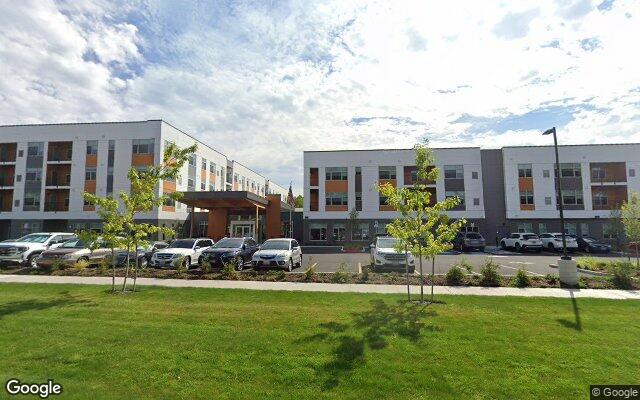
Tour Prep
Family reviews
No reviews yet — be the first to share your experience
Other memory care options nearby.
More options in neighboring cities
Licensed memory care in other cities within this county region — useful when your search radius crosses city limits.