Elena's Manor.
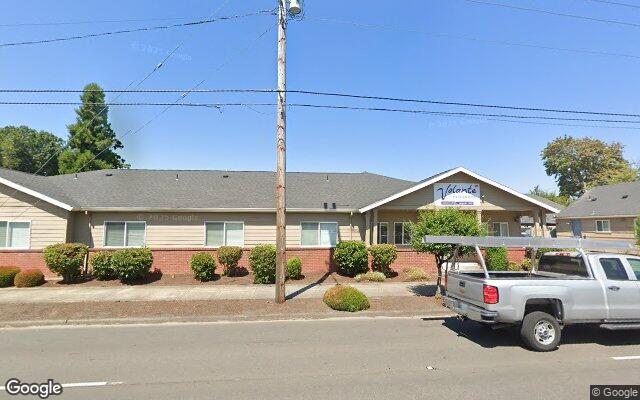
A large home, reviewed on public record.
© Google Street View
Compared to 22 Oregon facilities with a similar number of beds.
ALF memory care · 36-month window. Higher percentile = better performance on inspection record. Source: Oregon Dept. of Human Services · Long-Term Care Licensing.
among peers to rank.
Rankings based on 36-month OR-DHS inspection data. Severity and frequency: fewer citations = higher percentile. Repeat rate: lower repeat citation share = higher percentile.
Citation history, plotted month by month.
18 deficiencies on record. Each bar is a month with a citation.
Finding distribution
18 total · 36 monthsScope × Severity (CMS A–L)
Every inspection visit, verbatim.
2 inspections in the public record, most recent first. Plain-language summaries open first — click into any row for the full citation text.
2026-02-19Annual Compliance VisitOR-cited · 17 findings
Plain-language summary
This was a change of owner inspection that identified multiple violations, including the facility's failure to report suspected abuse and conduct required investigations for two residents with unexplained injuries or elopement, failure to develop adequate initial service plans, and failure to ensure service plans were implemented for three residents. The facility also failed to carry out medication orders as prescribed for two residents and did not include clear instructions on its medication administration record for a resident with multiple as-needed respiratory medications, such as which medication to try first. The facility has taken corrective actions including clarifying medication orders with prescribers, updating records, retraining staff, and implementing weekly audits for 90 days.
Read full citation text (17)Hide full citation text
“based on their activity evaluation. The plan must reflect the resident ' s activity preferences and needs. (C) A selection of daily structured and non-structured activities must be provided and included on the resident ' s activity service or care plan as appropriate. Daily activity options based on resident evaluation may include but are not limited to: (i) Occupation or chore related tasks; (ii) Scheduled and planned events (e.g. entertainment, outings); (iii) Spontaneous activities for enjoyment or those that may help diffuse a behavior; (iv) One to one activities that encourage positive relationships between residents and staff (e.g. life story, reminiscing, music); (v) Spiritual, creative, and intellectual activities; (vi) Sensory stimulation activities; (vii) Physical activities that enhance or maintain a resident ' s ability to ambulate or move; and (viii) Outdoor activities. This Rule is not met as evidenced by: Based on observation, interview, and record review, it was determined the facility failed to evaluate the resident for activities and develop an individual activity plan based on their activity evaluation, for 3 of 3 sampled residents (#s 1, 2, and 3) whose activity plans were reviewed. Findings include, but are not limited to: During the survey, many sampled and unsampled residents were observed needing assistance and encouragement from staff to initiate, attend, and participate in activities. The facility offered group activities, which many residents attended. Some residents did not attend the activities and, instead, stayed in their rooms, sat in the common areas watching TV or falling asleep, or walked around the facility. All residents were diagnosed with some type of dementia. Resident 1, 2, and 3’s “90 Day Activity Evaluations” and current service plans were reviewed, and observations were made of the residents. The following was identified: Though the evaluations included some information about activity preferences, cognitive abilities and needs, and social interactions, the evaluations lacked a thorough evaluation of: * Past interests; * Current abilities and skills; * Emotional and social needs and patterns; * Physical abilities and limitations; * Adaptations necessary for the resident to participate; and * Identification of activities for behavioral interventions. The facility did not use the information gathered in the activity evaluation to develop an individualized activity plan which detailed what, when, how, and how often staff should offer and assist the residents with more individualized activities. The need to develop individualized activity plans that were based on a thorough evaluation of the resident's activity interests, abilities, and needs was discussed with Staff 1 (Co-owner), Staff 3 (ED/Human Resources), and Staff 5 (RN) on 02/19/26 at 11:52 am and with Staff 1, Staff 3, Staff 5, and Staff 6 (Lead MT) 3:40 pm. They acknowledged the findings. Upon identification of the deficiency related to OAR 411-057-0160 (2)(d) Activities, The facility immediately reviewed the activities plans for the identified resident(s) and corrected any deficiencies to ensure resident needs were addressed. Activities staff and nursing leadership ensured that meaningful activities are planned and documented for each resident at move-in and during the 90-day evaluation, reflecting individual preferences, abilities, and interests. The activities calendar was reviewed, updated, and will be maintained to ensure all planned activities are offered and followed consistently. To prevent recurrence, staff were re-educated on the requirements for documenting and implementing resident activities and on maintaining a current and accurate activities calendar. The Executive Director or designee will monitor compliance by auditing resident activities plans and the activities calendar weekly for 90 days to ensure that meaningful, resident-centered activities are occurring as planned. Any discrepancies identified will be corrected immediately and documented. After 90 days, monitoring will transition to routine quality assurance review. OAR 411-057-0160(2d) Activities (d) Meaningful activities that promote or help sustain the physical and emotional well-being of residents. The activities must be person centered and available during residents ' waking hours. (A) Each resident must be evaluated for activities according to the licensing rules of the facility. In addition, the evaluation must address the following: (i) Past and current interests; (ii) Current abilities and skills; (iii) Emotional and social needs and patterns; (iv) Physical abilities and limitations; (v) Adaptations necessary for the resident to participate; and (vi) Identification of activities for behavioral interventions. (B) An individualized activity plan must be developed for each resident based on their activity evaluation. The plan must reflect the resident ' s activity preferences and needs. (C) A selection of daily structured and non-structured activities must be provided and included on the resident ' s activity service or care plan as appropriate. Daily activity options based on resident evaluation may include but are not limited to: (i) Occupation or chore related tasks; (ii) Scheduled and planned events (e.g. entertainment, outings); (iii) Spontaneous activities for enjoyment or those that may help diffuse a behavior; (iv) One to one activities that encourage positive relationships between residents and staff (e.g. life story, reminiscing, music); (v) Spiritual, creative, and intellectual activities; (vi) Sensory stimulation activities; (vii) Physical activities that enhance or maintain a resident ' s ability to ambulate or move; and (viii) Outdoor activities. This Rule is not met as evidenced by:”
“Based on interview and record review, it was determined the facility failed to report a physical injury of unknown cause to the local Department office as suspected abuse unless an immediate facility investigation reasonably concluded and documented the physical injury was not the result of abuse, and failed to immediately notify the local Department office of any incident of suspected abuse, investigate all reports of abuse or suspected abuse, and document the investigation as required for 2 of 4 sampled residents (#s 1 and 5) with an injury of unknown cause and elopement. Findings include, but are not limited to:”
“Based on interview, and record review, it was determined the facility failed to ensure the initial evaluation contained all required elements for 1 of 1 sampled resident (#4) whose initial evaluation was reviewed. Findings include, but are not limited to:”
“Based on the resident evaluation performed before move-in, an initial service plan must be developed before move-in that reflects the identified needs and preferences of the resident. (b) The initial service plan must be reviewed within 30-days of movein to ensure that any changes made to the plan during the initial 30- days, accurately reflect the resident's needs and preferences. (c) Staff must document and date adjustments or changes as applicable. (4) QUARTERLY SERVICE PLAN REQUIREMENTS. (a) Service plans must be completed quarterly after the resident moves into the facility. (b) The quarterly evaluation is the basis of the resident's quarterly service plan. (c) If the resident's service plan is revised and updated at the quarterly review, changes must be dated and initialed, and prior historical information must be maintained. This Rule is not met as evidenced by: Based on observation, interview, and record review, it was determined the facility failed to ensure service plans were reflective of residents' needs, provided clear direction to staff regarding the delivery of service, and/or were implemented for 3 of 3 sampled residents (#s 1, 2 and 3) whose service plans were reviewed. Findings include, but are not limited to:”
“Based on interview and record review, it was determined the facility failed to ensure medication orders were carried out as prescribed for 2 of 3 sampled residents (#s 2 and 3) whose records were reviewed. Findings include, but are not limited to:”
“Based on interview and record review, it was determined the facility failed to ensure MARs were accurate and included resident-specific parameters and instructions for PRN medications for 1 of 1 sampled resident (#3) who was prescribed multiple PRN medications for shortness of breath. Findings include, but are not limited to: Resident 3 was admitted to the facility in 06/2025 with diagnoses including vascular dementia, depression, hypertension and hypoxemia. Resident 3's MAR from 02/01/26 through 02/16/26 was reviewed during the survey, and the following was identified: The resident was prescribed the following four PRN medications for shortness of breath/respiratory distress: * Albuterol inhaler; * Ipratropium and albuterol nebulizer; * Hydromorphone; and * Oxygen (administered via concentrator or portable tank). The MAR lacked resident-specific parameters and instructions for these PRN medications, including which intervention to attempt first and what to do if ineffective. The need for resident-specific parameters and clear instructions for PRN medications was discussed with Staff 1 (Co-owner), Staff 3 (ED/Human Resources), Staff 5 (RN), and Staff 6 (Lead MT) on 02/19/26 at 3:40pm. They acknowledged the findings. Upon identification of the deficiency related to OAR 411-054-0055 (1)(f–h) Systems: Treatment Orders, the facility immediately reviewed the treatment orders for the identified resident(s) to ensure all physician or licensed practitioner orders were accurately documented, current, and properly implemented. Any missing, unclear, or outdated treatment orders were clarified with the appropriate licensed practitioner and updated in the resident record to ensure staff had clear direction for implementation. The resident’s care documentation and service plan were reviewed with staff to ensure treatments were being completed as ordered. To determine if other residents may have been affected, the Executive Director and nursing staff conducted a review of resident records to verify that all treatment orders were present, current, and consistently followed. Any discrepancies identified during the review were corrected promptly. To prevent recurrence, the facility provided re-education to staff responsible for receiving, documenting, and implementing treatment orders regarding proper documentation procedures, verification of practitioner orders, and ensuring treatments are completed as directed. The facility also implemented a standardized process for reviewing and verifying treatment orders upon receipt and during routine chart reviews. Ongoing compliance will be monitored by the Executive Director or designee through weekly audits of resident records and treatment orders for 90 days to ensure accuracy, completeness, and implementation of orders as required. After 90 days, monitoring will transition to routine quality assurance reviews. Any identified concerns will result in immediate corrective action and additional staff education Addendum on 04/01/26, submitted by Ericka Forman : Inaccurate or unclear documentation on the MAR, including lack of defined parameters for PRN medications (e.g., sequencing when multiple PRNs are ordered for the same condition). 2. Corrective Actions Taken for Affected Residents All current physician orders were reviewed for accuracy and completeness. PRN medication orders were clarified with prescribing providers to ensure: Clear indications for use, Defined administration parameters Explicit sequencing instructions when multiple PRNs exist for the same symptoms. MARs were immediately updated to reflect clarified orders. Staff re-educated on any updated or corrected orders prior to next medication pass. 3. Systemic Changes to Prevent Recurrence Physician Order Process Improvements: All new and revised orders will be reviewed by a licensed nurse prior to transcription onto the MAR. Any PRN order lacking specificity will be clarified with the provider before implementation. MAR Accuracy Protocol: Standardized process implemented requiring: Documentation of indication, Clear frequency and timing, Step-by-step PRN hierarchy (e.g., “Administer Medication A first; if ineffective after X time, administer Medication B”). PRN Medication Guidelines: A facility-wide guideline for PRN medications has been developed and implemented. Includes required elements: Symptom identification First-line vs. second-line medication use. Documentation of effectiveness 4. Staff Education - All medication staff (RNs, LPNs, and caregivers involved in medication administration) received training on: Following physician orders precisely, Proper MAR documentation, PRN medication protocols and sequencing, New hires will receive this training during orientation. Competency validation completed post-training. 5. Monitoring and Quality Assurance - RN Oversight: The RN will conduct: Weekly scheduled audits of MARs and physician orders for 4 weeks. Random audits thereafter on an ongoing basis (minimum monthly). Audit Focus Areas: Accuracy of transcription from physician order to MAR Presence of clear PRN parameters and sequencing Documentation of medication effectiveness. Corrective Action: Any discrepancies identified will be corrected immediately. Staff involved will receive re-education and, if necessary, progressive discipline per policy. QA Review: Audit findings will be reviewed in Quality Assurance/Performance Improvement (QAPI) meetings. Trends will be tracked and addressed. 6. Completion Date Full compliance expected by: April 10,2026 7. Responsible Party Administrator / RN Designee”
“Based on observation, interview and record review, it was determined the facility failed to ensure the acuity-based staffing tool (ABST) accurately captured the care time and care elements that staff were providing to each resident as outlined in each individual service plan for 3 of 3 sampled residents (#s 1, 2 and 3) whose ABST data was reviewed. Findings include, but are not limited to:”
“Based on interview and record review, it was determined the facility failed to ensure the acuity-based staffing tool (ABST) evaluation was updated whenever there was a significant change of condition and no less than quarterly, at the same time the resident’s service plan was updated, for 4 of 4 sampled residents (#s 1, 2, 3, and 6) whose ABST data was reviewed. Findings include, but are not limited to:”
“Based on interview and record review, it was determined the facility failed to conduct fire drills at different times of the day, evening, and night shifts, provide fire and life safety instruction to staff on alternate months, and address problems encountered relating to residents who resisted or failed to participate in the drills. Findings include, but are not limited to: Fire drill and staff training records were reviewed on 02/18/26. The following was identified: a. The facility provided fire drill records for the last six months, from 08/2025 through 02/2026. A fire drill was conducted in five of the six months. Four fire drills were conducted on swing shift (2:00 pm to 10:00 pm) and one fire drill was conducted on night shift (10:00 pm to 6:00 am). No fire drills were conducted on day shift (6:00 am to 2:00 pm). The facility failed to conduct fire drills at different times of the day, evening, and night shifts as required. b. In an interview on 02/19/26 at 12:33 pm, Staff 3 (ED/Human Resources) explained fire and life safety instruction was provided to staff during all-staff meetings. Review of the staff meeting records indicated instruction on fire drill procedures was presented on 05/22/25 and 11/12/25. The facility failed to provide fire and life safety instruction to staff on alternate months. c. Records for fire drills conducted on 09/29/25, 11/12/25, and 01/21/26 noted that between three and 12 residents did not participate in the fire drills for various reasons. The facility failed to address strategies for improving those residents’ participation in future fire drills. The need to ensure the facility conducted fire drills at different times of the day, evening, and night shifts, provided fire and life safety instruction to staff on alternate months, and addressed problems encountered relating to residents who resisted or failed to participate in the drills was reviewed with Staff 3 on 02/19/26 at 12:33 pm. She acknowledged the findings. Upon identification of the deficiency related to OAR 411-054-0090 (1–2) Fire and Life Safety: Safety, The facility immediately conducted a review of the identified fire and life safety concern and ensured corrective action was taken to eliminate any immediate hazards. Safety checks were performed to verify that fire exits, alarms, sprinkler systems, extinguishers, and other life safety equipment were in proper working order, and any deficiencies were corrected promptly. The Executive Director and maintenance staff conducted a facility-wide review to determine if other areas or systems may have been affected, and all issues identified during this review were addressed to ensure resident safety. During each fire drill, staff will now complete forms that mark which residents did not participate, and corrective action will be taken to ensure those residents receive individualized support or retraining as needed. In addition, the facility will conduct safety training for all staff every other month during all-staff meetings, in addition to the planned fire drills, which will occur at random times and on random shifts to reinforce preparedness. Staff have also received re-education on fire and life safety policies, including proper use of safety equipment, emergency procedures, and routine safety checks. A standardized fire and life safety inspection checklist has been implemented to ensure ongoing compliance with all safety requirements. Ongoing monitoring will be conducted by the Executive Director or designee through weekly safety audits for 90 days, with any identified concerns corrected immediately and additional staff education provided as needed. OAR 411-054-0090 (1-2) Fire and Life Safety: Safety (1) FIRE DRILLS. All fire drills shall be conducted according to the Oregon Fire Code (OFC). (a) Unannounced fire drills must be conducted and recorded every other month at different times of the day, evening, and night shifts. (b) Fire and life safety instruction to staff must be provided on alternate months. (c) The Fire Authority may develop an alternative fire drill plan for the facility. Any such plan must be submitted to the Department. (d) A written fire drill record must be kept to document fire drills that include: (A) Date and time of day; (B) Location of simulated fire origin; (C) The escape route used; (D) Problems encountered and comments relating to residents who resisted or failed to participate in the drills; (E) Evacuation time period needed; (F) Staff members on duty and participating; and (G) Number of occupants evacuated. (e) Alternate exit routes must be used during fire drills to react to varying potential fire origin points. (f) The evacuation capability of the residents and staff is a function of both the ability of the residents to evacuate and the assistance provided by the staff. (g) Staff must provide fire evacuation assistance to residents from the building to a designated point of safety as determined by the Fire Authority having jurisdiction. Points of safety may include, outside the building, through a horizontal exit, or other areas as determined by the Fire Authority having jurisdiction. (h) The fire alarm system shall be activated during each fire drill, unless otherwise directed by the Fire Authority having jurisdiction. (2) If the facility is unable to meet the applicable evacuation level, the facility must make an immediate effort to make changes to ensure the evacuation standard is met. Changes must include, but not be limited to: (a) Increasing staff levels, (b) Changing staff assignments, (c) Requesting change in resident rooms, and (d) Arranging for special equipment. After making necessary changes, if the facility fails to meet the applicable evacuation level, the facility must issue an involuntary move-out notice to the residents in accordance with OAR 411-054-0080. This Rule is not met as evidenced by:”
“Based on observation and interview, it was determined the facility failed to ensure exterior pathways located in the facility’s secured courtyards were maintained in good repair, the grounds were free of litter and refuse. and ensure there was locked storage for all poisons, chemicals, rodenticides, and other toxic materials. Findings include but are not limited to: The exterior of the facility was toured on 02/17/26. a. The following was identified in the secured courtyards located on the East and West Wings: * There were exterior pathways that had drop-offs in multiple areas, which created a potential tripping and fall hazard for residents; * There was refuse in each courtyard, including wipes, gloves, deflated balloons, cigarette butts, leaves, and weeds; * Cleaning equipment, and tools were stored in two of the three courtyards; and * An outside mat located in the secured courtyard across the hall from Unit 201 was not flush to the concrete patio, which created a potential tripping and fall hazard for residents. b. Chemicals were accessible to residents in the following unlocked areas: * The East Wing laundry room; * A restroom located across the hall from Unit 108; * The buffet located in the large dining room; * A storage room on the Open Wing; and * A cabinet located in the beauty salon. The areas where unsecured chemicals were identified was toured with Staff 3 (ED/Human Resources) and Staff 6 (Lead MT) on 02/17/26 at approximately 1:45 pm. Staff 3 and 6 ensured all chemicals were in locked storage during the tour. A tour of the exterior environment was completed with Staff 2 (Co-owner), Staff 3, and Staff 4 (Assistant ED) on 02/18/26 at 11:04 am. They acknowledged the potential tripping hazards and the presence of litter and refuse. The rooms identified as storage for the chemicals had coded locks observed during the tour on 02/18/26. Upon identification of the deficiency related to OAR 411-054-0200 (3) General Building Exterior, The facility immediately conducted a review of the building exterior, including walkways, handrails, lighting, entrances, and other accessible areas, and addressed any immediate safety hazards to ensure resident, staff, and visitor safety. Maintenance staff corrected identified issues promptly by cleaning debris, repairing or removing broken lights, and ensuring that dirt and ground surfaces are level with the edges of sidewalks. The Executive Director and maintenance team conducted a facility-wide inspection to determine if other areas of the exterior were affected and completed all necessary corrections. To prevent recurrence, staff were re-educated on routine exterior safety inspections, hazard reporting procedures, and the importance of ongoing preventive maintenance. A standardized exterior inspection checklist has been implemented, with inspections conducted weekly by the Executive Director or designee. Any hazards identified during inspections will be corrected immediately by maintenance staff, and staff will be informed of findings during team meetings. Ongoing compliance will be monitored through weekly audits for 90 days, after which monitoring will transition to routine quality assurance review OAR 411-054-0200 (3) General Building Exterior (3) GENERAL BUILDING EXTERIOR.(a) All exterior pathways and accesses to the RCF common-use areas, entrance, and exit ways must be made of hard, smooth material, be accessible, and maintained in good repair.(b) A RCF must take measures to prevent the entry of rodents, flies, mosquitoes, and other insects. There must be locked storage for all poisons, chemicals, rodenticides, and other toxic materials. All materials must be properly labeled.(c) RCF grounds must be kept orderly and free of litter and refuse. Garbage must be stored in covered refuse containers.(d) As described in OAR 411, division 057, memory care communities licensed as a RCF must be located on the ground floor. A CF cannot be endorsed as a memory care community.(e) A RCF must provide storage for all maintenance equipment, including yard maintenance tools, if not provided by a third-party contract.(f) A RCF must provide an accessible outdoor recreation area. The outdoor recreation area must be available to all residents. Lighting must be equal to a minimum of five foot candles. Memory Care Communities must provide residents with direct access to a secure outdoor recreation area as described in OAR chapter 411, division 057.(g) Outdoor perimeter fencing may not be secured to prevent exit unless the RCF has written approval from the Department for an exception or the RCF is in compliance with OAR chapter 411, division 057 (Memory Care Communities) or OAR 309-019-0100 through 309-019-0220.(h) A RCF must have an entry and exit drive to and from the main building entrance that allows for a vehicle to pick up and drop off residents and mail deliveries without the need for vehicles to back up. This Rule is not met as evidenced by:”
“Based on observation and interview, it was determined the facility failed to ensure all interior materials and surfaces were kept clean and in good repair. Findings include, but are not limited to: The facility's environment was toured on 02/17/26, and the following was observed:”
“Based on observation and interview, it was determined the facility failed to ensure all exit doors were equipped with operational alarming devices or another acceptable system to alert staff when residents exited. Findings include, but are not limited to: A tour of the facility on 02/17/26 revealed exit doors leading into three secured courtyards located on the East and West Wings were not equipped with operational alarming devices or another acceptable system to alert staff when residents opened the doors. A tour of the environment was completed with Staff 2 (Co-owner), Staff 3 (ED/Human Resources), and Staff 4 (Assistant ED) on 02/18/26 at 11:04 am. They acknowledged the door alarms were not functioning. Upon identification of the deficiency related to OAR 411-054-0200 (11–13) Call System, Exit Door Alarm, Phones, TV, or Cable, The facility immediately reviewed the resident call system, exit door alarms, and communication devices to ensure all were functional and accessible. Maintenance staff corrected identified issues promptly, including repairing or replacing call system devices, phones, and televisions as needed. To enhance resident safety, the facility will be installing door alarms on all doors that residents can exit through, ensuring staff are immediately alerted if a resident leaves an area and can confirm their safety when outside. The Executive Director and maintenance team conducted a facility-wide inspection to determine if other systems were affected and completed all necessary corrections. To prevent recurrence, staff were re-educated on the proper use of the call system, monitoring of exit doors, and environmental safety. A standardized communication and safety device checklist has been implemented, with weekly inspections conducted by the Executive Director or designee. Any issues identified during inspections will be corrected immediately by maintenance staff, and staff will be informed of findings during team meetings. Ongoing compliance will be monitored through weekly audits for 90 days, after which monitoring will transition to routine quality assurance review. OAR 411-054-0200 (11-13) Call Sys, Exit Dr Alarm, Phones, TV, or Cable (11) CALL SYSTEM. A RCF must provide a call system that connects resident units to the care staff center or staff pagers. Wireless call systems are allowed.(a) A manually operated emergency call system must be provided in each toilet and bathing facility used by residents and visitors.(b) EXIT DOOR ALARMS. An exit door alarm or other acceptable system must be provided for security purposes and to alert staff when residents exit the RCF. The door alarm system may be integrated with the call system.(c) Security devices intended to alert staff of an individual resident's potential elopement may include, but not be limited to, electronic pendants, bracelets, pins.(12) TELEPHONES. Adequate telephones must be available for resident, staff, and visitor use, including those individuals who have physical disabilities. If the only telephone is located in a staff area, it must be posted that the telephone is available for normal resident-use at any time and that staff shall ensure the resident's uninterrupted privacy. Staff may provide assistance when necessary or requested.(13) TELEVISION ANTENNA OR CABLE SYSTEM. A RCF must provide a television antenna or cable system with an outlet in each resident unit. This Rule is not met as evidenced by:”
“Based on interview and record review, it was determined the facility failed to ensure the individual and only appropriate staff had a key to access the unit for multiple sampled and unsampled residents who resided in the facility. Findings include, but are not limited to: In interviews on 02/18/26 with Staff 3 (ED/Human Resources) at approximately 12:15 pm and with Staff 11 (MT/CG) at 2:06 pm, both confirmed that no residents had keys to their units. The need to ensure the individual and only appropriate staff had a key to access resident units was discussed with Staff 2 (Co-owner) and Staff 3 on 02/18/26. They acknowledged the findings. Upon identification of the deficiency related to OAR 411-004-0020 (2)(e) Individual Door Locks: Key Access, the facility immediately reviewed resident room door locks and corrected any deficiencies to ensure residents have secure and functional access to their personal rooms. Maintenance staff to ensure that keys are made and provided to each resident for their room, and that locks are functioning properly. To prevent recurrence, staff were r OAR411-004-0020(2)(e) Individual Door Locks: Key Access (2) Provider owned, controlled, or operated residential settings must have all of the following qualities: (e) Units must have entrance doors lockable by the individual, with the individual and only appropriate staff having a key to access the unit. This Rule is not met as evidenced by:”
“Based on interview and record review, the facility failed to ensure the move-in evaluation addressed all required elements, including pronouns and gender identity, for 1 of 1 resident (# 4) whose move-in evaluation was reviewed. Findings include, but are not limited to: Refer to C 252. Refer to C252 OAR 411-054-0034 (1)(c)(B)&(5)(a)(A-C) Resident Move-in & Evaluation: Res Evaluation (1) INITIAL SCREENING AND MOVE-IN. (c) Each resident record must, before move-in and when updated, include the following information: (B) To promote person-centered care, any variance from legal records, as indicated by the resident, regarding: (i) Name. (ii) Pronouns. (iii) Gender identity. (5) The resident evaluation must address the following elements: (a) For service planning purposes, if indicated by the resident, (A) Name (B) Pronouns. (C) Gender identity. This Rule is not met as evidenced by:”
“Based on observation, interview, and record review, it was determined the facility failed to follow licensing rules for Residential Care and Assisted Living Facilities. Refer to C231, C362, C363, C420, C510, C513, and C555. Refer to C231, C362, C363, C420, C510, C513, and C555. OAR 411-057-0140(2) Administration Compliance (2) The licensee of a memory care community must comply with both the licensing rules for the facility and Chapter 411, Division 57. This Rule is not met as evidenced by:”
“Based on interview and record review, it was determined the facility failed to ensure 2 of 2 sampled newly-hired staff (#s 10 and 12) completed all required orientation and pre-service training before performing any job duties and 1 of 1 sampled newly-hired direct care staff (#10) completed pre-service training in all required training areas, and demonstrated competency in all assigned job duties within 30 days of hire. Findings include, but are not limited to: Staff training records were reviewed with Staff 3 (ED/Human Resources) on 02/19/26 at 1:00 pm. The following was identified: Staff 10 (MT/CG) was hired 06/06/25 and Staff 12 (Activities Director) was hired 01/06/26. a. There was no documented evidence Staff 10 and Staff 12 completed orientation in: * Residents' rights and the values of community-based care; * Abuse and reporting requirements; and * Fire safety and emergency procedures. b. There was no documented evidence Staff 10 completed pre-service training in: * Environmental factors that are important to resident’s well-being (e.g. noise, staff interactions, lighting, room temperature, etc.); * Family support and the role the family may have in the care of the resident; * How to provide personal care to a resident with dementia, including an orientation to the resident and the resident’s service plan; and * The use of supportive devices with restraining qualities in memory care communities. c. There was no documented evidence Staff 10 had demonstrated competency in the following areas: * The role of service plans in providing individualized resident care; * Providing assistance with the activities of daily living; * Changes associated with normal aging; * Identification of changes in the resident's physical, emotional and mental functioning and documentation and reporting on the resident's changes of condition; * Conditions that require assessment, treatment, observation and reporting; and * General food safety, serving and sanitation. The need to ensure newly hired staff completed all required training was reviewed with Staff 3 on 02/19/26 at 1:00 pm, and with Staff 1 (Co-owner), Staff 5 (RN), and Staff 6 (Lead MT) on 02/19/26 at 3:20 pm. They acknowledged the findings. Upon identification of the deficiency related to OAR 411-057-0155 (1–6) Staff Training Requirements, The facility immediately reviewed staff training records and corrected any gaps to ensure all staff had received required training. All new staff will receive mandatory trainings at the time of hire, and the Administrator and nursing leadership will ensure ongoing compliance by reviewing and verifying staff training completion at 30 days, 6 months, and annually. To prevent recurrence, staff were re-educated on training requirements, documentation standards, and timelines. The facility implemented a standardized staff training tracking system to ensure trainings are completed, documented, and updated timely. Ongoing compliance will be monitored through weekly audits of training records for 90 days, with any discrepancies corrected immediately, and after 90 days, monitoring will transition to routine quality assurance review. OAR 411-057-0155(1-6) Staff Training Requirements (1) A memory care community must ensure staff who provide support to residents with dementia have a basic understanding and fundamental knowledge of the residents' emotional and unique health care needs prior to providing services to residents. The training requirements for staff who work in memory care communities are described in the following sections. (2) ALL STAFF TRAINING REQUIREMENTS. All staff who work in memory care communities licensed as residential care facilities or assisted living facilities must complete the following: (a) Orientation as required in OAR 411-054-0070(3) before performing any job duties. (b) Pre-service dementia care training as required before independently providing personal care or other services. The dementia care training must address these topics: (A) Education on the dementia disease process, including the progression of the disease, memory loss and psychiatric and behavioral symptoms. (B) Techniques for understanding, communicating and responding to distressful behavioral symptoms; including but not limited to, reducing the use of antipsychotic medications for non-standard uses when responding to distressful behavioral symptoms. (C) Strategies for addressing social needs of persons with dementia and engaging them with meaningful activities; (D) Information concerning specific aspects of dementia care and ensuring safety of residents with dementia including, but not limited to, how to: (i) Identify and address pain; (ii) Provide food and fluid; (iii) Prevent wandering and elopement; (iv) Use a person-centered approach. (c) Additional pre-service training topics that must be completed before independently providing personal care to residents: (A) Environmental factors that are important to resident ' s well-being (e.g. noise, staff interactions, lighting, room temperature, etc.); (B) Family support and the role the family may have in the care of the resident; (C) How to recognize behaviors that indicate a change in the resident ' s condition and report behaviors that require on-going assessment. (3) DIRECT CARE STAFF TRAINING REQUIREMENTS. Direct care staff must be directly supervised by a qualified staff person until they have successfully demonstrated satisfactory performance in any task assigned in the provision of individualized resident services. In addition to training required for all staff as described in paragraph (2): (a) Before independently providing personal care or other services to residents, direct care staff must complete training on: (A) How to provide personal care to a resident with dementia, including an orientation to the resident and the resident ' s service plan, as required in OAR 411-054-0070(4). (B) The use of supportive devices with restraining qualities in memory care communities. (b) Within 30 days after hire, direct care staff must complete training as outlined in OAR 411-054-0070(5). (c) Direct care staff who work in memory care communities licensed as residential care facilities or assisted living facilities must complete a total of 16 hours of in-service training annually. The six hours of annual dementia care training required pursuant to OAR 411-054-0070(6) may be included in the 16 hours of in-service training. Annual in-service hours required of each staff are due by the anniversary date of that person ' s hire. All completed trainings must be documented by the facility. (4) NURSING FACILITY STAFF. Staff who work in memory care communities licensed as nursing facilities must complete the following: (a) Orientation as outlined in OAR 411-086-0310, 42 CFR ? 483.95 (F 943). (b) Pre-service dementia care training as outlined in paragraphs (2)(b) and (c) and paragraph (3)(a) of this section. (c) A total of 16 hours of annual in-service training must be completed by direct care staff only. Four of the 16 hours must be dementia care training and may be included in the 16 hours of in-service training. Annual in-service hours required of each staff are due by the anniversary date of that person ' s hire. All completed trainings must be documented by the facility. (5) Persons providing or overseeing the training of staff must have experience and knowledge in the care of individuals with dementia. (6) The memory care community must have a method for determining and documenting each staff person ' s competency of training in accordance with the licensing rules. All training must be documented and available to the Department upon request. This Rule is not met as evidenced by:”
“Based on observation, interview, and record review, it was determined the facility failed to provide health care services in accordance with the licensing rules for Residential Care and Assisted Living Facilities. Refer to C252, C260, C303, and C310. Upon identification of the deficiency related to OAR 411-057-0160 (2)(b) Compliance with Rules – Health Care, The facility immediately reviewed current practices and resident health care documentation to ensure compliance with all applicable rules and regulations. Any deficiencies identified in care delivery, documentation, or policy adherence were corrected promptly, including updating care plans, verifying physician orders, and ensuring staff followed proper procedures. To prevent recurrence, staff were re educated on facility policies, OAR requirements, and proper documentation standards related to health care delivery. The facility implemented a standardized health care compliance checklist to monitor ongoing adherence to rules and regulations. The Executive Director or designee will audit resident records, care plans, and related health care documentation weekly for 90 days to ensure compliance, with any discrepancies corrected immediately and documented. After 90 days, monitoring will transition to routine quality assurance review. OAR 411-057-0160(2b) Compliance with Rules Health Care (b) Health care services provided in accordance with the licensing rules of the facility. This Rule is not met as evidenced by:”
Read raw inspector notesClose inspector notes
Based on interview and record review, it was determined the facility failed to report a physical injury of unknown cause to the local Department office as suspected abuse unless an immediate facility investigation reasonably concluded and documented the physical injury was not the result of abuse, and failed to immediately notify the local Department office of any incident of suspected abuse, investigate all reports of abuse or suspected abuse, and document the investigation as required for 2 of 4 sampled residents (#s 1 and 5) with an injury of unknown cause and elopement. Findings include, but are not limited to: Based on interview, and record review, it was determined the facility failed to ensure the initial evaluation contained all required elements for 1 of 1 sampled resident (#4) whose initial evaluation was reviewed. Findings include, but are not limited to: Based on the resident evaluation performed before move-in, an initial service plan must be developed before move-in that reflects the identified needs and preferences of the resident. (b) The initial service plan must be reviewed within 30-days of movein to ensure that any changes made to the plan during the initial 30- days, accurately reflect the resident's needs and preferences. (c) Staff must document and date adjustments or changes as applicable. (4) QUARTERLY SERVICE PLAN REQUIREMENTS. (a) Service plans must be completed quarterly after the resident moves into the facility. (b) The quarterly evaluation is the basis of the resident's quarterly service plan. (c) If the resident's service plan is revised and updated at the quarterly review, changes must be dated and initialed, and prior historical information must be maintained. This Rule is not met as evidenced by: Based on observation, interview, and record review, it was determined the facility failed to ensure service plans were reflective of residents' needs, provided clear direction to staff regarding the delivery of service, and/or were implemented for 3 of 3 sampled residents (#s 1, 2 and 3) whose service plans were reviewed. Findings include, but are not limited to: Based on interview and record review, it was determined the facility failed to ensure medication orders were carried out as prescribed for 2 of 3 sampled residents (#s 2 and 3) whose records were reviewed. Findings include, but are not limited to: Based on interview and record review, it was determined the facility failed to ensure MARs were accurate and included resident-specific parameters and instructions for PRN medications for 1 of 1 sampled resident (#3) who was prescribed multiple PRN medications for shortness of breath. Findings include, but are not limited to: Resident 3 was admitted to the facility in 06/2025 with diagnoses including vascular dementia, depression, hypertension and hypoxemia. Resident 3's MAR from 02/01/26 through 02/16/26 was reviewed during the survey, and the following was identified: The resident was prescribed the following four PRN medications for shortness of breath/respiratory distress: * Albuterol inhaler; * Ipratropium and albuterol nebulizer; * Hydromorphone; and * Oxygen (administered via concentrator or portable tank). The MAR lacked resident-specific parameters and instructions for these PRN medications, including which intervention to attempt first and what to do if ineffective. The need for resident-specific parameters and clear instructions for PRN medications was discussed with Staff 1 (Co-owner), Staff 3 (ED/Human Resources), Staff 5 (RN), and Staff 6 (Lead MT) on 02/19/26 at 3:40pm. They acknowledged the findings. Upon identification of the deficiency related to OAR 411-054-0055 (1)(f–h) Systems: Treatment Orders, the facility immediately reviewed the treatment orders for the identified resident(s) to ensure all physician or licensed practitioner orders were accurately documented, current, and properly implemented. Any missing, unclear, or outdated treatment orders were clarified with the appropriate licensed practitioner and updated in the resident record to ensure staff had clear direction for implementation. The resident’s care documentation and service plan were reviewed with staff to ensure treatments were being completed as ordered. To determine if other residents may have been affected, the Executive Director and nursing staff conducted a review of resident records to verify that all treatment orders were present, current, and consistently followed. Any discrepancies identified during the review were corrected promptly. To prevent recurrence, the facility provided re-education to staff responsible for receiving, documenting, and implementing treatment orders regarding proper documentation procedures, verification of practitioner orders, and ensuring treatments are completed as directed. The facility also implemented a standardized process for reviewing and verifying treatment orders upon receipt and during routine chart reviews. Ongoing compliance will be monitored by the Executive Director or designee through weekly audits of resident records and treatment orders for 90 days to ensure accuracy, completeness, and implementation of orders as required. After 90 days, monitoring will transition to routine quality assurance reviews. Any identified concerns will result in immediate corrective action and additional staff education Addendum on 04/01/26, submitted by Ericka Forman : Inaccurate or unclear documentation on the MAR, including lack of defined parameters for PRN medications (e.g., sequencing when multiple PRNs are ordered for the same condition). 2. Corrective Actions Taken for Affected Residents All current physician orders were reviewed for accuracy and completeness. PRN medication orders were clarified with prescribing providers to ensure: Clear indications for use, Defined administration parameters Explicit sequencing instructions when multiple PRNs exist for the same symptoms. MARs were immediately updated to reflect clarified orders. Staff re-educated on any updated or corrected orders prior to next medication pass. 3. Systemic Changes to Prevent Recurrence Physician Order Process Improvements: All new and revised orders will be reviewed by a licensed nurse prior to transcription onto the MAR. Any PRN order lacking specificity will be clarified with the provider before implementation. MAR Accuracy Protocol: Standardized process implemented requiring: Documentation of indication, Clear frequency and timing, Step-by-step PRN hierarchy (e.g., “Administer Medication A first; if ineffective after X time, administer Medication B”). PRN Medication Guidelines: A facility-wide guideline for PRN medications has been developed and implemented. Includes required elements: Symptom identification First-line vs. second-line medication use. Documentation of effectiveness 4. Staff Education - All medication staff (RNs, LPNs, and caregivers involved in medication administration) received training on: Following physician orders precisely, Proper MAR documentation, PRN medication protocols and sequencing, New hires will receive this training during orientation. Competency validation completed post-training. 5. Monitoring and Quality Assurance - RN Oversight: The RN will conduct: Weekly scheduled audits of MARs and physician orders for 4 weeks. Random audits thereafter on an ongoing basis (minimum monthly). Audit Focus Areas: Accuracy of transcription from physician order to MAR Presence of clear PRN parameters and sequencing Documentation of medication effectiveness. Corrective Action: Any discrepancies identified will be corrected immediately. Staff involved will receive re-education and, if necessary, progressive discipline per policy. QA Review: Audit findings will be reviewed in Quality Assurance/Performance Improvement (QAPI) meetings. Trends will be tracked and addressed. 6. Completion Date Full compliance expected by: April 10,2026 7. Responsible Party Administrator / RN Designee Based on observation, interview and record review, it was determined the facility failed to ensure the acuity-based staffing tool (ABST) accurately captured the care time and care elements that staff were providing to each resident as outlined in each individual service plan for 3 of 3 sampled residents (#s 1, 2 and 3) whose ABST data was reviewed. Findings include, but are not limited to: Based on interview and record review, it was determined the facility failed to ensure the acuity-based staffing tool (ABST) evaluation was updated whenever there was a significant change of condition and no less than quarterly, at the same time the resident’s service plan was updated, for 4 of 4 sampled residents (#s 1, 2, 3, and 6) whose ABST data was reviewed. Findings include, but are not limited to: Based on interview and record review, it was determined the facility failed to conduct fire drills at different times of the day, evening, and night shifts, provide fire and life safety instruction to staff on alternate months, and address problems encountered relating to residents who resisted or failed to participate in the drills. Findings include, but are not limited to: Fire drill and staff training records were reviewed on 02/18/26. The following was identified: a. The facility provided fire drill records for the last six months, from 08/2025 through 02/2026. A fire drill was conducted in five of the six months. Four fire drills were conducted on swing shift (2:00 pm to 10:00 pm) and one fire drill was conducted on night shift (10:00 pm to 6:00 am). No fire drills were conducted on day shift (6:00 am to 2:00 pm). The facility failed to conduct fire drills at different times of the day, evening, and night shifts as required. b. In an interview on 02/19/26 at 12:33 pm, Staff 3 (ED/Human Resources) explained fire and life safety instruction was provided to staff during all-staff meetings. Review of the staff meeting records indicated instruction on fire drill procedures was presented on 05/22/25 and 11/12/25. The facility failed to provide fire and life safety instruction to staff on alternate months. c. Records for fire drills conducted on 09/29/25, 11/12/25, and 01/21/26 noted that between three and 12 residents did not participate in the fire drills for various reasons. The facility failed to address strategies for improving those residents’ participation in future fire drills. The need to ensure the facility conducted fire drills at different times of the day, evening, and night shifts, provided fire and life safety instruction to staff on alternate months, and addressed problems encountered relating to residents who resisted or failed to participate in the drills was reviewed with Staff 3 on 02/19/26 at 12:33 pm. She acknowledged the findings. Upon identification of the deficiency related to OAR 411-054-0090 (1–2) Fire and Life Safety: Safety, The facility immediately conducted a review of the identified fire and life safety concern and ensured corrective action was taken to eliminate any immediate hazards. Safety checks were performed to verify that fire exits, alarms, sprinkler systems, extinguishers, and other life safety equipment were in proper working order, and any deficiencies were corrected promptly. The Executive Director and maintenance staff conducted a facility-wide review to determine if other areas or systems may have been affected, and all issues identified during this review were addressed to ensure resident safety. During each fire drill, staff will now complete forms that mark which residents did not participate, and corrective action will be taken to ensure those residents receive individualized support or retraining as needed. In addition, the facility will conduct safety training for all staff every other month during all-staff meetings, in addition to the planned fire drills, which will occur at random times and on random shifts to reinforce preparedness. Staff have also received re-education on fire and life safety policies, including proper use of safety equipment, emergency procedures, and routine safety checks. A standardized fire and life safety inspection checklist has been implemented to ensure ongoing compliance with all safety requirements. Ongoing monitoring will be conducted by the Executive Director or designee through weekly safety audits for 90 days, with any identified concerns corrected immediately and additional staff education provided as needed. OAR 411-054-0090 (1-2) Fire and Life Safety: Safety (1) FIRE DRILLS. All fire drills shall be conducted according to the Oregon Fire Code (OFC). (a) Unannounced fire drills must be conducted and recorded every other month at different times of the day, evening, and night shifts. (b) Fire and life safety instruction to staff must be provided on alternate months. (c) The Fire Authority may develop an alternative fire drill plan for the facility. Any such plan must be submitted to the Department. (d) A written fire drill record must be kept to document fire drills that include: (A) Date and time of day; (B) Location of simulated fire origin; (C) The escape route used; (D) Problems encountered and comments relating to residents who resisted or failed to participate in the drills; (E) Evacuation time period needed; (F) Staff members on duty and participating; and (G) Number of occupants evacuated. (e) Alternate exit routes must be used during fire drills to react to varying potential fire origin points. (f) The evacuation capability of the residents and staff is a function of both the ability of the residents to evacuate and the assistance provided by the staff. (g) Staff must provide fire evacuation assistance to residents from the building to a designated point of safety as determined by the Fire Authority having jurisdiction. Points of safety may include, outside the building, through a horizontal exit, or other areas as determined by the Fire Authority having jurisdiction. (h) The fire alarm system shall be activated during each fire drill, unless otherwise directed by the Fire Authority having jurisdiction. (2) If the facility is unable to meet the applicable evacuation level, the facility must make an immediate effort to make changes to ensure the evacuation standard is met. Changes must include, but not be limited to: (a) Increasing staff levels, (b) Changing staff assignments, (c) Requesting change in resident rooms, and (d) Arranging for special equipment. After making necessary changes, if the facility fails to meet the applicable evacuation level, the facility must issue an involuntary move-out notice to the residents in accordance with OAR 411-054-0080. This Rule is not met as evidenced by: Based on observation and interview, it was determined the facility failed to ensure exterior pathways located in the facility’s secured courtyards were maintained in good repair, the grounds were free of litter and refuse. and ensure there was locked storage for all poisons, chemicals, rodenticides, and other toxic materials. Findings include but are not limited to: The exterior of the facility was toured on 02/17/26. a. The following was identified in the secured courtyards located on the East and West Wings: * There were exterior pathways that had drop-offs in multiple areas, which created a potential tripping and fall hazard for residents; * There was refuse in each courtyard, including wipes, gloves, deflated balloons, cigarette butts, leaves, and weeds; * Cleaning equipment, and tools were stored in two of the three courtyards; and * An outside mat located in the secured courtyard across the hall from Unit 201 was not flush to the concrete patio, which created a potential tripping and fall hazard for residents. b. Chemicals were accessible to residents in the following unlocked areas: * The East Wing laundry room; * A restroom located across the hall from Unit 108; * The buffet located in the large dining room; * A storage room on the Open Wing; and * A cabinet located in the beauty salon. The areas where unsecured chemicals were identified was toured with Staff 3 (ED/Human Resources) and Staff 6 (Lead MT) on 02/17/26 at approximately 1:45 pm. Staff 3 and 6 ensured all chemicals were in locked storage during the tour. A tour of the exterior environment was completed with Staff 2 (Co-owner), Staff 3, and Staff 4 (Assistant ED) on 02/18/26 at 11:04 am. They acknowledged the potential tripping hazards and the presence of litter and refuse. The rooms identified as storage for the chemicals had coded locks observed during the tour on 02/18/26. Upon identification of the deficiency related to OAR 411-054-0200 (3) General Building Exterior, The facility immediately conducted a review of the building exterior, including walkways, handrails, lighting, entrances, and other accessible areas, and addressed any immediate safety hazards to ensure resident, staff, and visitor safety. Maintenance staff corrected identified issues promptly by cleaning debris, repairing or removing broken lights, and ensuring that dirt and ground surfaces are level with the edges of sidewalks. The Executive Director and maintenance team conducted a facility-wide inspection to determine if other areas of the exterior were affected and completed all necessary corrections. To prevent recurrence, staff were re-educated on routine exterior safety inspections, hazard reporting procedures, and the importance of ongoing preventive maintenance. A standardized exterior inspection checklist has been implemented, with inspections conducted weekly by the Executive Director or designee. Any hazards identified during inspections will be corrected immediately by maintenance staff, and staff will be informed of findings during team meetings. Ongoing compliance will be monitored through weekly audits for 90 days, after which monitoring will transition to routine quality assurance review OAR 411-054-0200 (3) General Building Exterior (3) GENERAL BUILDING EXTERIOR.(a) All exterior pathways and accesses to the RCF common-use areas, entrance, and exit ways must be made of hard, smooth material, be accessible, and maintained in good repair.(b) A RCF must take measures to prevent the entry of rodents, flies, mosquitoes, and other insects. There must be locked storage for all poisons, chemicals, rodenticides, and other toxic materials. All materials must be properly labeled.(c) RCF grounds must be kept orderly and free of litter and refuse. Garbage must be stored in covered refuse containers.(d) As described in OAR 411, division 057, memory care communities licensed as a RCF must be located on the ground floor. A CF cannot be endorsed as a memory care community.(e) A RCF must provide storage for all maintenance equipment, including yard maintenance tools, if not provided by a third-party contract.(f) A RCF must provide an accessible outdoor recreation area. The outdoor recreation area must be available to all residents. Lighting must be equal to a minimum of five foot candles. Memory Care Communities must provide residents with direct access to a secure outdoor recreation area as described in OAR chapter 411, division 057.(g) Outdoor perimeter fencing may not be secured to prevent exit unless the RCF has written approval from the Department for an exception or the RCF is in compliance with OAR chapter 411, division 057 (Memory Care Communities) or OAR 309-019-0100 through 309-019-0220.(h) A RCF must have an entry and exit drive to and from the main building entrance that allows for a vehicle to pick up and drop off residents and mail deliveries without the need for vehicles to back up. This Rule is not met as evidenced by: Based on observation and interview, it was determined the facility failed to ensure all interior materials and surfaces were kept clean and in good repair. Findings include, but are not limited to: The facility's environment was toured on 02/17/26, and the following was observed: Based on observation and interview, it was determined the facility failed to ensure all exit doors were equipped with operational alarming devices or another acceptable system to alert staff when residents exited. Findings include, but are not limited to: A tour of the facility on 02/17/26 revealed exit doors leading into three secured courtyards located on the East and West Wings were not equipped with operational alarming devices or another acceptable system to alert staff when residents opened the doors. A tour of the environment was completed with Staff 2 (Co-owner), Staff 3 (ED/Human Resources), and Staff 4 (Assistant ED) on 02/18/26 at 11:04 am. They acknowledged the door alarms were not functioning. Upon identification of the deficiency related to OAR 411-054-0200 (11–13) Call System, Exit Door Alarm, Phones, TV, or Cable, The facility immediately reviewed the resident call system, exit door alarms, and communication devices to ensure all were functional and accessible. Maintenance staff corrected identified issues promptly, including repairing or replacing call system devices, phones, and televisions as needed. To enhance resident safety, the facility will be installing door alarms on all doors that residents can exit through, ensuring staff are immediately alerted if a resident leaves an area and can confirm their safety when outside. The Executive Director and maintenance team conducted a facility-wide inspection to determine if other systems were affected and completed all necessary corrections. To prevent recurrence, staff were re-educated on the proper use of the call system, monitoring of exit doors, and environmental safety. A standardized communication and safety device checklist has been implemented, with weekly inspections conducted by the Executive Director or designee. Any issues identified during inspections will be corrected immediately by maintenance staff, and staff will be informed of findings during team meetings. Ongoing compliance will be monitored through weekly audits for 90 days, after which monitoring will transition to routine quality assurance review. OAR 411-054-0200 (11-13) Call Sys, Exit Dr Alarm, Phones, TV, or Cable (11) CALL SYSTEM. A RCF must provide a call system that connects resident units to the care staff center or staff pagers. Wireless call systems are allowed.(a) A manually operated emergency call system must be provided in each toilet and bathing facility used by residents and visitors.(b) EXIT DOOR ALARMS. An exit door alarm or other acceptable system must be provided for security purposes and to alert staff when residents exit the RCF. The door alarm system may be integrated with the call system.(c) Security devices intended to alert staff of an individual resident's potential elopement may include, but not be limited to, electronic pendants, bracelets, pins.(12) TELEPHONES. Adequate telephones must be available for resident, staff, and visitor use, including those individuals who have physical disabilities. If the only telephone is located in a staff area, it must be posted that the telephone is available for normal resident-use at any time and that staff shall ensure the resident's uninterrupted privacy. Staff may provide assistance when necessary or requested.(13) TELEVISION ANTENNA OR CABLE SYSTEM. A RCF must provide a television antenna or cable system with an outlet in each resident unit. This Rule is not met as evidenced by: Based on interview and record review, it was determined the facility failed to ensure the individual and only appropriate staff had a key to access the unit for multiple sampled and unsampled residents who resided in the facility. Findings include, but are not limited to: In interviews on 02/18/26 with Staff 3 (ED/Human Resources) at approximately 12:15 pm and with Staff 11 (MT/CG) at 2:06 pm, both confirmed that no residents had keys to their units. The need to ensure the individual and only appropriate staff had a key to access resident units was discussed with Staff 2 (Co-owner) and Staff 3 on 02/18/26. They acknowledged the findings. Upon identification of the deficiency related to OAR 411-004-0020 (2)(e) Individual Door Locks: Key Access, the facility immediately reviewed resident room door locks and corrected any deficiencies to ensure residents have secure and functional access to their personal rooms. Maintenance staff to ensure that keys are made and provided to each resident for their room, and that locks are functioning properly. To prevent recurrence, staff were r OAR411-004-0020(2)(e) Individual Door Locks: Key Access (2) Provider owned, controlled, or operated residential settings must have all of the following qualities: (e) Units must have entrance doors lockable by the individual, with the individual and only appropriate staff having a key to access the unit. This Rule is not met as evidenced by: Based on interview and record review, the facility failed to ensure the move-in evaluation addressed all required elements, including pronouns and gender identity, for 1 of 1 resident (# 4) whose move-in evaluation was reviewed. Findings include, but are not limited to: Refer to C 252. Refer to C252 OAR 411-054-0034 (1)(c)(B)&(5)(a)(A-C) Resident Move-in & Evaluation: Res Evaluation (1) INITIAL SCREENING AND MOVE-IN. (c) Each resident record must, before move-in and when updated, include the following information: (B) To promote person-centered care, any variance from legal records, as indicated by the resident, regarding: (i) Name. (ii) Pronouns. (iii) Gender identity. (5) The resident evaluation must address the following elements: (a) For service planning purposes, if indicated by the resident, (A) Name (B) Pronouns. (C) Gender identity. This Rule is not met as evidenced by: Based on observation, interview, and record review, it was determined the facility failed to follow licensing rules for Residential Care and Assisted Living Facilities. Refer to C231, C362, C363, C420, C510, C513, and C555. Refer to C231, C362, C363, C420, C510, C513, and C555. OAR 411-057-0140(2) Administration Compliance (2) The licensee of a memory care community must comply with both the licensing rules for the facility and Chapter 411, Division 57. This Rule is not met as evidenced by: Based on interview and record review, it was determined the facility failed to ensure 2 of 2 sampled newly-hired staff (#s 10 and 12) completed all required orientation and pre-service training before performing any job duties and 1 of 1 sampled newly-hired direct care staff (#10) completed pre-service training in all required training areas, and demonstrated competency in all assigned job duties within 30 days of hire. Findings include, but are not limited to: Staff training records were reviewed with Staff 3 (ED/Human Resources) on 02/19/26 at 1:00 pm. The following was identified: Staff 10 (MT/CG) was hired 06/06/25 and Staff 12 (Activities Director) was hired 01/06/26. a. There was no documented evidence Staff 10 and Staff 12 completed orientation in: * Residents' rights and the values of community-based care; * Abuse and reporting requirements; and * Fire safety and emergency procedures. b. There was no documented evidence Staff 10 completed pre-service training in: * Environmental factors that are important to resident’s well-being (e.g. noise, staff interactions, lighting, room temperature, etc.); * Family support and the role the family may have in the care of the resident; * How to provide personal care to a resident with dementia, including an orientation to the resident and the resident’s service plan; and * The use of supportive devices with restraining qualities in memory care communities. c. There was no documented evidence Staff 10 had demonstrated competency in the following areas: * The role of service plans in providing individualized resident care; * Providing assistance with the activities of daily living; * Changes associated with normal aging; * Identification of changes in the resident's physical, emotional and mental functioning and documentation and reporting on the resident's changes of condition; * Conditions that require assessment, treatment, observation and reporting; and * General food safety, serving and sanitation. The need to ensure newly hired staff completed all required training was reviewed with Staff 3 on 02/19/26 at 1:00 pm, and with Staff 1 (Co-owner), Staff 5 (RN), and Staff 6 (Lead MT) on 02/19/26 at 3:20 pm. They acknowledged the findings. Upon identification of the deficiency related to OAR 411-057-0155 (1–6) Staff Training Requirements, The facility immediately reviewed staff training records and corrected any gaps to ensure all staff had received required training. All new staff will receive mandatory trainings at the time of hire, and the Administrator and nursing leadership will ensure ongoing compliance by reviewing and verifying staff training completion at 30 days, 6 months, and annually. To prevent recurrence, staff were re-educated on training requirements, documentation standards, and timelines. The facility implemented a standardized staff training tracking system to ensure trainings are completed, documented, and updated timely. Ongoing compliance will be monitored through weekly audits of training records for 90 days, with any discrepancies corrected immediately, and after 90 days, monitoring will transition to routine quality assurance review. OAR 411-057-0155(1-6) Staff Training Requirements (1) A memory care community must ensure staff who provide support to residents with dementia have a basic understanding and fundamental knowledge of the residents' emotional and unique health care needs prior to providing services to residents. The training requirements for staff who work in memory care communities are described in the following sections. (2) ALL STAFF TRAINING REQUIREMENTS. All staff who work in memory care communities licensed as residential care facilities or assisted living facilities must complete the following: (a) Orientation as required in OAR 411-054-0070(3) before performing any job duties. (b) Pre-service dementia care training as required before independently providing personal care or other services. The dementia care training must address these topics: (A) Education on the dementia disease process, including the progression of the disease, memory loss and psychiatric and behavioral symptoms. (B) Techniques for understanding, communicating and responding to distressful behavioral symptoms; including but not limited to, reducing the use of antipsychotic medications for non-standard uses when responding to distressful behavioral symptoms. (C) Strategies for addressing social needs of persons with dementia and engaging them with meaningful activities; (D) Information concerning specific aspects of dementia care and ensuring safety of residents with dementia including, but not limited to, how to: (i) Identify and address pain; (ii) Provide food and fluid; (iii) Prevent wandering and elopement; (iv) Use a person-centered approach. (c) Additional pre-service training topics that must be completed before independently providing personal care to residents: (A) Environmental factors that are important to resident ' s well-being (e.g. noise, staff interactions, lighting, room temperature, etc.); (B) Family support and the role the family may have in the care of the resident; (C) How to recognize behaviors that indicate a change in the resident ' s condition and report behaviors that require on-going assessment. (3) DIRECT CARE STAFF TRAINING REQUIREMENTS. Direct care staff must be directly supervised by a qualified staff person until they have successfully demonstrated satisfactory performance in any task assigned in the provision of individualized resident services. In addition to training required for all staff as described in paragraph (2): (a) Before independently providing personal care or other services to residents, direct care staff must complete training on: (A) How to provide personal care to a resident with dementia, including an orientation to the resident and the resident ' s service plan, as required in OAR 411-054-0070(4). (B) The use of supportive devices with restraining qualities in memory care communities. (b) Within 30 days after hire, direct care staff must complete training as outlined in OAR 411-054-0070(5). (c) Direct care staff who work in memory care communities licensed as residential care facilities or assisted living facilities must complete a total of 16 hours of in-service training annually. The six hours of annual dementia care training required pursuant to OAR 411-054-0070(6) may be included in the 16 hours of in-service training. Annual in-service hours required of each staff are due by the anniversary date of that person ' s hire. All completed trainings must be documented by the facility. (4) NURSING FACILITY STAFF. Staff who work in memory care communities licensed as nursing facilities must complete the following: (a) Orientation as outlined in OAR 411-086-0310, 42 CFR ? 483.95 (F 943). (b) Pre-service dementia care training as outlined in paragraphs (2)(b) and (c) and paragraph (3)(a) of this section. (c) A total of 16 hours of annual in-service training must be completed by direct care staff only. Four of the 16 hours must be dementia care training and may be included in the 16 hours of in-service training. Annual in-service hours required of each staff are due by the anniversary date of that person ' s hire. All completed trainings must be documented by the facility. (5) Persons providing or overseeing the training of staff must have experience and knowledge in the care of individuals with dementia. (6) The memory care community must have a method for determining and documenting each staff person ' s competency of training in accordance with the licensing rules. All training must be documented and available to the Department upon request. This Rule is not met as evidenced by: Based on observation, interview, and record review, it was determined the facility failed to provide health care services in accordance with the licensing rules for Residential Care and Assisted Living Facilities. Refer to C252, C260, C303, and C310. Upon identification of the deficiency related to OAR 411-057-0160 (2)(b) Compliance with Rules – Health Care, The facility immediately reviewed current practices and resident health care documentation to ensure compliance with all applicable rules and regulations. Any deficiencies identified in care delivery, documentation, or policy adherence were corrected promptly, including updating care plans, verifying physician orders, and ensuring staff followed proper procedures. To prevent recurrence, staff were re educated on facility policies, OAR requirements, and proper documentation standards related to health care delivery. The facility implemented a standardized health care compliance checklist to monitor ongoing adherence to rules and regulations. The Executive Director or designee will audit resident records, care plans, and related health care documentation weekly for 90 days to ensure compliance, with any discrepancies corrected immediately and documented. After 90 days, monitoring will transition to routine quality assurance review. OAR 411-057-0160(2b) Compliance with Rules Health Care (b) Health care services provided in accordance with the licensing rules of the facility. This Rule is not met as evidenced by: based on their activity evaluation. The plan must reflect the resident ' s activity preferences and needs. (C) A selection of daily structured and non-structured activities must be provided and included on the resident ' s activity service or care plan as appropriate. Daily activity options based on resident evaluation may include but are not limited to: (i) Occupation or chore related tasks; (ii) Scheduled and planned events (e.g. entertainment, outings); (iii) Spontaneous activities for enjoyment or those that may help diffuse a behavior; (iv) One to one activities that encourage positive relationships between residents and staff (e.g. life story, reminiscing, music); (v) Spiritual, creative, and intellectual activities; (vi) Sensory stimulation activities; (vii) Physical activities that enhance or maintain a resident ' s ability to ambulate or move; and (viii) Outdoor activities. This Rule is not met as evidenced by: Based on observation, interview, and record review, it was determined the facility failed to evaluate the resident for activities and develop an individual activity plan based on their activity evaluation, for 3 of 3 sampled residents (#s 1, 2, and 3) whose activity plans were reviewed. Findings include, but are not limited to: During the survey, many sampled and unsampled residents were observed needing assistance and encouragement from staff to initiate, attend, and participate in activities. The facility offered group activities, which many residents attended. Some residents did not attend the activities and, instead, stayed in their rooms, sat in the common areas watching TV or falling asleep, or walked around the facility. All residents were diagnosed with some type of dementia. Resident 1, 2, and 3’s “90 Day Activity Evaluations” and current service plans were reviewed, and observations were made of the residents. The following was identified: Though the evaluations included some information about activity preferences, cognitive abilities and needs, and social interactions, the evaluations lacked a thorough evaluation of: * Past interests; * Current abilities and skills; * Emotional and social needs and patterns; * Physical abilities and limitations; * Adaptations necessary for the resident to participate; and * Identification of activities for behavioral interventions. The facility did not use the information gathered in the activity evaluation to develop an individualized activity plan which detailed what, when, how, and how often staff should offer and assist the residents with more individualized activities. The need to develop individualized activity plans that were based on a thorough evaluation of the resident's activity interests, abilities, and needs was discussed with Staff 1 (Co-owner), Staff 3 (ED/Human Resources), and Staff 5 (RN) on 02/19/26 at 11:52 am and with Staff 1, Staff 3, Staff 5, and Staff 6 (Lead MT) 3:40 pm. They acknowledged the findings. Upon identification of the deficiency related to OAR 411-057-0160 (2)(d) Activities, The facility immediately reviewed the activities plans for the identified resident(s) and corrected any deficiencies to ensure resident needs were addressed. Activities staff and nursing leadership ensured that meaningful activities are planned and documented for each resident at move-in and during the 90-day evaluation, reflecting individual preferences, abilities, and interests. The activities calendar was reviewed, updated, and will be maintained to ensure all planned activities are offered and followed consistently. To prevent recurrence, staff were re-educated on the requirements for documenting and implementing resident activities and on maintaining a current and accurate activities calendar. The Executive Director or designee will monitor compliance by auditing resident activities plans and the activities calendar weekly for 90 days to ensure that meaningful, resident-centered activities are occurring as planned. Any discrepancies identified will be corrected immediately and documented. After 90 days, monitoring will transition to routine quality assurance review. OAR 411-057-0160(2d) Activities (d) Meaningful activities that promote or help sustain the physical and emotional well-being of residents. The activities must be person centered and available during residents ' waking hours. (A) Each resident must be evaluated for activities according to the licensing rules of the facility. In addition, the evaluation must address the following: (i) Past and current interests; (ii) Current abilities and skills; (iii) Emotional and social needs and patterns; (iv) Physical abilities and limitations; (v) Adaptations necessary for the resident to participate; and (vi) Identification of activities for behavioral interventions. (B) An individualized activity plan must be developed for each resident based on their activity evaluation. The plan must reflect the resident ' s activity preferences and needs. (C) A selection of daily structured and non-structured activities must be provided and included on the resident ' s activity service or care plan as appropriate. Daily activity options based on resident evaluation may include but are not limited to: (i) Occupation or chore related tasks; (ii) Scheduled and planned events (e.g. entertainment, outings); (iii) Spontaneous activities for enjoyment or those that may help diffuse a behavior; (iv) One to one activities that encourage positive relationships between residents and staff (e.g. life story, reminiscing, music); (v) Spiritual, creative, and intellectual activities; (vi) Sensory stimulation activities; (vii) Physical activities that enhance or maintain a resident ' s ability to ambulate or move; and (viii) Outdoor activities. This Rule is not met as evidenced by:
2024-03-06Annual Compliance VisitOR-cited · 1 finding
Plain-language summary
A kitchen inspection was conducted on March 6, 2024, and the facility was found to be in substantial compliance with Oregon food service and sanitation rules for residential care and assisted living facilities. No violations were identified.
Read full citation text (1)Hide full citation text
“The findings of the kitchen inspection, conducted 03/06/24, are documented in this report. It was determined the facility was in substantial compliance with the OARs 411-054-030 for Residential Care and Assisted Living Facilities for Resident Services - Meals and Oregon Health Service Food Sanitation Rules OARs 333-150-0000. The findings of the kitchen inspection, conducted 03/06/24, are documented in this report. It was determined the facility was in substantial compliance with the OARs 411-054-030 for Residential Care and Assisted Living Facilities for Resident Services - Meals and Oregon Health Service Food Sanitation Rules OARs 333-150-0000.”
Read raw inspector notesClose inspector notes
The findings of the kitchen inspection, conducted 03/06/24, are documented in this report. It was determined the facility was in substantial compliance with the OARs 411-054-030 for Residential Care and Assisted Living Facilities for Resident Services - Meals and Oregon Health Service Food Sanitation Rules OARs 333-150-0000. The findings of the kitchen inspection, conducted 03/06/24, are documented in this report. It was determined the facility was in substantial compliance with the OARs 411-054-030 for Residential Care and Assisted Living Facilities for Resident Services - Meals and Oregon Health Service Food Sanitation Rules OARs 333-150-0000.
4 older inspections from 2022 are not shown above.
Get the complete record, translated into plain language — emailed to you.
Other facilities in Washington County.
Other memory care facilities in Washington County with similar care offerings.
Contract Decoder
Family reviews
No reviews yet — be the first to share your experience
Other memory care options nearby.
More options in neighboring cities
Licensed memory care in other cities within this county region — useful when your search radius crosses city limits.