Emerald Gardens.
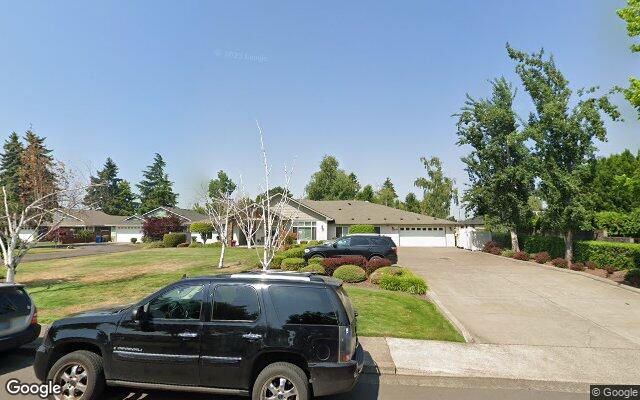
A large home, reviewed on public record.
Compared to 55 Oregon facilities with a similar number of beds.
ALF memory care · 36-month window. Higher percentile = better performance on inspection record. Source: Oregon Dept. of Human Services · Long-Term Care Licensing.
Rankings based on 36-month OR-DHS inspection data. Severity and frequency: fewer citations = higher percentile. Repeat rate: lower repeat citation share = higher percentile.
Citation history, plotted month by month.
16 deficiencies on record. Each bar is a month with a citation.
Finding distribution
16 total · 36 monthsScope × Severity (CMS A–L)
Every inspection visit, verbatim.
4 inspections in the public record, most recent first. Plain-language summaries open first — click into any row for the full citation text.
2025-08-13Annual Compliance VisitOR-cited · 2 findings
Plain-language summary
A routine kitchen inspection on August 13, 2025 found the facility failed to maintain sanitary conditions required by food service rules: inspectors observed accumulation of food spills, debris, grease, and dirt on walls, floors, equipment, and drains throughout the kitchen and memory care kitchenette, along with cracked and broken walls, baseboards, and cabinet materials that could not be properly sanitized. The facility also failed to comply with memory care community licensing requirements tied to these sanitation violations. The executive director was notified of the findings on the day of inspection.
Read full citation text (2)Hide full citation text
“Based on observation and interview, it was determined the facility failed to maintain the kitchen in a sanitary manner and ensure food was prepared and served in accordance with OAR 333-150-0000 (Food Sanitation Rules). Findings include, but are not limited to: On 08/13/25, from 10:40 am to 2:02 pm, interviews with staff and observations of the facility kitchen, memory care kitchenette, food storage areas, food preparation, and food service were conducted. The following was identified: a. An accumulation of food spills, splatters, loose food and trash debris, dirt, dust, black matter, and grease was visible on or underneath the following: * Walls throughout the facility kitchen; * Flooring under, around, in-between, and behind large equipment, ice machine, sinks, food and non-food preparation areas, and ware wash area; * Industrial can opener blade and casing; * Food traps and/or water drains located under the ware wash machine and under the memory care steam table; and * The interior of the cabinet drawer located under the microwave memory care kitchenette. b. The following areas were noted in need of repair: * The walls and base board located under and around the ware wash area and ice machine had cracked, broken, and/or missing material and was not maintained in a way to ensure proper sanitization and infection control practices; * The ware wash area had different sized metal sheets attached to the wall and beside the ware wash machine and observed to have holes, missing and loose screws, and was not tightly sealed to the wall or maintained in a way to ensure proper sanitization and infection control practices; * The walls around kitchen entrances had cracked, broken, and/or missing material; * There was a wooden pallet under the ware wash area with broken and exposed material; * The exterior of the kitchenette cabinet drawer located under the microwave in the memory care, had a piece of material missing on the left side; and * The interior of the kitchenette cabinet located under the steam table in the memory care, had a large square section of material, around the steam table drain, was unfinished and had exposed material. On 08/13/25 at 1:35 pm, Staff 2 (Dining Service Director) and Staff 3 (Cook) toured the kitchen with the surveyor and reviewed the areas identified above. The need to ensure the kitchen was maintained in a sanitary manner and food was prepared and served in accordance with Food Sanitation Rules was reviewed with Staff 1 (Executive Director) on 08/13/25 at 1:49 pm. She acknowledged the findings.”
“Based on observation and interview, it was determined the facility failed to follow licensing rules for Residential Care and Assisted Living Facilities. Findings include, but are not limited to: Refer to C240. Refer to C240. OAR 411-057-0140(2) Administration Compliance (2) The licensee of a memory care community must comply with both the licensing rules for the facility and Chapter 411, Division 57. This Rule is not met as evidenced by:”
Read raw inspector notesClose inspector notes
Based on observation and interview, it was determined the facility failed to maintain the kitchen in a sanitary manner and ensure food was prepared and served in accordance with OAR 333-150-0000 (Food Sanitation Rules). Findings include, but are not limited to: On 08/13/25, from 10:40 am to 2:02 pm, interviews with staff and observations of the facility kitchen, memory care kitchenette, food storage areas, food preparation, and food service were conducted. The following was identified: a. An accumulation of food spills, splatters, loose food and trash debris, dirt, dust, black matter, and grease was visible on or underneath the following: * Walls throughout the facility kitchen; * Flooring under, around, in-between, and behind large equipment, ice machine, sinks, food and non-food preparation areas, and ware wash area; * Industrial can opener blade and casing; * Food traps and/or water drains located under the ware wash machine and under the memory care steam table; and * The interior of the cabinet drawer located under the microwave memory care kitchenette. b. The following areas were noted in need of repair: * The walls and base board located under and around the ware wash area and ice machine had cracked, broken, and/or missing material and was not maintained in a way to ensure proper sanitization and infection control practices; * The ware wash area had different sized metal sheets attached to the wall and beside the ware wash machine and observed to have holes, missing and loose screws, and was not tightly sealed to the wall or maintained in a way to ensure proper sanitization and infection control practices; * The walls around kitchen entrances had cracked, broken, and/or missing material; * There was a wooden pallet under the ware wash area with broken and exposed material; * The exterior of the kitchenette cabinet drawer located under the microwave in the memory care, had a piece of material missing on the left side; and * The interior of the kitchenette cabinet located under the steam table in the memory care, had a large square section of material, around the steam table drain, was unfinished and had exposed material. On 08/13/25 at 1:35 pm, Staff 2 (Dining Service Director) and Staff 3 (Cook) toured the kitchen with the surveyor and reviewed the areas identified above. The need to ensure the kitchen was maintained in a sanitary manner and food was prepared and served in accordance with Food Sanitation Rules was reviewed with Staff 1 (Executive Director) on 08/13/25 at 1:49 pm. She acknowledged the findings. Based on observation and interview, it was determined the facility failed to follow licensing rules for Residential Care and Assisted Living Facilities. Findings include, but are not limited to: Refer to C240. Refer to C240. OAR 411-057-0140(2) Administration Compliance (2) The licensee of a memory care community must comply with both the licensing rules for the facility and Chapter 411, Division 57. This Rule is not met as evidenced by:
2025-03-06Complaint InvestigationOR-cited · 2 findings
2025-02-12Annual Compliance VisitOR-cited · 9 findings
Plain-language summary
During a re-licensure inspection on February 10-12, 2025, inspectors observed that staff failed to follow infection prevention and hand hygiene procedures when handling a resident's urinary catheter—including picking it up without gloves, allowing it to spill urine on the floor, and then assisting other residents without washing their hands—and also found that staff did not document attempting non-drug interventions before giving a resident scheduled behavioral medications like haloperidol and lorazepam. The facility acknowledged these violations and committed to replacing catheter bags, retraining staff on hand hygiene and catheter care, and reviewing infection control practices weekly.
Read full citation text (9)Hide full citation text
“Based on observation and interview, it was determined the facility failed to ensure infection prevention and control protocols were maintained for 1 of 2 sampled residents (#7) and multiple unsampled residents who were dependent on staff for meal escorts. Findings include, but are not limited to: Resident 7 moved into the facility in 08/2019 with diagnoses including dementia and stroke and was identified in the acuity interview as having a urinary catheter and was dependent on staff for transfers and escorts. Observations of staff transferring the resident were conducted on 02/10/25 and 02/11/25 and revealed the following: a. At 11:18 am on 02/10/25, Staff 14 (CG) and Staff 15 (CG) entered Resident 7’s room to assist him/her with transferring to a wheelchair. Resident 7 was sitting in a recliner with the catheter bag laying on the floor, exposing it to potential contamination. Staff 14 picked up the catheter bag without single-use gloves, and the bag spilled urine onto the floor. She confirmed the catheter bag had a leak. Staff 14 then placed the leaking bag onto Resident 7’s lap. She exited the resident’s room without first performing hand hygiene, grabbed and donned a pair of single-use gloves, and reentered the resident’s room. Staff 14 used paper towels to wipe the spilled urine from the floor. She disposed of the gloves and paper towel and left the room again without performing hand hygiene. Staff 14 then proceeded to physically assist five unsampled residents to the dining room, touching their person and/or their personal mobility devices. b. At 11:35 am on 02/11/25, Staff 15 (CG) and Staff 17 (MT) entered Resident 7’s room to assist him/her with transferring to his/her wheelchair. The resident’s catheter bag was again laying on the floor, exposing it to potential contamination. Staff 17 picked up the catheter bag and placed it on the resident’s lap during the transfer. They assisted the resident to the dining room, then proceeded to assist three unsampled residents to the dining room without first performing hand hygiene, touching their person and/or their personal mobility devices. At 9:38 am on 02/12/25, the observation was shared with Staff 1 (ED), Staff 2 (Wellness Director), and Staff 6 (Operations Specialist). They acknowledged infection prevention and control protocols had not been practiced. : 1. Resident #7's catheter bag was replaced. Catheter bags will be replaced as needed for any other residents with catheters. 2. The Executive Director, Wellness Nurse, Wellness Director, and Direct Care Staff will receive additional training on Handwashing and Hand Hygiene Policy, Infection Control: Infectious Waste Disposal Policy, and the Job-Aid for Foley Catheter Care & Urinary Leg Bags. 3. THe Welness Director will review this area weekly and with each new hire per the Caregiver Training Checklist. 4. The Executive Director will ensure the corrections are completed and monitored. OAR 411-054-0050(1-5) Infection Prevention & Control (Amended 03/18/2022)(1) Facilities must establish and maintain infection prevention and control protocols to provide a safe, sanitary and comfortable environment. This includes protocols to prevent the development and transmission of communicable diseases.(2) Each facility must designate an individual to be the facility ' s "Infection Control Specialist" responsible for carrying out the infection prevention and control protocols and serving as the primary point of contact for the Department regarding disease outbreaks. The Infection Control Specialist must:(a) Be qualified by education, training and experience or certification; and(b) Complete specialized training in infection prevention and control protocols within three months of being designated under this paragraph, unless the designee has received the specialized training within the 24-month period prior to the time of the designation. The Department will describe trainings that will be acceptable to meet the specialized training requirement in rule, by January 1, 2022.(3) Each facility must establish infection prevention and control protocols and have an Infection Control Specialist, trained as required in this rule, by July 1, 2022.(4) Facilities must comply with masking requirements as prescribed in OAR 333-019-1011 or, if applicable, OAR 437-001-0744, to control the spread of COVID-19.(5) Facilities must comply with vaccination requirements for COVID-19 as prescribed in OAR 333-019-1010.Stat. Auth.: ORS 410.070, 443.004, 443.012, 443.450Stats. Implemented: ORS 443.004, 443.400-443.455, 443.991 This Rule is not met as evidenced by:”
“Based on interview, and record review, it was determined the facility failed to ensure non-pharmacological interventions were attempted and documented as unsuccessful prior to PRN psychotropic medication being administered for 1 of 1 sampled resident (# 6) who was prescribed and received as needed psychotropic medications. Findings include, but are not limited to: Resident 6 was admitted to the facility in 04/2024 with diagnoses including Alzheimer’s disease. The resident's 01/01/25 through 02/09/25 MARs, physician’s orders and progress notes were reviewed. Staff were interviewed and the following was identified: Resident 6 had physician’s orders and instructions for the following PRN psychotropic medications for behaviors: *Haloperidol 5 mg every four hours as needed for agitation and hallucinations. *Lorazepam 0.5 mg every two hours as needed for anxiety, insomnia, or restlessness. * Parameters for administration of the medications included the haloperidol was to be administered first, prior to the lorazepam. Although there was non-drug interventions listed on the MAR for staff to try prior to administrating the PRN behavior medications, there was no documented evidence staff attempted non-drug interventions prior to the administration of the medications. Additionally, on 01/02/25, 02/02/25, and 02/11/25 staff did not follow the parameters and administered PRN haloperidol and PRN lorazepam to Resident 6 at the same time. The need to ensure non-pharmacological interventions were documented as attempted and failed prior to the administration of PRN psychotropics and parameters for administration were followed was discussed with Staff 1 (ED), Staff 2 (Wellness Director), Staff 3 (Wellness Nurse/RN) and Staff 6 (Operations Specialist) on 02/11/25. The staff acknowledged the findings. ?”
“based on acuity, complaint investigation or survey inspection.(e) Based on resident acuity and facility structural design there must be adequate direct care staff present at all times, to meet the fire safety evacuation standards as required by the fire authority or the Department.(f) The licensee is responsible for assuring that staffing is increased to compensate for the evaluated care and service needs of residents at move-in and for the changing physical or mental needs of the residents.(g) A minimum of two direct care staff must be scheduled and available at all times whenever a resident requires the assistance of two direct care staff for scheduled and unscheduled needs.(h) In facilities where residents are hosed in two or more detached buildings, or if a building has distinct and segregated areas, a designated caregiver must be awake and available in each building and each segregated area at all times.(i) Facilities must have a written, defined system to determine appropriate numbers of direct care staff and general staffing based on resident acuity and service needs. Such systems may be either manual or electronic.(A) Guidelines for systems must also consider physical elements of a building, use of technology if applicable and staff experience.(B) Facilities must be able to demonstrate how their staffing systems work. This Rule is not met as evidenced by: ? ?Based on interview and record review, it was determined the facility failed to ensure direct care staff sufficient in number to meet the 24-hour scheduled and unscheduled needs of each resident, enough direct care staff to meet fire safety and evacuation standards based on resident acuity and facility structural design on night shift, and a minimum of two direct care staff scheduled and available at all times whenever a resident required the assistance of two direct care staff for scheduled and unscheduled needs for multiple sampled and unsampled residents. Findings include, but are not limited to: The facility was licensed as a RCF with two floors and a separate, distinct, locked MCC unit. During the acuity interview at 9:11 am on 02/10/25, the RCF consensus was confirmed at 34 residents, and the MCC census was confirmed at 20 residents. Twelve residents were identified as needing two-person assistance for transfers and/or ADL cares, nine on the RCF unit and three on the MCC unit. During a group resident interview at 3:00 pm on 02/10/25, two unsampled residents reported excessive call light response times. The facility’s posted staffing plan, staffing schedule from 02/01/25 to 02/08/25, and call light response times for two unsampled residents from the group interview were reviewed with Staff 1 (ED) and Staff 2 (Wellness Director) at 9:00 am on 02/12/25. The following was identified: The posted staffing plan for the facility RCF was as follows: * Day shift: 3 CG, 1 MT; * Evening shift: 2.5 CG, 1 MT; and * Night shift: 1 CG, 0.5 MT. The posted staffing plan for the facility MCC was as follows: * Day shift: 2.5 CG, 1 MT; * Evening shift: 2 CG, 1 MT; and * Night shift: 1 CG, 0.5 MT. The two unsampled residents called for assistance a total of 32 times from 02/01/25 to 02/08/25. Nine calls were in excess of 20 minutes, ranging from 22 minutes to 61 minutes, or a total of 28% of calls. During the interview at 9:00 am on 02/12/25, Staff 1 stated on night shift, staff offered toileting for residents who needed two-person assistance on a schedule, to accommodate staff lunches. She acknowledged the CG assigned to the MCC unit would not be able to leave the locked unit to assist with unscheduled needs in RCF while one staff was on lunch. She further acknowledged, given the high number of residents requiring two-person staff assistance and the facility design of two RCF floors plus a locked MCC unit, the number of staff scheduled on night shift was insufficient to meet fire safety and evacuation standards. The need to ensure adequate staffing to meet residents’ scheduled and unscheduled needs and fire safety and evacuation standards was discussed with Staff 1, Staff 2 (Wellness Director), and Staff 6 (Operations Specialist) on 02/12/25. They acknowledged the findings. Refer to C363.”
“Based on interview and record review, it was determined the facility failed to ensure their Acuity-Based Staffing Tool (ABST) accurately captured care time and care elements that staff were providing for 2 of 4 sampled Residents (#s 1 and 6). Findings include but are not limited to: A review of the facility’s ABST revealed the care times and care elements documented for cares provided by staff were not accurate for Residents 1 and 6. On 02/12/25 the need to ensure the ABST accurately captured care time and care elements was discussed with Staff 1 (ED). She acknowledged the findings. ?”
“Based on interview and record review, it was determined the facility failed to ensure the acuity-based staffing tool (ABST) evaluation was updated and reviewed before a resident moved in, no less than quarterly at the same time of service plan update, and/or with a significant change of condition for 2 of 4 sampled Residents (#s 1 and 3) and multiple unsampled residents, and failed to ensure documentation of consistently staffing to meet or exceed the posted staffing plan. Findings include, but are not limited to: The facility was licensed as a RCF with a separate, distinct MCC unit.”
“Based on observation, interview and record review, it was determined the facility failed to provide health care services in accordance with the licensing rules for Residential Care and Assisted Living Facilities. Findings include, but are not limited to: Refer to C 330.”
“Based on observation, interview and record review, it was determined the facility failed to follow licensing rules for Residential Care and Assisted Living Facilities. Findings include, but are not limited to: Refer to C 295, C 360, C 362, C 363 and H 1510. Refer to C 295, C 360, C 362, C 363, and H 1510. OAR 411-057-0140(2) Administration Compliance (2) The licensee of a memory care community must comply with both the licensing rules for the facility and Chapter 411, Division 57. This Rule is not met as evidenced by:”
“Based on interview and record review, it was determined the facility failed to ensure documentation all preservice orientation training requirements had been completed by 4 of 4 staff (#s 10, 12, 13, and 16) prior to beginning their job duties and LGBTQIA2S+ training had been completed by 1 of 3 long-term non-direct care staff (#11). Findings include, but are not limited to: Staff training records were reviewed with Staff 6 (Operations Specialist) and Staff 9 (Business Office Director) on 02/12/25. The following was identified: a. There was no documented evidence Staff 10 (Cook), hired 10/16/24, completed the following required preservice orientation training: * Strategies for addressing social needs and engaging persons with dementia in meaningful activities; and * Specific aspects of dementia care and ensuring safety of residents with dementia including addressing pain, providing food and fluids, preventing wandering, and use of a person-centered approach. b. There was no documented evidence Staff 12 (MT), hired 01/07/25, completed the following required preservice orientation training: * Approved LGBTQIA2S+ course. c. There was no documented evidence Staff 13 (CG), hired 09/05/24, completed the following required preservice orientation training: * Infectious disease prevention training; and * Preservice dementia training. d. There was no documented evidence Staff 16 (CG), hired 11/20/24, completed the following required preservice orientation training: * Approved Home and Community-Based Services course. e. There was no documented evidence Staff 11 (Cook), hired 09/13/23 completed the required biennial LGBTQIA2S+ course. The need to ensure all preservice orientation training was completed by staff prior to beginning job duties and to ensure LGBTQIA2S+ training was completed biennially was discussed with Staff 1 (ED), Staff 6, and Staff 9. They acknowledged the findings. ? ?”
“Based on observation, interview and record review, it was determined the facility failed to provide health care services in accordance with the licensing rules for Residential Care and Assisted Living Facilities. Findings include, but are not limited to: Refer to C 330. Refer to C 330. OAR 411-057-0160(2b) Compliance with Rules Health Care (b) Health care services provided in accordance with the licensing rules of the facility. This Rule is not met as evidenced by:”
Read raw inspector notesClose inspector notes
Based on observation and interview, it was determined the facility failed to ensure infection prevention and control protocols were maintained for 1 of 2 sampled residents (#7) and multiple unsampled residents who were dependent on staff for meal escorts. Findings include, but are not limited to: Resident 7 moved into the facility in 08/2019 with diagnoses including dementia and stroke and was identified in the acuity interview as having a urinary catheter and was dependent on staff for transfers and escorts. Observations of staff transferring the resident were conducted on 02/10/25 and 02/11/25 and revealed the following: a. At 11:18 am on 02/10/25, Staff 14 (CG) and Staff 15 (CG) entered Resident 7’s room to assist him/her with transferring to a wheelchair. Resident 7 was sitting in a recliner with the catheter bag laying on the floor, exposing it to potential contamination. Staff 14 picked up the catheter bag without single-use gloves, and the bag spilled urine onto the floor. She confirmed the catheter bag had a leak. Staff 14 then placed the leaking bag onto Resident 7’s lap. She exited the resident’s room without first performing hand hygiene, grabbed and donned a pair of single-use gloves, and reentered the resident’s room. Staff 14 used paper towels to wipe the spilled urine from the floor. She disposed of the gloves and paper towel and left the room again without performing hand hygiene. Staff 14 then proceeded to physically assist five unsampled residents to the dining room, touching their person and/or their personal mobility devices. b. At 11:35 am on 02/11/25, Staff 15 (CG) and Staff 17 (MT) entered Resident 7’s room to assist him/her with transferring to his/her wheelchair. The resident’s catheter bag was again laying on the floor, exposing it to potential contamination. Staff 17 picked up the catheter bag and placed it on the resident’s lap during the transfer. They assisted the resident to the dining room, then proceeded to assist three unsampled residents to the dining room without first performing hand hygiene, touching their person and/or their personal mobility devices. At 9:38 am on 02/12/25, the observation was shared with Staff 1 (ED), Staff 2 (Wellness Director), and Staff 6 (Operations Specialist). They acknowledged infection prevention and control protocols had not been practiced. : 1. Resident #7's catheter bag was replaced. Catheter bags will be replaced as needed for any other residents with catheters. 2. The Executive Director, Wellness Nurse, Wellness Director, and Direct Care Staff will receive additional training on Handwashing and Hand Hygiene Policy, Infection Control: Infectious Waste Disposal Policy, and the Job-Aid for Foley Catheter Care & Urinary Leg Bags. 3. THe Welness Director will review this area weekly and with each new hire per the Caregiver Training Checklist. 4. The Executive Director will ensure the corrections are completed and monitored. OAR 411-054-0050(1-5) Infection Prevention & Control (Amended 03/18/2022)(1) Facilities must establish and maintain infection prevention and control protocols to provide a safe, sanitary and comfortable environment. This includes protocols to prevent the development and transmission of communicable diseases.(2) Each facility must designate an individual to be the facility ' s "Infection Control Specialist" responsible for carrying out the infection prevention and control protocols and serving as the primary point of contact for the Department regarding disease outbreaks. The Infection Control Specialist must:(a) Be qualified by education, training and experience or certification; and(b) Complete specialized training in infection prevention and control protocols within three months of being designated under this paragraph, unless the designee has received the specialized training within the 24-month period prior to the time of the designation. The Department will describe trainings that will be acceptable to meet the specialized training requirement in rule, by January 1, 2022.(3) Each facility must establish infection prevention and control protocols and have an Infection Control Specialist, trained as required in this rule, by July 1, 2022.(4) Facilities must comply with masking requirements as prescribed in OAR 333-019-1011 or, if applicable, OAR 437-001-0744, to control the spread of COVID-19.(5) Facilities must comply with vaccination requirements for COVID-19 as prescribed in OAR 333-019-1010.Stat. Auth.: ORS 410.070, 443.004, 443.012, 443.450Stats. Implemented: ORS 443.004, 443.400-443.455, 443.991 This Rule is not met as evidenced by: Based on interview, and record review, it was determined the facility failed to ensure non-pharmacological interventions were attempted and documented as unsuccessful prior to PRN psychotropic medication being administered for 1 of 1 sampled resident (# 6) who was prescribed and received as needed psychotropic medications. Findings include, but are not limited to: Resident 6 was admitted to the facility in 04/2024 with diagnoses including Alzheimer’s disease. The resident's 01/01/25 through 02/09/25 MARs, physician’s orders and progress notes were reviewed. Staff were interviewed and the following was identified: Resident 6 had physician’s orders and instructions for the following PRN psychotropic medications for behaviors: *Haloperidol 5 mg every four hours as needed for agitation and hallucinations. *Lorazepam 0.5 mg every two hours as needed for anxiety, insomnia, or restlessness. * Parameters for administration of the medications included the haloperidol was to be administered first, prior to the lorazepam. Although there was non-drug interventions listed on the MAR for staff to try prior to administrating the PRN behavior medications, there was no documented evidence staff attempted non-drug interventions prior to the administration of the medications. Additionally, on 01/02/25, 02/02/25, and 02/11/25 staff did not follow the parameters and administered PRN haloperidol and PRN lorazepam to Resident 6 at the same time. The need to ensure non-pharmacological interventions were documented as attempted and failed prior to the administration of PRN psychotropics and parameters for administration were followed was discussed with Staff 1 (ED), Staff 2 (Wellness Director), Staff 3 (Wellness Nurse/RN) and Staff 6 (Operations Specialist) on 02/11/25. The staff acknowledged the findings. ? based on acuity, complaint investigation or survey inspection.(e) Based on resident acuity and facility structural design there must be adequate direct care staff present at all times, to meet the fire safety evacuation standards as required by the fire authority or the Department.(f) The licensee is responsible for assuring that staffing is increased to compensate for the evaluated care and service needs of residents at move-in and for the changing physical or mental needs of the residents.(g) A minimum of two direct care staff must be scheduled and available at all times whenever a resident requires the assistance of two direct care staff for scheduled and unscheduled needs.(h) In facilities where residents are hosed in two or more detached buildings, or if a building has distinct and segregated areas, a designated caregiver must be awake and available in each building and each segregated area at all times.(i) Facilities must have a written, defined system to determine appropriate numbers of direct care staff and general staffing based on resident acuity and service needs. Such systems may be either manual or electronic.(A) Guidelines for systems must also consider physical elements of a building, use of technology if applicable and staff experience.(B) Facilities must be able to demonstrate how their staffing systems work. This Rule is not met as evidenced by: ? ?Based on interview and record review, it was determined the facility failed to ensure direct care staff sufficient in number to meet the 24-hour scheduled and unscheduled needs of each resident, enough direct care staff to meet fire safety and evacuation standards based on resident acuity and facility structural design on night shift, and a minimum of two direct care staff scheduled and available at all times whenever a resident required the assistance of two direct care staff for scheduled and unscheduled needs for multiple sampled and unsampled residents. Findings include, but are not limited to: The facility was licensed as a RCF with two floors and a separate, distinct, locked MCC unit. During the acuity interview at 9:11 am on 02/10/25, the RCF consensus was confirmed at 34 residents, and the MCC census was confirmed at 20 residents. Twelve residents were identified as needing two-person assistance for transfers and/or ADL cares, nine on the RCF unit and three on the MCC unit. During a group resident interview at 3:00 pm on 02/10/25, two unsampled residents reported excessive call light response times. The facility’s posted staffing plan, staffing schedule from 02/01/25 to 02/08/25, and call light response times for two unsampled residents from the group interview were reviewed with Staff 1 (ED) and Staff 2 (Wellness Director) at 9:00 am on 02/12/25. The following was identified: The posted staffing plan for the facility RCF was as follows: * Day shift: 3 CG, 1 MT; * Evening shift: 2.5 CG, 1 MT; and * Night shift: 1 CG, 0.5 MT. The posted staffing plan for the facility MCC was as follows: * Day shift: 2.5 CG, 1 MT; * Evening shift: 2 CG, 1 MT; and * Night shift: 1 CG, 0.5 MT. The two unsampled residents called for assistance a total of 32 times from 02/01/25 to 02/08/25. Nine calls were in excess of 20 minutes, ranging from 22 minutes to 61 minutes, or a total of 28% of calls. During the interview at 9:00 am on 02/12/25, Staff 1 stated on night shift, staff offered toileting for residents who needed two-person assistance on a schedule, to accommodate staff lunches. She acknowledged the CG assigned to the MCC unit would not be able to leave the locked unit to assist with unscheduled needs in RCF while one staff was on lunch. She further acknowledged, given the high number of residents requiring two-person staff assistance and the facility design of two RCF floors plus a locked MCC unit, the number of staff scheduled on night shift was insufficient to meet fire safety and evacuation standards. The need to ensure adequate staffing to meet residents’ scheduled and unscheduled needs and fire safety and evacuation standards was discussed with Staff 1, Staff 2 (Wellness Director), and Staff 6 (Operations Specialist) on 02/12/25. They acknowledged the findings. Refer to C363. Based on interview and record review, it was determined the facility failed to ensure their Acuity-Based Staffing Tool (ABST) accurately captured care time and care elements that staff were providing for 2 of 4 sampled Residents (#s 1 and 6). Findings include but are not limited to: A review of the facility’s ABST revealed the care times and care elements documented for cares provided by staff were not accurate for Residents 1 and 6. On 02/12/25 the need to ensure the ABST accurately captured care time and care elements was discussed with Staff 1 (ED). She acknowledged the findings. ? Based on interview and record review, it was determined the facility failed to ensure the acuity-based staffing tool (ABST) evaluation was updated and reviewed before a resident moved in, no less than quarterly at the same time of service plan update, and/or with a significant change of condition for 2 of 4 sampled Residents (#s 1 and 3) and multiple unsampled residents, and failed to ensure documentation of consistently staffing to meet or exceed the posted staffing plan. Findings include, but are not limited to: The facility was licensed as a RCF with a separate, distinct MCC unit. Based on observation, interview and record review, it was determined the facility failed to provide health care services in accordance with the licensing rules for Residential Care and Assisted Living Facilities. Findings include, but are not limited to: Refer to C 330. Based on observation, interview and record review, it was determined the facility failed to follow licensing rules for Residential Care and Assisted Living Facilities. Findings include, but are not limited to: Refer to C 295, C 360, C 362, C 363 and H 1510. Refer to C 295, C 360, C 362, C 363, and H 1510. OAR 411-057-0140(2) Administration Compliance (2) The licensee of a memory care community must comply with both the licensing rules for the facility and Chapter 411, Division 57. This Rule is not met as evidenced by: Based on interview and record review, it was determined the facility failed to ensure documentation all preservice orientation training requirements had been completed by 4 of 4 staff (#s 10, 12, 13, and 16) prior to beginning their job duties and LGBTQIA2S+ training had been completed by 1 of 3 long-term non-direct care staff (#11). Findings include, but are not limited to: Staff training records were reviewed with Staff 6 (Operations Specialist) and Staff 9 (Business Office Director) on 02/12/25. The following was identified: a. There was no documented evidence Staff 10 (Cook), hired 10/16/24, completed the following required preservice orientation training: * Strategies for addressing social needs and engaging persons with dementia in meaningful activities; and * Specific aspects of dementia care and ensuring safety of residents with dementia including addressing pain, providing food and fluids, preventing wandering, and use of a person-centered approach. b. There was no documented evidence Staff 12 (MT), hired 01/07/25, completed the following required preservice orientation training: * Approved LGBTQIA2S+ course. c. There was no documented evidence Staff 13 (CG), hired 09/05/24, completed the following required preservice orientation training: * Infectious disease prevention training; and * Preservice dementia training. d. There was no documented evidence Staff 16 (CG), hired 11/20/24, completed the following required preservice orientation training: * Approved Home and Community-Based Services course. e. There was no documented evidence Staff 11 (Cook), hired 09/13/23 completed the required biennial LGBTQIA2S+ course. The need to ensure all preservice orientation training was completed by staff prior to beginning job duties and to ensure LGBTQIA2S+ training was completed biennially was discussed with Staff 1 (ED), Staff 6, and Staff 9. They acknowledged the findings. ? ? Based on observation, interview and record review, it was determined the facility failed to provide health care services in accordance with the licensing rules for Residential Care and Assisted Living Facilities. Findings include, but are not limited to: Refer to C 330. Refer to C 330. OAR 411-057-0160(2b) Compliance with Rules Health Care (b) Health care services provided in accordance with the licensing rules of the facility. This Rule is not met as evidenced by:
2024-05-09Annual Compliance VisitOR-cited · 3 findings
Plain-language summary
A routine kitchen inspection on May 9, 2024 found the facility did not meet food sanitation rules: the kitchen had debris and dust buildup in multiple areas including behind the stove, above the dishwasher, and on food preparation equipment, and two sinks near the ice machine were being used for both handwashing and food preparation, creating a risk of cross contamination. The facility was re-inspected on July 18, 2024 and found to be in substantial compliance with food sanitation and meal service rules.
Read full citation text (3)Hide full citation text
“The findings of the kitchen inspection, conducted 05/09/24, are documented in this report. The survey was conducted to determine compliance with the OARs 411-054-0030 for Residential Care and Assisted Living Facilities for Resident Services - Meals, Oregon Health Service Food Sanitation Rules OARs 333-150-0000, and OARs 411 Division 57 for Memory Care Communities. Tag numbers beginning with the letter C refer to the Residential Care and Assisted Living rules. Tag numbers beginning with the letter Z refer to the Memory Care Community rules. The findings of the kitchen inspection, conducted 05/09/24, are documented in this report. The survey was conducted to determine compliance with the OARs 411-054-0030 for Residential Care and Assisted Living Facilities for Resident Services - Meals, Oregon Health Service Food Sanitation Rules OARs 333-150-0000, and OARs 411 Division 57 for Memory Care Communities. Tag numbers beginning with the letter C refer to the Residential Care and Assisted Living rules. Tag numbers beginning with the letter Z refer to the Memory Care Community rules. The findings of the first re-visit to the kitchen inspection of 05/09/24, conducted on 07/18/24, are documented in this report. It was determined the facility was in substantial compliance with the OARs 411-054-0030 for Residential Care and Assisted Living Facilities for Resident Services- Meals, and Oregon Health Service Food Sanitation Rules OARs 333-150-0000. The findings of the first re-visit to the kitchen inspection of 05/09/24, conducted on 07/18/24, are documented in this report. It was determined the facility was in substantial compliance with the OARs 411-054-0030 for Residential Care and Assisted Living Facilities for Resident Services- Meals, and Oregon Health Service Food Sanitation Rules OARs 333-150-0000.”
“Based on observation and interview, it was determined the facility failed to ensure kitchen practices and protocols were in accordance with the Food Sanitation Rules OARs 333-150-0000. Findings include, but are not limited to: On 05/09/24 at 11:00 am, the facility kitchen was observed to need cleaning in the following areas: * Wall and floor behind and underneath the stove/grill - drips, spills, debris; * Vent above the dishwasher - significant build-up of dust; * Ceiling and sprinkler head near dishwasher - dust build-up; * Floor and drain under dishwashing area - significant debris build-up; * Commercial can opener - black matter and food debris on the blade; and * Spice shelf next to the stove/grill - food debris. Two sinks next to the ice machine were used for both handwashing and prepping/cleaning food items, creating potential for cross contamination. Staff 1 (Kitchen Manager) indicated a single sink on the opposite side of the kitchen was for handwashing only. The areas of concern were observed and discussed with Staff 1 and discussed with Staff 2 (Executive Director) on 05/09/24. The findings were acknowledged. Based on observation and interview, it was determined the facility failed to ensure kitchen practices and protocols were in accordance with the Food Sanitation Rules OARs 333-150-0000. Findings include, but are not limited to: On 05/09/24 at 11:00 am, the facility kitchen was observed to need cleaning in the following areas: * Wall and floor behind and underneath the stove/grill - drips, spills, debris; * Vent above the dishwasher - significant build-up of dust; * Ceiling and sprinkler head near dishwasher - dust build-up; * Floor and drain under dishwashing area - significant debris build-up; * Commercial can opener - black matter and food debris on the blade; and * Spice shelf next to the stove/grill - food debris. Two sinks next to the ice machine were used for both handwashing and prepping/cleaning food items, creating potential for cross contamination. Staff 1 (Kitchen Manager) indicated a single sink on the opposite side of the kitchen was for handwashing only. The areas of concern were observed and discussed with Staff 1 and discussed with Staff 2 (Executive Director) on 05/09/24. The findings were acknowledged.”
“Based on observation and interview, it was determined the facility failed to follow licensing rules for Residential Care and Assisted Living Facilities. Findings include, but are not limited to: Refer to C240. Based on observation and interview, it was determined the facility failed to follow licensing rules for Residential Care and Assisted Living Facilities. Findings include, but are not limited to: Refer to C240. Refer to C240. Refer to C240. There are no detail notes for this visit.”
Read raw inspector notesClose inspector notes
The findings of the kitchen inspection, conducted 05/09/24, are documented in this report. The survey was conducted to determine compliance with the OARs 411-054-0030 for Residential Care and Assisted Living Facilities for Resident Services - Meals, Oregon Health Service Food Sanitation Rules OARs 333-150-0000, and OARs 411 Division 57 for Memory Care Communities. Tag numbers beginning with the letter C refer to the Residential Care and Assisted Living rules. Tag numbers beginning with the letter Z refer to the Memory Care Community rules. The findings of the kitchen inspection, conducted 05/09/24, are documented in this report. The survey was conducted to determine compliance with the OARs 411-054-0030 for Residential Care and Assisted Living Facilities for Resident Services - Meals, Oregon Health Service Food Sanitation Rules OARs 333-150-0000, and OARs 411 Division 57 for Memory Care Communities. Tag numbers beginning with the letter C refer to the Residential Care and Assisted Living rules. Tag numbers beginning with the letter Z refer to the Memory Care Community rules. The findings of the first re-visit to the kitchen inspection of 05/09/24, conducted on 07/18/24, are documented in this report. It was determined the facility was in substantial compliance with the OARs 411-054-0030 for Residential Care and Assisted Living Facilities for Resident Services- Meals, and Oregon Health Service Food Sanitation Rules OARs 333-150-0000. The findings of the first re-visit to the kitchen inspection of 05/09/24, conducted on 07/18/24, are documented in this report. It was determined the facility was in substantial compliance with the OARs 411-054-0030 for Residential Care and Assisted Living Facilities for Resident Services- Meals, and Oregon Health Service Food Sanitation Rules OARs 333-150-0000. Based on observation and interview, it was determined the facility failed to ensure kitchen practices and protocols were in accordance with the Food Sanitation Rules OARs 333-150-0000. Findings include, but are not limited to: On 05/09/24 at 11:00 am, the facility kitchen was observed to need cleaning in the following areas: * Wall and floor behind and underneath the stove/grill - drips, spills, debris; * Vent above the dishwasher - significant build-up of dust; * Ceiling and sprinkler head near dishwasher - dust build-up; * Floor and drain under dishwashing area - significant debris build-up; * Commercial can opener - black matter and food debris on the blade; and * Spice shelf next to the stove/grill - food debris. Two sinks next to the ice machine were used for both handwashing and prepping/cleaning food items, creating potential for cross contamination. Staff 1 (Kitchen Manager) indicated a single sink on the opposite side of the kitchen was for handwashing only. The areas of concern were observed and discussed with Staff 1 and discussed with Staff 2 (Executive Director) on 05/09/24. The findings were acknowledged. Based on observation and interview, it was determined the facility failed to ensure kitchen practices and protocols were in accordance with the Food Sanitation Rules OARs 333-150-0000. Findings include, but are not limited to: On 05/09/24 at 11:00 am, the facility kitchen was observed to need cleaning in the following areas: * Wall and floor behind and underneath the stove/grill - drips, spills, debris; * Vent above the dishwasher - significant build-up of dust; * Ceiling and sprinkler head near dishwasher - dust build-up; * Floor and drain under dishwashing area - significant debris build-up; * Commercial can opener - black matter and food debris on the blade; and * Spice shelf next to the stove/grill - food debris. Two sinks next to the ice machine were used for both handwashing and prepping/cleaning food items, creating potential for cross contamination. Staff 1 (Kitchen Manager) indicated a single sink on the opposite side of the kitchen was for handwashing only. The areas of concern were observed and discussed with Staff 1 and discussed with Staff 2 (Executive Director) on 05/09/24. The findings were acknowledged. Based on observation and interview, it was determined the facility failed to follow licensing rules for Residential Care and Assisted Living Facilities. Findings include, but are not limited to: Refer to C240. Based on observation and interview, it was determined the facility failed to follow licensing rules for Residential Care and Assisted Living Facilities. Findings include, but are not limited to: Refer to C240. Refer to C240. Refer to C240. There are no detail notes for this visit.
3 older inspections from 2021 are not shown above.
Get the complete record, translated into plain language — emailed to you.
Other facilities in Marion County.
Other memory care facilities in Marion County with similar care offerings.
Full Inspection Record
Family reviews
No reviews yet — be the first to share your experience
Other memory care options nearby.
More options in neighboring cities
Licensed memory care in other cities within this county region — useful when your search radius crosses city limits.