Firwood Gardens Rcf.
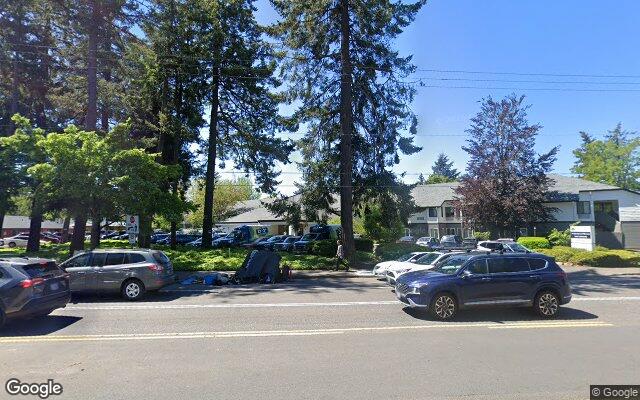
A large home, reviewed on public record.
© Google Street View
Compared to 22 Oregon facilities with a similar number of beds.
ALF memory care · 36-month window. Higher percentile = better performance on inspection record. Source: Oregon Dept. of Human Services · Long-Term Care Licensing.
Rankings based on 36-month OR-DHS inspection data. Severity and frequency: fewer citations = higher percentile. Repeat rate: lower repeat citation share = higher percentile.
Citation history, plotted month by month.
17 deficiencies on record. Each bar is a month with a citation.
Finding distribution
17 total · 36 monthsScope × Severity (CMS A–L)
Every inspection visit, verbatim.
4 inspections in the public record, most recent first. Plain-language summaries open first — click into any row for the full citation text.
2025-07-22Annual Compliance VisitOR-cited · 2 findings
Plain-language summary
During a kitchen inspection on July 22, 2025, inspectors found the facility failed to maintain food sanitation standards under Oregon rules, identifying buildup of dust, dirt, grease, and food debris on equipment and surfaces throughout the kitchen, items in need of repair that made surfaces uncleanable, and improper food storage and handling practices including uncovered ice buckets during transport and scoops stored directly in flour and baking soda bins. The facility developed a corrective action plan that included deep cleaning all identified items by July 31, 2025, updating cleaning checklists, purchasing equipment like an ice bucket cover, and providing staff education on proper food handling and sanitation practices to be completed by August 12, 2025.
Read full citation text (2)Hide full citation text
“Based on observation and interview, it was determined the facility failed to ensure kitchen practices and protocols were in accordance with the Food Sanitation Rules OARs 333-150-0000. Findings include, but are not limited to: On 07/22/25 at 11:30 am, the kitchen was observed. The following was identified: a. A build-up of dust, dirt, food splashes/debris, black matter, and grease was observed on the following: * The commercial can opener; * The walls, floors, baseboards, and ceilings throughout the kitchen; * The interior of storage drawers; * The exterior of the ice maker; * The exterior and underneath “Fridge 1” by the grill; * The metal bread cart; * The exterior of the flour and sugar bins in dry storage; * The legs of stainless steel shelving/sinks/prep surfaces; * Food/beverage carts including the rubber bumpers of the dirty dish cart to the right of the dishwashing area; and * Interior and fronts of open shelving in beverage area; b. The following was in need of repair: * Peeling paint observed around ceiling vents; * Peeling tape observed on countertops and fronts in beverage and hot food pass area; * Multiple cabinet tops and fronts had chips, dings, scratches and laminate coming off, rendering their surfaces uncleanable; * Pieces of tile baseboard were missing near “Fridge 1”; and * Paint was chipped off the corners of the walls in multiple areas of the kitchen. c. The following improper food storage/handling practices were observed: * Staff were observed delivering food and beverages to residents on the second floor. The ice bucket on the beverage tray was not covered to prevent contamination during transport; * Staff were observed scooping ice from the bucket with a water cup with their bare hands rather than using a scoop with a handle; and * Scoops for flour and baking soda were stored directly in the bins. The kitchen was toured and the above was discussed with Staff 2 (Dietary Manager) on 07/22/25 at 12:16 pm and Staff 1 (ED) on 07/22/25 at 12:30 pm. They acknowledged the findings. 1) All items identified during survey to be out of compliance due to cleanliness were deep cleaned on 7/31/25. Our cleaning checklist was updated to include the stated areas needing regular cleaning per observation. Education and training on updated cleaning checklist, uncleanable surface identification and proper food storage/handling practices to be provided to all staff on 8/12/25. The noted areas needing repaired will be completed to create cleanable surfaces. 2) The system will be corrected as evident by the implementation of a cleaning checklist. A cover has been purchased for the ice bucket and a scoop provided for the retrieval ice from the bucket. Scoops for the flour and baking soda removed from the bins and attached outside of bin. Education to the Dietary Manager will be provided to report repairs to maintenance. 3) The Dietary manager will perform routine cleaning inspections per Sapphire CQI/QA with Administrator oversight. 4) The Administrator is responsible to ensure that all the corrections are completed and monitored. OAR 411-054-0030 (1)(a) Resident Services Meals, Food Sanitation Rule (1) The residential care or assisted living facility must provide a minimum scope of services as follows: (a) Three daily nutritious, palatable meals with snacks available seven days a week, in accordance with the recommended dietary allowances found in the United States Department of Agriculture (USDA) guidelines, including seasonal fresh fruit and fresh vegetables; (A) Modified special diets that are appropriate to residents' needs and choices. The facility must encourage residents' involvement in developing menus. (B) Menus must be prepared at least one week in advance, and must be made available to all residents. Meal substitutions must be of similar nutritional value if a resident refuses a food that is served. Residents must be informed in advance of menu changes. (C) Food must be prepared and served in accordance with OAR 333-150-0000 (Food Sanitation Rules). This Rule is not met as evidenced by:”
“Based on observation and interview, it was determined the facility failed to follow licensing rules for Residential Care and Assisted Living Facilities. Findings include, but are not limited to: Refer to C240. Refer to POC for C240 OAR 411-057-0140(2) Administration Compliance (2) The licensee of a memory care community must comply with both the licensing rules for the facility and Chapter 411, Division 57. This Rule is not met as evidenced by:”
Read raw inspector notesClose inspector notes
Based on observation and interview, it was determined the facility failed to ensure kitchen practices and protocols were in accordance with the Food Sanitation Rules OARs 333-150-0000. Findings include, but are not limited to: On 07/22/25 at 11:30 am, the kitchen was observed. The following was identified: a. A build-up of dust, dirt, food splashes/debris, black matter, and grease was observed on the following: * The commercial can opener; * The walls, floors, baseboards, and ceilings throughout the kitchen; * The interior of storage drawers; * The exterior of the ice maker; * The exterior and underneath “Fridge 1” by the grill; * The metal bread cart; * The exterior of the flour and sugar bins in dry storage; * The legs of stainless steel shelving/sinks/prep surfaces; * Food/beverage carts including the rubber bumpers of the dirty dish cart to the right of the dishwashing area; and * Interior and fronts of open shelving in beverage area; b. The following was in need of repair: * Peeling paint observed around ceiling vents; * Peeling tape observed on countertops and fronts in beverage and hot food pass area; * Multiple cabinet tops and fronts had chips, dings, scratches and laminate coming off, rendering their surfaces uncleanable; * Pieces of tile baseboard were missing near “Fridge 1”; and * Paint was chipped off the corners of the walls in multiple areas of the kitchen. c. The following improper food storage/handling practices were observed: * Staff were observed delivering food and beverages to residents on the second floor. The ice bucket on the beverage tray was not covered to prevent contamination during transport; * Staff were observed scooping ice from the bucket with a water cup with their bare hands rather than using a scoop with a handle; and * Scoops for flour and baking soda were stored directly in the bins. The kitchen was toured and the above was discussed with Staff 2 (Dietary Manager) on 07/22/25 at 12:16 pm and Staff 1 (ED) on 07/22/25 at 12:30 pm. They acknowledged the findings. 1) All items identified during survey to be out of compliance due to cleanliness were deep cleaned on 7/31/25. Our cleaning checklist was updated to include the stated areas needing regular cleaning per observation. Education and training on updated cleaning checklist, uncleanable surface identification and proper food storage/handling practices to be provided to all staff on 8/12/25. The noted areas needing repaired will be completed to create cleanable surfaces. 2) The system will be corrected as evident by the implementation of a cleaning checklist. A cover has been purchased for the ice bucket and a scoop provided for the retrieval ice from the bucket. Scoops for the flour and baking soda removed from the bins and attached outside of bin. Education to the Dietary Manager will be provided to report repairs to maintenance. 3) The Dietary manager will perform routine cleaning inspections per Sapphire CQI/QA with Administrator oversight. 4) The Administrator is responsible to ensure that all the corrections are completed and monitored. OAR 411-054-0030 (1)(a) Resident Services Meals, Food Sanitation Rule (1) The residential care or assisted living facility must provide a minimum scope of services as follows: (a) Three daily nutritious, palatable meals with snacks available seven days a week, in accordance with the recommended dietary allowances found in the United States Department of Agriculture (USDA) guidelines, including seasonal fresh fruit and fresh vegetables; (A) Modified special diets that are appropriate to residents' needs and choices. The facility must encourage residents' involvement in developing menus. (B) Menus must be prepared at least one week in advance, and must be made available to all residents. Meal substitutions must be of similar nutritional value if a resident refuses a food that is served. Residents must be informed in advance of menu changes. (C) Food must be prepared and served in accordance with OAR 333-150-0000 (Food Sanitation Rules). This Rule is not met as evidenced by: Based on observation and interview, it was determined the facility failed to follow licensing rules for Residential Care and Assisted Living Facilities. Findings include, but are not limited to: Refer to C240. Refer to POC for C240 OAR 411-057-0140(2) Administration Compliance (2) The licensee of a memory care community must comply with both the licensing rules for the facility and Chapter 411, Division 57. This Rule is not met as evidenced by:
2025-05-01Annual Compliance VisitOR-cited · 8 findings
Plain-language summary
During a re-licensure inspection in April 2025, the facility violated infection prevention and control rules by failing to maintain proper hand hygiene and gloving practices during resident care and meal service. Specific violations included staff applying barrier cream with an ungloved hand during incontinence care, touching clean items and equipment with soiled gloves, not washing hands between tasks, and meal service staff serving food and beverages without hand washing or protective barriers over clothing. The facility implemented immediate training on proper perineal care procedures, purchased and trained staff on apron use for meal service, and established monitoring systems for compliance.
Read full citation text (8)Hide full citation text
“Based on observation and record review, it was determined the facility failed to ensure hot water temperatures in residents’ rooms and common areas were maintained within a range of 110-120 degrees Fahrenheit (F). Findings include, but are not limited to: The facility was toured on 04/28/25 and the following was identified: a. Hot water in four of six sampled sinks measured between 122.7 and 139 degrees F. The sink measuring 139 degrees F was in Room 1 of a MCC resident’s bathroom. Staff 1 (Administrator) was alerted to the issue and confirmed the Maintenance Director was instructed to turn down the water heater. On 04/29/25 at 2:50 pm, the hot water faucet in Room 1 of the MCC measured 140.4 degrees. At 3:00 pm, Staff 1 stated the hot water had been turned off in the wing of the facility where hot water temperatures were recorded as being above the required range. On 04/30/25 at 8:55 am the hot water in Room 1 of the MCC was measured at 142.3 degrees F. Staff 1 was alerted to the findings. At 9:20 am it was observed the hot water in Room 1 had been turned off. Staff 1 confirmed a plumber will be installing mixer valves to correct the issue on 05/02/25 and the hot water would remain off until that time. b. Water temperature logs dating 01/04/25 to 03/15/25 were reviewed. Hot water temperatures exceeded common areas throughout the review period. The need to ensure hot water temperatures in residents’ units and common areas did not exceed 120 degrees F was discussed with Staff 1 and Staff 4 (Maintenance Director) at 04/30/25 at 12:00pm. They acknowledge the findings. 1) All water heaters that service resident rooms and shower rooms have been replaced as of 5/7/2025. These water heaters have been calibrated to ensure that the water temperatures do not exceed 120 degrees F. 2) Maintenance director to conduct weekly hot water temperatures and review with administrator to ensure the water temperatures are under the expected 120 degrees F. 3) Maintenance director and administrator to be responsible for oversight. 4) Water temperature system to be monitored once weekly for the next 30 days per Sapphire CQI policy, and monthly thereafter as part of QA program. OAR 411-054-0200 (9) Plumbing Systems (9) PLUMBING SYSTEMS. Plumbing systems must conform to the building codes in effect at the time of facility construction.(a) Hot water temperature in residents' units must be maintained within a range of 110 - 120 degrees Fahrenheit.(b) Hot water temperatures serving dietary areas must meet OAR 333-150-0000 (Food Sanitation Rules).(c) An outside area drain and hot and cold water hose bibs must be provided for sanitizing laundry carts, food carts, and garbage cans. This Rule is not met as evidenced by:”
“Based on observation and interview, it was determined the facility failed to establish and maintain infection prevention and control protocols to provide a safe and sanitary environment for 1 of 1 sampled resident (# 2) during ADL care and multiple unsampled residents during meal service. Findings include, but are not limited to: a. Resident 2 was admitted to the facility in 02/2025 with diagnoses including chronic inflammatory demyelinating polyneuritis and chronic pain syndrome. During interviews and observations from 04/28/25 through 04/29/25, Resident 2 was noted to require a two-person assist for incontinence care and for transfers with a mechanical lift. During an ADL observation on 04/29/25 at 12:50 pm the following was noted: * Two staff donned gloves, transferred the resident via mechanical lift to the bed and assisted the resident with incontinence care which included cueing, wiping and clothing adjustment; * Two staff rolled the resident side to side to provide assistance with removal of a soiled incontinence brief; * One staff provided perineal care, then proceeded to remove one glove, and applied barrier cream with the ungloved hand to the resident’s coccyx area. After having applied the barrier cream, the staff member donned the same glove. Staff then touched a clean incontinence brief, socks, pants, sling for mechanical lift and the lift itself and repositioned the resident using the soiled gloves; and * The staff members removed the soiled gloves and were not observed to have performed hand hygiene before resuming duties. b. Lunch service on the RCF and MCC were observed on 04/29/25 and 04/30/25. * Universal care staff were observed serving meals, pouring beverages and touching residents without performing hand washing and did not wear a protective barrier over potentially contaminated clothing. Maintaining effective infection prevention and control while providing ADL care and meal service was reviewed with Staff 1 (Administrator), Staff 2 (Assistant Administrator-SNC), and Staff 6 (Specific Needs Director of Health Services) on 05/01/25. They acknowledged the findings. A) 1) Proper peri-care procedure inservice given to all current care staff immediately on 4/30/2025. 2) As part of the onboarding process and competency checklist, designated clinical managers to ensure return demonstration on perineal care procedures prior to care staff being independent of a trainer. 3) Director of Health Services to ensure all current staff understand and show demonstration of proper perineal care procedures. Executive Director to monitor and evaluate that all current staff have been trained on perineal care and that all new staff have documented evidence that they had a designated clinical manger sign off that they were competent in proper perineal care procedures and standards. 3) Executive Director to monitor and evaluate this correction over the next 30 days per Sapphire CQI policy and monthly thereafter as part of our quality assurance program. B) 1) All staff were immediately in-serviced on proper apron use for serving meals in the dining room on 4/30/2025. Aprons for staff were purchased on 4/28/2025. System is in place on storage and usage of aprons. All staff were using appropriately in dining areas by 5/1/2025. 2) New staff will be educated in apron use ongoing as part of the onboarding process. 3) Admin and dietary manager will be responsible for oversight. 4) System will be monitored for the next 30 days per Sapphire CQI policy and monthly thereafter as part of our quality assurance program. OAR 411-054-0050(1-5) Infection Prevention & Control (Amended 03/18/2022)(1) Facilities must establish and maintain infection prevention and control protocols to provide a safe, sanitary and comfortable environment. This includes protocols to prevent the development and transmission of communicable diseases.(2) Each facility must designate an individual to be the facility ' s "Infection Control Specialist" responsible for carrying out the infection prevention and control protocols and serving as the primary point of contact for the Department regarding disease outbreaks. The Infection Control Specialist must:(a) Be qualified by education, training and experience or certification; and(b) Complete specialized training in infection prevention and control protocols within three months of being designated under this paragraph, unless the designee has received the specialized training within the 24-month period prior to the time of the designation. The Department will describe trainings that will be acceptable to meet the specialized training requirement in rule, by January 1, 2022.(3) Each facility must establish infection prevention and control protocols and have an Infection Control Specialist, trained as required in this rule, by July 1, 2022.(4) Facilities must comply with masking requirements as prescribed in OAR 333-019-1011 or, if applicable, OAR 437-001-0744, to control the spread of COVID-19.(5) Facilities must comply with vaccination requirements for COVID-19 as prescribed in OAR 333-019-1010.Stat. Auth.: ORS 410.070, 443.004, 443.012, 443.450Stats. Implemented: ORS 443.004, 443.400-443.455, 443.991 This Rule is not met as evidenced by: Based on observation and interview, it was determined the facility failed to maintain infection prevention and control protocols for 2 of 2 sampled residents (#s 2 and 4) dependent on staff for ADL care. This is a repeat citation. Findings include, but are not limited to:”
“Based on interview and record review, it was determined the facility failed to ensure 2 of 2 newly hired staff (#s 13 and 21) completed Department-approved pre-service dementia training courses before providing care to residents. Findings include, but are not limited to: Staff training records were reviewed with Staff 1 (Administrator) on 04/30/25. There was no documented evidence Staff 13 (MT), hired 02/20/25, and Staff 21 (CG), hired 02/19/25, completed Department-approved training in the following dementia care topics before providing direct care to residents: * Dementia disease process including progression, memory loss, psychiatric and behavioral symptoms; * Techniques for understanding, communicating and responding to behaviors; reducing use of antipsychotics; and * Specific aspects of dementia including addressing pain, providing food/fluids, preventing wandering, use of person-centered approach. The need to ensure all Department-approved pre-service orientation dementia training courses were completed by newly hired staff before they provided direct care to residents was reviewed with Staff 1 (Administrator) on 04/30/25 at 12:32 pm. She acknowledged the findings. 1) Staff 13 and Staff 21 completed their required trainings immediately. 2) All Department-approved pre-service dementia training course completion certificates are to be collected and audited by Administrator with each newly hired staff. 3) Administrator and business office manager will be responsible for oversight. 4) System to be monitored for 30 days and with each new hire thereafter. This system will be monitored monthly as part of our quality assurance program. OAR 411-054-0070 (3-4) Staffing Requirements and Training – Pre-service (3) PRE-SERVICE ORIENTATION FOR ALL EMPLOYEES. Prior to beginning their job responsibilities, all employees must complete orientation training regarding: (a) A review of their written position description with their job responsibilities. (b) RESIDENTS’ RIGHTS. Residents' rights and the values of community-based care, including the Department-approved LGBTQIA2S+ trainings. (A) Effective December 31, 2024, all staff must have completed the required training. All new staff, hired on and after January 1, 2025, must complete the required training prior to beginning job responsibilities. (B) The Department-approved LGBTQIA2S+ trainings shall address the elements described in paragraph (6)(b) of this rule. (c) Abuse and reporting requirements. (d) Fire safety and emergency procedures. (e) INFECTIOUS DISEASE PREVENTION. Prior to beginning their job responsibilities, unless the employee received the training described below within the 24-month period prior to the time of hiring, all employees must complete training addressing the prevention, recognition, control and reporting of the spread of infectious disease. (A) The Department, in consultation with the Oregon Health Authority, has determined this training must address the following curricula: (i) Transmission of communicable disease and infections, including development of a policy with criteria directing staff to stay home when ill with a communicable disease, so as not to transmit disease. (ii) Policy addressing respiratory hygiene and coughing etiquette. (iii) Standard precautions. (iv) Hand hygiene. (v) Use of personal protective equipment. (vi) Cleaning of physical environment, including, but not limited to disinfecting high-touch surfaces and equipment, and handling, storing, processing and transporting linens to prevent the spread of infection. (vii) Isolating and cohorting of residents during a disease outbreak. (viii) Employees must also receive training on the rights and responsibilities of employees to report disease outbreaks under ORS 433.004 and safeguards for employees who report disease outbreaks. (B) INFECTIOUS DISEASE TRAINING CURRICULUM. Pre-service infectious disease training curriculum must be approved by the Department before facilities may offer training to staff. (i) The pre-service training may be provided in person, in writing, by webinar or by other electronic means. (ii) Facilities or other entities that want to provide training curriculum to facilities must first present that curriculum to the Department for review and approval. (f) HOME AND COMMUNITY-BASED SERVICES (HCBS) TRAINING. All staff are required to complete the Department-approved HCBS training, as provided below: (A) Effective March 31, 2024, all staff must have completed the required training. (B) All new staff, hired on or after April 1, 2024, must complete the required training prior to beginning job responsibilities. (g) FOOD HANDLING. If the staff member's duties include preparing food, they must have a food handler's certificate. (4) PRE-SERVICE TRAINING FOR ALL DIRECT CARE STAFF. (a) DEMENTIA. Prior to providing care to residents, all direct care staff must complete an approved pre-service dementia training. (A) Documentation of dementia training: (i) A certificate of completion shall be issued to direct care staff who satisfactorily complete approved dementia training. Facilities shall also maintain records of all direct care staff who have successfully completed pre-service dementia training. (ii) Each facility shall maintain written documentation of continuing education completed, including required pre-service dementia training, for all direct care staff. (B) Portability of pre-service dementia training: After completing the pre-service training, if a direct care staff person is hired within 24 months by a different facility, the hiring facility may choose to accept the previous training or require the direct care staff to complete the hiring facility’s pre-service dementia training. (C) A certificate of completion must be made available to the Department upon request. (D) Pre-service dementia care training must include the following subject areas: (i) Education on the dementia disease process, including the progression of the disease, memory loss, and psychiatric and behavioral symptoms. (ii) Techniques for understanding, communicating, and responding to distressful behavioral symptoms, including, but not limited to, reducing the use of antipsychotic medications for non-standard uses. (iii) Strategies for addressing social needs of persons with dementia and engaging them with meaningful activities. (iv) Information concerning specific aspects of dementia care and ensuring the safety of residents with dementia, including, but not limited to, how to: (I) Identify and address pain. (II) Provide food and fluids. (III) Prevent wandering and elopement. (IV) Use a person-centered approach. (b) ORIENTATION TO RESIDENT. Pre-service orientation to resident: (A) Prior to providing personal care services for a resident, direct care staff must receive an orientation to the resident, including the resident’s service plan. (B) Direct care staff members must be directly supervised by a qualified person until they have successfully demonstrated satisfactory performance in any task assigned and the provision of individualized resident services, as applicable This Rule is not met as evidenced by:”
“Based on interview and record review, it was determined the facility failed to conduct fire drills according to the Oregon Fire Code (OFC). Findings include, but are not limited to: Fire drill records from 10/2024 through 04/2025 were reviewed and lacked the following: * Location of simulated fire drill; * Escape route used; and * Problems encountered relating to residents who resisted or failed to participate in the drills. The need to record all required components of the fire drill in accordance with the OFC was discussed with Staff 1 (Administrator) and Staff 4 (Maintenance Director) on 04/30/25 at 12:28 pm. They acknowledged the findings 1) Fire drill training completed with Maintenance Director on 5/1/2025 describing the required components needing to be documented. 2) Sapphire Fire Drill form inclusive of all required components and administrator to ensure that all areas are completed after each fire dril to ensure completion. 3) Administrator and maintenance director to be responsible for oversight. 4) System to be monitored monthly as part of our quality assurance program. OAR 411-054-0090 (1-2) Fire and Life Safety: Safety (1) FIRE DRILLS. All fire drills shall be conducted according to the Oregon Fire Code (OFC). (a) Unannounced fire drills must be conducted and recorded every other month at different times of the day, evening, and night shifts. (b) Fire and life safety instruction to staff must be provided on alternate months. (c) The Fire Authority may develop an alternative fire drill plan for the facility. Any such plan must be submitted to the Department. (d) A written fire drill record must be kept to document fire drills that include: (A) Date and time of day; (B) Location of simulated fire origin; (C) The escape route used; (D) Problems encountered and comments relating to residents who resisted or failed to participate in the drills; (E) Evacuation time period needed; (F) Staff members on duty and participating; and (G) Number of occupants evacuated. (e) Alternate exit routes must be used during fire drills to react to varying potential fire origin points. (f) The evacuation capability of the residents and staff is a function of both the ability of the residents to evacuate and the assistance provided by the staff. (g) Staff must provide fire evacuation assistance to residents from the building to a designated point of safety as determined by the Fire Authority having jurisdiction. Points of safety may include, outside the building, through a horizontal exit, or other areas as determined by the Fire Authority having jurisdiction. (h) The fire alarm system shall be activated during each fire drill, unless otherwise directed by the Fire Authority having jurisdiction. (2) If the facility is unable to meet the applicable evacuation level, the facility must make an immediate effort to make changes to ensure the evacuation standard is met. Changes must include, but not be limited to: (a) Increasing staff levels, (b) Changing staff assignments, (c) Requesting change in resident rooms, and (d) Arranging for special equipment. After making necessary changes, if the facility fails to meet the applicable evacuation level, the facility must issue an involuntary move-out notice to the residents in accordance with OAR 411-054-0080. This Rule is not met as evidenced by:”
“Based on observation and interview, it was determined the facility failed to ensure their re-licensure survey plan of correction was implemented and satisfied the Department. Findings include, but are not limited to: Refer to C 295. Refer to C295 OAR 411-054-0105 (2-4) Inspections and Investigation: Insp Interval (Amended 12/15/21)(2) The facility shall not interfere with a good faith disclosure of information by an employee or volunteer concerning abuse or other action affecting a resident's safety or welfare, as described in OAR 411-054-0028(4).(3) Staff of the Department shall visit and inspect every facility at least but not limited to once every two years for a full in-person survey to determine whether the facility is maintained and operated in accordance with these rules.(a) For each year during which a facility does not have a full survey, the Department shall conduct an in-person inspection of the kitchen and other areas where food is prepared for residents.(b) Subsection (a) will not go into effect until July 1, 2022.(c) Facilities not in compliance with these rules must submit, within ten days of receipt of the inspection report, a plan of correction that satisfies the Department.(d) The Department may impose sanctions for failure to comply with these rules.(4) Department staff may consult with and advise the facility administrator concerning methods of care, records, housing, equipment, and other areas of operation. This Rule is not met as evidenced by:”
“Based on observation and interview, it was determined the facility failed to ensure exterior pathways were made of smooth material, maintained in good repair, garbage was stored in covered refuse containers and measures were taken to prevent the entry of rodents. Findings include, but are not limited to: On 04/28/25 the facility was toured, and the following was identified: a. Throughout the survey period, multiple rats were observed scurrying across the RCF courtyard. Multiple piles of peanuts and corn cobs were observed near the planter boxes and in the courtyard. b. Multiple areas of raised seams and gaps in concrete were visualized in the RCF courtyard, posing a fall hazard to residents. c. The garbage container in the RCF courtyard did not have a lid, exposing bags of trash and food items. On 04/30/25 at 12:00 pm, the need to take measures to maintain smooth exterior pathways in good repair, take measures to prevent the entry of rodents, and store garbage in covered refuse containers was reviewed with Staff 1 (Administrator) and Staff 4 (Maintenance Director) during a tour of the environment. They acknowledged the findings. 1) Administrator met with a landscaper on 5/2/2025 to discuss a plan to get all uneven pathways in the exterior smoothed out. A new outdoor garbage receptacle bought on 5/14/2025 that has a cover to replace the current garbage container that does not have a lid. Signs that explicitly say not to feed the animals purchased on 5/14/2025 and to be posted throughout the outdoor courtyard area once received by the maintenance director. 2) Maintenance director to work with pest control vendor on a monthly basis to brainstorm ways to reduce the rat population. Maintenance director and administrator to ensure all garbage receptacles have lids, uneven pathways identified, and pest control measures in place monthly through community walk through audit. 3) Maintenance director and administrator to be responsible for monitoring the progress on these items. 4) System will be monitored once weekly for the next 30 days per Sapphire CQI policy and monthly thereafter as part of quality assurance program. OAR 411-054-0200 (3) General Building Exterior (3) GENERAL BUILDING EXTERIOR.(a) All exterior pathways and accesses to the RCF common-use areas, entrance, and exit ways must be made of hard, smooth material, be accessible, and maintained in good repair.(b) A RCF must take measures to prevent the entry of rodents, flies, mosquitoes, and other insects. There must be locked storage for all poisons, chemicals, rodenticides, and other toxic materials. All materials must be properly labeled.(c) RCF grounds must be kept orderly and free of litter and refuse. Garbage must be stored in covered refuse containers.(d) As described in OAR 411, division 057, memory care communities licensed as a RCF must be located on the ground floor. A CF cannot be endorsed as a memory care community.(e) A RCF must provide storage for all maintenance equipment, including yard maintenance tools, if not provided by a third-party contract.(f) A RCF must provide an accessible outdoor recreation area. The outdoor recreation area must be available to all residents. Lighting must be equal to a minimum of five foot candles. Memory Care Communities must provide residents with direct access to a secure outdoor recreation area as described in OAR chapter 411, division 057.(g) Outdoor perimeter fencing may not be secured to prevent exit unless the RCF has written approval from the Department for an exception or the RCF is in compliance with OAR chapter 411, division 057 (Memory Care Communities) or OAR 309-019-0100 through 309-019-0220.(h) A RCF must have an entry and exit drive to and from the main building entrance that allows for a vehicle to pick up and drop off residents and mail deliveries without the need for vehicles to back up. This Rule is not met as evidenced by:”
“Based on observation, interview and record review, it was determined the facility failed to follow licensing rules for Residential Care and Assisted Living Facilities. Findings include, but are not limited to: Refer to C420 and C545. Refer to C420 and C545. OAR 411-057-0140(2) Administration Compliance (2) The licensee of a memory care community must comply with both the licensing rules for the facility and Chapter 411, Division 57. This Rule is not met as evidenced by: Based on observation and interview, it was determined the facility failed to follow licensing rules for Residential Care and Assisted Living Facilities. This is a repeat citation. Findings include, but are not limited to: Refer to C 295. Refer to C295 OAR 411-057-0140(2) Administration Compliance (2) The licensee of a memory care community must comply with both the licensing rules for the facility and Chapter 411, Division 57. This Rule is not met as evidenced by:”
“Based on interview and record review, it was determined the facility failed to ensure 3 of 3 newly hired staff (#s 12, 20 and 23) completed required pre-service dementia training before providing care to residents. Findings include, but are not limited to: a. There was no documented evidence Staff 20 (CG), hired 01/09/25, completed the following pre-service dementia training prior to providing direct care to residents in the MCC: * How to provide personal care to a resident with dementia, including an orientation to the resident’s service plan; and * Use of supportive devices with restraining qualities in memory care communities. b. There was no documented evidence Staff 12 (CG), hired 12/03/25, and Staff 23 (MT), hired 01/03/25, completed the following Department-approved training before providing direct care to residents in the MCC: * Dementia disease process including progression of the disease, memory loss and psychiatric and behavioral symptoms; * Techniques for understanding, communicating and responding to distressful behavioral symptoms; * Specific aspects of dementia care and ensuring safety of residents with dementia including addressing pain, providing food/fluids, preventing wandering, use of person-centered approach; * How to provide personal care to a resident with dementia, including an orientation to the resident’s service plan; and * Use of supportive devices with restraining qualities in memory care communities. The need to ensure all required pre-service orientation dementia training courses are completed by newly hired staff before they provided direct care to residents was reviewed with Staff 1 (Administrator) on 04/30/25 at 12:32 pm. She acknowledged the findings. Refer to C370. OAR 411-057-0155(1-6) Staff Training Requirements (1) A memory care community must ensure staff who provide support to residents with dementia have a basic understanding and fundamental knowledge of the residents' emotional and unique health care needs prior to providing services to residents. The training requirements for staff who work in memory care communities are described in the following sections. (2) ALL STAFF TRAINING REQUIREMENTS. All staff who work in memory care communities licensed as residential care facilities or assisted living facilities must complete the following: (a) Orientation as required in OAR 411-054-0070(3) before performing any job duties. (b) Pre-service dementia care training as required before independently providing personal care or other services. The dementia care training must address these topics: (A) Education on the dementia disease process, including the progression of the disease, memory loss and psychiatric and behavioral symptoms. (B) Techniques for understanding, communicating and responding to distressful behavioral symptoms; including but not limited to, reducing the use of antipsychotic medications for non-standard uses when responding to distressful behavioral symptoms. (C) Strategies for addressing social needs of persons with dementia and engaging them with meaningful activities; (D) Information concerning specific aspects of dementia care and ensuring safety of residents with dementia including, but not limited to, how to: (i) Identify and address pain; (ii) Provide food and fluid; (iii) Prevent wandering and elopement; (iv) Use a person-centered approach. (c) Additional pre-service training topics that must be completed before independently providing personal care to residents: (A) Environmental factors that are important to resident ' s well-being (e.g. noise, staff interactions, lighting, room temperature, etc.); (B) Family support and the role the family may have in the care of the resident; (C) How to recognize behaviors that indicate a change in the resident ' s condition and report behaviors that require on-going assessment. (3) DIRECT CARE STAFF TRAINING REQUIREMENTS. Direct care staff must be directly supervised by a qualified staff person until they have successfully demonstrated satisfactory performance in any task assigned in the provision of individualized resident services. In addition to training required for all staff as described in paragraph (2): (a) Before independently providing personal care or other services to residents, direct care staff must complete training on: (A) How to provide personal care to a resident with dementia, including an orientation to the resident and the resident ' s service plan, as required in OAR 411-054-0070(4). (B) The use of supportive devices with restraining qualities in memory care communities. (b) Within 30 days after hire, direct care staff must complete training as outlined in OAR 411-054-0070(5). (c) Direct care staff who work in memory care communities licensed as residential care facilities or assisted living facilities must complete a total of 16 hours of in-service training annually. The six hours of annual dementia care training required pursuant to OAR 411-054-0070(6) may be included in the 16 hours of in-service training. Annual in-service hours required of each staff are due by the anniversary date of that person ' s hire. All completed trainings must be documented by the facility. (4) NURSING FACILITY STAFF. Staff who work in memory care communities licensed as nursing facilities must complete the following: (a) Orientation as outlined in OAR 411-086-0310, 42 CFR ? 483.95 (F 943). (b) Pre-service dementia care training as outlined in paragraphs (2)(b) and (c) and paragraph (3)(a) of this section. (c) A total of 16 hours of annual in-service training must be completed by direct care staff only. Four of the 16 hours must be dementia care training and may be included in the 16 hours of in-service training. Annual in-service hours required of each staff are due by the anniversary date of that person ' s hire. All completed trainings must be documented by the facility. (5) Persons providing or overseeing the training of staff must have experience and knowledge in the care of individuals with dementia. (6) The memory care community must have a method for determining and documenting each staff person ' s competency of training in accordance with the licensing rules. All training must be documented and available to the Department upon request. This Rule is not met as evidenced by:”
Read raw inspector notesClose inspector notes
Based on observation and interview, it was determined the facility failed to establish and maintain infection prevention and control protocols to provide a safe and sanitary environment for 1 of 1 sampled resident (# 2) during ADL care and multiple unsampled residents during meal service. Findings include, but are not limited to: a. Resident 2 was admitted to the facility in 02/2025 with diagnoses including chronic inflammatory demyelinating polyneuritis and chronic pain syndrome. During interviews and observations from 04/28/25 through 04/29/25, Resident 2 was noted to require a two-person assist for incontinence care and for transfers with a mechanical lift. During an ADL observation on 04/29/25 at 12:50 pm the following was noted: * Two staff donned gloves, transferred the resident via mechanical lift to the bed and assisted the resident with incontinence care which included cueing, wiping and clothing adjustment; * Two staff rolled the resident side to side to provide assistance with removal of a soiled incontinence brief; * One staff provided perineal care, then proceeded to remove one glove, and applied barrier cream with the ungloved hand to the resident’s coccyx area. After having applied the barrier cream, the staff member donned the same glove. Staff then touched a clean incontinence brief, socks, pants, sling for mechanical lift and the lift itself and repositioned the resident using the soiled gloves; and * The staff members removed the soiled gloves and were not observed to have performed hand hygiene before resuming duties. b. Lunch service on the RCF and MCC were observed on 04/29/25 and 04/30/25. * Universal care staff were observed serving meals, pouring beverages and touching residents without performing hand washing and did not wear a protective barrier over potentially contaminated clothing. Maintaining effective infection prevention and control while providing ADL care and meal service was reviewed with Staff 1 (Administrator), Staff 2 (Assistant Administrator-SNC), and Staff 6 (Specific Needs Director of Health Services) on 05/01/25. They acknowledged the findings. A) 1) Proper peri-care procedure inservice given to all current care staff immediately on 4/30/2025. 2) As part of the onboarding process and competency checklist, designated clinical managers to ensure return demonstration on perineal care procedures prior to care staff being independent of a trainer. 3) Director of Health Services to ensure all current staff understand and show demonstration of proper perineal care procedures. Executive Director to monitor and evaluate that all current staff have been trained on perineal care and that all new staff have documented evidence that they had a designated clinical manger sign off that they were competent in proper perineal care procedures and standards. 3) Executive Director to monitor and evaluate this correction over the next 30 days per Sapphire CQI policy and monthly thereafter as part of our quality assurance program. B) 1) All staff were immediately in-serviced on proper apron use for serving meals in the dining room on 4/30/2025. Aprons for staff were purchased on 4/28/2025. System is in place on storage and usage of aprons. All staff were using appropriately in dining areas by 5/1/2025. 2) New staff will be educated in apron use ongoing as part of the onboarding process. 3) Admin and dietary manager will be responsible for oversight. 4) System will be monitored for the next 30 days per Sapphire CQI policy and monthly thereafter as part of our quality assurance program. OAR 411-054-0050(1-5) Infection Prevention & Control (Amended 03/18/2022)(1) Facilities must establish and maintain infection prevention and control protocols to provide a safe, sanitary and comfortable environment. This includes protocols to prevent the development and transmission of communicable diseases.(2) Each facility must designate an individual to be the facility ' s "Infection Control Specialist" responsible for carrying out the infection prevention and control protocols and serving as the primary point of contact for the Department regarding disease outbreaks. The Infection Control Specialist must:(a) Be qualified by education, training and experience or certification; and(b) Complete specialized training in infection prevention and control protocols within three months of being designated under this paragraph, unless the designee has received the specialized training within the 24-month period prior to the time of the designation. The Department will describe trainings that will be acceptable to meet the specialized training requirement in rule, by January 1, 2022.(3) Each facility must establish infection prevention and control protocols and have an Infection Control Specialist, trained as required in this rule, by July 1, 2022.(4) Facilities must comply with masking requirements as prescribed in OAR 333-019-1011 or, if applicable, OAR 437-001-0744, to control the spread of COVID-19.(5) Facilities must comply with vaccination requirements for COVID-19 as prescribed in OAR 333-019-1010.Stat. Auth.: ORS 410.070, 443.004, 443.012, 443.450Stats. Implemented: ORS 443.004, 443.400-443.455, 443.991 This Rule is not met as evidenced by: Based on observation and interview, it was determined the facility failed to maintain infection prevention and control protocols for 2 of 2 sampled residents (#s 2 and 4) dependent on staff for ADL care. This is a repeat citation. Findings include, but are not limited to: Based on interview and record review, it was determined the facility failed to ensure 2 of 2 newly hired staff (#s 13 and 21) completed Department-approved pre-service dementia training courses before providing care to residents. Findings include, but are not limited to: Staff training records were reviewed with Staff 1 (Administrator) on 04/30/25. There was no documented evidence Staff 13 (MT), hired 02/20/25, and Staff 21 (CG), hired 02/19/25, completed Department-approved training in the following dementia care topics before providing direct care to residents: * Dementia disease process including progression, memory loss, psychiatric and behavioral symptoms; * Techniques for understanding, communicating and responding to behaviors; reducing use of antipsychotics; and * Specific aspects of dementia including addressing pain, providing food/fluids, preventing wandering, use of person-centered approach. The need to ensure all Department-approved pre-service orientation dementia training courses were completed by newly hired staff before they provided direct care to residents was reviewed with Staff 1 (Administrator) on 04/30/25 at 12:32 pm. She acknowledged the findings. 1) Staff 13 and Staff 21 completed their required trainings immediately. 2) All Department-approved pre-service dementia training course completion certificates are to be collected and audited by Administrator with each newly hired staff. 3) Administrator and business office manager will be responsible for oversight. 4) System to be monitored for 30 days and with each new hire thereafter. This system will be monitored monthly as part of our quality assurance program. OAR 411-054-0070 (3-4) Staffing Requirements and Training – Pre-service (3) PRE-SERVICE ORIENTATION FOR ALL EMPLOYEES. Prior to beginning their job responsibilities, all employees must complete orientation training regarding: (a) A review of their written position description with their job responsibilities. (b) RESIDENTS’ RIGHTS. Residents' rights and the values of community-based care, including the Department-approved LGBTQIA2S+ trainings. (A) Effective December 31, 2024, all staff must have completed the required training. All new staff, hired on and after January 1, 2025, must complete the required training prior to beginning job responsibilities. (B) The Department-approved LGBTQIA2S+ trainings shall address the elements described in paragraph (6)(b) of this rule. (c) Abuse and reporting requirements. (d) Fire safety and emergency procedures. (e) INFECTIOUS DISEASE PREVENTION. Prior to beginning their job responsibilities, unless the employee received the training described below within the 24-month period prior to the time of hiring, all employees must complete training addressing the prevention, recognition, control and reporting of the spread of infectious disease. (A) The Department, in consultation with the Oregon Health Authority, has determined this training must address the following curricula: (i) Transmission of communicable disease and infections, including development of a policy with criteria directing staff to stay home when ill with a communicable disease, so as not to transmit disease. (ii) Policy addressing respiratory hygiene and coughing etiquette. (iii) Standard precautions. (iv) Hand hygiene. (v) Use of personal protective equipment. (vi) Cleaning of physical environment, including, but not limited to disinfecting high-touch surfaces and equipment, and handling, storing, processing and transporting linens to prevent the spread of infection. (vii) Isolating and cohorting of residents during a disease outbreak. (viii) Employees must also receive training on the rights and responsibilities of employees to report disease outbreaks under ORS 433.004 and safeguards for employees who report disease outbreaks. (B) INFECTIOUS DISEASE TRAINING CURRICULUM. Pre-service infectious disease training curriculum must be approved by the Department before facilities may offer training to staff. (i) The pre-service training may be provided in person, in writing, by webinar or by other electronic means. (ii) Facilities or other entities that want to provide training curriculum to facilities must first present that curriculum to the Department for review and approval. (f) HOME AND COMMUNITY-BASED SERVICES (HCBS) TRAINING. All staff are required to complete the Department-approved HCBS training, as provided below: (A) Effective March 31, 2024, all staff must have completed the required training. (B) All new staff, hired on or after April 1, 2024, must complete the required training prior to beginning job responsibilities. (g) FOOD HANDLING. If the staff member's duties include preparing food, they must have a food handler's certificate. (4) PRE-SERVICE TRAINING FOR ALL DIRECT CARE STAFF. (a) DEMENTIA. Prior to providing care to residents, all direct care staff must complete an approved pre-service dementia training. (A) Documentation of dementia training: (i) A certificate of completion shall be issued to direct care staff who satisfactorily complete approved dementia training. Facilities shall also maintain records of all direct care staff who have successfully completed pre-service dementia training. (ii) Each facility shall maintain written documentation of continuing education completed, including required pre-service dementia training, for all direct care staff. (B) Portability of pre-service dementia training: After completing the pre-service training, if a direct care staff person is hired within 24 months by a different facility, the hiring facility may choose to accept the previous training or require the direct care staff to complete the hiring facility’s pre-service dementia training. (C) A certificate of completion must be made available to the Department upon request. (D) Pre-service dementia care training must include the following subject areas: (i) Education on the dementia disease process, including the progression of the disease, memory loss, and psychiatric and behavioral symptoms. (ii) Techniques for understanding, communicating, and responding to distressful behavioral symptoms, including, but not limited to, reducing the use of antipsychotic medications for non-standard uses. (iii) Strategies for addressing social needs of persons with dementia and engaging them with meaningful activities. (iv) Information concerning specific aspects of dementia care and ensuring the safety of residents with dementia, including, but not limited to, how to: (I) Identify and address pain. (II) Provide food and fluids. (III) Prevent wandering and elopement. (IV) Use a person-centered approach. (b) ORIENTATION TO RESIDENT. Pre-service orientation to resident: (A) Prior to providing personal care services for a resident, direct care staff must receive an orientation to the resident, including the resident’s service plan. (B) Direct care staff members must be directly supervised by a qualified person until they have successfully demonstrated satisfactory performance in any task assigned and the provision of individualized resident services, as applicable This Rule is not met as evidenced by: Based on interview and record review, it was determined the facility failed to conduct fire drills according to the Oregon Fire Code (OFC). Findings include, but are not limited to: Fire drill records from 10/2024 through 04/2025 were reviewed and lacked the following: * Location of simulated fire drill; * Escape route used; and * Problems encountered relating to residents who resisted or failed to participate in the drills. The need to record all required components of the fire drill in accordance with the OFC was discussed with Staff 1 (Administrator) and Staff 4 (Maintenance Director) on 04/30/25 at 12:28 pm. They acknowledged the findings 1) Fire drill training completed with Maintenance Director on 5/1/2025 describing the required components needing to be documented. 2) Sapphire Fire Drill form inclusive of all required components and administrator to ensure that all areas are completed after each fire dril to ensure completion. 3) Administrator and maintenance director to be responsible for oversight. 4) System to be monitored monthly as part of our quality assurance program. OAR 411-054-0090 (1-2) Fire and Life Safety: Safety (1) FIRE DRILLS. All fire drills shall be conducted according to the Oregon Fire Code (OFC). (a) Unannounced fire drills must be conducted and recorded every other month at different times of the day, evening, and night shifts. (b) Fire and life safety instruction to staff must be provided on alternate months. (c) The Fire Authority may develop an alternative fire drill plan for the facility. Any such plan must be submitted to the Department. (d) A written fire drill record must be kept to document fire drills that include: (A) Date and time of day; (B) Location of simulated fire origin; (C) The escape route used; (D) Problems encountered and comments relating to residents who resisted or failed to participate in the drills; (E) Evacuation time period needed; (F) Staff members on duty and participating; and (G) Number of occupants evacuated. (e) Alternate exit routes must be used during fire drills to react to varying potential fire origin points. (f) The evacuation capability of the residents and staff is a function of both the ability of the residents to evacuate and the assistance provided by the staff. (g) Staff must provide fire evacuation assistance to residents from the building to a designated point of safety as determined by the Fire Authority having jurisdiction. Points of safety may include, outside the building, through a horizontal exit, or other areas as determined by the Fire Authority having jurisdiction. (h) The fire alarm system shall be activated during each fire drill, unless otherwise directed by the Fire Authority having jurisdiction. (2) If the facility is unable to meet the applicable evacuation level, the facility must make an immediate effort to make changes to ensure the evacuation standard is met. Changes must include, but not be limited to: (a) Increasing staff levels, (b) Changing staff assignments, (c) Requesting change in resident rooms, and (d) Arranging for special equipment. After making necessary changes, if the facility fails to meet the applicable evacuation level, the facility must issue an involuntary move-out notice to the residents in accordance with OAR 411-054-0080. This Rule is not met as evidenced by: Based on observation and interview, it was determined the facility failed to ensure their re-licensure survey plan of correction was implemented and satisfied the Department. Findings include, but are not limited to: Refer to C 295. Refer to C295 OAR 411-054-0105 (2-4) Inspections and Investigation: Insp Interval (Amended 12/15/21)(2) The facility shall not interfere with a good faith disclosure of information by an employee or volunteer concerning abuse or other action affecting a resident's safety or welfare, as described in OAR 411-054-0028(4).(3) Staff of the Department shall visit and inspect every facility at least but not limited to once every two years for a full in-person survey to determine whether the facility is maintained and operated in accordance with these rules.(a) For each year during which a facility does not have a full survey, the Department shall conduct an in-person inspection of the kitchen and other areas where food is prepared for residents.(b) Subsection (a) will not go into effect until July 1, 2022.(c) Facilities not in compliance with these rules must submit, within ten days of receipt of the inspection report, a plan of correction that satisfies the Department.(d) The Department may impose sanctions for failure to comply with these rules.(4) Department staff may consult with and advise the facility administrator concerning methods of care, records, housing, equipment, and other areas of operation. This Rule is not met as evidenced by: Based on observation and interview, it was determined the facility failed to ensure exterior pathways were made of smooth material, maintained in good repair, garbage was stored in covered refuse containers and measures were taken to prevent the entry of rodents. Findings include, but are not limited to: On 04/28/25 the facility was toured, and the following was identified: a. Throughout the survey period, multiple rats were observed scurrying across the RCF courtyard. Multiple piles of peanuts and corn cobs were observed near the planter boxes and in the courtyard. b. Multiple areas of raised seams and gaps in concrete were visualized in the RCF courtyard, posing a fall hazard to residents. c. The garbage container in the RCF courtyard did not have a lid, exposing bags of trash and food items. On 04/30/25 at 12:00 pm, the need to take measures to maintain smooth exterior pathways in good repair, take measures to prevent the entry of rodents, and store garbage in covered refuse containers was reviewed with Staff 1 (Administrator) and Staff 4 (Maintenance Director) during a tour of the environment. They acknowledged the findings. 1) Administrator met with a landscaper on 5/2/2025 to discuss a plan to get all uneven pathways in the exterior smoothed out. A new outdoor garbage receptacle bought on 5/14/2025 that has a cover to replace the current garbage container that does not have a lid. Signs that explicitly say not to feed the animals purchased on 5/14/2025 and to be posted throughout the outdoor courtyard area once received by the maintenance director. 2) Maintenance director to work with pest control vendor on a monthly basis to brainstorm ways to reduce the rat population. Maintenance director and administrator to ensure all garbage receptacles have lids, uneven pathways identified, and pest control measures in place monthly through community walk through audit. 3) Maintenance director and administrator to be responsible for monitoring the progress on these items. 4) System will be monitored once weekly for the next 30 days per Sapphire CQI policy and monthly thereafter as part of quality assurance program. OAR 411-054-0200 (3) General Building Exterior (3) GENERAL BUILDING EXTERIOR.(a) All exterior pathways and accesses to the RCF common-use areas, entrance, and exit ways must be made of hard, smooth material, be accessible, and maintained in good repair.(b) A RCF must take measures to prevent the entry of rodents, flies, mosquitoes, and other insects. There must be locked storage for all poisons, chemicals, rodenticides, and other toxic materials. All materials must be properly labeled.(c) RCF grounds must be kept orderly and free of litter and refuse. Garbage must be stored in covered refuse containers.(d) As described in OAR 411, division 057, memory care communities licensed as a RCF must be located on the ground floor. A CF cannot be endorsed as a memory care community.(e) A RCF must provide storage for all maintenance equipment, including yard maintenance tools, if not provided by a third-party contract.(f) A RCF must provide an accessible outdoor recreation area. The outdoor recreation area must be available to all residents. Lighting must be equal to a minimum of five foot candles. Memory Care Communities must provide residents with direct access to a secure outdoor recreation area as described in OAR chapter 411, division 057.(g) Outdoor perimeter fencing may not be secured to prevent exit unless the RCF has written approval from the Department for an exception or the RCF is in compliance with OAR chapter 411, division 057 (Memory Care Communities) or OAR 309-019-0100 through 309-019-0220.(h) A RCF must have an entry and exit drive to and from the main building entrance that allows for a vehicle to pick up and drop off residents and mail deliveries without the need for vehicles to back up. This Rule is not met as evidenced by: Based on observation and record review, it was determined the facility failed to ensure hot water temperatures in residents’ rooms and common areas were maintained within a range of 110-120 degrees Fahrenheit (F). Findings include, but are not limited to: The facility was toured on 04/28/25 and the following was identified: a. Hot water in four of six sampled sinks measured between 122.7 and 139 degrees F. The sink measuring 139 degrees F was in Room 1 of a MCC resident’s bathroom. Staff 1 (Administrator) was alerted to the issue and confirmed the Maintenance Director was instructed to turn down the water heater. On 04/29/25 at 2:50 pm, the hot water faucet in Room 1 of the MCC measured 140.4 degrees. At 3:00 pm, Staff 1 stated the hot water had been turned off in the wing of the facility where hot water temperatures were recorded as being above the required range. On 04/30/25 at 8:55 am the hot water in Room 1 of the MCC was measured at 142.3 degrees F. Staff 1 was alerted to the findings. At 9:20 am it was observed the hot water in Room 1 had been turned off. Staff 1 confirmed a plumber will be installing mixer valves to correct the issue on 05/02/25 and the hot water would remain off until that time. b. Water temperature logs dating 01/04/25 to 03/15/25 were reviewed. Hot water temperatures exceeded common areas throughout the review period. The need to ensure hot water temperatures in residents’ units and common areas did not exceed 120 degrees F was discussed with Staff 1 and Staff 4 (Maintenance Director) at 04/30/25 at 12:00pm. They acknowledge the findings. 1) All water heaters that service resident rooms and shower rooms have been replaced as of 5/7/2025. These water heaters have been calibrated to ensure that the water temperatures do not exceed 120 degrees F. 2) Maintenance director to conduct weekly hot water temperatures and review with administrator to ensure the water temperatures are under the expected 120 degrees F. 3) Maintenance director and administrator to be responsible for oversight. 4) Water temperature system to be monitored once weekly for the next 30 days per Sapphire CQI policy, and monthly thereafter as part of QA program. OAR 411-054-0200 (9) Plumbing Systems (9) PLUMBING SYSTEMS. Plumbing systems must conform to the building codes in effect at the time of facility construction.(a) Hot water temperature in residents' units must be maintained within a range of 110 - 120 degrees Fahrenheit.(b) Hot water temperatures serving dietary areas must meet OAR 333-150-0000 (Food Sanitation Rules).(c) An outside area drain and hot and cold water hose bibs must be provided for sanitizing laundry carts, food carts, and garbage cans. This Rule is not met as evidenced by: Based on observation, interview and record review, it was determined the facility failed to follow licensing rules for Residential Care and Assisted Living Facilities. Findings include, but are not limited to: Refer to C420 and C545. Refer to C420 and C545. OAR 411-057-0140(2) Administration Compliance (2) The licensee of a memory care community must comply with both the licensing rules for the facility and Chapter 411, Division 57. This Rule is not met as evidenced by: Based on observation and interview, it was determined the facility failed to follow licensing rules for Residential Care and Assisted Living Facilities. This is a repeat citation. Findings include, but are not limited to: Refer to C 295. Refer to C295 OAR 411-057-0140(2) Administration Compliance (2) The licensee of a memory care community must comply with both the licensing rules for the facility and Chapter 411, Division 57. This Rule is not met as evidenced by: Based on interview and record review, it was determined the facility failed to ensure 3 of 3 newly hired staff (#s 12, 20 and 23) completed required pre-service dementia training before providing care to residents. Findings include, but are not limited to: a. There was no documented evidence Staff 20 (CG), hired 01/09/25, completed the following pre-service dementia training prior to providing direct care to residents in the MCC: * How to provide personal care to a resident with dementia, including an orientation to the resident’s service plan; and * Use of supportive devices with restraining qualities in memory care communities. b. There was no documented evidence Staff 12 (CG), hired 12/03/25, and Staff 23 (MT), hired 01/03/25, completed the following Department-approved training before providing direct care to residents in the MCC: * Dementia disease process including progression of the disease, memory loss and psychiatric and behavioral symptoms; * Techniques for understanding, communicating and responding to distressful behavioral symptoms; * Specific aspects of dementia care and ensuring safety of residents with dementia including addressing pain, providing food/fluids, preventing wandering, use of person-centered approach; * How to provide personal care to a resident with dementia, including an orientation to the resident’s service plan; and * Use of supportive devices with restraining qualities in memory care communities. The need to ensure all required pre-service orientation dementia training courses are completed by newly hired staff before they provided direct care to residents was reviewed with Staff 1 (Administrator) on 04/30/25 at 12:32 pm. She acknowledged the findings. Refer to C370. OAR 411-057-0155(1-6) Staff Training Requirements (1) A memory care community must ensure staff who provide support to residents with dementia have a basic understanding and fundamental knowledge of the residents' emotional and unique health care needs prior to providing services to residents. The training requirements for staff who work in memory care communities are described in the following sections. (2) ALL STAFF TRAINING REQUIREMENTS. All staff who work in memory care communities licensed as residential care facilities or assisted living facilities must complete the following: (a) Orientation as required in OAR 411-054-0070(3) before performing any job duties. (b) Pre-service dementia care training as required before independently providing personal care or other services. The dementia care training must address these topics: (A) Education on the dementia disease process, including the progression of the disease, memory loss and psychiatric and behavioral symptoms. (B) Techniques for understanding, communicating and responding to distressful behavioral symptoms; including but not limited to, reducing the use of antipsychotic medications for non-standard uses when responding to distressful behavioral symptoms. (C) Strategies for addressing social needs of persons with dementia and engaging them with meaningful activities; (D) Information concerning specific aspects of dementia care and ensuring safety of residents with dementia including, but not limited to, how to: (i) Identify and address pain; (ii) Provide food and fluid; (iii) Prevent wandering and elopement; (iv) Use a person-centered approach. (c) Additional pre-service training topics that must be completed before independently providing personal care to residents: (A) Environmental factors that are important to resident ' s well-being (e.g. noise, staff interactions, lighting, room temperature, etc.); (B) Family support and the role the family may have in the care of the resident; (C) How to recognize behaviors that indicate a change in the resident ' s condition and report behaviors that require on-going assessment. (3) DIRECT CARE STAFF TRAINING REQUIREMENTS. Direct care staff must be directly supervised by a qualified staff person until they have successfully demonstrated satisfactory performance in any task assigned in the provision of individualized resident services. In addition to training required for all staff as described in paragraph (2): (a) Before independently providing personal care or other services to residents, direct care staff must complete training on: (A) How to provide personal care to a resident with dementia, including an orientation to the resident and the resident ' s service plan, as required in OAR 411-054-0070(4). (B) The use of supportive devices with restraining qualities in memory care communities. (b) Within 30 days after hire, direct care staff must complete training as outlined in OAR 411-054-0070(5). (c) Direct care staff who work in memory care communities licensed as residential care facilities or assisted living facilities must complete a total of 16 hours of in-service training annually. The six hours of annual dementia care training required pursuant to OAR 411-054-0070(6) may be included in the 16 hours of in-service training. Annual in-service hours required of each staff are due by the anniversary date of that person ' s hire. All completed trainings must be documented by the facility. (4) NURSING FACILITY STAFF. Staff who work in memory care communities licensed as nursing facilities must complete the following: (a) Orientation as outlined in OAR 411-086-0310, 42 CFR ? 483.95 (F 943). (b) Pre-service dementia care training as outlined in paragraphs (2)(b) and (c) and paragraph (3)(a) of this section. (c) A total of 16 hours of annual in-service training must be completed by direct care staff only. Four of the 16 hours must be dementia care training and may be included in the 16 hours of in-service training. Annual in-service hours required of each staff are due by the anniversary date of that person ' s hire. All completed trainings must be documented by the facility. (5) Persons providing or overseeing the training of staff must have experience and knowledge in the care of individuals with dementia. (6) The memory care community must have a method for determining and documenting each staff person ' s competency of training in accordance with the licensing rules. All training must be documented and available to the Department upon request. This Rule is not met as evidenced by:
2025-04-24Complaint InvestigationOR-cited · 4 findings
Plain-language summary
During a complaint investigation on April 24, 2025, the facility failed to implement services according to a resident's service plan: the resident needed toileting assistance and two-person transfers per the plan, but staff indicated insufficient staffing and instead advised use of incontinence briefs, and a fall mat was not properly positioned in the resident's bed. The facility also failed to maintain and update its staffing tool accurately, with six residents' staffing assessments not updated quarterly as required and 19 of 126 shifts staffed below the posted staffing plan. These findings were acknowledged by the facility's administrator, assistant administrator, and director of health services on the date of the visit.
Read full citation text (4)Hide full citation text
“Based on observation, interview and record review, conducted during a site visit on 04/24/25, the facility's failure to ensure the implementation of services was substantiated for 1 of 1 sampled resident (# 5). Findings include, but are not limited to: At 12:48 pm, Resident 5 was observed in his/her shared restroom with an activated call light. At 12:55 pm, Staff 9 (Caregiver) was observed to enter Resident 5's room and exit within one minute. At 1:02 pm, Staff 9 returned to Resident 5's room. At 1:20 pm, Resident 5 was observed laying in his/her bed and fall mat was tucked completely under resident's bed. In an interview on 04/24/25, Resident 5 stated s/he needed help and that s/he needed to use the toilet. In an interview on 04/24/25, Staff 9 stated Resident 5 needed toileting assistance, but there were not enough staff to transfer the resident to the toilet and s/he was advised to use the brief s/he was wearing. S/he stated s/he transferred Resident 5 into bed and then changed his/her briefs. A review of Resident 5's service plan, dated 02/24/25, indicated Resident 5 had mixed continence of bladder and bowel with a goal to be able to maintain bladder and bowel function with assistance. Under the section of transferring indicated Resident 5 required the assistance of two staff members for all transfers via sit to stand. Service plan had no information regarding Resident 5's fall mat. There was no evidence a temporary service plan was implemented for Resident 5's fall mat. The facility failed to ensure the implementation of services according to the resident's service plan. On 04/24/25, those findings were reviewed and acknowledged by Staff 1 (Administrator), Staff 2 (Assistant Administrator) and Staff 3 (Director of Health Services). Based on observation, interview and record review, conducted during a site visit on 04/24/25, the facility's failure to ensure the implementation of services was substantiated for 1 of 1 sampled resident (# 5). Findings include, but are not limited to: At 12:48 pm, Resident 5 was observed in his/her shared restroom with an activated call light. At 12:55 pm, Staff 9 (Caregiver) was observed to enter Resident 5's room and exit within one minute. At 1:02 pm, Staff 9 returned to Resident 5's room. At 1:20 pm, Resident 5 was observed laying in his/her bed and fall mat was tucked completely under resident's bed. In an interview on 04/24/25, Resident 5 stated s/he needed help and that s/he needed to use the toilet. In an interview on 04/24/25, Staff 9 stated Resident 5 needed toileting assistance, but there were not enough staff to transfer the resident to the toilet and s/he was advised to use the brief s/he was wearing. S/he stated s/he transferred Resident 5 into bed and then changed his/her briefs. A review of Resident 5's service plan, dated 02/24/25, indicated Resident 5 had mixed continence of bladder and bowel with a goal to be able to maintain bladder and bowel function with assistance. Under the section of transferring indicated Resident 5 required the assistance of two staff members for all transfers via sit to stand. Service plan had no information regarding Resident 5's fall mat. There was no evidence a temporary service plan was implemented for Resident 5's fall mat. The facility failed to ensure the implementation of services according to the resident's service plan. On 04/24/25, those findings were reviewed and acknowledged by Staff 1 (Administrator), Staff 2 (Assistant Administrator) and Staff 3 (Director of Health Services).”
“Based on interview and record review, conducted during a site visit on 04/24/25, the facility's failure to update and maintain an Acuity Based Staffing Tool (ABST) was substantiated for 1 of 1 sampled resident (# 5). Findings include, but are not limited to: A review of Resident 5's service plan dated 02/24/25 did not accurately reflect Resident 5's care needs and was not reflected in the ABST evaluation. The facility's posted staffing plan and ABST were reviewed and compared with the facility's staff schedule from 04/18/25 - 04/24/25. A total of 126 shifts reviewed indicated the facility was not staffed to the posted staffing plan by one care staff for 19 of 126 shifts. In an interview on 04/24/25, Staff 10 (RCC) stated s/he created the schedules for all of the departments and based the schedule on the ABST times, not the posted staffing plan. In an interview on 04/24/25, Staff 1 (Executive Director) stated the management team captured unscheduled needs by reviewing call light usage then interviewed staff about reasons residents used call lights to increase time on the ABST. A review of the ABST Answer Export dated 04/24/25 indicated six residents had not been updated in the last quarter as required. The facility failed to update the residents' ABST evaluations no less than quarterly, failed to accurately capture care time and care elements that staff are providing to each resident; and failed to provide direct care staff sufficient in numbers to meet the unscheduled needs of each resident. On 04/24/25, those findings were reviewed and acknowledged by Staff 1 (Administrator), Staff 2 (Assistant Administrator) and Staff 3 (Director of Health Services). Based on interview and record review, conducted during a site visit on 04/24/25, the facility's failure to update and maintain an Acuity Based Staffing Tool (ABST) was substantiated for 1 of 1 sampled resident (# 5). Findings include, but are not limited to: A review of Resident 5's service plan dated 02/24/25 did not accurately reflect Resident 5's care needs and was not reflected in the ABST evaluation. The facility's posted staffing plan and ABST were reviewed and compared with the facility's staff schedule from 04/18/25 - 04/24/25. A total of 126 shifts reviewed indicated the facility was not staffed to the posted staffing plan by one care staff for 19 of 126 shifts. In an interview on 04/24/25, Staff 10 (RCC) stated s/he created the schedules for all of the departments and based the schedule on the ABST times, not the posted staffing plan. In an interview on 04/24/25, Staff 1 (Executive Director) stated the management team captured unscheduled needs by reviewing call light usage then interviewed staff about reasons residents used call lights to increase time on the ABST. A review of the ABST Answer Export dated 04/24/25 indicated six residents had not been updated in the last quarter as required. The facility failed to update the residents' ABST evaluations no less than quarterly, failed to accurately capture care time and care elements that staff are providing to each resident; and failed to provide direct care staff sufficient in numbers to meet the unscheduled needs of each resident. On 04/24/25, those findings were reviewed and acknowledged by Staff 1 (Administrator), Staff 2 (Assistant Administrator) and Staff 3 (Director of Health Services).”
“Based on interview and record review, conducted during a site visit on 04/24/25, the facility's failure to update and maintain an Acuity Based Staffing Tool (ABST) was substantiated for 1 of 1 sampled resident (# 5). Findings include, but are not limited to: A review of Resident 5's service plan dated 02/24/25 did not accurately reflect Resident 5's care needs and was not reflected in the ABST evaluation. The facility's posted staffing plan and ABST were reviewed and compared with the facility's staff schedule from 04/18/25 - 04/24/25. A total of 126 shifts reviewed indicated the facility was not staffed to the posted staffing plan by one care staff for 19 of 126 shifts. In an interview on 04/24/25, Staff 10 (RCC) stated s/he created the schedules for all of the departments and based the schedule on the ABST times, not the posted staffing plan. In an interview on 04/24/25, Staff 1 (Executive Director) stated the management team captured unscheduled needs by reviewing call light usage then interviewed staff about reasons residents used call lights to increase time on the ABST. A review of the ABST Answer Export dated 04/24/25 indicated six residents had not been updated in the last quarter as required. The facility failed to update the residents' ABST evaluations no less than quarterly, failed to accurately capture care time and care elements that staff are providing to each resident; and failed to provide direct care staff sufficient in numbers to meet the unscheduled needs of each resident. On 04/24/25, those findings were reviewed and acknowledged by Staff 1 (Administrator), Staff 2 (Assistant Administrator) and Staff 3 (Director of Health Services). Based on interview and record review, conducted during a site visit on 04/24/25, the facility's failure to update and maintain an Acuity Based Staffing Tool (ABST) was substantiated for 1 of 1 sampled resident (# 5). Findings include, but are not limited to: A review of Resident 5's service plan dated 02/24/25 did not accurately reflect Resident 5's care needs and was not reflected in the ABST evaluation. The facility's posted staffing plan and ABST were reviewed and compared with the facility's staff schedule from 04/18/25 - 04/24/25. A total of 126 shifts reviewed indicated the facility was not staffed to the posted staffing plan by one care staff for 19 of 126 shifts. In an interview on 04/24/25, Staff 10 (RCC) stated s/he created the schedules for all of the departments and based the schedule on the ABST times, not the posted staffing plan. In an interview on 04/24/25, Staff 1 (Executive Director) stated the management team captured unscheduled needs by reviewing call light usage then interviewed staff about reasons residents used call lights to increase time on the ABST. A review of the ABST Answer Export dated 04/24/25 indicated six residents had not been updated in the last quarter as required. The facility failed to update the residents' ABST evaluations no less than quarterly, failed to accurately capture care time and care elements that staff are providing to each resident; and failed to provide direct care staff sufficient in numbers to meet the unscheduled needs of each resident. On 04/24/25, those findings were reviewed and acknowledged by Staff 1 (Administrator), Staff 2 (Assistant Administrator) and Staff 3 (Director of Health Services).”
“Based on interview and record review, conducted during a site visit on 04/24/25, the facility's failure to update and maintain an Acuity Based Staffing Tool (ABST) was substantiated for 1 of 1 sampled resident (# 5). Findings include, but are not limited to: A review of Resident 5's service plan dated 02/24/25 did not accurately reflect Resident 5's care needs and was not reflected in the ABST evaluation. The facility's posted staffing plan and ABST were reviewed and compared with the facility's staff schedule from 04/18/25 - 04/24/25. A total of 126 shifts reviewed indicated the facility was not staffed to the posted staffing plan by one care staff for 19 of 126 shifts. In an interview on 04/24/25, Staff 10 (RCC) stated s/he created the schedules for all of the departments and based the schedule on the ABST times, not the posted staffing plan. In an interview on 04/24/25, Staff 1 (Executive Director) stated the management team captured unscheduled needs by reviewing call light usage then interviewed staff about reasons residents used call lights to increase time on the ABST. A review of the ABST Answer Export dated 04/24/25 indicated six residents had not been updated in the last quarter as required. The facility failed to update the residents' ABST evaluations no less than quarterly, failed to accurately capture care time and care elements that staff are providing to each resident; and failed to provide direct care staff sufficient in numbers to meet the unscheduled needs of each resident. On 04/24/25, those findings were reviewed and acknowledged by Staff 1 (Administrator), Staff 2 (Assistant Administrator) and Staff 3 (Director of Health Services). Based on interview and record review, conducted during a site visit on 04/24/25, the facility's failure to update and maintain an Acuity Based Staffing Tool (ABST) was substantiated for 1 of 1 sampled resident (# 5). Findings include, but are not limited to: A review of Resident 5's service plan dated 02/24/25 did not accurately reflect Resident 5's care needs and was not reflected in the ABST evaluation. The facility's posted staffing plan and ABST were reviewed and compared with the facility's staff schedule from 04/18/25 - 04/24/25. A total of 126 shifts reviewed indicated the facility was not staffed to the posted staffing plan by one care staff for 19 of 126 shifts. In an interview on 04/24/25, Staff 10 (RCC) stated s/he created the schedules for all of the departments and based the schedule on the ABST times, not the posted staffing plan. In an interview on 04/24/25, Staff 1 (Executive Director) stated the management team captured unscheduled needs by reviewing call light usage then interviewed staff about reasons residents used call lights to increase time on the ABST. A review of the ABST Answer Export dated 04/24/25 indicated six residents had not been updated in the last quarter as required. The facility failed to update the residents' ABST evaluations no less than quarterly, failed to accurately capture care time and care elements that staff are providing to each resident; and failed to provide direct care staff sufficient in numbers to meet the unscheduled needs of each resident. On 04/24/25, those findings were reviewed and acknowledged by Staff 1 (Administrator), Staff 2 (Assistant Administrator) and Staff 3 (Director of Health Services).”
Read raw inspector notesClose inspector notes
Based on observation, interview and record review, conducted during a site visit on 04/24/25, the facility's failure to ensure the implementation of services was substantiated for 1 of 1 sampled resident (# 5). Findings include, but are not limited to: At 12:48 pm, Resident 5 was observed in his/her shared restroom with an activated call light. At 12:55 pm, Staff 9 (Caregiver) was observed to enter Resident 5's room and exit within one minute. At 1:02 pm, Staff 9 returned to Resident 5's room. At 1:20 pm, Resident 5 was observed laying in his/her bed and fall mat was tucked completely under resident's bed. In an interview on 04/24/25, Resident 5 stated s/he needed help and that s/he needed to use the toilet. In an interview on 04/24/25, Staff 9 stated Resident 5 needed toileting assistance, but there were not enough staff to transfer the resident to the toilet and s/he was advised to use the brief s/he was wearing. S/he stated s/he transferred Resident 5 into bed and then changed his/her briefs. A review of Resident 5's service plan, dated 02/24/25, indicated Resident 5 had mixed continence of bladder and bowel with a goal to be able to maintain bladder and bowel function with assistance. Under the section of transferring indicated Resident 5 required the assistance of two staff members for all transfers via sit to stand. Service plan had no information regarding Resident 5's fall mat. There was no evidence a temporary service plan was implemented for Resident 5's fall mat. The facility failed to ensure the implementation of services according to the resident's service plan. On 04/24/25, those findings were reviewed and acknowledged by Staff 1 (Administrator), Staff 2 (Assistant Administrator) and Staff 3 (Director of Health Services). Based on observation, interview and record review, conducted during a site visit on 04/24/25, the facility's failure to ensure the implementation of services was substantiated for 1 of 1 sampled resident (# 5). Findings include, but are not limited to: At 12:48 pm, Resident 5 was observed in his/her shared restroom with an activated call light. At 12:55 pm, Staff 9 (Caregiver) was observed to enter Resident 5's room and exit within one minute. At 1:02 pm, Staff 9 returned to Resident 5's room. At 1:20 pm, Resident 5 was observed laying in his/her bed and fall mat was tucked completely under resident's bed. In an interview on 04/24/25, Resident 5 stated s/he needed help and that s/he needed to use the toilet. In an interview on 04/24/25, Staff 9 stated Resident 5 needed toileting assistance, but there were not enough staff to transfer the resident to the toilet and s/he was advised to use the brief s/he was wearing. S/he stated s/he transferred Resident 5 into bed and then changed his/her briefs. A review of Resident 5's service plan, dated 02/24/25, indicated Resident 5 had mixed continence of bladder and bowel with a goal to be able to maintain bladder and bowel function with assistance. Under the section of transferring indicated Resident 5 required the assistance of two staff members for all transfers via sit to stand. Service plan had no information regarding Resident 5's fall mat. There was no evidence a temporary service plan was implemented for Resident 5's fall mat. The facility failed to ensure the implementation of services according to the resident's service plan. On 04/24/25, those findings were reviewed and acknowledged by Staff 1 (Administrator), Staff 2 (Assistant Administrator) and Staff 3 (Director of Health Services). Based on interview and record review, conducted during a site visit on 04/24/25, the facility's failure to update and maintain an Acuity Based Staffing Tool (ABST) was substantiated for 1 of 1 sampled resident (# 5). Findings include, but are not limited to: A review of Resident 5's service plan dated 02/24/25 did not accurately reflect Resident 5's care needs and was not reflected in the ABST evaluation. The facility's posted staffing plan and ABST were reviewed and compared with the facility's staff schedule from 04/18/25 - 04/24/25. A total of 126 shifts reviewed indicated the facility was not staffed to the posted staffing plan by one care staff for 19 of 126 shifts. In an interview on 04/24/25, Staff 10 (RCC) stated s/he created the schedules for all of the departments and based the schedule on the ABST times, not the posted staffing plan. In an interview on 04/24/25, Staff 1 (Executive Director) stated the management team captured unscheduled needs by reviewing call light usage then interviewed staff about reasons residents used call lights to increase time on the ABST. A review of the ABST Answer Export dated 04/24/25 indicated six residents had not been updated in the last quarter as required. The facility failed to update the residents' ABST evaluations no less than quarterly, failed to accurately capture care time and care elements that staff are providing to each resident; and failed to provide direct care staff sufficient in numbers to meet the unscheduled needs of each resident. On 04/24/25, those findings were reviewed and acknowledged by Staff 1 (Administrator), Staff 2 (Assistant Administrator) and Staff 3 (Director of Health Services). Based on interview and record review, conducted during a site visit on 04/24/25, the facility's failure to update and maintain an Acuity Based Staffing Tool (ABST) was substantiated for 1 of 1 sampled resident (# 5). Findings include, but are not limited to: A review of Resident 5's service plan dated 02/24/25 did not accurately reflect Resident 5's care needs and was not reflected in the ABST evaluation. The facility's posted staffing plan and ABST were reviewed and compared with the facility's staff schedule from 04/18/25 - 04/24/25. A total of 126 shifts reviewed indicated the facility was not staffed to the posted staffing plan by one care staff for 19 of 126 shifts. In an interview on 04/24/25, Staff 10 (RCC) stated s/he created the schedules for all of the departments and based the schedule on the ABST times, not the posted staffing plan. In an interview on 04/24/25, Staff 1 (Executive Director) stated the management team captured unscheduled needs by reviewing call light usage then interviewed staff about reasons residents used call lights to increase time on the ABST. A review of the ABST Answer Export dated 04/24/25 indicated six residents had not been updated in the last quarter as required. The facility failed to update the residents' ABST evaluations no less than quarterly, failed to accurately capture care time and care elements that staff are providing to each resident; and failed to provide direct care staff sufficient in numbers to meet the unscheduled needs of each resident. On 04/24/25, those findings were reviewed and acknowledged by Staff 1 (Administrator), Staff 2 (Assistant Administrator) and Staff 3 (Director of Health Services). Based on interview and record review, conducted during a site visit on 04/24/25, the facility's failure to update and maintain an Acuity Based Staffing Tool (ABST) was substantiated for 1 of 1 sampled resident (# 5). Findings include, but are not limited to: A review of Resident 5's service plan dated 02/24/25 did not accurately reflect Resident 5's care needs and was not reflected in the ABST evaluation. The facility's posted staffing plan and ABST were reviewed and compared with the facility's staff schedule from 04/18/25 - 04/24/25. A total of 126 shifts reviewed indicated the facility was not staffed to the posted staffing plan by one care staff for 19 of 126 shifts. In an interview on 04/24/25, Staff 10 (RCC) stated s/he created the schedules for all of the departments and based the schedule on the ABST times, not the posted staffing plan. In an interview on 04/24/25, Staff 1 (Executive Director) stated the management team captured unscheduled needs by reviewing call light usage then interviewed staff about reasons residents used call lights to increase time on the ABST. A review of the ABST Answer Export dated 04/24/25 indicated six residents had not been updated in the last quarter as required. The facility failed to update the residents' ABST evaluations no less than quarterly, failed to accurately capture care time and care elements that staff are providing to each resident; and failed to provide direct care staff sufficient in numbers to meet the unscheduled needs of each resident. On 04/24/25, those findings were reviewed and acknowledged by Staff 1 (Administrator), Staff 2 (Assistant Administrator) and Staff 3 (Director of Health Services). Based on interview and record review, conducted during a site visit on 04/24/25, the facility's failure to update and maintain an Acuity Based Staffing Tool (ABST) was substantiated for 1 of 1 sampled resident (# 5). Findings include, but are not limited to: A review of Resident 5's service plan dated 02/24/25 did not accurately reflect Resident 5's care needs and was not reflected in the ABST evaluation. The facility's posted staffing plan and ABST were reviewed and compared with the facility's staff schedule from 04/18/25 - 04/24/25. A total of 126 shifts reviewed indicated the facility was not staffed to the posted staffing plan by one care staff for 19 of 126 shifts. In an interview on 04/24/25, Staff 10 (RCC) stated s/he created the schedules for all of the departments and based the schedule on the ABST times, not the posted staffing plan. In an interview on 04/24/25, Staff 1 (Executive Director) stated the management team captured unscheduled needs by reviewing call light usage then interviewed staff about reasons residents used call lights to increase time on the ABST. A review of the ABST Answer Export dated 04/24/25 indicated six residents had not been updated in the last quarter as required. The facility failed to update the residents' ABST evaluations no less than quarterly, failed to accurately capture care time and care elements that staff are providing to each resident; and failed to provide direct care staff sufficient in numbers to meet the unscheduled needs of each resident. On 04/24/25, those findings were reviewed and acknowledged by Staff 1 (Administrator), Staff 2 (Assistant Administrator) and Staff 3 (Director of Health Services). Based on interview and record review, conducted during a site visit on 04/24/25, the facility's failure to update and maintain an Acuity Based Staffing Tool (ABST) was substantiated for 1 of 1 sampled resident (# 5). Findings include, but are not limited to: A review of Resident 5's service plan dated 02/24/25 did not accurately reflect Resident 5's care needs and was not reflected in the ABST evaluation. The facility's posted staffing plan and ABST were reviewed and compared with the facility's staff schedule from 04/18/25 - 04/24/25. A total of 126 shifts reviewed indicated the facility was not staffed to the posted staffing plan by one care staff for 19 of 126 shifts. In an interview on 04/24/25, Staff 10 (RCC) stated s/he created the schedules for all of the departments and based the schedule on the ABST times, not the posted staffing plan. In an interview on 04/24/25, Staff 1 (Executive Director) stated the management team captured unscheduled needs by reviewing call light usage then interviewed staff about reasons residents used call lights to increase time on the ABST. A review of the ABST Answer Export dated 04/24/25 indicated six residents had not been updated in the last quarter as required. The facility failed to update the residents' ABST evaluations no less than quarterly, failed to accurately capture care time and care elements that staff are providing to each resident; and failed to provide direct care staff sufficient in numbers to meet the unscheduled needs of each resident. On 04/24/25, those findings were reviewed and acknowledged by Staff 1 (Administrator), Staff 2 (Assistant Administrator) and Staff 3 (Director of Health Services). Based on interview and record review, conducted during a site visit on 04/24/25, the facility's failure to update and maintain an Acuity Based Staffing Tool (ABST) was substantiated for 1 of 1 sampled resident (# 5). Findings include, but are not limited to: A review of Resident 5's service plan dated 02/24/25 did not accurately reflect Resident 5's care needs and was not reflected in the ABST evaluation. The facility's posted staffing plan and ABST were reviewed and compared with the facility's staff schedule from 04/18/25 - 04/24/25. A total of 126 shifts reviewed indicated the facility was not staffed to the posted staffing plan by one care staff for 19 of 126 shifts. In an interview on 04/24/25, Staff 10 (RCC) stated s/he created the schedules for all of the departments and based the schedule on the ABST times, not the posted staffing plan. In an interview on 04/24/25, Staff 1 (Executive Director) stated the management team captured unscheduled needs by reviewing call light usage then interviewed staff about reasons residents used call lights to increase time on the ABST. A review of the ABST Answer Export dated 04/24/25 indicated six residents had not been updated in the last quarter as required. The facility failed to update the residents' ABST evaluations no less than quarterly, failed to accurately capture care time and care elements that staff are providing to each resident; and failed to provide direct care staff sufficient in numbers to meet the unscheduled needs of each resident. On 04/24/25, those findings were reviewed and acknowledged by Staff 1 (Administrator), Staff 2 (Assistant Administrator) and Staff 3 (Director of Health Services).
2024-04-24Annual Compliance VisitOR-cited · 3 findings
Plain-language summary
A routine kitchen inspection conducted on April 24, 2024 found violations of food sanitation rules, including uncovered food transported by elevator, dirty walls and vents in the dishwashing and cooking areas, and improper hand washing and glove practices by kitchen staff. A follow-up inspection on July 2, 2024 found the facility in substantial compliance with the applicable rules.
Read full citation text (3)Hide full citation text
“The findings of the kitchen inspection, conducted 04/24/24, are documented in this report. The survey was conducted to determine compliance with the OARs 411-054-0030 for Residential Care and Assisted Living Facilities for Resident Services - Meals and Oregon Health Service Food Sanitation Rules OARs 333-150-0000. The findings of the kitchen inspection, conducted 04/24/24, are documented in this report. The survey was conducted to determine compliance with the OARs 411-054-0030 for Residential Care and Assisted Living Facilities for Resident Services - Meals and Oregon Health Service Food Sanitation Rules OARs 333-150-0000. The findings of the revisit to the kitchen inspection of 04/24/24, conducted on 07/02/24, are documented in this report. The facility was found in substantial compliance with the OARs 411-054-0030 for Residential Care and Assisted Living Facilities for Resident Services- Meals, and Oregon Health Service Food Sanitation Rules OARs 333-150-0000. The findings of the revisit to the kitchen inspection of 04/24/24, conducted on 07/02/24, are documented in this report. The facility was found in substantial compliance with the OARs 411-054-0030 for Residential Care and Assisted Living Facilities for Resident Services- Meals, and Oregon Health Service Food Sanitation Rules OARs 333-150-0000.”
“Based on observation and interview, it was determined the facility failed to ensure kitchen practices and protocols were in accordance with the Food Sanitation Rules OARs 333-150-0000. Findings include, but are not limited to: On 04/24/24 at 11:10 am, the following concerns were observed: * Kitchen staff carried a sheet pan of individual servings of dessert that were uncovered, using the elevator to the second floor; * Dishwashing area: the wall underneath spray hose sink and the wall behind the dishwasher had significant drips/splatters of black/brown matter; * The ceiling vent above dishwasher had an accumulation of dust build-up; * The hood vents above stove/grill had an accumulation of grease and dust; and * Improper glove use, including not washing hands between glove changes and not changing gloves (or washing hands) upon returning to the kitchen. The areas of concern were observed and discussed with Staff 1 (Dietary Manager) and discussed with Staff 2 (Executive Director) on 04/24/24. The findings were acknowledged. Based on observation and interview, it was determined the facility failed to ensure kitchen practices and protocols were in accordance with the Food Sanitation Rules OARs 333-150-0000. Findings include, but are not limited to: On 04/24/24 at 11:10 am, the following concerns were observed: * Kitchen staff carried a sheet pan of individual servings of dessert that were uncovered, using the elevator to the second floor; * Dishwashing area: the wall underneath spray hose sink and the wall behind the dishwasher had significant drips/splatters of black/brown matter; * The ceiling vent above dishwasher had an accumulation of dust build-up; * The hood vents above stove/grill had an accumulation of grease and dust; and * Improper glove use, including not washing hands between glove changes and not changing gloves (or washing hands) upon returning to the kitchen. The areas of concern were observed and discussed with Staff 1 (Dietary Manager) and discussed with Staff 2 (Executive Director) on 04/24/24. The findings were acknowledged.”
“Based on observation and interview, it was determined the facility failed to follow licensing rules for Residential Care and Assisted Living Facilities. Findings include, but are not limited to: Refer to C240. Based on observation and interview, it was determined the facility failed to follow licensing rules for Residential Care and Assisted Living Facilities. Findings include, but are not limited to: Refer to C240. Refer to C 240 Refer to C 240 There are no detail notes for this visit.”
Read raw inspector notesClose inspector notes
The findings of the kitchen inspection, conducted 04/24/24, are documented in this report. The survey was conducted to determine compliance with the OARs 411-054-0030 for Residential Care and Assisted Living Facilities for Resident Services - Meals and Oregon Health Service Food Sanitation Rules OARs 333-150-0000. The findings of the kitchen inspection, conducted 04/24/24, are documented in this report. The survey was conducted to determine compliance with the OARs 411-054-0030 for Residential Care and Assisted Living Facilities for Resident Services - Meals and Oregon Health Service Food Sanitation Rules OARs 333-150-0000. The findings of the revisit to the kitchen inspection of 04/24/24, conducted on 07/02/24, are documented in this report. The facility was found in substantial compliance with the OARs 411-054-0030 for Residential Care and Assisted Living Facilities for Resident Services- Meals, and Oregon Health Service Food Sanitation Rules OARs 333-150-0000. The findings of the revisit to the kitchen inspection of 04/24/24, conducted on 07/02/24, are documented in this report. The facility was found in substantial compliance with the OARs 411-054-0030 for Residential Care and Assisted Living Facilities for Resident Services- Meals, and Oregon Health Service Food Sanitation Rules OARs 333-150-0000. Based on observation and interview, it was determined the facility failed to ensure kitchen practices and protocols were in accordance with the Food Sanitation Rules OARs 333-150-0000. Findings include, but are not limited to: On 04/24/24 at 11:10 am, the following concerns were observed: * Kitchen staff carried a sheet pan of individual servings of dessert that were uncovered, using the elevator to the second floor; * Dishwashing area: the wall underneath spray hose sink and the wall behind the dishwasher had significant drips/splatters of black/brown matter; * The ceiling vent above dishwasher had an accumulation of dust build-up; * The hood vents above stove/grill had an accumulation of grease and dust; and * Improper glove use, including not washing hands between glove changes and not changing gloves (or washing hands) upon returning to the kitchen. The areas of concern were observed and discussed with Staff 1 (Dietary Manager) and discussed with Staff 2 (Executive Director) on 04/24/24. The findings were acknowledged. Based on observation and interview, it was determined the facility failed to ensure kitchen practices and protocols were in accordance with the Food Sanitation Rules OARs 333-150-0000. Findings include, but are not limited to: On 04/24/24 at 11:10 am, the following concerns were observed: * Kitchen staff carried a sheet pan of individual servings of dessert that were uncovered, using the elevator to the second floor; * Dishwashing area: the wall underneath spray hose sink and the wall behind the dishwasher had significant drips/splatters of black/brown matter; * The ceiling vent above dishwasher had an accumulation of dust build-up; * The hood vents above stove/grill had an accumulation of grease and dust; and * Improper glove use, including not washing hands between glove changes and not changing gloves (or washing hands) upon returning to the kitchen. The areas of concern were observed and discussed with Staff 1 (Dietary Manager) and discussed with Staff 2 (Executive Director) on 04/24/24. The findings were acknowledged. Based on observation and interview, it was determined the facility failed to follow licensing rules for Residential Care and Assisted Living Facilities. Findings include, but are not limited to: Refer to C240. Based on observation and interview, it was determined the facility failed to follow licensing rules for Residential Care and Assisted Living Facilities. Findings include, but are not limited to: Refer to C240. Refer to C 240 Refer to C 240 There are no detail notes for this visit.
3 older inspections from 2022 are not shown above.
Get the complete record, translated into plain language — emailed to you.
Other facilities in Multnomah County.
Other memory care facilities in Multnomah County with similar care offerings.

Tour Prep
Family reviews
No reviews yet — be the first to share your experience
Other memory care options nearby.
More options in neighboring cities
Licensed memory care in other cities within this county region — useful when your search radius crosses city limits.