Courtyard at Mt Tabor Pavilion.
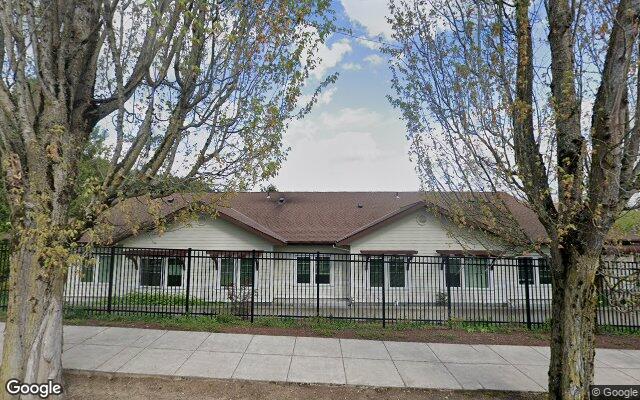
A medium home, reviewed on public record.
© Google Street View
Compared to 55 Oregon facilities with a similar number of beds.
ALF memory care · 36-month window. Higher percentile = better performance on inspection record. Source: Oregon Dept. of Human Services · Long-Term Care Licensing.
Rankings based on 36-month OR-DHS inspection data. Severity and frequency: fewer citations = higher percentile. Repeat rate: lower repeat citation share = higher percentile.
Citation history, plotted month by month.
20 deficiencies on record. Each bar is a month with a citation.
Finding distribution
20 total · 36 monthsScope × Severity (CMS A–L)
Every inspection visit, verbatim.
5 inspections in the public record, most recent first. Plain-language summaries open first — click into any row for the full citation text.
2025-12-11Annual Compliance VisitOR-cited · 4 findings
Plain-language summary
A routine kitchen inspection conducted in January 2026 found that the facility had failed to implement its previous plan of correction for food sanitation violations, including inadequate cleaning of microwave interiors, dishwashing areas, freezers, and service stations, as well as issues with uncovered garbage cans and lack of facial hair restraints. The facility also failed to maintain adequate administrative oversight of food services operations. The facility's corrective actions include management restructuring, hiring a dedicated dishwasher, implementing daily task lists and job aids for staff, and establishing a monitoring schedule with evaluations by kitchen staff daily and by management multiple times per week.
Read full citation text (4)Hide full citation text
“Based on observation and interview, it was determined the licensee failed to ensure adequate administrative oversight of facility operations for food services. Findings include, but are not limited to: During the first revisit of the kitchen inspection of 11/07/25, conducted 01/15/26, administrative oversight to ensure adequate food services rendered in the facility was found to be ineffective based on failure to implement plan of correction and ensure adequate oversight to correct deficiencies. Refer to C 240. Q1. What actions will be taken to correct the rule violation for each example/resident? A1. Actions taken to correct the violation include: -Pavilion management structure change to ensure cohesion in team member accountability and facility operations tied to compliance -Audit of the training, accountability, and compliance checklists to ensure they are adequate -Team member training Q2. How will the system be corrected so this violation will not happen again? A2. The system has been corrected through the following actions: -Senior Executive Director has provided additional training and set expectations for the Director of Food & Beverage who oversees the kitchen operations and team, and the Pavilion Administrator who oversees the facility operation and care team. -Community has hired a dedicated Dishwasher position to focus on daily cleaning tasks and compliance checks for kitchens -Team members have received information and training on the areas of violation. Team has been provided with task lists and performance expectations to be monitored. -Job Aids tied to MBK Senior Living policy and procedures are in place for all positions, for daily tasks. Q3. How often will the area needing correction be evaluated? A3. The areas needing correction will be evaluated in the following ways: -Daily by kitchen team members: cooks, dishwashers, Sous Chef -Five days per week by Food & Beverage Director and Pavilion Administrator -Weekly by Executive Director and/or Associate Executive Director Q4. Who will be responsible to see that the corrections are completed/monitored? A4. Food & Beverage Director and Pavilion Licensed Administrator OAR 411-054-0025 (1) Facility Administration: Operation (1) FACILITY OPERATION. (a) The licensee is responsible for the operation of the facility and the quality of services rendered in the facility. (b) The licensee is responsible for the supervision, training, and overall conduct of staff when staff are acting within the scope of their his or her employment duties.(c) The licensee is responsible for ensuring that the facility complies with the tuberculosis screening recommendations in OAR 333-019-0041.(d) The licensee is responsible for obtaining background checks on all subject individuals. This Rule is not met as evidenced by:”
“Based on observation and interview, it was determined the facility failed to ensure kitchen practices and protocols were in accordance with the Food Sanitation Rules OARs 333-150-0000. Findings include, but are not limited to: On 12/11/25 at 10:40 am, the facility kitchen was observed to need cleaning in the following areas: * Microwave interior – splatters/food debris; * Walls above back splash in dishwashing area – significant build up of black matter ; * Floor underneath dishwasher – significant build up of black matter/debris; * Vents on drop ceiling area above steamer & steam jacketed kettle – build up of dust; * Food bin lids – food debris/spills; * Front of service line area storing serving platters – food debris/crumbs; * Three door freezer bottom shelf – food debris/spills; and * Three door freezer – uncovered meat patties/food debris on bottom shelf, vent ledge below doors drips/spills/debris. Other areas of concern included: * Colored cutting boards – finish worn/heavily scored; * Garbage cans throughout kitchen uncovered when not in use; and * Lack of facial hair restraints. Service Station areas of concerns: * Front of two door refrigerator – smears/spills; * Interior of microwave – splatters/food debris; * Ice cream tubs in freezer without lids; and * Warm server cabinet – bottom shelf with spills/drips/debris. The areas of concern were observed and discussed with Staff 1 (Food & Beverage Director) and discussed with Staff 2 (Assistant Executive Director) on 12/11/25. The findings were acknowledged. What actions will be taken to correct the violation for each example/resident:”
“Based on observation and interview, it was determined the facility failed to ensure their kitchen survey plan of correction was implemented and satisfied the Department. Findings include, but are not limited to: Refer to C 240 Q1. What actions will be taken to correct the rule violation for each example/resident? A1. Actions taken to correct the violation include: -Pavilion management structure change to ensure cohesion in team member accountability and facility operations tied to compliance -Audit of the training, accountability, and compliance checklists to ensure they are adequate -Team member training Q2. How will the system be corrected so this violation will not happen again? A2. The system has been corrected through the following actions: -Senior Executive Director has provided additional training and set expectations for the Director of Food & Beverage who oversees the kitchen operations and team, and the Pavilion Administrator who oversees the facility operation and care team. -Community has hired a dedicated Dishwasher position to focus on daily cleaning tasks and compliance checks for kitchens -Team members have received information and training on the areas of violation. Team has been provided with task lists and performance expectations to be monitored. -Job Aids tied to MBK Senior Living policy and procedures are in place for all positions, for daily tasks. Q3. How often will the area needing correction be evaluated? A3. The areas needing correction will be evaluated in the following ways: -Daily by kitchen team members: cooks, dishwashers, Sous Chef -Five days per week by Food & Beverage Director and Pavilion Administrator -Weekly by Executive Director and/or Associate Executive Director Q4. Who will be responsible to see that the corrections are completed/monitored? A4. Food & Beverage Director and Pavilion Licensed Administrator OAR 411-054-0105 (2-4) Inspections and Investigation: Insp Interval (Amended 12/15/21)(2) The facility shall not interfere with a good faith disclosure of information by an employee or volunteer concerning abuse or other action affecting a resident's safety or welfare, as described in OAR 411-054-0028(4).(3) Staff of the Department shall visit and inspect every facility at least but not limited to once every two years for a full in-person survey to determine whether the facility is maintained and operated in accordance with these rules.(a) For each year during which a facility does not have a full survey, the Department shall conduct an in-person inspection of the kitchen and other areas where food is prepared for residents.(b) Subsection (a) will not go into effect until July 1, 2022.(c) Facilities not in compliance with these rules must submit, within ten days of receipt of the inspection report, a plan of correction that satisfies the Department.(d) The Department may impose sanctions for failure to comply with these rules.(4) Department staff may consult with and advise the facility administrator concerning methods of care, records, housing, equipment, and other areas of operation. This Rule is not met as evidenced by:”
“Based on observation and interview, it was determined the facility failed to follow licensing rules for Residential Care and Assisted Living Facilities. Findings include, but are not limited to: Refer to C240. Refer to C240 above: What actions will be taken to correct the violation for each example/resident:”
Read raw inspector notesClose inspector notes
Based on observation and interview, it was determined the licensee failed to ensure adequate administrative oversight of facility operations for food services. Findings include, but are not limited to: During the first revisit of the kitchen inspection of 11/07/25, conducted 01/15/26, administrative oversight to ensure adequate food services rendered in the facility was found to be ineffective based on failure to implement plan of correction and ensure adequate oversight to correct deficiencies. Refer to C 240. Q1. What actions will be taken to correct the rule violation for each example/resident? A1. Actions taken to correct the violation include: -Pavilion management structure change to ensure cohesion in team member accountability and facility operations tied to compliance -Audit of the training, accountability, and compliance checklists to ensure they are adequate -Team member training Q2. How will the system be corrected so this violation will not happen again? A2. The system has been corrected through the following actions: -Senior Executive Director has provided additional training and set expectations for the Director of Food & Beverage who oversees the kitchen operations and team, and the Pavilion Administrator who oversees the facility operation and care team. -Community has hired a dedicated Dishwasher position to focus on daily cleaning tasks and compliance checks for kitchens -Team members have received information and training on the areas of violation. Team has been provided with task lists and performance expectations to be monitored. -Job Aids tied to MBK Senior Living policy and procedures are in place for all positions, for daily tasks. Q3. How often will the area needing correction be evaluated? A3. The areas needing correction will be evaluated in the following ways: -Daily by kitchen team members: cooks, dishwashers, Sous Chef -Five days per week by Food & Beverage Director and Pavilion Administrator -Weekly by Executive Director and/or Associate Executive Director Q4. Who will be responsible to see that the corrections are completed/monitored? A4. Food & Beverage Director and Pavilion Licensed Administrator OAR 411-054-0025 (1) Facility Administration: Operation (1) FACILITY OPERATION. (a) The licensee is responsible for the operation of the facility and the quality of services rendered in the facility. (b) The licensee is responsible for the supervision, training, and overall conduct of staff when staff are acting within the scope of their his or her employment duties.(c) The licensee is responsible for ensuring that the facility complies with the tuberculosis screening recommendations in OAR 333-019-0041.(d) The licensee is responsible for obtaining background checks on all subject individuals. This Rule is not met as evidenced by: Based on observation and interview, it was determined the facility failed to ensure kitchen practices and protocols were in accordance with the Food Sanitation Rules OARs 333-150-0000. Findings include, but are not limited to: On 12/11/25 at 10:40 am, the facility kitchen was observed to need cleaning in the following areas: * Microwave interior – splatters/food debris; * Walls above back splash in dishwashing area – significant build up of black matter ; * Floor underneath dishwasher – significant build up of black matter/debris; * Vents on drop ceiling area above steamer & steam jacketed kettle – build up of dust; * Food bin lids – food debris/spills; * Front of service line area storing serving platters – food debris/crumbs; * Three door freezer bottom shelf – food debris/spills; and * Three door freezer – uncovered meat patties/food debris on bottom shelf, vent ledge below doors drips/spills/debris. Other areas of concern included: * Colored cutting boards – finish worn/heavily scored; * Garbage cans throughout kitchen uncovered when not in use; and * Lack of facial hair restraints. Service Station areas of concerns: * Front of two door refrigerator – smears/spills; * Interior of microwave – splatters/food debris; * Ice cream tubs in freezer without lids; and * Warm server cabinet – bottom shelf with spills/drips/debris. The areas of concern were observed and discussed with Staff 1 (Food & Beverage Director) and discussed with Staff 2 (Assistant Executive Director) on 12/11/25. The findings were acknowledged. What actions will be taken to correct the violation for each example/resident: Based on observation and interview, it was determined the facility failed to ensure their kitchen survey plan of correction was implemented and satisfied the Department. Findings include, but are not limited to: Refer to C 240 Q1. What actions will be taken to correct the rule violation for each example/resident? A1. Actions taken to correct the violation include: -Pavilion management structure change to ensure cohesion in team member accountability and facility operations tied to compliance -Audit of the training, accountability, and compliance checklists to ensure they are adequate -Team member training Q2. How will the system be corrected so this violation will not happen again? A2. The system has been corrected through the following actions: -Senior Executive Director has provided additional training and set expectations for the Director of Food & Beverage who oversees the kitchen operations and team, and the Pavilion Administrator who oversees the facility operation and care team. -Community has hired a dedicated Dishwasher position to focus on daily cleaning tasks and compliance checks for kitchens -Team members have received information and training on the areas of violation. Team has been provided with task lists and performance expectations to be monitored. -Job Aids tied to MBK Senior Living policy and procedures are in place for all positions, for daily tasks. Q3. How often will the area needing correction be evaluated? A3. The areas needing correction will be evaluated in the following ways: -Daily by kitchen team members: cooks, dishwashers, Sous Chef -Five days per week by Food & Beverage Director and Pavilion Administrator -Weekly by Executive Director and/or Associate Executive Director Q4. Who will be responsible to see that the corrections are completed/monitored? A4. Food & Beverage Director and Pavilion Licensed Administrator OAR 411-054-0105 (2-4) Inspections and Investigation: Insp Interval (Amended 12/15/21)(2) The facility shall not interfere with a good faith disclosure of information by an employee or volunteer concerning abuse or other action affecting a resident's safety or welfare, as described in OAR 411-054-0028(4).(3) Staff of the Department shall visit and inspect every facility at least but not limited to once every two years for a full in-person survey to determine whether the facility is maintained and operated in accordance with these rules.(a) For each year during which a facility does not have a full survey, the Department shall conduct an in-person inspection of the kitchen and other areas where food is prepared for residents.(b) Subsection (a) will not go into effect until July 1, 2022.(c) Facilities not in compliance with these rules must submit, within ten days of receipt of the inspection report, a plan of correction that satisfies the Department.(d) The Department may impose sanctions for failure to comply with these rules.(4) Department staff may consult with and advise the facility administrator concerning methods of care, records, housing, equipment, and other areas of operation. This Rule is not met as evidenced by: Based on observation and interview, it was determined the facility failed to follow licensing rules for Residential Care and Assisted Living Facilities. Findings include, but are not limited to: Refer to C240. Refer to C240 above: What actions will be taken to correct the violation for each example/resident:
2025-02-04Annual Compliance VisitOR-cited · 2 findings
Plain-language summary
During a routine kitchen inspection on February 4, 2025, the facility was found to have failed to maintain food sanitation standards under Oregon rules, with violations including dust buildup on ceiling vents, black matter and grease accumulation in the dishwashing area, food debris and grease under and behind cooking equipment, and debris in refrigerators. The facility completed a deep cleaning on February 9, 2025, replaced caulking behind the sink on February 14, 2025, retrained staff on cleaning procedures, and established daily cleaning logs and monthly compliance meetings to prevent future violations.
Read full citation text (2)Hide full citation text
“Based on observation and interview, it was determined the facility failed to ensure kitchen practices and protocols were in accordance with the Food Sanitation Rules OARs 333-150-0000. Findings include, but are not limited to: On 02/04/25 at 11:00 am, the facility kitchen was observed to need cleaning in the following areas: * Ceiling vent and area around vent above the service line – build up of dust; * Dishwashing area – wall and caulking behind sink and spray hose – significant build up of black matter, exterior of garbage disposal and power box – significant drips/spills; * Flooring under and behind steam jacketed kettles, hot box, convection oven, stove, and grill – significant build up of food debris/spills/drips/grease; * Wall behind stove/grill/deep fat fryer – build up drips/spills/grease; * Shelf below grill – significant build up of food debris/grease; * Deep fat fryer, side/front – drips of grease: * Refrigerator on service line, interior bottom shelf - food debris; and * Sides between refrigerator on service line and well containing ice – drips/spills. The areas of concern were observed and discussed with Staff 1 (Food Service Manager) and discussed with Staff 2 (Associate Executive Director) on 02/04/25. The findings were acknowledged. SOD ID PREFIX TAG: C0240 Q1. What Actions will be taken to correct the rule Violation? The team will utilize MBK senior living cleaning procedure listed in DINING SERVICES POLICY & PROCEDURE MANUAL to correct the rule violation. Daily cleaning according to the policy has been implemented. a. An after hour deep cleaning of the kitchen, appliances and dishwashing area was scheduled and completed on 2/9/2025 to ensure the kitchen is in compliance. b. A back of the house all-staff meeting was scheduled 2/9/2025, to re-educate a staff on compliance policies and procedure. c. Cleaning logs were updated, and were included in the all -staff training to ensure all staff are informed on compliance standards for cleaning of the kitchen. d. All caulking behind sink and spray hose has been replaced on 2/14/2025; repair of garbage disposal and power box completed to prevent further occurrences of drippage. Completed on 2/14/2025. Q2. How the system will be corrected so this violation will not happen again? The Food and Beverage Director is accountable to all Dining Department policies and procedures as well as The Oregon Administrative Rules. The Food and Beverage Director will ensure compliance utilizing all available resources. The team will receive ongoing and adequate support to ensure sustainable compliance. The Director, Sous Chefs, lead cooks will review the prior day logs and perform visual inspection to confirm compliance and take corrective action immediately if found to not be in compliance. a. All Cleaning schedules and assignments have been posted for the kitchen. Each item needing to be cleaned and the frequency of cleaning are included in the cleaning schedule. b. Monthly in-service meetings for Dining room staff and back of house staff have been scheduled and attendance is mandatory. Q3. How often will the area needing correction will be evaluated and who has been assigned to evaluate efforts? Daily, per policy for the areas and equipment being evaluated. Those assigned to evaluate efforts are the Food & Beverage Director, Sous Chef Adminstraot, and Executive Director. Q4. Who on your staff will be responsible to ensure that all corrections are completed and monitored? Food and Beverage Director, Sous Chefs and Dining room supervisor. Executive Director, Associate Executive Director to support Food and Beverage department when leadership is absent. Q5. Date Faculty Alleges compliance: 2/28/2025 OAR 411-054-0030 (1)(a) Resident Services Meals, Food Sanitation Rule (1) The residential care or assisted living facility must provide a minimum scope of services as follows: (a) Three daily nutritious, palatable meals with snacks available seven days a week, in accordance with the recommended dietary allowances found in the United States Department of Agriculture (USDA) guidelines, including seasonal fresh fruit and fresh vegetables; (A) Modified special diets that are appropriate to residents' needs and choices. The facility must encourage residents' involvement in developing menus. (B) Menus must be prepared at least one week in advance, and must be made available to all residents. Meal substitutions must be of similar nutritional value if a resident refuses a food that is served. Residents must be informed in advance of menu changes. (C) Food must be prepared and served in accordance with OAR 333-150-0000 (Food Sanitation Rules). This Rule is not met as evidenced by:”
“Based on observation and interview, it was determined the facility failed to follow licensing rules for Residential Care and Assisted Living Facilities. Findings include, but are not limited to: Refer to C240. SOD PREFIX TAG: Z0142 Z0142 Corresponds with the above C240. The Plan of Correction above for C240 will be implemented for the purposes of bringing Z142 into compliance. OAR 411-057-0140(2) Administration Compliance (2) The licensee of a memory care community must comply with both the licensing rules for the facility and Chapter 411, Division 57. This Rule is not met as evidenced by:”
Read raw inspector notesClose inspector notes
Based on observation and interview, it was determined the facility failed to ensure kitchen practices and protocols were in accordance with the Food Sanitation Rules OARs 333-150-0000. Findings include, but are not limited to: On 02/04/25 at 11:00 am, the facility kitchen was observed to need cleaning in the following areas: * Ceiling vent and area around vent above the service line – build up of dust; * Dishwashing area – wall and caulking behind sink and spray hose – significant build up of black matter, exterior of garbage disposal and power box – significant drips/spills; * Flooring under and behind steam jacketed kettles, hot box, convection oven, stove, and grill – significant build up of food debris/spills/drips/grease; * Wall behind stove/grill/deep fat fryer – build up drips/spills/grease; * Shelf below grill – significant build up of food debris/grease; * Deep fat fryer, side/front – drips of grease: * Refrigerator on service line, interior bottom shelf - food debris; and * Sides between refrigerator on service line and well containing ice – drips/spills. The areas of concern were observed and discussed with Staff 1 (Food Service Manager) and discussed with Staff 2 (Associate Executive Director) on 02/04/25. The findings were acknowledged. SOD ID PREFIX TAG: C0240 Q1. What Actions will be taken to correct the rule Violation? The team will utilize MBK senior living cleaning procedure listed in DINING SERVICES POLICY & PROCEDURE MANUAL to correct the rule violation. Daily cleaning according to the policy has been implemented. a. An after hour deep cleaning of the kitchen, appliances and dishwashing area was scheduled and completed on 2/9/2025 to ensure the kitchen is in compliance. b. A back of the house all-staff meeting was scheduled 2/9/2025, to re-educate a staff on compliance policies and procedure. c. Cleaning logs were updated, and were included in the all -staff training to ensure all staff are informed on compliance standards for cleaning of the kitchen. d. All caulking behind sink and spray hose has been replaced on 2/14/2025; repair of garbage disposal and power box completed to prevent further occurrences of drippage. Completed on 2/14/2025. Q2. How the system will be corrected so this violation will not happen again? The Food and Beverage Director is accountable to all Dining Department policies and procedures as well as The Oregon Administrative Rules. The Food and Beverage Director will ensure compliance utilizing all available resources. The team will receive ongoing and adequate support to ensure sustainable compliance. The Director, Sous Chefs, lead cooks will review the prior day logs and perform visual inspection to confirm compliance and take corrective action immediately if found to not be in compliance. a. All Cleaning schedules and assignments have been posted for the kitchen. Each item needing to be cleaned and the frequency of cleaning are included in the cleaning schedule. b. Monthly in-service meetings for Dining room staff and back of house staff have been scheduled and attendance is mandatory. Q3. How often will the area needing correction will be evaluated and who has been assigned to evaluate efforts? Daily, per policy for the areas and equipment being evaluated. Those assigned to evaluate efforts are the Food & Beverage Director, Sous Chef Adminstraot, and Executive Director. Q4. Who on your staff will be responsible to ensure that all corrections are completed and monitored? Food and Beverage Director, Sous Chefs and Dining room supervisor. Executive Director, Associate Executive Director to support Food and Beverage department when leadership is absent. Q5. Date Faculty Alleges compliance: 2/28/2025 OAR 411-054-0030 (1)(a) Resident Services Meals, Food Sanitation Rule (1) The residential care or assisted living facility must provide a minimum scope of services as follows: (a) Three daily nutritious, palatable meals with snacks available seven days a week, in accordance with the recommended dietary allowances found in the United States Department of Agriculture (USDA) guidelines, including seasonal fresh fruit and fresh vegetables; (A) Modified special diets that are appropriate to residents' needs and choices. The facility must encourage residents' involvement in developing menus. (B) Menus must be prepared at least one week in advance, and must be made available to all residents. Meal substitutions must be of similar nutritional value if a resident refuses a food that is served. Residents must be informed in advance of menu changes. (C) Food must be prepared and served in accordance with OAR 333-150-0000 (Food Sanitation Rules). This Rule is not met as evidenced by: Based on observation and interview, it was determined the facility failed to follow licensing rules for Residential Care and Assisted Living Facilities. Findings include, but are not limited to: Refer to C240. SOD PREFIX TAG: Z0142 Z0142 Corresponds with the above C240. The Plan of Correction above for C240 will be implemented for the purposes of bringing Z142 into compliance. OAR 411-057-0140(2) Administration Compliance (2) The licensee of a memory care community must comply with both the licensing rules for the facility and Chapter 411, Division 57. This Rule is not met as evidenced by:
2024-01-31Annual Compliance VisitOR-cited · 1 finding
Plain-language summary
A routine kitchen inspection was conducted on January 31, 2024, and the facility was found to be in substantial compliance with Oregon's rules for meals and food sanitation in residential care and assisted living facilities. No violations were identified.
Read full citation text (1)Hide full citation text
“The findings of the kitchen inspection, conducted 01/31/24, are documented in this report. It was determined the facility was in substantial compliance with the OARs 411-054-0030 for Residential Care and Assisted Living Facilities for Resident Services - Meals and Oregon Health Service Food Sanitation Rules OARs 333-150-0000. The findings of the kitchen inspection, conducted 01/31/24, are documented in this report. It was determined the facility was in substantial compliance with the OARs 411-054-0030 for Residential Care and Assisted Living Facilities for Resident Services - Meals and Oregon Health Service Food Sanitation Rules OARs 333-150-0000.”
Read raw inspector notesClose inspector notes
The findings of the kitchen inspection, conducted 01/31/24, are documented in this report. It was determined the facility was in substantial compliance with the OARs 411-054-0030 for Residential Care and Assisted Living Facilities for Resident Services - Meals and Oregon Health Service Food Sanitation Rules OARs 333-150-0000. The findings of the kitchen inspection, conducted 01/31/24, are documented in this report. It was determined the facility was in substantial compliance with the OARs 411-054-0030 for Residential Care and Assisted Living Facilities for Resident Services - Meals and Oregon Health Service Food Sanitation Rules OARs 333-150-0000.
2024-01-30Annual Compliance VisitOR-cited · 11 findings
Plain-language summary
A re-licensure validation visit on June 12, 2024 found the facility in compliance with Oregon regulations for Residential Care, Assisted Living, and Memory Care Communities. The initial survey from January 30 through February 1, 2024 had identified violations including service plans for two residents not being readily available to staff and the facility not having a designated Infection Control Specialist or maintaining required vaccination documentation, but the facility corrected these issues by the follow-up visit.
Read full citation text (11)Hide full citation text
“Based on observation, interview and record review, it was determined the facility failed to follow licensing rules for Residential Care and Assisted Living Facilities. Findings include, but are not limited to: Refer to C 295, C 365, C 372 and C 555. Based on observation, interview and record review, it was determined the facility failed to follow licensing rules for Residential Care and Assisted Living Facilities. Findings include, but are not limited to: Refer to C 295, C 365, C 372 and C 555. Z 142: OAR 411-057-0140(2) Administration Compliance 1. A licensed administrator is in place at the community. 2. Administrator will receive training and will follow licensing rules in community Infection Prevention and control policies, staff training requirements, exit door alarm maintenance. 3. Weekly 4. ED Z 142: OAR 411-057-0140(2) Administration Compliance”
“Based on interview and record review, it was determined the facility failed to ensure 4 of 4 newly hired staff (#s 10, 11, 13, and 14) had required memory care specific pre-service orientation completed prior to beginning job duties and failed to ensure 3 of 3 newly hired direct care staff demonstrated competency in all areas prior to providing resident care independently and administering medications unsupervised; and that annual training was completed and documented for 4 of 4 long term staff (#s 5, 7, 8 and 9). Findings include, but are not limited to: 1. Staff 11 (MT), hired 11/27/23 lacked documented evidence an observation and evaluation had been completed which determined their ability to perform safe medication and treatment administration unsupervised. Staff received competency training prior to administering additional medications. 2. Staff 10 (MT), hired 11/10/23, Staff 11 (MT), hired 11/27/23 and Staff 13 (Activities Assistant), hired 01/02/24, and Staff 14 (CG), hired 10/23/23 lacked documented evidence of pre-service orientation training topics in the following areas: * Resident rights and values of CBC care; * Abuse reporting requirements; * Infectious Disease Prevention; * Fire safety and emergency procedures; and * Written job description. 3. There was no documented evidence Staff 10, 11, 13, and 14 completed the following pre-service dementia training: * Dementia disease process including progression, memory loss, psychiatric and behavioral symptoms; * Techniques for understanding, communicating and responding to behaviors; * Strategies for addressing social needs and engaging them in meaningful activities; and * Specific aspects of dementia including addressing pain, providing food/fluids, preventing wandering, and the use of person-centered approach. 4. There was no documented evidence Staff 10, 11, and 14 completed the following additional pre-service training required of direct care staff prior to providing personal care: * Environmental factors that are important to resident's well-being (e.g. noise, staff interactions, lighting, room temperature, etc.); * Family support and the role the family may have in the care of the resident; and * How to recognize behaviors that indicate a change in the resident's condition and report behaviors that require on-going assessment. 5. There was no documented evidence Staff 10, 11 and 14 completed the following pre-service training required of direct care staff prior to independently providing care and services: * How to provide personal care to a resident with dementia, including an orientation to the resident and the resident's service plan, as required in OAR 411-054-0070(4); and * The use of supportive devices with restraining qualities in memory care communities. 6. There was no documented evidence Staff 10, 11, and 14 had demonstrated competency within 30 days of hire in the following areas: * Role of service plans in providing individualized care; * Providing assistance with ADL's; * Changes associated with normal aging; * Identification, documentation and reporting of changes of condition; * Conditions that require assessment, treatment, observation and reporting; and * General food safety, serving and sanitation. 7. Review of the facility training records revealed Staff 5 (CG), Staff 7 (MT), Staff 8 (CG) and Staff 9 (Director of Wellness Programming) did not complete 16 hours of annual training related to provisions of care in CBC, including six hours related to dementia care. The need to ensure all newly hired staff completed pre-service orientation and competency, and all veteran staff completed 16 hours of annual training was discussed with Staff 1 (Administrator), on 2/1/24. She acknowledged the findings. Based on interview and record review, it was determined the facility failed to ensure 4 of 4 newly hired staff (#s 10, 11, 13, and 14) had required memory care specific pre-service orientation completed prior to beginning job duties and failed to ensure 3 of 3 newly hired direct care staff demonstrated competency in all areas prior to providing resident care independently and administering medications unsupervised; and that annual training was completed and documented for 4 of 4 long term staff (#s 5, 7, 8 and 9). Findings include, but are not limited to:”
“The findings of the re-licensure survey conducted 01/30/24 through 02/01/24 are documented in this report. The survey was conducted to determine compliance with the OARs 411 Division 54 for Residential Care and Assisted Living Facilities, OARs 411 Division 57 for Memory Care Communities and OARs 411 Division 004 Home and Community Based Services Regulations. Tag numbers beginning with the letter C refer to the Residential Care and Assisted Living rules. Tag numbers beginning with the letter Z refer to the Memory Care Community rules. Abbreviations possibly used in this document: ADL: activities of daily living bid: twice a day CBG: capillary blood glucose or blood sugar CG: caregiver cm: centimeter ED: Executive Director F: Fahrenheit HH: Home Health LPN: Licensed Practical Nurse MA: Medication Aide MAR: Medication Administration Record MCC: Memory Care Community mg: milligram ml: milliliter MT: Medication Technician OT: Occupational Therapist PT: Physical Therapist PRN: as needed qd: every day or daily qid: four times a day QI: quality improvement RCC: Resident Care Coordinator RN: Registered Nurse TAR: Treatment Administration Record tid: three times a day The findings of the re-licensure survey conducted 01/30/24 through 02/01/24 are documented in this report. The survey was conducted to determine compliance with the OARs 411 Division 54 for Residential Care and Assisted Living Facilities, OARs 411 Division 57 for Memory Care Communities and OARs 411 Division 004 Home and Community Based Services Regulations. Tag numbers beginning with the letter C refer to the Residential Care and Assisted Living rules. Tag numbers beginning with the letter Z refer to the Memory Care Community rules. Abbreviations possibly used in this document: ADL: activities of daily living bid: twice a day CBG: capillary blood glucose or blood sugar CG: caregiver cm: centimeter ED: Executive Director F: Fahrenheit HH: Home Health LPN: Licensed Practical Nurse MA: Medication Aide MAR: Medication Administration Record MCC: Memory Care Community mg: milligram ml: milliliter MT: Medication Technician OT: Occupational Therapist PT: Physical Therapist PRN: as needed qd: every day or daily qid: four times a day QI: quality improvement RCC: Resident Care Coordinator RN: Registered Nurse TAR: Treatment Administration Record tid: three times a day The findings of the re-visit to the re-licensure survey of 02/02/24, conducted on 06/12/24 are documented in this report. It was determined the facility was in compliance with OARs 411 Division 54 for Residential Care and Assisted Living Facilities, Division 57 for Memory Care Communities, and Home and Community Based Services Regulations OARs 411 Division 004. The findings of the re-visit to the re-licensure survey of 02/02/24, conducted on 06/12/24 are documented in this report. It was determined the facility was in compliance with OARs 411 Division 54 for Residential Care and Assisted Living Facilities, Division 57 for Memory Care Communities, and Home and Community Based Services Regulations OARs 411 Division 004.”
“Based on observation, interview, and record review, it was determined the facility failed to ensure service plans were readily available to staff for 2 of 3 sampled residents (#s 1 and 2) whose service plans were reviewed. Findings include, but are not limited to: During the acuity interview on 01/30/24, Staff 10 (MT) confirmed the resident service plans were kept in each resident's binder in the medication room. Upon observation on 01/30/24, Resident 1 and Resident 2's service plans were not located in their respective binders. The survey team requested the most recent service plans from Staff 2 (Memory Care Director), which were printed and distributed to the survey team. The need to ensure service plans were readily available to staff was discussed with Staff 1 (Administrator) on 02/01/24. She acknowledged the findings. Based on observation, interview, and record review, it was determined the facility failed to ensure service plans were readily available to staff for 2 of 3 sampled residents (#s 1 and 2) whose service plans were reviewed. Findings include, but are not limited to: During the acuity interview on 01/30/24, Staff 10 (MT) confirmed the resident service plans were kept in each resident's binder in the medication room. Upon observation on 01/30/24, Resident 1 and Resident 2's service plans were not located in their respective binders. The survey team requested the most recent service plans from Staff 2 (Memory Care Director), which were printed and distributed to the survey team. The need to ensure service plans were readily available to staff was discussed with Staff 1 (Administrator) on 02/01/24. She acknowledged the findings. C 260: OAR 411-054-0036 (1-4) Service Plan: General 1. DHS, ALD, CFLD and RN will complete all service plans to reflect any changes through TSPs, orders, diagnosis, and incident reports. All service plans will be printed, signed and placed within access to all care staff. Resident 1: Service plan has been printed and placed in binder for care sataff to readily access Resident 2: Service plan has been printed and placed in binder for care staff to readily access. 2. MBK to provide training to direct care staff on location of service plans. 3. Quarterly and as significant changes occur 4. ED, DHS, ALD, CFLD, CFLC and designee C 260: OAR 411-054-0036 (1-4) Service Plan: General”
“Based on interview and record review, it was determined the facility failed to ensure they had a designated "Infection Control Specialist" and failed to maintain proof of vaccination status or documentation of a medical or religious exemption as required in OAR 333-019-1010(4). Findings include, but are not limited to: 1. In an interview on 02/01/24, Staff 1 (Administrator) reported the facility did not have a designated individual to be the facility's "Infection Control Specialist," responsible for carrying out the infection prevention and control protocols, qualified by education, training, and experience or certification, and who had completed specialized training in infection prevention and control protocols. 2. Upon entrance to the facility on 01/30/24, the facility's documentation of monthly COVID-19 reporting on vaccination status to the Oregon Health Authority (OHA) for staff was requested. In an interview with Staff 1 on 02/01/24 at 9:45 am documentation of COVID-19 vaccination status reporting was provided which revealed reporting was not completed for the months of 11/2023 and 12/2023. The need to ensure the facility has a designated "Infection Control Specialist" and reported monthly on COVID-19 vaccination status was reviewed with Staff 1 on 02/01/24. The findings were acknowledged. Based on interview and record review, it was determined the facility failed to ensure they had a designated "Infection Control Specialist" and failed to maintain proof of vaccination status or documentation of a medical or religious exemption as required in OAR 333-019-1010(4). Findings include, but are not limited to:”
“Based on observation, interview, and record review, it was determined the facility failed to ensure MARs included specific instructions for PRN medications, for 2 of 2 sampled residents (#s 1 and 2) and contained reasons for use for 1 of 2 sampled residents (#2) whose medications were reviewed. Findings include, but are not limited to: 1. Resident 2 was admitted to the facility in 03/2023 with diagnoses including dementia. Resident 2's MAR was reviewed from 01/01/24 through 01/30/24 and the following was noted: a. Resident 2 had a physician's order for PRN risperidone (a psychotropic medication) 0.25 mg one tablet as needed for "agitation". There were no resident specific parameters for the use of the PRN as to how the resident demonstrates "agitation". In an interview with Staff 10 (MT), it was confirmed that the electronic MAR did not contain any additional information for staff as to how Resident 2 displays "agitation". b. Multiple medications on the MAR lacked a reason for use. On 01/31/24 at 11:20 am, the surveyor and Staff 10 reviewed the electronic MAR and confirmed the electronic MAR contained no additional information vs. the printed MAR. The need to ensure all medications on the MAR included resident specific instructions for PRN medications and included reasons for use was discussed with Staff 1 (Administrator) on 02/01/24. The findings were acknowledged. Based on observation, interview, and record review, it was determined the facility failed to ensure MARs included specific instructions for PRN medications, for 2 of 2 sampled residents (#s 1 and 2) and contained reasons for use for 1 of 2 sampled residents (#2) whose medications were reviewed. Findings include, but are not limited to:”
“Based on interview and record review, it was determined the facility failed to have a training program that included methods to determine competency of direct care staff through evaluation, observation, or written testing. Findings include, but are not limited to: During a review of staff training records on 01/31/24, Staff 1 (Administrator) was unable to provide documented evidence the sampled newly hired staff had completed all pre-service orientation, pre-service dementia training, and demonstrated competency in all duties they were assigned. There was no written documentation of initial and annual training completed by each employee. The need to maintain written documentation of training completed by each employee and to have a training program that included methods to determine competency of direct care staff through evaluation, observation, or written testing was discussed with Staff 1 on 02/01/24. She acknowledged the findings. Refer to Z 155 and C 372. Based on interview and record review, it was determined the facility failed to have a training program that included methods to determine competency of direct care staff through evaluation, observation, or written testing. Findings include, but are not limited to: During a review of staff training records on 01/31/24, Staff 1 (Administrator) was unable to provide documented evidence the sampled newly hired staff had completed all pre-service orientation, pre-service dementia training, and demonstrated competency in all duties they were assigned. There was no written documentation of initial and annual training completed by each employee. The need to maintain written documentation of training completed by each employee and to have a training program that included methods to determine competency of direct care staff through evaluation, observation, or written testing was discussed with Staff 1 on 02/01/24. She acknowledged the findings. Refer to Z 155 and C 372. C 365: OAR 411-054-0070 (2): Staffing Rqmt and Training: Training Rqmts 1. Audit of staff training records will be completed for training, including competencies of direct care staff through evaluation, observation, or written testing requirements. Missing training items and documentation to be completed. COVID-19 reporting vaccination requirement met and process in place for required reporting. 2. Training to be provided to BOM, DHS, CFLD, ALD on proper onboarding processes and training requirements. 3. Weekly 4. BOM/ED/AED C 365: OAR 411-054-0070 (2): Staffing Rqmt and Training: Training Rqmts”
“Based on interview and record review, it was determined the facility failed to ensure 3 of 3 newly hired direct care staff (#s 14, 10, and 11) were trained in the use of the abdominal thrust and First Aid within 30 days of hire. Findings include, but are not limited to: Training records were reviewed on 01/31/24 and identified the following: Staff 14 (CG), hired 10/23/23, Staff 10 (MT), hired 11/10/23, and Staff 11 (MT), hired 11/27/23, lacked documentation of demonstrated competency in First Aid/Abdominal Thrust. During an interview on 01/31/24, Staff 2 (Memory Care Director) confirmed the lack of documented evidence the above sampled staff completed first aid and abdominal thrust training. The need to ensure staff demonstrated competency in the use of abdominal thrust and First Aid within 30 days of hire was discussed with Staff 1 on 02/01/24. She acknowledged the findings. Based on interview and record review, it was determined the facility failed to ensure 3 of 3 newly hired direct care staff (#s 14, 10, and 11) were trained in the use of the abdominal thrust and First Aid within 30 days of hire. Findings include, but are not limited to: Training records were reviewed on 01/31/24 and identified the following: Staff 14 (CG), hired 10/23/23, Staff 10 (MT), hired 11/10/23, and Staff 11 (MT), hired 11/27/23, lacked documentation of demonstrated competency in First Aid/Abdominal Thrust. During an interview on 01/31/24, Staff 2 (Memory Care Director) confirmed the lack of documented evidence the above sampled staff completed first aid and abdominal thrust training. The need to ensure staff demonstrated competency in the use of abdominal thrust and First Aid within 30 days of hire was discussed with Staff 1 on 02/01/24. She acknowledged the findings. C 372: OAR 411-054-0070 (6)(9) Training within 30 days: Direct Care Staff 1. Audit of staff training records will be completed for training, first aid and abdominal thrust requirements. Missing training items and documentation to be completed. Staff 14: Staff training for CPR, abdmoninal thrust, first aid scheduled and will be documented as complete. Staff 10: Staff training for CPR, abdominal thrust,first aid scheduled and will be documented as complete. Staff 11: Staff training for CPR, abdmominal thrust, first aid scheduled and will be documented as complete. 2. Training to be provided to BOM, DHS, CFLD, CFLC on proper onboarding processes and training requirements. 3. Weekly 4. BOM/ED/AED C 372: OAR 411-054-0070 (6)(9) Training within 30 days: Direct Care Staff”
“Based on observation and interview, it was determined the facility failed to ensure all doors that exited the memory care community to the outdoor courtyard were equipped with operational alarming devices or other acceptable systems to alert staff when residents exited into the courtyard. Findings include, but are not limited to: A tour of the facility on 01/30/24, revealed the following: * There were no exit door alarms for either of the two doors to the outdoor courtyard from the dining room and the adjacent hallway. During a walk through of the environment on 01/31/24, Staff 1 (Administrator) verified the lack of exit door alarms. Based on observation and interview, it was determined the facility failed to ensure all doors that exited the memory care community to the outdoor courtyard were equipped with operational alarming devices or other acceptable systems to alert staff when residents exited into the courtyard. Findings include, but are not limited to: A tour of the facility on 01/30/24, revealed the following: * There were no exit door alarms for either of the two doors to the outdoor courtyard from the dining room and the adjacent hallway. During a walk through of the environment on 01/31/24, Staff 1 (Administrator) verified the lack of exit door alarms. C 555: OAR 411-054-0200 (11-13): Call Sys, Exit Dr Alarm, Phones, TV, or Cable 1. Community will have exit door alarms installed for the two doors leading into the outdoor courtyard from the dining room and adjacent hallway. 2. ED or designee is contracting services to have appropriate installation of door alarms that meet the requirement of alerting staff when doors are operated. 3. ED or designee will follow-up weekly to ensure appropriate installation is completed timely. 4. ED, Environmental Services Director and designee are responsible to see that corrections are completed. C 555: OAR 411-054-0200 (11-13): Call Sys, Exit Dr Alarm, Phones, TV, or Cable”
“Based on observation, interview, and record review, it was determined the facility failed to provide health care services in accordance with the licensing rules for Residential Care and Assisted Living Facilities. Findings include, but are not limited to: Refer to C 260 and C 310. Based on observation, interview, and record review, it was determined the facility failed to provide health care services in accordance with the licensing rules for Residential Care and Assisted Living Facilities. Findings include, but are not limited to: Refer to C 260 and C 310. Z 162: OAR 411-057-0160(2b) Compliance with Rules Health Care 1. A licensed administrator is in place to provide campus oversight. 2. Administrator, RN, CFLD, CFLC to be involved in service planning, daily clinical meetings and weekly high-risk meetings. 3. Daily and weekly 4. ED, AED, CFLD, DHS or designee Z 162: OAR 411-057-0160(2b) Compliance with Rules Health Care”
“Based on observation and interview, it was determined the facility failed to have a written facility policy which detailed when doors to the outdoor recreation area may be locked during nighttime hours or during severe weather. Findings include, but are not limited to: During the survey, the doors to the interior courtyard were observed to be locked on 01/30/24, 01/31/24 and 02/01/24. During a tour of the building on 01/30/24 with Staff 2 (Memory Care Director), Staff 2 reported the courtyard doors were locked at all times and residents could access the interior courtyard by asking care staff to unlock the door. The need to ensure the facility has a written policy which described under what circumstances the doors to the courtyard would be locked was reviewed with Staff 1 (Administrator) on 02/01/24. She acknowledged the findings. Based on observation and interview, it was determined the facility failed to have a written facility policy which detailed when doors to the outdoor recreation area may be locked during nighttime hours or during severe weather. Findings include, but are not limited to: During the survey, the doors to the interior courtyard were observed to be locked on 01/30/24, 01/31/24 and 02/01/24. During a tour of the building on 01/30/24 with Staff 2 (Memory Care Director), Staff 2 reported the courtyard doors were locked at all times and residents could access the interior courtyard by asking care staff to unlock the door. The need to ensure the facility has a written policy which described under what circumstances the doors to the courtyard would be locked was reviewed with Staff 1 (Administrator) on 02/01/24. She acknowledged the findings. Z 173: OAR 411-057-01706 Secure Outdoor Recreation Area 1. Community has a written policy in place for the use of the Ourtdoor Recreation Space which describes the circimstances of when recreation area doors will be unlocked/locked. 2. CFLD, CFLC has provided training to staff regarding recreation area policy - access parameters and the use of alert system when residents enter/exit recreation area. 3. ED, CFLD, CFLC or designee will audit doors monthly to ensure access to recreation area aligns with policy. 4. ED, CFLD, Environmental Services Director and designee are responsible to see that corrections are completed. Z 173: OAR 411-057-01706 Secure Outdoor Recreation Area”
Read raw inspector notesClose inspector notes
The findings of the re-licensure survey conducted 01/30/24 through 02/01/24 are documented in this report. The survey was conducted to determine compliance with the OARs 411 Division 54 for Residential Care and Assisted Living Facilities, OARs 411 Division 57 for Memory Care Communities and OARs 411 Division 004 Home and Community Based Services Regulations. Tag numbers beginning with the letter C refer to the Residential Care and Assisted Living rules. Tag numbers beginning with the letter Z refer to the Memory Care Community rules. Abbreviations possibly used in this document: ADL: activities of daily living bid: twice a day CBG: capillary blood glucose or blood sugar CG: caregiver cm: centimeter ED: Executive Director F: Fahrenheit HH: Home Health LPN: Licensed Practical Nurse MA: Medication Aide MAR: Medication Administration Record MCC: Memory Care Community mg: milligram ml: milliliter MT: Medication Technician OT: Occupational Therapist PT: Physical Therapist PRN: as needed qd: every day or daily qid: four times a day QI: quality improvement RCC: Resident Care Coordinator RN: Registered Nurse TAR: Treatment Administration Record tid: three times a day The findings of the re-licensure survey conducted 01/30/24 through 02/01/24 are documented in this report. The survey was conducted to determine compliance with the OARs 411 Division 54 for Residential Care and Assisted Living Facilities, OARs 411 Division 57 for Memory Care Communities and OARs 411 Division 004 Home and Community Based Services Regulations. Tag numbers beginning with the letter C refer to the Residential Care and Assisted Living rules. Tag numbers beginning with the letter Z refer to the Memory Care Community rules. Abbreviations possibly used in this document: ADL: activities of daily living bid: twice a day CBG: capillary blood glucose or blood sugar CG: caregiver cm: centimeter ED: Executive Director F: Fahrenheit HH: Home Health LPN: Licensed Practical Nurse MA: Medication Aide MAR: Medication Administration Record MCC: Memory Care Community mg: milligram ml: milliliter MT: Medication Technician OT: Occupational Therapist PT: Physical Therapist PRN: as needed qd: every day or daily qid: four times a day QI: quality improvement RCC: Resident Care Coordinator RN: Registered Nurse TAR: Treatment Administration Record tid: three times a day The findings of the re-visit to the re-licensure survey of 02/02/24, conducted on 06/12/24 are documented in this report. It was determined the facility was in compliance with OARs 411 Division 54 for Residential Care and Assisted Living Facilities, Division 57 for Memory Care Communities, and Home and Community Based Services Regulations OARs 411 Division 004. The findings of the re-visit to the re-licensure survey of 02/02/24, conducted on 06/12/24 are documented in this report. It was determined the facility was in compliance with OARs 411 Division 54 for Residential Care and Assisted Living Facilities, Division 57 for Memory Care Communities, and Home and Community Based Services Regulations OARs 411 Division 004. Based on observation, interview, and record review, it was determined the facility failed to ensure service plans were readily available to staff for 2 of 3 sampled residents (#s 1 and 2) whose service plans were reviewed. Findings include, but are not limited to: During the acuity interview on 01/30/24, Staff 10 (MT) confirmed the resident service plans were kept in each resident's binder in the medication room. Upon observation on 01/30/24, Resident 1 and Resident 2's service plans were not located in their respective binders. The survey team requested the most recent service plans from Staff 2 (Memory Care Director), which were printed and distributed to the survey team. The need to ensure service plans were readily available to staff was discussed with Staff 1 (Administrator) on 02/01/24. She acknowledged the findings. Based on observation, interview, and record review, it was determined the facility failed to ensure service plans were readily available to staff for 2 of 3 sampled residents (#s 1 and 2) whose service plans were reviewed. Findings include, but are not limited to: During the acuity interview on 01/30/24, Staff 10 (MT) confirmed the resident service plans were kept in each resident's binder in the medication room. Upon observation on 01/30/24, Resident 1 and Resident 2's service plans were not located in their respective binders. The survey team requested the most recent service plans from Staff 2 (Memory Care Director), which were printed and distributed to the survey team. The need to ensure service plans were readily available to staff was discussed with Staff 1 (Administrator) on 02/01/24. She acknowledged the findings. C 260: OAR 411-054-0036 (1-4) Service Plan: General 1. DHS, ALD, CFLD and RN will complete all service plans to reflect any changes through TSPs, orders, diagnosis, and incident reports. All service plans will be printed, signed and placed within access to all care staff. Resident 1: Service plan has been printed and placed in binder for care sataff to readily access Resident 2: Service plan has been printed and placed in binder for care staff to readily access. 2. MBK to provide training to direct care staff on location of service plans. 3. Quarterly and as significant changes occur 4. ED, DHS, ALD, CFLD, CFLC and designee C 260: OAR 411-054-0036 (1-4) Service Plan: General Based on interview and record review, it was determined the facility failed to ensure they had a designated "Infection Control Specialist" and failed to maintain proof of vaccination status or documentation of a medical or religious exemption as required in OAR 333-019-1010(4). Findings include, but are not limited to: 1. In an interview on 02/01/24, Staff 1 (Administrator) reported the facility did not have a designated individual to be the facility's "Infection Control Specialist," responsible for carrying out the infection prevention and control protocols, qualified by education, training, and experience or certification, and who had completed specialized training in infection prevention and control protocols. 2. Upon entrance to the facility on 01/30/24, the facility's documentation of monthly COVID-19 reporting on vaccination status to the Oregon Health Authority (OHA) for staff was requested. In an interview with Staff 1 on 02/01/24 at 9:45 am documentation of COVID-19 vaccination status reporting was provided which revealed reporting was not completed for the months of 11/2023 and 12/2023. The need to ensure the facility has a designated "Infection Control Specialist" and reported monthly on COVID-19 vaccination status was reviewed with Staff 1 on 02/01/24. The findings were acknowledged. Based on interview and record review, it was determined the facility failed to ensure they had a designated "Infection Control Specialist" and failed to maintain proof of vaccination status or documentation of a medical or religious exemption as required in OAR 333-019-1010(4). Findings include, but are not limited to: Based on observation, interview, and record review, it was determined the facility failed to ensure MARs included specific instructions for PRN medications, for 2 of 2 sampled residents (#s 1 and 2) and contained reasons for use for 1 of 2 sampled residents (#2) whose medications were reviewed. Findings include, but are not limited to: 1. Resident 2 was admitted to the facility in 03/2023 with diagnoses including dementia. Resident 2's MAR was reviewed from 01/01/24 through 01/30/24 and the following was noted: a. Resident 2 had a physician's order for PRN risperidone (a psychotropic medication) 0.25 mg one tablet as needed for "agitation". There were no resident specific parameters for the use of the PRN as to how the resident demonstrates "agitation". In an interview with Staff 10 (MT), it was confirmed that the electronic MAR did not contain any additional information for staff as to how Resident 2 displays "agitation". b. Multiple medications on the MAR lacked a reason for use. On 01/31/24 at 11:20 am, the surveyor and Staff 10 reviewed the electronic MAR and confirmed the electronic MAR contained no additional information vs. the printed MAR. The need to ensure all medications on the MAR included resident specific instructions for PRN medications and included reasons for use was discussed with Staff 1 (Administrator) on 02/01/24. The findings were acknowledged. Based on observation, interview, and record review, it was determined the facility failed to ensure MARs included specific instructions for PRN medications, for 2 of 2 sampled residents (#s 1 and 2) and contained reasons for use for 1 of 2 sampled residents (#2) whose medications were reviewed. Findings include, but are not limited to: Based on interview and record review, it was determined the facility failed to have a training program that included methods to determine competency of direct care staff through evaluation, observation, or written testing. Findings include, but are not limited to: During a review of staff training records on 01/31/24, Staff 1 (Administrator) was unable to provide documented evidence the sampled newly hired staff had completed all pre-service orientation, pre-service dementia training, and demonstrated competency in all duties they were assigned. There was no written documentation of initial and annual training completed by each employee. The need to maintain written documentation of training completed by each employee and to have a training program that included methods to determine competency of direct care staff through evaluation, observation, or written testing was discussed with Staff 1 on 02/01/24. She acknowledged the findings. Refer to Z 155 and C 372. Based on interview and record review, it was determined the facility failed to have a training program that included methods to determine competency of direct care staff through evaluation, observation, or written testing. Findings include, but are not limited to: During a review of staff training records on 01/31/24, Staff 1 (Administrator) was unable to provide documented evidence the sampled newly hired staff had completed all pre-service orientation, pre-service dementia training, and demonstrated competency in all duties they were assigned. There was no written documentation of initial and annual training completed by each employee. The need to maintain written documentation of training completed by each employee and to have a training program that included methods to determine competency of direct care staff through evaluation, observation, or written testing was discussed with Staff 1 on 02/01/24. She acknowledged the findings. Refer to Z 155 and C 372. C 365: OAR 411-054-0070 (2): Staffing Rqmt and Training: Training Rqmts 1. Audit of staff training records will be completed for training, including competencies of direct care staff through evaluation, observation, or written testing requirements. Missing training items and documentation to be completed. COVID-19 reporting vaccination requirement met and process in place for required reporting. 2. Training to be provided to BOM, DHS, CFLD, ALD on proper onboarding processes and training requirements. 3. Weekly 4. BOM/ED/AED C 365: OAR 411-054-0070 (2): Staffing Rqmt and Training: Training Rqmts Based on interview and record review, it was determined the facility failed to ensure 3 of 3 newly hired direct care staff (#s 14, 10, and 11) were trained in the use of the abdominal thrust and First Aid within 30 days of hire. Findings include, but are not limited to: Training records were reviewed on 01/31/24 and identified the following: Staff 14 (CG), hired 10/23/23, Staff 10 (MT), hired 11/10/23, and Staff 11 (MT), hired 11/27/23, lacked documentation of demonstrated competency in First Aid/Abdominal Thrust. During an interview on 01/31/24, Staff 2 (Memory Care Director) confirmed the lack of documented evidence the above sampled staff completed first aid and abdominal thrust training. The need to ensure staff demonstrated competency in the use of abdominal thrust and First Aid within 30 days of hire was discussed with Staff 1 on 02/01/24. She acknowledged the findings. Based on interview and record review, it was determined the facility failed to ensure 3 of 3 newly hired direct care staff (#s 14, 10, and 11) were trained in the use of the abdominal thrust and First Aid within 30 days of hire. Findings include, but are not limited to: Training records were reviewed on 01/31/24 and identified the following: Staff 14 (CG), hired 10/23/23, Staff 10 (MT), hired 11/10/23, and Staff 11 (MT), hired 11/27/23, lacked documentation of demonstrated competency in First Aid/Abdominal Thrust. During an interview on 01/31/24, Staff 2 (Memory Care Director) confirmed the lack of documented evidence the above sampled staff completed first aid and abdominal thrust training. The need to ensure staff demonstrated competency in the use of abdominal thrust and First Aid within 30 days of hire was discussed with Staff 1 on 02/01/24. She acknowledged the findings. C 372: OAR 411-054-0070 (6)(9) Training within 30 days: Direct Care Staff 1. Audit of staff training records will be completed for training, first aid and abdominal thrust requirements. Missing training items and documentation to be completed. Staff 14: Staff training for CPR, abdmoninal thrust, first aid scheduled and will be documented as complete. Staff 10: Staff training for CPR, abdominal thrust,first aid scheduled and will be documented as complete. Staff 11: Staff training for CPR, abdmominal thrust, first aid scheduled and will be documented as complete. 2. Training to be provided to BOM, DHS, CFLD, CFLC on proper onboarding processes and training requirements. 3. Weekly 4. BOM/ED/AED C 372: OAR 411-054-0070 (6)(9) Training within 30 days: Direct Care Staff Based on observation and interview, it was determined the facility failed to ensure all doors that exited the memory care community to the outdoor courtyard were equipped with operational alarming devices or other acceptable systems to alert staff when residents exited into the courtyard. Findings include, but are not limited to: A tour of the facility on 01/30/24, revealed the following: * There were no exit door alarms for either of the two doors to the outdoor courtyard from the dining room and the adjacent hallway. During a walk through of the environment on 01/31/24, Staff 1 (Administrator) verified the lack of exit door alarms. Based on observation and interview, it was determined the facility failed to ensure all doors that exited the memory care community to the outdoor courtyard were equipped with operational alarming devices or other acceptable systems to alert staff when residents exited into the courtyard. Findings include, but are not limited to: A tour of the facility on 01/30/24, revealed the following: * There were no exit door alarms for either of the two doors to the outdoor courtyard from the dining room and the adjacent hallway. During a walk through of the environment on 01/31/24, Staff 1 (Administrator) verified the lack of exit door alarms. C 555: OAR 411-054-0200 (11-13): Call Sys, Exit Dr Alarm, Phones, TV, or Cable 1. Community will have exit door alarms installed for the two doors leading into the outdoor courtyard from the dining room and adjacent hallway. 2. ED or designee is contracting services to have appropriate installation of door alarms that meet the requirement of alerting staff when doors are operated. 3. ED or designee will follow-up weekly to ensure appropriate installation is completed timely. 4. ED, Environmental Services Director and designee are responsible to see that corrections are completed. C 555: OAR 411-054-0200 (11-13): Call Sys, Exit Dr Alarm, Phones, TV, or Cable Based on observation, interview and record review, it was determined the facility failed to follow licensing rules for Residential Care and Assisted Living Facilities. Findings include, but are not limited to: Refer to C 295, C 365, C 372 and C 555. Based on observation, interview and record review, it was determined the facility failed to follow licensing rules for Residential Care and Assisted Living Facilities. Findings include, but are not limited to: Refer to C 295, C 365, C 372 and C 555. Z 142: OAR 411-057-0140(2) Administration Compliance 1. A licensed administrator is in place at the community. 2. Administrator will receive training and will follow licensing rules in community Infection Prevention and control policies, staff training requirements, exit door alarm maintenance. 3. Weekly 4. ED Z 142: OAR 411-057-0140(2) Administration Compliance Based on interview and record review, it was determined the facility failed to ensure 4 of 4 newly hired staff (#s 10, 11, 13, and 14) had required memory care specific pre-service orientation completed prior to beginning job duties and failed to ensure 3 of 3 newly hired direct care staff demonstrated competency in all areas prior to providing resident care independently and administering medications unsupervised; and that annual training was completed and documented for 4 of 4 long term staff (#s 5, 7, 8 and 9). Findings include, but are not limited to: 1. Staff 11 (MT), hired 11/27/23 lacked documented evidence an observation and evaluation had been completed which determined their ability to perform safe medication and treatment administration unsupervised. Staff received competency training prior to administering additional medications. 2. Staff 10 (MT), hired 11/10/23, Staff 11 (MT), hired 11/27/23 and Staff 13 (Activities Assistant), hired 01/02/24, and Staff 14 (CG), hired 10/23/23 lacked documented evidence of pre-service orientation training topics in the following areas: * Resident rights and values of CBC care; * Abuse reporting requirements; * Infectious Disease Prevention; * Fire safety and emergency procedures; and * Written job description. 3. There was no documented evidence Staff 10, 11, 13, and 14 completed the following pre-service dementia training: * Dementia disease process including progression, memory loss, psychiatric and behavioral symptoms; * Techniques for understanding, communicating and responding to behaviors; * Strategies for addressing social needs and engaging them in meaningful activities; and * Specific aspects of dementia including addressing pain, providing food/fluids, preventing wandering, and the use of person-centered approach. 4. There was no documented evidence Staff 10, 11, and 14 completed the following additional pre-service training required of direct care staff prior to providing personal care: * Environmental factors that are important to resident's well-being (e.g. noise, staff interactions, lighting, room temperature, etc.); * Family support and the role the family may have in the care of the resident; and * How to recognize behaviors that indicate a change in the resident's condition and report behaviors that require on-going assessment. 5. There was no documented evidence Staff 10, 11 and 14 completed the following pre-service training required of direct care staff prior to independently providing care and services: * How to provide personal care to a resident with dementia, including an orientation to the resident and the resident's service plan, as required in OAR 411-054-0070(4); and * The use of supportive devices with restraining qualities in memory care communities. 6. There was no documented evidence Staff 10, 11, and 14 had demonstrated competency within 30 days of hire in the following areas: * Role of service plans in providing individualized care; * Providing assistance with ADL's; * Changes associated with normal aging; * Identification, documentation and reporting of changes of condition; * Conditions that require assessment, treatment, observation and reporting; and * General food safety, serving and sanitation. 7. Review of the facility training records revealed Staff 5 (CG), Staff 7 (MT), Staff 8 (CG) and Staff 9 (Director of Wellness Programming) did not complete 16 hours of annual training related to provisions of care in CBC, including six hours related to dementia care. The need to ensure all newly hired staff completed pre-service orientation and competency, and all veteran staff completed 16 hours of annual training was discussed with Staff 1 (Administrator), on 2/1/24. She acknowledged the findings. Based on interview and record review, it was determined the facility failed to ensure 4 of 4 newly hired staff (#s 10, 11, 13, and 14) had required memory care specific pre-service orientation completed prior to beginning job duties and failed to ensure 3 of 3 newly hired direct care staff demonstrated competency in all areas prior to providing resident care independently and administering medications unsupervised; and that annual training was completed and documented for 4 of 4 long term staff (#s 5, 7, 8 and 9). Findings include, but are not limited to: Based on observation, interview, and record review, it was determined the facility failed to provide health care services in accordance with the licensing rules for Residential Care and Assisted Living Facilities. Findings include, but are not limited to: Refer to C 260 and C 310. Based on observation, interview, and record review, it was determined the facility failed to provide health care services in accordance with the licensing rules for Residential Care and Assisted Living Facilities. Findings include, but are not limited to: Refer to C 260 and C 310. Z 162: OAR 411-057-0160(2b) Compliance with Rules Health Care 1. A licensed administrator is in place to provide campus oversight. 2. Administrator, RN, CFLD, CFLC to be involved in service planning, daily clinical meetings and weekly high-risk meetings. 3. Daily and weekly 4. ED, AED, CFLD, DHS or designee Z 162: OAR 411-057-0160(2b) Compliance with Rules Health Care Based on observation and interview, it was determined the facility failed to have a written facility policy which detailed when doors to the outdoor recreation area may be locked during nighttime hours or during severe weather. Findings include, but are not limited to: During the survey, the doors to the interior courtyard were observed to be locked on 01/30/24, 01/31/24 and 02/01/24. During a tour of the building on 01/30/24 with Staff 2 (Memory Care Director), Staff 2 reported the courtyard doors were locked at all times and residents could access the interior courtyard by asking care staff to unlock the door. The need to ensure the facility has a written policy which described under what circumstances the doors to the courtyard would be locked was reviewed with Staff 1 (Administrator) on 02/01/24. She acknowledged the findings. Based on observation and interview, it was determined the facility failed to have a written facility policy which detailed when doors to the outdoor recreation area may be locked during nighttime hours or during severe weather. Findings include, but are not limited to: During the survey, the doors to the interior courtyard were observed to be locked on 01/30/24, 01/31/24 and 02/01/24. During a tour of the building on 01/30/24 with Staff 2 (Memory Care Director), Staff 2 reported the courtyard doors were locked at all times and residents could access the interior courtyard by asking care staff to unlock the door. The need to ensure the facility has a written policy which described under what circumstances the doors to the courtyard would be locked was reviewed with Staff 1 (Administrator) on 02/01/24. She acknowledged the findings. Z 173: OAR 411-057-01706 Secure Outdoor Recreation Area 1. Community has a written policy in place for the use of the Ourtdoor Recreation Space which describes the circimstances of when recreation area doors will be unlocked/locked. 2. CFLD, CFLC has provided training to staff regarding recreation area policy - access parameters and the use of alert system when residents enter/exit recreation area. 3. ED, CFLD, CFLC or designee will audit doors monthly to ensure access to recreation area aligns with policy. 4. ED, CFLD, Environmental Services Director and designee are responsible to see that corrections are completed. Z 173: OAR 411-057-01706 Secure Outdoor Recreation Area
2023-11-09Complaint InvestigationOR-cited · 2 findings
Plain-language summary
A complaint investigation on November 9, 2023 found that the facility failed to post its current staffing plan and failed to maintain and update quarterly service plans for residents as required. For one resident who had moved out, the facility did not transfer records to new ownership in compliance with state rules; for three current residents, service plans were overdue, lacked required information about how often services should be provided, and in one case contained undated handwritten changes. The facility acknowledged these findings and stated it would post the staffing plan by the end of November 10, 2023 and have a staff member assist with completing overdue service plans.
Read full citation text (2)Hide full citation text
“Based on observation and interview, conducted during a site visit on 11/09/23, it was confirmed the facility failed to post the current staffing plan. Findings include, but are not limited to: During a walkthrough of the facility, a posted staffing plan was not observed. During an interview, Staff 1 (Connections for Living Director) confirmed the facility's current staffing plan was not posted. It was determined the facility failed to post the current staffing plan. On 11/09/23, the findings were reviewed and acknowledged by Staff 1 (Connections for Living Director). Verbal plan of correction: By the end of day, 11/10/23, the ED will post current staffing plan. Based on observation and interview, conducted during a site visit on 11/09/23, it was confirmed the facility failed to post the current staffing plan. Findings include, but are not limited to: During a walkthrough of the facility, a posted staffing plan was not observed. During an interview, Staff 1 (Connections for Living Director) confirmed the facility's current staffing plan was not posted. It was determined the facility failed to post the current staffing plan. On 11/09/23, the findings were reviewed and acknowledged by Staff 1 (Connections for Living Director). Verbal plan of correction: By the end of day, 11/10/23, the ED will post current staffing plan.”
“Based on interview and record review, conducted during a site visit on 11/09/23, it was confirmed the facility failed to complete quarterly service plans for 1 of 1 sampled resident (#1). Findings include, but are not limited to: During an interview, Staff 1 (Connections for Living Director) and Staff 2 (Connections for Living Coordinator) stated the following: -Resident 1 was admitted to the facility on February 9, 2022. -Resident 1 moved out of the facility on May 15, 2023. -Resident 1 was no longer a resident of the facility, and because of that, Staff 2 was not able to access his/her service plan. -Resident 1's records may be in "purge". -The facility's ownership changed on April 7, 2023. -Resident 1 was not part of their current data entry system and was entered into a previous system. -Due to the change in ownership, there were no progress notes or temporary service plans the facility could access for Resident 1. On 11/09/23, CS requested Resident 1's records between May 2022 through May 15, 2023, including any prior service plans, evaluations, progress notes, or any temporary service plans. A review of the available facility records found by Staff 1 and Staff 2 and provided to the CS for Resident 1 indicated the following: -An Initial Screening & Evaluation Tool, dated 11/09/23, was located and printed. -Resident 1 moved out of the facility May 15, 2023. -The service plan located and printed was dated 04/28/23. -A "Needs and Services Plan" dated 05/09/23 was located. -There was no documented evidence of service plans prior to 04/28/23. Due to the change in ownership for the facility, Resident 1's records were not transferred in full to the new owners in accordance with OAR 411-054-0019(3), which states: "Resident records maintained by the licensee must be turned over to the new owner when the license application is approved and the new licensee assumes possession or control of the facility." On December 15, 2023 at 10:57am, via email, the CS requested all Resident 1's records prior to 04/28/23. Staff 1 was provided a deadline of December 18, 2023 at 5:00 pm to provide the requested records. The facility did not respond to the request for records. The findings were not reviewed by facility staff. It was confirmed the facility failed to complete quarterly service plans for Resident 1. b.Based on interview and record review, conducted during a site visit on 11/09/23, it was confirmed the facility failed to complete quarterly service plans for 3 of 3 sampled residents (#2, 3, and 4), failed to include how often the services shall be provided for 2 of 3 sampled residents (#2 and #3), and failed to date and initial changes made to the service plan for 1 of 3 sampled residents (#4). Findings include, but are not limited to: During an interview, Staff 2 (Connections for Living Coordinator) stated the following: -The facility's system indicates when residents' service plans are to be updated; -There were three service plans due by the end of November 2023; -The facility has been without a director, and have gone through 4-5 directors within the last six months; -Staff 2 and Staff 1 (Connections for Living Director) have been working to get service plans up to date; and -The facility's home office has been coming to assist with updating service plans. During an interview, Staff 7 (CG) stated Staff 1 and Staff 2 were responsible for updating resident service plans. A review of Resident 2, 3, and 4s' service plans indicated the following: a. Resident 2's "Needs and Services Plan," dated 05/10/23, indicated s/he requires physical assistance with ADLs, lacked how often care is to be provided in the following areas: *Toileting; and *Transferring. b. Resident 3's "Needs and Services Plan" was dated 06/28/23, indicated s/he requires physical assistance with ADLs, and lacked how to and how often care is to be provided in the following areas: *Ambulation; *Dressing; *Fall mat; *Toileting; and *Transferring. c. Resident 4's "Needs and Services Plan" was dated 05/09/23 and included handwritten modifications without notating dates and initials of staff making the changes. It was confirmed the facility failed to complete quarterly service plans; failed to include how often the services shall be provided, and failed to date and initial changes made to the service plan. On 11/09/23, the findings were reviewed and acknowledged by Staff 1 (Connections for Living Director). Verbal plan of correction: Staff 1 to have another staff member step into his/her role regarding staffing so s/he can complete the outdated service plans. The facility is currently in the process of auditing service plans. All service plans should be in compliance and completed by January 1, 2024. a. Based on interview and record review, conducted during a site visit on 11/09/23, it was confirmed the facility failed to complete quarterly service plans for 1 of 1 sampled resident (#1). Findings include, but are not limited to: During an interview, Staff 1 (Connections for Living Director) and Staff 2 (Connections for Living Coordinator) stated the following: -Resident 1 was admitted to the facility on February 9, 2022. -Resident 1 moved out of the facility on May 15, 2023. -Resident 1 was no longer a resident of the facility, and because of that, Staff 2 was not able to access his/her service plan. -Resident 1's records may be in "purge". -The facility's ownership changed on April 7, 2023. -Resident 1 was not part of their current data entry system and was entered into a previous system. -Due to the change in ownership, there were no progress notes or temporary service plans the facility could access for Resident 1. On 11/09/23, CS requested Resident 1's records between May 2022 through May 15, 2023, including any prior service plans, evaluations, progress notes, or any temporary service plans. A review of the available facility records found by Staff 1 and Staff 2 and provided to the CS for Resident 1 indicated the following: -An Initial Screening & Evaluation Tool, dated 11/09/23, was located and printed. -Resident 1 moved out of the facility May 15, 2023. -The service plan located and printed was dated 04/28/23. -A "Needs and Services Plan" dated 05/09/23 was located. -There was no documented evidence of service plans prior to 04/28/23. Due to the change in ownership for the facility, Resident 1's records were not transferred in full to the new owners in accordance with OAR 411-054-0019(3), which states: "Resident records maintained by the licensee must be turned over to the new owner when the license application is approved and the new licensee assumes possession or control of the facility." On December 15, 2023 at 10:57am, via email, the CS requested all Resident 1's records prior to 04/28/23. Staff 1 was provided a deadline of December 18, 2023 at 5:00 pm to provide the requested records. The facility did not respond to the request for records. The findings were not reviewed by facility staff. It was confirmed the facility failed to complete quarterly service plans for Resident 1. b.Based on interview and record review, conducted during a site visit on 11/09/23, it was confirmed the facility failed to complete quarterly service plans for 3 of 3 sampled residents (#2, 3, and 4), failed to include how often the services shall be provided for 2 of 3 sampled residents (#2 and #3), and failed to date and initial changes made to the service plan for 1 of 3 sampled residents (#4). Findings include, but are not limited to: During an interview, Staff 2 (Connections for Living Coordinator) stated the following: -The facility's system indicates when residents' service plans are to be updated; -There were three service plans due by the end of November 2023; -The facility has been without a director, and have gone through 4-5 directors within the last six months; -Staff 2 and Staff 1 (Connections for Living Director) have been working to get service plans up to date;”
Read raw inspector notesClose inspector notes
Based on observation and interview, conducted during a site visit on 11/09/23, it was confirmed the facility failed to post the current staffing plan. Findings include, but are not limited to: During a walkthrough of the facility, a posted staffing plan was not observed. During an interview, Staff 1 (Connections for Living Director) confirmed the facility's current staffing plan was not posted. It was determined the facility failed to post the current staffing plan. On 11/09/23, the findings were reviewed and acknowledged by Staff 1 (Connections for Living Director). Verbal plan of correction: By the end of day, 11/10/23, the ED will post current staffing plan. Based on observation and interview, conducted during a site visit on 11/09/23, it was confirmed the facility failed to post the current staffing plan. Findings include, but are not limited to: During a walkthrough of the facility, a posted staffing plan was not observed. During an interview, Staff 1 (Connections for Living Director) confirmed the facility's current staffing plan was not posted. It was determined the facility failed to post the current staffing plan. On 11/09/23, the findings were reviewed and acknowledged by Staff 1 (Connections for Living Director). Verbal plan of correction: By the end of day, 11/10/23, the ED will post current staffing plan. Based on interview and record review, conducted during a site visit on 11/09/23, it was confirmed the facility failed to complete quarterly service plans for 1 of 1 sampled resident (#1). Findings include, but are not limited to: During an interview, Staff 1 (Connections for Living Director) and Staff 2 (Connections for Living Coordinator) stated the following: -Resident 1 was admitted to the facility on February 9, 2022. -Resident 1 moved out of the facility on May 15, 2023. -Resident 1 was no longer a resident of the facility, and because of that, Staff 2 was not able to access his/her service plan. -Resident 1's records may be in "purge". -The facility's ownership changed on April 7, 2023. -Resident 1 was not part of their current data entry system and was entered into a previous system. -Due to the change in ownership, there were no progress notes or temporary service plans the facility could access for Resident 1. On 11/09/23, CS requested Resident 1's records between May 2022 through May 15, 2023, including any prior service plans, evaluations, progress notes, or any temporary service plans. A review of the available facility records found by Staff 1 and Staff 2 and provided to the CS for Resident 1 indicated the following: -An Initial Screening & Evaluation Tool, dated 11/09/23, was located and printed. -Resident 1 moved out of the facility May 15, 2023. -The service plan located and printed was dated 04/28/23. -A "Needs and Services Plan" dated 05/09/23 was located. -There was no documented evidence of service plans prior to 04/28/23. Due to the change in ownership for the facility, Resident 1's records were not transferred in full to the new owners in accordance with OAR 411-054-0019(3), which states: "Resident records maintained by the licensee must be turned over to the new owner when the license application is approved and the new licensee assumes possession or control of the facility." On December 15, 2023 at 10:57am, via email, the CS requested all Resident 1's records prior to 04/28/23. Staff 1 was provided a deadline of December 18, 2023 at 5:00 pm to provide the requested records. The facility did not respond to the request for records. The findings were not reviewed by facility staff. It was confirmed the facility failed to complete quarterly service plans for Resident 1. b.Based on interview and record review, conducted during a site visit on 11/09/23, it was confirmed the facility failed to complete quarterly service plans for 3 of 3 sampled residents (#2, 3, and 4), failed to include how often the services shall be provided for 2 of 3 sampled residents (#2 and #3), and failed to date and initial changes made to the service plan for 1 of 3 sampled residents (#4). Findings include, but are not limited to: During an interview, Staff 2 (Connections for Living Coordinator) stated the following: -The facility's system indicates when residents' service plans are to be updated; -There were three service plans due by the end of November 2023; -The facility has been without a director, and have gone through 4-5 directors within the last six months; -Staff 2 and Staff 1 (Connections for Living Director) have been working to get service plans up to date; and -The facility's home office has been coming to assist with updating service plans. During an interview, Staff 7 (CG) stated Staff 1 and Staff 2 were responsible for updating resident service plans. A review of Resident 2, 3, and 4s' service plans indicated the following: a. Resident 2's "Needs and Services Plan," dated 05/10/23, indicated s/he requires physical assistance with ADLs, lacked how often care is to be provided in the following areas: *Toileting; and *Transferring. b. Resident 3's "Needs and Services Plan" was dated 06/28/23, indicated s/he requires physical assistance with ADLs, and lacked how to and how often care is to be provided in the following areas: *Ambulation; *Dressing; *Fall mat; *Toileting; and *Transferring. c. Resident 4's "Needs and Services Plan" was dated 05/09/23 and included handwritten modifications without notating dates and initials of staff making the changes. It was confirmed the facility failed to complete quarterly service plans; failed to include how often the services shall be provided, and failed to date and initial changes made to the service plan. On 11/09/23, the findings were reviewed and acknowledged by Staff 1 (Connections for Living Director). Verbal plan of correction: Staff 1 to have another staff member step into his/her role regarding staffing so s/he can complete the outdated service plans. The facility is currently in the process of auditing service plans. All service plans should be in compliance and completed by January 1, 2024. a. Based on interview and record review, conducted during a site visit on 11/09/23, it was confirmed the facility failed to complete quarterly service plans for 1 of 1 sampled resident (#1). Findings include, but are not limited to: During an interview, Staff 1 (Connections for Living Director) and Staff 2 (Connections for Living Coordinator) stated the following: -Resident 1 was admitted to the facility on February 9, 2022. -Resident 1 moved out of the facility on May 15, 2023. -Resident 1 was no longer a resident of the facility, and because of that, Staff 2 was not able to access his/her service plan. -Resident 1's records may be in "purge". -The facility's ownership changed on April 7, 2023. -Resident 1 was not part of their current data entry system and was entered into a previous system. -Due to the change in ownership, there were no progress notes or temporary service plans the facility could access for Resident 1. On 11/09/23, CS requested Resident 1's records between May 2022 through May 15, 2023, including any prior service plans, evaluations, progress notes, or any temporary service plans. A review of the available facility records found by Staff 1 and Staff 2 and provided to the CS for Resident 1 indicated the following: -An Initial Screening & Evaluation Tool, dated 11/09/23, was located and printed. -Resident 1 moved out of the facility May 15, 2023. -The service plan located and printed was dated 04/28/23. -A "Needs and Services Plan" dated 05/09/23 was located. -There was no documented evidence of service plans prior to 04/28/23. Due to the change in ownership for the facility, Resident 1's records were not transferred in full to the new owners in accordance with OAR 411-054-0019(3), which states: "Resident records maintained by the licensee must be turned over to the new owner when the license application is approved and the new licensee assumes possession or control of the facility." On December 15, 2023 at 10:57am, via email, the CS requested all Resident 1's records prior to 04/28/23. Staff 1 was provided a deadline of December 18, 2023 at 5:00 pm to provide the requested records. The facility did not respond to the request for records. The findings were not reviewed by facility staff. It was confirmed the facility failed to complete quarterly service plans for Resident 1. b.Based on interview and record review, conducted during a site visit on 11/09/23, it was confirmed the facility failed to complete quarterly service plans for 3 of 3 sampled residents (#2, 3, and 4), failed to include how often the services shall be provided for 2 of 3 sampled residents (#2 and #3), and failed to date and initial changes made to the service plan for 1 of 3 sampled residents (#4). Findings include, but are not limited to: During an interview, Staff 2 (Connections for Living Coordinator) stated the following: -The facility's system indicates when residents' service plans are to be updated; -There were three service plans due by the end of November 2023; -The facility has been without a director, and have gone through 4-5 directors within the last six months; -Staff 2 and Staff 1 (Connections for Living Director) have been working to get service plans up to date;
2 older inspections from 2023 are not shown above.
Get the complete record, translated into plain language — emailed to you.
Other facilities in Multnomah County.
Other memory care facilities in Multnomah County with similar care offerings.

Tour Prep
Family reviews
No reviews yet — be the first to share your experience
Other memory care options nearby.
More options in neighboring cities
Licensed memory care in other cities within this county region — useful when your search radius crosses city limits.