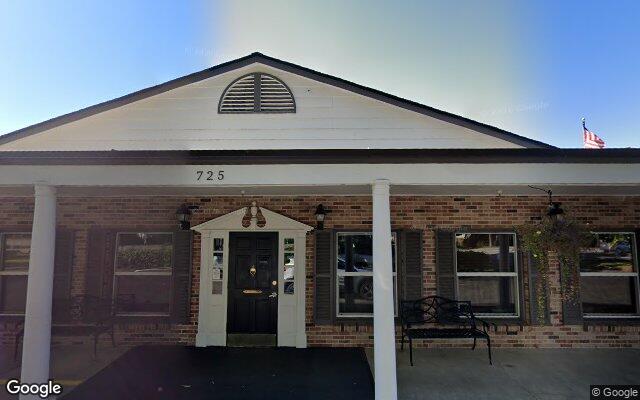
Touchmark in the West Hills.

A large home, reviewed on public record.
© Google Street View
Compared to 15 Oregon facilities with a similar number of beds.
ALF memory care · 36-month window. Higher percentile = better performance on inspection record. Source: Oregon Dept. of Human Services · Long-Term Care Licensing.
among peers to rank.
Rankings based on 36-month OR-DHS inspection data. Severity and frequency: fewer citations = higher percentile. Repeat rate: lower repeat citation share = higher percentile.
Citation history, plotted month by month.
13 deficiencies on record. Each bar is a month with a citation.
Finding distribution
13 total · 36 monthsScope × Severity (CMS A–L)
Every inspection visit, verbatim.
3 inspections in the public record, most recent first. Plain-language summaries open first — click into any row for the full citation text.
2025-02-13Annual Compliance VisitOR-cited · 7 findings
Plain-language summary
During a re-licensure inspection in February 2025, the facility was found to have violations in service plan documentation, infection control practices, and medication management oversight. Specifically, service plans for four of six sampled residents did not accurately reflect current needs or provide clear care directions to staff, staff failed to perform proper hand hygiene and change gloves between clean and dirty tasks during resident care, and a resident was allowed to self-administer prescription insulin and Ozempic injections without documented physician approval for self-administration. The facility acknowledged these findings when discussed with administration.
Read full citation text (7)Hide full citation text
“Based on the resident evaluation performed before move-in, an initial service plan must be developed before move-in that reflects the identified needs and preferences of the resident. (b) The initial service plan must be reviewed within 30-days of movein to ensure that any changes made to the plan during the initial 30- days, accurately reflect the resident's needs and preferences. (c) Staff must document and date adjustments or changes as applicable. (4) QUARTERLY SERVICE PLAN REQUIREMENTS. (a) Service plans must be completed quarterly after the resident moves into the facility. (b) The quarterly evaluation is the basis of the resident's quarterly service plan. (c) If the resident's service plan is revised and updated at the quarterly review, changes must be dated and initialed, and prior historical information must be maintained. This Rule is not met as evidenced by: Based on observation, interview and record review, it was determined the facility failed to ensure service plans were readily available to staff, reflective of residents' current care needs, and service plans provided clear directions to staff regarding the delivery of services for 4 of 6 sampled residents (#s 1, 2, 4 and 6) whose service plans were reviewed. Findings include, but are not limited to:”
“Based on observation, interview, and record review, it was determined the facility failed to determine and document what actions or interventions were needed for short-term changes of condition, communicated actions and interventions to staff on each shift, and monitored the change of condition at least weekly until resolved for 2 of 6 sampled residents (#s 4 and 5) who experienced changes of condition. Findings include, but are not limited to:”
“Based on observation and interview, it was determined the facility failed to maintain infection prevention and control protocols to provide a safe, sanitary, and comfortable environment for 2 of 2 sampled residents (#s 2 and 6) and multiple unsampled residents for meal service. Findings include, but are not limited to: a. Resident 2 moved into the facility in 09/2023 with diagnoses including frontotemporal brain disease and left femoral neck fracture. At 10:50 am on 02/11/25, Staff 32 (CG) and Staff 38 (CG) were observed providing incontinence care for Resident 2. During the observation, both staff donned gloves without performing hand hygiene, assisted the resident in turning side to side and removed his/her soiled brief. Staff 32 provided perineal care and applied barrier cream. Both staff failed to doff soiled gloves, perform hand hygiene and don clean gloves before touching the resident's body and applying a clean brief, clothing, and new bedding for the resident. b. Observations of meal service were conducted for breakfast meal on 02/11/25 in Devonshire 2. Caregiving staff were observed serving food and feeding residents without wearing a protective covering over potentially contaminated clothing and assisting multiple unsampled residents with meal service without performing hand hygiene or glove changes in between assisting different residents with their meal. The need to maintain effective infection prevention and control protocols was discussed with Staff 3 (Memory Care Administrator) on 02/12/25. The findings were acknowledged. c. Resident 6 was admitted to the facility in 05/2021 with diagnoses including dementia. The surveyor observed on 02/23/25 at 10:10 am, Staff 38 (CG) provided incontinence care for Resident 6. During the observation, Staff 38 donned gloves without performing hand hygiene. Staff 38 then assisted the resident in turning side to side, removed the resident’s soiled brief, wiped and cleaned the resident’s perineum area and touched the resident’s body, clean incontinent product, the resident’s clean clothing and wheelchair while using the soiled gloves. Staff 38 failed to change gloves between clean and dirty tasks and perform hand hygiene prior to donned gloves. The above observation was discussed with Staff 3 (Memory Care Administrator) on 02/12/25 at 12:00 pm. The staff acknowledged the appropriate infection control practices were not implemented.”
“Based on observation, interview and record review, it was determined the facility failed to ensure residents who chose to self-administer their medications were evaluated upon move-in and had a physician's or other legally recognized practitioner's written order of approval for self-administration of prescription medications for 1 of 1 sampled resident (# 4) who was reviewed for self-administration. Findings include, but are not limited to: Resident 4 was admitted to the facility in 12/2024 with diagnoses including chronic diastolic heart failure and chronic kidney disease. Additionally, the resident’s hospital discharge notes included a diagnosis of type 2 diabetes mellitus, which was not on the facility’s list of primary diagnoses. During the acuity interview on 02/10/25, Resident 4 was not identified as self-administering any of his/her medications. Resident 4’s charting notes from 12/11/24 through 02/10/25 and MARs from 12/11/24 through 02/10/25 were reviewed. It was noted s/he was self-administering his/her insulin and Ozempic subcutaneous injections (to control blood glucose level), and Miralax powder (bowel care) medications from the initial admission to the facility until hospitalization on 01/30/25 for a small bowel obstruction. This was confirmed by Staff 6 (LPN) in an interview on 02/10/25 at 12:50 pm and by Resident 4 in an interview on 02/11/25 at 11:07 am. Facility assumed the medication management when Resident 4 was discharged from the hospital on 02/08/25. Review of Resident 4’s medical records revealed there was a physician's or other legally recognized practitioner's written order given at the time of admission to the facility stating, “Patient may self administer over the counter meds if [s/he] choose.” Insulin and Ozempic injections were not over the counter medications. On 02/12/25, Staff 3 (Memory Care Administrator) acknowledged no physician or other legally recognized practitioner’s written order was available for the injections. There was no documented evidence the resident was evaluated upon move-in for his/her ability to safely self-administer medications. The need to ensure residents who chose to self-administer their medications were evaluated upon move-in and had a physician's or other legally recognized practitioner's written order of approval for self-administration of prescription medications was reviewed with Staff 3 and Staff 7 (LPN) on 02/12/25 at 3:18 pm. They acknowledged the findings.”
“Based on observation, interview, and record review, it was determined the facility failed to ensure they accurately captured care time and care elements that staff were providing to each resident as outlined in each individual service plan for 3 of 6 sampled residents (#s 1, 2, and 6) whose ABST were reviewed. Findings include, but are not limited to:”
“Based on observation, interview and record review, it was determined the facility failed to follow licensing rules for Residential Care and Assisted Living Facilities. Findings include, but are limited to: Refer to C362 Refer to plan of correction for C362 OAR 411-057-0140(2) Administration Compliance (2) The licensee of a memory care community must comply with both the licensing rules for the facility and Chapter 411, Division 57. This Rule is not met as evidenced by:”
“Based on observation, interview and record review, it was determined the facility failed to ensure health service were consistently provided. Findings include, but are not limited to: Refer to C260, C270, C295 and C325 Refer to plan of correction for C260, C270, C295 and C325 OAR 411-057-0160(2b) Compliance with Rules Health Care (b) Health care services provided in accordance with the licensing rules of the facility. This Rule is not met as evidenced by:”
Read raw inspector notesClose inspector notes
Based on the resident evaluation performed before move-in, an initial service plan must be developed before move-in that reflects the identified needs and preferences of the resident. (b) The initial service plan must be reviewed within 30-days of movein to ensure that any changes made to the plan during the initial 30- days, accurately reflect the resident's needs and preferences. (c) Staff must document and date adjustments or changes as applicable. (4) QUARTERLY SERVICE PLAN REQUIREMENTS. (a) Service plans must be completed quarterly after the resident moves into the facility. (b) The quarterly evaluation is the basis of the resident's quarterly service plan. (c) If the resident's service plan is revised and updated at the quarterly review, changes must be dated and initialed, and prior historical information must be maintained. This Rule is not met as evidenced by: Based on observation, interview and record review, it was determined the facility failed to ensure service plans were readily available to staff, reflective of residents' current care needs, and service plans provided clear directions to staff regarding the delivery of services for 4 of 6 sampled residents (#s 1, 2, 4 and 6) whose service plans were reviewed. Findings include, but are not limited to: Based on observation, interview, and record review, it was determined the facility failed to determine and document what actions or interventions were needed for short-term changes of condition, communicated actions and interventions to staff on each shift, and monitored the change of condition at least weekly until resolved for 2 of 6 sampled residents (#s 4 and 5) who experienced changes of condition. Findings include, but are not limited to: Based on observation and interview, it was determined the facility failed to maintain infection prevention and control protocols to provide a safe, sanitary, and comfortable environment for 2 of 2 sampled residents (#s 2 and 6) and multiple unsampled residents for meal service. Findings include, but are not limited to: a. Resident 2 moved into the facility in 09/2023 with diagnoses including frontotemporal brain disease and left femoral neck fracture. At 10:50 am on 02/11/25, Staff 32 (CG) and Staff 38 (CG) were observed providing incontinence care for Resident 2. During the observation, both staff donned gloves without performing hand hygiene, assisted the resident in turning side to side and removed his/her soiled brief. Staff 32 provided perineal care and applied barrier cream. Both staff failed to doff soiled gloves, perform hand hygiene and don clean gloves before touching the resident's body and applying a clean brief, clothing, and new bedding for the resident. b. Observations of meal service were conducted for breakfast meal on 02/11/25 in Devonshire 2. Caregiving staff were observed serving food and feeding residents without wearing a protective covering over potentially contaminated clothing and assisting multiple unsampled residents with meal service without performing hand hygiene or glove changes in between assisting different residents with their meal. The need to maintain effective infection prevention and control protocols was discussed with Staff 3 (Memory Care Administrator) on 02/12/25. The findings were acknowledged. c. Resident 6 was admitted to the facility in 05/2021 with diagnoses including dementia. The surveyor observed on 02/23/25 at 10:10 am, Staff 38 (CG) provided incontinence care for Resident 6. During the observation, Staff 38 donned gloves without performing hand hygiene. Staff 38 then assisted the resident in turning side to side, removed the resident’s soiled brief, wiped and cleaned the resident’s perineum area and touched the resident’s body, clean incontinent product, the resident’s clean clothing and wheelchair while using the soiled gloves. Staff 38 failed to change gloves between clean and dirty tasks and perform hand hygiene prior to donned gloves. The above observation was discussed with Staff 3 (Memory Care Administrator) on 02/12/25 at 12:00 pm. The staff acknowledged the appropriate infection control practices were not implemented. Based on observation, interview and record review, it was determined the facility failed to ensure residents who chose to self-administer their medications were evaluated upon move-in and had a physician's or other legally recognized practitioner's written order of approval for self-administration of prescription medications for 1 of 1 sampled resident (# 4) who was reviewed for self-administration. Findings include, but are not limited to: Resident 4 was admitted to the facility in 12/2024 with diagnoses including chronic diastolic heart failure and chronic kidney disease. Additionally, the resident’s hospital discharge notes included a diagnosis of type 2 diabetes mellitus, which was not on the facility’s list of primary diagnoses. During the acuity interview on 02/10/25, Resident 4 was not identified as self-administering any of his/her medications. Resident 4’s charting notes from 12/11/24 through 02/10/25 and MARs from 12/11/24 through 02/10/25 were reviewed. It was noted s/he was self-administering his/her insulin and Ozempic subcutaneous injections (to control blood glucose level), and Miralax powder (bowel care) medications from the initial admission to the facility until hospitalization on 01/30/25 for a small bowel obstruction. This was confirmed by Staff 6 (LPN) in an interview on 02/10/25 at 12:50 pm and by Resident 4 in an interview on 02/11/25 at 11:07 am. Facility assumed the medication management when Resident 4 was discharged from the hospital on 02/08/25. Review of Resident 4’s medical records revealed there was a physician's or other legally recognized practitioner's written order given at the time of admission to the facility stating, “Patient may self administer over the counter meds if [s/he] choose.” Insulin and Ozempic injections were not over the counter medications. On 02/12/25, Staff 3 (Memory Care Administrator) acknowledged no physician or other legally recognized practitioner’s written order was available for the injections. There was no documented evidence the resident was evaluated upon move-in for his/her ability to safely self-administer medications. The need to ensure residents who chose to self-administer their medications were evaluated upon move-in and had a physician's or other legally recognized practitioner's written order of approval for self-administration of prescription medications was reviewed with Staff 3 and Staff 7 (LPN) on 02/12/25 at 3:18 pm. They acknowledged the findings. Based on observation, interview, and record review, it was determined the facility failed to ensure they accurately captured care time and care elements that staff were providing to each resident as outlined in each individual service plan for 3 of 6 sampled residents (#s 1, 2, and 6) whose ABST were reviewed. Findings include, but are not limited to: Based on observation, interview and record review, it was determined the facility failed to follow licensing rules for Residential Care and Assisted Living Facilities. Findings include, but are limited to: Refer to C362 Refer to plan of correction for C362 OAR 411-057-0140(2) Administration Compliance (2) The licensee of a memory care community must comply with both the licensing rules for the facility and Chapter 411, Division 57. This Rule is not met as evidenced by: Based on observation, interview and record review, it was determined the facility failed to ensure health service were consistently provided. Findings include, but are not limited to: Refer to C260, C270, C295 and C325 Refer to plan of correction for C260, C270, C295 and C325 OAR 411-057-0160(2b) Compliance with Rules Health Care (b) Health care services provided in accordance with the licensing rules of the facility. This Rule is not met as evidenced by:
2024-10-22Annual Compliance VisitOR-cited · 2 findings
Plain-language summary
During a kitchen inspection on October 22, 2024, the facility was found to have violated food sanitation rules due to unclean kitchen surfaces including greasy hood vents and cooking equipment, dusty ceiling vents and refrigerator components, worn cutting boards that could not be properly sanitized, garbage cans without lids, and kitchen staff not using beard restraints. The facility acknowledged the violations and corrected them by thoroughly cleaning all cited areas, ordering new cutting boards and garbage can lids, instructing all food service staff to wear beard and hair restraints, and implementing an expanded weekly cleaning checklist with ongoing equipment monitoring to prevent future violations.
Read full citation text (2)Hide full citation text
“Based on observation and interview, it was determined the facility failed to ensure kitchen practices and protocols were in accordance with the Food Sanitation Rules OARs 333-150-0000. Findings include, but are not limited to: On 10/22/24 at 11:30 am, the facility kitchen was observed to need cleaning in the following areas: * Hood vents above cooking equipment – dusty/greasy; * Wall behind cooking equipment – drips of grease; * Exterior of deep fat fryer – drips of grease; * Side of convection oven (next to deep fat fryer) – drips of grease; * Ceiling vent, ceiling area surrounding the vent and wall above spice shelf – heavy build up of dust; and * Walk in refrigerator fans and cooling unit – black dust build up. Other areas of concern included: * Colored cutting boards – finish worn off/uncleanable; * Three garbage cans did not have lids when not in use; and * Kitchen staff with beards lacked use of beard restraints. The areas of concern were observed and discussed with Staff 1 (Dining Services Director) and discussed with Staff 2 (Resident Care Manager) on 10/22/24. The findings were acknowledged. OAR 411-054-0030 (1)(a): Resident Services Meals, Food Sanitation Rule We acknowledge that this regulation was not met as evidence of the findings found in the recent survey. to correct the violation, all areas cited in the survey have been thoroughly cleaned and sanitized. Additonally, we have ordered all new cutting boards and replacement lids for the three garbage cans that were not functioning properly. Lastly, all employees serving food have been instructed to wear a beard or hair restraint while in the kitchen at all times. We have corrected our system to avoid future violation by broadening our weekly cleaning checklist in the kitchen and including all areas cited during the survey visit. Equipment that was identified as uncleanable will be more closely monitored and replaced on a consistent schedule. Beard and hair restraints will be readily available for all kitchen team members. Dining Services Director will be responsible to ensure these standards are met going forward. OAR 411-054-0030 (1)(a) Resident Services Meals, Food Sanitation Rule (1) The residential care or assisted living facility must provide a minimum scope of services as follows: (a) Three daily nutritious, palatable meals with snacks available seven days a week, in accordance with the recommended dietary allowances found in the United States Department of Agriculture (USDA) guidelines, including seasonal fresh fruit and fresh vegetables; (A) Modified special diets that are appropriate to residents' needs and choices. The facility must encourage residents' involvement in developing menus. (B) Menus must be prepared at least one week in advance, and must be made available to all residents. Meal substitutions must be of similar nutritional value if a resident refuses a food that is served. Residents must be informed in advance of menu changes. (C) Food must be prepared and served in accordance with OAR 333-150-0000 (Food Sanitation Rules). This Rule is not met as evidenced by:”
“Based on observation and interview, it was determined the facility failed to follow licensing rules for Residential Care and Assisted Living Facilities. Findings include, but are not limited to: Refer to C240. Refer to Plan of Correction for C240. OAR 411-057-0140(2) Administration Compliance (2) The licensee of a memory care community must comply with both the licensing rules for the facility and Chapter 411, Division 57. This Rule is not met as evidenced by:”
Read raw inspector notesClose inspector notes
Based on observation and interview, it was determined the facility failed to ensure kitchen practices and protocols were in accordance with the Food Sanitation Rules OARs 333-150-0000. Findings include, but are not limited to: On 10/22/24 at 11:30 am, the facility kitchen was observed to need cleaning in the following areas: * Hood vents above cooking equipment – dusty/greasy; * Wall behind cooking equipment – drips of grease; * Exterior of deep fat fryer – drips of grease; * Side of convection oven (next to deep fat fryer) – drips of grease; * Ceiling vent, ceiling area surrounding the vent and wall above spice shelf – heavy build up of dust; and * Walk in refrigerator fans and cooling unit – black dust build up. Other areas of concern included: * Colored cutting boards – finish worn off/uncleanable; * Three garbage cans did not have lids when not in use; and * Kitchen staff with beards lacked use of beard restraints. The areas of concern were observed and discussed with Staff 1 (Dining Services Director) and discussed with Staff 2 (Resident Care Manager) on 10/22/24. The findings were acknowledged. OAR 411-054-0030 (1)(a): Resident Services Meals, Food Sanitation Rule We acknowledge that this regulation was not met as evidence of the findings found in the recent survey. to correct the violation, all areas cited in the survey have been thoroughly cleaned and sanitized. Additonally, we have ordered all new cutting boards and replacement lids for the three garbage cans that were not functioning properly. Lastly, all employees serving food have been instructed to wear a beard or hair restraint while in the kitchen at all times. We have corrected our system to avoid future violation by broadening our weekly cleaning checklist in the kitchen and including all areas cited during the survey visit. Equipment that was identified as uncleanable will be more closely monitored and replaced on a consistent schedule. Beard and hair restraints will be readily available for all kitchen team members. Dining Services Director will be responsible to ensure these standards are met going forward. OAR 411-054-0030 (1)(a) Resident Services Meals, Food Sanitation Rule (1) The residential care or assisted living facility must provide a minimum scope of services as follows: (a) Three daily nutritious, palatable meals with snacks available seven days a week, in accordance with the recommended dietary allowances found in the United States Department of Agriculture (USDA) guidelines, including seasonal fresh fruit and fresh vegetables; (A) Modified special diets that are appropriate to residents' needs and choices. The facility must encourage residents' involvement in developing menus. (B) Menus must be prepared at least one week in advance, and must be made available to all residents. Meal substitutions must be of similar nutritional value if a resident refuses a food that is served. Residents must be informed in advance of menu changes. (C) Food must be prepared and served in accordance with OAR 333-150-0000 (Food Sanitation Rules). This Rule is not met as evidenced by: Based on observation and interview, it was determined the facility failed to follow licensing rules for Residential Care and Assisted Living Facilities. Findings include, but are not limited to: Refer to C240. Refer to Plan of Correction for C240. OAR 411-057-0140(2) Administration Compliance (2) The licensee of a memory care community must comply with both the licensing rules for the facility and Chapter 411, Division 57. This Rule is not met as evidenced by:
2023-10-18Complaint InvestigationOR-cited · 4 findings
Plain-language summary
A complaint investigation conducted on October 18, 2023 found that the facility failed to fully implement and update its Acuity-Based Staffing Tool, which is used to determine how many staff members are needed based on residents' care needs. Reviewers found that the tool did not include required minutes for all 22 activities of daily living, and one resident's staffing assessment had not been updated since July 2023 when quarterly updates are required. The facility's administrator and residential care coordinator acknowledged these findings.
Read full citation text (4)Hide full citation text
“The findings of the on-site investigation, conducted 10/18/23 are documented in this report. The investigation was conducted to determine compliance with the OARs 411 Division 54 for Residential Care and Assisted Living Facilities. Abbreviations possibly used in this document: ADL: activities of daily living bid: twice a day CBG: capillary blood glucose or blood sugar cc: cubic centimeter CG: caregiver cm: centimeter F: Fahrenheit HH: Home Health HS or hs: hour of sleep LPN: Licensed Practical Nurse MA: Medication Aide MAR: Medication Administration Record MCC Memory Care Community mg: milligram ml: milliliter O2 sats: oxygen saturation in the blood OT: Occupational Therapist PT: Physical Therapist PRN: as needed qd: every day or daily qid: four times a day RN: Registered Nurse SP: service plan TAR: Treatment Administration Record tid: three times a day The findings of the on-site investigation, conducted 10/18/23 are documented in this report. The investigation was conducted to determine compliance with the OARs 411 Division 54 for Residential Care and Assisted Living Facilities. Abbreviations possibly used in this document: ADL: activities of daily living bid: twice a day CBG: capillary blood glucose or blood sugar cc: cubic centimeter CG: caregiver cm: centimeter F: Fahrenheit HH: Home Health HS or hs: hour of sleep LPN: Licensed Practical Nurse MA: Medication Aide MAR: Medication Administration Record MCC Memory Care Community mg: milligram ml: milliliter O2 sats: oxygen saturation in the blood OT: Occupational Therapist PT: Physical Therapist PRN: as needed qd: every day or daily qid: four times a day RN: Registered Nurse SP: service plan TAR: Treatment Administration Record tid: three times a day”
“Based on interview and record review, conducted during a site visit on 10/18/23, it was confirmed the facility failed to fully implement and update an Acuity-Based Staffing Tool (ABST). Findings include, but not limited to: During an interview on 10/18/23, Staff 1 (Administrator) stated the ABST pulls data from the residents' service plans and updated nightly. Staff 1 stated the 22 ADLs are not individually listed in the tool, or if it was listed s/he did not have access to the report. A review of Resident 1, Resident 2 and Resident 3s' ABST on 10/18/23, lacked the number of minutes allocated in every ADL as is required. Resident 1's ABST was last updated on 07/12/23, which was not updated quarterly as required. The findings of the investigation were reviewed with and acknowledged by Staff 1 and Staff 2 (RCC) on 10/18/23. It was determined the facility failed to fully implement and update the ABST. Based on interview and record review, conducted during a site visit on 10/18/23, it was confirmed the facility failed to fully implement and update an Acuity-Based Staffing Tool (ABST). Findings include, but not limited to: During an interview on 10/18/23, Staff 1 (Administrator) stated the ABST pulls data from the residents' service plans and updated nightly. Staff 1 stated the 22 ADLs are not individually listed in the tool, or if it was listed s/he did not have access to the report. A review of Resident 1, Resident 2 and Resident 3s' ABST on 10/18/23, lacked the number of minutes allocated in every ADL as is required. Resident 1's ABST was last updated on 07/12/23, which was not updated quarterly as required. The findings of the investigation were reviewed with and acknowledged by Staff 1 and Staff 2 (RCC) on 10/18/23. It was determined the facility failed to fully implement and update the ABST.”
Read raw inspector notesClose inspector notes
The findings of the on-site investigation, conducted 10/18/23 are documented in this report. The investigation was conducted to determine compliance with the OARs 411 Division 54 for Residential Care and Assisted Living Facilities. Abbreviations possibly used in this document: ADL: activities of daily living bid: twice a day CBG: capillary blood glucose or blood sugar cc: cubic centimeter CG: caregiver cm: centimeter F: Fahrenheit HH: Home Health HS or hs: hour of sleep LPN: Licensed Practical Nurse MA: Medication Aide MAR: Medication Administration Record MCC Memory Care Community mg: milligram ml: milliliter O2 sats: oxygen saturation in the blood OT: Occupational Therapist PT: Physical Therapist PRN: as needed qd: every day or daily qid: four times a day RN: Registered Nurse SP: service plan TAR: Treatment Administration Record tid: three times a day The findings of the on-site investigation, conducted 10/18/23 are documented in this report. The investigation was conducted to determine compliance with the OARs 411 Division 54 for Residential Care and Assisted Living Facilities. Abbreviations possibly used in this document: ADL: activities of daily living bid: twice a day CBG: capillary blood glucose or blood sugar cc: cubic centimeter CG: caregiver cm: centimeter F: Fahrenheit HH: Home Health HS or hs: hour of sleep LPN: Licensed Practical Nurse MA: Medication Aide MAR: Medication Administration Record MCC Memory Care Community mg: milligram ml: milliliter O2 sats: oxygen saturation in the blood OT: Occupational Therapist PT: Physical Therapist PRN: as needed qd: every day or daily qid: four times a day RN: Registered Nurse SP: service plan TAR: Treatment Administration Record tid: three times a day Based on interview and record review, conducted during a site visit on 10/18/23, it was confirmed the facility failed to fully implement and update an Acuity-Based Staffing Tool (ABST). Findings include, but not limited to: During an interview on 10/18/23, Staff 1 (Administrator) stated the ABST pulls data from the residents' service plans and updated nightly. Staff 1 stated the 22 ADLs are not individually listed in the tool, or if it was listed s/he did not have access to the report. A review of Resident 1, Resident 2 and Resident 3s' ABST on 10/18/23, lacked the number of minutes allocated in every ADL as is required. Resident 1's ABST was last updated on 07/12/23, which was not updated quarterly as required. The findings of the investigation were reviewed with and acknowledged by Staff 1 and Staff 2 (RCC) on 10/18/23. It was determined the facility failed to fully implement and update the ABST. Based on interview and record review, conducted during a site visit on 10/18/23, it was confirmed the facility failed to fully implement and update an Acuity-Based Staffing Tool (ABST). Findings include, but not limited to: During an interview on 10/18/23, Staff 1 (Administrator) stated the ABST pulls data from the residents' service plans and updated nightly. Staff 1 stated the 22 ADLs are not individually listed in the tool, or if it was listed s/he did not have access to the report. A review of Resident 1, Resident 2 and Resident 3s' ABST on 10/18/23, lacked the number of minutes allocated in every ADL as is required. Resident 1's ABST was last updated on 07/12/23, which was not updated quarterly as required. The findings of the investigation were reviewed with and acknowledged by Staff 1 and Staff 2 (RCC) on 10/18/23. It was determined the facility failed to fully implement and update the ABST.
2 older inspections from 2022 are not shown above.
Get the complete record, translated into plain language — emailed to you.
Other facilities in Multnomah County.
Other memory care facilities in Multnomah County with similar care offerings.



Full Inspection Record
Family reviews
No reviews yet — be the first to share your experience
Other memory care options nearby.
More options in neighboring cities
Licensed memory care in other cities within this county region — useful when your search radius crosses city limits.