Senior Haven Rcf.

A medium home, reviewed on public record.
© Google Street View
Compared to 55 Oregon facilities with a similar number of beds.
ALF memory care · 36-month window. Higher percentile = better performance on inspection record. Source: Oregon Dept. of Human Services · Long-Term Care Licensing.
among peers to rank.
Rankings based on 36-month OR-DHS inspection data. Severity and frequency: fewer citations = higher percentile. Repeat rate: lower repeat citation share = higher percentile.
Citation history, plotted month by month.
24 deficiencies on record. Each bar is a month with a citation.
Finding distribution
24 total · 36 monthsScope × Severity (CMS A–L)
Every inspection visit, verbatim.
2 inspections in the public record, most recent first. Plain-language summaries open first — click into any row for the full citation text.
2025-05-08Annual Compliance VisitOR-cited · 22 findings
Plain-language summary
During a re-licensure inspection conducted May 6–8, 2025, the facility was cited for three violations: failing to provide effective administrative oversight of resident care and services, failing to post required items such as the administrator's name and current staffing plan in accessible locations, and failing to promptly investigate an unwitnessed fall involving a resident who sustained nasal fractures and lacerations on May 2, 2025, to determine whether abuse or neglect occurred and to report it to the state when appropriate. The facility has posted the required postings, hired new administrative leadership, and reported the May 2 incident to the state during the inspection exit; staff will receive training on abuse and neglect reporting procedures.
Read full citation text (22)Hide full citation text
“Based on observation and interview, it was determined the facility failed to ensure required postings were in a routinely accessible and conspicuous location to residents and visitors. Findings include, but are not limited to: The Residential Care Facility (RCF) was toured on 05/05/25. The following were not posted as required: * The name of the administrator or designee in charge. The designee in charge must be posted by shift or whenever the administrator is out of the facility; and * The current facility staffing plan. The need to ensure all required items were posted was reviewed with Staff 1 (Director of Nursing) and Staff 2 (ED) on 05/08/25 at 12:55 pm. They acknowledged the items were not posted as required. 1) Staffing plan posting was approved by survey team prior to exit and posted. All additional postings are updated and posted. 2) Administrator will be responsible moving forward for ensuring that all required postings are updated and accurate. The Business Office Manager will assist as needed. 3) & 4) VP of Operations will audit signage quarterly. OAR 411-054-0025 (5) Facility Administration: Required Postings (5) REQUIRED POSTINGS. Required postings must be posted in a routinely accessible and conspicuous location to residents and visitors and must be available for inspection at all times. The licensee is responsible for posting the following: (a) Facility license. (b) The name of the administrator or designee in charge. The designee in charge must be posted by shift or whenever the administrator is out of the facility. (c) The current facility staffing plan. (d) A copy of the most recent re-licensure survey, including all revisits and plans of correction as applicable. (e) The Ombudsman Notification Poster. (f) Resident Rights and Protections, as described in OAR 411-054- 0027, including the LGBTQIA2S+ Rights and Protections. (g) The LGBTQIA2S+ Nondiscrimination Notice, as described in paragraph (7)(i) of this section, must be posted in all places and on all materials where that notice or those written materials are posted. (h) Other notices relevant to residents or visitors required by state or federal law. This Rule is not met as evidenced by:”
“Based on observation, interview, and record review, it was determined the facility failed to provide effective administrative oversight to ensure quality of care and services rendered in the facility. Findings include, but are not limited to: During the re-licensure survey, conducted 05/06/25 through 05/08/25, administrative oversight to ensure adequate resident care and services rendered in the facility was found to be ineffective based on the number of citations. Refer to deficiencies in report. 1) We have hired a new experienced administrator who will start on June 4th, 2025. We also have a new Director of Nursing in place. 2) Both individuals will provide the oversight of the community with support from the home office for any additional needs. 3) & 4) VP of Operations will be auditing the community on a quarterly basis and will assist with onboarding of team. OAR 411-054-0025 (1) Facility Administration: Operation (1) FACILITY OPERATION. (a) The licensee is responsible for the operation of the facility and the quality of services rendered in the facility. (b) The licensee is responsible for the supervision, training, and overall conduct of staff when staff are acting within the scope of their his or her employment duties.(c) The licensee is responsible for ensuring that the facility complies with the tuberculosis screening recommendations in OAR 333-019-0041.(d) The licensee is responsible for obtaining background checks on all subject individuals. This Rule is not met as evidenced by:”
“Based on interview and record review, it was determined the facility failed to ensure an unwitnessed fall was promptly investigated to rule out suspected abuse and/or neglect and was reported to the local SPD office as needed for 1 of 1 sampled resident (# 1) reviewed with incidents. Findings include, but are not limited to: Resident 1 moved into the facility in 12/2020 with diagnoses including Alzheimer’s disease and generalized weakness. The resident's current service plan dated 02/06/25, progress notes dated 02/06/25 through 05/06/25, and corresponding incident reports were reviewed. Observations of the resident and interviews with staff were completed between 05/06/25 and 05/08/25. The following was identified: * 05/02/25 - Unwitnessed fall with nasal fractures and lacerations. During an interview on 05/07/25 at 12:15 pm, Staff 7 (MT) confirmed Resident 1 was unable to state what occurred and required assistance of one staff member for all ADLs. There was no documented evidence this incident was investigated to rule out abuse and/or neglect or was reported to the local SPD if abuse and/or neglect could not be ruled out. The facility was asked to report the incident, and confirmation of the report was received prior to survey exit on 05/08/25 at 9:51 am. The need to investigate all incidents promptly and to report incidents to the local SPD if abuse and/or neglect could not be ruled out was discussed with Staff 1 (Director of Nursing) and Staff 2 (ED) on 05/08/25 at 12:55 pm. They acknowledged the findings. 1) Abuse and Neglect reporting will be inserviced at next all staff meeting on June 11th Written materials will also be placed in staff break room and in 24 hour log. VP of Operations reviewed Abuse and Neglect reporting protocols with director team on May 15, 2025. 2) Staff will follow state reporting procedures and company policies and procedures. 3) & 4) Administrator will review all incident reports per policy and VP of Operations will review processes on a quarterly basis. OAR 411-054-0028 (1-3) Reporting & Investigating Abuse-Other Action (Amended 12/15/21)(1) The facility must have policies and procedures in place to assure the prevention and appropriate response to any incident. In the case of incidents of abuse, suspected abuse, or injury of unknown cause, policies and procedures must follow the requirements outlined below. In the case of incidents that are not abuse or injuries of unknown cause where abuse has been ruled out, the facility must have policies and procedures in place to respond appropriately, which may include such things as re-assessment, monitoring, or medication review. (2) ABUSE REPORTING. Abuse is prohibited. The facility employees, agents and licensee must not permit, aid, or engage in abuse of residents who are under their care. (a) STAFF REPORTING. All facility employees are required to immediately report abuse and suspected abuse to the local SPD office, or the local AAA, the facility administrator, or to the facility administrator's designee. (b) FACILITY REPORTING. The facility administrator, or designee, must immediately notify the local SPD office, or the local AAA, of any incident of abuse or suspected abuse, including events overheard or witnessed by observation. (c) LAW ENFORCEMENT AGENCY. The local law enforcement agency must be called first when the suspected abuse is believed to be a crime (e.g., rape, murder, assault, burglary, kidnapping, theft of controlled substances, etc.). (d) INJURY OF UNKNOWN CAUSE. Physical injury of unknown cause must be reported to the local SPD office, or the local AAA, as suspected abuse, unless an immediate facility investigation reasonably concludes and documents that the physical injury is not the result of abuse. (3) FACILITY INVESTIGATION. In addition to immediately reporting abuse or suspected abuse to SPD, AAA, or the law enforcement agency, the facility must promptly investigate all reports of abuse and suspected abuse and take measures necessary to protect residents and prevent the reoccurrence of abuse. Investigation of suspected abuse must document: (a) Time, date, place and individuals present; (b) Description of the event as reported; (c) Response of staff at the time of the event; (d) Follow-up action; and (e) Administrator's review. This Rule is not met as evidenced by:”
“Based on the resident evaluation performed before move-in, an initial service plan must be developed before move-in that reflects the identified needs and preferences of the resident. (b) The initial service plan must be reviewed within 30-days of movein to ensure that any changes made to the plan during the initial 30- days, accurately reflect the resident's needs and preferences. (c) Staff must document and date adjustments or changes as applicable. (4) QUARTERLY SERVICE PLAN REQUIREMENTS. (a) Service plans must be completed quarterly after the resident moves into the facility. (b) The quarterly evaluation is the basis of the resident's quarterly service plan. (c) If the resident's service plan is revised and updated at the quarterly review, changes must be dated and initialed, and prior historical information must be maintained. This Rule is not met as evidenced by: Based on observation, interview, and record review, it was determined the facility failed to ensure service plans were reflective of residents' current care needs, and provided clear directions to staff regarding the delivery of services for 2 of 3 sampled residents (#s 1 and 3) whose service plans were reviewed. Findings include, but are not limited to: Resident 3 was admitted to the facility in 04/2024 with diagnoses including type 2 diabetes mellitus, cellulitis of left lower limb, and paroxysmal atrial fibrillation. Observations were made of the resident's care on 05/07/25, interviews with the resident and facility staff were conducted, and the service plan dated 02/14/25 was reviewed.”
“Based on observation, interview, and record review, it was determined the facility failed to determine and document actions or interventions for short term changes of condition, provide written communication of a resident's change of condition and any required interventions to staff on all shifts, and ensure documentation of staff instructions or interventions were made part of the resident record with weekly progress noted until the condition resolved for 3 of 3 sampled residents (#s 1, 2, and 3) who experienced short term changes of condition, and failed to document and update the service plan as needed after a resident experienced a significant change of condition for 1 of 1 sampled resident (#1). Findings include, but are not limited to:”
“Based on interview and record review, it was determined the facility failed to ensure delegation and teaching was provided and documented by a RN in accordance with the Oregon Administrative Rules (OAR) adopted by the Oregon State Board of Nursing (OSBN) in chapter 851, division 047 for 1 of 1 sampled resident (#3) who received subcutaneous injections by a facility unregulated assistive person (UAP). Findings include, but are not limited to: Pursuant to OAR chapter 851 division 006, delegation process means the process utilized by an RN to authorize an UAP to perform a nursing procedure for a client, the outcome of which the RN retains accountability for. The RN must document all delegation process decisions, actions and outcomes pursuant to OAR 851-045 including comprehensive assessment, reasoned conclusions that identify client problems and risks, educate the UAP and evaluate their learned knowledge, and provide a one-on-one education and evaluation experience with the UAP and the client. During the acuity interview on 05/06/25, Resident 3 was identified to be administered a subcutaneous injection four times daily by a facility UAP. Resident 3's MARs from 04/01/25 through 05/06/25 revealed subcutaneous injections had been given by Staff 8 (MT), Staff 9 (MT), and Staff 15 (MT). Review of the nursing delegation binder found no documented evidence all elements of the initial delegation were completed for Staff 8. Additionally, the RN comprehensive assessment to determine Resident’s 3 condition was stable and predictable, one of the criteria for delegation of a nursing procedure, was not completed and/or documented. Staff 1 (Director of Nursing) assumed nursing oversight at the facility on 05/05/25. During the interview on 05/06/25, she stated the delegated RN was no longer employed by the facility. The need to ensure nursing delegation and teaching to facility UAPs was provided and documented by a RN in accordance with the Oregon Administrative Rules (OAR) adopted by the Oregon State Board of Nursing (OSBN) in chapter 851, division 047 was reviewed with Staff 1, Staff 2 (ED), and Witness 1 (Consultant) on 05/08/25 at 2:46 pm. They acknowledged the findings. 1) Director of Nursing has been educated on delegation policies and procedures. Documentation has been placed in the delegation notebook for residents who are delegated. Sample residents have been included. 2) Delegated Nurse will review delegated residents per standards outlined in OAR 851-047-0050 and company nurse delegation policy and procedure. 3) & 4) Delegating Nurse will review delegated residents and tasks being provided at least every 90 days. OAR 411-054-0045 (1)(f)(B) RN Delegation and Teaching (1) RESIDENT HEALTH SERVICES. The facility must provide health services and have systems in place to respond to the 24-hour care needs of residents. The system must:(B) Delegation and Teaching. Delegation and teaching must be provided and documented by a RN in accordance with the Oregon Administrative Rules adopted by the Oregon State Board of Nursing in chapter 851, division 047. This Rule is not met as evidenced by:”
“Based on interview and record review, it was determined the facility failed to ensure medication and treatment orders were carried out as prescribed for 3 of 3 sampled residents (#s 1, 2, and 3) whose orders were reviewed. Findings include, but are not limited to:”
“Based on interview and record review, it was determined the facility failed to notify the physician/practitioner when a resident refused to consent to orders for 2 of 2 sampled residents (#2 and 3) who had documented medication and treatment refusals. Findings include, but are not limited to:”
“based on their activity evaluation. The plan must reflect the resident ' s activity preferences and needs. (C) A selection of daily structured and non-structured activities must be provided and included on the resident ' s activity service or care plan as appropriate. Daily activity options based on resident evaluation may include but are not limited to: (i) Occupation or chore related tasks; (ii) Scheduled and planned events (e.g. entertainment, outings); (iii) Spontaneous activities for enjoyment or those that may help diffuse a behavior; (iv) One to one activities that encourage positive relationships between residents and staff (e.g. life story, reminiscing, music); (v) Spiritual, creative, and intellectual activities; (vi) Sensory stimulation activities; (vii) Physical activities that enhance or maintain a resident ' s ability to ambulate or move; and (viii) Outdoor activities. This Rule is not met as evidenced by: Based on interview and record review, it was determined the facility failed to ensure activity evaluations addressed all required components and individualized activity plans were developed for 2 of 2 sampled residents (#s 1 and 2) whose activity plans were reviewed. Findings include, but are not limited to: Resident 1 and 2’s records were reviewed during the survey. There was no documented evidence an activity evaluation had been completed and the service plans individualized to reflect one or more of the following required components: * Residents' current preferences; * Abilities and skills; * Emotional/social needs and patterns; * Physical abilities and limitations; * Adaptations necessary for the resident to participate; and * Identification of activities for behavioral interventions. There was no specific activity plan, reflecting the residents' activity preferences and needs, which detailed what, when, how and how often staff should offer and assist each resident with individualized activities. During an interview on 05/08/25 at 10:58 am, Staff 12 (Activities Director) confirmed all of the components were not addressed in the current individualized activity plans for Residents 1 and 2. The need to ensure activity evaluations addressed all required components and individualized activity plans were developed was discussed with Staff 1 (Director of Nursing) and Staff 2 (ED) on 05/08/25 at 12:55 pm. The findings were acknowledged. 1) Activity Director is completing preference forms with all residents. Once completed the forms will be given to the Director of Nursing to ensure that information is noted in the service plans. Activity Director will keep copies of forms in a notebook for activity staff to refer to when crafting calendars. Sampled residents have been interviewed regarding preferences. Updates in service plans have been put in place with clarity for care givers and actitivies team members to refer to. 2) Activity preference forms will be placed in the new resident packets for completion prior to or upon move in. 3) With each new resident team members will follow the paperwork check off form 4) Activity Director, Director of Nursing, Administrator OAR 411-057-0160(2d) Activities (d) Meaningful activities that promote or help sustain the physical and emotional well-being of residents. The activities must be person centered and available during residents ' waking hours. (A) Each resident must be evaluated for activities according to the licensing rules of the facility. In addition, the evaluation must address the following: (i) Past and current interests; (ii) Current abilities and skills; (iii) Emotional and social needs and patterns; (iv) Physical abilities and limitations; (v) Adaptations necessary for the resident to participate; and (vi) Identification of activities for behavioral interventions. (B) An individualized activity plan must be developed for each resident based on their activity evaluation. The plan must reflect the resident ' s activity preferences and needs. (C) A selection of daily structured and non-structured activities must be provided and included on the resident ' s activity service or care plan as appropriate. Daily activity options based on resident evaluation may include but are not limited to: (i) Occupation or chore related tasks; (ii) Scheduled and planned events (e.g. entertainment, outings); (iii) Spontaneous activities for enjoyment or those that may help diffuse a behavior; (iv) One to one activities that encourage positive relationships between residents and staff (e.g. life story, reminiscing, music); (v) Spiritual, creative, and intellectual activities; (vi) Sensory stimulation activities; (vii) Physical activities that enhance or maintain a resident ' s ability to ambulate or move; and (viii) Outdoor activities. This Rule is not met as evidenced by:”
“Based on observation, interview, and record review, it was determined the facility failed to instruct caregivers on the correct use of and precautions related to the supportive device, document use of the device in the resident's service plan, and/or evaluate the device on a quarterly basis for 2 of 2 sampled residents (# 2 and 3) who used a supportive device with restraining qualities. Findings include, but are not limited to:”
“Based on interview, observation, and record review, it was determined the facility’s Acuity-Based Staffing Tool (ABST) did not accurately capture care time and care elements that staff were providing to each resident as outlined in each individual service plan for 2 of 3 sampled residents (#s 1 and 2). Findings include, but are not limited to: A review of ABST documentation, the posted staffing plan, the staffing schedule for 04/27/25 through 05/03/25, and the specific needs contract staffing requirements were reviewed. The following was identified: * The minutes recorded on the ABST did not match services provided by staff in multiple areas for Residents 1 and 2. The need for the ABST to accurately capture care time and care elements that staff were providing to each resident was discussed with Staff 1 (Director of Nursing), Staff 2 (ED), and Witness 1 on 05/08/25. They acknowledged the findings. 1) ABST tool will be compared with assessment tool to ensure proper staffing levels and care needs of residents are met. Sampled residents have been reviewed, service plans updated and ABST tool updated to reflect current care needs. 2) VP of Operations and Administrator will audit the ABST tool to ensure compliance 3) RCC and DON will update ABST tool upon change of condition or change in quarterly service plan. 4) ABST tool will be audited quarterly by VP of Operations OAR 411-054-0037 (1)(b-g) Acuity Based Staffing Tool - ABST Time (1) DEVELOP AND MAINTAIN ACUITY-BASED STAFFING (b) Accurately capture care time and care elements that staff are providing to each resident as outlined in each individual service plan. Established care time must be resident specific, rather than a predetermined average. (c) Develop a staffing plan for each shift, that meets the scheduled and unscheduled needs of all residents. (d) Develop ABST reports and posted staffing plans that reflect distinct and segregated areas as outlined in OAR 411-054-0070(1). (e) If applicable, determine ABST time for residents on a Specific Needs Settings Contract and residents not on a Specific Needs Setting Contract to build posted staffing plan as outlined in this rule. (f) Develop written policies and procedures to accurately and consistently implement the ABST. The policy must explain how a facility evaluates and accounts for both scheduled and unscheduled resident needs. (g) Provide the relevant ABST information for a specific resident if requested by the Department, that specific resident, that specific resident’s legal representative, or the Long-Term Care Ombudsman. This Rule is not met as evidenced by:”
“Based on interview and record review, it was determined the facility failed to ensure the acuity-based staffing tool (ABST) was updated no less than quarterly for 32 of 33 residents. Findings include, but are not limited to: During the acuity interview at 9:30 am on 05/06/25, Staff 7 (MT) and Staff 11 (CG) confirmed the facility census was at 33 residents. The facility’s ABST data was reviewed at 11:31 am on 05/06/25. The ABST data for 32 of 33 residents did not show documented evidence of being updated at least quarterly. During an interview on 05/08/25 at 1:45 pm, Staff 2 (ED) stated the facility process for updating the ABST included to update it at the same time the service plan was being updated and/or with significant changes of condition. No additional documentation was provided to show the ABST for the above residents had been updated at least quarterly. The need to ensure residents’ ABST was updated no less than quarterly was discussed with Staff 1 (Director of Nursing), Staff 2, and Witness 1 (Consultant) on 05/08/25. They acknowledged the findings. 1) ABST tool will be updated either quarterly per the OAR or on change of condition. Communication with the licensed nursing team and the administrator will take place weekly regarding resident COC. 2) VP of Operations will audit the ABST tool to ensure compliance 3) & 4) ABST tool will be audited quarterly by VP of Operations OAR 411-054-0037 (4-6) Acuity Based Staffing Tool - Updates & Staffing Plan (4) FREQUENCY OF UPDATES. Facilities must complete or update and review the ABST evaluation for each resident according to the following schedule. (a) Before a resident moves in. (b) Whenever there is a significant change of condition as defined in OAR 411-054-0040(1)(b). (c) No less than quarterly at the same time the resident’s service plan is updated as required by OAR 411-054-0034. (5) DEVELOP AND MAINTAIN UPDATED POSTED STAFFING PLAN. Each facility should use the results of an ABST to develop and routinely update the facility’s posted staffing plan. The staffing plan must outline the staffing numbers required to meet the scheduled and unscheduled needs of all residents in the facility, for each shift. The ABST and staffing plan must be reviewed at the frequency required in paragraph (4) of this rule. The facility must review the following and ensure accuracy between the posted staffing plan and ABST: (a) The total ABST care time required for the individual care elements as referenced in paragraph (3) of this rule. (b) Staffing plan must account for unscheduled care needs. (c) Documentation of consistently staffing to meet or exceed the posted staffing plan 24 hours a day, seven days a week. (d) The staffing requirements outlined in OAR 411-054-0070(1). (e) Any other applicable factors to be considered. (e.g., disruptions to normal facility operations.) (f) Time for paid or unpaid staff meal breaks must be accounted for and should not be included in the total scheduled staff time per shift. (g) Distinct posted staffing plans for segregated areas as outlined in OAR 411-054-0070(1) to meet the scheduled and unscheduled needs of residents who reside in each segregated area. (h) The staffing needs required under the Specific Needs Contracts, if applicable. (6) ABST REPORTING OF SPECIFIC NEEDS CONTRACTS AND EXCEPTIONAL PAYMENTS. Staffing required by a Specific Needs Contract (Contract), as described in OAR chapter 411, division 027, must be included in a facility’s ABST. (a) If all residents within the facility are receiving service through a Contract: (A) The facility’s staffing plan must include the number of staff required by the Contract and additional staff time, if required to meet the scheduled and unscheduled needs of the residents. (B) If the ABST staffing analysis indicates numbers higher than the Contract, the facility must staff to the numbers indicated by the ABST. (b) If certain residents within the facility are served under Contract, and other residents are not served by a Contract: (A) The facility must maintain a posted staffing plan that includes the staffing required for residents served by the Contract as well as the staffing required for residents not served by the Contract. (B) The facility must prepare two distinct ABST reports: one for residents served by the Contract and the other for residents not served by the Contract. (C) If the ABST indicates higher staffing numbers than the Contract for residents who are served by the Contract, the facility must staff to numbers indicated by the ABST. (c) If the facility has any residents funded by an exceptional payment, as provided in OAR 411-027-0050, that must be included in the ABST and the facility must staff to the greater of the exception or the ABST. This Rule is not met as evidenced by:”
“Based on interview and record review, it was determined the facility failed to provide fire and life safety instruction to staff on alternate months, as required by the Oregon Fire Code (OFC). Findings include, but are not limited to: Fire and life safety records were reviewed on 05/07/25 at 1:45 pm. In 12/2024, staff were instructed on Workplace Violence. There was no documented evidence staff were instructed on fire and life safety on alternating months from fire drills. During an interview on 05/08/25 Staff 2 (ED) indicated fire and life safety instruction to staff only occurred in 12/2024 over the last six months. The need to ensure staff instruction was provided according to the OFC was discussed with Staff 1 (Director of Nursing), Staff 2, and Witness 1 (Consultant) on 05/08/25 at 1:44 pm. They acknowledged the findings and no further information was provided. 1) Community Facilities Director has been educated on OAR for Fire and Life Safety and requirements for monthly trainings and drills. Facilities Director has a calendar for trainings. 2) Facilities Director will follow the monthly calendar to ensure that all trainings are done in a timely manner. 3) & 4) Administrator and VP of Operations will audit training schedule and sign off sheets on a quarterly basis. OAR 411-054-0090 (1-2) Fire and Life Safety: Safety (1) FIRE DRILLS. All fire drills shall be conducted according to the Oregon Fire Code (OFC). (a) Unannounced fire drills must be conducted and recorded every other month at different times of the day, evening, and night shifts. (b) Fire and life safety instruction to staff must be provided on alternate months. (c) The Fire Authority may develop an alternative fire drill plan for the facility. Any such plan must be submitted to the Department. (d) A written fire drill record must be kept to document fire drills that include: (A) Date and time of day; (B) Location of simulated fire origin; (C) The escape route used; (D) Problems encountered and comments relating to residents who resisted or failed to participate in the drills; (E) Evacuation time period needed; (F) Staff members on duty and participating; and (G) Number of occupants evacuated. (e) Alternate exit routes must be used during fire drills to react to varying potential fire origin points. (f) The evacuation capability of the residents and staff is a function of both the ability of the residents to evacuate and the assistance provided by the staff. (g) Staff must provide fire evacuation assistance to residents from the building to a designated point of safety as determined by the Fire Authority having jurisdiction. Points of safety may include, outside the building, through a horizontal exit, or other areas as determined by the Fire Authority having jurisdiction. (h) The fire alarm system shall be activated during each fire drill, unless otherwise directed by the Fire Authority having jurisdiction. (2) If the facility is unable to meet the applicable evacuation level, the facility must make an immediate effort to make changes to ensure the evacuation standard is met. Changes must include, but not be limited to: (a) Increasing staff levels, (b) Changing staff assignments, (c) Requesting change in resident rooms, and (d) Arranging for special equipment. After making necessary changes, if the facility fails to meet the applicable evacuation level, the facility must issue an involuntary move-out notice to the residents in accordance with OAR 411-054-0080. This Rule is not met as evidenced by:”
“Based on interview and record review, it was determined the facility failed to ensure their relicensure survey plan of correction was implemented and satisfied the Department. Findings include, but are not limited to: Refer to Z 155 Administrator will ensure that approved plan of corrections will be completed per the plan. Administrator will work with all department heads to ensure that the plans executed will be completed on or before alleged compliance dates. OAR 411-054-0105 (2-4) Inspections and Investigation: Insp Interval (Amended 12/15/21)(2) The facility shall not interfere with a good faith disclosure of information by an employee or volunteer concerning abuse or other action affecting a resident's safety or welfare, as described in OAR 411-054-0028(4).(3) Staff of the Department shall visit and inspect every facility at least but not limited to once every two years for a full in-person survey to determine whether the facility is maintained and operated in accordance with these rules.(a) For each year during which a facility does not have a full survey, the Department shall conduct an in-person inspection of the kitchen and other areas where food is prepared for residents.(b) Subsection (a) will not go into effect until July 1, 2022.(c) Facilities not in compliance with these rules must submit, within ten days of receipt of the inspection report, a plan of correction that satisfies the Department.(d) The Department may impose sanctions for failure to comply with these rules.(4) Department staff may consult with and advise the facility administrator concerning methods of care, records, housing, equipment, and other areas of operation. This Rule is not met as evidenced by:”
“Based on observation and interview, it was determined the facility failed to ensure interior materials and surfaces were kept clean and in good repair. Findings include, but are not limited to: During a tour of the interior of the facility on 05/06/25 at 9:55 am, the majority of the dining room chair cushions in the MCC had scuffs, tears, or scrapes on the surface. The surveyor toured the environment with Staff 18 (Facilities Manager) on 05/08/25 at 9:50 am. He acknowledged the findings. 1) All dining room chairs are in the process of being reupholstered and will be completed by end of June. Facilities Director will monitor all furniture and all interior surfaces to ensure that the environment is clean and in good repair. 2) Facility Director will walk the building daily and note any items that need to be cleaned or repaired. Facility Director will work with the VP of Facilities and VP of Operations to escalate any items that need approval. 3) & 4) Areas will be walked daily by Facility Director and quarterly by either VP of Facilities or VP of Operations OAR 411-054-0200 (4)(d-i) Doors, Walls, Elevators, Odors (d) INTERIOR DOORS. Lever-type door handles must be provided on all doors used by residents.(e) EXIT DOORS. Exit doors may not include locks that delay evacuation except as specified by the building codes. Such locks may not be installed except with written approval of the Department.(A) Exit doors may not include locks that prevent evacuation.(B) If an electronic code must be entered to use an exit door that code must be clearly posted for residents, visitors, and staff use.(f) WALLS AND CEILINGS. Walls and ceilings must be cleanable in kitchen, laundry, and bathing areas. Kitchen walls must be finished smooth per OAR 333-150-0000 (Food Sanitation Rules).(g) ELEVATORS. A RCF with residents on more than one floor must provide at least one elevator that meets Oregon Elevator Specialty Code (OESC) requirements.(h) The interior of the facility must be free from unpleasant odors.(i) All interior and exterior materials and surfaces (e.g., floors, walls, roofs, ceilings, windows, and furniture) and all equipment necessary for the health, safety, and comfort of the resident will be kept clean and in good repair. This Rule is not met as evidenced by:”
“Based on observation and interview, it was determined the facility failed to ensure each individual had privacy in his or her own unit for multiple sampled and unsampled residents who shared bathrooms. Findings include, but are not limited to: In an interview at 1:00 pm on 05/08/25, Staff 2 (ED) confirmed two resident units in the RCF had a shared pocket door with a shared bathroom/shower room. Observations of the shared bathrooms on 05/08/25 revealed sliding pocket doors from the resident units with no method to ensure resident privacy during use of the bathroom. The need to ensure privacy in individual resident units was discussed with Staff 1 (Director of Nursing) and Staff 2 on 05/08/25. The findings were acknowledged. 1) Locks are being installed on the pocket doors to ensure resident privacy. 2) We are installing locks on all pocket doors. 3) Area needing correction has been evaluated and staff will note any issues with the locks via a work order 4) Facilities Director, VP of Facilities, VP of Operations OAR411-004-0020(2)(d) Individual Privacy: Own Unit (2) Provider owned, controlled, or operated residential settings must have all of the following qualities: (d) Each individual has privacy in his or her own unit. This Rule is not met as evidenced by:”
“Based on record review and interview, it was determined the facility failed to ensure residents who lived in the facility were provided a key to their units. Findings include, but are not limited to: Review of records for Residents 1 and 2, who resided in the MCC, revealed no documented evidence the residents had been provided keys to their rooms or had been evaluated for the ability to manage keys to their rooms. During an interview on 05/08/25 at 1:10 pm, Staff 2 (ED) stated that residents in the MCC were not provided a key unless they requested it. The need to ensure all residents were provided keys to their units was discussed with Staff 1 (Director of Nursing) and Staff 2 on 05/08/25 at 1:15 pm. The findings were acknowledged. 1) We are issuing keys to all residents. Each resident key will be hung in the closet of each unit unless resident prefers alternate location. 2) Facilities Director will check monthly to ensure keys are still in place in the units and will utilize a sign off system. 3) Monthly 4) Facilities Director, VP of Facilities and VP of Operations OAR411-004-0020(2)(e) Individual Door Locks: Key Access (2) Provider owned, controlled, or operated residential settings must have all of the following qualities: (e) Units must have entrance doors lockable by the individual, with the individual and only appropriate staff having a key to access the unit. This Rule is not met as evidenced by:”
“Based on observation, interview, and record review, it was determined the facility failed to follow licensing rules for Residential Care and Assisted Living Facilities. Findings include, but are not limited to: Refer to C150, C152, C231, C362, C363, C420, and C513. 1) All tags have a POC being put in place to ensure compliance in Memory Care Unit 2) Staff will be educated on Policies and Procedures 3) Daily, monthly and quarterly 4) Administrator and VP of Operations OAR 411-057-0140(2) Administration Compliance (2) The licensee of a memory care community must comply with both the licensing rules for the facility and Chapter 411, Division 57. This Rule is not met as evidenced by:”
“Based on interview and record review, it was determined the facility failed to ensure 4 of 4 newly hired staff (#s 5, 6, 14, and 12) completed all required pre-service orientation and dementia training within the required time frames; failed to ensure 3 of 3 newly hired staff (#s 4, 5, and 6) demonstrated competency in all assigned job duties within 30 days of hire; and failed to ensure 2 of 2 long-term employees (#s 7 and 11) completed the required LGBTQIA2S+ training. Findings include, but are not limited to: Staff training records were reviewed on 05/06/25 at 10:00 am with Staff 17 (Business Office Manager). a. There was no documented evidence Staff 5 (CG/MT), Staff 6 (MT), Staff 12 (Housekeeper), and Staff 13 (Activities Assistant), hired 03/18/25, 04/02/25, and 03/31/25, and 04/07/25, respectively, completed one or more of the following pre-service orientation elements: * Resident rights and values of CBC care; * Abuse reporting requirements; * Fire safety and emergency procedures; * Written job description; * Infectious disease prevention; * Approved HCBS course; and * Approved LGBTQIA2S+ course. b. There was no documented evidence Staff 6 and Staff 14 completed pre-service dementia training prior to beginning their job duties. c. There was no documented evidence Staff 5 completed one or more of the following pre-service dementia training topics: * Environmental Factors that are important to a resident's well-being (e.g., staff interactions, lighting, room temperature, noise, etc.); and * Use of supportive devices with restraining qualities in memory care communities. d. There was no documented evidence Staff 4 (CG), hired 03/03/25, Staff 5, and Staff 6 demonstrated competency in all assigned job duties, including the following: * Role of service plans in providing individualized care; * Providing assistance with ADLs; * Changes associated with normal aging; * Identification, documentation and reporting of changes of condition; * Conditions that require assessment, treatment, observation and reporting; * General food safety, serving and sanitation; and * Other duties as applicable (Med pass, treatments). On 05/07/25, at approximately 3:35 pm, Staff 1 (Director of Nursing) was informed all MTs must demonstrate competency in their assigned job duties before they could pass medications again, including those on duty at the time. She acknowledged this and reported she would be completing competency checklists with staff on duty at the time, as well as the morning shift for the following day, as the night shift MTs were agency staff. Copies of completed medication technician competencies for four MTs was received on 05/08/25 at 11:58 am. d. There was no documented evidence Staff 7 (MT), hired 12/05/22, and Staff 11 (CG), hired 09/12/22, had completed the required LGBTQIA2s+ training. The need to ensure all staff complete required training in the specific timeframes required by rules was discussed with Staff 1 and Staff 2 (ED) on 05/08/25 at 12:55 pm. They acknowledged the findings. 1) Staff will complete all new hire orientation classes prior to starting in their respective roles. Business Office Manager will schedule this with each new hire and print all documentation upon completion. Director of Nursing has received the skills competency checklist and training documents for all caregivers and med techs. Once completed and signed off by Director of Nursing the forms will be given to Business Office Manager who will place in employee file. 2) Directors have been educated on new hire process. New Business Office Manager has audited files to ensure that each department head is aware of what is missing for each employee. 3) Upon each new hire, quarterly sample audit 4) Business Office Manager, VP of Operations, Director of Nursing OAR 411-057-0155(1-6) Staff Training Requirements (1) A memory care community must ensure staff who provide support to residents with dementia have a basic understanding and fundamental knowledge of the residents' emotional and unique health care needs prior to providing services to residents. The training requirements for staff who work in memory care communities are described in the following sections. (2) ALL STAFF TRAINING REQUIREMENTS. All staff who work in memory care communities licensed as residential care facilities or assisted living facilities must complete the following: (a) Orientation as required in OAR 411-054-0070(3) before performing any job duties. (b) Pre-service dementia care training as required before independently providing personal care or other services. The dementia care training must address these topics: (A) Education on the dementia disease process, including the progression of the disease, memory loss and psychiatric and behavioral symptoms. (B) Techniques for understanding, communicating and responding to distressful behavioral symptoms; including but not limited to, reducing the use of antipsychotic medications for non-standard uses when responding to distressful behavioral symptoms. (C) Strategies for addressing social needs of persons with dementia and engaging them with meaningful activities; (D) Information concerning specific aspects of dementia care and ensuring safety of residents with dementia including, but not limited to, how to: (i) Identify and address pain; (ii) Provide food and fluid; (iii) Prevent wandering and elopement; (iv) Use a person-centered approach. (c) Additional pre-service training topics that must be completed before independently providing personal care to residents: (A) Environmental factors that are important to resident ' s well-being (e.g. noise, staff interactions, lighting, room temperature, etc.); (B) Family support and the role the family may have in the care of the resident; (C) How to recognize behaviors that indicate a change in the resident ' s condition and report behaviors that require on-going assessment. (3) DIRECT CARE STAFF TRAINING REQUIREMENTS. Direct care staff must be directly supervised by a qualified staff person until they have successfully demonstrated satisfactory performance in any task assigned in the provision of individualized resident services. In addition to training required for all staff as described in paragraph (2): (a) Before independently providing personal care or other services to residents, direct care staff must complete training on: (A) How to provide personal care to a resident with dementia, including an orientation to the resident and the resident ' s service plan, as required in OAR 411-054-0070(4). (B) The use of supportive devices with restraining qualities in memory care communities. (b) Within 30 days after hire, direct care staff must complete training as outlined in OAR 411-054-0070(5). (c) Direct care staff who work in memory care communities licensed as residential care facilities or assisted living facilities must complete a total of 16 hours of in-service training annually. The six hours of annual dementia care training required pursuant to OAR 411-054-0070(6) may be included in the 16 hours of in-service training. Annual in-service hours required of each staff are due by the anniversary date of that person ' s hire. All completed trainings must be documented by the facility. (4) NURSING FACILITY STAFF. Staff who work in memory care communities licensed as nursing facilities must complete the following: (a) Orientation as outlined in OAR 411-086-0310, 42 CFR ? 483.95 (F 943). (b) Pre-service dementia care training as outlined in paragraphs (2)(b) and (c) and paragraph (3)(a) of this section. (c) A total of 16 hours of annual in-service training must be completed by direct care staff only. Four of the 16 hours must be dementia care training and may be included in the 16 hours of in-service training. Annual in-service hours required of each staff are due by the anniversary date of that person ' s hire. All completed trainings must be documented by the facility. ”
“Based on observation, interview, and record review, it was determined the facility failed to provide health care services in accordance with the licensing rules for Residential Care and Assisted Living Facilities. Findings include, but are not limited to: Refer to C260, C270, C282, C303, C305, C340. 1) All tags have a POC being put in place to ensure compliance in Memory Care Unit. Sample residents have been reviewed and services put in place to update resident care needs. 2) Staff will be educated on Policies and Procedures 3) Daily, monthly and quarterly 4) Administrator and VP of Operations OAR 411-057-0160(2b) Compliance with Rules Health Care (b) Health care services provided in accordance with the licensing rules of the facility. This Rule is not met as evidenced by:”
“Based on interview and record review, it was determined the facility failed to ensure a daily meal program based on resident's preferences and needs that was individualized and documented in the resident's service plan for 2 of 2 sampled residents (#s 1 and 2) whose service plans were reviewed. Findings include, but are not limited to: Resident 1 and 2’s current service plans were reviewed during survey and interviews were conducted with staff. Each service plan lacked information and/or staff instructions related to the individualized nutrition and hydration status, preferences, and needs of the resident. The need to develop a daily meal program based on resident's preferences and needs that was individualized and documented in the resident's service plan was discussed with Staff 1 (Director of Nursing) and Staff 2 (ED) on 05/08/25 at 12:55 pm. The findings were acknowledged. 1) Culinary Services Director will work with the RCC and Director of Nursing to complete a dietary preference form for each resident. Once forms are completed the information will be placed in the service plan for staff to review and familiarize themselves with. A copy of the form will be placed in a notebook in the kitchen for all kitchen team members to refer to. 2) Policy and Procedure review with CSD, RCC & DON 3) Form will be placed in the new resident packet to be completed prior to or upon admission to the community. 4) CSD, RCC, DON and Administrator. OAR 411-057-0160(2)(c)(A)(B) Nutrition and Hydration (c) A daily meal program for nutrition and hydration must be provided based upon the resident ' s preferences and needs available throughout each resident ' s waking hours. The individualized nutritional plan for each resident must be documented in the resident ' s service or care plan. In addition, the memory care community must provide: (A) Visual contrast between plates, eating utensils, and the table to maximize the independence of each resident; and (B) Adaptive eating utensils for those residents who have been evaluated as needing them to maintain their eating skills. This Rule is not met as evidenced by:”
“Based on observation and interview, it was determined the facility failed to ensure fences surrounding the perimeter of the outdoor recreation areas were no less than six feet in height, and to ensure outdoor furniture was of sufficient weight, stability and design, to prevent resident injury or aid in elopement. Findings include, but are not limited to: The facility was endorsed as a secure MCC for residents with a diagnosis of dementia. The building and its residents had access to an outdoor recreation area. The outdoor recreation area was toured on 05/05/25 and 05/06/25 and the following was identified: a. One section of fencing, which included a gate, did not meet the six-foot height requirement. On 05/06/25 at 2:00 pm, the surveyor and Staff 18 (Facilities Manager) measured the section of the fence, and measurements included areas as low as 69.5 inches. b. Outdoor furniture was observed in the courtyard, to which residents had free access. The furniture was movable, and not of sufficient weight to prevent injury or elopement. The need to ensure fences surrounding the perimeter of the outdoor recreation area were no less than six feet in height and to ensure outdoor furniture was of sufficient weight, stability and design, to prevent resident injury or aid in elopement was discussed with Staff 1 (Director of Nursing) and Staff 2 (ED) on 05/08/25. The findings were acknowledged. 1) Bid has been approved to add an additional extension to the fence to ensure it meets the six-foot height requirement. New furniture that is heavy and not stackable has been ordered and is now in place. Old furniture has been removed. 2) Facilities Director will walk the area weekly to ensure that the fencing is intact and that furniture is in place in designated areas. 3) Weekly 4) Facilities Director and Administrator OAR 411-057-0170(6) Secure Outdoor Recreation Area (6) SECURE OUTDOOR RECREATION AREA. The memory care community must comply with facility licensing requirements for outdoor recreation areas as well as the following standards. These requirements apply to newly endorsed, constructed, or remodeled communities which have construction documents approved on or after November 1, 2010 with the exception of subsections (d) and (e) of this section. (a) The space must be a minimum of 600 square feet or 15 square feet per resident, whichever is greater and is exclusive of normal walkways and landscaping. The space must have a minimum dimension of 15 feet in any direction; (b) Fences surrounding the perimeter of the outdoor recreation area must be no less than six feet in height, constructed to reduce the risk of resident elopement, and maintained in functional condition; (c) Walkways must meet the accessibility requirements of the Oregon Structural Specialty Code. Walkway surfaces must be a medium to dark reflectance value to prevent glare from reflected sunlight; (d) Outdoor furniture must be sufficient weight, stability, design, and be maintained to prevent resident injury or aid in elopement; and (e) Doors to the outdoor recreation area may be locked during nighttime hours or during severe weather per facility policy. This Rule is not met as evidenced by:”
Read raw inspector notesClose inspector notes
Based on observation, interview, and record review, it was determined the facility failed to provide effective administrative oversight to ensure quality of care and services rendered in the facility. Findings include, but are not limited to: During the re-licensure survey, conducted 05/06/25 through 05/08/25, administrative oversight to ensure adequate resident care and services rendered in the facility was found to be ineffective based on the number of citations. Refer to deficiencies in report. 1) We have hired a new experienced administrator who will start on June 4th, 2025. We also have a new Director of Nursing in place. 2) Both individuals will provide the oversight of the community with support from the home office for any additional needs. 3) & 4) VP of Operations will be auditing the community on a quarterly basis and will assist with onboarding of team. OAR 411-054-0025 (1) Facility Administration: Operation (1) FACILITY OPERATION. (a) The licensee is responsible for the operation of the facility and the quality of services rendered in the facility. (b) The licensee is responsible for the supervision, training, and overall conduct of staff when staff are acting within the scope of their his or her employment duties.(c) The licensee is responsible for ensuring that the facility complies with the tuberculosis screening recommendations in OAR 333-019-0041.(d) The licensee is responsible for obtaining background checks on all subject individuals. This Rule is not met as evidenced by: Based on observation and interview, it was determined the facility failed to ensure required postings were in a routinely accessible and conspicuous location to residents and visitors. Findings include, but are not limited to: The Residential Care Facility (RCF) was toured on 05/05/25. The following were not posted as required: * The name of the administrator or designee in charge. The designee in charge must be posted by shift or whenever the administrator is out of the facility; and * The current facility staffing plan. The need to ensure all required items were posted was reviewed with Staff 1 (Director of Nursing) and Staff 2 (ED) on 05/08/25 at 12:55 pm. They acknowledged the items were not posted as required. 1) Staffing plan posting was approved by survey team prior to exit and posted. All additional postings are updated and posted. 2) Administrator will be responsible moving forward for ensuring that all required postings are updated and accurate. The Business Office Manager will assist as needed. 3) & 4) VP of Operations will audit signage quarterly. OAR 411-054-0025 (5) Facility Administration: Required Postings (5) REQUIRED POSTINGS. Required postings must be posted in a routinely accessible and conspicuous location to residents and visitors and must be available for inspection at all times. The licensee is responsible for posting the following: (a) Facility license. (b) The name of the administrator or designee in charge. The designee in charge must be posted by shift or whenever the administrator is out of the facility. (c) The current facility staffing plan. (d) A copy of the most recent re-licensure survey, including all revisits and plans of correction as applicable. (e) The Ombudsman Notification Poster. (f) Resident Rights and Protections, as described in OAR 411-054- 0027, including the LGBTQIA2S+ Rights and Protections. (g) The LGBTQIA2S+ Nondiscrimination Notice, as described in paragraph (7)(i) of this section, must be posted in all places and on all materials where that notice or those written materials are posted. (h) Other notices relevant to residents or visitors required by state or federal law. This Rule is not met as evidenced by: Based on interview and record review, it was determined the facility failed to ensure an unwitnessed fall was promptly investigated to rule out suspected abuse and/or neglect and was reported to the local SPD office as needed for 1 of 1 sampled resident (# 1) reviewed with incidents. Findings include, but are not limited to: Resident 1 moved into the facility in 12/2020 with diagnoses including Alzheimer’s disease and generalized weakness. The resident's current service plan dated 02/06/25, progress notes dated 02/06/25 through 05/06/25, and corresponding incident reports were reviewed. Observations of the resident and interviews with staff were completed between 05/06/25 and 05/08/25. The following was identified: * 05/02/25 - Unwitnessed fall with nasal fractures and lacerations. During an interview on 05/07/25 at 12:15 pm, Staff 7 (MT) confirmed Resident 1 was unable to state what occurred and required assistance of one staff member for all ADLs. There was no documented evidence this incident was investigated to rule out abuse and/or neglect or was reported to the local SPD if abuse and/or neglect could not be ruled out. The facility was asked to report the incident, and confirmation of the report was received prior to survey exit on 05/08/25 at 9:51 am. The need to investigate all incidents promptly and to report incidents to the local SPD if abuse and/or neglect could not be ruled out was discussed with Staff 1 (Director of Nursing) and Staff 2 (ED) on 05/08/25 at 12:55 pm. They acknowledged the findings. 1) Abuse and Neglect reporting will be inserviced at next all staff meeting on June 11th Written materials will also be placed in staff break room and in 24 hour log. VP of Operations reviewed Abuse and Neglect reporting protocols with director team on May 15, 2025. 2) Staff will follow state reporting procedures and company policies and procedures. 3) & 4) Administrator will review all incident reports per policy and VP of Operations will review processes on a quarterly basis. OAR 411-054-0028 (1-3) Reporting & Investigating Abuse-Other Action (Amended 12/15/21)(1) The facility must have policies and procedures in place to assure the prevention and appropriate response to any incident. In the case of incidents of abuse, suspected abuse, or injury of unknown cause, policies and procedures must follow the requirements outlined below. In the case of incidents that are not abuse or injuries of unknown cause where abuse has been ruled out, the facility must have policies and procedures in place to respond appropriately, which may include such things as re-assessment, monitoring, or medication review. (2) ABUSE REPORTING. Abuse is prohibited. The facility employees, agents and licensee must not permit, aid, or engage in abuse of residents who are under their care. (a) STAFF REPORTING. All facility employees are required to immediately report abuse and suspected abuse to the local SPD office, or the local AAA, the facility administrator, or to the facility administrator's designee. (b) FACILITY REPORTING. The facility administrator, or designee, must immediately notify the local SPD office, or the local AAA, of any incident of abuse or suspected abuse, including events overheard or witnessed by observation. (c) LAW ENFORCEMENT AGENCY. The local law enforcement agency must be called first when the suspected abuse is believed to be a crime (e.g., rape, murder, assault, burglary, kidnapping, theft of controlled substances, etc.). (d) INJURY OF UNKNOWN CAUSE. Physical injury of unknown cause must be reported to the local SPD office, or the local AAA, as suspected abuse, unless an immediate facility investigation reasonably concludes and documents that the physical injury is not the result of abuse. (3) FACILITY INVESTIGATION. In addition to immediately reporting abuse or suspected abuse to SPD, AAA, or the law enforcement agency, the facility must promptly investigate all reports of abuse and suspected abuse and take measures necessary to protect residents and prevent the reoccurrence of abuse. Investigation of suspected abuse must document: (a) Time, date, place and individuals present; (b) Description of the event as reported; (c) Response of staff at the time of the event; (d) Follow-up action; and (e) Administrator's review. This Rule is not met as evidenced by: Based on the resident evaluation performed before move-in, an initial service plan must be developed before move-in that reflects the identified needs and preferences of the resident. (b) The initial service plan must be reviewed within 30-days of movein to ensure that any changes made to the plan during the initial 30- days, accurately reflect the resident's needs and preferences. (c) Staff must document and date adjustments or changes as applicable. (4) QUARTERLY SERVICE PLAN REQUIREMENTS. (a) Service plans must be completed quarterly after the resident moves into the facility. (b) The quarterly evaluation is the basis of the resident's quarterly service plan. (c) If the resident's service plan is revised and updated at the quarterly review, changes must be dated and initialed, and prior historical information must be maintained. This Rule is not met as evidenced by: Based on observation, interview, and record review, it was determined the facility failed to ensure service plans were reflective of residents' current care needs, and provided clear directions to staff regarding the delivery of services for 2 of 3 sampled residents (#s 1 and 3) whose service plans were reviewed. Findings include, but are not limited to: Resident 3 was admitted to the facility in 04/2024 with diagnoses including type 2 diabetes mellitus, cellulitis of left lower limb, and paroxysmal atrial fibrillation. Observations were made of the resident's care on 05/07/25, interviews with the resident and facility staff were conducted, and the service plan dated 02/14/25 was reviewed. Based on observation, interview, and record review, it was determined the facility failed to determine and document actions or interventions for short term changes of condition, provide written communication of a resident's change of condition and any required interventions to staff on all shifts, and ensure documentation of staff instructions or interventions were made part of the resident record with weekly progress noted until the condition resolved for 3 of 3 sampled residents (#s 1, 2, and 3) who experienced short term changes of condition, and failed to document and update the service plan as needed after a resident experienced a significant change of condition for 1 of 1 sampled resident (#1). Findings include, but are not limited to: Based on interview and record review, it was determined the facility failed to ensure delegation and teaching was provided and documented by a RN in accordance with the Oregon Administrative Rules (OAR) adopted by the Oregon State Board of Nursing (OSBN) in chapter 851, division 047 for 1 of 1 sampled resident (#3) who received subcutaneous injections by a facility unregulated assistive person (UAP). Findings include, but are not limited to: Pursuant to OAR chapter 851 division 006, delegation process means the process utilized by an RN to authorize an UAP to perform a nursing procedure for a client, the outcome of which the RN retains accountability for. The RN must document all delegation process decisions, actions and outcomes pursuant to OAR 851-045 including comprehensive assessment, reasoned conclusions that identify client problems and risks, educate the UAP and evaluate their learned knowledge, and provide a one-on-one education and evaluation experience with the UAP and the client. During the acuity interview on 05/06/25, Resident 3 was identified to be administered a subcutaneous injection four times daily by a facility UAP. Resident 3's MARs from 04/01/25 through 05/06/25 revealed subcutaneous injections had been given by Staff 8 (MT), Staff 9 (MT), and Staff 15 (MT). Review of the nursing delegation binder found no documented evidence all elements of the initial delegation were completed for Staff 8. Additionally, the RN comprehensive assessment to determine Resident’s 3 condition was stable and predictable, one of the criteria for delegation of a nursing procedure, was not completed and/or documented. Staff 1 (Director of Nursing) assumed nursing oversight at the facility on 05/05/25. During the interview on 05/06/25, she stated the delegated RN was no longer employed by the facility. The need to ensure nursing delegation and teaching to facility UAPs was provided and documented by a RN in accordance with the Oregon Administrative Rules (OAR) adopted by the Oregon State Board of Nursing (OSBN) in chapter 851, division 047 was reviewed with Staff 1, Staff 2 (ED), and Witness 1 (Consultant) on 05/08/25 at 2:46 pm. They acknowledged the findings. 1) Director of Nursing has been educated on delegation policies and procedures. Documentation has been placed in the delegation notebook for residents who are delegated. Sample residents have been included. 2) Delegated Nurse will review delegated residents per standards outlined in OAR 851-047-0050 and company nurse delegation policy and procedure. 3) & 4) Delegating Nurse will review delegated residents and tasks being provided at least every 90 days. OAR 411-054-0045 (1)(f)(B) RN Delegation and Teaching (1) RESIDENT HEALTH SERVICES. The facility must provide health services and have systems in place to respond to the 24-hour care needs of residents. The system must:(B) Delegation and Teaching. Delegation and teaching must be provided and documented by a RN in accordance with the Oregon Administrative Rules adopted by the Oregon State Board of Nursing in chapter 851, division 047. This Rule is not met as evidenced by: Based on interview and record review, it was determined the facility failed to ensure medication and treatment orders were carried out as prescribed for 3 of 3 sampled residents (#s 1, 2, and 3) whose orders were reviewed. Findings include, but are not limited to: Based on interview and record review, it was determined the facility failed to notify the physician/practitioner when a resident refused to consent to orders for 2 of 2 sampled residents (#2 and 3) who had documented medication and treatment refusals. Findings include, but are not limited to: Based on observation, interview, and record review, it was determined the facility failed to instruct caregivers on the correct use of and precautions related to the supportive device, document use of the device in the resident's service plan, and/or evaluate the device on a quarterly basis for 2 of 2 sampled residents (# 2 and 3) who used a supportive device with restraining qualities. Findings include, but are not limited to: Based on interview, observation, and record review, it was determined the facility’s Acuity-Based Staffing Tool (ABST) did not accurately capture care time and care elements that staff were providing to each resident as outlined in each individual service plan for 2 of 3 sampled residents (#s 1 and 2). Findings include, but are not limited to: A review of ABST documentation, the posted staffing plan, the staffing schedule for 04/27/25 through 05/03/25, and the specific needs contract staffing requirements were reviewed. The following was identified: * The minutes recorded on the ABST did not match services provided by staff in multiple areas for Residents 1 and 2. The need for the ABST to accurately capture care time and care elements that staff were providing to each resident was discussed with Staff 1 (Director of Nursing), Staff 2 (ED), and Witness 1 on 05/08/25. They acknowledged the findings. 1) ABST tool will be compared with assessment tool to ensure proper staffing levels and care needs of residents are met. Sampled residents have been reviewed, service plans updated and ABST tool updated to reflect current care needs. 2) VP of Operations and Administrator will audit the ABST tool to ensure compliance 3) RCC and DON will update ABST tool upon change of condition or change in quarterly service plan. 4) ABST tool will be audited quarterly by VP of Operations OAR 411-054-0037 (1)(b-g) Acuity Based Staffing Tool - ABST Time (1) DEVELOP AND MAINTAIN ACUITY-BASED STAFFING (b) Accurately capture care time and care elements that staff are providing to each resident as outlined in each individual service plan. Established care time must be resident specific, rather than a predetermined average. (c) Develop a staffing plan for each shift, that meets the scheduled and unscheduled needs of all residents. (d) Develop ABST reports and posted staffing plans that reflect distinct and segregated areas as outlined in OAR 411-054-0070(1). (e) If applicable, determine ABST time for residents on a Specific Needs Settings Contract and residents not on a Specific Needs Setting Contract to build posted staffing plan as outlined in this rule. (f) Develop written policies and procedures to accurately and consistently implement the ABST. The policy must explain how a facility evaluates and accounts for both scheduled and unscheduled resident needs. (g) Provide the relevant ABST information for a specific resident if requested by the Department, that specific resident, that specific resident’s legal representative, or the Long-Term Care Ombudsman. This Rule is not met as evidenced by: Based on interview and record review, it was determined the facility failed to ensure the acuity-based staffing tool (ABST) was updated no less than quarterly for 32 of 33 residents. Findings include, but are not limited to: During the acuity interview at 9:30 am on 05/06/25, Staff 7 (MT) and Staff 11 (CG) confirmed the facility census was at 33 residents. The facility’s ABST data was reviewed at 11:31 am on 05/06/25. The ABST data for 32 of 33 residents did not show documented evidence of being updated at least quarterly. During an interview on 05/08/25 at 1:45 pm, Staff 2 (ED) stated the facility process for updating the ABST included to update it at the same time the service plan was being updated and/or with significant changes of condition. No additional documentation was provided to show the ABST for the above residents had been updated at least quarterly. The need to ensure residents’ ABST was updated no less than quarterly was discussed with Staff 1 (Director of Nursing), Staff 2, and Witness 1 (Consultant) on 05/08/25. They acknowledged the findings. 1) ABST tool will be updated either quarterly per the OAR or on change of condition. Communication with the licensed nursing team and the administrator will take place weekly regarding resident COC. 2) VP of Operations will audit the ABST tool to ensure compliance 3) & 4) ABST tool will be audited quarterly by VP of Operations OAR 411-054-0037 (4-6) Acuity Based Staffing Tool - Updates & Staffing Plan (4) FREQUENCY OF UPDATES. Facilities must complete or update and review the ABST evaluation for each resident according to the following schedule. (a) Before a resident moves in. (b) Whenever there is a significant change of condition as defined in OAR 411-054-0040(1)(b). (c) No less than quarterly at the same time the resident’s service plan is updated as required by OAR 411-054-0034. (5) DEVELOP AND MAINTAIN UPDATED POSTED STAFFING PLAN. Each facility should use the results of an ABST to develop and routinely update the facility’s posted staffing plan. The staffing plan must outline the staffing numbers required to meet the scheduled and unscheduled needs of all residents in the facility, for each shift. The ABST and staffing plan must be reviewed at the frequency required in paragraph (4) of this rule. The facility must review the following and ensure accuracy between the posted staffing plan and ABST: (a) The total ABST care time required for the individual care elements as referenced in paragraph (3) of this rule. (b) Staffing plan must account for unscheduled care needs. (c) Documentation of consistently staffing to meet or exceed the posted staffing plan 24 hours a day, seven days a week. (d) The staffing requirements outlined in OAR 411-054-0070(1). (e) Any other applicable factors to be considered. (e.g., disruptions to normal facility operations.) (f) Time for paid or unpaid staff meal breaks must be accounted for and should not be included in the total scheduled staff time per shift. (g) Distinct posted staffing plans for segregated areas as outlined in OAR 411-054-0070(1) to meet the scheduled and unscheduled needs of residents who reside in each segregated area. (h) The staffing needs required under the Specific Needs Contracts, if applicable. (6) ABST REPORTING OF SPECIFIC NEEDS CONTRACTS AND EXCEPTIONAL PAYMENTS. Staffing required by a Specific Needs Contract (Contract), as described in OAR chapter 411, division 027, must be included in a facility’s ABST. (a) If all residents within the facility are receiving service through a Contract: (A) The facility’s staffing plan must include the number of staff required by the Contract and additional staff time, if required to meet the scheduled and unscheduled needs of the residents. (B) If the ABST staffing analysis indicates numbers higher than the Contract, the facility must staff to the numbers indicated by the ABST. (b) If certain residents within the facility are served under Contract, and other residents are not served by a Contract: (A) The facility must maintain a posted staffing plan that includes the staffing required for residents served by the Contract as well as the staffing required for residents not served by the Contract. (B) The facility must prepare two distinct ABST reports: one for residents served by the Contract and the other for residents not served by the Contract. (C) If the ABST indicates higher staffing numbers than the Contract for residents who are served by the Contract, the facility must staff to numbers indicated by the ABST. (c) If the facility has any residents funded by an exceptional payment, as provided in OAR 411-027-0050, that must be included in the ABST and the facility must staff to the greater of the exception or the ABST. This Rule is not met as evidenced by: Based on interview and record review, it was determined the facility failed to provide fire and life safety instruction to staff on alternate months, as required by the Oregon Fire Code (OFC). Findings include, but are not limited to: Fire and life safety records were reviewed on 05/07/25 at 1:45 pm. In 12/2024, staff were instructed on Workplace Violence. There was no documented evidence staff were instructed on fire and life safety on alternating months from fire drills. During an interview on 05/08/25 Staff 2 (ED) indicated fire and life safety instruction to staff only occurred in 12/2024 over the last six months. The need to ensure staff instruction was provided according to the OFC was discussed with Staff 1 (Director of Nursing), Staff 2, and Witness 1 (Consultant) on 05/08/25 at 1:44 pm. They acknowledged the findings and no further information was provided. 1) Community Facilities Director has been educated on OAR for Fire and Life Safety and requirements for monthly trainings and drills. Facilities Director has a calendar for trainings. 2) Facilities Director will follow the monthly calendar to ensure that all trainings are done in a timely manner. 3) & 4) Administrator and VP of Operations will audit training schedule and sign off sheets on a quarterly basis. OAR 411-054-0090 (1-2) Fire and Life Safety: Safety (1) FIRE DRILLS. All fire drills shall be conducted according to the Oregon Fire Code (OFC). (a) Unannounced fire drills must be conducted and recorded every other month at different times of the day, evening, and night shifts. (b) Fire and life safety instruction to staff must be provided on alternate months. (c) The Fire Authority may develop an alternative fire drill plan for the facility. Any such plan must be submitted to the Department. (d) A written fire drill record must be kept to document fire drills that include: (A) Date and time of day; (B) Location of simulated fire origin; (C) The escape route used; (D) Problems encountered and comments relating to residents who resisted or failed to participate in the drills; (E) Evacuation time period needed; (F) Staff members on duty and participating; and (G) Number of occupants evacuated. (e) Alternate exit routes must be used during fire drills to react to varying potential fire origin points. (f) The evacuation capability of the residents and staff is a function of both the ability of the residents to evacuate and the assistance provided by the staff. (g) Staff must provide fire evacuation assistance to residents from the building to a designated point of safety as determined by the Fire Authority having jurisdiction. Points of safety may include, outside the building, through a horizontal exit, or other areas as determined by the Fire Authority having jurisdiction. (h) The fire alarm system shall be activated during each fire drill, unless otherwise directed by the Fire Authority having jurisdiction. (2) If the facility is unable to meet the applicable evacuation level, the facility must make an immediate effort to make changes to ensure the evacuation standard is met. Changes must include, but not be limited to: (a) Increasing staff levels, (b) Changing staff assignments, (c) Requesting change in resident rooms, and (d) Arranging for special equipment. After making necessary changes, if the facility fails to meet the applicable evacuation level, the facility must issue an involuntary move-out notice to the residents in accordance with OAR 411-054-0080. This Rule is not met as evidenced by: Based on interview and record review, it was determined the facility failed to ensure their relicensure survey plan of correction was implemented and satisfied the Department. Findings include, but are not limited to: Refer to Z 155 Administrator will ensure that approved plan of corrections will be completed per the plan. Administrator will work with all department heads to ensure that the plans executed will be completed on or before alleged compliance dates. OAR 411-054-0105 (2-4) Inspections and Investigation: Insp Interval (Amended 12/15/21)(2) The facility shall not interfere with a good faith disclosure of information by an employee or volunteer concerning abuse or other action affecting a resident's safety or welfare, as described in OAR 411-054-0028(4).(3) Staff of the Department shall visit and inspect every facility at least but not limited to once every two years for a full in-person survey to determine whether the facility is maintained and operated in accordance with these rules.(a) For each year during which a facility does not have a full survey, the Department shall conduct an in-person inspection of the kitchen and other areas where food is prepared for residents.(b) Subsection (a) will not go into effect until July 1, 2022.(c) Facilities not in compliance with these rules must submit, within ten days of receipt of the inspection report, a plan of correction that satisfies the Department.(d) The Department may impose sanctions for failure to comply with these rules.(4) Department staff may consult with and advise the facility administrator concerning methods of care, records, housing, equipment, and other areas of operation. This Rule is not met as evidenced by: Based on observation and interview, it was determined the facility failed to ensure interior materials and surfaces were kept clean and in good repair. Findings include, but are not limited to: During a tour of the interior of the facility on 05/06/25 at 9:55 am, the majority of the dining room chair cushions in the MCC had scuffs, tears, or scrapes on the surface. The surveyor toured the environment with Staff 18 (Facilities Manager) on 05/08/25 at 9:50 am. He acknowledged the findings. 1) All dining room chairs are in the process of being reupholstered and will be completed by end of June. Facilities Director will monitor all furniture and all interior surfaces to ensure that the environment is clean and in good repair. 2) Facility Director will walk the building daily and note any items that need to be cleaned or repaired. Facility Director will work with the VP of Facilities and VP of Operations to escalate any items that need approval. 3) & 4) Areas will be walked daily by Facility Director and quarterly by either VP of Facilities or VP of Operations OAR 411-054-0200 (4)(d-i) Doors, Walls, Elevators, Odors (d) INTERIOR DOORS. Lever-type door handles must be provided on all doors used by residents.(e) EXIT DOORS. Exit doors may not include locks that delay evacuation except as specified by the building codes. Such locks may not be installed except with written approval of the Department.(A) Exit doors may not include locks that prevent evacuation.(B) If an electronic code must be entered to use an exit door that code must be clearly posted for residents, visitors, and staff use.(f) WALLS AND CEILINGS. Walls and ceilings must be cleanable in kitchen, laundry, and bathing areas. Kitchen walls must be finished smooth per OAR 333-150-0000 (Food Sanitation Rules).(g) ELEVATORS. A RCF with residents on more than one floor must provide at least one elevator that meets Oregon Elevator Specialty Code (OESC) requirements.(h) The interior of the facility must be free from unpleasant odors.(i) All interior and exterior materials and surfaces (e.g., floors, walls, roofs, ceilings, windows, and furniture) and all equipment necessary for the health, safety, and comfort of the resident will be kept clean and in good repair. This Rule is not met as evidenced by: Based on observation and interview, it was determined the facility failed to ensure each individual had privacy in his or her own unit for multiple sampled and unsampled residents who shared bathrooms. Findings include, but are not limited to: In an interview at 1:00 pm on 05/08/25, Staff 2 (ED) confirmed two resident units in the RCF had a shared pocket door with a shared bathroom/shower room. Observations of the shared bathrooms on 05/08/25 revealed sliding pocket doors from the resident units with no method to ensure resident privacy during use of the bathroom. The need to ensure privacy in individual resident units was discussed with Staff 1 (Director of Nursing) and Staff 2 on 05/08/25. The findings were acknowledged. 1) Locks are being installed on the pocket doors to ensure resident privacy. 2) We are installing locks on all pocket doors. 3) Area needing correction has been evaluated and staff will note any issues with the locks via a work order 4) Facilities Director, VP of Facilities, VP of Operations OAR411-004-0020(2)(d) Individual Privacy: Own Unit (2) Provider owned, controlled, or operated residential settings must have all of the following qualities: (d) Each individual has privacy in his or her own unit. This Rule is not met as evidenced by: Based on record review and interview, it was determined the facility failed to ensure residents who lived in the facility were provided a key to their units. Findings include, but are not limited to: Review of records for Residents 1 and 2, who resided in the MCC, revealed no documented evidence the residents had been provided keys to their rooms or had been evaluated for the ability to manage keys to their rooms. During an interview on 05/08/25 at 1:10 pm, Staff 2 (ED) stated that residents in the MCC were not provided a key unless they requested it. The need to ensure all residents were provided keys to their units was discussed with Staff 1 (Director of Nursing) and Staff 2 on 05/08/25 at 1:15 pm. The findings were acknowledged. 1) We are issuing keys to all residents. Each resident key will be hung in the closet of each unit unless resident prefers alternate location. 2) Facilities Director will check monthly to ensure keys are still in place in the units and will utilize a sign off system. 3) Monthly 4) Facilities Director, VP of Facilities and VP of Operations OAR411-004-0020(2)(e) Individual Door Locks: Key Access (2) Provider owned, controlled, or operated residential settings must have all of the following qualities: (e) Units must have entrance doors lockable by the individual, with the individual and only appropriate staff having a key to access the unit. This Rule is not met as evidenced by: Based on observation, interview, and record review, it was determined the facility failed to follow licensing rules for Residential Care and Assisted Living Facilities. Findings include, but are not limited to: Refer to C150, C152, C231, C362, C363, C420, and C513. 1) All tags have a POC being put in place to ensure compliance in Memory Care Unit 2) Staff will be educated on Policies and Procedures 3) Daily, monthly and quarterly 4) Administrator and VP of Operations OAR 411-057-0140(2) Administration Compliance (2) The licensee of a memory care community must comply with both the licensing rules for the facility and Chapter 411, Division 57. This Rule is not met as evidenced by: Based on interview and record review, it was determined the facility failed to ensure 4 of 4 newly hired staff (#s 5, 6, 14, and 12) completed all required pre-service orientation and dementia training within the required time frames; failed to ensure 3 of 3 newly hired staff (#s 4, 5, and 6) demonstrated competency in all assigned job duties within 30 days of hire; and failed to ensure 2 of 2 long-term employees (#s 7 and 11) completed the required LGBTQIA2S+ training. Findings include, but are not limited to: Staff training records were reviewed on 05/06/25 at 10:00 am with Staff 17 (Business Office Manager). a. There was no documented evidence Staff 5 (CG/MT), Staff 6 (MT), Staff 12 (Housekeeper), and Staff 13 (Activities Assistant), hired 03/18/25, 04/02/25, and 03/31/25, and 04/07/25, respectively, completed one or more of the following pre-service orientation elements: * Resident rights and values of CBC care; * Abuse reporting requirements; * Fire safety and emergency procedures; * Written job description; * Infectious disease prevention; * Approved HCBS course; and * Approved LGBTQIA2S+ course. b. There was no documented evidence Staff 6 and Staff 14 completed pre-service dementia training prior to beginning their job duties. c. There was no documented evidence Staff 5 completed one or more of the following pre-service dementia training topics: * Environmental Factors that are important to a resident's well-being (e.g., staff interactions, lighting, room temperature, noise, etc.); and * Use of supportive devices with restraining qualities in memory care communities. d. There was no documented evidence Staff 4 (CG), hired 03/03/25, Staff 5, and Staff 6 demonstrated competency in all assigned job duties, including the following: * Role of service plans in providing individualized care; * Providing assistance with ADLs; * Changes associated with normal aging; * Identification, documentation and reporting of changes of condition; * Conditions that require assessment, treatment, observation and reporting; * General food safety, serving and sanitation; and * Other duties as applicable (Med pass, treatments). On 05/07/25, at approximately 3:35 pm, Staff 1 (Director of Nursing) was informed all MTs must demonstrate competency in their assigned job duties before they could pass medications again, including those on duty at the time. She acknowledged this and reported she would be completing competency checklists with staff on duty at the time, as well as the morning shift for the following day, as the night shift MTs were agency staff. Copies of completed medication technician competencies for four MTs was received on 05/08/25 at 11:58 am. d. There was no documented evidence Staff 7 (MT), hired 12/05/22, and Staff 11 (CG), hired 09/12/22, had completed the required LGBTQIA2s+ training. The need to ensure all staff complete required training in the specific timeframes required by rules was discussed with Staff 1 and Staff 2 (ED) on 05/08/25 at 12:55 pm. They acknowledged the findings. 1) Staff will complete all new hire orientation classes prior to starting in their respective roles. Business Office Manager will schedule this with each new hire and print all documentation upon completion. Director of Nursing has received the skills competency checklist and training documents for all caregivers and med techs. Once completed and signed off by Director of Nursing the forms will be given to Business Office Manager who will place in employee file. 2) Directors have been educated on new hire process. New Business Office Manager has audited files to ensure that each department head is aware of what is missing for each employee. 3) Upon each new hire, quarterly sample audit 4) Business Office Manager, VP of Operations, Director of Nursing OAR 411-057-0155(1-6) Staff Training Requirements (1) A memory care community must ensure staff who provide support to residents with dementia have a basic understanding and fundamental knowledge of the residents' emotional and unique health care needs prior to providing services to residents. The training requirements for staff who work in memory care communities are described in the following sections. (2) ALL STAFF TRAINING REQUIREMENTS. All staff who work in memory care communities licensed as residential care facilities or assisted living facilities must complete the following: (a) Orientation as required in OAR 411-054-0070(3) before performing any job duties. (b) Pre-service dementia care training as required before independently providing personal care or other services. The dementia care training must address these topics: (A) Education on the dementia disease process, including the progression of the disease, memory loss and psychiatric and behavioral symptoms. (B) Techniques for understanding, communicating and responding to distressful behavioral symptoms; including but not limited to, reducing the use of antipsychotic medications for non-standard uses when responding to distressful behavioral symptoms. (C) Strategies for addressing social needs of persons with dementia and engaging them with meaningful activities; (D) Information concerning specific aspects of dementia care and ensuring safety of residents with dementia including, but not limited to, how to: (i) Identify and address pain; (ii) Provide food and fluid; (iii) Prevent wandering and elopement; (iv) Use a person-centered approach. (c) Additional pre-service training topics that must be completed before independently providing personal care to residents: (A) Environmental factors that are important to resident ' s well-being (e.g. noise, staff interactions, lighting, room temperature, etc.); (B) Family support and the role the family may have in the care of the resident; (C) How to recognize behaviors that indicate a change in the resident ' s condition and report behaviors that require on-going assessment. (3) DIRECT CARE STAFF TRAINING REQUIREMENTS. Direct care staff must be directly supervised by a qualified staff person until they have successfully demonstrated satisfactory performance in any task assigned in the provision of individualized resident services. In addition to training required for all staff as described in paragraph (2): (a) Before independently providing personal care or other services to residents, direct care staff must complete training on: (A) How to provide personal care to a resident with dementia, including an orientation to the resident and the resident ' s service plan, as required in OAR 411-054-0070(4). (B) The use of supportive devices with restraining qualities in memory care communities. (b) Within 30 days after hire, direct care staff must complete training as outlined in OAR 411-054-0070(5). (c) Direct care staff who work in memory care communities licensed as residential care facilities or assisted living facilities must complete a total of 16 hours of in-service training annually. The six hours of annual dementia care training required pursuant to OAR 411-054-0070(6) may be included in the 16 hours of in-service training. Annual in-service hours required of each staff are due by the anniversary date of that person ' s hire. All completed trainings must be documented by the facility. (4) NURSING FACILITY STAFF. Staff who work in memory care communities licensed as nursing facilities must complete the following: (a) Orientation as outlined in OAR 411-086-0310, 42 CFR ? 483.95 (F 943). (b) Pre-service dementia care training as outlined in paragraphs (2)(b) and (c) and paragraph (3)(a) of this section. (c) A total of 16 hours of annual in-service training must be completed by direct care staff only. Four of the 16 hours must be dementia care training and may be included in the 16 hours of in-service training. Annual in-service hours required of each staff are due by the anniversary date of that person ' s hire. All completed trainings must be documented by the facility. Based on observation, interview, and record review, it was determined the facility failed to provide health care services in accordance with the licensing rules for Residential Care and Assisted Living Facilities. Findings include, but are not limited to: Refer to C260, C270, C282, C303, C305, C340. 1) All tags have a POC being put in place to ensure compliance in Memory Care Unit. Sample residents have been reviewed and services put in place to update resident care needs. 2) Staff will be educated on Policies and Procedures 3) Daily, monthly and quarterly 4) Administrator and VP of Operations OAR 411-057-0160(2b) Compliance with Rules Health Care (b) Health care services provided in accordance with the licensing rules of the facility. This Rule is not met as evidenced by: Based on interview and record review, it was determined the facility failed to ensure a daily meal program based on resident's preferences and needs that was individualized and documented in the resident's service plan for 2 of 2 sampled residents (#s 1 and 2) whose service plans were reviewed. Findings include, but are not limited to: Resident 1 and 2’s current service plans were reviewed during survey and interviews were conducted with staff. Each service plan lacked information and/or staff instructions related to the individualized nutrition and hydration status, preferences, and needs of the resident. The need to develop a daily meal program based on resident's preferences and needs that was individualized and documented in the resident's service plan was discussed with Staff 1 (Director of Nursing) and Staff 2 (ED) on 05/08/25 at 12:55 pm. The findings were acknowledged. 1) Culinary Services Director will work with the RCC and Director of Nursing to complete a dietary preference form for each resident. Once forms are completed the information will be placed in the service plan for staff to review and familiarize themselves with. A copy of the form will be placed in a notebook in the kitchen for all kitchen team members to refer to. 2) Policy and Procedure review with CSD, RCC & DON 3) Form will be placed in the new resident packet to be completed prior to or upon admission to the community. 4) CSD, RCC, DON and Administrator. OAR 411-057-0160(2)(c)(A)(B) Nutrition and Hydration (c) A daily meal program for nutrition and hydration must be provided based upon the resident ' s preferences and needs available throughout each resident ' s waking hours. The individualized nutritional plan for each resident must be documented in the resident ' s service or care plan. In addition, the memory care community must provide: (A) Visual contrast between plates, eating utensils, and the table to maximize the independence of each resident; and (B) Adaptive eating utensils for those residents who have been evaluated as needing them to maintain their eating skills. This Rule is not met as evidenced by: based on their activity evaluation. The plan must reflect the resident ' s activity preferences and needs. (C) A selection of daily structured and non-structured activities must be provided and included on the resident ' s activity service or care plan as appropriate. Daily activity options based on resident evaluation may include but are not limited to: (i) Occupation or chore related tasks; (ii) Scheduled and planned events (e.g. entertainment, outings); (iii) Spontaneous activities for enjoyment or those that may help diffuse a behavior; (iv) One to one activities that encourage positive relationships between residents and staff (e.g. life story, reminiscing, music); (v) Spiritual, creative, and intellectual activities; (vi) Sensory stimulation activities; (vii) Physical activities that enhance or maintain a resident ' s ability to ambulate or move; and (viii) Outdoor activities. This Rule is not met as evidenced by: Based on interview and record review, it was determined the facility failed to ensure activity evaluations addressed all required components and individualized activity plans were developed for 2 of 2 sampled residents (#s 1 and 2) whose activity plans were reviewed. Findings include, but are not limited to: Resident 1 and 2’s records were reviewed during the survey. There was no documented evidence an activity evaluation had been completed and the service plans individualized to reflect one or more of the following required components: * Residents' current preferences; * Abilities and skills; * Emotional/social needs and patterns; * Physical abilities and limitations; * Adaptations necessary for the resident to participate; and * Identification of activities for behavioral interventions. There was no specific activity plan, reflecting the residents' activity preferences and needs, which detailed what, when, how and how often staff should offer and assist each resident with individualized activities. During an interview on 05/08/25 at 10:58 am, Staff 12 (Activities Director) confirmed all of the components were not addressed in the current individualized activity plans for Residents 1 and 2. The need to ensure activity evaluations addressed all required components and individualized activity plans were developed was discussed with Staff 1 (Director of Nursing) and Staff 2 (ED) on 05/08/25 at 12:55 pm. The findings were acknowledged. 1) Activity Director is completing preference forms with all residents. Once completed the forms will be given to the Director of Nursing to ensure that information is noted in the service plans. Activity Director will keep copies of forms in a notebook for activity staff to refer to when crafting calendars. Sampled residents have been interviewed regarding preferences. Updates in service plans have been put in place with clarity for care givers and actitivies team members to refer to. 2) Activity preference forms will be placed in the new resident packets for completion prior to or upon move in. 3) With each new resident team members will follow the paperwork check off form 4) Activity Director, Director of Nursing, Administrator OAR 411-057-0160(2d) Activities (d) Meaningful activities that promote or help sustain the physical and emotional well-being of residents. The activities must be person centered and available during residents ' waking hours. (A) Each resident must be evaluated for activities according to the licensing rules of the facility. In addition, the evaluation must address the following: (i) Past and current interests; (ii) Current abilities and skills; (iii) Emotional and social needs and patterns; (iv) Physical abilities and limitations; (v) Adaptations necessary for the resident to participate; and (vi) Identification of activities for behavioral interventions. (B) An individualized activity plan must be developed for each resident based on their activity evaluation. The plan must reflect the resident ' s activity preferences and needs. (C) A selection of daily structured and non-structured activities must be provided and included on the resident ' s activity service or care plan as appropriate. Daily activity options based on resident evaluation may include but are not limited to: (i) Occupation or chore related tasks; (ii) Scheduled and planned events (e.g. entertainment, outings); (iii) Spontaneous activities for enjoyment or those that may help diffuse a behavior; (iv) One to one activities that encourage positive relationships between residents and staff (e.g. life story, reminiscing, music); (v) Spiritual, creative, and intellectual activities; (vi) Sensory stimulation activities; (vii) Physical activities that enhance or maintain a resident ' s ability to ambulate or move; and (viii) Outdoor activities. This Rule is not met as evidenced by: Based on observation and interview, it was determined the facility failed to ensure fences surrounding the perimeter of the outdoor recreation areas were no less than six feet in height, and to ensure outdoor furniture was of sufficient weight, stability and design, to prevent resident injury or aid in elopement. Findings include, but are not limited to: The facility was endorsed as a secure MCC for residents with a diagnosis of dementia. The building and its residents had access to an outdoor recreation area. The outdoor recreation area was toured on 05/05/25 and 05/06/25 and the following was identified: a. One section of fencing, which included a gate, did not meet the six-foot height requirement. On 05/06/25 at 2:00 pm, the surveyor and Staff 18 (Facilities Manager) measured the section of the fence, and measurements included areas as low as 69.5 inches. b. Outdoor furniture was observed in the courtyard, to which residents had free access. The furniture was movable, and not of sufficient weight to prevent injury or elopement. The need to ensure fences surrounding the perimeter of the outdoor recreation area were no less than six feet in height and to ensure outdoor furniture was of sufficient weight, stability and design, to prevent resident injury or aid in elopement was discussed with Staff 1 (Director of Nursing) and Staff 2 (ED) on 05/08/25. The findings were acknowledged. 1) Bid has been approved to add an additional extension to the fence to ensure it meets the six-foot height requirement. New furniture that is heavy and not stackable has been ordered and is now in place. Old furniture has been removed. 2) Facilities Director will walk the area weekly to ensure that the fencing is intact and that furniture is in place in designated areas. 3) Weekly 4) Facilities Director and Administrator OAR 411-057-0170(6) Secure Outdoor Recreation Area (6) SECURE OUTDOOR RECREATION AREA. The memory care community must comply with facility licensing requirements for outdoor recreation areas as well as the following standards. These requirements apply to newly endorsed, constructed, or remodeled communities which have construction documents approved on or after November 1, 2010 with the exception of subsections (d) and (e) of this section. (a) The space must be a minimum of 600 square feet or 15 square feet per resident, whichever is greater and is exclusive of normal walkways and landscaping. The space must have a minimum dimension of 15 feet in any direction; (b) Fences surrounding the perimeter of the outdoor recreation area must be no less than six feet in height, constructed to reduce the risk of resident elopement, and maintained in functional condition; (c) Walkways must meet the accessibility requirements of the Oregon Structural Specialty Code. Walkway surfaces must be a medium to dark reflectance value to prevent glare from reflected sunlight; (d) Outdoor furniture must be sufficient weight, stability, design, and be maintained to prevent resident injury or aid in elopement; and (e) Doors to the outdoor recreation area may be locked during nighttime hours or during severe weather per facility policy. This Rule is not met as evidenced by:
2024-05-10Annual Compliance VisitOR-cited · 2 findings
Plain-language summary
A state kitchen inspection conducted May 10–13, 2024 found that the facility failed to maintain the kitchen in good repair, with violations including broken floor tiles, a leaking pipe under the sink, refrigerators and freezers with broken seals and temperature control problems, torn flooring in the refrigerator room, and ice buildup in multiple freezers. The facility reported corrective actions including defrosting freezers, increasing delivery schedules, implementing biweekly freezer checks, and scheduling plumbing and flooring repairs. A follow-up inspection on September 19, 2024 determined the facility was in substantial compliance with food sanitation rules.
Read full citation text (2)Hide full citation text
“The findings of the kitchen inspection, conducted on 05/10/24 and 05/13/24, are documented in this report. The survey was conducted to determine compliance with the OARs 411-054-0030 for Residential Care and Assisted Living Facilities for Resident Services- Meals, and Oregon Health Service Food Sanitation Rules OARs 333-150-0000. The findings of the kitchen inspection, conducted on 05/10/24 and 05/13/24, are documented in this report. The survey was conducted to determine compliance with the OARs 411-054-0030 for Residential Care and Assisted Living Facilities for Resident Services- Meals, and Oregon Health Service Food Sanitation Rules OARs 333-150-0000. The findings of the first revisit to the kitchen inspection of 05/13/24, conducted 09/19/24, are documented in this report. It was determined the facility was in substantial compliance with the OARs 411-054-0030 for Residential Care and Assisted Living Facilities for Resident Services - Meals and Oregon Health Service Food Sanitation Rules OARs 333-150-0000. The findings of the first revisit to the kitchen inspection of 05/13/24, conducted 09/19/24, are documented in this report. It was determined the facility was in substantial compliance with the OARs 411-054-0030 for Residential Care and Assisted Living Facilities for Resident Services - Meals and Oregon Health Service Food Sanitation Rules OARs 333-150-0000.”
“Based on observation and interview, it was determined the facility failed to maintain the kitchen in good repair in accordance with Food Sanitation Rules, OAR 333-150-000. Findings include, but are not limited to: Observation of the main kitchen, basement and refrigerator room outside of the main kitchen on 05/10/24 at 11:18 am identified the following: The following areas were in need of repair: * Multiple floor tiles and grout were broken, including a corner baseboard tile behind the turbofan appliance; * There was a leaking pipe beneath the three compartment sink; * Commercial refrigerator in the main kitchen had rusted shelves and a broken door seal; * The upright side-by-side residential style refrigerator/freezer combo located in a room outside of the main kitchen was not cooling/maintaining temperatures; * Two upright freezers located in a room outside of the main kitchen had a build-up of ice and frost on the interior walls; * One white upright freezer located in a room outside of the main kitchen had a damaged door seal; * The floor inside the refrigerator room located outside of the main kitchen had multiple areas of torn floor covering which exposed the wood floor beneath; * Two dorm room size refrigerators in the basement were not cooling/maintaining temperatures; and * Two chest style freezers in the basement had a build-up of ice and frost around the interior walls. The need to ensure the kitchen was maintained in good repair in accordance with the Food Sanitation Rules was discussed with Staff 1 (Administrator), Staff 2 (Assistant Administrator) and Staff 3 (Culinary Director) on 05/13/24. They acknowledged the findings. Based on observation and interview, it was determined the facility failed to maintain the kitchen in good repair in accordance with Food Sanitation Rules, OAR 333-150-000. Findings include, but are not limited to: Observation of the main kitchen, basement and refrigerator room outside of the main kitchen on 05/10/24 at 11:18 am identified the following: The following areas were in need of repair: * Multiple floor tiles and grout were broken, including a corner baseboard tile behind the turbofan appliance; * There was a leaking pipe beneath the three compartment sink; * Commercial refrigerator in the main kitchen had rusted shelves and a broken door seal; * The upright side-by-side residential style refrigerator/freezer combo located in a room outside of the main kitchen was not cooling/maintaining temperatures; * Two upright freezers located in a room outside of the main kitchen had a build-up of ice and frost on the interior walls; * One white upright freezer located in a room outside of the main kitchen had a damaged door seal; * The floor inside the refrigerator room located outside of the main kitchen had multiple areas of torn floor covering which exposed the wood floor beneath; * Two dorm room size refrigerators in the basement were not cooling/maintaining temperatures; and * Two chest style freezers in the basement had a build-up of ice and frost around the interior walls. The need to ensure the kitchen was maintained in good repair in accordance with the Food Sanitation Rules was discussed with Staff 1 (Administrator), Staff 2 (Assistant Administrator) and Staff 3 (Culinary Director) on 05/13/24. They acknowledged the findings. "Two upright freezers & chest freezers ice build up" What actions will be taken to correct the rule violation? We defrosted all freezers on 5/11/24 and 5/12/24 and are now working with Recipes and Rotations to minimize our frozen foods. We have also increased our delivery schedules. How will the system be corrected so this violation will not happen again? CSD is checking freezers every 2 weeks to ensure that ice is not building up. o How often will the area needing correction be evaluated? Every two weeks o Who on your staff will be responsible to see that the corrections are completed/monitored? CSD, Administrator o Date facility alleges compliance- 5/13/2024 "Leaking pipe beneath the three compartment sink" What actions will be taken to correct the rule violation? We are repairing the leak at the same time that we repair the flooring to ensure leveling. How will the system be corrected so this violation will not happen again? Maintenance Tech will inspect plumbing on a monthly basis and staff will report any water issues in the interim to maintenance tech or administrator. o How often will the area needing correction be evaluated? Monthly o Who on your staff will be responsible to see that the corrections are completed/monitored? Regional Director of Facilities, Administrator, Maintenance Tech o Date facility alleges compliance- 7/12/2024 1. What actions will be taken to correct the rule violation for each example/resident? "Commercial Fridge rusted shelves, broken seal" What actions will be taken to correct the rule violation? We are sanding and using a product to paint the shelves (manufacture approved) as replacement shelves are no longer made. We have orderd a new seal and will replace upon arrival How will the system be corrected so this violation will not happen again? CSD will inspect shelves and seals on a 2 week schedule o How often will the area needing correction be evaluated? Every two weeks o Who on your staff will be responsible to see that the corrections are completed/monitored? CSD, Maintenance Tech o Date facility alleges compliance- 7/12/2024 7/12/2024 "Dorm Fridges" What actions will be taken to correct the rule violation? All non working appliances have been recycled. How will the system be corrected so this violation will not happen again? Staff have been inserviced on using appropriate appliances o How often will the area needing correction be evaluated? Annually o Who on your staff will be responsible to see that the corrections are completed/monitored? CSD, Administrator o Date facility alleges compliance- 7/12/2024 What actions will be taken to correct the rule violation? We are replacing all flooring in the kitchen and refrigeration area. How will the system be corrected so this violation will not happen again? Staff have been instructed to immediately report any abnormalities or repair needs to the administrator or maintenance tech. o How often will the area needing correction be evaluated? Daily o Who on your staff will be responsible to see that the corrections are completed/monitored? CSD, Administrator, Maintenance Tech, Culinary Team o Date facility alleges compliance. 7/12/2024 "White upright Freezer damaged door Seal" What actions will be taken to correct the rule violation? We are ordering a replacement freezer and have modified ordering schedules in the interim. How will the system be corrected so this violation will not happen again? CSD is checking appliance seals monthly o How often will the area needing correction be evaluated? monthly o Who on your staff will be responsible to see that the corrections are completed/monitored? CSD, Administrator o Date facility alleges compliance- 7/12/2024 "Residential Type Fridge not temping" What actions will be taken to correct the rule violation? We have put an out of order sign on the fridge and are ordering more frequent deliveries to accommodate the space that we have with our current refrigeration. We are working on recycling all non working appliances. We are ordering new refrigeration to deliver at the completion of flooring. How will the system be corrected so this violation will not happen again? We have update our temperature monitoring and inserviced staff. o How often will the area needing correction be evaluated? Daily o Who on your staff will be responsible to see that the corrections are completed/monitored? CSD, Administrator o Date facility alleges compliance- 7/12/2024 "Two upright freezers & chest freezers ice build up" What actions will be taken to correct the rule violation? We defrosted all freezers on 5/11/24 and 5/12/24 and are now working with Recipe”
Read raw inspector notesClose inspector notes
The findings of the kitchen inspection, conducted on 05/10/24 and 05/13/24, are documented in this report. The survey was conducted to determine compliance with the OARs 411-054-0030 for Residential Care and Assisted Living Facilities for Resident Services- Meals, and Oregon Health Service Food Sanitation Rules OARs 333-150-0000. The findings of the kitchen inspection, conducted on 05/10/24 and 05/13/24, are documented in this report. The survey was conducted to determine compliance with the OARs 411-054-0030 for Residential Care and Assisted Living Facilities for Resident Services- Meals, and Oregon Health Service Food Sanitation Rules OARs 333-150-0000. The findings of the first revisit to the kitchen inspection of 05/13/24, conducted 09/19/24, are documented in this report. It was determined the facility was in substantial compliance with the OARs 411-054-0030 for Residential Care and Assisted Living Facilities for Resident Services - Meals and Oregon Health Service Food Sanitation Rules OARs 333-150-0000. The findings of the first revisit to the kitchen inspection of 05/13/24, conducted 09/19/24, are documented in this report. It was determined the facility was in substantial compliance with the OARs 411-054-0030 for Residential Care and Assisted Living Facilities for Resident Services - Meals and Oregon Health Service Food Sanitation Rules OARs 333-150-0000. Based on observation and interview, it was determined the facility failed to maintain the kitchen in good repair in accordance with Food Sanitation Rules, OAR 333-150-000. Findings include, but are not limited to: Observation of the main kitchen, basement and refrigerator room outside of the main kitchen on 05/10/24 at 11:18 am identified the following: The following areas were in need of repair: * Multiple floor tiles and grout were broken, including a corner baseboard tile behind the turbofan appliance; * There was a leaking pipe beneath the three compartment sink; * Commercial refrigerator in the main kitchen had rusted shelves and a broken door seal; * The upright side-by-side residential style refrigerator/freezer combo located in a room outside of the main kitchen was not cooling/maintaining temperatures; * Two upright freezers located in a room outside of the main kitchen had a build-up of ice and frost on the interior walls; * One white upright freezer located in a room outside of the main kitchen had a damaged door seal; * The floor inside the refrigerator room located outside of the main kitchen had multiple areas of torn floor covering which exposed the wood floor beneath; * Two dorm room size refrigerators in the basement were not cooling/maintaining temperatures; and * Two chest style freezers in the basement had a build-up of ice and frost around the interior walls. The need to ensure the kitchen was maintained in good repair in accordance with the Food Sanitation Rules was discussed with Staff 1 (Administrator), Staff 2 (Assistant Administrator) and Staff 3 (Culinary Director) on 05/13/24. They acknowledged the findings. Based on observation and interview, it was determined the facility failed to maintain the kitchen in good repair in accordance with Food Sanitation Rules, OAR 333-150-000. Findings include, but are not limited to: Observation of the main kitchen, basement and refrigerator room outside of the main kitchen on 05/10/24 at 11:18 am identified the following: The following areas were in need of repair: * Multiple floor tiles and grout were broken, including a corner baseboard tile behind the turbofan appliance; * There was a leaking pipe beneath the three compartment sink; * Commercial refrigerator in the main kitchen had rusted shelves and a broken door seal; * The upright side-by-side residential style refrigerator/freezer combo located in a room outside of the main kitchen was not cooling/maintaining temperatures; * Two upright freezers located in a room outside of the main kitchen had a build-up of ice and frost on the interior walls; * One white upright freezer located in a room outside of the main kitchen had a damaged door seal; * The floor inside the refrigerator room located outside of the main kitchen had multiple areas of torn floor covering which exposed the wood floor beneath; * Two dorm room size refrigerators in the basement were not cooling/maintaining temperatures; and * Two chest style freezers in the basement had a build-up of ice and frost around the interior walls. The need to ensure the kitchen was maintained in good repair in accordance with the Food Sanitation Rules was discussed with Staff 1 (Administrator), Staff 2 (Assistant Administrator) and Staff 3 (Culinary Director) on 05/13/24. They acknowledged the findings. "Two upright freezers & chest freezers ice build up" What actions will be taken to correct the rule violation? We defrosted all freezers on 5/11/24 and 5/12/24 and are now working with Recipes and Rotations to minimize our frozen foods. We have also increased our delivery schedules. How will the system be corrected so this violation will not happen again? CSD is checking freezers every 2 weeks to ensure that ice is not building up. o How often will the area needing correction be evaluated? Every two weeks o Who on your staff will be responsible to see that the corrections are completed/monitored? CSD, Administrator o Date facility alleges compliance- 5/13/2024 "Leaking pipe beneath the three compartment sink" What actions will be taken to correct the rule violation? We are repairing the leak at the same time that we repair the flooring to ensure leveling. How will the system be corrected so this violation will not happen again? Maintenance Tech will inspect plumbing on a monthly basis and staff will report any water issues in the interim to maintenance tech or administrator. o How often will the area needing correction be evaluated? Monthly o Who on your staff will be responsible to see that the corrections are completed/monitored? Regional Director of Facilities, Administrator, Maintenance Tech o Date facility alleges compliance- 7/12/2024 1. What actions will be taken to correct the rule violation for each example/resident? "Commercial Fridge rusted shelves, broken seal" What actions will be taken to correct the rule violation? We are sanding and using a product to paint the shelves (manufacture approved) as replacement shelves are no longer made. We have orderd a new seal and will replace upon arrival How will the system be corrected so this violation will not happen again? CSD will inspect shelves and seals on a 2 week schedule o How often will the area needing correction be evaluated? Every two weeks o Who on your staff will be responsible to see that the corrections are completed/monitored? CSD, Maintenance Tech o Date facility alleges compliance- 7/12/2024 7/12/2024 "Dorm Fridges" What actions will be taken to correct the rule violation? All non working appliances have been recycled. How will the system be corrected so this violation will not happen again? Staff have been inserviced on using appropriate appliances o How often will the area needing correction be evaluated? Annually o Who on your staff will be responsible to see that the corrections are completed/monitored? CSD, Administrator o Date facility alleges compliance- 7/12/2024 What actions will be taken to correct the rule violation? We are replacing all flooring in the kitchen and refrigeration area. How will the system be corrected so this violation will not happen again? Staff have been instructed to immediately report any abnormalities or repair needs to the administrator or maintenance tech. o How often will the area needing correction be evaluated? Daily o Who on your staff will be responsible to see that the corrections are completed/monitored? CSD, Administrator, Maintenance Tech, Culinary Team o Date facility alleges compliance. 7/12/2024 "White upright Freezer damaged door Seal" What actions will be taken to correct the rule violation? We are ordering a replacement freezer and have modified ordering schedules in the interim. How will the system be corrected so this violation will not happen again? CSD is checking appliance seals monthly o How often will the area needing correction be evaluated? monthly o Who on your staff will be responsible to see that the corrections are completed/monitored? CSD, Administrator o Date facility alleges compliance- 7/12/2024 "Residential Type Fridge not temping" What actions will be taken to correct the rule violation? We have put an out of order sign on the fridge and are ordering more frequent deliveries to accommodate the space that we have with our current refrigeration. We are working on recycling all non working appliances. We are ordering new refrigeration to deliver at the completion of flooring. How will the system be corrected so this violation will not happen again? We have update our temperature monitoring and inserviced staff. o How often will the area needing correction be evaluated? Daily o Who on your staff will be responsible to see that the corrections are completed/monitored? CSD, Administrator o Date facility alleges compliance- 7/12/2024 "Two upright freezers & chest freezers ice build up" What actions will be taken to correct the rule violation? We defrosted all freezers on 5/11/24 and 5/12/24 and are now working with Recipe
2 older inspections from 2022 are not shown above.
Get the complete record, translated into plain language — emailed to you.
Other facilities in Multnomah County.
Other memory care facilities in Multnomah County with similar care offerings.
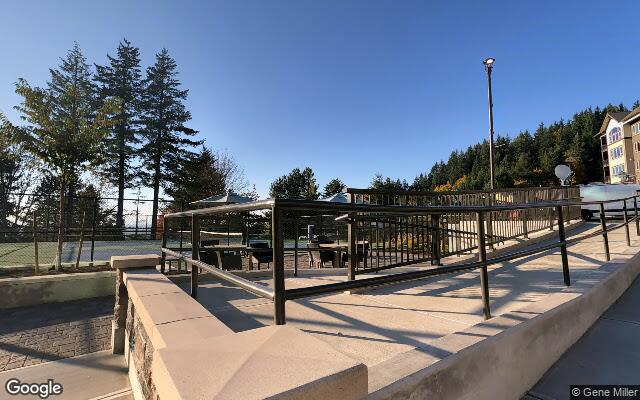
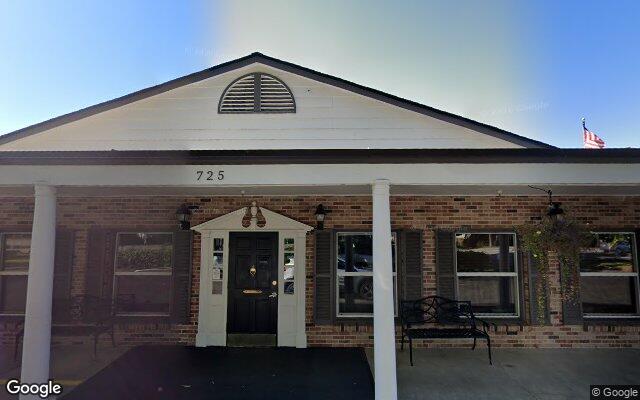

Tour Prep
Family reviews
No reviews yet — be the first to share your experience
Other memory care options nearby.
More options in neighboring cities
Licensed memory care in other cities within this county region — useful when your search radius crosses city limits.