Tabor Crest Residential Care.
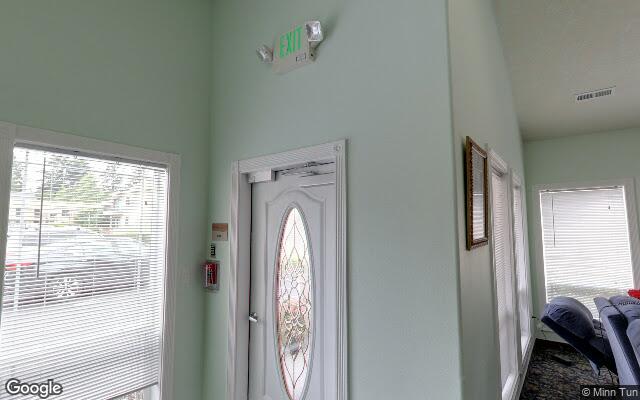
A medium home, reviewed on public record.
© Google Street View
Compared to 55 Oregon facilities with a similar number of beds.
ALF memory care · 36-month window. Higher percentile = better performance on inspection record. Source: Oregon Dept. of Human Services · Long-Term Care Licensing.
among peers to rank.
Rankings based on 36-month OR-DHS inspection data. Severity and frequency: fewer citations = higher percentile. Repeat rate: lower repeat citation share = higher percentile.
Citation history, plotted month by month.
11 deficiencies on record. Each bar is a month with a citation.
Finding distribution
11 total · 36 monthsScope × Severity (CMS A–L)
Every inspection visit, verbatim.
2 inspections in the public record, most recent first. Plain-language summaries open first — click into any row for the full citation text.
2024-02-22Annual Compliance VisitOR-cited · 1 finding
Plain-language summary
A routine kitchen inspection was conducted on February 22, 2024, and found the facility in substantial compliance with Oregon's rules for meals and food sanitation. No violations were identified during the inspection.
Read full citation text (1)Hide full citation text
“The findings of the kitchen inspection, conducted 02/22/24, are documented in this report. It was determined the facility was in substantial compliance with the OARs 411-054-0030 for Residential Care and Assisted Living Facilities for Resident Services - Meals and Oregon Health Service Food Sanitation Rules OARs 333-150-0000. The findings of the kitchen inspection, conducted 02/22/24, are documented in this report. It was determined the facility was in substantial compliance with the OARs 411-054-0030 for Residential Care and Assisted Living Facilities for Resident Services - Meals and Oregon Health Service Food Sanitation Rules OARs 333-150-0000.”
Read raw inspector notesClose inspector notes
The findings of the kitchen inspection, conducted 02/22/24, are documented in this report. It was determined the facility was in substantial compliance with the OARs 411-054-0030 for Residential Care and Assisted Living Facilities for Resident Services - Meals and Oregon Health Service Food Sanitation Rules OARs 333-150-0000. The findings of the kitchen inspection, conducted 02/22/24, are documented in this report. It was determined the facility was in substantial compliance with the OARs 411-054-0030 for Residential Care and Assisted Living Facilities for Resident Services - Meals and Oregon Health Service Food Sanitation Rules OARs 333-150-0000.
2023-10-31Annual Compliance VisitOR-cited · 10 findings
Plain-language summary
During a relicensure validation survey conducted October 31–November 2, 2023, followed by a revisit on January 10, 2024, the facility was found to be in substantial compliance with Oregon residential care and memory care regulations, though two violations were identified: staff spoke loudly about a resident's toileting needs in the dining area in front of other residents and staff, violating the resident's privacy and dignity, and service plans for three residents lacked adequate detail about how staff should assist with pain management, mobility devices, treatments, environmental controls, transfers, repositioning, and activities. The facility acknowledged these findings during the survey.
Read full citation text (10)Hide full citation text
“Based on observation and interview, it was determined the facility failed to follow licensing rules for Residential Care and Assisted Living Facilities. Findings include, but are not limited to: Refer to C200 and C295. Based on observation and interview, it was determined the facility failed to follow licensing rules for Residential Care and Assisted Living Facilities. Findings include, but are not limited to: Refer to C200 and C295. Refer to C200 and C295. Refer to C200 and C295. There are no detail notes for this visit.”
“Based on observation, interview, and record review, it was determined the facility failed to provide health care services in accordance with the licensing rules for Residential Care and Assisted Living Facilities. Findings include, but are not limited to: Refer to C260, C270, and C290. Based on observation, interview, and record review, it was determined the facility failed to provide health care services in accordance with the licensing rules for Residential Care and Assisted Living Facilities. Findings include, but are not limited to: Refer to C260, C270, and C290. Refer to C260, C270, and C290 Refer to C260, C270, and C290 There are no detail notes for this visit.”
“The findings of the relicensure survey, conducted 10/31/23 through 11/02/23, are documented in this report. The survey was conducted to determine compliance with the OARs 411 Division 54 for Residential Care and Assisted Living Facilities, OARs 411 Division 57 for Memory Care Communities and OARs 411 Division 004 for Home and Community Based Services Regulations. Tag numbers beginning with the letter C refer to the Residential Care and Assisted Living rules. Tag numbers beginning with the letter Z refer to the Memory Care Community rules. Abbreviations possibly used in this document: ADL: activities of daily living bid: twice a day CBG: capillary blood glucose or blood sugar CG: caregiver cm: centimeter ED: Executive Director F: Fahrenheit HH: Home Health LPN: Licensed Practical Nurse MA: Medication Aide MAR: Medication Administration Record MCC Memory Care Community mg: milligram ml: milliliter MT: Medication Technician OT: Occupational Therapist PT: Physical Therapist PRN: as needed qd: every day or daily qid: four times a day QI: quality improvement RCC: Resident Care Coordinator RN: Registered Nurse TAR: Treatment Administration Record tid: three times a day The findings of the relicensure survey, conducted 10/31/23 through 11/02/23, are documented in this report. The survey was conducted to determine compliance with the OARs 411 Division 54 for Residential Care and Assisted Living Facilities, OARs 411 Division 57 for Memory Care Communities and OARs 411 Division 004 for Home and Community Based Services Regulations. Tag numbers beginning with the letter C refer to the Residential Care and Assisted Living rules. Tag numbers beginning with the letter Z refer to the Memory Care Community rules. Abbreviations possibly used in this document: ADL: activities of daily living bid: twice a day CBG: capillary blood glucose or blood sugar CG: caregiver cm: centimeter ED: Executive Director F: Fahrenheit HH: Home Health LPN: Licensed Practical Nurse MA: Medication Aide MAR: Medication Administration Record MCC Memory Care Community mg: milligram ml: milliliter MT: Medication Technician OT: Occupational Therapist PT: Physical Therapist PRN: as needed qd: every day or daily qid: four times a day QI: quality improvement RCC: Resident Care Coordinator RN: Registered Nurse TAR: Treatment Administration Record tid: three times a day The findings of the revisit to the re-licensure survey of 11/03/23, conducted 01/10/24, are documented in this report. It was determined the facility was in substantial compliance with the OARs 411 Division 54 for Residential Care and Assisted Living Facilities and OARs 411 Division 57 for Memory Care Communities. The findings of the revisit to the re-licensure survey of 11/03/23, conducted 01/10/24, are documented in this report. It was determined the facility was in substantial compliance with the OARs 411 Division 54 for Residential Care and Assisted Living Facilities and OARs 411 Division 57 for Memory Care Communities.”
“Based on observation and interview, it was determined the facility failed to ensure resident's right to privacy and dignity related to providing ADL care for 1 of 4 sampled residents (# 1) and multiple non-sampled residents during meal service. Findings include, but are not limited to: 1. Resident 1 was admitted to the facility in 09/2016 with diagnoses including late onset Alzheimer's Disease. Observations and interviews with staff during the survey identified s/he relied on staff for incontinence care needs. On 10/31/23 at 2:19 pm, surveyor observed Staff 10 (Universal Worker) approach Resident 1 in the dining area where other residents and staff were present and inquired in a loud voice about his/her toileting needs. The need to ensure residents were treated with dignity and respect was discussed with Staff 1 (Executive Director) and Staff 3 (Regional Director). They acknowledged the findings. Based on observation and interview, it was determined the facility failed to ensure resident's right to privacy and dignity related to providing ADL care for 1 of 4 sampled residents (# 1) and multiple non-sampled residents during meal service. Findings include, but are not limited to:”
“Based on observation, interview, and record review, it was determined the facility failed to ensure service plans reflected residents' needs and preferences, provided clear direction regarding the delivery of services, and included a written description of who shall provide the services and what, when, and how, and how often the services shall be provided for 3 of 4 sampled residents (#s 2, 3, and 4) whose service plans were reviewed. Findings include, but are not limited to: 1. Resident 3 was admitted to the facility in 09/2016 with diagnoses including dementia, functional quadriplegia, and aphasia (difficulty speaking). The resident's current service plan dated 09/12/23 and progress notes dated 07/31/23 to 10/31/23 were reviewed, interviews were conducted, and observations were made. Resident 3's service plan was not reflective of his/her needs and preferences, did not provide clear direction regarding the delivery of services, and/or did not include a written description of who shall provide the services and what, when, and how, and how often the services shall be provided in the following areas: * How the resident expressed pain; * Devices including a tilt-in-space wheelchair and a bed mat; * Treatments including dermasaver leg tubes and nutritional shakes; * Lighting and temperature control assistance; * Transfers; * Repositioning and cushioning in bed and in the wheelchair; and * Activities. The need to ensure the resident's service plan reflected his/her needs and provided clear direction including who shall provide the services and what when, and how, and how often the services shall be provided was discussed with Staff 1 (Executive Director) and Staff 4 (Regional Director) on 11/02/23. They acknowledged the findings. 2. Resident 4 was admitted to the facility in 09/2023 with diagnoses including dementia. The resident's current service plan dated 10/14/23 and progress notes dated 09/13/23 to 10/31/23 were reviewed, interviews were conducted, and observations were made. The resident's service plan was not reflective and/or did not provide clear direction to staff in the following areas: * Behaviors; * Use of devices including a commode; and * Communication assistance. The need to ensure the resident's service plan reflected his/her needs and provided clear direction was discussed with Staff 1 (Executive Director) and Staff 4 (Regional Director) on 11/02/23. They acknowledged the findings. Based on observation, interview, and record review, it was determined the facility failed to ensure service plans reflected residents' needs and preferences, provided clear direction regarding the delivery of services, and included a written description of who shall provide the services and what, when, and how, and how often the services shall be provided for 3 of 4 sampled residents (#s 2, 3, and 4) whose service plans were reviewed. Findings include, but are not limited to:”
“Based on observation, interview, and record review, it was determined the facility failed to ensure actions or interventions were communicated to staff on each shift, made part of the resident record, and changes were monitored to resolution for short-term changes of condition for 3 of 3 sampled residents (#s 1, 2, and 3) who experienced short-term changes. Findings include, but are not limited to: 1. Resident 1 was admitted to the facility in 09/2016 with diagnoses including late onset Alzheimer's Disease. Resident 1's 07/30/23 through 10/31/23 progress notes, care plans, and MARs were reviewed. The following short-term changes of condition lacked documentation of communication of the determined actions or interventions to staff on all shifts: * 10/05/23 - Increased weakness; and * 10/16/23 - Redness to right side of face and ear. The following short-term changes of condition lacked documentation of communication of the determined actions or interventions to staff on all shifts and documentation of resolution: * 10/05/23 - Multiple medication changes; and * 10/16/23 - Right thumb redness. The need to ensure actions or interventions for short-term changes of condition were documented, communicated to staff on each shift, and the changes of condition were monitored through resolution was discussed with Staff 1 (Executive Director) and Staff 3 (Regional Director) on 11/02/23. They acknowledged the findings. 2. Resident 2 was admitted to the facility in 10/2022 with diagnoses including early onset Alzheimer's disease. Resident 2's 07/29/23 through 10/31/23 progress notes, care plans, and MARs were reviewed. The following short-term changes of condition lacked documentation of communication of the determined actions or interventions to staff on all shifts: * 09/12/23 - Fall with left elbow skin tear; * 09/20/23 - Change in haloperidol (a psychotropic) medication; and * 10/09/23 - Low blood pressure with dizziness and difficulty walking. The need to ensure actions or interventions for short-term changes of condition were documented and communicated to staff on each shift was discussed with Staff 1 (Executive Director) and Staff 3 (Regional Director) on 11/02/23. They acknowledged the findings. Based on observation, interview, and record review, it was determined the facility failed to ensure actions or interventions were communicated to staff on each shift, made part of the resident record, and changes were monitored to resolution for short-term changes of condition for 3 of 3 sampled residents (#s 1, 2, and 3) who experienced short-term changes. Findings include, but are not limited to:”
“Based on observation, interview, and record review, it was determined the facility failed to ensure outside service providers left written information in the facility that addressed the on-site services being provided to the resident, any clinical information necessary for facility staff to provide supplemental care, the facility nurse reviewed the resident's health-related service plan changes made as a result of the provision of on-site health services, and the service plan was adjusted if necessary for 2 of 3 sampled residents (#s 2 and 3) who received outside services. Findings include, but are not limited to: 1. Resident 3 was admitted to the facility in 09/2016 with diagnoses including dementia and was identified during the acuity interview as receiving home health nursing services. Progress notes and treatment orders dated 07/31/23 to 10/31/23 were reviewed, observations were made, and interviews were conducted. The following was identified: a. Progress notes indicated a home health nurse visited the resident on at least two occasions between 07/31/23 and 10/31/23. During an interview on 11/01/23 at 2:00 pm, Staff 1 (Executive Director) confirmed visits were made on 10/17/23 and 10/25/23. There was no written information left by the outside providers that addressed the services being provided. b. Observation of the resident on 10/31/23 revealed s/he wore thick tube socks around his/her legs. A treatment order dated 09/05/23 indicated home health nursing had ordered the socks for the resident. There was no documented evidence the facility nurse reviewed the service plan changes made as a result of the provision of on-site services. There was no documented evidence the treatment had been added to the resident's service plan. The need to ensure the service plan was adjusted if necessary, outside service providers left written information in the facility that addressed the on-site services being provided to the resident and any clinical information necessary for facility staff to provide supplemental care, and the facility nurse reviewed the resident's health-related service plan changes made as a result of the provision of on-site health services was discussed with Staff 1 on 11/02/23 and Staff 4 (Regional Director). They acknowledged the findings. Based on observation, interview, and record review, it was determined the facility failed to ensure outside service providers left written information in the facility that addressed the on-site services being provided to the resident, any clinical information necessary for facility staff to provide supplemental care, the facility nurse reviewed the resident's health-related service plan changes made as a result of the provision of on-site health services, and the service plan was adjusted if necessary for 2 of 3 sampled residents (#s 2 and 3) who received outside services. Findings include, but are not limited to:”
“Based on observation and interview, it was determined the facility failed to ensure establishment and maintenance of infection prevention and control protocols to provide a safe, sanitary and comfortable environment for 3 of 3 sampled residents (#s 1, 2, and 3) related to incontinence care and multiple non-sampled residents related to soiled laundry. Findings include, but are not limited to: 1. Observations made during the survey, 10/31/23 through 11/02/23, determined the facility failed to adhere to universal precautions for infection control in the following areas: a. Resident 1 was admitted to the facility in 09/2016 with diagnoses including late onset Alzheimer's Disease. Observations and interviews with staff during the survey identified s/he relied on staff for incontinence care needs. On 10/31/23 at 2:20 pm, Staff 10 (Universal Worker) was observed providing ADL incontinence care for Resident 1. During the observation, Staff 10 donned gloves without performing hand hygiene. Staff 10 proceeded to remove the soiled incontinence brief and perform perineal care with toilet paper while wearing soiled gloves. Staff 10 failed to doff soiled gloves, perform hand hygiene, and don clean gloves before touching the resident's body and clean brief. b. Resident 2 was admitted to the facility in 10/2022 with diagnoses including early onset Alzheimer's Disease. Observations and interviews with staff during the survey identified s/he relied on staff for incontinence care needs. On 11/01/23 at 12:40 pm, Staff 6 (Universal Worker - Designee) and Staff 11 (Universal Worker) were observed providing ADL incontinence care for Resident 2. Staff 6 and Staff 11 donned gloves without first performing hand hygiene. Staff 6 and Staff 11 assisted in transferring Resident 2 from wheelchair to bed, and then doffed his/her pants and brief. Staff 6 identified the resident's brief was soiled and removed the brief. Staff 6 then doffed her gloves and donned new gloves without performing hand hygiene. Staff 6 provided sprayed "incontinent solution" onto some toilet paper and provided perineal care to Resident 2. Staff 11 placed the soiled brief into the trash can. Staff 6 and 11 placed a new brief while wearing soiled gloves and placed a blanket over Resident 2. c. During an interview regarding soiled linen procedure on 10/31/23, Staff 9 (Universal Worker) stated she rinsed off linen soiled with fecal or urine matter in the resident's shower, placed the items in an uncovered plastic bin, and then placed the items directly in the washing machine. She stated she had not used the hopper. During interview on 11/01/23, Staff 1 (Executive Director) stated the hopper was recently repaired in 09/2023. The need to establish and maintain effective infection prevention and control protocols was discussed with Staff 1 (ED) and Staff 3 (Regional Director) on 11/02/23. They acknowledged the findings. Based on observation and interview, it was determined the facility failed to ensure establishment and maintenance of infection prevention and control protocols to provide a safe, sanitary and comfortable environment for 3 of 3 sampled residents (#s 1, 2, and 3) related to incontinence care and multiple non-sampled residents related to soiled laundry. Findings include, but are not limited to:”
“Based on observation, interview, and record review, it was determined the facility failed to ensure a daily meal program based on resident's preferences and needs that was individualized and documented in the resident's service or care plan for 4 of 4 sampled residents (#s 1, 2, 3, and 4) whose service plans were reviewed. Findings include, but are not limited to: Resident 1, 2, 3, and 4's current service plans were reviewed during survey. Each service plan lacked information and staff instructions related to the individualized nutrition and hydration status, preferences, and needs of the resident. The need to develop a daily meal program based on resident's preferences and needs that was individualized and documented in the resident's service or care plan was discussed with Staff 1(Executive Director) and Staff 3 (Regional Director) on 11/02/23. They acknowledged the findings. Based on observation, interview, and record review, it was determined the facility failed to ensure a daily meal program based on resident's preferences and needs that was individualized and documented in the resident's service or care plan for 4 of 4 sampled residents (#s 1, 2, 3, and 4) whose service plans were reviewed. Findings include, but are not limited to: Resident 1, 2, 3, and 4's current service plans were reviewed during survey. Each service plan lacked information and staff instructions related to the individualized nutrition and hydration status, preferences, and needs of the resident. The need to develop a daily meal program based on resident's preferences and needs that was individualized and documented in the resident's service or care plan was discussed with Staff 1(Executive Director) and Staff 3 (Regional Director) on 11/02/23. They acknowledged the findings.”
“Based on observation, interview, and record review, it was determined the facility failed to ensure activity evaluations were completed which included an individualized activity plan for each resident based on their activity evaluation and was reflective of the resident's activity preferences and needs for 4 of 4 sampled residents (#s 1, 2, 3, and 4) whose service plans were reviewed. Findings include, but are not limited to: Although Residents 1, 2, 3, and 4's service plans offered some information about the residents' interests, the facility had not fully evaluated the residents' activity needs in one or more of the following areas: * Current abilities and skills; * Emotional and social needs and patterns; * Physical abilities and limitations; * Adaptations necessary for the resident to participate; and * Activities which could be used as behavioral interventions, if necessary. There was no documented evidence resident-specific activity plans had been developed from activity evaluations. Observations between 10/31/23 and 11/02/23 showed group activities being led by facility staff. Residents 1 and 3 were not observed to be invited to activities or provided adaptations to participate in the activities. The need to ensure activity evaluations were completed for all residents and individualized activity plans that reflected the residents' preferences and needs and were developed based on their activity evaluation was discussed with Staff 1 (Executive Director) on 11/02/23. She acknowledged the findings. Based on observation, interview, and record review, it was determined the facility failed to ensure activity evaluations were completed which included an individualized activity plan for each resident based on their activity evaluation and was reflective of the resident's activity preferences and needs for 4 of 4 sampled residents (#s 1, 2, 3, and 4) whose service plans were reviewed. Findings include, but are not limited to: Although Residents 1, 2, 3, and 4's service plans offered some information about the residents' interests, the facility had not fully evaluated the residents' activity needs in one or more of the following areas: * Current abilities and skills; * Emotional and social needs and patterns; * Physical abilities and limitations; * Adaptations necessary for the resident to participate; and * Activities which could be used as behavioral interventions, if necessary. There was no documented evidence resident-specific activity plans had been developed from activity evaluations. Observations between 10/31/23 and 11/02/23 showed group activities being led by facility staff. Residents 1 and 3 were not observed to be invited to activities or provided adaptations to participate in the activities. The need to ensure activity evaluations were completed for all residents and individualized activity plans that reflected the residents' preferences and needs and were developed based on their activity evaluation was discussed with Staff 1 (Executive Director) on 11/02/23. She acknowledged the findings.”
Read raw inspector notesClose inspector notes
The findings of the relicensure survey, conducted 10/31/23 through 11/02/23, are documented in this report. The survey was conducted to determine compliance with the OARs 411 Division 54 for Residential Care and Assisted Living Facilities, OARs 411 Division 57 for Memory Care Communities and OARs 411 Division 004 for Home and Community Based Services Regulations. Tag numbers beginning with the letter C refer to the Residential Care and Assisted Living rules. Tag numbers beginning with the letter Z refer to the Memory Care Community rules. Abbreviations possibly used in this document: ADL: activities of daily living bid: twice a day CBG: capillary blood glucose or blood sugar CG: caregiver cm: centimeter ED: Executive Director F: Fahrenheit HH: Home Health LPN: Licensed Practical Nurse MA: Medication Aide MAR: Medication Administration Record MCC Memory Care Community mg: milligram ml: milliliter MT: Medication Technician OT: Occupational Therapist PT: Physical Therapist PRN: as needed qd: every day or daily qid: four times a day QI: quality improvement RCC: Resident Care Coordinator RN: Registered Nurse TAR: Treatment Administration Record tid: three times a day The findings of the relicensure survey, conducted 10/31/23 through 11/02/23, are documented in this report. The survey was conducted to determine compliance with the OARs 411 Division 54 for Residential Care and Assisted Living Facilities, OARs 411 Division 57 for Memory Care Communities and OARs 411 Division 004 for Home and Community Based Services Regulations. Tag numbers beginning with the letter C refer to the Residential Care and Assisted Living rules. Tag numbers beginning with the letter Z refer to the Memory Care Community rules. Abbreviations possibly used in this document: ADL: activities of daily living bid: twice a day CBG: capillary blood glucose or blood sugar CG: caregiver cm: centimeter ED: Executive Director F: Fahrenheit HH: Home Health LPN: Licensed Practical Nurse MA: Medication Aide MAR: Medication Administration Record MCC Memory Care Community mg: milligram ml: milliliter MT: Medication Technician OT: Occupational Therapist PT: Physical Therapist PRN: as needed qd: every day or daily qid: four times a day QI: quality improvement RCC: Resident Care Coordinator RN: Registered Nurse TAR: Treatment Administration Record tid: three times a day The findings of the revisit to the re-licensure survey of 11/03/23, conducted 01/10/24, are documented in this report. It was determined the facility was in substantial compliance with the OARs 411 Division 54 for Residential Care and Assisted Living Facilities and OARs 411 Division 57 for Memory Care Communities. The findings of the revisit to the re-licensure survey of 11/03/23, conducted 01/10/24, are documented in this report. It was determined the facility was in substantial compliance with the OARs 411 Division 54 for Residential Care and Assisted Living Facilities and OARs 411 Division 57 for Memory Care Communities. Based on observation and interview, it was determined the facility failed to ensure resident's right to privacy and dignity related to providing ADL care for 1 of 4 sampled residents (# 1) and multiple non-sampled residents during meal service. Findings include, but are not limited to: 1. Resident 1 was admitted to the facility in 09/2016 with diagnoses including late onset Alzheimer's Disease. Observations and interviews with staff during the survey identified s/he relied on staff for incontinence care needs. On 10/31/23 at 2:19 pm, surveyor observed Staff 10 (Universal Worker) approach Resident 1 in the dining area where other residents and staff were present and inquired in a loud voice about his/her toileting needs. The need to ensure residents were treated with dignity and respect was discussed with Staff 1 (Executive Director) and Staff 3 (Regional Director). They acknowledged the findings. Based on observation and interview, it was determined the facility failed to ensure resident's right to privacy and dignity related to providing ADL care for 1 of 4 sampled residents (# 1) and multiple non-sampled residents during meal service. Findings include, but are not limited to: Based on observation, interview, and record review, it was determined the facility failed to ensure service plans reflected residents' needs and preferences, provided clear direction regarding the delivery of services, and included a written description of who shall provide the services and what, when, and how, and how often the services shall be provided for 3 of 4 sampled residents (#s 2, 3, and 4) whose service plans were reviewed. Findings include, but are not limited to: 1. Resident 3 was admitted to the facility in 09/2016 with diagnoses including dementia, functional quadriplegia, and aphasia (difficulty speaking). The resident's current service plan dated 09/12/23 and progress notes dated 07/31/23 to 10/31/23 were reviewed, interviews were conducted, and observations were made. Resident 3's service plan was not reflective of his/her needs and preferences, did not provide clear direction regarding the delivery of services, and/or did not include a written description of who shall provide the services and what, when, and how, and how often the services shall be provided in the following areas: * How the resident expressed pain; * Devices including a tilt-in-space wheelchair and a bed mat; * Treatments including dermasaver leg tubes and nutritional shakes; * Lighting and temperature control assistance; * Transfers; * Repositioning and cushioning in bed and in the wheelchair; and * Activities. The need to ensure the resident's service plan reflected his/her needs and provided clear direction including who shall provide the services and what when, and how, and how often the services shall be provided was discussed with Staff 1 (Executive Director) and Staff 4 (Regional Director) on 11/02/23. They acknowledged the findings. 2. Resident 4 was admitted to the facility in 09/2023 with diagnoses including dementia. The resident's current service plan dated 10/14/23 and progress notes dated 09/13/23 to 10/31/23 were reviewed, interviews were conducted, and observations were made. The resident's service plan was not reflective and/or did not provide clear direction to staff in the following areas: * Behaviors; * Use of devices including a commode; and * Communication assistance. The need to ensure the resident's service plan reflected his/her needs and provided clear direction was discussed with Staff 1 (Executive Director) and Staff 4 (Regional Director) on 11/02/23. They acknowledged the findings. Based on observation, interview, and record review, it was determined the facility failed to ensure service plans reflected residents' needs and preferences, provided clear direction regarding the delivery of services, and included a written description of who shall provide the services and what, when, and how, and how often the services shall be provided for 3 of 4 sampled residents (#s 2, 3, and 4) whose service plans were reviewed. Findings include, but are not limited to: Based on observation, interview, and record review, it was determined the facility failed to ensure actions or interventions were communicated to staff on each shift, made part of the resident record, and changes were monitored to resolution for short-term changes of condition for 3 of 3 sampled residents (#s 1, 2, and 3) who experienced short-term changes. Findings include, but are not limited to: 1. Resident 1 was admitted to the facility in 09/2016 with diagnoses including late onset Alzheimer's Disease. Resident 1's 07/30/23 through 10/31/23 progress notes, care plans, and MARs were reviewed. The following short-term changes of condition lacked documentation of communication of the determined actions or interventions to staff on all shifts: * 10/05/23 - Increased weakness; and * 10/16/23 - Redness to right side of face and ear. The following short-term changes of condition lacked documentation of communication of the determined actions or interventions to staff on all shifts and documentation of resolution: * 10/05/23 - Multiple medication changes; and * 10/16/23 - Right thumb redness. The need to ensure actions or interventions for short-term changes of condition were documented, communicated to staff on each shift, and the changes of condition were monitored through resolution was discussed with Staff 1 (Executive Director) and Staff 3 (Regional Director) on 11/02/23. They acknowledged the findings. 2. Resident 2 was admitted to the facility in 10/2022 with diagnoses including early onset Alzheimer's disease. Resident 2's 07/29/23 through 10/31/23 progress notes, care plans, and MARs were reviewed. The following short-term changes of condition lacked documentation of communication of the determined actions or interventions to staff on all shifts: * 09/12/23 - Fall with left elbow skin tear; * 09/20/23 - Change in haloperidol (a psychotropic) medication; and * 10/09/23 - Low blood pressure with dizziness and difficulty walking. The need to ensure actions or interventions for short-term changes of condition were documented and communicated to staff on each shift was discussed with Staff 1 (Executive Director) and Staff 3 (Regional Director) on 11/02/23. They acknowledged the findings. Based on observation, interview, and record review, it was determined the facility failed to ensure actions or interventions were communicated to staff on each shift, made part of the resident record, and changes were monitored to resolution for short-term changes of condition for 3 of 3 sampled residents (#s 1, 2, and 3) who experienced short-term changes. Findings include, but are not limited to: Based on observation, interview, and record review, it was determined the facility failed to ensure outside service providers left written information in the facility that addressed the on-site services being provided to the resident, any clinical information necessary for facility staff to provide supplemental care, the facility nurse reviewed the resident's health-related service plan changes made as a result of the provision of on-site health services, and the service plan was adjusted if necessary for 2 of 3 sampled residents (#s 2 and 3) who received outside services. Findings include, but are not limited to: 1. Resident 3 was admitted to the facility in 09/2016 with diagnoses including dementia and was identified during the acuity interview as receiving home health nursing services. Progress notes and treatment orders dated 07/31/23 to 10/31/23 were reviewed, observations were made, and interviews were conducted. The following was identified: a. Progress notes indicated a home health nurse visited the resident on at least two occasions between 07/31/23 and 10/31/23. During an interview on 11/01/23 at 2:00 pm, Staff 1 (Executive Director) confirmed visits were made on 10/17/23 and 10/25/23. There was no written information left by the outside providers that addressed the services being provided. b. Observation of the resident on 10/31/23 revealed s/he wore thick tube socks around his/her legs. A treatment order dated 09/05/23 indicated home health nursing had ordered the socks for the resident. There was no documented evidence the facility nurse reviewed the service plan changes made as a result of the provision of on-site services. There was no documented evidence the treatment had been added to the resident's service plan. The need to ensure the service plan was adjusted if necessary, outside service providers left written information in the facility that addressed the on-site services being provided to the resident and any clinical information necessary for facility staff to provide supplemental care, and the facility nurse reviewed the resident's health-related service plan changes made as a result of the provision of on-site health services was discussed with Staff 1 on 11/02/23 and Staff 4 (Regional Director). They acknowledged the findings. Based on observation, interview, and record review, it was determined the facility failed to ensure outside service providers left written information in the facility that addressed the on-site services being provided to the resident, any clinical information necessary for facility staff to provide supplemental care, the facility nurse reviewed the resident's health-related service plan changes made as a result of the provision of on-site health services, and the service plan was adjusted if necessary for 2 of 3 sampled residents (#s 2 and 3) who received outside services. Findings include, but are not limited to: Based on observation and interview, it was determined the facility failed to ensure establishment and maintenance of infection prevention and control protocols to provide a safe, sanitary and comfortable environment for 3 of 3 sampled residents (#s 1, 2, and 3) related to incontinence care and multiple non-sampled residents related to soiled laundry. Findings include, but are not limited to: 1. Observations made during the survey, 10/31/23 through 11/02/23, determined the facility failed to adhere to universal precautions for infection control in the following areas: a. Resident 1 was admitted to the facility in 09/2016 with diagnoses including late onset Alzheimer's Disease. Observations and interviews with staff during the survey identified s/he relied on staff for incontinence care needs. On 10/31/23 at 2:20 pm, Staff 10 (Universal Worker) was observed providing ADL incontinence care for Resident 1. During the observation, Staff 10 donned gloves without performing hand hygiene. Staff 10 proceeded to remove the soiled incontinence brief and perform perineal care with toilet paper while wearing soiled gloves. Staff 10 failed to doff soiled gloves, perform hand hygiene, and don clean gloves before touching the resident's body and clean brief. b. Resident 2 was admitted to the facility in 10/2022 with diagnoses including early onset Alzheimer's Disease. Observations and interviews with staff during the survey identified s/he relied on staff for incontinence care needs. On 11/01/23 at 12:40 pm, Staff 6 (Universal Worker - Designee) and Staff 11 (Universal Worker) were observed providing ADL incontinence care for Resident 2. Staff 6 and Staff 11 donned gloves without first performing hand hygiene. Staff 6 and Staff 11 assisted in transferring Resident 2 from wheelchair to bed, and then doffed his/her pants and brief. Staff 6 identified the resident's brief was soiled and removed the brief. Staff 6 then doffed her gloves and donned new gloves without performing hand hygiene. Staff 6 provided sprayed "incontinent solution" onto some toilet paper and provided perineal care to Resident 2. Staff 11 placed the soiled brief into the trash can. Staff 6 and 11 placed a new brief while wearing soiled gloves and placed a blanket over Resident 2. c. During an interview regarding soiled linen procedure on 10/31/23, Staff 9 (Universal Worker) stated she rinsed off linen soiled with fecal or urine matter in the resident's shower, placed the items in an uncovered plastic bin, and then placed the items directly in the washing machine. She stated she had not used the hopper. During interview on 11/01/23, Staff 1 (Executive Director) stated the hopper was recently repaired in 09/2023. The need to establish and maintain effective infection prevention and control protocols was discussed with Staff 1 (ED) and Staff 3 (Regional Director) on 11/02/23. They acknowledged the findings. Based on observation and interview, it was determined the facility failed to ensure establishment and maintenance of infection prevention and control protocols to provide a safe, sanitary and comfortable environment for 3 of 3 sampled residents (#s 1, 2, and 3) related to incontinence care and multiple non-sampled residents related to soiled laundry. Findings include, but are not limited to: Based on observation and interview, it was determined the facility failed to follow licensing rules for Residential Care and Assisted Living Facilities. Findings include, but are not limited to: Refer to C200 and C295. Based on observation and interview, it was determined the facility failed to follow licensing rules for Residential Care and Assisted Living Facilities. Findings include, but are not limited to: Refer to C200 and C295. Refer to C200 and C295. Refer to C200 and C295. There are no detail notes for this visit. Based on observation, interview, and record review, it was determined the facility failed to provide health care services in accordance with the licensing rules for Residential Care and Assisted Living Facilities. Findings include, but are not limited to: Refer to C260, C270, and C290. Based on observation, interview, and record review, it was determined the facility failed to provide health care services in accordance with the licensing rules for Residential Care and Assisted Living Facilities. Findings include, but are not limited to: Refer to C260, C270, and C290. Refer to C260, C270, and C290 Refer to C260, C270, and C290 There are no detail notes for this visit. Based on observation, interview, and record review, it was determined the facility failed to ensure a daily meal program based on resident's preferences and needs that was individualized and documented in the resident's service or care plan for 4 of 4 sampled residents (#s 1, 2, 3, and 4) whose service plans were reviewed. Findings include, but are not limited to: Resident 1, 2, 3, and 4's current service plans were reviewed during survey. Each service plan lacked information and staff instructions related to the individualized nutrition and hydration status, preferences, and needs of the resident. The need to develop a daily meal program based on resident's preferences and needs that was individualized and documented in the resident's service or care plan was discussed with Staff 1(Executive Director) and Staff 3 (Regional Director) on 11/02/23. They acknowledged the findings. Based on observation, interview, and record review, it was determined the facility failed to ensure a daily meal program based on resident's preferences and needs that was individualized and documented in the resident's service or care plan for 4 of 4 sampled residents (#s 1, 2, 3, and 4) whose service plans were reviewed. Findings include, but are not limited to: Resident 1, 2, 3, and 4's current service plans were reviewed during survey. Each service plan lacked information and staff instructions related to the individualized nutrition and hydration status, preferences, and needs of the resident. The need to develop a daily meal program based on resident's preferences and needs that was individualized and documented in the resident's service or care plan was discussed with Staff 1(Executive Director) and Staff 3 (Regional Director) on 11/02/23. They acknowledged the findings. Based on observation, interview, and record review, it was determined the facility failed to ensure activity evaluations were completed which included an individualized activity plan for each resident based on their activity evaluation and was reflective of the resident's activity preferences and needs for 4 of 4 sampled residents (#s 1, 2, 3, and 4) whose service plans were reviewed. Findings include, but are not limited to: Although Residents 1, 2, 3, and 4's service plans offered some information about the residents' interests, the facility had not fully evaluated the residents' activity needs in one or more of the following areas: * Current abilities and skills; * Emotional and social needs and patterns; * Physical abilities and limitations; * Adaptations necessary for the resident to participate; and * Activities which could be used as behavioral interventions, if necessary. There was no documented evidence resident-specific activity plans had been developed from activity evaluations. Observations between 10/31/23 and 11/02/23 showed group activities being led by facility staff. Residents 1 and 3 were not observed to be invited to activities or provided adaptations to participate in the activities. The need to ensure activity evaluations were completed for all residents and individualized activity plans that reflected the residents' preferences and needs and were developed based on their activity evaluation was discussed with Staff 1 (Executive Director) on 11/02/23. She acknowledged the findings. Based on observation, interview, and record review, it was determined the facility failed to ensure activity evaluations were completed which included an individualized activity plan for each resident based on their activity evaluation and was reflective of the resident's activity preferences and needs for 4 of 4 sampled residents (#s 1, 2, 3, and 4) whose service plans were reviewed. Findings include, but are not limited to: Although Residents 1, 2, 3, and 4's service plans offered some information about the residents' interests, the facility had not fully evaluated the residents' activity needs in one or more of the following areas: * Current abilities and skills; * Emotional and social needs and patterns; * Physical abilities and limitations; * Adaptations necessary for the resident to participate; and * Activities which could be used as behavioral interventions, if necessary. There was no documented evidence resident-specific activity plans had been developed from activity evaluations. Observations between 10/31/23 and 11/02/23 showed group activities being led by facility staff. Residents 1 and 3 were not observed to be invited to activities or provided adaptations to participate in the activities. The need to ensure activity evaluations were completed for all residents and individualized activity plans that reflected the residents' preferences and needs and were developed based on their activity evaluation was discussed with Staff 1 (Executive Director) on 11/02/23. She acknowledged the findings.
1 older inspection from 2023 are not shown above.
Get the complete record, translated into plain language — emailed to you.
Other facilities in Multnomah County.
Other memory care facilities in Multnomah County with similar care offerings.

Facility Watch · Premium
Family reviews
No reviews yet — be the first to share your experience
Other memory care options nearby.
More options in neighboring cities
Licensed memory care in other cities within this county region — useful when your search radius crosses city limits.