Suite Living Senior Care of Ma.
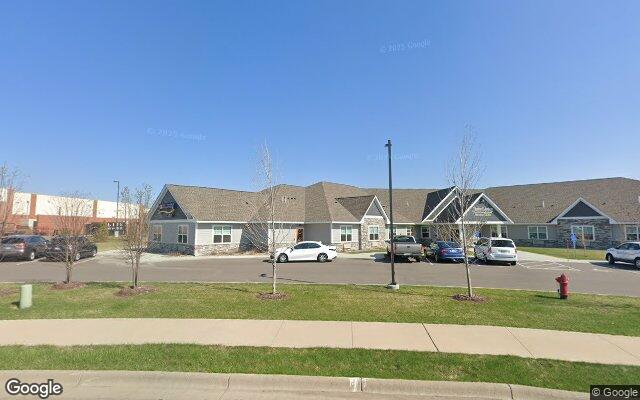
A medium home, reviewed on public record.
Compared to 187 Minnesota facilities with a similar number of beds.
ALF memory care · 36-month window. Higher percentile = better performance on inspection record. Source: Minnesota Dept. of Health · Health Regulation Division.
among peers to rank.
Rankings based on 36-month MDH inspection data. Severity and frequency: fewer citations = higher percentile. Repeat rate: lower repeat citation share = higher percentile.
Citation history, plotted month by month.
No citations in the last 36 months.
Finding distribution
none · 36 monthsScope × Severity (CMS A–L)
Questions to ask before you visit.
A short pre-tour checklist tailored to Suite Living Senior Care of Ma's record and state requirements.
The most recent MDH inspection on May 16, 2025 found zero deficiencies across all standards — can you walk us through how the community prepares for state surveys and maintains compliance with Minnesota's Assisted Living with Dementia Care requirements under Minn. Stat. ch. 144G?
Ask the operator on tour. Take notes and compare answers across facilities you visit.
One complaint was filed with the Minnesota Department of Health during the period on record — can you share whether that complaint was substantiated, and if so, what corrective actions the facility implemented in response?
Ask the operator on tour. Take notes and compare answers across facilities you visit.
This 32-bed community holds a specific Assisted Living Facility with Dementia Care license under MDH — can you provide families with a copy of your written dementia care program and explain how it differs from the general assisted living services offered here?
Ask the operator on tour. Take notes and compare answers across facilities you visit.
Every inspection visit, verbatim.
2 inspections in the public record, most recent first. Plain-language summaries open first — click into any row for the full citation text.
2025-05-16Annual Compliance VisitNo findings
Plain-language summary
A routine inspection of Suite Living Senior Care of Maple Grove was conducted May 12–13, 2025, when the facility had 28 residents in its dementia care program. The inspection found violations of Minnesota state statutes, and correction orders were issued; no fines were assessed at this time. The facility must document how it corrected the violations and any changes made to prevent future noncompliance within the time period specified on the state form.
Read full citation textHide full citation text
Read raw inspector notesClose inspector notes
correction orders and document the actions taken to comply in the facility's records. The Department reserves the right to return to the facility at any time should the Department receive a complaint or deem it necessary to ensure the health, safety, and welfare of residents in your care. STATE CORRECTION ORDERS The enclosed State Form documents the state correction orders. The Department of Health documents state correction orders using federal software. Tag numbers are assigned to Minnesota state statutes for Home Care Providers. The assigned tag number appears in the far left column entitled "ID Prefix Tag." The state statute number and the corresponding text of the state statute out of compliance are listed in the "Summary Statement of Deficiencies" column. This column also includes the findings that are in violation of the state statute after the statement, "This MN Requirement is not met as evidenced by . . ." In accordance with Minn. Stat. § 144G.31 Subd. 4, MDH may assess fines based on the level and scope of the violations; h owever, no immediate fines are assessed for this survey of your facility. DOCUMENTATION OF ACTION TO COMPLY Per Minn. Stat. § 144G.30, Subd. 5(c), the licensee must document actions taken to comply with the An equal opportunity employer. Letter ID: 9GJX Revise d04/20/2023 Suite Living Senior Care of Maple Grove LLC July 10, 2025 Page 2 correction orders within the time period outlined on the state form; however, plans of correction are not required to be submitted for approval. The correction order documentation should include the following: Identify how the area(s) of noncompliance was corrected related to the resident(s)/employee(s) identified in the correction order. Identify how the area(s) of noncompliance was corrected for all of the provider’s residents/employees that may be affected by the noncompliance. Identify what changes to your systems and practices were made to ensure compliance with the specific statute(s). CORRECTION ORDER RECONSIDERATION PROCESS In accordance with Minn. Stat. § 144G.32, Subd. 2, you may challenge the correction order issued, including the level and scope, and any fine assessed through the correction order reconsideration process. The request for reconsideration must be in writing and received by the Department of Health within 15 calendar days of the correction order receipt date. To submit a reconsideration request, please visit: https://forms.web.health.state.mn.us/form/HRDAppealsForm The MDH Health Regulation Division (HRD) values your feedback about your experience during the survey and/or investigation process. Please fill out this anonymous provider feedback questionnaire at your convenience at this link: h ttps://forms.office.com/g/Bm5uQEpHVa. Your input is important to us and will enable MDH to improve its processes and communication with providers. If you have any questions regarding the questionnaire, please contact Susan Winkelmann at susan.winkelmann@state.mn.us or call 651-201-5952. You are encouraged to retain this document for your records. It is your responsibility to share the information contained in the letter and state form with your organization’s Governing Body. If you have any questions, please contact me. Sincerely, Kelly Thorson, Supervisor State Evaluation Team Email: Kelly.Thorson@state.mn.us Telephone: 320-223-7336 Fax: 1 -866-890-9290 HHH PRINTED: 07/10/2025 FORM APPROVED STATEMENT OF DEFICIENCIES (X1) PROVIDER/SUPPLIER/CLIA (X2) MULTIPLE CONSTRUCTION (X3) DATE SURVEY AND PLAN OF CORRECTION IDENTIFICATION NUMBER: COMPLETED A. BUILDING: ______________________ B. WING _____________________________ 40673 05/16/2025 NAME OF PROVIDER OR SUPPLIER STREET ADDRESS, CITY, STATE, ZIP CODE 7010 ALVARADO LANE SUITE LIVING SENIOR CARE OF MAPLE GROV MAPLE GROVE, MN 55311 SUMMARY STATEMENT OF DEFICIENCIES PROVIDER'S PLAN OF CORRECTION (X4) ID ID (X5) PREFIX (EACH DEFICIENCY MUST BE PRECEDED BY FULL PREFIX (EACH CORRECTIVE ACTION SHOULD BE COMPLETE REGULATORY OR LSC IDENTIFYING INFORMATION) CROSS-REFERENCED TO THE APPROPRIATE DATE TAG TAG DEFICIENCY) 0 000 Initial Comments 0 000 ASSISTED LIVING PROVIDER LICENSING Minnesota Department of Health is CORRECTION ORDER(S) documenting the State Correction Orders using federal software. Tag numbers have In accordance with Minnesota Statutes, section been assigned to Minnesota State 144G.08 to 144G.95, these correction orders are Statutes for Assisted Living Facilities. The issued pursuant to a survey. assigned tag number appears in the far-left column entitled "ID Prefix Tag." The Determination of whether violations are corrected state Statute number and the requires compliance with all requirements corresponding text of the state Statute out provided at the Statute number indicated below. of compliance is listed in the "Summary When Minnesota Statute contains several items, Statement of Deficiencies" column. This failure to comply with any of the items will be column also includes the findings which considered lack of compliance. are in violation of the state requirement after the statement, "This Minnesota INITIAL COMMENTS: requirement is not met as evidenced by." Following the evaluators ' findings is the SL40673015-0 Time Period for Correction. On May 12, 2025, through May 13, 2025, the PLEASE DISREGARD THE HEADING OF survey at the above provider. At the time of the STATES,"PROVIDER'S PLAN OF survey, there were 28 resident(s); all of whom CORRECTION." THIS APPLIES TO were receiving services under the Assisted Living FEDERAL DEFICIENCIES ONLY. THIS Facility with Dementia Care license. WILL APPEAR ON EACH PAGE. THERE IS NO REQUIREMENT TO SUBMIT A PLAN OF CORRECTION FOR VIOLATIONS OF MINNESOTA STATE STATUTES. THE LETTER IN THE LEFT COLUMN IS USED FOR TRACKING PURPOSES AND REFLECTS THE SCOPE AND LEVEL ISSUED PURSUANT TO 144G.31 SUBDIVISION 1-3. 0 480 144G.41 Subdivision 1 Subd. 1a (a-b) Minimum 0 480 SS=F requirements; required food services LABORATORY DIRECTOR'S OR PROVIDER/SUPPLIER REPRESENTATIVE'S SIGNATURE TITLE (X6) DATE STATE FORM 6899 TLLM11 If continuation sheet 1 of 6 PRINTED: 07/10/2025 FORM APPROVED STATEMENT OF DEFICIENCIES (X1) PROVIDER/SUPPLIER/CLIA (X2) MULTIPLE CONSTRUCTION (X3) DATE SURVEY AND PLAN OF CORRECTION IDENTIFICATION NUMBER: COMPLETED A. BUILDING: ______________________ B. WING _____________________________ 40673 05/16/2025 NAME OF PROVIDER OR SUPPLIER STREET ADDRESS, CITY, STATE, ZIP CODE 7010 ALVARADO LANE SUITE LIVING SENIOR CARE OF MAPLE GROV MAPLE GROVE, MN 55311 SUMMARY STATEMENT OF DEFICIENCIES PROVIDER'S PLAN OF CORRECTION (X4) ID ID (X5) PREFIX (EACH DEFICIENCY MUST BE PRECEDED BY FULL PREFIX (EACH CORRECTIVE ACTION SHOULD BE COMPLETE REGULATORY OR LSC IDENTIFYING INFORMATION) CROSS-REFERENCED TO THE APPROPRIATE DATE TAG TAG DEFICIENCY) 0 480 Continued From page 1 0 480 (a) Except as provided in paragraph (b), food must be prepared and served according to the Minnesota Food Code, Minnesota Rules, chapter 4626. (b) For an assisted living facility with a licensed capacity of ten or fewer residents: (1) notwithstanding Minnesota Rules, part 4626.0033, item A, the facility may share a certified food protection manager (CFPM) with one other facility located within a 60-mile radius and under common management provided the CFPM is present at each facility frequently enough to effectively administer, manage, and supervise each facility's food service operation; (2) notwithstanding Minnesota Rules, part 4626.0545, item A, kick plates that are not removable or cannot be rotated open are allowed unless the facility has been issued repeated correction orders for violations of Minnesota Rules, part 4626.1565 or 4626.1570; (3) notwithstanding Minnesota Rules, part 4626.0685, item A, the facility is not required to provide integral drainboards, utensil racks, or tables large enough to accommodate soiled and clean items that may accumulate during hours of operation provided soiled items do not contaminate clean items, surfaces, or food, and clean equipment and dishes are air dried in a manner that prevents contamination before storage; (4) notwithstanding Minnesota Rules, part 4626.1070, item A, the facility is not required to install a dedicated handwashing sink in its existing kitchen provided it designates one well of a two-compartment sink for use only as a handwashing sink; (5) notwithstanding Minnesota Rules, parts 4626.1325, 4626.1335, and 4626.1360, item A, existing floor, wall, and ceiling finishes are STATE FORM 6899 TLLM11 If continuation sheet 2 of 6 PRINTED: 07/10/2025 FORM APPROVED STATEMENT OF DEFICIENCIES (X1) PROVIDER/SUPPLIER/CLIA (X2) MULTIPLE CONSTRUCTION (X3) DATE SURVEY AND PLAN OF CORRECTION IDENTIFICATION NUMBER: COMPLETED A. BUILDING: ______________________ B. WING _____________________________ 40673 05/16/2025 NAME OF PROVIDER OR SUPPLIER STREET ADDRESS, CITY, STATE, ZIP CODE 7010 ALVARADO LANE SUITE LIVING SENIOR CARE OF MAPLE GROV MAPLE GROVE, MN 55311 SUMMARY STATEMENT OF DEFICIENCIES PROVIDER'S PLAN OF CORRECTION (X4) ID ID (X5) PREFIX (EACH DEFICIENCY MUST BE PRECEDED BY FULL PREFIX (EACH CORRECTIVE ACTION SHOULD BE COMPLETE REGULATORY OR LSC IDENTIFYING INFORMATION) CROSS-REFERENCED TO THE APPROPRIATE DATE TAG TAG DEFICIENCY) 0 480 Continued From page 2 0 480 allowed provided the facility keeps them clean and in good condition; (6) notwithstanding Minnesota Rules, part 4626.
2025-04-07Complaint InvestigationNo findings
Plain-language summary
A complaint alleged the facility neglected a resident who fell, was not monitored properly, and later arrived at the hospital with multiple fractures including a urinary tract infection; the Minnesota Department of Health investigated and determined that neglect could not be conclusively proven, finding instead that the resident fell in her apartment, showed no signs of injury for a week, and the fractures were consistent with her fall combined with her underlying osteopenia condition. The investigation included interviews with staff and family, review of medical records and facility cameras, and determined that staff did increase the resident's care level after the fall and checked on her regularly, though the exact timing of when her pain began and who called 911 could not be definitively established.
Read full citation textHide full citation text
Read raw inspector notesClose inspector notes
Finding: Inconclusive Nature of Investigation: The Minnesota Department of Health investigated an allegation of maltreatment, in accordance with the Minnesota Reporting of Maltreatment of Vulnerable Adults Act, Minn. Stat. 626.557, and to evaluate compliance with applicable licensing standards for the provider type. Initial Investigation Allegation(s): The facility neglected the resident when the resident complained of leg pain and was diagnosed at the hospital with a urinary tract infection (UTI), and ankle, knee, and hip fractures. Facility staff did not know how the resident sustained the fractures. Investigative Findings and Conclusion: The Minnesota Department of Health determined neglect was inconclusive. The resident fell in her apartment, and for a week after her fall, the resident did not complain of increased pain, nor were there visible signs of injury. One week after falling, the resident complained of left leg pain. The resident was sent to the hospital for further evaluation, where she was admitted and diagnosed with an ankle fracture. Although facility staff were not sure how the fracture occurred, hospital documentation attributed the ankle fracture to the resident’s fall and osteopenia. The investigator conducted interviews with facility staff members, including administrative staff, nursing staff, and unlicensed staff. The investigator also contacted family and an outside caregiver. The investigation included review of the resident record, hospital records, the facility internal investigation, facility incident reports, personnel files, staff schedules, and related facility policy and procedures. Also, the investigator observed resident interactions with staff. The resident resided in an assisted living facility. The resident’s diagnoses included osteopenia, lumbar vertebral disc degeneration, back pain. The resident’s services included safety checks, socialization, assistance with medication management, meals, activities of daily living, and housekeeping. The resident’s assessment indicated the resident required chronic pain management. Review of the internal investigation indicated one night the resident fell and hit her head. A facility nurse assessed the resident and found no significant pain or injury. The nurse determined the resident’s cares should increase from assist of one to assist of two for ambulation and transfers, with a standing lift. Two days later, the family installed a camera in the resident’s room. Four days later, after reviewing camera footage, a family member entered the facility and told staff the resident was falling out of her chair. She reported the resident was yelling out for help and staff were sitting at the desk. Staff had trouble positioning the resident in her recliner, as she would frequently slide down and decline help. Facility leadership reviewed the pendant report, and the resident had not pressed her pendant for help. Staff reported they checked on the resident several times on the overnight shift to ensure she wasn’t sliding out of her chair. Seven days after the fall, the resident complained of leg pain and was sent to the hospital. The daughter reported to the facility that multiple fractures were discovered. According to staff and family, complaints of pain started early in the morning, around 2:00 a.m. or 3:00 a.m. The family member said staff told the resident they would not call 911 for her. Review of facility cameras for that overnight shift revealed evening and overnight staff entering resident’s apartment four times, after which time a call was placed to the on-call nurse. Facility leadership interviewed staff to determine if the resident had fallen again, but she had not. The internal investigation indicated upon interview an overnight staff member said he and a coworker peeked on the resident a few times and around 3:00 a.m. they both helped get her leg back into bed, as it was hanging off side of bed. The resident would not let them help, however, and threatened to call the police. The staff member said at no point did they say they would not call 911 for her pain. The staff member said although the resident slid down in her recliner a lot, requiring frequent adjustment, she experienced no further falls. The internal investigation summarized no unreported falls prior to the hospitalization, and no reported complaints of pain until the morning the resident went to the hospital. A facility nurse suspected the resident’s fractures might be related to osteoporosis and constant pushing with her legs off the floor after sliding down in her recliner. Review of incident reports indicated the resident fell three times over the course of three months. The final fall occurred when the resident walked toward her microwave and lost her balance. The resident said she fell backward onto floor and hit her head. Staff helped the resident off the floor with a mechanical lift. The resident denied pain and a facility nurse noted no injuries. Review of the resident’s progress notes indicated the resident summoned staff with her pendant after she fell in her apartment. The resident said she lost balance and fell backward, hitting the back of her head. A facility nurse found no notable signs of injury. The resident denied pain or discomfort. Per the resident’s medication administration record (MAR), she received 2 tablets of Tylenol 500mg three times a day for chronic pain. A week later, overnight staff called the on-call nurse to report the resident complained of leg pain and requested staff call 911. A family member verbalized displeasure about the resident having to call 911 herself, but it was unable to be determined from the progress notes if it was the resident or staff who called 911. Review of the nursing assessment completed after the resident fell indicated the nurse ordered a new intervention: The resident was an assist of two using a standing lift to wheelchair. Staff were to ensure the resident’s wheelchair was always within reach. The resident had a weak gain, and cognitively the resident was not always oriented, but she was able to use the call system. Review of the resident’s hospital record indicated she was diagnosed with a left malleolus (ankle) fracture secondary to a fall and osteopenia. The resident reported ongoing pain in her left leg since she fell and had difficulty walking with her walker. The resident said she had so much pain that she screamed and was unable to lift her leg. Hospital staff document the resident was a poor historian and might have had mild to moderate cognitive impairment. The ankle fracture was minimally displaced, and an orthopedic consult indicated no surgical intervention was required, conservative management was recommended. Physical therapy/occupational therapy (PT/OT) consults were ordered, and the resident could ambulate (walk) as tolerated. Computed tomography (CT) scans indicated the resident had no head injuries or intracranial bleeds. Neurology determined the resident was able to move all her extremities. The resident had an indwelling foley catheter that had been changed 11 days prior by her external provider. Her urinalysis was positive for bacterial colonization. The resident was discharged to a higher level of care after one week. When interviewed, a facility administrator said staff and family noted a steady decline in the resident’s cognition and discussed odd statements the resident had made, Family decided to place a camera in the resident’s room. Staff had a difficult time keeping the resident placed appropriately in her recliner. Sliding down in the recliner caused irritation with the resident, but she did not report significant pain until the morning of her hospitalization. After learning about the fractures, staff were interviewed, and no unreported falls were verified. The administrator stated the fractures might have been related to the constant sliding down in her recliner and then pulling herself back up, aggravated by osteoporosis. The family felt staff were not listening to requests to check in on the resident and, per pendant reporter, the resident was not using her pendant to call for help. However, staff reported they frequently checked on the resident to ensure proper placement in her recliner. When interviewed, a facility nurse said the resident was ambulatory at the time of the fall, with a four-wheeled walker. Toward the end of the resident’s stay, there was an increase in her confusion. The resident spent a lot of time in her recliner, and she would frequently slide down while seated in it. Review of camera footage (cameras were placed in the facility’s hallways) revealed staff were in the resident’s room frequently on overnights, and no further falls were reported. The resident was still able to bear weight for transfers and there were no complaints of increased pain.
Other facilities in Hennepin County.
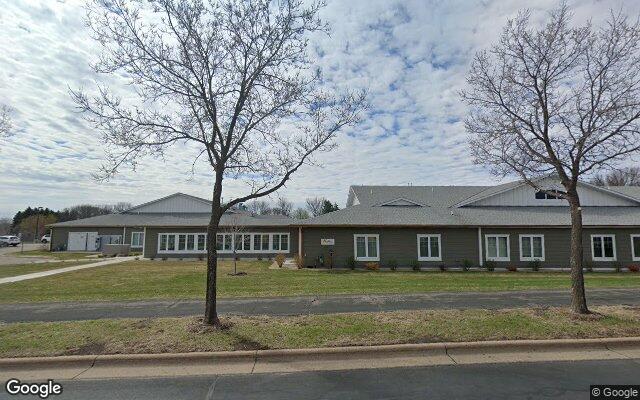
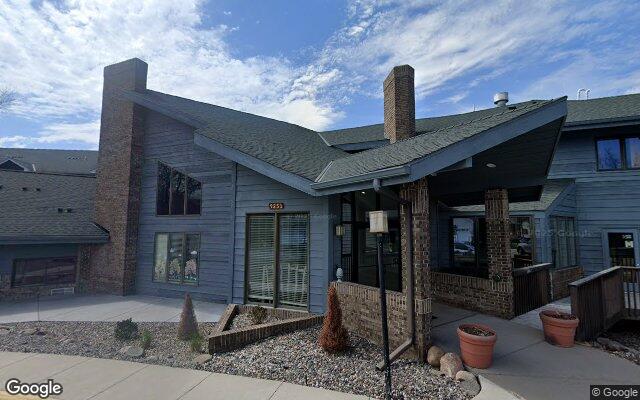
Other memory care facilities in Hennepin County with similar care offerings.
Tour Prep
Family reviews
No reviews yet — be the first to share your experience
Other memory care options nearby.
More options in neighboring cities
Licensed memory care in other cities within this county region — useful when your search radius crosses city limits.