Ivy Park at Laguna Creek.
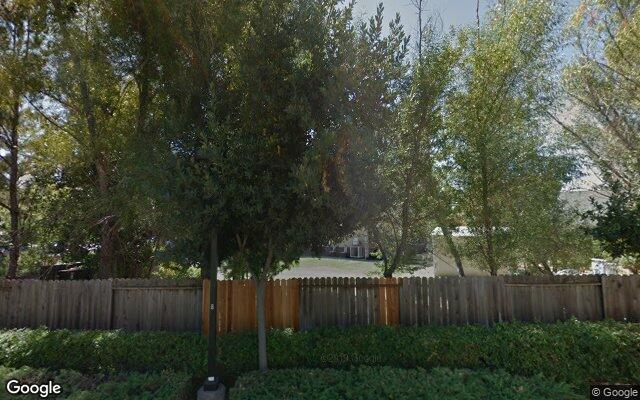
A large home, reviewed on public record.
Compared to 84 California facilities with a similar number of beds.
RCFE memory care · 36-month window. Higher percentile = better performance on inspection record. Source: California Dept. of Social Services · Community Care Licensing.
among peers to rank.
Rankings based on 36-month CDSS inspection data. Severity and frequency: fewer citations = higher percentile. Repeat rate: lower repeat citation share = higher percentile.
Citation history, plotted month by month.
6 deficiencies on record. Each bar is a month with a citation.
Finding distribution
5 total · 36 monthsScope × Severity (CMS A–L)
The rules that apply to this facility.
State requirements with the exact regulation citation, plain-language explanation, and a question to ask on tour. Rules this facility has been cited for appear first.
Plain language
Elopements, fires, epidemic outbreaks, and poisonings must be reported immediately. Abuse with serious bodily injury requires a 2-hour phone report + 2-hour written report to CDSS, Adult Protective Services, and law enforcement. Abuse without serious bodily injury must be reported within 24 hours. A resident death requires a phone call by the next working day and a written report within 7 days. Injuries requiring medical treatment beyond first aid, and bankruptcy/foreclosure/utility shutoff notices, must also be reported. Incidents not reported on time are a separate violation — families may file a complaint directly with CDSS.
Ask on tour
“When was the last incident report filed with CDSS, and may I see your incident log summary for the past 12 months?”
Questions to ask before you visit.
A short pre-tour checklist tailored to Ivy Park at Laguna Creek's record and state requirements.
The facility has 9 serious citations on file across all inspections — can you provide your corrective-action plan for each cited item, and show families any documentation of remediation steps taken?
Ask the operator on tour. Take notes and compare answers across facilities you visit.
20 complaints are on file with CDSS — were any substantiated, and what remediation did the facility take in response to substantiated findings?
Ask the operator on tour. Take notes and compare answers across facilities you visit.
The facility has 1 citation related to §87705 or §87706 dementia-care requirements — can you provide your corrective-action plan for the cited deficiency and documentation showing remediation is complete?
Ask the operator on tour. Take notes and compare answers across facilities you visit.
Every inspection visit, verbatim.
16 inspections in the public record, most recent first. Plain-language summaries open first — click into any row for the full citation text.
2026-02-03Other VisitNo findings
Plain-language summary
An additional evaluation was conducted into an allegation of sexual or other abuse; interviews with staff and residents, police reports, and other documentation found no evidence to support the allegation. The facility was notified of this unsubstantiated finding, meaning there was insufficient evidence to prove the alleged abuse occurred.
Read full citation textHide full citation text
Read raw inspector notesClose inspector notes
After an additional evaluation, it was revealed that there were no signs of sexual or other abuse. Police report reviewed contained additional interviews and outside agency consultation which revealed no indication or substantiated evidence of sexual abuse. Interviews conducted and other documentation reviewed did not reveal any corroborated statements or evidence to suggest sexual abuse occurred while in care. As a result, the preponderance of evidence standard is not met, and this allegation is UNSUBSTANTIATED. A finding of unsubstantiated means the allegation may have happened or is valid, but there is not a preponderance of the evidence to prove that the alleged violation occurred. An exit interview was conducted with Administrator, and a copy of this report was provided. Appeal rights and LIC 811 provided.
2025-10-16Complaint InvestigationSubstantiatedCitation on file
Plain-language summary
A complaint investigation found that the facility improperly moved a resident out of their original room without obtaining a signed agreement from the resident or their family, and then assigned another resident to that original room before the first resident could return. The investigation also found confidential resident medical records and personal information left unattended on desks in an office area where residents and visitors could see them, instead of being stored securely in available locked cabinets.
Read full citation text (1)Hide full citation text
Substantiated — the state found a violation and issued a citation. Full citation details are on file with the state.
Read raw inspector notesClose inspector notes
Bassi said that R1 was moved back to memory care on October 1, but R1 could not return to their original room, D3, because another prospective client had already placed a deposit on the room. R1 was moved to room D7, according to Bassi. LPA Moleski spoke with R1's responsible party over the phone, who declined to answer questions. In an interview, R1 said they had been recently moved, but that they preferred their original room to their new room and and that they did not know why they were moved. LPA Moleski reviewed R1's and R2's files. LPA Moleski observed that R1 had only one admission agreement on file, dated April 30, 2024. The admission agreement specifies R1's room as room D3. The admission agreement states, in part, that "[R1] may live in [their] room on a month-to-month basis..." The admission agreement does include sections which clarify expectations in the event of room transfers, as well as termination conditions. Page 7 of R1's admission agreement states that "Ivy Park may need to substitute your apartment with another apartment ... for any ... reasonable purpose, as determined by the executive director of the community ... upon a thirty (30) day notice. A request by you for an apartment substitution will be granted in Ivy Park manager's discretion." 22 CCR Section 87507(c-d) requires all attachments or modifications made to admission agreements to be signed and dated. LPA Moleski requested all modifications to R1's admission agreement. Bassi provided LPA Moleski an apartment transfer form for R1, indicating that R1 was moved from room C2 to D7 as of October 1. The form was not signed by facility representatives, the resident, or the resident's responsible party. Page 8 of R1's admission agreement indicates that their contract may be terminated by the resident "at any time, with or without cause, by giving the executive director of the community ... thirty (30) days prior written notice of termination." Licensee-initiated termination of contract is outlined by 22 CCR Section 87224, which requires under most circumstances a 30-day notice. The termination conditions outlined in the admission agreement do not indicate that, by moving into a different room, R1's contract was automatically terminated. R1 was not required to have a new admission agreement signed for their stay in room C2 between Sept. 25 and Oct. 1. 22 CCR Section 87507(c) requires a new admission agreement seven days after admission, and R1 was in room C2 for only six days, according to Bassi. However, in lieu of any signed and dated modifications, formal termination with applicable written notice, or an entirely new signed and dated admission agreement for their new room, R1's contract remained in effect as originally agreed upon, meaning that R1 should have retained the right to return their original room, D3. [continued on 9099-C] 1 2 3 4 5 6 7 8 9 10 11 12 13 14 15 16 17 18 19 20 21 22 23 24 25 26 27 28 29 30 31 32 LPA Moleski reviewed the file of the resident who currently resides in room D3 (R3). LPA Moleski observed a signed admission agreement permitting R3 to live in room D3. The admission agreement was dated September 27, just two days after R1 left room D3. LPA Moleski reviewed a payment authorization form and a community fee receipt for R3, both signed and dated Sept. 27. LPA Moleski did not observe a current admission agreement for R1 for their new room, D7. According to Bassi and S1, R2 was moved out of room D7 into room C2, in order to permit R1 to return to their initial memory care cottage. LPA Moleski reviewed R2's file and observed no admission agreements on file. Bassi said R2's initial admission agreement was written under the previous management company. LPA Moleski was provided two apartment transfer forms for R2. One indicated that R2 was to be moved from room D7 to room C2, however, this form was not signed. The second indicated that R2 was to be moved from room D7 to room C5. This version was signed by R2's responsible party, and by a facility representative, and was dated Sept. 26. However, as of today's visit, R2 is living in room C2, not room C5, as the signed and dated modification states. R2 had no current signed and dated admission agreement on file regarding their present residency in room C2. During a tour of Cedar cottage, LPAs Moleski and Lindstrom observed an office area in the cottage unattended. LPAs Moleski and Lindstrom observed several binders left lying on a desk area, despite the presence of locking cabinets directly above the desk. LPAs Moleski and Lindstrom observed multiple documents containing confidential resident information present in these binders, including residents' diagnoses, care plans, care notes, prescription information, medical information, and other personal identifying information. There was not a staff member in the immediate vicinity when LPAs Moleski and Lindstrom began inspecting the area. LPAs Moleski and Lindstrom did, however, observe residents and at least one visitor walking by during their inspection of the records. The department has determined the following as it relates to the allegations that staff did not allow a resident access to their bedroom and that staff do not safeguard residents' confidential information: Based on interviews and record review, the above allegations are SUBSTANTIATED. A finding that the complaint allegations are substantiated means that the allegations are valid because the preponderance of evidence standard has been met. This facility is hereby cited per 22 CCR Sections 87507(f) and 87506(c)(1) An exit interview was held with Bassi. A copy of this report and appeal rights were left with Bassi.
2025-09-30Annual Compliance VisitNo findings
Plain-language summary
An inspector visited the facility to review a September 2025 incident in which a resident with dementia fell in their room and was found on the floor covered in feces after being down for approximately 10 minutes. The resident told staff they had become dizzy while trying to reach the restroom, and facility staff noted the resident does not use their call button to request help. No violations were found during this visit.
Read full citation textHide full citation text
Read raw inspector notesClose inspector notes
Licensing Program Analyst (LPA) Vincent Moleski arrived unannounced to conduct a case management visit. LPA Moleski met with facility administrator James Dial and explained the purpose of the visit. LPA Moleski reviewed an incident report dated 9/23/25. According to the incident report, a resident (R1) was found lying on the floor of their room on 9/21/25 covered in feces after an apparent fall. R1 told responding staff that they had gotten dizzy and fell while on their way to the restroom, according to the incident report. LPA Moleski interviewed R1, who did not remember details relating to the incident. However, R1 said that they do sometimes experience dizziness while standing. R1 also said that staff are responsive when they need assistance. LPA Moleski interviewed the medication technician who found R1 after their fall (S1) and the caregiver who assisted afterward (S2). S1 said they had gone to R1's room for a routine medication pass. S1 said that R1 told them they had been on the ground for about 10 minutes. S2 said they were alerted to R1's condition shortly after starting their shift around 7 a.m. Both S1 and S2 said they were not sure how long R1 had been on the floor, but both said the feces on R1 was not dry. S1, S2, and S3, the facility's health services director, said that R1 does not use their call button when assistance is needed. S1-S3 said that R1 did not use their call button after their fall on 9/21/25. LPA Moleski reviewed R1's file. R1's LIC 602 dated 5/5/25 indicates a diagnosis of dementia. R1's needs and services plan, dated 3/22/25, does not indicate R1 requires additional status checks beyond routine care tasks. No deficiencies were cited during this visit. An exit interview was held and a copy of this report was left with Dial.
2025-09-03Other VisitNo findings
Plain-language summary
An unannounced inspection on September 3, 2025 found that a resident with memory loss and confusion left the facility unassisted on June 23, 2025 through a door that was supposed to have an alarm; staff reported hearing no alarm and did not see the resident leave, and the resident was found in a nearby parking lot about 25 minutes later. The facility was cited for failing to maintain adequate supervision of a resident known to need special observation due to confusion and wandering. A $500 penalty was assessed.
Read full citation textHide full citation text
Read raw inspector notesClose inspector notes
Licensing Program Analyst (LPA) Vincent Moleski arrived unannounced to conduct a case management visit. LPA Moleski met with facility administrator James Dial and explained the purpose of the visit. LPA Moleski received an incident report from this facility on 6/24/25. LPA Moleski previously discussed the incident report with staff on 7/8/25. However, due to time constraints, LPA Moleski was unable to complete a case management visit regarding this incident at that time. The incident report described above states that a resident (R1) was discovered missing around 7:20 p.m. on 6/23/25. R1 lives in a delayed-egress memory care cottage equipped with door alarms. The incident report stated that staff searched the cottage, but could not find R1. Staff continued to search the surrounding areas, and R1 was found in a nearby parking lot off facility property around 7:45 p.m., according to the incident report. LPA Moleski spoke with R1 during his visit on 7/8/25. R1 did not remember the incident. LPA Moleski reviewed R1's LIC 602, dated 5/23/25, and observed that R1 has a diagnosis of mild cognitive impairment and has a history of seizures. R1 is not permitted to leave the facility unassisted, according to their LIC 602. R1 suffers from confusion and has an unsteady gait, according to the LIC 602. R1 is nonambulatory, per the 602. R1's pre-admission appraisal, dated 6/11/25, indicates that R1 needs special observation and/or night supervision due confusion, forgetfulness, and/or wandering. R1's LIC 602 addendum, dated 5/23/25, indicates that R1 suffers from hallucinations. [continued on 809-C] 1 2 3 4 5 6 7 8 9 10 11 12 13 14 15 16 17 18 19 20 21 22 23 24 25 26 27 28 29 30 31 32 LPA Moleski interviewed the cottage's on-duty caregiver (S1) during his visit on 7/8/25 and also on 9/3/25. S1 said that they were sitting near the front doors of the cottage prior to R1 being discovered missing. However, S1 said they heard no alarms, and did not see R1 leave. 22 CCR Section 87705(e)(5) requires that "facility staff shall ensure the continued safety of residents [with a dementia diagnosis] if they wander away from the facility..." Additionally, HSC Section 1569.312(d) requires that staff remain "aware of the resident's general whereabouts..." at all times. This facility is hereby cited per HSC Section 1569.312(d). As this deficiency involves an absence of supervision, an immediate civil penalty in the amount of $500 is hereby assessed. An exit interview was held with Dial. Appeal rights and a copy of this report were left with Dial.
2025-09-03Complaint InvestigationUnsubstantiatedNo findings
Plain-language summary
A complaint alleged that a resident was improperly evicted and not given prescribed medications as ordered. The facility's records showed medications were administered correctly as prescribed, and interviews indicated the resident's representative agreed to move the resident to a more suitable facility after staff explained the cottage-style layout was not a good fit for their care needs, rather than being forced out. The state found no violation on either allegation.
Read full citation textHide full citation text
Read raw inspector notesClose inspector notes
Based on interviews with staff, R1 wandered from their delayed-egress cottage on at least one occasion, and frequently attempted to elope after that. Charting notes regarding R1 indicate that on 6/3/25, R1 wandered "on to the streets," with staff following to supervise R1. After this and other incidents, Dial said R1's RP was "required" to acquire third-party one-on-one caregivers to supervise R1 during certain hours. This issue will be addressed in a separate case management report. In an interview, Dial said that R1 was not a good fit for the facility due to the open cottage-style layout, and R1 would be better served by a more secure facility. Dial said he did explain this to R1's RP, but he never told R1's RP that R1 needed to leave. In an interview, R1's RP did not describe R1's move-out as an eviction, and R1's RP complimented facility staff. R1's RP said that Dial did explain that R1 was "not a good fit" at this facility. R1's RP said they asked Dial what their options were, and Dial gave a preferred timeline for move-out, however this was described by R1's RP as Dial's preference, and not a requirement. In an interview, R1's RP did raise concerns regarding two of R1's medications, a certain depressant and a certain antipsychotic. LPA Moleski reviewed R1's medication list from their previous skilled nursing placement, dated 6/2/25, and a medication clarification signed by R1's physician dated 5/31/25. LPA Moleski observed on each an order for R1 to take the antipsychotic twice daily and an order for R1 to take the depressant as needed every six hours. No additional orders for either medication were included in these records. LPA Moleski reviewed R1's MARs and observed that these orders were listed as described. LPA Moleski further observed that these medications were administered as ordered during the duration of R1's stay at this facility. The department has determined the following as it relates to the allegations that a resident was illegally evicted and that medications were not provided to resident as needed: Based on interviews and record review, the above allegations are UNSUBSTANTIATED, which means that although the allegations may have happened or are valid, there is not a preponderance of the evidence to prove that the alleged violations occurred. No deficiencies were cited regarding the above allegations. An exit interview was held and a copy of this report was left with Dial.
2025-08-14Complaint InvestigationType A · 4 findings
Plain-language summary
During an unannounced annual inspection, inspectors found that a resident admitted with an undisclosed pressure wound on her heel did not receive wound care for nine days, and the facility lacked documentation of a required annual health evaluation for another resident. Inspectors also observed hazardous materials—including degreaser, cleaning solutions, and tools—left unattended or in unlocked cabinets and offices accessible to residents, and found loose medication on the floor of a medication room. The facility was cited for these violations.
Read full citation text (4)Hide full citation text
“Based on record review and interview, a resident with a pressure wound was admitted to this facility without home health or other skilled medical supervision or instruction, resulting in the worsening of the wound over the course of several days, which poses an immediate health, safety or personal rights risk to persons in care. POC Due Date: 08/15/2025 Plan of Correction 1 2 3 4 Licensee agrees to conduct a training regarding intake procedures and restricted health conditions. Licensee agrees to provide LPA Moleski with a scheduled date for this training by POC due date. vincent.moleski@dss.ca.gov”
“Based on observation, multiple cleaning solutions and other hazardous materials were accessible to residents in care, including memory care residents, which poses an immediate health, safety or personal rights risk to persons in care. POC Due Date: 08/15/2025 Plan of Correction 1 2 3 4 Licensee agrees to schedule a staff training regarding storage requirements by POC due date and to notify LPA Moleski of the proposed date of training by POC due date. vincent.moleski@dss.ca.gov”
“Based on observation, medication was stored outside of its originally received container, which poses an immediate health, safety or personal rights risk to persons in care. POC Due Date: 08/15/2025 Plan of Correction 1 2 3 4 Licensee agrees to conduct a training regarding medication storage procedures by POC due date and to notify LPA Moleski of the proposed date of training by POC due date. vincent.moleski@dss.ca.gov”
“Based on record review and interview, a resident did not receive an annual routine visit with a medical practitioner, which poses/posed a potential health, safety or personal rights risk to persons in care. POC Due Date: 08/04/2025 Plan of Correction 1 2 3 4 Licensee agrees to request a routine annual visit for this resident by POC due date. vincent.moleski@dss.ca.gov”
Read raw inspector notesClose inspector notes
Licensing Program Analyst (LPA) Vincent Moleski arrived unannounced to conduct an annual inspection. LPA Moleski met with facility administrator James Dial and explained the purpose of the visit. LPA Moleski reviewed five resident files (R1-R5) and five staff files (S1-S5). LPA Moleski reviewed R1's file. R1's LIC 602 was dated 6/21/25. R1's move-in date was recorded as 7/28/25. R1's LIC 602 indicated that R1 had a pressure injury, but it was not staged. R1's LIC 602 indicated that R1 did not have home health services. In an interview, the facility's health services director (S6) said that they were not aware R1 had a pressure injury upon admission. An assessment for R1 dated 7/27/25 indicated that R1 did not have any wounds or bedsores. Dial said he received R1's LIC 602 from R1's previous placement on 7/25/25. LPA Moleski reviewed ongoing notes for R1. An "open area" was identified on R1's heel on 7/29/25, according to a note written on that same date. On 8/3/25, a "worsening condition of wound on left heel" was noted. The "top skin layer came off," and was "oozing and bleeding," according to the note. An incident report from 8/3/25 indicated that R1 was sent to the hospital, and S6 "started the process of obtaining a referral for home health" on that date. S6 said that R1 received no wound care at the facility prior to 8/7/25, when home health personnel visited for the first time. S6 said that they would have been able to secure a referral for home health prior to R1's admission if they were aware that R1 had a wound. [continued on 809-C] 1 2 3 4 5 6 7 8 9 10 11 12 13 14 15 16 17 18 19 20 21 22 23 24 25 26 27 28 29 30 31 32 LPA Moleski reviewed R5's file and observed an LIC 602 dated 2/9/2022, and a second LIC 602 dated 8/1/2023. LPA Moleski asked for documentation of a routine annual visit within the last year. LPA Moleski was provided after-visit summaries for R5 from emergency room visits in December 2024 and April 2025 for confusion resulting from a UTI and a fall, respectively. Neither of these constitute routine annual visits evaluating general health. LPA Moleski toured the facility with Dial and inspected common areas, kitchen areas, bedrooms, bathrooms, and outdoor areas. Furniture and furnishings were sufficient to meet the needs of residents. The facility temperature was 73 degrees Fahrenheit, which is within the required range of 68 and 85 degrees. The facility's water temperature measured 109 degrees Fahrenheit, which is within the required range of 105 and 120 degrees. During LPA Moleski's tour, LPA Moleski and Dial observed a bottle of degreaser left unattended outside. LPA Moleski and Dial also observed that the facility maintenance director's office was unlocked. The office, which has a primary entryway leading from the common outdoor area, contained multiple cleaning solutions and potentially hazardous tools. In two separate memory care cottages, LPA Moleski and Dial observed lime scale remover and isopropyl alcohol left in unlocked cabinets, respectively. LPA Moleski and Dial observed on the floor of a memory care cottage medication room one tablet of medication and one half of a medication capsule shell. LPA Moleski observed first aid supplies, fully-charged and up-to-date fire extinguishers, and carbon monoxide/smoke detectors. LPA Moleski observed a minimum 2-day supply of perishable food and a minimum 7-day supply of nonperishable food. LPA Moleski observed locked carts used for the storage of medication. LPA Moleski interviewed two staff members (S7-S8) and three residents (R4, R6-R7). This facility is hereby cited per 22 CCR Sections 87631(a)(1), 87309(a), 87465(h)(5), and 87463(h)(1). An exit interview was held with Dial. Appeal rights and a copy of this report were left with Dial.
2025-07-08Other VisitNo findings
Plain-language summary
An unannounced case management visit found that the facility failed to report two wandering incidents involving a resident with dementia to the state licensing agency as required — one on June 3, 2025 when the resident left the community and required a 911 call, and another on June 7, 2025 when the resident left their cottage but stayed on facility grounds. The facility administrator acknowledged that incident reports should have been submitted to the state for these events. The facility was cited for this failure to report.
Read full citation textHide full citation text
Read raw inspector notesClose inspector notes
Licensing Program Analyst (LPA) Vincent Moleski arrived unannounced to conduct a case management visit. LPA Moleski met with facility administrator James Dial and explained the purpose of the visit. LPA Moleski reviewed an internal incident report which was provided by facility staff on 06/20/25 during a complaint investigation visit. The internal incident report described a resident (R1) engaged in "hazardous wandering" on 6/3/25. According to the internal incident report, R1 was supervised, but had left the community. Dial said R1 was walking along the sidewalk with staff, and 911 was called as a result because R1 was not redirectable. R1 has a diagnosis of dementia and suffers from confusion and wandering behaviors, according to R1's LIC 602, which is dated 5/31/25. LPA Moleski reviewed CCLD fax and email records and observed no incident report was received regarding this incident. The facility's resident care coordinator (S1) said an incident report was not submitted to CCLD regarding this incident. Dial agreed that an incident report should have been submitted regarding this incident. Dial said there was a second incident on 6/7/25 wherein R1 left their cottage, but did not leave the facility grounds. LPA Moleski asked Dial to provide the internal incident report from this second incident when possible. Dial agreed to do so. This facility is hereby cited per 22 CCR Section 87211(a)(1)(D). An exit interview was held with Dial. Appeal rights and a copy of this report were left with Dial.
2025-03-06Complaint InvestigationUnsubstantiatedNo findings
Plain-language summary
This was a complaint investigation into staffing levels at the facility. The investigator found that the facility met state requirements for staffing and observed at least two staff members in each cottage during the tour, with residents' rooms clean and no signs of neglect in medical records, though some residents reported long wait times for call responses while others said staff responded quickly. The facility explained that unusually long response times recorded in their electronic system were data entry errors caused by a faulty system they were replacing.
Read full citation textHide full citation text
Read raw inspector notesClose inspector notes
LPA Moleski reviewed staffing schedules for assisted living and observed that at least two caregivers were regularly scheduled for each cottage during morning and afternoon shifts, with one medication technician scheduled per shift to cover the two assisted living cottages. One caregiver was always scheduled for each cottage for each night shift. LPA Moleski reviewed staffing schedules for memory care and observed that two caregivers were regularly scheduled to work in each cottage for morning and afternoon shifts. On some days out of the week, one medication technician/caregiver was scheduled to work in Dogwood cottage, who also covered medication technician duties for Elm and Fir cottages. On other days out of the week, there was a dedicated medication technician/caregiver scheduled for Dogwood cottage, and another medication technician who floated between Elm and Fir cottages. Title 22 of the California Code of Regulations does not provide specific staff-to-client ratios which must be maintained at all times. 22 CCR § 87411(a) states that “facility personnel shall at all times be sufficient in numbers and competent to provide the services necessary to meet resident needs.” 22 CCR § 87415(a)(2) states that “in facilities caring for sixteen to one hundred residents at least one employee shall be on duty on the premises, and awake,” and that “another employee shall be on call, and capable of responding within ten minutes.” There were 58 residents being cared for at this facility at the time LPA Moleski opened this complaint investigation on 11/21/24. During a tour of this facility on that date which included a survey of Aspen, Birch, Dogwood, Elm, and Fir cottages, LPA Moleski observed a minimum of two staff members present in each cottage, and did not observe any residents with any obvious signs of unmet needs, such as poor hygiene, or unmanaged pain, et cetera. Resident rooms inspected during this visit were clean and free of odor. LPA Moleski reviewed six residents’ files (R8-R13) for potential signs of neglect due to lack of care and/or supervision, such as an unusually large number of documented falls, evidence of open wounds, missed doses of medication, et cetera. LPA Moleski observed no concerning trends in any of these resident records. LPA Moleski interviewed seven residents (R1-R7). R1, R2, R4, R6, and R7 voiced no concerns with the current level of staffing in the facility. R2 described the facility as “really good,” and said caregivers respond to them quickly. R6 said that the facility has an abundance of staff who are kind and helpful. R3 said that the facility’s caregivers “need more help.” R3 said that staff take too long to respond to their calls for assistance, sometimes up to 30 minutes. R5 said the facility was “understaffed.” R5 said that they sometimes have to wait four or five hours to be repositioned in bed, and they sometimes wait up to 40 minutes for a response to their calls for assistance. [continued on 9099-C] 1 2 3 4 5 6 7 8 9 10 11 12 13 14 15 16 17 18 19 20 21 22 23 24 25 26 27 28 29 30 31 32 LPA Moleski reviewed 30-day call button response logs for R3 and R5. While the average response time for each resident was roughly in line with the facility's expectation of 15 minutes per call at 14:13 and 15:11 respectively, there were a number of unusually high response times. For example, R3 had a recorded response time of more than 128 minutes on 2/23/25 and more than 80 minutes on 2/10/25. R5 had recorded response times of more than 77 minutes on 2/24/25, more than 57 minutes on 2/23/25, More than 65 minutes on 2/16/25, more than 80 minutes on 2/11/25, more than 181 minutes on 2/10/25, and a second call for more than 99 minutes on that same date. The facility’s health services director (S2) said that these entries showing excessive response times were likely errors. S2 said that the facility was in the process of changing call response systems due to these persistent errors. LPA Moleski noticed that a number of R5’s calls were recorded as coming from Birch Cottage, including the excessively lengthy calls from 2/24/25 and 2/10/25. However, R5 lives in Aspen cottage. R3's call log, meanwhile, included an entry from Dogwood cottage — the excessively long call recorded 2/23/25 — and a few calls had no location indicated. R3 also lives in Aspen cottage. To demonstrate the errors occurring in the electronic record-keeping system, S2 provided call button response logs from Fir and Elm cottages, which are not equipped with call buttons. These logs show a number of extremely long and extremely short response times recorded for the month of February 2023, ranging from a few seconds to several hours. LPA Moleski interviewed 15 staff members of this facility. Interviews with staff corroborated the staff schedules previously reviewed by LPA Moleski. The majority of caregivers, medication technicians, and management staff indicated that there are at least two caregivers stationed in every cottage serving residents, and when caregivers are busy providing two-person assistance to any particular resident, then a floating medication technician will cover the cottage floor to supervise residents. The majority of caregivers indicated that the medication technician will also cover them while taking breaks or while they are otherwise indisposed. S7 said that they have had to work alone in their cottage, but also said that they have always been able to meet the residents’ care needs. S8 said that there have been instances where there was just one caregiver in their cottage, and said that even two caregivers are not enough. However, S8 also said that all care tasks are completed, and residents do not have unmet needs. S9 said the current staffing levels were “challenging,” but also said that they are able to take care of all the residents. S9 said that the memory care director has asked staff to stay late to ensure sufficient coverage was maintained. All other staff members interviewed did not voice significant concerns regarding staffing levels at the facility. [continued on 9099-C] 1 2 3 4 5 6 7 8 9 10 11 12 13 14 15 16 17 18 19 20 21 22 23 24 25 26 27 28 29 30 31 32 The department has determined the following as it relates to the allegation that the facility has insufficient staffing to meet resident needs: Based on interviews, observation, and record review, the above allegation is UNSUBSTANTIATED, which means that although the allegation may have happened or is valid, there is not a preponderance of the evidence to prove that the alleged violation occurred. No deficiencies were cited regarding the above allegation. An exit interview was held and a copy of this report was left with Dial.
2024-12-10Other VisitNo findings
Plain-language summary
During an unannounced case management visit, inspectors reviewed a medication error discovered in November 2024 in which two night shift staff members gave a resident double doses of thyroid medication on multiple occasions instead of the prescribed half-pill dose. The error was caught when staff attempted to refill the medication early and found doses remaining. The facility was cited for this violation.
Read full citation textHide full citation text
Read raw inspector notesClose inspector notes
Licensing Program Analysts (LPAs) Vincent Moleski and Holly Williams arrived unannounced to conduct a case management visit. LPAs Moleski and Williams met with director James Dial and explained the purpose of the visit. LPA Moleski reviewed an incident report that was sent to the Community Care Licensing Division (CCLD) on 12/4/24. The incident report described a medication error which was discovered on 11/27/24 by a medication technician (S1). S1 had attempted to get a refill for a resident's (R1's) thyroid medication on that date, but was told that the medication was not able to be refilled, as there should be doses remaining, according to the incident report. The incident report stated that there was only one pill of the medication remaining at that time. In an interview, S1 said the medication, given in the correct dosage, should have lasted through 12/26/24. In an interview, the facility's health services director (S2) said that both night shift medication technicians (S3 and S4) had been giving one full pill of the medication, rather than the half pill prescribed. S2 said that they asked both S3 and S4 separately what they had been giving R1, and they both reported that they were giving one full pill. This had occurred on multiple occasions, according to the incident report. Neither S3 nor S4 were present at the facility during this visit. LPA Moleski reached out via telephone to each but did not receive a response during this visit. This facility is hereby cited per 22 CCR Section 87465(a)(4). An exit interview was held with Dial. Appeal rights and a copy of this report were left with Dial.
2024-09-12Complaint InvestigationUnsubstantiatedNo findings
Plain-language summary
A complaint alleged that a resident fell due to lack of supervision, but the investigation found no preponderance of evidence to support this claim. Staff reported the resident was sitting calmly in their room throughout the night and early morning when a bump and bruise were discovered around 5 a.m. on March 30, 2024, though no one witnessed how the injury occurred, and the resident could not recall what happened.
Read full citation textHide full citation text
Read raw inspector notesClose inspector notes
LPA Moleski reviewed shift change notes regarding R1 dated between 3/26/24 and 3/29/24. A note made on the night of 3/29/24 stated that R1 refused to be changed for most of the night, but around 5 a.m., staff observed the bump and bruise on R1. The preceding notes do not make any indication of any observed injuries or falls suffered by R1. LPA Moleski reviewed R1’s file and did not observe any prior incident reports regarding falls suffered by R1 while at the facility. LPA Moleski reviewed R1’s preadmission appraisal, dated 11/20/23, which states that R1 did not need help in transferring in and out of bed. The appraisal was signed by R1’s RP. The appraisal states that R1 was active, but had difficulty climbing or descending stairs. Both R1’s appraisal and R1’s LIC 602, dated 11/20/23, indicated that R1 was fully ambulatory. In an interview, R2, R1’s spouse and a resident of this same facility, said that R1 fell three times while they were still living together, before they moved into the facility. In an interview, R1 said they could not recall what had happened on the night of 3/29/24 or the morning of 3/30/24. R1 was diagnosed with dementia, according to their LIC 602. In an interview, S4, said that R1 did not appear to be in pain on the night of 3/29/24 and the morning of 3/30/24. S4 said that R1 stayed up most of the night, calmly sitting in a chair in their room. S4 said that R1 had refused to be changed by the night shift staff until approximately 4:30 or 5 a.m. on 3/30/24, at which point R1’s injuries were discovered. In an interview, S5 said that from the start of their shift, R1 was in their room sitting in their chair. S5 said that R1 remained in their chair until both himself and S4 changed R1 in the early morning. S5 said R1 did not express pain at any point during the shift. S4 and S5 said that R1 is able to get up from the chair independently. S4 said R1 has fallen previously. LPA Moleski interviewed the two caregivers assigned to R1’s cottage during the afternoon shift on 3/29/24. In an interview, S6 said that R1 was in their chair during the afternoon shift, and did not want to get up, so S6 was not able to change R1, and therefore did not observe any injuries on R1. S6 said that R1 has fallen in the past, but is able to get up on their own. S6 said that, during crossover, the other caregiver on the afternoon shift, S7, said they had changed R1. [continued on 9099-C] 1 2 3 4 5 6 7 8 9 10 11 12 13 14 15 16 17 18 19 20 21 22 23 24 25 26 27 28 29 30 31 32 In a phone interview, S7 said that they had changed R1 during the shift with their coworker, but had not observed any injuries on R1. LPA Moleski attempted to acquire additional information from S7, but the call was terminated. LPA Moleski called S7 again on 5/29/24, 5/31/24, and 6/14/24, and left voicemail messages each time. LPA Moleski also sent a text message asking to continue their conversation, to which he received no response. LPA Moleski was informed by Swearingen that S7 was terminated as of 8/12/24, in part due to attendance issues. LPA Moleski reviewed a disciplinary action notice regarding S7, dated 8/10/24. The notice stated that S7 was working a night shift on 8/5/24 and was present while a resident was out of bed and sitting on a bench in the common area of their cottage, but did not assist them back to their room. The department has determined the following as it relates to the allegation that a resident fell due to lack of supervision. Based on interviews, observation, and record review, the above allegation is UNSUBSTANTIATED, which means that although the allegation may have happened or is valid, there is not a preponderance of the evidence to prove that the alleged violation occurred. No deficiencies were cited regarding the above allegation. An exit interview was held and a copy of this report was left with Swearingen.
2024-08-26Other VisitNo findings
Plain-language summary
State regulators conducted an unannounced annual inspection and found no violations—the facility met requirements for temperature, water safety, fire equipment, food storage, medication security, and cleaning supply storage. Inspectors reviewed resident and staff files, toured the building, and interviewed staff and residents. The facility received technical guidance about documentation and staff training related to dementia care.
Read full citation textHide full citation text
Read raw inspector notesClose inspector notes
Licensing Program Analysts (LPAs) Vincent Moleski and Holly Williams arrived unannounced to conduct an annual inspection. LPA Moleski met with facility administrator Michelle Swearingen and explained the purpose of the visit. LPAs Moleski and Williams reviewed 10 resident files (R1-R10) and 10 staff files (S1-S10). LPAs Moleski and Williams toured the facility with Swearingen and inspected common areas, the kitchen, bedrooms, bathrooms, and outdoor areas. Furniture and furnishings were sufficient to meet the needs of residents. The facility temperature was 71 degrees Fahrenheit, which is within the required range of 68 and 85 degrees. The facility's water temperature measured 108 degrees Fahrenheit, which is within the required range of 105 and 120 degrees. LPAs Moleski and Williams observed fully-charged and up-to-date fire extinguishers, and carbon monoxide/smoke detectors. LPAs Moleski and Williams observed a minimum 2-day supply of perishable food and a minimum 7-day supply of nonperishable food. LPAs Moleski and Williams observed locked carts for the storage of medication. LPAs Moleski and Williams observed locked closets for the storage of cleaning solutions. LPAs Moleski and Williams interviewed four staff members (S11-S12) and four residents (R11-R14). No deficiencies were cited during this visit. Technical assistance was provided relating to LIC 602s for dementia residents and staff training. An exit interview was conducted and a copy of this report was left with Swearingen.
2024-05-30Complaint InvestigationMixedNo findings
Plain-language summary
A complaint investigation found that the facility failed to provide proper written notice to a resident's family member before increasing care costs, and refunds were issued in February 2024. Allegations that staff force-fed the resident, failed to inform the family of health changes, neglected the resident's care needs, or failed to answer the telephone were not substantiated based on interviews and records. The facility was cited for the failure to provide notice of the rate increase.
Read full citation textHide full citation text
Read raw inspector notesClose inspector notes
A staff member (S4) claimed to have conducted a second reassessment on January 1, 2024 with R1’s RP present. LPA Moleski asked Swearingen for a copy of this second reassessment and written notifications sent regarding any increased care costs. Swearingen was unable to provide any such documentation in response to this request. Swearingen reached out multiple times requesting documentation from the prior management company in order to respond to LPA Moleski’s requests, but did not receive documentation to provide to LPA Moleski as described above. The department has determined the following as it relates to the allegation that staff did not provide sufficient notice of rate increase: Based on interviews and record review, sufficient written notice was not provided to R1’s RP after care costs were increased. Therefore, the above allegation is SUBSTANTIATED. A finding that the complaint allegation is substantiated means that the allegation is valid because the preponderance of evidence standard has been met. This facility is hereby cited per HSC Section 1569.657(a). An exit interview was held with Swearingen. A copy of this report and appeal rights were left with Swearingen. 1 2 3 4 5 6 7 8 9 10 11 12 13 14 15 16 17 18 19 20 21 22 23 24 25 26 27 28 29 30 31 32 The refunds were processed effective 2/12/24. LPA Moleski reviewed a statement from February 2024 indicating that credits were provided for resident care and for room and board costs for the month of January. In an interview, R1’s RP said that they had received the refunds. LPA Moleski reviewed an incident report regarding R1’s hospital visit on 12/7/23. The report stated that R1’s RP called a staff member to check on R1. The staff member said that R1 was pocketing food and refusing meals. R1’s RP said R1 should be taken to the emergency room. R1’s RP picked up R1 around 1 p.m. and took R1 to the hospital. R1 was diagnosed with failure to thrive and was sent back on 12/12/23 with palliative care. In an interview, R1’s RP was aware of R1’s hospitalization and said they had visited R1 while hospitalized. In an interview, R1’s RP said that staff were “force feeding” R1. When asked for clarification, R1’s RP said that staff continued to ask R1 if R1 wanted to eat, although R1 did not want to eat. LPA Moleski reviewed R1’s daily notes and observed in the record a pattern of limited food intake and many refusals of food and drink. Refusals are documented in the notes, and the authors of the notes indicated on several occasions the exact amounts of food which R1 did accept. None of the staff members interviewed had witnessed staff members force feeding R1 or any other residents, although several did remark that R1 often refused meals and/or ate very little food. Among the staff members interviewed, one staff member (S5) said that on one occasion, S5 came in for their shift and observed that R1 had not been changed by the previous shift. None of the other staff members interviewed had witnessed neglect or lack of care for the resident. Three other staff members (S5, S7, S9) who worked directly with R1 said that R1’s continence needs were met and had not witnessed any instances were R1 had been waiting for care or needing to be changed. Of the staff members interviewed, two (S5, S9) said there were temporarily previous issues with phone calls being transferred from the main line to the appropriate cottage. None of the other staff members interviews reported any issues with the phone systems. LPA Moleski has not had issues reaching someone at the facility by phone. [continued on 9099-C] 1 2 3 4 5 6 7 8 9 10 11 12 13 14 15 16 17 18 19 20 21 22 23 24 25 26 27 28 29 30 31 32 The department has determined the following as it relates to the allegations that staff force fed a resident, that staff did not inform a resident’s authorized person of a change in condition, that staff did not meet a resident’s needs, that staff did not refund fees according to the resident’s admission agreement, and that staff did not answer the facility telephone. Based on interviews and record review, the above allegations are UNSUBSTANTIATED, which means that although the allegations may have happened or are valid, there is not a preponderance of the evidence to prove that the alleged violations occurred. No deficiencies were cited regarding the above allegations. An exit interview was held and a copy of this report was left with Swearingen.
2024-05-01Other VisitType B · 1 finding
Plain-language summary
An unannounced visit in April 2026 found that a resident fell in March 2024 and was hospitalized, but the facility did not report this incident to the state licensing agency as required. Staff could not produce documentation showing the incident had been reported. The facility was cited for failing to notify regulators of the resident's injury.
Read full citation text (1)Hide full citation text
“Based on record review and interivews, LPA Moleski did not receive an incident report regarding a resident injury and hospital visit within seven days of the occurrence, which poses a potential health, safety, and/or personal rights risk.”
Read raw inspector notesClose inspector notes
Licensing Program Analyst (LPA) Vincent Moleski arrived unannounced to conduct a case management visit. LPA Moleski met with facility administrator Michelle Swearingen and explained the purpose of the visit. LPA Moleski opened a complaint investigation at this facility on 4/11/24. During the complaint investigation, it was revealed that a resident (R1) suffered a suspected unwitnessed fall on the morning of 3/30/24, and was sent to the hospital with an injury. LPA Moleski reviewed CCLD records and observed that no incident reports were received regarding this incident. LPA Moleski asked a staff member (S1) for a fax transmittal sheet from the incident report. S1 informed LPA Moleski that no transmittal sheet was available. S1 provided LPA Moleski with a printout of an incident report on 4/11/24, which described R1's injury and hospital visit. The incident report did not indicate that CCLD or any other agencies were notified of the incident. This facility is being cited per 22 CCR Section 87211(a)(1)(B). An exit interview was held with Swearingen. Appeal rights and a copy of this report were left with Swearingen.
2024-05-01Complaint InvestigationUnsubstantiatedNo findings
Plain-language summary
The state investigated a complaint that staff failed to notify a resident's family member about an incident. The investigation found no evidence to support this complaint.
Read full citation textHide full citation text
Read raw inspector notesClose inspector notes
The department has determined the following as it relates to the allegation that staff did not notify a resident's responsible party of incident : Based on interviews, the above allegation is UNSUBSTANTIATED, which means that although the allegation may have happened or is valid, there is not a preponderance of the evidence to prove that the alleged violation occurred. No deficiencies were cited regarding this allegation. An exit interview was held and a copy of this report was left with Swearingen.
2024-04-15Complaint InvestigationUnsubstantiatedNo findings
Plain-language summary
A complaint alleged that staff refused to give a resident prescribed medication and that the facility lacks adequate staffing. The investigation found no evidence to support either allegation: the witness who supposedly saw the medication refusal denied it happened, multiple staff members reported the resident's guardian had requested medication at inappropriate times, and response times to resident call buttons averaged under 10 minutes, with residents and staff reporting care needs were being met despite some noting busy periods.
Read full citation textHide full citation text
Read raw inspector notesClose inspector notes
In an interview, R1’s RP described an incident wherein a former staff member (S16) refused to provide PRN medication to R1. R1’s RP said that S15 witnessed the incident. In an interview, S15 said S15 had not witnessed any incident wherein S16 refused to provide medication to R1 without good cause, and had not witnessed any disagreement regarding medication between R1’s RP and S16. S15 said R1’s RP had often asked for R1’s medication during time periods in which the resident was not to receive additional doses, per R1’s prescriptions. Several other staff members (S1, S2, S5, S9, S13) reported experiencing similar incidents with R1’s RP. No other staff members interviewed were aware of an incident wherein S16 refused to provide medication to R1. LPA Moleski attempted to contact S16. Both phone numbers for S16 on file were inactive. Eleven caregivers and medication technicians (S5-S15) were interviewed regarding staffing levels at this facility. Among these 11, four staff members voiced concerns about the current staffing levels. S5 reported no problems meeting all residents’ needs. S6 said the cottage S6 works in is well staffed and reported no issues. S7 said S7 was able to meet all residents’ needs with the current staffing levels, although sometimes it takes a while to complete all tasks. S8 said S8 was able to meet all residents’ needs. S9 said staff were not overworked and were able to complete all tasks. S10 said sometimes medication technicians must pass medications in three cottages, and during those times they are short-staffed. S11 said S11 needs additional assistance from a medication technician when caring for a bedridden resident, but said all care needs were met. S12 said staffing was not sufficient during mealtimes, which are very busy. S12 said S12 was able to meet all residents’ care needs. S13 said the facility is short staffed during the lunch hour, but said all care needs were being met. S14 said current staffing levels were sufficient. S15 said staffing was sufficient provided that the right staff members were on shift. S15 said all care needs were being met. Among the nine residents interviewed, four voiced concerns regarding current staffing levels. R2 said all R2’s needs were met and felt staffing was sufficient. R3 said there were enough staff to meet R3’s needs. R5 was not sure if the facility was understaffed, but said R5’s needs were being met. R9 said that R9’s needs were being met and said there were enough staff. R10 said R10’s needs were being met and did not voice concerns regarding staffing or regarding care received at the facility. [continued on 9099-C] 1 2 3 4 5 6 7 8 9 10 11 12 13 14 15 16 17 18 19 20 21 22 23 24 25 26 27 28 29 30 31 32 In an interview, R4 said that the facility was understaffed, and said staff had not offered to shower R4 for four days. LPA Moleski reviewed a shower schedule which showed R4 receives two showers a week. LPA Moleski interviewed three staff members, (S1, S17, and S18). S1 said R4 had been refusing care. S17 said R4 had been weak and unable to transfer. S18, who was present on R4’s scheduled shower day, said R4 was in pain and unable to transfer for the shower. During the same interview, R4 said that staff have made her wait for toileting assistance, but staff typically respond to R4’s call button, and are typically supportive of her needs. In interviews, R6-R8 said that the facility was understaffed due to lack of timely response to calls for assistance. LPA Moleski reviewed response times for a period of 30 days for R4, R6, R7, and R8. LPA Moleski observed average response times of 14 minutes and 41 seconds for R8 and 9 minutes and 32 seconds for R7. R4 and R6 did not press their pendants during the 30-day period reviewed. Previous records were not available. LPA Moleski reviewed staffing schedules and resident rosters. LPA Moleski observed that four of the five operational cottages are typically staffed with two caregivers each. The fifth is typically staffed by one or two caregivers. This fifth cottage was inhabited by seven residents at the onset of this investigation. The remaining four cottages were inhabited by 11 to 15 residents each. Medication technicians are typically assigned to cover two to three cottages each. Based on interviews, medication technicians assist with direct care of residents when needed. LPA Moleski visited this facility to investigate this complaint on 2/14/24, 3/11/24, 4/11/24, and 4/15/24. During these visits, residents observed appeared healthy and clean. LPA Moleski observed residents in common areas being supervised by staff members. The department has determined the following as it relates to the allegations that staff did not administer a resident's medication as prescribed, and that the facility does not have sufficient staff to meet residents' needs: Based on interviews, observation, and record review, the above allegations are UNSUBSTANTIATED, which means that although the allegations may have happened or are valid, there is not a preponderance of the evidence to prove that the alleged violations occurred. No deficiencies were cited during this visit. An exit interview was held and a copy of this report was left with Swearingen.
2023-10-30Other VisitNo findings
Plain-language summary
A state licensing analyst made an unannounced visit to review case management practices and discuss reporting requirements with staff. No violations were found during the visit.
Read full citation textHide full citation text
Read raw inspector notesClose inspector notes
Licensing Program Analyst (LPA) Vincent Moleski arrived unannounced to conduct a case management visit. LPA Moleski met with resident care coordinator Daiya Jorlen and explained the purpose of the visit. LPA Moleski discussed reporting requirements with Jorlen and provided technical assistance on this topic. No deficiencies were cited during this visit. An exit interview was held and a copy of this report was left with Jorlen.
24 older inspections from 2021 are not shown above.
Get the complete record, translated into plain language — emailed to you.
Other facilities in Sacramento County.
Other memory care facilities in Sacramento County with similar care offerings.
Tour Prep
Family reviews
No reviews yet — be the first to share your experience
Other memory care options nearby.
More options in neighboring cities
Licensed memory care in other cities within this county region — useful when your search radius crosses city limits.