The Commons at Elk Grove.
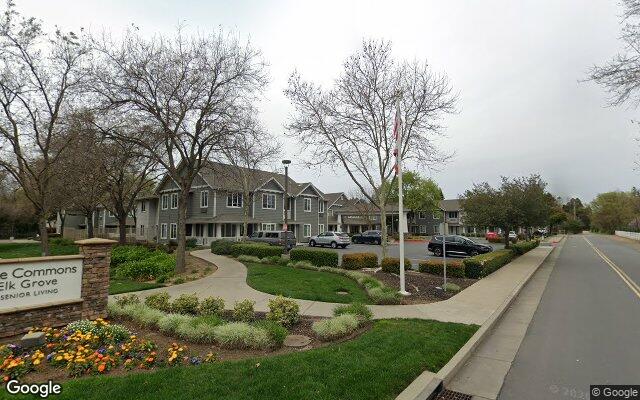
A large home, reviewed on public record.
Compared to 160 California facilities with a similar number of beds.
RCFE · 36-month window. Higher percentile = better performance on inspection record. Source: California Dept. of Social Services · Community Care Licensing.
among peers to rank.
Rankings based on 36-month CDSS inspection data. Severity and frequency: fewer citations = higher percentile. Repeat rate: lower repeat citation share = higher percentile.
Citation history, plotted month by month.
4 deficiencies on record. Each bar is a month with a citation.
Finding distribution
4 total · 36 monthsScope × Severity (CMS A–L)
The rules that apply to this facility.
State requirements with the exact regulation citation, plain-language explanation, and a question to ask on tour. Rules this facility has been cited for appear first.
Plain language
Elopements, fires, epidemic outbreaks, and poisonings must be reported immediately. Abuse with serious bodily injury requires a 2-hour phone report + 2-hour written report to CDSS, Adult Protective Services, and law enforcement. Abuse without serious bodily injury must be reported within 24 hours. A resident death requires a phone call by the next working day and a written report within 7 days. Injuries requiring medical treatment beyond first aid, and bankruptcy/foreclosure/utility shutoff notices, must also be reported. Incidents not reported on time are a separate violation — families may file a complaint directly with CDSS.
Ask on tour
“When was the last incident report filed with CDSS, and may I see your incident log summary for the past 12 months?”
Questions to ask before you visit.
A short pre-tour checklist tailored to The Commons at Elk Grove's record and state requirements.
The facility holds 110 licensed beds and is operated by Elk Grove Msl Ll;msl Community Management Llc — can you provide the current California CDSS license certificate and confirm the license status is active and in good standing?
Ask the operator on tour. Take notes and compare answers across facilities you visit.
CDSS records show zero deficiencies and zero complaints on file — can you provide the date of the most recent state inspection visit, and confirm whether any unannounced monitoring visits have occurred since licensure?
Ask the operator on tour. Take notes and compare answers across facilities you visit.
The facility does not carry a formal memory-care designation in CDSS licensing records — does the facility currently accept residents with dementia diagnoses, and if so, what specific California Title 22 regulatory sections govern the dementia-care programming you provide?
Ask the operator on tour. Take notes and compare answers across facilities you visit.
Every inspection visit, verbatim.
13 inspections in the public record, most recent first. Plain-language summaries open first — click into any row for the full citation text.
2026-06-26Other VisitNo findings
Read raw inspector notesClose inspector notes
On 06/26/2026, Licensing Program Analyst (LPA) Shakaricka Hughes arrived at the facility to conduct an unannounced annual inspection. LPA Hughes met with the facility administrator Jessica. The current census is 93 with 29 facility staff present. This facility is a single story building licensed to serve (110) non-ambulatory residents. LPA inspected the physical plant including but not limited to the common area, kitchen, dining area, resident bedrooms, resident bathrooms, laundry room and outside courtyards of the facility to ensure compliance with Title 22 regulations. LPA observed the facility to be free of odor, clean and in good repair. LPA observed bedrooms to be properly furnished with appropriate bedding and lighting. There are no bodies of water present. LPA toured the kitchen and observed sufficient seven-day non-perishable and two-day perishable food supplies. Hot water temperature was measured at 105.6 degrees Fahrenheit in resident bathroom sink, which is within the required regulation of 105 to 120 degrees Fahrenheit. Grab bars and non-slip mat were observed to be stable and in good repair at this time. Smoke and carbon monoxide detectors are in compliance with fire safety. LPA observed (4) fire extinguishers located throughout the facility last serviced on 12/3/2025. LPA observed the facility has a public telephone made available to residents on the medication cart and the facility has the required posters posted. Facility thermostat was observed at 74 degrees Fahrenheit. LPA observed toxins located in the storage room kept locked and inaccessible to residents. LPA observed sharp knives kept locked in the kitchen and inaccessible to residents. Continuation 809-C 1 2 3 4 5 6 7 8 9 10 11 12 13 14 15 16 17 18 19 20 21 22 23 24 25 26 27 28 29 30 31 32 LPA checked medication storage and found medication to be locked away and inaccessible to residents. LPA reviewed 5 residents medications and the medication administration record (MAR) was complete. The first aid kit was checked and contained the required components. LPA requested resident and staff files for review. LPA reviewed 5 resident files and they were complete. LPA reviewed 5 staff files, and it was complete. LPA reviewed staff criminal record clearances, and a review of staff records indicates that all facility staff or other individuals who require caregiver background checks are fingerprint cleared. The following documents will be email to LPA by 06/29/2026 (1) LIC 308 Designation of Administrative Responsibility (2) Copy of Administrator Certificate (3) LIC 610 Current Emergency Disaster Plan (4) Proof of Current Liability Insurance (5) LIC 500 Current Personnel Report As a result of this annual visit, the facility is in compliance with Title 22 Regulations, and a copy of these LIC 809 report was provided to the facility.
2025-10-09Complaint InvestigationMixedType A · 1 finding
Plain-language summary
A complaint investigation found that staff did not always dispense pain medication as prescribed: in January 2025, a resident was told they could only take one tablet daily despite having a prescription allowing up to two tablets as needed, and medication records showed inconsistencies between what was prescribed and what was documented. Allegations that the facility was charging for services not provided and mismanaging medications overall were not substantiated based on available evidence. The facility was cited for the medication dispensing issue.
Read full citation text (1)Hide full citation text
“Based on record review and interview, a resident's medication was not given as prescribed, which poses an immediate health, safety, and/or personal rights risk.”
Read raw inspector notesClose inspector notes
LPA Moleski interviewed five facility staff members regarding R1's care (S1-S5). In interviews, multiple staff members said that R1 sometimes refused care (S1, S2, S3, S4, S5), and that R1 did not always use their call button when they needed assistance (S1, S3). R1's care plan as of June 2025 indicated that R1 was to receive assistance with two showers weekly and total assistance with toileting. However, residents retain the right to refuse any service per 22 CCR Section 87468.1(a)(16). LPA Moleski reviewed R1's MARs dated between December 2024 and June 2025. LPA Moleski did not observe consistent missed doses or other indicators of systematic mismanagement of R1's medications. In an interview, R1 said they get their medications every day and did not express concerns with missing doses of their medications. In interviews, two medication technicians (S2, S5) said that there were instances wherein R1's painkillers could not be delivered immediately due to delays in getting their orders refilled. S2 and S5 said that, because the painkiller is a controlled substance, staff were not able to order the medication well in advance, and sometimes the order was delayed before being delivered to R1's pharmacy. LPA Moleski reviewed all progress notes taken during R1's residency at this facility and observed that staff documented their attempts to get orders filled in a timely manner when this occurred. The department has determined the following as it relates to the allegations that the facility is charging resident for services not being provided and that staff do not ensure residents medications are properly managed: Based on interviews, record review, and observation, the above allegations are UNSUBSTANTIATED, which means that although the allegations may have happened or are valid, there is not a preponderance of the evidence to prove that the alleged violations occurred. No deficiencies were cited regarding the above allegations. An exit interview was held and a copy of this report was left with Ocegueda. 1 2 3 4 5 6 7 8 9 10 11 12 13 14 15 16 17 18 19 20 21 22 23 24 25 26 27 28 29 30 31 32 S1 pointed out that R1's electronic MARs differ from R1's paper MARs. R1's eMARs show that R1 did not receive any such medication on 4/27/25. However, R1's eMARs do include timestamps showing when medication is passed. These timestamps show that R1 did on occasion receive two half tablets within one 24-hour period during the months of April and May 2025. For example, on April 8, R1 received a half tablet at 10:17 p.m., and received another half tablet on April 9 at 8:46 p.m. On Aril 25, R1 received a half tablet at 9:50 p.m. and received another half tablet on April 26 at 8:13 p.m. On May 3, R1 received a half tablet at 9:37 p.m. and on May 4 received another half tablet at 9:07 p.m. According to R1's eMARs, R1 received their last dose of the painkiller as a once daily PRN on May 11, then began taking the medication again as a twice daily routine medication on the evening on May 13. However, R1's change orders were dated May 9. According to R1's paper narcotic MARs, R1 continued to receive one half tablet each day on May 9-13. The first day R1 received two daily doses of this medication was May 14th, according to both R1's paper MARs and their eMARs. LPA Moleski observed that R1, in January 2025, had a PRN order on file to take one tablet of the same painkiller twice daily. LPA Moleski observed that R1 received only one tablet for most days the medication was provided during that month. Only on one day, January 5, R1 received two tablets. In an interview R1 said that facility medication technicians told R1 they could only take one tablet, despite being able to take two tablets per day as needed, per their prescription order. LPA Moleski observed a staff member count out R1's painkiller on 6/4/25 and compared the number of pills missing from the bottle with the doses administered per R1's paper narcotic MARs. The count indicated that the number of doses recorded on the paper MARs was accurate as of that date. The department has determined the following as it relates to the allegation that staff do not ensure medications are dispensed as prescribed: Based on record review and interview, the above allegation is SUBSTANTIATED. A finding that the complaint allegation is substantiated means that the allegation is valid because the preponderance of evidence standard has been met. This facility is hereby cited per 22 CCR Section 87465(a)(4). An exit interview was held with Ocegueda. Appeal rights and a copy of this report were left with Ocegueda.
2025-10-06Annual Compliance VisitType A · 2 findings
Plain-language summary
An unannounced inspection found that the facility failed to notify the state within 30 days of hiring a new administrator after the previous one departed on September 5, and the new administrator who started September 22 had not been properly cleared and verified by the state licensing system. The facility was cited and assessed a civil penalty of $100 per day for the five days the uncleared administrator worked, up to a maximum of $500. The administrator was informed of appeal rights and received a copy of the inspection report.
Read full citation text (2)Hide full citation text
“Based on interview and record review, the facility's executive director was not associated to this facility's roster for more than five days since starting work, which poses an immediate health, safety, and/or personal rights risk.”
“Based on record review, LPA Moleski did not receive written notification of the hiring of an interim director within 30 days of Meggin Cortez's departure, which poses a potential health, safety, and/or personal rights risk.”
Read raw inspector notesClose inspector notes
Licensing Program Analyst (LPA) Vincent Moleski arrived unannounced to conduct a case management visit. LPA Moleski met with executive director Edward Ocegueda and explained the purpose of the visit. LPA Moleski was informed by this facility's previous administrator, Meggin Cortez, that her last day would be September 5. Ocegueda said he started working at this facility on September 22. LPA Moleski spoke with the facility's business office manager (S1), who confirmed Cortez's last day. 22 CCR Section 87405 requires all facilities to have an administrator at all times. Additionally, 22 CCR Section 87211 requires that facilities notify CCLD of the hiring of a new administrator within 30 days in order to verify administrator qualifications are met. LPA Moleski has not received written notification regarding the hiring of a new facility administrator after Cortez's departure. S1 said they believed that a regional manager was working as interim director between the 5th and the 22nd. As of today, 31 days have passed since Cortez's last day as administrator. LPA Moleski reviewed Guardian records and observed that Ocegueda is not currently associated to this facility's roster. This facility is hereby cited per 22 CCR Section 87355(e)(3) and 87211(g). Due to a violation of criminal record clearance requirements, an immediate civil penalty in the amount of $100 per day worked by Ocegueda, with a maximum of five days, is hereby assessed. An exit interview was held with Ocegueda. Appeal rights and a copy of this report were left with Ocegueda.
2025-06-18Complaint InvestigationNo findings
Plain-language summary
An unannounced annual inspection found the facility in compliance with state requirements. The inspector reviewed resident and staff files, toured all areas including bedrooms and common spaces, and verified that temperature controls, fire safety equipment, medication storage, food supplies, and cleaning product storage all met standards. No violations were found.
Read full citation textHide full citation text
Read raw inspector notesClose inspector notes
Licensing Program Analyst (LPA) Vincent Moleski arrived unannounced to conduct an annual inspection. LPA Moleski met with facility administrator Meggin Cortez and explained the purpose of the visit. LPA Moleski reviewed five resident files (R1-R5) and five staff files (S1-S5). LPA Moleski toured the facility with Cortez and inspected common areas, kitchen areas, resident bedrooms, bathrooms, and outdoor areas. The facility temperature was 76 in memory care and 80 degrees in assisted living, which is within the required range of 68 and 85 degrees. The facility's water temperature measured 116 in memory care and 115 in assisted living, which is within the required range of 105 and 120 degrees. LPA Moleski observed first aid supplies, fully-charged and up-to-date fire extinguishers, and carbon monoxide/smoke detectors. LPA Moleski observed a minimum 2-day supply of perishable food and a minimum 7-day supply of nonperishable food. LPA Moleski observed a locking medication room for the storage of medication. LPA Moleski observed locked storage closets for the storage of cleaning solutions. LPA Moleski interviewed four staff members (S1, S6-S8) and four residents (R5-R8). No deficiencies were cited during this visit. An exit interview was conducted and a copy of this report was left with Cortez.
2025-04-07Complaint InvestigationMixedNo findings
Plain-language summary
During a complaint investigation, inspectors found that the facility did not adequately supervise a resident with dementia who attempted to leave the building unsupervised at least four times over a two-week period in March and April 2024, including incidents where the resident walked toward the road and the rear parking lot. The facility's care plan did not specify whether the resident could be outside alone, despite assessments showing the resident needed continuous supervision and extensive support. The facility later arranged one-on-one staff coverage after the resident's family objected to the elopement incidents, and the resident left the facility shortly after.
Read full citation textHide full citation text
Read raw inspector notesClose inspector notes
R1's preplacement appraisal also noted a diagnosis of dementia, but also indicated R1 was active and did not require personal help with most activities. The preplacement appraisal does not mention any significant concerns regarding R1's cognitive abilities at the time. LPA Moleski reviewed narrative charting for R1 dated from their move-in on 3/19/24 to their departure from the facility on 4/9/24. A note on 3/24/24 indicated that R1 had attempted to elope from the facility around 12:38 p.m. According to the note, R1 was escorted back inside from the rear parking lot, where they had been trying to open car doors. In an interview, S1, who escorted R1 back inside, said they heard the door alarm going off and followed R1 out, eventually redirecting R1 and bringing them back into the building without further incident. Another note from 3/24/25 around 10:26 p.m. indicated that R1 had gone out of the building and "walked off towards the road." R1 said they were going for a walk when they were found by a caregiver, who walked R1 back to their room, according to the note. In an interview, S2, the author of the note, confirmed the incident described in the note, and confirmed that R1 was alone outside of the building. A note dated 3/26/24 stated that R1 eloped out through a back door, and was found walking back in through a different set of doors. In an interview S2, the author of this note, said they did not see R1 outside, and by the time they responded to the door alarm R1 was already walking back inside on their own. A note dated 3/28/24 stated that an alarm went off around 3 p.m. R1's friend was present in their room, and told staff that R1 had gone for a walk around the building, per the note. R1 was found by staff walking behind the facility, according to the note. In an interview, S3, the author of the note, confirmed the events described in the note. R1's LIC 602 did not address whether or not R1 was permitted to be outside the facility unaccompanied by staff. The location on the LIC form used to identify whether or not R1 would be at risk when outside on their own was left blank. However, an assessment for R1, effective as of 3/19/24, indicated that R1 needed total assistance or wheelchair escorts to and from activities and meals, that R1 needed extensive psychosocial supports and behavioral interventions, and that R1 suffered from memory impairment, suggesting that R1 needed continuous supervision to maintain their safety. Based on the above, the facility did not prevent R1's elopements and/or did not accompany or supervise R1 during all elopement incidents, which will be addressed in a separate report. [continued on 9099-C] 1 2 3 4 5 6 7 8 9 10 11 12 13 14 15 16 17 18 19 20 21 22 23 24 25 26 27 28 29 30 31 32 LPA Moleski reviewed email conversations between facility management staff and R1's RP. On 3/28/24, a manager sent an email to R1's RP requesting a care conference to discuss having a one-on-one caregiver for R1 between 3 p.m. and 9 p.m. due to R1 "leaving the building a number of times" and because R1's use of "the back door has escalated and it is challenging to keep [R1] safe." A manager sent another email to R1's RP on 3/29/24 informing them that the rate for one-on-one caregivers was $35 per hour, and notified them that this would be added to their bill. R1's RP sent an email to Cortez on 4/5/24 while discussing the potential for daytime one-on-one hours. R1's RP said that they "insist the initial 'sundowning' hours from 3pm to 9pm remain until we find an alternative." LPA Moleski reviewed R1's billing statements. Starting from 3/29/24, R1 was charged for a total of 40 hours of one-on-one care, totaling $1400 at a rate of $35 per hour, which is just under seven days of one-on-one care given the hours of 3 p.m. to 9 p.m. R1's last day at this facility was 4/9/24, 11 days after 3/29/24. In an interview, Cortez said R1 was not charged for all of the one-on-one care that was provided as a courtesy. Health and Safety Code Section 1569.657(a) states that rates for care may be increased, provided that written notice of the increase providing an explanation of charges is provided to the resident and the resident's responsible party. The requirements of this section appear to have been met based on the emails reviewed by LPA Moleski, given that management explained to R1's RP the rate of the increase and the need for the increase over several emails with sufficient advance notice pursuant to §1569.657(a). On 4/5/24, Cortez sent an email to R1's RP informing them that the night before, R1 had gone out for a walk in the rain trying to look for a friend's car while accompanied by care staff. A narrative charting note dated 4/4/25 corroborated this incident. Cortez went on to say in this email that R1 "has progressively gotten more agitated with the staff who are working with [R1]" and that "at this point I don't believe [R1] is appropriate for Assisted Living. I feel [R1] would do better in a larger memory care setting ... Of course I would love to retain [R1] in our memory care but we are unfortunately full at this point and I am unsure when we will have an opening ... We of course will continue to have him reside in our Assisted Living until he can find another placement in a memory care facility." On 4/8/24, R1's RP said the following in an email response to Cortez: "Thank you for the suggested alternatives for memory care. We have chosen one of them and will be moving [R1] tomorrow..." In interviews, both Cortez and R1's RP agreed that no eviction notice had been served. [continued on 9099-C] 1 2 3 4 5 6 7 8 9 10 11 12 13 14 15 16 17 18 19 20 21 22 23 24 25 26 27 28 29 30 31 32 LPA Moleski reviewed meal attendance tracking sheets during R1's period of residency, from 3/19/24 to 4/9/24. LPA Moleski observed seven meals for which R1's attendance in the dining room was not recorded. No staff member interviewed was aware of any instances in which R1 had not been provided meals while at the facility. Staff members interviewed indicated that R1 would be brought room service if they did not want to eat down in the dining room. Narrative charting notes for R1 indicated that R1 often preferred to stay in their room for most of the day. According to R1's RP, R1 has severe memory issues and would not be able to recall any events from their time at this facility. The department has determined the following as it relates to the allegations that the facility illegally evicted a resident in care, that staff overcharged a resident in care, and that staff did not ensure a resident was provided meals: Based on interviews and record review, the above allegations are UNSUBSTANTIATED, which means that although the allegations may have happened or are valid, there is not a preponderance of the evidence to prove that the alleged violations occurred. No deficiencies were cited regarding the above allegations. An exit interview was held and a copy of this report was left with Cortez. 1 2 3 4 5 6 7 8 9 10 11 12 13 14 15 16 17 18 19 20 21 22 23 24 25 26 27 28 29 30 31 32 R1's preplacement appraisal also noted a diagnosis of dementia, but also indicated R1 was active and did not require personal help with most activities. The preplacement appraisal does not mention any significant concerns regarding R1's cognitive abilities at the time. LPA Moleski reviewed narrative charting for R1 dated from their move-in on 3/19/24 to their departure from the facility on 4/9/24. A note on 3/24/24 indicated that R1 had attempted to elope from the facility around 12:38 p.m. According to the note, R1 was escorted back inside from the rear parking lot, where they had been trying to open car doors. In an interview, S1, who escorted R1 back inside, said they heard the door alarm going off and followed R1 out, eventually redirecting R1 and bringing them back into the building without further incident. Another note from 3/24/25 around 10:26 p.m. indicated that R1 had gone out of the building and "walked off towards the road." R1 said they were going for a walk when they were found by a caregiver, who walked R1 back to their room, according to the note. In an interview, S2, the author of the note, confirmed the incident described in the note, and confirmed that R1 was alone outside of the building. A note dated 3/26/24 stated that R1 eloped out through a back door, and was found walking back in through a different set of doors. In an interview S2, the author of this note, said they did not see R1 outside, and by the time they responded to the door alarm R1 was already walking back inside on their own. A note dated 3/28/24 stated that an alarm went off around 3 p.m. R1's friend was present in their room, and told staff that R1 had gone for a walk around the building, per the note. R1 was found by staff walking behind the facility, according to the note. In an interview, S3, the author of the note, confirmed the events described in the note. R1's LIC 602 did not address whether or not R1 was permitted to be outside the facility unaccompanied by staff. The location on the LIC form used to identify whether or not R1 would be at risk when outside on their own was left blank. However, an assessment for R1, effective as of 3/19/24, indicated that R1 needed total assistance or wheelchair escorts to and from activities and meals, that R1 needed extensive psychosocial supports and behavioral interventions, and that R1 suffered from memory impairment, suggesting that R1 needed continuous supervision to maintain their safety. Based on the above, the facility did not prevent R1's elopements and/or did not accompany or supervise R1 during all elopement incidents in order to ensure R1's health and safety while out of the building. LPA Moleski reviewed email conversations between facility management staff and R1's RP. On 3/28/24, a manager sent an email to R1's RP requesting a care con
2025-01-02Annual Compliance VisitNo findings
Plain-language summary
An unannounced inspection was conducted to review an incident in which a resident left the facility without authorization. The inspector met with the facility administrator, reviewed the incident report, and found no violations; additional staff interviews are planned for a follow-up visit.
Read full citation textHide full citation text
Read raw inspector notesClose inspector notes
Licensing Program Analyst (LPA) Vincent Moleski arrived unannounced to conduct a case management visit. LPA Moleski met with facility administrator Meggin Cortez and explained the purpose of the visit. LPA Moleski reviewed an incident report regarding a resident elopement and interviewed Cortez. LPA Moleski will return to conduct additional staff interviews regarding this incident, as the staff members involved were not present during this visit. No deficiencies were cited during this visit. An exit interview was held and a copy of this report was left with Cortez.
2024-11-04Other VisitType B · 1 finding
Plain-language summary
During an unannounced visit on September 18-19, 2024, inspectors found that the facility had failed to report five incidents on time, including falls and a resident's hospitalization for disorientation after a fall. State law requires the facility to submit incident reports within seven days, but these reports were submitted late. The facility was cited for this violation.
Read full citation text (1)Hide full citation text
“Based on record review and interview, multiple incident reports were not sent to the Community Care Licensing Division within the required seven-day timeline, which poses a potential health, safety, and/or personal rights risk.”
Read raw inspector notesClose inspector notes
Licensing Program Analysts (LPAs) Vincent Moleski and Holly Williams arrived unannounced to conduct a case management visit. LPA Moleski met with facility administrator Meggin Cortez and explained the purpose of the visit. On September 18, 2024, LPA Moleski received five incident reports which described incidents which had occurred at this facility more than seven days prior to that date. On September 19, 2024, Cortez informed LPA Moleski that these reports were submitted late. One incident report described a resident (R1) suffering dizziness and nausea on 9/5/24. A second incident report described a resident (R2) suffering an unwitnessed fall on 8/25/24. Another incident report described a staff member finding a different resident (R3) on the floor in their bathroom after an unwitnessed fall on 9/4/24. A follow up incident report described the same resident (R3) being sent out to the hospital after continued disorientation after their unwitnessed fall on 9/4/24. The fifth incident report described an unwitnessed fall suffered by a resident (R4) on 8/24/24. 22 CCR Section 87211 requires written reports to be submitted within seven days of the occurrence of reportable events, such as resident injuries suffered while in the facility, or any incidents which threaten the welfare, safety, or health of any residents. This facility is hereby cited per 22 CCR Section 87211(a)(1). An exit interview was held with Cortez. Appeal rights and a copy of this report was left with Cortez.
2024-10-28Complaint InvestigationUnsubstantiatedNo findings
Plain-language summary
This was a complaint investigation into whether staff pressured a resident to go to the hospital after a fall with a head injury on September 6, 2024. Multiple people interviewed—including the resident, staff members present, and the family member—said the resident was not forced to go to the hospital, though staff did suggest medical evaluation was needed; the resident confirmed they could refuse. The complaint was unsubstantiated and no violations were found.
Read full citation textHide full citation text
Read raw inspector notesClose inspector notes
In an interview, Cortez said that, since R1 had hit their head when falling, staff were required to call 911. Cortez said that after the initial visit from paramedics, R1’s responsible party (F1) was called to request that F1 take R1 to the hospital. Cortez explained that she was concerned that R1 could have suffered externally unidentifiable brain trauma, and wanted R1 to be seen by a doctor. Cortez said that R1 continued to seem off baseline, which necessitated a second call to first responders. According to Cortez, F1, who is an attorney-in-fact for R1, said staff could call first responders a second time and take R1 to the hospital. Paramedics responding to this second call said that R1 was able to refuse to be taken to the hospital, and so did not take R1, according to Cortez. Cortez said F1 was contacted again, and after further discussing the situation, F1 agreed to have F2 take R1 to the hospital. Cortez said that she was clear while speaking with R1’s responsible party that R1 was not being forced to go to the hospital. In an interview, F1 said that she was told by Cortez over the phone that part of the facility’s admission agreement indicated that R1 had to be sent out to the hospital because R1 hit their head when they fell. F1 said they did eventually agree to have R1 taken by emergency services to the hospital, and after the paramedics declined to take R1, they further agreed to have F2 take R1 to the hospital. F1 said that, before R1 was even seen at the hospital, Cortez called F1 back and said R1 did not need to be seen at the hospital per facility policy. F1 said R1 was not admitted to the hospital. LPA Moleski reviewed this facility’s admission policies regarding emergency medical services and observed no such provisions requiring residents to be seen at a hospital following a fall in which they suffer a blow to the head. LPA Moleski reviewed Commons policy regarding falls which states that caregivers or other staff will call emergency medical services when a resident “exhibits any change in level of consciousness, or received obvious head … trauma.” LPA Moleski did not review any additional policy documents which describe the frequency with which 911 shall be called in the event of a resident fall. 22 CCR Section 87465(g) states that licensees “shall immediately telephone 9-1-1 if an injury or other circumstance has resulted in an imminent threat to a resident’s health….” Additionally, 22 CCR Section 87466 states that licensees shall “ensure residents are regularly observed for changes in physical … functioning and that appropriate assistance is provided when such observation reveals unmet needs … When such changes … are observed, the licensee shall ensure that such changes are documented and brought to the attention of the resident’s physician and the resident’s responsible party….” [continued on 9099-C] 1 2 3 4 5 6 7 8 9 10 11 12 13 14 15 16 17 18 19 20 21 22 23 24 25 26 27 28 29 30 31 32 In an interview, R1 said they did not feel forced to go to the hospital, but said staff provided a “strong suggestion” that they should be seen by a doctor. R1 said the outcome of the discussion with staff and paramedics was that R1 could refuse to be sent out if they did not want to be sent out. In interviews, two staff present during the incident as described above on 9/6/2024 (S2-S3) said they did not observe other staff members forcing or pressuring R1 to be seen at the hospital. The department has determined the following as it relates to the allegation that staff pressured a resident to accept emergency transport to the hospital: Based on interviews and record review, the above allegation is UNSUBSTANTIATED, which means that although the allegation may have happened or is valid, there is not a preponderance of the evidence to prove that the alleged violation occurred. No deficiencies were cited regarding this allegation. An exit interview was held and a copy of this report was left with Cortez.
2024-07-23Complaint InvestigationUnsubstantiatedNo findings
Plain-language summary
This was a complaint investigation into whether the facility failed to provide hot water to residents. From July 14-18, the facility experienced water heater failures and promptly notified residents and their families of the issue; staff offered alternatives including hot water from the kitchen and sponge baths while repairs were underway, and maintenance brought in outside companies to fix the problem within four days. The investigator found no violation of regulations.
Read full citation textHide full citation text
Read raw inspector notesClose inspector notes
LPA Moleski reviewed notifications which were sent to residents and their responsible parties by text, phone, and/or email. On July 14, residents and their responsible parties were informed that the water heaters were down. On the morning of July 16, another notification was sent stating that one water heater was completely nonfunctional, while the other was having intermittent issues. Residents were asked to notify maintenance staff if the water was too cold. A notification sent on July 17 stated that the water heaters were still having issues, and maintenance staff were waiting on parts to arrive. A notification on July 18 stated that water would have to be shut off for one hour in order to make repairs. A second notification that same day stated that the water was back on and the water heaters were fully repaired. LPA Moleski interviewed the facility maintenance director (S1). S1 said that they were first notified that there was an issue with the water heater when residents began complaining of cold showers on July 14. S1 said they were able to get one of the two residential water heaters up and running that day, but with limited hot water capacity. S1 reached out to a plumbing company, which sent out a technician, who began to diagnose the water heaters. LPA Moleski reviewed a work order for this company which showed they had visited on July 14. S1 and S1's assistant, S2, said that the technician was supposed to return the next morning, but did not do so. Instead, facility staff reached out to a second third-party maintenance company, according to S1 and S2. A technician from this second company arrived on July 15, according to S2. S1 was off on July 15. S2 said this technician performed various diagnostic tests, replacing various parts and testing for functionality. S2 said a technician would need to return for troubleshooting the next day. S1 returned on July 16, and was once again able to make one hot water heater functional. S1 said that a technician returned on July 16 and identified the part which was needed to repair the water heaters, but since it was after hours by that point, the part could not be ordered until the following day, July 17. LPA Moleski reviewed an email thread which showed S1 had reached out to a supplier in order to source necessary parts for the water heaters on July 17. S1 said that a technician returned on July 18 and was able to install the necessary part, thus resolving the issue. S1 said the water heater had sprung a small leak, so water had to be shut off for about an hour while repairs were made. S1 and S2 said the water heaters have been functional since then. S1 said that hot water from the kitchen was available to residents during the time period that the residential hot water heaters were down. [continued on 9099-C] 1 2 3 4 5 6 7 8 9 10 11 12 13 14 15 16 17 18 19 20 21 22 23 24 25 26 27 28 29 30 31 32 LPA Moleski reviewed an invoice from the second third-party maintenance company. Notes provided by the company corroborate the timeline provided by S1 and S2. The notes state that various diagnostic tests were performed on July 15 and 16, and that repairs were made to the water heaters and the water leak on July 18. LPA Moleski reviewed a list of six water tests performed by maintenance staff on July 18. All tests resulted in a reading of 118 degrees. LPA Moleski interviewed three floor staff (S3-S5) and three residents (R1-R3), including the resident council president. All staff interviewed said that residents were informed of the issues with the water heaters and that they were given the option to either shower normally with lukewarm water, or to have hot water delivered from the kitchen for their hygiene and grooming. R1 said staff had informed them of the situation as it developed and said staff "did everything they could" to bring hot water to residents who wanted it. R2 said staff were very accommodating, and offered various options while the water heaters were being repaired, including offering to give sponge baths. R3 said that they were notified that there was hot water in the kitchen while the hot water heaters were being repaired. LPA Moleski tested water at two sites in opposite wings of the facility, which draw water from separate hot water heaters, according to Cortez. LPA Moleski observed a reading of 111 degrees Fahrenheit at both locations, which is within the range of 105 and 120 degrees. The department has determined the following as it relates to the allegation that the facility is not delivering hot water for residents in care. Based on interviews, observation, and record review, the above allegation is UNSUBSTANTIATED, which means that although the allegation may have happened or is valid, there is not a preponderance of the evidence to prove that the alleged violation occurred. No deficiencies were cited regarding the above allegation. An exit interview was held and a copy of this report was left with Cortez.
2024-06-24Other VisitNo findings
Plain-language summary
A routine unannounced inspection was conducted, where the inspector reviewed resident and staff files, toured the facility including bedrooms, bathrooms, kitchen, and common areas, and interviewed staff and residents. The facility met all requirements checked, including proper temperature controls, functioning safety equipment, adequate food supplies, and secure storage for medications and cleaning supplies. No violations were found.
Read full citation textHide full citation text
Read raw inspector notesClose inspector notes
Licensing Program Analyst (LPA) Vincent Moleski arrived unannounced to conduct an annual inspection. LPA Moleski met with facility administrator Meggin Cortez and explained the purpose of the visit. LPA Moleski reviewed 10 resident files (R1-R10) and 10 staff files (S1-S10). LPA Moleski toured the facility with Cortez and inspected common areas, the kitchen, bedrooms, bathrooms, and backyard areas. Furniture and furnishings were sufficient to meet the needs of residents. The facility temperature was 75 degrees Fahrenheit, which is within the required range of 68 and 85 degrees. The facility's water temperature measured 106 degrees Fahrenheit, which is within the required range of 105 and 120 degrees. LPA Moleski observed first aid supplies, fully-charged and up-to-date fire extinguishers, and monoxide/smoke detectors. LPA Moleski observed a minimum 2-day supply of perishable food and a minimum 7-day supply of nonperishable food. LPA Moleski observed a locked rooms for the storage of medication. LPA Moleski observed locked closets for the storage of cleaning solutions. LPA Moleski interviewed five staff members (S11-S15) and six residents (R11-R16). No deficiencies were cited during this visit. An exit interview was conducted and a copy of this report was left with Cortez.
2024-03-18Other VisitNo findings
Plain-language summary
A state licensing analyst made an unannounced visit to review a resident's death that occurred on March 12, 2024, where the cause was unknown. The analyst interviewed the facility administrator and four staff members and reviewed resident records. No violations were found during this investigation.
Read full citation textHide full citation text
Read raw inspector notesClose inspector notes
Licensing Program Analyst (LPA) Vincent Moleski arrived unannounced to conduct a case management visit. LPA Moleski met with facility administrator Meggin Cortez and explained the purpose of the visit. LPA Moleski reviewed a death report describing a resident's (R1's) death on 3/12/24. The cause of death was unknown, according to the death report. LPA Moleski interviewed Cortez and four staff members (S1-S4) and reviewed resident records. No deficiencies were cited during this visit. An exit interview was held and a copy of this report was left with Cortez.
2024-01-09Other VisitNo findings
Plain-language summary
The state conducted an unannounced follow-up visit on December 4, 2023, to review two separate resident falls that occurred at the facility in early December. The inspector interviewed staff, reviewed resident and facility records, and found no violations.
Read full citation textHide full citation text
Read raw inspector notesClose inspector notes
Licensing Program Analyst (LPA) Vincent Moleski arrived unannounced to conduct a case management visit to follow up on two incident reports describing resident falls. LPA Moleski met with facility administrator Meggin Cortez and explained the purpose of the visit. The incident reports described an unwitnessed fall suffered by a resident (R1) on 12/4/23 and an unrelated fall suffered by another resident (R2) on 12/8/23. LPA Moleski interviewed Cortez and a staff member (S1) who was present when R2 fell. LPA Moleski reviewed resident records and facility records. No deficiencies were cited during this visit. An exit interview was held and a copy of this report was left with Cortez.
2023-11-02Complaint InvestigationUnsubstantiatedNo findings
Plain-language summary
A complaint investigation on October 2, 2023 examined whether the facility was properly managing medications and maintaining medication records. The investigator counted the narcotics on the medication carts, found them accurate, reviewed administration records, and interviewed eight residents and eleven staff members—none reported any problems with medication availability or ordering. No violations were found.
Read full citation textHide full citation text
Read raw inspector notesClose inspector notes
LPA Moleski observed staff count out all centrally stored narcotics stored on two medication carts on October 2, 2023. LPA Moleski observed an accurate count of the narcotics, and reviewed narcotic administration records which reflected the count of narcotics accurately. LPA Moleski interviewed eight residents (R2, R11-R17) and 11 staff members (S1-S11). None of the residents or staff members interviewed expressed any issues with running out of medications, or being unable to order new medications. None of the staff members interviewed were aware of any irregularities with regard to the facility’s narcotic count. The department has determined the following as it relates to the allegations that staff do not ensure medications are properly managed for residents in care and that staff do not ensure medication records are maintained for residents in care: Based on observation, record review, and interviews, the above allegations are UNSUBSTANTIATED, which means that although the allegations may have happened or are valid, there is not a preponderance of the evidence to prove that the alleged violations occurred. No deficiencies were cited during this visit. An exit interview was conducted and a copy of this report was left with Cortez.
8 older inspections from 2021 are not shown above.
Get the complete record, translated into plain language — emailed to you.
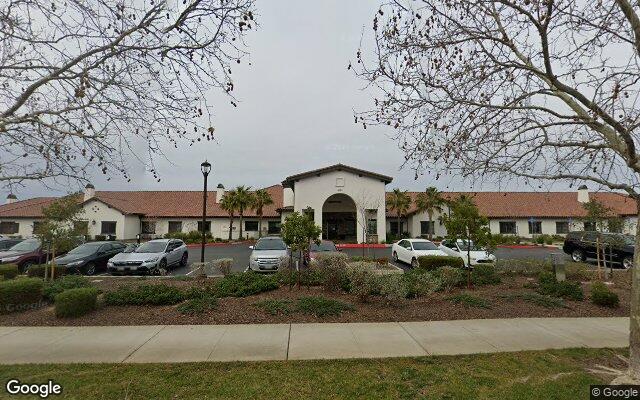
Other facilities in Sacramento County.
Other memory care facilities in Sacramento County with similar care offerings.
Facility Watch · Premium
Family reviews
No reviews yet — be the first to share your experience
Other memory care options nearby.
More options in neighboring cities
Licensed memory care in other cities within this county region — useful when your search radius crosses city limits.