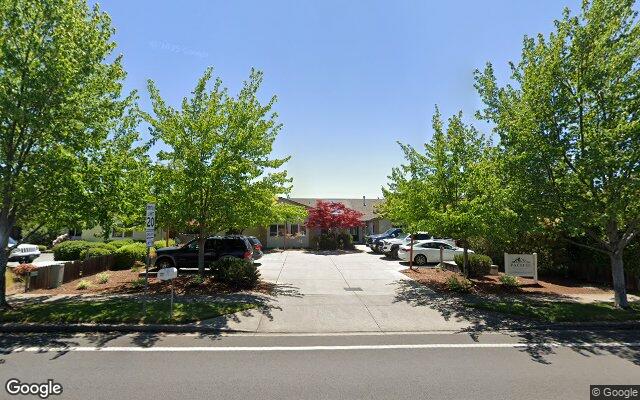
Roxy Ann Memory Community.

A medium home, reviewed on public record.
© Google Street View
Compared to 38 Oregon facilities with a similar number of beds.
ALF memory care · 36-month window. Higher percentile = better performance on inspection record. Source: Oregon Dept. of Human Services · Long-Term Care Licensing.
among peers to rank.
Rankings based on 36-month OR-DHS inspection data. Severity and frequency: fewer citations = higher percentile. Repeat rate: lower repeat citation share = higher percentile.
Citation history, plotted month by month.
13 deficiencies on record. Each bar is a month with a citation.
Finding distribution
13 total · 36 monthsScope × Severity (CMS A–L)
Every inspection visit, verbatim.
2 inspections in the public record, most recent first. Plain-language summaries open first — click into any row for the full citation text.
2025-09-25Annual Compliance VisitOR-cited · 12 findings
Plain-language summary
This facility's re-licensure inspection in September 2025 found multiple violations including damaged kitchen flooring, baseboards, and cabinets with exposed wood that cannot be properly cleaned; failure to maintain accurate service plans that reflect residents' current needs; failure to document and communicate changes in residents' conditions to nursing staff and all shifts; failure to carry out medication and treatment orders as prescribed; and inadequate staffing on the overnight shift to safely assist residents who need two staff members for transfers and activities of daily living. Staff acknowledged the kitchen surfaces needed repair.
Read full citation text (12)Hide full citation text
“Based on interview and record review, it was determined the facility failed to complete or update and review the acuity-based staffing tool (ABST) evaluation for each resident before a resident moved in and no less than quarterly at the same time the resident's service plan was updated for 2 of 2 sampled residents (#s 1 and 2) and multiple unsampled residents whose ABST records were reviewed. Findings include, but are not limited to: a. Resident 1 moved into the facility in 02/2025. His/her ABST was created on 03/19/25. The resident’s service plan was updated on 09/18/25. There was no documented evidence Resident 1’s ABST was updated at the same time as the resident’s service plan. b. Resident 2’s ABST was updated on 01/20/25. The resident’s service plan was updated on 08/15/25. There was no documented evidence Resident 2’s ABST was updated at the same time as the resident’s service plan. c. There were two unsampled residents listed on the facility’s ABST that were no longer at the facility. d. The facility’s newest admission had not been entered into the ABST as of 09/24/25. e. One unsampled resident, admitted on 02/05/25, and another unsampled resident, admitted on 03/14/25, were not added to the facility’s ABST until 03/19/25. f. Nine unsampled residents’ ABST had not been updated since 01/20/25. g. One unsampled resident’s ABST had not been updated since 06/22/22. The need to ensure residents’ ABST evaluations were completed prior to move-in and no less than quarterly at the same time the residents’ service plan was updated was discussed with Staff 1 (RCC/Administrator Assistant) on 09/24/25. She acknowledged the findings.”
“Based on interview and record review, it was determined the facility failed to ensure residents' MARs were accurate and included resident-specific parameters and instructions for PRN medications for 2 of 2 sampled residents (#s 1 and 2) whose MARs were reviewed. Findings include, but are not limited to:”
“Based on observation, record review, and interview, it was determined the facility failed to ensure flooring, baseboards, and cabinetry were in good repair in order for the surfaces to be cleanable in accordance with the Food Sanitation Rules, OAR 333-150-000. Findings include, but are not limited to: Observation of the main facility kitchen, dry food storage area, and lunch meal service on 09/24/25, from 10:07 am through 12:13 pm, revealed the following: * The flooring in the kitchen was observed to have deep scratches and gouges between the entrance and the food preparation table; * Water damage was observed in the flooring and the baseboards between the sink and the dishwasher; * Baseboards throughout the kitchen were observed to be cracked in the corners; * There was a hole in the drawer under the toaster and ice counter which had exposed wood; and * Two areas in the lower cupboards located to the right of the stove had gouges in the wood. The above areas were toured with Staff 2 (House/Kitchen Manager) on 09/24/25 and with Staff 1 (RCC/Administrator Assistant) on 09/25/25. Both acknowledged that the flooring, baseboards, and exposed wood were in need of repair or were uncleanable surfaces.”
“Based on the resident evaluation performed before move-in, an initial service plan must be developed before move-in that reflects the identified needs and preferences of the resident. (b) The initial service plan must be reviewed within 30-days of movein to ensure that any changes made to the plan during the initial 30- days, accurately reflect the resident's needs and preferences. (c) Staff must document and date adjustments or changes as applicable. (4) QUARTERLY SERVICE PLAN REQUIREMENTS. (a) Service plans must be completed quarterly after the resident moves into the facility. (b) The quarterly evaluation is the basis of the resident's quarterly service plan. (c) If the resident's service plan is revised and updated at the quarterly review, changes must be dated and initialed, and prior historical information must be maintained. This Rule is not met as evidenced by: Based on observation, interview, and record review it was determined the facility failed to ensure service plans were reflective of residents’ current needs and provided clear direction to staff for 2 of 2 sampled residents (#s 1 and 2) whose service plans were reviewed. Findings include, but are not limited to:”
“Based on interview and record review, it was determined the facility failed to ensure significant changes of condition were referred to the facility nurse, actions or interventions were determined, documented, and communicated to staff on each shift for residents who experienced changes of condition, and changes were monitored, with weekly progress noted through resolution, for 2 of 2 sampled residents (#s 1 and 2) who experienced changes of condition. Findings include, but are not limited to:”
“Based on interview and record review, it was determined the facility failed to ensure medication and treatment orders were carried out as prescribed for 2 of 2 sampled residents (#s 1 and 2) whose orders were reviewed. Findings include, but are not limited to:”
“based on acuity, complaint investigation or survey inspection.(e) Based on resident acuity and facility structural design there must be adequate direct care staff present at all times, to meet the fire safety evacuation standards as required by the fire authority or the Department.(f) The licensee is responsible for assuring that staffing is increased to compensate for the evaluated care and service needs of residents at move-in and for the changing physical or mental needs of the residents.(g) A minimum of two direct care staff must be scheduled and available at all times whenever a resident requires the assistance of two direct care staff for scheduled and unscheduled needs.(h) In facilities where residents are hosed in two or more detached buildings, or if a building has distinct and segregated areas, a designated caregiver must be awake and available in each building and each segregated area at all times.(i) Facilities must have a written, defined system to determine appropriate numbers of direct care staff and general staffing based on resident acuity and service needs. Such systems may be either manual or electronic.(A) Guidelines for systems must also consider physical elements of a building, use of technology if applicable and staff experience.(B) Facilities must be able to demonstrate how their staffing systems work. This Rule is not met as evidenced by: Based on interview and record review, it was determined the facility failed to ensure adequate staffing to meet fire safety and evacuation standards on the overnight shift, and a minimum of two care staff available whenever a resident required the assistance of two staff for scheduled and unscheduled needs for 1 of 1 sampled resident (# 2) and one unsampled resident. Findings include, but are not limited to: During the acuity interview on 09/23/25, the consensus was confirmed at 15 residents, with Resident 2 needing one- to two-person assistance for transfers and/or ADL cares and one unsampled resident needing two-person assistance with a mechanical lift for all transfers. The facility’s posted staffing plan and staffing schedule from 09/15/25 through 09/21/25 were reviewed. The following was identified: The posted staffing plan for the facility was as follows: * Day shift: 1 MT, 1 Universal Worker, and 1 Kitchen Staff/Universal Worker; * Evening shift: 1 MT, 1 Universal Worker, and 1 Kitchen Staff/Universal Worker; and * Night shift: 1 MT/Universal Worker. The need to ensure adequate staffing to meet the residents’ scheduled and unscheduled needs and fire safety and evacuation standards was discussed with Staff 1 (RCC/Administrator Assistant) on 09/24/25. Staff 1 increased the number of caregiving staff during the night shift from one to two.”
“Based on observation and interview, it was determined the facility failed to ensure each individual had privacy in his or her own unit for 2 of 2 sampled residents (#s 1 and 2) and multiple unsampled residents. Findings include, but are not limited to: An environmental walk-through of the MCC between 09/23/25 and 09/25/25 identified the following: * The resident units consisted of single and double occupancy (shared) units; * Each resident unit entrance door lacked a lockable lever-style handle; * Residents 1 and 2 resided in double occupancy rooms that had a shared bathroom, and three unsampled residents were noted to share a bathroom. The shared bathrooms did not have a locking mechanism on the door; and * Resident 1’s room lacked privacy if s/he received personal care while in the bed with their roommate present. In an interview on 09/25/25, Staff 1 (RCC/Administrator Assistant) confirmed four resident units were shared and there was no locking mechanism on the bathroom doors. The need to ensure privacy in individual resident units was reviewed with Staff 1 on 09/25/25. She acknowledged the findings.”
“based on a resident’s sexual orientation, gender identity, gender expression or human immunodeficiency virus status. (iii) The defined terms commonly associated with LGBTQIA2S+ individuals and human immunodeficiency virus status. (iv) Best practices for communicating with or about LGBTQIA2S+ residents and residents living with human immunodeficiency virus, including the use of an individual’s chosen name and pronouns. (v) A description of the health and social challenges historically experienced by LGBTQIA2S+ residents and residents living with human immunodeficiency virus, including discrimination when seeking or receiving care at care facilities and the demonstrated physical and mental health effects within the LGBTQIA2S+ community associated with such discrimination. (vi) Strategies to create a safe and affirming environment for LGBTQIA2S+ residents and residents living with human immunodeficiency virus, including suggested changes to care facility policies and procedures, forms, signage, communication between residents and their families, activities, in-house services and staff training. The Department-approved LGBTQIA2S+ trainings shall address the elements described in paragraph (6)(b) of this rule. This Rule is not met as evidenced by: Based on interview and record review, it was determined the facility failed to ensure pre-service orientation was completed prior to providing services to residents, including the Department-approved LGBTQIA2S+ course, for 3 of 3 newly hired staff (#s 4, 5, and 8) whose training records were reviewed. Findings include, but are not limited to: Refer to Z155. Refer to Z 155 OAR 411-054-0070 (3)(b)(A)(B)(C) Staffing Requirements and Training – Pre-service (3) PRE-SERVICE ORIENTATION FOR ALL EMPLOYEES. Prior to beginning their job responsibilities, all employees must complete orientation training regarding: (b) RESIDENTS’ RIGHTS. Residents' rights and the values of community-based care, including the Department-approved LGBTQIA2S+ trainings. (A) Effective December 31, 2024, all staff must have completed the required training. All new staff, hired on and after January 1, 2025, must complete the required training prior to beginning job responsibilities. (B) Facilities must select the LGBTQIA2S+ training to be used by the facility by either: (i) Choosing to use the standard Department-approved biennial LGBTQIA2S+ training, or (ii) Applying to the Department to request approval of a biennial LGBTQIA2S+ training to be provided by the facility. (C) ORS 441.116 requires all LGBTQIA2S+ trainings address: (i) Caring for LGBTQIA2S+ residents and residents living with human immunodeficiency virus. (ii) Preventing discrimination based on a resident’s sexual orientation, gender identity, gender expression or human immunodeficiency virus status. (iii) The defined terms commonly associated with LGBTQIA2S+ individuals and human immunodeficiency virus status. (iv) Best practices for communicating with or about LGBTQIA2S+ residents and residents living with human immunodeficiency virus, including the use of an individual’s chosen name and pronouns. (v) A description of the health and social challenges historically experienced by LGBTQIA2S+ residents and residents living with human immunodeficiency virus, including discrimination when seeking or receiving care at care facilities and the demonstrated physical and mental health effects within the LGBTQIA2S+ community associated with such discrimination. (vi) Strategies to create a safe and affirming environment for LGBTQIA2S+ residents and residents living with human immunodeficiency virus, including suggested changes to care facility policies and procedures, forms, signage, communication between residents and their families, activities, in-house services and staff training. The Department-approved LGBTQIA2S+ trainings shall address the elements described in paragraph (6)(b) of this rule. This Rule is not met as evidenced by: Based on interview and record review, it was determined the facility failed to ensure pre-service orientation was completed prior to providing services to residents, including the Department-approved LGBTQIA2S+ course, for 1 of 2 newly hired staff (# 5) whose training records were reviewed. Findings include, but are not limited to: Refer to Z155. Refer to Z155 OAR 411-054-0070 (3)(b)(A)(B)(C) Staffing Requirements and Training – Pre-service (3) PRE-SERVICE ORIENTATION FOR ALL EMPLOYEES. Prior to beginning their job responsibilities, all employees must complete orientation training regarding: (b) RESIDENTS’ RIGHTS. Residents' rights and the values of community-based care, including the Department-approved LGBTQIA2S+ trainings. (A) Effective December 31, 2024, all staff must have completed the required training. All new staff, hired on and after January 1, 2025, must complete the required training prior to beginning job responsibilities. (B) Facilities must select the LGBTQIA2S+ training to be used by the facility by either: (i) Choosing to use the standard Department-approved biennial LGBTQIA2S+ training, or (ii) Applying to the Department to request approval of a biennial LGBTQIA2S+ training to be provided by the facility. (C) ORS 441.116 requires all LGBTQIA2S+ trainings address: (i) Caring for LGBTQIA2S+ residents and residents living with human immunodeficiency virus. (ii) Preventing discrimination based on a resident’s sexual orientation, gender identity, gender expression or human immunodeficiency virus status. (iii) The defined terms commonly associated with LGBTQIA2S+ individuals and human immunodeficiency virus status. (iv) Best practices for communicating with or about LGBTQIA2S+ residents and residents living with human immunodeficiency virus, including the use of an individual’s chosen name and pronouns. (v) A description of the health and social challenges historically experienced by LGBTQIA2S+ residents and residents living with human immunodeficiency virus, including discrimination when seeking or receiving care at care facilities and the demonstrated physical and mental health effects within the LGBTQIA2S+ community associated with such discrimination. (vi) Strategies to create a safe and affirming environment for LGBTQIA2S+ residents and residents living with human immunodeficiency virus, including suggested changes to care facility policies and procedures, forms, signage, communication between residents and their families, activities, in-house services and staff training. The Department-approved LGBTQIA2S+ trainings shall address the elements described in paragraph (6)(b) of this rule. This Rule is not met as evidenced by:”
“Based on observation, interview, and record review, it was determined the facility failed to follow licensing rules for Residential Care and Assisted Living Facilities. Findings include, but are limited to: Refer to C240 and C360. Refer to C240 and C360 OAR 411-057-0140(2) Administration Compliance (2) The licensee of a memory care community must comply with both the licensing rules for the facility and Chapter 411, Division 57. This Rule is not met as evidenced by: Based on observation, interview, and record review, it was determined the facility failed to follow licensing rules for Residential Care and Assisted Living Facilities. Findings include, but are limited to: Refer to C240. Refer to C240 OAR 411-057-0140(2) Administration Compliance (2) The licensee of a memory care community must comply with both the licensing rules for the facility and Chapter 411, Division 57. This Rule is not met as evidenced by:”
“Based on interview and record review, it was determined the facility failed to ensure 3 of 3 newly hired direct care staff (#s 4, 5, and 8) completed all pre-service orientation and dementia training and demonstrated competency in all duties assigned within 30 days of hire; and 2 of 2 long-term staff (#s 3 and 7) failed to complete the required 16 hours of annual in-service training, which included six hours of dementia care topics and infectious disease training. Findings include, but are not limited to: Staff 1 (RCC/Administrator Assistant) provided the requested training records on 09/25/25. Survey reviewed the training records with Staff 1 on 09/25/25 at approximately 3:00 pm. The following was discussed: Training records for Staff 3 (MT), hired 08/22/23, Staff 4 (MT), hired 02/24/25, Staff 5 (MT/Universal Worker), hired 08/04/25, Staff 7 (Universal Worker), hired 06/02/23, and Staff 8 (Universal Worker), hired 08/18/25, were reviewed. a. Staff 4, 5, and 8 lacked documented evidence of the following pre-service orientation topics: * Resident rights and values in CBC care; * Abuse reporting requirements; * Fire safety and emergency procedures; * Approved LGBTQIA2S+ course; and * The use of supportive devices with restraining qualities in memory care communities. b. Additionally, Staff 4 and 5 lacked documented evidence of the following pre-service orientation topics: * Infectious disease prevention; * Approved Home and Community Based Services (HCBS) course; * All pre-service dementia topics prior to providing care and services for all staff, all additional pre-service training required for direct care staff prior to providing personal care, and all pre-service training required for direct care staff prior to independently providing care and services. c. There was no documented evidence Staff 4, 5, and 8 had demonstrated competency in all required areas within 30 days of hire, including the following: * Role of the service plan in providing individualized care; * Changes associated with normal aging; * Identification, documentation and reporting of changes of condition; and * Conditions that require assessment, treatment, observation and reporting. d. There was no documented evidence Staff 3 completed at least 16 hours of annual in-service training hours, which included a minimum of ten hours related to the provision of care in the Community Based Care (CBC) setting. e. There was no documented evidence Staff 7 completed at least 16 hours of annual in-service training hours, which included a minimum of six hours on dementia care topics, or the annual infectious disease training. The need to ensure direct care staff completed all pre-service orientation, pre-service dementia training, including the additional pre-service training, prior to performing any job duties or independently providing care, and demonstrated competency in all duties assigned within 30 days of hire, and to ensure long-term direct care staff completed 16 hours of annual in-service training, which included six hours of dementia care topics, and infectious disease with Staff 1 on 09/25/25. She acknowledged the findings. 1.Complete training audit under review to assure that all staff are trained per policy and OAR. All staff to be completed by the alleged compliance date. 2. Process: Hire, Onboarding with Orientation form and required pre-service trainings (Oregon Care Partners: Pre-Service Dementia, Infection control, Providing Inclusive Care, HCHB IBL) including CPR, First Aid,and Food Handlers, shadowing on the floor, demonstrated competencies, finish 30 day trainings. Administrator monitors staffing to assure compliance and trainings are completed. Annual Training is completed with a variety of methods including training at All-Staff (documented appropriate with trainer, time, and topic), assigned Relias Courses, and company provided training with certificates documenting topic, hours, and trainer. 3.The Administrator maintains the tracking spreadsheet to assure accuracy of training and within all required timeframes per policy and OAR. 4.Administrator OAR 411-057-0155(1-6) Staff Training Requirements (1) A memory care community must ensure staff who provide support to residents with dementia have a basic understanding and fundamental knowledge of the residents' emotional and unique health care needs prior to providing services to residents. The training requirements for staff who work in memory care communities are described in the following sections. (2) ALL STAFF TRAINING REQUIREMENTS. All staff who work in memory care communities licensed as residential care facilities or assisted living facilities must complete the following: (a) Orientation as required in OAR 411-054-0070(3) before performing any job duties. (b) Pre-service dementia care training as required before independently providing personal care or other services. The dementia care training must address these topics: (A) Education on the dementia disease process, including the progression of the disease, memory loss and psychiatric and behavioral symptoms. (B) Techniques for understanding, communicating and responding to distressful behavioral symptoms; including but not limited to, reducing the use of antipsychotic medications for non-standard uses when responding to distressful behavioral symptoms. (C) Strategies for addressing social needs of persons with dementia and engaging them with meaningful activities; (D) Information concerning specific aspects of dementia care and ensuring safety of residents with dementia including, but not limited to, how to: (i) Identify and address pain; (ii) Provide food and fluid; (iii) Prevent wandering and elopement; (iv) Use a person-centered approach. (c) Additional pre-service training topics that must be completed before independently providing personal care to residents: (A) Environmental factors that are important to resident ' s well-being (e.g. noise, staff interactions, lighting, room temperature, etc.); (B) Family support and the role the family may have in the care of the resident; (C) How to recognize behaviors that indicate a change in the resident ' s condition and report behaviors that require on-going assessment. (3) DIRECT CARE STAFF TRAINING REQUIREMENTS. Direct care staff must be directly supervised by a qualified staff person until they have successfully demonstrated satisfactory performance in any task assigned in the provision of individualized resident services. In addition to training required for all staff as described in paragraph (2): (a) Before independently providing personal care or other services to residents, direct care staff must complete training on: (A) How to provide personal care to a resident with dementia, including an orientation to the resident and the resident ' s service plan, as required in OAR 411-054-0070(4). (B) The use of supportive devices with restraining qualities in memory care communities. (b) Within 30 days after hire, direct care staff must complete training as outlined in OAR 411-054-0070(5). (c) Direct care staff who work in memory care communities licensed as residential care facilities or assisted living facilities must complete a total of 16 hours of in-service training annually. The six hours of annual dementia care training required pursuant to OAR 411-054-0070(6) may be included in the 16 hours of in-service training. Annual in-service hours required of each staff are due by the anniversary date of that person ' s hire. All completed trainings must be documented by the facility. (4) NURSING FACILITY STAFF. Staff who work in memory care communities licensed as nursing facilities must complete the following: (a) Orientation as outlined in OAR 411-086-0310, 42 CFR ? 483.95 (F 943). (b) Pre-service dementia care training as outlined in paragraphs (2)(b) and (c) and paragraph (3)(a) of this section. (c) A total of 16 hours of annual in-service traini”
“Based on observation, interview, and record review, it was determined the facility failed to follow licensing rules for Residential Care and Assisted Living Facilities. Findings include, but are not limited to: Refer to C260, C270, C303, C310, and C363. See C260, C270, C303, C310, C363 OAR 411-057-0160(2b) Compliance with Rules Health Care (b) Health care services provided in accordance with the licensing rules of the facility. This Rule is not met as evidenced by: Based on observation, interview, and record review, it was determined the facility failed to follow licensing rules for Residential Care and Assisted Living Facilities. Findings include, but are not limited to: Refer to C260, C270, C303, C310, and C363. OAR 411-057-0160(2b) Compliance with Rules Health Care (b) Health care services provided in accordance with the licensing rules of the facility. This Rule is not met as evidenced by: Based on observation, interview, and record review, it was determined the facility failed to follow licensing rules for Residential Care and Assisted Living Facilities. Findings include, but are not limited to: Refer to C310. See C310 OAR 411-057-0160(2b) Compliance with Rules Health Care (b) Health care services provided in accordance with the licensing rules of the facility. This Rule is not met as evidenced by:”
Read raw inspector notesClose inspector notes
Based on observation, record review, and interview, it was determined the facility failed to ensure flooring, baseboards, and cabinetry were in good repair in order for the surfaces to be cleanable in accordance with the Food Sanitation Rules, OAR 333-150-000. Findings include, but are not limited to: Observation of the main facility kitchen, dry food storage area, and lunch meal service on 09/24/25, from 10:07 am through 12:13 pm, revealed the following: * The flooring in the kitchen was observed to have deep scratches and gouges between the entrance and the food preparation table; * Water damage was observed in the flooring and the baseboards between the sink and the dishwasher; * Baseboards throughout the kitchen were observed to be cracked in the corners; * There was a hole in the drawer under the toaster and ice counter which had exposed wood; and * Two areas in the lower cupboards located to the right of the stove had gouges in the wood. The above areas were toured with Staff 2 (House/Kitchen Manager) on 09/24/25 and with Staff 1 (RCC/Administrator Assistant) on 09/25/25. Both acknowledged that the flooring, baseboards, and exposed wood were in need of repair or were uncleanable surfaces. Based on the resident evaluation performed before move-in, an initial service plan must be developed before move-in that reflects the identified needs and preferences of the resident. (b) The initial service plan must be reviewed within 30-days of movein to ensure that any changes made to the plan during the initial 30- days, accurately reflect the resident's needs and preferences. (c) Staff must document and date adjustments or changes as applicable. (4) QUARTERLY SERVICE PLAN REQUIREMENTS. (a) Service plans must be completed quarterly after the resident moves into the facility. (b) The quarterly evaluation is the basis of the resident's quarterly service plan. (c) If the resident's service plan is revised and updated at the quarterly review, changes must be dated and initialed, and prior historical information must be maintained. This Rule is not met as evidenced by: Based on observation, interview, and record review it was determined the facility failed to ensure service plans were reflective of residents’ current needs and provided clear direction to staff for 2 of 2 sampled residents (#s 1 and 2) whose service plans were reviewed. Findings include, but are not limited to: Based on interview and record review, it was determined the facility failed to ensure significant changes of condition were referred to the facility nurse, actions or interventions were determined, documented, and communicated to staff on each shift for residents who experienced changes of condition, and changes were monitored, with weekly progress noted through resolution, for 2 of 2 sampled residents (#s 1 and 2) who experienced changes of condition. Findings include, but are not limited to: Based on interview and record review, it was determined the facility failed to ensure medication and treatment orders were carried out as prescribed for 2 of 2 sampled residents (#s 1 and 2) whose orders were reviewed. Findings include, but are not limited to: Based on interview and record review, it was determined the facility failed to ensure residents' MARs were accurate and included resident-specific parameters and instructions for PRN medications for 2 of 2 sampled residents (#s 1 and 2) whose MARs were reviewed. Findings include, but are not limited to: based on acuity, complaint investigation or survey inspection.(e) Based on resident acuity and facility structural design there must be adequate direct care staff present at all times, to meet the fire safety evacuation standards as required by the fire authority or the Department.(f) The licensee is responsible for assuring that staffing is increased to compensate for the evaluated care and service needs of residents at move-in and for the changing physical or mental needs of the residents.(g) A minimum of two direct care staff must be scheduled and available at all times whenever a resident requires the assistance of two direct care staff for scheduled and unscheduled needs.(h) In facilities where residents are hosed in two or more detached buildings, or if a building has distinct and segregated areas, a designated caregiver must be awake and available in each building and each segregated area at all times.(i) Facilities must have a written, defined system to determine appropriate numbers of direct care staff and general staffing based on resident acuity and service needs. Such systems may be either manual or electronic.(A) Guidelines for systems must also consider physical elements of a building, use of technology if applicable and staff experience.(B) Facilities must be able to demonstrate how their staffing systems work. This Rule is not met as evidenced by: Based on interview and record review, it was determined the facility failed to ensure adequate staffing to meet fire safety and evacuation standards on the overnight shift, and a minimum of two care staff available whenever a resident required the assistance of two staff for scheduled and unscheduled needs for 1 of 1 sampled resident (# 2) and one unsampled resident. Findings include, but are not limited to: During the acuity interview on 09/23/25, the consensus was confirmed at 15 residents, with Resident 2 needing one- to two-person assistance for transfers and/or ADL cares and one unsampled resident needing two-person assistance with a mechanical lift for all transfers. The facility’s posted staffing plan and staffing schedule from 09/15/25 through 09/21/25 were reviewed. The following was identified: The posted staffing plan for the facility was as follows: * Day shift: 1 MT, 1 Universal Worker, and 1 Kitchen Staff/Universal Worker; * Evening shift: 1 MT, 1 Universal Worker, and 1 Kitchen Staff/Universal Worker; and * Night shift: 1 MT/Universal Worker. The need to ensure adequate staffing to meet the residents’ scheduled and unscheduled needs and fire safety and evacuation standards was discussed with Staff 1 (RCC/Administrator Assistant) on 09/24/25. Staff 1 increased the number of caregiving staff during the night shift from one to two. Based on interview and record review, it was determined the facility failed to complete or update and review the acuity-based staffing tool (ABST) evaluation for each resident before a resident moved in and no less than quarterly at the same time the resident's service plan was updated for 2 of 2 sampled residents (#s 1 and 2) and multiple unsampled residents whose ABST records were reviewed. Findings include, but are not limited to: a. Resident 1 moved into the facility in 02/2025. His/her ABST was created on 03/19/25. The resident’s service plan was updated on 09/18/25. There was no documented evidence Resident 1’s ABST was updated at the same time as the resident’s service plan. b. Resident 2’s ABST was updated on 01/20/25. The resident’s service plan was updated on 08/15/25. There was no documented evidence Resident 2’s ABST was updated at the same time as the resident’s service plan. c. There were two unsampled residents listed on the facility’s ABST that were no longer at the facility. d. The facility’s newest admission had not been entered into the ABST as of 09/24/25. e. One unsampled resident, admitted on 02/05/25, and another unsampled resident, admitted on 03/14/25, were not added to the facility’s ABST until 03/19/25. f. Nine unsampled residents’ ABST had not been updated since 01/20/25. g. One unsampled resident’s ABST had not been updated since 06/22/22. The need to ensure residents’ ABST evaluations were completed prior to move-in and no less than quarterly at the same time the residents’ service plan was updated was discussed with Staff 1 (RCC/Administrator Assistant) on 09/24/25. She acknowledged the findings. Based on observation and interview, it was determined the facility failed to ensure each individual had privacy in his or her own unit for 2 of 2 sampled residents (#s 1 and 2) and multiple unsampled residents. Findings include, but are not limited to: An environmental walk-through of the MCC between 09/23/25 and 09/25/25 identified the following: * The resident units consisted of single and double occupancy (shared) units; * Each resident unit entrance door lacked a lockable lever-style handle; * Residents 1 and 2 resided in double occupancy rooms that had a shared bathroom, and three unsampled residents were noted to share a bathroom. The shared bathrooms did not have a locking mechanism on the door; and * Resident 1’s room lacked privacy if s/he received personal care while in the bed with their roommate present. In an interview on 09/25/25, Staff 1 (RCC/Administrator Assistant) confirmed four resident units were shared and there was no locking mechanism on the bathroom doors. The need to ensure privacy in individual resident units was reviewed with Staff 1 on 09/25/25. She acknowledged the findings. based on a resident’s sexual orientation, gender identity, gender expression or human immunodeficiency virus status. (iii) The defined terms commonly associated with LGBTQIA2S+ individuals and human immunodeficiency virus status. (iv) Best practices for communicating with or about LGBTQIA2S+ residents and residents living with human immunodeficiency virus, including the use of an individual’s chosen name and pronouns. (v) A description of the health and social challenges historically experienced by LGBTQIA2S+ residents and residents living with human immunodeficiency virus, including discrimination when seeking or receiving care at care facilities and the demonstrated physical and mental health effects within the LGBTQIA2S+ community associated with such discrimination. (vi) Strategies to create a safe and affirming environment for LGBTQIA2S+ residents and residents living with human immunodeficiency virus, including suggested changes to care facility policies and procedures, forms, signage, communication between residents and their families, activities, in-house services and staff training. The Department-approved LGBTQIA2S+ trainings shall address the elements described in paragraph (6)(b) of this rule. This Rule is not met as evidenced by: Based on interview and record review, it was determined the facility failed to ensure pre-service orientation was completed prior to providing services to residents, including the Department-approved LGBTQIA2S+ course, for 3 of 3 newly hired staff (#s 4, 5, and 8) whose training records were reviewed. Findings include, but are not limited to: Refer to Z155. Refer to Z 155 OAR 411-054-0070 (3)(b)(A)(B)(C) Staffing Requirements and Training – Pre-service (3) PRE-SERVICE ORIENTATION FOR ALL EMPLOYEES. Prior to beginning their job responsibilities, all employees must complete orientation training regarding: (b) RESIDENTS’ RIGHTS. Residents' rights and the values of community-based care, including the Department-approved LGBTQIA2S+ trainings. (A) Effective December 31, 2024, all staff must have completed the required training. All new staff, hired on and after January 1, 2025, must complete the required training prior to beginning job responsibilities. (B) Facilities must select the LGBTQIA2S+ training to be used by the facility by either: (i) Choosing to use the standard Department-approved biennial LGBTQIA2S+ training, or (ii) Applying to the Department to request approval of a biennial LGBTQIA2S+ training to be provided by the facility. (C) ORS 441.116 requires all LGBTQIA2S+ trainings address: (i) Caring for LGBTQIA2S+ residents and residents living with human immunodeficiency virus. (ii) Preventing discrimination based on a resident’s sexual orientation, gender identity, gender expression or human immunodeficiency virus status. (iii) The defined terms commonly associated with LGBTQIA2S+ individuals and human immunodeficiency virus status. (iv) Best practices for communicating with or about LGBTQIA2S+ residents and residents living with human immunodeficiency virus, including the use of an individual’s chosen name and pronouns. (v) A description of the health and social challenges historically experienced by LGBTQIA2S+ residents and residents living with human immunodeficiency virus, including discrimination when seeking or receiving care at care facilities and the demonstrated physical and mental health effects within the LGBTQIA2S+ community associated with such discrimination. (vi) Strategies to create a safe and affirming environment for LGBTQIA2S+ residents and residents living with human immunodeficiency virus, including suggested changes to care facility policies and procedures, forms, signage, communication between residents and their families, activities, in-house services and staff training. The Department-approved LGBTQIA2S+ trainings shall address the elements described in paragraph (6)(b) of this rule. This Rule is not met as evidenced by: Based on interview and record review, it was determined the facility failed to ensure pre-service orientation was completed prior to providing services to residents, including the Department-approved LGBTQIA2S+ course, for 1 of 2 newly hired staff (# 5) whose training records were reviewed. Findings include, but are not limited to: Refer to Z155. Refer to Z155 OAR 411-054-0070 (3)(b)(A)(B)(C) Staffing Requirements and Training – Pre-service (3) PRE-SERVICE ORIENTATION FOR ALL EMPLOYEES. Prior to beginning their job responsibilities, all employees must complete orientation training regarding: (b) RESIDENTS’ RIGHTS. Residents' rights and the values of community-based care, including the Department-approved LGBTQIA2S+ trainings. (A) Effective December 31, 2024, all staff must have completed the required training. All new staff, hired on and after January 1, 2025, must complete the required training prior to beginning job responsibilities. (B) Facilities must select the LGBTQIA2S+ training to be used by the facility by either: (i) Choosing to use the standard Department-approved biennial LGBTQIA2S+ training, or (ii) Applying to the Department to request approval of a biennial LGBTQIA2S+ training to be provided by the facility. (C) ORS 441.116 requires all LGBTQIA2S+ trainings address: (i) Caring for LGBTQIA2S+ residents and residents living with human immunodeficiency virus. (ii) Preventing discrimination based on a resident’s sexual orientation, gender identity, gender expression or human immunodeficiency virus status. (iii) The defined terms commonly associated with LGBTQIA2S+ individuals and human immunodeficiency virus status. (iv) Best practices for communicating with or about LGBTQIA2S+ residents and residents living with human immunodeficiency virus, including the use of an individual’s chosen name and pronouns. (v) A description of the health and social challenges historically experienced by LGBTQIA2S+ residents and residents living with human immunodeficiency virus, including discrimination when seeking or receiving care at care facilities and the demonstrated physical and mental health effects within the LGBTQIA2S+ community associated with such discrimination. (vi) Strategies to create a safe and affirming environment for LGBTQIA2S+ residents and residents living with human immunodeficiency virus, including suggested changes to care facility policies and procedures, forms, signage, communication between residents and their families, activities, in-house services and staff training. The Department-approved LGBTQIA2S+ trainings shall address the elements described in paragraph (6)(b) of this rule. This Rule is not met as evidenced by: Based on observation, interview, and record review, it was determined the facility failed to follow licensing rules for Residential Care and Assisted Living Facilities. Findings include, but are limited to: Refer to C240 and C360. Refer to C240 and C360 OAR 411-057-0140(2) Administration Compliance (2) The licensee of a memory care community must comply with both the licensing rules for the facility and Chapter 411, Division 57. This Rule is not met as evidenced by: Based on observation, interview, and record review, it was determined the facility failed to follow licensing rules for Residential Care and Assisted Living Facilities. Findings include, but are limited to: Refer to C240. Refer to C240 OAR 411-057-0140(2) Administration Compliance (2) The licensee of a memory care community must comply with both the licensing rules for the facility and Chapter 411, Division 57. This Rule is not met as evidenced by: Based on interview and record review, it was determined the facility failed to ensure 3 of 3 newly hired direct care staff (#s 4, 5, and 8) completed all pre-service orientation and dementia training and demonstrated competency in all duties assigned within 30 days of hire; and 2 of 2 long-term staff (#s 3 and 7) failed to complete the required 16 hours of annual in-service training, which included six hours of dementia care topics and infectious disease training. Findings include, but are not limited to: Staff 1 (RCC/Administrator Assistant) provided the requested training records on 09/25/25. Survey reviewed the training records with Staff 1 on 09/25/25 at approximately 3:00 pm. The following was discussed: Training records for Staff 3 (MT), hired 08/22/23, Staff 4 (MT), hired 02/24/25, Staff 5 (MT/Universal Worker), hired 08/04/25, Staff 7 (Universal Worker), hired 06/02/23, and Staff 8 (Universal Worker), hired 08/18/25, were reviewed. a. Staff 4, 5, and 8 lacked documented evidence of the following pre-service orientation topics: * Resident rights and values in CBC care; * Abuse reporting requirements; * Fire safety and emergency procedures; * Approved LGBTQIA2S+ course; and * The use of supportive devices with restraining qualities in memory care communities. b. Additionally, Staff 4 and 5 lacked documented evidence of the following pre-service orientation topics: * Infectious disease prevention; * Approved Home and Community Based Services (HCBS) course; * All pre-service dementia topics prior to providing care and services for all staff, all additional pre-service training required for direct care staff prior to providing personal care, and all pre-service training required for direct care staff prior to independently providing care and services. c. There was no documented evidence Staff 4, 5, and 8 had demonstrated competency in all required areas within 30 days of hire, including the following: * Role of the service plan in providing individualized care; * Changes associated with normal aging; * Identification, documentation and reporting of changes of condition; and * Conditions that require assessment, treatment, observation and reporting. d. There was no documented evidence Staff 3 completed at least 16 hours of annual in-service training hours, which included a minimum of ten hours related to the provision of care in the Community Based Care (CBC) setting. e. There was no documented evidence Staff 7 completed at least 16 hours of annual in-service training hours, which included a minimum of six hours on dementia care topics, or the annual infectious disease training. The need to ensure direct care staff completed all pre-service orientation, pre-service dementia training, including the additional pre-service training, prior to performing any job duties or independently providing care, and demonstrated competency in all duties assigned within 30 days of hire, and to ensure long-term direct care staff completed 16 hours of annual in-service training, which included six hours of dementia care topics, and infectious disease with Staff 1 on 09/25/25. She acknowledged the findings. 1.Complete training audit under review to assure that all staff are trained per policy and OAR. All staff to be completed by the alleged compliance date. 2. Process: Hire, Onboarding with Orientation form and required pre-service trainings (Oregon Care Partners: Pre-Service Dementia, Infection control, Providing Inclusive Care, HCHB IBL) including CPR, First Aid,and Food Handlers, shadowing on the floor, demonstrated competencies, finish 30 day trainings. Administrator monitors staffing to assure compliance and trainings are completed. Annual Training is completed with a variety of methods including training at All-Staff (documented appropriate with trainer, time, and topic), assigned Relias Courses, and company provided training with certificates documenting topic, hours, and trainer. 3.The Administrator maintains the tracking spreadsheet to assure accuracy of training and within all required timeframes per policy and OAR. 4.Administrator OAR 411-057-0155(1-6) Staff Training Requirements (1) A memory care community must ensure staff who provide support to residents with dementia have a basic understanding and fundamental knowledge of the residents' emotional and unique health care needs prior to providing services to residents. The training requirements for staff who work in memory care communities are described in the following sections. (2) ALL STAFF TRAINING REQUIREMENTS. All staff who work in memory care communities licensed as residential care facilities or assisted living facilities must complete the following: (a) Orientation as required in OAR 411-054-0070(3) before performing any job duties. (b) Pre-service dementia care training as required before independently providing personal care or other services. The dementia care training must address these topics: (A) Education on the dementia disease process, including the progression of the disease, memory loss and psychiatric and behavioral symptoms. (B) Techniques for understanding, communicating and responding to distressful behavioral symptoms; including but not limited to, reducing the use of antipsychotic medications for non-standard uses when responding to distressful behavioral symptoms. (C) Strategies for addressing social needs of persons with dementia and engaging them with meaningful activities; (D) Information concerning specific aspects of dementia care and ensuring safety of residents with dementia including, but not limited to, how to: (i) Identify and address pain; (ii) Provide food and fluid; (iii) Prevent wandering and elopement; (iv) Use a person-centered approach. (c) Additional pre-service training topics that must be completed before independently providing personal care to residents: (A) Environmental factors that are important to resident ' s well-being (e.g. noise, staff interactions, lighting, room temperature, etc.); (B) Family support and the role the family may have in the care of the resident; (C) How to recognize behaviors that indicate a change in the resident ' s condition and report behaviors that require on-going assessment. (3) DIRECT CARE STAFF TRAINING REQUIREMENTS. Direct care staff must be directly supervised by a qualified staff person until they have successfully demonstrated satisfactory performance in any task assigned in the provision of individualized resident services. In addition to training required for all staff as described in paragraph (2): (a) Before independently providing personal care or other services to residents, direct care staff must complete training on: (A) How to provide personal care to a resident with dementia, including an orientation to the resident and the resident ' s service plan, as required in OAR 411-054-0070(4). (B) The use of supportive devices with restraining qualities in memory care communities. (b) Within 30 days after hire, direct care staff must complete training as outlined in OAR 411-054-0070(5). (c) Direct care staff who work in memory care communities licensed as residential care facilities or assisted living facilities must complete a total of 16 hours of in-service training annually. The six hours of annual dementia care training required pursuant to OAR 411-054-0070(6) may be included in the 16 hours of in-service training. Annual in-service hours required of each staff are due by the anniversary date of that person ' s hire. All completed trainings must be documented by the facility. (4) NURSING FACILITY STAFF. Staff who work in memory care communities licensed as nursing facilities must complete the following: (a) Orientation as outlined in OAR 411-086-0310, 42 CFR ? 483.95 (F 943). (b) Pre-service dementia care training as outlined in paragraphs (2)(b) and (c) and paragraph (3)(a) of this section. (c) A total of 16 hours of annual in-service traini Based on observation, interview, and record review, it was determined the facility failed to follow licensing rules for Residential Care and Assisted Living Facilities. Findings include, but are not limited to: Refer to C260, C270, C303, C310, and C363. See C260, C270, C303, C310, C363 OAR 411-057-0160(2b) Compliance with Rules Health Care (b) Health care services provided in accordance with the licensing rules of the facility. This Rule is not met as evidenced by: Based on observation, interview, and record review, it was determined the facility failed to follow licensing rules for Residential Care and Assisted Living Facilities. Findings include, but are not limited to: Refer to C260, C270, C303, C310, and C363. OAR 411-057-0160(2b) Compliance with Rules Health Care (b) Health care services provided in accordance with the licensing rules of the facility. This Rule is not met as evidenced by: Based on observation, interview, and record review, it was determined the facility failed to follow licensing rules for Residential Care and Assisted Living Facilities. Findings include, but are not limited to: Refer to C310. See C310 OAR 411-057-0160(2b) Compliance with Rules Health Care (b) Health care services provided in accordance with the licensing rules of the facility. This Rule is not met as evidenced by:
2024-08-01Annual Compliance VisitOR-cited · 1 finding
Plain-language summary
A state kitchen inspection conducted on August 1, 2024 found the facility in substantial compliance with Oregon rules governing meal service and food sanitation. No violations were identified.
Read full citation text (1)Hide full citation text
“The findings of the kitchen inspection, conducted 08/01/24, are documented in this report. It was determined the facility was in substantial compliance with the OARs 411-054-0030 for Residential Care and Assisted Living Facilities for Resident Services- Meals, and Oregon Health Service Food Sanitation Rules OARs 333-150-0000. The findings of the kitchen inspection, conducted 08/01/24, are documented in this report. It was determined the facility was in substantial compliance with the OARs 411-054-0030 for Residential Care and Assisted Living Facilities for Resident Services- Meals, and Oregon Health Service Food Sanitation Rules OARs 333-150-0000.”
Read raw inspector notesClose inspector notes
The findings of the kitchen inspection, conducted 08/01/24, are documented in this report. It was determined the facility was in substantial compliance with the OARs 411-054-0030 for Residential Care and Assisted Living Facilities for Resident Services- Meals, and Oregon Health Service Food Sanitation Rules OARs 333-150-0000. The findings of the kitchen inspection, conducted 08/01/24, are documented in this report. It was determined the facility was in substantial compliance with the OARs 411-054-0030 for Residential Care and Assisted Living Facilities for Resident Services- Meals, and Oregon Health Service Food Sanitation Rules OARs 333-150-0000.
2 older inspections from 2022 are not shown above.
Get the complete record, translated into plain language — emailed to you.
Other facilities in Jackson County.
Other memory care facilities in Jackson County with similar care offerings.


Facility Watch · Premium
Family reviews
No reviews yet — be the first to share your experience
Other memory care options nearby.
More options in neighboring cities
Licensed memory care in other cities within this county region — useful when your search radius crosses city limits.