Oswego Grove.

A medium home, reviewed on public record.
© Google Street View
Compared to 55 Oregon facilities with a similar number of beds.
ALF memory care · 36-month window. Higher percentile = better performance on inspection record. Source: Oregon Dept. of Human Services · Long-Term Care Licensing.
among peers to rank.
Rankings based on 36-month OR-DHS inspection data. Severity and frequency: fewer citations = higher percentile. Repeat rate: lower repeat citation share = higher percentile.
Citation history, plotted month by month.
28 deficiencies on record. Each bar is a month with a citation.
Finding distribution
28 total · 36 monthsScope × Severity (CMS A–L)
Every inspection visit, verbatim.
2 inspections in the public record, most recent first. Plain-language summaries open first — click into any row for the full citation text.
2025-09-12Annual Compliance VisitOR-cited · 25 findings
Plain-language summary
During a re-licensure inspection, the facility was found to have failed to investigate or report injuries of unknown cause and unwitnessed falls for one resident, including scratch marks on the resident's leg in August 2025 and a scrape in the genital area that same month, as well as multiple unwitnessed falls between June and September 2025, one of which resulted in rib fractures. The facility did not document investigations to rule out abuse or report these incidents to the local Seniors and People with Disabilities office as required until the inspector intervened on September 11, 2025. The resident passed away on October 9, 2025, and the facility has since implemented daily incident investigations, mandatory abuse reporting training for all staff, and posted abuse reporting resources throughout the facility.
Read full citation text (25)Hide full citation text
“Based on interview and record review, it was determined the facility failed to report injures of unknown cause to the local Seniors and People with Disabilities (SPD) office as suspected abuse unless an immediate facility investigation reasonably concluded and documented the injury was not the result of abuse, and failed to promptly investigate unwitnessed falls, for 1 of 1 sampled resident (# 2) who was reviewed for incidents which required investigations and/or reporting. Findings include, but are not limited to: Resident 2 was admitted to the facility in 06/2025 with diagnoses including vascular dementia. A review of the resident’s clinical record indicated the following: a. Progress notes identified the following injuries of unknown cause: * 08/05/25: “Scratch marks noted on right lower leg”; and * 08/18/25: “2/3 [centimeter scrape],” red in color with bloody drainage, was identified in the resident’s genital area. There was no documented evidence the facility had investigated the injuries to rule out abuse or reported the injures of unknown cause to the local SPD office as suspected abuse if abuse could not be ruled out. On 09/11/25 at 3:07 pm, Staff 1 (ED) confirmed the facility had not investigated the incidents. b. There was no documented evidence the facility investigated the following incidents: * 06/20/25: Unwitnessed, non-injury fall; * 08/08/25: Unwitnessed, non-injury fall; * 08/10/25: The resident was found on the floor and sent to the hospital for pain; and * 09/03/25: Staff assisted fall to a chair in Resident 2’s unit, family sent the resident to the ER, and s/he returned with a diagnosis of two “new” rib fractures. Survey requested the facility report the injuries of unknown cause and the two falls resulting in rib fractures to the local SPD office. On 09/11/25 at 3:50 pm, verification was provided to survey that the incidents were reported. The need to ensure the facility reported injures of unknown cause to the local SPD office as suspected abuse unless an immediate facility investigation reasonably concluded and documented the injury was not the result of abuse, and promptly investigate unwitnessed falls was discussed with Staff 1 and Staff 2 (RN) on 09/12/25 at 10:01 am. They acknowledged the findings. 1A. Resident #2: Incident Reports were completed for 08/05/2025 and 08/18/2025, with investigations conducted. Resident passed away on 10/09/2025. 1B. Resident #2: Incident Reports were completed for 06/20/2025, 08/08/2025, 08/10/2025, and 09/03/2025, with investigations conducted. Resident was admitted to hospice as of 09/16/2025 and passed away on 10/09/2025. 2A. All incidents will be investigated daily, with interventions reviewed and updated in each resident’s Service Plan as appropriate. This process will occur during daily Clinical Meetings to ensure timely follow-up and documentation. 2B. All staff have been instructed to complete the Elder Abuse Prevention, Investigation, and Reporting training through Oregon Care Partners by 10/31/2025. Completion will be verified and tracked by the Administrator or designee. 2C. The Abuse Reporting Hotline and Abuse Reporting Tree have been posted in multiple visible locations throughout the facility, including the staff break room, medication rooms, and twenty-four-hour communication binders, ensuring all staff have immediate access to reporting resources. 3. Incident Reports and Investigations will be reviewed daily at Clinical Meetings to verify timely follow-up, intervention implementation, and documentation accuracy. Additionally, all Incident Reports and Investigations will be reviewed at CQI (Continuous Quality Improvement) meetings monthly for 90 days. Upon successful and documented progress demonstrating sustained compliance, the review frequency will transition to quarterly CQI meetings thereafter. 4. Director of Health Services (DHS), Administrator, or Designee. OAR 411-054-0028 (1-3) Reporting & Investigating Abuse-Other Action (Amended 12/15/21)(1) The facility must have policies and procedures in place to assure the prevention and appropriate response to any incident. In the case of incidents of abuse, suspected abuse, or injury of unknown cause, policies and procedures must follow the requirements outlined below. In the case of incidents that are not abuse or injuries of unknown cause where abuse has been ruled out, the facility must have policies and procedures in place to respond appropriately, which may include such things as re-assessment, monitoring, or medication review. (2) ABUSE REPORTING. Abuse is prohibited. The facility employees, agents and licensee must not permit, aid, or engage in abuse of residents who are under their care. (a) STAFF REPORTING. All facility employees are required to immediately report abuse and suspected abuse to the local SPD office, or the local AAA, the facility administrator, or to the facility administrator's designee. (b) FACILITY REPORTING. The facility administrator, or designee, must immediately notify the local SPD office, or the local AAA, of any incident of abuse or suspected abuse, including events overheard or witnessed by observation. (c) LAW ENFORCEMENT AGENCY. The local law enforcement agency must be called first when the suspected abuse is believed to be a crime (e.g., rape, murder, assault, burglary, kidnapping, theft of controlled substances, etc.). (d) INJURY OF UNKNOWN CAUSE. Physical injury of unknown cause must be reported to the local SPD office, or the local AAA, as suspected abuse, unless an immediate facility investigation reasonably concludes and documents that the physical injury is not the result of abuse. (3) FACILITY INVESTIGATION. In addition to immediately reporting abuse or suspected abuse to SPD, AAA, or the law enforcement agency, the facility must promptly investigate all reports of abuse and suspected abuse and take measures necessary to protect residents and prevent the reoccurrence of abuse. Investigation of suspected abuse must document: (a) Time, date, place and individuals present; (b) Description of the event as reported; (c) Response of staff at the time of the event; (d) Follow-up action; and (e) Administrator's review. This Rule is not met as evidenced by:”
“Based on interview and record review, it was determined the facility failed to ensure information and interventions provided by on-site and off-site outside providers were communicated to staff and the resident’s service plan was adjusted if necessary for 1 of 2 sampled residents (# 2) who received on-site and off-site services. Findings include, but are not limited to: Resident 2 moved into the facility in 06/2025 with diagnoses including vascular dementia and a history of falls. The resident’s progress notes, which had outside provider documentation transcribed within them, dated 06/18/25 through 08/28/25, Outside Provider Summary Sheets, and Emergency Room (ER) discharge instructions, dated 07/06/25 and 09/03/25, were reviewed. Resident 2 was observed, and staff were interviewed. Staff were not informed of new interventions, and the service plan was not adjusted for the following: * 06/18/25: Home health PT - The resident “can transfer with walker [and one] person [minimum] assist”; * 07/06/25: ER discharge instructions provided information on aspiration precautions, when to return to the ER, when to notify the physician, information relating to pureed foods and thickened drinks, and instruction to record everything the resident ate and take the documentation to his/her healthcare provider; * 07/23/25: Home health RN noted the resident had low back pain and documented the pain got “worse with prolonged time in bed” but was “improved with frequent repositioning”; * 08/05/25: Home health RN documented “scratch marks noted on right lower leg”; * 08/07/25: Home health OT - Resident 2 was minimum assist “for toileting [and] functional ambulation [and] transfer. [Moderate] verbal cuing”; * 08/14/25: Home health OT - Maximum assistance “for toileting, [maximum] verbal cues, short sentences.” Provide range of motion “daily of [bi-lateral upper extremities]” relating to “shoulder flexion and abduction”; * 08/28/25: Home health OT – “Push off [wheelchair with] left hand.” The resident was “experiencing pain in [right upper extremities]”; and * 09/03/25: ER discharge instructions notified the facility of two “new non-displaced rib fractures.” The facility lacked documented evidence that staff were informed of new interventions, and Resident 2’s service plan had not been updated with any necessary changes. The need to ensure staff were informed of on-site and off-site provider information and interventions, with the service plan updated when necessary, was reviewed with Staff 1 (ED) and Staff 2 (RN) on 09/12/25 at 10:01 am. No additional documentation was provided. 1A. Resident #2 was admitted to hospice on September 16, 2025, and passed away on October 9, 2025. 1B. A new Outside Provider Communication System has been implemented to ensure timely coordination of care with hospice and other healthcare providers. All After Visit Summaries (AVS) and discharge instructions from emergency room visits have been reviewed, followed up on, and Service Plans updated accordingly to reflect current care needs and interventions. 2A. The facility has implemented a new Outside Provider Communication System to improve communication between the facility, hospice, and other external providers. All staff and outside providers have been trained on this new system to ensure consistent communication, timely follow-up, and proper documentation of all recommendations. All outside provider recommendations will be reviewed during daily Clinical Meetings to ensure that necessary updates and interventions are promptly incorporated into each resident’s plan of care. 2B. All After Visit Summaries (AVS) will be reviewed at daily Clinical Meetings, and any new interventions or recommendations will be added to the resident’s Service Plan as applicable. 3. All After Visit Summaries (AVS) will be reviewed daily during Clinical Meetings, reviewed at CQI (Continuous Quality Improvement) meetings monthly for 90 days, and then transitioned to quarterly reviews upon documented and sustained compliance. 4. Director of Health Services (DHS), Administrator, or Designee OAR 411-054-0045(2) Res Hlth Srvc: On- and Off-Site Health Srvc (2) ON-SITE AND OFF-SITE HEALTH SERVICES. The facility must assist residents in accessing health care services and benefits to which they are entitled from outside providers. When benefits are no longer available, or if the resident is not eligible for benefits, the facility must provide or coordinate the required services, as defined in facility disclosure information, for residents whose health status is stable and predictable. (a) On-site Health Services. The facility must coordinate on-site health services with outside service providers such as hospice, home health, or other privately paid supplemental health care providers, etc. (A) The facility management or licensed nurse must be notified of the services provided by the outside provider to ensure that staff are informed of new interventions, and that the service plan is adjusted if necessary, and reporting protocols are in place. (B) The facility nurse must review the resident's health related service plan changes made as a result of the provision of on-site health services noted in section (2)(a)(A) of this rule. (C) The facility must have policies to ensure that outside service providers leave written information in the facility that addresses the on-site services being provided to the resident and any clinical information necessary for facility staff to provide supplemental care. (b) Off-site Health Services. The facility must coordinate off-site health services for residents who cannot or choose not to self-manage their health services. (A) The facility must assist the resident by coordinating appointments, with outside providers, that are necessary to support the resident's health needs. (B) Transportation for medical purposes must be arranged or provided for by the facility. (C) Following a resident's visit to an outside medical provider, if information is obtained from said provider, it must be included in the resident's record. Adjustments to the resident's services and service plan must be made as applicable. (D) The facility must provide relevant information to the off-site provider and must have a protocol to facilitate the receipt of information from the provider. (c) The facility is exempt from the coordination of outside health services for residents who are capable and choose to independently arrange and manage their health care needs. This Rule is not met as evidenced by:”
“Based on interview and record review, it was determined the facility failed to ensure a move-in evaluation addressed all required elements, with updates and changes made as appropriate within the first 30 days, for 1 of 1 sampled resident (# 2) whose initial evaluation was reviewed, and the facility failed to ensure quarterly evaluations were completed and used as the basis of the quarterly service plan for 1 of 1 sampled resident (# 1) whose quarterly evaluations were reviewed. Findings include, but are not limited to:”
“Based on the resident evaluation performed before move-in, an initial service plan must be developed before move-in that reflects the identified needs and preferences of the resident. (b) The initial service plan must be reviewed within 30-days of movein to ensure that any changes made to the plan during the initial 30- days, accurately reflect the resident's needs and preferences. (c) Staff must document and date adjustments or changes as applicable. (4) QUARTERLY SERVICE PLAN REQUIREMENTS. (a) Service plans must be completed quarterly after the resident moves into the facility. (b) The quarterly evaluation is the basis of the resident's quarterly service plan. (c) If the resident's service plan is revised and updated at the quarterly review, changes must be dated and initialed, and prior historical information must be maintained. This Rule is not met as evidenced by: Based on observation, interview, and record review, it was determined the facility failed to ensure service plans were reflective of residents’ current needs, provided clear direction to staff, and were updated at least quarterly for 2 of 2 sampled residents (#s 1 and 2) whose service plans were reviewed. Findings include, but are not limited to:”
“Based on interview and record review, it was determined the facility failed to ensure service plans were developed by a Service Planning Team that included the resident, the resident's legal representative if applicable, any person of the resident's choice, the Administrator or designee, and at least one other staff person who was familiar with or who was going to provide services to the resident for 1 of 2 sampled residents (# 1). Findings include, but are not limited to: Resident 1 moved into the MCC in 12/2023 with diagnoses including Alzheimer’s disease. His/her most recent service plan, dated 01/27/25, lacked evidence that a Service Planning Team reviewed and participated in the development of the service plan. The need to ensure service plans were developed by a Service Planning Team was discussed with Staff 1 (ED) and Staff 2 (RN) on 09/12/25 at 1:56 pm. They acknowledged the findings.”
“Based on interview and record review, it was determined the facility failed to ensure actions or interventions were determined, documented, and communicated to staff on each shift for residents who experienced changes of condition, and failed to ensure changes were monitored, with weekly progress noted through resolution, for 1 of 2 sampled residents (#2) who experienced changes of condition. Findings include, but are not limited to: Resident 2 moved into the facility in 06/2025 with diagnoses including vascular dementia and a history of falls. The resident’s clinical record was reviewed. Resident 2 experienced the following changes of condition between 06/14/25 and 09/03/25: a. On 06/16/25: The facility was notified of a “lump in left breast” and imaging was scheduled on 07/23/25. There was no documented evidence the facility followed up on the result of the scan or monitored the lump through resolution. b. On 06/14/25, the resident was sent to the hospital for “uncontrollable pain.” The resident returned the following day with a physician’s order for hydrocodone. The facility received the medication on 06/16/25. There was no documented evidence the facility monitored the resident’s pain from when s/he returned to the facility and when the facility received the medication. c. On 08/18/25, staff documented a skin tear to the resident’s genitals. There was no documented evidence the skin issue was monitored through resolution. d. On 07/01/25, Resident 2 was identified as making inappropriate sexual comments towards staff and on 08/03/25 being combative with care. There was no documented evidence the facility determined and documented actions or interventions for the behaviors, communicated the actions or interventions to staff on each shift, and monitored the condition through resolution. e. A 07/06/25 hospital discharge instruction document identified the resident had a “coughing episode with concern of aspiration.” There was no documented evidence the condition had been monitored through resolution. f. On 07/17/25 staff noted a bruise in his/her “inner elbow.” There was no documented evidence the bruise was monitored through resolution. g. Multiple medications were not administered to the resident between 08/12/25 and 09/09/25, as they were not available at the facility. The medications were used to treat pain, blood pressure, depression, and edema. There was no documented evidence the facility monitored the resident for missing those medications through resolution. h. On 08/05/25, the home health RN noted, “Scratch marks” Resident 2’s right lower leg. There was no documented evidence the scratches were monitored through resolution. i. On 08/15/25, the resident reported to staff that s/he fell and had “smacked” his/her head on a chair and hurt his/her “back and head.” There was no documented evidence the facility monitored Resident 2 for latent injuries or increased pain. j. On 09/03/25, staff were assisting Resident 2 with a transfer when s/he “told [the caregiver] I can do it alone and [s/he] threw [him/herself] towards the chair. [The caregiver] stopped [him/her] and slowly let [him/her] sit in [his/her] chair on [his/her] knees.” Later that same day, the resident’s family sent Resident 2 to the ER. The resident returned with a diagnosis of two “new” rib fractures. There was no documented evidence the facility determined and documented any actions or interventions for the new fractures, communicated the actions or interventions to staff on each shift, or monitored the condition through resolution. The need to ensure actions or interventions were determined, documented, and communicated to staff on all shifts for changes of condition and those actions or interventions were monitored for effectiveness, with weekly progress noted in the resident record until the condition resolved, was discussed with Staff 1 (ED) and Staff 2 (RN) on 09/12/25 at 10:01 am. They acknowledged the findings. 1A. Resident #2 has passed away as of 10/9/2025 1B. Resident #2 was enrolled in hospice on 9/16/2025, and passed away on 10/9/2025. 1C. Resident #2’s skin tear on the genitals fully resolved prior to passing on 10/9/2025. 1D. Resident #2 has passed away as of 10/9/2025. 1E. Resident #2 was on hospice as of 9/16/2025, and aspiration risk was monitored through hospice until end of life. Resident #2 passed away on 10/9/2025. 1F. Resident #2’s bruise on the inner elbow fully resolved prior to passing on 10/9/2025. 1G. Resident #2 was on hospice, and hospice managed all medications (previously managed by the VA). Resident #2 passed away on 10/9/2025. 1H. Resident #2’s scratch marks on the right lower leg fully resolved before his passing on 10/9/2025. 1I. Incident Report was completed for the event that occurred on 8/15/2025. 1J. Incident Report was completed for the incident that occurred on 9/3/2025. APS was notified on September 11, 2025, regarding the rib fracture. A Change of Condition was completed for both the hospice admission and the identification of two new rib fractures. 2A. Facility staff have been trained to follow up on pending imaging results every 48–72 hours until results are obtained. All follow-up efforts will be documented in resident progress notes and/or alert charting. 2B. Staff have been trained to use the 24-Hour Report and Alert Monitoring System whenever residents return from the hospital or start new medications. Residents placed on alert will be charted on each shift until the alert is resolved or discontinued by the Registered Nurse. 2C. Staff have been instructed to complete an Incident Report for all skin issues. A Licensed Nurse will monitor and document on all skin concerns weekly. 2D. A new Behavior Monitoring System has been implemented. Staff have been trained on documentation procedures, and behavior outcomes will be communicated with the resident’s physician and/or hospice for further intervention as needed. 2E. Staff have been trained to use the 24-Hour Report and Alert Monitoring System for all hospital returns. After-Visit Summaries (AVS) will be reviewed by a Licensed Nurse during daily clinical meetings. 2F. Staff have been instructed to complete an Incident Report for all skin issues. A Licensed Nurse will monitor these issues weekly, and all Incident Reports will be reviewed daily during clinical meetings. 2G. A monthly audit process has been implemented to verify that all medications (contracted and non-contracted) are in stock and reordered timely. Medication Technicians must notify the Administrator when any medication supply is three days or less. If a resident misses a dose, they will be placed on alert charting for ongoing monitoring until resolved. 2H. Staff have been instructed to complete an Incident Report for all skin issues. Licensed Nurses will continue weekly monitoring and documentation, and all Incident Reports will be reviewed daily during clinical meetings. 2I. Staff have been instructed to complete an Incident Report for any reported or suspected falls. Residents reporting falls or injuries will be placed on alert charting for monitoring of latent injuries and increased pain. 2J. After-Visit Summaries (AVS) will be reviewed daily during clinical meetings. Temporary Service Plans (TSP) and Change of Condition (COC) forms will be completed as appropriate. Residents will remain on alert charting until resolved. 3. Daily at Clinical Meetings to verify timely follow-up, and documentation accuracy. It will also be reviewed at CQI (Continuous Quality Improvement) meetings monthly for 90 days. Upon successful and documented progress demonstrating sustained compliance, the review frequency will transition to quarterly CQI meetings thereafter. 4. Director of Health Services (DHS), Administrator, or Designee. OAR 411-054-0040 (1-2) Change of Condition and Monitoring (1) CHANGE OF CONDITION. These rules define a resident's change of condition as eithe”
“Based on interview and record review, it was determined the facility failed to ensure medication and treatment orders were carried out as prescribed for 2 of 2 sampled residents (#s 1 and 2) whose orders were reviewed. Findings include, but are not limited to:”
“Based on interview and record review, it was determined the facility failed to ensure residents' MARs were accurate and included resident-specific parameters and instructions for PRN medications for 1 of 2 sampled residents (# 2) whose MARs were reviewed. Findings include, but are not limited to: Resident 2 moved into the facility in 06/2025 with diagnoses including vascular dementia. The resident's 08/01/25 through 09/09/25 MARs and physician's orders were reviewed and identified the following: a. Resident 2 had multiple PRN medications for the same diagnoses. * Pain: - Acetaminophen; - Diclofenac gel; - Hydrocodone; and - Oxycodone. * Constipation: - Bisacodyl suppository; and - Miralax. * Dry eyes: - Carboxymethylcellulose sodium ophthalmic solution; and - Lubricating ophthalmic ointment. The MAR lacked resident-specific parameters and instructions, including the sequential order of administration for multiple PRN medications used to treat the same conditions. On 09/11/25 at approximately 3:10 pm, Staff 7 (MT) reported the directions of which medication to administer in which order was located in the electronic MAR system. However, when she viewed the PRNs for Resident 2 in the computer, Staff 7 verified there were no instructions to staff for the order in which the PRNs were to be administered. b. The parameters to administer the bisacodyl suppository were to “use third after Miralax.” There were only two PRN medications listed on the resident’s MAR to treat constipation. c. There were no staff initials to indicate if the scheduled medications were administered on 09/05/25: * Mirtazapine (for mood); * Rosuvastatin calcium (for cholesterol); * Tamsulosin (for prostate); * Apixaban (for blood clot prevention); and * Fluticasone-salmeterol (for asthma). The need to ensure MARs were accurate and included resident-specific parameters for PRN medications was discussed with Staff 1 (ED) and Staff 2 (RN) on 09/12/25 at 10:01 am. They acknowledged the findings. 1A. Resident #2’s Medication Administration Records (MARs) have been reviewed, and all ordered parameters have been added as required. As of 9/22/2025, Resident #2 bridged over to a new hospice, and all medication except pain medication was discontinued. Resident #2 passed away on 10/9/2025. 1B. Resident #2 was on hospice services as of 9/16/2025, and all bowel protocol orders were under the direction and managed by hospice. The MAR was updated accordingly to reflect that transition. Resident #2 passed away on 10/9/2025. 1C. The Medication Technicians (Med Techs) have been counseled and retrained on the importance of accurate documentation of administered medications in the MAR/TAR to ensure regulatory compliance and continuity of care. 2A. Medication Recaps have been completed for all residents, with all physician orders reviewed. Parameters have been added for all PRN medications, and a complete Electronic MAR (eMAR) review was conducted to verify that all PRN parameters were transcribed accurately per physician orders (POs). 2B. Standing Orders for PRN Bowel Protocols have been reviewed and updated. Staff have been trained on proper implementation and documentation. The protocol has also been placed in the 24-hour report book for easy reference and ongoing staff education. 2C. Off-going and oncoming Med Techs will complete an audit at each shift change to ensure there are no gaps or omissions in the MARs or TARs. These reviews will also be discussed and verified during daily Clinical Meetings. 2D. An audit has been completed to confirm that all MARs are accurate and include resident-specific parameters for all PRN medications. Any discrepancies identified were corrected immediately. 3. MAR and TAR documentation accuracy will be reviewed daily at Clinical Meetings and audited at every shift change to ensure ongoing compliance. Findings and continued progress will be reviewed at CQI (Continuous Quality Improvement) meetings monthly for 90 days, and will transition to quarterly reviews upon documented sustained compliance. 4. Medication Technicians, Director of Health Services (DHS), Administrator, or Designee. OAR 411-054-0055 (2) Systems: Medication Administration (2) MEDICATION ADMINISTRATION. An accurate Medication Administration Record (MAR) must be kept of all medications, including over-the-counter medications that are ordered by a legally recognized prescriber and are administered by the facility.(a) Documentation of the MAR must be completed using one of the following processes. An alternative process may be used only with a written exception from the Department.(A) The MAR may be signed as the medications are set-up or poured. Medications must not be set-up in advance for more than one administration time. If a medicine cup or other individual container is used to set-up the medications, it must be placed in a closed compartment labeled with the resident's name. Changes to the MAR that occur after the medication is delivered, must be documented by the same staff person who administered the medication.(B) The facility may choose to sign the MAR after the medication is administered to a specific resident and prior to the next resident-specific medication or treatment.(b) MEDICATION RECORD. At minimum, the medication record for each resident that the facility administers medications to, must include:(A) Current month, day and year.(B) Name of medications, reason for use, dosage, route and date and time given.(C) Any medication specific instructions, if applicable (e.g., significant side effects, time sensitive dosage, when to call the prescriber or nurse).(D) Resident allergies and sensitivities, if any.(E) Resident specific parameters and instructions for p.r.n. medications.(F) Initials of the person administering the medication. This Rule is not met as evidenced by:”
“Based on interview and record review, it was determined the facility failed to complete an acuity-based staffing tool (ABST) that accurately captured care time and care elements that staff were providing to each resident as outlined in each individual service plan for 1 of 2 sampled residents (# 1) whose ABST was reviewed. Findings include, but are not limited to: Resident 1 moved into the MCC in 12/2023 with diagnoses including Alzheimer’s disease. The resident was identified during the acuity interview on 09/10/25 as needing full assistance with ADL care, including two-person transfers and incontinence care, and was on hospice services. The current service plan, dated 01/27/25, Interim Service Plans, and the resident’s corresponding ABST individual minutes were reviewed, interviews with staff were conducted, and observations were made during the survey. The following was identified: Observations made from 09/10/25 through 09/12/25 showed the resident had bilateral contractures of the legs, arms, and hands, was bedfast and in a geriatric chair while out of bed, required repositioning while in the geriatric chair, and required assistance for all meals, hydration, and snacks throughout the day. Observation of lunch meal assistance on 09/10/25, from 12:00 pm to12:45 pm, and on 09/11/25, from 11:45 am to 12:23 pm, showed the resident required one-to-one meal assistance and received a moderately thickened diet. During an interview on 09/10/25 at 12:38 pm, Staff 9 (CG) reported the resident typically took 45 minutes to eat lunch. S/he also required assistance with snacks and hydration throughout the day. During an interview on 09/10/25 at 1:18 pm, Staff 11 (CG), reported the resident “had safety checks minimum every two hours; however, because the resident was on hospice services, we [caregivers] are checking on [the resident] more frequently when [s/he] is in bed.” Review of the current service plan, dated 01/27/25, revealed staff were instructed to provide safety checks four times per shift, as well as on an as-needed basis, to anticipate his/her care needs. The resident's care time and care elements were not reflective in the following areas: * Safety Checks; * Monitoring physical conditions or symptoms; * Providing meal assistance; * Ambulation and escorting to meals and activities; and * Repositioning in bed or chair. The need to ensure the facility ABST accurately captured care time and care elements that staff were providing was discussed with Staff 1 (ED) and Staff 2 (RN) on 09/12/25 at 11:28 am. They acknowledged the findings. 1A. The Service Plan for Resident #1 has been revised and updated to ensure it accurately reflects the care time and care elements being provided by staff. Then the ABST is reflective of those changes. 1B. Resident #2 has passed away as of 10/9/2025. 1C. The Service Plan for all residents have been revised and updated to ensure it accurately reflects the care time and care elements being provided by staff. Then the ABST is reflective of those changes. 2. At each resident’s quarterly review (or with changes of condition), the Service Plan and Acuity-Based Staffing Tool (ABST) will be reviewed and updated to ensure they accurately capture the care time and care elements required for each resident. This process will verify that the ABST continues to reflect current resident needs and staffing levels appropriately. 3. The ABST report will be printed monthly and reviewed by the CQI (Continuous Quality Improvement) Team to ensure accuracy, completeness, and alignment with resident care plans and staff assignments. Any discrepancies identified during CQI review will be corrected promptly, and findings will be documented for ongoing compliance monitoring. 4. Director of Health Services (DHS), Administrator or Designee. OAR 411-054-0037 (1)(b-g) Acuity Based Staffing Tool - ABST Time (1) DEVELOP AND MAINTAIN ACUITY-BASED STAFFING (b) Accurately capture care time and care elements that staff are providing to each resident as outlined in each individual service plan. Established care time must be resident specific, rather than a predetermined average. (c) Develop a staffing plan for each shift, that meets the scheduled and unscheduled needs of all residents. (d) Develop ABST reports and posted staffing plans that reflect distinct and segregated areas as outlined in OAR 411-054-0070(1). (e) If applicable, determine ABST time for residents on a Specific Needs Settings Contract and residents not on a Specific Needs Setting Contract to build posted staffing plan as outlined in this rule. (f) Develop written policies and procedures to accurately and consistently implement the ABST. The policy must explain how a facility evaluates and accounts for both scheduled and unscheduled resident needs. (g) Provide the relevant ABST information for a specific resident if requested by the Department, that specific resident, that specific resident’s legal representative, or the Long-Term Care Ombudsman. This Rule is not met as evidenced by:”
“Based on interview and record review, it was determined the facility failed to ensure the acuity-based staffing tool (ABST) was completed and/or updated and reviewed before a resident moved in, with changes of condition, and/or no less than quarterly at the same time the resident’s service plan was updated for 2 of 2 sampled residents (#s 1 and 2) and multiple unsampled residents whose ABST updates were reviewed. Findings include, but are not limited to: On 09/09/25 the facility provided the ABST Entrance Questionnaire and the corresponding documentation that was requested. The following was identified: The residents’ ABST updates were reviewed on 09/09/25 and the following was noted: a. Resident 1’s ABST was not updated quarterly. b. Resident 2 had no information in the facility’s ABST. c. Multiple unsampled residents had their ABSTs updated on 03/25/25. This did not account for any significant changes of condition or quarterly updates at the same time the residents’ service plan was reviewed. d. One unsampled resident had information in the facility’s ABST but was no longer at the facility. The need to ensure residents’ data in the ABST was entered prior to move-in, updated with changes of condition, and updated no less than quarterly when the service plan was updated was discussed with Staff 1 (ED) and Staff 2 (RN) on 09/12/25 at 10:01 am. They acknowledged findings. 1A. Resident #1's ABST time has been updated. 1B. Resident #2 has passed away as of 10/9/2025 1C. The ABST tool has been updated for all residents within the facility. 1D. When the ABST was reviewed, no residents were found listed who no longer reside within the community. 2. At each resident’s quarterly review, the Service Plan and Acuity-Based Staffing Tool (ABST) will be reviewed and updated to confirm that care time and care elements required for each resident are captured accurately. This process ensures the ABST consistently reflects current resident needs and staffing requirements. 3. The ABST report will be printed monthly and provided to the CQI (Continuous Quality Improvement) Team to review for accuracy. Any discrepancies identified will be corrected promptly, and findings will be documented for ongoing compliance tracking. 4. Administrator or Designee OAR 411-054-0037 (4-6) Acuity Based Staffing Tool - Updates & Staffing Plan (4) FREQUENCY OF UPDATES. Facilities must complete or update and review the ABST evaluation for each resident according to the following schedule. (a) Before a resident moves in. (b) Whenever there is a significant change of condition as defined in OAR 411-054-0040(1)(b). (c) No less than quarterly at the same time the resident’s service plan is updated as required by OAR 411-054-0034. (5) DEVELOP AND MAINTAIN UPDATED POSTED STAFFING PLAN. Each facility should use the results of an ABST to develop and routinely update the facility’s posted staffing plan. The staffing plan must outline the staffing numbers required to meet the scheduled and unscheduled needs of all residents in the facility, for each shift. The ABST and staffing plan must be reviewed at the frequency required in paragraph (4) of this rule. The facility must review the following and ensure accuracy between the posted staffing plan and ABST: (a) The total ABST care time required for the individual care elements as referenced in paragraph (3) of this rule. (b) Staffing plan must account for unscheduled care needs. (c) Documentation of consistently staffing to meet or exceed the posted staffing plan 24 hours a day, seven days a week. (d) The staffing requirements outlined in OAR 411-054-0070(1). (e) Any other applicable factors to be considered. (e.g., disruptions to normal facility operations.) (f) Time for paid or unpaid staff meal breaks must be accounted for and should not be included in the total scheduled staff time per shift. (g) Distinct posted staffing plans for segregated areas as outlined in OAR 411-054-0070(1) to meet the scheduled and unscheduled needs of residents who reside in each segregated area. (h) The staffing needs required under the Specific Needs Contracts, if applicable. (6) ABST REPORTING OF SPECIFIC NEEDS CONTRACTS AND EXCEPTIONAL PAYMENTS. Staffing required by a Specific Needs Contract (Contract), as described in OAR chapter 411, division 027, must be included in a facility’s ABST. (a) If all residents within the facility are receiving service through a Contract: (A) The facility’s staffing plan must include the number of staff required by the Contract and additional staff time, if required to meet the scheduled and unscheduled needs of the residents. (B) If the ABST staffing analysis indicates numbers higher than the Contract, the facility must staff to the numbers indicated by the ABST. (b) If certain residents within the facility are served under Contract, and other residents are not served by a Contract: (A) The facility must maintain a posted staffing plan that includes the staffing required for residents served by the Contract as well as the staffing required for residents not served by the Contract. (B) The facility must prepare two distinct ABST reports: one for residents served by the Contract and the other for residents not served by the Contract. (C) If the ABST indicates higher staffing numbers than the Contract for residents who are served by the Contract, the facility must staff to numbers indicated by the ABST. (c) If the facility has any residents funded by an exceptional payment, as provided in OAR 411-027-0050, that must be included in the ABST and the facility must staff to the greater of the exception or the ABST. This Rule is not met as evidenced by:”
“Based on interview and record review, it was determined the facility failed to ensure 3 of 4 direct care staff (#s 6, 10, and 14) demonstrated satisfactory performance in First Aid and abdominal thrust within 30 days of hire. Findings include, but are not limited to: The facility's training records were requested on 09/10/25 and reviewed with Staff 1 (ED) on 09/11/25 at 1:56 pm. There was no documented evidence Staff 6 (CG), hired 02/04/25, Staff 10 (CG), hired 02/10/25, and Staff 14 (CG), hired 03/13/25, demonstrated competency in First Aid and abdominal thrust training within 30 days of hire. The need to ensure direct care staff demonstrated satisfactory performance in all job duties within 30 days of hire was discussed with Staff 1 on 09/11/25 at 1:56 pm. She acknowledged the findings.”
“Based on interview and record review, it was determined the facility failed to conduct fire drills per the Oregon Fire Code (OFC) and to instruct staff in fire and life safety topics on alternate months from fire drills. Findings include, but are not limited to: Facility fire drill and fire and life safety records from 03/2025 to 08/2025 were provided by the MCC and reviewed with Staff 1 (ED) and Staff 4 (Maintenance Director) on 09/11/25 at 10:45 am. The facility’s fire drill records lacked the following documentation: * Documented life safety training for staff on alternate months of the fire drills; * Escape route used; * Problems encountered and comments relating to residents who resisted or failed to participate in the drills; * Number of occupants evacuated and/or relocated to the point of safety; and * Evidence alternate routes were used during fire drills. The need to ensure fire drills were conducted per the OFC and staff were trained in fire and life safety procedures on alternate months from fire drills was discussed with Staff 1 and Staff 4 on 09/11/25 at 10:45 am. They acknowledged the findings. 1A. A fire drill was held on 9/25/2025, to ensure staff competency in emergency procedures and evacuation protocols. 1B. Life Safety Education was provided to staff on 10/10/2025. 2. The Fire Drill Log Template has been revised to include all required OAR elements, including: • Designated section for escape routes used • Number of occupants evacuated or relocated • Problems/comments section for documentation of issues or observations • Verification of alternate routes tested Fire drills will be conducted every other month using the updated template. Beginning in October 2025, Life Safety Education will be provided to staff every other month, alternating with scheduled fire drills to ensure ongoing competency and compliance with fire safety regulations. 3. The Administrator will review fire drill reports and Life Safety Education records monthly to verify full completion, accuracy, and compliance with OAR requirements. Any identified deficiencies will be corrected promptly and documented. 4.Maintenance Supervisor and Administrator or Designee OAR 411-054-0090 (1-2) Fire and Life Safety: Safety (1) FIRE DRILLS. All fire drills shall be conducted according to the Oregon Fire Code (OFC). (a) Unannounced fire drills must be conducted and recorded every other month at different times of the day, evening, and night shifts. (b) Fire and life safety instruction to staff must be provided on alternate months. (c) The Fire Authority may develop an alternative fire drill plan for the facility. Any such plan must be submitted to the Department. (d) A written fire drill record must be kept to document fire drills that include: (A) Date and time of day; (B) Location of simulated fire origin; (C) The escape route used; (D) Problems encountered and comments relating to residents who resisted or failed to participate in the drills; (E) Evacuation time period needed; (F) Staff members on duty and participating; and (G) Number of occupants evacuated. (e) Alternate exit routes must be used during fire drills to react to varying potential fire origin points. (f) The evacuation capability of the residents and staff is a function of both the ability of the residents to evacuate and the assistance provided by the staff. (g) Staff must provide fire evacuation assistance to residents from the building to a designated point of safety as determined by the Fire Authority having jurisdiction. Points of safety may include, outside the building, through a horizontal exit, or other areas as determined by the Fire Authority having jurisdiction. (h) The fire alarm system shall be activated during each fire drill, unless otherwise directed by the Fire Authority having jurisdiction. (2) If the facility is unable to meet the applicable evacuation level, the facility must make an immediate effort to make changes to ensure the evacuation standard is met. Changes must include, but not be limited to: (a) Increasing staff levels, (b) Changing staff assignments, (c) Requesting change in resident rooms, and (d) Arranging for special equipment. After making necessary changes, if the facility fails to meet the applicable evacuation level, the facility must issue an involuntary move-out notice to the residents in accordance with OAR 411-054-0080. This Rule is not met as evidenced by:”
“Based on interview and record review, it was determined the facility failed to ensure residents were instructed on general safety procedures, evacuation methods, responsibilities during fire drills, and designated meeting places inside or outside the building within 24 hours of admission and to re-instruct residents on fire and life safety at least annually, with a written record of the content of the training sessions and the residents attending, per the Oregon Fire Code (OFC). Findings include, but are not limited to: Facility fire drill and fire and life safety records from 03/2025 to 08/2025 were provided by the MCC and reviewed with Staff 1 (ED) and Staff 4 (Maintenance Director) on 09/11/25 at 10:45 am. During an interview with Staff 1 and Staff 4 on 09/11/25 at 10:45 am, staff confirmed the facility did not have a system in place to train residents within 24 hours of move-in and annually thereafter. The need to ensure residents were instructed on general safety procedures, evacuation methods, responsibilities during fire drills, and designated meeting places inside or outside the building within 24 hours of admission and to re-instruct residents on fire and life safety at least annually, with a written record of the content of the training sessions and the residents attending, was discussed with Staff 1 and Staff 4 on 09/11/25 at 10:45 am. They acknowledged the findings. 1A. Maintenance Supervisor or Designee will hold a resident safety meeting by 11/11/2025 to provide education on: • Fire safety and general safety procedures • Evacuation methods and responsibilities during fire drills • Designated meeting areas outside the building or within fire-safe zones in the event of an actual emergency Residents will also be educated on the monthly fire drills conducted on different shifts and their responsibility to participate. Additionally, the Administrator or Resident Care Coordinator (RCC) will review emergency procedures with each new admission. 1B. A Fire and Life Safety Resident Training Log has been developed to document the following: • Resident name • Date of move-in • Date of initial fire and life safety training (within 24 hours) • Annual retraining date • Staff signature verifying completion 2. The resident safety education will be incorporated into the Admission Welcome Packet, ensuring that all new residents receive the required safety training within 24 hours of admission. This process will be documented on the Admission Checklist, confirming that the education was completed and acknowledged by the resident. Annual retraining will be scheduled and documented during each resident’s annual service plan review. 3A. Meeting minutes, attendance sheets, and signatures will be submitted to CQI (Continuous Quality Improvement) following each resident fire and life safety meeting. 3B. The CQI Team will review documentation to identify any trends, gaps, or areas for improvement, and initiate a Performance Improvement Plan (PIP) if necessary. 3C. The Administrator will audit all new admission checklists monthly to ensure each new resident received fire and life safety education within 24 hours of move-in. Audit results will be submitted to CQI for review at the following meeting. 4. Maintenance Supervisor or Designee: Responsible for scheduling, leading, documenting, and maintaining compliance with resident fire and life safety training. Administrator or Designee: Responsible for ensuring the training log, admission packet, and checklists are complete, accurate, and compliant with OAR requirements, and that all residents receive fire and life safety education within 24 hours of admission. OAR 411-054-0090 (5) Fire and Life Safety: Training for Residents (5) TRAINING FOR RESIDENTS. Residents must be instructed about the facility's fire and life safety procedures per OFC. (a) Each resident must be instructed within 24 hours of admission and re-instructed, at least annually, in general safety procedures, evacuation methods, responsibilities during fire drills, and designated meeting places outside the building or within the fire safe area in the event of an actual fire. This requirement does not apply to residents whose mental capability does not allow for following such instruction. (b) A written record of fire safety training, including content of the training sessions and the residents attending, must be kept. This Rule is not met as evidenced by:”
“Based on observation and interview, it was determined the facility failed to ensure the RCF courtyard grounds were kept orderly, free of litter and refuse, and garbage was stored in covered refuse containers. Findings include, but are not limited to: During an environmental walk-through of the facility grounds, including the memory care courtyard, on 09/09/25 through 09/12/25 the following was identified: * An incontinence brief and sanitation wipes on the ground; * Various pieces of litter; * Broken water fountain; and * Tree overgrowth which impeded the walking path. The need to ensure the facility’s exterior environment was kept clean and in good repair was discussed with and shown to Staff 1 (ED) and Staff 4 (Maintenance Director) on 09/11/25 at 10:00 am. They acknowledged the findings. 1A. On 9/10/2025 all litter, incontience products, and sanitation wipes were promptly removed from the courtyard and disposed of. 1B. The broken water fountain was also disposed of. 1C. The tree was trimmed on 9/10/2025 to ensure safe and clear access throughout the walking path. 2. A weekly Environmental Inspection Checklist has been implemented for the Memory Care courtyard to ensure the area remains clean, well-maintained, and safe for residents at all times. This checklist will include inspection points for cleanliness, trip hazards, furniture condition, vegetation, and accessibility to promote a consistent and safe outdoor environment. 3. The Administrator or Designee will review the Environmental Checklist weekly for two (2) months, and monthly thereafter, to ensure continued compliance and prompt correction of any identified issues. Findings and any corrective actions taken will be documented and reviewed during CQI (Continuous Quality Improvement) meetings to monitor for trends and verify sustained improvement. 4. Administrator or Designee OAR 411-054-0200 (3) General Building Exterior (3) GENERAL BUILDING EXTERIOR.(a) All exterior pathways and accesses to the RCF common-use areas, entrance, and exit ways must be made of hard, smooth material, be accessible, and maintained in good repair.(b) A RCF must take measures to prevent the entry of rodents, flies, mosquitoes, and other insects. There must be locked storage for all poisons, chemicals, rodenticides, and other toxic materials. All materials must be properly labeled.(c) RCF grounds must be kept orderly and free of litter and refuse. Garbage must be stored in covered refuse containers.(d) As described in OAR 411, division 057, memory care communities licensed as a RCF must be located on the ground floor. A CF cannot be endorsed as a memory care community.(e) A RCF must provide storage for all maintenance equipment, including yard maintenance tools, if not provided by a third-party contract.(f) A RCF must provide an accessible outdoor recreation area. The outdoor recreation area must be available to all residents. Lighting must be equal to a minimum of five foot candles. Memory Care Communities must provide residents with direct access to a secure outdoor recreation area as described in OAR chapter 411, division 057.(g) Outdoor perimeter fencing may not be secured to prevent exit unless the RCF has written approval from the Department for an exception or the RCF is in compliance with OAR chapter 411, division 057 (Memory Care Communities) or OAR 309-019-0100 through 309-019-0220.(h) A RCF must have an entry and exit drive to and from the main building entrance that allows for a vehicle to pick up and drop off residents and mail deliveries without the need for vehicles to back up. This Rule is not met as evidenced by:”
“Based on observation and interview, it was determined the facility failed to ensure all interior and exterior materials, surfaces, and equipment necessary for the health, safety, and comfort of the resident were kept clean and in good repair. Findings include, but are not limited to: The MCC was observed to have two areas, which were named Fern Hollow and Apple Valley. The following was identified during an environmental walk through of the facility’s interior and exterior environment on 09/09/25 through 09/12/25: Interior - Fern Hollow and Apple Valley: * Multiple resident unit wardrobes supplied by the MCC were gouged and/or had worn finishing; * Multiple gouges on doors and door frames to resident units, entrance doors to the MCC, and exterior doors leading to the courtyard; and * Carpet throughout was stained in multiple areas including resident corridor in 200 and 300 halls, both TV areas, and surrounding both kitchenettes. Exterior MCC Courtyard accessible from both units: * Wooden benches and chairs in the courtyard were worn and rough to the touch; and * Wooden benches and chair pillows and cushions were stained. The need to ensure the facility’s interior and exterior were kept clean and in good repair was discussed with and shown to Staff 1 (ED) and Staff 4 (Maintenance Director) on 09/11/25 at 10:00 am. They acknowledged the findings. 1A. Resident wardrobes will be replaced to ensure they are in good condition, safe, and contribute to a homelike environment. 1B. All damaged doors and doorframes will be repaired, patched, and repainted to maintain the building in good repair and ensure safety and appearance standards are met. 1C. The carpets have been cleaned throughout the facility to restore cleanliness and improve the overall condition of the flooring. 1D. A professional carpet cleaning company will be scheduled to come out and complete a deep extraction and clean the carpets to ensure thorough sanitation and long-term maintenance of flooring surfaces. 1E. The outdoor furniture has been disposed of and will be replaced with furuniture of sufficent weight in the Spring of 2026. 2. The Administrator or Designee will complete a monthly Environmental Inspection Checklist for three (3) months, and quarterly thereafter, to ensure that all furnishings, flooring, and interior finishes remain in good repair and meet environmental and safety standards. The results of these inspections will be reviewed during CQI (Continuous Quality Improvement) meetings to identify any trends, ensure timely corrective action, and maintain ongoing compliance with OAR requirements. 3. Environmental inspections will occur monthly for three (3) months, and quarterly thereafter, to verify continued compliance and effectiveness of corrective measures. 4. Administrator or Designee OAR 411-054-0200 (4)(d-i) Doors, Walls, Elevators, Odors (d) INTERIOR DOORS. Lever-type door handles must be provided on all doors used by residents.(e) EXIT DOORS. Exit doors may not include locks that delay evacuation except as specified by the building codes. Such locks may not be installed except with written approval of the Department.(A) Exit doors may not include locks that prevent evacuation.(B) If an electronic code must be entered to use an exit door that code must be clearly posted for residents, visitors, and staff use.(f) WALLS AND CEILINGS. Walls and ceilings must be cleanable in kitchen, laundry, and bathing areas. Kitchen walls must be finished smooth per OAR 333-150-0000 (Food Sanitation Rules).(g) ELEVATORS. A RCF with residents on more than one floor must provide at least one elevator that meets Oregon Elevator Specialty Code (OESC) requirements.(h) The interior of the facility must be free from unpleasant odors.(i) All interior and exterior materials and surfaces (e.g., floors, walls, roofs, ceilings, windows, and furniture) and all equipment necessary for the health, safety, and comfort of the resident will be kept clean and in good repair. This Rule is not met as evidenced by:”
“Based on observation and interview, it was determined the facility failed to ensure resident unit doors were lockable with a lever-style handle, residents had a lockable storage space for the safekeeping of a resident's small valuable items and funds, and to ensure resident wardrobes were a minimum volume of 64 cubic feet for each resident. Findings include, but are not limited to: During an environmental walk through of the facility, which included resident units, on 09/09/25 through 09/12/25, the following was identified: * Entrance doors lacked a lockable, lever-style handle; * Units lacked lockable storage space; and * Units lacked a wardrobe that was a minimum volume of 64 cubic feet. During an interview on 09/11/25 at 10:45 am, Staff 1 (ED) and Staff 4 (Maintenance Director) confirmed the wardrobe was used in each resident unit and was supplied by the MCC. Staff 4 measured the cubic foot volume of a wooden wardrobe in room 307-A, which was identical in size to the wardrobes in other resident units. Staff 4 reported the wardrobes were 6 feet tall x 3.5 feet wide x 2 feet deep, or 42 cubic feet. Survey requested documentation for an approved waiver for the required 64 cubic foot for storage space. Staff 1 reported she was not aware of an approved waiver. The need to ensure each resident unit had a lockable entrance with a lever-style handle, a lockable storage space and resident wardrobes were a minimum volume of 64 cubic feet for each resident was discussed with Staff 1 and Staff 4 on 09/11/25 at 10:45 am. They acknowledged the findings. 1A. On 9/11/2025, the Maintenance Supervisor ordered new door handles and locks that include levered handles with single-action release mechanisms. Installation will be completed by 11/11/2025. 1B. Lockable storage boxes have been ordered for each resident apartment to ensure compliance with OAR requirements for secure personal storage. 1C. An exception request has been submitted to DHS to request that the required 64 cubic feet of wardrobe space per resident include the additional storage capacity provided by other furniture items currently in use. If the exception request is denied, wardrobes that meet the 64-cubic-foot requirement will be purchased and installed. 2. All apartment entrance doors will be equipped with a locking mechanism featuring a single-action release and levered handle. Lockable storage boxes will be installed in every apartment, and each resident will have adequate wardrobe space in accordance with OAR requirements. All staff will be trained to immediately report any missing or damaged lockable handles, wardrobes, or storage boxes to ensure prompt repair or replacement. 3. The Administrator or Designee will conduct quarterly environmental audits to verify that each resident apartment remains in compliance with OAR requirements related to lockable doors, lever handles, lockable storage, and wardrobe capacity. Findings will be reviewed during CQI (Continuous Quality Improvement) meetings, and any deficiencies identified will result in immediate corrective action. 4. Maintenance Supervisor and Administrator or Designee OAR 411-054-0200 (5) Resident Units (5) RESIDENT UNITS. Resident units may be limited to a bedroom only, with bathroom facilities centrally located off common corridors. Each resident unit shall be limited to not more than two residents.(a) Resident units must have a lockable door with lever type handles, effective 01/15/2017. This applies to all existing and new construction.(b) For bedroom units, the door must open to an indoor, temperature controlled common-use area or common corridor. Residents may not enter a room through another resident's bedroom.(c) Resident units must include a minimum of 80 square feet per resident, exclusive of closets, vestibules, and bathroom facilities and allow for a minimum of three feet between beds;(d) All resident bedrooms must be accessible for individuals with disabilities and meet the requirements of the building codes. Adaptable units are not acceptable.(e) A lockable storage space (e.g., drawer, cabinet, or closet) must be provided for the safekeeping of a resident's small valuable items and funds. Both the administrator and resident may have keys.(f) WARDROBE CLOSET. A separate wardrobe closet must be provided for each resident's clothing and personal belongings. Resident wardrobe and storage space must total a minimum volume of 64 cubic feet for each resident. The rod must be adjustable for height or fixed for reach ranges per building codes. In calculating useable space closet height may not exceed eight feet and a depth of two feet.(g) WINDOWS.(A) Each sleeping and living unit must have an exterior window that has an area at least one-tenth of the floor area of the room. A CF must have at least one exterior window with a minimum size of 8 square feet per resident.(B) Unit windows must be equipped with curtains or blinds for privacy and control of sunlight.(C) Operable windows must be designed to prevent accidental falls when sill heights are lower than 36 inches and above the first floor.(h) RESIDENT UNIT BATHROOMS. If resident bathrooms are provided within a resident unit, the bathroom must be a separate room and include a toilet, hand wash sink, mirror, towel bar, and storage for toiletry items. The bathrooms must be accessible for individuals who use wheelchairs.(i) UNIT KITCHENS. If cooking facilities are provided in resident units, cooking appliances must be readily removable or disconnect-able and the RCF must have and carry out a written safety policy regarding resident-use and nonuse. A microwave is considered a cooking appliance. This Rule is not met as evidenced by:”
“Based on observation and interview, it was determined the facility failed to ensure hot water temperatures in residents' units were maintained within a range of 110 to 120 degrees F. Findings include, but are not limited to: During an environmental walk through of the MCC on 09/09/25 through 09/11/25 the following was identified: * The MCC was separated by two areas, named Fern Hollow and Apple Valley; and * Water temperatures were measured in multiple resident units in Fern Hollow, including #s 304, 306, 307, and 308. The temperatures varied from 75.5 F. to 106.4 F. On 09/11/25 at 10:45 am, Staff 4 (Maintenance Director) stated the resident units in Fern Hollow were furthest from the hot water source and he was aware of the variances in water temperatures. Survey observed Staff 4 take the water temperature in room 307, confirming the temperature was 105.5 F. and not within the range of 110 to 120 degrees F. The need to ensure water temperature in residents' units were maintained within a range of 110 to 120 degrees F was discussed with and shown to Staff 1 (ED) and Staff 4 on 09/11/25 at 10:45 am. They acknowledged the findings.”
“Based on observation and interview, it was determined the facility failed to ensure each individual had privacy in his or her own unit for 2 of 2 sampled residents (#s 1 and 2) and multiple unsampled residents. Findings include, but are not limited to: An environmental walk-through of the MCC between 09/09/25 and 09/12/25 identified the following: * The resident units consisted of single and double occupancy (shared) units; * Each resident unit entrance door lacked a lockable lever-style handle; and * Residents 1 and 2 resided in double occupancy rooms that had a shared bathroom, and multiple unsampled residents were noted to share a bathroom. The shared bathrooms had sliding pocket doors without a locking mechanism. In an interview on 09/11/25 at 10:45 am, Staff 1 (ED) and Staff 4 (Maintenance Director) confirmed all of the resident unit doors and bathroom doors lacked locking mechanisms. The need to ensure privacy in individual resident units was reviewed with Staff 1 and Staff 4 on 09/11/25 at 10:45 am. They acknowledged the findings.”
“Based on observation and interview, it was determined the facility failed to ensure residents who lived in the MCC had entrance doors lockable by the individual, with the individual and only appropriate staff having a key to access the unit. Findings include, but are not limited to: Observations made during the survey from 09/09/25 through 09/12/25 identified all resident units lacked lockable lever style entrance doors. During an interview on 09/10/25 at 12:08 pm, Staff 1 (ED) confirmed that there were no locks on the doors leading into the resident units. Therefore, no keys were provided. The need to ensure resident unit entrance doors were lockable by the individual, with the individual and only appropriate staff having a key to access the unit, was reviewed with Staff 1 on 09/10/25 at 12:08 pm and Staff 2 (RN) on 09/12/25 at 1:00 pm. They acknowledged the findings.”
“based on a resident’s sexual orientation, gender identity, gender expression or human immunodeficiency virus status. (iii) The defined terms commonly associated with LGBTQIA2S+ individuals and human immunodeficiency virus status. (iv) Best practices for communicating with or about LGBTQIA2S+ residents and residents living with human immunodeficiency virus, including the use of an individual’s chosen name and pronouns. (v) A description of the health and social challenges historically experienced by LGBTQIA2S+ residents and residents living with human immunodeficiency virus, including discrimination when seeking or receiving care at care facilities and the demonstrated physical and mental health effects within the LGBTQIA2S+ community associated with such discrimination. (vi) Strategies to create a safe and affirming environment for LGBTQIA2S+ residents and residents living with human immunodeficiency virus, including suggested changes to care facility policies and procedures, forms, signage, communication between residents and their families, activities, in-house services and staff training. The Department-approved LGBTQIA2S+ trainings shall address the elements described in paragraph (6)(b) of this rule. This Rule is not met as evidenced by: Based on interview and record review, it was determined the facility failed to ensure pre-service orientation was completed prior to providing services to residents, including the Department-approved LGBTQIA2S+ course, for 2 of 4 newly hired staff (#s 13 and 14) whose training records were reviewed. Findings include, but are not limited to: Refer to: Z155. Please refer to the Plan of Correction for Tag Z155. OAR 411-054-0070 (3)(b)(A)(B)(C) Staffing Requirements and Training – Pre-service (3) PRE-SERVICE ORIENTATION FOR ALL EMPLOYEES. Prior to beginning their job responsibilities, all employees must complete orientation training regarding: (b) RESIDENTS’ RIGHTS. Residents' rights and the values of community-based care, including the Department-approved LGBTQIA2S+ trainings. (A) Effective December 31, 2024, all staff must have completed the required training. All new staff, hired on and after January 1, 2025, must complete the required training prior to beginning job responsibilities. (B) Facilities must select the LGBTQIA2S+ training to be used by the facility by either: (i) Choosing to use the standard Department-approved biennial LGBTQIA2S+ training, or (ii) Applying to the Department to request approval of a biennial LGBTQIA2S+ training to be provided by the facility. (C) ORS 441.116 requires all LGBTQIA2S+ trainings address: (i) Caring for LGBTQIA2S+ residents and residents living with human immunodeficiency virus. (ii) Preventing discrimination based on a resident’s sexual orientation, gender identity, gender expression or human immunodeficiency virus status. (iii) The defined terms commonly associated with LGBTQIA2S+ individuals and human immunodeficiency virus status. (iv) Best practices for communicating with or about LGBTQIA2S+ residents and residents living with human immunodeficiency virus, including the use of an individual’s chosen name and pronouns. (v) A description of the health and social challenges historically experienced by LGBTQIA2S+ residents and residents living with human immunodeficiency virus, including discrimination when seeking or receiving care at care facilities and the demonstrated physical and mental health effects within the LGBTQIA2S+ community associated with such discrimination. (vi) Strategies to create a safe and affirming environment for LGBTQIA2S+ residents and residents living with human immunodeficiency virus, including suggested changes to care facility policies and procedures, forms, signage, communication between residents and their families, activities, in-house services and staff training. The Department-approved LGBTQIA2S+ trainings shall address the elements described in paragraph (6)(b) of this rule. This Rule is not met as evidenced by:”
“Based on observation, interview, and record review, it was determined the facility failed to follow licensing rules for Residential Care and Assisted Living Facilities. Findings include, but are not limited to: Refer to C231, C372, C420, C422, C510, C513, C515, and C545. Please refer to the Plan of Correction for Tags: C231, C372, C420, C422, C510, C513, C515, and C545. OAR 411-057-0140(2) Administration Compliance (2) The licensee of a memory care community must comply with both the licensing rules for the facility and Chapter 411, Division 57. This Rule is not met as evidenced by:”
“Based on interview and record review, it was determined the facility failed to ensure 4 of 4 newly hired direct care staff (#s 6, 10, 13, and 14) completed all pre-service orientation and dementia training and demonstrated competency in all duties assigned within 30 days of hire; and 2 of 3 long-term staff (#s 12 and 17) failed to complete the required 16 hours of annual in-service training, which included six hours of dementia care topics, infectious disease, and Home and Community Based Care (HCBS) training. Findings include, but are not limited to: Staff 1 (ED) provided the requested training records on 09/11/25 at 12:00 pm. Survey reviewed the training records with Staff 1 on 09/11/25 at 1:56 pm. The following was discussed: Training records for Staff 6 (MT), hired 02/04/25, Staff 10 (CG), hired 02/10/25, Staff 12 (CG), hired 09/15/22, Staff 13 (CG), hired 04/11/25, Staff 14 (CG), hired 03/13/25, and Staff 17 (MT), hired 06/27/19, were reviewed. a. Staff 6 and 10 lacked documented evidence any pre-service orientation topics were completed prior to preforming job duties. * Staff 6 and 10 lacked documented evidence pre-service dementia training, including the following courses were completed: - Environmental factors that are important to a resident’s well-being; - Family support and the role the family may have in the care of the resident; - How to provide personal care to a resident with dementia, including an orientation to the resident’s service plan; and - Use of supportive devices with restraining qualities in memory care communities. * Staff 13 lacked documented evidence of the following pre-service orientation: - Resident rights and values in CBC care; - Fire safety and emergency procedures; - Written job description; - Infectious disease prevention; and - Approved LGBTQIA2S+ course. * Staff 14 lacked documented evidence of the following pre-service orientation: - Resident rights and values in CBC care; - Abuse reporting requirements; - Written job description; - Infectious disease prevention; and - Approved LGBTQIA2S+ course. b. There was no documented evidence Staff 6, 10, 13, and 14 had demonstrated competency in all required areas within 30 days of hire, including the following: * Role of the service plan in providing individualized care; * Providing assistance with ADL’s; * Changes associated with normal aging; * Identification, documentation and reporting of changes of condition; * Conditions that require assessment, treatment, observation and reporting; and * General food safety, serving and sanitation. Additionally, Staff 6 lacked documented competency with medication and treatment administration. During an interview with Staff 1 on 09/11/25 at 1:56 pm, survey requested Staff 6 be removed from the medication cart until documented competency was demonstrated. Staff 1 acknowledged she understood, and stated Staff 6 would not pass medications or treatments without documented competency. c. There was no documented evidence Staff 12 and 17 completed at least 16 hours of annual in-service training hours, which included a minimum of six hours dementia care topics, annual infectious disease training, and HCBS training. The need to ensure direct care staff completed all pre-service orientation, pre-service dementia training, including the additional pre-service training, prior to performing any job duties or independently providing care, and demonstrated competency in all duties assigned within 30 days of hire, and to ensure long-term direct care staff completed 16 hours of annual in-service training, which included six hours of dementia care topics, infectious disease, and HCBS training, was discussed with Staff 1 on 09/11/25 at 1:56 pm and Staff 2 (RN) on 09/12/25 at 1:00 pm. They acknowledged the findings. 1A. All new hires will be required to complete and document all pre-service orientation training prior to working independently with residents. 1B. Staff #6 and #10 will complete all required pre-service orientation topics, and documentation will be maintained in their personnel files. 1C. All staff identified (Staff #6, #10, #13, and #14) have completed competency evaluations in all required areas, and documentation has been added to their employee files. 1D. Ongoing staff education will include monthly in-services, supplemented by webinars and computer-based training modules, providing a minimum of 16 hours of annual training, which includes at least 6 hours in dementia care topics. 1E. All current staff will complete pre-service orientation, dementia training, and demonstrate competency. 2A. All staff will complete pre-service orientation tasks, dementia training, and competency verification by November 10, 2025. 2B. All newly hired staff will complete the same requirements prior to starting work on the floor. The facility will ensure completion of all pre-service orientation tasks and maintain a signed training checklist in each employee file prior to scheduling staff independently. 2C. The facility has implemented a Competency Verification Checklist to ensure that all new direct care staff demonstrate competency in all job-related tasks within 30 days of hire. The checklist will be completed and signed by the Administrator or Director of Health Services (DHS) and placed in the employee’s file. 2D. The facility has implemented a Training Tracking Log to monitor ongoing annual training hours for all staff, ensuring compliance with OAR requirements for both total hours and dementia-specific training. 3. The Training Tracking Log will be reviewed monthly by the Administrator to verify that all staff have completed required training hours and competencies. Findings will be reviewed during CQI (Continuous Quality Improvement) meetings to identify trends, ensure compliance, and initiate corrective action as needed. 4. Administrator or Designee OAR 411-057-0155(1-6) Staff Training Requirements (1) A memory care community must ensure staff who provide support to residents with dementia have a basic understanding and fundamental knowledge of the residents' emotional and unique health care needs prior to providing services to residents. The training requirements for staff who work in memory care communities are described in the following sections. (2) ALL STAFF TRAINING REQUIREMENTS. All staff who work in memory care communities licensed as residential care facilities or assisted living facilities must complete the following: (a) Orientation as required in OAR 411-054-0070(3) before performing any job duties. (b) Pre-service dementia care training as required before independently providing personal care or other services. The dementia care training must address these topics: (A) Education on the dementia disease process, including the progression of the disease, memory loss and psychiatric and behavioral symptoms. (B) Techniques for understanding, communicating and responding to distressful behavioral symptoms; including but not limited to, reducing the use of antipsychotic medications for non-standard uses when responding to distressful behavioral symptoms. (C) Strategies for addressing social needs of persons with dementia and engaging them with meaningful activities; (D) Information concerning specific aspects of dementia care and ensuring safety of residents with dementia including, but not limited to, how to: (i) Identify and address pain; (ii) Provide food and fluid; (iii) Prevent wandering and elopement; (iv) Use a person-centered approach. (c) Additional pre-service training topics that must be completed before independently providing personal care to residents: (A) Environmental factors that are important to resident ' s well-being (e.g. noise, staff interactions, lighting, room temperature, etc.); (B) Family support and the role the family may have in the care of the resident; (C) How to recognize behaviors that indicate a change in the resident ' s condition and report behavio”
“Based on observation, interview, and record review, it was determined the facility failed to follow licensing rules for Residential Care and Assisted Living Facilities. Findings include, but are not limited to: Refer to C252, C260, C262, C270, C290, C303, C310, C362, and C363. Please refer to the Plan of Correction for Tags: C252, C260, C262, C270, C290, C303, C310, C362, and C363. OAR 411-057-0160(2b) Compliance with Rules Health Care (b) Health care services provided in accordance with the licensing rules of the facility. This Rule is not met as evidenced by:”
“based on their activity evaluation. The plan must reflect the resident ' s activity preferences and needs. (C) A selection of daily structured and non-structured activities must be provided and included on the resident ' s activity service or care plan as appropriate. Daily activity options based on resident evaluation may include but are not limited to: (i) Occupation or chore related tasks; (ii) Scheduled and planned events (e.g. entertainment, outings); (iii) Spontaneous activities for enjoyment or those that may help diffuse a behavior; (iv) One to one activities that encourage positive relationships between residents and staff (e.g. life story, reminiscing, music); (v) Spiritual, creative, and intellectual activities; (vi) Sensory stimulation activities; (vii) Physical activities that enhance or maintain a resident ' s ability to ambulate or move; and (viii) Outdoor activities. This Rule is not met as evidenced by: Based on interview and record review, it was determined the facility failed to evaluate and develop individualized activity plans for 1 of 2 sampled residents (# 2) whose service plans were reviewed. Findings include, but are not limited to: Resident 2 was admitted to the facility in 06/2025 with diagnoses including vascular dementia. The resident’s records were reviewed during the survey. There was no documented evidence an activity evaluation which addressed the following elements was completed, nor that an individualized activity plan had been developed from the evaluation: * Resident’s past interests; * Current abilities and skills; * Emotional/social needs and patterns; * Physical abilities and limitations; * Adaptations necessary for the resident to participate in activities; and * Identified activities for behavior interventions. There was no specific activity plan which detailed what, when, how, and how often staff should offer and assist Resident 2 with individualized activities. On 09/12/25, the need to ensure residents were evaluated and had an individualized activity plan was discussed with Staff 3 (Life Enrichment Director) at 9:30 am, and with Staff 1 (ED) and Staff 2 (RN) at 10:01 am. They acknowledged the findings. 1A. An individualized activity assessment and activity care plan have been completed for Resident #2, addressing the resident’s past interests, abilities, emotional and social needs, physical limitations, and any required adaptations. 1B. The plan also includes specific behavioral interventions and outlines what, when, how, and how often staff should assist or offer activities, ensuring individualized engagement and person-centered care. 2. The Life Enrichment Director (LED) will ensure that all newly admitted residents have a completed activity assessment within 10 days of move-in and that an individualized activity care plan is developed and incorporated into each resident’s Service Plan. This process ensures that each resident’s activity needs, preferences, and abilities are addressed promptly and consistently upon admission. 3. The Administrator will conduct a monthly audit of five (5) residents’ records to verify that each has a completed activity assessment and an individualized activity care plan on file. Audit findings will be reviewed during CQI (Continuous Quality Improvement) meetings to identify any trends or areas needing further improvement. 4. Life Enrichment Director (LED) and Administrator OAR 411-057-0160(2d) Activities (d) Meaningful activities that promote or help sustain the physical and emotional well-being of residents. The activities must be person centered and available during residents ' waking hours. (A) Each resident must be evaluated for activities according to the licensing rules of the facility. In addition, the evaluation must address the following: (i) Past and current interests; (ii) Current abilities and skills; (iii) Emotional and social needs and patterns; (iv) Physical abilities and limitations; (v) Adaptations necessary for the resident to participate; and (vi) Identification of activities for behavioral interventions. (B) An individualized activity plan must be developed for each resident based on their activity evaluation. The plan must reflect the resident ' s activity preferences and needs. (C) A selection of daily structured and non-structured activities must be provided and included on the resident ' s activity service or care plan as appropriate. Daily activity options based on resident evaluation may include but are not limited to: (i) Occupation or chore related tasks; (ii) Scheduled and planned events (e.g. entertainment, outings); (iii) Spontaneous activities for enjoyment or those that may help diffuse a behavior; (iv) One to one activities that encourage positive relationships between residents and staff (e.g. life story, reminiscing, music); (v) Spiritual, creative, and intellectual activities; (vi) Sensory stimulation activities; (vii) Physical activities that enhance or maintain a resident ' s ability to ambulate or move; and (viii) Outdoor activities. This Rule is not met as evidenced by:”
“Based on observation and interview, it was determined the facility failed to ensure outdoor furniture was of sufficient weight, stability, design, and was maintained to prevent resident injury or aid in elopement. Findings include, but are not limited to: During an environmental walk-through of the facility grounds, including the memory care courtyard, on 09/09/25 through 09/12/25, the following was identified: * The courtyard was secured by the building on three sides and had a gate at the end of the walking path; * Multiple residents were observed independently using the courtyard; * A folding chair, four lightweight black patio chairs, and a small wooden dining room chair were observed in the MCC courtyard. The outdoor furniture noted above was not of sufficient weight, stability, design, or maintained to prevent resident injury or aid in elopement. The need to ensure outdoor furniture was of sufficient weight, stability, design, and was maintained to prevent resident injury or aid in elopement was discussed during an environment tour with Staff 1 (ED) and Staff 4 (Maintenance Director) on 09/11/25 at 10:45 am. They acknowledged the findings and removed the folding chair and the wooden dining room chair. 1A. All patio furniture in the Memory Care courtyard has been disposed of. 1B. New furniture will be purchased and installed in the spring, and will be of sufficient weight, stability, and design to ensure resident safety and to prevent elopement or injury. 1C. All new furniture will be maintained to ensure it remains in safe and compliant condition. 2A. The Administrator and Maintenance Supervisor have reviewed and understand the requirements of Z0173. 2B. No new furniture will be placed in the courtyard without prior approval from the Administrator and/or Maintenance Supervisor, ensuring that all future furnishings meet the required standards of weight, stability, and design before use. 3A. The Administrator or Designee will conduct weekly courtyard inspections to ensure all furniture remains safe, stable, and compliant with OAR and Life Safety Code requirements. 3B. Furniture will be regularly maintained and replaced as needed to prevent resident injury or elopement risk. Findings will be reviewed during CQI (Continuous Quality Improvement) monthly meetings for documentation and follow-up as necessary. 4. Maintenance Supervisor and Administrator or Designee. OAR 411-057-0170(6) Secure Outdoor Recreation Area (6) SECURE OUTDOOR RECREATION AREA. The memory care community must comply with facility licensing requirements for outdoor recreation areas as well as the following standards. These requirements apply to newly endorsed, constructed, or remodeled communities which have construction documents approved on or after November 1, 2010 with the exception of subsections (d) and (e) of this section. (a) The space must be a minimum of 600 square feet or 15 square feet per resident, whichever is greater and is exclusive of normal walkways and landscaping. The space must have a minimum dimension of 15 feet in any direction; (b) Fences surrounding the perimeter of the outdoor recreation area must be no less than six feet in height, constructed to reduce the risk of resident elopement, and maintained in functional condition; (c) Walkways must meet the accessibility requirements of the Oregon Structural Specialty Code. Walkway surfaces must be a medium to dark reflectance value to prevent glare from reflected sunlight; (d) Outdoor furniture must be sufficient weight, stability, design, and be maintained to prevent resident injury or aid in elopement; and (e) Doors to the outdoor recreation area may be locked during nighttime hours or during severe weather per facility policy. This Rule is not met as evidenced by:”
Read raw inspector notesClose inspector notes
Based on interview and record review, it was determined the facility failed to report injures of unknown cause to the local Seniors and People with Disabilities (SPD) office as suspected abuse unless an immediate facility investigation reasonably concluded and documented the injury was not the result of abuse, and failed to promptly investigate unwitnessed falls, for 1 of 1 sampled resident (# 2) who was reviewed for incidents which required investigations and/or reporting. Findings include, but are not limited to: Resident 2 was admitted to the facility in 06/2025 with diagnoses including vascular dementia. A review of the resident’s clinical record indicated the following: a. Progress notes identified the following injuries of unknown cause: * 08/05/25: “Scratch marks noted on right lower leg”; and * 08/18/25: “2/3 [centimeter scrape],” red in color with bloody drainage, was identified in the resident’s genital area. There was no documented evidence the facility had investigated the injuries to rule out abuse or reported the injures of unknown cause to the local SPD office as suspected abuse if abuse could not be ruled out. On 09/11/25 at 3:07 pm, Staff 1 (ED) confirmed the facility had not investigated the incidents. b. There was no documented evidence the facility investigated the following incidents: * 06/20/25: Unwitnessed, non-injury fall; * 08/08/25: Unwitnessed, non-injury fall; * 08/10/25: The resident was found on the floor and sent to the hospital for pain; and * 09/03/25: Staff assisted fall to a chair in Resident 2’s unit, family sent the resident to the ER, and s/he returned with a diagnosis of two “new” rib fractures. Survey requested the facility report the injuries of unknown cause and the two falls resulting in rib fractures to the local SPD office. On 09/11/25 at 3:50 pm, verification was provided to survey that the incidents were reported. The need to ensure the facility reported injures of unknown cause to the local SPD office as suspected abuse unless an immediate facility investigation reasonably concluded and documented the injury was not the result of abuse, and promptly investigate unwitnessed falls was discussed with Staff 1 and Staff 2 (RN) on 09/12/25 at 10:01 am. They acknowledged the findings. 1A. Resident #2: Incident Reports were completed for 08/05/2025 and 08/18/2025, with investigations conducted. Resident passed away on 10/09/2025. 1B. Resident #2: Incident Reports were completed for 06/20/2025, 08/08/2025, 08/10/2025, and 09/03/2025, with investigations conducted. Resident was admitted to hospice as of 09/16/2025 and passed away on 10/09/2025. 2A. All incidents will be investigated daily, with interventions reviewed and updated in each resident’s Service Plan as appropriate. This process will occur during daily Clinical Meetings to ensure timely follow-up and documentation. 2B. All staff have been instructed to complete the Elder Abuse Prevention, Investigation, and Reporting training through Oregon Care Partners by 10/31/2025. Completion will be verified and tracked by the Administrator or designee. 2C. The Abuse Reporting Hotline and Abuse Reporting Tree have been posted in multiple visible locations throughout the facility, including the staff break room, medication rooms, and twenty-four-hour communication binders, ensuring all staff have immediate access to reporting resources. 3. Incident Reports and Investigations will be reviewed daily at Clinical Meetings to verify timely follow-up, intervention implementation, and documentation accuracy. Additionally, all Incident Reports and Investigations will be reviewed at CQI (Continuous Quality Improvement) meetings monthly for 90 days. Upon successful and documented progress demonstrating sustained compliance, the review frequency will transition to quarterly CQI meetings thereafter. 4. Director of Health Services (DHS), Administrator, or Designee. OAR 411-054-0028 (1-3) Reporting & Investigating Abuse-Other Action (Amended 12/15/21)(1) The facility must have policies and procedures in place to assure the prevention and appropriate response to any incident. In the case of incidents of abuse, suspected abuse, or injury of unknown cause, policies and procedures must follow the requirements outlined below. In the case of incidents that are not abuse or injuries of unknown cause where abuse has been ruled out, the facility must have policies and procedures in place to respond appropriately, which may include such things as re-assessment, monitoring, or medication review. (2) ABUSE REPORTING. Abuse is prohibited. The facility employees, agents and licensee must not permit, aid, or engage in abuse of residents who are under their care. (a) STAFF REPORTING. All facility employees are required to immediately report abuse and suspected abuse to the local SPD office, or the local AAA, the facility administrator, or to the facility administrator's designee. (b) FACILITY REPORTING. The facility administrator, or designee, must immediately notify the local SPD office, or the local AAA, of any incident of abuse or suspected abuse, including events overheard or witnessed by observation. (c) LAW ENFORCEMENT AGENCY. The local law enforcement agency must be called first when the suspected abuse is believed to be a crime (e.g., rape, murder, assault, burglary, kidnapping, theft of controlled substances, etc.). (d) INJURY OF UNKNOWN CAUSE. Physical injury of unknown cause must be reported to the local SPD office, or the local AAA, as suspected abuse, unless an immediate facility investigation reasonably concludes and documents that the physical injury is not the result of abuse. (3) FACILITY INVESTIGATION. In addition to immediately reporting abuse or suspected abuse to SPD, AAA, or the law enforcement agency, the facility must promptly investigate all reports of abuse and suspected abuse and take measures necessary to protect residents and prevent the reoccurrence of abuse. Investigation of suspected abuse must document: (a) Time, date, place and individuals present; (b) Description of the event as reported; (c) Response of staff at the time of the event; (d) Follow-up action; and (e) Administrator's review. This Rule is not met as evidenced by: Based on interview and record review, it was determined the facility failed to ensure a move-in evaluation addressed all required elements, with updates and changes made as appropriate within the first 30 days, for 1 of 1 sampled resident (# 2) whose initial evaluation was reviewed, and the facility failed to ensure quarterly evaluations were completed and used as the basis of the quarterly service plan for 1 of 1 sampled resident (# 1) whose quarterly evaluations were reviewed. Findings include, but are not limited to: Based on the resident evaluation performed before move-in, an initial service plan must be developed before move-in that reflects the identified needs and preferences of the resident. (b) The initial service plan must be reviewed within 30-days of movein to ensure that any changes made to the plan during the initial 30- days, accurately reflect the resident's needs and preferences. (c) Staff must document and date adjustments or changes as applicable. (4) QUARTERLY SERVICE PLAN REQUIREMENTS. (a) Service plans must be completed quarterly after the resident moves into the facility. (b) The quarterly evaluation is the basis of the resident's quarterly service plan. (c) If the resident's service plan is revised and updated at the quarterly review, changes must be dated and initialed, and prior historical information must be maintained. This Rule is not met as evidenced by: Based on observation, interview, and record review, it was determined the facility failed to ensure service plans were reflective of residents’ current needs, provided clear direction to staff, and were updated at least quarterly for 2 of 2 sampled residents (#s 1 and 2) whose service plans were reviewed. Findings include, but are not limited to: Based on interview and record review, it was determined the facility failed to ensure service plans were developed by a Service Planning Team that included the resident, the resident's legal representative if applicable, any person of the resident's choice, the Administrator or designee, and at least one other staff person who was familiar with or who was going to provide services to the resident for 1 of 2 sampled residents (# 1). Findings include, but are not limited to: Resident 1 moved into the MCC in 12/2023 with diagnoses including Alzheimer’s disease. His/her most recent service plan, dated 01/27/25, lacked evidence that a Service Planning Team reviewed and participated in the development of the service plan. The need to ensure service plans were developed by a Service Planning Team was discussed with Staff 1 (ED) and Staff 2 (RN) on 09/12/25 at 1:56 pm. They acknowledged the findings. Based on interview and record review, it was determined the facility failed to ensure actions or interventions were determined, documented, and communicated to staff on each shift for residents who experienced changes of condition, and failed to ensure changes were monitored, with weekly progress noted through resolution, for 1 of 2 sampled residents (#2) who experienced changes of condition. Findings include, but are not limited to: Resident 2 moved into the facility in 06/2025 with diagnoses including vascular dementia and a history of falls. The resident’s clinical record was reviewed. Resident 2 experienced the following changes of condition between 06/14/25 and 09/03/25: a. On 06/16/25: The facility was notified of a “lump in left breast” and imaging was scheduled on 07/23/25. There was no documented evidence the facility followed up on the result of the scan or monitored the lump through resolution. b. On 06/14/25, the resident was sent to the hospital for “uncontrollable pain.” The resident returned the following day with a physician’s order for hydrocodone. The facility received the medication on 06/16/25. There was no documented evidence the facility monitored the resident’s pain from when s/he returned to the facility and when the facility received the medication. c. On 08/18/25, staff documented a skin tear to the resident’s genitals. There was no documented evidence the skin issue was monitored through resolution. d. On 07/01/25, Resident 2 was identified as making inappropriate sexual comments towards staff and on 08/03/25 being combative with care. There was no documented evidence the facility determined and documented actions or interventions for the behaviors, communicated the actions or interventions to staff on each shift, and monitored the condition through resolution. e. A 07/06/25 hospital discharge instruction document identified the resident had a “coughing episode with concern of aspiration.” There was no documented evidence the condition had been monitored through resolution. f. On 07/17/25 staff noted a bruise in his/her “inner elbow.” There was no documented evidence the bruise was monitored through resolution. g. Multiple medications were not administered to the resident between 08/12/25 and 09/09/25, as they were not available at the facility. The medications were used to treat pain, blood pressure, depression, and edema. There was no documented evidence the facility monitored the resident for missing those medications through resolution. h. On 08/05/25, the home health RN noted, “Scratch marks” Resident 2’s right lower leg. There was no documented evidence the scratches were monitored through resolution. i. On 08/15/25, the resident reported to staff that s/he fell and had “smacked” his/her head on a chair and hurt his/her “back and head.” There was no documented evidence the facility monitored Resident 2 for latent injuries or increased pain. j. On 09/03/25, staff were assisting Resident 2 with a transfer when s/he “told [the caregiver] I can do it alone and [s/he] threw [him/herself] towards the chair. [The caregiver] stopped [him/her] and slowly let [him/her] sit in [his/her] chair on [his/her] knees.” Later that same day, the resident’s family sent Resident 2 to the ER. The resident returned with a diagnosis of two “new” rib fractures. There was no documented evidence the facility determined and documented any actions or interventions for the new fractures, communicated the actions or interventions to staff on each shift, or monitored the condition through resolution. The need to ensure actions or interventions were determined, documented, and communicated to staff on all shifts for changes of condition and those actions or interventions were monitored for effectiveness, with weekly progress noted in the resident record until the condition resolved, was discussed with Staff 1 (ED) and Staff 2 (RN) on 09/12/25 at 10:01 am. They acknowledged the findings. 1A. Resident #2 has passed away as of 10/9/2025 1B. Resident #2 was enrolled in hospice on 9/16/2025, and passed away on 10/9/2025. 1C. Resident #2’s skin tear on the genitals fully resolved prior to passing on 10/9/2025. 1D. Resident #2 has passed away as of 10/9/2025. 1E. Resident #2 was on hospice as of 9/16/2025, and aspiration risk was monitored through hospice until end of life. Resident #2 passed away on 10/9/2025. 1F. Resident #2’s bruise on the inner elbow fully resolved prior to passing on 10/9/2025. 1G. Resident #2 was on hospice, and hospice managed all medications (previously managed by the VA). Resident #2 passed away on 10/9/2025. 1H. Resident #2’s scratch marks on the right lower leg fully resolved before his passing on 10/9/2025. 1I. Incident Report was completed for the event that occurred on 8/15/2025. 1J. Incident Report was completed for the incident that occurred on 9/3/2025. APS was notified on September 11, 2025, regarding the rib fracture. A Change of Condition was completed for both the hospice admission and the identification of two new rib fractures. 2A. Facility staff have been trained to follow up on pending imaging results every 48–72 hours until results are obtained. All follow-up efforts will be documented in resident progress notes and/or alert charting. 2B. Staff have been trained to use the 24-Hour Report and Alert Monitoring System whenever residents return from the hospital or start new medications. Residents placed on alert will be charted on each shift until the alert is resolved or discontinued by the Registered Nurse. 2C. Staff have been instructed to complete an Incident Report for all skin issues. A Licensed Nurse will monitor and document on all skin concerns weekly. 2D. A new Behavior Monitoring System has been implemented. Staff have been trained on documentation procedures, and behavior outcomes will be communicated with the resident’s physician and/or hospice for further intervention as needed. 2E. Staff have been trained to use the 24-Hour Report and Alert Monitoring System for all hospital returns. After-Visit Summaries (AVS) will be reviewed by a Licensed Nurse during daily clinical meetings. 2F. Staff have been instructed to complete an Incident Report for all skin issues. A Licensed Nurse will monitor these issues weekly, and all Incident Reports will be reviewed daily during clinical meetings. 2G. A monthly audit process has been implemented to verify that all medications (contracted and non-contracted) are in stock and reordered timely. Medication Technicians must notify the Administrator when any medication supply is three days or less. If a resident misses a dose, they will be placed on alert charting for ongoing monitoring until resolved. 2H. Staff have been instructed to complete an Incident Report for all skin issues. Licensed Nurses will continue weekly monitoring and documentation, and all Incident Reports will be reviewed daily during clinical meetings. 2I. Staff have been instructed to complete an Incident Report for any reported or suspected falls. Residents reporting falls or injuries will be placed on alert charting for monitoring of latent injuries and increased pain. 2J. After-Visit Summaries (AVS) will be reviewed daily during clinical meetings. Temporary Service Plans (TSP) and Change of Condition (COC) forms will be completed as appropriate. Residents will remain on alert charting until resolved. 3. Daily at Clinical Meetings to verify timely follow-up, and documentation accuracy. It will also be reviewed at CQI (Continuous Quality Improvement) meetings monthly for 90 days. Upon successful and documented progress demonstrating sustained compliance, the review frequency will transition to quarterly CQI meetings thereafter. 4. Director of Health Services (DHS), Administrator, or Designee. OAR 411-054-0040 (1-2) Change of Condition and Monitoring (1) CHANGE OF CONDITION. These rules define a resident's change of condition as eithe Based on interview and record review, it was determined the facility failed to ensure information and interventions provided by on-site and off-site outside providers were communicated to staff and the resident’s service plan was adjusted if necessary for 1 of 2 sampled residents (# 2) who received on-site and off-site services. Findings include, but are not limited to: Resident 2 moved into the facility in 06/2025 with diagnoses including vascular dementia and a history of falls. The resident’s progress notes, which had outside provider documentation transcribed within them, dated 06/18/25 through 08/28/25, Outside Provider Summary Sheets, and Emergency Room (ER) discharge instructions, dated 07/06/25 and 09/03/25, were reviewed. Resident 2 was observed, and staff were interviewed. Staff were not informed of new interventions, and the service plan was not adjusted for the following: * 06/18/25: Home health PT - The resident “can transfer with walker [and one] person [minimum] assist”; * 07/06/25: ER discharge instructions provided information on aspiration precautions, when to return to the ER, when to notify the physician, information relating to pureed foods and thickened drinks, and instruction to record everything the resident ate and take the documentation to his/her healthcare provider; * 07/23/25: Home health RN noted the resident had low back pain and documented the pain got “worse with prolonged time in bed” but was “improved with frequent repositioning”; * 08/05/25: Home health RN documented “scratch marks noted on right lower leg”; * 08/07/25: Home health OT - Resident 2 was minimum assist “for toileting [and] functional ambulation [and] transfer. [Moderate] verbal cuing”; * 08/14/25: Home health OT - Maximum assistance “for toileting, [maximum] verbal cues, short sentences.” Provide range of motion “daily of [bi-lateral upper extremities]” relating to “shoulder flexion and abduction”; * 08/28/25: Home health OT – “Push off [wheelchair with] left hand.” The resident was “experiencing pain in [right upper extremities]”; and * 09/03/25: ER discharge instructions notified the facility of two “new non-displaced rib fractures.” The facility lacked documented evidence that staff were informed of new interventions, and Resident 2’s service plan had not been updated with any necessary changes. The need to ensure staff were informed of on-site and off-site provider information and interventions, with the service plan updated when necessary, was reviewed with Staff 1 (ED) and Staff 2 (RN) on 09/12/25 at 10:01 am. No additional documentation was provided. 1A. Resident #2 was admitted to hospice on September 16, 2025, and passed away on October 9, 2025. 1B. A new Outside Provider Communication System has been implemented to ensure timely coordination of care with hospice and other healthcare providers. All After Visit Summaries (AVS) and discharge instructions from emergency room visits have been reviewed, followed up on, and Service Plans updated accordingly to reflect current care needs and interventions. 2A. The facility has implemented a new Outside Provider Communication System to improve communication between the facility, hospice, and other external providers. All staff and outside providers have been trained on this new system to ensure consistent communication, timely follow-up, and proper documentation of all recommendations. All outside provider recommendations will be reviewed during daily Clinical Meetings to ensure that necessary updates and interventions are promptly incorporated into each resident’s plan of care. 2B. All After Visit Summaries (AVS) will be reviewed at daily Clinical Meetings, and any new interventions or recommendations will be added to the resident’s Service Plan as applicable. 3. All After Visit Summaries (AVS) will be reviewed daily during Clinical Meetings, reviewed at CQI (Continuous Quality Improvement) meetings monthly for 90 days, and then transitioned to quarterly reviews upon documented and sustained compliance. 4. Director of Health Services (DHS), Administrator, or Designee OAR 411-054-0045(2) Res Hlth Srvc: On- and Off-Site Health Srvc (2) ON-SITE AND OFF-SITE HEALTH SERVICES. The facility must assist residents in accessing health care services and benefits to which they are entitled from outside providers. When benefits are no longer available, or if the resident is not eligible for benefits, the facility must provide or coordinate the required services, as defined in facility disclosure information, for residents whose health status is stable and predictable. (a) On-site Health Services. The facility must coordinate on-site health services with outside service providers such as hospice, home health, or other privately paid supplemental health care providers, etc. (A) The facility management or licensed nurse must be notified of the services provided by the outside provider to ensure that staff are informed of new interventions, and that the service plan is adjusted if necessary, and reporting protocols are in place. (B) The facility nurse must review the resident's health related service plan changes made as a result of the provision of on-site health services noted in section (2)(a)(A) of this rule. (C) The facility must have policies to ensure that outside service providers leave written information in the facility that addresses the on-site services being provided to the resident and any clinical information necessary for facility staff to provide supplemental care. (b) Off-site Health Services. The facility must coordinate off-site health services for residents who cannot or choose not to self-manage their health services. (A) The facility must assist the resident by coordinating appointments, with outside providers, that are necessary to support the resident's health needs. (B) Transportation for medical purposes must be arranged or provided for by the facility. (C) Following a resident's visit to an outside medical provider, if information is obtained from said provider, it must be included in the resident's record. Adjustments to the resident's services and service plan must be made as applicable. (D) The facility must provide relevant information to the off-site provider and must have a protocol to facilitate the receipt of information from the provider. (c) The facility is exempt from the coordination of outside health services for residents who are capable and choose to independently arrange and manage their health care needs. This Rule is not met as evidenced by: Based on interview and record review, it was determined the facility failed to ensure medication and treatment orders were carried out as prescribed for 2 of 2 sampled residents (#s 1 and 2) whose orders were reviewed. Findings include, but are not limited to: Based on interview and record review, it was determined the facility failed to ensure residents' MARs were accurate and included resident-specific parameters and instructions for PRN medications for 1 of 2 sampled residents (# 2) whose MARs were reviewed. Findings include, but are not limited to: Resident 2 moved into the facility in 06/2025 with diagnoses including vascular dementia. The resident's 08/01/25 through 09/09/25 MARs and physician's orders were reviewed and identified the following: a. Resident 2 had multiple PRN medications for the same diagnoses. * Pain: - Acetaminophen; - Diclofenac gel; - Hydrocodone; and - Oxycodone. * Constipation: - Bisacodyl suppository; and - Miralax. * Dry eyes: - Carboxymethylcellulose sodium ophthalmic solution; and - Lubricating ophthalmic ointment. The MAR lacked resident-specific parameters and instructions, including the sequential order of administration for multiple PRN medications used to treat the same conditions. On 09/11/25 at approximately 3:10 pm, Staff 7 (MT) reported the directions of which medication to administer in which order was located in the electronic MAR system. However, when she viewed the PRNs for Resident 2 in the computer, Staff 7 verified there were no instructions to staff for the order in which the PRNs were to be administered. b. The parameters to administer the bisacodyl suppository were to “use third after Miralax.” There were only two PRN medications listed on the resident’s MAR to treat constipation. c. There were no staff initials to indicate if the scheduled medications were administered on 09/05/25: * Mirtazapine (for mood); * Rosuvastatin calcium (for cholesterol); * Tamsulosin (for prostate); * Apixaban (for blood clot prevention); and * Fluticasone-salmeterol (for asthma). The need to ensure MARs were accurate and included resident-specific parameters for PRN medications was discussed with Staff 1 (ED) and Staff 2 (RN) on 09/12/25 at 10:01 am. They acknowledged the findings. 1A. Resident #2’s Medication Administration Records (MARs) have been reviewed, and all ordered parameters have been added as required. As of 9/22/2025, Resident #2 bridged over to a new hospice, and all medication except pain medication was discontinued. Resident #2 passed away on 10/9/2025. 1B. Resident #2 was on hospice services as of 9/16/2025, and all bowel protocol orders were under the direction and managed by hospice. The MAR was updated accordingly to reflect that transition. Resident #2 passed away on 10/9/2025. 1C. The Medication Technicians (Med Techs) have been counseled and retrained on the importance of accurate documentation of administered medications in the MAR/TAR to ensure regulatory compliance and continuity of care. 2A. Medication Recaps have been completed for all residents, with all physician orders reviewed. Parameters have been added for all PRN medications, and a complete Electronic MAR (eMAR) review was conducted to verify that all PRN parameters were transcribed accurately per physician orders (POs). 2B. Standing Orders for PRN Bowel Protocols have been reviewed and updated. Staff have been trained on proper implementation and documentation. The protocol has also been placed in the 24-hour report book for easy reference and ongoing staff education. 2C. Off-going and oncoming Med Techs will complete an audit at each shift change to ensure there are no gaps or omissions in the MARs or TARs. These reviews will also be discussed and verified during daily Clinical Meetings. 2D. An audit has been completed to confirm that all MARs are accurate and include resident-specific parameters for all PRN medications. Any discrepancies identified were corrected immediately. 3. MAR and TAR documentation accuracy will be reviewed daily at Clinical Meetings and audited at every shift change to ensure ongoing compliance. Findings and continued progress will be reviewed at CQI (Continuous Quality Improvement) meetings monthly for 90 days, and will transition to quarterly reviews upon documented sustained compliance. 4. Medication Technicians, Director of Health Services (DHS), Administrator, or Designee. OAR 411-054-0055 (2) Systems: Medication Administration (2) MEDICATION ADMINISTRATION. An accurate Medication Administration Record (MAR) must be kept of all medications, including over-the-counter medications that are ordered by a legally recognized prescriber and are administered by the facility.(a) Documentation of the MAR must be completed using one of the following processes. An alternative process may be used only with a written exception from the Department.(A) The MAR may be signed as the medications are set-up or poured. Medications must not be set-up in advance for more than one administration time. If a medicine cup or other individual container is used to set-up the medications, it must be placed in a closed compartment labeled with the resident's name. Changes to the MAR that occur after the medication is delivered, must be documented by the same staff person who administered the medication.(B) The facility may choose to sign the MAR after the medication is administered to a specific resident and prior to the next resident-specific medication or treatment.(b) MEDICATION RECORD. At minimum, the medication record for each resident that the facility administers medications to, must include:(A) Current month, day and year.(B) Name of medications, reason for use, dosage, route and date and time given.(C) Any medication specific instructions, if applicable (e.g., significant side effects, time sensitive dosage, when to call the prescriber or nurse).(D) Resident allergies and sensitivities, if any.(E) Resident specific parameters and instructions for p.r.n. medications.(F) Initials of the person administering the medication. This Rule is not met as evidenced by: Based on interview and record review, it was determined the facility failed to complete an acuity-based staffing tool (ABST) that accurately captured care time and care elements that staff were providing to each resident as outlined in each individual service plan for 1 of 2 sampled residents (# 1) whose ABST was reviewed. Findings include, but are not limited to: Resident 1 moved into the MCC in 12/2023 with diagnoses including Alzheimer’s disease. The resident was identified during the acuity interview on 09/10/25 as needing full assistance with ADL care, including two-person transfers and incontinence care, and was on hospice services. The current service plan, dated 01/27/25, Interim Service Plans, and the resident’s corresponding ABST individual minutes were reviewed, interviews with staff were conducted, and observations were made during the survey. The following was identified: Observations made from 09/10/25 through 09/12/25 showed the resident had bilateral contractures of the legs, arms, and hands, was bedfast and in a geriatric chair while out of bed, required repositioning while in the geriatric chair, and required assistance for all meals, hydration, and snacks throughout the day. Observation of lunch meal assistance on 09/10/25, from 12:00 pm to12:45 pm, and on 09/11/25, from 11:45 am to 12:23 pm, showed the resident required one-to-one meal assistance and received a moderately thickened diet. During an interview on 09/10/25 at 12:38 pm, Staff 9 (CG) reported the resident typically took 45 minutes to eat lunch. S/he also required assistance with snacks and hydration throughout the day. During an interview on 09/10/25 at 1:18 pm, Staff 11 (CG), reported the resident “had safety checks minimum every two hours; however, because the resident was on hospice services, we [caregivers] are checking on [the resident] more frequently when [s/he] is in bed.” Review of the current service plan, dated 01/27/25, revealed staff were instructed to provide safety checks four times per shift, as well as on an as-needed basis, to anticipate his/her care needs. The resident's care time and care elements were not reflective in the following areas: * Safety Checks; * Monitoring physical conditions or symptoms; * Providing meal assistance; * Ambulation and escorting to meals and activities; and * Repositioning in bed or chair. The need to ensure the facility ABST accurately captured care time and care elements that staff were providing was discussed with Staff 1 (ED) and Staff 2 (RN) on 09/12/25 at 11:28 am. They acknowledged the findings. 1A. The Service Plan for Resident #1 has been revised and updated to ensure it accurately reflects the care time and care elements being provided by staff. Then the ABST is reflective of those changes. 1B. Resident #2 has passed away as of 10/9/2025. 1C. The Service Plan for all residents have been revised and updated to ensure it accurately reflects the care time and care elements being provided by staff. Then the ABST is reflective of those changes. 2. At each resident’s quarterly review (or with changes of condition), the Service Plan and Acuity-Based Staffing Tool (ABST) will be reviewed and updated to ensure they accurately capture the care time and care elements required for each resident. This process will verify that the ABST continues to reflect current resident needs and staffing levels appropriately. 3. The ABST report will be printed monthly and reviewed by the CQI (Continuous Quality Improvement) Team to ensure accuracy, completeness, and alignment with resident care plans and staff assignments. Any discrepancies identified during CQI review will be corrected promptly, and findings will be documented for ongoing compliance monitoring. 4. Director of Health Services (DHS), Administrator or Designee. OAR 411-054-0037 (1)(b-g) Acuity Based Staffing Tool - ABST Time (1) DEVELOP AND MAINTAIN ACUITY-BASED STAFFING (b) Accurately capture care time and care elements that staff are providing to each resident as outlined in each individual service plan. Established care time must be resident specific, rather than a predetermined average. (c) Develop a staffing plan for each shift, that meets the scheduled and unscheduled needs of all residents. (d) Develop ABST reports and posted staffing plans that reflect distinct and segregated areas as outlined in OAR 411-054-0070(1). (e) If applicable, determine ABST time for residents on a Specific Needs Settings Contract and residents not on a Specific Needs Setting Contract to build posted staffing plan as outlined in this rule. (f) Develop written policies and procedures to accurately and consistently implement the ABST. The policy must explain how a facility evaluates and accounts for both scheduled and unscheduled resident needs. (g) Provide the relevant ABST information for a specific resident if requested by the Department, that specific resident, that specific resident’s legal representative, or the Long-Term Care Ombudsman. This Rule is not met as evidenced by: Based on interview and record review, it was determined the facility failed to ensure the acuity-based staffing tool (ABST) was completed and/or updated and reviewed before a resident moved in, with changes of condition, and/or no less than quarterly at the same time the resident’s service plan was updated for 2 of 2 sampled residents (#s 1 and 2) and multiple unsampled residents whose ABST updates were reviewed. Findings include, but are not limited to: On 09/09/25 the facility provided the ABST Entrance Questionnaire and the corresponding documentation that was requested. The following was identified: The residents’ ABST updates were reviewed on 09/09/25 and the following was noted: a. Resident 1’s ABST was not updated quarterly. b. Resident 2 had no information in the facility’s ABST. c. Multiple unsampled residents had their ABSTs updated on 03/25/25. This did not account for any significant changes of condition or quarterly updates at the same time the residents’ service plan was reviewed. d. One unsampled resident had information in the facility’s ABST but was no longer at the facility. The need to ensure residents’ data in the ABST was entered prior to move-in, updated with changes of condition, and updated no less than quarterly when the service plan was updated was discussed with Staff 1 (ED) and Staff 2 (RN) on 09/12/25 at 10:01 am. They acknowledged findings. 1A. Resident #1's ABST time has been updated. 1B. Resident #2 has passed away as of 10/9/2025 1C. The ABST tool has been updated for all residents within the facility. 1D. When the ABST was reviewed, no residents were found listed who no longer reside within the community. 2. At each resident’s quarterly review, the Service Plan and Acuity-Based Staffing Tool (ABST) will be reviewed and updated to confirm that care time and care elements required for each resident are captured accurately. This process ensures the ABST consistently reflects current resident needs and staffing requirements. 3. The ABST report will be printed monthly and provided to the CQI (Continuous Quality Improvement) Team to review for accuracy. Any discrepancies identified will be corrected promptly, and findings will be documented for ongoing compliance tracking. 4. Administrator or Designee OAR 411-054-0037 (4-6) Acuity Based Staffing Tool - Updates & Staffing Plan (4) FREQUENCY OF UPDATES. Facilities must complete or update and review the ABST evaluation for each resident according to the following schedule. (a) Before a resident moves in. (b) Whenever there is a significant change of condition as defined in OAR 411-054-0040(1)(b). (c) No less than quarterly at the same time the resident’s service plan is updated as required by OAR 411-054-0034. (5) DEVELOP AND MAINTAIN UPDATED POSTED STAFFING PLAN. Each facility should use the results of an ABST to develop and routinely update the facility’s posted staffing plan. The staffing plan must outline the staffing numbers required to meet the scheduled and unscheduled needs of all residents in the facility, for each shift. The ABST and staffing plan must be reviewed at the frequency required in paragraph (4) of this rule. The facility must review the following and ensure accuracy between the posted staffing plan and ABST: (a) The total ABST care time required for the individual care elements as referenced in paragraph (3) of this rule. (b) Staffing plan must account for unscheduled care needs. (c) Documentation of consistently staffing to meet or exceed the posted staffing plan 24 hours a day, seven days a week. (d) The staffing requirements outlined in OAR 411-054-0070(1). (e) Any other applicable factors to be considered. (e.g., disruptions to normal facility operations.) (f) Time for paid or unpaid staff meal breaks must be accounted for and should not be included in the total scheduled staff time per shift. (g) Distinct posted staffing plans for segregated areas as outlined in OAR 411-054-0070(1) to meet the scheduled and unscheduled needs of residents who reside in each segregated area. (h) The staffing needs required under the Specific Needs Contracts, if applicable. (6) ABST REPORTING OF SPECIFIC NEEDS CONTRACTS AND EXCEPTIONAL PAYMENTS. Staffing required by a Specific Needs Contract (Contract), as described in OAR chapter 411, division 027, must be included in a facility’s ABST. (a) If all residents within the facility are receiving service through a Contract: (A) The facility’s staffing plan must include the number of staff required by the Contract and additional staff time, if required to meet the scheduled and unscheduled needs of the residents. (B) If the ABST staffing analysis indicates numbers higher than the Contract, the facility must staff to the numbers indicated by the ABST. (b) If certain residents within the facility are served under Contract, and other residents are not served by a Contract: (A) The facility must maintain a posted staffing plan that includes the staffing required for residents served by the Contract as well as the staffing required for residents not served by the Contract. (B) The facility must prepare two distinct ABST reports: one for residents served by the Contract and the other for residents not served by the Contract. (C) If the ABST indicates higher staffing numbers than the Contract for residents who are served by the Contract, the facility must staff to numbers indicated by the ABST. (c) If the facility has any residents funded by an exceptional payment, as provided in OAR 411-027-0050, that must be included in the ABST and the facility must staff to the greater of the exception or the ABST. This Rule is not met as evidenced by: Based on interview and record review, it was determined the facility failed to ensure 3 of 4 direct care staff (#s 6, 10, and 14) demonstrated satisfactory performance in First Aid and abdominal thrust within 30 days of hire. Findings include, but are not limited to: The facility's training records were requested on 09/10/25 and reviewed with Staff 1 (ED) on 09/11/25 at 1:56 pm. There was no documented evidence Staff 6 (CG), hired 02/04/25, Staff 10 (CG), hired 02/10/25, and Staff 14 (CG), hired 03/13/25, demonstrated competency in First Aid and abdominal thrust training within 30 days of hire. The need to ensure direct care staff demonstrated satisfactory performance in all job duties within 30 days of hire was discussed with Staff 1 on 09/11/25 at 1:56 pm. She acknowledged the findings. Based on interview and record review, it was determined the facility failed to conduct fire drills per the Oregon Fire Code (OFC) and to instruct staff in fire and life safety topics on alternate months from fire drills. Findings include, but are not limited to: Facility fire drill and fire and life safety records from 03/2025 to 08/2025 were provided by the MCC and reviewed with Staff 1 (ED) and Staff 4 (Maintenance Director) on 09/11/25 at 10:45 am. The facility’s fire drill records lacked the following documentation: * Documented life safety training for staff on alternate months of the fire drills; * Escape route used; * Problems encountered and comments relating to residents who resisted or failed to participate in the drills; * Number of occupants evacuated and/or relocated to the point of safety; and * Evidence alternate routes were used during fire drills. The need to ensure fire drills were conducted per the OFC and staff were trained in fire and life safety procedures on alternate months from fire drills was discussed with Staff 1 and Staff 4 on 09/11/25 at 10:45 am. They acknowledged the findings. 1A. A fire drill was held on 9/25/2025, to ensure staff competency in emergency procedures and evacuation protocols. 1B. Life Safety Education was provided to staff on 10/10/2025. 2. The Fire Drill Log Template has been revised to include all required OAR elements, including: • Designated section for escape routes used • Number of occupants evacuated or relocated • Problems/comments section for documentation of issues or observations • Verification of alternate routes tested Fire drills will be conducted every other month using the updated template. Beginning in October 2025, Life Safety Education will be provided to staff every other month, alternating with scheduled fire drills to ensure ongoing competency and compliance with fire safety regulations. 3. The Administrator will review fire drill reports and Life Safety Education records monthly to verify full completion, accuracy, and compliance with OAR requirements. Any identified deficiencies will be corrected promptly and documented. 4.Maintenance Supervisor and Administrator or Designee OAR 411-054-0090 (1-2) Fire and Life Safety: Safety (1) FIRE DRILLS. All fire drills shall be conducted according to the Oregon Fire Code (OFC). (a) Unannounced fire drills must be conducted and recorded every other month at different times of the day, evening, and night shifts. (b) Fire and life safety instruction to staff must be provided on alternate months. (c) The Fire Authority may develop an alternative fire drill plan for the facility. Any such plan must be submitted to the Department. (d) A written fire drill record must be kept to document fire drills that include: (A) Date and time of day; (B) Location of simulated fire origin; (C) The escape route used; (D) Problems encountered and comments relating to residents who resisted or failed to participate in the drills; (E) Evacuation time period needed; (F) Staff members on duty and participating; and (G) Number of occupants evacuated. (e) Alternate exit routes must be used during fire drills to react to varying potential fire origin points. (f) The evacuation capability of the residents and staff is a function of both the ability of the residents to evacuate and the assistance provided by the staff. (g) Staff must provide fire evacuation assistance to residents from the building to a designated point of safety as determined by the Fire Authority having jurisdiction. Points of safety may include, outside the building, through a horizontal exit, or other areas as determined by the Fire Authority having jurisdiction. (h) The fire alarm system shall be activated during each fire drill, unless otherwise directed by the Fire Authority having jurisdiction. (2) If the facility is unable to meet the applicable evacuation level, the facility must make an immediate effort to make changes to ensure the evacuation standard is met. Changes must include, but not be limited to: (a) Increasing staff levels, (b) Changing staff assignments, (c) Requesting change in resident rooms, and (d) Arranging for special equipment. After making necessary changes, if the facility fails to meet the applicable evacuation level, the facility must issue an involuntary move-out notice to the residents in accordance with OAR 411-054-0080. This Rule is not met as evidenced by: Based on interview and record review, it was determined the facility failed to ensure residents were instructed on general safety procedures, evacuation methods, responsibilities during fire drills, and designated meeting places inside or outside the building within 24 hours of admission and to re-instruct residents on fire and life safety at least annually, with a written record of the content of the training sessions and the residents attending, per the Oregon Fire Code (OFC). Findings include, but are not limited to: Facility fire drill and fire and life safety records from 03/2025 to 08/2025 were provided by the MCC and reviewed with Staff 1 (ED) and Staff 4 (Maintenance Director) on 09/11/25 at 10:45 am. During an interview with Staff 1 and Staff 4 on 09/11/25 at 10:45 am, staff confirmed the facility did not have a system in place to train residents within 24 hours of move-in and annually thereafter. The need to ensure residents were instructed on general safety procedures, evacuation methods, responsibilities during fire drills, and designated meeting places inside or outside the building within 24 hours of admission and to re-instruct residents on fire and life safety at least annually, with a written record of the content of the training sessions and the residents attending, was discussed with Staff 1 and Staff 4 on 09/11/25 at 10:45 am. They acknowledged the findings. 1A. Maintenance Supervisor or Designee will hold a resident safety meeting by 11/11/2025 to provide education on: • Fire safety and general safety procedures • Evacuation methods and responsibilities during fire drills • Designated meeting areas outside the building or within fire-safe zones in the event of an actual emergency Residents will also be educated on the monthly fire drills conducted on different shifts and their responsibility to participate. Additionally, the Administrator or Resident Care Coordinator (RCC) will review emergency procedures with each new admission. 1B. A Fire and Life Safety Resident Training Log has been developed to document the following: • Resident name • Date of move-in • Date of initial fire and life safety training (within 24 hours) • Annual retraining date • Staff signature verifying completion 2. The resident safety education will be incorporated into the Admission Welcome Packet, ensuring that all new residents receive the required safety training within 24 hours of admission. This process will be documented on the Admission Checklist, confirming that the education was completed and acknowledged by the resident. Annual retraining will be scheduled and documented during each resident’s annual service plan review. 3A. Meeting minutes, attendance sheets, and signatures will be submitted to CQI (Continuous Quality Improvement) following each resident fire and life safety meeting. 3B. The CQI Team will review documentation to identify any trends, gaps, or areas for improvement, and initiate a Performance Improvement Plan (PIP) if necessary. 3C. The Administrator will audit all new admission checklists monthly to ensure each new resident received fire and life safety education within 24 hours of move-in. Audit results will be submitted to CQI for review at the following meeting. 4. Maintenance Supervisor or Designee: Responsible for scheduling, leading, documenting, and maintaining compliance with resident fire and life safety training. Administrator or Designee: Responsible for ensuring the training log, admission packet, and checklists are complete, accurate, and compliant with OAR requirements, and that all residents receive fire and life safety education within 24 hours of admission. OAR 411-054-0090 (5) Fire and Life Safety: Training for Residents (5) TRAINING FOR RESIDENTS. Residents must be instructed about the facility's fire and life safety procedures per OFC. (a) Each resident must be instructed within 24 hours of admission and re-instructed, at least annually, in general safety procedures, evacuation methods, responsibilities during fire drills, and designated meeting places outside the building or within the fire safe area in the event of an actual fire. This requirement does not apply to residents whose mental capability does not allow for following such instruction. (b) A written record of fire safety training, including content of the training sessions and the residents attending, must be kept. This Rule is not met as evidenced by: Based on observation and interview, it was determined the facility failed to ensure the RCF courtyard grounds were kept orderly, free of litter and refuse, and garbage was stored in covered refuse containers. Findings include, but are not limited to: During an environmental walk-through of the facility grounds, including the memory care courtyard, on 09/09/25 through 09/12/25 the following was identified: * An incontinence brief and sanitation wipes on the ground; * Various pieces of litter; * Broken water fountain; and * Tree overgrowth which impeded the walking path. The need to ensure the facility’s exterior environment was kept clean and in good repair was discussed with and shown to Staff 1 (ED) and Staff 4 (Maintenance Director) on 09/11/25 at 10:00 am. They acknowledged the findings. 1A. On 9/10/2025 all litter, incontience products, and sanitation wipes were promptly removed from the courtyard and disposed of. 1B. The broken water fountain was also disposed of. 1C. The tree was trimmed on 9/10/2025 to ensure safe and clear access throughout the walking path. 2. A weekly Environmental Inspection Checklist has been implemented for the Memory Care courtyard to ensure the area remains clean, well-maintained, and safe for residents at all times. This checklist will include inspection points for cleanliness, trip hazards, furniture condition, vegetation, and accessibility to promote a consistent and safe outdoor environment. 3. The Administrator or Designee will review the Environmental Checklist weekly for two (2) months, and monthly thereafter, to ensure continued compliance and prompt correction of any identified issues. Findings and any corrective actions taken will be documented and reviewed during CQI (Continuous Quality Improvement) meetings to monitor for trends and verify sustained improvement. 4. Administrator or Designee OAR 411-054-0200 (3) General Building Exterior (3) GENERAL BUILDING EXTERIOR.(a) All exterior pathways and accesses to the RCF common-use areas, entrance, and exit ways must be made of hard, smooth material, be accessible, and maintained in good repair.(b) A RCF must take measures to prevent the entry of rodents, flies, mosquitoes, and other insects. There must be locked storage for all poisons, chemicals, rodenticides, and other toxic materials. All materials must be properly labeled.(c) RCF grounds must be kept orderly and free of litter and refuse. Garbage must be stored in covered refuse containers.(d) As described in OAR 411, division 057, memory care communities licensed as a RCF must be located on the ground floor. A CF cannot be endorsed as a memory care community.(e) A RCF must provide storage for all maintenance equipment, including yard maintenance tools, if not provided by a third-party contract.(f) A RCF must provide an accessible outdoor recreation area. The outdoor recreation area must be available to all residents. Lighting must be equal to a minimum of five foot candles. Memory Care Communities must provide residents with direct access to a secure outdoor recreation area as described in OAR chapter 411, division 057.(g) Outdoor perimeter fencing may not be secured to prevent exit unless the RCF has written approval from the Department for an exception or the RCF is in compliance with OAR chapter 411, division 057 (Memory Care Communities) or OAR 309-019-0100 through 309-019-0220.(h) A RCF must have an entry and exit drive to and from the main building entrance that allows for a vehicle to pick up and drop off residents and mail deliveries without the need for vehicles to back up. This Rule is not met as evidenced by: Based on observation and interview, it was determined the facility failed to ensure all interior and exterior materials, surfaces, and equipment necessary for the health, safety, and comfort of the resident were kept clean and in good repair. Findings include, but are not limited to: The MCC was observed to have two areas, which were named Fern Hollow and Apple Valley. The following was identified during an environmental walk through of the facility’s interior and exterior environment on 09/09/25 through 09/12/25: Interior - Fern Hollow and Apple Valley: * Multiple resident unit wardrobes supplied by the MCC were gouged and/or had worn finishing; * Multiple gouges on doors and door frames to resident units, entrance doors to the MCC, and exterior doors leading to the courtyard; and * Carpet throughout was stained in multiple areas including resident corridor in 200 and 300 halls, both TV areas, and surrounding both kitchenettes. Exterior MCC Courtyard accessible from both units: * Wooden benches and chairs in the courtyard were worn and rough to the touch; and * Wooden benches and chair pillows and cushions were stained. The need to ensure the facility’s interior and exterior were kept clean and in good repair was discussed with and shown to Staff 1 (ED) and Staff 4 (Maintenance Director) on 09/11/25 at 10:00 am. They acknowledged the findings. 1A. Resident wardrobes will be replaced to ensure they are in good condition, safe, and contribute to a homelike environment. 1B. All damaged doors and doorframes will be repaired, patched, and repainted to maintain the building in good repair and ensure safety and appearance standards are met. 1C. The carpets have been cleaned throughout the facility to restore cleanliness and improve the overall condition of the flooring. 1D. A professional carpet cleaning company will be scheduled to come out and complete a deep extraction and clean the carpets to ensure thorough sanitation and long-term maintenance of flooring surfaces. 1E. The outdoor furniture has been disposed of and will be replaced with furuniture of sufficent weight in the Spring of 2026. 2. The Administrator or Designee will complete a monthly Environmental Inspection Checklist for three (3) months, and quarterly thereafter, to ensure that all furnishings, flooring, and interior finishes remain in good repair and meet environmental and safety standards. The results of these inspections will be reviewed during CQI (Continuous Quality Improvement) meetings to identify any trends, ensure timely corrective action, and maintain ongoing compliance with OAR requirements. 3. Environmental inspections will occur monthly for three (3) months, and quarterly thereafter, to verify continued compliance and effectiveness of corrective measures. 4. Administrator or Designee OAR 411-054-0200 (4)(d-i) Doors, Walls, Elevators, Odors (d) INTERIOR DOORS. Lever-type door handles must be provided on all doors used by residents.(e) EXIT DOORS. Exit doors may not include locks that delay evacuation except as specified by the building codes. Such locks may not be installed except with written approval of the Department.(A) Exit doors may not include locks that prevent evacuation.(B) If an electronic code must be entered to use an exit door that code must be clearly posted for residents, visitors, and staff use.(f) WALLS AND CEILINGS. Walls and ceilings must be cleanable in kitchen, laundry, and bathing areas. Kitchen walls must be finished smooth per OAR 333-150-0000 (Food Sanitation Rules).(g) ELEVATORS. A RCF with residents on more than one floor must provide at least one elevator that meets Oregon Elevator Specialty Code (OESC) requirements.(h) The interior of the facility must be free from unpleasant odors.(i) All interior and exterior materials and surfaces (e.g., floors, walls, roofs, ceilings, windows, and furniture) and all equipment necessary for the health, safety, and comfort of the resident will be kept clean and in good repair. This Rule is not met as evidenced by: Based on observation and interview, it was determined the facility failed to ensure resident unit doors were lockable with a lever-style handle, residents had a lockable storage space for the safekeeping of a resident's small valuable items and funds, and to ensure resident wardrobes were a minimum volume of 64 cubic feet for each resident. Findings include, but are not limited to: During an environmental walk through of the facility, which included resident units, on 09/09/25 through 09/12/25, the following was identified: * Entrance doors lacked a lockable, lever-style handle; * Units lacked lockable storage space; and * Units lacked a wardrobe that was a minimum volume of 64 cubic feet. During an interview on 09/11/25 at 10:45 am, Staff 1 (ED) and Staff 4 (Maintenance Director) confirmed the wardrobe was used in each resident unit and was supplied by the MCC. Staff 4 measured the cubic foot volume of a wooden wardrobe in room 307-A, which was identical in size to the wardrobes in other resident units. Staff 4 reported the wardrobes were 6 feet tall x 3.5 feet wide x 2 feet deep, or 42 cubic feet. Survey requested documentation for an approved waiver for the required 64 cubic foot for storage space. Staff 1 reported she was not aware of an approved waiver. The need to ensure each resident unit had a lockable entrance with a lever-style handle, a lockable storage space and resident wardrobes were a minimum volume of 64 cubic feet for each resident was discussed with Staff 1 and Staff 4 on 09/11/25 at 10:45 am. They acknowledged the findings. 1A. On 9/11/2025, the Maintenance Supervisor ordered new door handles and locks that include levered handles with single-action release mechanisms. Installation will be completed by 11/11/2025. 1B. Lockable storage boxes have been ordered for each resident apartment to ensure compliance with OAR requirements for secure personal storage. 1C. An exception request has been submitted to DHS to request that the required 64 cubic feet of wardrobe space per resident include the additional storage capacity provided by other furniture items currently in use. If the exception request is denied, wardrobes that meet the 64-cubic-foot requirement will be purchased and installed. 2. All apartment entrance doors will be equipped with a locking mechanism featuring a single-action release and levered handle. Lockable storage boxes will be installed in every apartment, and each resident will have adequate wardrobe space in accordance with OAR requirements. All staff will be trained to immediately report any missing or damaged lockable handles, wardrobes, or storage boxes to ensure prompt repair or replacement. 3. The Administrator or Designee will conduct quarterly environmental audits to verify that each resident apartment remains in compliance with OAR requirements related to lockable doors, lever handles, lockable storage, and wardrobe capacity. Findings will be reviewed during CQI (Continuous Quality Improvement) meetings, and any deficiencies identified will result in immediate corrective action. 4. Maintenance Supervisor and Administrator or Designee OAR 411-054-0200 (5) Resident Units (5) RESIDENT UNITS. Resident units may be limited to a bedroom only, with bathroom facilities centrally located off common corridors. Each resident unit shall be limited to not more than two residents.(a) Resident units must have a lockable door with lever type handles, effective 01/15/2017. This applies to all existing and new construction.(b) For bedroom units, the door must open to an indoor, temperature controlled common-use area or common corridor. Residents may not enter a room through another resident's bedroom.(c) Resident units must include a minimum of 80 square feet per resident, exclusive of closets, vestibules, and bathroom facilities and allow for a minimum of three feet between beds;(d) All resident bedrooms must be accessible for individuals with disabilities and meet the requirements of the building codes. Adaptable units are not acceptable.(e) A lockable storage space (e.g., drawer, cabinet, or closet) must be provided for the safekeeping of a resident's small valuable items and funds. Both the administrator and resident may have keys.(f) WARDROBE CLOSET. A separate wardrobe closet must be provided for each resident's clothing and personal belongings. Resident wardrobe and storage space must total a minimum volume of 64 cubic feet for each resident. The rod must be adjustable for height or fixed for reach ranges per building codes. In calculating useable space closet height may not exceed eight feet and a depth of two feet.(g) WINDOWS.(A) Each sleeping and living unit must have an exterior window that has an area at least one-tenth of the floor area of the room. A CF must have at least one exterior window with a minimum size of 8 square feet per resident.(B) Unit windows must be equipped with curtains or blinds for privacy and control of sunlight.(C) Operable windows must be designed to prevent accidental falls when sill heights are lower than 36 inches and above the first floor.(h) RESIDENT UNIT BATHROOMS. If resident bathrooms are provided within a resident unit, the bathroom must be a separate room and include a toilet, hand wash sink, mirror, towel bar, and storage for toiletry items. The bathrooms must be accessible for individuals who use wheelchairs.(i) UNIT KITCHENS. If cooking facilities are provided in resident units, cooking appliances must be readily removable or disconnect-able and the RCF must have and carry out a written safety policy regarding resident-use and nonuse. A microwave is considered a cooking appliance. This Rule is not met as evidenced by: Based on observation and interview, it was determined the facility failed to ensure hot water temperatures in residents' units were maintained within a range of 110 to 120 degrees F. Findings include, but are not limited to: During an environmental walk through of the MCC on 09/09/25 through 09/11/25 the following was identified: * The MCC was separated by two areas, named Fern Hollow and Apple Valley; and * Water temperatures were measured in multiple resident units in Fern Hollow, including #s 304, 306, 307, and 308. The temperatures varied from 75.5 F. to 106.4 F. On 09/11/25 at 10:45 am, Staff 4 (Maintenance Director) stated the resident units in Fern Hollow were furthest from the hot water source and he was aware of the variances in water temperatures. Survey observed Staff 4 take the water temperature in room 307, confirming the temperature was 105.5 F. and not within the range of 110 to 120 degrees F. The need to ensure water temperature in residents' units were maintained within a range of 110 to 120 degrees F was discussed with and shown to Staff 1 (ED) and Staff 4 on 09/11/25 at 10:45 am. They acknowledged the findings. Based on observation and interview, it was determined the facility failed to ensure each individual had privacy in his or her own unit for 2 of 2 sampled residents (#s 1 and 2) and multiple unsampled residents. Findings include, but are not limited to: An environmental walk-through of the MCC between 09/09/25 and 09/12/25 identified the following: * The resident units consisted of single and double occupancy (shared) units; * Each resident unit entrance door lacked a lockable lever-style handle; and * Residents 1 and 2 resided in double occupancy rooms that had a shared bathroom, and multiple unsampled residents were noted to share a bathroom. The shared bathrooms had sliding pocket doors without a locking mechanism. In an interview on 09/11/25 at 10:45 am, Staff 1 (ED) and Staff 4 (Maintenance Director) confirmed all of the resident unit doors and bathroom doors lacked locking mechanisms. The need to ensure privacy in individual resident units was reviewed with Staff 1 and Staff 4 on 09/11/25 at 10:45 am. They acknowledged the findings. Based on observation and interview, it was determined the facility failed to ensure residents who lived in the MCC had entrance doors lockable by the individual, with the individual and only appropriate staff having a key to access the unit. Findings include, but are not limited to: Observations made during the survey from 09/09/25 through 09/12/25 identified all resident units lacked lockable lever style entrance doors. During an interview on 09/10/25 at 12:08 pm, Staff 1 (ED) confirmed that there were no locks on the doors leading into the resident units. Therefore, no keys were provided. The need to ensure resident unit entrance doors were lockable by the individual, with the individual and only appropriate staff having a key to access the unit, was reviewed with Staff 1 on 09/10/25 at 12:08 pm and Staff 2 (RN) on 09/12/25 at 1:00 pm. They acknowledged the findings. based on a resident’s sexual orientation, gender identity, gender expression or human immunodeficiency virus status. (iii) The defined terms commonly associated with LGBTQIA2S+ individuals and human immunodeficiency virus status. (iv) Best practices for communicating with or about LGBTQIA2S+ residents and residents living with human immunodeficiency virus, including the use of an individual’s chosen name and pronouns. (v) A description of the health and social challenges historically experienced by LGBTQIA2S+ residents and residents living with human immunodeficiency virus, including discrimination when seeking or receiving care at care facilities and the demonstrated physical and mental health effects within the LGBTQIA2S+ community associated with such discrimination. (vi) Strategies to create a safe and affirming environment for LGBTQIA2S+ residents and residents living with human immunodeficiency virus, including suggested changes to care facility policies and procedures, forms, signage, communication between residents and their families, activities, in-house services and staff training. The Department-approved LGBTQIA2S+ trainings shall address the elements described in paragraph (6)(b) of this rule. This Rule is not met as evidenced by: Based on interview and record review, it was determined the facility failed to ensure pre-service orientation was completed prior to providing services to residents, including the Department-approved LGBTQIA2S+ course, for 2 of 4 newly hired staff (#s 13 and 14) whose training records were reviewed. Findings include, but are not limited to: Refer to: Z155. Please refer to the Plan of Correction for Tag Z155. OAR 411-054-0070 (3)(b)(A)(B)(C) Staffing Requirements and Training – Pre-service (3) PRE-SERVICE ORIENTATION FOR ALL EMPLOYEES. Prior to beginning their job responsibilities, all employees must complete orientation training regarding: (b) RESIDENTS’ RIGHTS. Residents' rights and the values of community-based care, including the Department-approved LGBTQIA2S+ trainings. (A) Effective December 31, 2024, all staff must have completed the required training. All new staff, hired on and after January 1, 2025, must complete the required training prior to beginning job responsibilities. (B) Facilities must select the LGBTQIA2S+ training to be used by the facility by either: (i) Choosing to use the standard Department-approved biennial LGBTQIA2S+ training, or (ii) Applying to the Department to request approval of a biennial LGBTQIA2S+ training to be provided by the facility. (C) ORS 441.116 requires all LGBTQIA2S+ trainings address: (i) Caring for LGBTQIA2S+ residents and residents living with human immunodeficiency virus. (ii) Preventing discrimination based on a resident’s sexual orientation, gender identity, gender expression or human immunodeficiency virus status. (iii) The defined terms commonly associated with LGBTQIA2S+ individuals and human immunodeficiency virus status. (iv) Best practices for communicating with or about LGBTQIA2S+ residents and residents living with human immunodeficiency virus, including the use of an individual’s chosen name and pronouns. (v) A description of the health and social challenges historically experienced by LGBTQIA2S+ residents and residents living with human immunodeficiency virus, including discrimination when seeking or receiving care at care facilities and the demonstrated physical and mental health effects within the LGBTQIA2S+ community associated with such discrimination. (vi) Strategies to create a safe and affirming environment for LGBTQIA2S+ residents and residents living with human immunodeficiency virus, including suggested changes to care facility policies and procedures, forms, signage, communication between residents and their families, activities, in-house services and staff training. The Department-approved LGBTQIA2S+ trainings shall address the elements described in paragraph (6)(b) of this rule. This Rule is not met as evidenced by: Based on observation, interview, and record review, it was determined the facility failed to follow licensing rules for Residential Care and Assisted Living Facilities. Findings include, but are not limited to: Refer to C231, C372, C420, C422, C510, C513, C515, and C545. Please refer to the Plan of Correction for Tags: C231, C372, C420, C422, C510, C513, C515, and C545. OAR 411-057-0140(2) Administration Compliance (2) The licensee of a memory care community must comply with both the licensing rules for the facility and Chapter 411, Division 57. This Rule is not met as evidenced by: Based on interview and record review, it was determined the facility failed to ensure 4 of 4 newly hired direct care staff (#s 6, 10, 13, and 14) completed all pre-service orientation and dementia training and demonstrated competency in all duties assigned within 30 days of hire; and 2 of 3 long-term staff (#s 12 and 17) failed to complete the required 16 hours of annual in-service training, which included six hours of dementia care topics, infectious disease, and Home and Community Based Care (HCBS) training. Findings include, but are not limited to: Staff 1 (ED) provided the requested training records on 09/11/25 at 12:00 pm. Survey reviewed the training records with Staff 1 on 09/11/25 at 1:56 pm. The following was discussed: Training records for Staff 6 (MT), hired 02/04/25, Staff 10 (CG), hired 02/10/25, Staff 12 (CG), hired 09/15/22, Staff 13 (CG), hired 04/11/25, Staff 14 (CG), hired 03/13/25, and Staff 17 (MT), hired 06/27/19, were reviewed. a. Staff 6 and 10 lacked documented evidence any pre-service orientation topics were completed prior to preforming job duties. * Staff 6 and 10 lacked documented evidence pre-service dementia training, including the following courses were completed: - Environmental factors that are important to a resident’s well-being; - Family support and the role the family may have in the care of the resident; - How to provide personal care to a resident with dementia, including an orientation to the resident’s service plan; and - Use of supportive devices with restraining qualities in memory care communities. * Staff 13 lacked documented evidence of the following pre-service orientation: - Resident rights and values in CBC care; - Fire safety and emergency procedures; - Written job description; - Infectious disease prevention; and - Approved LGBTQIA2S+ course. * Staff 14 lacked documented evidence of the following pre-service orientation: - Resident rights and values in CBC care; - Abuse reporting requirements; - Written job description; - Infectious disease prevention; and - Approved LGBTQIA2S+ course. b. There was no documented evidence Staff 6, 10, 13, and 14 had demonstrated competency in all required areas within 30 days of hire, including the following: * Role of the service plan in providing individualized care; * Providing assistance with ADL’s; * Changes associated with normal aging; * Identification, documentation and reporting of changes of condition; * Conditions that require assessment, treatment, observation and reporting; and * General food safety, serving and sanitation. Additionally, Staff 6 lacked documented competency with medication and treatment administration. During an interview with Staff 1 on 09/11/25 at 1:56 pm, survey requested Staff 6 be removed from the medication cart until documented competency was demonstrated. Staff 1 acknowledged she understood, and stated Staff 6 would not pass medications or treatments without documented competency. c. There was no documented evidence Staff 12 and 17 completed at least 16 hours of annual in-service training hours, which included a minimum of six hours dementia care topics, annual infectious disease training, and HCBS training. The need to ensure direct care staff completed all pre-service orientation, pre-service dementia training, including the additional pre-service training, prior to performing any job duties or independently providing care, and demonstrated competency in all duties assigned within 30 days of hire, and to ensure long-term direct care staff completed 16 hours of annual in-service training, which included six hours of dementia care topics, infectious disease, and HCBS training, was discussed with Staff 1 on 09/11/25 at 1:56 pm and Staff 2 (RN) on 09/12/25 at 1:00 pm. They acknowledged the findings. 1A. All new hires will be required to complete and document all pre-service orientation training prior to working independently with residents. 1B. Staff #6 and #10 will complete all required pre-service orientation topics, and documentation will be maintained in their personnel files. 1C. All staff identified (Staff #6, #10, #13, and #14) have completed competency evaluations in all required areas, and documentation has been added to their employee files. 1D. Ongoing staff education will include monthly in-services, supplemented by webinars and computer-based training modules, providing a minimum of 16 hours of annual training, which includes at least 6 hours in dementia care topics. 1E. All current staff will complete pre-service orientation, dementia training, and demonstrate competency. 2A. All staff will complete pre-service orientation tasks, dementia training, and competency verification by November 10, 2025. 2B. All newly hired staff will complete the same requirements prior to starting work on the floor. The facility will ensure completion of all pre-service orientation tasks and maintain a signed training checklist in each employee file prior to scheduling staff independently. 2C. The facility has implemented a Competency Verification Checklist to ensure that all new direct care staff demonstrate competency in all job-related tasks within 30 days of hire. The checklist will be completed and signed by the Administrator or Director of Health Services (DHS) and placed in the employee’s file. 2D. The facility has implemented a Training Tracking Log to monitor ongoing annual training hours for all staff, ensuring compliance with OAR requirements for both total hours and dementia-specific training. 3. The Training Tracking Log will be reviewed monthly by the Administrator to verify that all staff have completed required training hours and competencies. Findings will be reviewed during CQI (Continuous Quality Improvement) meetings to identify trends, ensure compliance, and initiate corrective action as needed. 4. Administrator or Designee OAR 411-057-0155(1-6) Staff Training Requirements (1) A memory care community must ensure staff who provide support to residents with dementia have a basic understanding and fundamental knowledge of the residents' emotional and unique health care needs prior to providing services to residents. The training requirements for staff who work in memory care communities are described in the following sections. (2) ALL STAFF TRAINING REQUIREMENTS. All staff who work in memory care communities licensed as residential care facilities or assisted living facilities must complete the following: (a) Orientation as required in OAR 411-054-0070(3) before performing any job duties. (b) Pre-service dementia care training as required before independently providing personal care or other services. The dementia care training must address these topics: (A) Education on the dementia disease process, including the progression of the disease, memory loss and psychiatric and behavioral symptoms. (B) Techniques for understanding, communicating and responding to distressful behavioral symptoms; including but not limited to, reducing the use of antipsychotic medications for non-standard uses when responding to distressful behavioral symptoms. (C) Strategies for addressing social needs of persons with dementia and engaging them with meaningful activities; (D) Information concerning specific aspects of dementia care and ensuring safety of residents with dementia including, but not limited to, how to: (i) Identify and address pain; (ii) Provide food and fluid; (iii) Prevent wandering and elopement; (iv) Use a person-centered approach. (c) Additional pre-service training topics that must be completed before independently providing personal care to residents: (A) Environmental factors that are important to resident ' s well-being (e.g. noise, staff interactions, lighting, room temperature, etc.); (B) Family support and the role the family may have in the care of the resident; (C) How to recognize behaviors that indicate a change in the resident ' s condition and report behavio Based on observation, interview, and record review, it was determined the facility failed to follow licensing rules for Residential Care and Assisted Living Facilities. Findings include, but are not limited to: Refer to C252, C260, C262, C270, C290, C303, C310, C362, and C363. Please refer to the Plan of Correction for Tags: C252, C260, C262, C270, C290, C303, C310, C362, and C363. OAR 411-057-0160(2b) Compliance with Rules Health Care (b) Health care services provided in accordance with the licensing rules of the facility. This Rule is not met as evidenced by: based on their activity evaluation. The plan must reflect the resident ' s activity preferences and needs. (C) A selection of daily structured and non-structured activities must be provided and included on the resident ' s activity service or care plan as appropriate. Daily activity options based on resident evaluation may include but are not limited to: (i) Occupation or chore related tasks; (ii) Scheduled and planned events (e.g. entertainment, outings); (iii) Spontaneous activities for enjoyment or those that may help diffuse a behavior; (iv) One to one activities that encourage positive relationships between residents and staff (e.g. life story, reminiscing, music); (v) Spiritual, creative, and intellectual activities; (vi) Sensory stimulation activities; (vii) Physical activities that enhance or maintain a resident ' s ability to ambulate or move; and (viii) Outdoor activities. This Rule is not met as evidenced by: Based on interview and record review, it was determined the facility failed to evaluate and develop individualized activity plans for 1 of 2 sampled residents (# 2) whose service plans were reviewed. Findings include, but are not limited to: Resident 2 was admitted to the facility in 06/2025 with diagnoses including vascular dementia. The resident’s records were reviewed during the survey. There was no documented evidence an activity evaluation which addressed the following elements was completed, nor that an individualized activity plan had been developed from the evaluation: * Resident’s past interests; * Current abilities and skills; * Emotional/social needs and patterns; * Physical abilities and limitations; * Adaptations necessary for the resident to participate in activities; and * Identified activities for behavior interventions. There was no specific activity plan which detailed what, when, how, and how often staff should offer and assist Resident 2 with individualized activities. On 09/12/25, the need to ensure residents were evaluated and had an individualized activity plan was discussed with Staff 3 (Life Enrichment Director) at 9:30 am, and with Staff 1 (ED) and Staff 2 (RN) at 10:01 am. They acknowledged the findings. 1A. An individualized activity assessment and activity care plan have been completed for Resident #2, addressing the resident’s past interests, abilities, emotional and social needs, physical limitations, and any required adaptations. 1B. The plan also includes specific behavioral interventions and outlines what, when, how, and how often staff should assist or offer activities, ensuring individualized engagement and person-centered care. 2. The Life Enrichment Director (LED) will ensure that all newly admitted residents have a completed activity assessment within 10 days of move-in and that an individualized activity care plan is developed and incorporated into each resident’s Service Plan. This process ensures that each resident’s activity needs, preferences, and abilities are addressed promptly and consistently upon admission. 3. The Administrator will conduct a monthly audit of five (5) residents’ records to verify that each has a completed activity assessment and an individualized activity care plan on file. Audit findings will be reviewed during CQI (Continuous Quality Improvement) meetings to identify any trends or areas needing further improvement. 4. Life Enrichment Director (LED) and Administrator OAR 411-057-0160(2d) Activities (d) Meaningful activities that promote or help sustain the physical and emotional well-being of residents. The activities must be person centered and available during residents ' waking hours. (A) Each resident must be evaluated for activities according to the licensing rules of the facility. In addition, the evaluation must address the following: (i) Past and current interests; (ii) Current abilities and skills; (iii) Emotional and social needs and patterns; (iv) Physical abilities and limitations; (v) Adaptations necessary for the resident to participate; and (vi) Identification of activities for behavioral interventions. (B) An individualized activity plan must be developed for each resident based on their activity evaluation. The plan must reflect the resident ' s activity preferences and needs. (C) A selection of daily structured and non-structured activities must be provided and included on the resident ' s activity service or care plan as appropriate. Daily activity options based on resident evaluation may include but are not limited to: (i) Occupation or chore related tasks; (ii) Scheduled and planned events (e.g. entertainment, outings); (iii) Spontaneous activities for enjoyment or those that may help diffuse a behavior; (iv) One to one activities that encourage positive relationships between residents and staff (e.g. life story, reminiscing, music); (v) Spiritual, creative, and intellectual activities; (vi) Sensory stimulation activities; (vii) Physical activities that enhance or maintain a resident ' s ability to ambulate or move; and (viii) Outdoor activities. This Rule is not met as evidenced by: Based on observation and interview, it was determined the facility failed to ensure outdoor furniture was of sufficient weight, stability, design, and was maintained to prevent resident injury or aid in elopement. Findings include, but are not limited to: During an environmental walk-through of the facility grounds, including the memory care courtyard, on 09/09/25 through 09/12/25, the following was identified: * The courtyard was secured by the building on three sides and had a gate at the end of the walking path; * Multiple residents were observed independently using the courtyard; * A folding chair, four lightweight black patio chairs, and a small wooden dining room chair were observed in the MCC courtyard. The outdoor furniture noted above was not of sufficient weight, stability, design, or maintained to prevent resident injury or aid in elopement. The need to ensure outdoor furniture was of sufficient weight, stability, design, and was maintained to prevent resident injury or aid in elopement was discussed during an environment tour with Staff 1 (ED) and Staff 4 (Maintenance Director) on 09/11/25 at 10:45 am. They acknowledged the findings and removed the folding chair and the wooden dining room chair. 1A. All patio furniture in the Memory Care courtyard has been disposed of. 1B. New furniture will be purchased and installed in the spring, and will be of sufficient weight, stability, and design to ensure resident safety and to prevent elopement or injury. 1C. All new furniture will be maintained to ensure it remains in safe and compliant condition. 2A. The Administrator and Maintenance Supervisor have reviewed and understand the requirements of Z0173. 2B. No new furniture will be placed in the courtyard without prior approval from the Administrator and/or Maintenance Supervisor, ensuring that all future furnishings meet the required standards of weight, stability, and design before use. 3A. The Administrator or Designee will conduct weekly courtyard inspections to ensure all furniture remains safe, stable, and compliant with OAR and Life Safety Code requirements. 3B. Furniture will be regularly maintained and replaced as needed to prevent resident injury or elopement risk. Findings will be reviewed during CQI (Continuous Quality Improvement) monthly meetings for documentation and follow-up as necessary. 4. Maintenance Supervisor and Administrator or Designee. OAR 411-057-0170(6) Secure Outdoor Recreation Area (6) SECURE OUTDOOR RECREATION AREA. The memory care community must comply with facility licensing requirements for outdoor recreation areas as well as the following standards. These requirements apply to newly endorsed, constructed, or remodeled communities which have construction documents approved on or after November 1, 2010 with the exception of subsections (d) and (e) of this section. (a) The space must be a minimum of 600 square feet or 15 square feet per resident, whichever is greater and is exclusive of normal walkways and landscaping. The space must have a minimum dimension of 15 feet in any direction; (b) Fences surrounding the perimeter of the outdoor recreation area must be no less than six feet in height, constructed to reduce the risk of resident elopement, and maintained in functional condition; (c) Walkways must meet the accessibility requirements of the Oregon Structural Specialty Code. Walkway surfaces must be a medium to dark reflectance value to prevent glare from reflected sunlight; (d) Outdoor furniture must be sufficient weight, stability, design, and be maintained to prevent resident injury or aid in elopement; and (e) Doors to the outdoor recreation area may be locked during nighttime hours or during severe weather per facility policy. This Rule is not met as evidenced by:
2024-08-22Complaint InvestigationOR-cited · 3 findings
Plain-language summary
A complaint investigation conducted August 22-23, 2024 found that the facility failed to implement individualized service plans for four of five sampled residents, including failures to provide scheduled toileting assistance, hearing aid and oral care support, incontinence checks, and proper dietary preparation, and also failed to maintain adequate staffing levels to meet residents' 24-hour care needs. During observations, one resident did not receive toileting assistance over a three-hour period, another resident's hearing aids were not in place and oral care was not provided, a third resident did not receive scheduled incontinence checks, and staff were not present on the floor when a resident required assistance. The facility acknowledged these findings and committed to completing a service plan audit within one week and updating plans within 30 days of the August 23, 2024 visit.
Read full citation text (3)Hide full citation text
“Based on observation, interview, and record review, conducted during a site visit on 08/22/24 and 08/23/24, it was confirmed the facility failed to implement a service plan that reflects the residents' needs for 4 of 5 sampled residents (#s 1, 3, 4, and 5). Findings include, but are not limited to: A review of Resident 1's service plan, dated 08/20/24, revealed the resident was to be checked and offered toileting assistance four times per shift. During an observation from 5:57 pm to 9:01 pm, Resident 1 was not toileted. A review of Resident 3's service plan dated 07/09/24 revealed Resident 3 was to receive assistance with their hearing aides, oral care and was to be assisted to the toilet every two to three hours. During an observation on 08/22/24, Resident 3: *was not wearing hearing aides; *was assisted to bed by Staff 7 (Caregiver) without being provided assistance with oral care; and *was changed into a new pull-up and was not offered to use the toilet before bed. A review of Resident 4's service plan dated 06/13/24 revealed Resident 4 was to be checked every two to three hours for incontinence. Resident 4 was to receive a liquid regular diet. Resident 4's service plan did not state to mix all liquids together. During an observation on 08/22/24 from 4:34 pm to 8:08 pm, Resident 4 was observed in the common areas of the facility in a geri chair, and was not checked for or provided incontinence care. During the evening meal, Staff 7 was observed mixing four different liquids together including a vanilla protein drink and liquid dinner foods into a cup and feeding them to Resident 4. A review of Resident 5's service plan dated 08/22/24 revealed Resident 5 had a private caregiver from 7:00 am to 5:00 pm five days/week and facility staff were to assist Resident 5 when the caregiver was not there. During an observation on 08/23/24 at 6:16 am no staff were observed on the floor. Resident 5 was observed to self-propel into the hall and look both directions. Resident 5 then wheeled back into their room and transferred to the toilet. Resident 5 urinated and then self-transferred back to the wheelchair. The facility failed to implement a service plan that reflected the residents' needs. The findings were reviewed with and acknowledged by Staff 1 (Consultant/Executive Director) and Staff 2 (Regional Director of Operations). Verbal Plan of Correction: An audit of service plans will be completed by next week and service plan updates will occur within 30 days of the 08/23/24 site visit. Based on observation, interview, and record review, conducted during a site visit on 08/22/24 and 08/23/24, it was confirmed the facility failed to implement a service plan that reflects the residents' needs for 4 of 5 sampled residents (#s 1, 3, 4, and 5). Findings include, but are not limited to: A review of Resident 1's service plan, dated 08/20/24, revealed the resident was to be checked and offered toileting assistance four times per shift. During an observation from 5:57 pm to 9:01 pm, Resident 1 was not toileted. A review of Resident 3's service plan dated 07/09/24 revealed Resident 3 was to receive assistance with their hearing aides, oral care and was to be assisted to the toilet every two to three hours. During an observation on 08/22/24, Resident 3: *was not wearing hearing aides; *was assisted to bed by Staff 7 (Caregiver) without being provided assistance with oral care; and *was changed into a new pull-up and was not offered to use the toilet before bed. A review of Resident 4's service plan dated 06/13/24 revealed Resident 4 was to be checked every two to three hours for incontinence. Resident 4 was to receive a liquid regular diet. Resident 4's service plan did not state to mix all liquids together. During an observation on 08/22/24 from 4:34 pm to 8:08 pm, Resident 4 was observed in the common areas of the facility in a geri chair, and was not checked for or provided incontinence care. During the evening meal, Staff 7 was observed mixing four different liquids together including a vanilla protein drink and liquid dinner foods into a cup and feeding them to Resident 4. A review of Resident 5's service plan dated 08/22/24 revealed Resident 5 had a private caregiver from 7:00 am to 5:00 pm five days/week and facility staff were to assist Resident 5 when the caregiver was not there. During an observation on 08/23/24 at 6:16 am no staff were observed on the floor. Resident 5 was observed to self-propel into the hall and look both directions. Resident 5 then wheeled back into their room and transferred to the toilet. Resident 5 urinated and then self-transferred back to the wheelchair. The facility failed to implement a service plan that reflected the residents' needs. The findings were reviewed with and acknowledged by Staff 1 (Consultant/Executive Director) and Staff 2 (Regional Director of Operations). Verbal Plan of Correction: An audit of service plans will be completed by next week and service plan updates will occur within 30 days of the 08/23/24 site visit.”
“Based on observation, interview, and record review, conducted during a site visit on 08/22/24 and 08/23/24, it was confirmed the facility failed to provide qualified awake direct care staff sufficient in number to meet the 24-hour scheduled and unscheduled needs of each resident for 4 of 5 sampled residents (#s 1, 3, 4 and 5). Findings include, but are not limited to: An observation of the facility's posted staffing plan showed the following: * Day: four direct care staff, one medication tech * Evening: four direct care staff, one medication tech. * Night: two direct care staff, one medication tech. A review of the facility's ABST revealed the facility required the following staffing hours per shift: * Day: 78.28 hours * Evening: 64.4 hours * Night: 23.5 hours. In multiple observations throughout the site visit, the call light reader board never showed active call lights for the memory care residents. In an observation on 08/22/24, Staff 4 (CG) called for transfer assistance at 8:17 pm, but no staff were available to assist because two staff were on lunch breaks, two staff were providing resident care in separate rooms, and the MT had to watch the floor on the other hall. During an observation from 5:57 pm to 9:01 pm, Resident 1 was not toileted. A review of Resident 1's service plan, dated 08/20/24, revealed the resident was to be checked and offered toileting assistance four times per shift. A review of Resident 3's service plan dated 07/09/24 revealed Resident 3 was to receive assistance with their hearing aides, oral care and was to be assisted to the toilet every two to three hours. During an observation on 08/22/24, Resident 3: *was not wearing hearing aides; *was assisted to bed by Staff 7 (Caregiver) without being provided assistance with oral care; and *was changed into a new pull-up and was not offered to use the toilet before bed. A review of Resident 4's service plan dated 06/13/24 revealed Resident 4 was to be checked every two to three hours for incontinence. Resident 4 was to receive a liquid regular diet. Resident 4's service plan did not state to mix all liquids together. During an observation on 08/22/24 from 4:34 pm to 8:08 pm, Resident 4 was observed in the common areas of the facility in a geri chair, and was not checked for or provided incontinence care. During the evening meal, Staff 7 was observed mixing four different liquids together including a vanilla protein drink and liquid dinner foods into a cup and feeding them to Resident 4. Resident 4 was later observed sleeping in a geri chair in the common area. In an interview on 08/22/24, Staff 4 (CG) stated they were unable to take Resident 4 to bed because Staff 7 was on their break and Staff 4 had to stay with the residents in the common area. A review of Resident 5's service plan dated 08/22/24 revealed Resident 5 had a private caregiver from 7:00 am to 5:00 pm five days/week and facility staff are to assist Resident 5 when the caregiver was not there. During an observation on 08/23/24 at 6:16 am no staff were observed on the floor. Resident 5 was observed to self-propel into the hall and look both directions. Resident 5 then wheeled back into their room and transferred to the toilet. Resident 5 urinated and then self-transferred back to the wheelchair. In an interview on 08/23/24, Staff 11 (CG) stated the facility was short staffed for day shift on 08/23/24. In an interview on 08/23/24, Staff 5 (CG) stated that the facility "always had a problem with staffing." In an interview on 08/23/24, Staff 6 (CG) stated they believed the facility's day shift staffing plan was not enough staff "to provide fair and quality care to the residents." The facility failed to provide qualified awake direct care staff sufficient in number to meet the 24-hour scheduled and unscheduled needs of each resident. The findings were reviewed with and acknowledged by Staff 1 (Consultant/Executive Director) and Staff 2 (Regional Director of Operations) on 08/23/24. Verbal Plan of Correction: The facility will use Avastaff (Avamere Agency) to staff to current ABST hours until they get all of the service plans and ABST up to date. Based on observation, interview, and record review, conducted during a site visit on 08/22/24 and 08/23/24, it was confirmed the facility failed to provide qualified awake direct care staff sufficient in number to meet the 24-hour scheduled and unscheduled needs of each resident for 4 of 5 sampled residents (#s 1, 3, 4 and 5). Findings include, but are not limited to: An observation of the facility's posted staffing plan showed the following: * Day: four direct care staff, one medication tech * Evening: four direct care staff, one medication tech. * Night: two direct care staff, one medication tech. A review of the facility's ABST revealed the facility required the following staffing hours per shift: * Day: 78.28 hours * Evening: 64.4 hours * Night: 23.5 hours. In multiple observations throughout the site visit, the call light reader board never showed active call lights for the memory care residents. In an observation on 08/22/24, Staff 4 (CG) called for transfer assistance at 8:17 pm, but no staff were available to assist because two staff were on lunch breaks, two staff were providing resident care in separate rooms, and the MT had to watch the floor on the other hall. During an observation from 5:57 pm to 9:01 pm, Resident 1 was not toileted. A review of Resident 1's service plan, dated 08/20/24, revealed the resident was to be checked and offered toileting assistance four times per shift. A review of Resident 3's service plan dated 07/09/24 revealed Resident 3 was to receive assistance with their hearing aides, oral care and was to be assisted to the toilet every two to three hours. During an observation on 08/22/24, Resident 3: *was not wearing hearing aides; *was assisted to bed by Staff 7 (Caregiver) without being provided assistance with oral care; and *was changed into a new pull-up and was not offered to use the toilet before bed. A review of Resident 4's service plan dated 06/13/24 revealed Resident 4 was to be checked every two to three hours for incontinence. Resident 4 was to receive a liquid regular diet. Resident 4's service plan did not state to mix all liquids together. During an observation on 08/22/24 from 4:34 pm to 8:08 pm, Resident 4 was observed in the common areas of the facility in a geri chair, and was not checked for or provided incontinence care. During the evening meal, Staff 7 was observed mixing four different liquids together including a vanilla protein drink and liquid dinner foods into a cup and feeding them to Resident 4. Resident 4 was later observed sleeping in a geri chair in the common area. In an interview on 08/22/24, Staff 4 (CG) stated they were unable to take Resident 4 to bed because Staff 7 was on their break and Staff 4 had to stay with the residents in the common area. A review of Resident 5's service plan dated 08/22/24 revealed Resident 5 had a private caregiver from 7:00 am to 5:00 pm five days/week and facility staff are to assist Resident 5 when the caregiver was not there. During an observation on 08/23/24 at 6:16 am no staff were observed on the floor. Resident 5 was observed to self-propel into the hall and look both directions. Resident 5 then wheeled back into their room and transferred to the toilet. Resident 5 urinated and then self-transferred back to the wheelchair. In an interview on 08/23/24, Staff 11 (CG) stated the facility was short staffed for day shift on 08/23/24. In an interview on 08/23/24, Staff 5 (CG) stated that the facility "always had a problem with staffing." In an interview on 08/23/24, Staff 6 (CG) stated they believed the facility's day shift staffing plan was not enough staff "to provide fair and quality care to the residents." The facility failed to provide qualified awake direct care staff sufficient in number to meet the 24-hour s”
“Based on observation, interview, and record review, conducted during a site visit on 08/22/24 and 08/23/24, it was confirmed the facility failed to fully implement and update an Acuity Based Staffing Tool. Findings include, but are not limited to: In an interview, Staff 1 (Consultant/Executive Director) stated the following: * The facility used the ODHS tool. * S/he was not able to access the tool. * The tool was "out of compliance." * Multiple residents were missing from the tool. * The tool was updated when changes to service plans occurred but not with admissions or changes of condition. In an interview, Staff 2 (Resident Care Coordinator) stated the facility's posted staffing plan was what the facility "always used" and was based on a 1:7 staff member to resident ratio. A review of the facility's ABST revealed the following: * Two residents were missing from the tool. * Seven residents' profiles, including sampled Residents 1 and Resident 2, had not been updated in the last quarter. * Day shift required 78.28 staffing hours. * Evening shift required 64.4 staffing hours. * Night shift required 23.5 staffing hours. *Resident 3's ABST profile was not reflective of their current needs. An observation of the facility's posted staffing plan showed the following: * Day: four direct care staff, one medication tech. * Evening: four direct care staff, one medication tech. * Night: two direct care staff, one medication tech. Observations of staff working during the site visit included: * Thursday evening shift: 4 CG and 1 MT working. (37.5 hours); * Thursday night shift 2 CG and 1 MT (22.5 hours ) * Friday day shift: 3 CG, 1 MT + someone at 8 am (28.5 hours) During the site visit the following unmet needs of residents were observed: In an observation on 08/22/24, Staff 4 (CG) called for transfer assistance at 8:17 pm, but no staff were available to assist because two staff were on lunch breaks, two staff were providing resident care in separate rooms, and the MT had to watch the floor on the other hall. A review of Resident 1's service plan, dated 08/20/24, revealed the resident was to be checked and offered toileting assistance four times per shift. During an observation from 5:57 pm to 9:01 pm, Resident 1 was not toileted. A review of Resident 3's service plan dated 07/09/24 revealed Resident 3 was to receive assistance with their hearing aides, oral care and was to be assisted to the toilet every two to three hours. During an observation on 08/22/24, Resident 3: *was not wearing hearing aides; *was assisted to bed by Staff 7 (Caregiver) without being provided assistance with oral care; and *was changed into a new pull-up and was not offered to use the toilet before bed. A review of Resident 4's service plan dated 06/13/24 revealed Resident 4 was to be checked every two to three hours for incontinence. Resident 4 was to receive a liquid regular diet. Resident 4's service plan did not state to mix all liquids together. During an observation on 08/22/24 from 4:34 pm to 8:08 pm, Resident 4 was observed in the common areas of the facility in a geri chair, and was not checked for or provided incontinence care. During the evening meal, Staff 7 was observed mixing four different liquids together including a vanilla protein drink and liquid dinner foods into a cup and feeding them to Resident 4. Resident 4 was later observed sleeping in a geri chair in the common area. In an interview on 08/22/24, Staff 4 (CG) stated they were unable to take Resident 4 to bed because Staff 7 was on their break and Staff 4 had to stay with the residents in the common area. A review of Resident 5's service plan dated 08/22/24 revealed Resident 5 has a private caregiver from 7:00 am to 5:00 pm five days/week and facility staff are to assist Resident 5 when the caregiver was not there. During an observation on 08/23/24 at 6:16 am no care staff were observed on the floor. Resident 5 was observed to self-propel into the hall and look both directions. Resident 5 then wheeled back into their room and transferred to the toilet. Resident 5 urinated and then self-transferred back to the wheelchair. In an interview on 08/23/24, Staff 11 (CG) stated the facility was short staffed for day shift on 08/23/24. In an interview on 08/23/24, Staff 5 (CG) stated that the facility "always had a problem with staffing." In an interview on 08/23/24, Staff 6 (CG) stated they believed the facility's day shift staffing plan was not enough staff "to provide fair and quality care to the residents." The facility failed to fully implement and update an Acuity-Based Staffing Tool. The findings were reviewed with and acknowledged by Staff 1 and Staff 2 (Regional Director of Operations). Based on observation, interview, and record review, conducted during a site visit on 08/22/24 and 08/23/24, it was confirmed the facility failed to fully implement and update an Acuity Based Staffing Tool. Findings include, but are not limited to: In an interview, Staff 1 (Consultant/Executive Director) stated the following: * The facility used the ODHS tool. * S/he was not able to access the tool. * The tool was "out of compliance." * Multiple residents were missing from the tool. * The tool was updated when changes to service plans occurred but not with admissions or changes of condition. In an interview, Staff 2 (Resident Care Coordinator) stated the facility's posted staffing plan was what the facility "always used" and was based on a 1:7 staff member to resident ratio. A review of the facility's ABST revealed the following: * Two residents were missing from the tool. * Seven residents' profiles, including sampled Residents 1 and Resident 2, had not been updated in the last quarter. * Day shift required 78.28 staffing hours. * Evening shift required 64.4 staffing hours. * Night shift required 23.5 staffing hours. *Resident 3's ABST profile was not reflective of their current needs. An observation of the facility's posted staffing plan showed the following: * Day: four direct care staff, one medication tech. * Evening: four direct care staff, one medication tech. * Night: two direct care staff, one medication tech. Observations of staff working during the site visit included: * Thursday evening shift: 4 CG and 1 MT working. (37.5 hours); * Thursday night shift 2 CG and 1 MT (22.5 hours ) * Friday day shift: 3 CG, 1 MT + someone at 8 am (28.5 hours) During the site visit the following unmet needs of residents were observed: In an observation on 08/22/24, Staff 4 (CG) called for transfer assistance at 8:17 pm, but no staff were available to assist because two staff were on lunch breaks, two staff were providing resident care in separate rooms, and the MT had to watch the floor on the other hall. A review of Resident 1's service plan, dated 08/20/24, revealed the resident was to be checked and offered toileting assistance four times per shift. During an observation from 5:57 pm to 9:01 pm, Resident 1 was not toileted. A review of Resident 3's service plan dated 07/09/24 revealed Resident 3 was to receive assistance with their hearing aides, oral care and was to be assisted to the toilet every two to three hours. During an observation on 08/22/24, Resident 3: *was not wearing hearing aides; *was assisted to bed by Staff 7 (Caregiver) without being provided assistance with oral care; and *was changed into a new pull-up and was not offered to use the toilet before bed. A review of Resident 4's service plan dated 06/13/24 revealed Resident 4 was to be checked every two to three hours for incontinence. Resident 4 was to receive a liquid regular diet. Resident 4's service plan did not state to mix all liquids together. During an observation on 08/22/24 from 4:34 pm to 8:08 pm, Resident 4 was observed in the common areas of the facility in a geri chair, and was not checked for or provided incontinence care. During the evening meal, Staff 7 was observed mixing four di”
Read raw inspector notesClose inspector notes
Based on observation, interview, and record review, conducted during a site visit on 08/22/24 and 08/23/24, it was confirmed the facility failed to implement a service plan that reflects the residents' needs for 4 of 5 sampled residents (#s 1, 3, 4, and 5). Findings include, but are not limited to: A review of Resident 1's service plan, dated 08/20/24, revealed the resident was to be checked and offered toileting assistance four times per shift. During an observation from 5:57 pm to 9:01 pm, Resident 1 was not toileted. A review of Resident 3's service plan dated 07/09/24 revealed Resident 3 was to receive assistance with their hearing aides, oral care and was to be assisted to the toilet every two to three hours. During an observation on 08/22/24, Resident 3: *was not wearing hearing aides; *was assisted to bed by Staff 7 (Caregiver) without being provided assistance with oral care; and *was changed into a new pull-up and was not offered to use the toilet before bed. A review of Resident 4's service plan dated 06/13/24 revealed Resident 4 was to be checked every two to three hours for incontinence. Resident 4 was to receive a liquid regular diet. Resident 4's service plan did not state to mix all liquids together. During an observation on 08/22/24 from 4:34 pm to 8:08 pm, Resident 4 was observed in the common areas of the facility in a geri chair, and was not checked for or provided incontinence care. During the evening meal, Staff 7 was observed mixing four different liquids together including a vanilla protein drink and liquid dinner foods into a cup and feeding them to Resident 4. A review of Resident 5's service plan dated 08/22/24 revealed Resident 5 had a private caregiver from 7:00 am to 5:00 pm five days/week and facility staff were to assist Resident 5 when the caregiver was not there. During an observation on 08/23/24 at 6:16 am no staff were observed on the floor. Resident 5 was observed to self-propel into the hall and look both directions. Resident 5 then wheeled back into their room and transferred to the toilet. Resident 5 urinated and then self-transferred back to the wheelchair. The facility failed to implement a service plan that reflected the residents' needs. The findings were reviewed with and acknowledged by Staff 1 (Consultant/Executive Director) and Staff 2 (Regional Director of Operations). Verbal Plan of Correction: An audit of service plans will be completed by next week and service plan updates will occur within 30 days of the 08/23/24 site visit. Based on observation, interview, and record review, conducted during a site visit on 08/22/24 and 08/23/24, it was confirmed the facility failed to implement a service plan that reflects the residents' needs for 4 of 5 sampled residents (#s 1, 3, 4, and 5). Findings include, but are not limited to: A review of Resident 1's service plan, dated 08/20/24, revealed the resident was to be checked and offered toileting assistance four times per shift. During an observation from 5:57 pm to 9:01 pm, Resident 1 was not toileted. A review of Resident 3's service plan dated 07/09/24 revealed Resident 3 was to receive assistance with their hearing aides, oral care and was to be assisted to the toilet every two to three hours. During an observation on 08/22/24, Resident 3: *was not wearing hearing aides; *was assisted to bed by Staff 7 (Caregiver) without being provided assistance with oral care; and *was changed into a new pull-up and was not offered to use the toilet before bed. A review of Resident 4's service plan dated 06/13/24 revealed Resident 4 was to be checked every two to three hours for incontinence. Resident 4 was to receive a liquid regular diet. Resident 4's service plan did not state to mix all liquids together. During an observation on 08/22/24 from 4:34 pm to 8:08 pm, Resident 4 was observed in the common areas of the facility in a geri chair, and was not checked for or provided incontinence care. During the evening meal, Staff 7 was observed mixing four different liquids together including a vanilla protein drink and liquid dinner foods into a cup and feeding them to Resident 4. A review of Resident 5's service plan dated 08/22/24 revealed Resident 5 had a private caregiver from 7:00 am to 5:00 pm five days/week and facility staff were to assist Resident 5 when the caregiver was not there. During an observation on 08/23/24 at 6:16 am no staff were observed on the floor. Resident 5 was observed to self-propel into the hall and look both directions. Resident 5 then wheeled back into their room and transferred to the toilet. Resident 5 urinated and then self-transferred back to the wheelchair. The facility failed to implement a service plan that reflected the residents' needs. The findings were reviewed with and acknowledged by Staff 1 (Consultant/Executive Director) and Staff 2 (Regional Director of Operations). Verbal Plan of Correction: An audit of service plans will be completed by next week and service plan updates will occur within 30 days of the 08/23/24 site visit. Based on observation, interview, and record review, conducted during a site visit on 08/22/24 and 08/23/24, it was confirmed the facility failed to provide qualified awake direct care staff sufficient in number to meet the 24-hour scheduled and unscheduled needs of each resident for 4 of 5 sampled residents (#s 1, 3, 4 and 5). Findings include, but are not limited to: An observation of the facility's posted staffing plan showed the following: * Day: four direct care staff, one medication tech * Evening: four direct care staff, one medication tech. * Night: two direct care staff, one medication tech. A review of the facility's ABST revealed the facility required the following staffing hours per shift: * Day: 78.28 hours * Evening: 64.4 hours * Night: 23.5 hours. In multiple observations throughout the site visit, the call light reader board never showed active call lights for the memory care residents. In an observation on 08/22/24, Staff 4 (CG) called for transfer assistance at 8:17 pm, but no staff were available to assist because two staff were on lunch breaks, two staff were providing resident care in separate rooms, and the MT had to watch the floor on the other hall. During an observation from 5:57 pm to 9:01 pm, Resident 1 was not toileted. A review of Resident 1's service plan, dated 08/20/24, revealed the resident was to be checked and offered toileting assistance four times per shift. A review of Resident 3's service plan dated 07/09/24 revealed Resident 3 was to receive assistance with their hearing aides, oral care and was to be assisted to the toilet every two to three hours. During an observation on 08/22/24, Resident 3: *was not wearing hearing aides; *was assisted to bed by Staff 7 (Caregiver) without being provided assistance with oral care; and *was changed into a new pull-up and was not offered to use the toilet before bed. A review of Resident 4's service plan dated 06/13/24 revealed Resident 4 was to be checked every two to three hours for incontinence. Resident 4 was to receive a liquid regular diet. Resident 4's service plan did not state to mix all liquids together. During an observation on 08/22/24 from 4:34 pm to 8:08 pm, Resident 4 was observed in the common areas of the facility in a geri chair, and was not checked for or provided incontinence care. During the evening meal, Staff 7 was observed mixing four different liquids together including a vanilla protein drink and liquid dinner foods into a cup and feeding them to Resident 4. Resident 4 was later observed sleeping in a geri chair in the common area. In an interview on 08/22/24, Staff 4 (CG) stated they were unable to take Resident 4 to bed because Staff 7 was on their break and Staff 4 had to stay with the residents in the common area. A review of Resident 5's service plan dated 08/22/24 revealed Resident 5 had a private caregiver from 7:00 am to 5:00 pm five days/week and facility staff are to assist Resident 5 when the caregiver was not there. During an observation on 08/23/24 at 6:16 am no staff were observed on the floor. Resident 5 was observed to self-propel into the hall and look both directions. Resident 5 then wheeled back into their room and transferred to the toilet. Resident 5 urinated and then self-transferred back to the wheelchair. In an interview on 08/23/24, Staff 11 (CG) stated the facility was short staffed for day shift on 08/23/24. In an interview on 08/23/24, Staff 5 (CG) stated that the facility "always had a problem with staffing." In an interview on 08/23/24, Staff 6 (CG) stated they believed the facility's day shift staffing plan was not enough staff "to provide fair and quality care to the residents." The facility failed to provide qualified awake direct care staff sufficient in number to meet the 24-hour scheduled and unscheduled needs of each resident. The findings were reviewed with and acknowledged by Staff 1 (Consultant/Executive Director) and Staff 2 (Regional Director of Operations) on 08/23/24. Verbal Plan of Correction: The facility will use Avastaff (Avamere Agency) to staff to current ABST hours until they get all of the service plans and ABST up to date. Based on observation, interview, and record review, conducted during a site visit on 08/22/24 and 08/23/24, it was confirmed the facility failed to provide qualified awake direct care staff sufficient in number to meet the 24-hour scheduled and unscheduled needs of each resident for 4 of 5 sampled residents (#s 1, 3, 4 and 5). Findings include, but are not limited to: An observation of the facility's posted staffing plan showed the following: * Day: four direct care staff, one medication tech * Evening: four direct care staff, one medication tech. * Night: two direct care staff, one medication tech. A review of the facility's ABST revealed the facility required the following staffing hours per shift: * Day: 78.28 hours * Evening: 64.4 hours * Night: 23.5 hours. In multiple observations throughout the site visit, the call light reader board never showed active call lights for the memory care residents. In an observation on 08/22/24, Staff 4 (CG) called for transfer assistance at 8:17 pm, but no staff were available to assist because two staff were on lunch breaks, two staff were providing resident care in separate rooms, and the MT had to watch the floor on the other hall. During an observation from 5:57 pm to 9:01 pm, Resident 1 was not toileted. A review of Resident 1's service plan, dated 08/20/24, revealed the resident was to be checked and offered toileting assistance four times per shift. A review of Resident 3's service plan dated 07/09/24 revealed Resident 3 was to receive assistance with their hearing aides, oral care and was to be assisted to the toilet every two to three hours. During an observation on 08/22/24, Resident 3: *was not wearing hearing aides; *was assisted to bed by Staff 7 (Caregiver) without being provided assistance with oral care; and *was changed into a new pull-up and was not offered to use the toilet before bed. A review of Resident 4's service plan dated 06/13/24 revealed Resident 4 was to be checked every two to three hours for incontinence. Resident 4 was to receive a liquid regular diet. Resident 4's service plan did not state to mix all liquids together. During an observation on 08/22/24 from 4:34 pm to 8:08 pm, Resident 4 was observed in the common areas of the facility in a geri chair, and was not checked for or provided incontinence care. During the evening meal, Staff 7 was observed mixing four different liquids together including a vanilla protein drink and liquid dinner foods into a cup and feeding them to Resident 4. Resident 4 was later observed sleeping in a geri chair in the common area. In an interview on 08/22/24, Staff 4 (CG) stated they were unable to take Resident 4 to bed because Staff 7 was on their break and Staff 4 had to stay with the residents in the common area. A review of Resident 5's service plan dated 08/22/24 revealed Resident 5 had a private caregiver from 7:00 am to 5:00 pm five days/week and facility staff are to assist Resident 5 when the caregiver was not there. During an observation on 08/23/24 at 6:16 am no staff were observed on the floor. Resident 5 was observed to self-propel into the hall and look both directions. Resident 5 then wheeled back into their room and transferred to the toilet. Resident 5 urinated and then self-transferred back to the wheelchair. In an interview on 08/23/24, Staff 11 (CG) stated the facility was short staffed for day shift on 08/23/24. In an interview on 08/23/24, Staff 5 (CG) stated that the facility "always had a problem with staffing." In an interview on 08/23/24, Staff 6 (CG) stated they believed the facility's day shift staffing plan was not enough staff "to provide fair and quality care to the residents." The facility failed to provide qualified awake direct care staff sufficient in number to meet the 24-hour s Based on observation, interview, and record review, conducted during a site visit on 08/22/24 and 08/23/24, it was confirmed the facility failed to fully implement and update an Acuity Based Staffing Tool. Findings include, but are not limited to: In an interview, Staff 1 (Consultant/Executive Director) stated the following: * The facility used the ODHS tool. * S/he was not able to access the tool. * The tool was "out of compliance." * Multiple residents were missing from the tool. * The tool was updated when changes to service plans occurred but not with admissions or changes of condition. In an interview, Staff 2 (Resident Care Coordinator) stated the facility's posted staffing plan was what the facility "always used" and was based on a 1:7 staff member to resident ratio. A review of the facility's ABST revealed the following: * Two residents were missing from the tool. * Seven residents' profiles, including sampled Residents 1 and Resident 2, had not been updated in the last quarter. * Day shift required 78.28 staffing hours. * Evening shift required 64.4 staffing hours. * Night shift required 23.5 staffing hours. *Resident 3's ABST profile was not reflective of their current needs. An observation of the facility's posted staffing plan showed the following: * Day: four direct care staff, one medication tech. * Evening: four direct care staff, one medication tech. * Night: two direct care staff, one medication tech. Observations of staff working during the site visit included: * Thursday evening shift: 4 CG and 1 MT working. (37.5 hours); * Thursday night shift 2 CG and 1 MT (22.5 hours ) * Friday day shift: 3 CG, 1 MT + someone at 8 am (28.5 hours) During the site visit the following unmet needs of residents were observed: In an observation on 08/22/24, Staff 4 (CG) called for transfer assistance at 8:17 pm, but no staff were available to assist because two staff were on lunch breaks, two staff were providing resident care in separate rooms, and the MT had to watch the floor on the other hall. A review of Resident 1's service plan, dated 08/20/24, revealed the resident was to be checked and offered toileting assistance four times per shift. During an observation from 5:57 pm to 9:01 pm, Resident 1 was not toileted. A review of Resident 3's service plan dated 07/09/24 revealed Resident 3 was to receive assistance with their hearing aides, oral care and was to be assisted to the toilet every two to three hours. During an observation on 08/22/24, Resident 3: *was not wearing hearing aides; *was assisted to bed by Staff 7 (Caregiver) without being provided assistance with oral care; and *was changed into a new pull-up and was not offered to use the toilet before bed. A review of Resident 4's service plan dated 06/13/24 revealed Resident 4 was to be checked every two to three hours for incontinence. Resident 4 was to receive a liquid regular diet. Resident 4's service plan did not state to mix all liquids together. During an observation on 08/22/24 from 4:34 pm to 8:08 pm, Resident 4 was observed in the common areas of the facility in a geri chair, and was not checked for or provided incontinence care. During the evening meal, Staff 7 was observed mixing four different liquids together including a vanilla protein drink and liquid dinner foods into a cup and feeding them to Resident 4. Resident 4 was later observed sleeping in a geri chair in the common area. In an interview on 08/22/24, Staff 4 (CG) stated they were unable to take Resident 4 to bed because Staff 7 was on their break and Staff 4 had to stay with the residents in the common area. A review of Resident 5's service plan dated 08/22/24 revealed Resident 5 has a private caregiver from 7:00 am to 5:00 pm five days/week and facility staff are to assist Resident 5 when the caregiver was not there. During an observation on 08/23/24 at 6:16 am no care staff were observed on the floor. Resident 5 was observed to self-propel into the hall and look both directions. Resident 5 then wheeled back into their room and transferred to the toilet. Resident 5 urinated and then self-transferred back to the wheelchair. In an interview on 08/23/24, Staff 11 (CG) stated the facility was short staffed for day shift on 08/23/24. In an interview on 08/23/24, Staff 5 (CG) stated that the facility "always had a problem with staffing." In an interview on 08/23/24, Staff 6 (CG) stated they believed the facility's day shift staffing plan was not enough staff "to provide fair and quality care to the residents." The facility failed to fully implement and update an Acuity-Based Staffing Tool. The findings were reviewed with and acknowledged by Staff 1 and Staff 2 (Regional Director of Operations). Based on observation, interview, and record review, conducted during a site visit on 08/22/24 and 08/23/24, it was confirmed the facility failed to fully implement and update an Acuity Based Staffing Tool. Findings include, but are not limited to: In an interview, Staff 1 (Consultant/Executive Director) stated the following: * The facility used the ODHS tool. * S/he was not able to access the tool. * The tool was "out of compliance." * Multiple residents were missing from the tool. * The tool was updated when changes to service plans occurred but not with admissions or changes of condition. In an interview, Staff 2 (Resident Care Coordinator) stated the facility's posted staffing plan was what the facility "always used" and was based on a 1:7 staff member to resident ratio. A review of the facility's ABST revealed the following: * Two residents were missing from the tool. * Seven residents' profiles, including sampled Residents 1 and Resident 2, had not been updated in the last quarter. * Day shift required 78.28 staffing hours. * Evening shift required 64.4 staffing hours. * Night shift required 23.5 staffing hours. *Resident 3's ABST profile was not reflective of their current needs. An observation of the facility's posted staffing plan showed the following: * Day: four direct care staff, one medication tech. * Evening: four direct care staff, one medication tech. * Night: two direct care staff, one medication tech. Observations of staff working during the site visit included: * Thursday evening shift: 4 CG and 1 MT working. (37.5 hours); * Thursday night shift 2 CG and 1 MT (22.5 hours ) * Friday day shift: 3 CG, 1 MT + someone at 8 am (28.5 hours) During the site visit the following unmet needs of residents were observed: In an observation on 08/22/24, Staff 4 (CG) called for transfer assistance at 8:17 pm, but no staff were available to assist because two staff were on lunch breaks, two staff were providing resident care in separate rooms, and the MT had to watch the floor on the other hall. A review of Resident 1's service plan, dated 08/20/24, revealed the resident was to be checked and offered toileting assistance four times per shift. During an observation from 5:57 pm to 9:01 pm, Resident 1 was not toileted. A review of Resident 3's service plan dated 07/09/24 revealed Resident 3 was to receive assistance with their hearing aides, oral care and was to be assisted to the toilet every two to three hours. During an observation on 08/22/24, Resident 3: *was not wearing hearing aides; *was assisted to bed by Staff 7 (Caregiver) without being provided assistance with oral care; and *was changed into a new pull-up and was not offered to use the toilet before bed. A review of Resident 4's service plan dated 06/13/24 revealed Resident 4 was to be checked every two to three hours for incontinence. Resident 4 was to receive a liquid regular diet. Resident 4's service plan did not state to mix all liquids together. During an observation on 08/22/24 from 4:34 pm to 8:08 pm, Resident 4 was observed in the common areas of the facility in a geri chair, and was not checked for or provided incontinence care. During the evening meal, Staff 7 was observed mixing four di
2 older inspections from 2022 are not shown above.
Get the complete record, translated into plain language — emailed to you.
Other facilities in Clackamas County.
Other memory care facilities in Clackamas County with similar care offerings.


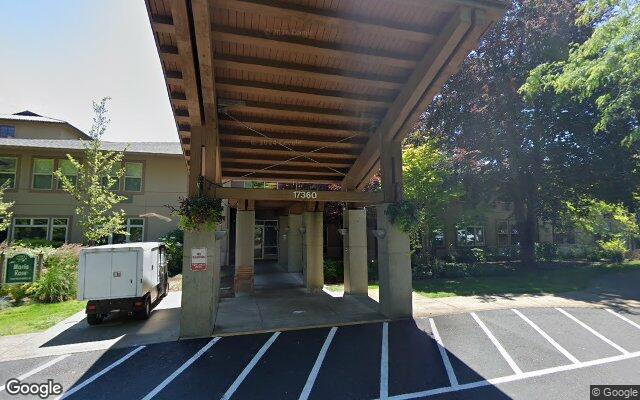
Facility Watch · Premium
Family reviews
No reviews yet — be the first to share your experience
Other memory care options nearby.
More options in neighboring cities
Licensed memory care in other cities within this county region — useful when your search radius crosses city limits.