Marie Rose Residential Care.
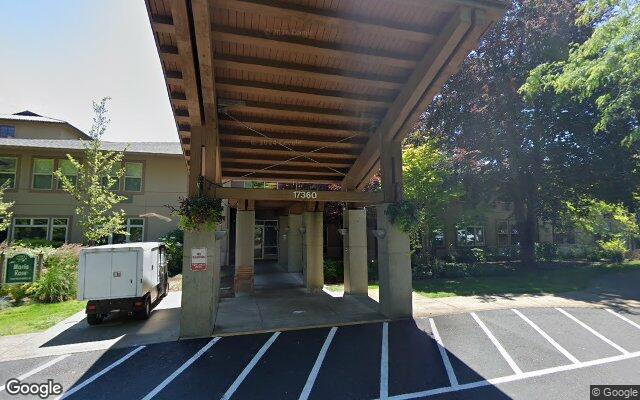
A large home, reviewed on public record.
© Google Street View
Compared to 55 Oregon facilities with a similar number of beds.
ALF memory care · 36-month window. Higher percentile = better performance on inspection record. Source: Oregon Dept. of Human Services · Long-Term Care Licensing.
among peers to rank.
Rankings based on 36-month OR-DHS inspection data. Severity and frequency: fewer citations = higher percentile. Repeat rate: lower repeat citation share = higher percentile.
Citation history, plotted month by month.
13 deficiencies on record. Each bar is a month with a citation.
Finding distribution
13 total · 36 monthsScope × Severity (CMS A–L)
Every inspection visit, verbatim.
3 inspections in the public record, most recent first. Plain-language summaries open first — click into any row for the full citation text.
2025-12-18Annual Compliance VisitOR-cited · 11 findings
Plain-language summary
During a re-licensure inspection in December 2025, the facility was found to have multiple violations of Oregon licensing rules. The facility failed to promptly investigate and report incidents and injuries for sampled residents; failed to document weekly monitoring of residents' changes in condition such as diet modifications and skin redness; failed to ensure nursing assessments of significant changes in condition were completed timely and documented; failed to properly assess and document the use of side rails as supportive devices; failed to update acuity-based staffing tool entries quarterly and after significant changes in condition for three residents; failed to document fire and life safety training for three residents within 24 hours of admission and annually; and failed to provide keys to resident rooms for all four sampled residents.
Read full citation text (11)Hide full citation text
“Based on interview, and record review, it was determined the facility failed to ensure incidents, accidents, and injuries of unknown cause were promptly investigated to rule out abuse and neglect and reported to the local Seniors and People with Disabilities (SPD) office when required for 2 of 2 sampled residents (#s 1 and 3). Findings include, but are not limited to:”
“Based on observation, interview, and record review, it was determined the facility failed to ensure each resident who experienced a short-term change of condition was monitored, with weekly progress noted through resolution, for 1 of 4 sampled residents (# 3) who experienced short-term changes of condition. Findings include, but are not limited to: Resident 3 moved into the community in 05/2024 with diagnoses including Alzheimer’s disease. The resident’s clinical record was reviewed. Resident 3 experienced the following changes of condition between 09/16/25 and 12/15/25: a. On 10/09/25 and 10/21/25, the facility received physician orders to change the resident’s diet texture to ground with gravy and nectar thick liquids, respectively. Observations of two lunch meals were completed on 12/16/25 and 12/17/25, and the resident received the physician ordered diet texture and liquid consistency. In an interview with Staff 25 (RCC) on 12/17/25 at 4:17 pm, she acknowledged there was no documented monitoring of the changes to the resident’s diet to ensure there were no complications related to swallowing. b. On 11/14/25 and 12/02/25, the resident’s Interdisciplinary Notes indicated redness to the sacrum and bilateral heels and toes, respectively. Observations throughout the survey confirmed the resident’s heels were floated, and s/he received frequent positional changes to offload pressure to boney prominences. In an interview with Staff 25 on 12/17/25 at 4:17 pm, she acknowledged there was no documented monitoring of the resident’s skin redness to ensure continued skin integrity. The need to ensure short-term changes of condition included weekly progress noted in the resident record until the condition resolved was discussed with Staff 1 (Director of Health Services), Staff 2 (Director of Clinical Operations), Staff 3 (Nurse Manager), and Staff 25 on 12/18/25 at 2:57 pm. They acknowledged the findings. C0270 411-054-0040 (1-2) Change of Condition and Monitoring”
“Based on interview and record review, it was determined the facility failed to ensure residents who lived in the facility were provided a key to their unit for 4 of 4 sampled residents (#s 1, 2, 3, and 4). Findings include, but are not limited to: Current evaluations and service plans were reviewed for Residents 1, 2, 3, and 4. There was no documented evidence the residents were provided a key to their room or the residents were evaluated and determined to be unable to utilize a key. During an interview with Staff 1 (Director of Health Services) on 12/17/25 at 3:30 pm, she reported keys had not been provided to the current residents of the RCF or the MCC. The need for residents and only appropriate staff to have a key to their units was discussed with Staff 1, Staff 2 (Director of Clinical Operations), Staff 3 (Nurse Manager), and Staff 25 (RCC) on 12/18/25 at 2:57 pm. They acknowledged the findings. H1518 OAR 411-004-0020(2)(e) Individual Door Locks: Key Access”
“Based on observation, interview, and record review, it was determined the facility failed to ensure residents who experienced significant changes of condition were assessed by an RN and/or the assessments were completed in a timely manner and included findings, resident status, and interventions made as a result of the assessment, for 2 of 3 sampled residents (#s 1 and 3) who experienced significant changes in condition. Findings include, but are not limited to:”
“Based on observation, interview, and record review, it was determined the facility failed to ensure the use of a supportive device with restraining qualities was thoroughly assessed by an RN, PT, or OT prior to use, failed to instruct caregivers on the correct use of and precautions related to the supportive device, failed to document use of the device in the resident's service plan, and failed to evaluate the devices quarterly for 2 of 2 sampled residents (#s 2 and 3) who used side rails. Findings include, but are not limited to:”
“Based on interview and record review, it was determined the facility failed to ensure resident ABST entries were updated as required. Findings include, but are not limited to: Review of the facility’s ABST entries was completed and showed the following: * ABST entries were not updated at least quarterly in conjunction with the residents’ service plans for 3 of 4 sampled residents (#s 2, 3, and 4); and * The ABST was not updated for Resident 4 after a significant change of condition. The need to ensure all residents’ ABST entries were updated at least quarterly and after a significant change of condition was discussed with Staff 1 (Director of Health Services) and Staff 2 (Director of Clinical Operations) on 12/17/25 and on 12/18/25. They acknowledged the findings. C0363 OAR 411-054-0037 (4-6) Acuity Based Staffing tool – Updates & Staffing Plan”
“Based on interview and record review, it was determined the facility failed to ensure 3 of 4 residents (#s 2, 3, and 4) were instructed on fire and life safety procedures within 24 hours of admission and re-instructed, at least annually. Findings include, but are not limited to Fire and life safety records were requested and reviewed with Staff 6 (Security, Safety, and Transportation Manager) on 12/17/25, and the following was identified: * There was no documented evidence of instruction to residents on general safety procedures, evacuation methods, responsibilities during a fire, and designated meeting places inside or outside the building in the event of an actual fire within 24 hours of admission for Residents 2, 3, and 4; and * There was no documented evidence of fire and life safety training provided to residents at least annually. The need to ensure residents received fire and life safety training within 24 hours of admission and at least annually was discussed with Staff 1 (Director of Health Services) on 12/18/25 at 1 pm. She acknowledged the findings. C0422 OAR 411-054-0090 (5) Fire and Life Safety: Training for Residents”
“Based on observation, interview, and record review, it was determined the facility failed to follow licensing rules for Residential Care and Assisted Living Facilities. Findings include, but are not limited to: Refer to C231, C363, and H1518. Z0142 OAR 411-057-0140(2) Administration Compliance For Plan of Correction, Refer to Plans of Correction for C231, C363, and H1518 OAR 411-057-0140(2) Administration Compliance (2) The licensee of a memory care community must comply with both the licensing rules for the facility and Chapter 411, Division 57. This Rule is not met as evidenced by:”
“Based on interview and record review, it was determined the facility failed to ensure 2 of 4 newly hired staff (#s 11 and 24) completed all pre-service orientation training prior to beginning their job responsibilities and demonstrated competency in all assigned job duties within 30 days of hire. Findings include, but are not limited to: Staff training records were reviewed with Staff 4 (Human Resource Specialist) and Staff 5 (Human Resource Specialist) on 12/17/25 and with Staff 2 (Director of Clinical Operations) on 12/18/25. The following was identified:”
“Based on observation, interview, and record review, it was determined the facility failed to provide health care services in accordance with the licensing rules for Residential Care and Assisted Living Facilities. Findings include, but are not limited to: Refer to C270, C280, and C340. Z0162 OAR 411-057-0160(2b) Compliance with Rules Health Care For Plan of Correction, Refer to Plans of Correction for C270, C280, and C340 OAR 411-057-0160(2b) Compliance with Rules Health Care (b) Health care services provided in accordance with the licensing rules of the facility. This Rule is not met as evidenced by:”
“based on their activity evaluation. The plan must reflect the resident ' s activity preferences and needs. (C) A selection of daily structured and non-structured activities must be provided and included on the resident ' s activity service or care plan as appropriate. Daily activity options based on resident evaluation may include but are not limited to: (i) Occupation or chore related tasks; (ii) Scheduled and planned events (e.g. entertainment, outings); (iii) Spontaneous activities for enjoyment or those that may help diffuse a behavior; (iv) One to one activities that encourage positive relationships between residents and staff (e.g. life story, reminiscing, music); (v) Spiritual, creative, and intellectual activities; (vi) Sensory stimulation activities; (vii) Physical activities that enhance or maintain a resident ' s ability to ambulate or move; and (viii) Outdoor activities. This Rule is not met as evidenced by: Based on interview and record review, it was determined the facility failed to evaluate the resident for activities and develop an individual activity plan based on their activity evaluation for 2 of 2 sampled residents (#s 1 and 4) whose activity plans were reviewed. Findings include, but are not limited to: Resident 1 and 4’s activity evaluations were requested on 12/16/25, and service plans were reviewed during survey. the facility had not evaluated the residents’: * Past and current interests; * Current abilities and skills; * Emotional and social needs and patterns; * Physical abilities and limitations; * Adaptations necessary for participation; and * Activities that could be used as behavioral interventions. There was no individualized activity plan developed for each resident based on his/her activity evaluation which detailed what, when, how, and how often staff should offer and assist the residents with more individualized activities. The need to develop individualized activity plans which were based on a thorough assessment of the resident's interests, abilities, and needs was discussed with Staff 1 (Director of Health Services), Staff 2 (Director of Clinical Operations), Staff 3 (Nurse Manager), and Staff 25 (RCC) on 12/18/25. They acknowledged the findings. Z0164 OAR 411-057-0160(2d) Activities”
Read raw inspector notesClose inspector notes
Based on interview, and record review, it was determined the facility failed to ensure incidents, accidents, and injuries of unknown cause were promptly investigated to rule out abuse and neglect and reported to the local Seniors and People with Disabilities (SPD) office when required for 2 of 2 sampled residents (#s 1 and 3). Findings include, but are not limited to: Based on observation, interview, and record review, it was determined the facility failed to ensure each resident who experienced a short-term change of condition was monitored, with weekly progress noted through resolution, for 1 of 4 sampled residents (# 3) who experienced short-term changes of condition. Findings include, but are not limited to: Resident 3 moved into the community in 05/2024 with diagnoses including Alzheimer’s disease. The resident’s clinical record was reviewed. Resident 3 experienced the following changes of condition between 09/16/25 and 12/15/25: a. On 10/09/25 and 10/21/25, the facility received physician orders to change the resident’s diet texture to ground with gravy and nectar thick liquids, respectively. Observations of two lunch meals were completed on 12/16/25 and 12/17/25, and the resident received the physician ordered diet texture and liquid consistency. In an interview with Staff 25 (RCC) on 12/17/25 at 4:17 pm, she acknowledged there was no documented monitoring of the changes to the resident’s diet to ensure there were no complications related to swallowing. b. On 11/14/25 and 12/02/25, the resident’s Interdisciplinary Notes indicated redness to the sacrum and bilateral heels and toes, respectively. Observations throughout the survey confirmed the resident’s heels were floated, and s/he received frequent positional changes to offload pressure to boney prominences. In an interview with Staff 25 on 12/17/25 at 4:17 pm, she acknowledged there was no documented monitoring of the resident’s skin redness to ensure continued skin integrity. The need to ensure short-term changes of condition included weekly progress noted in the resident record until the condition resolved was discussed with Staff 1 (Director of Health Services), Staff 2 (Director of Clinical Operations), Staff 3 (Nurse Manager), and Staff 25 on 12/18/25 at 2:57 pm. They acknowledged the findings. C0270 411-054-0040 (1-2) Change of Condition and Monitoring Based on observation, interview, and record review, it was determined the facility failed to ensure residents who experienced significant changes of condition were assessed by an RN and/or the assessments were completed in a timely manner and included findings, resident status, and interventions made as a result of the assessment, for 2 of 3 sampled residents (#s 1 and 3) who experienced significant changes in condition. Findings include, but are not limited to: Based on observation, interview, and record review, it was determined the facility failed to ensure the use of a supportive device with restraining qualities was thoroughly assessed by an RN, PT, or OT prior to use, failed to instruct caregivers on the correct use of and precautions related to the supportive device, failed to document use of the device in the resident's service plan, and failed to evaluate the devices quarterly for 2 of 2 sampled residents (#s 2 and 3) who used side rails. Findings include, but are not limited to: Based on interview and record review, it was determined the facility failed to ensure resident ABST entries were updated as required. Findings include, but are not limited to: Review of the facility’s ABST entries was completed and showed the following: * ABST entries were not updated at least quarterly in conjunction with the residents’ service plans for 3 of 4 sampled residents (#s 2, 3, and 4); and * The ABST was not updated for Resident 4 after a significant change of condition. The need to ensure all residents’ ABST entries were updated at least quarterly and after a significant change of condition was discussed with Staff 1 (Director of Health Services) and Staff 2 (Director of Clinical Operations) on 12/17/25 and on 12/18/25. They acknowledged the findings. C0363 OAR 411-054-0037 (4-6) Acuity Based Staffing tool – Updates & Staffing Plan Based on interview and record review, it was determined the facility failed to ensure 3 of 4 residents (#s 2, 3, and 4) were instructed on fire and life safety procedures within 24 hours of admission and re-instructed, at least annually. Findings include, but are not limited to Fire and life safety records were requested and reviewed with Staff 6 (Security, Safety, and Transportation Manager) on 12/17/25, and the following was identified: * There was no documented evidence of instruction to residents on general safety procedures, evacuation methods, responsibilities during a fire, and designated meeting places inside or outside the building in the event of an actual fire within 24 hours of admission for Residents 2, 3, and 4; and * There was no documented evidence of fire and life safety training provided to residents at least annually. The need to ensure residents received fire and life safety training within 24 hours of admission and at least annually was discussed with Staff 1 (Director of Health Services) on 12/18/25 at 1 pm. She acknowledged the findings. C0422 OAR 411-054-0090 (5) Fire and Life Safety: Training for Residents Based on interview and record review, it was determined the facility failed to ensure residents who lived in the facility were provided a key to their unit for 4 of 4 sampled residents (#s 1, 2, 3, and 4). Findings include, but are not limited to: Current evaluations and service plans were reviewed for Residents 1, 2, 3, and 4. There was no documented evidence the residents were provided a key to their room or the residents were evaluated and determined to be unable to utilize a key. During an interview with Staff 1 (Director of Health Services) on 12/17/25 at 3:30 pm, she reported keys had not been provided to the current residents of the RCF or the MCC. The need for residents and only appropriate staff to have a key to their units was discussed with Staff 1, Staff 2 (Director of Clinical Operations), Staff 3 (Nurse Manager), and Staff 25 (RCC) on 12/18/25 at 2:57 pm. They acknowledged the findings. H1518 OAR 411-004-0020(2)(e) Individual Door Locks: Key Access Based on observation, interview, and record review, it was determined the facility failed to follow licensing rules for Residential Care and Assisted Living Facilities. Findings include, but are not limited to: Refer to C231, C363, and H1518. Z0142 OAR 411-057-0140(2) Administration Compliance For Plan of Correction, Refer to Plans of Correction for C231, C363, and H1518 OAR 411-057-0140(2) Administration Compliance (2) The licensee of a memory care community must comply with both the licensing rules for the facility and Chapter 411, Division 57. This Rule is not met as evidenced by: Based on interview and record review, it was determined the facility failed to ensure 2 of 4 newly hired staff (#s 11 and 24) completed all pre-service orientation training prior to beginning their job responsibilities and demonstrated competency in all assigned job duties within 30 days of hire. Findings include, but are not limited to: Staff training records were reviewed with Staff 4 (Human Resource Specialist) and Staff 5 (Human Resource Specialist) on 12/17/25 and with Staff 2 (Director of Clinical Operations) on 12/18/25. The following was identified: Based on observation, interview, and record review, it was determined the facility failed to provide health care services in accordance with the licensing rules for Residential Care and Assisted Living Facilities. Findings include, but are not limited to: Refer to C270, C280, and C340. Z0162 OAR 411-057-0160(2b) Compliance with Rules Health Care For Plan of Correction, Refer to Plans of Correction for C270, C280, and C340 OAR 411-057-0160(2b) Compliance with Rules Health Care (b) Health care services provided in accordance with the licensing rules of the facility. This Rule is not met as evidenced by: based on their activity evaluation. The plan must reflect the resident ' s activity preferences and needs. (C) A selection of daily structured and non-structured activities must be provided and included on the resident ' s activity service or care plan as appropriate. Daily activity options based on resident evaluation may include but are not limited to: (i) Occupation or chore related tasks; (ii) Scheduled and planned events (e.g. entertainment, outings); (iii) Spontaneous activities for enjoyment or those that may help diffuse a behavior; (iv) One to one activities that encourage positive relationships between residents and staff (e.g. life story, reminiscing, music); (v) Spiritual, creative, and intellectual activities; (vi) Sensory stimulation activities; (vii) Physical activities that enhance or maintain a resident ' s ability to ambulate or move; and (viii) Outdoor activities. This Rule is not met as evidenced by: Based on interview and record review, it was determined the facility failed to evaluate the resident for activities and develop an individual activity plan based on their activity evaluation for 2 of 2 sampled residents (#s 1 and 4) whose activity plans were reviewed. Findings include, but are not limited to: Resident 1 and 4’s activity evaluations were requested on 12/16/25, and service plans were reviewed during survey. the facility had not evaluated the residents’: * Past and current interests; * Current abilities and skills; * Emotional and social needs and patterns; * Physical abilities and limitations; * Adaptations necessary for participation; and * Activities that could be used as behavioral interventions. There was no individualized activity plan developed for each resident based on his/her activity evaluation which detailed what, when, how, and how often staff should offer and assist the residents with more individualized activities. The need to develop individualized activity plans which were based on a thorough assessment of the resident's interests, abilities, and needs was discussed with Staff 1 (Director of Health Services), Staff 2 (Director of Clinical Operations), Staff 3 (Nurse Manager), and Staff 25 (RCC) on 12/18/25. They acknowledged the findings. Z0164 OAR 411-057-0160(2d) Activities
2024-12-11Complaint InvestigationOR-cited · 1 finding
Plain-language summary
A complaint investigation on December 11, 2024, substantiated that the facility failed to develop and maintain an Acuity-Based Staffing Tool (ABST) as required. The facility did not post a staffing plan in one neighborhood, did not maintain current resident profiles in the ABST, and did not staff the Caritas neighborhood to the hours specified in its own staffing tool on the day of the inspection. The facility's management acknowledged these findings.
Read full citation text (1)Hide full citation text
“Based on observation, interview, and record review, conducted during a site visit on 12/11/24, the facility's failure to develop and maintain an Acuity-Based Staffing Tool (ABST) was substantiated. Findings include, but are not limited to: An observation of the facility showed two distinct and separate neighborhoods named Villa Maria and Caritas. An observation of the entrance to Villa Maria revealed there was no posted staffing plan. An observation inside the entrance of Caritas revealed a posted staffing plan based on a ratio. In an interview, Staff 1 (Nurse Manager) stated the facility did not have a posted staffing plan. A review of the facility's ABST showed the following required staffing hours for Caritas on Wednesdays: * Day: 65.34 hours; * Evening: 53.69 hours; and * Night: 19.48 hours. An observation of day shift staffing for the Caritas neighborhood revealed the facility was not staffed to the hours required by their ABST. A review of the facility's ABST revealed multiple resident's profiles had not been updated in the last quarter. The findings were reviewed with and acknowledged by Staff 1, Staff 2 (Assistant Nurse Manager), and Staff 3 (Resident Care and Scheduling Manager). The facility's failure to develop and maintain an Acuity-Based Staffing Tool (ABST) was substantiated. Based on observation, interview, and record review, conducted during a site visit on 12/11/24, the facility's failure to develop and maintain an Acuity-Based Staffing Tool (ABST) was substantiated. Findings include, but are not limited to: An observation of the facility showed two distinct and separate neighborhoods named Villa Maria and Caritas. An observation of the entrance to Villa Maria revealed there was no posted staffing plan. An observation inside the entrance of Caritas revealed a posted staffing plan based on a ratio. In an interview, Staff 1 (Nurse Manager) stated the facility did not have a posted staffing plan. A review of the facility's ABST showed the following required staffing hours for Caritas on Wednesdays: * Day: 65.34 hours; * Evening: 53.69 hours; and * Night: 19.48 hours. An observation of day shift staffing for the Caritas neighborhood revealed the facility was not staffed to the hours required by their ABST. A review of the facility's ABST revealed multiple resident's profiles had not been updated in the last quarter. The findings were reviewed with and acknowledged by Staff 1, Staff 2 (Assistant Nurse Manager), and Staff 3 (Resident Care and Scheduling Manager). The facility's failure to develop and maintain an Acuity-Based Staffing Tool (ABST) was substantiated.”
Read raw inspector notesClose inspector notes
Based on observation, interview, and record review, conducted during a site visit on 12/11/24, the facility's failure to develop and maintain an Acuity-Based Staffing Tool (ABST) was substantiated. Findings include, but are not limited to: An observation of the facility showed two distinct and separate neighborhoods named Villa Maria and Caritas. An observation of the entrance to Villa Maria revealed there was no posted staffing plan. An observation inside the entrance of Caritas revealed a posted staffing plan based on a ratio. In an interview, Staff 1 (Nurse Manager) stated the facility did not have a posted staffing plan. A review of the facility's ABST showed the following required staffing hours for Caritas on Wednesdays: * Day: 65.34 hours; * Evening: 53.69 hours; and * Night: 19.48 hours. An observation of day shift staffing for the Caritas neighborhood revealed the facility was not staffed to the hours required by their ABST. A review of the facility's ABST revealed multiple resident's profiles had not been updated in the last quarter. The findings were reviewed with and acknowledged by Staff 1, Staff 2 (Assistant Nurse Manager), and Staff 3 (Resident Care and Scheduling Manager). The facility's failure to develop and maintain an Acuity-Based Staffing Tool (ABST) was substantiated. Based on observation, interview, and record review, conducted during a site visit on 12/11/24, the facility's failure to develop and maintain an Acuity-Based Staffing Tool (ABST) was substantiated. Findings include, but are not limited to: An observation of the facility showed two distinct and separate neighborhoods named Villa Maria and Caritas. An observation of the entrance to Villa Maria revealed there was no posted staffing plan. An observation inside the entrance of Caritas revealed a posted staffing plan based on a ratio. In an interview, Staff 1 (Nurse Manager) stated the facility did not have a posted staffing plan. A review of the facility's ABST showed the following required staffing hours for Caritas on Wednesdays: * Day: 65.34 hours; * Evening: 53.69 hours; and * Night: 19.48 hours. An observation of day shift staffing for the Caritas neighborhood revealed the facility was not staffed to the hours required by their ABST. A review of the facility's ABST revealed multiple resident's profiles had not been updated in the last quarter. The findings were reviewed with and acknowledged by Staff 1, Staff 2 (Assistant Nurse Manager), and Staff 3 (Resident Care and Scheduling Manager). The facility's failure to develop and maintain an Acuity-Based Staffing Tool (ABST) was substantiated.
2024-01-25Annual Compliance VisitOR-cited · 1 finding
Plain-language summary
A kitchen inspection conducted on January 25, 2024 found the facility in substantial compliance with Oregon's rules for meal service and food sanitation. No violations were identified related to food preparation, handling, or resident meal services.
Read full citation text (1)Hide full citation text
“The findings of the kitchen inspection, conducted 01/25/24, are documented in this report. It was determined the facility was in substantial compliance with the OARs 411-054-0030 for Residential Care and Assisted Living Facilities for Resident Services - Meals and Oregon Health Service Food Sanitation Rules OARs 333-150-0000. The findings of the kitchen inspection, conducted 01/25/24, are documented in this report. It was determined the facility was in substantial compliance with the OARs 411-054-0030 for Residential Care and Assisted Living Facilities for Resident Services - Meals and Oregon Health Service Food Sanitation Rules OARs 333-150-0000.”
Read raw inspector notesClose inspector notes
The findings of the kitchen inspection, conducted 01/25/24, are documented in this report. It was determined the facility was in substantial compliance with the OARs 411-054-0030 for Residential Care and Assisted Living Facilities for Resident Services - Meals and Oregon Health Service Food Sanitation Rules OARs 333-150-0000. The findings of the kitchen inspection, conducted 01/25/24, are documented in this report. It was determined the facility was in substantial compliance with the OARs 411-054-0030 for Residential Care and Assisted Living Facilities for Resident Services - Meals and Oregon Health Service Food Sanitation Rules OARs 333-150-0000.
2 older inspections from 2022 are not shown above.
Get the complete record, translated into plain language — emailed to you.
Other facilities in Clackamas County.
Other memory care facilities in Clackamas County with similar care offerings.

Tour Prep
Family reviews
No reviews yet — be the first to share your experience
Other memory care options nearby.
More options in neighboring cities
Licensed memory care in other cities within this county region — useful when your search radius crosses city limits.