House of Butterfly Tempe LLC.
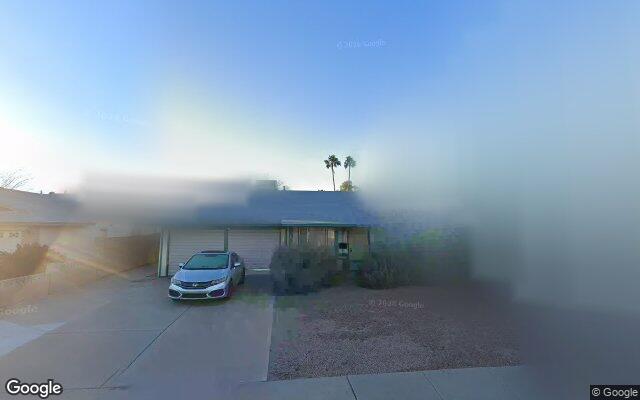
A medium home, reviewed on public record.
© Google Street View
Compared to 1,661 Arizona facilities with a similar number of beds.
Care · 36-month window. Higher percentile = better performance on inspection record. Source: Arizona Dept. of Health Services · Bureau of Residential Facilities Licensing.
among peers to rank.
Rankings based on 36-month ADHS inspection data. Severity and frequency: fewer citations = higher percentile. Repeat rate: lower repeat citation share = higher percentile.
Citation history, plotted month by month.
6 deficiencies on record. Each bar is a month with a citation.
Finding distribution
6 total · 36 monthsScope × Severity (CMS A–L)
Every inspection visit, verbatim.
2 inspections in the public record, most recent first. Plain-language summaries open first — click into any row for the full citation text.
2025-12-23Annual Compliance VisitR9-10-120.F.2 · 6 findings
“Based on documentation review and interview, the healthcare institution failed to include in the plan for the healthcare institution's quality management program a process for review of incidents of opioid-related adverse reactions and other negative outcomes a patient experiences, or opioid related deaths. The deficient practice posed a risk as a quality management program documents the necessary information required to effectively manage services provided. Findings include: 1. A review of the facility’s documentation revealed that there was no Quality Management Program in place related to the use of opioids, as no documentation of a Quality Management Program was provided. 2. In an exit interview, the findings were reviewed with E1, and no additional information was provided.”
“Based on record review, documentation review, and interview, the manager failed to ensure an individual authorized to administer opioids documented in the resident's medical record an identification of the resident's need for the opioid before the opioid was administered, and the effect of the opioid administered, for one of two residents receiving an opioid. Findings include: 1. A review of R1's medical record revealed a current service plan for directed care services. R1's service plan revealed that R1 received medication administration. 2. A review of R1's medical record revealed a medication order (dated December 20, 2025). The medication order stated, "Tramadol 25 mg, take one tablet by mouth every 6 hours as needed/PRN." 3. A review of R1's medical record revealed a medication administration record (MAR) for December 2025. “Tramadol HCL 25 mg one tablet by mouth every 6 hours as needed” was documented as administered on December 22, 2025, and December 23, 2025. However, documentation of the identification of R3's need for the opioid before the opioid was administered, and the effect of the opioid administered, was not available. 4. A review of R1's medical record revealed no documentation of an end-of-life condition or an active malignancy. 5. In an interview, E1 acknowledged that there was no documentation of the need for the opioid before the opioid was administered, and the effect of the opioid administered. 6. In an exit interview, the findings were reviewed with E1, and no additional information was provided.”
“Based on documentation review and interview, the manager failed to ensure that policies and procedures were reviewed at least once every three years and updated as needed. The deficient practice posed a risk as policies and procedures reinforce and clarify standards expected of employees. Findings include: 1. A review of the facility's policies and procedures manual revealed a three-year review page. However, the page was not signed or dated. 2. In an exit interview, the findings were reviewed with E1, and no additional information was provided.”
“Based on record review and interview, the manager failed to ensure a resident's written service plan included the amount, type, and frequency of assisted living services being provided to the resident, for two of two residents sampled. The deficient practice posed a risk as the service plans did not reinforce and clarify the services to be provided to a resident. Findings include: 1. A review of R1's medical record revealed a current written service plan dated December 11, 2025, which indicated R1 received personal care services. R1’s service plan did not include the frequency of assistance with dressing, grooming, and toileting. 2. A review of R2's medical record revealed a current written service plan dated November 5, 2025, which indicated R2 received directed care services. R2’s service plan did not include the frequency of assistance with dressing and grooming. 3. In an exit interview, the findings were reviewed with E1, and no additional information was provided.”
“Based on documentation review, observation, and interview, the manager failed to ensure a resident's medical record was protected from loss, damage, or unauthorized use. The deficient practice posed a risk of protected and sensitive resident health information being disclosed without the resident's consent or knowledge. Findings include: 1. A.R.S. § 12-2291(6) "Medical records" means all communications related to a patient's physical or mental health or condition that are recorded in any form or medium and that are maintained for purposes of patient diagnosis or treatment, including medical records that are prepared by a health care provider or by other providers. 2. The Compliance Officers observed a black plastic cabinet with a sign saying "residents' records" in a sitting room. The Compliance Officers were able to open the cabinet without any issue. The left door of the cabinet had a lock, but it was not latched. The right cabinet door did not have a lock on it. Inside, the Compliance Officers found residents' medical records. 3. In an exit interview, the findings were reviewed with E1, and no additional information was provided.”
“Based on record review, observation, and interview, the manager failed to ensure that a medication administered to a resident was accurately documented in the resident's medical record for one of two residents reviewed. The deficient practice posed a health and safety risk to the resident if a caregiver did not know whether a medication was administered. Findings include: 1. A review of R1's medical record revealed the following: A current written service plan dated December 20, 2025. The service plan indicated R1 received medication administration. A medication order dated December 15, 2025, for “Loratadine 10 mg tablet daily for seasonal allergies.” 2. A review of R1's December 2025 Medical Administration Record (MAR) revealed “Loratadine 10 mg Give 1 tab by mouth daily. However, the medication was not signed as administered. 3. The Compliance Officer observed R1’s medication organizer prefilled with “Loratadine 10 mg tablet” in the morning slot for the next two days, Wednesday and Thursday. 4. In an interview, E1 reported that R1 was administered “Loratadine10 mg” that morning. 5. In an exit interview, the findings were reviewed with E1 and E2, and no additional information was provided.”
2024-06-28Annual Compliance VisitNo findings
Other facilities in Tempe.
Other memory care facilities near Tempe with similar care offerings.


Contract Decoder
Family reviews
No reviews yet — be the first to share your experience