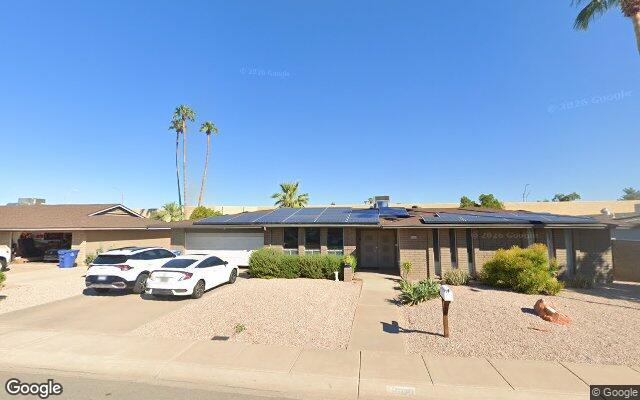
Desert Marigold Senior Living of Tempe.
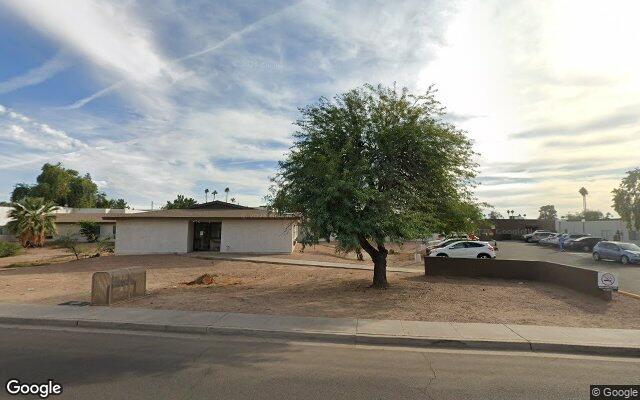
A large home, reviewed on public record.
© Google Street View
Compared to 75 Arizona facilities with a similar number of beds.
Care · 36-month window. Higher percentile = better performance on inspection record. Source: Arizona Dept. of Health Services · Bureau of Residential Facilities Licensing.
among peers to rank.
Rankings based on 36-month ADHS inspection data. Severity and frequency: fewer citations = higher percentile. Repeat rate: lower repeat citation share = higher percentile.
Citation history, plotted month by month.
29 deficiencies on record. Each bar is a month with a citation.
Finding distribution
29 total · 36 monthsScope × Severity (CMS A–L)
Every inspection visit, verbatim.
19 inspections in the public record, most recent first. Plain-language summaries open first — click into any row for the full citation text.
2026-09-08Complaint InvestigationNo findings
2026-05-11Complaint InvestigationNo findings
2025-12-10Complaint InvestigationR9-10-810.B.1 · 5 findings
“Based on observation, record review, and interview, the manager failed to ensure that a resident was treated with dignity, respect, and consideration. The deficient practice violated a resident's rights. Findings include: 1. During the environmental inspection of the facility with E1, the Compliance Officers observed the residential unit occupied by R2 and R3. R3 resided in the living area, while R2 occupied the bedroom. In R2’s bedroom, two bottles of urine were observed, one on each side of the bed. Loose debris was observed in R2’s bed, along with what appeared to be food stains on the bedsheet. On the floor, peanut butter and strawberry jelly jars were observed with contents leaked onto the floor. On a table in the room, dirty plates and silverware were observed and appeared to have been present for multiple days, and the table itself appeared dirty and had not been cleaned recently. The dresser where the television was located had dirty dishes and food on it. In the shared bathroom, the trash can was observed filled to the top with toilet paper containing feces, and gnats were observed flying in the bathroom, in the trash can, and along the side of the sink cabinet wall. On the bathroom floor, what appeared to be dried feces was observed next to the toilet and on the toilet itself. The floors in the bedroom, bathroom, and living room areas had loose debris and food crumbs and appeared not to have been recently swept or mopped. Based on these observations, the Compliance Officers determined that the residents were not treated with dignity, respect, and consideration due to the conditions of the room. 2. During the environmental inspection of the facility with E1, the Compliance Officers observed the residential unit occupied by R4 and R5. R4 resided in the living area, while R5 occupied the bedroom. In the living room floor area next to the bed, live and dead cockroaches were observed crawling in and around the electrical outlet plugs. The trash can in the living room was overfilled with food and trash and did not have a lid. A table in the living room had dirty containers on it, and the table itself appeared dirty. In the common bathroom, dirty clothes were observed on the floor, and the toilet appeared to have dried urine on it and dried feces inside the bowl. The floors in the bedroom, bathroom, and living room areas had loose debris and food crumbs and appeared not to have been recently swept or mopped. Based on these observations, the Compliance Officers determined that the residents were not treated with dignity, respect, and consideration due to the conditions of the room. 3. During the environmental inspection of the facility with E1, the Compliance Officers observed the residential unit occupied by R7 and R8. R7 resided in the living area, while R8 occupied the bedroom. The living room floor had loose debris and appeared not to have been recently swept or mopped, and trash cans were observed without lids and filled to the top with trash. In the common bathroom, trash cans also lacked lids and were filled with toilet paper containing feces, and the toilet had dried feces on the inside. In the kitchen area of the residential unit, a dried brown liquid was observed on the floor and on the countertop, along with food left out in the open. The floors in the bedroom, bathroom, and living room areas had loose debris and food crumbs and appeared not to have been recently swept or mopped. Based on these observations, the Compliance Officers determined that the residents were not treated with dignity, respect, and consideration due to the conditions of the room. 4. A review of R2’s, R3’s, R4’s, R5’s, R7’s, R8’s, and R9’s service plans stated, “Housekeeping: provides housekeeping and laundry services weekly and PRN; pick up trash daily.” However, based on the observations, the Compliance Officers determined that the residential units were not provided with housekeeping and trash removal services as documented in the service plans. 5. In an interview, R2 reported that the facility staff does not clean the room daily or regularly. 6. In an exit interview, the findings were reviewed with E1 and E7, and no additional information was provided.”
“Based on record review, observation, and interview, the manager failed to ensure the service plan instructions were followed for storing and controlling the medication in the unit, for one resident who stored medication in a shared residential unit. The deficient practice posed a health and safety risk if the medications were accessible to other residents. Findings include: 1. A review of R5’s medical record revealed a service plan. The service plan stated “Medication/Pharmacy; Able to Self Medicate; Resident will keep apartment door locked, and Medication is stored in a locked container within room..." 2. During the environmental inspection of the facility with E1, the Compliance Officers observed unlocked medication in R4’s and R5’s residential unit. The medication was R5's and stored in the living room where R5 resided, and not in a locked container. The medication was accessible to R4, who shared the residential unit with R5. 3. In an exit interview, the findings were reviewed with E1 and E7, and no additional information was provided.”
“Based on observation, record review, and interview, the manager failed to ensure the premises and equipment used at the assisted living facility were cleaned and, if applicable, disinfected according to policies and procedures designed to prevent, minimize, and control illness or infection. The deficient practice posed a potential illness risk to residents. Findings include: 1. During the environmental inspection of the facility with E1, the Compliance Officers observed the residential unit, occupied by R2 and R3. R3 resided in the living area, while R2 occupied the bedroom. The bedroom R2 was in had two bottles of urine, one on each side of R2’s bed. There was also loose debris in R2's bed, as well as what appeared to be food stains on the bed sheet. On the floor were peanut butter and strawberry jelly jars that had leaked onto the floor. On a table in the room, some plates and silverware that were dirty and appeared to have been there for multiple days. The table itself was dirty and had not been cleaned off for a while. The dresser that the TV was on had dirty dishes and food. In the shared bathroom, the trash can was filled to the top with toilet paper that had feces on it, as well as gnats that were flying in the bathroom, in the trash can, and on the side of the sink cabinet wall. On the floor in the common bathroom, there was what appeared to be dried feces on the floor next to the toilet and on the toilet itself. The floors in the bedroom, bathroom, and living room area had loose debris and crumbs of food and appeared not to have been recently mopped or swept. 2. During the environmental inspection of the facility with E1, the Compliance Officers observed the residential unit, occupied by R4 and R5. R4 resided in the living area, while R5 occupied the bedroom. The living room floor area next to the bed the were live and dead cockroaches crawling in the outlet plugs. The trash can in the living room area was overfilled with food and trash and had no lids. A table in the living room had containers that were dirty, and the table itself was dirty. In the common bathroom, there were dirty clothes on the floor, and the toilet appeared to have dried urine on it and dried feces in it. The floors in the bedroom, bathroom, and living room area had loose debris and crumbs of food and appeared not to have been recently mopped or swept. 3. During the environmental inspection of the facility with E1, the Compliance Officers observed the residential unit, occupied by R7 and R8. R7 resided in the living area, while R8 occupied the bedroom. The living room floor area had loose debris and appeared not to have been recently mopped or swept. Also, trash cans had no lids and were filled to the top with trash. In the common bathroom, the trash also did not have lids and were fill with toilet paper that had feces on it. The toilet also had dried feces on the inside of the toilet. The kitchen area of the residential unit had a dry brown liquid on the floor as well as a dried brown liquid on the countertop, and food sitting out in the open. The floors in the bedroom, bathroom, and living room area had loose debris and crumbs of food and appeared not to have been recently mopped or swept. 4. A review of R2, R3, R4, R5, R7, R8, and R9 service plan stated "Housekeeping: provides housekeeping and laundry service weekly and PRN: Pick up trash daily." 5. In an interview, R2 reported that the facility staff does not clean the room daily or regularly. 6. In an exit interview, the findings were reviewed with E1 and E7, and no additional information was provided. Technical assistance was provided on this rule during the inspection conducted on January 23, 2025.”
“Based on observation and interview, the manager failed to ensure garbage and refuse were stored in covered containers. This deficient practice posed a potential risk to resident health due to unsanitary conditions, which could lead to infection control concerns. Findings include: 1. During the environmental inspection of the facility with E1, the Compliance Officers observed the residential unit occupied by R2 and R3, and observed multiple garbage containers in the unit that were overflowing and uncovered. In the shared bathroom, the trash can was observed filled to the top with toilet paper containing feces, and gnats were observed flying in the bathroom, in the trash can, and along the side of the sink cabinet wall. 2. During the environmental inspection of the facility with E1, the Compliance Officers observed the residential unit occupied by R4 and R5, and observed the trash can in the living room was overfilled with food and trash and did not have a lid. 3. During the environmental inspection of the facility with E1, the Compliance Officers observed the residential unit occupied by R7 and R8, and observed multiple garbage containers in the unit that were overflowing and uncovered. The living room trash cans were observed without lids and filled to the top with trash. In the common bathroom, trash cans also lacked lids and were filled with toilet paper containing feces, and the toilet had dried feces on the inside. 4. In an exit interview, the findings were reviewed with E1 and E7, and no additional information was provided.”
“Based on documentation review, observation, and interview, the administrator failed to ensure a resident bedroom was not used as a passageway to another sleeping area and common bathroom. The deficient practice posed a resident rights violation to a resident. Findings include: R9-10-821. D.4.d state: ”Physical Plant Standards. D. A manager shall ensure that: 4. A resident’s sleeping area: d. Has floor-to-ceiling walls with at least one door.” 1. A review of Department documentation revealed AL11565C was licensed effective August 1, 2020. 2. During the environmental inspection of the facility with E1, the Compliance Officers observed the residential units of R2 and R3 (shared room), R4 and R5 (shared room), and R7 and R8 (shared room). In each unit, one resident resided in a bedroom with floor-to-ceiling walls and at least one door, while the other resident resided in the living room. The resident in the bedroom had to pass through the living room, where the other resident resided, to access the bedroom or the common kitchen area. The facility had used curtains to provide privacy for the residents residing in the living room. Upon further inspection, the Compliance Officers identified that multiple residents resided in shared units under similar circumstances. 3. In an interview, E1 acknowledged that a resident's bedroom was used as a passageway to a common area, another sleeping area, and a common bathroom, and that multiple other residents resided in shared units with similar privacy concerns. 4. In an exit interview, the findings were reviewed with E1 and E7, and no additional information was provided. Technical assistance was provided on this Rule during the compliance inspection conducted on July 14, 2025.”
2025-09-25Complaint InvestigationNo findings
2025-09-19Other VisitNo findings
2025-07-14Complaint InvestigationR9-10-113.A.2 · 9 findings
“Based on documentation review and interview, the health care institution's chief administrative officer failed to ensure the health care institution documented and implemented tuberculosis (TB) infection control activities required in R9-10-113(A)(2)(d). Findings include: 1. A review of facility documentation revealed no documentation of annually assessing the health care institution's risk of exposure to infectious tuberculosis per R9-10-113(A)(2)(d) was available for review. 2. In an exit interview, E1, E2, and E3 acknowledged that the health care institution had no documentation of annually assessing the health care institution's risk of exposure to infectious tuberculosis available for review for the Compliance Officers during the inspection.”
“Based on observation and interview, the manager failed to ensure the health, safety, or welfare of a resident. The deficient practice posed a health and safety risk to a resident. 1. During the environmental inspection of the facility, the Compliance Officers observed that the facility used walkie-talkies to notify staff that a resident needed assistance; however, the walkie-talkies were all left in the office, and no care staff had any walkie-talkies with them at the time of the inspection. 2. In an interview, E1, E2, and E3 acknowledged that the walkie-talkies were in the office of the facility, and no care staff had any walkie-talkies to notify staff that a resident needed assistance on them at the time of the inspection.”
“Based on documentation review and interview, the manager failed to submit a documented report to the governing authority that included an identification of each concern about the delivery of services related to resident care, and any change made or action taken as a result of the identification of a concern about the delivery of services related to resident care. The deficient practice posed a risk as a quality management program documents the necessary information required to effectively manage services provided. Findings include: 1. The Compliance Officers requested to review the facility's quality management report and supporting documentation for the report. However, a quality management report was not available for review. 2. In an interview, E1 reported that the facility had completed the quality management reports. 3. In an exit interview, E1, E2, and E3 acknowledged that the quality management reports were not available for review for the Compliance Officers during the inspection.”
“Based on record review and interview, the manager failed to ensure a resident accepted by the assisted living facility submitted documentation signed by a medical practitioner or a registered nurse that stated whether the individual required continuous medical services, continuous or intermittent nursing services, or restraints, for one of seven residents sampled. The deficient practice posed a risk if the facility was unable to meet a resident's needs. Findings include: 1. A review of R1's medical record revealed documentation indicating that R1 did not require continuous medical services, continuous or intermittent nursing services, or restraints. However, the documentation was signed but not dated, so it could not be confirmed whether it had been completed within 90 calendar days before the individual was accepted by the facility. Based on the resident's date of acceptance, this documentation was required. 2. In an interview, E1, E2, and E3 acknowledged that R1's documentation was submitted within 90 calendar days on or before the resident was accepted, but was not dated.”
“Based on record review and interview, the manager failed to ensure a service plan included documentation of the resident's weight or documentation from a medical practitioner stating weighing the resident was contraindicated, for one of two residents sampled receiving directed care services. The deficient practice posed a health and safety risk to the residents. Findings include: 1. A review of R5's medical record revealed a current written service plan for directed care services dated May 27, 2025. This service plan revealed no documentation of R5's weight. In addition, R5's medical record revealed no documentation of R5's weight or documentation from a medical practitioner stating weighing R5 was contraindicated. 2. In an interview, E1, E2, and E3 acknowledged R5's service plan did not include documentation of R5's weight, and documentation was not available in R5's record from a medical practitioner stating weighing R5 was contraindicated.”
“Based on documentation review, observation, and interview, the manager failed to ensure a bell, intercom, or other mechanical means to alert employees to a residents needs or emergencies was available in a bedroom being used by a resident receiving directed care services or had implemented another means to alert a caregiver or assistant caregiver to a resident's needs or emergencies. The deficient practice posed a risk to the physical health and safety of a resident. Findings include: 1. A review of Department records revealed the facility was licensed to provide directed care services. 2. During the environmental inspection of the facility, the Compliance Officers observed directed care residents in bedrooms 418, 420, 421, and 422; none of these residents had a bell or other mechanical means to alert the staff of their needs. Upon further investigation, it was identified that none of the residents' rooms were equipped with a bell, intercom, or any other mechanical means for residents to alert employees in the event of a need or emergency. 3. In an interview, E3 acknowledged that the directed care residents’ bedrooms did not have a bell, intercom, or any other mechanical means available to alert employees to a resident’s needs or emergencies.”
“Based on observation and interview, the manager failed to ensure that medications were stored in a locked room, closet, cabinet, or self-contained unit. The deficient practice posed a risk to the physical health and safety of a resident. Findings include: 1. During the environmental inspection of the facility, the Compliance Officer observed a medication cart that was located in the dining area of the AL side of the facility and was unlocked with no staff at the medication cart. 2. In an interview, E2 acknowledged that the medication cart was not locked appropriately and was accessible to residents and others in the area.”
“Based on documentation review, observation, and interview, the manager failed to ensure that an evacuation path was conspicuously posted in each hallway of the assisted living facility. The deficient practice posed a risk as there was no plan to ensure the health and safety of residents in an emergency. Findings include: 1. R9-101.54 states, "Conspicuously posted" means placed: a. At a location that is visible and accessible; and b. Unless otherwise specified in the rules, within the area where the public enters the premises of a health care institution." 2. During the environmental inspection with E1 and E2, the Compliance Officers observed that an evacuation path was not conspicuously posted in the hallway of the memory care unit. 3. In an interview, E1 and E2 acknowledged that an evacuation path was not conspicuously posted in each hallway of the assisted living facility.”
“Based on observation and interview, the manager failed to ensure that hot water temperatures were maintained between 95º F and 120º F in areas of an assisted living facility used by residents. The deficient practice posed a health and safety risk for residents. Findings include: 1. During an environmental tour of the facility, the Compliance Officers observed a water temperature of 127.2º F in a resident room and 126.6º F in the common dining area. 2. In an interview, E1, E2, and E3 acknowledged the hot water temperatures were not maintained between 95º F and 120º F in areas used by residents.”
2025-06-24Complaint InvestigationR9-10-817.B.3 · 1 finding
“Based on the record review and interview, the manager failed to ensure medication was administered and documented in compliance with a medication order for one of the three residents reviewed. The deficient practice posed a health risk to the resident. Findings include: 1. A review of R1's medical records revealed a service plan reporting that R1 received medication administration. 2. A review of R1’s medical records revealed signed medication orders dated February 4, 2025, for the following medications: -Famotidine Oral Tablet 40 mg give one tablet one time a day, -Tizanidine 4 MG give one tablet at bedtime, -Trazadone 50MG give half tablet at bedtime, -Cyclobenzaprine HCI 5MG give one tablet three times a day, and -Gabapentin Oral Capsule 400MG give one capsule three times a day. 3. A review of R1’s medical records revealed a signed medication order dated March 21, 2025, for Baclofen Oral Tablet 20MG give one tablet by mouth three times a day. 4. A review of R1’s medical records revealed a signed medication order dated April 7, 2025, for Amoxicillin Oral Capsule 500 MG give one capsule three times a day for UTI for 4 days. 5. A review of R1’s medical record revealed a medication administration record (MAR) for the months of February 2025, March 2025, and April 2025. These MARs revealed the following medications were not administered in compliance with the signed medication orders: -Famotidine Oral Tablet 40 mg one tablet, was not administered on February 21, March 5, March 6, and March 10 at 0100, -Tizanidine 4 MG one tablet, was not administered on February 21, March 5, March 6, March 10 at 0100, -Trazadone 50MG half tablet, was not administered February 27 at 2000, -Cyclobenzaprine HCI 5MG one tablet, was not administered on March 5, March 6, March 10 at 0100, -Gabapentin Oral Capsule 400MG one capsule, was not administered on March 5, March 6, March 10 at 0100, -Baclofen Oral Tablet 20MG one tablet, was not administered on March 9 at 1300, -Amoxicillin Oral Capsule 500 MG one capsule, was not administered on April 9 at 1200. 6. In an interview, E1 and E2 reported that it was unclear if R1's medications were administered on the dates that were not documented. E1 acknowledged that medication was not administered or documented in compliance with a medication order.”
2025-06-03Complaint InvestigationNo findings
2025-01-23Complaint InvestigationNo findings
2024-12-30Complaint InvestigationA.A.C. · 3 findings
“Based on documentation review and interviews. the manager failed to ensure that a personnel record for each employee or volunteer included documentation of compliance with the requirements in A.R.S. \'a7 36-411(A). The deficient practice posed a risk as required information could not be verified for E2. Findings include: 1. A.R.S. \'a7 36-411.C states: "C. Owners shall make documented, good faith efforts to: 1. Contact previous employers to obtain information or recommendations that may be relevant to a person's fitness to work in a residential care institution, nursing care institution or home health agency. 2. Verify the current status of a person's fingerprint clearance card." 2. Review of E2's personnel record did not show that a fingerprint clearance card check was made with DPS at the time or within five days of E2's hire on July 14, 2024. 3. On December 30, 2024 the Compliance Officer checked the fingerprint clearance card in E2's personnel record online through the Arizona Department of Public Safety (DPS) web portal at https://psp.azdps.gov/services/cardStatusRequest. However, the name on the fingerprint card did not match the name of E2. 4. In an interview, E1 acknowledged the manager failed to ensure that a personnel record for each employee or volunteer included documentation of compliance with the requirements in A.R.S. \'a7 36-411(A).”
“Based on records review, documentation review, and interviews, the manager failed to ensure that the requirements of R9-10-803.J. were met. The deficient practice posed a risk as the Department was unable to assess if there was an immediate health and safety concern for residents who resided in the assisted living facility. Findings include: 1. Review of Department documentation revealed an intake dated December 26, 2024, which reported that R1 was punched in the eye by another resident. 2. In an interview, R1 revealed that the injury occurred while the resident was trying to move out of the way of another resident. R1 was hit in the face. R1 also disclosed that the injury occurred when R1 fell while trying to get a sweater out of a dresser draw. R1 stated, "I fell on my head." R1 did not know the exact date of the incidents. 3. Review of R1 and R3's medical records revealed no documentation of the incident. 4. A review of the facility documentation, revealed no documentation of an investigation of the alleged incidents. 5. In an interview, E1 acknowledged the manager failed to comply with requirements of R9-10-803.J.”
“Based on record review and interviews, the manager failed to ensure that a caregiver or an assistant caregiver provided a resident with the assisted living services in the resident's service plan for one of two residents reviewed. The deficient practice posed a risk as service plan to directed services was not followed. Findings include: 1. A review of R2's medical records and service plan revealed a service plan for Directed Care services dated September 30, 2024 which reported that R2 should receive showers twice per week. The Activities of Daily Living Log (ADL) documented that R2 received a shower on December 6, 2024 and December 30, 2024. 2. During the exit interview, E1 acknowledged that a caregiver or an assistant caregiver failed to provide a resident with the assisted living services in the resident's service plan.”
2024-09-23Complaint InvestigationNo findings
2024-05-20Complaint InvestigationNo findings
2024-05-07Complaint InvestigationA.A.C. · 3 findings
“Based on record review and interview, the manager failed to ensure a resident had a written service plan completed no later than 14 calendar days after the resident's date of acceptance for seven of eleven resident records reviewed. Findings include: 1. A review of R1's medical record revealed an initial service plan for personal care level of services, dated December 5, 2023. Based on R1's date of acceptance, the service plan was not completed within 14 calendar days of R1's date of acceptance. 2. A review of R2's medical record revealed an initial service plan for personal care level of services, dated April 10, 2023. Based on R2's date of acceptance, the service plan was not completed within 14 calendar days of R2's date of acceptance. 3. A review of R3's medical record revealed an initial service plan for personal care level of services, dated May 15, 2023. Based on R3's date of acceptance, the service plan was not completed within 14 calendar days of R3's date of acceptance. 4. A review of R5's medical record revealed an initial service plan for personal care level of services, dated December 6, 2023. Based on R5's date of acceptance, the service plan was not completed within 14 calendar days of R5's date of acceptance. 5. A review of R7's medical record revealed an initial service plan for personal care level of services, dated June 29, 2023. Based on R7's date of acceptance, the service plan was not completed within 14 calendar days of R7's date of acceptance. 6. A review of R9's medical record revealed an initial service plan for personal care level of services, dated April 10, 2023. Based on R9's date of acceptance, the service plan was not completed within 14 calendar days of R9's date of acceptance. 7. A review of R10's medical record revealed an initial service plan for personal care level of services, dated December 18, 2023. Based on R10's date of acceptance, the service plan was not completed within 14 calendar days of R10's date of acceptance. 8. In an interview, E1 acknowledged the service plans were not completed within 14 calendar days of the residents' date of acceptance.”
“Based on record review and interview, the manager failed to ensure a resident had a written service plan which, when initially developed and when updated, was signed and dated by the resident or resident's representative, the manager, or the nurse or medical practitioner who reviewed the service plan, for two of eleven resident records reviewed. Findings include: 1. A review of R1's medical record revealed an initial service plan, for personal care level of services, dated December 5, 2023. The service plan did not include the required signature of the resident or the resident's representative. 2. A review of R3's medical record revealed an initial service plan, for personal care level of services, dated May 15, 2023. The service plan did not include the required signature of the resident or the resident's representative. 3. In an interview, E1 acknowledged the service plans for R1, and R3 were not signed as required by the resident or resident's representative.”
“Based on record review, document review, and interview, the manager failed to ensure a caregiver documented the services provided to a resident in the resident's medical record, for one of eleven resident records reviewed. The deficient practice posed a risk as services could not be verified as provided against a service plan. Findings include: 1. A review of R3's medical record revealed a personal care level services were provided and R3 left the facility on July 7, 2023, and did not return to the facility. 2. In an interview, E1 reported R3 officially discharged on July 15, 2023. 3. A review of R3's medical record revealed documentation of the services provided for the month of July 2023. The document included documentation of meal attendance by R3, three times per day from July 1-14, 2023 and July 16 and 17, 2023. The document also included meals were delivered to R3's room three times per day, from July 1, 2023 to July 20, 2023. 4. In an interview, E1 acknowledged the medical record for R3 did not contain accurate documentation of the services provided to R3, for one of eleven resident records reviewed.”
2024-04-26Complaint InvestigationNo findings
2024-04-02Complaint InvestigationNo findings
2024-03-22Complaint InvestigationNo findings
2024-03-08Complaint InvestigationNo findings
2024-01-31Complaint InvestigationNo findings
2024-01-03Complaint InvestigationA.A.C. · 8 findings
“C. A manager shall ensure that policies and procedures are: 1. Established, documented, and implemented to protect the health and safety of a resident that: a. Cover job descriptions, duties, and qualifications, including required skills and knowledge, education, and experience for employees and volunteers;”
“C. A manager shall ensure that a personnel record for each employee or volunteer: 1. Includes: c. Documentation of: vi. Evidence of freedom from infectious tuberculosis, if required for the individual according to subsection (A)(8);”
“A. Except as required in subsection (B), a manager shall ensure that a resident has a written service plan that: 5. When initially developed and when updated, is signed and dated by: a. The resident or resident's representative; b. The manager; c. If a review is required in subsection (A)(3)(d), the nurse or medical practitioner who reviewed the service plan; and d. If a review is required in subsection (A)(3)(e)(ii), the medical practitioner or behavioral health professional who reviewed the service plan.”
“C. A manager shall ensure that: 1. A caregiver or an assistant caregiver: c. Provides assistance with activities of daily living according to the resident's service plan;”
“E. A manager shall ensure that: 1. A bell, intercom, or other mechanical means to alert employees to a resident's needs or emergencies is available in a bedroom being used by a resident receiving directed care services; or 2. An assisted living facility has implemented another means to alert a caregiver or assistant caregiver to a resident's needs or emergencies.”
“B. If an assisted living facility provides medication administration, a manager shall ensure that: 3. A medication administered to a resident: b. Is administered in compliance with a medication order, and”
“C. If an assisted living facility provides assistance in the self-administration of medication, a manager shall ensure that: 4. Assistance in the self-administration of medication provided to a resident: a. Is in compliance with an order, and”
“F. When medication is stored by an assisted living facility, a manager shall ensure that: 1. Medication is stored in a separate locked room, closet, cabinet, or self-contained unit used only for medication storage;”
Other facilities in Tempe.
Other memory care facilities near Tempe with similar care offerings.
Facility Watch · Premium
Family reviews
No reviews yet — be the first to share your experience