Suite Living Senior Care of Ro.
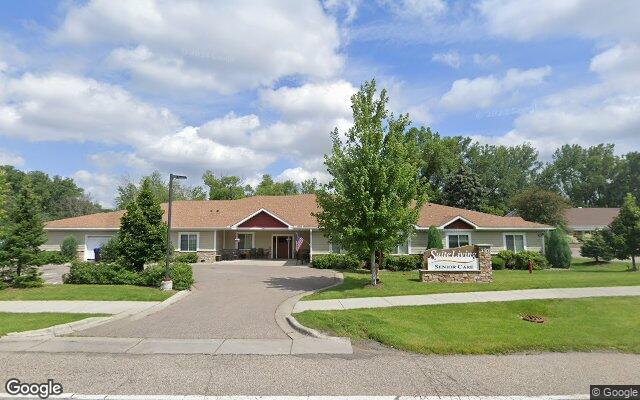
A medium home, reviewed on public record.
Compared to 187 Minnesota facilities with a similar number of beds.
ALF memory care · 36-month window. Higher percentile = better performance on inspection record. Source: Minnesota Dept. of Health · Health Regulation Division.
among peers to rank.
Rankings based on 36-month MDH inspection data. Severity and frequency: fewer citations = higher percentile. Repeat rate: lower repeat citation share = higher percentile.
Citation history, plotted month by month.
2 deficiencies on record. Each bar is a month with a citation.
Finding distribution
2 total · 36 monthsScope × Severity (CMS A–L)
Questions to ask before you visit.
A short pre-tour checklist tailored to Suite Living Senior Care of Ro's record and state requirements.
The most recent Minnesota Department of Health inspection was on May 1, 2025, and the facility has zero deficiencies on record across five inspections — can you walk us through the internal quality assurance process that has maintained compliance under Minn. Stat. ch. 144G dementia care standards?
Ask the operator on tour. Take notes and compare answers across facilities you visit.
Three complaints have been filed with MDH during the inspection period on file — were any of those complaints substantiated, and what documentation can you provide showing how the facility addressed the concerns raised?
Ask the operator on tour. Take notes and compare answers across facilities you visit.
As a licensed Assisted Living Facility with Dementia Care under chapter 144G, what written dementia care program policies can you share with families on a tour, and how do those policies translate into daily routines for the 25 residents in this building?
Ask the operator on tour. Take notes and compare answers across facilities you visit.
Every inspection visit, verbatim.
4 inspections in the public record, most recent first. Plain-language summaries open first — click into any row for the full citation text.
2026-04-22Complaint InvestigationSubstantiated Finding · 1 finding
Plain-language summary
The Minnesota Department of Health investigated a complaint of financial exploitation and found that a staff member used a resident's debit card for unauthorized personal purchases both before and after the resident's death, totaling hundreds of dollars at stores including Walgreens, Target, and Amazon; the staff member admitted to the conduct and was taken into custody by law enforcement. The facility was issued a correction order regarding the resident's right to be free from maltreatment, and the findings will be submitted to the nurse aide registry and Minnesota Department of Human Services for possible action against the employee.
Read full citation text (1)Hide full citation text
“MDH substantiated maltreatment or licensing violation finding”
Read raw inspector notesClose inspector notes
Finding: Substantiated, individual responsibility Nature of Investigation: The Minnesota Department of Health investigated an allegation of maltreatment, in accordance with the Minnesota Reporting of Maltreatment of Vulnerable Adults Act, Minn. Stat. 626.557, and to evaluate compliance with applicable licensing standards for the provider type. Initial Investigation Allegation(s): The alleged perpetrator (AP) financially exploited the resident when the AP used the resident credit card to make unauthorized purchases following the death of the resident. Investigative Findings and Conclusion: The Minnesota Department of Health determined financial exploitation was substantiated. The AP was responsible for the maltreatment. The AP admitted to using the residents debit card for personal purchases. The investigator conducted interviews with facility staff members, including administrative staff and unlicensed staff. The investigator contacted other non-facility interviews: law enforcement and the resident’s family member. The investigation included review of the resident record, personnel files, law enforcement documents, related facility policy and procedures. The resident resided in an assisted living facility memory care unit. The resident’s diagnoses included dementia and mental health conditions. The resident’s service plan included assistance with daily living activities. The resident’s assessment indicated the resident was independent with managing her finances and was disorientated at times. One day a concern arose when there were charges made to the residents debit card identified following the resident’s passing away. The debit card was last known to be in the possession of the resident, as she was in charge of her own finances. Law enforcement documentation indicated debit card purchases made on the day the resident date of death included Walgreens for $119.93, Speedway for $26.60, Doordash for $9.99. Additional purchases the day following the residents death included Speedway for $26.60, Target for $33.79, Amazon Prime $10.83, and a declined transaction at Target liquor for $99.74. Durning an interview law enforcement stated they investigated a report of fraudulent use of the resident’s debit card following the death of the resident. Law enforcement stated they received video surveillance during these purchases and were able to identify the AP. Law enforcement stated the AP admitted to using the resident’s debit card for personal purchases. Law enforcement stated the AP was taken into custody. During an interview, a family member stated the resident took care of her own finances, made her own purchases, and had a debit card in her possession while she lived at the facility. The family member stated they were unsure where the debit card was but the bank account has since been closed. During an interview, a manager of the facility was unaware of the incident until she was notified by law enforcement. The manager was unaware of where the residents’ debit card was following the incident. During an interview, the AP stated the resident had given the AP her debit card a couple of weeks prior to her death to purchase some items for the resident. The AP stated she never returned the debit card to the resident prior to the resident’s death and used it for personal purchases before and after the resident died. The AP stated she placed the debit card in a top dresser drawer in the residents room after using it. The AP stated she is going to court for the incident. In conclusion, the Minnesota Department of Health determined financial exploitation was substantiated. Substantiated: Minnesota Statutes, section 626.5572, Subdivision 19. “Substantiated” means a preponderance of evidence shows that an act that meets the definition of maltreatment occurred. Financial exploitation: Minnesota Statutes, section 626.5572, subdivision 9 (b) In the absence of legal authority, a person: (1) willfully uses, withholds, or disposes of funds or property of a vulnerable adult; (2) obtains for the actor or another the performance of services by a third person for the wrongful profit or advantage of the actor or another to the detriment of the vulnerable adult; (3) acquires possession or control of, or an interest in, funds or property of a vulnerable adult through the use of undue influence, harassment, duress, deception, or fraud; or (4) forces, compels, coerces, or entices a vulnerable adult against the vulnerable adult's will to perform services for the profit or advantage of another. Vulnerable Adult interviewed: No, is deceased. Family/Responsible Party interviewed: Yes. Alleged Perpetrator interviewed: Yes. Action taken by facility: No action taken. Action taken by the Minnesota Department of Health: The facility was issued a correction order regarding the vulnerable adult’s right to be free from maltreatment. To view a copy of the Statement of Deficiencies and/or correction orders, please visit: https://www.health.state.mn.us/facilities/regulation/directory/provcompselect.html You may also call 651-201-4200 to receive a copy via mail or email. The responsible party will be notified of their right to appeal the maltreatment finding. If maltreatment is substantiated against an identified employee, this report will be submitted to the nurse aide registry for possible inclusion of the finding on the abuse registry and/or to the Minnesota Department of Human Services for possible disqualification in accordance with the provisions of the background study requirements under Minnesota 245C. cc: The Office of Ombudsman for Long Term Care The Office of Ombudsman for Mental Health and Developmental Disabilities Ramsey County Attorney Roseville City Attorney Roseville Police Department PRINTED: 04/ 28/ 2026 FORM APPROVED STATEMENT OF DEFICIENCIES (X1) PROVIDER/ SUPPLIER/ CLIA (X2) MULTIPLE CONSTRUCTION (X3) DATE SURVEY AND PLAN OF CORRECTION IDENTIFICATION NUMBER: COMPLETED A. BUILDING: ______________________ C B. WING _____________________________ 33954 04/ 01/ 2026 NAME OF PROVIDER OR SUPPLIER STREET ADDRESS, CITY, STATE, ZIP CODE 197 COUNTY ROAD B2 WEST SUITE LIVING OF ROSEVILLE ROSEVILLE, MN 55113 SUMMARY STATEMENT OF DEFICIENCIES PROVIDER' S PLAN OF CORRECTION (X4) ID ID (X5) PREFIX (EACH DEFICIENCY MUST BE PRECEDED BY FULL PREFIX (EACH CORRECTIVE ACTION SHOULD BE COMPLETE REGULATORY OR LSC IDENTIFYING INFORMATION) CROSS- REFERENCED TO THE APPROPRIATE DATE TAG TAG DEFICIENCY) 0 000 Initial Comments 0 000 ******ATTENTION****** Assisted Living Provider 144G. ASSISTED LIVING PROVIDER CORRECTION Minnesota Department of Health is ORDER documenting the State Correction Orders using federal software. Tag numbers have In accordance with Minnesota Statutes, section been assigned to Minnesota State 144G. 08 to 144G. 95, these correction orders are Statutes for Assisted Living Facilities. The issued pursuant to a complaint investigation. assigned tag number appears in the far-left column entitled "ID Prefix Tag. " The Determination of whether a violation is corrected state Statute number and the requires compliance with all requirements corresponding text of the state Statute out provided at the statute number indicated below. of compliance is listed in the "Summary When a Minnesota Statute contains several Statement of Deficiencies" column. This items, failure to comply with any of the items will column also includes the findings which be considered lack of compliance. are in violation of the state requirement after the statement, "This Minnesota INITIAL COMMENTS: requirement is not met as evidenced by." Following the evaluators ' findings is the #HL339548864C / #HL339542480M Time Period for Correction. On April 1, 2026, the Minnesota Department of PLEASE DISREGARD THE HEADING Health conducted a complaint investigation at the OF THE FOURTH COLUMN WHICH above provider, and the following correction STATES, "PROVIDER' S PLAN OF orders are issued. At the time of the complaint CORRECTION. " THIS APPLIES TO investigation, there were 19 residents receiving FEDERAL DEFICIENCIES ONLY. THIS services under the provider ' s Comprehensive WILL APPEAR ON EACH PAGE. Assisted Living with Dementia Care license. THERE IS NO REQUIREMENT TO The following correction order is issued/ orders SUBMIT A PLAN OF CORRECTION FOR are issued for #HL339548864C / VIOLATIONS OF MINNESOTA STATE #HL339542480M, tag identification 2360. STATUTES. THE LETTER IN THE LEFT COLUMN IS USED FOR TRACKING PURPOSES AND REFLECTS THE SCOPE AND LEVEL ISSUED PURSUANT TO 144G. 31 SUBDIVISION 1-3. LABORATORY DIRECTOR' S OR PROVIDER/ SUPPLIER REPRESENTATIVE' S SIGNATURE TITLE (X6) DATE STATE FORM 6899 TCPV11 If continuation sheet 1 of 2 PRINTED: 04/ 28/ 2026 FORM APPROVED STATEMENT OF DEFICIENCIES (X1) PROVIDER/ SUPPLIER/ CLIA (X2) MULTIPLE CONSTRUCTION (X3) DATE SURVEY AND PLAN OF CORRECTION IDENTIFICATION NUMBER: COMPLETED A. BUILDING: ______________________ C B.
2026-04-08Complaint InvestigationSubstantiated Finding · 1 finding
Plain-language summary
A complaint investigation found that the facility neglected a resident by serving her a bacon, lettuce, and tomato sandwich that did not meet her ordered mechanical soft, minced diet; the resident choked on large pieces of bread and lettuce, was hospitalized for a week, and required intubation to clear her airway. The facility was responsible for the maltreatment, as the resident's diet order specified food minced to one-sixteenth to one-eighth inch in size, but staff served pieces the size of a quarter or larger and did not properly monitor that the order was followed. Prior to this incident, the resident had experienced multiple choking episodes that day during lunch, which were not reported to her medical provider or documented with any intervention.
Read full citation text (1)Hide full citation text
“MDH substantiated maltreatment or licensing violation finding”
Read raw inspector notesClose inspector notes
Finding: Substantiated, facility responsibility Nature of Investigation: The Minnesota Department of Health investigated an allegation of maltreatment, in accordance with the Minnesota Reporting of Maltreatment of Vulnerable Adults Act, Minn. Stat. 626.557, and to evaluate compliance with applicable licensing standards for the provider type. Initial Investigation Allegation(s): The facility neglected the resident when they failed to follow the resident’s diet order and was served food items that were not compliant to her diet order. The resident choked on the food and required hospitalization for a week. Investigative Findings and Conclusion: The Minnesota Department of Health determined neglect was substantiated. The facility was responsible for the maltreatment. The facility served the resident food that did not meet the guidelines for the resident’s ordered diet of mechanical soft, minced, no bread, and no salad. The resident was served a BLT (bacon, lettuce, tomato) sandwich with toasted bread. Large pieces of bread and lettuce were removed from the resident’s throat during the choking incident. The resident was hospitalized and required intubation. The investigator conducted interviews with facility staff members, including administrative staff, nursing staff, and unlicensed staff. The investigator contacted law enforcement. The investigation included review of the resident records, hospital records, facility internal investigation, facility incident reports, personnel files, staff schedules, law enforcement report, related facility policy and procedures. Also, the investigator observed meal service and feeding assistance provided to the resident while on site. The resident resided in an assisted living facility. The residents’ diagnoses included parkinsonism, cognitive impairment, and difficulty swallowing. The resident’s service plan included assistance with eating, toileting, mobility, transfers, and medication administration. The resident’s assessment incorrectly indicated the resident was independent with communication, eating, and drinking. The resident’s provider orders indicated the resident’s diet order, dated approximately four months prior to the choking incident, was mechanical soft texture, minced, no bread or salad. The resident’s progress note the day of the choking incident, authored by the facility nurse, indicated the resident had a choking episode earlier in the day during lunch. The note indicated the resident had soup with chicken in it when staff noticed the resident had difficulty, so back blows were delivered to the resident. The note indicated the resident was able to spit out the food. The note indicated staff noted the resident to have been having difficulty with food and liquid recently, including difficulty with water, watermelon and mashed potatoes over the past few weeks. The note lacked any documentation of intervention or notification to the resident’s medical provider for this concern. A progress note later in the day, indicated staff contacted the nurse to report the resident choked at dinner. Staff contacted the paramedics and sent the resident to the hospital. The law enforcement report indicated law enforcement responded to the choking incident. The resident had been transitioned from pureed food to a minced, softened food diet and was given food that was not chopped up finely enough that led to the resident choking. The resident was hospitalized for one week and required intubation during the hospital stay. The next day, a progress note indicated the resident admitted to the intensive care unit. Upon her arrival the night before, the resident’s airway was occluded (blocked) and hospital staff were unable to intubate. An emergency bronchoscopy was performed and a “bunch of food was removed.” The resident was then intubated. A week later, a progress note indicated the resident returned to the facility. New prescribed orders instructed a clear liquid diet and nectar thick liquids. Staff must be present when the resident is eating or drinking. A facility internal investigation document indicated the resident choked during dinner and was taken to the hospital. The document indicated there were four witnesses present during the incident (unlicensed personnel (ULP)-1, ULP-2, ULP-3, and the facility cook). The facility document indicated during an internal investigation interview, the cook stated the meal served was a BLT, blueberries, raspberries, and potato rounds. The cook stated the resident’s meal was cut up and minced to the size of a pea. The cook stated she cut up the resident’s food extra small because she knew the resident did not wear her dentures, and the resident swallowed her food whole. The cook stated you can make bacon soft, and the toast was not hard. ULP-2 stated the resident’s food was cut up, not finely cut, and was the size of a quarter. ULP-2 stated the resident did not eat the fruit and the BLT was toasted. ULP-2 stated the resident’s diet order was finely cut, chopped up, and if the resident was to get finely chopped, then the resident’s diet order was not followed. ULP-3 stated the resident’s food was cut up to the size of a quarter when she choked on it. ULP-1 stated the resident’s sandwich was cut up in small pieces, and she pulled pieces of bread out of the resident’s mouth when the resident began choking. ULP-1 stated when emergency services staff arrived, they pulled a big piece of lettuce out of the resident’s throat, and once the lettuce was removed, the resident started to have color return to her face. ULP-1 stated she did not believe the resident’s diet order was followed because the bacon on the sandwich was crispy and the piece of lettuce was long. A facility provided document that included pictures and descriptions of altered diet types indicated chopped foods required to be a half to three quarters of an inch in size, and minced foods required to be one sixteenth to one eighth inch in size. The document indicated to eat lettuce on a mechanically soft diet, it should be shredded or minced and mixed with moist ingredients to keep it from getting dry. During an interview, the nurse stated her typical work duties included communication to the residents’ providers and families and was responsible for all resident assessments. The nurse stated if a resident had difficulty swallowing, the information was sent to their provider to get an order on how to proceed such as a diet change or to get a swallow study done. The nurse stated staff know the residents’ diet orders because they were listed on their care plans on the computer, in the paper care plans in their charts, and in the care plan book at the nurse’s station. The nurse stated there was also a whiteboard on the kitchen door with a chart that stated where the resident sat for meals and any special precautions they may need. The nurse stated if there were changes to a resident’s diet, it was written in the communication book, and verbal updates were given during shift changes. The nurse stated staff received training upon hire on resident diet types. The RN stated the cook prepares regular meals first, then any special diets next. The nurse stated the cook was responsible for ensuring residents are given the correct meal at mealtime, as she always communicated resident diets to the cook verbally and by written form. The nurse stated difficulty swallowing is a change in condition and should be reported to the resident’s provider. The nurse stated the resident did not like to wear her teeth and did not believe the resident was on a special diet prior to the choking incident. During an interview, ULP-1 stated at meals times, the cook set the plates out and told them which resident it was for. ULP-1 stated the residents’ diets were listed on the computer, and staff learned every residents’ diet over time. ULP-1 stated if a caregiver did not know what diet a resident had, the cook handed it to them, and they assumed the cook knew. ULP-1 stated the resident received a cut up BLT and was feeding herself during the meal when she had a choking incident. ULP-1 stated there were days the resident could feed herself, and days she needed assistance. ULP-1 stated the resident began to cough, and when staff realized she was not clearing the cough, they removed her from the dining room and attempted the Heimlich maneuver. ULP-1 stated another staff member called 911, and the resident was placed on the floor. ULP-1 stated law enforcement arrived, and they pulled a long piece of lettuce and pieces of sandwich out of the resident’s throat before taking the resident to the hospital.
2025-05-01Annual Compliance VisitNo findings
Plain-language summary
A follow-up survey on June 26, 2025 found that a correction order from the May 1, 2025 inspection regarding the infection control program had not been corrected. The facility remains in substantial compliance overall, and no fines were assessed at this time, but the facility must document the actions it takes to address the outstanding correction order.
Read full citation textHide full citation text
Read raw inspector notesClose inspector notes
correction orders issued pursuant to the May 1, 2025 survey. The Department of Health concludes the licensee is in substantial compliance. State law requires the facility must take action to correct the state correction orders and document the actions taken to comply in the facility's records. The Department reserves the right to return to the facility at any time should the Department receive a complaint or deem it necessary to ensure the health, safety, and welfare of residents in your care. In accordance with Minn. Stat. § 144G.31 Subd. 4 (a), state correction orders issued pursuant to the last survey, completed on May 1, 2025, found not corrected at the time of the June 26, 2025, follow-up survey and/or subject to penalty assessment are as follows: 0510-Infection Control Program-144g.41 Subd. 3 The details of the violations noted at the time of this follow-up survey completed on June 26, 2025 (listed above), are on the attached State Form. Brackets around the ID Prefix Tag in the left hand column, e.g., {2 ----} will identify the uncorrected tags. In accordance with Minn. Stat. § 144G.31 Subd. 4, MDH may assess fines based on the level and scope of the violations; h owever, no immediate fines are assessed for this survey of your facility. DOCUMENTATION OF ACTION TO COMPLY In accordance with Minn. Stat. § 144G.30, Subd. 5(c), the licensee must document actions taken to comply with the correction orders outlined on the state form; however, plans of correction are not required to be submitted for approval. IMPOSITION OF FINES: Level 1: no fines or enforcement. An equal opportunity employer. Letter ID: 8GKP Revised 04/14/2023 Suite Living of Roseville July 8, 2025 Page 2 Level 2: a fine of $500 per violation, in addition to any enforcement mechanism authorized in §144G.20 for widespread violations; Level 3: a fine of $3,000 per violation per incident, in addition to any enforcement mechanism authorized in §144G.20. Level 4: a fine of $5,000 per incident, in addition to any enforcement mechanism authorized in §144 G.20. CORRECTION ORDER RECONSIDERATION PROCESS In accordance with Minn. Stat. § 144G.32, Subd. 2, you may challenge the correction order(s) issued, including the level and scope, and any fine assessed through the correction order reconsideration process. The request for reconsideration must be in writing and received by MDH within 15 calendar days of the correction order receipt date. To submit a reconsideration request, please visit: https://forms.web.health.state.mn.us/form/HRDAppealsForm We urge you to review these orders carefully. If you have questions, please contact Jess Schoenecker at 651-201-3789. You are encouraged to retain this document for your records. It is your responsibility to share the information contained in the letter and/or state form with your organization’s Governing Body. Sincerely, Jess Schoenecker, Supervisor State Evaluation Team Email: Jess.Schoenecker@state.mn.us Telephone: 651-201-3789 Fax: 1-866-890-9290 KKM PRINTED: 07/08/2025 FORM APPROVED STATEMENT OF DEFICIENCIES (X1) PROVIDER/SUPPLIER/CLIA (X2) MULTIPLE CONSTRUCTION (X3) DATE SURVEY AND PLAN OF CORRECTION IDENTIFICATION NUMBER: COMPLETED A. BUILDING: ______________________ R B. WING _____________________________ 33954 06/26/2025 NAME OF PROVIDER OR SUPPLIER STREET ADDRESS, CITY, STATE, ZIP CODE 197 COUNTY ROAD B2 WEST SUITE LIVING OF ROSEVILLE ROSEVILLE, MN 55113 SUMMARY STATEMENT OF DEFICIENCIES PROVIDER'S PLAN OF CORRECTION (X4) ID ID (X5) PREFIX (EACH DEFICIENCY MUST BE PRECEDED BY FULL PREFIX (EACH CORRECTIVE ACTION SHOULD BE COMPLETE REGULATORY OR LSC IDENTIFYING INFORMATION) CROSS-REFERENCED TO THE APPROPRIATE DATE TAG TAG DEFICIENCY) {0 000} Initial Comments {0 000} ******ATTENTION****** Minnesota Department of Health is documenting the State Correction Orders ASSISTED LIVING PROVIDER FOLLOW UP using federal software. Tag numbers have SURVEY WITH RE-ISSUE OF ORDERS been assigned to Minnesota State Statutes for Assisted Living Facilities. The INITIAL COMMENTS assigned tag number appears in the SL33954016-1 far-left column entitled "ID Prefix Tag." The state Statute number and the On June 24, 2025, to June 26, 2025, the corresponding text of the state Statute out follow-up survey at the above provider to Statement of Deficiencies" column. This follow-up on orders issued pursuant to a survey column also includes the findings which completed on May 1, 2025. At the time of the are in violation of the state requirement survey, there were 20 residents; all 20 residents after the statement, "This Minnesota were receiving services under the Assisted Living requirement is not met as evidenced by." with Dementia Care license. As a result of the Following the evaluators ' findings is the follow-up survey, the following orders were Time Period for Correction. reissued. PLEASE DISREGARD THE HEADING OF THE FOURTH COLUMN WHICH STATES,"PROVIDER'S PLAN OF CORRECTION." THIS APPLIES TO FEDERAL DEFICIENCIES ONLY. THIS WILL APPEAR ON EACH PAGE. THERE IS NO REQUIREMENT TO SUBMIT A PLAN OF CORRECTION FOR VIOLATIONS OF MINNESOTA STATE STATUTES. THE LETTER IN THE LEFT COLUMN IS USED FOR TRACKING PURPOSES AND REFLECTS THE SCOPE AND LEVEL ISSUED PURSUANT TO 144G.31 SUBDIVISION 1-3. {0 480} 144G.41 Subdivision 1 Subd. 1a (a-b) Minimum {0 480} SS=F requirements; required food services LABORATORY DIRECTOR'S OR PROVIDER/SUPPLIER REPRESENTATIVE'S SIGNATURE TITLE (X6) DATE STATE FORM 6899 58DH12 If continuation sheet 1 of 13 PRINTED: 07/08/2025 FORM APPROVED STATEMENT OF DEFICIENCIES (X1) PROVIDER/SUPPLIER/CLIA (X2) MULTIPLE CONSTRUCTION (X3) DATE SURVEY AND PLAN OF CORRECTION IDENTIFICATION NUMBER: COMPLETED A. BUILDING: ______________________ R B. WING _____________________________ 33954 06/26/2025 NAME OF PROVIDER OR SUPPLIER STREET ADDRESS, CITY, STATE, ZIP CODE 197 COUNTY ROAD B2 WEST SUITE LIVING OF ROSEVILLE ROSEVILLE, MN 55113 SUMMARY STATEMENT OF DEFICIENCIES PROVIDER'S PLAN OF CORRECTION (X4) ID ID (X5) PREFIX (EACH DEFICIENCY MUST BE PRECEDED BY FULL PREFIX (EACH CORRECTIVE ACTION SHOULD BE COMPLETE REGULATORY OR LSC IDENTIFYING INFORMATION) CROSS-REFERENCED TO THE APPROPRIATE DATE TAG TAG DEFICIENCY) {0 480} Continued From page 1 {0 480} (a) Except as provided in paragraph (b), food must be prepared and served according to the Minnesota Food Code, Minnesota Rules, chapter 4626. (b) For an assisted living facility with a licensed capacity of ten or fewer residents: (1) notwithstanding Minnesota Rules, part 4626.0033, item A, the facility may share a certified food protection manager (CFPM) with one other facility located within a 60-mile radius and under common management provided the CFPM is present at each facility frequently enough to effectively administer, manage, and supervise each facility's food service operation; (2) notwithstanding Minnesota Rules, part 4626.0545, item A, kick plates that are not removable or cannot be rotated open are allowed unless the facility has been issued repeated correction orders for violations of Minnesota Rules, part 4626.1565 or 4626.1570; (3) notwithstanding Minnesota Rules, part 4626.0685, item A, the facility is not required to provide integral drainboards, utensil racks, or tables large enough to accommodate soiled and clean items that may accumulate during hours of operation provided soiled items do not contaminate clean items, surfaces, or food, and clean equipment and dishes are air dried in a manner that prevents contamination before storage; (4) notwithstanding Minnesota Rules, part 4626.1070, item A, the facility is not required to install a dedicated handwashing sink in its existing kitchen provided it designates one well of a two-compartment sink for use only as a handwashing sink; (5) notwithstanding Minnesota Rules, parts 4626.1325, 4626.1335, and 4626.1360, item A, existing floor, wall, and ceiling finishes are STATE FORM 6899 58DH12 If continuation sheet 2 of 13 PRINTED: 07/08/2025 FORM APPROVED STATEMENT OF DEFICIENCIES (X1) PROVIDER/SUPPLIER/CLIA (X2) MULTIPLE CONSTRUCTION (X3) DATE SURVEY AND PLAN OF CORRECTION IDENTIFICATION NUMBER: COMPLETED A. BUILDING: ______________________ R B. WING _____________________________ 33954 06/26/2025 NAME OF PROVIDER OR SUPPLIER STREET ADDRESS, CITY, STATE, ZIP CODE 197 COUNTY ROAD B2 WEST SUITE LIVING OF ROSEVILLE ROSEVILLE, MN 55113 SUMMARY STATEMENT OF DEFICIENCIES PROVIDER'S PLAN OF CORRECTION (X4) ID ID (X5) PREFIX (EACH DEFICIENCY MUST BE PRECEDED BY FULL PREFIX (EACH CORRECTIVE ACTION SHOULD BE COMPLETE REGULATORY OR LSC IDENTIFYING INFORMATION) CROSS-REFERENCED TO THE APPROPRIATE DATE TAG TAG DEFICIENCY) {0 480} Continued From page 2 {0 480} allowed provided the facility keeps them clean and in good condition; (6) notwithstanding Minnesota Rules, part 4626.1375, shielded or shatter-resistant lightbulbs are not required, but if a light bulb breaks, the facility must discard all exposed food and fully clean all equipment, dishes, and surfaces to remove any glass particles; and (7) notwithstanding Minnesota Rules, part 4626.1390, toilet rooms are not required to be provided with a self-closing door. This MN Requirement is not met as evidenced by: Not reviewed during this survey. {0 510} 144G.41 Subd.
2025-04-21Complaint InvestigationNo findings
Plain-language summary
The Minnesota Department of Health investigated a complaint that a staff member poured water on a resident, and found the allegation inconclusive because witness accounts conflicted—one unlicensed staff member stated the water was poured intentionally on the resident's head, while the staff member in question said a glass of water accidentally spilled during a transfer. No violation was determined due to insufficient evidence to prove the allegation either occurred or did not occur.
Read full citation textHide full citation text
Read raw inspector notesClose inspector notes
Finding: Inconclusive Nature of Investigation: The Minnesota Department of Health investigated an allegation of maltreatment, in accordance with the Minnesota Reporting of Maltreatment of Vulnerable Adults Act, Minn. Stat. 626.557, and to evaluate compliance with applicable licensing standards for the provider type. Initial Investigation Allegation(s): The alleged perpetrator (AP), a staff member, abused the resident when the AP poured water on the resident. Investigative Findings and Conclusion: The Minnesota Department of Health determined abuse was inconclusive. There were conflicting reports of the incident. A witness stated the AP poured water on the resident when the AP became frustrated however, the AP denied pouring water on the resident. The investigator conducted interviews with facility staff members, including administrative staff, nursing staff, unlicensed staff, and the AP. The investigation included review of the resident records, facility internal investigation, incident reports, a personnel file, and related facility policy and procedures. Also, the investigator observed the resident and staff interactions with the resident. The resident resided in an assisted living memory care unit. The resident’s diagnoses included Parkinson’s disease and Alzheimer’s dementia. The resident’s service plan included assistance with dressing, bathing, toileting, and assistance with transfers using a mechanical lift. The resident’s behavior plans included assistance with managing the resident’s agitation, physical and verbal aggression, hallucinations, delusions, reluctance to accept care, and adjustment to residing in an assisted living. The resident’s assessment indicated the resident had unsafe behaviors including placing herself on the floor and unsafe self-transfers. The resident used a wheelchair for mobility and was not oriented to person, place, and time. The facility’s internal investigation indicated one day it was reported the resident was hanging halfway off her bed. The AP requested another unlicensed personnel to assist her. The unlicensed personnel stated the AP told the resident she was “tired” of her and proceeded to pour cold water on the resident and the AP walked out of the room. During an interview, an unlicensed personnel stated the AP asked for assistance with the resident. The resident was halfway out of her wheelchair and her upper body was halfway in bed. The unlicensed personnel stated the AP said she was “tired” of the resident jumping out of her wheelchair. The unlicensed personnel stated the AP took a cup of water and poured the water on the resident’s head and left the room. The unlicensed personnel stated there was enough water in the cup that the resident’s hair got wet. The unlicensed personnel dried the resident’s hair and finished assisting the resident into bed. During an interview, the AP denied pouring water on the resident. The AP said it may have appeared that she had, however she had a glass of water in her hand for the resident to drink. The AP stated she was attempting to assist the resident into bed when the glass of water slipped out of her hand, landed on the resident and the resident’s bed. During an interview, a nurse stated the resident had dementia and had several behaviors. At times, the resident threw plates, threw food, threw drinking cups, and spilled drinking cups of fluid throughout the building. The facility conducted an internal investigation. The AP and another unlicensed personnel were in the resident’s room assisting the resident. An unlicensed personnel said he witnessed the AP pour water on top of the resident’s head, which was enough water to cause the resident’s hair to become wet. The AP denied pouring water on the resident. During an interview, leadership stated the AP denied pouring water on the resident. In conclusion, the Minnesota Department of Health determined abuse was inconclusive. Inconclusive: Minnesota Statutes, section 626.5572, Subdivision 11. "Inconclusive" means there is less than a preponderance of evidence to show that maltreatment did or did not occur. Abuse: Minnesota Statutes section 626.5572, subdivision 2. "Abuse" means: (a) An act against a vulnerable adult that constitutes a violation of an attempt to violate, or aiding and abetting a violation of: (1) assault in the first through fifth degrees as defined in sections 609.221 to 609.224; (2) the use of drugs to injure or facilitate crime as defined in section 609.235; (3) the solicitation, inducement, and promotion of prostitution as defined in section 609.322; and (4) criminal sexual conduct in the first through fifth degrees as defined in sections 609.342 to 609.3451. A violation includes any action that meets the elements of the crime, regardless of whether there is a criminal proceeding or conviction. (b) Conduct which is not an accident or therapeutic conduct as defined in this section, which produces or could reasonably be expected to produce physical pain or injury or emotional distress including, but not limited to, the following: (1) hitting, slapping, kicking, pinching, biting, or corporal punishment of a vulnerable adult; (2) use of repeated or malicious oral, written, or gestured language toward a vulnerable adult or the treatment of a vulnerable adult which would be considered by a reasonable person to be disparaging, derogatory, humiliating, harassing, or threatening; or (3) use of any aversive or deprivation procedure, unreasonable confinement, or involuntary seclusion, including the forced separation of the vulnerable adult from other persons against the will of the vulnerable adult or the legal representative of the vulnerable adult unless authorized under applicable licensing requirements or Minnesota Rules, chapter 9544. (c) Any sexual contact or penetration as defined in section 609.341, between a facility staff person or a person providing services in the facility and a resident, patient, or client of that facility. (d) The act of forcing, compelling, coercing, or enticing a vulnerable adult against the vulnerable adult's will to perform services for the advantage of another. Vulnerable Adult interviewed: Yes. Family/Responsible Party interviewed: Yes. Alleged Perpetrator interviewed: Yes. Action taken by facility: The facility conducted an internal investigation and reeducated all staff on reporting requirements, reporting immediately, and trained on the facility’s reporting policy. The AP is no longer employed by the facility. Action taken by the Minnesota Department of Health: No further action taken at this time. cc: The Office of Ombudsman for Long Term Care The Office of Ombudsman for Mental Health and Developmental Disabilities PRINTED: 04/24/2025 FORM APPROVED STATEMENT OF DEFICIENCIES (X1) PROVIDER/SUPPLIER/CLIA (X2) MULTIPLE CONSTRUCTION (X3) DATE SURVEY AND PLAN OF CORRECTION IDENTIFICATION NUMBER: COMPLETED A. BUILDING: ______________________ C B. WING _____________________________ 33954 03/11/2025 NAME OF PROVIDER OR SUPPLIER STREET ADDRESS, CITY, STATE, ZIP CODE 197 COUNTY ROAD B2 WEST SUITE LIVING OF ROSEVILLE ROSEVILLE, MN 55113 SUMMARY STATEMENT OF DEFICIENCIES PROVIDER'S PLAN OF CORRECTION (X4) ID ID (X5) PREFIX (EACH DEFICIENCY MUST BE PRECEDED BY FULL PREFIX (EACH CORRECTIVE ACTION SHOULD BE COMPLETE REGULATORY OR LSC IDENTIFYING INFORMATION) CROSS-REFERENCED TO THE APPROPRIATE DATE TAG TAG DEFICIENCY) 0 000 Initial Comments 0 000 ******ATTENTION****** ASSISTED LIVING PROVIDER CORRECTION ORDER In accordance with Minnesota Statutes, section 144G.08 to 144G.95, these correction orders are issued pursuant to a complaint investigation. Determination of whether a violation is corrected requires compliance with all requirements provided at the statute number indicated below. When a Minnesota Statute contains several items, failure to comply with any of the items will be considered lack of compliance. INITIAL COMMENTS: #HL339547484C/#HL339549142M #HL339549061C/#HL339549682M On March 11, 2025, the Minnesota Department of Health conducted a complaint investigation at the above provider, and the following correction orders are issued. At the time of the complaint investigation, there were 20 residents receiving services under the provider's Assisted Living with Dementia Care license. For #HL339547484C/#HL339549142M. No correction orders are issued. The following correction order is issued for #HL339549061C/#HL339549682M, tag identification 2360. 02360 144G.91 Subd. 8 Freedom from maltreatment 02360 LABORATORY DIRECTOR'S OR PROVIDER/SUPPLIER REPRESENTATIVE'S SIGNATURE TITLE (X6) DATE STATE FORM 6899 YF0711 If continuation sheet 1 of 2 PRINTED: 04/24/2025 FORM APPROVED STATEMENT OF DEFICIENCIES (X1) PROVIDER/SUPPLIER/CLIA (X2) MULTIPLE CONSTRUCTION (X3) DATE SURVEY AND PLAN OF CORRECTION IDENTIFICATION NUMBER: COMPLETED A. BUILDING: ______________________ C B.
2 older inspections from 2022 are not shown above.
Get the complete record, translated into plain language — emailed to you.
Other facilities in Ramsey County.
Other memory care facilities in Ramsey County with similar care offerings.
Full Inspection Record
Family reviews
No reviews yet — be the first to share your experience
Other memory care options nearby.
More options in neighboring cities
Licensed memory care in other cities within this county region — useful when your search radius crosses city limits.