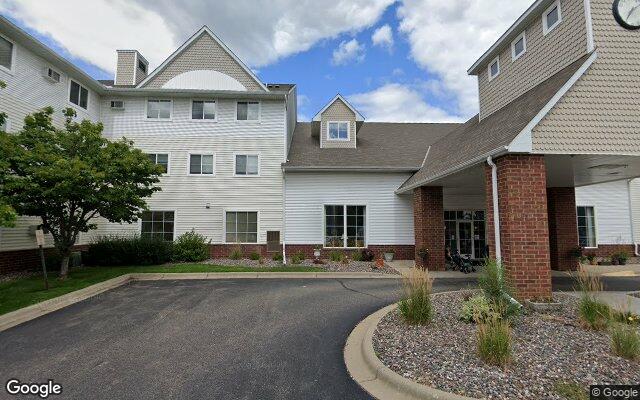
Norbella of Champlin.
A medium home, reviewed on public record.
Compared to 187 Minnesota facilities with a similar number of beds.
ALF memory care · 36-month window. Higher percentile = better performance on inspection record. Source: Minnesota Dept. of Health · Health Regulation Division.
among peers to rank.
Rankings based on 36-month MDH inspection data. Severity and frequency: fewer citations = higher percentile. Repeat rate: lower repeat citation share = higher percentile.
Citation history, plotted month by month.
2 deficiencies on record. Each bar is a month with a citation.
Finding distribution
2 total · 36 monthsScope × Severity (CMS A–L)
Questions to ask before you visit.
A short pre-tour checklist tailored to Norbella of Champlin's record and state requirements.
Three complaints were filed with the Minnesota Department of Health during the inspection period on file — were any of those complaints substantiated, and can you share documentation of how the facility responded to substantiated findings?
Ask the operator on tour. Take notes and compare answers across facilities you visit.
The facility holds an Assisted Living Facility with Dementia Care license under Minnesota Statutes chapter 144G — can you walk families through the written dementia care program and explain how it meets the state's specific requirements for memory care services?
Ask the operator on tour. Take notes and compare answers across facilities you visit.
The most recent inspection on February 13, 2026 resulted in zero deficiencies across five total reports — can you provide families with copies of recent MDH inspection reports and explain the facility's internal quality assurance process that supports this record?
Ask the operator on tour. Take notes and compare answers across facilities you visit.
Every inspection visit, verbatim.
4 inspections in the public record, most recent first. Plain-language summaries open first — click into any row for the full citation text.
2026-02-13Annual Compliance VisitNo findings
2025-11-24Complaint InvestigationNo findings
Plain-language summary
The Minnesota Department of Health investigated allegations that a staff member yelled at the resident while caring for an elbow wound after a fall, and that another staff member ignored the resident's pain complaints and requests for help; both allegations were determined to be inconclusive due to limited video evidence and conflicting observations. The resident was later found to have a hip fracture and was hospitalized; a nurse had ordered two-hourly safety checks and pain management following the fall. The investigation included review of medical records, incident reports, policies, and interviews with staff and family.
Read full citation textHide full citation text
Read raw inspector notesClose inspector notes
Finding: Inconclusive Nature of Investigation: The Minnesota Department of Health investigated an allegation of maltreatment, in accordance with the Minnesota Reporting of Maltreatment of Vulnerable Adults Act, Minn. Stat. 626.557, and to evaluate compliance with applicable licensing standards for the provider type. Initial Investigation Allegation(s): Allegation #1: Alleged perpetrator (AP) #1 abused the resident when she yelled at him while providing cares. Allegation #2: AP #2 neglected the resident when she ignored his request for help and his complaints of pain following a fall. Later, the resident was transported to the hospital for evaluation, where he was diagnosed with a right hip fracture. Investigative Findings and Conclusion Allegation #1: The Minnesota Department of Health determined abuse was inconclusive. Although video footage captured AP #1 speaking loudly to the resident, telling him to stop picking at what appeared to be a small wound on his right elbow from a fall, he can be heard telling her not to do something; however, the audio ends mid-sentence and the remainder of the exchange occurred off camera. Allegation #2: The Minnesota Department of Health determined neglect was inconclusive During cares, the resident complained of leg pain and requested help, and it appeared AP #2 did not address his concerns nor took steps to address his pain. However, AP #2 did approach AP #1 regarding the reports of pain and AP #1 did check back with the resident before the end of the shift. The investigator conducted interviews with administrative staff, and a family member. The investigation included review of the resident’s records, incident reports, staffing schedules, policies, and procedures. The resident resided in an assisted living secured memory care building. The resident’s diagnoses include dementia. The resident’s service plan included assistance with all activities of daily living. The resident’s assessment indicated he used two wheel walker and needed stand by assisted with transfer and mobility. Around 5:49 p.m., the resident was found lying on his back at the nurse station. The incident report indicated the resident told caregivers he had been trying to clean his nose and tripped. The same document indicated vital signs were taken, which were within normal limits, and the on-call nurse notified. The resident had a quarter-sized scratch on his right elbow and nurse directed the area to be cleaned and covered with a bandage. The report indicated the resident could move his arms and legs as usual and his cognition was at baseline. The nurse instructed AP #1 to check on the resident every two hours for signs of pain, injury, and difficulty with walking or transferring. AP #1 verbalized understanding. The report was signed at 6:39 p.m. on the same day. The resident’s service plan was updated the same day, with every-two-hour safety checks scheduled at 6:30 p.m., 8:30 p.m., 10:30 p.m., 12:30 a.m., and so on. Several short video clips were reviewed for the events which occurred in the resident’s room after the fall. AP #1 At 6:03 p.m., video footage showed AP #1 pushing the resident in his wheelchair into the room and turn into the bathroom, which was out of view. As AP #1 turned the resident into the bathroom, his right side came into view and a wound on his right elbow became visible. Once the two were in the bathroom and out of view, AP #1 could be heard asking the resident to stand up. At 6:09 p.m., video footage showed AP #1 walking out of the bathroom to retrieve the resident’s wheelchair. As AP #1 re-entered the bathroom, the audio recorded her speaking loudly say stop picking at “it”. While out of view, AP #1 and the resident begin talking over each other with AP #1 repeating to stop picking/touching it and the resident saying “Hey…. Don’t sla…” with the video and audio cutting off at that moment. At the time of this verbal exchange, neither the resident nor AP #1 are within view. The resident’s medication sheet indicated AP #1 administered two 500-mg tablets of acetaminophen at 8:00 p.m. for pain. During the interview, AP#1 stated the resident had fallen and she called the nurse. AP#1 took his vital signs, and the resident complained of pain in his arm. She said she took him to the bathroom, cleaned the wound, and applied a bandage. She stated she did not slap him to stop him from picking at his wound but did direct him away from it. During the investigation, the resident could not be interviewed due to cognitive loss. The Minnesota Department of Health determined abuse was inconclusive regarding AP #1. AP #2 At 8:58 p.m., later that same evening, the video showed AP #2 pushing the resident in the room in his wheelchair. The resident said, “My leg,” while she pushed him to the side of the bed. She removed the blanket from his bed and asked him to stand up. The resident stated his leg hurt so badly that he could not stand. He attempted several times on his own but was unable to stand, so she assisted by grabbing his pants from behind. AP #2 pulled his pant from the back and pivoted him onto his bed. AP #2 asked him to lift his legs, and he was able to lift them himself. After lying down, he asked, “What do I do now?” She told him to scoot up in the bed, and he asked her for help. Instead of assisting him, she stood at the side of the bed and watched him. The resident said his leg hurt and she needed to help him. AP #2 told him she would give him some pills tomorrow. He said he needed help, did not know what to do and repeatedly stated his leg hurt. AP #2 repeatedly responded, “You are okay. You are fine,” while he continued saying, “This leg hurts so bad, please come back.” At 9:03 p.m., the video footage showed the resident continuing to ask for help while AP #2 remained in the room. She said, “You are in bed. Sleep.” He then asked for his walker, and she told him she would go check. She turned off the light and left the room. At 9: 13 p.m., the video showed AP#2 entering the room and retrieving the walker from the resident’s bathroom, placing it beside his bed. He asked for help, and she responded, “Good night.” At 9:35 p.m., the video showed AP #1 enter the room, do something towards the resident and the said “Good night. It’s time to sleep”. At 10:03 p.m., the video showed a caregiver open the door to check on the resident, who was apparently asleep. AT 12:05 a.m., the video showed a caregiver enter the room, who found the resident on the floor next to his bed. During an interview, AP#2 stated she was working as a float caregiver that day. She said she was sitting in the common area when the resident fell the first time, and she assisted the caregiver in helping him up. AP #2 stated she was not trained to administer medication, and that AP#1 was responsible for caring for the resident that night. She also said that around 9 p.m., the resident asked her to put him to bed. She stated she could not remember whether she put him to bed by herself or with another caregiver, but she recalled that he had a regular bed and was complaining that his leg was in pain. She said she informed AP#1 about his pain but did not notify the nurse. She then walked to a different station and later returned to check on the resident, at which time she saw him asleep. During the same interview cited above, AP #1 stated she was working with another client when AP#2 came to inform her the resident was in pain. She said she told her that she was busy and would check on him when she was finished. When she went to his room, the resident was already asleep, so she did not administer any pain medication that night. She stated the only pain the resident had was the pain in his arm, which she had already addressed. She said she was terminated because of this incident. During an interview, a family member stated the nurse called to notify her about the first fall.
2025-10-15Complaint InvestigationSubstantiated Finding · 1 finding
Plain-language summary
The Minnesota Department of Health investigated a substantiated abuse complaint involving unwanted touching of a resident's breast by a staff member. Facility surveillance footage confirmed that the staff member placed her hand on the resident's breast and made a groping motion while the resident was sitting calmly by the nurse's station; the resident became upset and pushed the staff member away, and the staff member continued to attempt physical contact despite the resident's resistance. The staff member was found individually responsible for the maltreatment.
Read full citation text (1)Hide full citation text
“MDH substantiated maltreatment or licensing violation finding”
Read raw inspector notesClose inspector notes
Finding: Substantiated, individual responsibility S N O Nature of Investigation: C The Minnesota Department of Health investigated an allegation of maltreatment, in accordance E with the Minnesota Reporting of MRaltreatment of Vulnerable Adults Act, Minn. Stat. 626.557, and to evaluate compliance with applicable licensing standards for the provider type. R O F Initial Investigation Allegation(s): T The alleged perpetrator (AP) abused the resident when the AP performed unwanted touch of S the resident’s breast. E U Q Investigative Findings and Conclusion: E The Minnesota Department of Health determined abuse was substantiated. The AP was R responsible for the maltreatment. The facility surveillance footage showed the AP approach the resident, who was sitting calmly near the nurse’s station, and place her arm around the resident’s shoulders, place her hand on the resident’s breast, and move her hand around on the resident’s breast in a groping motion. This action resulted in the resident becoming upset and physically grabbing the AP’s hand and pushing it away from her. The AP continued to attempt to physically touch the resident’s hands and/or arms, and the resident continued to push the AP away from her. The investigator conducted interviews with facility staff members, including administrative staff, nursing staff, and unlicensed staff. The investigator contacted law enforcement and a family member. The investigation included review of the resident records, facility internal investigation, facility incident reports, personnel files, staff schedules, law enforcement report, and related facility policy and procedures. Also, the investigator observed staff interactions with the resident while on site. The resident resided in an assisted living memory care unit. The resident’s diagnoses included dementia and adjustment disorder. The resident’s service plan included assistance with D behavior observation, safety checks, toileting, and dressing. The resident’s assessment E indicated the resident required assistance with mobility in her wheelchair, anVd may require staff I intervention for refusals of care, verbal and physical aggression, and wandEering into others’ C space. E R A facility incident report indicated the resident was sitting in her wheelchair next to the nurse’s N station when the AP approached the resident and draped her arm around the resident’s O shoulders. The report indicated the AP placed her left hand oIn the resident’s left breast, and T the resident attempted to remove the AP’s arm from heAr shoulder and roll herself away from R the nurse’s station. The report indicated the AP grabbed the front of the resident’s wheelchair E and pulled her back towards the nursing station. The resident swatted the AP’s hand away, D grabbed the AP’s hand and twisted the AP’s armI. The report indicated the resident then let go S of the AP’s arm and backed herself away from the AP. The AP attempted to grab the resident’s N O wheelchair, and the resident then attempted to hit and kick the AP. The report indicated C unlicensed personnel (ULP)-4 walked over to the resident, and the AP then left the interaction. E R The investigator viewed the facility video surveillance footage of the reported incident. The R investigator watched the footage and observed the resident sitting in her wheelchair by herself O at the nurse’s station. TheF resident appeared calm and quiet. The AP approached the resident from behind and placedT her arm around the shoulders of the resident. The AP then made a S groping motion, cupping from the top of the resident’s left breast with her left hand. The AP did E not touch the side of the bra, in an action of pulling the bra down for adjusting. The resident U Q became agitated and attempted to remove the AP’s arm from her. She move her wheelchair E back and away from the AP. The AP then grabbed the front arm rest bar of the wheelchair and R pulled the resident back toward her. The resident became further agitated and attempted to hit the AP. The AP continued to attempt to grab the resident’s wheelchair and pull the resident close to her. The law enforcement report indicated law enforcement responded to the facility for unwelcome sexual contact to a resident by an employee. The report indicated the officer viewed the video surveillance footage and observed the AP place her open left hand on the resident’s left breast over her clothing, and the resident appeared startled by the touch. During investigative interviews, other ULP stated staff are trained on abuse and it would not be ok for a staff member to touch or grope a resident’s breast on top of their clothes. Staff should not touch a resident’s breast aside from helping them get dressed. ULPs stated if a resident was agitated, staff should not continue to aggravate them. During an interview, ULP-4 stated she was being trained by the AP as it was her first day in the building when the AP touched the resident. ULP-4 stated she thought the AP was tickling the resident in her armpit, and the resident became agitated. ULP-4 stated the AP told her it was the time of day the resident always gets agitated. D E During an interview, ULP-1 stated staff received training on abuse and neglectV, and it would not I be appropriate for staff to touch a resident’s breast. ULP-1 stated she did not have any concerns E C about how the AP treated residents. ULP-1 stated the AP told her she attempted to adjust the E resident’s bra for her, and that was why she touched the resident’s breast. R N During an interview, the executive director (ED) stated staff are trained on abuse and how to O deescalate agitated residents. The ED stated she interviewed the AP about the incident she I T observed on the facility video surveillance with her and the resident, and the AP told the ED she A R jokes around with the resident. The ED stated the AP never told her she was adjusting the E resident’s bra. D I S During an interview, the nurse stated the abuse training staff received included training on N inappropriate touch of residents. The nurOse stated she watched video footage of the AP and the C resident. The nurse stated the resident was observed to be sitting quiet, not bothering anyone, E when the AP put her hand on the resident’s breast and squeezed the resident’s breast. The R nurse stated the resident then tried to push away from the AP, and the more the resident R pushed away, the more the AP pulled her back to her. The nurse stated she spoke to the AP O about the incident, and the AP told her she was just playing around with the resident. The nurse F stated the AP never meTntioned to her about adjusting the resident’s bra. S E During an interview, the AP stated she was trained on abuse and what was and was not U appropriate toQuching of a resident. The AP stated the resident was wearing a bra, and the E resident kept pushing the bra up. The AP stated she told the resident to let her fix it, let her pull R it back down. The AP stated the resident had an attitude, so she wanted to keep the resident near her and away from other residents since she was agitated. The AP stated she tried to get the bra down in place so her breast was not under it when she went to an activity. The AP stated she only touched the resident’s breast to fix the bra, so the resident would not be embarrassed. The AP stated she would never harm the resident. During an interview, a family member stated the resident had severe dementia and did not remember things for more than twenty minutes. The family member stated the facility notified him there had been an incident where a staff member attempted to move the resident back from the nurse’s station and had touched the resident’s breast when attempting to move her. The family member stated he did not have any concerns about the care the resident received. The resident was unable to complete an interview due to lack of cognitive ability. In conclusion, the Minnesota Department of Health determined abuse was substantiated. Substantiated: Minnesota Statutes, section 626.5572, Subdivision 19. “Substantiated” means a preponderance of evidence shows that an act that meets the D definition of maltreatment occurred. E V I Abuse: Minnesota Statutes section 626.5572, subdivision 2.
2025-07-02Complaint InvestigationSubstantiated Finding · 1 finding
Plain-language summary
Minnesota Department of Health investigated a complaint that facility staff failed to administer a resident's prescribed Trelegy inhaler for four days, during which time the resident developed severe respiratory distress, was hospitalized, intubated in the ICU, and discharged on hospice care after seven days. The department found the neglect was substantiated and the facility was responsible; systemic failures included no standard process for receiving, logging, and tracking medications from the pharmacy, and no reliable way for staff to contact the after-hours nurse. The resident's inhaler was mistakenly placed in a memory care medication cart instead of the assisted living unit where the resident lived, and staff did not verify medication deliveries or review the contents of pharmacy bags.
Read full citation text (1)Hide full citation text
“MDH substantiated maltreatment or licensing violation finding”
Read raw inspector notesClose inspector notes
Finding: Substantiated, facility responsibility Nature of Investigation: The Minnesota Department of Health investigated an allegation of maltreatment, in accordance with the Minnesota Reporting of Maltreatment of Vulnerable Adults Act, Minn. Stat. 626.557, and to evaluate compliance with applicable licensing standards for the provider type. Initial Investigation Allegation(s): The facility neglected the resident when staff did not administer her inhaler for three days. The resident was hospitalized with chronic obstructive pulmonary disease (COPD) exacerbation. Investigative Findings and Conclusion: The Minnesota Department of Health determined neglect was substantiated. The facility was responsible for the maltreatment. Through a series of systemic errors, staff did not administer the resident’s Trelegy inhaler (a medication used for the maintenance treatment of asthma and COPD) for four days. There was no standard process in place to receive medications from the pharmacy, to log receipt of medications, or to ensure all medications that had been ordered were received in a timely manner. The facility also did not have a reliable way for staff to contact the after-hours triage nurse, resulting in further delay in locating and administering the resident’s inhaler. After four days without using her Trelegy inhaler, the resident was hospitalized and intubated in the ICU with respiratory distress. The resident returned to the facility after a week in the hospital on hospice care. The investigator conducted interviews with facility staff members, including administrative staff, nursing staff, and unlicensed staff. The investigator also contacted family. The investigation included review of the resident records, hospital records, pharmacy records, facility internal investigation, facility incident reports, personnel files, staff schedules, and related facility policy and procedures. Also, the investigator observed resident interactions with staff. The resident resided in an assisted living facility. The resident’s diagnoses included COPD. The resident’s services included assistance with activities of daily living, meals, housekeeping, laundry, oxygen management, and medication management. The resident’s assessment indicated the resident was unable to self-administer medications due to memory impairment and polypharmacy. Medications would be managed by nursing staff. The facility’s adverse event investigation indicated the resident missed Trelegy doses for four days. A staff member who received the medication from the pharmacy did not check the manifest or store the medication properly. There was also a failure to ensure an adequate supply of medication prior to it running out. On the fifth day, the resident developed respiratory distress. The resident was short of breath and weak. The resident’s oxygen saturation (O2 sat) was 85% on 2 liters of oxygen (normal range: 95%-100%). Staff administered a rescue inhaler without improvement. Respirations were 32 breaths per minute (normal rate for an adult: 12-20 breaths per minute). The resident was sent to the hospital, where she was diagnosed with respiratory failure. A supervisor was notified that the resident’s Trelegy inhaler was not administered over the weekend because it was placed in the wrong medication cart. A supervisor reviewed video footage and saw an unlicensed personnel (ULP) receive a package from the pharmacy delivery after hours and walk it to the memory care unit. The ULP said she signed for the medication delivery and saw a memory care resident’s name on the package, so she delivered the package to memory care. The ULP gave the package of medication to the memory care medication passer, who placed the medications in the memory care medication cart. It was later determined one of the medications in the bag that was delivered was the resident’s Trelegy inhaler. The resident lived in assisted living, not memory care. The resident’s medical administration record (MAR) indicated her Trelegy inhaler was held for four days. On day one staff documented the medication had been ordered. On day two staff documented “no supply.” On day three staff documented “Other: not available.” On day four staff documented “other: delivered on 4/3/25,” although the medication was still held. The resident’s progress notes indicated staff notified a nurse the resident was not feeling well. A nurse assessed the resident, and other staff administered a rescue inhaler without success. The resident’s lung sounds, O2 sats, and respirations were outside of normal limits and staff called 911. The resident’s hospital records indicated she was admitted to the intensive care unit (ICU) with a diagnosis of acute respiratory failure secondary to COPD. The resident had developed hypoxia (low levels of oxygen in body tissues) and hypercapnia (high levels of carbon dioxide in the blood). The resident was unable to breath on her own and required intubation. The resident was extubated and discharged back to the facility on hospice care after seven days in the hospital. When interviewed, the ULP said she accepted a medication delivery from the pharmacy. The bag of medication was labelled with the name of a memory care resident. She did not open the bag to review or log the contents. She brought the bag to the medication passer in memory care and returned to her assignment in assisted living. When interviewed, a medication passer said she was passing medications in the memory care unit when a colleague brought a bag of medication to her. The bag was labelled with a memory care resident’s name. The medication passer put the memory care resident’s medication in his medication box. The medication passer said she did not recall seeing the resident’s inhaler in the bag. The medication passer said she did not inspect each parcel that was in the bag because her colleague had signed for the medication and told her it was for memory care. When interviewed, a staff member said she was assigned to pass medications in assisted living one evening and could not find the resident’s Trelegy inhaler. The staff member searched extensively for the inhaler but could not locate it. She attempted to call the after-hours nurse on the triage line but only got a busy signal. She attempted to call the line using her personal phone and was met with a busy signal as well, so she was unable to contact a nurse or even leave a voicemail. The staff member called and left a voicemail for the facility nurse but did not receive a response. The staff member said she was forced to document the medication as held due to not being available. Later the staff member asked the nurse why she did not call her back, the nurse said staff are to call the triage line after hours, not facility nurses. When interviewed, a facility nurse said she came into work on a Monday morning and staff informed her the resident was short of breath. After assessing the resident’s condition, staff called 911 and the resident was transported to the hospital. The facility nurse discovered the resident had missed several doses of her Trelegy inhaler. The inhaler was delivered to the facility several days earlier, later in the evening. The ULP accepted the delivery and saw it was labelled with a memory care resident’s name. The ULP brought it to the medication passer in memory care. The medication passer opened the bag and saw the resident’s inhaler in it. Since the resident lived in assisted living, the medication passer put her inhaler in a bottom drawer of the memory care medication cart, away from the memory care residents’ medications. Days later, the facility nurse found the resident’s inhaler in the memory care medication cart. The facility nurse said the assisted living medication passer did not contact the after-hours nurse via the triage line regarding the missing medication, per protocol. When interviewed, a family member expressed disappointment with the resident’s care at the facility. The family member said the facility did not follow orders for appropriate meal preparation, skin care/repositioning, and respiratory management. The family member was concerned when a staff member informed her they were out of the resident’s Trelegy. The facility’s pulse oximeter did not work, so the family member used her own the check the resident’s O2 sat, which was at 85%. The next morning, the facility called the family member to inform her the resident needed to be hospitalized. In conclusion, the Minnesota Department of Health determined neglect was substantiated. Substantiated: Minnesota Statutes, section 626.5572, Subdivision 19. “Substantiated” means a preponderance of evidence shows that an act that meets the definition of maltreatment occurred. Neglect: Minnesota Statutes, section 626.5572, subdivision 17 “Neglect” means neglect by a caregiver or self-neglect.
1 older inspection from 2023 are not shown above.
Get the complete record, translated into plain language — emailed to you.
Other facilities in Hennepin County.
Other memory care facilities in Hennepin County with similar care offerings.
Contract Decoder
Family reviews
No reviews yet — be the first to share your experience
Other memory care options nearby.
More options in neighboring cities
Licensed memory care in other cities within this county region — useful when your search radius crosses city limits.