Venezia Place, LLC.

A medium home, reviewed on public record.
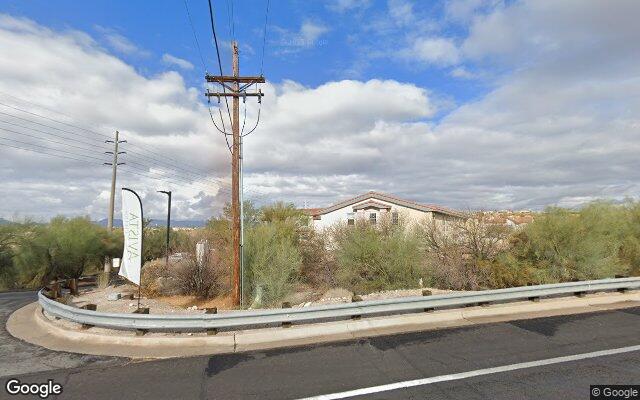
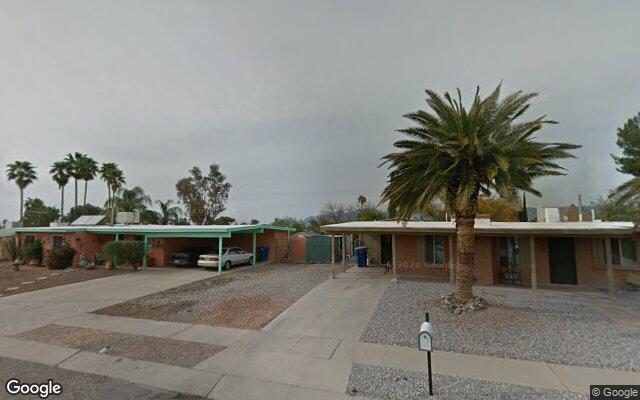
© Google Street View
Compared to 1,649 Arizona facilities with a similar number of beds.
Care · 36-month window. Higher percentile = better performance on inspection record. Source: Arizona Dept. of Health Services · Bureau of Residential Facilities Licensing.
among peers to rank.
Rankings based on 36-month ADHS inspection data. Severity and frequency: fewer citations = higher percentile. Repeat rate: lower repeat citation share = higher percentile.
Citation history, plotted month by month.
8 deficiencies on record. Each bar is a month with a citation.
Finding distribution
8 total · 36 monthsScope × Severity (CMS A–L)
Every inspection visit, verbatim.
5 inspections in the public record, most recent first. Plain-language summaries open first — click into any row for the full citation text.
2026-08-03Annual Compliance VisitNo findings
2026-03-30Complaint InvestigationR9-10-803.A.9 · 3 findings
“Based on record review and interview, the governing authority failed to ensure compliance with A.R.S. § 36-411, for one of two sampled personnel. A.R.S. § 36-411 states: 36-411. Residential care institutions; nursing care institutions; home health agencies; fingerprinting requirements; exemptions; definitions A. Except as provided in subsection F of this section, as a condition of licensure or continued licensure of a residential care institution, a nursing care institution or a home health agency and as a condition of employment in a residential care institution, a nursing care institution or a home health agency, employees and owners of residential care institutions, nursing care institutions or home health agencies, contracted persons of residential care institutions, nursing care institutions or home health agencies or volunteers of residential care institutions, nursing care institutions or home health agencies who provide medical services, nursing services, behavioral health services, health-related services, home health services or direct supportive services and who have not been subject to the fingerprinting requirements of a health professional's regulatory board pursuant to title 32 shall have a valid fingerprint clearance card that is issued pursuant to title 41, chapter 12, article 3.1 or shall apply for a fingerprint clearance card within twenty working days after employment or beginning volunteer work or contracted work. B. A health professional who has complied with the fingerprinting requirements of the health professional's regulatory board as a condition of licensure or certification pursuant to title 32 is not required to submit an additional set of fingerprints to the department of public safety pursuant to this section. C. Each residential care institution, nursing care institution and home health agency shall make documented, good faith efforts to: 1. Contact previous employers to obtain information or recommendations that may be relevant to a person's fitness to work in a residential care institution, nursing care institution or home health agency. 2. Verify the current status of a person's fingerprint clearance card. 3. Beginning January 1, 2025, verify that a potential employee is not on the adult protective services registry pursuant to section 46-459. If a potential employee is found to be on the adult protective services registry, the residential care institution, nursing care institution or home health agency may not hire the potential employee. 4. On or before March 31, 2025, verify that each employee is not on the adult protective services registry pursuant to section 46-459. If an employee is found to be on the adult protective services registry, the residential care institution, nursing care institution or home health agency shall take action to terminate the employment of that employee. 5. Beginning March 31, 2025, annually reverify that each employee is not on the adult protective services registry pursuant to section 46-459. D. An employee, an owner, a contracted person or a volunteer or a facility on behalf of the employee, the owner, the contracted person or the volunteer shall submit a completed application that is provided by the department of public safety within twenty days after the date the person begins work or volunteer service. E. Except as provided in subsection F of this section, a residential care institution, nursing care institution or home health agency shall not allow an employee to continue employment or a volunteer or contracted person to continue to provide medical services, nursing services, behavioral health services, health-related services, home health services or direct supportive services if the person has been denied a fingerprint clearance card pursuant to title 41, chapter 12, article 3.1, has been denied approval pursuant to this section before May 7, 2001 or has had a fingerprint clearance card suspended or revoked. F. An employee, volunteer or contractor of a residential care institution, nursing care institution or home health agency who is eligible pursuant to section 41-1758.07, subsection C to petition the board of fingerprinting for a good cause exception and who provides documentation of having applied for a good cause exception pursuant to section 41-619.55 but who has not yet received a decision is exempt from the fingerprinting requirements of this section if the person provides medical services, nursing services, behavioral health services, health-related services, home health services or direct supportive services to residents or patients while under the direct visual supervision of an owner or employee who has a valid fingerprint clearance card. G. If a person's employment record contains a six-month or longer time frame during which the person was not employed by any employer, a completed application with a new set of fingerprints shall be submitted to the department of public safety. H. For the purposes of this section: 1. "Direct supportive services": (a) Means services other than home health services that provide direct individual care and that are not provided in a common area of a health care institution, including: (i) Assistance with ambulating, bathing, toileting, grooming, eating and getting in and out of a bed or chair. (ii) Assistance with self-administration of medication. (iii) Janitorial, maintenance, housekeeping or other services provided in a resident's room. (iv) Transportation services, including van services. (b) Does not include services provided by persons contracted directly by a resident or the resident's family in a health care institution. 2. "Direct visual supervision" means continuous visual oversight of the supervised person that does not require the supervisor to be in a superior organizational role to the person being supervised. 3. "Home health services" has the same meaning prescribed in section 36-151. Findings include: A review of R3's personnel record revealed a copy of a fingerprint clearance card. However, documentation of verification of the status of R3's fingerprint clearance card was not available for review. In an interview, E2 immediately verified and printed out verification of the status of R3's fingerprint clearance card. A review of R3's personnel record revealed documentation of a search of the Adult Protective Services registry for R3. However, documentation showing this registry search was performed prior to R3's employment by the facility was not available for review. In an exit interview with E1 and E2, the findings were reviewed and no additional information was provided.”
“Based on record review, observation, and interview, the manager failed to ensure a resident's service plan included a description of the resident's medical or health problems, including physical, behavioral, cognitive, or functional conditions or impairments and the amount, type, and frequency of assisted living services and ancillary services being provided to the resident, for one of two sampled residents. Findings include: A review of R1's medical record revealed a discharge summary from a hospital, dated a week prior to R1's date of admission. The discharge summary included the following: "Wound #1: location: Right Forearm.. Wound bed: pink, red, crusted, moist, non-odorous....Plan: Cleansed with NS and gauze. Mepitel One covered with ABD pad and secured with netting...follow up:...wound team will follow up in one week." "# Skin tear L forearm - bandaged and dressing to be changed on schedule." The Compliance Officer observed bandages and bruises on both of R1's forearms. During the on-site inspection, the Compliance Officer requested to review the home health orders for wound care to include any follow-up instructions provided to R2; however, no records from the home health agency were available for review. A review of R1's medical record revealed a service plan, dated March 16, 2026, for personal care services. The service plan included the following impairments: "Impaired mobility," and the following diagnoses and medical history: "Closed fx left hip, Parkinson, TIA, anxiety." The service plan included the service titled "Basic Skin Care to help prevent bruising, skin tears and decubitus ulcers." However, this service did not describe any skin issues or describe any services being provided to R1 for current wounds or bruises. The service plan included a service titled "[Home health agency]," which stated, "[Home health agency] performs wound care to left forearm twice weekly." However, this service did not describe any impairment related to the left forearm and did not include any follow-up wound care instructions provided to the facility by the home health agency. In an exit interview with E1 and E2, the findings were reviewed and no additional information was provided.”
“Based on observation and interview, the manager failed to ensure a bell, intercom or other mechanical means, or another means to alert a caregiver or assistant caregiver to a resident's needs or emergencies was available in a bedroom being used by a resident receiving directed care services. Findings include: During an environmental tour of the facility, in the northwesternmost bedroom, the Compliance Officer observed a resident in a hospice-style bed. The resident was chewing on the hair of a stuffed doll and did not respond to the Compliance Officer when spoken to. The Compliance Officer observed there was no means to alert employees to the resident's needs or emergencies available in the bedroom. In an interview, E1 reported the resident must have broken their call button. E1 acknowledged the resident would not be able to use a call bell or call button and took the doll away from the resident, ensuring the doll's hair was all removed from the resident's mouth. E1 took a baby monitor out of storage and advised it would be placed in the resident's room after consultation with the resident's representative. In an exit interview with E1 and E2, the findings were reviewed and no additional information was provided.”
2026-01-30Complaint InvestigationA.A.C. · 1 finding
“Based on documentation review and interview, the assisted living home failed to maintain a copy of the document provided to an emergency responder and documentation of the actions required by subsection B of this section for a period of two years after the date of an emergency. Findings include: A review of facility incident reports revealed an incident report for R2, dated January 24, 2026 at 11 AM. The incident report stated, "Caregiver [E1] given another resident a shower. When done, came to the living room, saw a big pool of water (it was urine). [R2] is the only one that pee everywhere. [R2] was walking around. Check on [R2's] pants to change [R2] and [R2] had blood on [R2's] head, figured out [R2] fell backward on the pool of pee. Actions Taken: 911 Called: Yes, Time they arrived 11:10 AM...." During the on-site inspection, the Compliance Officer requested to review the facility's copy of the information given to the emergency responder for R2 on January 24, 2026. In an interview, E1 reported the paramedics were provided with the emergency responder information for R2, however, E1 reported a copy of that information was not available for review. In an exit interview with E1, the findings were reviewed and no additional information was provided.”
2025-07-11Complaint InvestigationR9-10-808.A.3.c · 2 findings
“Based on observation, record review, and interview, the manager failed to ensure, for one of two sampled residents, a service plan was established and documented which included the amount, type, and frequency of assisted living services being provided to the resident. Findings include: 1. In an interview with R2, the Compliance Officers observed R2's right foot was wrapped in gauze. Additionally, the Compliance Officers observed a catheter hanging on the side of R2's bed. 2. A review of R2's medical record revealed a document titled, "Initial Medication/Treatment Plan of Care," which was signed and dated by a nurse practitioner on February 17, 2025. This document stated, " Catheter flushes - to be performed by hospice. Clean wound to right toe with wound cleanser, pat dry, cover with foam and secure with tape two times weekly or PRN if not by hospice." 3. A review of R2's medical record revealed a hospice order, dated February 24, 2025, which stated, "New wound care orders: To wound to right third toe, cleanse with wound cleaner, apply medihoney, cover with gauze, warp with kurlex and secure with tape 2x/week. Treatment to be done by [hospice] nurse." 4. A review of R2's medical record revealed a hospice plan of care update, dated March 10, 2025, which stated, "Foley catheter will remain patent; caregivers will understand care and irrigation of foley catheter." 5. A review of R2's medical record revealed a service plan, updated June 7, 2025, for directed care services. However, the service plan did not include a description of the wound care or foley care services required by R2. 6. In an interview, E1 acknowledged the service plan for R2 did not include the amount, type, and frequency of assisted living services being provided to R2, to include wound care and foley care.”
“Based on observation and interview, the manager failed to ensure cooling systems maintained the assisted living facility at a temperature between 70° Fahrenheit (F) and 84° F at all times. Findings include: 1. Upon entering the facility at approximately 8:55 AM, the Compliance Officers observed a thermostat in the hallway near the entrance door read 85° F. The thermostat was set to 77° F and the thermostat indicated the system was on. 2. The Compliance Officers observed the bedrooms on the west side of the facility, the kitchen, dining room, and main living room were all 85° F. The Compliance Officers observed the bedrooms on the east side of the facility had window A/C units, and a second living room at the east end of the building had a separate A/C system. The east side of the facility measured at 75° F on the Compliance Officers infrared meter. 2. The Compliance Officers observed air was blowing from the air conditioning (A/C) vents, however, the air temperature measured at 86° F on the Compliance Officer's infrared meter. 3. The Compliance Officers observed an A/C compressor outside on the west side of the facility. However, the compressor was not running despite the system being on. 4. E1 and E2 attempted to reset the A/C system, however, they were unsuccessful and stated they were contacting a repair service. 5. The Compliance Officers observed the facility staff immediately moving all residents to the east side living room and bedrooms. 6. The Compliance Officers observed an A/C repair service arrived at approximately 11:40 AM and the A/C system began functioning at 12:00 PM. 7. In an interview, E1 reported the A/C had been working the previous day and they were unaware it had stopped working the morning of the inspection. E1 acknowledged the facility had not been maintained between 70° F and 84° F at all times.”
2024-07-09Annual Compliance VisitA.A.C. · 2 findings
“Based on record review and interview, the manager failed to ensure a resident provided documentation of freedom from infectious tuberculosis (TB) as specified in R9-10-113, for one of two residents sampled. Findings include: 1. R9-10-113.A states "If a health care institution is subject to the requirements of this Section, as specified in an Article in this Chapter, the health care institution's chief administrative officer shall ensure that the health care institution establishes, documents, and implements tuberculosis infection control activities that...2. Include: a. For each individual who is employed by the health care institution, provides volunteer services for the health care institution, or is admitted to the health care institution and who is subject to the requirements of this Section, screening, on or before the date specified in the applicable Article of this Chapter, that consists of: i. Assessing risks of prior exposure to infectious tuberculosis, ii. Determining if the individual has signs or symptoms of tuberculosis, and iii. Obtaining documentation of the individual's freedom from infectious tuberculosis according to subsection (B)(1)..." 2. A review of R2's medical record revealed documentation of R2's freedom from infectious TB was not available for review. R2's medical record included two chest X-rays and a baseline screening questionnaire, however, R2's medical record did not include a skin or blood test for Tuberculosis. 3. In an interview, E1 acknowledged documentation of R2's freedom from infectious TB had not been provided for review”
“Based on observation and interview, the manager failed to ensure poisonous or toxic materials stored by the facility were stored in a locked area and were inaccessible to residents. The deficient practice posed a risk to the physical health and safety of a resident. Findings include: 1. During an environmental inspection of the facility, the Compliance Officer observed an unlocked closet in a hallway which contained incontinence supplies and personal protective equipment. Also in the closet, the Compliance Officer observed a container of, "XP200 Blonding lightener," which included a hazard warning label. 2. In an interview, E1 acknowledged poisonous or toxic materials stored by the facility were not stored in a locked area inaccessible to residents. This is a repeat deficiency from the onsite compliance inspection conducted on June 28, 2023.”
1 older inspection from 2023 are not shown above.
Get the complete record, translated into plain language — emailed to you.
Other facilities in Tucson.
Other memory care facilities near Tucson with similar care offerings.


Full Inspection Record
Family reviews
No reviews yet — be the first to share your experience