Brookdale Santa Catalina.
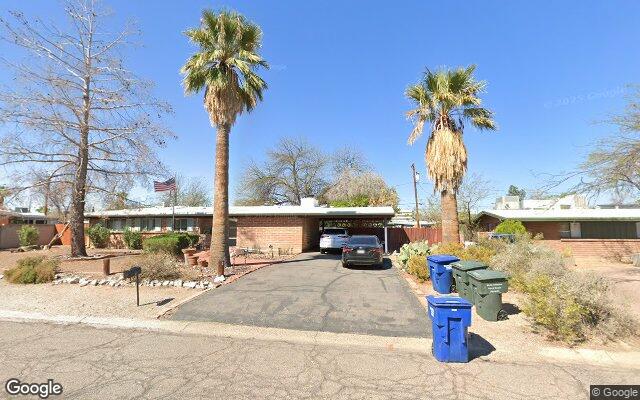
A large home, reviewed on public record.
Compared to 116 Arizona facilities with a similar number of beds.
Care · 36-month window. Higher percentile = better performance on inspection record. Source: Arizona Dept. of Health Services · Bureau of Residential Facilities Licensing.
among peers to rank.
Rankings based on 36-month ADHS inspection data. Severity and frequency: fewer citations = higher percentile. Repeat rate: lower repeat citation share = higher percentile.
Citation history, plotted month by month.
14 deficiencies on record. Each bar is a month with a citation.
Finding distribution
14 total · 36 monthsScope × Severity (CMS A–L)
Every inspection visit, verbatim.
8 inspections in the public record, most recent first. Plain-language summaries open first — click into any row for the full citation text.
2026-07-16Complaint InvestigationNo findings
2026-07-08Complaint InvestigationNo findings
2025-11-04Other VisitNo findings
2025-03-11Complaint InvestigationA.A.C. · 4 findings
“A. Except as required in subsection (B), a manager shall ensure that a resident has a written service plan that: 3. Includes the following: b. The level of service the resident is expected to receive;”
“A. Except as required in subsection (B), a manager shall ensure that a resident has a written service plan that: 4. Is reviewed and updated based on changes in the requirements in subsections (A)(3)(a) through (f): b. As follows: iii. At least once every three months for a resident receiving directed care services; and”
“B. A manager shall ensure that: 1. A resident is treated with dignity, respect, and consideration;”
“B. If an assisted living facility provides medication administration, a manager shall ensure that: 3. A medication administered to a resident: b. Is administered in compliance with a medication order, and”
2025-01-16Complaint InvestigationA.A.C. · 4 findings
“Based on observation, record review, and interview, the manager failed to ensure a resident had a written service plan to include the level of service the resident was expected to receive, for four of four resident records reviewed. Findings include: A.R.S. \'a7 36-401.50 "Supervisory care services" means general supervision, including daily awareness of resident functioning and continuing needs, the ability to intervene in a crisis and assistance in the self-administration of prescribed medications. A.R.S. \'a7 36-401.41 "Personal care services" means assistance with activities of daily living that can be performed by persons without professional skills or professional training and includes the coordination or provision of intermittent nursing services and the administration of medications and treatments by a nurse who is licensed pursuant to title 32, chapter 15 or as otherwise provided by law. A.R.S. \'a7 36-401.16 "Directed care services" means programs and services, including supervisory and personal care services, that are provided to persons who are incapable of recognizing danger, summoning assistance, expressing need or making basic care decisions. 1. A review of R1's medical record revealed service plan, dated September 19, 2024. However, the service plan did not state the level of service R1 was expected to receive. 2. A review of R2's medical record revealed a service plan, dated August 22, 2024. However, the service plan did not state the level of service R2 was expected to receive. 3. A review of R3's medical record revealed service plans, dated June 30, 2024 and August 26, 2024. However, the service plans did not state the level of service R3 was expected to receive. 4. A review of R4's medical record revealed a service plan, dated November 20, 2024. However, the service plan did not state the level of service R4 was expected to receive. 5. In an interview, E1 acknowledged the service plans provided for review had not identified if each resident was expected to receive Supervisory care services, Personal Care services, or Directed care services. E1 further reported the level was included on the electronic documents, though was not included in the printed documents provided.”
“Based on record review and interview, the manager failed to ensure a resident, receiving directed care services, had a written service plan that was reviewed and updated at least once every three months, for one of six resident records reviewed. Findings include: 1. A review of R1's medical record revealed a service plan for directed care services dated September 19, 2024. Based on the date of R1's service plan, a reviewed and updated service plan was required on or before December 19, 2024. No updated service plan was available for review. 2. In an interview, E1 and E2 acknowledged the medical record provided for R1 did not include the required service plan update at least once every three months.”
“Based on documentation review, and interview, the manager failed to ensure a resident was treated with dignity, respect, and consideration. The deficient practice posed a risk of physical and/or psychosocial harm. Findings include: 1. A review of facility documentation revealed an incident report and documentation of an investigation into the incident. The documentation revealed an interaction involving E3, E7, and R1, which occurred on January 14, 2025 at 4:20 am. The documentation stated, E3 and E7 observed R1 walking around and entering other sleeping residents' rooms. E3 observed E7 redirect R1 to R1's room. E3 further reported overhearing what E3 believed was R1 resisting care. E3 reported hearing R1 state, "Ouch That Hurts!". E3 reported E7 exited the room and was observed to be breathing heavy and stated, "R1 attacked E7 by punching E7, kicking E7, and throwing a walker at E7." "A short while later", E3 observed R1 pushing R1's walker with one hand. R1 stated E7 "beat R1 up", which E7 denied and reminded E3 of R1's history of resisting care and throwing R1's walker. E3 reported providing an ice pack to R1, for R1's wrist. The report further stated at 12:47 pm, E3 telephoned E8 to report the incident. 2. E1 immediately assessed R1 and reported the incident to R1's Primary Care Provider. An x-ray was ordered and R1 was found to have "an acute fracture of the distil ulna". 3. A review of E3's and E7's personnel records revealed E3 and E7 are no longer employed with the assisted living center. 4. In an interview, E1 acknowledged R1 was treated without dignity, respect and consideration by E3 and E7. E1 further acknowledged the incident was reported to Adult Protective Services and staff were retrained on reporting and working with a resident who resists care.”
“Based on record review and interview, the manager failed to ensure medication administered to a resident was administered in compliance with a medication order, for one of six resident records reviewed. Findings include: 1. A review of R6's medical record revealed a signed medication order for Amlodipine Besylate 2.5 MG, dated September 25, 2024. The order stated, "Give 1 tablet by mouth one time a day for High blood pressure Hold for sbp less than 110 or pulse less than 60". 2. A review of R6's Medication Administration Record (MAR) dated January 2025. The MAR revealed on January 14, 2025 at 10:00 am, R6's blood pressure was recorded as 108/62, with a pulse of 70. R6 was administered Amlodipine Besylate 2.5 MG on January 14, 2025 at 10:00 am. 3. In an interview, E1 acknowledged R6's medication was not administered in compliance with the medication order.”
2024-05-09Complaint InvestigationNo findings
2024-04-09Complaint InvestigationA.A.C. · 1 finding
“Based on record review, documentation review, observation, and interview the manager failed to ensure a resident is treated with dignity, respect, and consideration. The deficient practice posed a risk if a resident was subjected to ridicule, demeaning, or derogatory remarks. Findings include: 1. A review of documentation provided by R1 to the department revealed R1 alleged a caregiver had been rough when toileting and transferring R1. R1 reported the caregiver wiped very hard. When R1 asked the caregiver to stop because it was painful the caregiver called R1 a baby. 2. In an interview, E1 reported the caregiver in question is [E4]. E1 reported R2 had reported the same allegations to the facility, that [E4] was being rough during continence care and other services. 3. The Compliance Officer interviewed E2. E2 told the Compliance Officer that R2 had complained to the facility about [E4] being rough during continence care and other services. E2 told the Compliance Officer that E2 had requested not to have [E4] in R2's room and providing any personal care services. 4. A review of documentation provided by E1 revealed an investigation into this allegation. The Compliance Officer observed the following: "4/1/2024, [E2] spoke with resident [R1], in the presence of R1's nephew, [O1]. [R1] reported to [E2] that on Sunday, 3/31/24, a caregiver [E4] answered [R1's] call light. [R1] was ringing to be toileted after breakfast. [E4] answered the light and according to [R1], [E4] was "very rough" when [E4] was transferring [R1]. [R1] reported that [E4] was "in a hurry" when [E4] assisted [R1] from [R1's] wc to the toilet and according to [R1], [E4] "slammed' [R1] down on the toilet. [E4] began to wipe [R1's] buttocks and was so rough that [R1] asked [E4] to "please be easy" and exclaimed that [E4] was hurting [R1] by doing it rough. [E4] allegedly said something in Spanish and [R1] heard [E4] call [R1] a "baby'. [R1] reports that [R1] asked [E4] if [E4] called [R1] a baby and [E4] replied, "Yes, you are a baby"'. [R1] was visibly upset and afraid to report the occurrence to staff for fear of retaliation. [E2] explained to [R1] that this was not an acceptable behavior and asked that [R1] please never fear reporting any issues to [E2], as that was part of my job". Signed 4/2/24, [E2]. Another document revealed [E2's] conversation with [E3]. "Conversation with [E3] - 4/4/2024; [E3] was the supervisor on the AL unit on Sunday 3/31. Resident called to speak to [E3] and [E3] went to [R1's] room. When [E3] arrived the resident was distraught and crying. [R1] stated that [R1] didn't want [E4] as [R1's] caregiver again and that [R1] had asked [E4] repeatedly to stop wiping [R1] so hard and that [E4] didn't listen to [R1]. [E3] asked if [E3] could look at where [R1] was wiped, and upon checking noticed that the resident's private area was very red and irritated. The resident said [R1] was afraid to tell that [E4] was so rough for fear that [E4] would harm [R1]. [E3] also shared that resident, [R2], asked to speak with [E3] last Thursday. [E3] was busy and off but went to speak to the resident on Monday morning. The resident shared that [R2] no longer wants to have [E4] as [R2's] caregiver and that [R2] understands Spanish and can understand that [E4] is making comments about [R2] that [R2] doesn't appreciate. [R2] also complained that [E4] is too rough with [R2] and doesn't listen when [R2] says to stop". Signed 4/4/2024, [E2]. 5. In an interview, E1 acknowledged investigating these incidents and documenting them.”
2023-12-11Complaint InvestigationA.A.C. · 5 findings
“Based on documentation review, record review, and interview, the governing authority failed to ensure compliance with A.R.S. \'a7 36-411, for eight of eight employees reviewed. The deficient practice posed a risk if the employee was a danger to a vulnerable population. A.R.S. \'a7 36-411 states, "A. Except as provided in subsection F of this section, as a condition of licensure or continued licensure of a residential care institution, a nursing care institution or a home health agency and as a condition of employment in a residential care institution, a nursing care institution or a home health agency, employees and owners of residential care institutions, nursing care institutions or home health agencies, contracted persons of residential care institutions, nursing care institutions or home health agencies or volunteers of residential care institutions, nursing care institutions or home health agencies who provide medical services, nursing services, behavioral health services, health-related services, home health services or direct supportive services and who have not been subject to the fingerprinting requirements of a health professional's regulatory board pursuant to title 32 shall have valid fingerprint clearance cards that are issued pursuant to title 41, chapter 12, article 3.1 or shall apply for a fingerprint clearance card within twenty working days of employment or beginning volunteer work or contracted work. C. Owners shall make documented, good faith efforts to: 1. Contact previous employers to obtain information or recommendations that may be relevant to a person's fitness to work in a residential care institution, nursing care institution or home health agency. 2. Verify the current status of a person's fingerprint clearance card. Findings include: 1. A review of E2's personnel record revealed a valid fingerprint clearance card and an application listing prior employers. However, documented, good faith efforts to contact previous employers to obtain information or recommendations that may have been relevant to E2's fitness to work in a residential care institution were not available for review. No documentation that the card had been verified. 2. A review of E3's personnel record revealed a valid fingerprint clearance card and an application listing prior employers. However, documented, good faith efforts to contact previous employers to obtain information or recommendations that may have been relevant to E3's fitness to work in a residential care institution were not available for review. No documentation that the card had been verified. 3. A review of E4's personnel record revealed a valid fingerprint clearance card and an application listing prior employers. However, documented, good faith efforts to contact previous employers to obtain information or recommendations that may have been relevant to E4's fitness to work in a residential care institution were only available for review. No documentation that the card had been verified. 4. A review of E5's personnel record revealed a valid fingerprint clearance card and an application listing prior employers. However, documented, good faith efforts to contact previous employers to obtain information or recommendations that may have been relevant to E5's fitness to work in a residential care institution were not available for review. No documentation that the card had been verified. 5. A review of E6's personnel record revealed a valid fingerprint clearance card and an application listing prior employers. However, documented, good faith efforts to contact previous employers to obtain information or recommendations that may have been relevant to E6's fitness to work in a residential care institution were not available for review. No documentation that the card had been verified. 6. A review of E7's personnel record revealed a valid fingerprint clearance card and an application listing prior employers. However, documented, good faith efforts to contact previous employers to obtain information or recommendations that may have been relevant to E7's fitness to work in a residential care institution were not available for review. No documentation that the card had been verified. 7. A review of E8's personnel record revealed a valid fingerprint clearance card and an application listing prior employers. However, documented, good faith efforts to contact previous employers to obtain information or recommendations that may have been relevant to E8's fitness to work in a residential care institution were not available for review. No documentation that the card had been verified. 8. In an interview, E1, acknowledged the personnel records provided for review had not included documentation of compliance with all subsections of A.R.S. \'a7 36-411. This is a repeat citation from the compliance inspection conducted on January 9, 2023.”
“Based on documentation review, and interview, the manager failed to ensure before providing assisted living services to a resident, a manager or caregiver provided current documentation of first aid training and cardiopulmonary resuscitation (CPR) training certification specific to adults for one of four caregivers sampled. The deficient practice posed a risk if an employee was unable to meet a resident's needs during an emergency. Findings include: 1. A review of E2's personnel record revealed E2 worked as a medication tech/caregiver and had a hire date of July 13, 2023. No documentation was available for review to show E2 had current first aid training and cardiopulmonary resuscitation (CPR) training certification specific to adults. No other documentation was provided while the Compliance Officer was on-site. 2. In an interview, E1 reported to being unaware that E2's did not have current first aid training and cardiopulmonary resuscitation (CPR) training certification specific to adults.”
“Based on record review, documentation review and interview, the manager failed to ensure the service plan for a resident receiving directed care services included the requirements in R9-10-815(C)(1-5), for two of two directed care residents sampled. Findings include: 1. A review of R4's medical record revealed documentation of a service plan dated November 30, 2023, indicating R4 was receiving directed care services. However, the service plans did not contain the following: - Skin maintenance to prevent and treat bruises, injuries, pressure sores, and infections; - Offering sufficient fluids to maintain hydration; - Incontinence care that ensures that a resident maintains the highest practicable level of independence when toileting; - Cognitive stimulation and activities to maximize functioning; - Strategies to ensure a resident's personal safety; - Encouragement to eat meals and snacks: - Documentation: of the resident ' s weight, or from a medical practitioner stating that weighing the resident is contraindicated. 2. A review of R5's medical record revealed documentation of a service plan dated December 7, 2023, indicating R5 was receiving directed care services. However, the service plans did not contain the following: - Skin maintenance to prevent and treat bruises, injuries, pressure sores, and infections; - Offering sufficient fluids to maintain hydration; - Incontinence care that ensures that a resident maintains the highest practicable level of independence when toileting; - Cognitive stimulation and activities to maximize functioning; - Strategies to ensure a resident's personal safety; - Encouragement to eat meals and snacks: - Documentation: of the resident ' s weight, or from a medical practitioner stating that weighing the resident is contraindicated. 3. In an interview, E1 acknowledged the service plans did not contain all of the requirements for directed care residents.”
“Based on observation and interview, the manager failed to ensure medications stored by the facility were stored in a separate locked room, closet, cabinet, or self-contained unit. The deficient practice posed a risk to residents who could access the medication. Findings include: 1. During the facility tour the Compliance Officer observed when entering R3's room the door was unlocked. The Compliance Officer observed sitting on top of a dresser medication bottles and medications already set up in two medi sets one green and one purple. These medi sets were full of medications, and in a dresser drawer, there were more unlocked medications. The following are the unlocked medications: - Eliquis 2.5 mg; - Bumetanide 0.5 mg; - (2) Insulin Glargine solution pen injectors; - Metoprolol Tartrate 25 mg; - (1) Omeprazole DR 20 MG capsules; and - Simvastatin 10 mg. 2. In an interview, the Compliance Officer asked R3 who assists R3 with R3's medications. R3 reported being an independent resident who just moved with E7 from independent living to assisted living due to E7 needing assisted living care. The Compliance Officer asked R3 if R3 locked the door to the room when R3 left the room. R3 reported "no" because E7 is here. The Compliance Officer was shown R7's room. R7 was lying in a hospital bed. R3 reported R7 is bed-bound and unable to get out of bed without assistance from the caregivers. The Compliance Officer asked R3 who manages R7's medications. R3 reported the Med Techs. The Compliance Officer asked R3 if R3 had a cabinet in the room with a lock to lock up medications. R3 reported yes however, I don't have a key to it. R3 showed the Compliance Officer two drawers in a vanity with a key lock. E1 called the maintenance director to come to the room with keys or a new lock. 3. A review of documentation titled "Medications & Treatment, Self- Administration of Medication Policy". This policy stated ".... 5. Locking the residents apartment door is considered the first level for securing medication in their apartment. 6. Residents who self-administer their own medication; a. May store and secure their non-controlled medications in their apartment by locking the apartment door each time upon departure. b. Should store their controlled medication in a locked drawer or cabinet so they are not accessible to others. Controlled medication are considered double locked when locked in a drawer/cabinet and when the apartment door is locked". 4. In an interview, E1 acknowledged medications in R3's room were not stored in a locked room, closet, cabinet, or self-contained unit.”
“Based on observation, documentation review, and interview, the manager failed to ensure poisonous or toxic materials stored by the assisted living facility were maintained in labeled containers in a locked area and were inaccessible to residents. The deficient practice posed a risk to the health and safety of a resident. Findings include: 1. During a tour of the facility the Compliance Officer asked E1 where the medication was kept in the memory care unit. The Compliance Officer observed a med cart sitting just off the hallway in an alcove. On the other side of the med cart, the Compliance Officer observed a desk with two cabinets above with key locks. The Compliance Officer opened the cabinets and found them to be unlocked. Inside these unlocked cabinets were the following toxic or poisonous chemicals: - Medline Remedy Clinical Silicone Cream; - Medline Skin Integrity Wound Cleaner; - Dermasil Aloe Fresh Moisturing Body Lotion; - Skin-Prep Protective Spray; - Medline Sooth & Cool Cleanser Kiwi Mango Shampoo & Body; - (4) bottles of Theraworx Protect Advanced Hygiene and Barrier System; - Tena Pro Cleansing Cream; - Physicians Care Eyewash; - Wizard Double Action Air Freshener; - Super Sani-Cloth Germicidal Disposable Wipes; - CVS Hydrogen Peroxide; and - CVS Rubbing Alcohol. Each of these products stated "KEEP OUT OF REACH OF CHILDREN. 2. In an interview, E1 acknowledged these poisonous or toxic materials stored by the assisted living facility were not in a locked area and were accessible to the residents in the memory care unit.”
Other facilities in Tucson.
Other memory care facilities near Tucson with similar care offerings.



Contract Decoder
Family reviews
No reviews yet — be the first to share your experience