113 North Senior Care Center LLC.
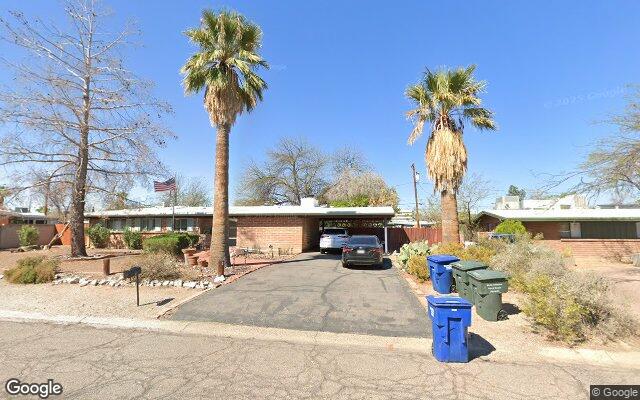
A medium home, reviewed on public record.
© Google Street View
Compared to 1,661 Arizona facilities with a similar number of beds.
Care · 36-month window. Higher percentile = better performance on inspection record. Source: Arizona Dept. of Health Services · Bureau of Residential Facilities Licensing.
among peers to rank.
Rankings based on 36-month ADHS inspection data. Severity and frequency: fewer citations = higher percentile. Repeat rate: lower repeat citation share = higher percentile.
Citation history, plotted month by month.
15 deficiencies on record. Each bar is a month with a citation.
Finding distribution
15 total · 36 monthsScope × Severity (CMS A–L)
Every inspection visit, verbatim.
7 inspections in the public record, most recent first. Plain-language summaries open first — click into any row for the full citation text.
2026-03-10Complaint InvestigationR9-10-808.A.3.b · 2 findings
“Based on record review and interview, the manager failed to ensure a resident had a service plan which accurately included the level of service the resident was expected to receive, for one of two sampled residents. Findings include: A review of R1's medical record revealed a service plan, dated April 1, 2024, for supervisory care services. However, the service plan indicated R1 required medication administration, a personal care service. In an exit interview with E1, the findings were reviewed and no additional information was provided.”
“Based on record review and interview, the manager failed to ensure a resident's service plan was updated at least once every 12 months, for one of one sampled resident receiving supervisory care services. Findings include: A review of R1's medical record revealed a service plan, dated April 1, 2024, for supervisory care services. However, a service plan update, dated on or before April 1, 2025, was not available for review. In an interview, E1 reported R1's service plan had been updated prior to R1's discharge from the facility; however, E1 was not able to provide an updated service plan during the on-site inspection. In an exit interview with E1, the findings were reviewed and no additional information was provided.”
2026-01-14Annual Compliance VisitA.A.C. · 7 findings
“Based on observation, interview, and documentation review, the assisted living home failed to provide a written document including all required information when contacting an emergency responder on a resident's behalf. Findings include: 1. During an environmental tour of the facility, the Compliance Officer observed R1's room was not occupied and R1 was not present in the facility. 2. In an interview, E1 reported R1 had been sent out to the hospital due to a sudden decline. E1 reported 911 was called and paramedics responded to the facility earlier on the day of the inspection. 3. A documentation review of a copy of the packet given to the emergency responder for R1 revealed the following requirements were not in the packet provided for review: The reason or reasons the emergency responder was requested on behalf of the resident; Whether the resident received medication services; Basic information about the resident's physical and mental conditions and basic medical history, such as having diabetes or a pacemaker or experiencing frequent falls or cardiovascular and cerebrovascular events, as well as dates of recent episodes, if known; and A copy of the resident's health insurance portability and accountability act release authorizing a receiving hospital to communicate with the assisted living center or assisted living home to plan for the resident's discharge. 4. In an exit interview with E1, the findings were reviewed and no additional information was provided.”
“Based on documentation review, record review, and interview, the manager failed to establish, document and implement policies for administering an opioid which covered which personnel members may administer an opioid in treating a patient and the required knowledge and qualifications of these personnel members and which personnel members may provide assistance in the self administration of medication for a prescribed opioid and the required knowledge and qualifications of these personnel members, included how, when, and by whom a patient's need for opioid administration is assessed, how, when, and by whom a patient receiving an opioid is monitored, and covered how, when, and by whom the actions taken according to subsections (F)(1)(c) and (d) are documented. Findings include: 1. A review of the facility's policies and procedures revealed a policy titled "Opioid Management Controls." However, this policy did not cover which personnel members may administer an opioid in treating a patient and the required knowledge and qualifications of these personnel members, which personnel members may provide assistance in the self administration of medication for a prescribed opioid and the required knowledge and qualifications of these personnel members, and did not include how, when, and by whom a patient's need for opioid administration is assessed, how, when, and by whom a patient receiving an opioid is monitored, or cover how, when, and by whom the actions taken according to subsections (F)(1)(c) and (d) of R9-10-113 were documented. 2. A review of R1's medical record revealed a medication administration record (MAR), dated January 2026, which documented R1 had been administered, "Morphine Sulfate ER 15 MG, 1 Oral tablet...three times daily." However, documentation of an assessment of R1's need for the opioid before each administered dose and documentation of monitoring of the effect of the opioid administered was not available for review. 3. In an exit interview with E1, the findings were reviewed and no additional information was provided.”
“Based on record review and interview, the manager failed to ensure compliance with A.R.S. § 36-411, for two of two sampled personnel. A.R.S. § 36-411 states; A. Except as provided in subsection F of this section, as a condition of licensure or continued licensure of a residential care institution, a nursing care institution or a home health agency and as a condition of employment in a residential care institution, a nursing care institution or a home health agency, employees and owners of residential care institutions, nursing care institutions or home health agencies, contracted persons of residential care institutions, nursing care institutions or home health agencies or volunteers of residential care institutions, nursing care institutions or home health agencies who provide medical services, nursing services, behavioral health services, health-related services, home health services or direct supportive services and who have not been subject to the fingerprinting requirements of a health professional's regulatory board pursuant to title 32 shall have a valid fingerprint clearance card that is issued pursuant to title 41, chapter 12, article 3.1 or shall apply for a fingerprint clearance card within twenty working days after employment or beginning volunteer work or contracted work. B. A health professional who has complied with the fingerprinting requirements of the health professional's regulatory board as a condition of licensure or certification pursuant to title 32 is not required to submit an additional set of fingerprints to the department of public safety pursuant to this section. C. Each residential care institution, nursing care institution and home health agency shall make documented, good faith efforts to: 1. Contact previous employers to obtain information or recommendations that may be relevant to a person's fitness to work in a residential care institution, nursing care institution or home health agency. 2. Verify the current status of a person's fingerprint clearance card. 3. Beginning January 1, 2025, verify that a potential employee is not on the adult protective services registry pursuant to section 46-459. If a potential employee is found to be on the adult protective services registry, the residential care institution, nursing care institution or home health agency may not hire the potential employee. 4. On or before March 31, 2025, verify that each employee is not on the adult protective services registry pursuant to section 46-459. If an employee is found to be on the adult protective services registry, the residential care institution, nursing care institution or home health agency shall take action to terminate the employment of that employee. 5. Beginning March 31, 2025, annually reverify that each employee is not on the adult protective services registry pursuant to section 46-459. D. An employee, an owner, a contracted person or a volunteer or a facility on behalf of the employee, the owner, the contracted person or the volunteer shall submit a completed application that is provided by the department of public safety within twenty days after the date the person begins work or volunteer service. E. Except as provided in subsection F of this section, a residential care institution, nursing care institution or home health agency shall not allow an employee to continue employment or a volunteer or contracted person to continue to provide medical services, nursing services, behavioral health services, health-related services, home health services or direct supportive services if the person has been denied a fingerprint clearance card pursuant to title 41, chapter 12, article 3.1, has been denied approval pursuant to this section before May 7, 2001 or has had a fingerprint clearance card suspended or revoked. F. An employee, volunteer or contractor of a residential care institution, nursing care institution or home health agency who is eligible pursuant to section 41-1758.07, subsection C to petition the board of fingerprinting for a good cause exception and who provides documentation of having applied for a good cause exception pursuant to section 41-619.55 but who has not yet received a decision is exempt from the fingerprinting requirements of this section if the person provides medical services, nursing services, behavioral health services, health-related services, home health services or direct supportive services to residents or patients while under the direct visual supervision of an owner or employee who has a valid fingerprint clearance card. G. If a person's employment record contains a six-month or longer time frame during which the person was not employed by any employer, a completed application with a new set of fingerprints shall be submitted to the department of public safety. H. For the purposes of this section: 1. "Direct supportive services": (a) Means services other than home health services that provide direct individual care and that are not provided in a common area of a health care institution, including: (i) Assistance with ambulating, bathing, toileting, grooming, eating and getting in and out of a bed or chair. (ii) Assistance with self-administration of medication. (iii) Janitorial, maintenance, housekeeping or other services provided in a resident's room. (iv) Transportation services, including van services. (b) Does not include services provided by persons contracted directly by a resident or the resident's family in a health care institution. 2. "Direct visual supervision" means continuous visual oversight of the supervised person that does not require the supervisor to be in a superior organizational role to the person being supervised. 3. "Home health services" has the same meaning prescribed in section 36-151. Findings include: 1. A review of E2's personnel file revealed E2 was hired in April 2025. However, documentation of verification E2 was not on the adult protective services registry pursuant to section 46-459 was not available for review. 2. A review of E3's personnel file revealed E3 was hired in June 2025. E3's personnel record included an employment history that covered the period between May 2024 and E3's date of hire. 3. A review of E3's personnel file revealed a fingerprint clearance card issued in February of 2023. However, documentation of E3's employment between the issue date on the fingerprint clearance card and E3's hire date, a time period of more than six months during which E3 was not documented to have been employed by any employer, was not available for review. 4. In an exit interview with E1 and E2, the findings were reviewed and no additional information was provided.”
“Based on record review and interview, the manager failed to ensure a resident's service plan was updated at least once every six months, for one of two sampled residents receiving personal care services. Findings include: 1. A review of R1's medical record revealed a service plan dated June 18, 2025, for personal care services. Based on the date of R1's service plan, an update was required by December 18, 2025. 2. A review of R1's medical record revealed a service plan dated December 18, 2025; however, the service plan was not completed, did not include R1's medication services, bathing services, toileting services, or food services, and was not reviewed and signed by a nurse. 3. In an exit interview with E1 and E2, the findings were reviewed and no additional information was provided.”
“Based on record review and interview, the manager failed to ensure a medication administered to a resident was administered in compliance with a medication order, for one of two sampled residents. The deficient practice posed a risk if the resident experienced a change in condition due to improper administration of medication, and false or misleading information was provided to the Department. Findings include: 1. A review of R1's medical record revealed an order dated January 13, 2026, which stated, "Please DC Senna and Mucinex per patient request." 2. A review of R1's medical record revealed a Medication Administration Record (MAR) dated January 2026. The MAR documented the following: Mucinex was scheduled to be administered daily at 8 AM and 8 PM. Mucinex had been marked, "Medication Not Available" on January 1 through January 13, except it had been falsely marked as administered on January 6 at 8 AM, January 7 at 8 AM, January 10 at 8 AM and 8 PM, and January 11 at 8 AM and 8 PM, as the medication was not available to be administered; and Sennosides (Senna) was scheduled to be administered daily at 8 AM and 8 PM. Senna had been marked, "Medication Not Available" on January 1 through January 13, except it had been falsely marked as administered on January 6 at 8 AM, January 10 at 8 AM, and January 11 at 8 AM and 8 PM, as the medication was not available to be administered. 3. A review of R1's medical record revealed a MAR dated December 2025. The MAR documented the following: Mucinex was scheduled to be administered daily at 8 AM and 8 PM. Mucinex had been marked, "Medication Not Available" on December 12 through December 31, except it had been falsely marked as administered on December 13 at 8 AM, December 14 at 8 AM and 8 PM, December 15 at 8 AM and 8 PM, December 16 at 8 AM and 8 PM, December 17 at 8 PM, December 18 at 8 AM and 8 PM, December 19 at 8 AM and 8 PM, December 20 at 8 PM, December 21 at 8 PM, December 22 at 8 AM and 8 PM, December 23 at 8 AM and 8 PM, December 24 at 8 AM, December 25 at 8 AM and 8 PM, December 26 at 8 PM, December 27 at 8 AM and 8 PM, December 28 at 8 PM, December 30 at 8 AM, and December 31 at 8 AM, as the medication was not available to be administered; and Senna was scheduled to be administered daily at 8 AM and 8 PM. Senna had been marked, "Medication Not Available" on December 12 through December 31, except it had been falsely marked as administered on December 13 at 8 AM, December 14 at 8 AM and 8 PM, December 15 at 8 AM and 8 PM, December 16 at 8 AM and 8 PM, December 17 at 8 PM, December 18 at 8 AM and 8 PM, December 19 at 8 AM and 8 PM, December 20 at 8 PM, December 21 at 8 PM, December 22 at 8 AM and 8 PM, December 23, at 8 AM and 8 PM, December 24 at 8 AM, December 25 at 8 AM and 8 PM, December 26 at 8 PM, December 27 at 8 PM, December 28 and 8 PM, December 30 at 8 AM and December 31 at 8 AM, as the medication was not available to be administered. 4. In an interview, E1 reported R1 was running out of money and no longer wanted to purchase medications that were not covered by insurance, such as the Mucinex and Senna, so the facility ran out of some medications for R1. E1 reported R1's doctor was contacted but never responded. E1 reported R1 finally switched to a different medical provider, and it was the new provider who discontinued the medications. 5. In an exit interview with E1, the findings were reviewed and no additional information was provided.”
“Based on documentation review, record review, and interview, when a resident had an emergency resulting in a resident needing medical services, the manager failed to ensure a caregiver immediately notified the resident's emergency contact and primary care provider, for one of two sampled residents. The deficient practice posed a risk to the physical health and safety of a resident. Findings include: 1. Online research at Medlineplus.gov revealed a pulse oximetry recommendation which stated, "Contact your provider if your oxygen saturation level is 92% or lower. If it falls to 88% or lower, seek immediate medical attention." 2. A review of R1's medical record revealed daily vital records dated December 2025. These vitals included the following oxygen saturation levels: On December 9, 2025, at 8 AM, R1's oxygen saturation was documented to have been 81%; however, documentation of any actions taken to respond to this emergency were not provided for review; On December 10, 2025, at 8 AM, R1's oxygen saturation was documented to have been 72%; however, documentation of any actions taken to respond to this emergency were not provided for review; On December 15, 2025, at 8 AM, R1's oxygen saturation was documented to have been 63%; however, documentation of any actions taken to respond to this emergency were not provided for review; and On December 31, 2025 at 8 AM, R1's oxygen saturation was documented to have been 70%; however, documentation of any actions taken to respond to this emergency were not provided for review. 3. In an exit interview with E1, the findings were reviewed, E1 reported the resident has not had low oxygen saturation and the low entries were erroneous.”
“Based on observation and interview, the manager failed to ensure poisonous or toxic material stored by the assisted living facility was maintained in locked areas and was inaccessible to residents. The deficient practice posed a risk to the physical health and safety of a resident. Findings include: 1. During an environmental inspection of the facility, the Compliance Officer observed a gate in the back yard did not have a lock and led around the rest of the building. After passing through the gate, the Compliance Officer observed some shelving containing paint and "Pinalen" floor cleaner, and an unlocked shed which contained "Round-up," "Windex," and additional paint cans. 2. In an exit interview with E1, the findings were reviewed and no additional information was provided. This is a repeat deficiency from the on-site compliance and complaint inspection conducted on January 22, 2025.”
2025-04-09Complaint InvestigationA.A.C. · 3 findings
“C. A manager shall ensure that policies and procedures are: 1. Established, documented, and implemented to protect the health and safety of a resident that: e. Except as provided in subsection (M), cover cardiopulmonary resuscitation training for applicable employees and volunteers, including: i. The method and content of cardiopulmonary resuscitation training, which includes a demonstration of the employee's or volunteer's ability to perform cardiopulmonary resuscitation; ii. The qualifications for an individual to provide cardiopulmonary resuscitation training; iii. The time-frame for renewal of cardiopulmonary resuscitation training; and iv. The documentation that verifies that the employee or volunteer has received cardiopulmonary resuscitation training;”
“F. When medication is stored by an assisted living facility, a manager shall ensure that: 1. Medication is stored in a separate locked room, closet, cabinet, or self-contained unit used only for medication storage;”
“A. A manager shall ensure that: 11. Poisonous or toxic materials stored by the assisted living facility are maintained in labeled containers in a locked area separate from food preparation and storage, dining areas, and medications and are inaccessible to residents;”
2025-03-05Complaint InvestigationNo findings
2025-01-22Complaint InvestigationA.A.C. · 3 findings
“Based on documentation review, record review, and interview, the manager failed to implement policies and procedures to protect the health and safety of a resident to cover cardiopulmonary resuscitation (CPR) training for applicable employees to include the method and content of cardiopulmonary resuscitation training, to include a demonstration of the employee's ability to perform cardiopulmonary resuscitation, for one of three personnel records reviewed. The deficient practice posed a risk if the employee was unable to meet a resident's needs during an emergency. Findings include: 1. A review of the facility's policies and procedures revealed a policy titled, "CPR and First Aid Policy and Procedure." This policy stated, "A manager of this facility: Shall ensure upon hiring that an employee or volunteer has undertaken a cardiopulmonary and first aid training for applicable employees and volunteers and must be able to demonstrate the ability to perform cardiopulmonary resuscitation...CPR and 1st Aid Training shall not be completed on the Internet as this is not hands on." 2. A review of E3's personnel record revealed E3 had been hired in May of 2024 as a caregiver. 3. A review of E3's personnel record revealed a CPR and First Aid training certification card from "NationalCPRFoundation," an online only provider for which the training had not included a hands on demonstration of E3's ability to perform CPR. 4. In an interview, E1 acknowledged E3's CPR training had not included a demonstration of E3's ability to perform CPR.”
“Based on observation, record review, and interview, the manager failed to ensure that medication was stored in a separate locked room, closet, cabinet, or self-contained unit used only for medication storage. Findings include: 1. During an environmental inspection of the facility, the Compliance Officer observed a cabinet located in the kitchen was used to store medication for all residents. The cabinet had a lock, however, the lock had been left open. 2. During an environmental inspection of the facility, the Compliance Officer observed a bottle of antacid in R3's bedroom on a table next to the bed. 3. A review of R3's medical record revealed a service plan for personal care services including medication administration. However, R3's service plan did not state R3 would store any medication in R3's room. 4. In an interview, E1 acknowledged medication required to be stored by the assisted living facility had not been stored in a locked area.”
“Based on observation and interview, the manager failed to ensure poisonous or toxic materials were maintained in labeled containers in a locked area and inaccessible to residents. Findings include: 1. During an environmental inspection of the facility, the Compliance Officer observed a cabinet below the kitchen sink had magnetic locks, however, the locks had been switched open and the Compliance Officer was able to access the cabinet without a magnet. Inside the cabinet, the Compliance Officer observed multiple household cleaning chemicals including the following: - "Clorox" toilet bowl cleaner; - glass cleaner; and - "OdoBan" disinfectant. 2. In an interview, E1 acknowledged poisonous or toxic materials had not been maintained in a locked area and inaccessible to residents.”
2024-09-04Complaint InvestigationNo findings
2024-03-04Annual Compliance VisitNo findings
Other facilities in Tucson.
Other memory care facilities near Tucson with similar care offerings.




Facility Watch · Premium
Family reviews
No reviews yet — be the first to share your experience