Orange Grove Senior Care LLC.
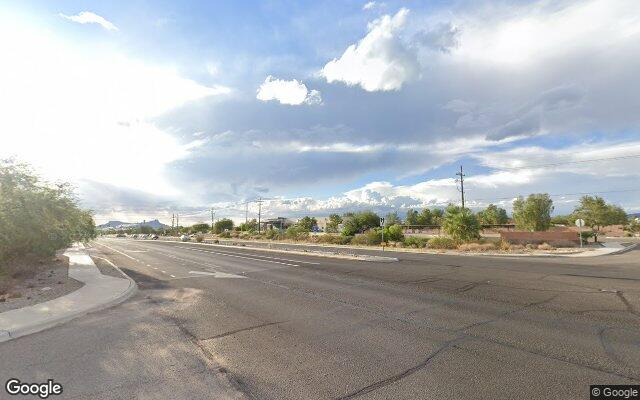
A medium home, reviewed on public record.
© Google Street View
Compared to 1,649 Arizona facilities with a similar number of beds.
Care · 36-month window. Higher percentile = better performance on inspection record. Source: Arizona Dept. of Health Services · Bureau of Residential Facilities Licensing.
among peers to rank.
Rankings based on 36-month ADHS inspection data. Severity and frequency: fewer citations = higher percentile. Repeat rate: lower repeat citation share = higher percentile.
Citation history, plotted month by month.
11 deficiencies on record. Each bar is a month with a citation.
Finding distribution
11 total · 36 monthsScope × Severity (CMS A–L)
Every inspection visit, verbatim.
3 inspections in the public record, most recent first. Plain-language summaries open first — click into any row for the full citation text.
2025-01-03Annual Compliance VisitA.A.C. · 4 findings
“Based on documentation review, and interview, the manager failed to ensure documentation was maintained for at least 12 months after the last date on the documentation of the caregivers and assistant caregivers working each day, including the hours worked by each. Findings include: 1. Upon arriving at the facility, the Compliance Officer observed E2, E3, and E4 were present and working at the facility. 2. A review of the facility work schedule revealed E4 was the only staff member scheduled to work at the facility during the time of the inspection. 3. In an interview, E4 reported that some changes had been made to the posted work schedule. E1 acknowledged those changes had not been documented. 4. In an interview, E1 acknowledged the provided documentation of the caregivers and assistant caregivers working each day was not accurate. 5. Technical assistance for this deficiency was provided during the on-site compliance inspection conducted on November 21, 2023.”
“Based on record review and interview, the manager failed to ensure a caregiver and an assistant caregiver provided evidence of freedom from infectious tuberculosis, (TB) on or before the individual began providing services at or on behalf of the assisted living facility, and as specified in R9-10-113, for one of two employees sampled. Findings include: 1. R9-10-113.A states "If a health care institution is subject to the requirements of this Section, as specified in an Article in this Chapter, the health care institution's chief administrative officer shall ensure that the health care institution establishes, documents, and implements tuberculosis infection control activities that...2. Include: a. For each individual who is employed by the health care institution, provides volunteer services for the health care institution, or is admitted to the health care institution and who is subject to the requirements of this Section, screening, on or before the date specified in the applicable Article of this Chapter, that consists of: i. Assessing risks of prior exposure to infectious tuberculosis, ii. Determining if the individual has signs or symptoms of tuberculosis, and iii. Obtaining documentation of the individual's freedom from infectious tuberculosis according to subsection (B)(1)..." 2. A review of the Centers for Disease Control and Prevention website revealed a web page titled, "Guidelines for Preventing the Transmission of Mycobacterium tuberculosis in Health-Care Settings, 2005." The web page stated, "If TST (Mantoux Skin Test) is used for baseline testing, two-step testing is recommended for HCWs (Health Care Workers) whose initial TST results are negative. If the first-step TST result is negative, the second-step TST should be administered 1-3 weeks after the first TST result was read." 3. A review of E2's personnel record revealed E2 had been hired as a caregiver in March of 2024. E2's personnel record included a baseline screening and single step skin test dated in April of 2024, a month after E2's date of hire. 4. During the on-site inspection, E2 provided an additional TB skin test, however, the skin test was performed in October of 2022. 5. In an interview, E1 acknowledged the personnel file provided for E2 had not included documentation of evidence of freedom from infectious TB as required by R9-10-113.”
“Based on observation and interview, the manager failed to ensure foods requiring refrigeration were maintained at 41\'b0F or below. Findings include: 1. During a facility tour, the Compliance Officer observed the following items requiring refrigeration in the pantry: - An open and partially used container of parmesan cheese. The cheese container label stated, "Refrigerate after opening"; - An open and partially used container of cranberry juice. The juice container label stated, "Must refrigerate after opening"; - An open and partially used container of salsa. The salsa container label stated, "refrigerate after opening"; and - An open and partially used jar of marinara sauce. The sauce container label stated, "refrigerate after opening." The Compliance Officer observed the sauce had a green and white spot of mold growing in the jar. 2. In an interview, E1 acknowledged foods requiring refrigeration had not been maintained at 41\'b0F or below.”
“Based on observation and interview, the manager failed to ensure that frozen foods were stored at a temperature of 0\'b0 F or below. Findings include: 1. During a facility tour, the Compliance Officer observed a freezer in the kitchen area. The freezer had a built in thermostat which was displaying the following error: "HI," "Power Outage," and " High Temp." 2. The Compliance Officer observed the freezer temperature measured 14.5 F. on the Compliance Officer's thermometer. 3. In an interview, E4 reported the freezer had recently been repaired. 4. In an interview, E1 acknowledged frozen foods had not been stored at or below 0\'b0 F.”
2024-07-03Complaint InvestigationA.A.C. · 4 findings
“Based on record review and interview, the assisted living home failed to maintain a copy of documents provided to an emergency responder. Findings include: 1. A review of R1's medical record revealed a form titled, "Assisted Living Transfer Checklist," dated June 17, 2024, which included some of the information required per ARS 36-420.04(A)(1-9). However, the provided documentation for R1 did not include the following: - A list of all the resident's prescription and over-the-counter medications, their dosages and how frequently they are administered; - A copy of the resident's health insurance portability and accountability act release authorizing a receiving hospital to communicate with the assisted living center or assisted living home to plan for the resident's discharge. This paragraph does not preclude a resident from revoking the resident's health insurance portability and accountability act release authorization; and - A copy of the resident's advance directives, if any, on file at the assisted living center or assisted living home. 2. In an interview, E1 acknowledged the face sheet, med list, HIPAA release, and DNR attachments to the Assisted Living Transfer Checklist which were provided to an emergency responder for R1 on June 17, 2024, were not provided for review”
“Based on document review, record review, and interview, after the manager had a reasonable basis, according to A.R.S. \'a7 46-454, to believe abuse, neglect, or exploitation had occurred on the premises, the manager failed to document the suspected abuse, neglect, or exploitation, and any action taken according to subsection (J)(1), failed to initiate an investigation of the suspected abuse, neglect, or exploitation and within five day after the report required in subsection (J)(2), document the dates, times, and description of the suspected abuse, neglect, or exploitation, a description of any injury to the resident related to the suspected abuse or neglect and any change to the resident's physical, cognitive, functional, or emotional condition, the names of witnesses to the suspected abuse, neglect, or exploitation, and the actions taken by the manager to prevent the suspected abuse, neglect, or exploitation from occurring in the future. Findings include: 1. A review of R1's medical record revealed an incident report dated June 20, 2024 at 11:00 AM. The incident report stated, "Resident's POA notified resident will not be coming back to the facility," and stated, "POA notified resident will not be coming back from hospital, requested a refund of fees. POA stated a toxicology test was done on the resident per [POA] request and was found benzos in [R1's] system. Resident was out of the facility a day prior 6/16 from 8 AM to 6 PM. Sending [R1] to the hospital per POA's request. Resident's med list did not include any type of Benzos and an investigation/report hs started." 2. During the on-site inspection, the Compliance Officer requested to review the complete investigation report per R9-10-803(J), as more than five days had elapsed since the allegation was made to the facility. However, a report was not available for review. 3. In an interview, E1 acknowledged a report including the requirements in R9-10-803(J)(1-6) had not been provided for review, and more than five days had elapsed since the facility had become aware of the allegation of possible abuse, neglect, or exploitation of a resident.”
“Based on documentation review, observation, and interview, the manager failed to ensure policies and procedures were implemented for inventorying controlled substances. Findings include: 1. A review of the facility's policies and procedures covering medication administration, reviewed August 21, 2023, revealed a policy covering inventorying controlled substances, which stated, "Controlled substances are monitored by the designated manager and accounted for by the caregiver every shift." 2. A documentation review of the facility work schedule revealed the caregivers worked 2 shifts per day. 3. The Compliance Officer reviewed a binder containing documentation of each controlled substance prescriptions administration and decrement count to the physical medications and observed all controlled substances counts were correct and the facility had last administered a benzodiazepine on May 6, 2024. 4. A documentation review of a log titled, "Release of Narcotics," which contained a per-shift count of controlled substances included the following omissions: - On June 19, 2024 through July 1, 2024, the the incoming caregiver at 7 PM had not initialed the log to verify the count; - On June 23, 2024, the count was not documented at 7 AM or at 7 PM; - On June 30, 2024, the count was not documented at 7 AM or at 7 PM; - On July 2, 2024, the count was not documented at 7 AM or at 7 PM; and - On July 3, 2024, the count was not documented at 7 AM. 5. In an interview, E1 acknowledged the controlled substance log had not been updated each shift as required by the facility's policy and procedure.”
“Based on record review and interview, the manager failed to ensure a caregiver or assistant caregiver documented the individuals notified by the caregiver or assistant caregiver for an accident, emergency, or injury resulting in a resident needing medical services. Findings include: 1. Arizona Administrative Code (A.A.C.) R9-10-818(D)(1) states: "D. When a resident has an accident, emergency, or injury that results in the resident needing medical services, a manager shall ensure that a caregiver or assistant caregiver: 1. Immediately notifies the resident's emergency contact and primary care provider;" 2. A review of R1's medical record revealed an "Accident/Incident Report" dated June 17, 2024. The report stated, "POA requested to call 911," when, "[R1] was in deep sleep when POA and [other visitor] arrived. [R1] would only answer questions and state [R1's] back was in pain." However, the report revealed no documentation demonstrating a caregiver or assistant caregiver documented the individuals notified by the caregiver or assistant caregiver other than facility personnel, to include the primary care provider as required in A.A.C. R9-10-818(D)(1). 3. In an interview, E1 acknowledged documentation of the immediate notification of R1's primary care provider was not available.”
2023-11-21Annual Compliance VisitA.A.C. · 3 findings
“Based on observation and interview, the manager failed to ensure at least one manager or caregiver was present at the assisted living center when a resident was on the premises. The deficient practice posed a health and safety risk to residents who were on the premises with unqualified personnel. Findings include: 1. Upon arriving at the facility, the Compliance Officer observed E4 and E5 were present in the facility. The Compliance Officer observed 4 residents in the living room area. 2. In an interview, E4 reported E4 and E5 were both assistant caregivers and reported the facility had a census of nine residents. E4 reported the certified caregiver had gone briefly to the other facility on the property, AL12314. 3. The Compliance Officer observed E3 entered at the facility approximately fifteen minutes after the start of the on-site inspection. 4. In an interview, E3 reported the regular caregiver for the facility had called in sick and E3 usually works at the other facility but was called to cover. E3 acknowledged E3 had not been present in the facility at the time the Compliance Officer had arrived. 5. In an interview, E1 and E2 acknowledged a manager or a caregiver had not been present in the facility at all times when a resident was present.”
“Based on observation and interview, the manager failed to ensure poisonous or toxic materials were stored in a locked area and inaccessible to residents. Findings include: 1. During a facility tour, the Compliance Officer observed a cabinet located below the kitchen sink had a lock, however, the cabinet had been left unlocked. Inside the cabinet, the Compliance Officer observed a gallon of, "Clorox bleach." 2. During a facility tour, the Compliance Officer observed a laundry room door had been left open and unlocked. Inside the laundry room, the Compliance Officer observed cabinets which had locks, however, the cabinets had been left unlocked. Inside the cabinets, the Compliance Officer observed containers of, "Clorox toilet bowl cleaner," and, "Formula 409 Multi-Surface Cleaner." 3. In an interview, E1 and E2 acknowledged poisonous or toxic materials were not stored in a locked area and inaccessible to residents.”
“Based on documentation review, record review, and interview, the chief administrative officer failed to implement tuberculosis (TB) infection control activities including baseline screening, for two of two personnel members sampled. Findings include: 1. A review of E4's personnel record revealed documentation of baseline screening was not available for review. E4's personnel file contained a form to be used for baseline TB screening, however, the form was blank. 2. A review of E5's personnel record revealed documentation of baseline screening was not available for review. E5's personnel file contained a form to be used for baseline TB screening, however, the form was blank. 3. In an interview, E1 and E2 acknowledged the personnel files provided for E4 and E5 did not include documentation of baseline screening for TB to include assessing risks of prior exposure to infectious tuberculosis, determining if the individual has signs or symptoms of tuberculosis, and obtaining documentation of the individual ' s freedom from infectious tuberculosis according to R9-10-113(B)(1).”
Other facilities in Tucson.
Other memory care facilities near Tucson with similar care offerings.

Contract Decoder
Family reviews
No reviews yet — be the first to share your experience