Mountain View Retirement Village.
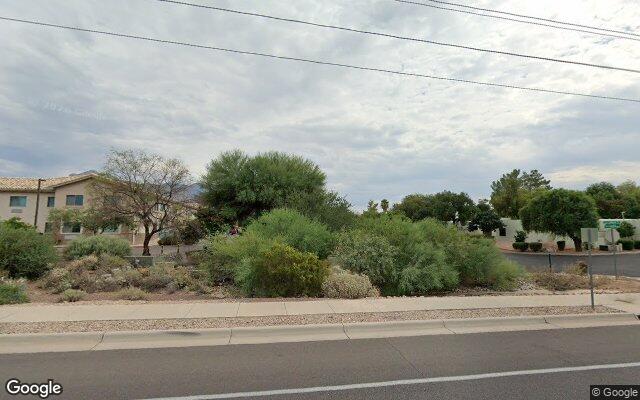
A large home, reviewed on public record.
© Google Street View
Compared to 75 Arizona facilities with a similar number of beds.
Care · 36-month window. Higher percentile = better performance on inspection record. Source: Arizona Dept. of Health Services · Bureau of Residential Facilities Licensing.
among peers to rank.
on file.
Rankings based on 36-month ADHS inspection data. Severity and frequency: fewer citations = higher percentile. Repeat rate: lower repeat citation share = higher percentile.
Citation history, plotted month by month.
16 deficiencies on record. Each bar is a month with a citation.
Finding distribution
16 total · 36 monthsScope × Severity (CMS A–L)
Every inspection visit, verbatim.
6 inspections in the public record, most recent first. Plain-language summaries open first — click into any row for the full citation text.
2026-06-11Complaint InvestigationNo findings
2025-09-15Complaint InvestigationNo findings
2025-05-08Complaint InvestigationR9-10-110.A · 9 findings
“Based on observation, interview, and documentation review, the licensee failed to submit a request for approval of a modification of a health care institution when planning to make changes to physical plant requirements, described in R9-10-820(D)(4)(d). Findings include: 1. During a tour of the facility, the Compliance Officer observed the entry door to residential unit 1201 was wide open, and a resident was sitting at a kitchen area table just inside the entryway. Behind the resident, the compliance officer observed a wall separating the kitchen area from two resident sleeping areas. There were two doors in the wall, allowing each resident access to their respective sleeping area. The wall did not go completely to the ceiling, leaving a gap of approximately 12 to 16 inches between the top of the wall and the ceiling. Additionally, the Compliance Officer observed residential units 1111, 1134, 1135, and 1207 had been modified to have similar walls creating separate sleeping areas, but leaving a similar gap between the ceiling. 2. In an interview, E1 admitted several residential units had been modified to create units with two sleeping areas. E1 was asked for and identified residential units 1207, 1111, and 1134 as units modified for two sleeping areas, with walls which did not go completely to the ceiling. E1 was asked if there were any other rooms that had been modified, and E1 denied knowledge of any other rooms that had been modified. The Compliance Officer informed E1 similar walls were observed in units 1201 and 1135, and E1 admitted these rooms had also been modified with similar walls. 3. In an interview, E1 was asked for documentation of instructions from the governing authority to modify the residential units. E1 advised such documentation did not exist. E1 was asked who installed the walls in the residential units and when. E1 advised a contractor had been hired by E1 to complete the work. E1 was asked when the work had been requested and completed. E1 advised they had requested the work be completed, but E1 could not provide dates of when they requested the work be started and E1 could not recall a completion date. The Compliance Officer requested copies of contracts and payment information to the contractor, and E1 provided copies of two emails, sent to E1, from “Plan B Flooring of Az LLC,” on February 27, 2025, and March 25, 2025, requesting payment for work completed on three residential units, including installing “a large wall to separate the room.” E1 also produced a document titled “Capital Expense Request,” dated February 27, 2025. The request described “Labor and materials to split a 1-bedroom apartment to a 2-bedroom companion apartment.” The request included a section titled “PURPOSE/REASON,” which indicated “New Purchase” and “Emergency.” 4. In an interview, E1 advised there was no emergency requiring the five residential units identified to be modified from single to double occupancy. E1 advised the facility’s governing authority had not requested approval from the Department to modify the healthcare institution. E1 agreed the new walls installed, which did not go from the floor to the ceiling, were not built within physical plant requirements, described in R9-10-820(D)(4)(d).”
“Based on record review and interview, the manager failed to ensure an employee provided documentation of freedom from infectious tuberculosis (TB) on or before the date the individual began providing services at or on behalf of the assisted living facility, as specified in R9-10-113, for three of nine employees sampled. The deficient practice posed a potential TB exposure risk to residents. Findings include: 1. Arizona Administrative Code (A.A.C.) R9-10-113(B)(1)(a)(i) states: "B. A health care institution's chief administrative officer shall: 1. For an individual for whom baseline screening and documentation of freedom from infectious tuberculosis is required by an Article in this Chapter, as specified in subsection (A)(2)(a), obtain one of the following as evidence of freedom from infectious tuberculosis: a. Documentation of a negative Mantoux skin test or other tuberculosis screening test that: i. Is recommended by the U.S. Centers for Disease Control and Prevention (CDC)." 2. A review of the CDC website revealed a web page titled "Baseline Tuberculosis Screening and Testing for Health Care Personnel." The web page stated: "If the Mantoux tuberculin skin test (TST) is used for baseline testing of health care personnel, use two-step testing. Purpose: Two-step testing is recommended for the initial TB skin test for adults who may be tested periodically, such as health care personnel." 3. A review of E4's personnel record revealed documentation of a skin test administered July 29, 2024, and read July 31, 2024. Documentation of a second skin test, administered August 2, 2024, and read August 4, 2024, was available. However, the two skin tests were not administered at least seven days apart. 4. A review of E5’s personnel record revealed documentation of a skin test administered March 7, 2025, and read March 9, 2025. However, documentation of a second skin test, administered at least seven days later, was not available for review. 5. A review of E7's personnel record revealed documentation of a skin test administered March 17, 2025, and read March 20, 2025. Documentation of a second skin test, administered March 20, 2025, and read March 22, 2025, was available. However, the two skin tests were not administered at least seven days apart. 6. In an interview. E1 acknowledged E4, E5, and E7 did not provide documentation of freedom from infectious TB as specified in R9-10-113 on or before the date E4, E5, and E7 began providing services at or on behalf of the assisted living facility.”
“Based on record review and interview, the manager failed to ensure a resident provided evidence of freedom from infectious tuberculosis (TB) within seven calendar days after the resident’s date of occupancy for three of ten residents sampled. The deficient practice posed a potential TB exposure risk to residents. Findings include: 1. Arizona Administrative Code (A.A.C.) R9-10-113(A)(2)(a)(i-ii) states: “a. For each individual who is…admitted to the health care institution and who is subject to the requirements of this Section, baseline screening, on or before the date specified in the applicable Article of this Chapter, that consists of: i. Assessing risks of prior exposure to infectious [TB], ii. Determining if the individual has signs or symptoms of [TB].” 2. A review of R1’s and R9’s medical records revealed evidence of documentation of a negative TB skin test. However, evidence of baseline screening for signs, symptoms, and risk of exposure to TB was unavailable for review. 3. A review of R5’s medical record revealed evidence of documentation indicating “CXR – 7/03/24,” and “No evidence TB.” No other evidence of freedom from infectious TB, such as a skin test, blood test, or signs, symptoms, and risk assessment for TB was available for review. 4. In an interview, E1 acknowledged R1, R5, and R9 had not provided evidence of freedom from infectious TB as specified in R9-10-113, before or within seven calendar days of their respective dates of occupancy.”
“Based on record review and interview, the manager failed to ensure a resident had a written service plan that included the level of service the resident is expected to receive, or included the amount, type, and frequency of assisted living services being provided, for four of ten residents sampled. Findings include: 1. A review of R4’s and R5’s medical records revealed a service plan for personal care services. R4’s and R5's service plan included the service “Dressing,” and indicated “requires assistance with zippers, buttons, etc. The resident needs assistance for dressing.” However, the service plan did not indicate the amount or frequency of assistance the resident required for the service. 2. A review of R7’s medical record revealed a service plan for personal care services. The plan included the service “Toileting,” and indicated R7 was “incontinent of bladder [and] bowel,” and required “assist from staff.” However, the service plan did not include the amount or frequency of assistance required. R7's service plan also included the service “Dressing,” and indicated “requires assistance with zippers, buttons, etc. The resident needs assistance for dressing.” However, the service plan did not indicate the frequency of assistance the resident required for the service. 3. A review of R10’s medical record revealed a service plan for personal care services. The service plan indicated R10 was non-ambulatory. The plan included the service “Toileting,” and indicated R10 was “incontinent of bladder [and] bowel,” and required “assist from staff.” R7's service plan also included the service “Dressing,” and indicated “requires assistance with zippers, buttons, etc. The resident needs assistance for dressing.” However, the service plan did not indicate the frequency of assistance the resident required for either service. 4. In an interview, E1 agreed R4’s, R5’s, R7’s, and R10’s service plans did not include the amount and frequency of service each resident was expected to receive.”
“Based on observation and interview, the manager failed to ensure a resident was treated with dignity, respect, and consideration. Findings include: 1. During a tour of the facility, the Compliance Officer observed residential unit 1201's front door was wide open, and a resident was sitting at a kitchen area table just inside the entryway. Behind the resident, the compliance officer observed a wall separating the kitchen area from two resident sleeping areas. There were two doors in the wall, allowing each resident access to their respective sleeping area. The wall did not go completely to the ceiling, leaving a gap of approximately 12 to 16 inches between the top of the wall and the ceiling. Additionally, the Compliance Officer observed residential units 1111, 1134, 1135, and 1207 had been modified to have similar walls creating separate sleeping areas, but leaving a similar gap between the ceiling. 2. In an interview, R11 advised R11 had lived at the facility for several months before being moved into a new, two-bedroom residential unit. R11 indicated the new unit had a wall installed to turn the family room area into a second sleeping area. R11 pointed out the newly built wall, which did not go to the ceiling, and advised R11’s new roommate likes to leave the kitchen light on at night, and the light comes over the wall, keeping R11 awake at night. R11 also indicated the gap at the top of the wall allows R11 to hear sounds they might otherwise not be able to hear if the wall went to the ceiling. Furthermore, R11 indicated their roommate is a smoker, and the smell of cigarette smoke in the room aggravates R11's sinuses. R11 stated they have made verbal complaints to E1, but nothing has been done to alleviate the situation. 3. In an interview, E1 admitted several residential units had been modified to create units with two sleeping areas. E1 was asked for and identified residential units 1207, 1111, and 1134 as units modified for two sleeping areas, with walls that did not go completely to the ceiling. E1 was asked if there were any other rooms that had been modified, and E1 denied knowledge of any other rooms that had been modified. The Compliance Officer informed E1 similar walls were observed in units 1201 and 1135, and E1 admitted these rooms had also been modified with similar walls. E1 acknowledged and understood how residents' sleeping areas, not having floor-to-ceiling walls, is not considerate or respectful of residents.”
“Based on observation and interview, the manager failed to ensure medication was stored in a separate locked room, closet, cabinet, or self-contained unit used only for medication storage. Findings include: 1. During a tour of the facility, the Compliance Officer entered an administrative office through an open door. No other facility employee was observed outside or inside the office. The Compliance Officer observed a plastic bin on a shelving unit. Inside the bin, in plain view, were numerous medications, including “Haloperidol,” “Atropine,” “Ondansetron,” and “Risperidone.” 2. In an interview, E1 agreed the medications were not being stored in a locked room, closet, cabinet, or self-contained unit as required.”
“Based on documentation review and interview, the manager failed to ensure a disaster drill for employees was conducted on each shift, at least once every three months, and documented. Findings include: 1. A review of facility staffing schedules revealed the facility operated three shifts: days, 6:00 a.m. – 2:00 p.m., swing shift, 2:00 p.m. – 10:00 p.m., and nights, 10:00 p.m. – 6:00 a.m. 2. A review of facility documentation revealed evidence of documentation of an employee disaster drill conducted during the swing shift on January 31, 2025, and March 31, 2025. However, evidence of documentation of any additional employee disaster drills conducted in the seven months before January 2025 or the months after March 2025 was unavailable for review. 3. In an interview, E1 agreed disaster drills were not being conducted on each shift, at least once every three months, and documented.”
“Based on document review and interview, the manager failed to ensure an evacuation drill was conducted at least every six months. Findings include: 1. A review of facility documentation revealed evidence of documentation of an evacuation drill conducted on November 27, 2024. However, evidence of documentation of an evacuation drill conducted in the preceding six months or following six months was unavailable for review. 2. In an interview, E1 advised E1 was unable to locate documentation of an evacuation drill conducted before or after November 27, 2024. E1 acknowledged the facility had not conducted an evacuation drill every six months as required.”
“Based on observation and interview the manager failed to ensure a resident’s sleeping area had floor-to-ceiling walls. Findings include: 1. During a tour of the facility, the Compliance Officer observed the entry door to residential unit 1201 was wide open, and a resident was sitting at a kitchen area table just inside the entryway. Behind the resident, the compliance officer observed a wall separating the kitchen area from two resident sleeping areas. There were two doors in the wall, allowing each resident access to their respective sleeping area. The wall did not go completely to the ceiling, leaving a gap of approximately 12 to 16 inches between the top of the wall and the ceiling. Additionally, the Compliance Officer observed residential units 1111, 1134, 1135, and 1207 had been modified to have similar walls creating separate sleeping areas, but leaving a similar gap between the ceiling. 2. In an interview, R11 advised R11 had lived at the facility for several months, before being moved into a new, two-bedroom residential unit. R11 indicated the new unit had a wall installed to turn the family room area into a second sleeping area. R11 pointed out the newly built wall, which did not go to the ceiling and advised R11’s new roommate likes to leave the kitchen light on at night, and the light comes over the wall, keeping R11 awake at night. R11 also indicated the gap at the top of the wall allows R11 to hear sounds they might otherwise not be able to hear if the wall went to the ceiling. R11 stated they have made verbal complaints to E1, but nothing has been done to modify the wall. 3. In an interview, E1 admitted several residential units had been modified to create units with two sleeping areas. E1 was asked for and identified residential units 1207, 1111, and 1134 as units modified for two sleeping areas, with walls that did not go completely to the ceiling. E1 was asked if there were any other rooms that had been modified, and E1 denied knowledge of any other rooms that had been modified. The Compliance Officer informed E1 similar walls were observed in units 1201 and 1135, and E1 admitted these rooms had also been modified with similar walls.”
2024-01-30Complaint InvestigationA.A.C. · 1 finding
“Based on documentation review, record review, and interview, for four of six caregivers reviewed, the manager failed to ensure a caregiver's skills and knowledge were verified and documented before providing physical health services, and according to policies and procedures. The deficient practice posed a risk if employees were unable to meet the needs of residents. Findings include: 1. A documentation review of the facility's policies and procedures revealed a policy titled, "Personnel Requirements (Caregivers, Manager, Licensed)." The policy stated, "All staff and volunteers who work in the assisted living facility: 1) Will have a file maintained....that contains the following; c. Documentation of the following: i. The individual's qualification, including skills and knowledge applicable to their job duties." 2. A review of facility documents revealed documents titled, "Caregiver," and "Medication Aide," which included a job description of the respective positions. This document included specific skills each caregiver or medication aide needed to possess. 3. A review of E2's personnel record revealed a form titled, "Skills checklist," used for documenting verification of skills and knowledge. The form was largely complete, however numerous sections for documenting skills such as, "Bed Bath/Showers/ Shower Sheets/POC Documentation," "Grooming," "Skin Care/ Skin Program," Oral Hygiene," "Shaving," "Passing Medications, Re-ordering medications," and "Understanding organization of the med cart" were blank. Further review revealed job descriptions for caregiver and medication aide, which were signed by E2. 4. A review of E3's personnel record revealed a skills checklist form which was largely completed, however numerous sections for documenting verification of skills such as "Weights, "Oxygen Care," "Fall/Injury prevention," "Feeding, serving trays, "Meal replacement, snacks," "Charting - POC," "Reporting" and an entire section titled "Medications Tech skills" were left blank. Further review revealed job descriptions for caregiver and medication aide, which were signed by E3. 5. A review of E4's personnel record revealed a skills checklist form which was largely completed, however numerous sections for documenting verification of skills such as "Grooming, "Perineal/Incontinent Care," "Toileting," "Prevention of skin breakdown," "Body Mechanics," "Transfers," "Ambulation" and "Fall/injury prevention" were left blank. Further review revealed job descriptions for caregiver, which was signed by E4. 6. A review of E7's personnel record revealed a skills checklist form which was largely completed, however numerous sections for documenting verification of skills such as "Shaving, "Cleaning of Equipment," "Infection Control understanding for outbreaks," "Positioning in chair and bed," "Ambulation," "Fall/injury prevention," an entire section titled "Vital Signs," and another titled, "Medication Tech skills" were left blank. Further review revealed job descriptions for caregiver and Medication Aide which were signed by E7. 7. A review of staffing calendars for January 2024 revealed E2, E3, E4 and E7 worked numerous shifts during the month. 8. In an interview, E1 acknowledged E2's E3's E4's and E7's skills and knowledge were not verified and documented prior to providing physical health services and according to policies and procedures.”
2024-01-08Complaint InvestigationA.A.C. · 1 finding
“Based on documentation review, observation, and interview, the manager failed to ensure for a facility authorized to provide directed care services, there was a means of exiting the facility for a resident who does not have a key, special knowledge for egress, or the ability to expend increased physical effort and provided access to an outside area which allowed the resident to be at least 30 feet away from the facility and controlled or alerted employees of the egress of a resident from the facility. The deficient practice posed a potential elopement risk for residents. Findings include: 1. A review of the Department's documentation revealed the facility was authorized to provide directed care services. 2. During a tour of the secure "Memory Care" unit of the facility the Compliance Officer observed no fewer than four ambulatory residents. The Compliance Officer observed magnetic locks on all doors leading outside the unit. The Compliance Officer pressed the push bar of one exit door at the end of a hall and an audible alarm sounded. The Compliance Officer held the push bar for approximately fifteen seconds and the door opened allowing access to a common area of the facility which had points of egress from the facility which did not alert employees of a resident's egress. The Compliance Officer held the door open for approximately fifteen seconds after, E2 was observed making a phone call. Shortly thereafter, E6 appeared running down the hallway to the Compliance Officer's location. 3. In an interview, E6 indicated E2 had called E6 and requested E6's presence at the Compliance Officer's location. E6 reported not being aware the secure exit door alarm had sounded and not being aware the secure exit door had been opened. E6 agreed if a resident had pushed and opened the door, a caregiver would not have been alerted to their egress. 4. In an interview E1 acknowledged the alarm on the exit door of the Memory Care unit was not sufficient to alert employees of the egress of a resident from the facility.”
2023-10-11Complaint InvestigationA.A.C. · 5 findings
“Based on record review and interview, the manager failed to ensure each resident's written service plan accurately included the amount, type and frequency of assisted living services being provided to the resident, for four of eight residents sampled. Findings include: 1. A review of R2's medical record revealed a service plan updated May 26, 2023, for personal care services. The service plan stated, "Medication/Pharmacy, Goal: Resident will receive medication as prescribed by the physician and will have access to them either independently or by assistance from staff thru the next review, Interventions/Tasks: Medication Administration. This may include: Storing resident's medication, reading of medication label if requested, opening container of medication, pouring and placing medication into container or resident's hand, and observing while resident takes medication, or may be administered to the final destination." The service plan failed to accurately indicate R2 would self-administer some medications, the service plan did not include the blood sugar monitoring services required by R2, and the service plan did not include the daily temperature and blood oxygen checks required by R2. 2. A review of R2's medical record revealed signed medication orders, dated September 21, 2023, which included following orders: - "ProAir HFA Inhalation Aerosol Solution 108 (90 Base) MCG/ACT (Albuterol Sulfate) 2 puff inhale orally every 4 hours as needed for SoB, wheezing or congestion. unsupervised self administration"; - "FSBS 1x Week in the morning every Sun for Monitoring, Start 09/10/2023"; and - "COVID Monitoring: Take temperature and O2 once daily every evening shift for COVID MONITORING, Start 05/24/2023." 3. A review of R2's medical record revealed an electronic medication administration record (eMAR) dated September 2023. The eMAR indicated R2 had self-administered Albuterol on each day in September 2023. 4. A review of R3's medical record revealed a service plan dated August 8, 2023 for directed care services. The service plan stated R3 would receive: "Regular diet, thin liquids." However, R3's service plan failed to include the "Cardiac Diet" required by R3. 5. A review of R3's medical record revealed a form titled, "Physician's Report," signed by a medical practitioner and dated July 24, 2023, which stated, "Diet: Cardiac Diet, regular, thin." 6. A review of R3's medical record revealed a signed list of physician's orders, dated July 21, 2023, from the skilled nursing facility R3 was at prior to admission to the facility. These orders included, "Cardiac Diet, Regular texture, Thin liquids consistency." 7. A review of R4's medical record revealed a service plan dated May 8, 2023 for personal care services. The service plan stated R4 would receive: "Regular diet, thin liquids." However, R3's service plan failed to include the "Mechanically chopped, Moistened, Softer food" required by R4, and had not been updated when the special diet was ordered on June 15, 2023. 8. A review of R4's medical record revealed primary care physician visit summary dated June 15, 2023. The report stated, "History of Present Illness...Met patient in [their] room after staff report 2 choking episodes at meal time and on separate occasions patient had c/o difficulty swallowing large caps like Lovaza... Patient Plan: Discussed chopped with patient and Wellness Director. Patient agrees to have foods mechanically chopped, moistened. Patient adds that [they] now ordered softer foods." 9. A review of R6's medical record revealed a service plan updated August 2, 2023, for personal care services. The service plan stated, "Medication/Pharmacy, Goal: Resident will receive medication as prescribed by the physician and will have access to them either independently or by assistance from staff thru the next review, Interventions/Tasks: Medication Administration. This may include: Storing resident's medication, reading of medication label if requested, opening container of medication, pouring and placing medication into container or resident's hand, and observing while resident takes medication, or may be administered to the final destination." The service plan failed to indicate R6 would self-administer some medications and failed to describe how R6's self-administered medications would be stored and controlled in R6's residential unit. 10. A review of R6's medical record revealed signed medication orders, dated September 21, 2023, which included the order, "Flonase Allergy Relief Nasal Suspension 50 MCG/ACT (Fluticasone Propionate (Nasal) 1 spray Alternating nostrils one time a day for allergies. Unsupervised self-administration. May keep at bedside." 11. A review of R6's medical record revealed an electronic medication administration record (eMAR) dated October 2023. The eMAR indicated R6 had self-administered Flonase on each day in October 2023. 12. In an interview E1 and E2 acknowledged the service plans provided for R2, R3, R4, and R6 did not accurately include the services ordered for and provided to each resident. E1 reported the residents did not require all of the ordered services and they would obtain orders to discontinue the unnecessary services.”
“Based on documentation review, observation, and interview, the manager failed to ensure the service plans for three of eight residents sampled who stored medication in the resident's residential unit included how the medication was stored and controlled. Findings include: 1. A review of R1's medical record revealed a service plan updated April 26, 2023, for personal care services. The service plan stated, "Medication/Pharmacy, Goal: Resident will receive medication as prescribed by the physician and will have access to them either independently or by assistance from staff, Interventions/Tasks: Self Administration medications are stored and controlled. Self-Medication Administration. Resident will have a re-evaluation per state regulation, Wellness Director / Caregivers Order medications from Pharmacy, Facility Receives medications from Pharmacy on a routine cycle fill." However, the service plan failed to describe how R1's medication would be stored and controlled in R1's residential unit. 2. A review of R2's medical record revealed a service plan updated May 26, 2023, for personal care services. The service plan stated, "Medication/Pharmacy, Goal: Resident will receive medication as prescribed by the physician and will have access to them either independently or by assistance from staff thru the next review, Interventions/Tasks: Medication Administration. This may include: Storing resident's medication, reading of medication label if requested, opening container of medication, pouring and placing medication into container or resident's hand, and observing while resident takes medication, or may be administered to the final destination." The service plan failed to indicate R2 would self-administer some medications and failed to describe how R2's self-administered medications would be stored and controlled in R2's residential unit. 3. A review of R2's medical record revealed signed medication orders, dated September 21, 2023, which included the order, "ProAir HFA Inhalation Aerosol Solution 108 (90 Base) MCG/ACT (Albuterol Sulfate) 2 puff inhale orally every 4 hours as needed for SoB, wheezing or congestion. unsupervised self administration." 4. A review of R2's medical record revealed an electronic medication administration record (eMAR) dated September 2023. The eMAR indicated R2 had self-administered Albuterol on each day in September 2023. 5. A review of R6's medical record revealed a service plan updated August 2, 2023, for personal care services. The service plan stated, "Medication/Pharmacy, Goal: Resident will receive medication as prescribed by the physician and will have access to them either independently or by assistance from staff thru the next review, Interventions/Tasks: Medication Administration. This may include: Storing resident's medication, reading of medication label if requested, opening container of medication, pouring and placing medication into container or resident's hand, and observing while resident takes medication, or may be administered to the final destination." The service plan failed to indicate R6 would self-administer some medications and failed to describe how R6's self-administered medications would be stored and controlled in R6's residential unit. 6. A review of R6's medical record revealed signed medication orders, dated September 21, 2023, which included the order, "Flonase Allergy Relief Nasal Suspension 50 MCG/ACT (Fluticasone Propionate (Nasal) 1 spray Alternating nostrils one time a day for allergies. Unsupervised self-administration. May keep at bedside." 7. A review of R6's medical record revealed an electronic medication administration record (eMAR) dated October 2023. The eMAR indicated R6 had self-administered Flonase on each day in October 2023. 8. In an interview, E1 and E2 acknowledged the service plans for R1, R2, and R6, who self-administered and stored medication, did not include how the medication would be stored and controlled.”
“Based on record review and interview, the manager failed to ensure medication administered to a resident is administered in compliance with a medication order for one of eight residents sampled. Findings include: 1. A review of R8's medical record revealed a service plan which indicated R8 received personal care and administration of medication. The medical record contained a doctor's order, dated July 24, 2023, directing R8 take "Midodrine HCl Tablet 2.5 MG 1 tablet by mouth two times a day for hypotension. HOLD FOR BP >120." 2. A review of R8's Medication Administration Record (MAR) for September 2023 revealed a section documenting the administration of "Midodrine HCl Tablet 2.5 MG 1 tablet by mouth two times a day for hypotension. HOLD FOR BP >120." The section contained documentation indicating the medication was administered to R8 daily, from September 1, 2023, through September 30, 2023. The MAR also contained a section titled "Monthly vitals and weight," which included an area for documenting blood pressure. The record indicated R8's blood pressure was taken and documented on September 2, 2023, as being "129/67," however evidence R8's blood pressure was taken on any other day in September 2023 was unavailable for review. 3. In an interview E1 acknowledged evidence of R8's blood pressure was not available for review. E1 also acknowledged R8's medication was not being administered as ordered.”
“Based on record review and interview, for two residents with orders for a therapeutic diet, the manager failed to ensure a therapeutic diet was provided to a resident according to a written order from the resident's primary care provider or another medical practitioner, which posed a health and safety risk. Findings include: 1. A review of R3's medical record revealed a service plan dated August 8, 2023 for directed care services. The service plan stated R3 would receive: "Regular diet, thin liquids." 2. A review of R3's medical record revealed a form titled, "Physician's Report," signed by a medical practitioner and dated July 24, 2023, which stated, "Diet: Cardiac Diet, regular, thin." 3. A review of R3's medical record revealed a signed list of physician's orders, dated July 21, 2023, from the skilled nursing facility R3 was at prior to admission to the facility. These orders included, "Cardiac Diet, Regular texture, Thin liquids consistency." 4. A review of R4's medical record revealed a service plan dated May 8, 2023 for personal care services. The service plan stated R4 would receive: "Regular diet, thin liquids." 5. A review of R4's medical record revealed primary care physician visit summary dated June 15, 2023. The report stated, "History of Present Illness...Met patient in [their] room after staff report 2 choking episodes at meal time and on separate occasions patient had c/o difficulty swallowing large caps like Lovaza... Patient Plan: Discussed chopped with patient and Wellness Director. Patient agrees to have foods mechanically chopped, moistened. Patient adds that [they] now ordered softer foods." 6. In an interview, E1 and E2 acknowledged R3 and R4 had not been provided with a therapeutic diet as ordered. E1 reported the diets would not be accepted or tolerated and the facility would obtain orders to discontinue the therapeutic diet for both residents.”
“Based on documentation review and interview, the manager failed to ensure a disaster drill for employees was conducted on each shift at least once every three months and documented. Findings include: 1. A review of the facility work schedule revealed the facility worked on three shifts per day, a first shift from 6 a.m. to 2 p.m., a second shift from 2 p.m. to 10 p.m., and a third shift from 10 p.m. to 6 a.m. 2. A review of facility disaster drills conducted during the previous twelve months revealed documentation of the following drills conducted during the previous twelve months: - No drills conducted between October 2022 and December 2022; - First shift drills were conducted on January 31, 2023, April 26, 2023, and August 28, 2023; - Second shift drills were conducted on February 21, 2023, May 19, 2023, and August 23, 2023; and - Third shift drills were conducted on February 6, 2023 and August 25, 2023. 3. In an interview, E1 and E2 acknowledged documentation of disaster drills conducted on each shift at least once every three months for the previous twelve months had not been provided to the Compliance Officers upon request.”
Other facilities in Tucson.
Other memory care facilities near Tucson with similar care offerings.


Contract Decoder
Family reviews
No reviews yet — be the first to share your experience