Atria Campana del Rio.
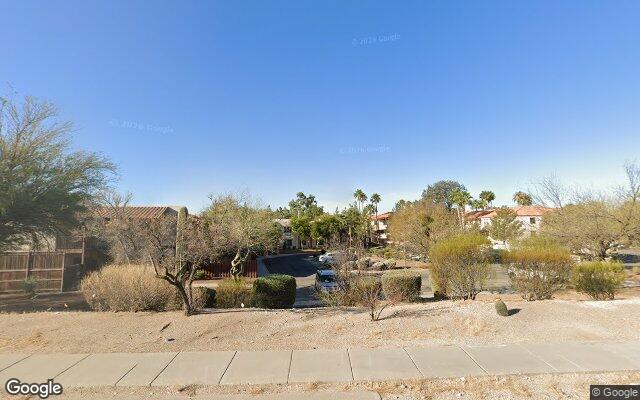
A large home, reviewed on public record.
© Google Street View
Compared to 75 Arizona facilities with a similar number of beds.
Care · 36-month window. Higher percentile = better performance on inspection record. Source: Arizona Dept. of Health Services · Bureau of Residential Facilities Licensing.
among peers to rank.
Rankings based on 36-month ADHS inspection data. Severity and frequency: fewer citations = higher percentile. Repeat rate: lower repeat citation share = higher percentile.
Citation history, plotted month by month.
13 deficiencies on record. Each bar is a month with a citation.
Finding distribution
13 total · 36 monthsScope × Severity (CMS A–L)
Every inspection visit, verbatim.
8 inspections in the public record, most recent first. Plain-language summaries open first — click into any row for the full citation text.
2026-06-01Complaint InvestigationNo findings
2025-10-01Complaint InvestigationNo findings
2025-07-25Complaint InvestigationNo findings
2025-06-11Complaint InvestigationNo findings
2025-02-24Annual Compliance VisitR9-10-113.A.2 · 9 findings
“Based on documentation review, record review, and interview, the health care institution's chief administrative officer failed to ensure the health care institution documented, and implemented tuberculosis (TB) infection control activities required in R9-10-113.A.2.a-f. Findings include: 1. A review of E1’s, E3’s, E4’s, E5’s, E7’s, E8’s, E10’s personnel records and R1’s, R5’s, and R6’s medical records revealed each record included a negative test for TB. However, each person’s documentation of freedom from infectious TB did not include a, “baseline screening that consists of assessing risks of prior exposure to infectious tuberculosis or determining if the individual has signs or symptoms of tuberculosis,” per R9-10-113.A.2.a. 2. A review of E1’s, E3’s, E4’s, E5’s, E6’s, E7’s, E8’s, E9’s and E10’s personnel records revealed annual training and education related to recognizing the signs and symptoms of TB, to include initial training per R9-10-113.A.1, was not available for review. 3. A review of facility documentation revealed documentation of annually assessing the health care institution's risk of exposure to infectious tuberculosis per R9-10-113.A.2.e was unavailable for review. 4. In an interview, E1 and E2 acknowledged the health care institution had not documented, and implemented tuberculosis infection control activities required in R9-10-113.A.2.a-f. Technical assistance was provided for this rule during the on-site compliance inspection conducted on December 27, 2022 and the on-site compliance inspection conducted on December 27, 2023”
“Based on record review, documentation review, and interview, the governing authority failed to ensure compliance with A.R.S. § 36-411, for five of nine personnel records reviewed. The deficient practice posed a risk if a personnel member was a danger to a vulnerable population. A.R.S. § 36-411 states: "A. Except as provided in subsection F of this section, as a condition of licensure or continued licensure of a residential care institution, a nursing care institution or a home health agency and as a condition of employment in a residential care institution, a nursing care institution or a home health agency, employees and owners of residential care institutions, nursing care institutions or home health agencies, contracted persons of residential care institutions, nursing care institutions or home health agencies or volunteers of residential care institutions, nursing care institutions or home health agencies who provide medical services, nursing services, behavioral health services, health-related services, home health services or direct supportive services and who have not been subject to the fingerprinting requirements of a health professional's regulatory board pursuant to title 32 shall have a valid fingerprint clearance card that is issued pursuant to title 41, chapter 12, article 3.1 or shall apply for a fingerprint clearance card within twenty working days after employment or beginning volunteer work or contracted work. B. A health professional who has complied with the fingerprinting requirements of the health professional's regulatory board as a condition of licensure or certification pursuant to title 32 is not required to submit an additional set of fingerprints to the department of public safety pursuant to this section. C. Each residential care institution, nursing care institution and home health agency shall make documented, good faith efforts to: 1. Contact previous employers to obtain information or recommendations that may be relevant to a person's fitness to work in a residential care institution, nursing care institution or home health agency. 2. Verify the current status of a person's fingerprint clearance card. 3. Beginning January 1, 2025, verify that a potential employee is not on the adult protective services registry pursuant to section 46-459. If a potential employee is found to be on the adult protective services registry, the residential care institution, nursing care institution or home health agency may not hire the potential employee. 4. On or before March 31, 2025, verify that each employee is not on the adult protective services registry pursuant to section 46-459. If an employee is found to be on the adult protective services registry, the residential care institution, nursing care institution or home health agency shall take action to terminate the employment of that employee. 5. Beginning March 31, 2025, annually reverify that each employee is not on the adult protective services registry pursuant to section 46-459. D. An employee, an owner, a contracted person or a volunteer or a facility on behalf of the employee, the owner, the contracted person or the volunteer shall submit a completed application that is provided by the department of public safety within twenty days after the date the person begins work or volunteer service. E. Except as provided in subsection F of this section, a residential care institution, nursing care institution or home health agency shall not allow an employee to continue employment or a volunteer or contracted person to continue to provide medical services, nursing services, behavioral health services, health-related services, home health services or direct supportive services if the person has been denied a fingerprint clearance card pursuant to title 41, chapter 12, article 3.1, has been denied approval pursuant to this section before May 7, 2001 or has had a fingerprint clearance card suspended or revoked. F. An employee, volunteer or contractor of a residential care institution, nursing care institution or home health agency who is eligible pursuant to section 41-1758.07, subsection C to petition the board of fingerprinting for a good cause exception and who provides documentation of having applied for a good cause exception pursuant to section 41-619.55 but who has not yet received a decision is exempt from the fingerprinting requirements of this section if the person provides medical services, nursing services, behavioral health services, health-related services, home health services or direct supportive services to residents or patients while under the direct visual supervision of an owner or employee who has a valid fingerprint clearance card. G. If a person's employment record contains a six-month or longer time frame during which the person was not employed by any employer, a completed application with a new set of fingerprints shall be submitted to the department of public safety. H. For the purposes of this section: 1. "Direct supportive services": (a) Means services other than home health services that provide direct individual care and that are not provided in a common area of a health care institution, including: (i) Assistance with ambulating, bathing, toileting, grooming, eating and getting in and out of a bed or chair. (ii) Assistance with self-administration of medication. (iii) Janitorial, maintenance, housekeeping or other services provided in a resident's room. (iv) Transportation services, including van services. (b) Does not include services provided by persons contracted directly by a resident or the resident's family in a health care institution. 2. "Direct visual supervision" means continuous visual oversight of the supervised person that does not require the supervisor to be in a superior organizational role to the person being supervised. 3. "Home health services" has the same meaning prescribed in section 36-151." Findings include: 1. A review of E1’s personnel record revealed E1 had been hired as a manager in January of 2025. 2. A review of E1's personnel record revealed documented attempts to contact E1's prior employers was not available for review. 3. A review of E1’s personnel record revealed documentation of verification E1 was not on the Adult Protective Services registry prior to E1’s employment was not available for review. 4. A review of E3's personnel record revealed E3 had been hired as a caregiver in May of 2024. 5. A review of E3's personnel record revealed a work history listing prior employers, personal references, and professional references. 6. A review of E3's personnel record revealed documentation of attempts to contact multiple professional references, however, documentation of attempts to contact prior employers was not available for review, and documentation of whether the professional references listed were prior employers was also not available for review. E3’s personnel record included one successful contact with a professional reference, however, the reference form did not establish whether this person had a supervisory or employer relationship with E3. 7. A review of E4’s personnel record revealed E4 had been hired as a caregiver in January of 2025. 8. A review of E4's personnel record revealed documented attempts to contact E4's prior employers was not available for review. 9. A review of E4’s personnel record revealed documentation of verification E4 was not on the Adult Protective Services registry prior to E4’s employment was not available for review. 10. A review of E6’s personnel record revealed E6 had been hired as a caregiver in May of 2020. 11. A review of E6's personnel record revealed documented attempts to contact E6's prior employers was not available for review. 12. A review of E8’s personnel record revealed E8 had been hired as a housekeeper in November of 2024. 13. A review of E8's personnel record revealed documented attempts to contact E8's prior employers was not available for review. 14. In an interview, E1 and E2 acknowledged the personnel records provided for E1, E3, E4, E6, and E8 did not include documentation of compliance with all sections of ARS § 36-411.”
“Based on documentation review, record review, and interview, the manager failed to ensure, for one of six caregivers sampled, before providing assisted living services to a resident, a manager or caregiver provided current documentation of first aid training and cardiopulmonary resuscitation (CPR) training certification. The deficient practice posed a risk if an employee was unable to meet a resident's needs during an emergency. Findings include: 1. A review of E9's personnel record revealed a CPR and First Aid training certification issued on December 10, 2022, which include a marked expiration date of December 10, 2024. 2. A review of E9's personnel record revealed current CPR and first aid certification was not available for review. 3. In an interview, E1, and E2 acknowledged E9's personnel record did not include documentation of current CPR and First Aid training certification. This is a repeat deficiency from the on-site compliance inspection conducted on December 27, 2023.”
“Based on record review and interview, the manager failed to ensure a caregiver documented the services provided in the resident's medical record, for six of six residents sampled. Findings include: 1. A review of R1’s, R2’s, R3’s, R4’s, R5’s and R6’s medical records revealed each resident had a current service plan describing the services which would be provided to each resident. 2. A review of R1’s, R2’s, R3’s, R4’s, R5’s and R6’s medical records revealed electronic documentation titled, “Resident Monthly Assignment Report,” (ADL) which documented the services provided to each resident on each day in February 2025. However, the ADLs included multiple gaps, for each resident, where required services had not been documented to have been provided. 3. In an interview, E1 and E2 acknowledged the services provided to each resident had not been accurately documented on the provided ADL forms”
“Based on observation, record review, and interview, the manager failed to ensure that medication was stored in a separate locked room, closet, cabinet, or self-contained unit used only for medication storage. Findings include: 1. During an environmental inspection of the facility, in R3’s residential unit, the compliance officer observed containers of medications on shelves and tables throughout the unit, including “Mucinex”, “Voltaren”, “Nyquil”, and “Tums.” 2. A review of R3’s medical record revealed a current service plan for personal care services including Medication Administration. R3’s service plan did not state R3 would self-administer any medications and did not include instructions for how R3 would store or control medications in R3’s residential unit. 3. During an environmental inspection of the facility, in R4’s residential unit, the compliance officer observed containers of medications on shelving the bathroom, including “Preparation H”, and “Cortisone.” 4. A review of R4’s medical record revealed a current service plan for personal care services including Medication Administration. R4’s service plan did not state R4 would self-administer any medications and did not include instructions for how R4 would store or control medications in R4’s residential unit. 5. In an interview, E1 and E2 acknowledged medications stored by the assisted living facility had not been stored in a separate locked area.”
“Based on documentation review, observation, and interview, the manager failed to ensure a disaster drill for employees was conducted on each shift at least once every three months and documented. Findings include: 1. A documentation review of the facility work schedule revealed the facility worked three shifts per day. 2. A review of facility documentation revealed no documented disaster drills were provided for review. 3. A review of facility documentation revealed documents titled, “Fire Drill Record,” which appeared to be staff-only drills conducted on different shifts. Fire Drills during the previous twelve months had been documented as follows: - February 29, 2024 at 1:19 PM (1st shift); - March 21, 2024 at 4:30 AM (3rd shift); - April 30, 2024 at 11:01 (No AM or PM); - June 12, 2024 at 9:30 (No AM or PM); - June 17, 2024 at 5:11 (No AM or PM); - July 31, 2024 at 10:56 AM (1st shift); - August 28, 2024 at 4:40 AM (3rd shift); - September 27, 2024 at 3:23 PM (2nd shift); and - January 31, 2025 at 12:58 until 13:04 (1st shift). 4. In an interview, E1 and E2 acknowledged documentation of disaster drills conducted on each shift at least once every three months had not been provided for review.”
“Based on documentation review and interview, the manager failed to ensure an evacuation drill for employees and residents was conducted at least once every six months. Findings include: 1. A review of the facility's employee and resident evacuation drills revealed the most current drill had been conducted on June 26, 2024. No other employee and resident evacuation drills were available after June 26, 2024. 2. In an interview, E1 and E2 acknowledged evacuation drills for employees and residents were not conducted at least once every six months.”
“Based on documentation review and interview, the manager failed to ensure documentation of the current fire inspection was maintained. Findings include: 1. A review of facility documentation revealed documentation of a current fire inspection was not available for review. 2. In an interview, E1 and E2 acknowledged the facility's current fire inspection report had not been provided for review.”
“Based on documentation review, record review, and interview, the assisted living center failed to maintain a copy of the documentation provided to an emergency responder, for two of six sampled residents for whom an emergency responder had been contacted. Findings include: 1. A review of R1's medical record revealed a copy of information provided to an emergency responder on February 13, 2025. However, the copy included only the date, stated the reason the emergency responder was contacted was, “Illness” and did not include any of the other documentation required by ARS 36-420.A. 2. A review of R2's medical record revealed a copy of information provided to an emergency responder on February 9, 2025. However, the copy included only the date, stated the reason the emergency responder was contacted was, “Injury” and did not include any of the other documentation required by ARS 36-420.A. 3. In an interview, E1, and E2 acknowledged a copy of all documentation given to an emergency responder for R1 and R2 had not been provided for review.”
2024-06-05Complaint InvestigationNo findings
2024-03-28Complaint InvestigationNo findings
2023-12-27Annual Compliance VisitA.A.C. · 4 findings
“Based on record review, documentation review, and interview, the manager failed to ensure, before providing assisted living services to a resident, a manager or caregiver provided current documentation of first aid training for two of four caregivers sampled. The deficient practice posed a risk if the employees were unable to meet a resident's needs during an emergency. Findings include: 1. A review of E4's personnel record revealed E4 was hired as a caregiver in August 2023. 2. A review of E4's personnel record revealed documentation of an "American Safety & Health Institute CPR, AED, and Basic First Aid" card,. However, the card had a completion date of August 18, 2021, and an expiration date of August 20, 2023. No other documentation was provided to show E4 had current documentation of first aid training and cardiopulmonary resuscitation training certification specific to adults. 3. In an interview, E1, and E10 acknowledged E4 did not have current documentation of first aid training and cardiopulmonary resuscitation training certification specific to adults.”
“Based on record review, documentation review, observation, and interview, the manager failed to ensure a resident's medical record contained documentation of notification of the resident of the availability of vaccination for pneumonia, according to A.R.S. \'a7 36-406(1)(d) for five of seven residents sampled. This deficient practice posed a potential illness risk to residents. Findings include: A.R.S. \'a7 36-406(1)(d) states, " 1. The department shall... (d) Require as a condition of licensure that nursing care institutions and assisted living facilities make vaccinations for influenza and pneumonia available to residents on site on a yearly basis. The department shall prescribe the manner by which the institutions and facilities shall document compliance with this subdivision, including documenting residents who refuse to be immunized." 1. A review of R1's medical record revealed R1 has been residing in the assisted living facility for over eleven months. However, there was no documentation of evidence to indicate the facility offered the influenza and pneumonia vaccination on a yearly basis or documentation of R1's refusal of the pneumonia vaccination on a yearly basis. 2. A review of R2's medical record revealed R2 has been residing in the assisted living facility for more over four months. The Compliance Officer observed documentation on the influenza vaccination. However, there was no documentation of evidence to indicate the facility offered the pneumonia vaccination on a yearly basis or documentation of R2's refusal of the pneumonia vaccination on a yearly basis. 3. A review of R3's medical record revealed R3 has been residing in the assisted living facility for over 10 months. The Compliance Officer observed documentation on the influenza vaccination, However, there was no documentation of evidence to indicate the facility offered the pneumonia vaccination on a yearly basis or documentation of R3's refusal of the pneumonia vaccination on a yearly basis. 4. A review of R5's medical record revealed R5 has been residing in the assisted living facility for over four months. However, there was no documentation of evidence to indicate the facility offered the influenza and pneumonia vaccination on a yearly basis or documentation of R5's refusal of the pneumonia vaccination on a yearly basis. 5. A review of R7's medical record revealed R7 has been residing in the assisted living facility for over six months. However, there was no documentation of evidence to indicate the facility offered influenza and the pneumonia vaccination on a yearly basis or documentation of R7's refusal of the pneumonia vaccination on a yearly basis. 6. In an interview, E1 and E10 acknowledged vaccinations for influenza and pneumonia were not available to all residents on site on a yearly basis.”
“Based on record review, documentation review, and interview, the manager failed to ensure a service plan for a resident receiving personal care services included skin maintenance to prevent and treat bruises, injuries, pressure sores, and infections; offering sufficient fluids to maintain hydration; and incontinence care that ensures that a resident maintained the highest practicable level of independence when toileting, for three of three residents sampled receiving personal care services. Findings include: 1. A review of R5's medical records revealed documentation of their current written service plan dated December 18, 2023, for personal care services. The service plan did not contain the following: - Skin maintenance to prevent and treat bruises, injuries, pressure sores, and infections; and - Incontinence care that ensures that a resident maintains the highest practicable level of independence when toileting. 2. A review of R6's medical records revealed documentation of their current written service plan dated November 22, 2023, for personal care services. The service plan did not contain the following: - Skin maintenance to prevent and treat bruises, injuries, pressure sores, and infections; and - Incontinence care that ensures that a resident maintains the highest practicable level of independence when toileting. 3. A review of R7's medical records revealed documentation of their current written service plan dated December 14, 2023, for personal care services. The service plan did not contain the following: - Skin maintenance to prevent and treat bruises, injuries, pressure sores, and infections; and - Incontinence care that ensures that a resident maintains the highest practicable level of independence when toileting. 4. In an interview, E1 and E10 acknowledged the service plans for R5, R6, and R7 did not include all the requirements in R9-10-814.F.1-4.”
“Based on record review and interview, the manager failed to ensure the service plan for a resident receiving directed care services included the requirements in R9-10-815(C)(1-5), for four of four sampled residents receiving directed care services. Findings include: 1. A review of R1's medical record revealed documentation of a service plan dated December 20, 2023, indicating R1 was receiving directed care services. However, the service plan did not contain the following: - Skin maintenance to prevent and treat bruises, injuries, pressure sores, and infections; - Incontinence care that ensures that a resident maintains the highest practicable level of independence when toileting; - Cognitive stimulation and activities to maximize functioning; and - Documentation of the resident's weight, or from a medical practitioner stating that weighing the resident is contraindicated. 2. A review of R2's medical record revealed documentation of a service plan dated December 20, 2023, indicating R2 was receiving directed care services. However, the service plan did not contain the following: - Skin maintenance to prevent and treat bruises, injuries, pressure sores, and infections; - Incontinence care that ensures that a resident maintains the highest practicable level of independence when toileting; - Cognitive stimulation and activities to maximize functioning; and - Documentation of the resident's weight, or from a medical practitioner stating that weighing the resident is contraindicated. 3. A review of R3's medical record revealed documentation of a service plan dated December 19, 2023, indicating R3 was receiving directed care services. However, the service plan did not contain the following: - Skin maintenance to prevent and treat bruises, injuries, pressure sores, and infections; - Incontinence care that ensures that a resident maintains the highest practicable level of independence when toileting; - Cognitive stimulation and activities to maximize functioning; and - Documentation of the resident's weight, or from a medical practitioner stating that weighing the resident is contraindicated. 4. A review of R4's medical record revealed documentation of a service plan dated November 3, 2023, indicating R4 was receiving directed care services. However, the service plan did not contain the following: - Skin maintenance to prevent and treat bruises, injuries, pressure sores, and infections; - Incontinence care that ensures that a resident maintains the highest practicable level of independence when toileting; - Cognitive stimulation and activities to maximize functioning; and - Documentation of the resident's weight, or from a medical practitioner stating that weighing the resident is contraindicated. 5. In an interview, E1, and E10 acknowledged the service plans for R1, R2, R3, and R4 did not contain all the requirements in R9-10-815(C)(1-5).”
1 older inspection from 2023 are not shown above.
Get the complete record, translated into plain language — emailed to you.
Other facilities in Tucson.
Other memory care facilities near Tucson with similar care offerings.




Facility Watch · Premium
Family reviews
No reviews yet — be the first to share your experience