Cottages of Tucson.

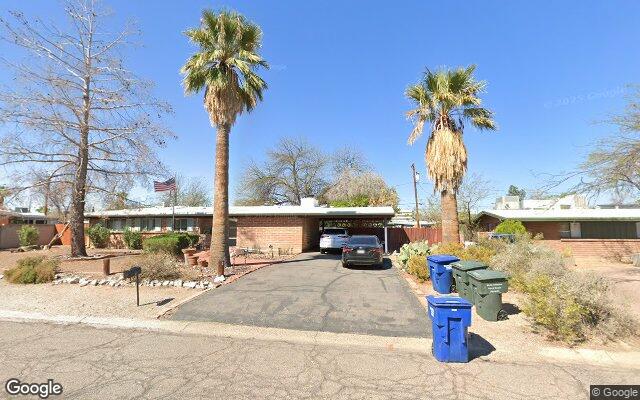
A large home, reviewed on public record.
© Google Street View
Compared to 75 Arizona facilities with a similar number of beds.
Care · 36-month window. Higher percentile = better performance on inspection record. Source: Arizona Dept. of Health Services · Bureau of Residential Facilities Licensing.
among peers to rank.
Rankings based on 36-month ADHS inspection data. Severity and frequency: fewer citations = higher percentile. Repeat rate: lower repeat citation share = higher percentile.
Citation history, plotted month by month.
28 deficiencies on record. Each bar is a month with a citation.
Finding distribution
28 total · 36 monthsScope × Severity (CMS A–L)
Every inspection visit, verbatim.
8 inspections in the public record, most recent first. Plain-language summaries open first — click into any row for the full citation text.
2026-08-07Complaint InvestigationNo findings
2026-05-18Complaint InvestigationNo findings
2026-05-14Complaint InvestigationEnforcement · 2 findings
“Based on documentation review, record review, and interview, after the manager had a reasonable basis, according to A.R.S. § 46-454, to believe abuse, neglect, or exploitation had occurred on the premises, the manager failed to report the suspected abuse, neglect, or exploitation of the resident according to A.R.S. § 46-454. The deficient practice posed a risk as the Department was unable to assess if there was an immediate health and safety concern for residents who resided in the assisted living facility. Findings include: 1. A.R.S. § 46-454. stated, "Duty to report abuse, neglect and exploitation of vulnerable adults; duty to make medical records available; violation; classification A. A health professional...or other person who has responsibility for the care of a vulnerable adult and who has a reasonable basis to believe that abuse, neglect or exploitation of the adult has occurred shall immediately report or cause reports to be made of such reasonable basis to a peace officer or to the adult protective services central intake unit...All of the above reports shall be made immediately by telephone or online. B. If an individual listed in subsection A of this section is an employee or agent of a health care institution as defined in section 36-401 and the health care institution's procedures require that all suspected abuse, neglect and exploitation be reported to adult protective services as required by law, the individual is deemed to have complied with the requirements of subsection A of this section by reporting or causing a report to be made to the health care institution in accordance with the health care institution's procedures." 2. A review of R1’s medical records revealed documentation dated December 13, 2025. The documentation revealed R1 had a physical altercation with another resident which was broken up by staff. The documentation indicated the POA, manager, and physician were notified of the incident, however, it did not include documentation of the incident being reported to peace officer's or adult protective services. 3. In an exit interview, the findings were reviewed with E1 and no further information was provided.”
“Based on record review and interview, the manager failed to ensure a caregiver or an assistant caregiver documented an event in which a resident had an accident, emergency or injury and needed medical services, as required per R9-10-819.D.2.a-f. The deficient practice posed a potential risk as an incident was not documented in a timely manner. Findings include: 1. A review of R1's medical record revealed documentation dated February 3, 2026. The documentation revealed the resident had a fall and was complaining about pain on the left side of the body. The documentation stated the residents Power of Attorney (POA) was notified and 911 was not contacted per POA's request. The documentation did not include any actions taken to prevent the accident, emergency, or injury from occurring in the future. 2. A review of R1's progress notes revealed a note dated February 4, 2026, which indicated R1 was complaining about feeling pain from the fall that occurred on February 3, 2026. The progress note revealed the POA was contacted and it was determined that 911 would be called to take R1 to the hospital. No formal documentation was available for review for this incident. 3. In an interview with E1, E1 stated the hospital determined R1 had a left hip and arm fracture from the fall. 4. In an exit interview, the findings were reviewed with E1 and no further information was provided. This is a repeat deficiency from the Complaint Inspection conducted on February 13, 2025.”
2026-05-12Complaint InvestigationNo findings
2026-03-03Complaint InvestigationEnforcement · 4 findings
“Based on record review and interview, the manager failed to ensure a written service plan was updated at least once every three months for one of three residents reviewed who received directed care services. The deficient practice posed a health and safety risk to the resident if the employees did not know what services the resident needed. Findings include: 1. A review of R2's medical record revealed a service plan dated August 8, 2025, and a service plan dated February 13, 2026. The service plans both indicated R2 received directed care services. However, a service plan dated on or before November 8, 2025, was not available for review. 2. In an exit interview, the findings were reviewed with E1 and no further information was provided. This is a repeat deficiency from the compliance inspection conducted on July 30, 2024.”
“Based on record review and interview, the manager failed to ensure a resident had a written service plan that, when initially developed and when updated, was signed and dated by the resident or resident’s representative, the manager, and the nurse or medical practitioner who reviewed the service plan, for three of three residents sampled. Findings include: 1. A review of R1’s medical records revealed a current service plan dated December 30, 2025, that included medication administration. The service plan had a signature by the nurse who reviewed the service plan, but did not include the date signed, nor did it include a signature by the POA or manager. A page was attached to the service plan that listed three attempts made to get the POA to sign the service plan. The last attempt notated was on January 14, 2026. 2. A review of R2’s medical records revealed a current service plan dated February 13, 2026, that included medication administration. The service plan did not include a signature by the nurse or medical practitioner who reviewed the service plan. 3. A review of R3’s medical record revealed a current service plan dated January 12, 2026, that included medication administration. The service plan had a signature by the nurse who reviewed the service plan, but did not include the date of the signature and did not include a signature by the POA or manager. A page was attached to the service plan that included three attempts made to get the POA to sign the service plan. The last attempt notated was on January 23, 2026. 4. In an exit interview, the findings were reviewed with E1 and no further information was provided.”
“Based on record review and interview the manager failed to ensure a service plan included documentation of the resident's weight or documentation from a medical practitioner stating weighing the resident was contraindicated, for three of three residents sampled receiving directed care services. Findings include: 1. A review of R1’s medical record revealed a service plan, dated December 3, 2025, which indicated R1 received directed care services. The service plan did not include R1's weight or documentation from a medical practitioner stating that weighing the resident was contraindicated. 2. A review of R2's medical record revealed a service plan, dated February 13, 2026, which indicated R2 received directed care services. The service plan did not include R2's weight or documentation from a medical practitioner stating that weighing the resident was contraindicated. 3. A review of R3's medical record revealed a service plan, dated January 12, 2026, which indicated R3 received directed care services. The service plan did not include R3's weight or documentation from a medical practitioner stating that weighing the resident was contraindicated. 4. In an interview, E1 stated the facility documented the residents’ weights in their online system. 5. In an exit interview, the findings were reviewed with E1 and no further information was provided. Technical assistance was given during the complaint investigation conducted on February 13, 2025.”
“Based on observation and interview, the manager failed to ensure poisonous or toxic materials stored by the assisted living facility were maintained in a locked area, labeled, and inaccessible to residents. The deficient practice posed a risk to the physical health and safety of a resident. Findings include: 1. During an environmental tour of the facility, the Compliance Officer observed an unlocked laundry room in cottage D across from room D-12. The laundry room contained a sink which had a bottle of “Nusheen Multi-Surface Cleaner and Polish” sitting in the bowl of the sink. 2. In an interview, E1 stated the caregivers must have forgotten to lock the laundry room door. 3. In an exit interview, the findings were reviewed with E1 and no further information was provided.”
2025-05-22Complaint InvestigationR9-10-803.A.9 · 7 findings
“Based on record review and interview, the Governing Authority failed to ensure compliance with A.R.S. § 36-411 by failing to make documented good faith efforts to contact previous employers to obtain information or recommendations which may be relevant to a person's fitness to work in a residential care institution. The deficient practice posed a risk if E3, E4, E6, E7, or E8 was a danger to a vulnerable population. Findings include: 1. A review of E3’s, E4’s, E6’s, E7’s, and E8’s personnel records revealed each employee had a valid fingerprint clearance card on each employee's respective date of hire. Further review revealed applications for employment for each employee, which included previous employment and dates of employment. However, evidence of documentation of good faith efforts to contact previous employers was unavailable for review. 2. In an interview, E1 advised that efforts were made to contact E3’s, E4’s, E6’s, E7’s, and E8’s previous employers, but those efforts had not been documented. E1 agreed E3’s, E4’s, E6’s, E7’s, and E8’s employment records did not include documented good faith efforts to contact previous employers as required in A.R.S. § 36-411.”
“Based on document review and interview, the manager failed to ensure a documented report identifying concerns about the delivery of services, and any changes or actions taken, was submitted to the governing authority. Findings include: 1. A review of facility policy and procedures, last reviewed February 2023, revealed a policy outlining quality management. The policy indicated a report, compliant with the facility’s quality management program, was to be sent to the governing authority on an annual basis. 2. A request was made to review the facility’s most recent quality management report to the governing authority. However, evidence of documentation of such a report was unavailable for review. 3. In an interview, E1 acknowledged the annual quality management report to the governing authority had not been prepared and was unavailable for review.”
“Based on record review and interview, the manager failed to ensure a caregiver's skills and knowledge were verified and documented before the caregiver or assistant caregiver provided physical health services or behavioral health services for two of five certified caregivers. The deficient practice posed a risk if the employees were unable to meet a resident's needs. Findings include: 1. A review of facility staff schedules revealed E3 and E4 each worked numerous shifts in 2025. 2. A review of E3's and E4’s personnel records revealed evidence of documentation of verification of skills and knowledge was unavailable for review. 3. In an interview, E1 agreed documentation of verification of E3's and E4’s skills and knowledge was unavailable for review.”
“Based on record review and interview, the manager failed to ensure a personnel record for each employee included documentation of cardiopulmonary resuscitation training (CPR) for one of nine caregivers and assistant caregivers sampled. Findings include: 1. A review of E4’s personnel record revealed evidence of documentation of cardiopulmonary resuscitation training (CPR) was not available for review. 2. A request was made to review E4's CPR card. E1 requested E4's CPR card from E4. E1 was able to produce an image of E4's current CPR training card on E1's cell phone. 3. In an interview, E1 acknowledged E4's personnel record did not include documentation of E4's current CPR training.”
“Based on documentation review, observation, and interview, the manager failed to ensure the means of exiting the facility for a resident who does not have a key, special knowledge for egress, or the ability to expend increased physical effort, controlled or alert employees of the egress of a resident from the facility. The deficient practice posed a risk if the facility was unaware of the general or specific whereabouts of a resident. Findings include: 1. A review of the license issued by the Department revealed the facility was authorized to provide directed care services. 2. During a tour of the facility, the Compliance Officer observed a door leading to the outside patio in the center of the residential facility. The door was equipped with an electronic device designed to alert caregivers when the door was opened. However, the door was propped open with what appeared to be a detachable footrest from a wheelchair. 3. In an interview, E2 agreed there was a means of exiting the facility, which allowed residents to be at least 30 feet away from the facility, which did not control or alert employees of the egress of a resident. E2 closed the door and informed staff to ensure the door is kept closed, so the alert functions as designed.”
“Based on record review and interview the manager failed to ensure medication was administered to a resident in compliance with a medication order, and documented in the medical record. The deficient practice posed a risk if the resident experienced a change in condition due to improper administration of medication. Findings include: 1. A review of R1’s medical record revealed an order for “LORazepam Oral Concentrate 1MG/0.5ML, give 0.5 ml by mouth every 4 hours as needed for AGITATION/RESTLESSNESS.” Further review revealed a medication administration record (MAR) for documenting the administration of medications during April 2025, including “LORazepam Oral Concentrate Give 0.5ml by mouth every 4 hours…” The record reflected Lorazepam was administered once on April 14, 2025, twice on April 18, 2025, and once each on April 19, 21, and 22, 2025. 2. A review of facility documentation revealed a Controlled Substance Count Sheet for R1, dated April 2025, used for tracking the administration of Lorazepam. The record documented the withdrawal of Lorazepam once on April 14, 2025, three withdrawals on April 15, 2025, two withdrawals on April 16, 2025, two withdrawals on April 18, 2025, two withdrawals on April 19, 2025, and one withdrawal each on April 20, 21, and 22, 2025. 3. A review of R4’s medical record revealed a service plan which indicated R4 received directed care services, including medication administration. R4’s medical record contained an order written May 4, 2025, for “QUEtiapine Fumarate 25 MG Tablet ½ tab Orally twice a day.” A review of R4’s medical record revealed a MAR which included a section for documenting the administration of "Quetiapine Fumarate 25 MG Take 1/2 tablet by mouth twice daily.” The record reflected the mediation was withheld from the evening of May 7, 2025, through the morning of May 12, 2025. Further review of R4’s medical record revealed a hold order, or documentation of a verbal hold order for Quetiapine was unavailable for review. R4’s medical record contained an order written May 13, 2025, which indicated R4 was to stop taking Quetiapine. 4. A review of facility progress notes revealed an entry on May 7, 2025, regarding the administration of Quetiapine to R4. The progress note indicated “waiting for pharmacy.” 5. In an interview, E1 advised R4’s medical provider had given a verbal hold order to stop administering Quetiapine, but the verbal order had not been documented. E1 indicated there was an issue with obtaining R4’s Quetiapine from the pharmacy, before the verbal order to hold R4’s medication. E1 said caregivers had not correctly documented the administration of Lorazepam to R1. E1 agreed R4 had not received medication as ordered.”
“Based on documentation review and interview, the manager failed to ensure a caregiver or an assistant caregiver immediately notified a resident's primary care provider when a resident had an accident, emergency, or injury that resulted in the resident needing medical services. Findings include: 1. A review of facility incident reports revealed an incident report for R7, dated February 15, 2025. The incident report indicated R7 was “having difficulty breathing” at 7:00 a.m., and emergency medical services were contacted. The report included a section for documenting the notification of R7’s emergency contact and primary care provider. However, the section was blank, and evidence of notification of R7's emergency contact was unavailable for review. There was a notification to R7’s primary care provider via facsimile on February 15, 2025; however, the documentation reflected the notification was made at “9:37 AM,” over two hours after the incident occurred. 2. A review of facility incident reports revealed an incident report for R8, dated February 20, 2025. The report indicated at 6 p.m., emergency medical services were called, due to R8 feeling “very weak” and experiencing “abdominal pain.” The report also indicated R8’s emergency contact was immediately notified; however, evidence of documentation R8’s primary care provider was notified was unavailable for review. 3. A review of facility incident reports revealed an incident report for R9, dated February 21, 2025. The report indicated at 4:20 p.m., emergency medical services were called due to R9’s blood sugar being too low, and R9 was “not walking right” and “was sweating.” The report reflected R9’s emergency contact was immediately notified; however, evidence of documentation R9’s primary care provider was notified was unavailable for review. 4. In an interview, E1 agreed the incident reports did not indicate R7’s emergency and primary care provider, and R8’s and R9’s primary care providers were not immediately notified as required.”
2025-02-13Complaint InvestigationA.A.C. · 11 findings
“Based on documentation review, record review, and interview, the assisted living center failed to maintain a copy of the documentation provided to an emergency responder, for four of four residents sampled for whom an emergency responder had been contacted. Findings include: 1. A review of facility documentation revealed four separate incident reports, filed between January 1, 2025 and February 12, 2025, in which emergency responders had been contacted, responded to the facility and then transported four separate residents to a hospital. 2. A request was made to view the documentation provided to the emergency responders as required by ARS 36-420.04. However, the documentation was unavailable for review. 3. In an interview, E1 advised required documentation was provided to emergency responders, but copies of the documentation provided were not made for each individual incident. E1 acknowledged a copy of the documentation given to the emergency responder for each resident was not available for review as required by ARS 36-420.04.”
“Based on record review and interview, the Governing Authority failed to ensure compliance with A.R.S. § 36-411 by failing to make documented good faith efforts to contact previous employers to obtain information or recommendations that may be relevant to a person's fitness to work in a residential care institution. The deficient practice posed a risk if E3 was a danger to a vulnerable population. Findings include: 1. A review of E1’s personnel record revealed an employment application dated December 28, 2023. The application included a section for documenting prior work history; however, the section was blank. The application contained a section for documenting personal references, which was completed. This section contained contact information for at least one assisted living facility, however it did not include dates of employment. Further review of E1’s personnel record revealed a resume outlining E1’s education and qualifications, however the resume did not include prior employers or dates of employment. In addition, evidence of documentation of good faith efforts to contact E1’s previous employers was unavailable for review. 2. In an interview, E1 reported E1 had worked in Arizona at several assisted living facilities over numerous years of employment. E1 agreed E1's employment record did not include documented good faith efforts to contact previous employers as required in A.R.S. § 36-411.”
“Based on documentation review, record review, and interview, the manager failed to ensure a caregiver provided current documentation of first aid training and cardiopulmonary resuscitation training certification specific to adults, prior to providing assisted living services to a resident for one of three personnel members sampled. The deficient practice posed a risk if an employee was unable to meet a resident's needs during an emergency. Findings include: 1. A review of E2's personnel record revealed E2 was hired as a Medication Technician on January 30, 2025. Evidence of current documentation indicating E2 completed valid CPR or first aid training was not available for review. 2. A review of facility staff schedules revealed E2 worked the 7 a.m.-7 p.m. shift on January 31, 2025, and February 1, 5, 6, 7, and 8, 2025. 3. In an interview, E1 acknowledged E2 did not possess current documentation of CPR training and was providing assisted living services to residents.”
“Based on record review and interview, the manager failed to ensure a caregiver who was expected to have more than eight hours per week of direct interaction with residents, provided evidence of freedom from infectious tuberculosis on or before the date the individual began providing services at the assisted living facility. The deficient practice posed a potential TB exposure risk to residents. Findings include: 1. A review of E2’s personnel record revealed no evidence of freedom from infectious tuberculosis, including baseline screening and documentation of freedom from infectious TB as required in R9-10-113(B)(1). 2. In an interview, E1 agreed E2’s personnel record did not include documentation of freedom from infectious TB as required. E1 acknowledged E1 failed to ensure a caregiver who was expected to have more than eight hours of direct interaction with residents per week provided evidence of freedom from infectious TB as required.”
“Based on record review and interview, the manager failed to ensure a caregiver or assistant caregiver documented services provided in the resident's medical record. Findings include: 1. A review of R1’s medical record revealed a service plan dated September 12, 2024. The service plan included the type, amount and frequency of various activities of daily living, including medication administration. Further review of R1’s medical record revealed that documentation of services provided during the month of January 2025 was unavailable for review. 2. In an interview, E1 advised R1 received services as indicated in R1’s service plan during the month of January 2025. E1 acknowledged R1’s medical record did not contain evidence of documentation of services provided.”
“Based on record review, documentation review, and interview, the manager failed to ensure policies and procedures were implemented to protect the health and safety of a resident covering assistance in the self-administration of medication and medication administration. Findings include: 1. A review of R1's medical record revealed a medication order dated November 8, 2024 for “Gabapentin, 100 MG Capsule, take one capsule by mouth every 8 hours.” 2. A review of R1's medical record revealed a Medication Administration Record (MAR) dated January 2025. The MAR included a section for documenting administration of "Gabapentin, 100 MG Capsule, take one capsule by mouth every 8 hours." However, the medication was circled for every scheduled dose as noted below: -January 1-19, 21, 22, 2025, at 6:00 a.m.; -January 1, 3, 4, 8, 9, 11, 13, 15-18, 22, 2025, at 2:00 p.m.; and -January 1-3, 6, 8, 9, 11-22, 2025, at 10:00 p.m. The MAR did not include any documentation indicating why the medication was not administered. 3. A review of R1’s medical record revealed progress notes dated January 1, 2025, pertaining to “Gabapentin 100 MG Capsule, Take one Capsule by Mouth Every 8 Hours,” which indicated the facility was "waiting for med to arrive.” Similar entries were made on January 3, 5, 8, 9 and 10, 2025, reflecting R1 was out of the medication. 4. A review of the facility's policies and procedures revealed a policy titled "Medication Services" which included a section titled “Missed or Refused Medication.” The policy stated, "2. The prescribing physician is notified or missed/refused medications immediately or in the time frame and according to the parameters as indicated by the physician using the Refusal of Medication Notification form. Physician parameters must be retained in writing and filed in the chart under Physician Orders. The responsible party is notified. 5. A review of R1's medical record revealed no Refusal of Medication Notification forms for the 49 medication errors due to missed doses documented in January 2025. 6. A review of R1's medical record revealed no evidence the Gabapentin had been discontinued. 7. A review of R1's medical record revealed no documentation of contact with R1's medical practitioner or responsible party or attempts to obtain Gabapentin for R1. 8. A review of R1’s medical record revealed progress notes dated January 1, 2025, pertaining to “Gabapentin 100 MG Capsule, Take one Capsule by Mouth Every 8 Hours,” which indicated the facility was waiting for med to arrive.” Similar entries were made on January 3, 5, 8, 9 and 10, 2025, reflecting R1 was out of the medication. 9. In an interview, E1 advised R1 had run out of Gabapentin in December 2024 and the facility had been contacting the pharmacy attempting to obtain a refill of the medication. E1 reported documentation of efforts to contact R1’s primary care provider to request a refill order or a discontinue order for R1’s Gabapentin was unavailable for review. E1 agreed the facility's policies and procedures regarding assistance in medication administration were not implemented to protect the health and safety of a resident.”
“Based on document review, record review, and interview, the manager failed to ensure a caregiver's or assistant caregiver’s skills and knowledge were verified and documented before the caregiver or assistant caregiver provided physical health services or behavioral health services for one of three certified caregivers and one of one assistant caregiver’s sampled. The deficient practice posed a risk if the employees were unable to meet a resident's needs. Findings include: 1. A review of facility policies and procedures, last reviewed February 23, 2023, revealed a policy titled “Caregiver Skills Verification.” The policy stated, “A caregivers’ or assistant caregiver’s skills and knowledge will be verified and documented. Before the caregiver or assistant caregiver provides physical health services…to a resident their caregiver skills and knowledge will be verified using a skills checklist. The skills checklist will be part of their employee file.” 2. A review of facility staff schedules revealed E2 worked the 7 a.m.-7 p.m. shift on January 31, 2025, and February 1, 5, 6, 7, and 8, 2025. Further review revealed E3 worked the 7 a.m.-7 p.m. shift as a “caregiver” on December 12, 13, 14, 15, 19, 20, 21, 22, 29, 30, and 31, 2024, and on January 5, 6, 7, 2025. 3. A review of E2's personnel record revealed E2 was hired as a caregiver on January 30, 2025. E2’s personnel record contained a skills checklist used for documenting observation and verification of skills and knowledge. The document was three pages in length and the first two pages contained documentation of verification of E2’s skills and knowledge. The third page contained skills and knowledge to be verified and documented in areas such as “Behavioral Care,” “Service Plans,” “Documentation,” and “Other Duties,” however, evidence of documentation of verification of skills and knowledge in any of these areas was unavailable for review. 4. A review of E3’s personnel record revealed E3 was hired on December 6, 2024, to work as a cook and in facility maintenance. Further review revealed evidence of documentation of verification of skills and knowledge was unavailable for review. 5. In an interview, E1 reported E3 was promoted to assistant caregiver after their date of hire. E1 stated E3 did not work alone and was under the supervision of another caregiver when E3 worked with residents. E1 agreed E2’s personnel record did not contain complete documentation of verification of skills and knowledge as required. E1 also agreed E3’s skills and knowledge had not been verified and documented prior to providing physical health services to residents.”
“Based on record review and interview, the manager failed to ensure a resident had a written service plan which included the level of service the resident is expected to receive, for three of three residents sampled. The deficient practice posed a risk as the service plan did not reinforce and clarify services to be provided to a resident. Findings include: 1. A review of R1’s, R2’s, and R3’s medical records revealed written and signed service plans for each resident. However, each resident’s service plan failed to identify the level of service each resident was expected to receive. 2. In an interview E1 advised R1 received personal care service, and R2 and R3 received directed care services. E1 agreed that R1’s, R2’s, and R3’s service plans did not include the level of service each resident was expected to receive.”
“Based on record review and interview, the manager failed to ensure the service plan for a resident receiving personal care services included offering sufficient fluids to maintain hydration. Findings include: 1. A review of R1’s medical record revealed a service plan dated September 12, 2024. The service plan included the type, amount and frequency of various activities of daily living, including medication administration. R1’s service plan included a section titled “Dining Assistance,” which identified a goal as “Maintain appropriate nutrition and hydration.” However, R1’s service plan did not include offering sufficient fluids to maintain hydration. 2. In an interview E1 acknowledged R1’s service plan did not include offering sufficient fluids to maintain hydration.”
“Based on record review and interview, the manager failed to ensure medication was administered to a resident in compliance with a medication order. The deficient practice posed a risk if the resident experienced a change in condition due to improper administration of medication. Furthermore, the deficient practice posed a risk as the Department was provided false and misleading information. Findings include: 1. A review of R1’s medical record revealed a service plan dated September 12, 2024, which indicated R1 received a variety of assisted living services, including medication administration. 2. A review of R1’s medical record contained a medication order dated November 8, 2024, for the following medications to be administered as indicated: -“Carbidopa-Levodopa-Entacapone, Oral Tablet 50-200-200 MG, Give 1 tablet by mouth four times a day for Parkinson;” (CLE) and -“Gabapentin, 100 MG Capsule, take one capsule by mouth every 8 hours.” 3. Further review of R1’s medical record revealed a Medication Administration Record (MAR) which included sections for documenting the administration of CLE and Gabapentin. However, the documentation revealed CLE was not administered on the following days and times: -January 11 and 12, 2025, at 7:00 a.m., 5:00 p.m., and 9:00 p.m; -January 13, 2025, at 5:00 p.m., and 9:00 p.m.; and -January 14, 2025, at 7:00 a.m. and 9:00 p.m. 4. In addition, MAR entries for the month of January 2025 indicated Gabapentin was not administered every eight hours on the following dates and times: -January 1-19, 21, 22, 2025, at 6:00 a.m.; -January 1, 3, 4, 8, 9, 11, 13, 15-18, 22, 2025, at 2:00 p.m.; and -January 1-3, 6, 8, 9, 11-22, 2025, at 10:00 p.m. 5. Further review revealed the MAR reflected the medication was administered on the following dates and times: -January 20, 2025, at 6:00 a.m.; -January 2, 5-7, 10, 12, 14, 18-20, 2025, at 2:00 p.m.; and -January 7 and 10, 2025, at 10:00 p.m. Evidence of documentation of administration of Gabapentin on January 4 and 5, 2025, at 10:00 p.m. was not available for review. 6. A review of R1’s medical record revealed progress notes dated January 1, 2025, pertaining to “Gabapentin 100 MG Capsule, Take one Capsule by Mouth Every 8 Hours,” which indicated the facility was waiting for medication to arrive. Similar entries were made on January 3, 5, 8, 9, and 10, 2025, reflecting R1 was out of the medication. 7. In an interview, E1 advised R1 had run out of Gabapentin in December 2024 and the facility had been contacting the pharmacy attempting to obtain a refill of the medication. E1 reported documentation of efforts to contact R1’s primary care provider to request a refill order or a discontinue order for R1’s Gabapentin was unavailable for review. E1 agreed R1 was not administered Gabapentin between January 1 and January 22, 2025, and documentation to the contrary was false and misleading. E1 further agreed R1 was not administered medication in compliance with a medical order.”
“Based on documentation review and interview, the manager failed to ensure a caregiver or an assistant caregiver documented an event in which a resident had an accident, emergency or injury and needed medical services, as required per R9-10-818.D.2. Findings include: 1. A review of facility documentation from November 1, 2024 through February 12, 2025 revealed four incident reports documenting accidents, emergencies or injuries where 911 was contacted. 2. A review of the incident report dated December 16, 2024 revealed 911 was called after a resident had fallen and suffered injuries to their head. The report did not contain documentation of notification of the resident’s emergency contact, primary care provider or any action taken to prevent the accident or injury from occurring in the future. 3. A review of the incident report dated January 14, 2025 revealed 911 was called after a resident was found unresponsive. The report did not contain documentation of notification of the resident’s emergency contact or primary care provider. 4. A review of the incident report dated February 2, 2025 revealed 911 was called when a caregiver “found [R1] on the floor.” The report included documentation of notification of R1’s emergency contact; however, it did not include documentation of notification of R1’s primary care provider, nor did it include a description of any injury to R1. 5. A review of the incident report dated February 8, 2025 revealed 911 was contacted after a resident fell and suffered a head injury. The report included documentation of notification of the resident’s emergency contact; however, it did not include documentation of notification of the resident’s primary care provider, nor did it include documentation of any action taken to prevent the accident or injury from occurring in the future. 6. In an interview, E1 acknowledged the incident reports did not contain all documentation as required per R9-10-818.D.2.”
2024-07-29Annual Compliance VisitA.A.C. · 4 findings
“Based on observation, interview, and record review, the manager failed to ensure a personnel record was established and maintained to include all required documentation, for one of five personnel records reviewed. The deficient practice posed a risk as the required information could not be verified. Findings include: 1. A review of E2's personnel file revealed E2 was hired through a staffing agency to work for the facility as a nurse. The personnel file did not include the following required items: - A starting date of employment; - Contact information; - Documentation of verification skills and knowledge; - Documentation of compliance with the requirements in A.R.S. \'a7 36-11(C) to include documented, good faith attempts to contact prior employers: and - Job description. 2. In an interview, E3 acknowledged the personnel record of E2 provided for review had not included all required documentation.”
“Based on record review, documentation review, observation, and interview, the manager failed to ensure a resident had a written service plan completed no later than 14 calendar days after the resident's date of acceptance, for three of three sampled residents. Findings include: 1. A review of R1's medical record revealed a service plan dated March 1, 2024, for directed care services. The Compliance Officer observed the service plans initiated date was incorrect. The date was seven days before R1 had moved into the facility, however, the service plan was not completed within 14 calendar days after R1's date of acceptance. The service plan revealed the following: - The Pima County Public Fiduciary signed and dated the service plan on April 9, 2024; - The Manager signed and dated the service plan on April 10, 2024; and - The Nurse signed and dated the service plan on April 12, 2024. 2. A review of R2's medical record revealed a service plan dated April 26, 2024, for directed care services. The Compliance Officer observed the service plans initiated date was incorrect. The date was four days before R2 had moved into the facility, however, the service plan was not completed within 14 calendar days after R2's date of acceptance. The service plan revealed the following: - The manager signed and dated the service plan on May 23, 2024. 3. A review of R3's medical record revealed a service plan dated June 4, 2024, for directed care services. The Compliance Officer observed the service plans initiated date was incorrect. The date was three days before R3 had moved into the facility, however, the service plan was not completed within 14 calendar days after R3's date of acceptance. The service plan revealed the following: - The manger had not signed or dated the service plan. 4. In an interview, E3 acknowledged the service plans were not completed within 14 calendar days of the resident's date of acceptance.”
“Based on record review and interview, the manager failed to ensure a written service plan was updated at least once every three months, for one of three residents reviewed who received directed care services. The deficient practice posed a health and safety risk to the resident if the employees did not know what services the resident needed. Findings include: 1. A review of R1's medical record revealed a current written service plan for directed care services dated March 1, 2024. However, a service plan after June 1, 2024 was not available for review. 2. In an interview, E3 acknowledged R1 was receiving directed care services and the service plan was not updated at least once every three months”
“Based on record review, documentation review, and interview, the manager failed to ensure the service plan for a resident receiving directed care services included the requirements in R9-10-815(C)(1-5), for three of three directed care residents sampled. Findings include: 1. A review of R1's medical record revealed documentation of a service plan dated March 1, 2024. The service plan indicated R1 was receiving directed care services. However, the service plans did not contain the following: - Incontinence care that ensures that a resident maintains the highest practicable level of independence when toileting; - Cognitive stimulation and activities to maximize functioning; (the service plans stated "Resident Specific Details:" this section was blank; and - Documentation of the resident's weight. (the service plan had a section stating "Monthly Vitals/Weights", however, the weight was not entered). 2. A review of R2's medical record revealed documentation of a service plan dated April 26, 2024. The service plan indicated R2 was receiving directed care services. However, the service plans did not contain the following: - Incontinence care that ensures that a resident maintains the highest practicable level of independence when toileting; - Cognitive stimulation and activities to maximize functioning; (the service plans stated "Resident Specific Details:" this section was blank; and - Documentation of the resident's weight. (the service plan had a section stating "Monthly Vitals/Weights", however, the weight was not entered). 3. A review of R3's medical record revealed documentation of a service plan dated June 4, 2024. The service plan indicated R3 was receiving directed care services. However, the service plans did not contain the following: - Incontinence care that ensures that a resident maintains the highest practicable level of independence when toileting; - Cognitive stimulation and activities to maximize functioning; (the service plans stated "Resident Specific Details:" this section was blank; and - Documentation of the resident's weight. (the service plan had a section stating "Monthly Vitals/Weights", however, the weight was not entered). 4. In an interview, E3 reported being unaware the service plans did not contain all of the requirements for directed care residents and acknowledged the documents were missing these requirements.”
2 older inspections from 2023 are not shown above.
Get the complete record, translated into plain language — emailed to you.
Other facilities in Tucson.
Other memory care facilities near Tucson with similar care offerings.



Contract Decoder
Family reviews
No reviews yet — be the first to share your experience