Golden Generation / Times Adult Care Home.
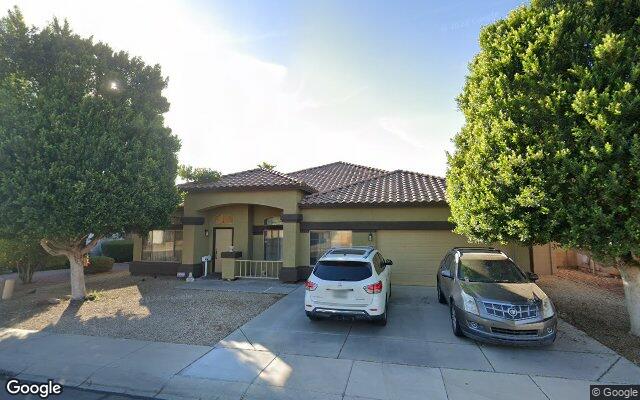
A medium home, reviewed on public record.
© Google Street View
Compared to 1,661 Arizona facilities with a similar number of beds.
Care · 36-month window. Higher percentile = better performance on inspection record. Source: Arizona Dept. of Health Services · Bureau of Residential Facilities Licensing.
among peers to rank.
Rankings based on 36-month ADHS inspection data. Severity and frequency: fewer citations = higher percentile. Repeat rate: lower repeat citation share = higher percentile.
Citation history, plotted month by month.
6 deficiencies on record. Each bar is a month with a citation.
Finding distribution
6 total · 36 monthsScope × Severity (CMS A–L)
Every inspection visit, verbatim.
1 inspection in the public record, most recent first. Plain-language summaries open first — click into any row for the full citation text.
2025-07-28Annual Compliance VisitA.A.C. · 6 findings
“Based on record review and interview, the governing authority failed to administer a training program for all staff regarding fall prevention and fall recovery. Findings include: 1. A review of E3’s personnel record revealed E3 was hired as a housekeeper. However, the review revealed no documentation demonstrating E3 received training regarding fall prevention and fall recovery. 2. In an interview, when the Compliance Officer asked if E3 had received training regarding fall prevention and fall recovery. E1 stated, “No.””
“Based on documentation review, interview, and record review, the chief administrative officer failed to implement tuberculosis (TB) infection control activities including annually providing training and education related to recognizing the signs and symptoms of TB, for one of three sampled employees, and annually assessing the health care institution’s risk of exposure to infectious tuberculosis. The deficient practice posed a potential TB exposure risk to residents. Findings include: 1. A review of Department documentation revealed this rule went into effect on May 4, 2022. 2. A review of CDC.gov revealed a webpage titled "Tuberculosis Screening, Testing, and Treatment of U.S. Health Care Personnel: Recommendations from the National Tuberculosis Controllers Association and CDC, 2019," published by the U.S. Department of Health and Human Services. The webpage stated: "The 2005 CDC recommendations for testing U.S. health care personnel have been updated and now include…6) annual TB education of all health care personnel." The review of the website revealed the 2005 CDC recommendations on a webpage titled “Guidelines for Preventing the Transmission of Mycobacterium tuberculosis in Health-Care Settings, 2005.” The webpage stated: “The setting should document that all HCWs [Health-Care Workers]...have received initial TB training relevant to their work setting and additional occupation-specific education. The level and detail of baseline training will vary according to the responsibilities of the HCW and the risk classification of the setting…Initial TB training should be provided before the HCW starts working.” 3. In an interview, E1 reported E1 and E2 were live-in caregivers and worked at the facility every day. 4. A review of E1’s personnel record revealed E1 was hired as a manager and caregiver before May 4, 2022. However, the review revealed no documentation demonstrating E1 received training and education related to recognizing the signs and symptoms of TB. 5. A review of E2’s personnel record revealed E2 was hired as a caregiver before May 4, 2022. However, the review revealed no documentation demonstrating E2 received training and education related to recognizing the signs and symptoms of TB. 6. A review of facility documentation revealed the current personnel schedule which indicated E3 worked eight hours each day on July 21-25 and 28, 2025. 7. A review of E3's personnel record revealed E3 was hired as a housekeeper. However, the review revealed no documentation demonstrating E3 received training and education related to recognizing the signs and symptoms of TB. 8. In an interview, E1 acknowledged E1, E2, and E3 did not receive training and education related to recognizing the signs and symptoms of TB. 9. A review of facility documentation revealed no documentation demonstrating facility personnel assessed the health care institution’s risk of exposure to infectious TB. 10. In an interview, E1 reported E1 did not know about the requirement to complete the facility risk assessment. When the Compliance Officer asked if facility personnel had completed it, E1 stated, “No.” Technical assistance was provided on this rule during the compliance inspection conducted on May 24, 2023.”
“Based on observation, interview, documentation review, and record review, the manager failed to ensure a caregiver provided documentation of completion of a caregiver training program approved by the Department or the Board of Examiners for Nursing Care Institution Administrators and Assisted Living Facility Managers (NCIA Board), for one of two caregivers sampled. The deficient practice posed a risk if the individual was not qualified to provide the required services. Findings: 1. The Compliance Officer observed E2 working at the facility. 2. In an interview, E1 reported E2 was a live-in caregiver and worked at the facility every day. 3. A review of facility documentation revealed the current personnel schedule which indicated E2 worked on July 21-28, 2025. 4. A review of E2's personnel record revealed E2 was hired as a caregiver in 2020. The review revealed a photocopy of a caregiver certificate reportedly given by ALTP 0166 Multi MED Concepts Caregivers Course. The certificate identified the "Certificate Date" as July 5, 2003. The review further revealed an “APPLICATION FOR EMPLOYMENT” which indicated E2 received E2’s caregiver certificate from Multi MED Concepts LLC on July 5, 2003. 5. A review of Department documentation revealed ALTP 0166 Multi MED Concepts Caregivers Course was not active on the date the certificate was issued. 6. A review of the NCIA Board website revealed ALTP 0166 Multi MED Concepts Caregivers Course was active between June 1, 2010, and August 2, 2013, and was not an active caregiver training program on July 5, 2003, when the certificate was issued. 7. A review of the caregiver certificate verification website (azcg.tmutest.com) revealed no valid caregiver certificate after August 2013 under E2's name. 8. In an interview, when the Compliance Officer asked when E2 took the caregiver certification course, E2 first reported taking the course in 2015, then reported taking it in 2017, and finally reported taking it in 2013. E1 and E2 reported the date of 2003 listed on the certificate should have been 2013. Regarding the year of the caregiver certificate, E1 stated, “I was never really looking at that.””
“Based on documentation review, observation, interview, and record review, the manager failed to ensure an employee who had more than eight hours per week of direct interaction with residents provided evidence of freedom from infectious tuberculosis (TB) on or before the date the individual began providing services at or on behalf of the assisted living facility as specified in Arizona Administrative Code (A.A.C.) R9-10-113, for one of three sampled employees. The deficient practice posed a potential TB exposure risk to residents. Findings include: 1. R9-10-113(A)(2)(a)(iii) states: "If a health care institution is subject to the requirements of this Section, as specified in an Article in this Chapter, the health care institution's chief administrative officer shall ensure that the health care institution establishes, documents, and implements tuberculosis infection control activities that...2. Include: a. For each individual who is employed by the health care institution…and who is subject to the requirements of this Section, baseline screening, on or before the date specified in the applicable Article of this Chapter, that consists of iii. Obtaining documentation of the individual's freedom from infectious tuberculosis according to subsection (B)(1)." 2. R9-10-113(B)(1)(a)(i) states: "B. A health care institution's chief administrative officer shall: 1. For an individual for whom baseline screening and documentation of freedom from infectious tuberculosis is required by an Article in this Chapter, as specified in subsection (A)(2)(a), obtain one of the following as evidence of freedom from infectious tuberculosis: a. Documentation of a negative Mantoux skin test or other tuberculosis screening test that: i. Is recommended by the U.S. Centers for Disease Control and Prevention (CDC).” 3. A review of the CDC website revealed a web page titled "Baseline Tuberculosis Screening and Testing for Health Care Personnel." The web page stated: "If the Mantoux tuberculin skin test (TST) is used for baseline testing of health care personnel, use two-step testing. Purpose: Two-step testing is recommended for the initial TB skin test for adults who may be tested periodically, such as health care personnel." 4. The Compliance Officer observed E3 interacting with residents. 5. In an interview, E1 reported E3 was hired as a housekeeper. 6. A review of E3's personnel record revealed E3 was hired as a housekeeper. The review revealed a negative TST dated as read on April 27, 2024, more than one year before the date of the inspection. However, the review revealed E3 did not have two negative TSTs dated within one year of hire or within one year of the date of the inspection. 7. A review of facility documentation revealed a series of personnel schedules which indicated E3 worked without evidence of freedom from infectious TB according to R9-10-113. 8. In an interview, E1 reported believing E3 only needed one TST. Technical assistance was provided on this rule during the compliance inspection conducted on May 24, 2023.”
“Based on documentation review, observation, and interview, the manager failed to ensure a means of exiting the facility for a resident who did not have a key, special knowledge for egress, or the ability to expend increased physical effort that monitored or alerted employees of the egress of a resident from the facility. The deficient practice posed a risk if the facility was unaware of the egress of a resident from the facility. Findings include: 1. A review of Department documentation revealed the facility was authorized to provide directed care services. 2. The Compliance Officer observed an alert installed on the front door. However, the alert was in the “off” position and did not alert when the Compliance Officer opened the door. The Compliance Officer observed no monitoring method present. 3. In an interview, E1 reported facility personnel had turned off the alert, stating, “We’re here.” When the Compliance Officer asked if the facility had a policy and procedure (P&) covering monitoring egress, E1 reported E1 did not know. 4. A review of facility documentation revealed no P&P covering monitoring egress.”
“Based on documentation review, observation, and interview, the manager failed to ensure medication stored by an assisted living facility was stored in a separate locked room, closet, cabinet, or self-contained unit used only for medication storage. The deficient practice posed a risk to the physical health and safety of residents with access to the medication. Findings include: 1. A review of facility documentation revealed a policy and procedure (P&P) titled “Medication and Medication Services Policies and Procedures.” The P&P stated, “The policy for storing medications is that the facility will store medications for residents in a locked area.” 2. Upon arriving at the facility at approximately 8:45 AM, the Compliance Officer observed E1 outside in the driveway. Upon entering the home with E1, the Compliance Officer observed a cabinet near the kitchen with the key in the lock. The Compliance Officer observed E1 promptly lock the cabinet. 3. In an interview, E1 reported E1 had just been working with resident medications when E1 needed to go outside to grab something. E1 acknowledged E1 left the key in the lock. 4. The Compliance Officer observed a second unlocked cabinet in the kitchen. The Compliance Officer observed the left side of the cabinet did not have a lock installed but the right side did. However, the Compliance Officer observed opening the left door granted access to the right side of the cabinet and the right door was not locked. Inside the cabinet, the Compliance Officer observed a bottle of calcium carbonate 500 mg, a bottle of polyethylene glycol, and four small cups containing a variety of medication tablets. 5. In an interview, E1 reported the cups of medications belonged to residents who had refused the medications or dropped them. The Compliance Officer pointed to one of the cups and asked who it belonged to. E1 answered and reported the individual had not been a resident of the facility for over a month. 6. The Compliance Officer observed the right door of the first cabinet near the kitchen did not have a lock installed. Upon opening the cabinet, the Compliance Officer observed the right door had a pin that was used to only allow access to the right side after first unlocking the left door and raising the pin. However, the Compliance Officer observed the pin was in the raised position, granting access to a variety of resident medications inside. Several times during the inspection, the Compliance Officer observed caregivers place the keys to the left door of the cabinet in a drawer below the cabinet and walk out of sight. The Compliance Officer further observed an unlocked cabinet to the right of the first cabinet. Inside the cabinet, the Compliance Officer observed several pharmacy-provided medication bottles with the delivery slip attached. 7. In an interview, E1 acknowledged the medication was not locked. E1 further reported the medication in the cabinet to the right of the first cabinet had been recently delivered. 8. The Compliance Officer observed a freestanding unlocked metal cabinet in the living room. Inside the cabinet, the Compliance Officer observed a variety of resident medications. The Compliance Officer observed E1 close the doors to the cabinet, insert a key, turn the key back and forth several times seemingly struggling to lock the door, and walk away. The Compliance Officer then opened the cabinet which had not locked after E1 walked away and observed E1 return and properly lock the cabinet.”
Other facilities in Surprise.
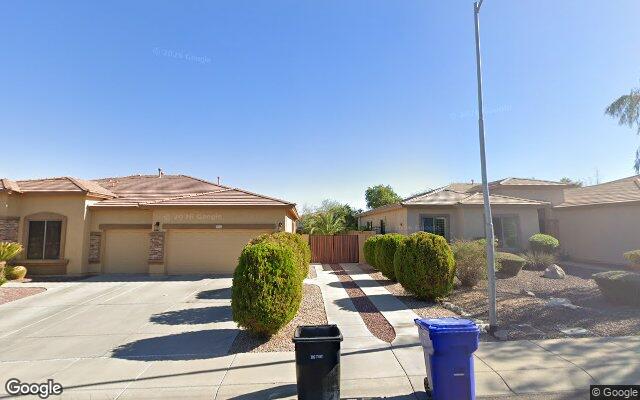
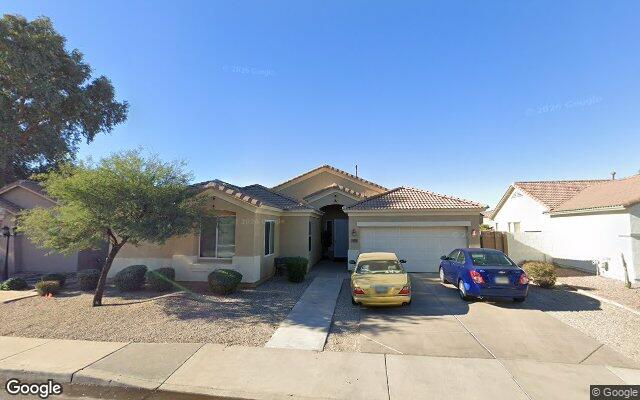
Other memory care facilities near Surprise with similar care offerings.

Full Inspection Record
Family reviews
No reviews yet — be the first to share your experience