A Place for Your Loved Ones II.
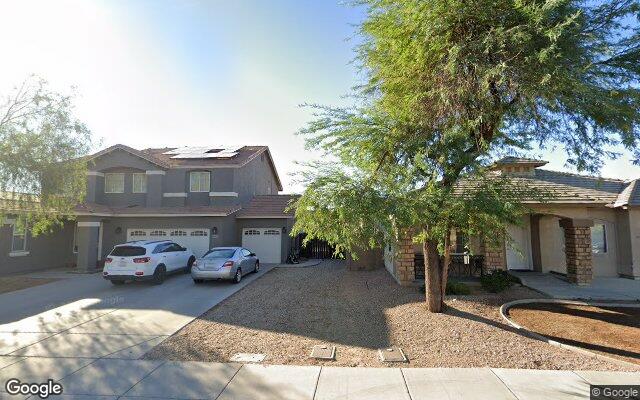
A medium home, reviewed on public record.
© Google Street View
Compared to 1,661 Arizona facilities with a similar number of beds.
Care · 36-month window. Higher percentile = better performance on inspection record. Source: Arizona Dept. of Health Services · Bureau of Residential Facilities Licensing.
among peers to rank.
Rankings based on 36-month ADHS inspection data. Severity and frequency: fewer citations = higher percentile. Repeat rate: lower repeat citation share = higher percentile.
Citation history, plotted month by month.
12 deficiencies on record. Each bar is a month with a citation.
Finding distribution
12 total · 36 monthsScope × Severity (CMS A–L)
Every inspection visit, verbatim.
4 inspections in the public record, most recent first. Plain-language summaries open first — click into any row for the full citation text.
2026-05-06Complaint InvestigationNo findings
2026-01-06Complaint InvestigationA.A.C. · 9 findings
“Based on record review and interview, the assisted living home failed to maintain written documentation of emergency responder (EMS) information that included the items listed in Arizona Revised Statutes (A.R.S.) § 36-420.04(A)(1-9) for two of two residents sampled. The deficient practice posed a risk if the emergency responder was not aware of critical health information for the resident. Findings include: 1. A review of R1's medical records revealed the standardized emergency responder patient information form. However, the form was missing whether the resident receives medication services. 2. A review of R2’s medical records revealed the standardized emergency responder patient information form. However, the form was missing whether the resident receives medication services and the contact information of the resident’s primary care physician. 3. In an exit interview, the findings were reviewed with E1, and no additional information was provided.”
“Based on documentation review, record review, and interview, the health care institution failed to implement tuberculosis (TB) infection control activities that included initial training and education related to recognizing the signs and symptoms of TB to individuals employed by the health care institution. The deficient practice posed a risk as the caregiver received no organized instruction or information related to TB surveillance. Findings include: 1. A review of the Centers for Disease Control and Prevention (CDC) website revealed a web page titled, "Guidelines for Preventing the Transmission of Mycobacterium tuberculosis in Health-Care Settings, 2005." The web page stated, "All health-care workers (HCWs) should receive training on the prevention, transmission, and symptoms of TB disease that is appropriate to their work responsibilities and setting. Initial training should be provided to all new employees, with annual refresher training thereafter." 2. A review of E2’s and E4’s personnel records revealed no current documentation of training and education related to recognizing the signs and symptoms of TB. Based on the hire dates, this documentation was required. 3. In an interview, the finding was reviewed with E1 and no additional information was provided.”
“Based on the record review, documentation review, and interview, the manager failed to ensure that a caregiver provided current documentation of first aid and cardiopulmonary resuscitation (CPR) training before providing assisted living services for two of the two employees reviewed. The deficient practice posed a risk if a caregiver was unable to meet a resident's needs during an emergency. Findings include: 1. A review of E2’s personnel file revealed E2 worked as a caregiver. E2’s personnel file revealed E2’s CPR and first aid card expired on November 29 2025. 2. A review of the facility work schedule revealed E2 worked 6 am to 6 pm from December 1st to December 31st of 2025. Review of the January 2026 work schedule revealed the same. 3. In an interview, E1 acknowledged E2 did not have a valid CPR and first aid card.”
“Based on record review and interview, the manager failed to ensure, for two of two sampled residents, a resident had a service plan which accurately included the amount, type, and frequency of assisted living services and ancillary services being provided to the resident. The deficient practice posed a risk if a resident's service plan did not include the services to be provided. Findings include: 1. A review of R1’s current service plan was dated August 2025. This service plan did not have the frequency for the following services that were provided to the resident: - Dressing: had only “Assistance required” marked - Maintenance of room: had only “Dependent” marked - Laundry: had only “Dependent” marked 2. A review of R2’s current service plan was dated October 2025. This service plan did not have the frequency for the following services that were provided to the resident: - Dressing: had only “Supervision needed” marked - Maintenance of room: had only “Dependent” marked - Laundry: had only “Dependent” marked 3. In an interview, E1 reported those services were provided to the residents and acknowledged the service plan did not have the frequency for the services mentioned above. 4. In an exit interview, the findings were reviewed with E1, and no additional information was provided.”
“Based on record review and interview, the manager failed to ensure a caregiver or an assistant caregiver documented the services provided in the resident's medical record, for one of two sampled residents. The deficient practice posed a risk as services were not provided per a resident's service plan. Findings include: 1. A review of R1’s current service plan dated August 2025 revealed that R1 was receiving oral care. The service plan specified caregivers were to assist R1 daily. 2. A review of R1’s activities of daily living (ADL) for the month of December 2025 revealed no documentation of R1` receiving oral care. 3. In an interview, E1 reported R1 was receiving oral care, however it was not documented. 4. In an exit interview, the findings were reviewed with E1, and no additional information was provided.”
“Based on record review and interview, the manager failed to ensure that medication administered to a resident was administered in compliance with a medication order for two of two residents sampled. The deficient practice posed a risk if the resident experienced a change in condition due to improper administration of medication. Findings include: 1. A review of R1’s medical record revealed R1’s current service plan, dated August 2025. This service plan indicated R1 received medication administration. 2. A review of R1’s medical record revealed a signed medication list which the facility received in November 2025. This list revealed the following: - “Humalog Kwikpen (insulin Lispro) 100 UNIT/mL inject as per sliding scale SUBCUTANEOUSLY FOUR TIMES A DAY 150- 200= 2U; 201-250= 4U; 251-300= 6U; 301-350= 8U; 351-400=10U; 401-450= 12U” - “Insulin Glargine 100 UNIT/mL inject 18 units at bedtime” 3. A review of R1’s medication administration record (MAR) for the month of December revealed Humalog Kwikpen was being documented three times a day. At 8pm E5’s initial was written on the time and blood sugar slots. Where the number of units was supposed to be documented the number 18 was filled out for the entire month of December. Except for the 18th which was left blank. 4. In an interview, E1 reported E1 was told by E5 that E5 takes the documented blood sugar and the amount of units given for the Humalog Kwikpen home with E5. E1 provided a picture that was sent by E5. However this picture was provided after the two hours that were given to provide documentation. 5. In an exit interview, the findings were reviewed with E1, and no additional information was provided.”
“Based on observation, documentation review, and interview, the manager failed to ensure medication was stored according to the instructions on the medication container. Findings include: 1. During an environmental tour, the Compliance Officer observed that the refrigerator thermometer displayed a reading of 54 degrees Fahrenheit. After further observation, the Compliance Officer observed a locked medication storage container located in the refrigerator that contained Lorazepam Oral Concentrate. After further observation, it was revealed the label stated, “Store at Cold Temperature-refrigerate 36-46 degrees Fahrenheit”. 2. A review of the policies and procedures revealed a policy titled, “Medication and Medication Services Policies and Procedures” that stated, “The procedure for storing medication is that medication is stored in a locked cabinet or self-contained unit used only for medication storage and is stored in accordance with the instructions on the medication container. Medications requiring refrigeration will be kept in a locked container in the refrigerator.” 3. In an interview, E1 and E2 acknowledged the temperature was over 41 degrees in the refrigerator that contained medication. 4. In an exit interview, the findings were discussed with E1 and no additional information was provided.”
“Based on observation, documentation review, and interview, the manager failed to ensure that foods requiring refrigeration were maintained at 41 degrees Fahrenheit or below. The deficient practice posed a risk for potential food borne illnesses. Findings include: 1. During an environmental tour, the Compliance Officer observed that the refrigerator thermometer displayed a reading of 54 degrees Fahrenheit. 2. A review of the policies and procedures revealed a policy titled, “Food Services Policy and Procedures” that stated, “To ensure food is properly cooked, the manager or designee will train staff on the proper cooking methods to control food-borne illness risk factors including: Foods requiring refrigeration are maintained at 41 degrees Fahrenheit or below” 3. In an interview, E1 and E2 acknowledged the temperature was over 41 degrees in the refrigerator. 4. In an exit interview, the findings were discussed with E1 and no additional information was provided.”
“Based on observation and interview, the manager failed to ensure a resident’s sleeping area was not used as a passageway to a common bathroom. Findings include: 1. During an environmental tour, the Compliance Officer observed black, curly hair strands on the shower floor in R1’s bathroom. The hair’s characteristics were noted and appeared consistent with those of E4. 2. In an interview, R1 reported that R1 did not use the shower in the bathroom. R1 reported that E4 used the shower in R1’s bathroom. 3. In an interview, E1 acknowledged E4 used the shower in R1’s bathroom. 4. In an exit interview, the findings were discussed with E1 and no additional information was provided.”
2024-09-25Complaint InvestigationA.A.C. · 3 findings
“Based on record review and interview, the manager failed to provide documentation of a resident's freedom from infectious tuberculosis (TB) when the manager provided written notice of termination of residency, for one of one resident sampled who was terminated. The deficient practice posed a risk as the resident or the resident's representative could not prove the resident was free from TB upon moving into another assisted living facility. Findings include: 1. A review of R1's medical record revealed a written notice of termination of residency. However, the notice of termination did not include documentation of R1's freedom from infectious TB. 2. In an interview, O1 reported O1 did not receive documentation of R1's freedom of TB. 3. In an interview, E1 acknowledged the notice of termination did not include documentation of R1's freedom from infectious TB.”
“Based on record review and interview, the manager failed to ensure a written service plan was available, for one of two residents sampled. The deficient practice posed a health and safety risk if the caregivers did not know the services the resident needed to receive. Findings Include: 1. A review of R1's medical record revealed no documentation of a service plan. Based on R1's date of acceptance, a service plan was required. 2. In an interview, E1 stated the original service plan was taken by R1's family and the facility did not have a copy of the service plan to show at the time of the inspection. 3. In an interview, E1 acknowledged R1's medical record did not include a written service plan.”
“Based on interview, documentation review, and record review, for one resident that was transferred, the manager failed to ensure an evaluation of the resident was conducted before the transfer, information from the resident's medical record was provided to a receiving health care institution, and a caregiver explained risks and benefits of the transfer to the resident or the resident's representative. This deficient practice posed a risk as there was no documentation of a resident's transfer. Findings include: 1. In an interview, E1 reported R1 was transferred to the hospital by the facility because of missed monthly fees. 2. A review of the facility's policy and procedures revealed a policy titled, "Transporting and Transferring Resident Policy and Procedures," Which stated, " 4. When transferring residents, staff will use a Transport/Transfer Form to document the following: a. Date and time of transfer; b. And evaluation of the resident is conducted before the transfer; d. The medical information applicable to the resident including the most current service plan, medical orders for medications, treatments, ancillary services, contact information, most recent TB test and any other information deemed pertinent; e. The risks and benefits of the transfer that were explained to the resident; f. Communication with an individual at the health care institution where the resident is being transferred; g. Type of transportation utilized; h. Name of the caregiver accompanying the resident during a transfer, if applicable." 3. A review of R1's medical record revealed no documentation of an evaluation of the resident conducted before the transfer, information from the resident's medical record was provided to a receiving health care institution, and a caregiver explained risks and benefits of the transfer to the resident or the resident's representative. 4. In an interview, E1 acknowledged R1 was transferred to the hospital without having the required documentation.”
2024-08-02Annual Compliance VisitNo findings
Other facilities in Surprise.
Other memory care facilities near Surprise with similar care offerings.
Contract Decoder
Family reviews
No reviews yet — be the first to share your experience