Freedom Care at Bella Vista LLC.

A medium home, reviewed on public record.
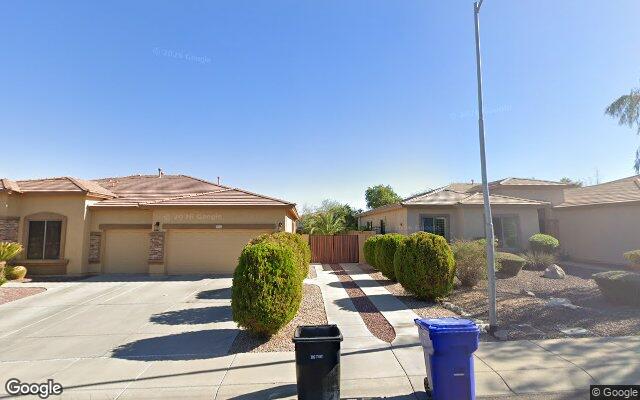
© Google Street View
Compared to similar Arizona facilities.
Care · 36-month window. Higher percentile = better performance on inspection record. Source: Arizona Dept. of Health Services · Bureau of Residential Facilities Licensing.
Citation history, plotted month by month.
14 deficiencies on record. Each bar is a month with a citation.
Finding distribution
none · 36 monthsScope × Severity (CMS A–L)
Every inspection visit, verbatim.
4 inspections in the public record, most recent first. Plain-language summaries open first — click into any row for the full citation text.
2026-02-04Annual Compliance VisitR9-10-803.A.9 · 4 findings
“Based on documentation review, record review, and interview, the governing authority failed to ensure compliance with A.R.S. § 36-411(C)(2) for one of two personnel reviewed. The deficient practice posed a risk as required information could not be verified for personnel to determine a person's fitness to work in the assisted living home. Findings include: 1. A.R.S. § 36-411(C)(2) states, "C. Each residential care institution, nursing care institution and home health agency shall make documented, good faith efforts to: 2. Verify the current status of a person's fingerprint clearance card." 2. A review of the Arizona Department of Public Safety Fingerprint Clearance Status website revealed E2 currently had a valid fingerprint clearance card. However, there was no verification of E2’s fingerprint verification within E2's record. 3. In an exit interview, the findings were reviewed with E1, and no additional information was provided. This is a repeat deficiency from the compliance and complaint inspection conducted on February 28, 2025.”
“Based on record review, observation, documentation review, and interview, the manager failed to ensure a resident's medical record contained a medication order from a medical practitioner for each medication that was administered to the resident, for one of two residents sampled. The deficient practice posed a risk as medication administered could not be verified against a medication order. Findings include: 1. A review of R2’s current service plan, dated January 15, 2026, revealed R2 received medication administration. 2. A review of R2’s medical record revealed a medication list dated July 1, 2025. However, the list was not signed by a medical practitioner as required. The list contained the following medications: • “Quetiapine (Seroquel 25 mg oral tablet) daily at bedtime.”; • “Aspirin (Aspirin EC 81 mg oral delayed release tablet) once every day.”; • “Carbidopa-levodopa (25 mg-100 mg oral tablet) twice a day.”; • “Levetiracetam (Keppra 500 mg oral tablet) twice a day.”; • “Levothyroxine (Synthroid 75 mcg (0.075 mg) oral tablet) daily in the morning.”; • “Midodrine (midodrine 2.5 mg oral tablet) three times a day.”; and • “Pravastatin (pravastatin 40 mg oral tablet) once every day.” 3. A review of R2's medical record did not include a medication order for Trazodone 50 mg, 1 tablet PO QHS. 4. A review of R2’s medical record revealed a medication administration record (MAR) dated January 2026 and February 2026. The MAR revealed R2 received the following medications on the following dates: • Pravastatin 40 mg 1 tab PO QD at 8 AM: January 1, 2026, to February 3, 2026; • Trazodone 50 mg 1 tab PO QHS at 8 PM: January 1, 2026, to February 3, 2026; • Quetiapine 50 mg 1 tab PO TID at 8 AM, 12 PM, and 8 PM: January 1, 2026, to February 3, 2026; • Aspirin 81 mg 1 tab PO QD at 8 AM: January 1, 2026, to February 3, 2026; • Carbidopa-Levodopa 25 mg-100 mg 2 tab PO BID at 8 AM and 8 PM: January 1, 2026, to February 3, 2026; • Levetiracetam/Keppra 500 mg 1 tab PO BID at 8 AM and 8 PM: January 1, 2026, to February 3, 2026; and • Levothyroxine (Synthroid 75 mcg /0.075) 1 tab QD in the morning at 8 AM: January 1, 2026, to February 3, 2026. 5. The Compliance Officers observed Midodrine 2.5 mg 1 tablet prefilled in R2's medication organizer for administration three times a day. 6. A review of the facility’s policies and procedures revealed a policy titled, “Part I – Doctor Orders, Provisions of Medication, Handling Medication, Assisting Resident in Procuring (obtaining) Medication”, which stated, “4. Every time the Resident’s Service Plan is updated, all Doctor’s Orders for each Resident will be consolidated on a single Doctor’s Order form and faxed or mailed to the doctor's office for review and signature to ensure that the Resident’s medication regimen and method of administration meets the resident’s needs, unless the current medication is listed in the Service Plan and reviewed by a Registered Nurse.” 7. A review of R2’s current service plan, dated January 15, 2026, did not contain a current medication list. 8. In an interview, E1 acknowledged R2’s medication orders were not available in R2’s medical records. E1 did not provide signed medical orders for R2 at the time of inspection. 9. In an exit interview, the findings were reviewed with E1, and no additional information was provided.”
“Based on record review, documentation review, and interview, the manager failed to ensure that medication administered to a resident was accurately documented in the resident's medical record for one of two residents sampled. The deficient practice posed a risk as medication could not be verified as administered against a medication order. Findings include: 1. Review of R1’s current service plan, dated August 14, 2025, revealed R1 received medication administration. 2. A review of R1’s medical record revealed a signed medication order dated January 19, 2025, which included the following: “Hydralazine HCI 25 mg 1 tablet oral 2 times a day as needed for Hypertension. Give 1 tablet by mouth twice daily as needed for SBP>160.” 3. A review of R1’s medical record revealed a Resident Vital Signs Chart dated January 2026 and February 2026. The Chart revealed R2’s systolic blood pressure exceeded 160 on the following dates and times: • January 13, 2026: AM B/P 195/92; • January 14, 2026: AM B/P 193/92; • January 15, 2026: PM B/P 167/84; • January 16, 2026: AM B/P 178/90; PM B/P 170/86; • January 17, 2026: AM B/P 184/96; PM B/P 163/93; • January 19, 2026: AM B/P 166/99; PM B/P 183/116; • January 21, 2026: AM B/P 171/92; • January 22, 2026: AM B/P 183/95; • January 23, 2026: AM B/P 194/134; PM B/P 161/107; • January 24, 2026: AM B/P 193/99; • January 25, 2026: AM B/P 185/100; • January 26, 2026: AM B/P 165/94; • January 27, 2026: AM B/P 170/100; • January 28, 2026: AM B/P 163/103; PM B/P 169/89; • January 29, 2026: AM B/P 181/94; • January 30, 2026: AM B/P 166/97; PM B/P 168/90; • January 31, 2026: AM B/P 173/92; PM B/P 169/90; • February 1, 2026: AM B/P 182/115; PM B/P 163/73; • February 2, 2026: AM B/P 181/97; PM B/P 162/93; • February 3, 2026: AM B/P 168/91; PM B/P 179/103; and • February 4, 2026: AM B/P 174/94; PM B/P 180/97. 4. A review of R1’s medical record revealed a medication administration record (MAR) dated January 2026 and February 2026. The MAR stated “Hydralazine 25mg 1 tab PO BID, hold if Systolic BP higher than 160.” Noticeably, the MAR did not match the medication order to administer when R1's systolic blood pressure was greater than 160. The MAR revealed the medication was not documented as administered on the following dates and times, in accordance with R1’s Vital Signs Chart above: • January 13, 2026: AM; • January 14, 2026: AM; • January 15, 2026: PM; • January 16, 2026: AM & PM; • January 17, 2026: AM & PM; • January 19, 2026: AM & PM; • January 21, 2026: AM; • January 22, 2026: AM; • January 23, 2026: AM & PM; • January 24, 2026: AM; • January 25, 2026: AM; • January 26, 2026: AM; • January 27, 2026: AM; • January 28, 2026: AM & PM; • January 29, 2026: AM; • January 30, 2026: AM & PM; • January 31, 2026: AM & PM; • February 1, 2026: AM & PM; • February 2, 2026: AM & PM; • February 3, 2026: AM & PM; and • February 4, 2026: AM & PM. 5. A review of the facility’s policies and procedures revealed a policy titled, “Part III – Medication Regimen, Records, and Monitoring.” The policy stated the following: • “5. Medications are administered to one Resident at a time. The designated and authorized individual will document the administration of medication or the assistance in the self-administration of medication in the Medication Administration Record form (MAR) at the time of administration or assistance with self-administration by having their name, signature and initials entered into the document. Medication administration is documented after observing the resident taking the medication.” • “9. The trained Caregiver will initial in the MAR and including the date and time the medication was given to the Resident and the medications that were taken.” 6. In an interview, E1 reported that the medications were administered in compliance with the order but were not documented appropriately in the MAR. 7. In an exit interview, the findings were reviewed with E1, and no additional information was provided. This is a repeat deficiency from the compliance and complaint inspection conducted on February 28, 2025.”
“Based on observation, record review, document review, and interview, the manager failed to ensure medication stored by an assisted living facility was stored in a separate locked room, closet, cabinet, or self-contained unit used only for medication storage. The deficient practice posed a risk to residents’ health and safety. Findings include: 1. During an environmental tour, the Compliance Officers observed one unsecured bottle of Guaifenesin LIQ 100/5 ML located on R1’s bedside table in R1’s personal room. 2. During the environmental tour, the Compliance officers observed the following items located inside an unlocked drawer in the kitchen where non-medication items were being stored: one bag of Vapo Cool cough drops; one bag of Halls cough drops; one combination box of DayQuil and Nyquil; one 2-pack of Tylenol Cold & Flu Severe Night caplets; and one blister pack of Chloroacetic lozenges. 3. During the environmental tour, the Compliance Officers observed one box of Polyethylene Glycol 3350 powder located in an unlocked cabinet in the kitchen where non-medications were stored. 4. During the environmental tour, the Compliance Officers observed that the medication storage cabinet located in the kitchen was unsecured. The cabinet contained medications for all the residents in the facility. Further inspection of the cabinet revealed the lock was not functioning at the time of inspection. 5. A review of R1’s current service plan, dated August 14, 2025, revealed R1 received medication administration. 6. A review of the facility’s policies and procedures revealed a policy titled, “Part II – Receiving, Storing Medication” which stated, “3. Medication stored by the facility must be secured in a locked storage area, closet, cabinet, or self-contained unit used for medication storage only.” 7. In an exit interview, the findings were reviewed with E1, and no additional information was provided. This is a repeat deficiency from the compliance and complaint inspection conducted on February 28, 2025.”
2025-02-28Complaint InvestigationR9-10-803.A.9 · 10 findings
“Based on documentation review, record review, and interview, the governing authority failed to ensure compliance with A.R.S. § 36-411. The deficient practice posed a safety risk to residents. Findings include: A.R.S. § 36-411.C.1 states: " Each residential care institution, nursing care institution and home health agency shall make documented, good faith efforts to: 1. Contact previous employers to obtain information or recommendations that may be relevant to a person's fitness to work in a residential care institution, nursing care institution or home health agency. A.R.S. § 36-411.C.3 states: " Each residential care institution, nursing care institution and home health agency shall make documented, good faith efforts to: Beginning January 1, 2025, verify that a potential employee is not on the adult protective services (APS) registry pursuant to section 46-459". A review of E1's, E4's, and E5's personnel records revealed no documentation of efforts to obtain information or recommendations that may be relevant to a person's fitness to work. A review of E5's personnel record revealed E5 was hired on February 21, 2025. E5's record did not contain documentation of efforts to verify the employee's status on the APS registry. In an interview, E2 acknowledged the personnel records were not in compliance with A.R.S. § 36-411.”
“Based on documentation review, record review, and interview, the manager failed to ensure an employee provided evidence of freedom from infectious tuberculosis (TB) as specified in R9-10-113, for one of five employees sampled. The deficient practice posed a TB exposure risk to residents. Findings include: 1. R9-10-113.A states "If a health care institution is subject to the requirements of this Section, as specified in an Article in this Chapter, the health care institution's chief administrative officer shall ensure that the health care institution establishes, documents, and implements tuberculosis infection control activities that...2. Include: a. For each individual who is employed by the health care institution, provides volunteer services for the health care institution, or is admitted to the health care institution and who is subject to the requirements of this Section, screening, on or before the date specified in the applicable Article of this Chapter, that consists of: i. Assessing risks of prior exposure to infectious tuberculosis, ii. Determining if the individual has signs or symptoms of tuberculosis, and iii. Obtaining documentation of the individual's freedom from infectious tuberculosis according to subsection (B)(1)..." 2. A review of the Centers for Disease Control and Prevention website revealed a web page titled, "Guidelines for Preventing the Transmission of Mycobacterium tuberculosis in Health-Care Settings, 2005." The web page stated, "If TST (Mantoux Skin Test) is used for baseline testing, two-step testing is recommended for HCWs (Health Care Workers) whose initial TST results are negative. If the first-step TST result is negative, the second-step TST should be administered 1-3 weeks after the first TST result was read." 3. A review of E3's personnel record revealed E3 was hired February 2, 2024. E3's record revealed documentation of one TB test on January 30, 2024. No other documentation of freedom from infection TB was available for review. 4. In an interview, E2 acknowledged E3 did not provide evidence of freedom from infectious TB as specified in R9-10-113.”
“Based on documentation review, record review, and interview, the manager failed to ensure a caregiver provided current documentation of first aid training before providing assisted living services, for one of five caregivers sampled. The deficient practice posed a health and safety risk if the employee did not know how to properly perform first aid. Findings include: A review of the facility's policies and procedures revealed a policy titled "First Aid and CPR training". The policy stated, "In order to keep First Aid and CPR training and skills up to date it is required that each employee and volunteer provide the following: Documentation that verifies that the employee or volunteer has received First Aid training". A review of E2's personnel record revealed a hire date of February 1, 2024. E2's record revealed documentation of E2's CPR (Basic Life Support) training. However, E2's personnel record did not contain documentation of First Aid training. In an interview, E2 acknowledged E2's record did not include documentation of first aid training.”
“Based on record review and interview, the manager failed to ensure a resident accepted by the assisted living facility submitted documentation signed by a medical practitioner or a registered nurse that stated whether the individual required continuous medical services, continuous or intermittent nursing services, or restraints, for one of two residents sampled accepted by the assisted living facility on or after October 1, 2013. The deficient practice posed a risk if the facility was unable to meet a resident's needs. Findings include: A review of R1's medical record revealed no documentation that stated whether the resident required continuous medical services, continuous or intermittent nursing services, or restraints. Based on R1’s acceptance date, this documentation was required. During an interview, E2 acknowledged R1's record did not include the signed and dated documentation to indicate whether the resident required continuous medical services, continuous or intermittent nursing services, or restraints.”
“Based on record review and interview, the manager failed to ensure a resident had a written service plan, reviewed and updated at least once every six months, for one of two residents sampled who received personal care services. The deficient practice posed a risk as there was no current service plan to direct services to be provided to a resident. Findings include: 1. A review of R1's medical record revealed a document titled "Service Care Plan" for personal care services dated March 22, 2023. A service plan after March 22, 2023, was not available for review. 2. In an interview, E2 acknowledged R1's service plans had not been updated as required.”
“Based on record review, documentation review and interview, the manager failed to ensure a resident's medical record contained documentation of assisted living services. The deficient practice posed a risk if services provided could not be verified. Findings include: A review of R1 's medical record revealed a service plan, dated March 22, 2023. A review of R2's medical record revealed a service plan, dated February 14, 2025. A review of R1's and R2's medical records revealed a document titled "Activity of daily living chart" (ADL). The document included dated columns for each type of ADL service provided and boxes to sign once the services were provided. Documentation was not available showing the services were provided from February 25, 2025, to the present. In an interview, E2 reported E2 was behind with the facility's paperwork. E2 reported E2 did not have time to document the services provided to R1 and R2 since February 24, 2025. E2 acknowledged R1's and R2's medical records did not contain documentation of assisted living services provided to the resident.”
“Based on record review, observation, and interview, the manager failed to ensure a medication administered to a resident was documented in the resident's medical record. Findings include: A review of R1's medical record revealed R1 received personal care services and medication administration. A review of R1's medical record revealed a signed medication order for Loratidine 10mg, QD. A review of R1's February 2025 medication administration record (MAR) revealed no documentation of Loratidine 10mg. A review of R1's medications revealed one bottle of Loratidine 10mg available for use. In an interview, E2 reported the Loratidine was administered to R1. E2 acknowledged R1's medical record did not include documentation showing Loratidine was administered. A review of R1's medical record revealed a February 2025 MAR. This MAR included medications that were administered. However, documentation was not available showing the medications were administered from February 24, 2025, to the present. A review of R2's medical record revealed a February 2025 MAR. This MAR included medications that were administered. However, documentation was not available showing the medications were administered from February 24, 2025, to the present. In an interview, E2 reported E2 did not have the time to document on the MAR. E2 acknowledged R1's and R2's medical records did not include documentation showing medications were administered.”
“Based on observation and interview, the manager failed to ensure medications stored by the facility were stored in a locked area, which posed a health and safety risk for medications to be stored inappropriately. Findings include: During an environmental inspection of the facility, the Compliance Officers observed Aspirin, Visine, Refresh, Biofreeze, and Calmoseptine unlocked in kitchen drawers. During the environmental inspection of the facility, the Compliance Officers observed PeriGuard skin protectant, Thera body shield, Mckesson skin cleanser, PeriFresh, Remedy Protect, Dermaseptin, DermaKlenz, Lana shield, Walgreen sunscreen, Calamine, Secura personal cleaner, Banana Boat sunscreen, Timolol Maleate ophthalmic solution, and Chamosyn ointment unlocked in the bathrooms and bedrooms. During an interview, E2 reported E2 did not know personal care products needed to be stored locked. E2 acknowledged medications were stored unlocked.”
“Based on documentation review, observation, and interview, the manager failed to ensure toxic materials stored by the facility were stored in a locked area and inaccessible to residents. The deficient practice posed a health and safety risk if a resident inappropriately used the toxic material. Findings include: A review of the facility's policies and procedures revealed a policy titled "Environmental and physical plant safety" that stated, "Poisonous and toxic materials will be in labeled containers and stored in a locked area". During an environmental inspection of the facility, the Compliance Officers observed OdoMan and Febreeze unlocked in the cabinet of the bathroom and Pledge unlocked in the drawer in the kitchen. In an interview, E2 acknowledged toxic materials were stored unlocked.”
“Based on documentation review, record review, and interview, the health care institution failed to administer a training program for one of the five staff sampled regarding fall prevention and fall recovery. The deficient practice posed a risk as organized instruction and information related to resident care and safety were not implemented. Findings include: A review of the facility's policies and procedures revealed a policy titled "Fall Prevention and Recovery" that stated "Fall Prevention and Recovery Training is required upon hire and at least every 12 months thereafter". A review of E5's personnel record revealed a hire date of February 21, 2025. E5's record did not contain documentation of fall prevention and fall recovery training. In an interview, E2 reported E5 was a new employee and did not have the time to attend the training. E2 acknowledged the facility failed to administer a fall prevention and fall recovery training for all staff upon hiring,”
2024-07-30Annual Compliance VisitNo findings
2024-04-03Complaint InvestigationNo findings
Other facilities in Surprise.
Other memory care facilities near Surprise with similar care offerings.

Contract Decoder
Family reviews
No reviews yet — be the first to share your experience