Angel's Real Home Care.
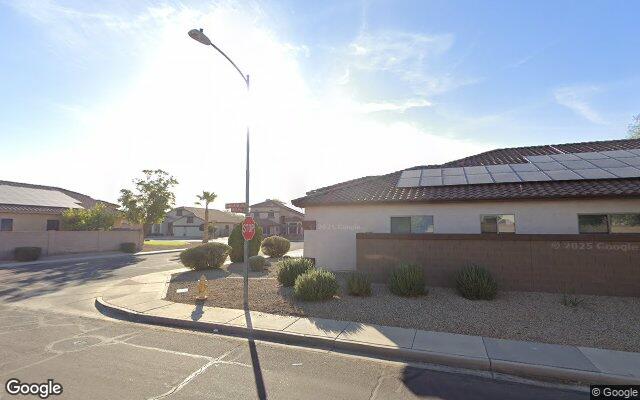
A medium home, reviewed on public record.
© Google Street View
Compared to 1,661 Arizona facilities with a similar number of beds.
Care · 36-month window. Higher percentile = better performance on inspection record. Source: Arizona Dept. of Health Services · Bureau of Residential Facilities Licensing.
among peers to rank.
on file.
Rankings based on 36-month ADHS inspection data. Severity and frequency: fewer citations = higher percentile. Repeat rate: lower repeat citation share = higher percentile.
Citation history, plotted month by month.
19 deficiencies on record. Each bar is a month with a citation.
Finding distribution
19 total · 36 monthsScope × Severity (CMS A–L)
Every inspection visit, verbatim.
1 inspection in the public record, most recent first. Plain-language summaries open first — click into any row for the full citation text.
2025-03-26Complaint InvestigationA.A.C. · 19 findings
“Based on documentation review, interview, and record review, the governing authority failed to administer a training program for all staff regarding fall prevention and fall recovery. The deficient practice posed a risk if a staff member was not properly trained to assist a resident who had fallen and was unable to recover independently. Findings include: 1. A review of Department documentation revealed this statute went into effect on October 1, 2021. 2. A review of facility documentation revealed a policy and procedure (P&P) titled "Fall Prevention and Recovery Program/Training” dated January 18, 2022. However, the P&P did not include requirements regarding the training component of the P&P. 3. In an interview, when one of the Compliance Officers asked how often staff were to receive training regarding fall prevention and fall recovery, E1 reported such training was to be conducted every six months. When the Compliance Officer asked again to confirm, E1 reported the training was to be conducted every year. When the Compliance Officer asked a third time, E1 reported E1 did not know, but finally stated, “Every year.” 4. A review of facility documentation revealed a series of personnel schedules dated between December 2023 and March 2025. The schedules included the names of E2 and E3. However, the revealed E3 was originally scheduled for shifts between December 2023 and December 2024 but those shifts were crossed out. 5. A review of E2's personnel record revealed E2 was hired as a caregiver in 2023. However, the review revealed E2 did not receive training regarding fall prevention and fall recovery until December 4, 2023, several months after E2’s starting date of employment. The review revealed E2 received the training again on January 10, 2025, more than one year after the December 4, 2023, training. 6. In an interview, when one of the Compliance Officers asked why E3 was crossed out on the schedule for such a long period of time, E1 reported E1 crossed out E3 because E3 did not work on those shifts. E1 reported E3 did not work last year in 2024. When one of the Compliance Officers asked for E3’s ending date of employment, E1 stated, “2023.” 7. A review of R1’s, R4’s, R5’s, R6’s, R9’s, and R10’s medical records revealed a variety of medication administration records (MARs) dated between November 2024 and February 2025. The MARs revealed documentation demonstrating E3 worked as a caregiver administering medication between November 1, 2024, and February 2, 2025. 8. A review of E3's personnel record revealed E3 had been hired as a caregiver when this statute went into effect. However, the review revealed E3 did not receive training regarding fall prevention and fall recovery until January 10, 2024, after E1 first reported E3 no longer worked at the facility. The review further revealed no such training every six months or every year thereafter. Technical assistance was provided on this rule during the complaint and compliance inspection conducted on May 30-31, 2023.”
“Based on interview, record review, and documentation review, the manager of an assisted living home who contacted an emergency responder on behalf of a resident failed to provide a written document with all required information to the emergency responder. The deficient practice posed a risk if the emergency responder was not aware of critical health information for the resident. Findings include: 1. In an interview, E1 reported R3 had an accident, emergency, or injury on March 14, 2025, that resulted in facility personnel contacting an emergency responder on behalf of R3. 2. A review of R3’s medical record revealed a progress note dated March 14, 2025. The note stated, “At 4:57 precise, I called 911 for [R3] to be picked up and taken to the hospital…At around 5:10pm the firefighter came and I explained to [the firefighters]…[The firefighters] were able to take [R3] to the emergency room.” The review revealed no standardized form in compliance with this statute or Arizona Revised Statutes § 36-420.04(C). 3. In an interview, one of the Compliance Officers asked for the documentation E1 provided to emergency responders. E1 provided the documentation. 4. A review of facility documentation revealed the originals of the aforementioned documentation provided to emergency responders. However, the document revealed facility personnel did not provide emergency responders with the following: - The name, address and telephone number of R3's current pharmacy; - A list of any known allergies to any medications, additives, preservatives or materials like latex or adhesive; - The contact information for the resident's primary care physician and power of attorney or authorized representative; - The point-of-contact information for the assisted living home, including the cell phone number and email address; and - A copy of R3's health insurance portability and accountability act release authorizing a receiving hospital to communicate with the assisted living home to plan for R3's discharge. 5. In an interview, E1 acknowledged the written documents provided to emergency responders on March 14, 2025, did not include all required information.”
“Based on documentation review and interview, the manager of an assisted living home failed to maintain a standardized form for each resident that included the information prescribed in Arizona Revised Statutes (A.R.S.) § 36-420.04(A)(1-9). The deficient practice posed a risk if the emergency responder was not aware of critical health information for a resident. Findings include: 1. A review of facility documentation revealed no standardized form in compliance with this statute for R1 and R3. 2. In an interview, when one of the Compliance Officers asked if E1 had a standardized form in compliance with this statute for R3, E1 stated, “Not for [R3].” E1 reported E1 had a standardized form, but not for all residents. 3. A review of facility documentation revealed a standardized form for R2. However, the form was not filled out completely and did not include the following: - A list of all R2's prescription and over-the-counter medications, their dosages and how frequently they are administered; - The name, address and telephone number of R2’s current pharmacy; - A list of any known allergies to any medications, additives, preservatives or materials like latex or adhesive; - The name and contact information for R2’s power of attorney or authorized representative; - Basic information about R2’s physical and mental conditions and basic medical history, such as having diabetes or a pacemaker or experiencing frequent falls or cardiovascular and cerebrovascular events, as well as dates of recent episodes, if known; - The point-of-contact information for the assisted living home, including the cell phone number and email address; and - A copy of R2’s health insurance portability and accountability act release authorizing a receiving hospital to communicate with the assisted living home to plan for R2’s discharge. 4. In an interview, E1 reported R2’s form was the standardized form E1 previously mentioned having for residents other than R1 and R3, stating, “That’s the one I was talking about.””
“Based on interview, record review, and documentation review, the manager of an assisted living home failed to maintain a copy of the document provided to the emergency responder which included the items listed in Arizona Revised Statutes (A.R.S.) § 36-420.04(A)(1-9). Findings include: 1. In an interview, E1 reported R3 had an accident, emergency, or injury on March 14, 2025, that resulted in facility personnel contacting an emergency responder on behalf of R3. 2. A review of R3’s medical record revealed a progress note dated March 14, 2025. The note stated, “At 4:57 precise, I called 911 for [R3] to be picked up and taken to the hospital…At around 5:10pm the firefighter came and I explained to [the firefighters]…[The firefighters] were able to take [R3] to the emergency room.” The review revealed no standardized form in compliance with this statute or Arizona Revised Statutes § 36-420.04(C). 3. In an interview, one of the Compliance Officers asked for the copy of the documentation E1 provided to emergency responders. E1 reported not having a copy, stating, “I don’t have anything I provided [emergency responders].””
“Based on documentation review, record review, and interview, the chief administrative officer failed to establish and document tuberculosis infection control activities consistent with this rule. The deficient practice posed a potential TB exposure risk to residents. Findings include: 1. A review of Department documentation revealed this rule went into effect on May 4, 2022. 2. A review of CDC.gov revealed a webpage titled "Tuberculosis Screening, Testing, and Treatment of U.S. Health Care Personnel: Recommendations from the National Tuberculosis Controllers Association and CDC, 2019," published by the U.S. Department of Health and Human Services. The webpage stated: "The 2005 CDC recommendations for testing U.S. health care personnel have been updated and now include 1) TB screening with an individual risk assessment and symptom evaluation at baseline (preplacement); 2) TB testing with an interferon-gamma release assay (IGRA) or a tuberculin skin test (TST) for persons without documented prior TB disease or latent TB infection (LTBI); 3) no routine serial TB testing at any interval after baseline in the absence of a known exposure or ongoing transmission; 4) encouragement of treatment for all health care personnel with untreated LTBI, unless treatment is contraindicated; 5) annual symptom screening for health care personnel with untreated LTBI; and 6) annual TB education of all health care personnel." 3. A review of facility documentation revealed a policy and procedure (P&P) titled "Tuberculosis (TB) Infection Control Program." However, the review revealed the P&P was not in compliance with Arizona Administrative Code R9-10-113 and the recommendations in "Tuberculosis Screening, Testing, and Treatment of U.S. Health Care Personnel: Recommendations from the National Tuberculosis Controllers Association and CDC, 2019." 4. A review of E1's personnel record revealed E1 was hired as the manager. However, the review revealed no documentation demonstrating E1 received initial or annual training and education related to recognizing the signs and symptoms of tuberculosis. 5. A review of E2's personnel record revealed E2 was hired as a caregiver after this rule went into effect. However, the review revealed no documentation demonstrating E2 received initial or annual training and education related to recognizing the signs and symptoms of tuberculosis. 6. A review of R1’s, R4’s, R5’s, R6’s, R9’s, and R10’s medical records revealed a variety of medication administration records (MARs) dated between November 2024 and February 2025. The MARs revealed documentation demonstrating E3 worked as a caregiver administering medication between November 1, 2024, and February 2, 2025. 7. A review of E3's personnel record revealed E3 had been hired as a caregiver when this rule went into effect. However, the review revealed no documentation demonstrating E3 received initial or annual training and education related to recognizing the signs and symptoms of tuberculosis. 8. In an interview, E1 reported E1 had just learned about the new TB rules last year. Technical assistance was provided on this rule during the complaint and compliance inspection conducted on May 30-31, 2023.”
“Based on documentation review, record review, and interview, the governing authority failed to ensure compliance with Arizona Revised Statutes (A.R.S.) § 36-411(A) and (C), for two of three sampled personnel members. The deficient practice posed a risk if the employees were a danger to a vulnerable population. Findings include: 1. A.R.S. § 36-411(A) states: "A. Except as provided in subsection F of this section, as a condition of licensure or continued licensure of a residential care institution, a nursing care institution or a home health agency and as a condition of employment in a residential care institution, a nursing care institution or a home health agency, employees and owners of residential care institutions, nursing care institutions or home health agencies, contracted persons of residential care institutions, nursing care institutions or home health agencies or volunteers of residential care institutions, nursing care institutions or home health agencies who provide medical services, nursing services, behavioral health services, health-related services, home health services or direct supportive services and who have not been subject to the fingerprinting requirements of a health professional's regulatory board pursuant to title 32 shall have a valid fingerprint clearance card that is issued pursuant to title 41, chapter 12, article 3.1 or shall apply for a fingerprint clearance card within twenty working days after employment or beginning volunteer work or contracted work." 2. A.R.S. § 36-411(C)(44) states: "C. Each residential care institution, nursing care institution and home health agency shall make documented, good faith efforts to: 4. On or before March 31, 2025, verify that each employee is not on the adult protective services registry pursuant to section 46-459. If an employee is found to be on the adult protective services registry, the residential care institution, nursing care institution or home health agency shall take action to terminate the employment of that employee.” 3. A review of E1’s personnel record revealed E1 was hired as the manager. The review revealed photocopies of E1’s previous and current fingerprint clearance cards (FCCs). However, the photocopies revealed E1’s previous FCC expired on January 20, 2024, and E1’s current FCC was not issued until March 4, 2024, more than one month after the previous card expired. 4. A review of the Department of Public Safety website confirmed E1's previous FCC expired on January 20, 2024. The website revealed E1 did not reapply for another FCC until February 22, 2024, more than one month after the previous card expired. The review revealed E1’s current FCC was valid. 5. In an interview, E1 acknowledged E1’s FCC had been expired for more than one month. 6. A review of E3’s personnel record revealed E3 had been hired as a caregiver. The review revealed a printout from the Adult Protective Services (APS) registry dated December 11, 2024. The printout revealed E3 was put on the APS registry in 2015 while working at this facility for an incident that occurred at this facility. 7. A review of R1’s, R4’s, R5’s, R6’s, R9’s, and R10’s medical records revealed a variety of medication administration records (MARs) dated between November 2024 and February 2025. The MARs revealed documentation demonstrating E3 worked as a caregiver administering medication between November 1, 2024, and February 2, 2025, after E1 knew E3 was on the APS registry. 8. In an interview, one of the Compliance Officers asked E3 for E3’s ending date of employment. However, E3 reported E3 did not know. The Compliance Officer asked if E3 worked in 2025 to which E3 stated, “No.” The Compliance Officers asked if E3 worked in March of 2025, to which E3 stated, “No.” The Compliance Officers asked if E3 worked in February of 2025, to which E3 stated, “No.” The Compliance Officers asked if E3 worked in January of 2025, to which E3 stated, “No.” The Compliance Officers asked if E3 worked around Christmas of 2024, to which E3 stated, “No.” The Compliance Officers asked if E3 worked around Thanksgiving of 2024, to which E3 stated, “No.” The Compliance Officer asked if E3 worked in 2024 and E3 reported E3 had not worked since far before Thanksgiving of 2024. The Compliance Officer then showed E3 the aforementioned MARs and asked if the initials on the MARs matching E3’s name belonged to E3. E3 stated, “That’s me.” 9. In an interview, one of the Compliance Officers showed E1 the MARs from November 2024 with E3’s initials and asked for E3’s ending date of employment. E1 reported E3’s ending date of employment was in November 2024. The Compliance Officer then showed E1 the MARs from December 2024 with E3’s initials and asked again E1 for E3’s ending date of employment. E1 then reported E3’s ending date of employment was in December 2024. The Compliance Officer then showed E1 the MARs from January 2025 with E3’s initials and asked again E1 for E3’s ending date of employment. E1 then reported E3’s ending date of employment was in January 2025. The Compliance Officer then showed E1 the MARs from February 2025 with E3’s initials and asked again E1 for E3’s ending date of employment. E1 then reported E3’s ending date of employment was in February 2025. The Compliance Officer then showed E1 the printout from the APS registry and asked again for E3’s ending date of employment. E1 reported E3’s ending date of employment was in December 2024 when E1 found out E3 was on the APS registry, despite E3’s initials on the MARs from January and February 2025.”
“Based on documentation review, record review, and interview, the manager failed to ensure a caregiver's skills and knowledge were verified and documented before the caregiver provided physical health services, for one of three sampled caregivers. The deficient practice posed a risk if a caregiver did not have the skills and knowledge necessary to meet a resident's needs. Findings include: 1. A review of facility documentation revealed a policy and procedure (P&P) titled “Verifying Caregiver’s Skills and Knowledge” dated January 18, 2022. The P&P stated: “Before the caregiver provides physical health services…his or her skills and knowledge are verified and documented.” The review further revealed a series of personnel schedules dated between December 2023 and January 2025 which revealed E2 worked on a regular basis. 2. A review of E2's personnel record revealed E2 was hired as a caregiver. However, the review revealed no documentation demonstrating the manager ensured E2's skills and knowledge were verified and documented before E2 provided physical health services. 3. In an interview, when one of the Compliance Officers asked if E1 had the verification of E2’s skills and knowledge, E1 stated, “No.””
“Based on documentation review, interview, and record review, the manager failed to ensure documentation was maintained for at least 12 months after the last date on the documentation of the caregivers and assistant caregivers working each day, including the hours worked by each. The deficient practice posed a risk as the Department was provided false or misleading information. Findings include: 1. A review of facility documentation revealed a policy and procedure (P&P) titled “Staffing Policy” dated January 18, 2022 The P&P stated: “Employees are required to accurately record all time worked, including the time they begin and end each shift. Staff should also record the beginning and ending time of any split shift or departure from work for personal reasons. Employees are responsible for completing their own name records on a daily basis. Altering, falsifying, tampering with time records, and/or recording time on another employee's time record will result in disciplinary action, up to and including termination.” The review further revealed personnel schedules dated between December 2023 and March 2025. However, the schedules revealed E3 was originally scheduled for shifts between December 2023 and December 2024 but those shifts were crossed out. 2. In an interview, when one of the Compliance Officers asked why E3 was crossed out on the schedule for such a long period of time, E1 reported E1 crossed out E3 because E3 did not work on those shifts. E1 reported E3 did not work last year in 2024. When one of the Compliance Officers asked for E3’s ending date of employment, E1 stated, “2023.” E1 reported E3 was crossed out on the schedule for so long because E1 created the schedule one full year in advance. E1 reported E3 had been a resident before becoming a caregiver, worked as a caregiver at the facility for more than 10 years, then went back to being a resident of the facility when E3 could no longer do the job of caregiver. 3. A review of R1’s, R4’s, R5’s, R6’s, R9’s, and R10’s medical records revealed a variety of medication administration records (MARs) dated between November 2024 and February 2025. The MARs revealed documentation demonstrating E3 worked as a caregiver administering medication between November 1, 2024, and February 2, 2025. 4. In an interview, one of the Compliance Officers asked E3 for E3’s ending date of employment. However, E3 reported E3 did not know. The Compliance Officer asked if E3 worked in 2025 to which E3 stated, “No.” The Compliance Officers asked if E3 worked in March of 2025, to which E3 stated, “No.” The Compliance Officers asked if E3 worked in February of 2025, to which E3 stated, “No.” The Compliance Officers asked if E3 worked in January of 2025, to which E3 stated, “No.” The Compliance Officers asked if E3 worked around Christmas of 2024, to which E3 stated, “No.” The Compliance Officers asked if E3 worked around Thanksgiving of 2024, to which E3 stated, “No.” The Compliance Officer asked if E3 worked in 2024 and E3 reported E3 had not worked since far before Thanksgiving of 2024. The Compliance Officer then showed E3 the aforementioned MARs and asked if the initials on the MARs matching E3’s name belonged to E3. E3 stated, “That’s me.” 5. In an interview, one of the Compliance Officers showed E1 the MARs from November 2024 with E3’s initials and asked again E1 for E3’s ending date of employment. E1 reported E3’s ending date of employment was in November 2024. The Compliance Officer then showed E1 the MARs from December 2024 with E3’s initials and asked again E1 for E3’s ending date of employment. E1 then reported E3’s ending date of employment was in December 2024. The Compliance Officer then showed E1 the MARs from January 2025 with E3’s initials and asked again E1 for E3’s ending date of employment. E1 then reported E3’s ending date of employment was in January 2025. The Compliance Officer then showed E1 the MARs from February 2025 with E3’s initials and asked again E1 for E3’s ending date of employment. E1 then reported E3’s ending date of employment was in February 2025. 6. A review of E3’s personnel record revealed a printout from the Adult Protective Services (APS) registry dated December 11, 2024. The printout revealed E3 was put on the APS registry in 2015 while working at this facility for an incident that occurred at this facility. 7. In an interview, the Compliance Officer then showed E1 the printout from the APS registry and asked again for E3’s ending date of employment. E1 then reported E3’s ending date of employment was in December 2024 when E1 found out E3 was on the APS registry, despite E3’s initials on the MARs from January and February 2025.”
“Based on documentation review, record review, and interview, the manager failed to ensure a caregiver provided evidence of freedom from infectious tuberculosis (TB) on or before the date the caregiver began providing services at or on behalf of the assisted living facility as specified in Arizona Administrative Code (A.A.C.) R9-10-113, for one of three sampled caregivers. The deficient practice posed a potential TB exposure risk to residents. Findings include: 1. R9-10-113(A)(2)(a)(iii) states: "If a health care institution is subject to the requirements of this Section, as specified in an Article in this Chapter, the health care institution's chief administrative officer shall ensure that the health care institution establishes, documents, and implements tuberculosis infection control activities that...2. Include: a. For each individual who is employed by the health care institution…and who is subject to the requirements of this Section, screening, on or before the date specified in the applicable Article of this Chapter, that consists of…iii. Obtaining documentation of the individual's freedom from infectious tuberculosis according to subsection (B)(1)." 2. R9-10-113(B)(1)(a)(i) states: "B. A health care institution's chief administrative officer shall: 1. For an individual for whom baseline screening and documentation of freedom from infectious tuberculosis is required by an Article in this Chapter, as specified in subsection (A)(2)(a), obtain one of the following as evidence of freedom from infectious tuberculosis: a. Documentation of a negative Mantoux skin test or other tuberculosis screening test that: i. Is recommended by the U.S. Centers for Disease Control and Prevention (CDC)." 3. A review of the CDC website revealed a web page titled "Baseline Tuberculosis Screening and Testing for Health Care Personnel." The web page stated: "If the Mantoux tuberculin skin test (TST) is used for baseline testing of health care personnel, use two-step testing. Purpose: Two-step testing is recommended for the initial TB skin test for adults who may be tested periodically, such as health care personnel." 4. A review of E2's personnel record revealed E2 was hired as a caregiver. The review revealed documentation of a negative TST dated as read within 12 months before E2’s starting date of employment. The review revealed a second TST, dated as read on October 31, 2024, and a third TST, dated as read on November 16, 2024. However, both TSTs were dated as read after E2’s starting date of employment. 5. In an interview, E1 reported E1 had just learned about the new TB rules last year. Regarding E2’s TSTs, E1 stated, “We did it late.” Technical assistance was provided on this rule during the complaint and compliance inspection conducted on May 30-31, 2023.”
“Based on record review, interview, and documentation review, the manager failed to ensure before or at the time of acceptance of an individual, the individual submitted documentation dated within 90 calendar days before the individual was accepted by the facility to include whether the individual required continuous medical services, continuous or intermittent nursing services, or restraints, and was dated and signed by a physician, registered nurse practitioner, registered nurse, or physician assistant, for eight of eight sampled residents. The deficient practice posed a risk if the facility was unable to meet the needs of a resident and the Department was provided false or misleading information. Findings include: 1. A review of R1's medical record revealed a series of 13 documents dated between August 2022 and January 2025 which included checkmarks denoting R1 did not require continuous medical services, continuous or intermittent nursing services, or restraints. The first document, dated within 90 calendar days before R1 was accepted by the facility, included a signature from O1 which appeared printed. The review revealed all 13 documents contained the same checkmarks, identical in every way, and the same signature of O1, identical in every way. Four of the five documents dated 2023 originally included R5’s name which was then changed to R1’s name with the word “error” written in. 2. A review of R2's medical record revealed a document dated within 90 calendar days before R2 was accepted by the facility which included checkmarks denoting R2 did not require continuous medical services, continuous or intermittent nursing services, or restraints. However, the document contained the same checkmarks as those in R1’s documents, identical in every way, and the same signature of O1 as in R1’s documents, identical in every way. 3. In an interview, one of the Compliance Officers asked if E1 had a template E1 used for the aforementioned documents. E1 stated, “Yes” and provided the Compliance Officer the template. 4. A review of facility documentation revealed the aforementioned template. The template included the checkmarks next to “No” for each option. The template also included O1’s signature. The checkmarks and the signature appeared printed. 5. A review of R1’s and R2’s medical records revealed the aforementioned 14 documents were copies of the template. 6. In an interview, E1 reported E1 thought the aforementioned documents needed to be completed before or upon admission and every three months thereafter. One of the Compliance Officers asked how E1 got the documents for each resident before or upon admission and every three months thereafter. E1 reported E1 received the documents from O1 via fax. The Compliance Officer asked again to confirm and E1 reported the documents were not faxed, but that O1 came to the facility in person and brought the documents, stating O1 “come [came] here.” The Compliance Officer asked if O1 provided the original copies of the documents and E1 reported O1 made copies of the originals and brought the copies to the facility. The Compliance Officer asked if O1 had O1’s own copies of the documents for all residents and E1 reported O1 did not have copies or originals. E1 reported O1 signed the documents then E1 filled them out with the respective residents’ information. The Compliance Officer asked when the document for R2 was signed. However, E1 did not answer and instead stated, “[O1] gave me a copy of what [O1] already signed.” When the Compliance Officer asked if O1 had met and evaluated R2 in person, E1 stated, “No.” When the Compliance Officer asked if O1 had met and evaluated any of the current residents in the home in person, E1 stated, “Not current, no.” When the Compliance Officer asked if E1 had O1’s contact information, E1 stated, “No.” 7. A review of the National Council of State Boards of Nursing website revealed two potential registered nurses matching O1’s name. However, the license of the first registered nurse matching O1’s name expired in 2016 and the license of the second registered nurse matching O1’s name expired in 1994. 8. A review of R3's medical record revealed a document dated ten days after R3 was accepted by the facility which included checkmarks denoting R3 did not require continuous medical services, continuous or intermittent nursing services, or restraints. However, the document contained the same checkmarks and signature of O1 as in the aforementioned residents’ documents and the template. 9. A review of R4's medical record revealed a series of 15 documents dated between October 2022 and January 2025 which included checkmarks denoting R4 did not require continuous medical services, continuous or intermittent nursing services, or restraints. However, the 15 documents contained the same checkmarks and signatures of O1 as in the aforementioned residents’ documents and the template. The document dated April 28, 2023, originally included R7’s name which was then changed to R4’s name with the word “error” written in twice. 10. A review of R5's medical record revealed a document dated 16 days after R5 was accepted by the facility which indicated R5 required continuous medical services, continuous nursing services, and intermittent nursing services. The document was signed by an individual other than O1. The review further revealed a series of 12 other documents dated between June 2022 and January 2025 which included checkmarks denoting R5 did not require continuous medical services, continuous or intermittent nursing services, or restraints. However, the 12 documents contained the same checkmarks and signatures of O1 as in the aforementioned residents’ documents and the template. 11. A review of R6's medical record revealed a series of 19 documents dated between July 2020 and January 2025 which included checkmarks denoting R5 did not require continuous medical services, continuous or intermittent nursing services, or restraints. However, the 19 documents contained the same checkmarks and signatures of O1 as in the aforementioned residents’ documents and the template. 12. A review of R7's medical record revealed a series of seven documents dated between September 2023 and January 2025 which included checkmarks denoting R7 did not require continuous medical services, continuous or intermittent nursing services, or restraints. However, the seven documents contained the same checkmarks and signatures of O1 as in the aforementioned residents’ documents and the template. 13. In an interview, E1 reported R8 had been a resident before becoming a caregiver, worked as a caregiver at the facility for more than 10 years, then went back to being a resident of the facility when R8 could no longer do the job of caregiver. E1 reported E1 did not know R8’s most recent date of acceptance. 14. A review of R8's medical record revealed a document dated January 10, 2025, which included checkmarks denoting R8 did not require continuous medical services, continuous or intermittent nursing services, or restraints. However, the document contained the same checkmarks and signature of O1 as in the aforementioned residents’ documents and the template. 15. In an interview, E1 reported E1 did not know E1 could not use a copy of a signature of a registered nurse.”
“Based on record review and interview, the manager failed to ensure a caregiver or an assistant caregiver documented the services provided to a resident in the resident's medical record, for one of three sampled residents. The deficient practice posed a risk as services could not be verified as provided against a service plan and the Department was provided false or misleading information. Findings include: 1. A review of R1's medical record revealed R1’s date of termination of residency and documentation of assisted living services provided to R1 (ADLs) dated the month of R1’s termination of residency. The ADLs revealed documentation demonstrating R1 received snacks in the PM and “Fluid Intake” at 10:00 PM on R1’s date of termination of residency, even though R1 was no longer at the facility. 2. In an interview, E1 stated R1’s residency was terminated “before breakfast.” E1 reported the documentation on the ADLs was an error. 3. In a separate interview, E1 reported R3 had an accident, emergency, or injury on R3’s date of termination of residency which resulted in R3 needing medical services. 4. A review of R3’s medical record revealed a progress note on R3’s date of termination of residency. The note stated, “At 4:57 precise, I called 911 for [R3] to be picked up and taken to the hospital…At around 5:10pm the firefighter came and I explained to [the firefighters]…[The firefighters] were able to take [R3] to the emergency room.” The review revealed ADLs dated the month of R3’s termination of residency. The ADLs revealed documentation demonstrating R3 received snacks in the PM and “Fluid Intake” at 10:00 PM on R3’s date of termination of residency, even though R3 was no longer at the facility.”
“Based on documentation review, record review, and interview, the manager failed to ensure an entry in a resident's medical record was not changed to make the initial entry illegible, for five of eight sampled residents. The deficient practice posed a risk as the Department was provided false or misleading information. Findings include: 1. A review of facility documentation revealed a policy and procedure (P&P) titled “Confidentiality of Resident Records" dated January 18, 2022. The P&P stated, “Altering or falsifying any resident record by a personnel member is ground[s] for immediate termination.” The review further revealed a P&P titled “Medical Records Entry Policy.” The P&P stated: “The medical record…shall be free from inadvertent or intentional alterations…An entry in a resident’s medical record is recorded by [facility personnel], dated legible and authenticated; and not changed to make the [initial] entry illegible.” 2. A review of R4’s medical record revealed a medication administration record (MAR) dated February 2025. The MAR revealed E3 administered R4’s lorazepam on February 1-2, 2025. However, E1’s initials were later written over E3’s. The MAR revealed entries in R4’s medical record were changed to make the initial entries illegible. 3. A review of R5’s medical record revealed a MAR dated January 2025. The MAR revealed E3 administered a majority of R5’s medication during the first half of January. However, E1’s initials were later written over a majority of E3’s.The MAR revealed entries in R5’s medical record were changed to make the initial entries illegible. 4. A review of R6’s medical record revealed a MAR dated January 2025. The MAR revealed E3 administered a majority of R6’s medication during the first half of January. However, E1’s initials were later written over a majority of E3’s.The MAR revealed entries in R6’s medical record were changed to make the initial entries illegible. 5. A review of R9’s medical record revealed a MAR dated December 2024. The MAR revealed E3 administered a majority of R9’s medication during the first half of December. However, E1’s initials were later written over a majority of E3’s. The MAR revealed entries in R9’s medical record were changed to make the initial entries illegible. 6. A review of R10’s medical record revealed a MAR dated January 2025. The MAR revealed E3 administered a majority of R10’s medication during the first half of January. However, E1’s initials were later written over a majority of E3’s. The MAR revealed entries in R10’s medical record were changed to make the initial entries illegible. 7. In an interview, when one of the Compliance Officers asked who administered R5’s, R6’s, and R10’s medications in January 2025, E1 stated, “I did.” When one of the Compliance Officers asked who administered R4’s medications on February 1-2, 2025, E1 again stated, “I did.” Technical assistance was provided on this rule during the complaint and compliance inspection conducted on May 30-31, 2023.”
“Based on observation, interview, and record review, the manager failed to ensure a resident's medical record was protected from loss, damage, or unauthorized use. The deficient practice posed a risk as protected and sensitive resident health information was lost. Findings include: 1. The Compliance Officers observed resident medical records on the dining room table, on a countertop in the dining room, on a desk in the living room, and in an unlocked cabinet in the living room. The Compliance Officers observed a shower schedule for residents in a hallway. 2. In an interview, E1 stated the medical records on the countertop and on the desk were “hospice” records. E1 stated the documents in the unlocked cabinets were “resident records.” 3. A review of R3’s medical record revealed no initial service plan. 4. In an interview, E1 reported E1 no longer had R3’s service plan. E1 reported E1 had given R3 the original service plan to review and sign and R3 had never returned it.”
“Based on documentation review, interview, and record review, the manager failed to ensure a resident's medical record contained a medication order from a medical practitioner for each medication administered to the resident, for one of three sampled residents. Findings include: 1. A review of facility documentation revealed a policy and procedure (P&P) titled “Physician’s Orders” dated January 18, 2022. The P&P stated, “A physician’s order shall be on file at the facility for every medication and treatment for which staff will be providing assistance.” 2. In an interview, E1 reported R1 received medication administration. 3. A review of R1’s medical record revealed a service plan which indicated R1 received medication administration. The review revealed a medication administration record (MAR) dated March 2025. The MAR indicated R1 received benzonatate 100 mg and azithromycin 250 mg on March 8-10, 2025. However, the review revealed no medication orders for benzonatate 100 mg and azithromycin 250 mg. 4. In an interview, when one of the Compliance Officers requested the aforementioned medication orders, E1 reported E1 would search for them. However, by the end of the inspection at approximately 3:15 PM on March 27, 2025, E1 did not provide the medication orders. This is a repeat citation from the complaint and compliance inspection conducted on May 30-31, 2023.”
“Based on documentation review, interview, and record review, the manager failed to ensure a resident's medical record contained documentation of medication administered to the resident that included the date and time of administration or assistance and the name and signature of the individual administering the medication, for seven of eight sampled residents. The deficient practice posed a risk as the Department was provided false or misleading information. Findings include: 1. A review of facility documentation revealed a policy and procedure (P&P) titled “Confidentiality of Resident Records" dated January 18, 2022. The P&P stated, “Altering or falsifying any resident record by a personnel member is ground[s] for immediate termination.” The review revealed a P&P titled “Medical Records Entry Policy.” The P&P stated: “The medical record…shall be free from inadvertent or intentional alterations.” The review further revealed a P&P titled “Assistance in Medication Administration and Assistance in Self-Administration of Medications" which stated, “Medication administration is not documented until the resident is seen taking them.” 2. In an interview, E1 reported all residents except for R8 received medication administration. 3. A review of R1's medical record revealed R1’s date of termination of residency and a medication administration record (MAR) dated the month of R1’s termination of residency. The MAR revealed documentation demonstrating E1 administered trazodone to R1 at 8:00 PM on R1’s date of termination of residency. 4. In an interview, E1 stated R1’s residency was terminated “before breakfast.” Regarding the MAR, E1 stated, “It’s an error.” 5. A review of R2's medical record conducted at approximately 11:55 AM on March 26, 2025, revealed a MAR dated March 2025. The MAR revealed documentation demonstrating E1 administered hydralazine to R2 at 2:00 PM on March 26, 2025, more than two hours in the future. 6. The Compliance Officers left the facility at approximately 3:30 PM on March 26, 2025, and returned at approximately 4:15 PM the same day. 7. In an interview shortly after the Compliance Officers returned, when one of the Compliance Officers asked when E1 administered the hydralazine to R2, E1 stated, “2:00 PM when you [two] were gone.” However, the Compliance Officers were present at the facility at 2:00 PM. When one of the Compliance Officers reminded E1 of this, E1 acknowledged the Compliance Officers were at the facility at 2:00 PM but did not offer a corrected time. When one of the Compliance Officers advised E1 the error in documentation occurred before the Compliance Officers originally arrived at approximately 11:15 AM, E1 again did not correct E1’s statement. 8. A review of R4’s medical record revealed a MAR dated February 2025. The MAR revealed E3 administered R4’s lorazepam on February 1-2, 2025. However, E1’s initials were later written over E3’s. The review revealed the MAR did not include the accurate name and signature of the individual(s) administering the medications. 9. A review of R5’s medical record revealed a MAR dated January 2025. The MAR revealed E3 administered a majority of R5’s medication during the first half of January. However, E1’s initials were later written over a majority of E3’s. The review revealed the MARs did not include the accurate name and signature of the individual(s) administering the medications. 10. A review of R6’s medical record revealed a MAR dated January 2025. The MAR revealed E3 administered a majority of R6’s medication during the first half of January. However, E1’s initials were later written over a majority of E3’s. The review revealed the MARs did not include the accurate name and signature of the individual(s) administering the medications. 11. A review of R9’s medical record revealed a MAR dated December 2024. The MAR revealed E3 administered a majority of R9’s medication during the first half of December. However, E1’s initials were later written over a majority of E3’s. The review revealed the MAR did not include the accurate name and signature of the individual(s) administering the medications. 12. A review of R10’s medical record revealed a MAR dated January 2025. The MAR revealed E3 administered a majority of R10’s medication during the first half of January. However, E1’s initials were later written over a majority of E3’s. The review revealed the MAR did not include the accurate name and signature of the individual(s) administering the medications. 13. In an interview, when one of the Compliance Officers asked who administered R5’s, R6’s, and R10’s medications in January 2025, E1 stated, “I did.” When one of the Compliance Officers asked who administered R4’s medications on February 1-2, 2025, E1 again stated, “I did.” 14. A secondary review of R4’s medical record conducted at approximately 10:00 AM on March 27, 2025, revealed a MAR dated March 2025. The MAR revealed documentation demonstrating E1 administered trazodone to R4 at 8:00 PM on March 27, 2025, approximately ten hours in the future. 15. A secondary review of R5’s medical record conducted at approximately 10:00 AM on March 27, 2025, revealed a MAR dated March 2025. The MAR revealed documentation demonstrating E1 administered metoprolol to R5 at 5:00 PM on March 27, 2025, approximately seven hours in the future. 16. A secondary review of R6’s medical record conducted at approximately 10:00 AM on March 27, 2025, revealed a MAR dated March 2025. The MAR revealed documentation demonstrating E1 administered furosemide to R6 at 8:00 AM on March 28, 2025, approximately 22 hours in the future. 17. A secondary review of R2’s medical record conducted at approximately 12:10 PM on March 27, 2025, revealed a MAR dated March 2025. The MAR revealed documentation demonstrating E1 administered hydralazine to R2 at 10:00 PM on March 27, 2025, approximately ten hours in the future. 18. A review of R2’s medical record completed before 1:00 PM on March 27, 2025, revealed a medication order for “hydrALAZINE HCI Oral Tablet 50 MG…Give 2 tablet by mouth every 8 hours” dated March 18, 2025. The review further revealed a MAR dated March 2025 which indicated the following: - R2 received hydralazine at 6:00 AM on March 20-27, 2025; - R2 received hydralazine at 2:00 PM on March 22-26, 2025; - R2 did not receive hydralazine at 2:00 PM on March 20-21, 2025; - R2 received hydralazine at 10:00 PM on March 22-26, 2025; and - R2 did not receive hydralazine at 10:00 PM on March 20-21, 2025. 19. The Compliance Officer observed R2’s pharmacy bottle, pharmacy-provided multi-dose pack, and medication organizers containing R2’s hydralazine. The Compliance Officers observed the pharmacy bottle contained 91 of the original 90 tablets, which included one taken from the pharmacy-provided multi-dose pack. The Compliance Officers observed the pharmacy-provided multi-dose pack contained 12 of the original 28 tablets The Compliance Officers observed one of the two medication organizers contained zero tablets and the other contained seven, one in each of seven remaining slots for the week. The Compliance Officers observed 110 total tablets of R2’s hydralazine. 20. In an interview, one of the Compliance Officers asked E1 to show the Compliance Officers all of R2’s hydralazine. E1 reported the pharmacy bottle, pharmacy-provided multi-dose pack, and medication organizers the Compliance Officers already observed were all the hydralazine the facility had received for R2. When one of the Compliance Officers asked if the facility had received any other pharmacy bottles containing R2’s hydralazine, E1 stated, “No.” When the Compliance Officer asked if the facility had received any other pharmacy-provided multi-dose packs containing R2’s hydralazine, E1 stated, “No.” When the Compliance Officer asked if the facility had received any loose tablets (i.e. those not in a conventional container), E1 stated, “No.” E1 first reported the pharmacy-provided multi-dose pack was missing most of the tablets in the first row of eight when the facility received the medication, then reported E1 had not counted the tablets in the pharmacy-provided multi-dose pack upon receiving it and did not know exactly how many had been missing. However, E1 confirmed at least one tablet had been missing when the facility received the medication. When the Compliance Officer asked if E1 had been administering only one tablet every eight hours as observed in the medication organizer, E1 stated, “Yeah.” 21. A review of R2’s medical record revealed the March 2025 MAR. The MAR revealed documentation demonstrating E1 administered R1’s hydralazine 18 times, for a total of 36 tablets. However, based on E1’s statement regarding only administering one tablet each time instead of the ordered two, the MAR revealed only 18 tablets were administered. Had E1 administered R1’s hydralazine as ordered, E1 would have administered a total of 44 tablets, with 73 of the original 117 tablets remaining in stock, given only one tablet originally missing from the pharmacy-provided multi-dose pack. Had E1 administered R1’s hydralazine as documented on the MAR (with two tablets per documented administration), E1 would have administered a total of 36 tablets, with 81 of the original 117 tablets remaining in stock, given only one tablet originally missing from the pharmacy-provided multi-dose pack. Had E1 administered R1’s hydralazine as reported (with only one tablet per documented administration), E1 would have administered a total of 18 tablets, with 99 of the original 117 tablets remaining in stock, given only one tablet originally missing from the pharmacy-provided multi-dose pack. However, based on the previous medication count of 110 tablets remaining in stock, only a maximum of seven tablets could have been administered, given only one tablet originally missing from the pharmacy-provided multi-dose pack. The review further revealed E1 did not administer between 37 and 43 tablets of R1’s hydralazine, depending on how many tablets were originally missing from the pharmacy-provided multi-dose pack. 22. In an interview, E1 was unable to confirm how many tablets had been originally missing from the pharmacy-provided multi-dose pack. E1 was further unable to confirm how many tablets of hydralazine E1 had administered to R1. E1 acknowledged the medication count did not match the amount of tablets documented as administered.”
“Based on record review, observation, and interview, the manager failed to ensure medication administered to a resident was administered in compliance with a medication order, for two of three sampled residents. The deficient practice posed a risk if a resident experienced a change in condition due to improper administration of medication and the Department was provided false or misleading information. Findings include: 1. A review of R1’s medical record completed before 1:00 PM on March 27, 2025, revealed a service plan which indicated R1 received medication administration. The review revealed a medication order for “terbinafine HCI 1 % topical cream application on the skin twice a day” dated as started on December 27, 2023. The review further revealed a medication administration record (MAR) dated March 2025. However, the MAR indicated R1 did not receive terbinafine in March 2025. 2. A review of R2’s medical record completed before 1:00 PM on March 27, 2025, revealed a service plan which indicated R2 received medication administration. The review revealed a medication order for “hydrALAZINE HCI Oral Tablet 50 MG…Give 2 tablet by mouth every 8 hours” dated March 18, 2025. The review further revealed a MAR dated March 2025 which indicated the following: - R2 received hydralazine at 6:00 AM on March 20-27, 2025; - R2 received hydralazine at 2:00 PM on March 22-26, 2025; - R2 did not receive hydralazine at 2:00 PM on March 20-21, 2025; - R2 received hydralazine at 10:00 PM on March 22-26, 2025; and - R2 did not receive hydralazine at 10:00 PM on March 20-21, 2025. 3. The Compliance Officer observed R2’s pharmacy bottle, pharmacy-provided multi-dose pack, and medication organizers containing R2’s hydralazine. The Compliance Officers observed the pharmacy bottle contained 91 of the original 90 tablets, which included one taken from the pharmacy-provided multi-dose pack. The Compliance Officers observed the pharmacy-provided multi-dose pack contained 12 of the original 28 tablets The Compliance Officers observed one of the two medication organizers contained zero tablets and the other contained seven, one in each of seven remaining slots for the week. The Compliance Officers observed 110 total tablets of R2’s hydralazine. 4. In an interview, one of the Compliance Officers asked E1 to show the Compliance Officers all of R2’s hydralazine. E1 reported the pharmacy bottle, pharmacy-provided multi-dose pack, and medication organizers the Compliance Officers already observed were all the hydralazine the facility had received for R2. When one of the Compliance Officers asked if the facility had received any other pharmacy bottles containing R2’s hydralazine, E1 stated, “No.” When the Compliance Officer asked if the facility had received any other pharmacy-provided multi-dose packs containing R2’s hydralazine, E1 stated, “No.” When the Compliance Officer asked if the facility had received any loose tablets (i.e. those not in a conventional container), E1 stated, “No.” E1 first reported the pharmacy-provided multi-dose pack was missing most of the tablets in the first row of eight when the facility received the medication, then reported E1 had not counted the tablets in the pharmacy-provided multi-dose pack upon receiving it and did not know exactly how many had been missing. However, E1 confirmed at least one tablet had been missing when the facility received the medication. When the Compliance Officer asked if E1 had been administering only one tablet every eight hours as observed in the medication organizer, E1 stated, “Yeah.” 5. A review of R2’s medical record revealed the March 2025 MAR. The MAR revealed documentation demonstrating E1 administered R1’s hydralazine 18 times, for a total of 36 tablets. However, based on E1’s statement regarding only administering one tablet each time instead of the ordered two, the MAR revealed only 18 tablets were administered. Had E1 administered R1’s hydralazine as ordered, E1 would have administered a total of 44 tablets, with 73 of the original 117 tablets remaining in stock, given only one tablet originally missing from the pharmacy-provided multi-dose pack. Had E1 administered R1’s hydralazine as documented on the MAR (with two tablets per documented administration), E1 would have administered a total of 36 tablets, with 81 of the original 117 tablets remaining in stock, given only one tablet originally missing from the pharmacy-provided multi-dose pack. Had E1 administered R1’s hydralazine as reported (with only one tablet per documented administration), E1 would have administered a total of 18 tablets, with 99 of the original 117 tablets remaining in stock, given only one tablet originally missing from the pharmacy-provided multi-dose pack. However, based on the previous medication count of 110 tablets remaining in stock, only a maximum of seven tablets could have been administered, given only one tablet originally missing from the pharmacy-provided multi-dose pack. The review further revealed E1 did not administer between 37 and 43 tablets of R1’s hydralazine, depending on how many tablets were originally missing from the pharmacy-provided multi-dose pack. 6. In an interview, E1 was unable to confirm how many tablets had been originally missing from the pharmacy-provided multi-dose pack. E1 was further unable to confirm how many tablets of hydralazine E1 had administered to R1. E1 acknowledged the medication count did not match the amount of tablets administered as ordered, documented, or reported. This is a repeat citation from the complaint and compliance inspection conducted on May 30-31, 2023.”
“Based on documentation review, observation, and interview, the manager failed to ensure meals and snacks provided by the assisted living facility were served according to posted menus. Findings include: 1. Arizona Administrative Code (A.A.C.) R9-10-101(54) states, “‘Conspicuously posted’ means placed at a location that is visible and accessible, and unless otherwise specified in the rules, within the area where the public enters the premises of a health care institution." 2. A review of facility documentation revealed a policy and procedure (P&P) titled “Food Services Policy" dated January 18, 2022. The P&P stated: “1. A food menu: a. Is prepared at least one week in advance, b. Includes the foods to be served each day, c. Is conspicuously posted at least one day before the first meal on the food menu is served, [and] d. Includes a food substitution no later than the morning of the day of meal service that includes the food substitution.” 3. The Compliance Officers observed no food menu posted in the area where the public entered the premises of the health care institution. However, at approximately 12:30 PM on March 26, 2025, in the kitchen approximately 20 feet from the front door, the Compliance Officers observed a posted food menu dated March 23-29, 2025. 4. A review of facility documentation revealed the food menu dated March 23-29, 2025. However, the menu did not include any food substitutions. The menu included “Hamburgers, chips, coffee, cakes, [and] Orange Juice” for lunch on March 26, 2025. 5. At approximately 1:45 PM on March 26, 2025, the Compliance Officers observed residents eating what appeared to be tuna sandwiches, green beans, and water for lunch and not “Hamburgers, chips, coffee, cakes, [and] Orange Juice” as stated on the menu. 6. In an interview, E1 stated the residents were eating “tuna sandwiches” and “green beans” for lunch. 7. A review of facility documentation revealed the food menu dated March 23-29, 2025, which included “Bologna sandwich, potato salad, mixed fruit [and] Juice” for dinner on March 26, 2025. 8. In an interview, E1 stated the residents would be eating “potato salad and some chips for dinner. 9. At approximately 11:30 AM on March 27, 2025, the Compliance Officers observed residents eating meatballs, potatoes, and peas and carrots. 10. A review of facility documentation conducted after 12:00 PM on March 27, 2025, revealed the same food menu dated March 23-29, 2025 as reviewed the day before. However, the menu still did not include any food substitutions. The menu included “Meatloaf, potatoes, carrots, pudding, [and] Juice” for lunch on March 27, 2025, and not meatballs, potatoes, and peas and carrots as observed. 11. In an interview, E1 acknowledged meals and snacks provided by the assisted living facility were not served according to posted menus.”
“Based on documentation review and interview, the manager failed to ensure a disaster drill for employees was conducted on each shift at least once every three months and documented. The deficient practice posed a risk if employees were unable to implement a disaster plan. Findings include: 1. A review of facility documentation revealed a blank template titled “Disaster Drill.” The template included a note which stated, “Employees every 3mo per shift” on the front and a list of shift times on the back. The template revealed the shifts to be 9:00 AM to 3:00 PM, 3:00 PM to 10:00 PM, and 10:00 PM to 9:00 AM. The review further revealed a series of nine disaster drills documents dated between April 5, 2023, and March 6, 2025. All nine documents included a scenario for the respective drill of either “Fire,” “Power Outage,” or “Lockdown.” However, all nine drills were conducted on the 9:00 AM to 3:00 PM shift and no drills were conducted on the second or third shifts. 2. In an interview, when one of the Compliance Officers asked how the fire scenario was carried out, E1 reported staff made sure residents were in the residents’ respective rooms before closing the bedroom doors with the residents inside. When the Compliance Officer asked how the power outage and lockdown scenarios were carried out, E1 reported those scenarios were done in the same manner as the fire scenario, except E1 would turn off all the lights for the power outage scenario. E1 acknowledged staff did not conduct disaster drills based on the disaster plan, but conducted scenario-driven drills instead. Technical assistance was provided on this rule during the complaint and compliance inspection conducted on May 30-31, 2023.”
“Based on interview, record review, and documentation review, the manager failed to ensure a caregiver or an assistant caregiver immediately notified the resident's primary care provider when a resident had an accident, emergency, or injury that resulted in the resident needing medical services. The deficient practice posed a potential risk of re-injury if a resident did not receive adequate follow-up care Findings include: 1. In an interview, E1 reported R3 had an accident, emergency, or injury on March 14, 2025, that resulted in R3 needing medical services. 2. A review of R3’s medical record revealed a progress note dated March 14, 2025. The note stated, “At 4:57 precise, I called 911 for [R3] to be picked up and taken to the hospital…At around 5:10pm the firefighter came and I explained to [the firefighters]…[The firefighters] were able to take [R3] to the emergency room.” However, the progress note and further review of R3’s medical record revealed no documentation demonstrating facility personnel notified R3's emergency contact. 3. A review of facility documentation revealed no documentation demonstrating facility personnel notified R3's emergency contact. 4. In an interview, one of the Compliance Officers asked if facility personnel notified R3’s emergency contact, to which E1 stated, “No.””
Other facilities in Surprise.
Other memory care facilities near Surprise with similar care offerings.
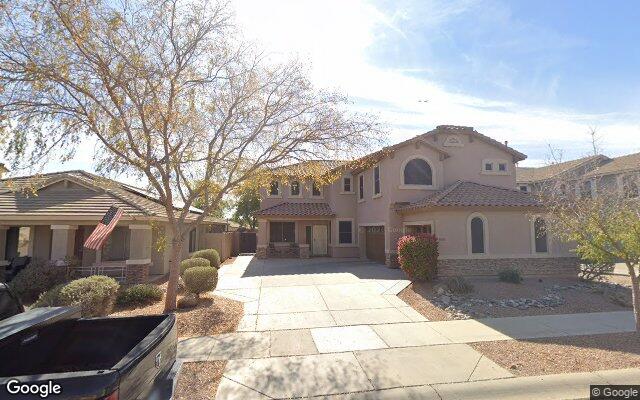
Full Inspection Record
Family reviews
No reviews yet — be the first to share your experience