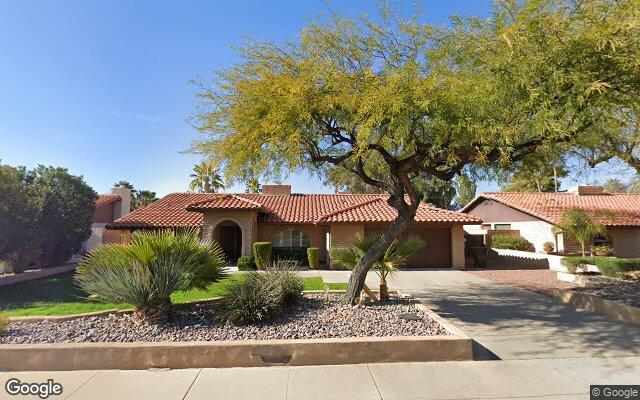
Holistic Home Sweetwater.
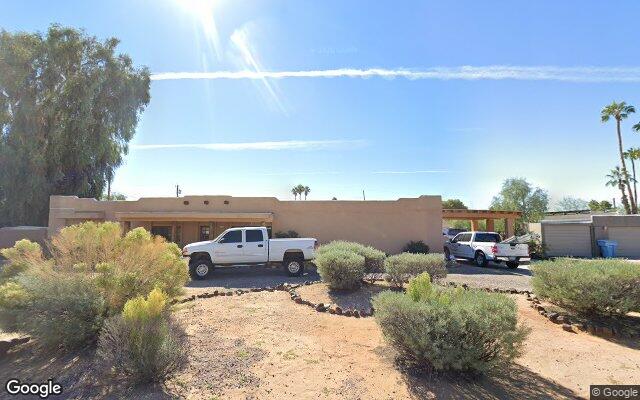
A medium home, reviewed on public record.
© Google Street View
Compared to 1,661 Arizona facilities with a similar number of beds.
Care · 36-month window. Higher percentile = better performance on inspection record. Source: Arizona Dept. of Health Services · Bureau of Residential Facilities Licensing.
among peers to rank.
Rankings based on 36-month ADHS inspection data. Severity and frequency: fewer citations = higher percentile. Repeat rate: lower repeat citation share = higher percentile.
Citation history, plotted month by month.
7 deficiencies on record. Each bar is a month with a citation.
Finding distribution
7 total · 36 monthsScope × Severity (CMS A–L)
Every inspection visit, verbatim.
1 inspection in the public record, most recent first. Plain-language summaries open first — click into any row for the full citation text.
2025-10-30Annual Compliance VisitA.A.C. · 7 findings
“Based on documentation review, record review, and interview, the assisted living home failed to complete and maintain a standardized form for each resident that included the required information prescribed in subsection A of A.R.S. § 36-420.04 (except for the information prescribed in subsection A.1), to be provided at the time the emergency responder is contacted, for two of two residents reviewed. The deficient practice posed a risk if the emergency responder was not aware of critical health information for the resident. Findings include: 1. A review of the facility's policies and procedures revealed a policy titled "Emergency Responder." The policy stated, "1. A folder, 'Special Emergency Resident Medical Record' is created and placed at the top of each Resident Record Binder and kept at the facility. 2. 'Special Emergency Resident Medical Record' folder contains the following facility forms, completed for each particular Resident: a. Emergency Medical Information - Healthcare Directives; b. Current Medications List; c. Preliminary Admission Information; d. Resident Health History; e. Copy of Health Insurance Card; f. Release and Consent Form signed by resident...4. 'Special Emergency Resident Medical Record' folder is checked as necessary or at least once every three months...." 2. A review of R1's medical record binder did not reveal a "Special Emergency Resident Medical Record" folder, nor was there a standardized form that contained all of the requirements of A.R.S. § 36-420.04. 3. A review of R2's medical record binder did not reveal a "Special Emergency Resident Medical Record" folder; however, in the front section of R2's medical record was R2's Advanced Directive form, a print out of R2's face sheet, and a Medication Administration Record (MAR). 4. In an interview, when asked what the caregiver would do in the event of an emergency where 911 needed to respond, E3 explained E3 would print out the face sheet from the electronic record and print out the current MAR, which would show all current medications and the last times of administration. 5. In an interview, E3 acknowledged the facility did not have a "Special Emergency Resident Medical Record" folder as indicated by the facility's policies and procedures, nor was there a standardized form that contained all of the requirements of A.R.S. § 36-420.04, to include a section for the reason the emergency responder was requested on behalf of the patient.”
“Based on observation, documentation review, record review, and interview, the manager failed to designate, in writing, a caregiver who was present on the assisted living facility’s premises and accountable for the assisted living facility when the manager was not present on the assisted living facility premises. The deficient practice posed a risk as no individual was designated to act on behalf of the governing authority in the onsite management of the assisted living facility. Findings include: 1. Upon arrival, the Compliance Officer observed only E3 and E4 working as caregivers in the home. E3 reported that E3 would call E2 to come to the home. Approximately 30 minutes later, E2 arrived on-site. 2. Upon observation, the Compliance Officer observed a posting on the wall titled "Delegation of Authority," which designated O1 as the acting manager "Pursuant to...R9-10-803 sub-section A-3." However, R9-10-803.A.3 is related to the designated caregiver in charge of the facility, not who will serve as an acting manager when the current manager would not be present at the facility for more than 30 days. The posting also stated that "Pursuant to...R9-10-803 sub-section A-6, the following individuals are designated to be present and accountable for the assisted living when the manager or designee are not present: Lead Care Partner who is 21 years of age or older." R9-10-803.A.6 is related to the designated "acting manager" who would serve as the manager when the current manager would not be present at the facility for more than 30 days. R9-10-803.A.6 also requires that the designated individual have a certificate as an assisted living facility manager issued under A.R.S. § 36-446.04(C) or a temporary certificate as an assisted living facility manager issued under A.R.S. § 36-446.06. The form was signed by E1 and dated June 16, 2022. 3. An online check of the NCIA board showed no record of O1 ever having a manager's license. Through correspondence with O2 from the NCIA board, the Compliance Officer confirmed that O1 has no record of ever having a manager's license. 4. A review of E2, E3, and E4's personnel records each revealed forms titled "Delegation of Manager's Authority"; however, none of them had been completed and signed by the E1. 5. Despite the wrong rule being cited for the appropriate delegation of manager's authority on the posting referred to in finding #2, the additional verbiage indicated that the manager intended to have the Lead Care Partner serve as the manager designee. However, a review of facility documentation revealed there was no indication in any of the personnel records or on the employee schedule that indicated who was considered a "Lead Care Partner." 6. A review of a facility binder revealed a form titled, "Delegation of Authority - R9-10-803," which stated E1 was the administrator, governing authority, and manager of the assisted living home. The form also indicated that E2 would serve as the manager's designee. The form was signed by both E1 and E2 and dated June 15, 2022. 7. In an interview, E2 acknowledged the manager failed to designate, in writing, a caregiver who was present on the assisted living facility’s premises and accountable for the assisted living facility when the manager was not present on the assisted living facility premises. E2 confirmed that E3 and E4 were not intended to be manager designee's as they were both fairly new, and that E1 simply used the "Delegation of Manager's Authority" form as part of the hiring paperwork for all staff, but would not put it into effect as evidenced by no manager's signature or date that the authorization began.”
“Based on observation, documentation review, and interview, the manager failed to ensure that documentation was maintained of the caregivers and assistant caregivers working each day, including the hours worked by each, for one of two personnel reviewed. Findings include: 1. Upon arrival to the facility, the Compliance Officer observed E3 and E4 each working independently with residents in different areas of the home. 2. A review of facility documentation revealed monthly schedules for 2025. E3 was documented on the schedule for the day and time of the inspection; however, E4 was not. E4's name did not appear at all on the August, September, or October 2025 schedule. E4's date of hire was August 25, 2025. 3. In an interview, E2 acknowledged that E4 was not listed on the schedule to work, nor had E4's name ever been added to the electronic schedule system, specifically under the tab for "Employee names." E2, E3, and E4 all confirmed that E4 had been working as a caregiver. E2 further explained that E4 was not listed on the schedule in September because E4 was training and shadowing during that month; however, no additional information was provided regarding the month of October 2025. 4. Technical assistance was provided on this rule at the compliance inspection conducted on August 29, 2023.”
“Based on record review, documentation review, and interview, the manager failed to ensure that a resident provided evidence of freedom from infectious tuberculosis before or within seven calendar days after the resident’s date of occupancy, and as specified in R9-10-113, for one of two residents sampled. The deficient practice posed a potential TB exposure risk to residents. Findings include: 1. A review of R2's medical record revealed no documentation of evidence of freedom from infectious TB to include a TB Screening and Risk Assessment. Based on R2's date of admission, this documentation was required. 2. An off-site review of documentation provided by E2 revealed a chest x-ray that made no mention of documentation of being free from TB. Additionally, there was no evidence of a positive TB skin test to indicate the need for a chest x-ray. Furthermore, there was no TB Screening and Risk Assessment. 3. A review of the facility's policies and procedures revealed a policy titled "Tuberculosis (TB) Control - Tuberculosis Screening." The policy stated, "3. Baseline Screening will be required of all...new residents. 4. TB Screening is a process that includes an individual risk assessment, a symptom evaluation, a TB test (e.g., a TB blood test or a TB skin test)...." The policy continued to state under "Procedure: Baseline TB Screening...2. Before admission or on the day of admission all residents will be required to complete TB Screening and a risk assessment on a facility form called 'Tuberculosis (TB) Screening and Risk Assessment.' Baseline TB Testing: Blood Test or Tuberculin Skin Tests (TST) for those who do not have a prior history of TB infection or disease." 4. In an interview, E3 acknowledged R2's medical record did not provide evidence of freedom from infectious TB, as well as the TB Screening and Risk Assessment as specified in R9-10-113. 5. Technical assistance was provided on this rule at the compliance inspection conducted on August 29, 2023.”
“Based on observation, interview, and record review, for an assisted living facility authorized to provide directed care services, in order to retain a resident who was confined to a bed or chair because of an inability to ambulate, the manager failed to obtain appropriate determination from a primary care provider or other medical practitioner stating that they had examined the resident, reviewed the assisted living facility's scope of services, and determined that the resident's needs could be met by the assisted living facility, for two of two applicable residents reviewed. The deficient practice posed a risk if the facility was unable to meet the residents' needs. The deficient practice also posed a risk as the Department was provided false or misleading information. Findings include: 1. During the environmental tour, the Compliance Officer observed R1 and R2 to be non-ambulatory. 2. In an interview, E3 reported both R1 and R2 were non-ambulatory. 3. A review of R1's and R2's medical records revealed current "Request to Remain" forms; however, they had both been completed on a photocopied template containing the doctor's photocopied signature. R1's most current form was dated June 1, 2025, and R2's most current form was dated September 1, 2025. 4. Further review of R2's medical record revealed the same form had been used for June 4, 2024; December 2, 2024; and December 15, 2024, which also had R2's representative's photocopied signature. Further review of R2's medical record revealed the blank template containing both the representative's signature and the doctor's signature. 5. In an interview, E3 was made aware of and acknowledged several discrepancies in the medical records. No additional information was provided.”
“Based on documentation review, observation, and interview, the manager of an assisted living facility authorized to provide directed care services failed to ensure that both the main entrance and the main back door of the facility alerted employees of the egress of a resident from the facility. The deficient practice posed a risk if the facility was unaware of the general or specific whereabouts of a resident. Findings include: 1. A review of department documentation revealed the facility was licensed for directed care. 2. Upon arrival at the facility, the Compliance Officer found the front door unlocked and open because a resident had just been taken out via wheelchair by a transport company for an appointment. 3. The Compliance Officer entered the opened front door and waited in the foyer area as no caregivers were present in the current area. A family member of the resident who had just left offered to go find a caregiver. While waiting, the Compliance Officer closed the front door and found a single key in the dead bolt. The Compliance Officer then re-opened to the door to listen for an alert as there was an alert device installed on the top of the door; however, the device was not turned on and the door did not alert when opened. 4. While setting up for the inspection, the Compliance Officer observed E3 assist R3 in a wheelchair outside to the backyard to feed the birds. Just before opening the back door, E3 reached up and attempted to turn on the alert device on the back door; however, when E3 opened the door the alert did not go off. E3 then closed the door, adjusted the device again, then reopened the back door, which created a loud, on-going alert. 5. During the environmental tour, the Compliance Officer observed a second door that led to the backyard which also had an alert device on it. That device was on and when the door would open, a single chime could be heard similar to the sound of a door bell. 6. While on-site, the Compliance Officer observed a family member go outside through the main back door to visit with R3 who had gone outside earlier to feed the birds. When the family member open the door, they appeared stunned at the alert and said, "that's the first I've ever heard of that." 7. A review of the facility's policies and procedures revealed a policy titled "Safety of Wandering Residents." The policy stated, "4. Caregivers will maintain security of locks on the front door, gates entering into the yard and hazardous areas at all times. 5. If alarms are being used on doors and/or windows, the caregiver will check them daily for operation and security. Alarms that are triggered will be investigated immediately by the caregiver on duty." Further review revealed another policy titled "Whereabouts of a Resident." The policy stated, "1. Exit doors and windows to the outside of the facility that a wandering resident might exit through will be alarmed to alert employees in the event that a resident is wandering. Facility personnel will check daily to ensure the alarms are functioning correctly." 8. In an interview, E2 acknowledged both the main front and back doors had alert devices installed on them but the alarms were not turned on when the Compliance Officer arrived on-site. E2 also acknowledged that E3 turned on the device to the backdoor while the Compliance Officer was there.”
“Based on documentation review and interview, the manager failed to ensure that the disaster plan required in subsection (A)(1) was reviewed at least once every 12 months. Findings include: 1. A review of the facility's policies and procedures revealed a policy titled "Disaster Plan, Relocation, Records, Medication, Food and Water." The policy contained an attestation page that indicated when the plan was last reviewed. According to the documentation, E1 last reviewed the plan on April 29, 2024. 2. In an interview, E3 acknowledged the disaster plan had not been reviewed at least once every 12 months.”
1 older inspection from 2023 are not shown above.
Get the complete record, translated into plain language — emailed to you.
Other facilities in Scottsdale.
Other memory care facilities near Scottsdale with similar care offerings.
Contract Decoder
Family reviews
No reviews yet — be the first to share your experience