A R D C Scottsdale Home.
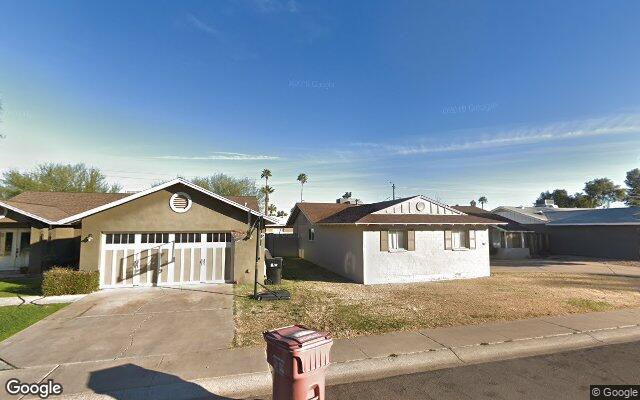
A medium home, reviewed on public record.
© Google Street View
Compared to 1,661 Arizona facilities with a similar number of beds.
Care · 36-month window. Higher percentile = better performance on inspection record. Source: Arizona Dept. of Health Services · Bureau of Residential Facilities Licensing.
among peers to rank.
Rankings based on 36-month ADHS inspection data. Severity and frequency: fewer citations = higher percentile. Repeat rate: lower repeat citation share = higher percentile.
Citation history, plotted month by month.
19 deficiencies on record. Each bar is a month with a citation.
Finding distribution
19 total · 36 monthsScope × Severity (CMS A–L)
Every inspection visit, verbatim.
6 inspections in the public record, most recent first. Plain-language summaries open first — click into any row for the full citation text.
2026-07-14Complaint InvestigationNo findings
2026-02-06Complaint InvestigationNo findings
2025-10-30Complaint InvestigationA.A.C. · 5 findings
“Based on documentation review, observation, record review, and interview, the governing authority failed to administer a training program for all staff regarding fall prevention and fall recovery. The deficient practice posed a risk if a staff member was not properly trained to assist a resident who had fallen and was unable to recover independently. Findings include: 1. Review of the facility’s policies and procedures revealed a policy titled, “Fall Prevention and Fall Recovery" which stated, “This facility shall develop an initial training conduct and administer continued competency Training in Fall Prevention and fall recovery.” This policy does not define what continued competency is. 2. The Compliance Officer observed E2 and E3 working at the time of the inspection. 3. Review of E1’s personnel record revealed no documentation for fall prevention and fall recovery initial training and continued competency training. Based on E1’s hire date this documentation was required. 4. Review of E3’s personnel record revealed E3 was hired as a caregiver. The review revealed a “CERTIFICATE of COMPLETION” including “Fall Risk / Prevention and Recovery” from a third party company dated as issued on May 24, 2024, several months before E3 was hired at this facility as a caregiver. The review revealed no initial training upon hire or continued competency training thereafter. 5. In an exit interview, the findings were reviewed with E4 and no additional information was provided. This is a repeat citation from the inspection conducted on April 16, 2025, and an uncorrected deficiency from the inspection on October 20, 2025.”
“Based on record review and interview, the health care institution failed to provide appropriate first aid to a non-injured resident who had fallen, appeared to be uninjured, and was unable to reasonably recover independently, for one of five residents sampled. The deficient practice posed a risk to the resident's safety and wellbeing. Findings include: 1. Review of R5’s medical record revealed a document titled “Notes” which stated: September 15, 2025, “The caregiver informed this writer (E1) that the resident had bruising on the arm due to getting out of bed/ an unwitnessed fall.” September 22, 2025, “[R5] was combative, trying to punch and kick the staff when attempting to change his brief… In [R5’s family member’s] message, [R5’s family member] provided pictures of bruising to [R5], along [R5’s] arms and legs.” September 23, 2025, “This writer (E1) notified [R5’s family member] at 7:45 a.m. via text after receiving updates from the caregiver that the resident had an unwitnessed fall from the bed at 4 a.m. According to the caregiver’s report, there are no visible bruises at this time. [R5’s family member] replied at 8:25 a.m., stating that [R5’s family member] was at the home and had also been informed by ‘they’ of the fall. [R5’s] family members also inquired about incident reports in the event of injuries/ incidents. The writer asked who ‘they’ are, as the [R5’s family member] had mentioned ‘they let me know’. [R5’s family member] gave no further reply.” September 24, 2025, “ [R5’s family member] messaged this writer (E1) and informed me that [R5’s family member] was taking [R5] to the hospital via non-emergency as [R5’s] UTI symptoms were not being relieved, [R5] was very confused and complaining of pain… [R5’s family member] responded that [R5] had a broken hip, which is why [R5] was aggressive during brief changes.” 2. In an exit interview, the findings were reviewed with E4, and no additional information was provided.”
“Based on documentation review, observation, record review, and interview, the manager failed to ensure that an assistant caregiver interacted with residents under the supervision of a manager or caregiver. The deficient practice posed a risk as the individual was not qualified to provide the required services. Findings include: 1. The facility was licensed at the Directed Care Level. 2. A review of A.R.S. § 36-401.A.49. revealed "Supervision" means direct overseeing and inspection of the act of accomplishing a function or activity. 3. The Compliance Officer observed E2 and E3 working at the time of the inspection. 4. The Compliance Officer observed E2 putting on a glove and going into the common bathroom. Later E2 walked out with R4 and escorted R4 to R4’s room. E2 then helped R4 in R4’s room and left the door slightly ajar. E3 was talking to the visitors in another room. 5. Review of E2’s personnel record did not have the date of hire and role of the employee documented. A further review of E2’s personnel record revealed no documentation of completing a caregiver training program approved by the Department or the Board of Examiners for Nursing Care Institution Administrators and Assisted Living Facility Managers. 6. Electronic review of https://azcg.tmutest.com/ revealed no results for a caregiver certificate for E2. 7. In an interview, E3 reported R4 had a colostomy bag and needed help with it. 8. In an interview, E4 reported E2 was in the process of getting a caregiver certificate. 9. In an interview, E3 and E4 reported that E2 was an assistant caregiver. In another interview, E3 and E4 acknowledged E2 could not be alone with the residents without direct supervision from a caregiver. 10. In an exit interview, the findings were reviewed with E4 and no additional information was provided.”
“Based on record review and interview, the manager failed to ensure a resident accepted by the assisted living facility submitted documentation dated within 90 calendar days before acceptance and signed and dated by a medical practitioner or a registered nurse that stated whether the individual required continuous medical services, continuous or intermittent nursing services, or restraints, for one of five residents sampled. The deficient practice posed a risk if the facility was unable to meet a resident's needs. Findings include: 1. Review of R4's medical record revealed documentation that stated whether the resident required continuous medical services, continuous or intermittent nursing services, or restraints. However, this document was missing the date from the medical practitioner or a registered nurse. Based on R1’s acceptance date, this documentation was required. 2. In an exit interview, the findings were reviewed with E4 and no additional information was provided.”
“Based on record review and interview, the manager failed to ensure when a resident had an accident, emergency, or injury that resulted in the resident needing medical services, a caregiver documented any action taken to prevent the incident from occurring in the future. The deficient practice posed a potential risk of re-injury. Findings include: 1. Review of R5’s medical record revealed a document titled “Notes” which stated: September 15, 2025, “The caregiver informed this writer (E1) that the resident had bruising on the arm due to getting out of bed/ an unwitnessed fall.” September 24, 2025, “ [R5’s family member] messaged this writer (E1) and informed me that [R5’s family member] was taking [R5] to the hospital via non-emergency as [R5’s] UTI symptoms were not being relieved, [R5] was very confused and complaining of pain… [R5’s family member] responded that [R5] had a broken hip, which is why [R5] was aggressive during brief changes.” A further review of the document did not include any action taken to prevent the accident, emergency, or injury from occurring in the future. No other incident documentation was provided at the time of the inspection. 2. In an exit interview, the findings were reviewed with E4 and no additional information was provided. This is an uncorrected deficiency from the inspection conducted on October 20, 2025.”
2025-10-20Complaint InvestigationA.A.C. · 12 findings
“Based on documentation review, observation, interview, and record review, the governing authority failed to administer a training program for all staff regarding fall prevention and fall recovery. The deficient practice posed a risk if a staff member was not properly trained to assist a resident who had fallen and was unable to recover independently. Findings include: 1. A review of facility documentation revealed a policy and procedure (P&P) covering this rule. The P&P required initial training and continued competency training but did not include a timeframe for the continued competency training (e.g. every three months, every twelve months, etc.). 2. The Compliance Officer observed E1, E3, and E4 working at the facility. 3. In a series of interviews, E1 first reported the continued competency training was to be done every three months, then reported E1 was not sure how often the training needed to be conducted. E1 reported E1 was the governing authority and a caregiver; E2 was the manager; and E3, E4, and E5 were caregivers. E1 reported E5 no longer worked at the facility as of approximately one week before the date of the inspection. E3 confirmed E5 found a job at another facility. 4. A review of E1’s personnel record revealed no documentation demonstrating E1 received training regarding fall prevention and fall recovery, whether initial or continued. 5. A review of E2’s personnel record revealed E2 was hired as the manager. However, the review revealed no documentation demonstrating E2 received training regarding fall prevention and fall recovery, whether initial or continued. 6. A review of E3’s personnel record revealed E3 was hired as a caregiver. The review revealed a “CERTIFICATE of COMPLETION” including “Fall Risk / Prevention and Recovery” from a third party company dated as issued on May 24, 2024, several months before E3 was hired at this facility as a caregiver. The review revealed no initial training upon hire or continued competency training thereafter. 7. In an interview, when the Compliance Officer asked if E3 had received training regarding fall prevention and fall recovery from this facility this year, E3 stated, “No.” When the Compliance Officer asked if E3 had received such training from this facility since being hired at this facility, E3 stated, “No.” 8. A review of E4’s and E5’s personnel records revealed E4 and E5 were hired as caregivers. However, the review revealed no documentation demonstrating E4 and E5 received training regarding fall prevention and fall recovery, whether initial or continued. This is a repeat citation from the compliance inspection conducted on April 16, 2025.”
“Based on documentation review, observation. Interview, and record review, the chief administrative officer failed to establish and document tuberculosis (TB) infection control activities consistent with this rule and implement TB infection control activities including annually providing training and education related to recognizing the signs and symptoms of TB, for five of seven sampled employees. The deficient practice posed a potential TB exposure risk to residents. Findings include: 1. A review of CDC.gov revealed a webpage titled "Tuberculosis Screening, Testing, and Treatment of U.S. Health Care Personnel: Recommendations from the National Tuberculosis Controllers Association and CDC, 2019," published by the U.S. Department of Health and Human Services. The webpage stated: "The 2005 CDC recommendations for testing U.S. health care personnel have been updated and now include 1) TB screening with an individual risk assessment and symptom evaluation at baseline (preplacement); 2) TB testing with an interferon-gamma release assay (IGRA) or a tuberculin skin test (TST) for persons without documented prior TB disease or latent TB infection (LTBI); 3) no routine serial TB testing at any interval after baseline in the absence of a known exposure or ongoing transmission; 4) encouragement of treatment for all health care personnel with untreated LTBI, unless treatment is contraindicated; 5) annual symptom screening for health care personnel with untreated LTBI; and 6) annual TB education of all health care personnel." 2. A review of facility documentation revealed a policy and procedure (P&P) titled "TUBERCULOSIS (“TB”) TESTING." However, the P&P was not in compliance with Arizona Administrative Code R9-10-113 and the recommendations in "Tuberculosis Screening, Testing, and Treatment of U.S. Health Care Personnel: Recommendations from the National Tuberculosis Controllers Association and CDC, 2019." The P&P only required one TB test for personnel and did not cover assessing risks of prior exposure to infectious TB, determining if an individual had signs or symptoms of TB, annually providing training and education related to recognizing the signs and symptoms of TB to individuals employed by or providing volunteer services for the health care institution, and annually assessing the health care institution’s risk of exposure to infectious TB. 3. The Compliance Officer observed E1, E3, and E4 working at the facility. 4. In a series of interviews, E1 reported E1 was the governing authority and a caregiver; E2 was the manager; and E3, E4, and E5 were caregivers. E1 reported E5 no longer worked at the facility as of approximately one week before the date of the inspection. E3 confirmed E5 found a job at another facility. 5. A review of E1's personnel record revealed no documentation demonstrating E1 received initial training and education related to recognizing the signs and symptoms of TB. 6. A review of E2's personnel record revealed E2 was hired as the manager more than one year before the date of the inspection. However, the review revealed no documentation demonstrating E2 received training and education related to recognizing the signs and symptoms of TB, whether initially or annually thereafter. 7. A review of E3's personnel record revealed E3 was hired as a caregiver more than one year before the date of the inspection. The review revealed a “CERTIFICATE of COMPLETION” including “Tuberculosis Signs, Symptoms, Infection and Screening” from a third party company dated as issued on May 24, 2024, several months before E3 was hired at this facility as a caregiver. The review further revealed no documentation demonstrating E3 received training and education related to recognizing the signs and symptoms of TB, whether initially or annually thereafter. 8. In an interview, when the Compliance Officer asked if E3 had received training and education related to recognizing the signs and symptoms of TB from this facility this year, E3 stated, “No.” When the Compliance Officer asked if E3 had received such training from this facility since being hired at this facility, E3 stated, “No.” 9. A review of E4's and E5’s personnel records revealed E4 and E5 were hired as caregivers. However, the review revealed no documentation demonstrating E4 and E5 received initial training and education related to recognizing the signs and symptoms of TB. Technical assistance was provided on this rule during the compliance inspection conducted on April 16, 2025.”
“Based on documentation review, observation, interview, and record review, the governing authority failed to ensure compliance with Arizona Revised Statutes (A.R.S.) § 36-411(C), for six of seven sampled employees. The deficient practice posed a risk if the employees were a danger to a vulnerable population. Findings include: 1. A.R.S. § 36-411(C)(1-4) states: "C. Each residential care institution, nursing care institution and home health agency shall make documented, good faith efforts to: 1. Contact previous employers to obtain information or recommendations that may be relevant to a person's fitness to work in a residential care institution, nursing care institution or home health agency. 2. Verify the current status of a person's fingerprint clearance card. 3. Beginning January 1, 2025, verify that a potential employee is not on the adult protective services registry pursuant to section 46-459…4. On or before March 31, 2025, verify that each employee is not on the adult protective services registry pursuant to section 46-459.” 2. A review of facility documentation revealed a policy and procedure (P&P) titled “FINGERPRINT.” The P&P stated: “Owner or Manager of this assisted living facility must…make efforts to verify with the Department of Public Safety (DPS) the status of prospective employee’s fingerprint clearance card: For new employees, the hiring person will check online, call, fax, e-mail request for verification to DPS office.” 3. The Compliance Officer observed E1, E3, and E4 working at the facility. 4. In a series of interviews, E1 reported E1 took over as the governing authority in January 2025. E1 reported E1 worked as a caregiver; E2 was the manager; E3, E4, and E5 were caregivers; and E6 was an assistant caregiver. E1 reported E5 no longer worked at the facility as of approximately one week before the date of the inspection. E3 confirmed E5 found a job at another facility. 5. A review of the Arizona Corporation Commission website revealed E1 took office as the Chief Executive Officer (Governing Authority) on December 31, 2024, before A.R.S. § 36-411(C)(3) applied. 6. A review of E1's personnel record revealed no documentation demonstrating facility personnel made documented, good faith efforts to verify E1 was not on the adult protective services (APS) registry. 7. A review of the APS registry website revealed E1 was not on the registry. 8. A review of E2’s personnel record revealed E2 was hired as the manager before January 1, 2025. The review revealed an “APPLICATION FOR EMPLOYMENT” which listed two of E2’s previous employers, the contact information for those employers, and the names and contact information for three of E2’s previous coworkers. The review revealed documentation demonstrating facility personnel contacted only one of E2’s previous employers and three of E2’s previous coworkers. The review further revealed no documentation demonstrating facility personnel made documented, good faith efforts to verify E2 was not on the APS registry. 9. A review of the APS registry website revealed E2 was not on the registry. 10. In an interview, E3 reported E3 only had one previous employer. 11. A review of E3’s personnel record revealed E3 was hired as a caregiver before January 1, 2025. The review revealed an “Employment Application Form” which revealed E3 had one previous employer and included a place to document the good faith efforts to contact E3’s one previous employer. However, the form did not include documentation of the contact. The review revealed no other documentation demonstrating facility personnel contacted E3’s previous employer. The review revealed a current fingerprint clearance card (FCC). However, the review revealed no documentation demonstrating facility personnel made documented good faith efforts to verify the status of E3’s FCC. The review further revealed no documentation demonstrating facility personnel made documented, good faith efforts to verify E3 was not on the APS registry. 12. A review of the Department of Public Safety (DPS) website revealed E3's FCC was valid. 13. A review of the APS registry website revealed E3 was not on the registry. 14. A review of E4’s personnel record revealed E4 was hired as a caregiver after January 1, 2025. The review revealed an “Employment Application Form” which revealed E4 had one previous employer and included a place to document the good faith efforts to contact E4’s one previous employer. However, the form did not include documentation of the contact. The review revealed no other documentation demonstrating facility personnel contacted E4’s previous employer. The review revealed a current FCC. However, the review revealed no documentation demonstrating facility personnel made documented good faith efforts to verify the status of E4’s FCC. The review further revealed no documentation demonstrating facility personnel made documented, good faith efforts to verify E4 was not on the APS registry. 15. A review of the DPS website revealed E4's FCC was valid. 16. A review of the APS registry website revealed E4 was not on the registry. 17. A review of E5’s personnel record revealed E5 was hired as a caregiver after January 1, 2025. The review revealed an “Employment Application Form” which revealed E5 had two previous employers and included a place to document the good faith efforts to contact E5’s previous employers. However, the form did not include documentation of the contact. The review revealed no other documentation demonstrating facility personnel contacted E5’s previous employers. The review revealed a current FCC. However, the review revealed no documentation demonstrating facility personnel made documented good faith efforts to verify the status of E5’s FCC. The review further revealed no documentation demonstrating facility personnel made documented, good faith efforts to verify E5 was not on the APS registry. 18. A review of the DPS website revealed E5's FCC was valid. 19. A review of the APS registry website revealed E5 was not on the registry. 20. In an interview regarding the documentation of contacting E5’s previous employers on the application, E1 stated, “I’m going to tell [E2] this should have been filled out.” 21. In a separate interview, E1 reported E6 worked at another assisted living facility before working at this facility. 22. A review of E6’s personnel record revealed E6 was hired as an assistant caregiver after January 1, 2025. The review revealed no documentation demonstrating facility personnel contacted E6’s previous employer(s). The review revealed a current FCC. However, the review revealed no documentation demonstrating facility personnel made documented good faith efforts to verify the status of E6’s FCC. The review further revealed no documentation demonstrating facility personnel made documented, good faith efforts to verify E6 was not on the APS registry. 23. A review of the DPS website revealed E6's FCC was valid. 24. A review of the APS registry website revealed E6 was not on the registry. 25. In the exit interview, the Compliance Officer reviewed the findings with E1 and E1 offered no further comment. This is a repeat citation from the compliance inspection conducted on April 16, 2025.”
“Based on interview, documentation review, and record review, the governing authority failed to ensure a caregiver provided documentation of completion of a caregiver training program approved by the Department or the Board of Examiners for Nursing Care Institution Administrators and Assisted Living Facility Managers (NCIA Board), for one of four caregivers sampled. The deficient practice posed a risk if the individual was not qualified to provide the required services. Findings: 1. In an interview, E1 reported E5 had been a caregiver. E1 reported E5 no longer worked at the facility as of approximately one week before the date of the inspection. E3 confirmed E5 found a job at another facility. 2. A review of facility documentation revealed a policy and procedure (P&P) titled "APPLICANT AND EMPLOYEE REQUIREMENT.” The P&P stated: “Upon being hired by the facility the applicant must: Be certified in the level of care services the Assisted Living Facility is licensed to provide (Supervisory, Personal, Directed).” The review further revealed a personnel schedule which indicated E5 worked as a caregiver in October 2025. 3. A review of E5's personnel record revealed E5 was hired as a caregiver. The review revealed a photocopy of a caregiver certificate reportedly given by Comprehensive Training Services, LLC on August 31, 2010. However, E5's name was in a different font than the surrounding text and a faint, short vertical line preceded E5's name, as if E5’s name had been printed on another sheet of paper, cut out, attached to another individual’s certificate, and then the certificate was copied with the certificate now showing E5’s name. The review revealed an “Employment Application Form” which indicated E5 had worked at a hotel and casino from March of 2010 to 2014 or 2015 then at a food establishment from 2019 to 2025 before being hired at this facility. The application revealed no documentation demonstrating E5 had prior experience working as a caregiver. 4. In an interview, E1 acknowledged the inconsistencies in E5's certificate but offered no further comment.”
“Based on documentation review, observation, interview, and record review, the manager failed to ensure a caregiver’s or an assistant caregiver’s skills and knowledge were verified and documented before the caregiver or assistant caregiver provided physical health services, for five of six sampled applicable personnel members. The deficient practice posed a risk if a caregiver or an assistant caregiver did not have the skills and knowledge necessary to meet a resident's needs. Findings include: 1. A review of facility documentation revealed a policy and procedure (P&P) titled "STAFFING and RECORD KEEPING” which stated: “Each employee hired by this facility must have the following on Employee’s file: 5. Verification of skills and Knowledge.” The review further revealed a P&P titled “APPLICANT AND EMPLOYEE REQUIREMENT” which stated: “Upon being hired by the facility the applicant must: Verification of qualifications, knowledge, and skills to perform the duties of the job hired for.” 2. The Compliance Officer observed E1 and E4 working at the facility. 3. In a series of interviews, E1 reported E1 was the governing authority and a caregiver, E4 and E5 were caregivers; and E6 and E7 were assistant caregivers. E1 reported E5 no longer worked at the facility as of approximately one week before the date of the inspection. E3 confirmed E5 found a job at another facility. 4. A review of E1’s personnel record revealed no documentation demonstrating the manager verified and documented E1’s skills and knowledge. 5. A review of E4’s personnel record revealed E4 was hired as a caregiver. The review revealed “CAREGIVER SKILLS and KNOWLEDGE DOCUMENTATION” which included the skills and knowledge to be verified by the manager and a place for the manager to document whether E4 was competent in that skill or knowledge. However, other than E4’s name and signature, the form was left blank. The review further revealed a similar document titled “CAREGIVER SKILLS DOCUMENTATION.” However, this document was also left blank. The review further revealed no other documentation demonstrating the manager verified and documented E4’s skills and knowledge. 6. A review of E5’s personnel record revealed E5 was hired as a caregiver. The review revealed “CAREGIVER SKILLS and KNOWLEDGE DOCUMENTATION” which included the skills and knowledge to be verified by the manager and a place for the manager to document whether E5 was competent in that skill or knowledge. However, other than E5’s name and signature, the form was left blank. The review revealed no other documentation demonstrating the manager verified and documented E5’s skills and knowledge. 7. A review of E6’s and E7’s personnel records revealed E6 and E7 were hired as assistant caregivers. However, the review revealed no documentation demonstrating the manager verified and documented E6’s and E7’s skills and knowledge. 8. A review of facility documentation revealed a personnel schedule which indicated E6 and E7 worked in October 2025. 9. In the exit interview, the Compliance Officer reviewed the findings with E1 and E1 offered no further comment.”
“Based on documentation review, interview, observation, and record review, the manager failed to ensure a caregiver and an assistant caregiver provided evidence of freedom from infectious tuberculosis (TB) on or before the date the individual began providing services at or on behalf of the assisted living facility as specified in Arizona Administrative Code (A.A.C.) R9-10-113, for four of seven sampled personnel members. The deficient practice posed a potential TB exposure risk to residents. Findings include: 1. R9-10-113(A)(2)(a)(i-iii) states: "If a health care institution is subject to the requirements of this Section, as specified in an Article in this Chapter, the health care institution's chief administrative officer shall ensure that the health care institution establishes, documents, and implements tuberculosis infection control activities that...2. Include: a. For each individual who is employed by the health care institution…and who is subject to the requirements of this Section, screening, on or before the date specified in the applicable Article of this Chapter, that consists of i. Assessing risks of prior exposure to infectious tuberculosis, ii. Determining if the individual has signs or symptoms of tuberculosis, and iii. Obtaining documentation of the individual's freedom from infectious tuberculosis according to subsection (B)(1)." 2. R9-10-113(B)(1)(a)(i) states: "B. A health care institution's chief administrative officer shall: 1. For an individual for whom baseline screening and documentation of freedom from infectious tuberculosis is required by an Article in this Chapter, as specified in subsection (A)(2)(a), obtain one of the following as evidence of freedom from infectious tuberculosis: a. Documentation of a negative Mantoux skin test or other tuberculosis screening test that: i. Is recommended by the U.S. Centers for Disease Control and Prevention (CDC)." 3. A review of the CDC website revealed a web page titled "Baseline Tuberculosis Screening and Testing for Health Care Personnel." The web page stated: "If the Mantoux tuberculin skin test (TST) is used for baseline testing of health care personnel, use two-step testing. Purpose: Two-step testing is recommended for the initial TB skin test for adults who may be tested periodically, such as health care personnel." 4. A review of facility documentation revealed a policy and procedure titled “TUBERCULOSIS (“TB”) TESTING.” The P&P stated: “All employees and residents of this facility are required to provide one of the following [on] admission or starting date of employment and annually thereafter: 1. A report of a negative Mantoux Tuberculin (TB) skin test and blood tests are recommended within 12 months of the date of employment or residence in the facility or 2. A written and signed physician’s statement dated within 12 months of employment or residence in the facility indicating freedom from pulmonary tuberculosis, if the individual has a positive skin test for tuberculosis.” The P&P continued: “The TB test must be BOTH administered AND read prior to the individual being accepted as a resident or as an employee, providing services to residents, or moving into the facility, as appropriate. Employment or admission will be contingent upon compliance with the screening parameters of the policy.” 5. The Compliance Officer observed E1, E3, and E4 working at the facility. 6. In a series of interviews, E1 reported E1 was the governing authority and a caregiver, E3 and E4 were caregivers, and E7 was an assistant caregiver. 7. A review of E1’s personnel record revealed no documentation assessing risks of prior exposure to infectious TB and determining if E1 had signs or symptoms of TB. 8. A review of E3’s and E4’s personnel records revealed E3 and E4 were hired as caregivers. However, the review revealed no negative TB tests and no documentation assessing risks of prior exposure to infectious TB and determining if E3 and E4 had signs or symptoms of TB. 9. A review of E7’s personnel record revealed E7 was hired as an assistant caregiver. However, the review revealed no negative TB tests and no documentation assessing risks of prior exposure to infectious TB and determining if E7 had signs or symptoms of TB. 10. A review of facility documentation revealed a personnel schedule which indicated E1, E3, E4, and E7 worked in October 2025. 11. In the exit interview, the Compliance Officer reviewed the findings with E1 and E1 offered no further comment. This is a repeat citation from the complaint and compliance inspections conducted on May 16, 2023.”
“Based on documentation review, interview, and record review, the manager failed to ensure the manager provided current documentation of first aid training certification specific to adults before providing assisted living services to a resident, for one of one manager. The deficient practice posed a risk if a manager was unable to meet a resident's needs during an emergency. Findings include: 1. A review of facility documentation revealed a policy and procedure (P&P) titled “CPR AND FIRST AID.” The P&P stated: “ In order to keep First Aid and CPR training and skills up to date, it is required that each employee and volunteer to provide the following: 1. Documentation that verifies the employee or volunteer has received CPR and First Aid training…6. The time frame in retaining is determined by the training agency used or the expiration: date shown on the card.” The review revealed a P&P titled “APPLICANT AND EMPLOYEE REQUIREMENT.” The P&P stated: “After being hired by this facility the employee shall ensure: The employee shall ensure that all required TB, CPR, first aid, and fingerprint clearance documentation is kept current and not allowed to lapse.” 2. In an interview, E1 reported E2 was the manager and often worked shifts as a caregiver. 3. In a telephonic interview, E2 confirmed E2 worked shifts as a caregiver. 4. A review of E2’s personnel record revealed E2 was hired as the manager. The review revealed a printout of a first aid training certification dated as expired on October 31, 2024, as well as a picture of a first aid training certification dated as issued on November 20, 2024. However, the review revealed no first aid training certification between November 1, 2024, and November 19, 2024. 5. In an interview, the Compliance Officer asked if E2 had first aid training certification between November 1, 2024, and November 19, 2024. E1 reported E1 would have to contact E2 to find out. By the end of the inspection, E1 and E2 provided no further documentation in compliance with this rule.”
“Based on documentation review, observation, and interview, the manager failed to ensure a resident's medical record was protected from loss, damage, or unauthorized use. The deficient practice posed a risk of protected sensitive resident health information being disclosed without the resident's consent or knowledge. Findings include: 1. A review of facility documentation revealed a policy and procedure (P&P) titled “RESIDENT MEDICAL RECORDS INCLUDING ELECTRONIC RECORDS." The P&P stated, "A resident's medical record is protected from loss, damage, or unauthorized use." The review further revealed a P&P titled "RECORDS MANAGEMENT." The P&P stated: "1. All records, including legal documents, resident information, employee information, contracted services and financial information shall be maintained in locked cabinets and/or in a locked room in the Facility…4. Access to records shall be restricted to authorized personnel, including Owner, Manager and Caregiver[s] only." 2. The Compliance Officer observed a posting on a wall between the kitchen and the dining room titled "Shower Schedule." The Compliance Officer observed the posting included the names of the residents and the days of the week the residents received either a shower or a bed bath. 3. In an interview, E1 acknowledged the residents’ medical records were not protected from loss, damage, or unauthorized use. This is a repeat citation from the complaint and compliance inspections conducted on May 16, 2023.”
“Based on documentation review, record review, and interview, the manager failed to ensure a resident's medical record contained documentation of medication administered to the resident that included the name and signature of the individual administering the medication, for eight of nine total residents. Findings include: 1. A review of facility documentation revealed a policy and procedure (P&P) titled “MEDICAL RECORD ENTRIES.” The P&P stated, “All entries must be dated, legible, and authenticated.” The P&P continued, “ALWAYS put the date, time and signature on each entry.” 2. A review of R1’s, R2’s, R3’s, R4’s, R5’s, R7’s, R8’s, and R9’s medical records revealed medication administration records (MARs) dated October 2025. The MARs revealed an individual with initials “AS” administered medications to each of the eight residents. The MARs revealed “AS” administered medications on October 1-7, 10-13, and 17-20, 2025. However, the MARs further revealed “AS” to be the initials of “ARDC Scottsdale Home” and not of an individual person. 3. In a telephonic interview, when the Compliance Officer asked who “AS” or “ARDC Scottsdale Home” referred to, E2 stated, “That’s only me.” When the Compliance Officer repeated what E2 had said, E2 clarified, stating, “Myself or [E1].” E2 reported only E1 and E2 had access to the “ARDC Scottsdale Home” login and account. 4. A review of facility documentation revealed a personnel schedule dated October 2025. However, the schedule did not include E1 and E2. 5. In an interview, E1 reported the personnel schedule was not entirely accurate. E1 reported E1 would provide the Compliance Officer with an updated personnel schedule. 6. A review of facility documentation revealed the updated personnel schedule provided by E1. However, the schedule revealed the following: - No documentation of E1 working on October 1-7, 10-13, and 17, 2025; - E1 worked from 6:00 AM to 6:00 PM on October 18-19, 2025; and - No documentation of E2 working. 7. A comparison of R1’s, R2’s, R3’s, R4’s, R5’s, R7’s, R8’s, and R9’s MARs with the personnel schedule revealed no documentation of the name and signature of the individual administering or providing assistance in the self-administration of medication under the “ARDC Scottsdale Home” account on October 1-7, 10-13, and 17, 2025. The review further revealed no such documentation for the medications administered on October 18-19, 2025, at 8:00 PM. 8. In an interview, E1 acknowledged the aforementioned MARs did not contain documentation of the name and signature of the individual administering or providing assistance in the self-administration of medication under the “ARDC Scottsdale Home” account.”
“Based on documentation review, observation, and interview, the manager failed to ensure a means of exiting the facility for a resident who did not have a key, special knowledge for egress, or the ability to expend increased physical effort that monitored or alerted employees of the egress of a resident from the facility. The deficient practice posed a risk if the facility was unaware of the egress of a resident from the facility. Findings include: 1. A review of Department documentation revealed the facility was authorized to provide directed care services. 2. The Compliance Officer observed a front door, a back sliding glass door leading from the dining room to the back yard, and a back door leading from the kitchen to the back yard. The Compliance Officer observed alerts installed on all three doors. However, upon opening the doors, the Compliance Officer heard no alert. The Compliance Officer further observed no monitoring system in place. 3. A review of facility documentation revealed no policy and procedure regarding monitoring resident egress. 4. In a series of interviews, E3 reported the alerts had been working the morning of the inspection. E1 reported the alerts were connected to the internet and the facility was having issues with internet connection. E1 reported E1 would try to fix the alerts. 5. The Compliance Officer observed E1 and E3 working on the alerts. Afterward, the Compliance Officer observed the alerts on the front door and back sliding glass door were sounding. However, the alert on the back kitchen door did not sound.”
“Based on interview and documentation review, the manager failed to ensure when a resident had an accident, emergency, or injury that resulted in the resident needing medical services, a caregiver or an assistant caregiver documented the items required by this rule. The deficient practice posed a potential risk of re-injury. Findings include: 1. In an interview, E1 reported two residents were currently in the hospital. 2. A review of facility documentation revealed a series of “Quality Management Program Quarterly (or As Needed) Summary Report Form[s]” dated between January 2025 and September 2025. Each form included a section for “Incidents requiring the response of emergency services (fire department, paramedics, police, etc.).” The forms revealed seven incidents meeting this criteria. However, the review revealed no incident reports or other documentation in compliance with this rule for the seven incidents. 3. In an interview, after looking for the incident reports, E3 stated, “I can’t find any.””
“Based on documentation review, observation, and interview, the manager failed to ensure poisonous or toxic materials stored by the assisted living facility were maintained in a locked area inaccessible to residents. The deficient practice posed a risk to residents with access to the poisonous or toxic materials. Findings include: 1. A review of facility documentation revealed a policy and procedure (P&P) titled "FACILITY GROUNDS SAFE AND FREE OF HAZARDS." The P&P stated: "The facility manager and/or that [sic] owner and staff will ensure that all poisonous or toxic materials (this is to include all cleaning supplies) will be stored and maintained in labeled containers in a locked area separate from food preparation and storage, dining areas and medications." 2. The Compliance Officer observed two cans of paint on the back patio next to the sliding glass door. The Compliance Officer observed a freestanding cabinet on the back patio next to a door leading from the kitchen area to the back yard. The Compliance Officer observed a lock sitting in the latch installed on the cabinet. However, the cabinet was unlocked. Inside the cabinet, the Compliance Officer observed a variety of poisonous or toxic materials, including air freshener, bathroom cleaner, bleach, grout cleaner, laundry detergent, multi-purpose cleaner, multi-surface cleaner, odor eliminator, and window cleaner. 3. In an interview regarding the unlocked cabinet, E1 stated, "I told [the caregivers] a couple of times they gotta lock it." 4. The Compliance Officer observed an unlocked shed in the back yard. Upon opening the shed, the Compliance Officer observed several cans of paint. Technical assistance was provided on this rule during the complaint and compliance inspection conducted on May 16, 2023.”
2025-06-20Other VisitNo findings
2025-04-16Annual Compliance VisitA.A.C. · 2 findings
“Based on the record review and interview, the manager failed to ensure that the healthcare institution administered a training program for all staff regarding fall prevention and fall recovery, which included both initial training and continued competency training for one of the three personnel sampled. The deficient practice posed a health and safety risk for residents. Findings include: 1. A review of E3's personnel records revealed no fall prevention and fall recovery training documentation was available for the Compliance Officer to review. 2. In an interview, E1 acknowledged that the facility failed to administer a training program for staff regarding fall prevention and fall recovery.”
“Based on documentation review, record review, and interview, the governing authority failed to ensure compliance with Arizona Revised Statutes (A.R.S.) § 36-411(A), for one of three sampled employees. The deficient practice posed a risk if the individual was a danger to a vulnerable population. Findings include: 1. A.R.S. § 36-411(A) states, "A. Except as provided in subsection F of this section, as a condition of licensure or continued licensure of a residential care institution, a nursing care institution or a home health agency and as a condition of employment in a residential care institution, a nursing care institution or a home health agency, employees and owners of residential care institutions, nursing care institutions or home health agencies or contracted persons or volunteers who provide medical services, nursing services, behavioral health services, health-related services, home health services or supportive services and who have not been subject to the fingerprinting requirements of a health professional's regulatory board pursuant to title 32 shall have valid fingerprint clearance cards that are issued pursuant to title 41, chapter 12, article 3.1 or shall apply for a fingerprint clearance card within twenty working days of employment or beginning volunteer work or contracted work." 2. A review of E3's personnel record revealed documentation of E3's fingerprint clearance card. 3. A review of the Arizona Department of Public Safety website revealed E3's fingerprint clearance card was invalid. 4. In an interview, E1 acknowledged E3's fingerprint clearance card was invalid, and there was no documentation to reflect E3 had a valid fingerprint clearance card at the time of the inspection.”
Other facilities in Scottsdale.
Other memory care facilities near Scottsdale with similar care offerings.


Contract Decoder
Family reviews
No reviews yet — be the first to share your experience