Caremeridian LLC.
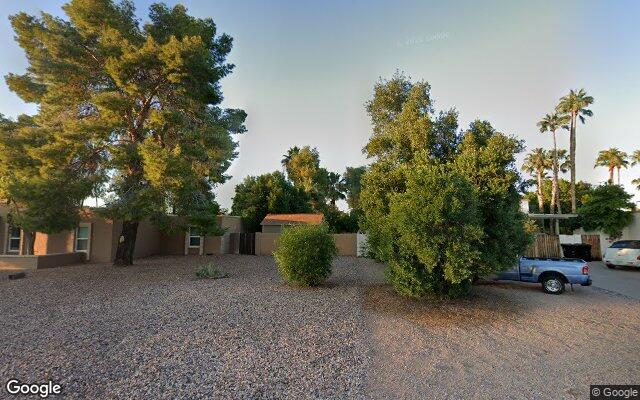
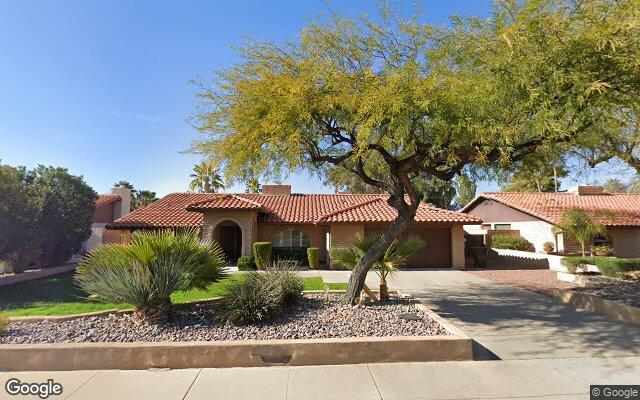
A medium home, reviewed on public record.
© Google Street View
Compared to similar Arizona facilities.
Care · 36-month window. Higher percentile = better performance on inspection record. Source: Arizona Dept. of Health Services · Bureau of Residential Facilities Licensing.
Citation history, plotted month by month.
18 deficiencies on record. Each bar is a month with a citation.
Finding distribution
none · 36 monthsScope × Severity (CMS A–L)
Every inspection visit, verbatim.
6 inspections in the public record, most recent first. Plain-language summaries open first — click into any row for the full citation text.
2026-04-30Complaint InvestigationNo findings
2025-10-14Complaint InvestigationR9-10-803.A.9 · 4 findings
“Based on documentation review, record review, and interview, the governing authority failed to ensure compliance with A.R.S. § 36-411, for three of five employees reviewed. The deficient practice posed a risk as required information could not be verified for the employees. Findings include: 1. A.R.S. § 36-411(C)(4) states: "C. Each residential care institution, nursing care institution and home health agency shall make documented, good faith efforts to: ...4. On or before March 31, 2025, verify that each employee is not on the adult protective services registry pursuant to section 46-459.” 2. A review of E2’s, E3's, and E4's personnel records revealed that there were no Adult Protective Services (APS) Central Registry checks completed as required. 3. A review of the Adult Protective Services (APS) registry website revealed E2, E3, and E4 were not on the registry. 4. In an exit interview, the findings were discussed with E1, and no other information was provided. 5. This is an uncorrected deficiency from the inspection conducted on July 22, 2025.”
“Based on record review, documentation review, and interview, the manager failed to ensure a caregiver’s skills and knowledge were verified and documented before the caregiver provided physical health services or behavioral health services and according to policies and procedures, for three of five caregivers reviewed. The deficient practice posed a risk if the employee were unable to meet a resident’s needs. Findings include: 1. A review of E3’s, E4's, and E5's personnel records revealed no documentation verifying the caregiver’s skills and knowledge. 2. A documentation review of the facility's policy and procedure revealed a policy that stated the caregiver's and assistant caregiver's skills and knowledge would be verified and documented upon hire. 3. In an interview, E1 reported that E1 was not able to locate the documents and was not able to obtain the skill and knowledge documents from the HR department. 4. In an exit interview, the findings were reviewed with E1, and no additional information was provided.”
“Based on record review and interview, the manager failed to ensure that staff obtained a certificate of completion, as specified in R9-10-126, that included the minimum eight hours of initial memory care services training. Findings include: 1. A review of E3's, E4's, and E5's employee records revealed no certificate of completion for memory care services training. Based on the dates of hire, this documentation was required. 2. In an exit interview, the findings were discussed with E1, and no other information was provided. 3. Technical assistance was provided on this Rule during the inspections conducted on July 22, 2025, and July 31, 2025.”
“Based on record review and interview, the manager failed to ensure a medication was administered and documented in compliance with a medication order for one of four residents reviewed. The deficient practice posed a risk if the resident experienced a change in condition due to improper administration of medication. Findings include: 1. A review of R1's medical record revealed a signed medication order dated June 6, 2025, for the following medications: Lisdexam Fetamine Dimesylate 40mg capsule. Take one 40mg cap by mouth daily in the morning. Gabapentin oral tab 600mg. Take one tablet by mouth four times a day for chronic pain and nerve pain. 2. A review of R1's September 2025 medication administration record (MAR) revealed the following: “Lisdexam Fetamine Dimesylate 40mg capsule Take one 40mg cap by mouth daily in the morning.” However, the MAR showed Lisdexam Fetamine Dimesylate 40mg capsule was not administered in the morning on September 7, 2025. "Gabapentin oral tab 600mg. Take one tablet by mouth four times a day for chronic pain and nerve pain." However, the MAR showed Gabapentin oral tab 600mg was not administered at 11 am and 6 pm on September 12, 2025. 3. In an interview, E1 reported that E1 could not confirm that the medication listed above was administered. 4. In an exit interview, the findings were reviewed with E1, and no additional information was provided. 5. This is an uncorrected deficiency from the inspection conducted on July 31, 2025.”
2025-07-31Complaint InvestigationR9-10-808.A.3.b · 5 findings
“Based on record review and interview, the manager failed to ensure that a resident had a service that included the level of service the resident is expected to receive. Findings include: 1. A medical record review of R1, R2, and R3 revealed service plans that listed a variety of services. Further review of the service plans revealed no documentation of the level of service. 2. In an interview, E1 acknowledged that the resident service plans did not include the level of service the residents were expected to receive.”
“Based on record review and interview, the manager failed to ensure that a resident has a service plan that is reviewed and updated at least once every three months for a resident receiving directed care services. Findings include: 1. A medical record review of R1 revealed they require directed care services. 2. A record review of R1 medical record revealed a service plan that was initiated on October 1, 2023, and the next review date was March 18, 2025. 3. In an interview, E1 acknowledged that service plans have not been updated according to the residents' level of care.”
“Based on record review and interview, the manager failed to ensure that a caregiver or an assistant caregiver documented the services provided in the resident's medical record. 1. A review of R1, R2, and R3's medical records revealed no documentation of activities of daily living (ADLs) for the month of July. 2. In an interview, E2 reported that services are being provided to residents. However, E2 did not know how to access ADLs to show documentation.”
“Based on documentation review, observation, and interview, the manager failed to ensure there was a means of exiting the facility which provided access to an outside area which monitored or alerted employees of the egress of a resident from the facility. Findings include: 1 . A review of Department documentation revealed the facility was licensed to provide directed care services. 2. During an environmental inspection of the facility, the Compliance Officer observed R2 use the front door, but it did not chime. The front door had no alert or monitoring system in place. 3. During an environmental inspection of the facility, the Compliance Officer observed R1 and R2 use the kitchen backdoors there was no chime when the residents exited. The back doors had no alert or monitoring system in place. 4. In an exit interview, the findings were reviewed with E1, and no additional information was provided. This is an uncorrected deficiency from the complaint investigation conducted on July 22, 2025.”
“Based on record review and interview, the manager failed to ensure medications were administered in compliance with a medication order. Findings include: 1. A record of review of R1's medication order dated for July 2025 revealed several medications, such as: -Lacosamide 200mg tablet twice daily -Baclofen 20mg tablet by mouth three times daily for muscle spasm -Levetiracetam 1000 mg tablet 1 tablet by mouth every 12 hours for seizures 2. A review of R1's medication administration record (MAR) for July 2025 revealed no documentation of: -Lacosamide administered on the 1st, 4th, and 19th. -Baclofen administered at 7 am on the 1st, 4th, and 19th, and 1 pm on the 1st, 4th, and 19th. -Levetiracetam administered at 9 am on the 1st, 4th, and 19th, 3. In an interview, E1 acknowledged that medication was not being administered in compliance with the medication order.”
2025-07-22Complaint InvestigationR9-10-803.A.10 · 6 findings
“Based on observation and interview, the manager failed to ensure the health, safety, or welfare of a resident was not placed at risk of harm. Findings include: 1. The Compliance Officer observed two doors in the kitchen/dining room and one door in the exercise room leading to the back yard as well as one door leading from the front room to the front yard. The Compliance Officer observed the facility had cameras in place observing the four doors. 2. In an interview, E1 reported the camera feeds were accessible through a cell phone application as well as on a mounted computer screen in the office. However, E1 acknowledged the feed was not monitored continuously. 3. The Compliance Officer observed no alerts installed on the two doors in the kitchen/dining room. The Compliance Officer further observed the door in the exercise room and the front door did have alerts installed. However, both alerts were turned off. Upon opening each of the four doors. The Compliance Officer heard no alert. Throughout the inspection, the Compliance Officer observed several residents exit the facility through one of the back doors with no personnel within sight and one resident exit the front door with no personnel within sight. 4. In a series of interviews, when the Compliance Officer asked if the two back doors in the kitchen/dining room had even had alerts installed, both E1 and E3 reported believing the doors had not had alerts installed. 5. The Compliance Officer observed a variety of poisonous or toxic materials, including paint, polycrylic, and polyurethane on the back patio. 6. E1 reported the poisonous or toxic materials on the back patio belonged to a resident. E1 acknowledged the poisonous or toxic materials were accessible to residents. 7. The Compliance Officer observed a pool in the backyard with two self-closing, self-latching gates leading into the pool area. The Compliance Officer observed no residents and no personnel within sight. However, the Compliance Officer observed one of the gates was not locked. 8. In an interview, E1 acknowledged the health, safety, or welfare of a resident was placed at risk of harm.”
“Based on documentation review, record review, and interview, the governing authority failed to ensure compliance with Arizona Revised Statutes (A.R.S.) § 36-411(C), for three of three sampled employees. The deficient practice posed a risk if the employees were a danger to a vulnerable population. Findings include: 1. A.R.S. § 36-411(C)(1-2) and (4) states: "C. Each residential care institution, nursing care institution and home health agency shall make documented, good faith efforts to: 1. Contact previous employers to obtain information or recommendations that may be relevant to a person's fitness to work in a residential care institution, nursing care institution or home health agency. 2. Verify the current status of a person's fingerprint clearance card…4. On or before March 31, 2025, verify that each employee is not on the adult protective services registry pursuant to section 46-459.” 2. A review of E1's personnel record revealed E1 was hired as the manager before March 31, 2025. The review revealed a fingerprint clearance card (FCC) and documentation of previous employment. However, the review revealed no documentation demonstrating compliance with A.R.S. § 36-411(C)(1-2) and (4). 3. A review of the Department of Public Safety (DPS) website revealed E1's FCC was valid. 4. A review of the Adult Protective Services (APS) registry website revealed E1 was not on the registry. 5. A review of E2's personnel record revealed E2 was hired as a caregiver before March 31, 2025. The review revealed a printout from the DPS website which indicated E2’s FCC expired on July 20, 2023. The review revealed a current FCC dated as issued on February 22, 2024, more than seven months after the previous FCC expired. The review further revealed documentation of previous employment. However, the review revealed no documentation demonstrating compliance with A.R.S. § 36-411(C)(1) and (4). 6. A review of the DPS website revealed E2's previous FCC expired on July 20, 2023; E2 applied for a new FCC on February 13, 2024 and E2’s current FCC was valid effective February 22, 2024. 7. A review of the APS registry website revealed E2 was not on the registry. 8. In an interview, when the Compliance Officer asked if E2 had a FCC between July 20, 2023, and February 22, 2024, E2 stated, “I’m not sure.” E2 later reported E2 did not see another FCC between the aforementioned dates, stating, “It may be possible that I did have a gap in there.” 9. A review of E3's personnel record revealed E3 was hired as a caregiver before March 31, 2025. The review revealed a FCC and documentation of previous employment. However, the review revealed no documentation demonstrating compliance with A.R.S. § 36-411(C)(1-2) and (4). 10. A review of the DPS website revealed E3's FCC was valid. 11. A review of the APS registry website revealed E3 was not on the registry. 12. In an interview, when the Compliance Officer asked who would have checked the APS registry for current employees, E1 stated, “That would have fallen on me.” When the Compliance Officer asked if E1 checked the APS registry for any current employees, E1 stated, “No.””
“Based on documentation review and interview, after having a reasonable basis to believe abuse occurred on the premises, the manager failed to report the suspected abuse of a resident according to Arizona Revised Statutes (A.R.S.) § 46-454. The deficient practice posed a risk to the physical health and safety of a resident. Findings include: 1. A.R.S. § 46-454(A) states: "A health professional... or other person who has responsibility for the care of a vulnerable adult and who has a reasonable basis to believe that abuse, neglect or exploitation of the vulnerable adult has occurred shall immediately report or cause reports to be made of such reasonable basis to a peace officer or to the adult protective services central intake unit...The reports required by this subsection shall be made immediately by telephone or online." 2. Arizona Administrative Code R9-10-101(111) states, "'Immediate' means without delay." 3. A review of facility documentation revealed three incident reports. The first report detailed an incident which occurred on October 25, 2024, at 5:00 PM dealing with “Allegations of financial exploitation.” The report revealed E1 was made aware of the allegations on October 25, 2024, at 5:00 PM. The report indicated the Scottsdale Police Department (PD) was made aware on October 27, 2024, at 12:30 PM. 4. In an interview, E1 reported E1 informed the resident’s Power of Attorney (POA) about the allegations, the POA informed Scottsdale PD, and Scottsdale PD showed up at the facility on October 27, 2024, at 12:30 PM. E1 reported facility personnel did not contact Scottsdale PD directly. E1 reported E1 did not report the suspected exploitation to APS until October 28, 2024. 5. A review of facility documentation revealed the second incident report which detailed an “Altercation…between 2 residents” which occurred on July 10, 2025, at 5:20 PM. The report revealed E1 was made aware of the altercation on July 10, 2025, at 5:15 PM. The review further revealed two emails from APS. The emails indicated E1 reported the suspected abuse to APS on July 11, 2025. 6. In an interview, E1 reported E1 considered the altercation as suspected abuse and reported it to APS accordingly. However, E1 indicated E1 did not report it to APS until July 11, 2025. 7. A review of facility documentation revealed the third incident report which detailed an incident which occurred on July 5, 2025, at 3:40 PM dealing with “verbal abuse.” The report revealed E1 was made aware of the allegations on July 16, 2025, at 1:00 PM when the resident shared concerns. The report indicated E1 reported the suspected abuse to APS on July 17, 2025, at 3:00 PM. The review further revealed an email from APS which indicated E1 reported the suspected abuse to APS on July 17, 2025, at 3:32 PM. 8. In an interview, E1 acknowledged E1 did not report the aforementioned suspected abuse and exploitation immediately.”
“Based on documentation review, observation, and interview, the manager failed to ensure a means of exiting the facility for a resident who did not have a key, special knowledge for egress, or the ability to expend increased physical effort that monitored or alerted employees of the egress of a resident from the facility. The deficient practice posed a risk if the facility was unaware of the egress of a resident from the facility. Findings include: 1. A review of Department documentation revealed the facility was authorized to provide directed care services. 2. The Compliance Officer observed two doors in the kitchen/dining room and one door in the exercise room leading to the back yard as well as one door leading from the front room to the front yard. The Compliance Officer observed the facility had cameras in place observing the four doors. 3. In an interview, E1 reported the camera feeds were accessible through a cell phone application as well as on a mounted computer screen in the office. However, E1 acknowledged the feed was not monitored continuously. 4. The Compliance Officer observed no alerts installed on the two doors in the kitchen/dining room. The Compliance Officer further observed the door in the exercise room and the front door did have alerts installed. However, both alerts were turned off. Upon opening each of the four doors. The Compliance Officer heard no alert. Throughout the inspection, the Compliance Officer observed several residents exit the facility through one of the back doors with no personnel within sight and one resident exit the front door with no personnel within sight. 5. In a series of interviews, when the Compliance Officer asked if the two back doors in the kitchen/dining room had even had alerts installed, both E1 and E3 reported believing the doors had not had alerts installed.”
“Based on observation and interview, the manager failed to ensure poisonous or toxic materials stored by the assisted living facility were maintained in a locked area inaccessible to residents. The deficient practice posed a risk to residents with access to the poisonous or toxic materials. Findings include: 1. At approximately 9:15 AM, the Compliance Officer observed an open and unlocked laundry room with no personnel within sight. Inside the laundry room, the Compliance Officer observed a variety of poisonous or toxic materials, including air freshener, all-purpose cleaner, all-purpose cleaner with bleach, Comet with bleach, disinfectant spray, fabric softener, laundry soap, oven cleaner, and toilet bowl cleaner. 2. In an interview, E3 reported the laundry room was open and unlocked because of a shift change. When the Compliance Officer asked when the shift change occurred, E3 stated, “6:00 AM,” more than three hours before the Compliance Officer observed the accessible poisonous or toxic materials. E3 reported the laundry room was usually locked. 3. The Compliance Officer observed a bottle of air freshener on a desk near the laundry room. The Compliance Officer observed an unlocked bathroom attached to the exercise room. On the back of the toilet, the Compliance Officer observed a bottle of air freshener. The Compliance Officer further observed an unlocked cabinet in the bathroom. Inside both the top and bottom sections, the Compliance Officer observed window cleaner. 4. In an interview, E1 acknowledged poisonous or toxic materials stored by the assisted living facility were not maintained in locked areas inaccessible to residents. Technical assistance was provided on this rule during the complaint inspection conducted on April 29, 2024.”
“Based on documentation review, observation, and interview, the manager failed to ensure a swimming pool was enclosed by a wall or fence that has a self-closing, self-latching gate that is locked when the swimming pool is not in use. The deficient practice posed a risk to the health and safety of a resident. Findings include: 1. A review of Department documentation revealed the facility became licensed in 2019. 2. The Compliance Officer observed a pool in the backyard with two self-closing, self-latching gates leading into the pool area. The Compliance Officer observed no residents and no personnel within sight. However, the Compliance Officer observed one of the gates was not locked. 3. In an interview, E1 acknowledged the pool gate was not locked when the pool was not in use.”
2024-04-29Annual Compliance VisitNo findings
2024-04-29Complaint InvestigationA.A.C. · 3 findings
“Based on observation, and interview, the governing authority failed to designate in writing a manager who either had a certificate as an assisted living facility manager issued under A.R.S. \'a7 36-446.04(C), or a temporary certificate as an assisted living facility manager issued under A.R.S. \'a7 36-446.06. The deficient practice posed a health and safety risk to residents, if the facility did not have a qualified manager. Findings include: 1. In observation, the Compliance Officer observed an assisted living facility manager's license was not posted in the facility. 2. During an interview, E1 reported the prior manager was O1, whose employment was terminated on February 10, 2024. [E1] was the manager designee, had completed a manager training course, and was taking the manager's test next week. E1 reported the facility did not have a manager with a certificate or a temporary certificate as an assisted living facility manager, as required. 3. During an interview, E1 acknowledged [E1] was not a certified manager, and the facility was required to designate in writing a manager who either had a certificate as an assisted living facility manager issued under A.R.S. \'a7 36-446.04(C), or a temporary certificate as an assisted living facility manager issued under A.R.S. \'a7 36-446.06.”
“Based on observation, documentation review and interview, the governing authority failed to designate, in writing, an acting manager, if the manager was expected not to be present or was not present on the assisted living facility's premises for more than 30 calendar days. The deficient practice posed a risk to the health and safety of the residents as no individual was designated to act on behalf of the governing authority in the onsite management of the assisted living facility. Findings include: 1. In observation, the Compliance Officer observed an assisted living facility manager's license was not posted in the facility. 2. During an interview, E1 reported the prior manager was O1, whose employment was terminated on February 10, 2024. [E1] was the manager designee, had completed a manager training course, and was taking the manager's test next week. E1 reported the facility did not have a manager with a certificate or a temporary certificate as an assisted living facility manager, as required. 3. During an interview, E1 acknowledged [E1] was not a certified manager, and the facility was required to designate, in writing, an acting manager, if the manager was expected not to be present or was not present on the assisted living facility's premises for more than 30 calendar days.”
“Based on documentation review, observation, record review, and interview, the governing authority failed to notify the Department according to A.R.S. \'a7 36-425(I), when there was a change in the manager, and identify the name and qualifications of the new manager. The deficient practice posed a risk as the Department was unable to ensure the facility maintained a qualified manager. Findings include: 1. In observation, the Compliance Officer observed an assisted living facility manager's license was not posted in the facility. 2. During an interview, E1 reported the prior manager was O1, whose employment was terminated on February 10, 2024. [E1] was the manager designee, had completed a manager training course, and was taking the manager's test next week. E1 reported the facility did not have a manager with a certificate or a temporary certificate as an assisted living facility manager, as required. 3. A review of Department documentation revealed documentation O1 was the manager effective May 29, 2019, through March 19, 2020, when O2 became the manager. On March 8, 2029, the Department was notified O2 continued to be the manager. Department records did not indicate O1 was the manager since March 19, 2020. 4. During an interview, E1 reported O2 was a "regional program director," and was unsure of O2's status as a manager; however, would check with the office on the dates/timelines of the facility's manager status. O3 reported O1 was the manager in 2016, and O2 was the manager from 2017 - 2024. 5. In documentation review, the NCIA (Nursing Care Institution Administrators and Assisted Living Facility Managers) website revealed O2's manager license expired in June, 2023. The Department records did not include documentation of notification of a change in manager from O2, to O1. 6. During an interview, E1 acknowledged the Department was not notified of a change in manager, as required.”
Other facilities in Scottsdale.
Other memory care facilities near Scottsdale with similar care offerings.
Full Inspection Record
Family reviews
No reviews yet — be the first to share your experience