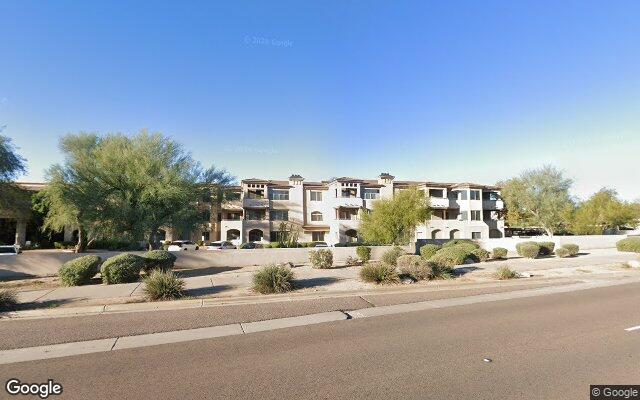
Serenity of North Scottsdale.
A medium home, reviewed on public record.
Compared to 1,649 Arizona facilities with a similar number of beds.
Care · 36-month window. Higher percentile = better performance on inspection record. Source: Arizona Dept. of Health Services · Bureau of Residential Facilities Licensing.
among peers to rank.
Rankings based on 36-month ADHS inspection data. Severity and frequency: fewer citations = higher percentile. Repeat rate: lower repeat citation share = higher percentile.
Citation history, plotted month by month.
9 deficiencies on record. Each bar is a month with a citation.
Finding distribution
9 total · 36 monthsScope × Severity (CMS A–L)
Every inspection visit, verbatim.
2 inspections in the public record, most recent first. Plain-language summaries open first — click into any row for the full citation text.
2025-05-15Complaint InvestigationR9-10-808.A.5.a · 7 findings
“Based on record review and interview, for one of two residents reviewed, the manager failed to ensure a written service plan included the signature and date from the resident or the resident's representative. The deficient practice posed a health and safety risk if the resident or the resident's representative did not acknowledge the services that were to be provided. Findings include: 1. In record review, the service plan for R1 (received directed care services), dated February 25, 2025, did not include the signature and date from the resident or the resident's representative. R1 had a Power of Attorney. 2. During an interview, E1 acknowledged R1's service plan was not signed and dated by the resident or the resident's representative.”
“Based on interview and record review, for one of two residents reviewed, who was confined to a bed or chair and unable to ambulate even with assistance, the manager failed to ensure the facility did not retain a resident unless the facility obtained a signed and dated determination from a primary care provider (PCP) or medical practitioner (MP), every six months, that stated resident’s needs could be met by the assisted living facility within the assisted living facility’s scope of services. The deficient practice posed a safety risk to a resident if the facility retained a resident without the required authorization. Findings include: 1. In observation, the Compliance Officer observed R1 in a recliner chair in the common area. R1 was unable to communicate. 2. During an interview, E1 reported R1 was unable to ambulate, even with assistance. 3. In record review, R1's medical record (received directed care services) included a signed and dated determination on June 10, 2024; however, the record did not include the documented determination every six months. 4. During an interview, E1 acknowledged the facility did not obtain a signed and determination from R1's MP or PCP every six months, stating the resident's needs were being met by the facility.”
“Based on record review and interview, for two of two residents receiving directed care services, the manager failed to ensure the residents' service plan included the residents' weight. The deficient practice posed a risk to residents if the service plan did not indicate a resident's weight for a resident who was unable to direct their own care. Findings include: 1. In record review, R1's service plan, dated February 27, 2025, indicated R1 received directed care services. The service plan did not include R1's weight. The medical record did not include documentation from a medical practitioner stating that weighing the resident was contraindicated. 2. In record review, R2's service plan, dated January 27, 2025, indicated R2 received directed care services. The service plan did not include R2's weight. The medical record did not include documentation from a medical practitioner stating that weighing the resident was contraindicated. 3. During an interview, E1 reported R1 and R2 were unable to be weighed, and acknowledged the facility did not obtain documentation from a medical practitioner stating that weighing the resident was contraindicated.”
“Based on observation, record review, and interview, for one of two residents reviewed, the manager failed to ensure a medication administered to a resident was documented in the resident's medical record. The deficient practice posed a health and safety risk to a resident if a manager or caregiver did not document that a medication was administered. Findings include: 1. In observation, R1's medications were observed on site, and included the following: Morphine (20mg/ml 0.25 (5mg) per syringe, take 0.25ml-0.5ml by mouth/under the tongue every 1 hour as needed for pain/trouble breathing). 20 syringes were dispensed on March 17, 2025, and six syringes remained. Lorazepam (2mg/ml 0.25ml (0.5mg) per syringe, take 0.25ml-0.5ml by mouth/under the tongue every 2 hours as needed). Twenty syringes were dispensed on April 11, 2025, and 16 syringes remained. Morphine (20mg/ml 0.25 (5mg) per syringe, take 0.25ml-0.5ml by mouth/under the tongue every 1 hour as needed for pain/trouble breathing). 20 syringes were dispensed on April 22, 2025, and 18 syringes remained. 2. In record review, R1's medical record (received directed care and medication administration services) included medication administration records (MAR) for March, April, and May 2025; however, the MARs did not include documentation of the administration of the Lorazepam or the Morphine medication. 3. During an interview, E1 and E3 reported R1 was administered the medication; however, acknowledged the medication administration was not documented on the MAR. E1 and E2 acknowledged the medication administration was required to be documented.”
“Based on observation, documentation review, and interview, the manager failed to ensure that policies and procedures were implemented for discarding medication. The deficient practice posed a health and safety risk if medications, including narcotics, were not disposed of, as required. Findings include: 1. In observation, the facility stored medications for residents who no longer resided at the facility. These medications were stored in a refrigerated box. The medications belonged to R3 and R4 and included Lantus Insulin and Lorazepam Oral Concentrate. 2. In documentation review, a facility policy, titled "Medications including Opioids and Narcotics," documented, ".. On a monthly basis, the facility manager or manager designee will check all medication in the facility to identify and locate any discontinued medication, expired medication, including medication of deceased residents... Such medication will be disposed of by the ... manager or manager designee on the last day of the month, as follows... Offered back to the resident's representative... returned to the pharmacy,... or disposed of by mixing the pills with hot water and cooking flour....The medication disposal will be recorded in the Medication Disposal Form..." 3. During an interview, E1 and E3 acknowledged the facility stored medications for residents who were no longer at the facility. E1 and E3 reported that R3 passed away over eight months ago and R4 passed away over a year ago.”
“Based on observation, record review, documentation review, and interview, for one of two residents reviewed, who received a controlled substance, the manager failed to ensure that policies and procedures were implemented for inventorying controlled substances. The deficient practice posed a risk if controlled substances were not inventoried and accounted for by the facility. Findings include: 1. In observation, R1's medications were observed on site, and included the following: Morphine (20mg/ml 0.25 (5mg) per syringe, take 0.25ml-0.5ml by mouth/under the tongue every 1 hour as needed for pain/trouble breathing). Twenty syringes were dispensed on March 17, 2025, and six syringes remained. Morphine is a Schedule II controlled substance. Lorazepam (2mg/ml 0.25ml (0.5mg) per syringe, take 0.25ml-0.5ml by mouth/under the tongue every 2 hours as needed). Twenty syringes were dispensed on April 11, 2025, and 16 syringes of remained. Lorazepam is a Schedule IV controlled substance. Morphine (20mg/ml 0.25 (5mg) per syringe, take 0.25ml-0.5ml by mouth/under the tongue every 1 hour as needed for pain/trouble breathing). Twenty syringes were dispensed on April 22, 2025, and 18 syringes remained. 2. In record review, R1's medical record (received directed care and medication administration services) did not include an inventory of the controlled substances. 3. In documentation review, a facility policy, titled, "Medications Including Opioids and Narcotics" page 2-3, documented, "... Part II Receiving, Storing, Inventorying... Medication Including Opioids and Narcotics... As soon as possible, medication will be inventoried and placed in the resident's labeled medication bin... When the opioids and narcotic medications is received at the facility, the manager designee will check the packaging to make sure that it is the right medicine prescribed as ordered... The opioids and narcotic medications will be inventoried and placed in the medication storage area.... Daily narcotics or controlled substances administration will be recorded on each resident Narcotic Administration Record..." 4. During an interview, E1 and E3 acknowledged the facility did not maintain an inventory of controlled substances, as required, and according to the facility's policy and procedures.”
“Based on record review, and interview, for two of two residents reviewed, the facility failed to maintain a standardized form for each resident that included the information prescribed in A.R.S. 36-420.04. The deficient practice posed a risk as required patient information was not prepared in case of an emergency. Findings include: 1. A.R.S. 36-420.04.A states, "A. An assisted living center or assisted living home that contacts an emergency responder on behalf of a resident shall provide to the emergency responder a written document that includes all of the following: 1. The reason or reasons the emergency responder was requested on behalf of the resident. 2. Whether the resident receives medication services and, if the resident has provided this information to the assisted living center or assisted living home, a list of all the resident's prescription and over-the-counter medications, their dosages and how frequently they are administered. 3. The name, address and telephone number of the resident's current pharmacy. 4. A list of any known allergies to any medications, additives, preservatives or materials like latex or adhesive. 5. The name and contact information for the resident's primary care physician and power of attorney or authorized representative. 6. Basic information about the resident's physical and mental conditions and basic medical history, such as having diabetes or a pacemaker or experiencing frequent falls or cardiovascular and cerebrovascular events, as well as dates of recent episodes, if known. 7. The point-of-contact information for the assisted living center or assisted living home, including the telephone number, if available, cell phone number, and email address. A point of contact must be available to respond to questions regarding the information provided twenty-four hours a day, seven days a week. 8. A copy of the resident's health insurance portability and accountability act (HIPAA) release authorizing a receiving hospital to communicate with the assisted living center or assisted living home to plan for the resident's discharge. This paragraph does not preclude a resident from revoking the resident's Health Insurance Portability and Accountability Act release authorization. 9. A copy of the resident's advance directives, if any, on file at the assisted living center or assisted living home. This paragraph does not preclude a resident from revoking or modifying the resident's advance directives." 2. In record review, the medical records for R1 and R2 did not include a standardized form for each resident that included the information prescribed in A.R.S. 36-420.04, noted above. 3. During an interview, E1 acknowledged the medical records for R1 and R2 did not include a standardized form for each resident that included the information prescribed in A.R.S. 36-420.04.”
2023-09-14Annual Compliance VisitA.A.C. · 2 findings
“Based on documentation review, record review, and interview, for two of three residents reviewed, the manager failed to ensure there was a documented residency agreement with the assisted living facility. Findings include: 1. A review of Department documentation revealed a change of ownership on September 8, 2022. 2. In record review, the medical records for R2 and R3 included a residency agreement signed by E5, the prior owner. An updated residency agreement for R2 and R3, and the new facility ownership, was not available for review. 3. During an interview, E1 and E5 reported an understanding that a new residency agreement was not required, and acknowledged a new residency agreement, under the new ownership, had not been documented for R2 and R3. 4. Technical assistance was provided in an email to E2, dated September 8, 2022.”
“Based on record review and interview, for one of three residents reviewed, the manager failed to ensure a resident's written service plan included a description of the resident's medical or health problems, including physical, behavioral, cognitive, or functional conditions or impairments. The deficient practice posed a risk to a resident if the service plan did not include a description of the resident's condition, for which services were to be provided. Findings include: "Service plan" means a written description of a resident's need for supervisory care services, personal care services, directed care services, ancillary services, or behavioral health services and the specific assisted living services to be provided to the resident. 1. In observation, R1 had a wound on the top of two toes on one foot. 2. In record review, R1's medical record (received personal care services) included documentation of diagnoses as "heart failure, Muscle weakness, pain in right hip, chronic kidney disease and Parkinson's Disease. R1's service plan, dated August 16, 2023, did not include documentation of the wounds observed on R1's foot, the muscle weakness, kidney disease, hip pain or Parkinson's Disease. 3. During an interview, the findings were reviewed with E1, who E1 reported the R1 had a recent surgical procedure to improve circulation, that caused the wounds on the toes, and no care instructions were provided for facility staff. E1 reviewed R1's service plan and acknowledged the service plan did not include a description of all of the resident's medical and health problems”
Other facilities in Scottsdale.
Other memory care facilities near Scottsdale with similar care offerings.
Tour Prep
Family reviews
No reviews yet — be the first to share your experience