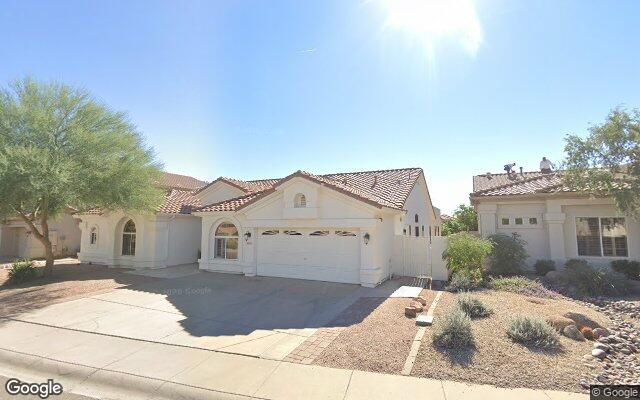
Agape Care Home of Scottsdale.

A medium home, reviewed on public record.
© Google Street View
Compared to 1,661 Arizona facilities with a similar number of beds.
Care · 36-month window. Higher percentile = better performance on inspection record. Source: Arizona Dept. of Health Services · Bureau of Residential Facilities Licensing.
among peers to rank.
on file.
Rankings based on 36-month ADHS inspection data. Severity and frequency: fewer citations = higher percentile. Repeat rate: lower repeat citation share = higher percentile.
Citation history, plotted month by month.
15 deficiencies on record. Each bar is a month with a citation.
Finding distribution
15 total · 36 monthsScope × Severity (CMS A–L)
Every inspection visit, verbatim.
2 inspections in the public record, most recent first. Plain-language summaries open first — click into any row for the full citation text.
2025-05-22Complaint InvestigationR9-10-803.E.1 · 6 findings
“Based on record review and interview, the manager failed to ensure documentation required by this Article was provided to the Department within two hours after a Department request. The deficient practice posed a health and safety risk to residents if the Department was unable to review the entirety of a resident's medical record during an inspection. Findings include: 1. In record review, the Compliance Officer (CO) requested to review the medication administration records (MARs) for R1, R2, and R3, for the prior three months. 2. In observation and interview, E2 was observed attempting to print the residents' MARs; however, the printer was not working properly and the facility was not able to provide all of the requested documents, i.e., R1's MAR for May 2025 was not provided for review. The MARS for R2 and R3 were not provided for review. 3. During an interview, E1 and E2 reported the residents' medication administration was documented in the facility's electronic application (on the caregiver's mobile phone), and reported the documents were unable to be printed correctly or reviewed on the facility's computer. E2 acknowledged being unable to pull up the MAR reports in the application on E2's mobile phone.; however, reported being able to document the medication administration on the phone. E1 and E2 acknowledged the requested documentation was not provided to the CO within two hours of request.”
“Based on observation, record review, and interview, for one of three residents reviewed, the manager failed to ensure a caregiver documented the services provided in the resident's medical record. The deficient practice posed a risk if services were not provided for a resident/or the services provided could not be verified. Findings include: 1. In observation, R1 was observed in bed with a tube feeding pump next to the bed. 2. In record review, R1's medical record included a document signed by O1, and dated April 23, 2025. The document indicated: "Provide water via Kangaroo pump @240 ml every 4 hours concurrently with feedings + 60 ml via bolus with medications 6 times per day (or as directed by a physician) for a total of 1320ml from water flushes. 3. In record review, the Compliance Officer requested to review documentation of the services provided; however, no documentation was provided for review. 4. During an interview, E2 reported the caregiver provided the tube feeding services per the instructions from O1; however, acknowledged not having documentation of the services provided. 5. This is a repeat deficiency from the inspection conducted on June 6, 2024.”
“Based on documentation review and interview, the manager failed to ensure residents were treated with dignity, respect, and consideration. The deficient practice posed a risk to vulnerable residents who relied on caregivers for daily care and services. Findings include: 1. In documentation review, the Department received a report, dated May 19, 2025, which indicated on May 16, 2025, R3 required transport by emergency medical services (EMS). O1 reported "R3 reported having trouble with one of [R3's] caregivers... describes periods of being made fun of, getting laughed at or not being helped.... describes a poor attitude and care towards patient... requested to be changed from yesterday's clothes and caretaker refused. [R3] is incontinent of urine and has urinated in yesterday's clothes.... Caretaker can be seen making faces and talking back to patient... seems unapologetic about behavior is very verbally hostile towards patient... Only two caretakers on scene..." 2. In record review, R3's service plan indicated R3 was alert, oriented, able to identify an emergency, and received personal care services. 3. In documentation review, the staff schedule dated May 2025, documented that E2 and E3 worked on May 16, 2025. However, E2 reported being off work, and indicated E4 worked on May 16, 2026. 4. During an interview, residents reported the following: R4 reported E3 and E4 could be short tempered. E3 often doesn't speak to the resident, just doesn't say anything, "so tired of it." R5 reported E3 was a "sour puss... doesn't talk or smile, no how are you... not a pleasant person, no warmth..." E4 was nice. R6 reported not being comfortable naming names, but "there are times when [caregiver] behavior is questionable... There is room for improvement..." R6 reported was going to talk with the owner/manager. 5. During an interview, the findings were reviewed with E1, who reported being unaware of the residents' concerns or caregiver behavior.”
“Based on observation and interview, the manager failed to ensure that medication stored by the assisted living facility was stored in a separate locked room, closet, cabinet, or self-contained unit used only for medication storage. The deficient practice posed a health and safety risk to residents if medications were not properly stored. Findings include: 1. During an environmental inspection, the Compliance Officer observed the facility office had multiple bottles of resident medications stored in a box and in bags on the floor of the office, and containers of medication were observed on the office desk. Additionally, a locked medication cabinet included resident medications stored with medical records, i.e., Hospice notebooks, and other miscellaneous documents. 2. During an interview, E2 acknowledged the residents' medications were not stored in a separate locked room, closet, cabinet, or self-contained unit used only for medication storage.”
“Based on observation and interview, the manager failed to ensure food stored by the facility was free from spoilage, and was safe for human consumption. Findings include: 1. During an environmental inspection with E2 and E4, the Compliance Officer observed spoiled and expired food in the refrigerator: -A container of shriveled and moldy strawberries -A bag of spoiled and expired cabbage with a "Best if Used By" date of May 17, 2025 -Shriveled cucumbers -Wilted celery stalks -Brown spoiled Romaine lettuce in a bag -Spoiled expired Broccoli with a "Best if Used By" date of Apr 09, 2025 -A container of spoiled mushrooms 2. During an interview, E1 and E2 acknowledged the facility stored spoiled and expired food, which had not been discarded.”
“Based on documentation review, record review, and interview, for one of three residents who had an emergency resulting in the need for medical services, the manager failed to ensure when a resident had an accident, emergency, or injury resulting in the resident needing medical services, a caregiver documented the date and time of the accident, emergency, or injury; a description of the accident, emergency, or injury; the names of individuals who observed the accident, emergency, or injury; the actions taken by the caregiver or assistant caregiver; the individuals notified by the caregiver, and any action taken to prevent the accident, emergency, or injury from occurring in the future. The deficient practice posed a risk if the facility did not complete the required documentation for a resident emergency requiring medical services.. Findings include: 1. In documentation review, the Department received a report which documented the facility contacted emergency medical services (EMS) on May 16, 2025, for R3, who required medical services. 2. In record review, R3's medical record did not include documentation of the emergency, including the date and time of the accident, emergency, or injury; a description of the accident, emergency, or injury; the names of individuals who observed the accident, emergency, or injury; the actions taken by the caregiver or assistant caregiver; the individuals notified by the caregiver, and any action taken to prevent the accident, emergency, or injury from occurring in the future. 3. During an interview, E2 reported [E2] was not working on the day of R3's emergency; however, reported R3 was transported to the hospital for medical services on May 16, 2025. R3 was still in the hospital. E1 and E2 acknowledged the facility did not have documentation of R3's emergency, as required by R9-10-818.D. 4. This is a repeat deficiency from the inspection conducted on July 5, 2023.”
2024-06-06Complaint InvestigationA.A.C. · 9 findings
“Based on record review and interview, for one resident reviewed, and receiving services from a home health and hospice service agency, the manager failed to ensure a resident's medical record contained any information provided and follow up instructions provided by a Hospice service agency. The deficient practice posed a health and safety risk to a resident if the Department was unable to verify services were provided for a resident, as instructed. Findings include: 1. During an interview, E1 and E2 reported R1 had wounds, and received Hospice services. The nurse came to the facility three times a week initially, and then twice weekly, for wound care. The Hospice nurse instructed the caregivers on implementing measures to promote the healing of the wounds, and to provide dressing changes on the days Hospice did not provide services for R1. 2. In record review, R1's medical record (received directed care and medication administration services) did not include documentation Hospice came to the facility to provide services for R1, and did not include documentation of the instructions provided to the caregivers. 3. During an interview, E2 reported R1 received services from a Hospice agency, and also from the Veteran's Administration, to address R1's wounds. E2 reported the caregivers were provided with verbal instructions from the Hospice nurse, for R1; however, acknowledged the information provided was not documented in R1's medical record.”
“Based on observation, record review, and interview, for one of three residents reviewed, the manager failed to ensure a resident's written service plan included the amount, type, and frequency of assisted living services being provided to the resident. The deficient practice posed a risk to the health and safety of a resident if a caregiver was unaware of the specific services to be provided to a resident. Findings include: 1. During an interview, E2 reported the caregivers provided R1 with wound care dressing changes, and Foley catheter care services. The caregivers changed the bandages on R1's wounds on the days the Home Health nurse did not provide wound care services for R1. 2. In record review, R1's service plan, dated May 7, 2024, (received directed care and medication administration services) included documentation R1 had "Left hand contractures, wound Left hip, left shoulder, some redness to buttocks... (illegible)... required foot care, had thin frail skin.." Received catheter care with frequency documented as "protocol" Received wound care "wound care performed under directions of Hospice until resolved." "CG to assist with prevention of bruises, injuries, pressure sores and infections." The service plan did not include the amount, type and frequency of services provided. 3. During an interview, O1 reported [O1] was an LPN with a Home Health agency, and provided wound care services for R1 from May 6, through May 24, 2024. O2 (Hospice agency nurse) reported [O2] did not provide wound care services, although R1 received Hospice services. 4. During an interview, E1 acknowledged R1's service plan did not include the amount, type and frequency of services provided for the R1.”
“Based on record review and interview, for one of three residents reviewed, the manager failed to ensure a caregiver documented the services provided to a resident, in the resident's medical record. The deficient practice posed a risk as services could not be verified as provided according to a service plan, a resident experienced a negative health outcome, and the documentation included false and misleading information. Findings include: 1. In record review, R1's service plan, dated May 7, 2024, (received directed care and medication administration services) documented R1 had "Left hand contractures, wound Left hip, left shoulder, some redness to buttocks... (illegible)... required foot care, had thin frail skin.." Received catheter care with frequency documented as "protocol" Received wound care "wound care performed under directions of Hospice until resolved." "CG to assist with prevention of bruises, Injuries, pressure sores and infections." 2. In record review, R1's record included an "Activities of Daily Living (ADL) Chart," dated April, 2024, and May, 2024. The ADL chart did not include documentation of wound care services, catheter care services, or services provided by the caregivers to prevent pressure sores. 3. During an interview, O1 reported [O1] was an LPN with a Home Health agency, and provided wound care services for R1 from May 6, through May 24, 2024. O2 (Hospice agency nurse) reported [O2] did not provide wound care services, although R1 received Hospice services. 4. R1's record included documentation of "Narrative Notes." The narrative notes for April and May 2024, included documentation every two hours "Resident was rotated and adjusted," and was initialed by a caregiver. A review of the documentation revealed E1 entered the daily documentation; however, signed E2's initials. 5. During an interview, E2 reviewed the narrative notes with the Compliance Officer, and reported some of the daily notes were entered with E2's signature; however, the notes were not E2's handwriting or signature and were entered by someone other than E2. E1 reported the narrative notes were entered in response to the recent APS investigation related to R1's pressure sores, to show that R1 was repositioned, and said that R1 was repositioned every two hours. E1 acknowledged the documentation was entered by E1, who signed E2's initials.”
“Based on observation, record review, and interview, for three of three residents reviewed who were unable to walk even with assistance, the manager failed to meet the requirements in R9-10-814.B.2. The deficient practice posed a health risk to a residents. Findings include: 1. In record review, R2's medical record included a signed and dated determination, December 28, 2020, which indicated R2 was unable to walk and was confined to a bed or chair. R2's record did not include a signed and dated determination stating the resident's needs could be met by the facility, since December 28, 2020. 2. During an interview, E1 and E2 reported R2 continued to be unable to walk, even with assistance, and acknowledged the facility did not ensure the resident's PCP or MP examined the resident at least every six months throughout the duration of the resident's condition, and signed and dated a determination stating the resident's needs were being met by the facility. 3. The Compliance Officer (CO) observed R3 laying in bed during the inspection. R3 was unresponsive to the CO. 4. In record review the medical records for R1 and R3 (received directed care services) included documentation the residents were unable to walk and were confined to a bed or chair. Both residents had a documented Power of Attorney. Neither record included documentation the residents' representative requested that the resident be accepted by or remain in the assisted living facility. 5. During an interview, E1 acknowledged R1 and R3 were unable to walk and were confined to a bed or chair, and the facility did not have the required documentation from the residents' representatives requesting the residents be accepted at the assisted living facility.”
“Based on observation. record review, and interview, the manager failed to ensure the a medication was administered to a resident only as prescribed. The deficient practice posed a health and safety risk to a resident who was given the wrong medications. Finding include: 1. In record review, R2's medical record (received Directed care and medication administration services) included a "Report of Unusual Occurrence," which documented R2 "was accidentally given another residents medication... Resident's vitals were monitored every 10 minutes and poison control was called. Morning meds were withheld as directed by poison control..." 3. During an interview, E2 reported E3 mistakenly gave R7's crushed medications to R2. E1 acknowledged R2 was administered medications without an order.”
“Based on observation, and documentation review, and interview, the manager failed to ensure policies and procedures were implemented for discarding medication. The deficient practice posed a health and safety risk if medications, including narcotics, were not disposed of as required. Findings include: 1. During an environmental inspection, a refrigerated medication container included the following medications, for residents no longer residing at the facility: -R4 residency terminated: Novolog Insulin Vials, Levemir Flex Touch pens -R5 residency terminated: Lorazepam Intensol Concentrate -R6 residency terminated: Lorazepam 2 mg/ml oral concentrate, expired 04/2024 2. In documentation review, a facility policy, titled, "Medications Including Opioids and Narcotics," on page 9, documented "On a monthly basis the facility manager or manager designee will check all medication in the facility to identify and locate any discontinued medication (by the physician's or medical practitioner's order), expired medication, including medication of deceased residents." Such medication will be disposed of by the facility manager or manager designee on the last day of the month as follows..." 3. During an interview, E1 reported the residents no longer resided at the facility, and the medications were not discarded per the facility's policy and procedures.”
“Based on observation, documentation review, record review, and interview, for one resident reviewed, who received a controlled substance, the manager failed to ensure policies and procedures were implemented for inventorying controlled substances. The deficient practice posed a risk if controlled substances were not inventoried and accounted for by the facility. Findings include: 1. In observation, R2 had Tramadol medication 50 mg tablets (a schedule IV controlled substance), 60 tablets dispensed on May 18, 2024, with 24 tablets remaining. 2. In record review, R2's medical record (received directed care and medication administration services) included documentation R1 received the medication, as ordered; however, the record did not include documentation of an inventory of the medication, as required. 3. In documentation review, a facility policy, titled "... Medications Including Opioids and Narcotics, on page 2-3, documented, "... All resident medications brought to the facility will be received by the caregiver ... who will ... check the contents of the medication... as soon as possible, medication will be inventoried... The opioid and narcotic medications will be inventoried and placed in the medication storage area... Daily narcotics or controlled substances administration will be recorded on each resident Narcotic Administration Record..." 4. During an interview, E1 reported the residents received controlled medications, and acknowledged medication was not inventoried per the facility's policy and procedures.”
“Based on observation and interview, the manager failed to ensure foods requiring refrigeration were maintained at 41\'b0 F or below, which posed a health risk to the residents. Findings include: 1. During an environmental inspection, the Compliance Officer observed a food storage pantry had items with labels which required "refrigerate after opening." The items include large containers of Molasses, Barbecue Sauce, Soy Sauce, Worcestershire Sauce and a bottle of green olives. All of the containers had been opened. 2. During an interview, E1 acknowledged the foods were not refrigerated after opening.”
“Based on observation, record review, documentation review, and interview, for one resident reviewed, and receiving opioid medication, without an active malignancy or an end of life condition, the manager failed to ensure an individual, authorized to administer opioids, documented in the resident's medical record an identification of the resident's need for the opioid before the opioid was administered, and the monitoring of the effect of the opioid administered. The deficient practice posed a risk to a resident if a resident's pain was not identified, monitored and documented, as required. Findings include: 1. In observation, R2 had Tramadol mg medication (a schedule IV controlled substance), 60 tablets dispensed on May 18, 2024, with 24 tablets remaining. 2. In record review, R2's medical record (received directed care and medication administration services) included documentation R1 received the opioid medication, as ordered; however, the record did not include documentation of an identification of the resident's need for the opioid, and the monitoring of the effect of the opioid administered. 3. In documentation review, a facility policy, titled "... Medications Including Opioids and Narcotics, on page 6, documented, "...Facility personnel will provide opioid medication based on doctor's orders for regular administration ( on a regular basis) and will identify and document the level of pain and/or the resident's need for the opioid medication. If opioid medication is administered on a PRN basis, at the request of the resident, or upon determination of the pain level and/or need, the caregiver will administer... the opioid based on the ... PRN written order... All residents who are subject to receiving opioid medication will have their responds to the opioid monitored by checking on the resident within the first half an hour after administration... or as often as is common sense and as the particular case requires. Effectiveness of the opioid administered will be documented in the NAR ..." 4. During an interview, E1 reported the resident received an opioid medication, and acknowledged the caregivers did not identify and document the residents' need for the opioid before the opioid was administered, and monitor and document the effect of the opioid administered, according to the facility's policies and procedures.”
1 older inspection from 2023 are not shown above.
Get the complete record, translated into plain language — emailed to you.
Other facilities in Scottsdale.
Other memory care facilities near Scottsdale with similar care offerings.



Contract Decoder
Family reviews
No reviews yet — be the first to share your experience