Garden Enclave Assisted Living Homes.
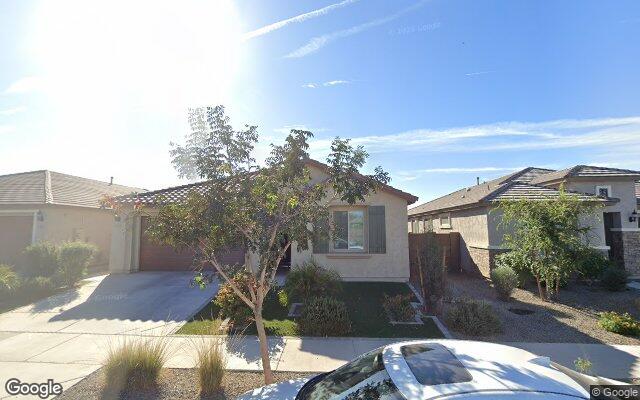
A small home, reviewed on public record.
© Google Street View
Compared to 1,661 Arizona facilities with a similar number of beds.
Care · 36-month window. Higher percentile = better performance on inspection record. Source: Arizona Dept. of Health Services · Bureau of Residential Facilities Licensing.
among peers to rank.
Rankings based on 36-month ADHS inspection data. Severity and frequency: fewer citations = higher percentile. Repeat rate: lower repeat citation share = higher percentile.
Citation history, plotted month by month.
38 deficiencies on record. Each bar is a month with a citation.
Finding distribution
38 total · 36 monthsScope × Severity (CMS A–L)
Every inspection visit, verbatim.
6 inspections in the public record, most recent first. Plain-language summaries open first — click into any row for the full citation text.
2026-03-27Complaint InvestigationEnforcement · 15 findings
“Based on documentation review, observation, interview, and record review, the governing authority failed to administer a training program for all staff regarding fall prevention and fall recovery, for two of four sampled staff. The deficient practice posed a risk if a staff member was not properly trained to assist a resident who had fallen and was unable to recover independently. Findings include: 1. A review of facility documentation revealed a personnel schedule dated March 2026. The schedule stated, “All Staff are live-in” indicating a 24 hour, continuous shift. The schedule revealed the following: - E1 worked on March 1-27, 2026, continuously; - E4 worked as an assistant caregiver on March 1-27, 2026, continuously; and - E5 worked as an assistant caregiver on March 1-27, 2026, continuously. 2. Upon entering the facility at approximately 11:00 AM on March 27, 2026, the Compliance Officer observed E4 and E5 present and working at the facility. 3. In an interview, E4 stated E4 and E5 were hired as assistant caregivers to help E1 take care of the residents by "giving them a bath [and] feeding them.” 4. A review of E4’s and E5’s personnel records revealed no documentation of training regarding fall prevention and fall recovery. 5. In a series of interviews, E1 reported E4 and E5 first started providing services at the facility in August 2025 and September 2025 respectively. E1 reported E4 and E5 did not have training regarding fall prevention and fall recovery and were still in the process of filling out the application and other required paperwork. E1 stated E1 gave E4 the aforementioned paperwork “A few months ago.” E5 stated E1 gave E5 the aforementioned paperwork “Maybe three months ago but I forgot to fill it out.” 6. In the exit interview, the Compliance Officer reviewed the findings with E1, and E1 offered no further comment.”
“Based on documentation review, observation, interview, and record review, the governing authority failed to designate, in writing, a manager who had a certificate as an assisted living facility manager. The deficient practice posed a risk as the assisted living facility did not have a certified manager for 24 days. Findings include: 1. A review of Department documentation revealed an email from E3 dated October 28, 2025, which stated, “I am requesting if I can please be removed as manager from Garden Enclave Assisted Living Home…[My] license will be removed already by 10-31-25.” The review revealed no notification of a new manager’s appointment in E3’s stead. 2. The Compliance Officer observed E2’s manager's certificate posted in the facility. 3. In an interview, E1 reported E2 was the current manager. E1 reported that E3 was the manager directly before E2. 4. A review of E2’s personnel record revealed an “INDEPENDENT CONTRACTOR ASSISTED LIVING MANAGER AGREEMENT.” The agreement revealed E2 took over as manager on November 25, 2025. 5. A review of facility documentation revealed no documentation of a manager between October 31, 2025, and November 24, 2025. The review revealed the facility did not have a manager for 24 days. 6. In an interview, E1 confirmed the facility did not have a manager for 24 days. E1 reported believing E1 had 30 days to find a new manager after E3 resigned. 7. In the exit interview, the Compliance Officer reviewed the findings with E1, and E1 offered no further comment.”
“Based on observation, interview, record review, and documentation review, the governing authority failed to designate, in writing, an acting manager who had the qualifications established in subsection (A)(3), if the manager was expected not to be present on the assisted living facility’s premises for more than 30 calendar days, or not present on the assisted living facility’s premises for more than 30 calendar days. The deficient practice posed a risk as the assisted living facility did not have an active and present manager. Findings include: 1. The Compliance Officer observed E2’s manager's certificate posted in the facility. 2. In an interview, E1 reported that E2 was the current manager. 3. A review of facility documentation revealed a personnel schedule dated March 2026. The schedule stated, “All Staff are live-in” indicating a 24 hour, continuous shift. The schedule did not show that E2 was at the facility at any time in March. 4. In a telephonic interview, E2 confirmed E2 was the manager. When the Compliance Officer asked if E2 had been at the facility anytime in March 2026, E2 stated, “Not yet.” When the Compliance Officer asked when E2 had last been at the facility, E2 stated, “Before Valentine’s.” E2 reported E2 had last been at the facility on February 12, 2026, approximately 42 days before the date of the inspection. 5. A review of E2’s personnel record revealed an “INDEPENDENT CONTRACTOR ASSISTED LIVING MANAGER AGREEMENT.” The agreement revealed E2 took over as manager on November 25, 2025. The agreement stated: “1. PURPOSE OF AGREEMENT: This Agreement establishes an independent contractor relationship, not employment. The Business engages the Contractor in a non-employee capacity solely for the purpose of licensure support and designation, as permitted under state and local regulations. The Contractor shall not be actively involved in the daily operations, management, staffing, financial decisions, or resident care of the Business. 2. SCOPE OF SERVICES: The Contractor’s responsibilities are limited to the following: Serving as a licensed assisted living manager of record, if required for licensing or regulatory purposes. Allowing the Business to reference the Contractor's license, credentials, and qualifications for compliance purposes only. Cooperating with licensing authorities as reasonably required, including providing documentation or verification of credentials. The Contractor shall not: - Participate in daily business operations. - Supervise staff or residents. - Make operational, clinical, or financial decisions. - Represent themselves as an active manager to residents, families, or staff.” 6. A review of facility documentation revealed no documentation of an acting manager. 7. In the exit interview, the Compliance Officer reviewed the findings with E1, and E1 offered no further comment.”
“Based on documentation review, observation, interview, and record review, the governing authority failed to ensure compliance with Arizona Revised Statutes (A.R.S.) § 36-411(A) and (C)(1-3), for two of four sampled personnel members. The deficient practice posed a risk if the employees were a danger to a vulnerable population. Findings include: 1. A.R.S. § 36-411(A) states: “A. Except as provided in subsection F of this section, as a condition of licensure or continued licensure of a residential care institution, a nursing care institution or a home health agency and as a condition of employment in a residential care institution, a nursing care institution or a home health agency, employees and owners of residential care institutions, nursing care institutions or home health agencies, contracted persons of residential care institutions, nursing care institutions or home health agencies or volunteers of residential care institutions, nursing care institutions or home health agencies who provide medical services, nursing services, behavioral health services, health-related services, home health services or direct supportive services and who have not been subject to the fingerprinting requirements of a health professional's regulatory board pursuant to title 32 shall have a valid fingerprint clearance card that is issued pursuant to title 41, chapter 12, article 3.1 or shall apply for a fingerprint clearance card within twenty working days after employment or beginning volunteer work or contracted work." 2. A.R.S. § 36-411(C)(1-3) states: "C. Each residential care institution, nursing care institution and home health agency shall make documented, good faith efforts to: 1. Contact previous employers to obtain information or recommendations that may be relevant to a person's fitness to work in a residential care institution, nursing care institution or home health agency. 2. Verify the current status of a person's fingerprint clearance card. [and] Beginning January 1, 2025, verify that a potential employee is not on the adult protective services registry pursuant to section 46-459.” 3. A review of facility documentation revealed a personnel schedule dated March 2026. The schedule stated, “All Staff are live-in” indicating a 24 hour, continuous shift. The schedule revealed E4 and E5 worked as assistant caregivers on March 1-27, 2026, continuously. 4. Upon entering the facility at approximately 11:00 AM on March 27, 2026, the Compliance Officer observed E4 and E5 present and working at the facility. 5. In an interview, E4 stated E4 and E5 were hired as assistant caregivers to help E1 take care of the residents by "giving them a bath [and] feeding them.” 6. A review of E4’s personnel record revealed documentation of previous employment. However, the review revealed no fingerprint clearance card (FCC); no application for a FCC; and no documentation demonstrating a facility representative made documented, good faith efforts to contact E4’s previous employer(s), verify the current status of E4's FCC, or verify E4 was not on the adult protective services (APS) registry. 7. A review of E5’s personnel record revealed no FCC, no application for a FCC, and no documentation demonstrating a facility representative made documented, good faith efforts to verify the current status of E5's FCC or verify E5 was not on the APS registry. 8. A review of the Department of Public Safety (DPS) website revealed no FCC or application for a FCC for E4 or E5. 9. A review of the APS registry website revealed E4 and E5 were not on the registry. 10. In a series of interviews, E1 reported E4 and E5 first started providing services at the facility in August 2025 and September 2025 respectively. E1 reported E4 and E5 were still in the process of filling out the application and other required paperwork. E1 stated E1 gave E4 the aforementioned paperwork “A few months ago.” E5 stated E1 gave E5 the aforementioned paperwork “Maybe three months ago but I forgot to fill it out.” 11. In the exit interview, the Compliance Officer reviewed the findings with E1, and E1 offered no further comment.”
“Based on observation, interview, record review, and documentation review, the manager failed to ensure an assistant caregiver interacted with residents under the supervision of a manager or caregiver. The deficient practice posed a risk as residents were alone with individuals who were not certified caregivers. Findings include: 1. Upon entering the facility at approximately 11:00 AM on March 27, 2026, the Compliance Officer observed E4 and E5 present and working at the facility. The Compliance observed no other facility personnel present, including E1, contrary to the personnel schedule. The Compliance Officer observed E4 and E5 interact with several of the residents present at the facility. 2. In an interview conducted shortly after entering the facility, when the Compliance Officer asked if any other facility personnel were present, E4 stated, “No.” E4 reported E4 needed to call E1 to let E1 know the Compliance Officer was at the facility. When the Compliance Officer asked when E1 was last at the facility, E4 reported E1 had been at the facility the day prior. E4 reported E1 was not always at the facility when E4 and E5 were left alone with residents. E4 stated E4 and E5 were hired to help E1 take care of the residents by "giving them a bath [and] feeding them.” When the Compliance Officer asked if E4 and E5 were certified caregivers, E4 and E5 stated, “No.” When the Compliance Officer asked if E4 and E5 had caregiver certificates, E4 and E5 stated, “No.” When the Compliance Officer asked if E4 and E5 were assistant caregivers, E4 stated, “Yeah.” 3. The Compliance Officer observed E1 enter the facility at approximately 11:45 AM. 4. In an interview, when the Compliance Officer asked when E1 had last been to the facility, E1 stated, “I was here yesterday.” Regarding E4 and E5, E1 stated, “They’re not certified yet.” 5. A review of E4’s and E5’s personnel records revealed no caregiver certificates. 6. A review of the caregiver certificate verification website (azcg.tmutest.com) revealed no valid caregiver certificates under E4's and E5’s names. 7. In the exit interview, the Compliance Officer reviewed the findings with E1, and E1 offered no further comment. This is a repeat citation from the complaint inspection conducted on November 19, 2024.”
“Based on documentation review, observation, interview, and record review, the manager failed to ensure an assistant caregiver's skills and knowledge were verified and documented before the individual provided physical health services, for two of two total sampled assistant caregivers. The deficient practice posed a risk if an assistant caregiver did not have the skills and knowledge necessary to meet a resident's needs. Findings include: 1. A review of facility documentation revealed a personnel schedule dated March 2026. The schedule stated, “All Staff are live-in” indicating a 24 hour, continuous shift. The schedule revealed E4 and E5 worked as assistant caregivers on March 1-27, 2026, continuously. 2. Upon entering the facility at approximately 11:00 AM on March 27, 2026, the Compliance Officer observed E4 and E5 present and working at the facility, with no other staff present. 3. In an interview, E4 stated E4 and E5 were hired as assistant caregivers to help E1 take care of the residents by "giving them a bath [and] feeding them.” When the Compliance Officer asked who administered medications to the residents the morning of the inspection, E4 stated, “Me.” 4. A review of E4’s and E5’s personnel records revealed no documentation of E4’s and E5’s skills and knowledge. 5. In a series of interviews, E1 reported E4 and E5 first started providing services at the facility in August 2025 and September 2025 respectively. E1 reported E4 and E5 did not have documentation of verification of skills and knowledge and were still in the process of filling out the application and other required paperwork. E1 stated E1 gave E4 the aforementioned paperwork “A few months ago.” E5 stated E1 gave E5 the aforementioned paperwork “Maybe three months ago but I forgot to fill it out.” 6. In the exit interview, the Compliance Officer reviewed the findings with E1, and E1 offered no further comment.”
“Based on documentation review, observation, and interview, the manager failed to ensure documentation was maintained for at least 12 months after the last date on the documentation of the caregivers and assistant caregivers working each day, including the hours worked by each. The deficient practice posed a risk as there was inaccurate documentation identifying the staff present each day to ensure the health and safety of residents. Findings include: 1. A review of facility documentation revealed a personnel schedule dated March 2026. The schedule stated, “All Staff are live-in” indicating a 24 hour, continuous shift. The schedule revealed the following: - E1 worked on March 1-27, 2026, continuously; - E4 worked as an assistant caregiver on March 1-27, 2026, continuously; and - E5 worked as an assistant caregiver on March 1-27, 2026, continuously. 2. Upon entering the facility at approximately 11:00 AM on March 27, 2026, the Compliance Officer observed E4 and E5 present and working at the facility. The Compliance observed no other facility personnel present, including E1, contrary to the personnel schedule. 3. In an interview conducted shortly after entering the facility, when the Compliance Officer asked if any other facility personnel were present, E4 stated, “No.” E4 reported E4 needed to call E1 to let E1 know the Compliance Officer was at the facility. When the Compliance Officer asked when E1 was last at the facility, E4 reported E1 had been at the facility the day prior. E4 reported E1 was not a live-in caregiver, contrary to the personnel schedule. When the Compliance Officer asked who administered medications to the residents the morning of the inspection, E4 stated, “Me.” 4. The Compliance Officer observed E1 enter the facility at approximately 11:45 AM. 5. In an interview, when the Compliance Officer asked when E1 had last been to the facility, E1 stated, “I was here yesterday.” When the Compliance Officer asked who administered medications to the residents the morning of the inspection, E1 reported E1 had, contrary to E4’s statement and to E1’s previous statement. When the Compliance Officer informed E1 what E4 had said about administering medications the morning of the inspection, E1 reported E1 had been at the facility between 7:00 AM and 8:30 AM before leaving. When the Compliance Officer informed E1 that the personnel schedule was not accurate, E1 stated, “Okay.” E1 acknowledged E1 was not at the facility 24 hours a day as reported on the personnel schedule. 6. In the exit interview, the Compliance Officer reviewed the findings with E1, and E1 offered no further comment. This is a repeat citation from the complaint inspection conducted on November 19, 2024.”
“Based on documentation review, observation, interview, and record review, the manager failed to ensure that at least the manager or a caregiver was present at an assisted living home when a resident was present in the assisted living home. The deficient practice posed a risk as residents were alone with individuals who were not trained caregivers. Findings include: 1. A review of facility documentation revealed a personnel schedule dated March 2026. The schedule stated, “All Staff are live-in” indicating a 24 hour, continuous shift. The schedule revealed the following: - E1 worked on March 1-27, 2026, continuously; - E4 worked as an assistant caregiver on March 1-27, 2026, continuously; and - E5 worked as an assistant caregiver on March 1-27, 2026, continuously. 2. Upon entering the facility at approximately 11:00 AM on March 27, 2026, the Compliance Officer observed E4 and E5 present and working at the facility. The Compliance observed no other facility personnel present, including E1, contrary to the personnel schedule. The Compliance Officer observed several residents present at the facility. 3. In an interview conducted shortly after entering the facility, when the Compliance Officer asked if any other facility personnel were present, E4 stated, “No.” E4 reported E4 needed to call E1 to let E1 know the Compliance Officer was at the facility. When the Compliance Officer asked when E1 was last at the facility, E4 reported E1 had been at the facility the day prior. E4 reported that E1 was not a live-in caregiver, contrary to the personnel schedule. When the Compliance Officer asked who administered medications to the residents the morning of the inspection, E4 stated, “Me.” E4 stated E4 and E5 were hired to help E1 take care of the residents by "giving them a bath [and] feeding them.” When the Compliance Officer asked if E4 and E5 were certified caregivers, E4 and E5 stated, “No.” When the Compliance Officer asked if E4 and E5 had caregiver certificates, E4 and E5 stated, “No.” When the Compliance Officer asked if E4 and E5 were assistant caregivers, E4 stated, “Yeah.” 4. The Compliance Officer observed E1 enter the facility at approximately 11:45 AM. 5. In an interview, when the Compliance Officer asked when E1 had last been to the facility, E1 stated, “I was here yesterday.” When the Compliance Officer asked who administered medications to the residents the morning of the inspection, E1 reported that E1 had, contrary to E4’s statement and to E1’s previous statement. When the Compliance Officer informed E1 what E4 had said about administering medications the morning of the inspection, E1 reported that E1 had been at the facility between 7:00 AM and 8:30 AM before leaving. Regarding E4 and E5, E1 stated, “They’re not certified yet.” 6. A review of E4’s and E5’s personnel records revealed no caregiver certificates. 7. A review of the caregiver certificate verification website (azcg.tmutest.com) revealed no valid caregiver certificates under E4's and E5’s names. 8. In the exit interview, the Compliance Officer reviewed the findings with E1, and E1 offered no further comment.”
“Based on record review and interview, the manager failed to ensure there was a documented residency agreement with the assisted living facility, for two of two sampled residents. The deficient practice posed a risk if a resident was not informed of the terms of residency. Findings include: 1. A review of R1’s and R2’s medical records revealed R1 and R2 were admitted to the facility. However, the review revealed no residency agreements. 2. In an interview, E1 stated, “I don’t see [them].” 3. In the exit interview, the Compliance Officer reviewed the findings with E1, and E1 offered no further comment. This is a repeat citation from the complaint and compliance inspection conducted on May 9, 2025.”
“Based on record review and interview, the manager failed to ensure a resident's medical record contained a medication order from a medical practitioner for each medication that was administered to the resident, for two of two sampled residents. The deficient practice posed a risk if the resident experienced a change in condition due to the administration of a non-ordered medication. Findings include: 1. A review of R1’s medical record revealed a current service plan that indicated R1 received medication administration. The review further revealed a medication administration record (MAR) dated March 2026, which indicated facility personnel administered medications to R1 on March 1-16, 2026. However, the review revealed no medication orders for R1’s seven administered medications. 2. In an interview, E1 confirmed R1 did not have proper orders for the seven administered medications. 3. A review of R2’s medical record revealed a current service plan that indicated R2 received medication administration. The review revealed a medication order for “Prednisone 10mg Take 1 QAM” dated March 15, 2026, which included the medical doctor’s typed name but no printed signature. 4. In an interview, E1 reported the medical doctor had not yet signed the medication order for R2’s prednisone. When the Compliance Officer asked who typed out the medical doctor’s name on the order, E1 stated, “I am the one who type the name.” E1 reported that facility personnel administered R1’s prednisone without a medication order. 5. In the exit interview, the Compliance Officer reviewed the findings with E1, and E1 offered no further comment. This is a repeat citation from the complaint and compliance inspection conducted on May 9, 2025.”
“Based on documentation review, observation, and interview, the manager failed to ensure a means of exiting the facility for a resident who did not have a key, special knowledge for egress, or the ability to expend increased physical effort that monitored or alerted employees of the egress of a resident from the facility. The deficient practice posed a risk if the facility was unaware of the egress of a resident from the facility. Findings include: 1. A review of Department documentation revealed the facility was authorized to provide directed care services. 2. The Compliance Officer observed a sliding glass door leading from the dining room to the backyard. The Compliance Officer observed the sliding glass door had an alert installed. However, the alert was set to the “OFF” position and the door did not sound when the Compliance Officer opened it. The Compliance Officer further observed no monitoring system in place. 3. In an interview, when the Compliance Officer asked how long the alert had been off, E4 stated E5 turned it off “Just this morning.” 4. In the exit interview, the Compliance Officer reviewed the findings with E1, and E1 reported that the alert should not have been turned off. This is a repeat citation from the complaint and compliance inspection conducted on May 9, 2025, and the complaint inspection conducted on November 19, 2024.”
“Based on record review, interview, and observation, the manager failed to ensure a medication was administered in compliance with a medication order, for two of two sampled residents. The deficient practice posed a risk if the resident experienced a change in condition due to improper administration of medication. Findings include: 1. A review of R1’s medical record revealed a current service plan which indicated R1 received medication administration. The review further revealed a medication administration record (MAR) dated March 2026 which indicated facility personnel administered medications to R1 on March 1-16, 2026. However, the review revealed no medication orders for R1’s seven administered medications. 2. In an interview, E1 confirmed R1 did not have proper orders for the seven administered medications. 3. A review of R2’s medical record revealed a current service plan which indicated R2 received medication administration. The review revealed a medication order for “Aspirin 81mg 1 tab QAM,” “Olanzapine tab 5mg 1 tab QHS,” “Sertraline 50mg 1 tab QAM,” and “Trazodone 100mg 2 tabs QHS” dated June 30, 2025, which included the medical doctor’s typed name and printed signature. The review revealed a medication order for “Prednisone 10mg Take 1 QAM” dated March 15, 2026, which included the medical doctor’s typed name but no printed signature. The review further revealed a MAR dated March 2026. However, the MAR did not include documentation of any medication administered after 7:00 AM on March 16, 2026. 4. The Compliance Officer observed R2’s medication organizer. In the organizer, the Compliance Officer observed the “MORN” slots for Sunday through Friday contained one tablet of aspirin and one of sertraline and the “BED” slots for the same days contained one tablet of olanzapine and two of trazodone. The Compliance Officer observed no medication in any of the slots for Saturday. 5. In an interview, when the Compliance Officer asked when facility personnel filled R2’s medication organizer, E1 stated, “Every Saturday.” E4 reported E4 filled R2’s medication organizer the Saturday before the inspection as well as the Wednesday before the inspection. When the Compliance Officer asked why the “MORN” slots for Thursday and Friday and the “BED” slots for Thursday still contained R2’s medication even though those medications should have been administered before the inspection, E1 and E4 did not answer. Regarding the medication order for prednisone dated March 15, 2026, E1 reported the medical doctor had not yet signed it. When the Compliance Officer asked who typed out the medical doctor’s name on the order, E1 stated, “I am the one who type the name.” E1 reported that facility personnel administered R1’s prednisone without a medication order, but did document the administration. 6. In the exit interview, the Compliance Officer reviewed the findings with E1, and E1 offered no further comment.”
“Based on interview and record review, the manager failed to ensure medication administered to a resident was documented in the resident’s medical record, for four of four total residents. The deficient practice posed a risk as the medication could not be verified as administered against a medication order. Findings include: 1. In an interview, E4 reported facility personnel administered medications to all four residents. 2. A review of R1’s, R2’s. R3’s, and R4’s medical records revealed current service plans which indicated R1, R2, R3, and R4 received medication administration. The review further revealed medication administration records (MARs) dated March 2026. However, the MARs revealed no documentation demonstrating facility personnel administered R1’s, R2’s, R3’s, and R4’s medications on March 17-27, 2026. 3. In an interview, when the Compliance Officer asked who administered medications to the residents the morning of the inspection, E4 stated, “Me.” 4. In a separate interview, E1 reported that facility personnel had not been documenting on the MARs for approximately two weeks prior to the date of the inspection. 5. In the exit interview, the Compliance Officer reviewed the findings with E1, and E1 offered no further comment. This is a repeat citation from the complaint inspection conducted on November 19, 2024.”
“Based on observation and interview, the manager failed to ensure that medication stored by an assisted living facility was stored in a separate locked room, closet, cabinet, or self-contained unit. The deficient practice posed a risk to the physical health and safety of residents with access to the medication. Findings include: 1. The Compliance Officer observed an unlocked closet in a hall accessible to residents. Upon opening the closet, the Compliance Officer observed a variety of resident medications. 2. In an interview, E4 reported that facility personnel used the closet to store resident medications. When the Compliance Officer asked who unlocked the medication closet, E4 stated, “Me.” When the Compliance Officer asked when E4 unlocked the medication closet, E4 stated, “Around 7:00 [AM].” 3. In the kitchen, the Compliance Officer observed an unlocked refrigerator. Inside the refrigerator, the Compliance Officer observed a medication lock box. However, the Compliance Officer observed that the box was not locked. Inside the box, the Compliance Officer observed a bottle of bismuth subsalicylate and two bottles of valproic acid. 4. In an interview, E1 confirmed the medication lock box was not locked. 5. In the exit interview, the Compliance Officer reviewed the findings with E1, and E1 offered no further comment. This is a repeat citation from the complaint and compliance inspection conducted on May 9, 2025.”
“Based on observation, interview, and documentation review, the manager failed to ensure that a food menu was prepared at least one week in advance and conspicuously posted at least one calendar day before the first meal on the food menu was served. The deficient practice posed a risk if the source of a potential food-borne illness could not be identified. Findings include: 1. The Compliance Officer observed a food menu posted in the hall near the kitchen. However, the menu was dated February 23, 2026, through March 1, 2026. The Compliance Officer observed no current food menu posted in the facility. 2. In an interview, when the Compliance Officer asked whether E1 had the food menu for the week of the inspection, E1 stated, “I make it already” but reported the printer was having issues and E1 was unable to print it. 3. A review of facility documentation revealed a food menu dated March 8-14, 2026. However, the review revealed no food menu for the week of the inspection. 4. In an interview, when the Compliance Officer again requested the current food menu, E1 stated, “I don’t have it yet.” 5. In the exit interview, the Compliance Officer reviewed the findings with E1, and E1 offered no further comment.”
2025-05-09Complaint InvestigationA.A.C. · 16 findings
“Based on the documentation review, record review, and interview the manager of an assisted living home failed to maintain a standardized form for each resident that included the information prescribed in Arizona Revised Statute (A.R.S.) § 36-420.04(A)(1) through (9) for three of three residents sampled. The deficient practice posed a risk if the emergency responder was not aware of critical health information for a resident. Findings include: 1. A.R.S. 36-420.04.A states, "A. An assisted living center or assisted living home that contacts an emergency responder on behalf of a resident shall provide to the emergency responder a written document that includes all of the following: 1. The reason or reasons the emergency responder was requested on behalf of the resident. 2. Whether the resident receives medication services and, if the resident has provided this information to the assisted living center or assisted living home, a list of all the resident's prescription and over-the-counter medications, their dosages and how frequently they are administered. 3. The name, address and telephone number of the resident's current pharmacy. 4. A list of any known allergies to any medications, additives, preservatives or materials like latex or adhesive. 5. The name and contact information for the resident's primary care physician and power of attorney or authorized representative. 6. Basic information about the resident's physical and mental conditions and basic medical history, such as having diabetes or a pacemaker or experiencing frequent falls or cardiovascular and cerebrovascular events, as well as dates of recent episodes, if known. 7. The point-of-contact information for the assisted living center or assisted living home, including the telephone number, if available, cell phone number and email address. A point of contact must be available to respond to questions regarding the information provided twenty-four hours a day, seven days a week. 8. A copy of the resident's health insurance portability and accountability act (HIPAA) release authorizing a receiving hospital to communicate with the assisted living center or assisted living home to plan for the resident's discharge. This paragraph does not preclude a resident from revoking the resident's health insurance portability and accountability act release authorization. 9. A copy of the resident's advance directives, if any, on file at the assisted living center or assisted living home. This paragraph does not preclude a resident from revoking or modifying the resident's advance directives." 2. A review of the medical records for R1's, R2's and R3's did not include a standardized form for each resident that included the information as required in A.R.S. 36-420.04(A)(1) through (9). 3. In an interview, E2 acknowledged that the documentation provided to the Compliance Officers was blank and not prefilled with the required information as prescribed in A.R.S. § 36-420.04(A).”
“Based on documentation review and interview, the health care institution failed to establish, document, and implement tuberculosis (TB) infection control activities including annually assessing the health care institution's risk of exposure to infectious TB. The deficient practice posed a TB exposure risk to residents and staff. Findings include: 1. A review of facility documentation revealed no documentation of annually assessing the health care institution's risk of exposure to infectious TB was available. 2. In an interview, E2 acknowledged that an assessment of the health care institution's risk of exposure to infectious TB was not available for review during the inspection.”
“Based on observation and interview, the manager failed to ensure that the location at which a copy of the most recent Department inspection report and any plan of correction resulting from the Department inspection could be found, was conspicuously posted. Findings include: 1. During the environmental tour, the Compliance Officers observed no posting indicating where the most recent inspection report could be located. 2. In an interview, E2 acknowledged that documentation of the location at which a copy of the most recent Department inspection report and any plan of correction resulting from the Department inspection may be viewed was not posted.”
“Based on documentation review and interview, the manager failed to ensure the report required in subsection (2) was maintained for at least 12 months after the date the report was submitted to the governing authority. Findings include: 1. A review of the facility's quality management documentation revealed that no quality management reports were available for review. 2. In an interview, E2 acknowledged the report required in subsection (2) was not maintained for at least 12 months after the date the report was submitted to the governing authority.”
“Based on record review and interview, the manager failed to ensure a resident provided evidence of freedom from infectious tuberculosis (TB) as specified in R9-10-113, for three of three residents sampled. The deficient practice posed a TB exposure risk to residents and the Department was unable to determine substantial compliance as the documentation was not provided during the inspection. Findings include: 1. R9-10-113.A states "If a health care institution is subject to the requirements of this Section, as specified in an Article in this Chapter, the health care institution's chief administrative officer shall ensure that the health care institution establishes, documents, and implements tuberculosis infection control activities that...2. Include: a. For each individual who is employed by the health care institution, provides volunteer services for the health care institution, or is admitted to the health care institution and who is subject to the requirements of this Section, screening, on or before the date specified in the applicable Article of this Chapter, that consists of: i. Assessing risks of prior exposure to infectious tuberculosis, ii. Determining if the individual has signs or symptoms of tuberculosis, and iii. Obtaining documentation of the individual's freedom from infectious tuberculosis according to subsection (B)(1)..." 2. A review of R1's, R2's, and R3's medical records revealed no documentation of evidence of freedom from infectious tuberculosis was available for review at the time of inspection. Based on R1's, R2's, and R3's date of acceptance, this documentation was required. 3. In an interview, E2 reported this documentation was completed, however could not be found at the time of inspection. E2 acknowledged R1's, R2's, and R3's medical records did not contain documentation of TB requirements at the time of the inspection.”
“Based on record review and interview, the manager failed to ensure that a resident accepted by the assisted living facility submitted documentation signed by a medical practitioner or a registered nurse that stated whether the individual required continuous medical services, continuous or intermittent nursing services, or restraints, for one of three residents reviewed. The deficient practice posed a risk if the facility was unable to meet a resident's needs. Findings include: 1. A review of R1's (accepted February 2025) medical record revealed documentation to include R1 did not require continuous medical services, continuous or intermittent nursing services, or restraints dated February 18, 2025. However, this documentation was not signed by a medical practitioner or a registered nurse. Based on R1's acceptance date, this document was required. 2. In an interview, E2 acknowledged that R1's medical record did not contain documentation signed by a medical practitioner or a registered nurse that stated whether the resident required continuous medical services, continuous or intermittent nursing services, or restraints. This is a repeat deficiency from the complaint inspection conducted on November 19, 2024.”
“Based on record review and interview, the manager failed to ensure before or at the time of an individual's acceptance by an assisted living facility, there was a documented residency agreement with the assisted living facility for one of three sampled residents. The deficient practice posed a risk if the resident was not informed of the terms of residency. Findings include: 1. A review of R2's medical record revealed that R2 was admitted in February 2025. 2. A review of R2's medical records revealed that no documentation of residency agreements was available for review at the time of inspection. 3. In an interview, E2 acknowledged that documentation of R2 residency agreements was not available for review at the time of inspection.”
“Based on observation, interview, and record review, for one of three residents sampled, the manager failed to ensure a resident had a written service plan that included a description of the resident's medical or health problems, including physical, behavioral, cognitive, or functional conditions or impairments. The deficient practice posed a risk to residents if the service plan did not include documentation of the resident's condition and services to be provided for the resident. Findings include: 1. The Compliance Officers observed R2 trying to escape multiple times from the front door, and R2 was agitated, yelling and screaming at E3 using profanity. 2. In an interview, E3 reported that R2 has escaped multiple times to the neighbors and has some behaviors towards E3, but not towards any residents. E3 also reported R2 wanders out of the front door and needs constant redirection. 3. A review of R2's medical record revealed a service plan dated for February 19, 2025, for personal care services, which did not include exit-seeking behavior or other behaviors that was observed. 4. A review of R2's medical record revealed a document titled "caregiver notes." This document stated on May 05, 2025 "[R2] having a tantrum today, [R2] try to run away in the door for 3x, saying [R2] wants to go home. [R2] trying to hit [R2] head on the frame on the wall, and trying to hit [R2] forehead in the door frame. [R2] trying to ruin the leaves of the plant inside the house." 5. In an interview, E1 acknowledged that R2's service plan did not include documentation of the resident's medical or health problems, as required.”
“Based on record review and interview, the manager failed to ensure a written service plan included the signature and date from the resident or representative, for one of three residents sampled. The deficient practice posed a health and safety risk if the resident or representative did not acknowledge the services that were to be provided. Findings include: 1. A review of R2's medical record revealed a written service plan for personal care services dated February 19, 2025. However, the service plan did not include a signature and date from the resident or representative. 2. In an interview, E2 acknowledged R2's service plan did not include a signature and date from the resident or representative.”
“Based on record review, and interview, the manager failed to ensure that a resident medical record contained a medication order from a medical practitioner for each medication that was administered, for two of three residents sampled. The deficient practice posed a health and safety risk. Findings include: 1. A review of R1's medical record revealed a current written service plan dated February 2025. This service plan indicated R1 received medication administration. 2. A review of R1's medical record revealed no documentation of signed medication orders or verbal medication orders for the following: - Carvedilol 12.5mg tab - Eliquis 2.5mg tab - Furosemide 40mg tab - Pantoprazole 40mg tab - Sucontral D 1mg cap - Omeprazole 20 mg 3. Review of R1's medical record revealed an April 2025 medication administration record (MAR). This MAR stated the following: -Carvedilol 12.5mg tab – 1 tab twice daily (for Hypertension); -Eliquis 2.5mg tab – 1 tab twice daily for 30 days, reassess (for Xa Inhibitor); -Furosemide 40mg tab – ½ tab once daily, may take additional ½ tab in evening if SOB worsens; -Potassium Chloride 10meq – 1 tab twice daily (for Minerals and Electrolytes); -Pantoprazole 40mg tab – 1 tab twice daily (for Proton Pump Inhibitors); -Omeprazole 20mg delayed release cap – 1 cap once daily. 4. A review of R2's medical record revealed a current written service plan dated February 2025. This service plan indicated R2 received medication administration. 5. A review of R2's medical record revealed no documentation of signed medication orders or verbal medication orders for the following: -Valproic Acid 250mg/mL -Aspirin 81mg tab -Trazodone 100mg tab -Haldol – 1 tablespoon twice daily -Sertraline tab – 1 tab 6. A review of R2's medical record revealed a May 2025 medication administration record (MAR). This MAR stated the following: -Valproic Acid 250mg/mL – 1 teaspoon (5mL) twice daily (for Behavior); -Aspirin 81mg tab – 1 tab daily (for Hypertension); -Trazodone 100mg tab – 1 tab at bedtime (for Sleep Aid); -Haldol – 1 tablespoon twice daily (for Behavior); -Sertraline tab – 1 tab daily (for Depression). 7. In an interview, E2 reported the medications were administered per the MAR, and E2 acknowledged R1's and R2’s medical records did not contain a medication order from a medical practitioner for each medication that was administered.”
“Based on record review and interview, the manager failed to ensure that a resident's medical record contained documentation of the resident's orientation to exits from the assisted living facility for one of three sampled residents. The deficient practice posed a risk if a resident was unaware of the evacuation path to be used in an emergency. Findings include: 1. A review of R2's medical record revealed no documentation of the resident's orientation to exits from the assisted living facility was available for review at the time of inspection. 2. In an interview, E2 acknowledged R2's medical record did not contain documentation of R2's orientation to exits from the assisted living facility at the time of the inspection.”
“Based on record review, and interview, the manager failed to ensure a resident's medical record contained the resident's signed residency agreement, for one of three residents sampled. The deficient practice posed a risk as the Department was unable to determine substantial compliance as the required documentation was not provided during the inspection. Findings include: 1. A review of R3's medical record revealed a residency agreement with "Garden Enclave Assisted Living Home, LLC"; however, the signature page was missing and not available for review during the inspection. 2. In an interview, E1 acknowledged that R3's medical record did not contain the signature page of the residency agreement for review during the inspection.”
“Based on record review and interview, the manager failed to ensure a service plan included documentation of the resident's weight or documentation from a medical practitioner stating weighing the resident was contraindicated, for one of one residents sampled receiving directed care services. The deficient practice posed a health and safety risk to the residents. Findings include: 1. A review of R3's medical record revealed a service plan dated February 18, 2025, that indicated R3 required directed care services. The service plan did not include documentation of R3's weight or documentation from R3's medical practitioner stating that weighing R3 was contraindicated. 2. In an interview, E1 acknowledged R3's service plan did not include documentation of R3's weight or documentation from R3's medical practitioner stating that weighing R3 was contraindicated.”
“Based on documentation review, observation, and interview, for a facility authorized to provide directed care services, the manager failed to ensure there was a means of exiting the facility that provided access to an outside area from which a resident could exit to a location at least 30 feet away from the facility and controlled or alerted employees of the egress of a resident from the facility. The deficient practice posed a risk if the facility was unaware of the general or specific whereabouts of a resident. Findings include: 1. A review of Department records revealed the facility was licensed to provide directed care services. 2. The Compliance Officers observed two ambulatory residents. 3. During the environmental tour, the Compliance Officers observed the back sliding door leading to the back yard. The door leading out to the backyard had a device that was intended to alert employees to the egress of a resident to the outside area. However, the door was not secured, and the door chime was not functioning. 4. In an interview, E2 acknowledged that a means of exiting the facility to an outside area did not control or alert employees of the egress of a resident from the facility. This is a repeat deficiency from the complaint inspection conducted on November 19, 2024.”
“Based on observation and interview, the manager failed to ensure medication was stored in a separate locked room, closet, cabinet, or self-contained unit used only for medication storage. The deficient practice posed a risk to the physical health and safety of residents with access to unsecured medication. Findings include: 1. During the environmental inspection of the facility, the Compliance Officer observed the unlocked medication lockbox in the refrigerator containing medication. The medication lockbox had a bottle of “Lorazepam 2 Milligrams per milliliter” 2. In an interview, E2 and E3 acknowledged the medication in the medication in the refrigerator was unlocked and the aforementioned medications were accessible to residents at the facility.”
“Based on documentation review and interview, the manager failed to ensure the disaster plan required in subsection (A)(1) was reviewed at least once every 12 months. The deficient practice posed a risk if employees were unable to implement the disaster plan in an emergency. Findings include: 1. A review of facility documentation revealed no documented review of the facility's disaster plan conducted at least once every 12 months. 2. In an interview, E2 acknowledged there was no documentation available for review at the time of the inspection to indicate the disaster plan required in subsection (A)(1) was reviewed at least once every 12 months.”
2025-02-05Complaint InvestigationNo findings
2024-11-19Complaint InvestigationA.A.C. · 7 findings
“Based on documentation review, observation, record review, and interview, the manager failed to ensure an assistant caregiver interacted with residents under the supervision of a manager or caregiver. The deficient practice posed a risk as E3 was not qualified to provide the required services unsupervised. Findings include: 1. Arizona Revised Statutes (A.R.S.) \'a7 36-401(A)(49) states "[s]upervision" means "directly overseeing and inspecting the act of accomplishing a function or activity." 2. During the environmental inspection of the facility, the Compliance Officers arrived at the facility at 9:45 AM on November 19, 2024, and observed E3 working alone and providing direct services to residents. After the Compliance Officer arrived, E3 called E4 and informed E4 that the Compliance Office was there for an inspection. E4 reported E4 would call E2 and inform E2 that the Compliance Office was there for an inspection. E2 arrived at the facility around 1:00 PM only after the Deputy Bureau Chief called E2 and informed E2 of the severity of the issue of no certified staff being on-site at the facility. 3. A review of facility personnel records revealed no personnel records for E3. 4. In an interview, E3 reported E4 dropped E3 and R3 off at the facility the night of November 18, 2024, around 7:00 PM. E3 reported E3 worked November 18, 2024, and November 19, 2024, until 1:00 PM alone. E3 also reported E3 had never completed a caregiver training program. E3 reported E4 made E3 a fake caregiver certificate and E3 had only been in Arizona for two years. 5. In an interview, E2 and E4 reported E3 had arrived and worked at the facility alone the night of November 18, 2024, around 7:00 PM and worked alone on November 18, 2024, and November 19, 2024, due to E2 working a different job the night of November 18, 2024.”
“Based on observation, documentation review, and interview, the manager failed to ensure documentation was maintained of the caregivers and assistant caregivers working each day, including the hours worked. The deficient practice posed a risk as there was no documentation to identify the staff present each day to ensure the health and safety of residents. Findings include: 1. During the environmental inspection of the facility, the Compliance Officer observed E3 working at the facility at the time of the inspection. 2. The Compliance Officer requested documentation of the caregivers and assistant caregivers working each day, including the hours worked by each, however, it was not provided. 3. In an interview, E2 and E3 acknowledged documentation was not maintained of employees working each day, including the hours worked, for the months of February 2024 to November 2024.”
“Based on documentation review, record review, and interview, the manager failed to maintain a personnel record for each employee which included the items required by this rule, for two of four employees sampled. The deficient practice posed a risk as required information could not be verified for two employees. Finding include: 1. During the environmental inspection of the facility, the Compliance Officer observed E3 working at the facility on November 19, 2024. The Compliance Officer requested a personnel record for E3 and no record was available for review. 2. A review of medication administration record (MAR) for R1 revealed initials of E4 from the date of November 9, 2024, through November 20, 2024. The Compliance officer requested a personnel record for E4 and no personnel record was available for review. 3. In an interview, E3 reported E4 had filled out the MAR documentation from November 9, 2024 to November 20, 2024. E3 also reported E3 had not completed a caregiver training programs and E3 reported E4 had provided E3 with a fake caregiver certificate. 4. In an interview, E2 acknowledged no personnel records were available for E3 and E4 before the end of the inspection.”
“Based on record review and interview, the manager failed to ensure before or at the time of acceptance of an individual, the individual submitted documentation dated within 90 calendar days before the individual was accepted by the assisted living facility to include whether the individual required continuous medical services, continuous or intermittent nursing services, or restraints, for three of three sampled residents. The deficient practice posed a risk if staff were unable to meet the needs of residents. Findings include: 1. A review of R1's, R2's, and R3's medical records revealed no documentation dated within 90 calendar days before R1, R2 and R3 were accepted by the assisted living facility to include whether R1, R2 and R3 required continuous medical services, continuous or intermittent nursing services, or restraints. 2. In an interview, E2 acknowledged R1, R2 and R3 medical records did not contain the required documentation.”
“Based on observation, interview, and record review, the manager failed to ensure a medical record was established and maintained for each resident according to A.R.S. Title 12, Chapter 13, Article 7.1 for one of three residents sampled. The deficient practice posed a risk as the required information could not be verified. Findings include: 1. During the environmental inspection of the facility, the Compliance Officer observed R3 at the facility at the time of inspection. 2. A review of resident medical records revealed no medical record for R3. 3. In a interview, E3 reported R3 was a resident of facility had just arrived at the facility the night of November 18, 2024 and no medical record was available for review. 4. In a telephonic interview E4 reported E4 had dropped off R3 at the facility around 7:00 PM on November 18, 2024. 5. In an interview, E2 acknowledged no medical record was available for R3.”
“Based on observation and interview, the manager failed to ensure a means of exiting the facility controlled or alerted employees of the egress of a resident from the facility. The deficient practice posed a risk if the facility was unaware of the general or specific whereabouts of a resident. Findings include: 1. During the environmental inspection of the facility, the Compliance Officer observed the front door and a door leading from the common area to the backyard had a mechanism to alert employees of the egress of a resident from the facility, However, the mechanism to alert employees of the egress of a resident from the facility were not working. 2. In an interview, E3 acknowledged that the door mechanism were not working at the time of the inspection.”
“Based on observation, record review, and interview, the manager failed to ensure a medication administered to a resident was documented in the resident's medical record, for three of three sampled residents who received medication administration. Findings include: 1. During the environmental inspection of the facility, the Compliance Officer observed R1, and R2 at the facility during the time of inspection. 2. A review of R1's and R2's medical records revealed R1 and R2 were receiving directed care services and medication adminsitration services. 3. A review of R1's medical record revealed a medication administration record (MAR). The MAR revealed the MAR had not been filled out from November 9, 2024, to Novemeber 19, 2024. 4. A review of R2's medical record revealed a medication administration record (MAR). The MAR revealed the MAR had not been filled out from November 9, 2024, to Novemeber 19, 2024. 5 In an interview, E2 acknowledge E1 one had not filled out the MAR since November 9, 2024, to Novemeber 19, 2024 for R1 and R2.”
2024-05-22Annual Compliance VisitNo findings
2024-02-15Annual Compliance VisitNo findings
Other facilities in Queen Creek.
Other memory care facilities near Queen Creek with similar care offerings.
Facility Watch · Premium
Family reviews
No reviews yet — be the first to share your experience
Other memory care options nearby.
A Caring Manor
Queen Creek
Montelena Assisted Living & Memory Care
Queen Creek
Terravella Assisted Living Care, LLC
Queen Creek
Hally Care Assisted Living, LLC
Queen Creek
Young Family Care Homes and Investments, LLC
Queen Creek
Eden Estates Assisted Living
Queen Creek
A Caring Manor I
Queen Creek
East Valley Mansion Assisted Living
Queen Creek