Eden Estates Assisted Living.

A medium home, reviewed on public record.
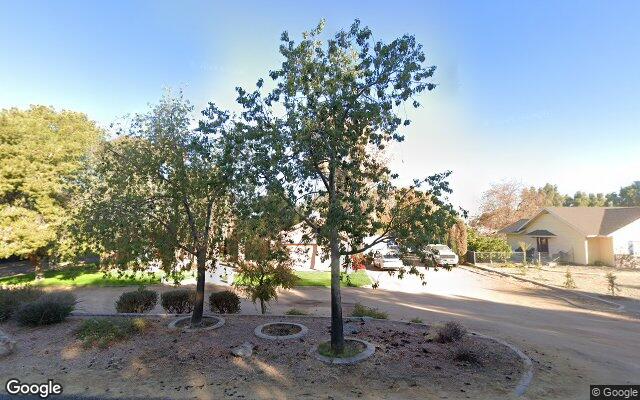
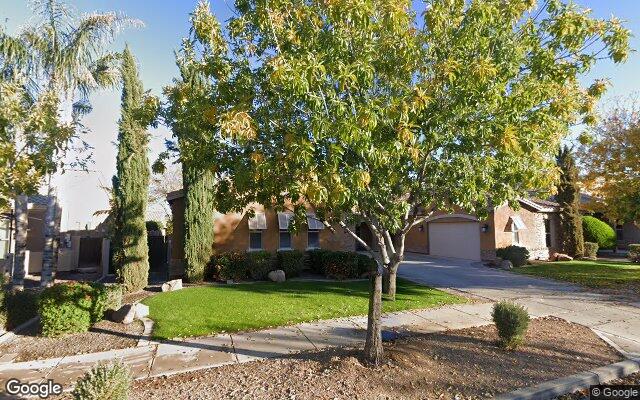
© Google Street View
Compared to 1,661 Arizona facilities with a similar number of beds.
Care · 36-month window. Higher percentile = better performance on inspection record. Source: Arizona Dept. of Health Services · Bureau of Residential Facilities Licensing.
among peers to rank.
Rankings based on 36-month ADHS inspection data. Severity and frequency: fewer citations = higher percentile. Repeat rate: lower repeat citation share = higher percentile.
Citation history, plotted month by month.
4 deficiencies on record. Each bar is a month with a citation.
Finding distribution
4 total · 36 monthsScope × Severity (CMS A–L)
Every inspection visit, verbatim.
3 inspections in the public record, most recent first. Plain-language summaries open first — click into any row for the full citation text.
2026-09-21Complaint InvestigationNo findings
2026-05-22Complaint InvestigationNo findings
2025-04-10Annual Compliance VisitR9-10-803.A.9 · 4 findings
“Based on documentation review, record review, and interview, the governing authority failed to ensure compliance with A.R.S. § 36-411, for one of two personnel sampled. The deficient practice posed a risk if the employee was a danger to a vulnerable population. Findings include: 1. A.R.S. § 36-411(C)(1)(3) states, "Each residential care institution, nursing care institution and home health agency shall make documented, good faith efforts to: 1. Contact previous employers to obtain information or recommendations that may be relevant to a person's fitness to work in a residential care institution, nursing care institution or home health agency. 3. Beginning January 1, 2025, verify that a potential employee is not on the adult protective services registry pursuant to section 46-459. If a potential employee is found to be on the adult protective services registry, the residential care institution, nursing care institution or home health agency may not hire the potential employee.” 2. Review of E2’s personnel record revealed no documentation of good faith efforts to contact previous employers. 3. Review of E2’s personnel record revealed no documentation to verify that a potential employee was not on the adult protective services registry. Based on E2’s date of hire this was required. 4. Review of the facility’s April 2025 schedule showed E2 worked for twelve hours on April 7 and April 8th. 5. In an interview, E1 acknowledged E2’s personnel record did not include documentation of good faith efforts to contact previous employers to obtain information or recommendations that may be relevant to a person's fitness to work. E1 also acknowledged E2’s personnel record did not include documentation of efforts to verify if the employee was on the adult protective services registry.”
“Based on documentation review, record review, and interview, the manager failed to ensure an employee provided documentation of freedom from infectious tuberculosis (TB), for one of two employees reviewed. The deficient practice posed a potential TB exposure risk to residents. Findings include: 1. R9-10-113.A states "If a health care institution is subject to the requirements of this Section, as specified in an Article in this Chapter, the health care institution's chief administrative officer shall ensure that the health care institution establishes, documents, and implements tuberculosis infection control activities that...2. Include: a. For each individual who is employed by the health care institution, provides volunteer services for the health care institution, or is admitted to the health care institution and who is subject to the requirements of this Section, screening, on or before the date specified in the applicable Article of this Chapter, that consists of: i. Assessing risks of prior exposure to infectious tuberculosis, ii. Determining if the individual has signs or symptoms of tuberculosis, and iii. Obtaining documentation of the individual's freedom from infectious tuberculosis according to subsection (B)(1)..." 2. A review of the Centers for Disease Control and Prevention website revealed a web page titled, "Guidelines for Preventing the Transmission of Mycobacterium tuberculosis in Health-Care Settings, 2005." The web page stated, "If TST (Mantoux Skin Test) is used for baseline testing, two-step testing is recommended for HCWs (Health Care Workers) whose initial TST results are negative. If the first-step TST result is negative, the second-step TST should be administered 1-3 weeks after the first TST result was read." 3. Review of E2’s personnel record revealed a negative TB skin test that was less than 12 months old, however no additional documentation of freedom from infectious TB was available for review. In addition, no documentation of a risk assessment of prior exposure to infectious TB or a determination if E2 had signs or symptoms of TB. Based on E2's hire date, this documentation was required. 4. Review of the facility’s April 2025 schedule showed E2 worked for twelve hours on April 7 and April 8th. 5. In an interview, E1 acknowledged E2 was in the facility working on April 7, 2025 and April 8, 2025. 6. In an interview, E1 acknowledged E2’s personnel record did not include documentation of freedom from infectious TB as required in R9-10-113.”
“Based on record review and interview, the manager failed to ensure a caregiver documented the services provided in the medical record, for two of two residents sampled. The deficient practice posed a risk as services could not be verified as provided against a service plan. Findings include: 1. Review of R1’s medical record revealed a current service plan dated March 1, 2025. The following were a list of services R1 received: - Partial bath PRN - Dressing full assist - Grooming: Comb hair Daily - Nails- Clean and check with bed bath 2. Review of R1’s medical records revealed an Activities of Daily Living (ADL) log for the month of April 2025. The ADLs revealed no services were documented on the following days of April: 1st, 2nd, 3rd, 5th, 6th, 7th, 8th, 9th, and 10th. On April 4, 2025 the service that was documented was bathing. 3. Review of R2’s medical records revealed a current service plan dated February 1, 2025. The following were a list of services R2 received: - Bathing/ Hygiene: Shower 2x week - Brush teeth/ encourage oral care daily - Lotion skin after shower & PRN to maintain Moisture. 4. Review of R2’s medical records revealed ADL for the month of April 2025. The ADLs revealed the services listed above were not documented on the following days of April: 1st, 2nd, 4th, 5th, 6th, 7th, 8th, 9th, and 10th. On April 3, 2025 the service that was documented was Bathing. 5. In an interview, E1 reported E1 did not know ADLs were supposed to be documented. E1 also reported that services were provided. 6. In an interview, E1 and E3 acknowledged documentation was not available showing the services were provided.”
“Based on documentation review, observation, and interview, the manager failed to ensure that poisonous and toxic materials were stored in a locked area and inaccessible to residents. The deficient practice posed a risk to the physical health and safety of a resident. Findings include: 1. Documentation review revealed that the facility was licensed for Directed Care. 2. The Compliance Officers observed ambulatory residents 3. During the facility tour with E1, the Compliance Officers observed the following poisonous or toxic materials in unlocked cabinets in the kitchen: · Great Value furniture polish and Clorox wipes · ReliOn sterile alcohol swabs · Scotchgard furniture protector 4. In an interview, E1 acknowledged that poisonous or toxic materials stored by the assisted living facility were not maintained in a locked area and inaccessible to residents.”
Other facilities in Queen Creek.
Other memory care facilities near Queen Creek with similar care offerings.

Full Inspection Record
Family reviews
No reviews yet — be the first to share your experience
Other memory care options nearby.
A Caring Manor
Queen Creek
Montelena Assisted Living & Memory Care
Queen Creek
Terravella Assisted Living Care, LLC
Queen Creek
Hally Care Assisted Living, LLC
Queen Creek
Young Family Care Homes and Investments, LLC
Queen Creek
Garden Enclave Assisted Living Homes
Queen Creek
A Caring Manor I
Queen Creek
East Valley Mansion Assisted Living
Queen Creek