Neighbors Assisted Living North.
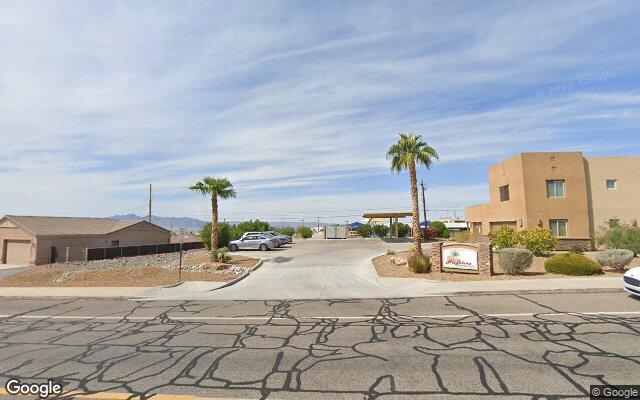
A medium home, reviewed on public record.
© Google Street View
Compared to 1,661 Arizona facilities with a similar number of beds.
Care · 36-month window. Higher percentile = better performance on inspection record. Source: Arizona Dept. of Health Services · Bureau of Residential Facilities Licensing.
among peers to rank.
on file.
Rankings based on 36-month ADHS inspection data. Severity and frequency: fewer citations = higher percentile. Repeat rate: lower repeat citation share = higher percentile.
Citation history, plotted month by month.
6 deficiencies on record. Each bar is a month with a citation.
Finding distribution
6 total · 36 monthsScope × Severity (CMS A–L)
Every inspection visit, verbatim.
5 inspections in the public record, most recent first. Plain-language summaries open first — click into any row for the full citation text.
2026-04-22Complaint InvestigationNo findings
2025-09-05Complaint InvestigationNo findings
2025-03-04Complaint InvestigationNo findings
2024-11-26Complaint InvestigationA.A.C. · 6 findings
“Based on documentation review, record review, and interview, the governing authority failed to ensure compliance with Arizona Revised Statutes (A.R.S.) \'a7 36-411(A) and (C)(2), for one of three sampled personnel members. The deficient practice posed a risk if a personnel member was a danger to a vulnerable population or was unqualified to work in a residential care institution. Findings include: 1. A.R.S. \'a7 36-411(A) states: "A. Except as provided in subsection F of this section, as a condition of licensure or continued licensure of a residential care institution, a nursing care institution or a home health agency and as a condition of employment in a residential care institution, a nursing care institution or a home health agency, employees and owners of residential care institutions, nursing care institutions or home health agencies, contracted persons of residential care institutions, nursing care institutions or home health agencies or volunteers of residential care institutions, nursing care institutions or home health agencies who provide medical services, nursing services, behavioral health services, health-related services, home health services or direct supportive services and who have not been subject to the fingerprinting requirements of a health professional's regulatory board pursuant to title 32 shall have valid fingerprint clearance cards that are issued pursuant to title 41, chapter 12, article 3.1." 2. A.R.S. \'a7 36-411(C)(2) states: "C. Each residential care institution, nursing care institution and home health agency shall make documented, good faith efforts to: 2. Verify the current status of a person's fingerprint clearance card." 3. A review of E4's personnel record revealed E4 was hired as a caregiver. The review revealed the following: - A photocopy of E4's fingerprint clearance card (FCC) dated as expired on September 25, 2024; - An "APPLICATION FOR FINGERPRINT CLEARANCE CARD" dated October 3, 2024, after E4's FCC expired; - A photocopy of E4's current FCC dated as issued on October 26, 2024, approximately one month after E4's previous FCC expired; and - No documentation of compliance with A.R.S. \'a7 36-411(C)(2). 4. A review of the Department of Public Safety (DPS) website confirmed the findings from E4's personnel record and revealed E4's current FCC was valid and E4's application was received by DPS on October 17, 2024. 5. A review of facility documentation revealed a series of personnel schedules which indicated E4 provided services on a regular basis in September 2024 and October 2024 without a valid FCC. 6. In an interview, E2 acknowledged E4 worked without a valid FCC.”
“Based on record review and interview, the manager failed to ensure there was a documented residency agreement with the assisted living facility that included terms of occupancy, including the date of occupancy or expected date of occupancy, for two of two sampled residents. The deficient practice posed a risk as required information could not be verified. Findings include: 1. A review of R1's and R2's medical records revealed residency agreements. However, the residency agreements did not include the date of occupancy or expected date of occupancy of R1 and R2. 2. In an interview, E2 acknowledged R1's and R2's residency agreements did not include the date of occupancy or expected date of occupancy. Technical assistance was provided on this rule during the compliance inspection conducted on May 2, 2022.”
“Based on documentation review, observation, and interview, the manager failed to ensure a means of exiting the facility for a resident who did not have a key, special knowledge for egress, or the ability to expend increased physical effort controlled or alerted employees of the egress of a resident from the facility. The deficient practice posed a risk if the facility was unaware of the egress of a resident from the facility. Findings include: 1. A review of Department documentation revealed the facility was authorized to provide directed care services. 2. During the environmental inspection of the facility, the Compliance Officer observed a back door leading from the facility to an outdoor covered patio and a side door leading from the facility to the outdoor covered patio near the parking lot. The Compliance Officer observed the back door did not have a control installed but did have an alert installed. However, the alert was missing the necessary magnet portion and did not sound when the Compliance Officer opened the door. The Compliance Officer observed the side door did not have a control installed but did have an alert installed. However, the alert did not sound when the Compliance Officer opened the door. 3. In a series of interviews, E2 reported the magnet on the back door must have fallen off. E2 stated the alert for the side door was "turned off" and not working.”
“Based on record review and interview, the manager failed to ensure medication administered to a resident was documented in the resident's medical record, for two of two sampled residents. The deficient practice posed a risk to the health and safety of a resident as emergency personnel would not have correct health data to make decisions regarding a resident's treatment in an emergency and the Department was provided false or misleading information. Findings include: 1. A review of R1's medical record revealed a medication administration record (MAR) dated November 2024. The MAR revealed no documentation demonstrating R1's donepezil was administered on November 10, 2024. 2. In an interview, E2 reported caregivers administered R1's donepezil on November 10, 2024, but did not document the administration. 3. A review of R2's medical record revealed two MARs dated November 2024 (one with computer printed initials and one with handwritten initials). The MAR with the computer printed initials revealed the following: - R2 received gabapentin at 2:00 PM on November 14, 2024, (administered by E6); - R2 received gabapentin at 8:00 PM on November 14, 2024; - R2 received gabapentin at 9:00 AM and 2:00 PM on November 15, 2024; - R2 received gabapentin at 9:00 AM on November 17, 2024, (administered by E7); - R2 received gemfibrozil at 4:30 PM on November 6, 2024; and - R2 received gemfibrozil at 9:00 AM on November 7, 2024. The MAR with the handwritten initials revealed the following: - R2 received gabapentin at 9:00 AM on November 14, 2024; - R2 received gabapentin at 2:00 PM on November 14, 2024, (administered by E4); and - R2's gabapentin administered at 2:00 PM on November 14, 2024, was documented as administered by both E6 and E4. 4. In an interview, E2 reported caregivers did not administer R2's gabapentin on November 14-15 and 17, 2024, or R2's gemfibrozil on November 6-7, 2024. E2 reported caregivers documented the administration in error. 5. In a telephonic interview, E7 confirmed E7 did not administer R2's gabapentin at 9:00 AM on November 17, 2024, as documented on the MAR.”
“Based on observation and interview, the manager failed to ensure poisonous or toxic materials stored by the assisted living facility were maintained in labeled containers in a locked area inaccessible to residents. The deficient practice posed a risk to residents with access to the poisonous or toxic materials. Findings include: 1. During the environmental inspection of the facility, the Compliance Officer observed a bottle of dishwasher detergent in an unlocked cabinet under the kitchen sink. 2. In an interview, E2 reported the dishwasher detergent was normally stored in a locked cabinet in the hall. Technical assistance was provided on this rule during the compliance inspection conducted on May 2, 2022.”
“Based on documentation review, record review, and interview, the chief administrative officer failed to implement tuberculosis (TB) infection control activities including baseline screening, for two of two sampled residents and one of three sampled employees. The deficient practice posed a potential TB exposure risk to residents. Findings include: 1. Arizona Administrative Code (A.A.C.) R9-10-113(B)(1)(a)(i) states: "B. A health care institution's chief administrative officer shall: 1. For an individual for whom baseline screening and documentation of freedom from infectious tuberculosis is required by an Article in this Chapter, as specified in subsection (A)(2)(a), obtain one of the following as evidence of freedom from infectious tuberculosis: a. Documentation of a negative Mantoux skin test or other tuberculosis screening test that: i. Is recommended by the U.S. Centers for Disease Control and Prevention (CDC)." 2. A review of the CDC website revealed a web page titled "Baseline Tuberculosis Screening and Testing for Health Care Personnel." The web page stated: "If the Mantoux tuberculin skin test (TST) is used for baseline testing of health care personnel, use two-step testing. Purpose: Two-step testing is recommended for the initial TB skin test for adults who may be tested periodically, such as health care personnel." 3. A review of R1's medical record revealed no documentation of baseline screening consisting of assessing risks of prior exposure to infectious TB and determining if R1 had signs or symptoms of TB. Based on the resident's date of acceptance, this documentation was required. 4. In an interview, E2 reported the facility did not have R1's TB risk assessment and signs and symptoms screening. 5. A review of R2's medical record revealed documentation of baseline screening consisting of assessing risks of prior exposure to infectious TB and determining if R2 had signs or symptoms of TB. However, the documentation was dated more than seven days after R2's date of occupancy. 6. In an interview, E2 acknowledged R2's TB risk assessment and signs and symptoms screening was late. 7. A review of E4's personnel record revealed E4 was hired as a caregiver. The review revealed a TST dated as read three days after E4 was hired. However, the review revealed no second TST. Based on the employee's date of hire, this documentation was required. 8. A review of facility documentation revealed a series of personnel schedules which indicated E4 provided services on a regular basis in September 2024 and October 2024. 9. In an interview, E3 reported believing caregivers were able to provide services after one TST. Technical assistance was provided on this rule during the complaint inspection conducted on April 11, 2024.”
2024-04-11Complaint InvestigationNo findings
Other facilities in Lake Havasu City.
Other memory care facilities near Lake Havasu City with similar care offerings.

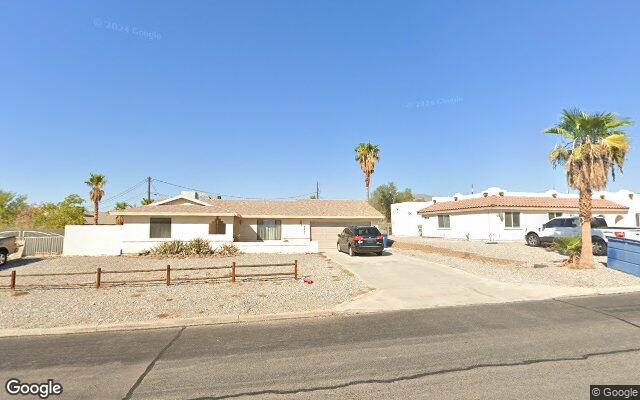
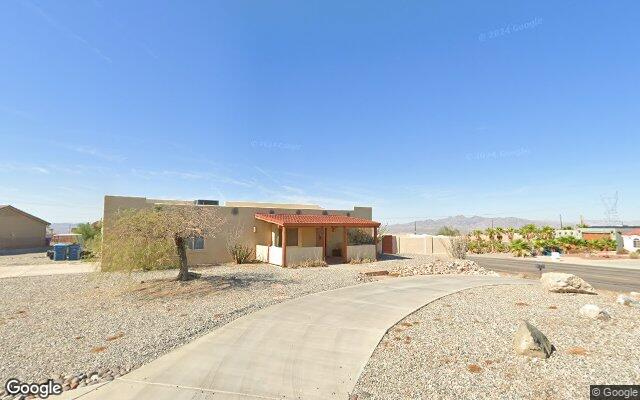
Facility Watch · Premium
Family reviews
No reviews yet — be the first to share your experience
Other memory care options nearby.
Avista Senior Living Lake Havasu
Lake Havasu City
Casa Grande Assisted Living Home
Lake Havasu City
Claremont Assisted Living
Lake Havasu City
Flowers Assisted Living Home 2
Lake Havasu City
Gems Assisted Living 3
Lake Havasu City
Gems Assisted Living #4
Lake Havasu City
Gems Assisted Living LLC
Lake Havasu City
Home Is Where the Heart Is
Lake Havasu City