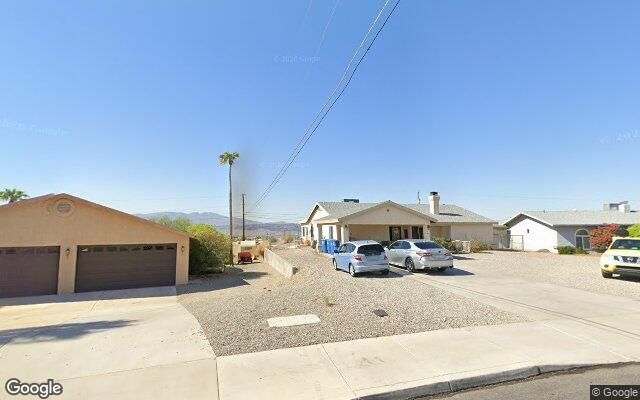
Flowers Assisted Living Home 2.

A small home, reviewed on public record.
© Google Street View
Compared to 1,661 Arizona facilities with a similar number of beds.
Care · 36-month window. Higher percentile = better performance on inspection record. Source: Arizona Dept. of Health Services · Bureau of Residential Facilities Licensing.
among peers to rank.
Rankings based on 36-month ADHS inspection data. Severity and frequency: fewer citations = higher percentile. Repeat rate: lower repeat citation share = higher percentile.
Citation history, plotted month by month.
26 deficiencies on record. Each bar is a month with a citation.
Finding distribution
26 total · 36 monthsScope × Severity (CMS A–L)
Every inspection visit, verbatim.
4 inspections in the public record, most recent first. Plain-language summaries open first — click into any row for the full citation text.
2026-04-14Complaint InvestigationEnforcement · 19 findings
“Based on documentation review, observation, record review, and interview, the facility exceeded the licensed services as specified by the license issued by the Department. The deficient practice posed a risk if the facility was unable to meet a resident's needs. Findings include: 1. A review of Department documentation revealed the facility was licensed at a directed level of care for a total capacity of six residents. 2. While on-site for the complaint investigation, the Compliance Officer observed at least eight residents receiving care and several postings of current resident information with nine residents' names listed - R1, R2, R4, R5, R6, R7, R8, R9, and R10. 3. Further review of Department documentation revealed the facility's census at the last compliance and complaint inspection conducted on October 21, 2025, was six residents. Based on the various dates of the residents' admission to the facility, it was determined that E1 had since admitted four additional residents since the last inspection on October 21, 2025. At the time of the present inspection, the census was nine, but at one point in time the census had been 10. 4. A review of facility documentation revealed that six of the current nine residents received hospice care. All nine of the residents had a call pendant to summon help when needed. 5. A review of R1's and R2's medical records revealed R1 and R2 received medication administration. There were no current medication administration records (MAR's) or activities of daily living (ADL) sheets available for review for any of the residents because E1 reported that E1 kept track of all medication administration and documentation of ADL's from E1's home office, and therefore, that documentation was not readily available for review. 6. In an interview, both E1 and O1 stated that medication administration was provided to the residents. E1 reported that either E1 or E4 (the overnight caregiver) would prepare all of the residents' medications prior to leaving in the morning and leave them for E2 to administer, as E2 did not have access to the medications. O1 reported seeing medication cups prepared and left out for administration. In addition, E1 reported that E2 prepared meals for all of the residents. 7. In an interview, E1 acknowledged the facility was over licensed capacity and stated that E1 had requested an increase from the Department. 8. A review of Department documentation revealed no requests or applications for an increased capacity. 9. In an exit interview, the findings were reviewed with E1, and no additional information was provided.”
“Based on documentation review, record review, and interview, the assisted living home that contacted an emergency responder on behalf of a resident failed to provide to the emergency responder a written document that included all of the information required in A.R.S. § 36-420.04.A.1-9, for one of one applicable residents reviewed. The deficient practice posed a risk if the emergency responder was not aware of critical health information for the resident or if the hospital was unable to make contact with the someone from the home twenty-four hours a day, seven days a week. Findings include: 1. A review of Department documentation revealed that "[R1] had been seen in the emergency department for multiple falls over the last week. The assisted living home regularly does not answer the phone when [R1] needs to return. [R1] has history of dementia, [R1] answers some questions appropriately but is adamant [R1] had been beaten while at the assisted living [home]. Concern for unsafe living environment." 2. A review R1's partial medical record revealed R1 did not have a written document that included all of the information required in A.R.S. § 36-420.04.A.1-9, specifically " 7. The point-of-contact information for the assisted living home, including the telephone number, if available, cell phone number and email address. A point of contact must be available to respond to questions regarding the information provided twenty-four hours a day, seven days a week." 3. In an interview, the findings were reviewed with E1, and no additional information was provided.”
“Based on record review, documentation review, and interview, the manager failed to ensure that the assisted living home established, documented, and implemented tuberculosis (TB) infection control activities that included annually providing training and education related to recognizing the signs and symptoms of TB to individuals employed by the health care institution, for four of four personnel reviewed. The deficient practice posed a risk to the physical health and safety of the residents. Findings include: 1. A review of E1's personnel record revealed there was no documentation available for review that indicated E1 had current training and education related to recognizing the signs and symptoms of TB. 2. A review of E2's personnel record revealed there was no documentation available for review that indicated E2 had current training and education related to recognizing the signs and symptoms of TB. 3. A review of E3's personnel record revealed there was no documentation available for review that indicated E3 had current training and education related to recognizing the signs and symptoms of TB. 4. A review of E4's personnel record revealed there was no documentation available for review that indicated E4 had current training and education related to recognizing the signs and symptoms of TB. 5. In an interview, E1 stated that E1's training was filed in the "manager file at the home office." E1 believed the other staff had completed the training as well, but the documentation may have been at the home office. 6. In an exit interview, the findings were reviewed with E1, and no additional information was provided. 7. Technical assistance was provided to ensure that current personnel files needed to be accessible within two hours for current employees at the abbreviated inspection conducted on May 9, 2024.”
“Based on observation, documentation review, and interview, the governing authority failed to ensure that a caregiver who was able to read, write, understand, and communicate in English was on the assisted living facility’s premises. The deficient practice posed a risk as residents and the Compliance Officer could not effectively communicate with the caregiver. Findings include: 1. Upon arrival to the facility for the complaint inspection, the Compliance Officer observed E2 to be the only care staff on-site. The Compliance Officer observed E2's inability to communicate with the Compliance Officer about basic requests such as the census, where to locate the Medication Administration Records (MAR's) and the Activities of Daily Living (ADL) sheets, general information about any of the residents, what exactly E2 did for the residents, etc., due to E2 being unable to fully understand and communicate in English. 2. In an interview, the Compliance Officer was unable to effectively communicate with E2 about the reason for the inspection and the required documentation that needed to be reviewed. 3. In an interview, O1 reported that E2 was often the only person in the home when O1 comes to provide services. O1 reported E1 was rarely at the home when O1 would come. O1 explained that although O1 is of Spanish descent, O1 was born in the States and English is O1's first language. O1 believed that E2 didn't like O1 because O1 didn't speak the language and this was considered disrespectful to the culture. O1 reported that O1 was unable to effectively communicate with E2 and would sometimes use a Spanish translation application on O1's phone in order to communicate with E2 about the needs of the residents or regarding questions or services provided. O1 also reported that O1 had heard E2 yelling at R2 when R2 didn't realize that O1 was present. O1 stated that when O1 walked into R2's room, E2 immediately changed E2's tone of voice and started to speak in a really sweet tone. 4. While on-site, the Compliance Officer observed a resident asking for assistance from the Compliance Officer because the resident was unable to communicate with E2. 5. In an interview, E1 acknowledged the E2 has a hard time communicating. E1 stated that E2 does not document ADL's or medication administration. E1 reported that O1 "knows Spanish and chooses not to talk to the caregiver in Spanish." 6. In an exit interview, the findings were reviewed with E1, and no additional information was provided.”
“Based on documentation review, record review, and interview, the governing authority failed to ensure compliance with A.R.S. § 36-411, for four of four personnel reviewed. The deficient practice posed a risk if the employees were a danger to a vulnerable population. Findings include: 1. A.R.S. § 36-411.C states: "4. On or before March 31, 2025, verify that each employee is not on the adult protective services registry pursuant to section 46-459...[and] 5. Beginning March 31, 2025, annually reverify that each employee is not on the adult protective services registry pursuant to section 46-459.” 2. A review of E1’s, E2's, E3's, and E4's records revealed that the only documentation of adult protective services (APS) registry checks were from October 28, 2024, for all four staff. Based on E1's, E2's, E3's, and E4's dates of hire, APS registry checks were required to be completed annually beginning March 31, 2025. 3. A review of the facility's policies and procedures revealed a policy titled "Employee Staffing and Recordkeeping." The policy stated, "2. Personnel files will contain information required by State and Federal regulation." 4. In an exit interview, the findings were reviewed with E1, and no additional information was provided.”
“Based on observation and interview, the governing authority failed to ensure the health, safety, or welfare of a resident was not placed at risk of harm, for all nine residents. The deficient practice posed a risk to the health and safety of the other residents. Findings include: 1. While on-site for the complaint investigation, the Compliance Officer observed R1 laying in a bed with full-length bedrails on either side of the bed. R1 had a bandage on the right side of R1's head, bruising on both eyes and nose, and dark scabs on R1's nose and top lip from injuries from a fall. R1's eyes were open very slightly and appeared glazed over. R1 was unable to acknowledge the Compliance Officer or speak to the Compliance Officer. R1 appeared sedated. 2. In an interview, E1 confirmed that R1 had three recent falls - two on April 8, 2026, and one on April 10, 2026. E1 confirmed that R1 went out to the hospital on both April 8, 2026, and again on April 10, 2026. E1 did not complete any incident reports for R1 and verbally explained the action taken to prevent the incident from happening again was to medicate R1 and to place full-length bedrails on either side of the bed in order to prevent R1 from getting out of bed. According to E1, if R1 gets out of bed, R1 attempts to throw R1's self to the ground, which R1 did previously. E1 further stated that R1 had an incident where R1 "pulled the [table] runner out from where the other residents were eating and all of the dinner dishes fell on the floor." E1 reported that R1 was "military, very combative, bad behavior, uncontrollable, and not manageable at all." E1 stated, "R1 was pushing the other residents and they were terrified of him." E1 said "R1 went out the front door, tried banging on the gate, called the police, and R1 told the officer R1 was going to commit suicide." E1 continued to say, "That's why [O2] brought over the liquid lorazepam." E1 reported that E1 tried to get the crisis team to take R1, but they refused because of "chronic dementia" diagnosis. 3. In a separate interview, E1 stated that E1 had no intention of coming to the home on the day of the inspection. E1 had previous plans, which were also observed as being documented on the work schedule E1 showed to the Compliance Officer. E1 had already stated how volatile R1 was and acknowledged that R1 had to be sedated to remain in bed, as R1 was a danger to R1's self and others if R1 got out of bed. However, E2 was the only caregiver scheduled to work in the home that day from 7:00 AM to 7:00 PM. E2 is unable to fully communicate in English, and therefore, would be unable to even communicate with R1. 4. In an exit interview, the findings were reviewed with E1, and no additional information was provided.”
“Based on observation, documentation review, and interview, the manager failed to ensure that documentation was maintained of the caregivers working each day, including the hours worked by each. The deficient practice posed a risk as there was no documentation to identify the staff that was present each day to ensure the health and safety of residents. Findings include: 1. Upon arrival to the home, the Compliance Officer observed E2 working alone. E2 was unable to communicate with the Compliance Officer about certain information and requests for documentation. The Compliance Officer asked to see a work schedule and E2 directed the Compliance Officer into an office where there was a schedule posted on the wall. The current posted schedule was from the previous week and ran from Monday, April 6, 2026, through Sunday, April 12, 2026. There was no documentation to show who was scheduled to work on the day of the inspection. 2. Once E1 arrived on-site, the Compliance Officer requested a current schedule. E1 stated there was posted schedule in the office. The Compliance Officer explained that the schedule was not current. E1 then accessed E1's computer and showed the Compliance Officer an electronic version of an incomplete schedule for the week of Monday, April 13, 2026, through, Sunday, April 19, 2026. There was coverage for Monday, April 13, 2026; however, for the current day, the schedule indicated that E2 was working from 7:00 AM to 7:00 PM, and no one else was on the schedule to work until 7:00 AM on Wednesday, April 15, 2026. 3. In an interview, E1 confirmed that E1 was not working that day and only came to the home because of the inspection. 4. In an exit interview, the findings were reviewed with E1, and no additional information was provided. 5. This is a repeat citation from the on-site abbreviated follow-up inspection conducted on May 9, 2024. 6. A review of Department documentation revealed a Plan of Correction (POC) submitted to the Department from E1 on or about August 16, 2024. The POC stated that on both a temporary and permanent basis, "[E1], Manager, immediately after the survey, the manager posted the weeks schedule for the employees...The manager will ensure to post schedule to ensure shifts and tasks are covered for the health and safety of the residents." The Monitoring System stated, "[E1], Manager will ensure the weekly schedule is posted in the office."”
“Based on record review, interview, and documentation review, the manager failed to ensure that a caregiver and the manager provided evidence of freedom from infectious tuberculosis (TB) on or before the date the individual began providing services at or on behalf of the assisted living facility, and as specified in R9-10-113, for four of four personnel records reviewed. The deficient practice posed a potential TB exposure risk to residents. Findings include: 1. A review of E1's personnel record revealed a hire date of June 11, 2021. Further review revealed there was no documentation of freedom from infectious TB and no documentation of a completed TB Screening/Risk Assessment form, as required in R9-10-113. 2. A review of E2's personnel record revealed a hire date of July 12, 2024. Further review revealed there was no documentation of freedom from infectious TB and no documentation of a completed TB Screening/Risk Assessment form, as required in R9-10-113. E2's personnel record contained documentation of a chest x-ray dated January 5, 2026, which was done because of "Fall, generalized weakness." The results stated, "Impression: No acute cardiopulmonary process." 3. A review of E3's personnel record revealed a hire date of July 7, 2013. Further review revealed there was no documentation of freedom from infectious TB and no documentation of a completed TB Screening/Risk Assessment form, as required in R9-10-113. E3's personnel record contained documentation of a chest x-ray dated January 8, 2026, which was done because of "Fall, generalized weakness." The results stated, "Impression: No acute cardiopulmonary process." The authentication of this x-ray report is questionable as the "History," "Findings," and "Impression" are all identical. 4. A review of E4's personnel record revealed a hire date of January 28, 2021. Further review revealed documentation of one negative Tuberculin skin test dated August 17, 2023; however, there was no documentation of a second skin test, either in the form of a two-step or from the year prior as required by rule at the time. In addition, there was no documentation of a completed TB Screening/Risk Assessment form, as required in R9-10-113. 5. In an interview, E1 reported that E1, E3, and E4 all should have a completed TB Screening/Risk Assessment form from 2023 because E1 had them done for all staff at that time; however, those forms must have been at E1's home office and not in the personnel records. Therefore, E1 acknowledged that the documentation was not available for review at the time of the inspection, to include documentation of freedom from infectious TB. E1 also stated that the Compliance Officer who conducted the compliance and complaint inspection on October 21, 2025, made E1 aware of the requirement to have the necessary TB documentation completed and maintained in the personnel records. 6. In an exit interview, the findings were reviewed with E1, and no additional information was provided. 7. This is a repeat citation from the compliance and complaint inspection conducted on October 21, 2025, including a repeat citation for one of the same employees (E2). 8. A review of Department documentation revealed a Plan of Correction (POC) submitted to the Department from E1 on December 15, 2025. The POC included verbiage that indicated E1 was aware of the current TB requirements, as evidenced by statements in the temporary solution sections, specifically, "Employee [X] was instructed to complete the two-step Tuberculin Skin Test (TST) in accordance with state requirements and CDC guidelines. The first step TST was administered and read with a negative result. The second step TB is scheduled to be administered within 1-3 weeks following the reading of the first TST, as required. Documentation will be maintained in the employee health file upon completion." E1 continued to state, "The facility had reviewed and reinforced its employee health screening and onboarding policy to ensure all employees complete required TB screening prior to and during employment. Management will verify that all steps of TB screening are completed and documented in accordance with state regulations." Furthermore, the "Permanent Solution and Monitoring System" stated, "[E1], Manager, will audit employee health records at the time of hire and quarterly thereafter to ensure TB screening documentation is complete and current. Any identified deficiencies will be corrected immediately [Effective 10/21/2025]."”
“Based on record review, documentation review, and interview, the manager failed to ensure that a resident provided evidence of freedom from infectious tuberculosis (TB) before or within seven calendar days after the resident’s date of occupancy, and as specified in R9-10-113, for three of three residents sampled. The deficient practice posed a potential TB exposure risk to residents. Findings include: 1. A review of R1's medical record revealed no documentation of freedom from infectious TB and no documentation of a completed TB Screening/Risk Assessment form. Based on R1's date of admission, this documentation was required. 2. A review of R2's medical record revealed no documentation of freedom from infectious TB and no documentation of a completed TB Screening/Risk Assessment form. Based on R2's date of admission, this documentation was required. 3. A partial review of R3's medical record revealed no documentation of freedom from infectious TB and no documentation of a completed TB Screening/Risk Assessment form. Based on R3's date of admission and date of discharge, this documentation was required. [Note: Only portions of R3's medical record were available for review because E1 had taken the remainder of the record to E1's home office and placed it in storage. However, in an interview, E1 acknowledged that R3's medical record did not have documentation of freedom from infectious TB, nor the TB Screening/Risk Assessment because R3 was only there for "hospice care."] 4. A review of the facility's policies and procedures revealed a policy titled "Facility Acceptance and Termination of Residency, Resident Rights, and Refunding Fees, Charges and Deposits." The policy stated, "1. The admission process will be completed by the Manager or designee (as appropriate). This process will include: c. Obtaining medical and physicians' forms which include:...iii. TB clearance documentation (although the resident has 7 days)." 5. In an exit interview, the findings were reviewed with E1, and no additional information was provided.”
“Based on observation, record review, documentation review, and interview, the manager failed to ensure that before or at the time of acceptance of an individual, the individual submitted documentation that was dated within 90 calendar days before the individual was accepted by the assisted living facility that included if the individual was expected to receive supervisory care services, personal care services, or directed care services; if the individual required continuous medical services, continuous or intermittent nursing services, or restraints; and was dated and signed by a physician, registered nurse practitioner, registered nurse, or physician assistant for two of three residents reviewed. The deficient practice posed a risk if the facility was unable to meet a resident's needs. Findings include: 1. While on-site for the complaint investigation, the Compliance Officer observed R1 laying in a bed with full-length bedrails on either side of the bed. R1 had a bandage on the right side of R1's head, bruising on both eyes and nose, and dark scabs on R1's nose and top lip from injuries from a fall. R1's eyes were open very slightly and appeared glazed over. R1 was unable to acknowledge the Compliance Officer. 2. A review of R1's medical record revealed there was no documentation available for review dated within 90 calendar days before R1 was accepted by the assisted living home, that indicated if R1 was expected to receive supervisory care services, personal care services, or directed care services; whether or not R1 required continuous medical services, continuous or intermittent nursing services, or restraints; and that was dated and signed by a physician, registered nurse practitioner, registered nurse, or physician assistant. 3. A partial review of R3's medical record revealed there was no documentation available for review dated within 90 calendar days before R1 was accepted by the assisted living home, that indicated if R1 was expected to receive supervisory care services, personal care services, or directed care services; whether or not R1 required continuous medical services, continuous or intermittent nursing services, or restraints; and that was dated and signed by a physician, registered nurse practitioner, registered nurse, or physician assistant. [Note: Only portions of R3's medical record were available for review because E1 had taken the remainder of the record to E1's home office and placed it in storage. In an interview, E1 reported R3 did have the required documentation, but acknowledged that the documentation was not available for review at the time of the inspection because that portion of R3's medical record was "in storage."] 4. A review of the facility's policies and procedures revealed a policy titled "Facility Acceptance and Termination of Residency, Resident Rights, and Refunding Fees, Charges and Deposits." The policy stated, "It is the policy of Flower's Assisted Living Home to assess residents to ensure appropriateness for the type of services provided by Flower's Assisted Living Home by performing an assessment, as circumstances permit, prior to providing services to ensure the facility can meet the needs of the resident... Procedures 1. The admission process will be completed by the Manager or designee (as appropriate). This process will include: f. Appropriate placement statement signed by a Physician, Physician's Assistance [sic], Nurse Practitioner, or Registered Nurse." 5. In an interview, E1 acknowledged that R1 did not have documentation from a medical provider indicating that R1 was appropriate to be accepted into the home; that R1 was not at all appropriate to be at the home; and specifically that R1's needs exceeded the scope of services provided by the home. Furthermore, E1 stated that E1 obtained an order for bedrails for R1, as well as increased medications to keep R1 sedated, because R1 was not safe to get out of bed. E1 acknowledged that E1 should not have accepted R1 into the home but stated E1 was an APS referral and that E1 accepted R1 as a favor to APS (and the hospital). 6. In an exit interview, the findings were reviewed with E1, and no additional information was provided.”
“Based on observation, record review, documentation review, and interview, the manager accepted and retained an individual who required the use of bedrails. The deficient practice posed a risk if the facility was unable to meet a resident's needs. The deficient practice also posed a risk to the physical health and safety of a resident. 1. While on-site for the complaint investigation, the Compliance Officer observed R1 laying in a bed with full-length bedrails on either side of the bed. R1 had a bandage on the right side of R1's head, bruising on both eyes and nose, and dark scabs on R1's nose and top lip from injuries from a fall. R1's eyes were open very slightly and appeared glazed over. R1 was unable to acknowledge the Compliance Officer or speak to the Compliance Officer. 2. A review of R1's medical record revealed there was no documentation available for review dated within 90 calendar days before R1 was accepted by the assisted living home, that indicated if R1 required restraints; and that was dated and signed by a physician, registered nurse practitioner, registered nurse, or physician assistant. 3. Further review of R1's medical record revealed a Physician Order, signed and dated April 12, 2026, that stated, "May use bed rails on all sides for safety. Caregiver to assess patient every 15 min/30 min for safety and comfort. MD/RN to assess every 24 hrs." 4. A review of the facility's policies and procedures revealed a policy titled "Facility Acceptance and Termination of Residency, Resident Rights, and Refunding Fees, Charges and Deposits." The policy stated, "It is the policy of Flower's Assisted Living Home to assess residents to ensure appropriateness for the type of services provided by Flower's Assisted Living Home by performing an assessment, as circumstances permit, prior to providing services to ensure the facility can meet the needs of the resident... Procedures 1. The admission process will be completed by the Manager or designee (as appropriate). This process will include: f. Appropriate placement statement signed by a Physician, Physician's Assistance [sic], Nurse Practitioner, or Registered Nurse." 5. In an interview, E1 acknowledged that R1 did not have documentation from a medical provider indicating that R1 was appropriate to be accepted into the home; that R1 was not at all appropriate to be at the home; and specifically that R1's needs exceeded the scope of services provided by the home. Furthermore, E1 stated that E1 obtained an order for bedrails for R1, as well as increased medications to keep R1 sedated, because R1 was not safe to get out of bed. E1 acknowledged that E1 should not have accepted R1 into the home but stated E1 was an APS referral and that E1 accepted R1 as a favor to APS (and the hospital). 6. In an exit interview, the findings were reviewed with E1, and no additional information was provided.”
“Based on observation, record review, and interview, the manager failed to ensure that a caregiver documented the services provided in the resident’s medical record for three of three residents. The deficient practice posed a risk as services could not be verified as provided against a service plan or as being needed or provided. Findings include: 1. Upon arrival, the Compliance Officer requested either Medication Administration Records (MAR's) or Activities of Daily Living (ADL's) for each of the residents or the residents' individual medical records from E2. Due to the inability to communicate in English, E2 just motioned that E2 did not have any documentation. E2 was not able to explain the process of documenting services and was unable to provide any type of binder, record, or documentation to the Compliance Officer. E2 said, "Manager." 2. Once E1 arrived on-site, the Compliance Officer requested current ADL's. E1 stated that there was no ADL binder or current ADL documentation at the care home, and that E1 keeps track of these records at E1's home, specifically in E1's "home office." E1 said that E2 doesn't sign off on completing ADL's E2's self, but that E1 and E2 communicate throughout the day via text and E1 documents completion of the ADL's by E2 from E1's home office. 3. A review of R1's partial medical record revealed no current documentation of ADL's for the month of April 2026, or of any previous month's ADL's. 4. While on-site, the Compliance Officer observed O2 ask E1 if R1 had received any services or when the last time R1's lip, nose, and head injuries had been tended to. E1 stated that hospice had been there earlier and took care of R1 and cleaned up R1's injuries. The Compliance Officer was on-site the entire time the home health agency provider (O1) was present and the Compliance Officer asked O1 previously if O1 was working with R1. O1 stated that O1 didn't know who R1 was and that R1 was not a client of O1. Therefore, during the time that the Compliance Officer was on-site, no one attended to R1 or R1's injuries, other than O2 administering Lorazepam to R1 when R1 started to wake up. 5. A review of R2's medical record revealed no current documentation of ADL's for the month of April 2026, but there was an ADL sheet from February 2026 and March 2026. However, the February and March 2026 ADL sheets had been completed electronically and contained the following documentation: - Under the heading of Activity/Task, was "Diet/Nutritional suppl." In the subsection columns, it was broken down into "Brkfst / Lunch / Dinner / SnackAM / SnackPM." For all entries for every day of the month, was "10." - Under the heading of Activity/Task, was "Fluid Intake." In the subsection columns, it said "10 pm." For all entries for every day of the month, was "10." - Under the heading of Activity/Task, was "Full Bath" and "Partial Bath." For all entries for every day of the month, was an alternating "S" and "C." - Under the heading of Activity/Task, was "Shampoo / Shave / Assist w/Dressing / Comb Hair / Oral Care / Hand Nail Care / Foot Nail Care / Incontinence Care / Catheter Care / Apply Skin Barrier / Bowel Movement / Type of Stool / Urine Output / Ambulate / Elevate Feet / Recreation/Activity / Night Checks." For all entries for every day of the month, was "S." - Under the heading of Activity/Task, was "Turn in Bed." For all entries for every day of the month, was "C." - Under the heading of Activity/Task, was "Skin Condition OK." For all entries for every day of the month, was "OK." There was no key or other type of documentation on the ADL to indicate was "10, S, C, or OK" meant, nor was there any indication of who performed or signed off on the ADL's. 6. A review of R3's medical record revealed R3 did not have a medical record available for review at the time of the inspection because R3's record was in storage at E1's home office. Therefore, there was no documentation of ADL's available for review. 7. In an exit interview, the findings were reviewed with E1, and no additional information was provided.”
“Based on observation, record review, documentation review, and interview, the manager failed to ensure that a resident was not subjected to restraint. The deficient practice posed a risk of injury to the resident and also violated the resident's rights. Findings include: 1. While on-site for the complaint investigation, the Compliance Officer observed R1 laying in a bed with full-length bedrails on either side of the bed. R1 had a bandage on the right side of R1's head, bruising on both eyes and nose, and dark scabs on R1's nose and top lip from injuries from a fall. R1's eyes were open very slightly and appeared glazed over. R1 was unable to acknowledge the Compliance Officer or speak to the Compliance Officer. R1 appeared sedated. 2. A review of R1's medical record revealed the following documentation regarding medication: - A "Medication Profile" for an "Episode/Period: 3/16/2026 - 5/16/2026," that was included as part of R1's admission documentation, which stated the following medications: Aleve 220 MG Oral Tablet (tab), 2 tab twice daily as needed for pain by mouth (PO); Aspirin 81 MG Oral Tab, Delayed Release, 1 tab PO; Carvedilol 6.25 MG Oral Tab, 1 tab twice daily PO; Ipratropium Bromide 0.06% Nasal Solution 2 sprays each nostril three times a day as needed for runny nose; Lasix 40 MG Oral Tab, 1 tab daily as needed for swelling PO; Lisinopril 2.5 MG Oral Tab, 1 tab daily PO; Loperamide HCl 2 MG Oral Capsule (cap), 1 cap three times a week on Monday Wednesday Friday PO; PreserVision AREDS 2 Oral cap twice daily PO." The document was from Family Care Home Health & Hospice, and indicated the Physician's name, however, the "Clinician Signature" line at the bottom was not signed. - "Discharge Instructions" from Havasu Regional Medical Center dated April 8, 2026. the "Home Medication Form" section stated, "Home Medication(s) recorded during this visit: Aleve 220 MG Tablet (tab), oral 2 tab; Aspirin Childrens 81 MG tab, chewable oral; carvedilol 6.25 MG tab oral, 1 tab; ipratropium bromide 17 mcg/actuation HFA Aerosol Inhaler continuous nebulization; Lasix 40 MG tab oral, 1 tab; lisinopril 2.5 MG tab oral, 1 tab; loperamide 2 MG tab oral, 1 tab; PreserVision AREDS-2 250-90-40-1 MG capsule oral, 1 tab." 3. Further review of R1's medical record revealed the following handwritten note and Physician Orders: - Handwritten note, signed and dated April 8, 2026 by O2, that stated, "[E1], I increased [R1's] Seroquel to 50 mg AM / 100mg PM. I ordered Liquid Lorazepam and 100mg Trazodone @ bedtime. This will come tomorrow 4-9-26 or Friday in the mail. I will write an order tomorrow. [Signed] [O2]." - Physician Order, signed and dated April 8, 2026, that stated, "Seroquel 25 MG - Change to Seroquel 50 MG in AM & Seroquel 100 MG at HS. Lorazepam 0.5 MG tabs - Change to Lorazepam 2 MG/ML liquid. Give 0.5 ML (1 MG) q4hrs PRN. May give 1 ML (2 MG) at HS." - Physician Order, signed and dated April 12, 2026, that stated, "May use bed rails on all sides for safety. Caregiver to assess patient every 15 min/30 min for safety and comfort. MD/RN to assess every 24 hrs." 4. While on-site for the complaint investigation, the Compliance Officer could hear R1 starting to make moaning noises. Shortly after, the Compliance Officer observed O2 obtain medication from the office and administer medication to R1. 5. In an interview just after providing the medication to R1, O2 reported to E1 that O2 "just administered lorazepam to R1 because R1 was starting to wake up." 6. In an interview, E1 acknowledged that R1 was prescribed additional medication after R1 was admitted into the home, and that medication had to be increased following two incidents where R1 fell and had to be transported to the hospital. Furthermore, E1 acknowledged that R1 had to be medicated with lorazepam to keep R1 in the bed, otherwise R1 was a danger to R1's self and to the other residents. 7. While on-site, the Compliance Officer observed R1 subjected to physical and chemical restraints. 8. In an exit interview, the findings were reviewed with E1, and no additional information was provided.”
“Based on record review and interview, the manager failed to ensure a resident’s medical record contained all required documents in Arizona Administrative Code (A.A.C.) R9-10-811.C.1-24, for three of three residents reviewed. The deficient practice posed a risk as the required information could not be verified. Findings include: 1. A review of R1's medical record revealed that R1 did not have complete medical record. R1 had a face sheet that only included R1's name; Date of Birth; Code Status indicated "DNR"; Primary Diagnosis stated, "ESSENTIAL HYPERTENSION, PT UNINTENT UNDRDOSE OF MEDS REGIMEN DUE TO AGE REL DEBILITY"; and "Evacuation Selection: Family." The remainder of the face sheet was blank. Items missing from R1's medical record included the date of acceptance; primary care provider; R1's representative or responsible party or an individual to be contacted in the event of an emergency, significant change in R1’s condition, or termination of residency; documentation of R1’s needs required in R9-10-807(B); documentation of freedom from infectious tuberculosis (TB) as required in R9-10-807(A); a copy of R1’s health care directive; a signed residency agreement; documentation of assisted living services provided to R1; a medication order from a medical practitioner for each medication that was administered to R1; documentation of medication administered to R1, including the date and time of administration and the name and signature of the individual administering the medication; documentation of any actions taken to control the R1's sudden, intense, or out-of-control behavior to prevent harm to R1 or another individuals; documentation of notification of the availability of vaccination for influenza and pneumonia, according to A.R.S. § 36-406(1)(d); documentation of R1’s orientation to exits from the assisted living home required in R9-10-819(B); documentation of any significant change in R1’s behavior, physical, cognitive, or functional condition and the action taken by a manager to address the R1’s changing needs. 2. A review of R2's medical record revealed R2 did not have documentation of freedom from infectious TB as required in R9-10-807(A); documentation of current assisted living services provided to R2; documentation of current medication administered to R2, including the date and time of administration and the name and signature of the individual administering the medication. 3. A review of R3's medical record revealed R3 did not have a medical record available for review at the time of the inspection because R3's record was in storage at E1's home office. 4. In an exit interview, the findings were reviewed with E1, and no additional information was provided. 5. This is a repeat citation from the on-site abbreviated follow-up inspection conducted on May 9, 2024. 6. A review of Department documentation revealed a Plan of Correction (POC) submitted to the Department from E1 on or about August 16, 2026. The POC stated that on both a temporary and permanent basis, "Manager will ensure a resident's medical record contains all required documents prior to admitting to the facility. The Manager will ensure a Residency Agreement is completed and signed, DNR, Face Sheet,...Advance Healthcare Directive, if applicable, Medication orders, Admission Orders with determination and authorization for Caregiver, Evacuation...Medication Administration Records...ADL documentation...TB, Influenza, Pneumonia records, Hospice and Home Health, if applicable." The Monitoring System stated, "[E1], Manager will conduct a review of the Resident medical record before admitting the Resident. The Manager will document this review on each resident's medical record file to ensure the file is complete and signed by Resident and/or Resident Representative. The Resident file will be kept at the facility."”
“Based on observation, record review, and interview, the manager failed to ensure a resident’s medical record contained documentation of medication administered to the resident that included the date and time of administration; the name, strength, dosage, and route of administration; and the name and signature of the individual administering the medication for three of three residents reviewed. The deficient practice posed a risk as medication administration could not be verified against a medication order. Findings include: 1. Upon arrival, the Compliance Officer requested Medication Administration Records (MAR's) for each of the residents from E2. E2 was unable to provide the MAR's or explain the process of documenting medication administration. 2. Once E1 arrived on-site, the Compliance Officer requested current MAR's. E1 stated that there were no current MAR's available for review because E1 completed the documentation for medication administration from E1's own computer at E1's home office. E1 also confirmed that E2 does not document medication administration. E1 further explained that E2 does not have access to the residents' medication, and that the overnight caregiver (usually E4) would prepare the morning medications and place them in medication cups, where they were left for E2 to administer to the residents. 3. In an interview, O1 reported concerns with arriving on-site to provide services to O1's assigned residents and seeing medication cups filled with medication sitting out on different residents' nightstands or bedside tables. O1 reported the medications are left out without supervision from a caregiver, and therefore, accessible to any resident who may encounter them. O1 reported witnessing this on regular occasions, and when E2 was working alone at the home. 4. A review of R1's medical record revealed the following documentation regarding medication: - A "Medication Profile" for an "Episode/Period: 3/16/2026 - 5/16/2026," that was included as part of R1's admission documentation, which stated the following medications: Aleve 220 MG Oral Tablet (tab), 2 tab twice daily as needed for pain by mouth (PO); Aspirin 81 MG Oral Tab, Delayed Release, 1 tab PO; Carvedilol 6.25 MG Oral Tab, 1 tab twice daily PO; Ipratropium Bromide 0.06% Nasal Solution 2 sprays each nostril three times a day as needed for runny nose; Lasix 40 MG Oral Tab, 1 tab daily as needed for swelling PO; Lisinopril 2.5 MG Oral Tab, 1 tab daily PO; Loperamide HCl 2 MG Oral Capsule (cap), 1 cap three times a week on Monday Wednesday Friday PO; PreserVision AREDS 2 Oral cap twice daily PO." The document was from Family Care Home Health & Hospice, and indicated the Physician's name, however, the "Clinician Signature" line at the bottom was not signed. - "Discharge Instructions" from Havasu Regional Medical Center dated April 8, 2026. the "Home Medication Form" section stated, "Home Medication(s) recorded during this visit: Aleve 220 MG Tablet (tab), oral 2 tab; Aspirin Childrens 81 MG tab, chewable oral; carvedilol 6.25 MG tab oral, 1 tab; ipratropium bromide 17 mcg/actuation HFA Aerosol Inhaler continuous nebulization; Lasix 40 MG tab oral, 1 tab; lisinopril 2.5 MG tab oral, 1 tab; loperamide 2 MG tab oral, 1 tab; PreserVision AREDS-2 250-90-40-1 MG capsule oral, 1 tab." - An April 2026 MAR that listed the following medications: Aleve 200 MG, Take 1 Tab as needed (both the strength and dosage are different from the information above); Aspirin 81 MG, Take 1 Tab daily; Carvedilol 6.25 MG, Take 1 Tab daily (the dosage is different from the information above); Ipratropium Bromide 17 MCG, Inhale contious [sic] nebulization as needed; Lasix 40 MG, Take 1 Tab daily; Lisinopril 20.5 MG, Take 1 Tab daily (incorrect strength, making it a 720% increase); Loperamide HCl 2 MG, Take 1 Tab daily (the dosage is different from the information above); Quetiapine 50 MG, Take 1 Tab daily; Quetiapine 100 MG, Take 1 Tab at bedtime; and Trazodone 100 MG, Take 1 Tab at bedtime. Aside from the list of medications, the rest of the MAR was blank, specifically, there was no documentation of any medication administration. Furthermore, there was no documentation on the MAR for the Lorazepam that was ordered or for the administration of the Lorazepam. [Per E1 and O2, the medication was being administered.] 5. A review of R2's medical record revealed there was no MAR available for review for the current month of April 2026. There was a MAR from March 2026, which indicated that Quetiapine 25 MG, Take 1 Tab at bedtime, had been documented as being administered from March 1-30, 2026. March 31, 2026, was left blank. There was a MAR from February 2026, which indicated that Quetiapine 25 MG, Take 1 Tab at bedtime, had been documented as being administered from February 1-27, 2026. February 28, 2026, was left blank. Finally, there was a MAR from January 2026, which indicated that Quetiapine 25 MG, Take 1 Tab at bedtime, had been documented as being administered from January 9-31, 2026. The MAR also indicated that Oxycodone 5 MG, Take 1 Tab every 4 hours PRN, was administered on January 9, 10, 11, 12, 16, 18, 20, and 22, 2026; however, there was no documentation of the time(s) it was administered or the identification of R2's need for the opioid and the effectiveness. Finally, the MAR indicated that Xanax 1 MG, Take 1 Tab every 8 hours PRN, was administered on January 9, 2026. The time of the administration was not documented. There are several discrepancies noted on the documentation on the January 2026 MAR. According to the Residency Agreement, Resident Face Sheet, and interview statement by E1, R1 had not yet "moved in" to the home on days there was documentation of medication administration. Therefore, there was documentation of administering Quetiapine, Oxycodone, and Xanax to R1 prior to R1's "move-in" date. 6. A review of R3's medical record revealed R3 did not have a medical record available for review at the time of the inspection because R3's record was in storage at E1's home office. Therefore, there was no documentation of medication administration. 7. A review of the facility's policies and procedures revealed a policy titled "Medication and Medication Services." The policy stated, "This facility does not allow residents to self-administer medications including monitoring residents who self-administer medications...1. To prevent a medication error, caregivers will verify the medication is taken as ordered by the resident's medical practitioner by confirming that:...b. The resident is taking the correct medication stated on the medication container label, the MAR, and if questions arises, on the medical practitioner's order; c. The strength, dosage and route of the medication is the same as stated on the label, the medication container, [and] the MAR is correct; d. Confirm the resident is taking the medication at the time stated on the medication container label and the MAR is correct." The policy continued to state, "6. Documentation of medication administration...will occur on the residents' MAR as follows:...1) The caregiver giving the medication will initial after giving the medication ensuring the initials are for the right medication, right dosage, right route, right time and right date...b. For residents receiving medication on an as needed (PRN) basis: 1) Initial on the MAR after giving the medication ensuring the initials are for the right medication, right dosage, right route, right time and right date. 2) Note on the back of the MAR, the reason for giving the PRN medication, the intended result, and the actual result." The policy continued to state, "18. The procedures for dispensing medications are after the caregiver ensures the 5 rights of medication...24. The procedures for dispensing controlled substances are the same manner as other medications except when filling out the MAR, the pain before and after taking an opioid will be documented on the MAR. Staff will complete a Controlled Substance Inventory Control and Shift Count Log for each controlled substance in the facility at the end of each shift." 8. In an exit interview, the findings were reviewed with E1, and no additional information was provided.”
“Based on record review and interview, the manager failed to ensure that staff obtained a certificate of completion, as specified in R9-10-126, including the minimum eight hours of initial memory care services training within the first 30 days of hire for four of four personnel reviewed. The deficient practice posed a risk if the employee was unable to meet a resident's needs. Findings include: 1. A review of E1's personnel record revealed that E1's date of hire was June 11, 2021. Further review revealed that E1 had not obtained a certificate of completion for the minimum eight hours of initial memory care services training. 2. A review of E2's personnel record revealed that E2's date of hire was July 12, 2024. Further review revealed that E2 had not obtained a certificate of completion for the minimum eight hours of initial memory care services training. 3. A review of E3's personnel record revealed that E3's date of hire was July 7, 2013. Further review revealed that E3 had not obtained a certificate of completion for the minimum eight hours of initial memory care services training. 4. A review of E4's personnel record revealed that E4's date of hire was January 28, 2021. Further review revealed that E4 had not obtained a certificate of completion for the minimum eight hours of initial memory care services training. 5. In an interview, E1 reported that during the last annual compliance and complaint inspection, the Compliance Officer told E1 that since there were no places in Lake Havasu that were conducting the memory care training, the facility's memory care training "would not be due until October 2026, the last day of October of this year." 6. In an exit interview, the findings were reviewed with E1, and no additional information was provided. 7. A review of Department documentation revealed that E1 had been provided technical assistance on this deficiency at the compliance and complaint inspection conducted on October 21, 2025. Furthermore, in an interview with the Compliance Officer who conducted the compliance and complaint inspection on October 21, 2025, the Compliance Officer confirmed that E1 was told E1 had until October 31, 2025, to complete the training for all staff as this was a statutory requirement effective July 1, 2025. The Compliance Officer also provided E1 with the link to look up all of the approved Memory Care Training Programs and even suggested using Hospice of the Valley (HOV) as HOV was providing free training at that time. Therefore, the aforementioned statement made by E1 was false or misleading.”
“Based on documentation review, record review, and interview, in addition to the minimum eight hours of initial memory care services training, the manager failed to complete a minimum of four hours of memory care services training specific to assisted living facility managers. Findings include: 1. A review of E1's personnel record revealed that E1's date of hire was June 11, 2021. Further review revealed that E1 had not obtained a certificate of completion for the minimum eight hours of initial memory care services training and the additional minimum of four hours of memory care services training specific to assisted living facility managers. 2. In an interview, E1 reported that during the last annual compliance and complaint inspection, the Compliance Officer told E1 that since there were no places in Lake Havasu that were conducting the memory care training, the facility's memory care training "would not be due until October 2026, the last day of October of this year." 3. In an exit interview, the findings were reviewed with E1, and no additional information was provided. 4. A review of Department documentation revealed that E1 had been provided technical assistance on this deficiency at the compliance and complaint inspection conducted on October 21, 2025. Furthermore, in an interview with the Compliance Officer who conducted the compliance and complaint inspection on October 21, 2025, the Compliance Officer confirmed that E1 was told E1 had until October 31, 2025, to complete the training for all staff as this was a statutory requirement effective July 1, 2025. The Compliance Officer also provided E1 with the link to look up all of the approved Memory Care Training Programs and even suggested using Hospice of the Valley (HOV) as HOV was providing free training at that time. Therefore, the aforementioned statement made by E1 was false or misleading.”
“Based on documentation review, record review, and interview, when a resident had an accident, emergency, or injury that resulted in the resident needing medical services, the manager failed to ensure that a caregiver or an assistant caregiver documented the incident. The deficient practice posed a risk as there was no documentation of the details of the incident or emergency, including actions taken, individuals notified, and any action taken to prevent the incident or emergency from occurring again in the future. Findings include: 1. A review of Department documentation revealed that "[R1] had been seen in the emergency department for multiple falls over the last week. The assisted living home regularly does not answer the phone when [R1] needs to return...Concern for unsafe living environment." 2. While on-site for the complaint investigation, the Compliance Officer observed R1 laying in a bed with full-length bedrails on either side of the bed. R1 had a bandage on the right side of R1's head, bruising on both eyes and nose, and dark scabs on R1's nose and top lip from injuries from a fall. R1's eyes were open very slightly and appeared glazed over. R1 was unable to acknowledge the Compliance Officer or speak to the Compliance Officer. R1 appeared sedated. 3. A review of R1's partial medical record revealed there was no documentation of any incident reports. 4. In an interview, E1 confirmed that R1 had three recent falls - two on April 8, 2026, and one on April 10, 2026. E1 confirmed that R1 went out to the hospital on both April 8, 2026, and again on April 10, 2026. E1 reported there were no incident reports that had been completed for R1 but that E1 "has texts messages and pictures" on E1's phone. E1 stated that E1 does E1's charting on E1's phone. E1 also acknowledged that E1's action taken to prevent the incident from happening again was to medicate R1 and to place full-length bedrails on either side of the bed in order to prevent R1 from getting out of bed. According to E1, if R1 gets out of bed, R1 attempts to throw R1's self to the ground, which R1 did previously. E1 further stated that R1 had an incident where R1 "pulled the [table] runner out from where the other residents were eating and all of the dinner dishes fell on the floor." E1 reported that R1 was "military, very combative, bad behavior, uncontrollable, and not manageable at all." E1 stated, "R1 was pushing the other residents and they were terrified of him." E1 said "R1 went out the front door, tried banging on the gate, called the police, and R1 told the officer R1 was going to commit suicide." E1 continued to say, "That's why [O2] brought over the liquid lorazepam." Finally, E1 stated, "My texts is my charting. I do my charting in my messages. I usually just message and text everybody but I know I'm supposed to have/use this [incident] form." 5. A review of the facility's policies and procedures revealed a policy titled "Caregiver's Response to Sudden and Out-of-Control Resident Behaviors." The policy stated, "4. Staff will complete an incident report and make the appropriate contacts." Another policy titled "Quality Management" stated, "An Incident/Resident Services Form is used to identify and document incidents that have caused or have the potential to cause injury or harm to a resident...Examples include...falls...1. Incident Reports: b. The person observing the incident is responsible for completing an Incident/Resident Services Form as soon as the incident is over or the resident is no longer at risk. These incidents include but are not limited to: 1. Falls...5. Any action or interaction that impacts the health and safety of a resident or staff." 6. In an exit interview, the findings were reviewed with E1, and no additional information was provided.”
“Based on documentation review, observation, and interview, the manager allowed more than two individuals to reside in a bedroom and the facility was not operating before November 1, 1998. Findings include: 1. A review of Department documentation revealed the facility first became licensed to operate as an Assisted Living Home on January 8, 2024. The initial and current license is for a total capacity of six residents. 2. While on-site for the complaint investigation, the Compliance Officer observed at least eight residents receiving care and several postings of current resident information with nine residents' names listed - R1, R2, R4, R5, R6, R7, R8, R9, and R10. 3. In an interview, E1 acknowledged that R1, R2, R4, R5, R6, R7, R8, R9, and R10 were all current residents. 4. The Compliance Officer observed that one bedroom had three residents residing in it. 5. In an exit interview, the findings were reviewed with E1, and no additional information was provided.”
2025-10-21Complaint InvestigationA.A.C. · 3 findings
“Based on record review and interview, the health care institution failed to ensure the health care institution developed and administered a training program for all staff regarding fall prevention and fall recovery that included initial training and continued competency training, for one of three employees sampled. The deficient practice posed a risk as the caregiver received no organized instruction or information related to physical health services provided to residents. Findings Include: 1. A review of E2’s personnel record revealed a hire date of June 15, 2025. E2's personnel record did not include any documentation of fall prevention and recovery training. 2. In an exit interview, the findings were reviewed with E1, and no additional information was provided.”
“Based on record review, documentation review, and interview, the manager failed to ensure that a caregiver's or assistant caregiver’s skills and knowledge were verified and documented before the caregiver or assistant caregiver provided physical health services, and according to policies and procedures for one of the three employees sampled. The deficient practice posed a risk if the employees were unable to meet residents’ needs. Findings include: 1. A review of facility documentation revealed a policy and procedure (P&P) regarding qualifications, skills, and knowledge. It stated that it is the policy of Flowers Assisted Living Home to hire qualified staff who have the skills, knowledge, and experience to meet the needs of the residents in the facility, as listed under qualifications. 2. A review of E3's personnel record revealed a hire date of June 15, 2025. 3. A review of E2's personnel record revealed that there was a skills and knowledge document present in E2’s record; however, the document was left blank. 4. In an exit interview, the findings were reviewed with E1, and no additional information was provided.”
“Based on documentation review, record review, and interview, the manager failed to ensure that a caregiver provided evidence of freedom from infectious tuberculosis (TB) as specified in R9-10-113 for two of three personnel sampled. The deficient practice posed a potential illness risk to residents. Findings include: 1. R9-10-113.A states, "If a health care institution is subject to the requirements of this Section, as specified in an Article in this Chapter, the health care institution's chief administrative officer shall ensure that the health care institution establishes, documents, and implements tuberculosis infection control activities that...2. Include: a. For each individual who is employed by the health care institution, provides volunteer services for the health care institution, or is admitted to the health care institution and who is subject to the requirements of this Section, screening, on or before the date specified in the applicable Article of this Chapter, that consists of: i. Assessing risks of prior exposure to infectious tuberculosis, ii. Determining if the individual has signs or symptoms of tuberculosis, and iii. Obtaining documentation of the individual's freedom from infectious tuberculosis according to subsection (B)(1)..." 2. A review of the Centers for Disease Control and Prevention website revealed a web page titled, "Guidelines for Preventing the Transmission of Mycobacterium tuberculosis in Health-Care Settings, 2005." The web page stated, "If TST (Mantoux Skin Test) is used for baseline testing, two-step testing is recommended for HCWs (Health Care Workers) whose initial TST results are negative. If the first-step TST result is negative, the second-step TST should be administered 1-3 weeks after the first TST result was read." 3. A review of E2's personnel record revealed a hire date of June 15, 2025. 4. A review of E2's personnel record revealed no documentation of freedom from infectious TB was available for review. 5. A review of E3's personnel record revealed a hire date of July 12, 2024. 6. A review of E3's personnel record revealed no documentation of freedom from infectious TB was available for review. 7. In an exit interview, the findings were reviewed with E1, and no additional information was provided.”
2024-05-09Annual Compliance VisitA.A.C. · 4 findings
“Based on documentation review and interview, the manager failed to ensure documentation was maintained of the caregivers and assistant caregivers working each day, including the hours worked by each. The deficient practice posed a risk if there was no documented schedule to ensure shifts and tasks were covered. Findings include: 1. A review of facility documentation revealed no documented work schedule available for review for the months of March, April, and May 2024. 2. In an interview, E1 reported there were no work schedules available for review for March, April, or May 2024.”
“Based on observation, record review, and interview, the manager failed to ensure at least one manager or caregiver was present at the home when a resident was on the premises. The deficient practice posed a risk as no qualified staff were present to ensure the health and safety of residents. Findings include: 1. The Compliance Officer arrived to the facility at 2:24 PM and observed E2 answered the door. E2 was the only staff member present on the facility premises, along with O1, a visiting hospice employee. E1 arrived to the facility approximately 40 minutes later. 2. A review of facility personnel records revealed no personnel record for E2 available for review at the time of the inspection. 3. In an interview, E1 reported E2 was a contracted housekeeper and there was no record for E2 available for review.”
“Based on record review and interview, the manager failed to ensure a resident's medical record contained all required documents in Arizona Administrative Code (A.A.C.) R9-10-811(C)(1)-(24). Findings include: 1. A review of R6's medical record revealed multiple documents. However, the majority of the documents were blank. R6's medical record did not contain the following: -The date of admission; -Documentation of R6's needs required in A.A.C. R9-10-807(B); -R6's signed residency agreement and any amendments; -R6's service plan and updates; -Documentation of assisted living services provided to R6; -A medication order from a medical practitioner for each medication administered to R6 or for which R6 received assistance in the self-administration of the medication; and -Documentation of R6's orientation to exits from the assisted living facility required in A.A.C. R9-10-818(B). 2. In an interview, R6 reported moving into the facility two months ago. 3. In an interview, E1 reported R6 moved into the facility a week ago. E1 reviewed and acknowledged there was no additional information avalible for review in R6's record.”
“Based on observation and interview, the administrator failed to ensure a resident bedroom was not used as a passageway to a common area, another sleeping area, or common bathroom unless written consent was obtained from the resident or the resident's representative. The deficient practice posed a risk of violating a resident's right to privacy. Findings include: 1. During the environmental inspection of the facility, the Compliance Officer walked through a bathroom to access the facility's activity room. The activity room contained R1's and R2's beds. The activity room contained also contained a second entrance only accessible from the facility's back yard. 2. A review of Department documentation revealed the room containing R1's and R2's beds was not approved as a bedroom. 3. In an interview, E1 reported R1 and R2 were temporarily relocated to the activity room due to temperature concerns in their assigned bedroom.”
2023-12-15Annual Compliance VisitNo findings
Other facilities in Lake Havasu City.
Other memory care facilities near Lake Havasu City with similar care offerings.



Contract Decoder
Family reviews
No reviews yet — be the first to share your experience
Other memory care options nearby.
Gems Assisted Living 3
Lake Havasu City
Gems Assisted Living LLC
Lake Havasu City
Gems Assisted Living #4
Lake Havasu City
Avista Senior Living Lake Havasu
Lake Havasu City
Claremont Assisted Living
Lake Havasu City
Prestige Assisted Living at Lake Havasu
Lake Havasu City
Serenity Assisted Living
Lake Havasu City
Home Is Where the Heart Is
Lake Havasu City