Valley Oasis Adult Care Home.

A medium home, reviewed on public record.
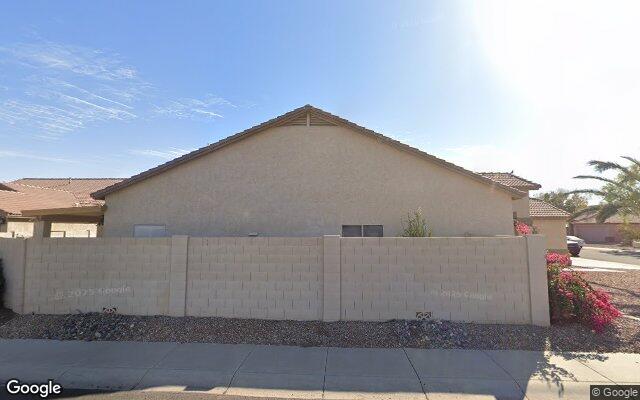
© Google Street View
Compared to similar Arizona facilities.
Care · 36-month window. Higher percentile = better performance on inspection record. Source: Arizona Dept. of Health Services · Bureau of Residential Facilities Licensing.
Citation history, plotted month by month.
13 deficiencies on record. Each bar is a month with a citation.
Finding distribution
none · 36 monthsScope × Severity (CMS A–L)
Every inspection visit, verbatim.
2 inspections in the public record, most recent first. Plain-language summaries open first — click into any row for the full citation text.
2026-02-17Complaint InvestigationNo findings
2025-09-24Annual Compliance VisitA.A.C. · 13 findings
“Based on observation, record review, and interview, the governing authority failed to administer a training program for all staff regarding fall prevention and fall recovery. The deficient practice posed a risk if a staff member was not properly trained to assist a resident who had fallen and was unable to recover independently. Findings include: 1. The Compliance Officer observed E3 working at the facility. 2. A review of facility documentation revealed a series of personnel schedules which indicated E3 worked on a regular basis between November 2024 and December 2024. 3. A review of E3's personnel record revealed E3 was hired as a caregiver. However, the review revealed no documentation demonstrating E3 received training regarding fall prevention and fall recovery. 4. In an interview, E2 stated, “I probably didn’t do it for [E3].” This is a repeat citation from the complaint and compliance inspection conducted on June 26, 2023.”
“Based on interview and documentation review, the manager of an assisted living home failed to maintain a standardized form for each resident that included the information prescribed in Arizona Revised Statutes (A.R.S.) § 36-420.04(A)(1-9), for two of two sampled residents. The deficient practice posed a risk if the emergency responder was not aware of critical health information for a resident. Findings include: 1. In an interview, E2 reported E2 had forms required by this statute for each resident. 2. A review of facility documentation revealed packets of documentation for R1 and R2. However, the review revealed the following: - R1’s packet did not include the name, address and telephone number of R1's current pharmacy; - R1’s and R2’s packets did not include point-of-contact information for the assisted living home, including the email address; and - R1’s and R2’s packets did not include a copy of R1's and R2’s health insurance portability and accountability act (HIPAA) releases authorizing a receiving hospital to communicate with the assisted living home to plan for R1's and R2’s discharges. 3. In an interview, regarding the HIPAA release form, E1 stated, “We don’t have a form for that.””
“Based on documentation review, record review, and interview, the chief administrative officer failed to implement tuberculosis (TB) infection control activities including annually providing training and education related to recognizing the signs and symptoms of TB, for three of three sampled employees. The deficient practice posed a potential TB exposure risk to residents. Findings include: 1. A review of Department documentation revealed this rule went into effect on May 4, 2022. 2. A review of CDC.gov revealed a webpage titled "Tuberculosis Screening, Testing, and Treatment of U.S. Health Care Personnel: Recommendations from the National Tuberculosis Controllers Association and CDC, 2019," published by the U.S. Department of Health and Human Services. The webpage stated: "The 2005 CDC recommendations for testing U.S. health care personnel have been updated and now include…6) annual TB education of all health care personnel." The review of the website revealed the 2005 CDC recommendations on a webpage titled “Guidelines for Preventing the Transmission of Mycobacterium tuberculosis in Health-Care Settings, 2005.” The webpage stated: “The setting should document that all HCWs [Health-Care Workers]...have received initial TB training relevant to their work setting and additional occupation-specific education. The level and detail of baseline training will vary according to the responsibilities of the HCW and the risk classification of the setting…Initial TB training should be provided before the HCW starts working.” 3. A review of E1’s personnel record revealed E1 was hired as the manager before this rule went into effect. However, the review revealed no documentation of training and education related to recognizing the signs and symptoms of TB. 4. A review of E3’s personnel record revealed E3 was hired as a caregiver after this rule went into effect. However, the review revealed no documentation of training and education related to recognizing the signs and symptoms of TB. 5. A review of E4’s personnel record revealed E4 was hired as a caregiver before the rule went into effect. However, the review revealed no documentation of training and education related to recognizing the signs and symptoms of TB. 6. In an interview, E2 stated, “I didn’t do it” and “I didn’t know about [it].” Technical assistance was provided on this rule during the complaint and compliance inspection conducted on June 26, 2023.”
“Based on documentation review, observation, record review, and interview, the manager failed to ensure a caregiver’s skills and knowledge were verified and documented before the caregiver provided physical health services, for two of two sampled caregivers. The deficient practice posed a risk if a caregiver did not have the skills and knowledge necessary to meet a resident's needs. Findings include: 1. A review of facility documentation revealed a policy and procedure (P&P) titled “VERIFYING CAREGIVER’S SKILLS AND KNOWLEDGE.” The P&P stated: “1. All staff need to be trained and their skills and knowledge verified prior to staff providing assistance with new equipment or procedures. The manager will interview and assess the staff and test on caregiver skills…6. The manager will put the information gathered from the interview, and information from previous employers in the employee's files.” 2. The Compliance Officer observed E3 and E4 working at the facility. 3. A review of E3's personnel record revealed E3 was hired as a caregiver in 2024. However, the review revealed no documentation of verification of E3’s skills and knowledge. 4. A review of E4's personnel record revealed E4 was hired as a caregiver in 2020. However, the review revealed no documentation of verification of E4’s skills and knowledge. 5. In an interview, E2 reported facility personnel verified E3’s and E4’s skills and knowledge upon hire but did not document it.”
“Based on documentation review, observation, record review, and interview, the manager failed to ensure a caregiver provided evidence of freedom from infectious tuberculosis (TB) on or before the date the individual began providing services at or on behalf of the assisted living facility as specified in Arizona Administrative Code (A.A.C.) R9-10-113, for one of one applicable sampled employee. The deficient practice posed a potential TB exposure risk to residents. Findings include: 1. R9-10-113(A)(2)(a)(i-iii) states: "If a health care institution is subject to the requirements of this Section, as specified in an Article in this Chapter, the health care institution's chief administrative officer shall ensure that the health care institution establishes, documents, and implements tuberculosis infection control activities that...2. Include: a. For each individual who is employed by the health care institution…and who is subject to the requirements of this Section, screening, on or before the date specified in the applicable Article of this Chapter, that consists of i. Assessing risks of prior exposure to infectious tuberculosis, ii. Determining if the individual has signs or symptoms of tuberculosis, and iii. Obtaining documentation of the individual's freedom from infectious tuberculosis according to subsection (B)(1)." 2. R9-10-113(B)(1)(a)(i) states: "B. A health care institution's chief administrative officer shall: 1. For an individual for whom baseline screening and documentation of freedom from infectious tuberculosis is required by an Article in this Chapter, as specified in subsection (A)(2)(a), obtain one of the following as evidence of freedom from infectious tuberculosis: a. Documentation of a negative Mantoux skin test or other tuberculosis screening test that: i. Is recommended by the U.S. Centers for Disease Control and Prevention (CDC).” 3. A review of the CDC website revealed a web page titled "Baseline Tuberculosis Screening and Testing for Health Care Personnel." The web page stated: "If the Mantoux tuberculin skin test (TST) is used for baseline testing of health care personnel, use two-step testing. Purpose: Two-step testing is recommended for the initial TB skin test for adults who may be tested periodically, such as health care personnel." 4. The Compliance Officer observed E3 working at the facility. 5. A review of facility documentation revealed a series of personnel schedules which indicated E3 worked on a regular basis between November 2024 and December 2024. 6. A review of E3’s personnel record revealed E3 was hired as a caregiver. The review revealed a negative TST dated as read after E3 began providing services at the facility. However, the review revealed no second negative TST or other test as recommended by the CDC. The review further revealed no documentation assessing risks of prior exposure to infectious TB and determining if E3 had signs or symptoms of TB. 7. In an interview, when the Compliance Officer asked if E3 had a second negative TST, E2 stated, “No, you probably do not.” E2 reported E2 would not have the assessment as E2 had been unaware of the requirement. Technical assistance was provided on this rule during the complaint and compliance inspection conducted on June 26, 2023.”
“Based on documentation review, record review, and interview, the manager failed to ensure a resident provided evidence of freedom from infectious tuberculosis (TB) before or within seven calendar days after the resident’s date of occupancy, and as specified in Arizona Administrative Code (A.A.C.) R9-10-113, for two of two sampled residents. The deficient practice posed a potential TB exposure risk to residents. Findings include: 1. R9-10-113(A)(2)(a)(i-ii) states: "If a health care institution is subject to the requirements of this Section, as specified in an Article in this Chapter, the health care institution's chief administrative officer shall ensure that the health care institution establishes, documents, and implements tuberculosis infection control activities that...2. Include: a. For each individual who is…admitted to the health care institution and who is subject to the requirements of this Section, screening, on or before the date specified in the applicable Article of this Chapter, that consists of: i. Assessing risks of prior exposure to infectious tuberculosis [and] ii. Determining if the individual has signs or symptoms of tuberculosis.” 2. A review of R1's and R2’s medical records revealed R1 and R2 were admitted to the facility more than seven days before the date of the inspection. However, the review revealed no documentation assessing risks of prior exposure to infectious tuberculosis and determining if R1 and R2 had signs or symptoms of TB. 3. In an interview, when the Compliance Officer asked if R1 and R2 had documentation of compliance with this rule, E2 stated, “No, I just have the regular TB.” E2 reported E2 would not have the assessments as E2 had been unaware of the requirement. Technical assistance was provided on this rule during the complaint and compliance inspection conducted on June 26, 2023.”
“Based on record review and interview, the manager failed to ensure before or at the time of acceptance of an individual, the individual submitted documentation dated within 90 calendar days before the individual was accepted by the facility to include whether the individual required continuous medical services, continuous or intermittent nursing services, or restraints, for one of two sampled residents. The deficient practice posed a risk if the facility was unable to meet the needs of a resident. Findings include: 1. A review of R1's medical record revealed a document titled "Admission Order Form” dated R1’s date of occupancy. The document stated the following: “4. Continuous medical or continuous nursing services needed. No. 5. Restraints needed. No. 6. Intermittent nursing services such as Hospice or Home Health. Yes / No.” However, neither “yes” nor “no” were circled or marked in any way and the form contained no other documentation demonstrating whether R1 required intermittent nursing services. 2. In an interview, E2 reported R1 did not require intermittent nursing services. E2 reported the medical practitioner did not mark “no” for R1. Technical assistance was provided on this rule during the complaint and compliance inspection conducted on June 26, 2023.”
“Based on record review and interview, the manager failed to ensure a caregiver or an assistant caregiver documented the services provided to a resident in the resident's medical record, for two of two sampled residents. The deficient practice posed a risk as services could not be verified as provided against a service plan and the Department was provided false or misleading information. Findings include: 1. A review of R1's medical record revealed a current service plan which indicated facility personnel were to assist R1 with partial baths “On days when complete bath is not given” and “Check [R1’s] finger nails daily.” The review further revealed documentation of assisted living services (ADLs) provided to R1 dated September 2025. However, the ADLs revealed documentation demonstrating facility personnel did not assist R1 with partial baths after September 12, 2025, and did not check R1’s fingernails. The ADLs further revealed no documentation demonstrating R1 had received breakfast the morning of the inspection. 2. A review of R2's medical record conducted at approximately 10:45 AM revealed a current service plan which indicated facility personnel were to assist R2 with showers two times per week, partial baths “On days when complete bath [shower] is not given,” oral care daily, dressing, hair care, and were to “Check [R2’s] finger nails daily.” The review further revealed ADLs dated September 2025. However, the ADLs revealed documentation demonstrating the following: - Facility personnel showered R2 on September 5, 12, and 19, 2025, and not two times per week; - Facility personnel did not assist R2 with partial baths after September 1, 2025; - Facility personnel did not assist R2 with oral care, dressing and hair care on September 6, 2025; - Facility personnel did not check R2’s fingernails; - R2 did not eat breakfast on the morning of the inspection; and - E4 assisted R2 with incontinence care on the date of the inspection between 3:00 PM and 11:00 PM, in the future. 3. In an interview, E4 reported facility personnel provided R1 and R2 with all services per R1’s and R2’s service plans. However, E4 reported facility personnel did not document the services. E4 reported R1 and R2 ate breakfast on the date of the inspection but E4 did not document it. Regarding pre-signing the incontinence care for R2, E2 stated, “[E4] accidentally did that.” This is a repeat citation from the complaint and compliance inspection conducted on June 26, 2023.”
“Based on record review and interview, the manager failed to ensure a resident's medical record contained documentation of medication administered to the resident that included dosage of administration or assistance, for one of two sampled residents. The deficient practice posed a risk as the Department was provided false or misleading information. Findings include: 1. A review of R1's medical record revealed a medication administration record (MAR) and a narcotic administration record (NAR), both dated September 2025. The MAR revealed documentation demonstrating facility personnel administered two tablets of oxycodone/acetaminophen 5-325 mg to R1 at 6:00 AM, 12:00 PM, and 6:00 PM on September 16, 2025. However, the NAR revealed contradictory documentation demonstrating facility personnel administered only one tablet of oxycodone/acetaminophen 5-325 mg to R1 at 6:00 AM, 12:00 PM, and 6:00 PM on September 16, 2025, and not two as stated on the MAR. 2. In an interview, E5 reported the MAR was incorrect. E5 reported E3 and E5 administered one tablet of oxycodone/acetaminophen 5-325 mg to R1 on September 16, 2025, and not two as stated on the MAR.”
“Based on documentation review, observation, and interview, the manager failed to ensure a means of exiting the facility for a resident who did not have a key, special knowledge for egress, or the ability to expend increased physical effort that monitored or alerted employees of the egress of a resident from the facility. The deficient practice posed a risk if the facility was unaware of the egress of a resident from the facility. Findings include: 1. A review of Department documentation revealed the facility was authorized to provide directed care services. 2. The Compliance Officer observed a door leading from the living room to the back yard and a sliding glass door leading from the master bedroom to the back yard. However, the Compliance Officer observed the doors did not have alerts installed and observed no monitoring system(s) present. 3. In an interview, when the Compliance Officer asked if the doors had alerts, E2 stated, “No, we’ve never had one.””
“Based on observation and interview, the manager failed to ensure medication stored by an assisted living facility was stored in a separate locked room, closet, cabinet, or self-contained unit used only for medication storage. The deficient practice posed a risk to the physical health and safety of residents with access to the medication. Findings include: 1. The Compliance Officer observed an unlocked door leading to a laundry room. Upon opening the door, the Compliance Officer observed a second unlocked door leading to the garage. Inside the garage, the Compliance Officer observed an unlocked refrigerator. Upon opening the refrigerator, the Compliance Officer observed a metal lock box. However, the box was unlocked. Upon opening the box, the Compliance Officer observed a variety of resident medications, including latanoprost, lorazepam, morphine, and oxycodone. 2. In an interview, E2 reported a caregiver was recently working with the medication lock box. However, E2 stated the caregiver “didn’t lock it.” 3. The Compliance Officer observed an unlocked cabinet under a counter in the kitchen. Upon opening the cabinet, the Compliance Officer observed a bag with what appeared to be a medication bottle inside. 4. In an interview, E5 reported the bag belonged to E5 and the bottle contained Advil. This is a repeat citation from the complaint and compliance inspection conducted on June 26, 2023.”
“Based on documentation review, interview, and record review, the manager failed to ensure an evacuation drill for employees and residents was conducted at least once every six months. The deficient practice posed a risk if employees were unable to implement a disaster plan and safely evacuate residents during an emergency. Findings include: 1. A review of facility documentation revealed a series of evacuation drill documentation dated within the last 12 months. 2. In an interview, when the Compliance Officer asked E1 to explain the process of an evacuation drill, E1 reported facility personnel gathered the residents at the back door. E1 stated, “We don't physically take them outside.” 3. A review of R1’s and R2’s medical records revealed no documentation of a determination by a medical practitioner that evacuation from the assisted living facility during an evacuation drill would cause harm to the residents.”
“Based on observation and interview, the manager failed to ensure poisonous or toxic materials stored by the assisted living facility were maintained in a locked area inaccessible to residents. The deficient practice posed a risk to residents with access to the poisonous or toxic materials. Findings include: 1. The Compliance Officer observed an unlocked door leading to a laundry room. Upon opening the door, the Compliance Officer observed a second unlocked door leading to the garage. Inside the garage, the Compliance Officer observed an unlocked cabinet with an open lock hanging from a latch attached to the cabinet. Upon opening the cabinet, the Compliance Officer observed a can of air freshener. 2. In an interview, E2 reported the cabinet was supposed to be used primarily for briefs. E2 reported the air freshener did not belong in the cabinet. 3. The Compliance Officer observed an unlocked cabinet in a bathroom used by residents. Upon opening the cabinet, the Compliance Officer observed a can of disinfectant spray. 4. In an interview, E1 stated there were to be “no cleaning supplies” in the cabinet. This is a repeat citation from the complaint and compliance inspection conducted on June 26, 2023.”
1 older inspection from 2023 are not shown above.
Get the complete record, translated into plain language — emailed to you.
Other facilities in Glendale.
Other memory care facilities near Glendale with similar care offerings.


Tour Prep
Family reviews
No reviews yet — be the first to share your experience