Aging Gracefully.
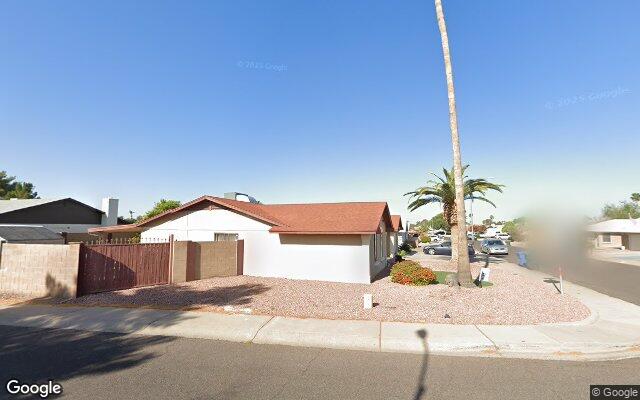
A medium home, reviewed on public record.
© Google Street View
Compared to 1,661 Arizona facilities with a similar number of beds.
Care · 36-month window. Higher percentile = better performance on inspection record. Source: Arizona Dept. of Health Services · Bureau of Residential Facilities Licensing.
among peers to rank.
on file.
Rankings based on 36-month ADHS inspection data. Severity and frequency: fewer citations = higher percentile. Repeat rate: lower repeat citation share = higher percentile.
Citation history, plotted month by month.
13 deficiencies on record. Each bar is a month with a citation.
Finding distribution
13 total · 36 monthsScope × Severity (CMS A–L)
Every inspection visit, verbatim.
3 inspections in the public record, most recent first. Plain-language summaries open first — click into any row for the full citation text.
2026-05-07Complaint InvestigationNo findings
2026-04-14Complaint InvestigationEnforcement · 10 findings
“Based on record review, documentation review, and interview, the manager failed to ensure the health care institution developed and administered a training program for all staff regarding fall prevention and fall recovery that included initial training and continued competency training in fall prevention and fall recovery, for one of two personnel sampled. The deficient practice posed a risk as the caregiver received no organized instruction or information related to physical health services provided to residents. Findings include: 1. A review of E2’s personnel record revealed a hire date of February 3, 2024. Further review of E2’s record revealed no fall prevention and fall recovery training. Based on E2’s hire date, this documentation was required. 2. A review of the facility's staff schedule revealed E2 provided services to the residents. 3. A review of the facility’s policies and procedures revealed a policy titled “Fall Prevention Recovery Policy and Procedure.” The policy did not contain the frequency of fall prevention and fall recovery training for employees. 4. In an interview, E1 acknowledged that E2 did not have the required fall prevention and fall recovery training. 5. In an exit interview, the findings were reviewed with E1, and no additional information was provided.”
“Based on record review and interview, the assisted living home failed to prepare a written document for emergency responders which included the reason emergency responders were requested on behalf of the resident, whether the resident received medication services, point of contact information for the assisted living home, including the telephone number and email address, and a copy of the resident's health insurance portability and accountability act release authorizing a receiving hospital to communicate with the assisted living home to plan for the resident's discharge, for one of two residents sampled. The deficient practice posed a risk if the emergency responder was not aware of critical health information for the resident. Findings include: 1. A review of R3's medical record revealed an incident report dated December 8, 2025, in which a call was placed to 911 for emergency response. Further review revealed a Preliminary Admission Information packet was used as the emergency responder document for R3. However, the packet did not include the following: - The reason emergency responders were requested on behalf of the resident; - Whether R3 received medication services; - Point of contact information for the assisted living home, including the telephone number and email address; and - A copy of the R3's health insurance portability and accountability act release authorizing the receiving hospital to communicate with the assisted living home to plan for the R3's discharge. 2. In an interview, E1 reported that the facility used the Preliminary Admission Information packet as the emergency responder document for R3. E1 acknowledged that the packet did not include all required information. 3. In an exit interview, findings were reviewed with E1, and no additional information was provided.”
“Based on record review and interview, the assisted living home failed to maintain a standardized form for each resident that includes whether the resident received medication services, point of contact information for the assisted living home, including the telephone number and email address, and a copy of the resident's health insurance portability and accountability act release authorizing a receiving hospital to communicate with the assisted living home to plan for the resident's discharge. Findings include: 1. A review of R1's medical record revealed no standardized emergency responder document. Further review revealed a Preliminary Admission Information packet used as the emergency responder document. However, the packet did not include the following: - Whether R1 received medication services; - Point of contact information for the assisted living home, including the telephone number and email address; and - A copy of the R1's health insurance portability and accountability act release authorizing a receiving hospital to communicate with the assisted living center or assisted living home to plan for the resident's discharge. 2. A review of R2's medical record revealed no standardized emergency responder document. Further review revealed a Preliminary Admission Information packet used as the emergency responder document. However, the packet did not include the following: - Whether R2 received medication services; - Point of contact information for the assisted living home, including the telephone number and email address; and - A copy of the R1's health insurance portability and accountability act release authorizing a receiving hospital to communicate with the assisted living center or assisted living home to plan for the resident's discharge. 3. In an interview, E1 reported that the facility used their Preliminary Admission Information packet as the emergency responder document. E1 acknowledged that the packet does not include all required information. 4. In an exit interview, findings were reviewed with E1, and no additional information was provided.”
“Based on document review, record review, and interview, the health care institution's chief administrative officer failed to ensure that the health care institution implemented tuberculosis (TB) infection control activities, which included annually assessing the health care institution's risk of exposure to infectious TB and annually providing training and education related to recognizing the signs and symptoms of TB to individuals employed by or providing volunteer services for the health care institution. The deficient practice posed a potential risk of illness to residents. Findings include: 1. A review of facility documents revealed no facility risk assessment completed for the health care institution's risk of infectious TB. 2. A review of E2's personnel record did not include documentation of annual education related to recognizing the signs and symptoms of infectious TB. Based on E2's date of hire, this documentation was required. 3. In an exit interview, the findings were reviewed with E1, and no further information was provided.”
“Based on record review and interview, the manager failed to ensure a caregiver who was expected to have more than eight hours per week of direct interaction with residents, provided documentation of screening for signs and symptoms of infectious tuberculosis (TB) as specified in R9-10-113, for one of two personnel sampled. The deficient practice posed a potential risk of illness to residents. Findings include: 1. R9-10-113.A states, "If a health care institution is subject to the requirements of this Section, as specified in an Article in this Chapter, the health care institution's chief administrative officer shall ensure that the health care institution establishes, documents, and implements tuberculosis infection control activities that...2. Include: a. For each individual who is employed by the health care institution, provides volunteer services for the health care institution, or is admitted to the health care institution and who is subject to the requirements of this Section, screening, on or before the date specified in the applicable Article of this Chapter, that consists of: i. Assessing risks of prior exposure to infectious tuberculosis, ii. Determining if the individual has signs or symptoms of tuberculosis, and iii. Obtaining documentation of the individual's freedom from infectious tuberculosis according to subsection (B)(1)..." 2. A review of E2's personnel record revealed no documentation of screening for signs and symptoms of TB. Based on E2's work schedule, this documentation was required. 3. A review of facility documentation revealed a "Work Schedule" dated April 2026, which revealed E2 had worked 12-hour shifts daily during the month of April. 4. In an exit interview, the findings were reviewed with E1, and no further information was provided.”
“Based on documentation review, record review, and interview, the manager failed to ensure that a resident provided evidence of freedom from infectious tuberculosis (TB) as specified in R9-10-113, for one of two residents sampled. The deficient practice posed a potential illness risk to residents. Findings include: 1. R9-10-113.A states, "If a health care institution is subject to the requirements of this Section, as specified in an Article in this Chapter, the health care institution's chief administrative officer shall ensure that the health care institution establishes, documents, and implements tuberculosis infection control activities that...2. Include: a. For each individual who is employed by the health care institution, provides volunteer services for the health care institution, or is admitted to the health care institution and who is subject to the requirements of this Section, screening, on or before the date specified in the applicable Article of this Chapter, that consists of: i. Assessing risks of prior exposure to infectious tuberculosis, ii. Determining if the individual has signs or symptoms of tuberculosis, and iii. Obtaining documentation of the individual's freedom from infectious tuberculosis according to subsection (B)(1)..." 2. A review of R2's medical record revealed no documentation of R2's risk of prior exposure to infectious TB, and the determination of R2's freedom from infectious TB. Based on R2's admission date, this documentation was required. 3. In an exit interview, the findings were reviewed with E1, and no further information was provided.”
“Based on record review and interview, the manager failed to ensure that the caregiver documented the services provided in a resident’s medical record according to the resident’s service plan for two of two residents sampled. The deficient practice posed a risk as services could not be verified as provided against a service plan. Findings include: 1. A review of R1’s medical record revealed a service plan dated February 10, 2026, which included the following services: · Oral day twice daily and as needed; · Dressing: twice daily and as needed; and · Laundry: weekly and as needed. 2. A review of R1’s activities of daily living (ADL) for April 2026 revealed the following: · Oral care documented once daily; · Dressing documented once daily on April 6-7, April 9, and April 13, 2026. Dressing was documented as not completed on April 1-5, April 8, or April 10-12, 2026; · Laundry was not a documented service in R1’s ADLs. 3. A review of R2’s medical record revealed a service plan dated March 25, 2026, which included the following services: • Oral day twice daily and as needed; • Dressing: twice daily and as needed; and • Laundry: weekly and as needed. 4. A review of R2’s ADLs for April 2026 revealed the following: · Oral care documented once daily; · Dressing documented once daily; and · Laundry was not a documented service in R2’s ADLs. 5. In an exit interview, the findings were reviewed with E1, who reported that the services were provided but not documented properly, and no additional information was provided.”
“Based on documentation review, observation and interview, the manager failed to ensure there was a means of exiting the facility for a resident who does not have a key, special knowledge for egress, or the ability to expend increased physical effort that provides access to an outside area from which a resident may exit to a location at least 30 feet away from the facility that was secure and monitored or alerted employees of the egress. The deficient practice posed a risk to the physical health and safety of residents. Findings include: 1. A review of the facility's license issued by the Department revealed the facility was authorized to provide directed care services. 2. During an environmental tour of the facility, the Compliance Officer observed that the front egress door was unlocked and not monitored or alerted of egress when the door was opened. The door contained a lock and an alert; however, the lock was not engaged and the alert was turned off. The compliance officer also observed two back egress patio sliding doors that were not monitored or alerted of egress when the doors were opened. The two patio doors opened into a secure area. 3. In an interview, E1 reported that the front egress alarm was connected to the facility’s security alarm system, but was turned off because it was not operating properly. E1 reported E1 would consider replacing the front egress alarm. 4. In the exit interview, the findings were reviewed with E1, and no additional information was provided.”
“Based on record review, and interview, the manager failed to ensure that when a resident had an accident, emergency, or injury that resulted in the resident needing medical services, a caregiver or an assistant caregiver documented the names of individuals who observed an accident, emergency, or injury, and any actions taken to prevent the accident, emergency, or injury from occurring in the future. Findings include: 1. A review of R3's medical record revealed a document titled "Report of Unusual Occurrence" dated December 8, 2025, regarding an incident which required emergency medical services to transport R3 to the hospital. The document contained a section titled, “Witnesses” which was left blank. The document also contained a section titled, “Action taken by facility: [to prevent reoccurrence of such event]” which was also left blank. 2. In an interview, E1 and E2 reported they did not know how to complete the two sections in question based on the types of incidents that occurred. 3. In an exit interview, the findings were reviewed with E1, and no additional documentation or information was provided.”
“Based on observation and interview, the manager failed to ensure that a fire extinguisher was serviced at least once every 12 months. The deficient practice posed a risk to the physical health and safety of a resident. Findings include: 1. During an environmental tour of the facility, the Compliance Officer observed one fire extinguisher located on top of the refrigerator in the kitchen. The fire extinguisher was not mounted and was blockaded on the refrigerator by other items, and inaccessible. The Compliance Officer was unable to determine if the fire extinguisher was properly serviced. 2. During the environmental tour, the Compliance Officer observed a second fire extinguisher in a room adjacent to the kitchen. The fire extinguisher was located on top of a tall cabinet, not mounted, and also inaccessible. The fire extinguisher contained an inspection tag dated March 2025. 3. In an exit interview, the findings were reviewed with E1 and no further information was provided.”
2024-08-23Complaint InvestigationA.A.C. · 3 findings
“Based on documentation review, record review, and interview, the governing authority failed to ensure compliance with A.R.S. \'a7 36-411, for one of two sampled employees. The deficient practice posed a risk if E2 was a danger to a vulnerable population. Findings include: 1. A.R.S. \'a7 36-411.A states, "... as a condition of licensure or continued licensure of a residential care institution, a nursing care institution or a home health agency and as a condition of employment in a residential care institution, a nursing care institution or a home health agency, employees and owners of residential care institutions, nursing care institutions or home health agencies or contracted persons or volunteers who provide medical services, nursing services, behavioral health services, health-related services, home health services or supportive services and who have not been subject to the fingerprinting requirements of a health professional's regulatory board pursuant to title 32 shall have valid fingerprint clearance cards that are issued pursuant to title 41, chapter 12, article 3.1 or shall apply for a fingerprint clearance card within twenty working days of employment or beginning volunteer work..." 2. A review of E2's personnel record revealed a hire date of August 21, 2024. E2's personnel record revealed a fingerprint clearance card issued by the Department of Public Safety (DPS) on April 23, 2019, with an expiration date of April 23, 2025. 3. A review of the DPS fingerprint clearance card database, revealed E2's fingerprint clearance card was invalid. 4. A.R.S. \'a7 36-411.F states "An employee, volunteer or contractor of a residential care institution, nursing care institution or home health agency who is eligible pursuant to section 41-1758.07, subsection C to petition the board of fingerprinting for a good cause exception and who provides documentation of having applied for a good cause exception pursuant to section 41-619.55 but who has not yet received a decision is exempt from the fingerprinting requirements of this section if the person provides medical services, nursing services, behavioral health services, health-related services, home health services or direct supportive services to residents or patients while under the direct visual supervision of an owner or employee who has a valid fingerprint clearance card." 5. A review of R1's medical record revealed an incident report dated August 19, 2024. The report stated "[R1] mentioned to [E1] that [R1] does not like [E2] because [E2] was acting inappropriately. [R1] said [E2] was dressing [R1] and rubbed across [R1's] [genitalia]." 6. A review of the police report dated August 21, 2024 revealed that R1 had "yellow bruising" on R1's inner upper thigh. A further look into the police report stated, "[E2] had come into [R1's] room on 8/20/2024..." and "... [E2] pretended to assist [R1] getting dressed by pulling up [R1's] pants. As [E2] was pulling up [R1's] pants, [E2] inserted [E2's] finger in [R1's] [genitalia]." 7. A review of E2's personnel record revealed an application for a good cause exception dated December 19, 2023. However, E2 was alone with R1 and E2 was not under the direct visual supervision of an employee who had a valid fingerprint clearance card. 8. In an interview, E1 reported E2 was training over the weekend prior to the official hire date if August 21, 2024 to see if E2 was a good fit for the facility. 9. In an interview, E1 acknowledged the governing authority failed to ensure compliance with A.R.S. \'a7 36-411.”
“Based on documentation review, record review, and interview, the manager, failed to report the suspected abuse of the resident according to A.R.S. \'a7 46-454(A). The deficient practice posed a risk as the facility did not immediately report suspected abuse of a resident by a personnel member. Findings include: 1. A.R.S.\'a7 46-454(A) "...person who has responsibility for the care of a vulnerable adult and who has a reasonable basis to believe that abuse, neglect or exploitation of the adult has occurred shall immediately report or cause reports to be made of such reasonable basis to a peace officer or to the adult protective services central intake unit." 2. R9-10-101.111 "Immediate" means without delay. 3. A review of R1's medical record revealed an incident report dated August 19, 2024. The report stated "[R1] mentioned to [E1] that [R1] does not like [E2] because [E2] was acting inappropriately. [R1] said [E2] was dressing [R1] and rubbed across [R1's] [genitalia]." 4. A review of the police report revealed the date the police were contacted was August 21, 2024. 5. A review of the police report dated August 21, 2024 revealed that R1 had "yellow bruising" on R1's inner upper thigh. A further look into the police report stated, "[E2] had come into [R1's] room on 8/20/2024..." and "... [E2] pretended to assist [R1] getting dressed by pulling up [R1's] pants. As [E2] was pulling up [R1's] pants, [E2] inserted [E2's] finger in [R1's] [genitalia]." 6. In an interview, E1 acknowledged that a peace officer or Adult Protective Services was not contacted immediately as required in A.R.S. \'a7 46-454(A).”
“Based on record review and interview, the manager failed to ensure a resident was treated with dignity, respect, and consideration. The deficient practice posed a resident rights violation if the resident was subjected to abuse. Findings include: 1. A review of R1's medical record revealed an incident report dated August 19, 2024. The report stated "[R1] mentioned to [E1] that [R1] does not like [E2] because [E2] was acting inappropriately. [R1] said [E2] was dressing [R1] and rubbed across [R1's] [genitalia]." 2. A review of the police report dated August 21, 2024 revealed that R1 had "yellow bruising" on R1's inner upper thigh. A further look into the police report stated, "[E2] had come into [R1's] room on 8/20/2024..." and "... [E2] pretended to assist [R1] getting dressed by pulling up [R1's] pants. As [E2] was pulling up [R1's] pants, [E2] inserted [E2's] finger in [R1's] [genitalia]." 3. In an interview, E1 acknowledged residents were not treated with dignity, respect, and consideration.”
Other facilities in Glendale.
Other memory care facilities near Glendale with similar care offerings.



Contract Decoder
Family reviews
No reviews yet — be the first to share your experience