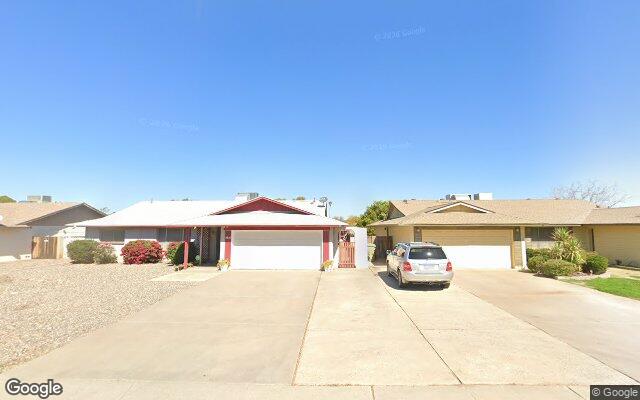
Sunflower Hills Assisted Living.
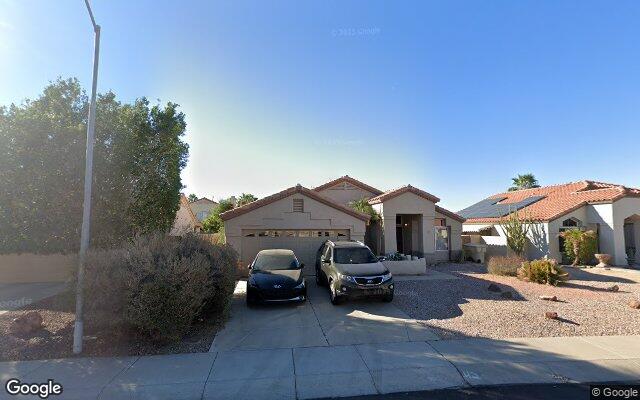
A medium home, reviewed on public record.
© Google Street View
Compared to 1,661 Arizona facilities with a similar number of beds.
Care · 36-month window. Higher percentile = better performance on inspection record. Source: Arizona Dept. of Health Services · Bureau of Residential Facilities Licensing.
among peers to rank.
Rankings based on 36-month ADHS inspection data. Severity and frequency: fewer citations = higher percentile. Repeat rate: lower repeat citation share = higher percentile.
Citation history, plotted month by month.
8 deficiencies on record. Each bar is a month with a citation.
Finding distribution
8 total · 36 monthsScope × Severity (CMS A–L)
Every inspection visit, verbatim.
4 inspections in the public record, most recent first. Plain-language summaries open first — click into any row for the full citation text.
2026-09-16Complaint InvestigationNo findings
2026-03-19Complaint InvestigationEnforcement · 3 findings
“Based on documentation review and interview, the manager failed to provide written notification to the Department of a resident’s elopement within 24 hours of the elopement being discovered. The deficient practice posed a risk as the Department was unable to assess if there was an immediate health and safety concern for a resident residing in the assisted living facility. Findings include: 1. A review of facility documentation revealed an “Arizona Elopement Incident Form.” The form revealed R1 eloped from the facility on March 2, 2026. The form revealed facility personnel discovered the elopement at 3:30 PM on March 2, 2026. 2. A review of Department documentation revealed E1 notified the Department of the elopement at 5:30 PM on March 3, 2026, more than 24 hours after the elopement was discovered. 3. In an interview, E2 confirmed the date and time of the elopement. E2 reported E1 notified the Department more than 24 hours after the elopement was discovered. 4. In the exit interview, the Compliance Officers reviewed the findings with E2, and E2 offered no further comment.”
“Based on record review and interview, the manager failed to ensure there was a documented residency agreement with the assisted living facility that included terms of occupancy, including the date of occupancy or expected date of occupancy, for one of one sampled resident. The deficient practice posed a risk as required information could not be verified. Findings include: 1. A review of R1's medical record revealed a residency agreement. However, the residency agreement did not include R1's date of occupancy or expected date of occupancy. 2. In an interview, when the Compliance Officer informed E2 that R1's residency agreement did not include R1's date of occupancy or expected date of occupancy, E2 stated, “Okay.” 3. In the exit interview, the Compliance Officers reviewed the findings with E2, and E2 offered no further comment. Technical assistance was provided on this rule during the initial monitoring and complaint inspection conducted on October 23, 2025.”
“Based on documentation review, observation, and interview, the manager failed to ensure a means of exiting the facility for a resident who did not have a key, special knowledge for egress, or the ability to expend increased physical effort that provided access to an outside area from which a resident may have exited to a location at least 30 feet away from the facility that was secure. The deficient practice posed a risk as the facility was unaware of the egress of a resident from the facility. Findings include: 1. A review of Department documentation revealed the facility was authorized to provide directed care services. 2. The Compliance Officer observed three controlled doors leading from the interior of the facility to the exterior of the facility. The Compliance Officer observed no means of exiting the facility for a resident who did not have a key, special knowledge for egress, or the ability to expend increased physical effort. The Compliance Officer observed egress through the front door would have allowed residents to be 30 feet away from the facility. However, the Compliance Officer observed the front yard of the facility was not secured. The Compliance Officer observed egress through either of the two back doors would have provided access to the backyard from which a resident may have exited through the side gate to a location at least 30 feet away. The Compliance Officer observed that the side gate leading from the back yard to the front yard of the facility had an alert installed. However, the Compliance Officer observed that the alert was missing the necessary magnet portion, and upon opening and closing the gate, the Compliance Officer heard no alert, neither inside the facility nor near the gate itself. The Compliance Officer observed that the gate, back yard, and front yard were not secured. 3. In an interview, E2 reported only facility personnel and R2 knew the code to exit through either of the three controlled exits. Regarding the side gate alert, E2 stated, “I think that one is broken.” E2 reported that the alert on the gate did not have a magnet portion since E2 took over as manager on January 1, 2026. 4. In the exit interview, the Compliance Officers reviewed the findings with E2, and E2 offered no further comment.”
2025-10-23Complaint InvestigationEnforcement · 5 findings
“Based on documentation review, observation, record review, and interview, the governing authority failed to administer a training program for all staff regarding fall prevention and fall recovery. The deficient practice posed a risk if a staff member was not properly trained to assist a resident who had fallen and was unable to recover independently. Findings include: 1. A review of facility documentation revealed a policy and procedure (P&P) titled “Fall Prevention and Recovery.” The P&P stated: “Fall Prevention and Recovery Training is required upon fire and at least every 12 months thereafter…Documentation of Fall Prevention and Recovery training completion will be maintained in personnel records.” 2. The Compliance Officer observed E3 and E4 working at the facility. 3. A review of E3’s personnel record revealed E3 was hired as a caregiver less than 12 months before the date of the inspection. However, the review revealed no documentation demonstrating E3 received training regarding fall prevention and fall recovery upon hire. 4. In an interview, E1 reported E3 worked at this facility part time and at another facility full-time. E1 reported E3 had training regarding fall prevention and fall recovery from that other facility. When the Compliance Officer asked if the record E1 had provided for E3 was all documentation the facility had for E3, E1 stated, “Yes.” 5. In an interview, E3 reported E3 did not work at another assisted living facility but instead worked as a private duty caregiver in the homes of E3’s clients. 6. A review of E4’s personnel record revealed E4 was hired as a caregiver less than 12 months before the date of the inspection. However, the review revealed no documentation demonstrating E4 received training regarding fall prevention and fall recovery upon hire. Instead, the review revealed a screenshot on E1’s phone of a certificate stating E4 “completed The Fall Recovery Course [through] AZFallPrevention.com” on May 24, 2025, several months before E4’s date of hire.”
“Based on interview and documentation review, the manager of an assisted living home failed to maintain a standardized form for each resident that included the information prescribed in Arizona Revised Statutes (A.R.S.) § 36-420.04(A)(1-9). The deficient practice posed a risk if the emergency responder was not aware of critical health information for a resident. Findings include: 1. In an interview, E1 reported R1 had an accident, emergency, or injury on September 28, 2025, that resulted in facility personnel contacting emergency responders (EMS) on behalf of R1. E1 reported facility personnel provided EMS with R1's emergency face sheet, medication administration record, and Health Insurance Portability and Accountability Act (HIPAA) release form. When the Compliance Officer requested the documentation provided to EMS, E1 reported E1 did not have a copy. Instead, E1 showed the Compliance Officer the template on E1’s phone. When the Compliance Officer asked if E1 had the forms filled out and ready to go for EMS, E1 stated, “I fill it out and I give it to them [EMS].” E1 reported E1 did not have the documents filled out and ready to go for the residents. 2. A review of facility documentation revealed no standardized form for residents that included the information prescribed in A.R.S. § 36-420.04(A)(1-9).”
“Based on interview and documentation review, the manager of an assisted living home failed to maintain a copy of the document provided to the emergency responder (EMS) which included the items listed in Arizona Revised Statutes (A.R.S.) § 36-420.04(A)(1-9). Findings include: 1. In an interview, E1 reported R1 had an accident, emergency, or injury on September 28, 2025, that resulted in facility personnel contacting EMS on behalf of R1. E1 reported facility personnel provided EMS with R1's emergency face sheet, medication administration record, and Health Insurance Portability and Accountability Act (HIPAA) release form. However, E1 reported E1 did not have a copy of the documentation provided to EMS. 2. A review of facility documentation revealed no copy of the document provided to EMS in compliance with A.R.S. § 36-420.04(A)(1-9).”
“Based on documentation review, record review, observation, and interview, the manager failed to ensure the manager provided current documentation of first aid training and cardiopulmonary resuscitation training certification specific to adults before providing assisted living services to a resident, for two of two sampled caregivers. The deficient practice posed a risk if a caregiver was unable to meet a resident's needs during an emergency. Findings include: 1. A review of facility documentation revealed a policy and procedure (P&P) titled “First Aid and CPR Training.” The P&P stated: “Method and content of CPR training which includes the ability to perform and demonstrate cardio pulmonary resuscitation, only if the card is not issued by: American Red Cross, American Heart Association, or National Safety Council.” The review further revealed a series of personnel schedules which indicated the following: - E3 worked on September 6-8, 13-15, 19-20, 25, and 27-29, 2025; - E3 worked on October 4-5, 9-12, and 16-22, 2025; and - E4 worked on October 22-23, 2025. 2. A review of R1’s and R2’s medical records revealed medication administration records (MARs) and documentation of assisted living services (ADLs) provided to R1 and R2 in October 2025. The MARs and ADLs revealed E3 provided assisted living services to R1 or R2 on October 1, 4, 9, 10-12, 16, and 18-23, 2025. 3. The Compliance Officer observed E3 and E4 working at the facility. 4. A review of E3's personnel record revealed E3 was hired as a caregiver. The review revealed a printout of E3's first aid and CPR training certification from NationalCPRFoundation dated as issued on June 23, 2024. 5. A review of the NationalCPRFoundation website revealed E3's CPR training was online-only and did not include a demonstration of E3's ability to perform CPR. 6. In an interview, when the Compliance Officer asked if the record E1 had provided for E3 was all documentation the facility had for E3, E1 stated, “Yes.” 7. In a separate interview, when the Compliance Officer asked if E3 had documentation of another first aid and CPR training course that required a demonstration of E3's ability to perform CPR, E3 stated, “No.” 8. A review of E4's personnel record revealed E4 was hired as a caregiver. However, the review revealed no documentation of first aid training and cardiopulmonary resuscitation training certification specific to adults. 9. In an interview, E1 reported E1 was still in the process of hiring E4 and did not yet have the documentation required by this rule.”
“Based on documentation review, record review, observation, and interview, the manager failed to ensure a caregiver’s skills and knowledge were verified and documented before the caregiver provided physical health services, for two of two sampled caregivers. The deficient practice posed a risk if a caregiver did not have the skills and knowledge necessary to meet a resident's needs. Findings include: 1. A review of facility documentation revealed a policy and procedure (P&P) titled "Employees and Volunteer Qualifications.” The P&P stated: “The hiring individual or manager will ensure, check and document that each caregiver, or assistant caregiver providing physical health services…have the required skills and knowledge before providing any services to the residents.” The review further revealed a series of personnel schedules which indicated the following: - E3 worked on September 6-8, 13-15, 19-20, 25, and 27-29, 2025; - E3 worked on October 4-5, 9-12, and 16-22, 2025; and - E4 worked on October 22-23, 2025. 2. A review of R1’s and R2’s medical records revealed medication administration records (MARs) and documentation of assisted living services (ADLs) provided to R1 and R2 in October 2025. The MARs and ADLs revealed E3 provided assisted living services to R1 or R2 on October 1, 4, 9, 10-12, 16, and 18-23, 2025. 3. The Compliance Officer observed E3 and E4 working at the facility. 4. A review of E3's personnel record revealed E3 was hired as a caregiver. However, the review revealed no documentation of E3’s skills and knowledge. 5. In an interview, when the Compliance Officer asked if the record E1 had provided for E3 was all documentation the facility had for E3, E1 stated, “Yes.” 6. A review of E4's personnel record revealed E4 was hired as a caregiver. However, the review revealed no documentation of E4’s skills and knowledge. 7. In an interview, E1 reported E1 was still in the process of hiring E4 and did not yet have the documentation required by this rule.”
2025-07-09Annual Compliance VisitNo findings
Other facilities in Glendale.
Other memory care facilities near Glendale with similar care offerings.
Tour Prep
Family reviews
No reviews yet — be the first to share your experience