Majestic Villa Assisted Living.
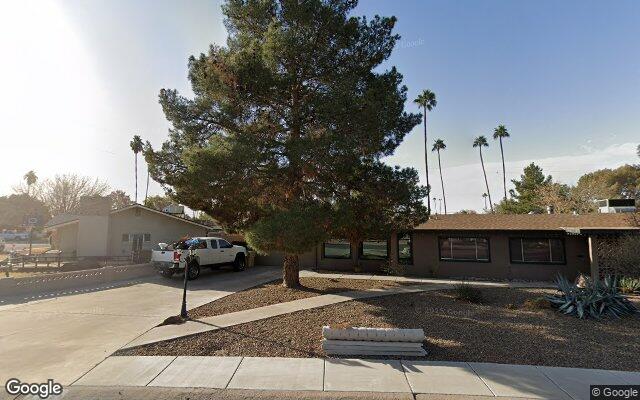
A medium home, reviewed on public record.
© Google Street View
Compared to 1,661 Arizona facilities with a similar number of beds.
Care · 36-month window. Higher percentile = better performance on inspection record. Source: Arizona Dept. of Health Services · Bureau of Residential Facilities Licensing.
on file.
Rankings based on 36-month ADHS inspection data. Severity and frequency: fewer citations = higher percentile. Repeat rate: lower repeat citation share = higher percentile.
Citation history, plotted month by month.
30 deficiencies on record. Each bar is a month with a citation.
Finding distribution
30 total · 36 monthsScope × Severity (CMS A–L)
Every inspection visit, verbatim.
6 inspections in the public record, most recent first. Plain-language summaries open first — click into any row for the full citation text.
2025-08-13Complaint InvestigationEnforcement · 4 findings
“Based on observation, documentation review, record review, and interview, the manager failed to ensure the health, safety, or welfare of a resident was not placed at risk of harm. The deficient practice posed a risk as resident rights were violated. Findings include: 1. The Compliance Officer arrived at the facility around 8:30 am. Upon arrival, the Compliance Officer observed only E2 and E3 providing services to six residents. In separate interviews, E2 reported being a certified caregiver. However, no documentation of a caregiver certification for E2 was provided. E3 reported being an assistant caregiver. A review of facility personnel records revealed no personnel records for E2 and E3. The facility not having licensed caregivers at the facility poses a health, safety, or welfare of the resident at risk. 2. A review of R1's medical records revealed a service plan for personal care services dated from November 2025, and a medication administration record sheet (MAR) for December 2025 and January 2025. However, no additional documentation was provided for R1. Based on R1's admit date, the documentation was required. A review of R2's medical records revealed a blank binder and a MAR for June and July 2025. However, no additional documentation was provided. Based on R2's admit date, the documentation was required. The facility not having above mentioned medical records at the facility poses a health, safety, or welfare of the resident at risk. 3. In an interview, E1 and E6 acknowledged that the facility failed to ensure the health, safety, or welfare of residents was not placed at risk of harm. 4. In an exit interview, the findings were reviewed with E1 and E6, and no additional information was provided. This is a repeat deficiency from the on-site compliance inspection conducted on August 4, 2025.”
“Based on observation, record review, and interview, the manager failed to ensure at least the manager or a caregiver was present at the assisted living home when a resident was present in the assisted living home. The deficient practice posed a risk as no qualified employee was present to meet a resident's needs. Findings include: 1. The Compliance Officer arrived at the facility around 8:30 am. Upon arrival, the Compliance Officer observed only E2 and E3 providing services to eight residents. 2. E2 made a phone call and reported to E6 that a Compliance Officer was at the facility for an inspection. E6 arrived at the facility around 9:30 AM. At around 10:30 AM, E1 arrived at the facility. 3. A review of facility personnel records revealed no personnel records for E2 and E3. 4. A review of the Arizona Caregiver Certificate Verification website https://nciaboard.az.gov/news/caregiver-certificate-verification, revealed no evidence E2 had completed a caregiver training program. 5. In separate interviews, E2 reported being a certified caregiver. However, no documentation of a caregiver certification for E2 was provided. E3 reported being an assistant caregiver. 6. In an interview, E1 and E6 acknowledged that no personnel records for E2 and E3 were available for review at the time of inspection. This is a repeat deficiency from the on-site compliance inspection conducted on May 30, 2024, December 6, 2024, and August 4, 2025.”
“Based on observation, interview, and record review, the manager failed to ensure a personnel record was established and maintained for each employee as required, for four of four employees sampled. The deficient practice posed a risk as the required information could not be verified. Findings include: 1. The Compliance Officer arrived at the facility around 8:20 am. Upon arrival, the Compliance Officer observed E2 and E3 providing services to residents. 2. A review of facility personnel records revealed no personnel records for E2, E3, E4, and E5. 3. In separate interviews, E2 reported being a certified caregiver. However, no documentation of a caregiver certification for E4 was provided. E5 reported being an assistant caregiver. 4. In an interview, E1 and E6 acknowledged that no personnel records for E2, E3, E4, and E5 were available for review at the time of inspection. This is a repeat deficiency from the inspection conducted on December 6, 2024, April 09, 2025, and August 4, 2025.”
“Based on observation, record review, and interview, the manager failed to ensure a medical record was maintained at the facility for two of two sampled residents, which posed a health and safety risk for lack of information provided to caregivers. Findings include: 1. During the environmental inspection of the facility, the Compliance Officer observed six residents at the facility. 2. A review of R1's medical records revealed a service plan for personal care services dated from November 2025, and a medication administration record sheet (MAR) for December 2025 and January 2025. However, no additional documentation was provided for R1. Based on R1's admit date, the documentation was required. 3. A review of R2's medical records revealed a blank binder and a MAR for June and July 2025. However, no additional documentation was provided. Based on R2's admit date, the documentation was required. 4. In an interview, E1 and E6 acknowledged there were no complete medical records for R1 and R2 at the facility at the time of inspection. This is a repeat citation from an inspection conducted on August 4, 2025.”
2025-08-04Complaint InvestigationEnforcement · 7 findings
“Based on observation, documentation review, record review, and interview, the manager failed to ensure the health, safety, or welfare of a resident was not placed at risk of harm. The deficient practice posed a risk as resident rights were violated. 1. During the environmental inspection of the facility, the Compliance Officer observed R1 in bed and unable to respond to questions. 2. A review of R1's medical record revealed no documentation for a medication order for “Lorazepam .25ml.” Upon further review of R1’s medical record revealed a medication administration record (MAR). The MAR revealed R1 received “Lorazepam .25ml” on July 1, 2025, at 6:00 pm: July 2, 2025, at 3:00 pm: July 3, 2025, 10 am, 1:38 pm, 4:00 pm, and 9:30 pm: July 5, 2025, at 4:45 am, 9:50 am, 2:50 pm, and 5:00 pm: July 6, 2025, at 9:45 am, 1:30 pm, 3:40 pm, 6:00 pm, 8:00 pm: July 7, 2025, at 9:15 am: However, second MAR stated “Lorazepam .25ml.” was given on: July 1, 2025, twice that day. July 2, 2025, twice that day. July 3, 2025, four that day. July 4, 2025, three that day. July 5, 2025, five that day. July 6, 2025, five that day. July 7, 2025, three that day. July 8, 2025, three that day. July 9, 2025, two that day. July 10, 2025, three that day. No MARs were available for August 2025. 3. In an interview, E6 reported that E2 was working on the dates the Lorazepam was given to R1. E6 reported E2 took it upon themselves to overmedicate R1 due to R1 having some behavioral issues and being hard to deal with. E6 acknowledged the manager failed to ensure a resident was not subjected to restraint. 4. In an exit interview, the findings were reviewed with E1 and E6, and no additional information was provided.”
“Based on record review and interview, the manager failed to ensure that a caregiver’s or assistant caregiver’s skills and knowledge were verified and documented before the caregiver or assistant caregiver provided physical health services or behavioral health services, and according to policies and procedures for one of the three employees sampled. The deficient practice posed a risk if the employees were unable to meet residents’ needs. Findings include: 1. A review of E2’s and E3's personnel records revealed E2 and E3 were hired as caregivers and had no documentation or verification of skills and knowledge. Based on E2's and E3's hire dates, this documentation was required. 2. In an interview, E1 reported E2 and E3 were hired before E1 started working at the facility, and E1 was unable to complete the skills and knowledge checklist. E1 acknowledged E2’s and E3's personnel records did not contain documentation or verification of skills and knowledge. This is a repeat deficiency from the inspection conducted on December 6, 2024.”
“Based on observation, record review, and interview, the manager failed to ensure at least the manager or a caregiver was present at the assisted living home when a resident was present in the assisted living home. The deficient practice posed a risk as no qualified employee was present to meet a resident's needs. Findings include: 1. The Compliance Officer arrived at the facility around 8:20 am. Upon arrival, the Compliance Officer observed only E4 and E5 providing services to eight residents. 2. E4 made a phone call and reported to E1 that a Compliance Officer was at the facility for an inspection. E1 arrived at the facility around 9:30 AM. 3. A review of facility personnel records revealed no personnel records for E4 and E5. 4. A review of the Arizona Caregiver Certificate Verification website https://nciaboard.az.gov/news/caregiver-certificate-verification, revealed no evidence E4 had completed a caregiver training program. 5. In separate interviews, E4 reported being a certified caregiver. However, no documentation was provided of a caregiver certification for E4. E5 reported being an assistant caregiver. 6. In an interview, E1 acknowledged that no personnel records for E4 and E5 were available for review at the time of inspection. This is a repeat deficiency from the on-site compliance inspection conducted on May 30, 2024 and December 6, 2024.”
“Based on observation, interview, and record review, the manager failed to ensure a personnel record was established and maintained for each employee as required, for two of five employees sampled. The deficient practice posed a risk as the required information could not be verified. Findings include: 1. The Compliance Officer arrived at the facility around 8:20 am. Upon arrival, the Compliance Officer observed E4 and E5 providing services to residents. 2. A review of facility personnel records revealed no personnel records for E4 and E5. 3. In separate interviews, E4 reported being a certified caregiver. However, no documentation was provided of a caregiver certification for E4. E5 reported being an assistant caregiver. 4. In an interview, E1 acknowledged that no personnel records for E4 and E5 were available for review at the time of inspection. This is a repeat deficiency from the inspection conducted on December 6, 2024, and April 09, 2025.”
“Based on documentation review, record review, and interview, the manager failed to ensure a resident was not subjected to a restraint. Findings include: 1. Arizona Administrative Code (A.A.C.) R9-10-101.199. defines "Restraint" as "any physical or chemical method of restricting a patient's freedom of movement, physical activity, or access to the patient's own body." 2. During the environmental inspection of the facility, the Compliance Officer observed R1 in bed and unable to respond to questions. 3. 2. A review of R1's medical record revealed no documentation for a medication order for “Lorazepam .25ml.” Upon further review of R1’s medical record revealed a medication administration record (MAR). The MAR revealed R1 received “Lorazepam .25ml” on: July 1, 2025, at 6:00 pm: July 2, 2025, at 3:00 pm: July 3, 2025, 10 am, 1:38 pm, 4:00 pm, and 9:30 pm: July 5, 2025, at 4:45 am, 9:50 am, 2:50 pm, and 5:00 pm: July 6, 2025, at 9:45 am, 1:30 pm, 3:40 pm, 6:00 pm, 8:00 pm: July 7, 2025, at 9:15 am: However, second MAR stated “Lorazepam .25ml.” was given on: July 1, 2025, twice that day. July 2, 2025, twice that day. July 3, 2025, four that day. July 4, 2025, three that day. July 5, 2025, five that day. July 6, 2025, five that day. July 7, 2025, three that day. July 8, 2025, three that day. July 9, 2025, two that day. July 10, 2025, three that day. No MARs were available for August 2025. 4. In an interview, E6 reported that E2 was working on the dates the Lorazepam was given to R1. E6 reported E2 took it upon themself to overmedicate R1 due to R1 having some behavioral issues and being hard to deal with. E6 acknowledged a resident was subjected to restraint.”
“Based on observation, record review, and interview, the manager failed to ensure a medical record was maintained at the facility for four of four sampled residents, which posed a health and safety risk for lack of information provided to caregivers. Findings include: 1. During the environmental inspection of the facility, the Compliance Officer observed eight residents at the facility. 2. A review of R1's medical records revealed a binder with only documentation required by rule R9-10-807.B.1, and a medication administration record sheet (MAR) for June and July 2025. However, no additional documentation was provided for R1. Based on R1's admit date, the documentation was required. 3. A review of R2's medical records revealed a binder with only documentation required by rule R9-10-807. B.1, as specified in R9-10-113, R9-10-819. B.1, R9-10-807.D, and a MAR for June and July 2025. However, no additional documentation was provided. Based on R2's admit date, the documentation was required. 4. A review of R3's medical records revealed a binder with only documentation required by rule R9-10-807. B.1, and a MAR for June and July 2025. However, no additional documentation was provided. Based on R3's admit date, the documentation was required. 5. A review of R4's medical records revealed a blank binder, except for a MAR for June and July 2025. However, no additional documentation was provided for R4. Based on R4's admit date, the documentation was required. 6. In an interview, E1 and E6 acknowledged there were no complete medical records for R1, R2, R3, and R4 at the facility at the time of inspection.”
“Based on documentation review, observation, record review, and interview, the manager accepted and retained residents who were confined to a bed or chair because of an inability to ambulate even with assistance, without meeting the requirements in R9-10-814.B.2.a, for one of four residents sampled. The deficient practice posed a risk if the facility was unable to meet the residents' needs. Findings include: 1. A review of Department documentation revealed the facility is licensed to provide directed care services. 2. During the environmental inspection of the facility, the Compliance Officer observed R4 lying in R4's bed during daytime hours. 3. A request for R4’s medical record revealed no medical record for R4 was available for review at the time of the inspection. No documentation was available for review for a resident who is confined to a bed or chair because of an inability to ambulate, even with assistance, without meeting the requirements in R9-10-814.B.2.a. 4. In an interview, R4 reported they are confined to a bed or chair because of an inability to ambulate even with assistance. 5. In an interview, E4 and E5 reported R4 is confined to a bed or chair because of an inability to ambulate even with assistance.”
2025-04-21Complaint InvestigationNo findings
2025-04-09Complaint InvestigationR9-10-803.A.3.b · 3 findings
“Based on documentation review and interview, the governing authority failed to designate a certified manager, in writing, who has either a certificate as an assisted living facility manager issued under A.R.S. § 36-446.04(C), or a temporary certificate as an assisted living facility manager issued under A.R.S. § 36-446.06. The deficient practice posed a risk as the assisted living facility was unable to ensure compliance with applicable Rules. Findings include: 1. A review of Department documentation on December 23, 2025, revealed that E6 notified the Department they would no longer serve as the Assisted Living Manager at "AL11744 MAJESTIC VILLA ASSISTED LIVING" effective January 12, 2025. 2. A review of Department documentation revealed that E5 notified the Department that E5 was the Assisted Living Manager on January 29, 2025, but on February 4, 2025, E5 reported they were no longer in that role. 3. A review of Department documentation on February 10, 2025, revealed that E1 notified the Department that they were the Assisted Living Manager effective February 10, 2025. 4. In a telephonic interview, E4 stated that it is not easy to immediately replace a manager after one quits, but acknowledged that the facility had no manager from January 12 to January 29, 2025, and again from February 4 to February 10, 2025. This is a repeat deficiency from the complaint inspection conducted on December 6, 2024.”
“Based on documentation review, record review, and interview, the manager failed to ensure a personnel record was established and maintained for each employee as required. The deficient practice posed a risk as required information could not be verified for E5. Findings include: 1. A review of department documentation showed that E5 reported being the Assisted Living Manager on January 29, 2025, but on February 4, 2025, E5 reported they were no longer in that role. 2. A review of the personnel records revealed no personnel record for E5. 3. In a telephonic interview, E4 reported that no personnel file was created for E5, and E4 acknowledged that a personnel record was not available for E5. This is a repeat deficiency from the complaint inspection conducted on December 6, 2024.”
“Based on documentation review, observation, and interview, for a facility authorized to provide directed care services, the manager failed to ensure there was a means of exiting the facility that provided access to an outside area from which a resident could exit to a location at least 30 feet away from the facility and controlled or alerted employees of the egress of a resident from the facility. The deficient practice posed a risk if the facility was unaware of the general or specific whereabouts of a resident. Findings include: 1. A review of Department records revealed the facility was licensed to provide Directed Care Services. 2. The Compliance Officer observed multiple ambulatory residents. 3. During the environmental tour, the Compliance Officer observed the door leading to the backyard from bedroom 5. The door leading out to the backyard had a device that was intended to alert employees to the egress of a resident to the outside area. However, the door was not secured, and the door device was not functioning. 4. During the environmental tour, the Compliance Officer observed that the caregiver's room had a sliding door that could not be locked and provided access to the backyard. The exterior door did not have any control or alert system to notify employees if a resident exited the facility. 5. In an interview, E1 acknowledged that a means of exiting the facility to an outside area did not control or alert employees of the egress of a resident from the facility. This is a repeat deficiency from the complaint inspection conducted on December 6, 2024.”
2024-12-06Complaint InvestigationA.A.C. · 9 findings
“Based on observation and interview, the governing authority failed to designate, in writing, a manager who either had a certificate as an assisted living facility manager issued under Arizona Revised Statutes (A.R.S.) \'a7 36-446.04(C), or a temporary certificate as an assisted living facility manager issued under A.R.S. \'a7 36-446.06. The deficient practice posed a risk as the assisted living facility was unable to ensure compliance with applicable Rules. Findings include: 1. During the environmental inspection of the facility, the Compliance Officer observed no assisted living facility manager license posted in the facility. 2. In an interview, E8 reported E8 had resigned as the assisted living facility manager on December 1, 2024. 3. In an interview, E1 acknowledged the facility had no current assisted living facility manager at the time of inspection.”
“Based on observation, documentation review, record review, and interview, the manager failed to ensure an assistant caregiver interacted with residents under the supervision of a manager or caregiver. The deficient practice posed a risk as E2 was not qualified to provide the required services unsupervised. Findings include: 1. Arizona Revised Statutes (A.R.S.) \'a7 36-401(A)(49) states "[s]upervision" means "directly overseeing and inspecting the act of accomplishing a function or activity." 2. During the environmental inspection of the facility, the Compliance Officers arrived at the facility at 11:15 AM on December 6, 2024, and observed E2 working alone and providing direct services to residents. After the Compliance Officer arrived, E2 called E1 and informed E1 that the Compliance Office was there for an inspection. E1 arrived at the facility around 2:30 PM. At 5:45 PM E9 arrived at the facility and E9 was a certified caregiver. 3. A review of facility staff schedule revealed E2 was not on the schedules for the days December 5-6, 2024. 4. In an interview, with E1 and E2, E1 and E2 reported E2 worked December 5-6, 2024. 5. A review of facility personnel records revealed no personnel records for E2. 6. A review of facility personnel records revealed no documentation E1 had completed a caregiver training program. 7. A review of Arizona Caregiver Certificate Verification website https://nciaboard.az.gov/news/caregiver-certificate-verification, revealed E1 and E2 had not completed a caregiver training program. 8. In an interview, E1 acknowledged there was no personnel record for E2. E1 also reported E1 had not completed a caregiver training program. E1 acknowledged that an assistant caregiver interacted with residents without the supervision of a manager or caregiver. This is a repeat deficiency from the on-site compliance inspection conducted on May 30, 2024.”
“Based on record review, and interview, the manager failed to ensure an caregiver or assistant caregiver's skills and knowledge were verified and documented before the caregiver provided physical health services on behalf of the facility, for five of seven sampled caregiver and assistant caregivers. The deficient practice posed a risk if employees did not have the skills and knowledge necessary to ensure the health and safety of residents. Findings include: 1. A review of E3's (hired as a caregiver) personnel records revealed no documented verification of E3's skills and knowledge. 2. A review of facility personnel record revealed no personnel record and no documented verification of skills and knowledge for E2, E5, E6 and E7. 3. In an interview, E1 acknowledged E3's personnel records did not contain documented verification of skills and knowledge. 4. In an interview, E1 acknowledged E2, E5, E6, E7 had no personnel record and no documented verification of skills and knowledge.”
“Based on documentation review, record review, and interview, the manager failed to ensure, before providing assisted living services to a resident, a caregiver provided current documentation of first aid training and cardiopulmonary resuscitation (CPR) training certification specific to adults, for one of eight sampled personnel members. The deficient practice posed a risk if the caregiver was unable to meet a resident's needs during an emergency. Findings include: 1. A review of facility documentation revealed a policy titled "First Aid and CPR Training." The policy stated: "...1. Documentation that verifies that the employee or volunteer had received CPR training. 2. Documentation that verifies that the employee or volunteer had received First Aid training." 2. A review of E3's personnel record revealed no documentation of first aid training and CPR training. 3. Review of facility personnel records revealed no documentation of first aid training and CPR training for E1 or E2. 4. In an interview, E1 reported E3 worked at the facility between November 30, 2024 through December 2, 2024. E1 Reported that E2 worked December 5-6, 2024. E1 acknowledged no documentation of first aid training and CPR training for E1, E2, and E3 was available for review. This is a repeat deficiency from the on-site Complaint inspection conducted on May 30, 2024.”
“Based on observation, documentation, record review, and interview, the manager failed to ensure at least the manager or a caregiver was present at the assisted living home when a resident was present in the assisted living home. The deficient practice posed a risk as no qualified employee was present to meet a resident's needs. Findings include: 1. During the environmental inspection of the facility, the Compliance Officers arrived at the facility at 11:15 AM on December 6, 2024, and observed E2 as the only personnel member working and providing direct health services to residents. After the Compliance Officer arrived, E2 called E1 and informed E1 that the Compliance Office was there for an inspection. E1 arrived at the facility around 2:30 PM. At 5:45 PM E9 arrived at the facility, E9 was a certified caregiver. 2. A review of facility documentation revealed a policy titled "Checking on Resident during Nighttime: "To ensure the safety of our residents and to properly provide services in the facility, the manager or at least one caregiver will be at the facility whenever there is a resident present on the premises. Day and night supervision and services will be provided as per procedures outlined below. PROCEDURE: 1. Regardless if the facility has staff that is awake for nighttime hours, the manager or caregiver on duty will provide services as outlined in the Service Plan, and per doctor's orders. Assistance will be provided on an as needed basis. 2. If the manager or caregiver is not awake during nighttime hours, the manager or caregiver must be able to hear and respond to a resident needing assistance. 3. The staff on duty will check at least every 2 hours, or more often if needed, on each resident receiving directed care services during nighttime hours to ensure the resident's health and safety." 3. A review of facility staff schedule revealed E2 was not on the schedule for the days E2 worked at the facility which were December 5-6, 2024. 4. A review of facility personnel records revealed no personnel records for E2. 5. A review of E1's personnel record revealed E1 no documentation that E1 had completed a caregiver training program. 6. A review of Arizona Caregiver Certificate Verification website https://nciaboard.az.gov/news/caregiver-certificate-verification revealed E1 and E2 had not completed a caregiver training program. 7. In an interview, R4 reported E3 had left the residents alone around 7:00 PM December 1, 2024 through December 2, 2024. R4 reported R4 was ringing the call button and did not get any response from E3. R4 reported E1 came to the facility stayed the day on December 2, 2024 through December 3, 2024 taking care of all the residents. 8. In an interview, E1 and E2 acknowledged there was no personnel record for E2. E1 and E2 acknowledge no documentation E1 nor E2 had completed a caregiver training program. 9. E1 and E2 acknowledged that at least the manager or a caregiver was not present at the assisted living home when residents were present in the assisted living home.”
“Based on documentation review, record review, and interview, the manager failed to maintain a personnel record for each employee which included the items required by this rule, for four of eight employees sampled. The deficient practice posed a risk as required information could not be verified for an employee. Finding include: 1. During the environmental inspection of the facility, the Compliance Officer observed E2 at the facility. 2. A review of facility documentation revealed staffing schedules for the months of August 2024, through December 2024. The staff schedule revealed the following: -E5 worked the day shift October 4-6, 11-13,18-20, and 25-27; -E6 worked on November 4-7, and 11-14; -E7 worked on November 2-3, 9-10, 16-17. 3. A review of personnel records revealed no personnel records for E2, E5, E6, E7. 4. In an interview, E1 acknowledged no personnel records were available for E2, E5, E6, E7 before the end of the inspection. 5. In an interview, E1 acknowledged E2 was hired as a caregiver and started working on December 5, 2024.”
“Based on observation, record review and interview, the manager failed to ensure a caregiver provided a resident with the assisted living services in the resident's service plan, for one of three residents sampled. The deficient practice posed a risk as the Department was provided false or misleading information. Findings include: 1. During the environmental inspection of the facility, the Compliance Officer observed R1 nails had very long and dirty fingernails and toenails, and R1 had strong body odor. 2. Review of R1's medical record revealed a service plan for directed care services dated December 2, 2024. The service plan documented R2 required the following assisted living services: "Grooming- Nail care per week PRN, Wash face per day- 1, Oral Denture care per day -1." and "Bathing - Shower per week -2." and "Dressing- Assistance needed in putting or removing clothes." 3. A review of R1's medical record revealed a activities of daily living (ADL) sheet. The ADL sheet revealed checkmarks for the services as completed. 4. In an interview, E2 reported R1 had not taken a shower for days. 5 In an interview, E1 acknowledged R1's nail care was not being done. 6. In an interview, E1 acknowledged that a caregiver did not provide a resident with the assisted living services in the resident's service plan.”
“Based on observation and interview, the manager failed to ensure a means of exiting the facility controlled or alerted employees of the egress of a resident from the facility. The deficient practice posed a risk if the facility was unaware of the general or specific whereabouts of a resident. Findings include: 1. During the environmental inspection of the facility, the Compliance Officer observed a door leading from the common area to the backyard and a door in the kitchen leading to the backyard. The Compliance Officer observed both doors had a mechanism to alert employees of the egress of a resident from the facility. However, none of the mechanisms were working at the time of the inspection. 2. In an interview, E2 acknowledged the mechanisms to alert the staff of a resident leaving the facility were not working.”
“Based on observation, documentation review, and interview, the manager failed to ensure medication was stored in a separate locked room, closet, cabinet, or self-contained unit used only for medication storage. The deficient practice posed a risk to the physical health and safety of residents with access to the unsecured medication. Findings include: 1. During the environmental inspection of the facility, the Compliance Officer observed the medication cabinet in the kitchen area was unlocked and contained medication for five residents. The medications cabinet did have a lock on the cabinet door, However, the unit was not locked at the time of the observation. 2. A review of facility documentation revealed a policy titled "Medications Including Opioids and Narcotics." The policy stated: "...Part II- Receiving, Storing, Inventorying, Tracking, Dispensing Medication Including Opioids and Narcotics...3. Medication stored by the facility will be locked in the medication storage area. 5. Medication stored by the facility must be secured in a locked storage area, closet, cabinet, or self-contained unit used only for medication storage" 3. In an interview, E1 and E2 acknowledged the medications were not stored in a separate locked room, closet, cabinet, or self-contained unit used only for medication storage at the time of inspection.”
2024-05-30Complaint InvestigationA.A.C. · 7 findings
“Based on documentation review, observation, record review, and interview, the governing authority failed to notify the Department according to Arizona Revised Statutes (A.R.S.) \'a7 36-425(I), when there was a change in the manager and identify the name and qualifications of the new manager. The deficient practice posed a risk as the Department was unable to ensure the facility maintained a qualified manager. Findings include: 1. A.R.S. \'a7 36-425(I) states "I. A health care institution shall immediately notify the department in writing when there is a change of the chief administrative officer..." 2. A review of Department records revealed an email dated Jaunary 8, 2024 stating O3 was no longer the manager of the facility. However, the email did not identify the name and qualifications of the new manager. 3. During the environmental inspection of the facility, the Compliance Officer observed E2's manager's certificate posted in the living room of the facility. 4. A review of E2's personnel record revealed E2 was hired as the manager of the facility on January 8, 2024. 5. In an interview, E2 reported E2 was the current manager. E2 reported being unsure if the Department was notified in writing of the change in manager.”
“Based on documentation review, observation, record review, and interview, the manager failed to ensure an assistant caregiver interacted with residents under the supervision of a manager or caregiver. The deficient practice posed a risk as E4 was not qualified to provide the required services unsupervised. Findings include: 1. Arizona Revised Statutes (A.R.S.) \'a7 36-401(A)(49) states "[s]upervision" means "directly overseeing and inspecting the act of accomplishing a function or activity." 2. During the environmental inspection of the facility, the Compliance Officers observed E4 working without supervision at the facility and providing direct services to residents. 3. A review of E4's personnel record revealed E4 was hired as an assistant caregiver. There was no documentation in E4's personnel record to indicate E4 completed an approved caregiver training program. 4. In an interview, E2 acknowledged E4 was an assistant caregiver and E4 provided services to residents without being under the direct supervision of a caregiver or manager.”
“Based on documentation review, record review, and interview, the administrator failed to ensure a personnel member provided evidence of freedom from infectious tuberculosis (TB), as specified in Arizona Administrative Code (A.A.C.) R9-10-113(B)(1)(a)(i), for two of five sampled personnel members. The deficient practice posed a potential TB infection risk to residents. Findings include: 1. A.A.C. R9-10-113(B)(1)(a)(i) states: "B. A health care institution's chief administrative officer shall: 1. For an individual for whom baseline screening and documentation of freedom from infectious tuberculosis is required by an Article in this Chapter, as specific in subsection (A)(2)(a), obtain one of the following as evidence of freedom from infectious tuberculosis: a. Documentation of a negative Mantoux skin test or other tuberculosis screening test that: i. Is recommended by the U.S. Centers for Disease Control and Prevention (CDC)..." 2. A review of the CDC website revealed a web page titled "TB Screening and Testing of Health Care Personnel." The web page stated "If the Mantoux tuberculin skin test (TST) is used to test health care personnel upon hire (preplacement), two-step testing should be used." The web page indicated two-step testing involves an initial TST, and if negative, a second TST administered one to three weeks after the initial TST. 3. A review of E4's and E5's personnel records revealed documentation of completed initial TSTs for each employee. However, there was no documentation of a second completed TST for E4 and E5 available for review. 4. In an interview, E2 acknowledged documentation of evidence of freedom from infectious TB, as specified in A.A.C. R9-10-113(B)(1)(a)(i), for E4 and E5 was not available for review.”
“Based on documentation review, record review, and interview, the manager failed to ensure, before providing assisted living services to a resident, a caregiver provided current documentation of first aid training and cardiopulmonary resuscitation (CPR) training certification specific to adults, for one of five sampled personnel members. The deficient practice posed a risk if the caregivers were unable to meet a resident's needs during an emergency. Findings include: 1. A review facility documentation revealed a policy titled "First Aid and CPR Training." The policy stated: "1. Documentation that verifies that the employee or volunteer has received CPR training. 2. Documentation that verifies that the employee or volunteer has received First Aid training." 2. A review of facility staff schedule revealed E4 was scheduled to work from 7:00 AM to 7:30 PM on March 1, 4-8, 11-15, 18-22, and May 27-29, 2024, and from 7:00 AM to 4:30 PM on May 30, 2024. 3. A review of E4's personnel record revealed documentation of first aid training and CPR training. However, the training expired on March 1, 2024. 4. In an interview, E2 acknowledged E4 worked at the facility on the aforementioned dates with expired first aid and CPR training.”
“Based on observation, documentation review and interview, the manager failed to ensure a disaster plan was implemented. The deficient practice posed a risk as a disaster plan reinforces and clarifies standards expected of employees. Findings include: 1. The Compliance Officer arrived at the facility at 10:35 AM. Upon arrival, the Compliance Officer observed E3 and E4 at the facility. E2 arrived at the facility at approximately 12:15 PM. 2. During the environmental inspection of the facility, the Compliance Officer observed the power was on only in the kitchen area, and there was no power in any of the other areas of the facility. There was one fan in the kitchen and no fans in any other areas of the facility. The Compliance Officer observed the temperature to be 85.2 \'b0F in R2's bedroom and 86.6 \'b0F in the common area of the facility. The disaster plan was not implemented and completed until 4:30 PM when all the residents were removed from the facility. 3. A review of facility policies and procedures revealed a policy titled "Disaster Plan, Relocating, Records, Medication, Food and Water." The policy stated, "1. Once the determination that the facility cannot be used is made, the caregiver on duty should contact the manager and the licensee (owner) and notify them of the disaster. The caregiver or manager will contact the location that will be receiving the residents and make arrangements to transfer the residents to that location. Transportation may be by the resident's representative, family member, facility personnel or by transportation services available at the time. The manager will coordinate transportation as quick and safe as possible to meet all residents' needs. The manager will then contact each resident or resident's representative to determine if continued placement in one of these facilities is acceptable until repairs on the facility can be made." 4. In a phone interview, E1 reported the power to the facility went out at 4:00 AM. The Compliance Officer asked E1 if they had implemented the facility disaster plan and E1 reported they had not implemented the facility disaster plan as they were waiting for the electrician to restore the power to the home. E1 reported the disaster plan was not up to date with where the residents would be relocated to. 5. In an interview, E2 reported E1 reached out to E2 about the power outage. E2 reported E1 reported the power outage was "not serious." 6. In an interview, E3 reported E1 did not want to move the residents due to not getting paid if they were moved to another facility. 7. In an interview, O1 (an electrician) reported the facility did not reached out to O1 until 8:30 AM to make repairs. O1 reported arriving at the facility at 9:15 AM.”
“Based on observation and interview, the manager failed to ensure the premises and equipment were free from a condition or situation that may cause a resident or other individual to suffer physical injury. The deficient practice posed a risk to the physical health and safety of a resident. as one of nine residents needed emergency medical intervention due to the inflatable mattress deflating due to the power outage. Findings include: 1. During the environmental inspection of the facility, the Compliance Officer observed the power was out in the facility with the exception of the kitchen. 2. In an interview, E3 reported R1 was sent to the hospital for emergency medical intervention. E3 explained R1 required an inflatable bed due to bedsores, which became deflated when the power went out. E3 acknowledged the power outage presented a condition or situation that may cause R1 (or another resident) to suffer physical injury.”
“Based on observation and interview, the manager failed to ensure the central heating system maintained the facility's temperature between 70 \'b0F and 84 \'b0F at all times. The deficient practice posed a heat exposure risk to residents. Findings include: 1. During the environmental inspection of the facility, the Compliance Officer observed the power was out in all areas of the facility except the kitchen area. The Compliance Officer observed the facility's thermostat read 80 \'b0F at 10:45 AM. At approximately 12:05 PM, the Compliance Officer observed the following temperatures in the following areas using a Department-issued thermometer: -86.2 \'b0F in the common area of the facility; -86.1 \'b0F in bedroom one; -85.2 \'b0F in bedroom four; and -84.9 \'b0F in the kitchen and dining room area. 2. In an interview, E3 reported the electricity to the facility had turned off at 4:00 AM, and reported being unaware of the requirement to maintain the facility temperature between 70 \'b0F and 84 \'b0F at all times.”
Other facilities in Glendale.
Other memory care facilities near Glendale with similar care offerings.
Tour Prep
Family reviews
No reviews yet — be the first to share your experience