Sunnyside Assisted Living LLC.
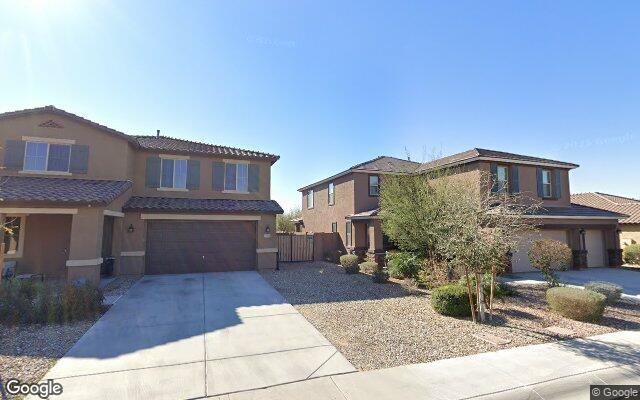
A small home, reviewed on public record.
© Google Street View
Compared to 1,661 Arizona facilities with a similar number of beds.
Care · 36-month window. Higher percentile = better performance on inspection record. Source: Arizona Dept. of Health Services · Bureau of Residential Facilities Licensing.
among peers to rank.
Rankings based on 36-month ADHS inspection data. Severity and frequency: fewer citations = higher percentile. Repeat rate: lower repeat citation share = higher percentile.
Citation history, plotted month by month.
15 deficiencies on record. Each bar is a month with a citation.
Finding distribution
15 total · 36 monthsScope × Severity (CMS A–L)
Every inspection visit, verbatim.
4 inspections in the public record, most recent first. Plain-language summaries open first — click into any row for the full citation text.
2026-07-08Complaint InvestigationNo findings
2026-03-26Annual Compliance VisitA.A.C. · 10 findings
“Based on record review, documentation review, and interview, the health care institution failed to administer a training program for all staff regarding fall prevention and fall recovery, to include initial training and continued competency training, for three of three employees sampled. The deficient practice posed a risk as the caregiver received no organized instruction or information related to physical health services provided to residents. Findings Include: 1. A review of E1’s personnel record revealed a hire date of November 1, 2024. Further review of E1’s record revealed fall prevention and recovery training was documented in September 2024, prior to hire. Additionally, no fall prevention and fall recovery training was documented in 2025. Based on E1’s hire date, this documentation was required. 2. A review of E2’s personnel record revealed a hire date of February 3, 2026. Further review of E2’s record revealed no initial fall prevention and fall recovery training was documented. Based on E2’s hire date, this documentation was required. 3. A review of E3’s personnel record revealed a hire date of July 1, 2025. Further review of E3’s record revealed no initial fall prevention and fall recovery training was documented. Based on E3’s hire date, this documentation was required. 4. A review of the facility's staff schedule revealed E1, E2, and E3 provided services to the residents. 5. A review of the facility’s policies and procedures revealed a policy titled “Orientation and In-Service Training” which stated, "Fall Prevention and Recovery Training is required upon hire and at least every 12 months thereafter.” 6. A review of the facility’s policies and procedures revealed a policy titled, Staffing and Record Keeping” which stated, “1. The facility manager shall ensure that a personnel record for each employee and volunteer: a, Includes: iii Documentation of: Fall Prevention and Recovery training;” 7. In an interview, E1 acknowledged that E1, E2, and E3 did not have the required fall prevention and fall recovery training. 8. In an exit interview, the findings were reviewed with E1, and no additional information was provided.”
“Based on documentation review and interview, the chief administration officer failed to ensure that the health care institution established, documented, and implemented tuberculosis infection control activities that included annually assessing the health care institution’s risk of exposure to infectious tuberculosis (TB). The deficient practice posed a potential risk of illness to residents. Findings include: 1. A review of the facility’s documentation revealed no annual assessment for the facility’s risk of exposure to TB. 2. In an exit interview, the findings were reviewed with E1, and no additional information was provided.”
“Based on documentation review, record review, and interview, the governing authority failed to ensure compliance with A.R.S. § 36-411, for two of three personnel sampled. The deficient practice posed a risk if the employees were a danger to a vulnerable population. Findings include: 1. A.R.S. § 36-411.C.3 states: "3. Beginning January 1, 2025, verify that a potential employee is not on the adult protective services registry pursuant to section 46-459 [and] 4. On or before March 31, 2025, verify that each employee is not on the adult protective services registry pursuant to section 46-459.” 2. A review of the facility’s policies and procedures revealed a policy titled, Staffing and Record Keeping” which stated, “1. The facility manager shall ensure that a personnel record for each employee and volunteer: a, Includes: iii. Documentation of: Employee APS verification.” 3. A review of E2’s personnel records revealed E2 was hired on February 3, 2026. Further review of E2’s personnel records did not reveal documentation that E2 was not on the adult protective services registry pursuant to section 46-459. 4. A review of E3’s personnel records revealed E3 was hired on July 1, 2025. Further review of E3’s personnel records revealed one undated copy of E3’s APS registry check. E3’s personnel record did not reveal documentation that E3 was not on the adult protective services registry prior to hire pursuant to section 46-459. 5. In an exit interview, the findings were reviewed with E1, and no additional information was provided.”
“Based on record review and interview, the manager failed to ensure that a caregiver documented the services provided in the resident's medical record, for four of four residents sampled. The deficient practice posed a risk as the Department was provided false or misleading information. Findings include: 1. Upon arrival at the facility at approximately 9:00 am, the Compliance Officer requested and received the residents’ Activities of Daily Living (ADL) binder. 2. A review of R1's medical record revealed a current service plan dated February 9, 2026. The service plan reported R1 received assistance with activities of daily living (ADLs), including “Incontinence checks, Repositioning” at 10:00 am. 3. A review of R1’s ADLs revealed “Incontinence checks Repositioning” was documented at 10:00 am by E2. 4. A review of R2's medical record revealed a current service plan dated January 30, 2026. The service plan stated R2 received assistance with activities of daily living (ADLs), including “Incontinence checks Repositioning” at 10:00 am. 5. A review of R2’s ADLs revealed “Incontinence checks Repositioning” was documented at 10:00 am by E2. 6. A review of R3’s and R4’s ADLs revealed they also received assistance with “Incontinence checks Repositioning” at 10:00 am. R3’s and R4’s ADLS revealed “Incontinence checks Repositioning” were documented at 10:00 am by E2. 7. In an interview, E1 acknowledged that E2 had documented the assisted living services in advance of providing the services. E1 reported E2 had previously been advised not to document ADLs in advance of providing the services. 8. In an exit interview, the findings were reviewed with E1, and no additional information was provided. This is a repeat deficiency from the complaint inspection conducted on December 19, 2024.”
“Based on observation, record review, documentation review, and interview, the manager failed to ensure that a resident’s medical record contained a medication order from a medical practitioner for each medication that was administered to the resident, for two of two residents sampled. The deficient practice posed a risk as medication administered could not be verified against a medication order. Findings include: 1. During an environmental tour of the facility, the Compliance Officer observed one Flonase Fluticasone Furoate Nasal Spray 27.5 micrograms (mcg) stored on a bedside table in R1’s private room. The medication was not in its original packaging and appeared to have been used. 2. A review of R1's medical record revealed a current service plan dated February 9, 2026. The service plan indicated R1 received medication administration. 3. A review of R1’s medical record revealed no medication order for Flonase Fluticasone Furoate Nasal Spray 27.5 mcg. 4. A review of R2’s medical record revealed a service plan dated January 30, 2026. The service plan indicated R2 received medication administration. 5. A review of R2’s medication administration record (MAR) dated March 2026 revealed the following medications were administered to R2 from March 1, 2026, to present: · Fluoxetine hydrochloride 20 mg. · Omeprazole 20 mg. · Trazodone 50 mg. · Simvastatin 40 mg. · Eliquis 5 mg. 6. A review of R2’s medications revealed medication bottles and a medication organizer containing the following medications: · Fluoxetine hydrochloride 20 mg. · Omeprazole 20 mg. · Diphenoxylate hydrochloride 2.5 mg. · Trazodone 50 mg. · Simvastatin 40 mg. · Eliquis 5 mg. 7. A review of the facility’s policies and procedures revealed a policy titled, “Medications Including Opioids, Narcotics and Schedule 2” which stated the following: "Part III – Medication Regimen, Records and Monitoring: 1. All medications or treatments are administered to the Resident only in compliance with the Doctors Order [sic] and instructions from a Physician or Medical Practitioner.” 8. In an interview, E3 reported R1’s family member brought the Flonase medication into the facility for R1’s use. E3 reportedly believed R1’s family member was encouraging R1 to use the medication and E3 told the family member to stop bringing medications for R1 into the facility. Additionally, E3 reported E3 was not aware there were no orders for R2’s medications. 9. In an exit interview, the findings were reviewed with E1, and no additional information was provided.”
“Based on record review and interview, the manager failed to ensure that the service plan for a resident receiving directed care services included documentation of the resident’s weight or from a medical practitioner indicating that weighing the resident was contraindicated, for one of two residents sampled. Findings include: 1. A review of R2's medical record revealed a current written service plan dated January 30, 2026. The service plan indicated R2 received directed care services. However, R2’s service plan did not include R2’s weight or documentation from R2’s medical practitioner stating that weighing R2 was contraindicated. 2. In an exit interview, the findings were reviewed with E1, and no additional information was provided.”
“Based on observation, record review, and interview, the manager failed to ensure that a bell, intercom, or other mechanical means to alert employees to a resident's needs or emergencies was available in a bedroom used by a resident receiving directed care services, for one of two residents sampled. The deficient practice posed a risk to the physical health and safety of a resident. Findings include: 1. During an environmental tour of the facility, the Compliance Officer observed R2 verbally calling for help from R2’s bed. The Compliance Officer did not observe a bell, intercom, or other mechanical means for R2 to alert employees of R2’s needs. 2. A review of R2's medical record revealed that R2 received directed care services. 3. In an interview, E3 reported that R2 did not have a call bell because R2 would not use it. 4. In an exit interview, the findings were reviewed with E1, and no other information was provided.”
“Based on record review, observation, documentation review, and interview, the manager failed to ensure that if a verbal order for a resident’s medication was received from a medical practitioner by the assisted living facility, the verbal order was documented in the resident's medical record and a written order verifying the verbal order was obtained from the medical practitioner within 14 calendar days after receiving the verbal order, for one of two residents sampled. The deficient practice posed a risk as medication administered could not be verified against a medication order. Findings include: 1. A review of R2’s medical record revealed a service plan dated January 30, 2026. The service plan indicated R2 received medication administration. 2. A review of R2’s medication administration record (MAR) dated March 2026 revealed the following medications were administered to R2 from March 1, 2026, to present: · Divalproex 125 milligram (mg) sprinkle; · Metformin 500 mg; and · Megace 20 mg. 3. A review of R2’s medical record revealed an unsigned verbal order dated February 5, 2026, for the following medications: · Divalproex 125 mg sprinkle; and · Metformin Hydrochloride 500 mg. 4. A review of R2’s medical record revealed an unsigned verbal order dated March 8, 2026, for Megace 20 mg tablet. 5. The Compliance Officer observed R2’s medication bottles and medication organizer containing the following medications: · Divalproex 125 mg sprinkle · Metformin 500 mg · Megace 20 mg (Megestrol AC 20mg) 6. A review of the facility’s policies and procedures revealed a policy titled, “Medications Including Opioids, Narcotics and Schedule 2” which stated the following: · “Part I – Doctor Orders, Provisions of Medication, Handling Medication, Assisting Resident in Procuring (obtaining) Medication: 3. h. The manager will obtain the Physician or a Medical Practitioner signature on the Verbal Order Form, (by mail, email or fax) to substantiate the Verbal Orders, within 14 working days. 7. In an interview, E3 reported that E3 attempted to obtain signed orders from R2’s physician for the verbal orders in question, but had been unsuccessful. 8. In an exit interview, the findings were reviewed with E1, and no additional information was provided.”
“Based on observation, documentation review, and interview, the manager failed to ensure medication was stored in a separate locked room, closet, cabinet, or self-contained unit used only for medication storage. The deficient practice posed a risk to the resident’s physical health and safety. Findings include: 1. During an environmental tour of the facility, the Compliance Officer observed two unlocked cabinets containing resident medications. The cabinets were located in a common area accessible to residents. The cabinets contained magnetic locks that were left unsecured. 2. During the environmental tour, the Compliance Officer observed an unlocked drawer containing 14 Lidocaine patches. The drawer also contained other non-medication items, including office supplies. The drawer was located in the same common area accessible to residents. The drawer did not appear to contain a lock that could be secured. 3. During the environmental tour, the Compliance Officer observed E3 place several magnets used for locking the medications cabinets on a wall hook adjacent to the medication cabinets and in plain view. The magnets were easily accessible to residents or others in the common area. 4. A review of the facility’s policies and procedures revealed a policy titled, “Medications Including Opioids, Narcotics and Schedule 2” which stated the following: Part II – Receiving, Storing Medication: 3. Medication stored by the facility must be secured in a locked storage area, closet, cabinet, or self-contained unit used for medication storage only.” 5. In an interview, E3 reported that the medication cabinets are always locked, but were inadvertently left unlocked at the time of inspection. Additionally, E3 reported the Lidocaine patches were placed in the drawer temporarily. E3 also reported the magnets have always been stored on the wall hook. 6. In the exit interview, the findings were reviewed with E1, and no additional information was provided.”
“Based on observation, documentation review, and interview, the manager failed to ensure the premises was free from a condition or situation that may cause a resident or other individual to suffer physical harm. The deficient practice posed a risk as the Department was provided false and misleading information. Findings include: 1. A review of R1’s service plan revealed R1 received Directed Care services. 2. During an environmental tour of the facility, the Compliance Officer observed the following items in R1’s private room accessible to the resident: - Three cans of Febreze air freshener; and - One bottle of acetone nail polish remover. The Compliance Officer observed E3 remove the air fresheners and attempt to hide them in R1’s closet. 3. A review of the facility’s policies and procedures revealed a policy titled, “Environmental and Physical Plant Safety” which stated, “16. Poisonous and toxic materials will be in labeled containers and stored in a locked area ... and are inaccessible to residents.” 4. In the exit interview, the findings were reviewed with E1, and no additional information was provided.”
2024-12-19Complaint InvestigationA.A.C. · 5 findings
“Based on record review and interview, the manager failed to ensure a caregiver documented the services provided in a resident's medical record, for two of two residents reviewed. The deficient practice posed a risk as services could not be verified as provided against a service plan. Findings include: 1. Review of R1's medical record revealed a current written service plan for directed care services dated October 31, 2024. This service plan stated the following services were needed: "repositioning q 2-3hrs" "incontinence care" In addition, R1's medical record revealed a document titled "Activities of Daily Living Chart" dated December 2024. This document indicated the following services were to be completed at 8:00 pm, midnight, and 4:00 am: Repositioning Incontinence However, documentation was not available indicating these services were provided December 18, 2024 on the 8pm-5am shift. 2. Review of R2's medical record revealed a current written service plan for personal care services dated July 13, 2024. This service plan stated the following services were needed: "repositioning q 2-3hrs" "incontinence care" In addition, R2's medical record revealed a document titled "Activities of Daily Living Chart" dated December 2024. This document indicated the following services were to be completed at 8:00 pm, midnight, and 4:00 am: Repositioning Incontinence However, documentation was not available indicating these services were provided December 18, 2024 on the 8pm-5am shift. 3. During an interview, E4 stated, "did not have the time to document and then forgot before leaving for the day". 4. During an interview, E1 and E4 acknowledged R1's and R2's medical records did not include documentation for the above listed services were provided.”
“Based on record review, documentation review, and interview, the manager failed to ensure policies and procedures for medication administration were implemented for the documentation of a resident's refusal to take prescribed medication in the resident's medical record. The deficient practice posed a health and safety risk. Findings include: 1. A review of R1's medical record revealed a medication admission record (MAR) dated December 2024. This MAR indicated the resident refused to take the following medications on the following days and times: - Fluticasone-Salmeterol 250-50 MCG 1 puff: 8 AM and 8 PM on December 1 and 2. 8 AM on December 6. - OLOPATADINE left eye 1 gtts: 8 AM on December 1, December 1-9, and December 16-17. 8 PM on December 1, December 3-5, and 15-16. - Predisolone acetate right eye 1 gtts BID: 8 AM on December 1, December 1-9, and December 16-17. 8 PM on December 1, December 3-5, and 15-16. 2. A documentation review of the facility's policies and procedures, revealed a document titled "Medications Including Opioids, Narcotics and Schedule 2, Part III-Medication Regimen, Records and Monitoring" that stated, "If a resident refuses medication it will be noted in the MAR as refused, the Physian or Medical Practioner prescribing the medication is notified and the refusal is documented in the resident's record. If such refusal occurs more than 10% of time, alternate methods will be considered to administer such medication. A doctor's order will be secured to reflect such administration procedures. Resident's Narrative Notes will include the circumstances surrounding the medication refusal. Employees will monitor the resident for any changes in condition as result of missed or refused medication and immediately report to the Manager or Manager Designee when such occur." 3. A review of R1's medical record revealed no documentation of notification to the Physian or Medical Practioner prescribing the medication and no documentation in the Resident's Narrative Notes surrounding the medication refusal. 4. In an interview, E1 acknowledged the medication policies and procedures were not implemented for a resident's refusal to take prescribed medication.”
“Based on record review and interview, the manager failed to ensure a medication was administered in compliance with a medication order, for one of two residents reviewed. The deficient practice posed a risk if the resident experienced a change in condition due to improper administration of medication. Findings include: 1. Review of R2's medical record revealed a signed medication order dated November 18, 2024 . This medication order stated "Lisinopril Tab 20 MG take 1 tab by mouth twice daily-on hold". 2. Review of R2's December 2024 medication administration record (MAR) stated "Lisinopril Tab 20 MG take 1 tab by mouth daily for htn-Hold for now". However, the MAR revealed that the medication was administered to R2 December 1st - present. 3. In an interview, E1 acknowledged R2's medication was not administered in compliance with the current medication order.”
“Based on record review, observation, and interview, the manager failed to ensure a medication administered to a resident was documented in the resident's medical record, for two of two residents reviewed. The deficient practice posed a risk as medication could not be verified as administered against a medication order. Findings include: 1. Review of R1's medical record revealed a current written service plan dated October 31, 2024. This service plan indicated R1 received medication administration. 2. Review of R1's medical record revealed signed medication orders dated April 25, 2024 for the following medications: -"Donepezil 10 MG QD PO" -"Fluticasone-Salmeterol 250-50 MCG 1 puff BID PO" -"OLOPATADINE left eye 1 gtts BID" -"Predisolone acetate right eye 1 gtts BID" 3. Review of R1's December 2024 medication administration record (MAR) indicated the following medications were not documented as administered on the following days and times: - Donepezil 10 MG was not documented at 8 PM on December 18th. - Fluticasone-Salmeterol 250-50 MCG was not documented at 8 PM on December 17th and 18th. - OLOPATADINE left eye was not documented at 8 PM on December 2nd and 14th, at 8 AM on December 15th, at 8 PM December 17th, and at 8 AM and 8 PM on December 18th. - Predisolone acetate right eye was not documented at 8 PM on December 2nd, 6th-9th, and 14th, at 8 AM on December 15th, and at 8 AM and 8 PM on December 18th. 4. Review of R2's medical record revealed a current written service plan dated August 18, 2024. This service plan indicated R2 received medication administration. 5. Review of R2's medical record revealed signed medication orders dated October 18, 2024 for the following medications: -"Gabapentin- 100 mg 1 TAB, PO, TID" -"Methacarbamol 500mg 1 TAB, PO, QID" -"Oxycodone 10 mg 1 TAB, PO, TID" -"Senna-time 2 TABS, PO, HS" -"Ventolin HFA Inhalation aresol 90 mcg pe actuation 2 inhalation-orally TID" 6. Review of R2's medical record revealed signed medication orders dated November 18, 2024 for the following medications: -"risperiDONE Tab 0.25 mg sig: 1 tablet orally at bedtime" -"Memantine Tab 5 mg sig: Take 1 tablet by mouth twice daily" -"Atorvastatin Calcium Tab 40mg sig: Take 1 tablet by mouth at bedtime" -"Donepezil Tab 5 mg sig: Take 1 tablet by mouth at bedtime" -"Tamsulosin Cap 0.4 mg sig: Take 1 capsule by mouth at bedtime" -"traZodone Tab 100 mg sig: Take 1 tablet by mouth at bedtime" 7. Review of R2's December 2024 MAR indicated the following medications were not documented as administered on the following days and times: -Gabapentin 100 mg was not documented at 8 PM on December 18th. -Methacarbamol 500 mg was not documented at 8 PM on December 18th. -OXY 10 mg was not documented at 8 PM on December 18th. -Senna-Time Sennoside 8.6 mg was not documented at 8 PM on December 18th. -Ventolin HFA Inhalation Aerosol 90 mcg was not documented at 8 PM on December 18th. -risperiDONE Tab 0.25 mg was not documented at 8 PM on December 18th. -Memantine Tab 5 mg was not documented at 8 PM on December 17th and 18th. -Atorvastatin Calcium Tab 40 mg was not documented at 8 PM on December 17th and 18th. -Donepezil HCI 5 mg was not documented at 8 PM on December 18th. -Tamsulosin 0.4 mg was not documented at 8 PM on December 18th. -Trazodone 100 mg was not documented at 8 PM on December 18th. 8. In an interview, E4 reported R1's and R2's medications were administered and acknowledged documentation was not available that showed the medications were administered.”
“Based on observation, documentation review, and interview the manager failed to ensure policies and procedures were implemented for receiving, storing, inventorying, and tracking medications. The deficient practice posed a risk to the physical health and safety of a resident. Findings include: 1. The Compliance Officers observed a plastic sandwich bag within the medication storage container of R2. The plastic sandwich bag contained approximately 22 circular orange pills and approximately 13 small circular pink pills. 2. Review of the facility's policies and procedures titled, "General Medications Prescription and non Prescription" stated, "2. Medications must be obtained from reliable legal sources such as a pharmacy or Primary Care Provider, be in the original labeled container with legible instructions printed on the label..." 3. In an interview, E1 reported the medications were in the bag when R2's family moved R2 into the facility. 4. In an interview, E1 reported E1 "thinks" E1 knew what the medications were in the plastic sandwich bag. However E1 was not certain of what the pills were and did not provide a name to the medications in the plastic bag. E1 acknowledged the policies and procedures were not implemented for receiving, storing, inventorying, and tracking medications.”
2023-11-13Annual Compliance VisitNo findings
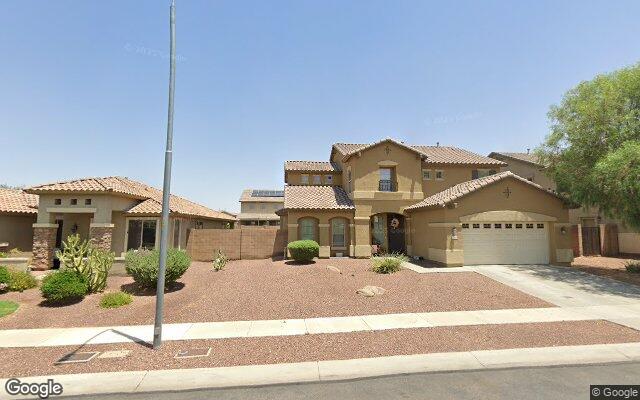
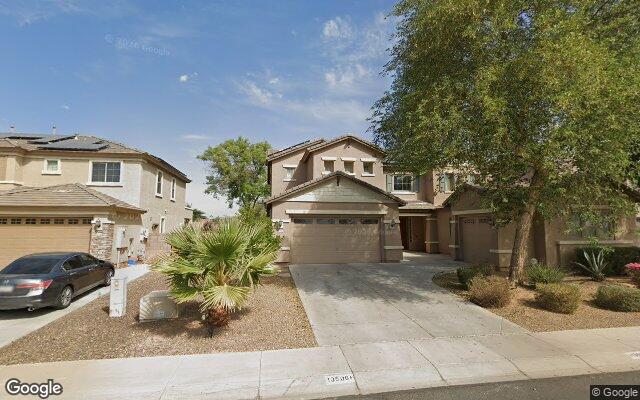
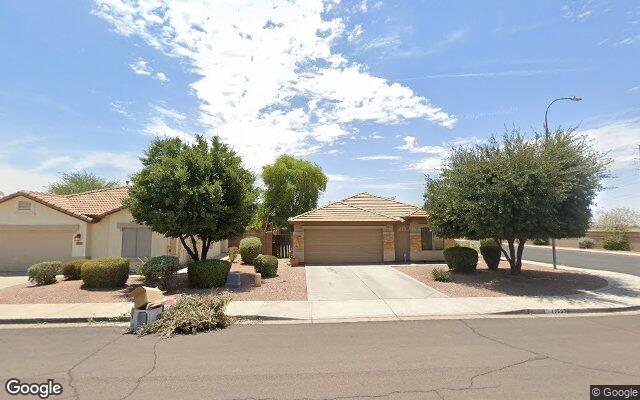
Other facilities in Avondale.
Other memory care facilities near Avondale with similar care offerings.
Full Inspection Record
Family reviews
No reviews yet — be the first to share your experience
Other memory care options nearby.
Happy Days Assisted Living LLC
Avondale
Rhoda's Assisted Living Home
Avondale
Avondale Assisted Living Home
Avondale
Our Grouphome LLC
Avondale
Premier Group Home Avondale, LLC
Avondale
Rancho Santa Fe Assisted Living LLC
Avondale
Bridgewater Avondale Operations, LLC
Avondale
All Valley Assisted Living Home, LLC
Avondale