Bridgewater Avondale Operations, LLC.

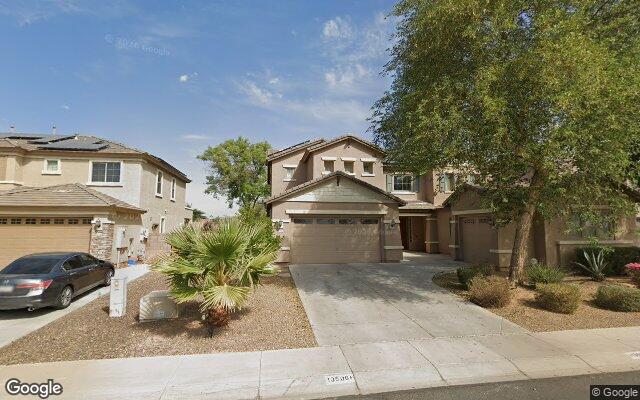
A large home, reviewed on public record.
© Google Street View
Compared to 116 Arizona facilities with a similar number of beds.
Care · 36-month window. Higher percentile = better performance on inspection record. Source: Arizona Dept. of Health Services · Bureau of Residential Facilities Licensing.
among peers to rank.
on file.
Rankings based on 36-month ADHS inspection data. Severity and frequency: fewer citations = higher percentile. Repeat rate: lower repeat citation share = higher percentile.
Citation history, plotted month by month.
19 deficiencies on record. Each bar is a month with a citation.
Finding distribution
19 total · 36 monthsScope × Severity (CMS A–L)
Every inspection visit, verbatim.
21 inspections in the public record, most recent first. Plain-language summaries open first — click into any row for the full citation text.
2026-08-18Complaint InvestigationNo findings
2026-06-16Complaint InvestigationNo findings
2026-06-09Complaint InvestigationNo findings
2026-05-11Complaint InvestigationNo findings
2026-03-18Complaint InvestigationNo findings
2026-03-05Complaint InvestigationNo findings
2026-02-05Complaint InvestigationNo findings
2026-01-15Complaint InvestigationNo findings
2025-11-24Complaint InvestigationNo findings
2025-09-30Complaint InvestigationNo findings
2025-08-14Complaint InvestigationNo findings
2025-08-13Complaint InvestigationNo findings
2025-07-29Complaint InvestigationNo findings
2025-07-24Complaint InvestigationR9-10-803.A.10 · 4 findings
“Based on documentation review, observation, record review, and interview, the manager failed to ensure the health, safety, or welfare of a resident. The deficient practice posed a health and safety risk to a resident. Findings include: 1. A review of Department documentation revealed a self-report stated “… R1 was found approximately 4:19 pm on 7/21/25 with labored breathing. 911 was contacted and R1 became unresponsive while being attended to by care staff. CPR was started. MedTech received notification that R1 passed away on 7/21/25.” 2. A review of Department documentation revealed the facility is licensed to provide directed care services. 3. The Compliance Officer observed multiple ambulatory residents in the secured memory unit of the facility. 4. In an interview, E4 reported seeing R1 pass by around 3:20 to 3:40 PM; however, E4 did not check R1's whereabouts until 4:00 PM for dinner. E4 reported finding R1 outside in the courtyard of the memory care unit around 4:19 PM. R1 had labored breathing and then became unresponsive. Care staff then provided Cardiopulmonary resuscitation (CPR) until emergency services arrived and took R1 to the hospital. E4 also reported that the residents in the memory care unit turn off the alerts for the door that leads to the outside common area, and the staff are unaware if a resident has exited to the outside common area of the memory care unit. 5. A review of R1’s service plan stated “resident wandering: resident will be monitored and will remain in designated areas.” However, the service plan did not specify the frequency of monitoring of R1. 6. A review of facility documentation incident reports revealed R1 was last seen around 3:20 PM or 3:30 PM by care staff. Around 4:00 PM, care staff began looking for R1 for dinner services and located R1 at 4:19 PM in the outside designated area of the memory care unit. R1 had labored breathing and then became unresponsive. Care staff then provided Cardiopulmonary resuscitation (CPR) until emergency services arrived and took R1 to the hospital. 7. A review of facility documentation revealed a policy titled “Awareness of Residents Whereabouts.” The policy states, “To be aware of the general or specific whereabouts of a resident, based on their individual level of care. • Directed Care Residents: a. receive frequent checks throughout each 24-hour period, b. are encouraged to stay in common areas during the day, C. must sign in and out of the community and be accompanied by a responsible party, d. must be accompanied by a staff member or responsible party when in the general community.” 8. In an interview, E1 reported that the alerts that led to the outside common area are sometimes turned off by the resident in the memory care unit, and the staff is unaware if a resident has exited to the outside common area of the memory care unit.”
“Based on documentation review, record review, and interview, the manager failed to establish, document, and implement policies and procedures that covered methods by which the assisted living facility was aware of the general or specific whereabouts of a resident, based on the level of assisted living services provided to the resident and the assisted living services the assisted living facility was authorized to provide. Findings include: 1. A review of Department documentation revealed the facility was authorized to provide directed care services. 2. A review of facility documentation revealed a policy titled “Awareness of Residents Whereabouts.” The policy states, “To be aware of the general or specific whereabouts of a resident, based on their individual level of care. • Directed Care Residents: a. receive frequent checks throughout each 24-hour period, b. are encouraged to stay in common areas during the day, C. must sign in and out of the community and be accompanied by a responsible party, d. must be accompanied by a staff member or responsible party when in the general community.” However, the policy was not sufficient to ensure the whereabouts or safety of the residents, as it could not be verified that frequent checks were conducted throughout each 24-hour period. 3. In an interview, E1 acknowledged that the policy was not sufficient to ensure the whereabouts or safety of residents, as it could not be verified that frequent checks were conducted throughout each 24-hour period, and R1 was outside without staff monitoring, experienced a medical emergency, and later passed away.”
“Based on record review and interview, the manager failed to ensure service plans included the amount, type, and frequency of assisted living services and ancillary services being provided for one of two sampled residents. The deficient practice posed a risk as the service plans did not reinforce and clarify services to be provided to a resident. Findings include: 1. A review of R1's medical record revealed a service plan dated May 2025. The service plan stated, “Resident Wandering: Resident will be monitored and will remain in designated areas.” However, the service plan did not include the frequency of monitoring of R1. 2. In an interview, E1 acknowledged that R1's service plan did not include the amount, type, and frequency of the services being provided to R1.”
“Based on documentation review, observation, record review, and interview, the manager failed to ensure there was a means of exiting the facility for a resident who does not have a key, special knowledge for egress, or the ability to expend increased physical effort, which provided access to an outside area which monitored or alerted employees of the egress of a resident from the facility. The deficient practice posed a risk if the facility was unaware of the general or specific whereabouts of a resident. Findings include: 1. A review of Department documentation revealed the facility is licensed to provide directed care services. 2. The Compliance Officer observed multiple ambulatory residents in the secured memory care unit of the facility. 3. In an interview, E4 reported seeing R1 pass by around 3:20 to 3:40 PM; however, E4 did not check R1's whereabouts until 4:00 PM for dinner. E4 reported finding R1 outside in the courtyard of the memory care unit around 4:19 PM. R1 had labored breathing and then became unresponsive. Care staff then provided Cardiopulmonary resuscitation (CPR) until emergency services arrived and took R1 to the hospital. E4 also reported that the residents in the memory care unit turn off the alerts for the door that leads to the outside common area, and the staff were unaware if a resident has exited to the courtyard. 4. A review of R1’s service plan stated “resident wandering: resident will be monitored and will remain in designated areas.” However, the service plan did not include the frequency of monitoring of R1. 5. A review of facility documentation incident reports revealed R1 was last seen around 3:20 PM or 3:30 PM by care staff. Around 4:00 PM, care staff began looking for R1 for dinner services and located R1 at 4:19 PM in the outside designated area of the memory care unit. R1 had labored breathing and then became unresponsive. Care staff then provided CPR until emergency services arrived and took R1 to the hospital. 6. In an interview, E1 reported that the door alerts leading to the secured courtyard in the memory care unit are sometimes turned off by residents. As a result, staff may be unaware when a resident exits to the outside common area. E1 acknowledged that R1 was outside without staff monitoring, experienced a medical emergency, and later passed away.”
2025-05-28Complaint InvestigationNo findings
2025-03-06Complaint InvestigationNo findings
2025-02-26Complaint InvestigationR9-10-807.A · 2 findings
“Based on record review, and interview, the manager failed to ensure that a resident provided evidence of freedom from infectious tuberculosis (TB) as specified in R9-10-113 for one of ten residents sampled. The deficient practice posed a potential illness risk to residents. Findings include: 1. A review of R9's (admitted 2023) medical record did not include documentation of evidence of freedom from infectious TB for Compliance Officer to review. 2. In an interview, E1 acknowledged R9's medical records did not contain documentation of the resident's freedom from infectious tuberculosis as specified in R9-10-113.”
“Based on record review and interview, the manager failed to ensure a resident medical record contained documentation showing the pneumonia vaccination was offered every 12 months to one of ten residents reviewed. The deficient practice posed a potential illness risk to residents. Findings include: 1. A review of R7's record revealed no documentation showing the pneumonia vaccination was offered or received for the year of 2023. 2. In an interview, E1 acknowledged R7's record did not include current documentation showing the pneumonia vaccination was offered or received.”
2024-12-03Complaint InvestigationNo findings
2024-08-12Complaint InvestigationHigh Risk · 1 finding
“Based on record review, documentation review and interview, the manager failed to ensure if a manager had a reasonable basis, according to A.R.S. \'a7 46-454, to believe abuse had occurred on the premises, the manager complied with all of the requirements of this rule, which posed a health and safety risk. Findings include: 1. A review of R1's medical record revealed progress notes. Progress notes on June 26, 2024 and June 27, 2024 as well as on July 1, 2024 detail abuse suspected by facility from R1's POA to R1, and actions taken to stop the abuse. 2. A review of facility documentation revealed documentation of a investigation of the suspected abuse within five working days of the report was not available for review at the time of inspection. 3. In an interview, E1 reported E1 did not have a documented investigation of the suspected abuse within five working days of the report to APS on July 1, 2024. 4. In an interview, E1 acknowledged E1 did not have a documented investigation of the suspected abuse.”
2024-06-25Complaint InvestigationA.A.C. · 1 finding
“Based on observation and interview, the manager failed to ensure medication was stored in a separate locked room, closet, cabinet, or self-contained unit used only for medication storage. The deficient practice posed a risk to the physical health and safety of residents with access to the unsecured medication. Findings include: 1. During the environmental inspection of the facility, the Compliance Officer observed a bottle of "GLYBURIDE 5 milligrams" in a lunch bag on a chair in the caregiver's station. The caregiver's station had no doors to prevent residents from being able access the area. 2. In an interview, E1 acknowledged the "Glyburide" was not stored in a secured area used only for medication storage. 3. In an interview, E4 reported the facility provides employees with lockers to secure item during work hours, but E4 does not use them. E4 acknowledged the "Glyburide" was not stored in a secured area used only for medication storage.”
2023-12-07Complaint InvestigationA.A.C. · 11 findings
“Based on documentation review, record review, and interview, the manager failed to ensure a caregiver's skills and knowledge were verified and documented before providing physical health services and according to policies and procedures, for one of three caregivers reviewed. The deficient practice posed a health and safety risk. Findings include: 1. Review of the facility's policy and procedure revealed a policy titled "Orientation Training Policy & Procedure" reviewed and signed by E3 January 4, 2023. This policy stated "...4. Caregivers and Assistant Caregivers will be given a Skills Checklist to be completed by the Supervisor and/or team member who is working with the new caregiver prior to giving care to a resident independently. The completed checklist will be kept in the caregiver's personnel record..." 2. Review of E9's personnel record revealed E9 terminated employment January 30, 2021 and was rehired to worked as a caregiver December 7, 2022. The personnel record revealed no documentation of a skills checklist verifying E9's skills and knowledge upon the December 7, 2022 hire date. 3. In an interview, E1 and E2 acknowledged documentation was not available that showed E9's skills and knowledge were verified and documented according to policies and procedures.”
“Based on documentation review, record review, and interview, the manager failed to ensure a caregiver received orientation that was specific to the duties to be performed before providing assisted living services to a resident, for two of nine caregivers reviewed. The deficient practice posed a risk if the employee was unable to meet the needs of a resident. Findings include: 1. Review of the facility's policy and procedure revealed a policy titled "Orientation Training Policy & Procedure" reviewed and signed by E3 January 4, 2023. This policy stated "...3. Each employee will have an orientation prior specific to their department..." 2. Review of E9's personnel record revealed E9 terminated employment January 30, 2021 and was rehired to worked as a caregiver December 7, 2022. The personnel record revealed no documentation that showed E9 received orientation specific to the duties to be performed upon the December 7, 2022 hire date. 3. Review of E12's personnel record revealed E12 worked as a caregiver and had a hire date of May 30, 2023. The personnel record revealed no documentation that showed E12 received orientation specific to the duties to be performed. 4. In an interview, E1 and E2 acknowledged E9 and E12 had not received orientation specific to the duties to be performed.”
“Based on documentation review, record review, and interview, the manager failed to ensure the policy and procedure and a residency agreement contained provisions allowing a manager to terminate residency of a resident in compliance with A.A.C. R9-10-807(G), for six of six residents reviewed accepted by the assisted living facility on or after October 1, 2019. The deficient practice posed a health and safety risk to the residents. Findings include: 1. Rule review of R9-10-807(G) on or after October 1, 2019 stated: "A manager may terminate residency of a resident as follows: 1. Without notice, if the resident exhibits behavior that is an immediate threat to the health and safety of the resident or other individuals in an assisted living facility; 2. With a 14 calendar day written notice of termination of residency: a. For nonpayment of fees, charges or deposits; or b. Under any of the conditions in subsection (C); or 3. With a 30 calendar day written notice of termination of residency, for any other reason." Review of subsection (C) stated: "1. The individual requires continuous: a. Medical services; b. Nursing services unless the assisted living facility complies with A.R.S.36-401(C); or c. Behavioral Health Services; 2. The primary condition for which the individual needs assisted living services is a behavioral health issue; 3. The assisted living services needed by the individual are not within the assisted living facility's scope of services and a home health agency or hospice service agency is not involved in the care of the individual; 4. The assisted living facility does not have the ability to provide the assisted living services needed by the individual; or 5. The individual requires restraints, including the use of bedrails." 2. Review of the facility's policy and procedure revealed a policy titled "Termination of Residency Policy & Procedure" reviewed and signed by E3 January 4, 2023. The policy and procedure did not include the following terms for a 14 day termination: -The primary condition for which the individual needs assisted living services is a behavioral health issue; and -The assisted living services needed by the individual are not within the assisted living facility's scope of services and a home health agency or hospice service agency is not involved in the care of the individual. 3. Review of R1's medical record revealed a residency agreement. This residency agreement did not include the correct provisions allowing a manager to terminate residency of a resident. The residency agreement did not include the following terms for a 14 day termination: -The primary condition for which the individual needs assisted living services is a behavioral health issue; and -The assisted living services needed by the individual are not within the assisted living facility's scope of services and a home health agency or hospice service agency is not involved in the care of the individual. Based on R1's acceptance date, this documentation was required. 4. Review of R3's medical record revealed a residency agreement. This residency agreement did not include the correct provisions allowing a manager to terminate residency of a resident. The residency agreement did not include the following terms for a 14 day termination: -The primary condition for which the individual needs assisted living services is a behavioral health issue; and -The assisted living services needed by the individual are not within the assisted living facility's scope of services and a home health agency or hospice service agency is not involved in the care of the individual. Based on R3's acceptance date, this documentation was required. 5. Review of R4's medical record revealed a residency agreement. This residency agreement did not include the correct provisions allowing a manager to terminate residency of a resident. The residency agreement stated "...b. Operator may terminate Resident's residency under this Agreement upon fourteen (14) days prior written notice to Resident or Resident's Representative for any of the following reasons:...(ii) documentation of Residen'ts non-compliance with this Agreement, the Community facility requirements or Operator's Rules and Regulations as described in the Resident Handbook;...(iii) Resident has failed to comply with state or local law after receiving written notice of the alleged violation;...c. Operator may terminate Resident's residency under this Agreement without notice if by assessment of Operator:...(ii) Resident's urgent medical or health needs require immediate transfer to another health care institution; or (iii) Operator receives notice that the Resident's care and service needs exceed the level of services that Operator is licensed to provide..." The residency agreement did not include the following terms for a 14 day termination: -The assisted living services needed by the individual are not within the assisted living facility's scope of services and a home health agency or hospice service agency is not involved in the care of the individual. -The assisted living facility does not have the ability to provide the assisted living services needed by the individual; or -The individual requires restraints, including the use of bedrails." Based on R4's acceptance date, this documentation was required. 6. Review of R5's medical record revealed a residency agreement. This residency agreement did not include the correct provisions allowing a manager to terminate residency of a resident. The residency agreement did not include the following terms for a 14 day termination: -The primary condition for which the individual needs assisted living services is a behavioral health issue; and -The assisted living services needed by the individual are not within the assisted living facility's scope of services and a home health agency or hospice service agency is not involved in the care of the individual. Based on R5's acceptance date, this documentation was required. 7. Review of R6's medical record revealed a residency agreement. This residency agreement did not include the correct provisions allowing a manager to terminate residency of a resident. The residency agreement did not include the following terms for a 14 day termination: -The primary condition for which the individual needs assisted living services is a behavioral health issue; and -The assisted living services needed by the individual are not within the assisted living facility's scope of services and a home health agency or hospice service agency is not involved in the care of the individual. Based on R6's acceptance date, this documentation was required. 8. Review of R12's medical record revealed a residency agreement. This residency agreement did not include the correct provisions allowing a manager to terminate residency of a resident. The residency agreement did not include the following terms for a 14 day termination: -The primary condition for which the individual needs assisted living services is a behavioral health issue; and -The assisted living services needed by the individual are not within the assisted living facility's scope of services and a home health agency or hospice service agency is not involved in the care of the individual. Based on R12's acceptance date, this documentation was required. 9. In an interview, E1 and E2 acknowledged the facility's policy and procedure and R1's, R3's, R4's, R5's, R6's, and R12's residency agreements did not include the correct policy and procedure for an assisted living facility to terminate residency.”
“Based on record review and interview, the manager failed to ensure a written service plan was updated no later than 14 days after a significant change in a resident's physical, cognitive, or functional condition, for one of one resident reviewed who experienced a change of condition. The deficient practice posed a health and safety risk to the resident if the caregivers did not know what services the resident needed. Findings include: 1. Review of R7's medical record revealed a current written service plan dated May 5, 2023. This service plan stated "Resident will manager their toileting independently...Resident is incontinence with bladder but no services needed...Resident has Colostomy bag but is independent with care..." 2. In an interview, E2 reported the caregivers started assisting E7 with incontinence care and the colostomy bag the beginning of August 2023. 3. Review of R7's medical record revealed R7's service plan was not updated to show these changes. 4. In an interview, E1 and E2 acknowledged R7's service plan was not updated after a significant change of condition.”
“Based on record review and interview, the manager failed to ensure a written service plan was updated at least once every three months, for one of five residents reviewed who received directed care services. The deficient practice posed a health and safety risk to the resident if the employees did not know what services the resident needed. Findings include: 1. Review of R2's medical record revealed a current written service plan for directed care services dated August 2, 2023. However, a service plan after August 2, 2023 was not available for review. 2. In an interview, E1 and E2 acknowledged R2 received directed care services and the service plan was not updated at least once every three months.”
“Based on documentation review, record review, and interview, the manager failed to ensure a resident medical record contained documentation of notification of the resident of the availability of vaccination for influenza (flu) and pneumonia, according to A.R.S. \'a7 36-406(1)(d), to six of six resident reviewed. The deficient practice posed a potential illness risk to residents. Findings include: 1. A.R.S. \'a7 36-406(1)(d) states "The department shall: Require as a condition of licensure that nursing care institutions and assisted living facilities make vaccinations for influenza and pneumonia available to residents on site on a yearly basis. The department shall prescribe the manner by which the institutions and facilities shall document compliance with this subdivision, including documenting residents who refuse to be immunized. The department shall not impose a violation on a licensee for not making a vaccination available if there is a shortage of that vaccination in this state as determined by the director." 2. Review of R1's medical record revealed no documentation that showed the pneumonia vaccination was offered or received. Based on R1's acceptance date, this documentation was required. 3. Review of R2's medical record revealed R2 received the flu vaccination March 4, 2022. However, current documentation was not available that showed the flu vaccination was offered or received. Documentation was not available that showed the pneumonia vaccination was offered or received. Based on R2's acceptance date, this documentation was required. 4. Review of R3's medical record revealed no documentation that showed the pneumonia vaccination was offered or received. Based on R3's acceptance date, this documentation was required. 5. Review of R5's medical record revealed R5 received the flu vaccination September 29, 2022. However, current documentation was not available that showed the flu vaccination was offered or received. Documentation was available that showed the pneumonia vaccination was requested October 28, 2021. However, current documentation was not available that showed the pneumonia vaccination was offered or received. Based on R5's acceptance date, this documentation was required. 6. Review of R6's medical record revealed R6 received the flu vaccination September 29, 2022. However, current documentation was not available that showed the flu vaccination was offered or received. Documentation was not available that showed the pneumonia vaccination was offered or received. Based on R6's acceptance date, this documentation was required. 7. Review of R12's medical record revealed R12 refused the flu and pneumonia vaccinations October 28, 2021. However, current documentation was not available that showed the flu and pneumonia vaccinations were offered or received. Based on R12's acceptance date, this documentation was required. 8. In an interview, E1 and E2 acknowledged R1's, R2's, R3's, R5's, R6's, and R12's medical records did not include current documentation that showed the flu and pneumonia vaccinations were offered or received.”
“Based on record review and interview, the manager failed to ensure the facility did not accept or retain a resident who was confined to a bed or chair because of an inability to ambulate even with assistance, unless the facility obtained a written determination from a medical practitioner, every six months, that stated the resident's needs could be met by the facility and the resident's needs were within the facility's scope of services, for one of one resident reviewed who was confined to a bed or chair. The deficient practice posed a risk if the facility was unable to meet a resident's needs. Findings include: 1. Review of R2's medical record revealed a current written service plan for directed care services dated August 2, 2023. This service plan stated "Non-Ambulatory". 2. Review of R2's medical record revealed a written determination from R2's medical practitioner signed and dated December 14, 2021. However, documentation was not available that stated R2's needs could be met by the facility and R2's needs were within the facility's scope of services, at least once every six months. 3. In an interview, E2 reported R2 was unable to ambulate even with assistance for at least one year and E1 and E2 acknowledged R2's medical practitioner did not provide a written determination at least once every six months.”
“Based on observation and interview, the manager failed to ensure hot water temperatures were maintained between 95\'b0 F and 120\'b0 F in the areas of a facility used by residents. The deficient practice posed a health and safety risk to the residents. Findings include: 1. During an environmental inspection of the facility with E13, the Compliance Officer observed the hot water temperature at 124.2\'b0 F in R2's bathroom. 2. In an interview, E1, E2, and E13 acknowledged the hot water temperature was not maintained between 95\'b0 F and 120\'b0 F in the areas of a facility used by residents.”
“Based on documentation review and interview, the manager failed to ensure a dog was licensed with Maricopa County. The deficient posed a risk if a dog allowed into the facility did not meet the Maricopa County licensing requirements. Findings include: 1. Review of the Maricopa County Animal Care and Control website stated "all dogs three months of age and older are required to have a license..." 2. Review of the pet records revealed the following: O1 was over three months of age, however, documentation of a license with Maricopa County was not available. O4 was over three months of age, however, O4's Maricopa County license expired July 20, 2020. O5 was over three months of age, however, documentation of a license with Maricopa County was not available. 3. In an interview, E1 and E2 acknowledged documentation was not available that showed O1, O4, and O5 had a current Maricopa County license.”
“Based on documentation review and interview, the manager failed to ensure a dog or cat was vaccinated against rabies. The deficient posed a risk if a dog or cat allowed into the facility did not meet the vaccination requirements. Findings include: 1. Review of the pet records revealed the following: O2's rabies vaccination expired April 19, 2022. O3's rabies vaccination expired April 19, 2022. O4's rabies vaccination expired July 2020. O6's rabies vaccination expired June 2, 2023. O7's rabies vaccination expired June 2, 2023. 2. In an interview, E1 and E2 acknowledged documentation was not available that showed O2, O3, O4, O6, and O7 had a current rabies vaccination.”
“Based on documentation review, record review, and interview, the health care institution failed to implement tuberculosis (TB) infection control activities as specified in R9-10-113. The deficient practice posed a risk as the caregivers received no organized instruction or information related to TB surveillance and posed a TB exposure risk to residents and staff. Findings include: 1. R9-10-113.A states "If a health care institution is subject to the requirements of this Section, as specified in an Article in this Chapter, the health care institution's chief administrative officer shall ensure that the health care institution establishes, documents, and implements tuberculosis infection control activities that...2. Include: a. For each individual who is employed by the health care institution, provides volunteer services for the health care institution, or is admitted to the health care institution and who is subject to the requirements of this Section, screening, on or before the date specified in the applicable Article of this Chapter, that consists of: i. Assessing risks of prior exposure to infectious tuberculosis, ii. Determining if the individual has signs or symptoms of tuberculosis, and iii. Obtaining documentation of the individual's freedom from infectious tuberculosis according to subsection (B)(1)...c. Annually providing training and education related to recognizing the signs and symptoms of tuberculosis to individuals employed by or providing volunteer services for the health care institution; d. Annually assessing the health care institution's risk of exposure to infectious tuberculosis..." 2. Review of the Centers for Disease Control and Prevention website revealed a web page titled "TB Screening and Testing of Health Care Personnel." The web page stated, "If the Mantoux tuberculin skin test (TST) is used to test health care personnel upon hire (preplacement), two-step testing should be used." 3. Review of E3's personnel record revealed E3 worked as the manager and had a hire date of January 14, 2020. The personnel record did not include documentation of training and education related to recognizing the signs and symptoms of TB. 4. Review of E4's personnel record revealed E4 worked as a caregiver and had a hire date of August 1, 2023. The personnel record did not include documentation of training and education related to recognizing the signs and symptoms of TB. 5. Review of E6's personnel record revealed E6 worked as a caregiver and had a hire date of November 28, 2023. The personnel record did not include documentation of training and education related to recognizing the signs and symptoms of TB. 6. Review of E7's personnel record revealed E7 worked as a caregiver and had a hire date of December 7, 2022. The personnel record revealed a negative TB skin test that was less than 12 months old, however no additional documentation of freedom from infectious TB was available for review. Based on E7's hire date, this documentation was required. 7. Review of E10's personnel record revealed E10 worked as a caregiver and had a hire date of February 17, 2020. The personnel record did not include documentation of training and education related to recognizing the signs and symptoms of TB. 8. Review of E11's personnel record revealed E11 worked as a caregiver and had a hire date of November 23, 2023. The personnel record did not include documentation of training and education related to recognizing the signs and symptoms of TB. 9. Review of E12's personnel record revealed E12 worked as a caregiver and had a hire date of May 30, 2023. The personnel record did not include documentation of a risk assessment of prior exposure to infectious TB or a determination if E12 had signs or symptoms of TB. In addition, E12's personnel record did not include documentation of training and education related to recognizing the signs and symptoms of TB. 10. Review of facility documentation revealed no documentation of an annual assessment of the health care institution's risk of exposure to infectious TB. 11. In an interview, E1 and E2 acknowledged the facility had not implemented a TB infection control program as specified in R9-10-113. 12. Technical assistance was provided on this Rule during the compliance inspection conducted October 7, 2022.”
Other facilities in Avondale.
Other memory care facilities near Avondale with similar care offerings.

Tour Prep
Family reviews
No reviews yet — be the first to share your experience
Other memory care options nearby.
Happy Days Assisted Living LLC
Avondale
Rhoda's Assisted Living Home
Avondale
Avondale Assisted Living Home
Avondale
Our Grouphome LLC
Avondale
Premier Group Home Avondale, LLC
Avondale
Rancho Santa Fe Assisted Living LLC
Avondale
All Valley Assisted Living Home, LLC
Avondale
Sunnyside Assisted Living LLC
Avondale