Dignified Assisted Living.
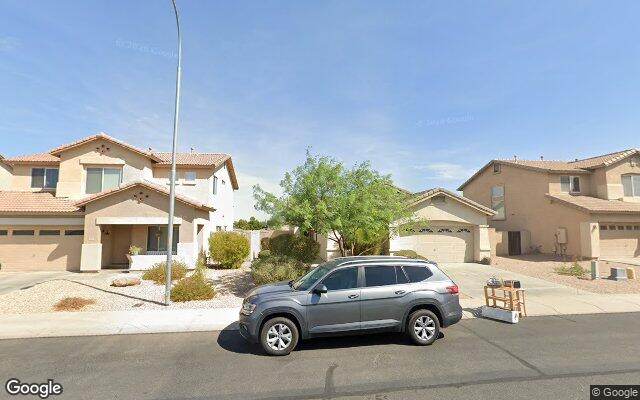
A small home, reviewed on public record.
© Google Street View
Compared to 1,661 Arizona facilities with a similar number of beds.
Care · 36-month window. Higher percentile = better performance on inspection record. Source: Arizona Dept. of Health Services · Bureau of Residential Facilities Licensing.
among peers to rank.
on file.
Rankings based on 36-month ADHS inspection data. Severity and frequency: fewer citations = higher percentile. Repeat rate: lower repeat citation share = higher percentile.
Citation history, plotted month by month.
26 deficiencies on record. Each bar is a month with a citation.
Finding distribution
26 total · 36 monthsScope × Severity (CMS A–L)
Every inspection visit, verbatim.
2 inspections in the public record, most recent first. Plain-language summaries open first — click into any row for the full citation text.
2026-03-31Complaint InvestigationEnforcement · 17 findings
“Based on record review, documentation review, and interview, the health care institution failed to administer a training program for all staff regarding fall prevention and fall recovery, to include initial training, for three of three employees sampled. The deficient practice posed a risk as the caregiver received no organized instruction or information related to physical health services provided to residents. Findings Include: 1. A review of E1’s personnel record revealed a hire date of May 1, 2019. Further review of E1’s record revealed intial fall prevention training certificate completed in 2022; however, the training did not include fall recovery. 2. A review of E2’s personnel record revealed no initial fall prevention and fall recovery training was documented for E2. 3. A review of E3’s personnel record revealed no initial fall prevention and fall recovery training was documented for E3. 4. A review of the facility's staff schedule revealed E1, E2, and E3 provided services to the residents. 5. In an interview, E2 reported E2 believed E2 was hired in 2016, but was not sure. E2 acknowledged E2 had been providing care as a caregiver at this facility for many years. 6. In an interview, E1 acknowledged that E1, E2, and E3 did not have the required fall prevention and fall recovery training. 7. In an exit interview, the findings were reviewed with E1, and no additional information was provided. 8. This is a repeat citation from the previous compliance inspection conducted on October 13, 2023.”
“Based on documentation review and interview, the health care institution's chief administrative officer failed to implement tuberculosis (TB) infection control activities that included annually assessing the health care institution's risk of exposure to infectious TB. The deficient practice posed a potential risk of illness to residents. Findings include: 1. A review of facility documents revealed no facility risk assessment completed for the health care institution's risk of infectious tuberculosis. 2. In an exit interview, the findings were reviewed with E1, and no further information was provided.”
“Based on documentation review and interview, the manager failed to ensure policies and procedures were reviewed at least once every three years and updated as needed. The deficient practice posed a risk as policies and procedures reinforce and clarify standards expected of employees. Finding included: 1. A review of facility documentation revealed that the policies and procedures were last reviewed on November 29, 2017, by the facility manager. 2. In an exit interview, findings were discussed with E1, and no additional information was provided. 3. Technical assistance was previously provided on this rule during the compliance inspection conducted on October 13, 2023.”
“Based on record review, documentation review, and interview, the governing authority failed to ensure a caregiver provided documentation of completion of a caregiver training program approved by the Department or the Board of Examiners for Nursing Care Institution Administrators and Assisted Living Facility Managers (NCIA Board), for one of four caregivers sampled. The deficient practice posed a risk if the individual was not qualified to provide the required services. Findings: 1. A review of E3’s personnel record revealed E3 was hired as a caregiver. Further review revealed no documentation of completion of a caregiver training program approved by the Department or the NCIA Board for E3. 2. A review of the TMU website https://azcg.tmutest.com/search did not reveal that E3 was trained as a caregiver. 3. In an interview, E1 reported that E3 provided care to residents on occasion. 4. In an exit interview, the findings were reviewed with E1, and no additional information was provided.”
“Based on documentation review, record review, and interview, the manager failed to ensure a caregiver who is expected to have more than eight hours per week of direct interaction with residents, provided evidence of freedom from infectious tuberculosis (TB), as specified in R9-10.113.A.1-2, for one of three personnel sampled. The deficient practice posed a potential risk of illness to residents. Findings include: 1. R9-10-113.A.1-2 states "...the health care institution's chief administrative officer shall ensure that the health care institution establishes, documents, and implements tuberculosis (TB) infection control activities that: For each individual who is employed by the health care institution, provides volunteer services for the health care institution, or is admitted to the health care institution and who is subject to the requirements of this Section, screening, on or before the date specified in the applicable Article of this Chapter, that consists of: i. Assessing risks of prior exposure to infectious tuberculosis, ii. Determining if the individual has signs or symptoms of tuberculosis, and iii. Obtaining documentation of the individual's freedom from infectious tuberculosis." 1. A review of the facility's staff schedule revealed E1, E2, and E3 provided services to the residents for at least eight hours per week. 2. A review of E1’s medical record revealed one screening for signs and symptoms of TB, which was more than 12 months old. However, based on E1's presumed date of hire, additional documentation was required. 3. A review of E2's personnel record revealed no screening for prior exposure or signs and symptoms of TB was documented for E2. Further review revealed no documentation of E2’s freedom from infectious TB. 4. A review of E3's personnel record revealed no screening for prior exposure or signs and symptoms of TB was documented for E3. 5. In an exit interview, the findings were reviewed with E1, and no additional information was provided.”
“Based on record review and interview, the manager failed to ensure that a personnel record for each employee or volunteer included: The individual’s starting date of employment, the individual’s education and experience, and orientation, for three of three employees sampled. The deficient practice posed a risk if the employees were unable to meet a resident's needs, and posed a potential TB exposure risk to residents. Findings include: 1. A review of E1's personnel record revealed E1 was a manager. However, the personnel record did not include the following for E1: · Orientation. 2. A review of E2's personnel record revealed E2 was a caregiver. However, the personnel record did not include the following for E2: · Starting date of employment · Education and experience · Orientation 3. A review of E3's personnel record revealed E3 was a caregiver. However, the personnel record did not include the following for E3: · Starting date of employment · Education and experience · Orientation 4. A review of the facility's staff schedule revealed E1 and E2 provided services to the residents daily from March 1, 2026 to present. 5. In an interview, E1 reported E3 provided care to residents occasionally. 6. In an exit interview, the findings were reviewed with E1 and no additional information was provided.”
“Based on record review and interview, the manager failed to ensure that a resident provided evidence of freedom from infectious tuberculosis (TB) before or within seven calendar days after the resident’s date of occupancy, for two of two residents sampled. The deficient practice posed a potential risk of illness to residents. Findings include: 1. A review of R1’s medical record revealed no documentation of the resident’s freedom from infectious TB. Based on R1's date of acceptance, this documentation was required. 2. A review of R2’s medical record revealed no documentation of the resident’s freedom from infectious TB. Based on R2's date of acceptance, this documentation was required. 3. In an exit interview, the findings were reviewed with E1 and no further information was provided.”
“Based on record review and interview, the manager failed to ensure that a resident has a service plan that was established, documented, and implemented, which included a description of the resident’s medical or health problems, including physical, behavioral, cognitive, or functional conditions or impairments, for one of two residents sampled. The deficient practice posed a risk if the resident's needs were not being met. Findings include: 1. A review of R2’s medical record revealed R2’s current service plan dated June 2, 2025. Further review of the service plan revealed no description of R2’s medical or health problems, including physical, behavioral, cognitive, or functional conditions or impairments. 2. In an exit interview, the findings were reviewed with E1, and no further information was provided.”
“Based on record review and interview, the manager failed to ensure that a resident has a service plan that was established, documented, and implemented that when updated, was signed and dated by the resident or resident’s representative, for two of two residents sampled. The deficient practice posed a risk if the service plan was not developed to articulate decisions and agreements. Findings include: 1. A review of R1’s medical record revealed R1’s current service plan dated August 17, 2025. However, the resident or the resident's representative did not sign and date the service plan. 2. A review of R2’s medical record revealed R2’s current service plan dated June 2, 2025. However, the resident or the resident's representative did not sign and date the service plan. 3. In an exit interview, the findings were reviewed with E1, and no additional information was provided. 4. This is a repeat citation from the previous compliance inspection conducted on October 13, 2023.”
“Based on record review and interview, the manager failed to ensure a caregiver documented the services provided in the resident’s medical record, for two of two residents sampled. The deficient practice posed a risk if the residents’ needs were not met. Findings include: 1. A review of R1’s medical record revealed R1’s current service plan dated August 17, 2025. The service plan revealed R1 received the following services: · Shower, three times a week; · Shampoo, three times a week; · Oral care, three times a day; · Nail care: Check fingernails daily and clean as needed; · Comb hair daily; · Toileting: Needs reinstating daily; and · Nutrition: cut meat and vegetables. 2. A review of R1’s activities of daily living (ADL) documentation, revealed the following services were not documented on March 29, 2026, or March 30, 20206: · Oral care; and · Comb hair. Additionally, oral care was documented once per day from March 1, 2026, to March 29, 2026, not three times per day as the service plan specifies. 3. Further review of R1’s ADL documentation revealed the following services were not documented from March 1, 2026, to present: · Shampoo. Additionally, showers were documented once per week from March 1, 2026, to March 16, 2026, then seven days consecutively from March 17, 2026, to March 22, 2026, not three times per week as the service plan specifies. No additional showers were documented for R1 from March 24, 2026, to present. 4. A review of R2’s medical record revealed R2’s current service plan dated June 2, 2025. The service plan revealed R2 received the following services: · Shower, three times a week; · Shampoo, three times a week; · Oral care, three times a day; · Nail care: Check fingernails daily and clean as needed; and · Comb hair, daily. 5. A review of R2’s ADL documentation revealed the following services were not documented on March 30, 20206: · Oral care; · Comb hair; and · Nail care. Additionally, oral care was documented once per day from March 1, 2026, to March 29, 2026, not three times per day as the service plan specifies. 6. Further review of R2’s ADL documentation revealed the following services were not documented from March 1, 2026, to present: · Shower; and · Shampoo. 7. In an interview, E1 reported that the residents received the services, but they were not documented in the ADLs. 8. In an exit interview, the findings were reviewed with E1, and no additional information was provided.”
“Based on record review, documentation review, and interview, the manager failed to ensure that a resident’s medical record contains a medication order from a medical practitioner for each medication that is administered to the resident, for two of two residents sampled. The deficient practice posed a risk as medication administered could not be verified against a medication order. Findings include: 1. A review of R1’s medical record revealed a current service plan dated August 17, 2025. The service plan revealed R1 received medication administration. 2. A review of R1's medical record revealed a medication administration record (MAR) dated March 2026. The MAR documented the following medication was administered to R1 from March 1, 2026, to March 29, 2026: · Depakote Delayed 500 milligrams (mg); · Finasteride 5 mg; · Januvia 50 mg; · Tamsulosin HCl 0.4 mg; · Olanzapine 10 mg; · Propranolol 10 mg; and · Lantus Solostar 100 units. 3. A review of R1’s medication bottles and medication organizer revealed R1 continued to receive these medications daily. 4. A review of R1's medical record revealed no medication orders from a medical practitioner for the following medications: · Depakote Delayed 500 milligrams (mg); · Finasteride 5 mg; · Januvia 50 mg; · Tamsulosin HCl 0.4 mg; · Olanzapine 10 mg; · Propranolol 10 mg; and · Lantus Solostar 100 units. 5. A review of R2’s medical record revealed R2’s current service plan dated June 2, 2025. The service plan revealed R2 received medication administration. 6. A review of R2's medical record revealed a MAR dated March 2026. The MAR documented the following medication was administered to R2 from March 1, 2026, to March 29, 2026: · Chlorthalidone 25 mg; · Ketoconazole 2% shampoo; · Omeprazole DR 40 mg; · Rosuvastatin Calcium 5 mg; · Clobetasol 0.05% ointment; and · Metoprolol 25 mg. 7. A review of R2’s medication bottles and medication organizer revealed R2 continued to receive these medications daily. 8. A review of R2's medical record revealed no medication orders from a medical practitioner for the following medications: • Chlorthalidone 25 mg; • Ketoconazole 2% shampoo; • Omeprazole DR 40 mg; • Rosuvastatin Calcium 5 mg; • Clobetasol 0.05% ointment; and • Metoprolol 25 mg. 9. In an exit interview, the findings were reviewed with E1, and no additional information was provided.”
“Based on documentation review, observation, and interview, the manager failed to ensure that there was a means of exiting the facility for a resident who did not have a key, special knowledge for egress, or the ability to expend increased physical effort that provided access to an outside area that monitored or alerted employees of the egress of a resident from the facility. The deficient practice posed a risk if the facility was unaware of the general or specific whereabouts of a resident. Findings include: 1. A review of the facility license revealed the facility was licensed at the directed care level. 2. During an environmental inspection with E1, the Compliance Officer observed the front door of the facility, which led to an unsecure area that allowed residents to be at least 30 feet away from the facility, had an alarm; however, the alarm was turned off and did not make a sound when the door was opened. The Compliance Officer also observed that this door was not being monitored when the caregivers were tending to residents' needs. 3. In an exit interview, the findings were reviewed with E1, and no additional information was provided. 4. This is a repeat deficiency from the compliance and complaint inspection conducted on October 13, 2023.”
“Based on observation, documentation review, and interview, the manager failed to ensure that medication was stored in a separate locked room, closet, cabinet, or self-contained unit used only for medication storage. The deficiency posed a risk to the residents’ health and safety. Findings include: 1. During an environmental inspection of the facility, the Compliance Officer observed the following medications stored in R3's private room, accessible to the resident: - Two tubes Calmoseptine ointment; and - Two tubes Nystatin Cream 100,000 USP. 2. During an environmental inspection of the facility, the Compliance Officer observed the following medications stored in R4's private room, accessible to the resident: - One bottle Triamcinolone Acetonide Lotion, USP 0.025%; and - One bottle of Ketoconazole 2% shampoo. 3. A review of the facility’s policies and procedures revealed a policy titled, “Medications” which stated, “Medication is stored in a separate locked room, closet, cabinet, or self-contained unit used only for medication storage.” 4. In the exit interview, the findings were reviewed with E1, and no additional information was provided.”
“Based on observation, documentation review, and interview, the manager failed to ensure the premises were free from a condition or situation that may cause a resident or other individual to suffer physical harm. The deficient practice posed a risk to the physical health and safety of the residents. Findings include: 1. A review of R3’s service plan revealed that R3 received Directed Care services. 2. During an environmental tour of the facility, the Compliance Officer observed the following items stored in R3’s private room accessible to the resident: - One can of Febreze air freshener; and - One bottle perineal cleanser. 3. A review of the facility’s policies and procedures revealed a policy titled, “Environmental Safety” which stated, “11. Poisonous or toxic materials stored by the assisted living facility are maintained in labeled containers in a locked area ... and are inaccessible to residents.” 4. In the exit interview, the findings were reviewed with E1, and no additional information was provided.”
“Based on observation, documentation review, and interview, the manager failed to ensure hot water temperatures were maintained between 95°F and 120°F in areas of an assisted living facility used by residents. The deficient practice posed a risk to the physical health and safety of the residents. Findings include: 1. During an environmental tour of the facility, the Compliance Officer observed the hot water in a common bathroom reach in excess of 143°F. 2. In the exit interview, the findings were reviewed with E1, and no additional information was provided.”
“Based on observation, documentation review, and interview, the manager failed to ensure that poisonous or toxic materials stored by the assisted living facility were maintained in a locked area and were inaccessible to residents. The deficient practice posed a risk to the physical health and safety of the residents. Findings include: 1. During an environmental tour of the facility, the Compliance Officer observed one bottle of Weiman cooktop cleaner, one container of Cascade dishwasher pods, one box of S.O.S. pads, and one large bottle of Palmolive dish detergent stored in an unlocked kitchen cabinet. 2. A review of the facility’s policies and procedures revealed a policy titled, “Environmental Safety” which stated, “11. Poisonous or toxic materials stored by the assisted living facility are maintained in labeled containers in a locked area separate from food preparation and storage, dining areas, and medications and are inaccessible to residents.” 3. In the exit interview, the findings were reviewed with E1, and no additional information was provided.”
“Based on observation, documentation review, and interview, the manager failed to ensure that combustible or flammable liquids and hazardous materials stored by the assisted living facility were stored in in a locked area inaccessible to residents. The deficient practice posed a risk to the physical health and safety of the residents. Findings include: 1. During an environmental tour of the facility, the Compliance Officer observed one can of butane gas lighter refill stored in a resident’s private room. 2. A review of the facility’s policies and procedures revealed a policy titled, “Environmental Safety” which stated,”12. Combustible or flammable liquids and hazardous materials stored by the assisted living facility are stored in the original labeled containers or safety containers in a storage area that is locked and inaccessible to residents.” 3. In the exit interview, the findings were reviewed with E1, and no additional information was provided.”
2023-10-13Complaint InvestigationA.A.C. · 9 findings
“Based on documentation review, record review, and interview, the manager failed to ensure the health care institution developed and administered a training program for all staff regarding fall prevention and fall recovery. The deficient practice posed a risk if facility staff were not properly trained to assist a resident who had fallen and was unable to recover independently. Findings include: 1. A review of facility documentation revealed no documentation of a developed and administered fall prevention and fall recovery training program. 2. A review of E1's, E2's, and E3's personnel records revealed no documentation of fall prevention and fall recovery training. 3. In an interview, the Compliance Officer requested the facility's fall prevention and fall recovery training program and documentation of training of staff. However, no documentation of a fall prevention and recovery training program was provided for review. E1 acknowledged there was no documented fall prevention and fall recovery training program available for review.”
“Based on documentation review, record review, and interview, the manager failed to ensure a personnel record for each employee included documentation of the individual's completed in-service education required by policies and procedures, for three of three personnel records sampled. The deficient practice posed a risk if the employees were unable to meet a resident's needs. Findings include: 1. A review of facility policies and procedures revealed a policy and procedure which stated "Policy Statements: 1. The Governing Authority / Manager shall ensure that each manager and caregiver completes every 12 months from the starting date of employment, or for a manager or caregiver hired before the effective date of this Article, every 12 months from the effective date of this Article...Procedures: 1. A minimum of six hours of ongoing training in the following areas will be accomplished..." 2. A review of E1's, E2's, and E3's personnel records revealed E1, E2, and E3 were employed at the facility for more than 24 months. However, E1's, E2's, and E3's personnel records did not contain documentation of a minimum of six hours of completed in-service education. 3. In an interview, E1 reviewed E1's, E2's, and E3's personnel records and acknowledged the records did not contain documentation indicating E1, E2, and E3 received in-service education as required per the facility's policies and procedures.”
“Based on record review and interview, the manager failed to ensure before or at the time of acceptance, an individual submitted documentation dated within 90 calendar days before the individual was accepted by the facility, to include whether the individual required continuous medical services, continuous or intermittent nursing services, or restraints; dated and signed by a physician, registered nurse practitioner, registered nurse, or physician assistant, for two of two sampled residents. The deficient practice posed a risk if the facility was unable to meet a resident's needs. Findings include: 1. A review of R1's medical record revealed a determination letter dated June 6, 2023, which reflected R1 did not require continuous medical services, continuous nursing services, or restraints. R1's determination letter was completed after R1's date of acceptance. 2. A review of R2's medical record revealed a determination letter dated April 30, 2023, which reflected R2 did not require continuous medical services, continuous nursing services, or restraints. R2's determination letter was completed after R1's date of acceptance. 3. In an interview, E2 acknowledged R1's and R2's determination letters were completed after R1's and R2's admission dates. This is a repeat citation from the previous compliance inspection conducted on September 7, 2022.”
“Based on record review and interview, the manager failed to ensure a resident's written service plan was signed and dated by the resident or resident's representative, for one of two sampled residents. Findings include: 1. A review of R2's medical record revealed a service plan dated April 30, 2023. However, R2's service plan did not contain the signature of R2 or R2's representative. 2. In an interview, E1 acknowledged R2's service plan did not contain the signature of R2 or R2's representative.”
“Based on record review, observation, and interview, the manager failed to ensure a resident's medical record included the dosage for a medication administered, for one of two sampled residents. Findings include: 1. A review of R1's medical record revealed a medication order dated August 2, 2023 for "Insulin Lispro injection solution 100 unit/ML (milliliters) inject per sliding scale: if 70 through 150 administer zero units, 151 through 200 administer two units, 201 through 250 administer four units, 251 through 300 administer four, 301 through 350 administer six units, 351 through 400 administer eight units; 401 plus administer 10 units if blood glucose is greater than 400 administer 10 units and notify provider." 2. A review of R1's medical record revealed a document titled "Medication Administration Sheet" which was a log sheet used to measure R1's blood glucose levels. R1's blood glucose levels ranged from 132 through 349 on various days in September and October of 2023. However, R1's "Medication Administration Sheet" did not reflect the amount of insulin given or withheld from R1. 3. A review of R1's medical record revealed a medication administration record (MAR) dated September 2023. The MAR reflected R1 was administered "Insulin Lispro" from September 1, 2023 through September 30, 2023. However, R1's September MAR did not reflect the amount of insulin given or withheld from R1. 4. In an interview, E1 reviewed and acknowledged R1's medical record did not include the dosage administered to R1.”
“Based on documentation review, observation, and interview, the manager failed to ensure for a facility authorized to provide directed care services, there was a means of exiting the facility for a resident who does not have a key, special knowledge for egress, or the ability to expend increased physical effort and provided access to an outside area which allowed the resident to be at least 30 feet away from the facility and controlled or alerted employees of the egress of a resident from the facility. The deficient practice posed a risk if the facility was unaware of the egress of a resident from the facility. Findings include: 1. A review of Department documentation revealed the facility was authorized to provide directed care services. 2. During the environmental inspection of the facility with E2, the Compliance Officer observed when exiting from the patio door to the backyard, no alarm sounded to alert employees of the egress of a resident from the facility. There was also no way to control a residents' egress from the facility. 3. In an interview, E2 acknowledged the patio door did not alert employees of the egress of a resident from the facility.”
“Based on record review, observation, and interview, the manager failed to ensure medication administered to a resident was administered in compliance with a medication order, for one of two sampled residents. The deficient practice posed a risk if the resident experienced a change in condition due to improper administration of medication. Findings include: 1. A review of R2's medical record revealed a medication order dated August 5, 2023 for "Omeprazole 20 mg (milligrams) one tablet by mouth before breakfast and before evening meal do not crush, chew or split." 2. The Compliance Officer observed R2's "Omeprazole 20 mg" inside R2's medication bin. 3. A review of R2's medical record revealed a medication administration record (MAR) dated September 2023. The MAR reflected "Omeprazole 20 mg 1/2 tab" was administered daily at 8:00 AM from September 1, 2023 through September 30, 2023. 4. In an interview, E1 reported being under the impression "Omeprazole" was an "as-needed" medication. E1 reported E1 would review the order.”
“Based on observation and interview, the manager failed to ensure hot water temperatures were maintained between 95 \'b0F and 120 \'b0F in areas of the assisted living facility used by residents. The deficient practice posed a potential burn risk to residents. Findings include: 1. During the environmental inspection of the facility, the Compliance Officer observed a shared resident bathroom. Using a Department-issued thermometer, the Compliance Officer measured the hot water temperature and observed it to be 135.7 \'b0F in the sink of the shared resident bathroom. 2. In an interview, E2 acknowledged the hot water temperature was not maintained between 95 \'b0F and 120 \'b0F.”
“Based on observation and interview, the manager failed to ensure oxygen containers were secured in an upright position. Findings include: 1. During the environmental inspection of the facility, the Compliance Officer observed two oxygen tanks upright but unsecured inside R3's bedroom closet. 2. In an interview, E2 acknowledged the oxygen tanks were not secured.”
Other facilities in Avondale.
Other memory care facilities near Avondale with similar care offerings.
Facility Watch · Premium
Family reviews
No reviews yet — be the first to share your experience
Other memory care options nearby.
Happy Days Assisted Living LLC
Avondale
Rhoda's Assisted Living Home
Avondale
Avondale Assisted Living Home
Avondale
Our Grouphome LLC
Avondale
Premier Group Home Avondale, LLC
Avondale
Rancho Santa Fe Assisted Living LLC
Avondale
Bridgewater Avondale Operations, LLC
Avondale
All Valley Assisted Living Home, LLC
Avondale