Valley Assisted Living.
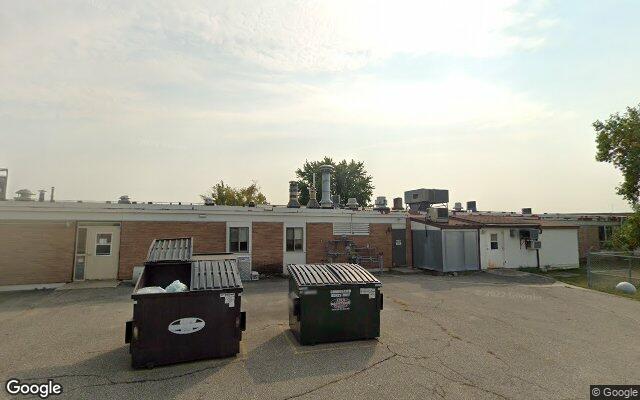
A medium home, reviewed on public record.
Compared to 187 Minnesota facilities with a similar number of beds.
ALF memory care · 36-month window. Higher percentile = better performance on inspection record. Source: Minnesota Dept. of Health · Health Regulation Division.
among peers to rank.
Rankings based on 36-month MDH inspection data. Severity and frequency: fewer citations = higher percentile. Repeat rate: lower repeat citation share = higher percentile.
Citation history, plotted month by month.
No citations in the last 36 months.
Finding distribution
none · 36 monthsScope × Severity (CMS A–L)
Questions to ask before you visit.
A short pre-tour checklist tailored to Valley Assisted Living's record and state requirements.
The most recent Minnesota Department of Health inspection was July 16, 2025, with zero deficiencies cited — can you walk us through how the facility prepares for state inspections and share any internal quality-assurance audits completed since that date?
Ask the operator on tour. Take notes and compare answers across facilities you visit.
One complaint was filed with MDH during the inspection period on file — was that complaint substantiated, and can you share documentation of how the facility responded and what corrective steps, if any, were implemented?
Ask the operator on tour. Take notes and compare answers across facilities you visit.
This facility holds an Assisted Living Facility with Dementia Care license under Minnesota Statutes chapter 144G — can you provide a copy of your written dementia care program and explain how staff competency in dementia care is assessed and documented?
Ask the operator on tour. Take notes and compare answers across facilities you visit.
Every inspection visit, verbatim.
2 inspections in the public record, most recent first. Plain-language summaries open first — click into any row for the full citation text.
2025-08-21Complaint InvestigationNo findings
Plain-language summary
A complaint investigation found that a resident experienced stroke-like symptoms and called for help, but unlicensed staff did not notify the registered nurse because the resident's vital signs were normal and he said he felt better; the resident's family later brought him to the emergency room where he was diagnosed with a transient ischemic attack (mini stroke). The Minnesota Department of Health determined that neglect was inconclusive due to conflicting accounts from staff about what symptoms the resident initially reported and what actions were taken. The facility's lack of documentation about the incident and staff's limited awareness of the resident's stroke history contributed to the investigation's inability to establish what occurred.
Read full citation textHide full citation text
Read raw inspector notesClose inspector notes
Finding: Inconclusive Nature of Investigation: The Minnesota Department of Health investigated an allegation of maltreatment, in accordance with the Minnesota Reporting of Maltreatment of Vulnerable Adults Act, Minn. Stat. 626.557, and to evaluate compliance with applicable licensing standards for the provider type. Initial Investigation Allegation(s): The facility neglected the resident when it failed to immediately notify the registered nurse of a change in condition, resulting in a delay of care. The resident displayed stroke like symptoms when he woke up and reported it to an unlicensed personnel (ULP). The ULP failed to take action and the resident called his family, who brought him to the emergency room. The resident was diagnosed with a TIA (transient ischemic attack, often referred to as a mini stroke). Investigative Findings and Conclusion: The Minnesota Department of Health determined neglect was inconclusive. Conflicting accounts of the incident were provided, and it was unable to be determined what symptoms were initially reported to staff by the resident. The resident was diagnosed with a TIA after his family brought him to the emergency room. The investigator conducted interviews with facility staff members, including administrative staff, nursing staff, and unlicensed staff. The investigation included review of the resident record, hospital records, staff schedules, and related facility policy and procedures. Also, the investigator observed care and services provided at the facility. The resident resided in an assisted living facility. The resident’s diagnoses included history of stroke, high blood pressure, and atrial fibrillation (fast heart rate). The resident’s service plan included assistance with reminders to meals and activities, medication administration, and daily pulse checks. The resident’s assessment indicated the resident had a recent hospital stay for a TIA (mini stroke). The resident was independent with most activities of daily living however had impaired memory due to a past stroke. The resident’s record indicated he was hospitalized due to a stroke 28 days prior to the incident. The resident’s record lacked documentation on what happened the morning the resident was taken to the emergency room and the only progress note related to the incident was entered after the nurse was made aware he had been taken in. Hospital records indicated the resident woke up around 7:00 a.m. to use the bathroom but couldn’t feel the left side of his body. The resident’s symptoms had improved by the time he arrived in the emergency room around 9:45a.m. The resident was treated in the emergency room and discharged back to the facility later that afternoon. During an interview, the resident was not able to recall specific events from the day he went to the emergency room. During an interview, an unlicensed personnel (ULP) working that day stated she noticed the resident pushed his call light, which was unusual for him, and another ULP answered the light. The ULP stated she asked the other employee what the resident wanted since he didn’t usually call for help and she reported that the resident said he was dizzy and needed help going to the bathroom. The ULP stated this was not normal for the resident, so she went in and checked his vital signs, which were all within normal limits. The ULP stated she asked the resident if he wanted to be sent into the emergency room and he declined. The ULP stated she told the resident if he felt dizzy again, he would have to go in. The ULP stated they did not notify the nurse because the resident’s vital signs were normal, and the resident reported feeling better. The ULP stated she believed the resident may have had previous strokes but was not sure. During an interview, the other ULP working that day stated she was not previously aware of the resident’s history of stroke and had she known that, it would have changed how she responded to his symptoms. The ULP stated the resident had pushed his call light and told her he felt kind of “off”, dizzy, and weak so she helped him get to the bathroom. Once he was in the bathroom, he reported feeling better. The ULP stated she gave the resident his call light and told him to push it if he needed help or wasn’t feeling well again but he didn’t use it and later she saw him up in the facility’s sunroom. The ULP stated she recently started working at the facility so she told her coworker about the resident’s concerns as she wasn’t completely sure what to do and the other ULP took his vitals and said it wasn’t a big deal so she didn’t do anything further regarding the resident’s symptoms. During an interview, the registered nurse (RN) stated she was not aware the resident wasn’t feeling well or was sent to the emergency room until the resident’s daughter called her that afternoon. The RN stated she later spoke with staff who reported the resident had been feeling dizzy but had normal vital signs, so she hadn’t been called. During an interview, the resident’s daughter stated her aunt notified her that the resident contacted her to say he had another “spell” and didn’t feel well. The resident’s daughter stated she was concerned since the resident had a mini stroke a few weeks prior and had a stroke a few years ago, so she decided to bring the resident to the emergency room. The resident’s daughter stated she called the facility RN later in the afternoon around 3 p.m. to update her on the resident and the RN wasn’t aware that he was out of the building. The resident’s daughter stated she told the RN that a staff member had answered her dad’s call light that morning and despite it not being normal for him needing help to get out of bed, she got him out of bed and left him alone in the bathroom and didn’t do anything else and given the resident’s recent history of a stroke, she should have been notified. The resident’s daughter stated the RN told her that the staff member who answered his light was new so she wouldn’t know about his history, which she found upsetting as she felt that the staff member should know about the resident she is providing care for. The resident’s daughter stated she was concerned that facility staff knew he wasn’t feeling well, wasn’t at lunch, and was out of the facility for several hours and facility staff hadn’t noticed. During an interview, the resident’s sister stated the resident called her around 7:30 in the morning and she found that unusual for the resident. The resident’s sister stated she spoke with the resident on the phone and he reported having an “episode,” which caused her to be concerned. The resident’s sister stated she tried calling the facility to see if someone could go check on him, but no one answered. She stated she called a second time and again no one answered, so she left a voicemail asking them to call her back regarding the resident, but no one ever called her back. The resident’s sister stated she went to the facility and after talking with his daughter, it was decided they should bring him to the emergency room since he had a past history of strokes. In conclusion, the Minnesota Department of Health determined neglect was inconclusive. Inconclusive: Minnesota Statutes, section 626.5572, Subdivision 11. "Inconclusive" means there is less than a preponderance of evidence to show that maltreatment did or did not occur. Neglect: Minnesota Statutes, section 626.5572, subdivision 17 “Neglect” means neglect by a caregiver or self-neglect. (a) "Caregiver neglect" means the failure or omission by a caregiver to supply a vulnerable adult with care or services, including but not limited to, food, clothing, shelter, health care, or supervision which is: (1) reasonable and necessary to obtain or maintain the vulnerable adult's physical or mental health or safety, considering the physical and mental capacity or dysfunction of the vulnerable adult; and (2) which is not the result of an accident or therapeutic conduct. Vulnerable Adult interviewed: Yes Family/Responsible Party interviewed: Yes Alleged Perpetrator interviewed: Not Applicable Action taken by facility: No action taken. Action taken by the Minnesota Department of Health: The facility was found to be in noncompliance. To view a copy of the Statement of Deficiencies and/or correction orders, please visit: https://www.health.state.mn.us/facilities/regulation/directory/provcompselect.html If you are viewing this report on the MDH website, please see the attached Statement of Deficiencies.
2025-07-16Annual Compliance VisitNo findings
Plain-language summary
A routine survey on July 16, 2025 found Valley Assisted Living in Thief River Falls not in substantial compliance with Minnesota law, resulting in a 90-day conditional license and three state correction orders related to the assisted living director license, responsibility for housing and services, and background studies required, with fines totaling $3,000 assessed.
Read full citation textHide full citation text
Read raw inspector notesClose inspector notes
correction orders and document the actions taken to comply in the facility's records. The Department reserves the right to return to the facility at any time should the Department receive a complaint or deem it necessary to ensure the health, safety, and welfare of residents in your care. You are encouraged to retain this document for your records. It is your responsibility to share the information contained in the letter and/ or state form with your organization’s Governing Body. Sincerely, Rick Michals, J.D. Executive Regional Operations Manager JMD An equal opportunity employer. Letter ID: 292I_Revised 04/14/2023 P r o t e c t i n g , M a i n t a i n i n g a n d I m p r o v i n g t h e H e a l t h o f A l l M i n n e s o t a n s NOTICE OF CONDITIONA LLICENSE Electronically Delivered October 22, 2025 Licensee Valley Assisted Living 523 Arnold Avenue South Thief River Falls ,MN 56701 RE : Conditiona lLicense Number 418408 Health Facility Identification Number (HFID )30224 Project Number(s) SL30224016 Dear Licensee: The Minnesota Department of Health (MDH) completed a survey on July 16, 2025, for the purpose of assessin gcompliance with state licensing statutes. Based on the survey results you were found not to be in substantia lcompliance with the laws pursuant to Minnesota Statutes ,Chapter 144G. As a result, pursuant to Minn. Stat. § 144G2. 0, Subd .1(a), MDH is issuing a 90-day conditional license, pending appea lunder Minn. Stat. § 144G2. 0, Subd .18. STATE CORRECTIO ONRDERS The enclosed State Form documents the state correction orders. MDH documents state correction orders using federal software. Tag numbers are assigned to Minnesota state statutes for Assisted Living Facilities .The assigned tag number appears in the far left column entitled "ID Prefix Tag". The state statute number and the corresponding text of the state statute out of compliance are listed in the "Summary Statement of Deficiencies "column. This column also includes the findings that are in violation of the state statute after the statement, "This MN Requiremen tis not met as evidenced by . . ." IMPOSITION OF FINES In accordance with Minn. Stat. § 144G3. 1, Subd .4, fines and enforcement actions may be imposed based on the level and scope of the violations and may be imposed immediately with no opportunity to correct the violation first as follows: Leve l1: no fines or enforcement; Leve l2: a fine of $500 per violation, in addition to any enforcement mechanism authorized in § 144G2. 0; Leve l3: a fine of $1,000 per incident, in addition to any enforcement mechanism authorized in § 144G2. 0; Leve l4: a fine of $3,000 per incident, in addition to any enforcement mechanism authorized in An equal opportunity employer. Letter ID: MX30_Revised 04/14/2023 Valley Assisted Living October 22, 2025 Page 2 § 144G2. 0; Leve l5: a fine of $5,000 per violation, in addtion to any enforcement mechanism authorized in § 144G2. 0. St - 0 - 0110 - 144g.10 Subdivision 1a - Assisted Living Director License Required - $1,000.00 St - 0 - 0420 - 144g.40 Subdivision 1 - Responsibility For Housing And Services - $1,000.00 St - 0 - 1290 - 144g.60 Subdivision 1 - Background Studies Required - $1,000.00 Therefore, the total amount you are assesse dis $3,000.00. You will be invoiced approximately 30 days after receipt of this notice, pending appeal. DOCUMENTATIO ONF ACTION TO COMPLY In accordance with Minn. Stat. § 144G3. 0, Subd .5(c), t he licensee must document actions taken to comply with the correction orders and immediately correct any reissued orders outlined on the state form; however, plans of correction are not required to be submitted for approval. The correction order documentation should include the following: x Identify how the area(s) of noncompliance was corrected related to the resident(s)/ employee(s) identified in the correction order. x Identify how the area(s) of noncompliance was corrected for all of the provider’s resident(s)/ employees that may be affected by the noncompliance. x Identify what changes to your systems and practices were made to ensure compliance with the specific statute(s). CORRECTIO ONRDER RECONSIDERATI OPRNOCESS In accordance with Minn. Stat. § 144G3. 2, Subd .2, you may challenge the correction order(s) issued, including the level and scope ,and any fine assesse dthrough the correction order reconsideration process .The request for reconsideration must be in writing and received by MDH within 15 calendar days of the correction order receipt date. To submit a reconsideration request, please visit: https:/ / forms.web.health.state.mn.us/form/ HRDAppealsForm REQUESTIN AG HEARING Alternatively, in accordance with Minn. Stat. § 144G3. 1, Subd .5(d), an assisted living provider that has been assesse da fine under this subdivision has a right to a reconsideration or a hearing under this section and chapter 14. Pursuan tto Minn. Stat. § 144G2. 0, Subd .14 and Subd .18, a request for a hearing must be in writing and received by the Department of Health within 15 business days of the correction order receipt date. The request must contain a brief and plain statement describing each matter or issue contested and any new information you believe constitutes a defense or mitigating factor. Valley Assisted Living October 22, 2025 Page 3 To submit a hearing request, please visit: https:/ / forms.web.health.state.mn.us/form/ HRDAppealsForm To appea lfines via reconsideration ,please follow the procedure outlined above. Please note that you may request a reconsideration or a hearing, but not both. If you wish to contest tags without fines in a reconsideration and tags with the fines at a hearing, please submit two separate appeals forms at the website listed above. If you request a hearing, please specify whether you are appealing the orders and fines, the imposed conditions, or both. CONDITIONA LLICENS IESSUED: MDH will issue Valley Assisted Living a conditional assisted living facility license for 90 calendar days, pending appeal .At an unannounced point in time, within the 90 calendar days, MDH will conduct a follow-up survey ,as defined in Minn. Stat. § 144G3. 0, Subd .6. Based on the results of the follow-up survey ,MDH will determine if Valley Assisted Living is in substantia lcompliance. The following conditions apply on the conditional assisted living facility license: a. No new substantiated maltreatment allegations: If any new investigations begin in the conditional license period, and the allegations are substantiated, MDH may pursue additional enforcement actions up to and including immediate temporary suspension and revocation of the license. b. No new admissions :Valley Assisted Living will not admit any new residents under its conditional assisted living facility license until MDH removes the “ no new admissions ”condition. Valley Assisted Living must provide the Department: i. A list of the names and birthdates of any individuals Valley Assisted Living is currently in the process of admitting. These individuals will be able to continue the admittance process. ii. A list of all current residents: 1. Name and birthdate of each resident 2. Current payment source for services 3. If Elderly Waiver, the name and contact information of the care coordinator/case manager 4. If the resident is not able to make informed decisions ,the name of their representative and how to contact the representative c. Consultant: Valley Assisted Living will contract with an RN to provide consultation concerning all resident(s) to whom Valley Assisted Living provides licensed assisted living services under the conditional license .The consultant must have access to all resident(s) receiving services from Valley Valley Assisted Living October 22, 2025 Page 4 Assisted Living .The consultant will conduct initial and ongoing evaluations of the provider. Direct resident observation may be required based on the consultant’s judgement or at the discretion of MDH. The RN must not have any affiliation with Valley Assisted Living and MDH must review the RN’s credentials and approve the selection .Valley Assisted Living is responsible for the expense of the contract with the RN .The main purpose of the consultant is to provide guidance to Valley Assisted Living in an effort to help Valley Assisted Living align their practices with the requirements of Minn. Stat. §§ 144G0. 1 – 144G9. 999 and to provide oral and written reports to MDH noting progress toward substantia lcompliance and/or concerns about observations.
1 older inspection from 2023 are not shown above.
Get the complete record, translated into plain language — emailed to you.
Other facilities in Thief River Falls.
Other memory care facilities near Thief River Falls with similar care offerings.
Contract Decoder
Family reviews
No reviews yet — be the first to share your experience