The Meadows Senior Living.
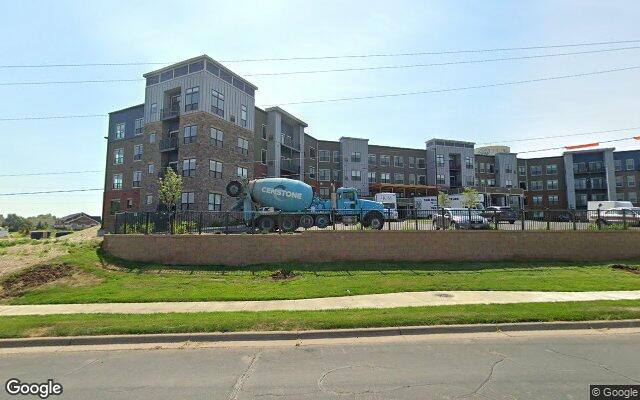
A large home, reviewed on public record.
Compared to 139 Minnesota facilities with a similar number of beds.
ALF memory care · 36-month window. Higher percentile = better performance on inspection record. Source: Minnesota Dept. of Health · Health Regulation Division.
among peers to rank.
on file.
Rankings based on 36-month MDH inspection data. Severity and frequency: fewer citations = higher percentile. Repeat rate: lower repeat citation share = higher percentile.
Citation history, plotted month by month.
No citations in the last 36 months.
Finding distribution
none · 36 monthsScope × Severity (CMS A–L)
Every inspection visit, verbatim.
2 inspections in the public record, most recent first. Plain-language summaries open first — click into any row for the full citation text.
2024-10-15Complaint InvestigationNo findings
Plain-language summary
The Minnesota Department of Health investigated a complaint that a staff member slapped a resident on the head and shoulder during care assistance, but determined the allegation was inconclusive because there was conflicting testimony—one staff member witnessed the slapping and the resident appeared upset, while the accused staff member denied any contact, the resident later said he was not slapped, and a nurse found no visible injuries. Law enforcement was contacted, and the investigation included interviews with facility staff, review of medical records and policies, and observation of care practices. No violation was substantiated.
Read full citation textHide full citation text
Read raw inspector notesClose inspector notes
Finding: Inconclusive Nature of Investigation: The Minnesota Department of Health investigated an allegation of maltreatment, in accordance with the Minnesota Reporting of Maltreatment of Vulnerable Adults Act, Minn. Stat. 626.557, and to evaluate compliance with applicable licensing standards for the provider type. Initial Investigation Allegation(s): The alleged perpetrator (AP) abused a resident when they slapped the resident on the top of the head and left shoulder during cares. Investigative Findings and Conclusion: The Minnesota Department of Health determined abuse was inconclusive. An unlicensed staff member stated she witnessed the AP slap the resident on the side of the shoulder and the top of the head. The AP denied hitting the resident. There was no additional information to determine if the incident occurred. The investigator conducted interviews with facility staff members, including administrative staff, nursing staff, and unlicensed staff. The investigator contacted law enforcement. The investigation included review of medical records, facility policies and procedures, and a facility investigation of the incident. Also, the investigator observed staff providing cares for a resident. An equal opportunity employer. The resident resided in an assisted living memory care unit. The resident’s diagnoses included senile degeneration of the brain and chronic pain. The resident’s service plan included assistance with toileting, medications, bathing, laundry, and meals. The resident’s assessment indicated the resident was on hospice cares and was a risk of falls during transfers. A witness statement from a unlicensed staff member indicated the AP had a rough demeanor and used words such as, “Grandpa, stand up!” and “Grandpa, why did you do that!”. The statement indicated while pushing the resident in his wheelchair back to his bed, the AP gave him a “light” slap on the top of his head. The statement indicated the resident had a grimace on his face and appeared visibly upset. When the unlicensed staff and the AP went to put the resident to bed, the unlicensed personnel attempted to help the resident stand up, and the AP said, “Don’t help, watch he can do it himself”. The AP gave the resident a slap on the left shoulder and told him to stand up. The resident responded by saying, “bullshit”. The unlicensed personnel told the AP to not slap him. The statement indicated both the AP and the unlicensed personnel watched the resident transfer himself into bed with “extreme difficulty” at which point, they both assisted him to a lying position and exited the room. A facility investigation indicated the unlicensed personnel reported the AP slapped the resident on the evening shift. The investigation indicated the facility nurse saw the resident after the incident and did not see any bruising or redness on the resident’s head or arm. The resident was asked if he was slapped the previous day and he said “no”. The resident also said, “if it did happen, probably no one saw it”. In an interview with the unlicensed personnel, she stated she witnessed the AP assisting the resident in the bathroom. The unlicensed personnel stated she felt the dialogue between the resident and the AP was rough. The AP did not seem to happy or friendly and she kept asking the resident, “why did you do that?” The unlicensed personnel stated she witnessed the AP slap the resident on the head hard enough for him to feel like it was painful. The resident had a grimace on his face and he used a swear word. The unlicensed personnel stated after the second hit on his arm, she told the AP, “Don’t hit him”. The unlicensed personnel stated the AP just laughed it off. The unlicensed personnel stated she attempted to help get the resident from his wheelchair to his bed, but the AP said, “he can do it himself, watch!” The resident stood up and appeared to have difficulty getting himself to the bed. Once in the bed, the unlicensed personnel stated herself and the AP assisted the resident to a comfortable position in bed. In an interview, the AP stated she asked the unlicensed personnel to assist her with toileting the resident. Prior to toileting the resident, the AP stated she put her hand on the resident’s shoulder and asked him if he would like to go to the bathroom or to bed. The resident told her he needed to use the bathroom. The AP stated after he used the bathroom, she and the unlicensed personnel assisted the resident to bed. The AP stated she asked the resident if he needed assistance, but he declined. The AP denied she hit or slapped the resident at any point during cares. In conclusion, the Minnesota Department of Health determined abuse was inconclusive. Inconclusive: Minnesota Statutes, section 626.5572, Subdivision 11. "Inconclusive" means there is less than a preponderance of evidence to show that maltreatment did or did not occur. Abuse: Minnesota Statutes section 626.5572, subdivision 2. "Abuse" means: (a) An act against a vulnerable adult that constitutes a violation of, an attempt to violate, or aiding and abetting a violation of: (1) assault in the first through fifth degrees as defined in sections 609.221 to 609.224; (2) the use of drugs to injure or facilitate crime as defined in section 609.235; (3) the solicitation, inducement, and promotion of prostitution as defined in section 609.322; and (4) criminal sexual conduct in the first through fifth degrees as defined in sections 609.342 to 609.3451. A violation includes any action that meets the elements of the crime, regardless of whether there is a criminal proceeding or conviction. (b) Conduct which is not an accident or therapeutic conduct as defined in this section, which produces or could reasonably be expected to produce physical pain or injury or emotional distress including, but not limited to, the following: (1) hitting, slapping, kicking, pinching, biting, or corporal punishment of a vulnerable adult; (2) use of repeated or malicious oral, written, or gestured language toward a vulnerable adult or the treatment of a vulnerable adult which would be considered by a reasonable person to be disparaging, derogatory, humiliating, harassing, or threatening; Vulnerable Adult interviewed: No, deceased. Family/Responsible Party interviewed: Yes Alleged Perpetrator interviewed: Yes the Action taken by facility: The facility reported the incident to the Minnesota Adult Abuse Reporting Center (MAARC). The AP no longer works at the facility. Action taken by the Minnesota Department of Health: No further action taken at this time. cc: The Office of Ombudsman for Long Term Care The Office of Ombudsman for Mental Health and Developmental Disabilities PRINTED: 10/22/2024 FORM APPROVED STATEMENT OF DEFICIENCIES (X1) PROVIDER/SUPPLIER/CLIA (X2) MULTIPLE CONSTRUCTION (X3) DATE SURVEY AND PLAN OF CORRECTION IDENTIFICATION NUMBER: COMPLETED A. BUILDING: ______________________ C B. WING _____________________________ 39819 09/12/2024 NAME OF PROVIDER OR SUPPLIER STREET ADDRESS, CITY, STATE, ZIP CODE 6555 LOFTUS LANE THE MEADOWS SENIOR LIVING SAVAGE, MN 55378 SUMMARY STATEMENT OF DEFICIENCIES PROVIDER'S PLAN OF CORRECTION (X4) ID ID (X5) PREFIX (EACH DEFICIENCY MUST BE PRECEDED BY FULL PREFIX (EACH CORRECTIVE ACTION SHOULD BE COMPLETE REGULATORY OR LSC IDENTIFYING INFORMATION) CROSS-REFERENCED TO THE APPROPRIATE DATE TAG TAG DEFICIENCY) 0 000 Initial Comments 0 000 On September 12, 2024, the Minnesota Department of Health initiated an investigation of complaint #HL398193893C/#HL398193582M. No correction orders are issued. LABORATORY DIRECTOR'S OR PROVIDER/SUPPLIER REPRESENTATIVE'S SIGNATURE TITLE (X6) DATE STATE FORM 6899 B8GH11 If continuation sheet 1 of 1
2024-09-16Complaint InvestigationNo findings
Plain-language summary
MDH investigated a complaint that a facility staff member pushed a resident during an altercation after the resident became uncooperative, resulting in a fall; the resident was hospitalized for behavioral observation and returned to baseline health. Due to conflicting accounts—the staff member stated the resident tripped over her feet while she was defending herself from the resident's aggression, and video footage did not capture the entirety of the incidents—MDH determined the abuse allegation was inconclusive, meaning there was insufficient evidence to prove it occurred or did not occur. The resident's family expressed no concerns about the facility's care and viewed the incidents as isolated events.
Read full citation textHide full citation text
Read raw inspector notesClose inspector notes
Finding: Inconclusive Nature of Investigation: The Minnesota Department of Health investigated an allegation of maltreatment, in accordance with the Minnesota Reporting of Maltreatment of Vulnerable Adults Act, Minn. Stat. 626.557, and to evaluate compliance with applicable licensing standards for the provider type. Initial Investigation Allegation(s): The alleged perpetrator (AP), a facility staff member, abused the resident when the AP pushed the resident in retaliation to the resident being uncooperative. Investigative Findings and Conclusion: The Minnesota Department of Health determined neglect was inconclusive. Due to conflicting accounts provided, there was not a preponderance of evidence to support that the actions of the facility staff member met the definition of abuse. The resident was evaluated and treated at a local hospital and returned to his baseline health condition. The investigator conducted interviews with facility staff members, including nursing staff and unlicensed staff. The investigator also contacted family members and hospital staff. The investigation included review of the resident record, hospital records, facility internal investigation documentation, personnel files, staff schedules, and facility policies and procedures. The investigator also toured the facility, observed staff members interacting with residents, and observations of medication administration. The resident resided in an assisted living facility memory care unit with a diagnosis of dementia. The resident’s service plan included assistance with activities of daily living, medications, meals, housekeeping, and safety checks. The resident’s assessment indicated the resident required assistance, redirection, and cueing for incontinence issues and had a history of falls. Facility documentation indicated that over one weekend two incidents occurred between the resident and a facility staff member/alleged perpetrator (AP). The AP reported that the resident became upset after she attempted to redirect the resident to other areas of the facility. One incident occurred after being asked to leave the kitchen and a second incident the following day after being found in another resident’s room. After verbal attempts of redirection failed, the AP physically led the resident out of the area and the resident became upset and fell after becoming physically aggressive with the AP. Following the second incident, the resident was transported to a local medical facility for behavioral evaluation and observation. It was later reported to facility management that the AP may have pushed the resident during the altercations causing the resident to fall. Video surveillance footage reviewed did not include footage of the entirety of the incidents and it was unable to be determined if the AP pushed the resident. During an interview, the AP stated that she was aware and understood proper procedures for verbal redirection, although admitted that she led the resident by the arm to another area. The AP stated that she was in a defensive posture during the incidents as she was attempting to protect herself while repeatedly being grabbed and struck by the resident. The AP denied striking or pushing the resident in retaliation during the interactions. During an interview with a registered nurse, she stated that she was informed that the resident had fallen during an altercation with the AP. The AP reported that the resident stepped backwards and tripped over their [the AP’s] feet which caused him to fall. The following day, the AP notified the nurse that the resident grabbed her arm, pushed her, and had a hand on her throat. The nurse stated that this was an isolated incident and prior to this timeframe no other concerns were brought to her attention concerning either the resident or the AP. During an interview, a hospital staff member stated she was informed of the incidents by the resident’s family members but was unable to verify if the facility followed up on the alleged altercations. The hospital staff stated that the family had no additional concerns over the care provided at the facility and felt this was an isolated event. The resident was interviewed but was unable to recall the incident. During an interview with a family member of the resident, they stated they were contacted by the facility about both incidents. The family member did not have concerns with the care provided by the facility. In conclusion, the Minnesota Department of Health determined abuse was inconclusive. Inconclusive: Minnesota Statutes, section 626.5572, Subdivision 11. "Inconclusive" means there is less than a preponderance of evidence to show that maltreatment did or did not occur. Abuse: Minnesota Statutes section 626.5572, subdivision 2. "Abuse" means: (a) An act against a vulnerable adult that constitutes a violation of, an attempt to violate, or aiding and abetting a violation of: (1) assault in the first through fifth degrees as defined in sections 609.221 to 609.224; (2) the use of drugs to injure or facilitate crime as defined in section 609.235; (3) the solicitation, inducement, and promotion of prostitution as defined in section 609.322; and (4) criminal sexual conduct in the first through fifth degrees as defined in sections 609.342 to 609.3451. A violation includes any action that meets the elements of the crime, regardless of whether there is a criminal proceeding or conviction. (b) Conduct which is not an accident or therapeutic conduct as defined in this section, which produces or could reasonably be expected to produce physical pain or injury or emotional distress including, but not limited to, the following: (1) hitting, slapping, kicking, pinching, biting, or corporal punishment of a vulnerable adult; (2) use of repeated or malicious oral, written, or gestured language toward a vulnerable adult or the treatment of a vulnerable adult which would be considered by a reasonable person to be disparaging, derogatory, humiliating, harassing, or threatening. Vulnerable Adult interviewed: Yes Family/Responsible Party interviewed: Yes Alleged Perpetrator interviewed: Yes Action taken by facility: The AP was re-educated following the incidents and is no longer employed by the facility. Action taken by the Minnesota Department of Health: No further action taken at this time. cc: The Office of Ombudsman for Long Term Care The Office of Ombudsman for Mental Health and Developmental Disabilities PRINTED: 09/16/2024 FORM APPROVED STATEMENT OF DEFICIENCIES (X1) PROVIDER/SUPPLIER/CLIA (X2) MULTIPLE CONSTRUCTION (X3) DATE SURVEY AND PLAN OF CORRECTION IDENTIFICATION NUMBER: COMPLETED A. BUILDING: ______________________ C B. WING _____________________________ 39819 07/23/2024 NAME OF PROVIDER OR SUPPLIER STREET ADDRESS, CITY, STATE, ZIP CODE 6555 LOFTUS LANE THE MEADOWS SENIOR LIVING SAVAGE, MN 55378 SUMMARY STATEMENT OF DEFICIENCIES PROVIDER'S PLAN OF CORRECTION (X4) ID ID (X5) PREFIX (EACH DEFICIENCY MUST BE PRECEDED BY FULL PREFIX (EACH CORRECTIVE ACTION SHOULD BE COMPLETE REGULATORY OR LSC IDENTIFYING INFORMATION) CROSS-REFERENCED TO THE APPROPRIATE DATE TAG TAG DEFICIENCY) 0 000 Initial Comments 0 000 On July 23, 2024, the Minnesota Department of Health initiated an investigation of complaint #HL398195901C/#HL398194602M. No correction orders are issued. LABORATORY DIRECTOR'S OR PROVIDER/SUPPLIER REPRESENTATIVE'S SIGNATURE TITLE (X6) DATE STATE FORM 6899 FCWJ11 If continuation sheet 1 of 1
Other facilities in Scott County.
Other memory care facilities in Scott County with similar care offerings.
Contract Decoder
Family reviews
No reviews yet — be the first to share your experience
Other memory care options nearby.
More options in neighboring cities
Licensed memory care in other cities within this county region — useful when your search radius crosses city limits.