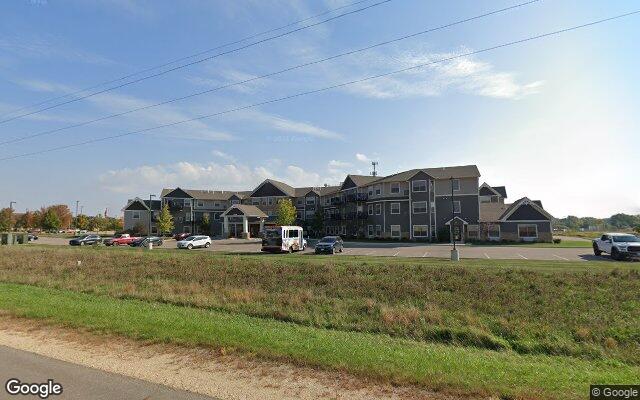
Trinity Suites.
A medium home, reviewed on public record.
Compared to 84 Minnesota facilities with a similar number of beds.
ALF memory care · 36-month window. Higher percentile = better performance on inspection record. Source: Minnesota Dept. of Health · Health Regulation Division.
among peers to rank.
Rankings based on 36-month MDH inspection data. Severity and frequency: fewer citations = higher percentile. Repeat rate: lower repeat citation share = higher percentile.
Citation history, plotted month by month.
No citations in the last 36 months.
Finding distribution
none · 36 monthsScope × Severity (CMS A–L)
Questions to ask before you visit.
A short pre-tour checklist tailored to Trinity Suites's record and state requirements.
Minnesota Department of Health records show 4 inspections on file and 2 complaints — can you share the dates and outcomes of those complaints, and any written corrective action plans the community developed in response?
Ask the operator on tour. Take notes and compare answers across facilities you visit.
The most recent MDH inspection was on April 23, 2025, and found zero deficiencies — can you walk us through how the community prepares for state surveys and maintains compliance with Minnesota Statute Chapter 144G dementia care requirements?
Ask the operator on tour. Take notes and compare answers across facilities you visit.
With 10 licensed beds and an Assisted Living Facility with Dementia Care designation under Minnesota law, how does the community describe its dementia-specific programming, and can you provide written policies that outline the specialized supports for residents with memory loss?
Ask the operator on tour. Take notes and compare answers across facilities you visit.
Every inspection visit, verbatim.
3 inspections in the public record, most recent first. Plain-language summaries open first — click into any row for the full citation text.
2025-07-08Complaint InvestigationNo findings
Plain-language summary
The Minnesota Department of Health investigated a complaint that the facility neglected a resident by failing to provide safety checks and fall precautions; the resident fell twice and was hospitalized with injuries. The investigation found no violation of neglect — staff had completed safety checks according to the resident's care plan, increased those checks after the first fall, and provided prompt emergency response when falls occurred. No correction orders were issued.
Read full citation textHide full citation text
Read raw inspector notesClose inspector notes
Finding: Not Substantiated Nature of Investigation: The Minnesota Department of Health investigated an allegation of maltreatment, in accordance with the Minnesota Reporting of Maltreatment of Vulnerable Adults Act, Minn. Stat. 626.557, and to evaluate compliance with applicable licensing standards for the provider type. Initial Investigation Allegation(s): The facility neglected the resident when staff failed to provide safety checks and implement fall precautions. The resident fell and required hospitalization for advanced care. Investigative Findings and Conclusion: The Minnesota Department of Health determined neglect was not substantiated. Prior to the fall, staff completed safety checks according to the resident's assessed needs and plan of care. There was not a preponderance of evidence to support that the actions of the facility staff met the definition of neglect. The investigator conducted interviews with facility staff members, including nursing staff and unlicensed staff. The investigation included review of the resident record, hospital records, facility incident reports, personnel files, employee training files, and facility policy and procedures. At the time of the onsite visit, the investigator observed care and services provided by staff in the facility and the resident’s room where she fell. The resident resided in an assisted living facility memory care unit. The resident’s diagnoses included disorientation, weakness, falls, and vertigo (dizziness). The resident’s service plan included assistance with all activities of daily living, routine safety checks, and medication administration. The resident’s assessment indicated the resident had a history of unwitnessed falls with injury, requiring assistance for ambulation as well as impaired cognition with poor decision making and required supervision. Documentation reviewed indicated that four days after the resident admitted to the facility, she had an unwitnessed fall in her room where she sustained injuries and was treated at a local hospital. The resident returned to the facility later that same day. One week later, the resident experienced another fall. The resident was seated in a recliner in her apartment, when staff members on duty heard the resident call out for help and found the resident on the floor. The resident sustained another injury including broken bones and cuts requiring emergency treatment and hospitalization. After being discharged from the hospital, the resident did not return to the memory care unit and was instead admitted to another care unit at the facility. The resident eventually passed away from unrelated natural causes. During an interview, a nurse stated that at the time of admission the resident’s care plan included scheduled safety checks. After the first fall occurred, scheduled checks to assist the resident to the restroom were added and both services were increased in frequency. During investigative interviews, multiple staff members stated that during both incidents involving the resident and unwitnessed falls, the resident was in possession of a call light pendant device but were unsure if she activated it to indicate that staff assistance was needed. During an interview, a family member stated that the resident fell prior to admission at home and at other health care facilities. The family member stated that the facility made sure she was involved with care planning and recalled the resident commenting to her about being checked on around the clock. The family member had no concerns with the care provided by the facility. In conclusion, the Minnesota Department of Health determined neglect was not substantiated. “Not Substantiated” means: An investigatory conclusion indicating the preponderance of evidence shows that an act meeting the definition of maltreatment did not occur. Neglect: Minnesota Statutes, section 626.5572, subdivision 17 “Neglect” means neglect by a caregiver or self-neglect. (a) "Caregiver neglect" means the failure or omission by a caregiver to supply a vulnerable adult with care or services, including but not limited to, food, clothing, shelter, health care, or supervision which is: (1) reasonable and necessary to obtain or maintain the vulnerable adult's physical or mental health or safety, considering the physical and mental capacity or dysfunction of the vulnerable adult; and (2) which is not the result of an accident or therapeutic conduct. Vulnerable Adult interviewed: No (deceased) Family/Responsible Party interviewed: Yes Alleged Perpetrator interviewed: Not Applicable Action taken by facility: The facility staff provided immediate assistance and notified emergency medical services per facility protocol. Action taken by the Minnesota Department of Health: No further action taken at this time. cc: The Office of Ombudsman for Long Term Care The Office of Ombudsman for Mental Health and Developmental Disabilities PRINTED: 07/15/2025 FORM APPROVED STATEMENT OF DEFICIENCIES (X1) PROVIDER/SUPPLIER/CLIA (X2) MULTIPLE CONSTRUCTION (X3) DATE SURVEY AND PLAN OF CORRECTION IDENTIFICATION NUMBER: COMPLETED A. BUILDING: ______________________ C B. WING _____________________________ 28776 06/12/2025 NAME OF PROVIDER OR SUPPLIER STREET ADDRESS, CITY, STATE, ZIP CODE 205 11TH STREET TRINITY SUITES FARMINGTON, MN 55024 SUMMARY STATEMENT OF DEFICIENCIES PROVIDER'S PLAN OF CORRECTION (X4) ID ID (X5) PREFIX (EACH DEFICIENCY MUST BE PRECEDED BY FULL PREFIX (EACH CORRECTIVE ACTION SHOULD BE COMPLETE REGULATORY OR LSC IDENTIFYING INFORMATION) CROSS-REFERENCED TO THE APPROPRIATE DATE TAG TAG DEFICIENCY) 0 000 Initial Comments 0 000 On June 12, 2025, the Minnesota Department of Health initiated an investigation of complaint #HL287763292C/#HL287761942M. No correction orders are issued. LABORATORY DIRECTOR'S OR PROVIDER/SUPPLIER REPRESENTATIVE'S SIGNATURE TITLE (X6) DATE STATE FORM 6899 FW5011 If continuation sheet 1 of 1
2025-04-23Annual Compliance VisitNo findings
Plain-language summary
A standard licensing survey was conducted at Trinity Suites on April 21–23, 2025, and the facility received a correction order related to minimum food service requirements under Minnesota law. No immediate fines were assessed. The facility must document how it corrected the deficiency and made changes to prevent it from happening again.
Read full citation textHide full citation text
Read raw inspector notesClose inspector notes
correction orders and document the actions taken to comply in the facility's records. The Department reserves the right to return to the facility at any time should the Department receive a complaint or deem it necessary to ensure the health, safety, and welfare of residents in your care. STATE CORRECTION ORDERS The enclosed State Form documents the state correction orders. MDH documents state licensing correction orders using federal software. Tag numbers are assigned to Minnesota state statutes for Assisted Living Facilities. The assigned tag number appears in the far left column entitled "ID Prefix Tag." The state statute number and the corresponding text of the state statute out of compliance are listed in the "Summary Statement of Deficiencies" column. This column also includes the findings that are in violation of the state statute after the statement, "This MN Requirement is not met as evidenced by . . ." In accordance with Minn. Stat. § 144G.31 Subd. 4, MDH may assess fines based on the level and scope of the violations; h owever, no immediate fines are assessed for this survey of your facility. DOCUMENTATION OF ACTION TO COMPLY In accordance with Minn. Stat. § 144G.30, Subd. 5(c), the licensee must document actions taken to comply with the correction orders within the time period outlined on the state form; however, plans of correction are not required to be submitted for approval. The correction order documentation should include the following: Identify how the area(s) of noncompliance was corrected related to the An equal opportunity employer. Letter ID: IS7N REVISED 09/13/2021 Trinity Suites June 3, 2025 Page 2 resident(s)/employee(s) identified in the correction order. Identify how the area(s) of noncompliance was corrected for all of the provider’s resident(s)/employees that may be affected by the noncompliance. Identify what changes to your systems and practices were made to ensure compliance with the specific statute(s). CORRECTION ORDER RECONSIDERATION PROCESS In accordance with Minn. Stat. § 144G.32, Subd. 2, you may challenge the correction order(s) issued, including the level and scope, and any fine assessed through the correction order reconsideration process. The request for reconsideration must be in writing and received by MDH within 15 calendar days of the correction order receipt date. To submit a reconsideration request, please visit: https://forms.web.health.state.mn.us/form/HRDAppealsForm The MDH Health Regulation Division (HRD) values your feedback about your experience during the survey and/or investigation process. Please fill out this anonymous provider feedback questionnaire at your convenience at this link: h ttps://forms.office.com/g/Bm5uQEpHVa. Your input is important to us and will enable MDH to improve its processes and communication with providers. If you have any questions regarding the questionnaire, please contact Susan Winkelmann at susan.winkelmann@state.mn.us or call 651-201-5952. You are encouraged to retain this document for your records. It is your responsibility to share the information contained in the letter and state form with your organization’s Governing Body. If you have any questions, please contact me. Sincerely, Jodi Johnson, Supervisor State Evaluation Team Email: jodi.johnson@state.mn.us Telephone: 507-344-2730 Fax: 1 -866-890-9290 JMD PRINTED: 06/03/2025 FORM APPROVED STATEMENT OF DEFICIENCIES (X1) PROVIDER/SUPPLIER/CLIA (X2) MULTIPLE CONSTRUCTION (X3) DATE SURVEY AND PLAN OF CORRECTION IDENTIFICATION NUMBER: COMPLETED A. BUILDING: ______________________ B. WING _____________________________ 28776 04/23/2025 NAME OF PROVIDER OR SUPPLIER STREET ADDRESS, CITY, STATE, ZIP CODE 205 11TH STREET TRINITY SUITES FARMINGTON, MN 55024 SUMMARY STATEMENT OF DEFICIENCIES PROVIDER'S PLAN OF CORRECTION (X4) ID ID (X5) PREFIX (EACH DEFICIENCY MUST BE PRECEDED BY FULL PREFIX (EACH CORRECTIVE ACTION SHOULD BE COMPLETE REGULATORY OR LSC IDENTIFYING INFORMATION) CROSS-REFERENCED TO THE APPROPRIATE DATE TAG TAG DEFICIENCY) 0 000 Initial Comments 0 000 ASSISTED LIVING PROVIDER LICENSING Minnesota Department of Health is CORRECTION ORDER(S) documenting the State Correction Orders using federal software. Tag numbers have In accordance with Minnesota Statutes, section been assigned to Minnesota State 144G.08 to 144G.95, these correction orders are Statutes for Assisted Living Facilities. The issued pursuant to a survey. assigned tag number appears in the far-left column entitled "ID Prefix Tag." The Determination of whether violations are corrected state Statute number and the requires compliance with all requirements corresponding text of the state Statute out provided at the Statute number indicated below. of compliance is listed in the "Summary When Minnesota Statute contains several items, Statement of Deficiencies" column. This failure to comply with any of the items will be column also includes the findings which considered lack of compliance. are in violation of the state requirement after the statement, "This Minnesota INITIAL COMMENTS: requirement is not met as evidenced by." Following the evaluators ' findings is the SL28776016-0 Time Period for Correction. On April, 21, 2025, through April 23, 2025, the PLEASE DISREGARD THE HEADING OF survey at the above provider. At the time of the STATES,"PROVIDER'S PLAN OF survey, there were six residents; six receiving CORRECTION." THIS APPLIES TO services under the Assisted Living Facility with FEDERAL DEFICIENCIES ONLY. THIS Dementia Care license. WILL APPEAR ON EACH PAGE. THERE IS NO REQUIREMENT TO SUBMIT A PLAN OF CORRECTION FOR VIOLATIONS OF MINNESOTA STATE STATUTES. THE LETTER IN THE LEFT COLUMN IS USED FOR TRACKING PURPOSES AND REFLECTS THE SCOPE AND LEVEL ISSUED PURSUANT TO 144G.31 SUBDIVISION 1-3. 0 480 144G.41 Subdivision 1 Subd. 1a (a-b) Minimum 0 480 SS=F requirements; required food services LABORATORY DIRECTOR'S OR PROVIDER/SUPPLIER REPRESENTATIVE'S SIGNATURE TITLE (X6) DATE STATE FORM 6899 PL9T11 If continuation sheet 1 of 12 PRINTED: 06/03/2025 FORM APPROVED STATEMENT OF DEFICIENCIES (X1) PROVIDER/SUPPLIER/CLIA (X2) MULTIPLE CONSTRUCTION (X3) DATE SURVEY AND PLAN OF CORRECTION IDENTIFICATION NUMBER: COMPLETED A. BUILDING: ______________________ B. WING _____________________________ 28776 04/23/2025 NAME OF PROVIDER OR SUPPLIER STREET ADDRESS, CITY, STATE, ZIP CODE 205 11TH STREET TRINITY SUITES FARMINGTON, MN 55024 SUMMARY STATEMENT OF DEFICIENCIES PROVIDER'S PLAN OF CORRECTION (X4) ID ID (X5) PREFIX (EACH DEFICIENCY MUST BE PRECEDED BY FULL PREFIX (EACH CORRECTIVE ACTION SHOULD BE COMPLETE REGULATORY OR LSC IDENTIFYING INFORMATION) CROSS-REFERENCED TO THE APPROPRIATE DATE TAG TAG DEFICIENCY) 0 480 Continued From page 1 0 480 (a) Except as provided in paragraph (b), food must be prepared and served according to the Minnesota Food Code, Minnesota Rules, chapter 4626. (b) For an assisted living facility with a licensed capacity of ten or fewer residents: (1) notwithstanding Minnesota Rules, part 4626.0033, item A, the facility may share a certified food protection manager (CFPM) with one other facility located within a 60-mile radius and under common management provided the CFPM is present at each facility frequently enough to effectively administer, manage, and supervise each facility's food service operation; (2) notwithstanding Minnesota Rules, part 4626.0545, item A, kick plates that are not removable or cannot be rotated open are allowed unless the facility has been issued repeated correction orders for violations of Minnesota Rules, part 4626.1565 or 4626.1570; (3) notwithstanding Minnesota Rules, part 4626.0685, item A, the facility is not required to provide integral drainboards, utensil racks, or tables large enough to accommodate soiled and clean items that may accumulate during hours of operation provided soiled items do not contaminate clean items, surfaces, or food, and clean equipment and dishes are air dried in a manner that prevents contamination before storage; (4) notwithstanding Minnesota Rules, part 4626.1070, item A, the facility is not required to install a dedicated handwashing sink in its existing kitchen provided it designates one well of a two-compartment sink for use only as a handwashing sink; (5) notwithstanding Minnesota Rules, parts 4626.1325, 4626.1335, and 4626.1360, item A, existing floor, wall, and ceiling finishes are STATE FORM 6899 PL9T11 If continuation sheet 2 of 12 PRINTED: 06/03/2025 FORM APPROVED STATEMENT OF DEFICIENCIES (X1) PROVIDER/SUPPLIER/CLIA (X2) MULTIPLE CONSTRUCTION (X3) DATE SURVEY AND PLAN OF CORRECTION IDENTIFICATION NUMBER: COMPLETED A. BUILDING: ______________________ B. WING _____________________________ 28776 04/23/2025 NAME OF PROVIDER OR SUPPLIER STREET ADDRESS, CITY, STATE, ZIP CODE 205 11TH STREET TRINITY SUITES FARMINGTON, MN 55024 SUMMARY STATEMENT OF DEFICIENCIES PROVIDER'S PLAN OF CORRECTION (X4) ID ID (X5) PREFIX (EACH DEFICIENCY MUST BE PRECEDED BY FULL PREFIX (EACH CORRECTIVE ACTION SHOULD BE COMPLETE REGULATORY OR LSC IDENTIFYING INFORMATION) CROSS-REFERENCED TO THE APPROPRIATE DATE TAG TAG DEFICIENCY) 0 480 Continued From page 2 0 480 allowed provided the facility keeps them clean and in good condition; (6) notwithstanding Minnesota Rules, part 4626.1375, shielded or shatter-resistant lightbulbs are not required, but if a light bulb breaks, the facility must discard all exposed food and fully clean all equipment, dishes, and surfaces to remove any glass particles; and (7) notwithstanding Minnesota Rules, part 4626.
2025-02-13Complaint InvestigationNo findings
Plain-language summary
The Minnesota Department of Health investigated a complaint that an employee took the resident's controlled medications (morphine and lorazepam) for personal use after the resident died. The investigation found the allegation inconclusive because facility medication records were unclear and inconsistent, and multiple staff members had access to the controlled substances storage, so it could not be determined whether a violation occurred. The facility has implemented new controlled substance practices and no further action was taken by the department.
Read full citation textHide full citation text
Read raw inspector notesClose inspector notes
Finding: Inconclusive Nature of Investigation: The Minnesota Department of Health investigated an allegation of maltreatment, in accordance with the Minnesota Reporting of Maltreatment of Vulnerable Adults Act, Minn. Stat. 626.557, and to evaluate compliance with applicable licensing standards for the provider type. Initial Investigation Allegation(s): The alleged perpetrator (AP) financially exploited the resident when the AP took the residents-controlled medications for their own personal use. Investigative Findings and Conclusion: The Minnesota Department of Health determined financial exploitation was inconclusive. Facility documentation is unclear regarding the amounts of morphine and lorazepam (controlled substances) that were remaining after the resident died. Medications were stored in the office used by the AP; however, the AP was not the only individual that had access to the controlled substances. The investigator conducted interviews with facility staff members, including administrative staff and nursing staff. The investigation included review of the resident records, death record, facility internal investigation, facility incident reports, personnel files, staff schedules, related facility policy and procedures. Also, the investigator observed staff members providing care, controlled substance storage, and staff members accessing controlled substances. The resident resided in an assisted living memory care unit with diagnoses including Alzheimer’s disease and weakness. The resident’s service plan included assistance with medication management, pain management, and comfort. The resident’s assessment indicated the resident had cognitive challenges and staff needed to assist with decision making. The resident’s medication orders included 5mg morphine tablets and lorazepam 0.5mg tablets. The resident’s facility-controlled substances inventory documentation, scanned medication cards, and medication administration records were inconsistent, and it could not be determined the amount of morphine and lorazepam remaining after the resident died. The facility investigation indicated multiple facility keys were made by the AP at a hardware store and unlicensed staff had their own set of keys to the facility, including keys to controlled substance storage. The internal investigation also indicated controlled substances and narcotic log documentation was found unlocked in the AP’s desk. During interview, a registered nurse stated during the time in question, controlled substances were kept in a locked apartment in a locked box and nurses and unlicensed staff had keys to access the apartment and lock box. The registered nurse stated narcotics would also be stored in the nurse office in a locked box. The nurse office was typically unlocked during the day and keys to the lock box were in a desk that staff were aware of. After the AP was no longer working at the facility, the registered nurse stated she noted the resident’s controlled substance counts of how much was left after the resident’s death and administered amounts did not match. During interview, a leadership staff stated during the investigation they searched the AP’s office and found boxes of partial resident medications and unlocked medication which included controlled substances. During interview, the AP denied taking controlled substances that belonged to the resident or any resident. The AP stated during the time in question, she recently returned from months of being on leave and was to only be working on a part-time basis due to medical needs. However, due to lack of staffing the AP worked extended hours and struggled to complete her work. The AP stated she needed to prioritize resident care over documentation and paperwork. The AP stated she worked at the facility a great number or years and was never accused of taking medication and did not know there was an alleged discrepancy in the resident’s-controlled substances count until being contacted by the department of health. In conclusion, the Minnesota Department of Health determined financial exploitation was inconclusive. Inconclusive: Minnesota Statutes, section 626.5572, Subdivision 11. "Inconclusive" means there is less than a preponderance of evidence to show that maltreatment did or did not occur. Financial exploitation: Minnesota Statutes, section 626.5572, subdivision 9 "Financial exploitation" means: … (b) In the absence of legal authority a person: (1) willfully uses, withholds, or disposes of funds or property of a vulnerable adult; (2) obtains for the actor or another the performance of services by a third person for the wrongful profit or advantage of the actor or another to the detriment of the vulnerable adult; (3) acquires possession or control of, or an interest in, funds or property of a vulnerable adult through the use of undue influence, harassment, duress, deception, or fraud; or (4) forces, compels, coerces, or entices a vulnerable adult against the vulnerable adult's will to perform services for the profit or advantage of another. Vulnerable Adult interviewed: No, deceased. Family/Responsible Party interviewed: Yes. Alleged Perpetrator interviewed: Yes. Action taken by facility: Facility conducted internal review of the incident and implemented new controlled substances practices. Action taken by the Minnesota Department of Health: No further action taken at this time. cc: The Office of Ombudsman for Long Term Care The Office of Ombudsman for Mental Health and Developmental Disabilities PRINTED: 02/13/2025 FORM APPROVED STATEMENT OF DEFICIENCIES (X1) PROVIDER/SUPPLIER/CLIA (X2) MULTIPLE CONSTRUCTION (X3) DATE SURVEY AND PLAN OF CORRECTION IDENTIFICATION NUMBER: COMPLETED A. BUILDING: ______________________ C B. WING _____________________________ 28776 11/20/2024 NAME OF PROVIDER OR SUPPLIER STREET ADDRESS, CITY, STATE, ZIP CODE 205 11TH STREET TRINITY SUITES FARMINGTON, MN 55024 SUMMARY STATEMENT OF DEFICIENCIES PROVIDER'S PLAN OF CORRECTION (X4) ID ID (X5) PREFIX (EACH DEFICIENCY MUST BE PRECEDED BY FULL PREFIX (EACH CORRECTIVE ACTION SHOULD BE COMPLETE REGULATORY OR LSC IDENTIFYING INFORMATION) CROSS-REFERENCED TO THE APPROPRIATE DATE TAG TAG DEFICIENCY) 0 000 Initial Comments 0 000 On November 20, 2024, the Minnesota Department of Health initiated an investigation of complaint #HL287761576C/#HL287766926M. No correction orders are issued. LABORATORY DIRECTOR'S OR PROVIDER/SUPPLIER REPRESENTATIVE'S SIGNATURE TITLE (X6) DATE STATE FORM 6899 SNUS11 If continuation sheet 1 of 1
1 older inspection from 2022 are not shown above.
Get the complete record, translated into plain language — emailed to you.
Other facilities in Dakota County.
Other memory care facilities in Dakota County with similar care offerings.
Facility Watch · Premium
Family reviews
No reviews yet — be the first to share your experience
Other memory care options nearby.
More options in neighboring cities
Licensed memory care in other cities within this county region — useful when your search radius crosses city limits.