Maple Care Homes.
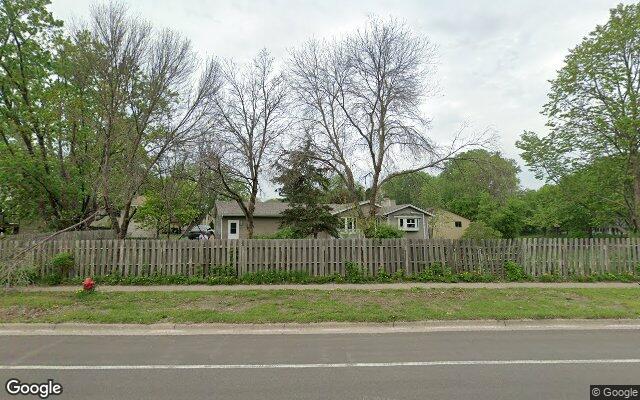
A medium home, reviewed on public record.
Compared to 84 Minnesota facilities with a similar number of beds.
ALF memory care · 36-month window. Higher percentile = better performance on inspection record. Source: Minnesota Dept. of Health · Health Regulation Division.
among peers to rank.
Rankings based on 36-month MDH inspection data. Severity and frequency: fewer citations = higher percentile. Repeat rate: lower repeat citation share = higher percentile.
Citation history, plotted month by month.
2 deficiencies on record. Each bar is a month with a citation.
Finding distribution
2 total · 36 monthsScope × Severity (CMS A–L)
Questions to ask before you visit.
A short pre-tour checklist tailored to Maple Care Homes's record and state requirements.
The most recent inspection on March 11, 2025 found zero deficiencies across all standards — can you walk us through the internal quality-assurance process the facility uses to maintain compliance with Minnesota's Assisted Living with Dementia Care requirements under chapter 144G?
Ask the operator on tour. Take notes and compare answers across facilities you visit.
Two complaints have been filed with the Minnesota Department of Health during the inspection period on file — were either of those complaints substantiated, and what documentation can you share about how the facility responded to the concerns raised?
Ask the operator on tour. Take notes and compare answers across facilities you visit.
Minnesota licenses this facility as an Assisted Living Facility with Dementia Care under chapter 144G — can you provide a copy of the written dementia care program and describe how staff training on dementia-specific interventions is documented and maintained?
Ask the operator on tour. Take notes and compare answers across facilities you visit.
Every inspection visit, verbatim.
3 inspections in the public record, most recent first. Plain-language summaries open first — click into any row for the full citation text.
2026-04-21Complaint InvestigationSubstantiated Finding · 1 finding
Plain-language summary
A complaint investigation found the facility neglected a resident who fell twice in one day, resulting in bruises, lacerations, a fractured hip and spine, a malfunctioning catheter, and hospitalization; staff did not notify nursing leadership of the falls or assess the resident's condition before transport to the hospital two days later. The resident's medical records lacked documentation that nursing leadership was updated, and facility staff statements indicated uncertainty about whether the nurse was notified of the incidents. The facility was found responsible for the maltreatment.
Read full citation text (1)Hide full citation text
“MDH substantiated maltreatment or licensing violation finding”
Read raw inspector notesClose inspector notes
Finding: Substantiated, facility responsibility Nature of Investigation: The Minnesota Department of Health investigated an allegation of maltreatment, in accordance with the Minnesota Reporting of Maltreatment of Vulnerable Adults Act, Minn. Stat. 626.557, and to evaluate compliance with applicable licensing standards for the provider type. Initial Investigation Allegation(s): The facility neglected the resident when the resident had a change in condition resulting in various bruises, lacerations, a malfunctioning catheter, a left hip fracture, and hospitalization. Investigative Findings and Conclusion: The Minnesota Department of Health determined neglect was substantiated. The facility was responsible for the maltreatment. Facility staff did not notify nursing leadership that the resident fell twice, and after the falls the resident required assistance for transfers and walking. The resident was not assessed after the falls, and the resident’s change in condition was not communicated to nursing leadership. The resident was transferred to the hospital two days after the falls. The investigator conducted interviews with facility staff members, including administrative staff, nursing staff, and unlicensed staff. The investigation included review of the resident records, hospital records, facility incident reports, personnel files, staff schedules, and related facility policy and procedures. Also, the investigator observed staff and resident interactions. The resident resided in an assisted living memory care unit. The resident’s diagnoses included epilepsy and retention of urine. The resident’s service plan included assistance with medication administration, catheter care, and an epilepsy/seizure action plan. The resident’s assessment indicated the resident was alert, orientated, and was independent with dressing, grooming, bathing, transfers and walking. The resident’s assessment indicated the resident needed assistance with ordering catheter supplies and a clinic managed the resident’s catheter changes. The resident’s medical records indicated over a weekend the resident had two falls in one day. The first fall occurred when the resident began having “convulsions” and fell off the couch onto the floor. Staff assisted the resident off the floor and back onto the couch. Approximately two hours later, the resident was found on the floor in the bathroom. Staff again assisted the resident off the floor and back onto the couch. The next day, the resident was tired, weak and needed assistance with walking. On the third day, a staff member entered the facility and found the resident sleepy, lethargic, and drowsy. The resident had a bruise on his right knee and a one inch cut over his left eye. The staff member called emergency medical services and the resident transported to the hospital. Hospital records indicated emergency medical services were sent to the facility because the resident had a stroke. Emergency medical services found the resident lying in bed crying and facility staff reported the resident was lethargic and had altered mental status. The resident reported he had pain in his upper left leg that was new since the fall. The hospital record indicated the resident fell several days ago, had a blood infection, and metabolic encephalopathy (a brain dysfunction caused by systemic illnesses—such as organ failure (liver, kidney, heart), infection or severe electrolyte imbalances—rather than structural damage). The resident was “critically ill” and had acute and life-threatening abnormalities. The hospital record indicated the resident had fractures to his left femur and to his thoracic spine of the T5 and T7 vertebrae. The hospital record indicated the resident was unable to explain why emergency medical services were not called sooner. The resident’s health condition carried a high risk for death. A picture from the hospital record showed the resident’s left hip and femur protruded to the left side from the hip area to above the left knee. The resident’s medical record lacked evidence that nursing leadership was updated about the resident’s falls. Nursing leadership did not assess the resident after the resident had a change in condition. During an interview, unlicensed staff member #2 stated when a resident falls, staff were to call emergency medical services and the facility nurse. Unlicensed staff member #2 stated the resident had two falls two days prior to being hospitalized. The first fall occurred when the resident was found on the floor next to the couch. The resident was assisted off the floor and back onto the couch. Then a co-worker called and stated the resident was on the floor for a second time. The resident was assisted back onto the couch. Unlicensed staff member #2 stated she did not see the resident fall and was not aware if the facility nurse was notified of the resident’s falls. During an interview, unlicensed staff member #4 stated she came in for shift and was told the resident had fallen on the previous shift. Unlicensed staff member #4 stated it was reported to her that a message was written to the nurse in the computer system, regarding the resident’s falls. Unlicensed staff member #4, stated the resident looked sick, needed to be seen by a doctor, and had written a message in the computer to the nurse regarding the resident’s condition. During an interview, unlicensed staff member #3 stated the resident’s roommate notified him that the resident fell. The roommate stated the resident had fallen twice the day before. The resident normally walked independently but the day he was scheduled to work with the resident, the resident needed assistance with walking. The resident had a bruise on his head and was not looking well. Unlicensed staff member #3 stated he updated a licensed nurse but did not notify nursing leadership. During an interview, nursing leadership stated the resident was sent to the hospital because of weakness. Nursing leadership reviewed the computer messages entered by staff twice a week. When the messages were reviewed, it was determined the resident fell two days prior to the hospital transfer. Nursing leadership stated staff did not immediately notify her that the resident fell twice. During an interview, an emergency room nurse stated when the resident arrived at the hospital, he looked “horrible.” The resident’s blood pressure was low, he was confused, and his catheter was leaking. The resident had bruises on his face, right arm, right leg, feet, and a dark purple bruise on his left hip. An x-ray was completed to his left hip, and it was found to be “shattered.” The emergency room nurse stated his potassium and calcium levels were low which can cause an irregular heartbeat. The resident had a high international normalized ratio (INR) which put him at risk for bleeding. The resident was medically unstable for surgery on the fractured hip. During an interview, a family member stated during a phone call a week or two before the hospitalization the resident stated everything was fine at the facility. Then one day the hospital called, saying the resident was hospitalized, had a fractured femur, was in the intensive care unit and was connected to a ventilator because he was not breathing on his own. In conclusion, the Minnesota Department of Health determined neglect was substantiated. Substantiated: Minnesota Statutes, section 626.5572, Subdivision 19. “Substantiated” means a preponderance of evidence shows that an act that meets the definition of maltreatment occurred. Neglect: Minnesota Statutes, section 626.5572, subdivision 17 “Neglect” means neglect by a caregiver or self-neglect. (a) "Caregiver neglect" means the failure or omission by a caregiver to supply a vulnerable adult with care or services, including but not limited to, food, clothing, shelter, health care, or supervision which is: (1) reasonable and necessary to obtain or maintain the vulnerable adult's physical or mental health or safety, considering the physical and mental capacity or dysfunction of the vulnerable adult; and (2) which is not the result of an accident or therapeutic conduct. (d) For purposes of this section, a vulnerable adult is not neglected for the sole reason that: (1) the vulnerable adult or a person with authority to make health care decisions for the vulnerable adult under sections 144.651, 144A.44, chapter 145B, 145C, or 252A, or sections 253B.03 or 524.5-101 to 524.
2025-12-05Complaint InvestigationSubstantiated Finding · 1 finding
Plain-language summary
A complaint investigation substantiated that a staff member physically abused a resident by pushing her into her room twice, twisting her arm, pushing her into a wall, and causing bleeding and scratches; the staff member also unreasonably confined the resident by closing her in an office room and holding the door shut. The investigation included interviews with facility staff, a family member, review of records, and observation of staff interactions during an onsite visit. The staff member responsible was found to be individually accountable for the maltreatment.
Read full citation text (1)Hide full citation text
“MDH substantiated maltreatment or licensing violation finding”
Read raw inspector notesClose inspector notes
Finding: Substantiated, individual responsibility Nature of Investigation: The Minnesota Department of Health investigated an allegation of maltreatment, in accordance with the Minnesota Reporting of Maltreatment of Vulnerable Adults Act, Minn. Stat. 626.557, and to evaluate compliance with applicable licensing standards for the provider type. Initial Investigation Allegation(s): The alleged perpetrator (AP) physically abused the resident when he twisted the resident’s arm, pushed her into a wall, made her bleed, and called her stupid. Investigative Findings and Conclusion: The Minnesota Department of Health determined abuse was substantiated. The AP was responsible for the maltreatment. The AP unreasonably confined the resident. The AP documented in the incident report he closed the resident in an office room and held the door shut. The AP documented in the report hours later the resident pushed his buttons so many times he pushed her in her room and closed the door. The AP documented he physically pushed the resident twice. The AP stated he pushed the resident during an investigative interview. The investigator conducted interviews with facility staff members, including administrative staff, nursing staff, and unlicensed staff. The investigator contacted a family member of the resident. The investigation included review of the resident records, hospital records, facility internal investigation, facility incident reports, personnel files, staff schedules, law enforcement report, related facility policy and procedures. Also, the investigator observed staff interaction with residents during an onsite visit. The resident resided in an assisted living facility. The resident’s diagnoses included major depressive disorder, alcohol abuse with alcohol- induced anxiety disorder, and cardiac pacemaker. The resident’s service plan included assistance with behavior management of depression and anxiety, and safety checks. The resident’s assessment indicated the resident was independent with walking, toileting, medication management, and bathing. The assessment indicated the resident required assistance with arranging transportation. A facility incident report, authored by the AP, indicated one evening the resident approached the AP upset about being brought to the wrong location for an appointment she had earlier in the day. The report indicated the resident began screaming and yelling at the AP, so the AP closed and held the door shut of the office room he and the resident were in, and the resident grabbed his arm and became aggressive. The report indicated the resident returned to her room and stated she was calling 911. The report indicated approximately four hours later, the resident exited her room and appeared to be packing up personal belongings, and stated she could not stay there. The report indicated the AP put the resident back in her room, and the AP and the resident both called 911. The report indicated law enforcement arrived and spoke to the resident. After speaking with the resident, law enforcement stated the resident was leaving on her bike, and the report indicated the AP stated to law enforcement the resident was not allowed to leave the facility at 3:00 a.m. The report indicated after law enforcement left, the resident continued to pack personal items into the basket of her bicycle, and the AP asked her to return to her room. The report indicated the resident pushed the AP in attempt to move her bicycle. The report indicated the AP removed the resident’s items from the basket of the resident’s bicycle and placed them back in the resident’s room. The report indicated the resident continued to push the AP’s buttons many times, so the AP pushed the resident in her room and closed the door. The report indicated the AP pushed the resident in her room twice. The report indicated, two hours later, the resident came out of her room and left the facility via an uber ride. During an interview, an unlicensed personnel (ULP) stated she was trained on behavior de-escalation, which included staff directive to stay calm, talk to the resident one to one, re-assure the resident, and not say anything back. The ULP stated residents are not allowed to leave the facility late at night. The ULP stated she saw the resident after the incident with the AP, and the resident had scratches on her arms. The ULP stated the resident told her the scratches happened during the altercation with the AP. During an interview, the administrator stated he was responsible for staff training, and all staff received training on abuse and neglect, resident rights, and mandated reporting. The administrator stated it was a resident’s right to leave the facility when they wanted to. The administrator stated staff can refer to a resident’s individual abuse prevention plan (IAPP) for interventions to use when a resident is having behaviors. The administrator stated the AP told him he helped the resident back to her room and helped her to not fall. The administrator stated he felt the AP acted appropriately in the situation and did not think the AP pushed the resident in an abusive manner. The administrator stated the resident did not stay at the facility often because he believed she was avoiding the chemical dependency treatment they attempted to get her in to. During an interview, the nurse stated the resident’s IAPP should include interventions for staff to use for any areas of concern. The nurse stated she expected staff to stay calm, use one to one conversation, offer food, drinks, and as needed medications when a resident had behaviors. The nurse stated the AP called her the night of the altercation between him and the resident, and she directed the AP to ensure his and the resident’s safety. The nurse stated she saw a bruise the resident sustained from the altercation, and she recommended it to be checked out. The nurse stated the resident was present at the facility for 41 days and on a bed hold status for 31 days over a two-month period around the time of the incident. The nurse stated the resident was out of the facility frequently due to spending more time with her boyfriend. During an interview, the AP stated he had never received any disciplinary action while employed for the facility. The AP stated he received training on abuse and neglect, mandated reporting, the staff code of conduct, resident rights, and behavior de-escalation. The AP stated it is a resident right to come and go from the facility as they wanted. The AP stated the resident often drank too much alcohol and became violent, aggressive, and had out of control behavior. The AP stated the evening of the incident, the resident was upset about an appointment she had earlier in the day, and the AP asked her to go into the office with him where he tried to explain to her how the process of setting up a ride for an appointment worked. The AP stated the resident yelled and screamed at him, so he stood up and shut the door in attempt to not wake the other residents from her yelling. The AP stated the resident then got in his face, tapped his face with her finger, so he may have grabbed the resident’s arm to move it out of his face. The AP stated he stood by the door after it was closed, but he let the resident out of the room when she wanted to. The AP stated the resident went to her room, and came out yelling and stated he should not work there. The AP stated he called the nurse and asked what he should do, and the nurse stated all he could do was monitor the resident and how she behaved. The AP stated he was the only staff member working that overnight shift, and the resident could go outside, run away, and he had to prevent that from happening. The AP stated he did not want the resident to go outside of the facility in the middle of the night. The AP stated the resident was violent to him when she tried to get her bike out of the garage. The AP stated the resident pushed him around, kicked him, grabbed his arms, and instigated physical abuse to him. The AP stated the resident grabbed his glasses off his face when he told her she could not go outside. The AP stated there was a push and pulling between him and the resident with the resident’s room door as he tried to keep her in her room.
2025-03-11Annual Compliance VisitNo findings
Plain-language summary
A standard licensing inspection of Maple Care Homes on March 11, 2025 found violations related to background studies required for staff and appropriate care and services, resulting in $6,000 in fines ($3,000 per violation). The facility must document within a specified timeframe how these areas of noncompliance were corrected for the affected residents and staff, and what systemic changes were made to ensure future compliance with state law.
Read full citation textHide full citation text
Read raw inspector notesClose inspector notes
CORRECTION ORDERS The enclosed State Form documents the state correction orders. MDH documents state licensing correction orders using federal software. Tag numbers are assigned to Minnesota state statutes for Assisted Living Facilities. The assigned tag number appears in the far left column entitled "ID Prefix Tag." The state statute number and the corresponding text of the state statute out of compliance are listed in the "Summary Statement of Deficiencies" column. This column also includes the findings that are in violation of the state statute after the statement, "This MN Requirement is not met as evidenced by . . ." IMPOSITION OF FINES In accordance with Minn. Stat. § 144G.31, Subd. 4, fines and enforcement actions may be imposed based on the level and scope of the violations and may be imposed immediately with no opportunity to correct the violation first as follows: Level 1: no fines or enforcement. Level 2: a fine of $500 per violation, in addition to any enforcement mechanism authorized in § 144G.20 for widespread violations; Level 3: a fine of $3,000 per violation per incident, in addition to any enforcement mechanism authorized in § 144G.20. Level 4: a fine of $5,000 per incident, in addition to any enforcement mechanism authorized in § 144G.20. Therefore, in accordance with Minn. Stat. §§ 144G.01 to 144G.9999, the following fines are assessed pursuant to this survey: An equal opportunity employer. Letter ID: IS7N REVISED 09/13/2021 Maple Care Homes April 9, 2025 Page 2 1290 - 144g.60 Subdivision 1 - Background Studies Required - $3,000.00 2310 - 144g.91 Subd. 4 (a) - Appropriate Care And Services - $3,000.00 Therefore, in accordance with Minn. Stat. §§ 144G.01 to 144G.9999, t he total amount you are assessed is $6,000.00. You will be invoiced approximately 30 days after receipt of this notice, subject to appeal. DOCUMENTATION OF ACTION TO COMPLY In accordance with Minn. Stat. § 144G.30, Subd. 5(c), the licensee must document actions taken to comply with the correction orders within the time period outlined on the state form; however, plans of correction are not required to be submitted for approval. The correction order documentation should include the following: Identify how the area(s) of noncompliance was corrected related to the resident(s)/employee(s) identified in the correction order. Identify how the area(s) of noncompliance was corrected for all of the provider’s resident(s)/employees that may be affected by the noncompliance. Identify what changes to your systems and practices were made to ensure compliance with the specific statute(s). CORRECTION ORDER RECONSIDERATION PROCESS In accordance with Minn. Stat. § 144G.32, Subd. 2, you may challenge the correction order(s) issued, including the level and scope, and any fine assessed through the correction order reconsideration process. The request for reconsideration must be in writing and received by MDH within 15 calendar days of the correction order receipt date. To submit a reconsideration request, please visit: https://forms.web.health.state.mn.us/form/HRDAppealsForm REQUESTING A HEARING Alternatively, in accordance with Minn. Stat. § 144G.31, Subd. 5(d), an assisted living provider that has been assessed a fine under this subdivision has a right to a reconsideration or a hearing under this section and chapter 14. Pursuant to Minn. Stat. § 144G.20, Subd. 14 and Subd. 18, a request for a hearing must be in writing and received by the Department of Health within 15 business days of the correction order receipt date. The request must contain a brief and plain statement describing each matter or issue contested and any new information you believe constitutes a defense or mitigating factor. To submit a hearing request, please visit: https://forms.web.health.state.mn.us/form/HRDAppealsForm To appeal fines via reconsideration, please follow the procedure outlined above. P lease note that you may request a reconsideration o r a hearing, but not both. If you wish to contest tags without fines in Maple Care Homes April 9, 2025 Page 3 a reconsideration and tags with the fines at a hearing, please submit two separate appeals forms at the website listed above. The MDH Health Regulation Division (HRD) values your feedback about your experience during the survey and/or investigation process. Please fill out this anonymous provider feedback questionnaire at your convenience at this link: h ttps://forms.office.com/g/Bm5uQEpHVa. Your input is important to us and will enable MDH to improve its processes and communication with providers. If you have any questions regarding the questionnaire, please contact Susan Winkelmann at susan.winkelmann@state.mn.us or call 651-201-5952. You are encouraged to retain this document for your records. It is your responsibility to share the information contained in the letter and state form with your organization’s Governing Body. If you have any questions, please contact me. Sincerely, Jodi Johnson, Supervisor State Evaluation Team Email: jodi.johnson@state.mn.us Telephone: 507-344-2730 Fax: 1 -866-890-9290 JMD PRINTED: 04/09/2025 FORM APPROVED STATEMENT OF DEFICIENCIES (X1) PROVIDER/SUPPLIER/CLIA (X2) MULTIPLE CONSTRUCTION (X3) DATE SURVEY AND PLAN OF CORRECTION IDENTIFICATION NUMBER: COMPLETED A. BUILDING: ______________________ B. WING _____________________________ 30641 03/11/2025 NAME OF PROVIDER OR SUPPLIER STREET ADDRESS, CITY, STATE, ZIP CODE 14424 LOWER GUTHRIE COURT MAPLE CARE HOMES APPLE VALLEY, MN 55124 SUMMARY STATEMENT OF DEFICIENCIES PROVIDER'S PLAN OF CORRECTION (X4) ID ID (X5) PREFIX (EACH DEFICIENCY MUST BE PRECEDED BY FULL PREFIX (EACH CORRECTIVE ACTION SHOULD BE COMPLETE REGULATORY OR LSC IDENTIFYING INFORMATION) CROSS-REFERENCED TO THE APPROPRIATE DATE TAG TAG DEFICIENCY) 0 000 Initial Comments 0 000 ASSISTED LIVING PROVIDER LICENSING Minnesota Department of Health is CORRECTION ORDER(S) documenting the State Correction Orders using federal software. Tag numbers have In accordance with Minnesota Statutes, section been assigned to Minnesota State 144G.08 to 144G.95, these correction orders are Statutes for Assisted Living Facilities. The issued pursuant to a survey. assigned tag number appears in the far-left column entitled "ID Prefix Tag." The Determination of whether violations are corrected state Statute number and the requires compliance with all requirements corresponding text of the state Statute out provided at the Statute number indicated below. of compliance is listed in the "Summary When Minnesota Statute contains several items, Statement of Deficiencies" column. This failure to comply with any of the items will be column also includes the findings which considered lack of compliance. are in violation of the state requirement after the statement, "This Minnesota INITIAL COMMENTS: requirement is not met as evidenced by." Following the evaluators ' findings is the SL30641016-0 Time Period for Correction. On March 10, 2025, through March 11, 2025, the PLEASE DISREGARD THE HEADING OF survey at the above provider. At the time of the STATES,"PROVIDER'S PLAN OF survey, there were six residents; six receiving CORRECTION." THIS APPLIES TO services under the Assisted Living Facility with FEDERAL DEFICIENCIES ONLY. THIS Dementia Care license. WILL APPEAR ON EACH PAGE. THERE IS NO REQUIREMENT TO 1290: An immediate order was issued on March SUBMIT A PLAN OF CORRECTION FOR 11, 2025, at a level 3/Widespread (I). The VIOLATIONS OF MINNESOTA STATE licensee implemented interventions to mitigate STATUTES. risk on March 11, 2025; however, the scope and level remains at I. THE LETTER IN THE LEFT COLUMN IS USED FOR TRACKING PURPOSES AND 2310: An immediate order was issued on March REFLECTS THE SCOPE AND LEVEL 10, 2025, at a level 3/Widespread (I). The ISSUED PURSUANT TO 144G.31 licensee implemented interventions on March 11, SUBDIVISION 1-3. 2025; however, the scope and level remains at I. 0 345 144G.30 Subd. 5. (c)(2), (d) Correction orders 0 345 SS=C LABORATORY DIRECTOR'S OR PROVIDER/SUPPLIER REPRESENTATIVE'S SIGNATURE TITLE (X6) DATE STATE FORM 6899 BHQJ11 If continuation sheet 1 of 14 PRINTED: 04/09/2025 FORM APPROVED STATEMENT OF DEFICIENCIES (X1) PROVIDER/SUPPLIER/CLIA (X2) MULTIPLE CONSTRUCTION (X3) DATE SURVEY AND PLAN OF CORRECTION IDENTIFICATION NUMBER: COMPLETED A. BUILDING: ______________________ B. WING _____________________________ 30641 03/11/2025 NAME OF PROVIDER OR SUPPLIER STREET ADDRESS, CITY, STATE, ZIP CODE 14424 LOWER GUTHRIE COURT MAPLE CARE HOMES APPLE VALLEY, MN 55124 SUMMARY STATEMENT OF DEFICIENCIES PROVIDER'S PLAN OF CORRECTION (X4) ID ID (X5) PREFIX (EACH DEFICIENCY MUST BE PRECEDED BY FULL PREFIX (EACH CORRECTIVE ACTION SHOULD BE COMPLETE REGULATORY OR LSC IDENTIFYING INFORMATION) CROSS-REFERENCED TO THE APPROPRIATE DATE TAG TAG DEFICIENCY) 0 345 Continued From page 1 0 345 (c)(2) make available, in a manner readily accessible to residents and others, including provision of a paper copy upon request, the most recent plan of correction documenting the actions taken by the facility to comply with the correction order.
1 older inspection from 2022 are not shown above.
Get the complete record, translated into plain language — emailed to you.
Other facilities in Dakota County.
Other memory care facilities in Dakota County with similar care offerings.
Tour Prep
Family reviews
No reviews yet — be the first to share your experience
Other memory care options nearby.
More options in neighboring cities
Licensed memory care in other cities within this county region — useful when your search radius crosses city limits.