Sunrise at Cherry Creek
6 CDPHE citations on record, last inspected Apr 2026, license 2304OU.
Sunrise at Cherry Creek has 6 CDPHE citations on record; last inspected Apr 2026.
Memory-care basis not yet recorded from the state file.
Source: Colorado Department of Public Health and Environment
CDPHE recordLast inspection April 14, 2026
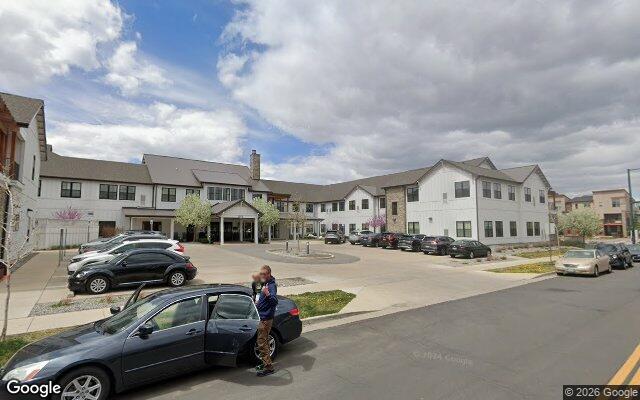
A large home, reviewed on public record.
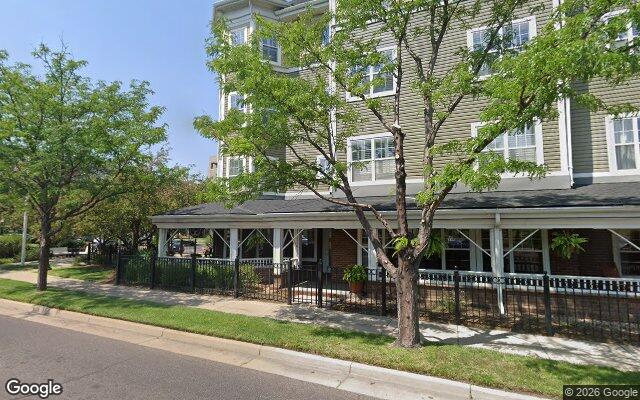
© Google Street View
Compared to 25 Colorado facilities with a similar number of beds.
Assisted living memory care · 36-month window. Higher percentile = better performance on inspection record. Source: Colorado Department of Public Health and Environment.
on file.
among peers to rank.
Rankings based on 36-month CDPHE inspection data. Severity and frequency: fewer citations = higher percentile. Repeat rate: lower repeat citation share = higher percentile.
Citation history, plotted month by month.
6 deficiencies on record. Each bar is a month with a citation.
Finding distribution
6 total · 36 monthsCDPHE Level A–E
The rules that apply to this facility.
State requirements with the exact regulation citation, plain-language explanation, and a question to ask on tour. Rules this facility has been cited for appear first.
Plain language
CDPHE licenses assisted living residences. A secure environment for residents who need one is optional under Chapter 7, Part 25. CDPHE does not publish a facility-level list of homes that have that option, so this page does not call the home state-verified memory care.
Ask on tour
“Ask whether the home has a secure environment, and ask to see the part of the license that says so.”
Questions to ask before you visit.
A short pre-tour checklist tailored to Sunrise at Cherry Creek's record and state requirements.
Colorado inspection records show 10 reports on file with 6 deficiencies cited by CDPHE — can you walk us through the written corrective action plans for those deficiencies and show documentation that each has been resolved?
Ask the operator on tour. Take notes and compare answers across facilities you visit.
One serious citation (severity 3–4) appears in the inspection history — what was the nature of that finding, what changes did the community make in response, and can families review the remediation documentation?
Ask the operator on tour. Take notes and compare answers across facilities you visit.
Four complaints were filed with CDPHE during the inspection period on record — were any of those complaints substantiated, and if so, what specific steps did the facility take to address the issues raised?
Ask the operator on tour. Take notes and compare answers across facilities you visit.
From this home's file.
Counts and lines from the state file we hold.
- Does Sunrise at Cherry Creek provide memory care?
Memory-care basis not yet recorded from the state file.
- When was Sunrise at Cherry Creek last inspected?
Sunrise at Cherry Creek was last inspected on April 14, 2026. That visit is an annual compliance visit.
- Has Sunrise at Cherry Creek been cited by CDPHE?
Yes. Sunrise at Cherry Creek has 6 deficiencies from CDPHE in the last three years. None are tagged immediate jeopardy.
- How many citations does Sunrise at Cherry Creek have?
Sunrise at Cherry Creek has 6 deficiencies across 8 inspections in the last three years. None are tagged immediate jeopardy.
- Who licenses Sunrise at Cherry Creek?
Colorado Department of Public Health and Environment licenses Sunrise at Cherry Creek. The license number is 2304OU. State record: https://cdphe.colorado.gov/health-facilities/find-and-compare-facilities
Every inspection visit, verbatim.
8 inspections in the public record, most recent first. Plain-language summaries open first — click into any row for the full citation text.
2026-04-14Annual Compliance VisitNo findings
Plain-language summary
This compliance visit is in the Colorado Department of Public Health and Environment public file. No citation text was included for this visit.
2026-01-21Complaint InvestigationLevel C · 1 finding
Plain-language summary
This was a substantiated complaint investigation. A resident with advancing dementia who lived in the assisted living unit attempted to leave the facility multiple times starting in November 2025, and despite identified safety concerns about elopement risk, the residence did not update her care plan with specific elopement interventions and did not move her to the memory care unit until after she eloped on December 17, 2025, left undetected for nearly two hours, fell and sustained a head injury, and died two days later from complications of that injury.
Read full citation text (1)Hide full citation text
“Based on interviews and record reviews, the residence failed to provide personal services and protective oversight affecting one former resident (#1).Specifically, Former Resident #1 had a diagnosis of unspecified dementia that had declined over the previous several months. At the time of the incident, Former Resident #1 resided in the assisted living portion of the residence and experienced multiple episodes of confusion and attempts to leave the residence. On 11/7/25, the residence scheduled a meeting with Former Resident #1's family to discuss a potential transfer to the memory care unit. On 11/13/25, the residence met with the resident's power of attorney (POA) and discussed concerns regarding the resident's wandering behaviors and safety, stating the residence would attempt interventions. The residence implemented interventions such as redirection and talking with the resident; however, these measures were unsuccessful, and the resident's attempts to elope increased. On 11/17/25, the residence updated the resident's care plan; however, the care plan did not include interventions specifically addressing elopement risk. Former Resident #1 continued to attempt to elope. The Administrator stated the POA did not approve the resident's transfer to the memory care unit until 11/22/25. The Administrator also stated the family was unable to pay for a one-to-one caregiver, and the residence did not provide one while the resident awaited transfer. On 11/26/25, a progress note documented that the resident would be moved to the memory care unit "next week." However, Former Resident #1 had not been moved to memory care before the incident. On 12/18/25, a progress note documented that Former Resident #1 had eloped from the residence. Former Resident #1 left the residence at 9:27 p.m., and staff did not realize she was missing until 11:10 p.m.. The residence contacted local law enforcement and located Former Resident #1 at a hospital, where she was diagnosed with a broken thumb and a head injury. The death certificate dated 12/20/25 indicated Former Resident #1 died from hypoxic respiratory failure with complications from an acute subdural hematoma, a life-threatening accumulation of blood between the brain and its outermost covering, typically caused by head trauma. Findings include:1. Record ReviewFormer Resident #1 was admitted to the residence on 10/11/2024 with a diagnosis of unspecified dementia and resided in the assisted living portion of the residence.A progress note dated 10/10/25 stated, in part, that the Former Resident #1 frequently cried, asking about her sisters. Staff were able to redirect her both physically and mentally; however, she repeatedly requested assistance to find them. This behavior had been occurring frequently around the same time period.A progress note dated 10/23/25 stated, in part, the Former Resident #1 frequently experienced confusion about where she needed to go and what would happen next, accompanied by paranoia and repeated searching for her children and husband. She often forgot her husband's identity, sometimes mistaking him for her son. She paced the hallways, moved her furniture claiming she was "moving out," and required staff intervention to return to activities like mealtime. Throughout the day, she constantly searched for loved ones, pacing back and forth, and at times appeared frantic.A progress note dated 10/24/25 stated, in part, that Former Resident #1 experienced anxiety and difficulty following instructions. She frequently paced the hallways searching for deceased loved ones, failed to recognize her husband (sometimes identifying him as her son), and attempted to move her belongings, creating safety concerns. During mealtimes, she often left the dining room when she believed her husband was upset, requiring staff to return her to eat. Staff noted that these behaviors were becoming more frequent, particularly in the afternoons, and cautioned that assisted living may no longer be the most appropriate setting. This information was discussed with her Power of Attorney (POA).A progress note dated 11/7/25 stated, in part, that the administrator scheduled a meeting with the family to discuss moving Former Resident #1 from the assisted living side to the memory care unit in the residence.A progress note dated 11/13/25 stated, in part, that the administrator met with the Former Resident's POA to discuss the resident's behaviors and potential interventions. The administrator specifically noted that her biggest concern was not being able to locate the resident or her wandering out. Both parties expressed concern for the resident's safety. Although they were uncertain which interventions would be effective, they agreed to implement strategies, monitor outcomes, and reconvene in a month.On 11/17/25, the service plan was updated to state that Former Resident #1 continued to experience impaired recall due to unspecified dementia. Staff were directed to comfort her and document changes in her cognitive status, including general awareness and memory recall. Despite these interventions, the measures in place were not mitigating her cognitive impairment, and she continued to decline.A progress note dated 11/17/25 stated that around 1:45 p.m., the resident attempted to walk down the stairs with her walker. When redirected, she became upset, used the elevator, and proceeded directly to the front door.A progress noted dated 11/26/25 stated that the Formal Resident #1 will be moving into the memory care unit next week.A progress note dated 12/18/25 at 3:26 p.m., read in part, that on 12/17/25 at 9:27 PM, Former Resident #1 eloped from the community and off the property. The administrator and care managers searched the community but could not locate her, prompting notification of law enforcement. It was later discovered that the resident had exited through the main entrance. Shortly after, a local hospital reported that she had fallen; a bystander had called 911. She sustained a head injury and a broken thumb.A death certificate was filed on 12/20/25 for Former Resident #1. The cause of death was listed as hypoxic respiratory failure with complications from an acute subdural hematoma.2. InterviewsOn 1/21/26 at approximately 8:00 a.m., Staff #1 stated that Former Resident #1 had needed to be in memory care for some time due to her decline. She began packing her bags and attempting to leave through the front door. Staff were directed to use verbal redirection and engage her in activities she enjoyed. She also stated that management was aware of her decline.On 1/21/26 at approximately 8:55 a.m., the Administrator stated the residence did not have a staff member or front desk personnel assigned during overnight hours to monitor the front door. The Administrator stated the front doors were secured and alarmed after the front desk personnel left for the night.On 1/21/26 at approximately 9:00 a.m., the administrator stated she was aware of Former Resident #1 ' s cognitive decline and had attempted several interventions to address it, including engaging the resident in video games, encouraging time with her husband, and offering snacks; however, these interventions were ineffective. The administrator reported she discussed the resident's wandering behaviors and repeated attempts to exit through the front door with the resident's power of attorney (POA) on multiple occasions and recommended transferring Former Resident #1 to the memory care unit. The POA did not approve the transfer until 11/22/25. The administrator stated the family was unable to pay for a one-to-one caregiver, and the residence did not provide one while the resident awaited transfer. No additional interventions were implemented during this waiting period.On 1/21/26 at 1:36 p.m., the Resident Care Director (RCD) stated the residence did not implement any interventions to protect Former Resident #1's health and safety, despite the decision to move her to the memory care unit due to increased exit-seeking behaviors and cognitive decline. The RCD stated the residence did not implement any safety interventions, including within the 72 hours prior to the resident's transfer to memory care. The RCD further stated that, in hindsight, the residence failed to address the resident's safety needs, and no actions were taken prior to her transfer.On 1/21/26 at approximately 2:15 p.m., Staff #2 stated that Former Resident #1 had exhibited exit-seeking behaviors for approximately six months. Staff #2 reported that she and other staff members notified the Resident Care Coordinator on multiple occasions of the resident's cognitive decline and repeated attempts to exit through the front door. Staff #2 further stated that video footage showed Former Resident #1 consecutively attempting to exit through the front door three times on the night of the elopement, that she was successful on the third attempt, and that the door alarm activated at that time. Former Resident #1 successfully exited the residence on 12/18/25 at approximately 9:27 p.m. At approximately 11:10 p.m., the residence realized the resident was missing.On 1/21/26 at 2:39 p.m., Staff #3 stated that she last saw Former Resident #1 at approximately 9:00 p.m.On 1/21/26 at 3:15 p.m., the Resident Care Coordinator (RCC) stated that she had been aware of Former Resident #1 ' s cognitive decline since early summer. She reported that in the fall, she found Former Resident #1 outside and was able to redirect her back inside after sitting with her. The RCC further stated that staff were instructed to redirect the resident when she was exit-seeking and that this was the only intervention in place.On 1/21/26 at 3:40 p.m., the administrator acknowledged that the residence was unable to provide adequate oversight for Former Resident #1, which resulted in her elopement and subsequent death from injuries sustained while she was missing. The administrator confirmed that she was still living in the assisted living portion of the residence prior to her death.”
2025-10-01Annual Compliance VisitNo findings
Plain-language summary
A follow-up inspection was conducted on October 1, 2025 to verify that deficiencies found during a previous survey on September 9, 2025 had been corrected. The facility was found to be in compliance with all regulations surveyed. No violations were identified during this revisit.
2025-10-01Annual Compliance VisitNo findings
Plain-language summary
A revisit inspection was conducted on October 1, 2025, to verify that the facility had corrected deficiencies found during a previous inspection on September 9, 2025. The facility was found to be in compliance with all applicable regulations. No violations were identified during this revisit.
2025-09-09Complaint InvestigationLevel B · 3 findings
Plain-language summary
A licensure complaint investigation completed on September 9, 2025, found that the residence failed to document training for three staff members on their specific duties and responsibilities before they worked independently, affecting 72 residents, and failed to ensure that two staff members received documented competency training on mechanical lift transfers before assisting ten residents who require mechanical lifts, with residents reporting incidents of staff operating lifts alone in violation of facility policy. During interviews, residents described a mechanical lift dropping suddenly during a transfer and stated that single staff members frequently operated the lift despite a requirement for two staff members to do so.
Read full citation text (3)Hide full citation text
“Based on observations, record review, and interviews, the residence failed to ensure sufficient staff were available to provide two-person assistance with mechanical lift transfers as required by resident care plans, for 10 current residents who required a mechanical lift. (Cross-reference U0682)Findings Include:1. ObservationObservation on 9/9/25 at 9:55 a.m. revealed Staff #1 left Resident #1 unattended in her room on the bed while searching for another staff member to assist with a mechanical lift transfer. The search lasted three minutes.2. Record ReviewA care plan, dated 4/4/25, for Resident #3, admitted on 4/3/25, revealed that she required full mechanical lift assistance with two-person physical assistance using a Hoyer lift.A care plan, dated 6/6/25, for Resident #6, admitted on 6/20/24, revealed that she required full mechanical lift assistance with two-person physical assistance.A task history report for Residents #3 and #6 documented multiple occasions where only one staff member performed transfers for both residents from 8/10/25 to 9/9/25.3. InterviewsOn 9/9/25, Residents #2, #3, #6, and #7 confirmed through interviews that staff often operated the mechanical lift alone. Resident #6 at 8:00 a.m. reported that the lift dropped suddenly when only one staff member was operating it, which startled her. Additionally, she reported waiting "forever" for another staff member to come and assist. Resident #3 at 9:14 a.m. reported that Staff #4 and Staff #5 had previously operated the mechanical lift alone at different times. Resident #2 at 9:43 a.m. confirmed that it was not uncommon for one staff member to operate the mechanical lift unassisted.On 9/9/25, Staff #2, #3, #6, #7, #8, and #9 confirmed through interviews they were aware that two staff were required to operate the mechanical lift, but reported that when other staff are busy, some staff will perform lifts alone. Staff #9 at 7:42 a.m. reported that she had operated the lift independently because of the unavailability of support staff.On 9/9/25 at 3:56 p.m., the administrator confirmed that based on documentation and interviews, the residence did appear to not consistently have adequate staffing to meet residents ' care needs and acknowledged it was unacceptable for one staff member to operate the lift alone.4. Similar deficient practice was found for Residents #1, #2, #4, #5, and #7.”
“Based on record review, interviews, and observation, the residence failed to ensure personal care workers were trained, evaluated, and documented as competent by an appropriately skilled professional before assisting residents with mechanical lift transfers for two of the five sample staff (#4, #5), affecting 10 current residents who require a mechanical lift for transfers. (Cross-reference U0722)Findings Include:1. Record ReviewPersonnel files for:Staff #4 revealed a hire date of 8/5/25; however, the files contained no mechanical Hoyer lift training competency.Staff #5 revealed a hire date of 3/19/24; however, the files contained no mechanical Hoyer lift training competency.A residence schedule for August 2025 read in part:Staff #4 worked at the residence on: 8/6-8/7/25, 8/10-8/14/25, 8/17-8/21/25, 8/24-8/28/25, 8/31/25.Staff #5 worked at the residence on 8/1/25, 8/4/25, 8/7- 8/8/25, 8/11/25, 8/14-8/15/25, 8/18/25, 8/21-8/22/25, 8/25/25, 8/28- 8/29/25.InterviewsOn 9/9/25 at 7:30 a.m. Staff #6 stated that an external professional trained staff on how to operate a mechanical Hoyer lift. She reported that she was trained and that only two staff members were allowed to operate the Hoyer lift.On 9/9/25 at 7:42 a.m., Staff #9 stated that two staff members were supposed to operate the Hoyer lift; however, she had used the Hoyer lift independently in the past due to being unable to find another staff member to assist with transferring a resident.On 9/9/25 at 8:00 a.m., Resident #6 reported that a couple of days ago, a staff member attempted to transfer her from her bed by operating the Hoyer lift alone. She reported that the lift dropped suddenly and startled her. Resident #6 then requested the staff member go get an additional staff member for assistance, reporting this took "forever". She stated that after the staff member returned with assistance, they successfully transferred her from the bed to her wheelchair.On 9/9/25 at 9:14 a.m., Resident #3 stated that Staff #4 and Staff #5 had previously used a Hoyer lift independently at separate times to assist with transferring her. She stated it was not uncommon for one staff member to operate the Hoyer lift when completing transfers.On 9/9/25 at 9:43 a.m., Resident #2 stated that it was not uncommon for one staff member to operate the Hoyer lift when transferring him. He stated that he would hold the remote of the Hoyer lift and operate it while the staff member guided him in the air to his bed.On 9/9/25 at 11:15 a.m., Resident #7 reported that a month ago, an overnight staff member operated the Hoyer lift alone; she added, "It was a little scary."On 9/9/25 at 11:19 a.m., the administrator stated that the residence had recently had a training in May 2025 by the representative from a durable medical equipment (DME) manufacturer on how to properly operate a Hoyer lift. She explained, however, that they did not have evidence of which staff members attended this training, as the sign-in form had gone missing. She stated she could provide evidence of the training being scheduled.On 9/9/25 at 2:00 p.m., Staff #2 stated that only two staff members were allowed to operate the Hoyer lift. She reported that in an emergency, one staff member would operate the Hoyer lift alone.On 9/9/25 at 2:12 p.m., Staff #3 stated that only two staff members were allowed to operate the Hoyer lift. She reported that she was aware of the evening and overnight shift staff operating the Hoyer lifts with only one staff member.On 9/9/25 at 2:35 p.m., Staff #4 stated that she was trained by the resident care coordinator (RCC) on how to use the Hoyer lift. She stated that she was trained that only two staff members were allowed to use the lift. On 9/9/25 at 2:38 p.m., Staff #8 stated that two staff members are supposed to operate the Hoyer lift; however, in an emergency, they sometimes had only one staff member.On 9/9/25 at 3:47 p.m., the administrator stated that all staff were trained on how to operate a mechanical Hoyer lift by a skilled professional. She explained that the staff had been trained by a representative from a durable medical equipment (DME) manufacturer, or an external services provider who was a physical therapist or the residence's resident care coordinator (RCC). The administrator reported being unsure of the credentials of the representative at the DME manufacturer and confirmed that the RCC was not a skilled professional. The administrator stated Staff #5 had been trained by the DME manufacturer in May, and Staff #4 had been trained by the RCC. The administrator confirmed being unable to provide proof of mechanical Hoyer lift training for Staff #4 and #5, and would expect this to be readily available, as well as in the residence's training binder. The administrator stated she was aware that staff operated the Hoyer lift with only one person and would counsel staff about how that was improper use. She reported she expected two trained staff members to operate the Hoyer lift at all times.”
“Based on observation, record review, and interviews, the residence failed to provide training relevant to staff members ' duties and responsibilities prior to working independently for three of the five sample staff (#1, #4, #5), affecting 72 current residents.Findings Include:1. ObservationObservation on 9/9/25 at 9:55 a.m. revealed Staff #1 providing direct care to Resident #1.2. Record ReviewThe personnel file for Staff #1 revealed a hire date of 6/16/23; however, the file failed to include training on their specific duties and responsibilities prior to working independently.Furthermore, the personnel files for Staff #4 and #5 revealed similar deficient practices.3. InterviewsOn 9/9/25 at 2:15 p.m., the business office coordinator acknowledged that Staff #1's personnel file was very minimal and was not up to date to meet the required elements per regulation. She explained that she did not have the opportunity to review personnel files to ensure the required documentation was included. She reported she expected it to meet the requirements and include Staff training relevant to their specific duties and responsibilities.On 9/9/25 at 3:42 p.m., the administrator stated personnel files were readily available and included the required elements. She acknowledged that Staff #1, #4, and #5 had completed shadowing of their specific duties with other staff members before working independently, but documentation was not in their personnel files. The administrator reported that she would expect documentation to be in the personnel files.”
2025-08-13Annual Compliance VisitNo findings
Plain-language summary
A follow-up inspection was completed on August 13, 2025, to verify that deficiencies identified during a previous inspection on May 7, 2025, had been corrected. The facility was found to be in compliance with all applicable regulations that were reviewed during this revisit.
2025-05-07Annual Compliance VisitLevel B · 2 findings
Plain-language summary
A relicensure survey on May 7, 2025 found that the residence did not properly investigate or document two residents' injuries of unknown origin, such as unexplained bruises and scratches, despite having a policy requiring such investigations to be completed and retained. The survey also found that at least one common bathroom lacked toilet paper and paper towels, affecting 21 residents in the secure environment.
Read full citation text (2)Hide full citation text
“Based on record review and interview the residence failed to implement policies and procedures for the identification, reporting, and investigation of injuries of unknown origin, affecting two of seven sample residents (#13, #14). Findings include:1. PoliciesThe residence Incident and Event Reporting policy, dated 6/13/22, read that the ED/designee shall identify and document resident injuries for which the origin of the injury was not observed by or otherwise known by team members, and investigate including determining if the resident knows how the injury occurred.a. When the source of the injury remains undertimed the community will monitor the resident to identify and prevent similar injuries.b. Documentation of the investigation, outcomes, and steps taken shall be retained by the community, such documentation shall be made available for review at the Department's request per state/province regulations.2. Record ReviewA progress note, dated 3/2/25, read that Resident #14 was found with a bruise to her inner right eye and a small scratch on her eyebrow, with what appeared to be a ball full of blood in the corner of her right eye.On 5/7/25, at approximately 10:00 a.m., documentation of the investigation for the injury of unknown origin was requested for Resident #14. The residence was unable to provide the documentation.3. InterviewsOn 5/7/25, at approximately 10:30 a.m., the resident care coordinator (RCC) stated that, if the progress notes did not contain documentation of the investigation for Resident #14, then an investigation was not done.On 5/7/25, at approximately 4:00 p.m., the administrator stated that she expected a full investigation of any injury of unknown origin, to include documentation of the cause of the injury and resolution to prevent an injury in the future. Similar deficient practice was found for Resident #13.”
“Based on observation and interviews, the residence failed to provide toilet paper and paper towels in each common bathroom, affecting 21 current residents in a secure environment. Findings include:On 5/7/25 at approximately 7:29 a.m., an environmental tour of the residence revealed that a common bathroom near the dining area failed to have paper towels or any other hand drying device available. On 5/7/25 at approximately 4:30 p.m., the administrator stated her expectations were that all common bathrooms had toilet paper and paper towels. She was aware of the requirement for there to be toilet paper and paper towels in each common area bathroom and expected staff to have made it available.”
2025-05-07Annual Compliance VisitNo findings
Plain-language summary
A combined relicensure survey, change of ownership revisit, and complaint investigation was completed on May 7, 2025. The facility was found to be in compliance with all regulations surveyed, and previous deficiencies from February 2022 were resolved. The earlier citations were made under regulations that were revised on March 17, 2025.
2 older inspections from 2022 are not shown above.
Get the complete record, translated into plain language — emailed to you.
Other facilities in Denver.
Other memory care facilities near Denver with similar care offerings.
Full Inspection Record
Family reviews
No reviews yet — be the first to share your experience